Tag Archives: Science

The other pollinators: some recent videos that don’t focus on bees

The review of the biodiversity of pollinators that I published in 2017 estimated that on average about 18% of animal-pollinated plants within natural communities are specialised on bees. Bees also contribute to the reproduction of many of the plants that have generalist pollination systems, which account for perhaps 50% of plant species on average. But that stills leaves a significant fraction (maybe one third) that are specialised on the “other” pollinators, including flies, beetles, birds, bats, and so forth. There is growing awareness of how important these pollinators are for wild plant and crop pollination, but bees still hog most of the pollinator-related media.

In the last couple of weeks I’ve been sent links to videos that focus on these other pollinators so I thought I’d compile a list that show us something of the true diversity of animals that act as pollen vectors. Please add your own suggestions in the comments:

Elephant shrews, lizards, cockroaches*, crustaceans, and biting midges are covered in this SciShow video (HT Steve Hawkins)

Opossum pollination of a Brazilian plant is featured in this video (HT Felipe Amorim)

Here’s a recorded webinar on bird pollination by Dan Scheiman from Audubon Arkansas

A few videos on bat pollination by Jim Wolfe can be found here and here and here, and this is a short one that’s a supplement to a recent Journal of Applied Ecology paper on cactus pollination by Constance J. Tremlett et al.

The fascinating ecology of skunk cabbage (Symplocarpus foetidus), including fly and possibly beetle pollination, is the topic of this video.

Fly pollination is also highlighted in this short piece by the Natural History Museum, and this one deals with drone flies as managed pollinators for agriculture in New Zealand.

Enjoy!

*Watch out for my report on a newly discovered cockroach-pollinated plant….hopefully coming later this year…..

Cherishing old wood: a guitar restoration story – UPDATED

UPDATE: After I posted this piece I shared it on a couple of Facebook guitar groups.  On the Parlor Acoustic Guitar Lovers Group one of the members, Mario Burgani, suggested that in fact the guitar might be Italian, made in Catania in Sicily.  I’ve done some searching online and I think that he’s correct.  Some of the features that I am seeing on Catania guitars on various websites are identical to mine, in particular the way the back of the guitar has been shaped to cover the heel of the neck, and the shape and design of the floating bridge, with the bone side pieces.  My thanks to Mario for pointing this out.

I have now corrected the post and removed mentions of German manufacture.


This post IS about biodiversity, eventually, but I need to give some background first….

Guitar-based music is a big part of my life, and has been since my teens.  However it wasn’t until I was about 20 that I first started playing guitar.  That’s late, and I wish I’d begun earlier, but neither of my parents were musical and there wasn’t the influence or encouragement.  It wasn’t until I finally left home for university, aged 22, that I started taking it in any way seriously and bought a half decent guitar (a 1986 Washburn D-12N, if you’re interested – I still have it and I’m very fond of it).  Before I started my PhD, in 1989, I played quite a lot and was involved with the local music scene in Oxford, working stage crew for bands.  It was a lot of fun and for a while I considered dropping my PhD and doing it full time.  Some of the guys I worked with went on to become part of Radiohead’s crew and have had careers in the music industry.  But, you know, life, kids, and science got in the way, the frequency of my playing became less and less, and for a long time I hardly picked up a guitar.

But in the past couple of years I’ve started to get back into it and am enjoying playing again.  A few things have prompted this.  The kids have all left home now, so I have more time.  I’m finding it relaxes me and it’s a good way to get away from work and social media and screens.  Also, there are many short “how to play” videos on YouTube, it’s like having a whole set of guitar tutors with different styles and approaches.  It’s not just about the music though: I have a fascination with taking apart guitars and fiddling with them, which leads me on to the point of this post.

Back in late September I was looking at vintage acoustic guitars on eBay and salivating over the Martins that were for sale, when a guitar caught my eye.  It was an old “parlour” guitar in pretty poor condition, and a steal at £50. Parlour guitars are small-bodied instruments that were popular in homes in the late 19th and early 20th centuries, before the guitars with big bodies, such as the Dreadnought models, became the vogue.  They were the sorts of instruments used by early blues players – check out the photograph of Blind Lemon Jefferson on his Wikipedia page and you’ll see what I mean.

I was intrigued by the idea of having an old guitar with an authentic bluesy sound and also having a project to work on, restoring this instrument back to playable condition. The seller was based in Bedford, not far from Northampton, so Karin and I drove down there one Friday evening to pick it up.

Here’s a shot of the guitar as I bought it:

2019-10-05 10.37.31

The body was sound and undamaged.  The neck had a bit of a curve to it, but the brass frets were in good condition, though due to the fret board drying out over time their ends were protruding a little either side.  However the bone nut at the top of the neck was broken, the pressed metal tailpiece was quite scratched, the tuning heads rusty and a little bent, plus there were a few other dings and dents.  Here are some close-ups:
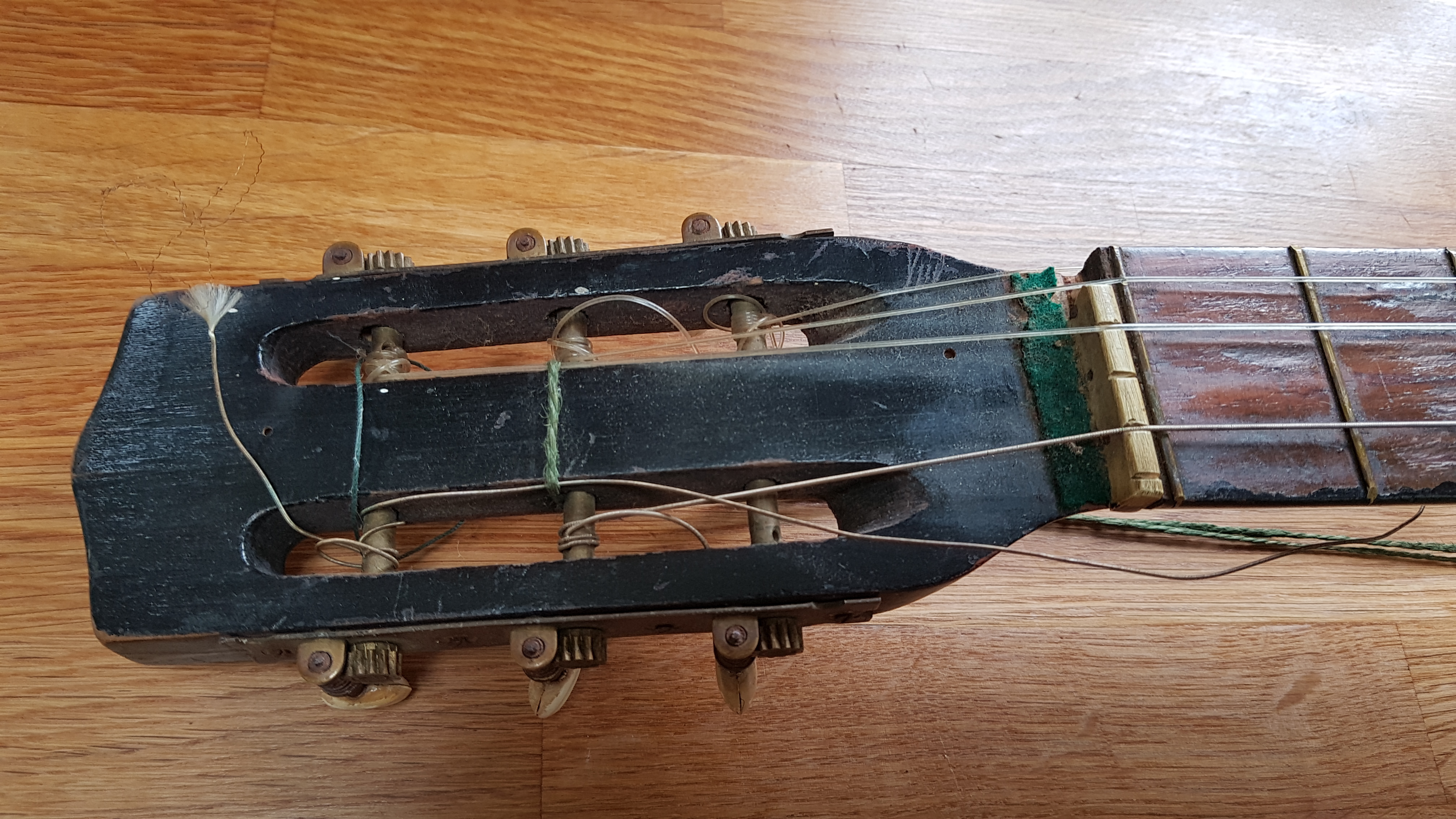
2019-10-05 10.37.38

Someone has strung it with nylon strings which is probably not what was intended for this instrument.  The point of a metal tailpiece like this is that it allows the guitar to have metal strings, which are under greater tension, without the need for more complex x-bracing under the soundboard to prevent it from warping or cracking:

2019-10-05 10.37.50

2019-10-05 11.16.12

It was clearly not the most expensive of guitars when it was first made, but the marquetry around the sound hole is in perfect condition and nicely executed:

2019-10-05 10.37.54

There’s no manufacturer’s name or label in the guitar, no serial number or anything like that.  So I did a little research online.  It’s not the best quality guitar, as evidenced by the metal tailpiece which, as I mention, is designed to take the strain off the sound board when using metal strings.  The alternative is to have a fixed bridge but that requires more elaborate (= expensive) bracing under the soundboard. However it’s clear that the guitar was handmade, probably in Sicily,  by a local luthier, possibly in the 1920s, but certainly somewhere between 1900 and 1940: so it could be more than 100 years old.

The restoration of the guitar was fairly straightforward, the most complex part being the carving of a new bone nut from a blank that I bought online. The machine heads were removed, cleaned and oiled, then re-fitted; I could have replaced them but they were in decent condition given their age and I wanted to retain as much authenticity to the guitar as possible.  The frets were filed and a neighbour who is a metal worker polished up the tailpiece.  Most of the other work was fairly cosmetic – I didn’t want to touch the original finish.

Now we get to biodiversity.  A lot of wood goes into the construction of acoustic guitars.  In the case of this instrument, the soundboard is solid European spruce (Picea abies) that has aged to a beautiful golden colour.  When I took off the tailpiece its original colour was revealed; that tailpiece has probably never been removed before:
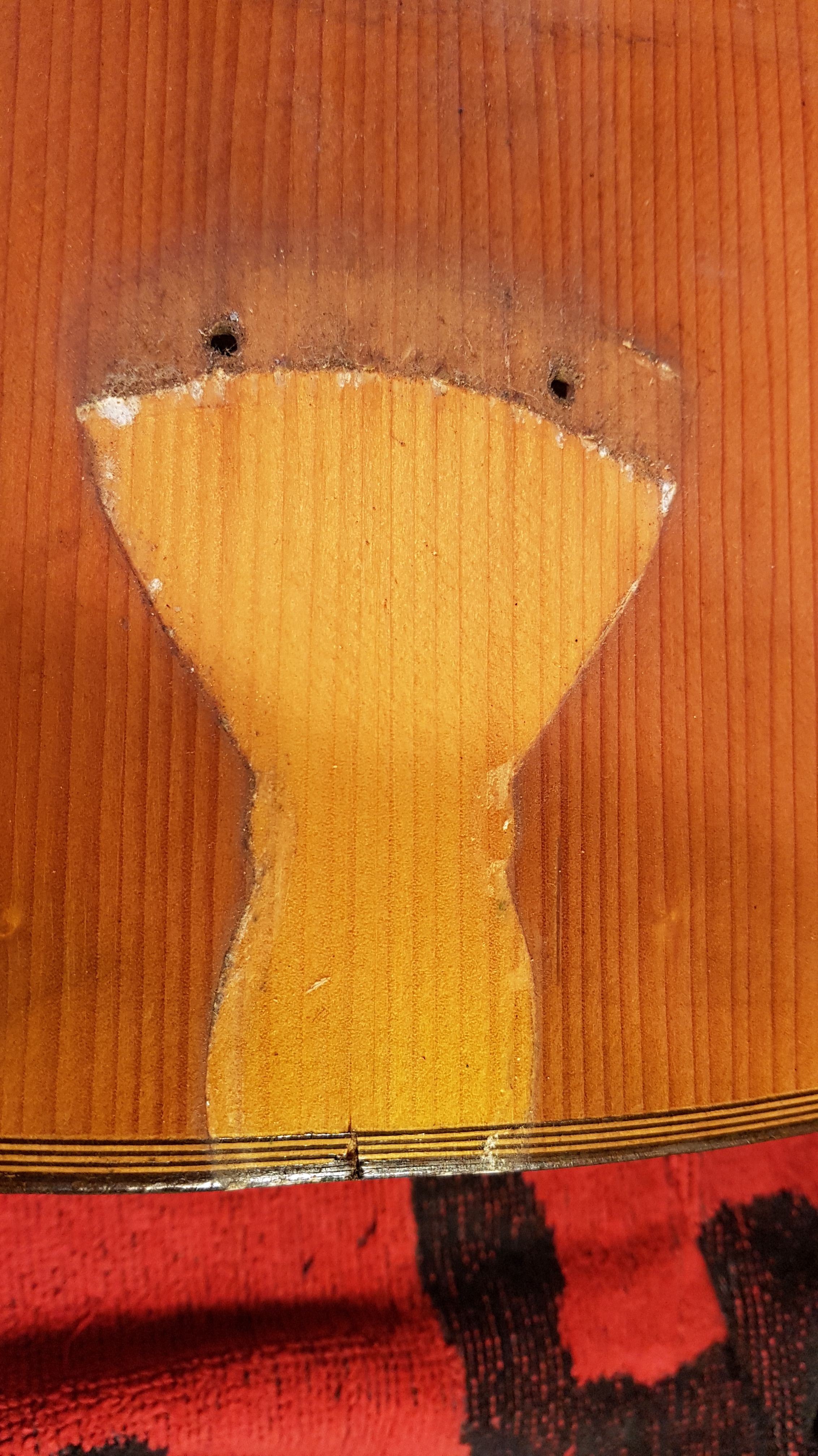
2019-10-05 11.12.09

2019-10-05 11.12.17

That spruce top is book-matched: the two sides of the soundboard are symmetrical down the mid-line of the guitar, showing that they were split from the same board.  Book-matching is a common technique used by luthiers, both for aesthetic reasons and because it’s harder to get a single piece of tonally-acceptable wood of that width.  The tree from which it was cut was probably grown in a plantation; most old growth forest in Europe had been cut by the time this tree started growing.  If you count the number of growth lines across one half of the soundboard there’s about 60, which gives an indication of the  minimum age of the tree at harvest, i.e. it was at least 60 years old when it was felled.  If the guitar was made in around 1925, and given that the wood from the tree would have to season for at least a couple of years, perhaps longer, before it was used,  it means that the tree started growing some time in the mid-19th century.  So the tree that contributed the soundboard has lived through summers and winters of profound historical change in Europe.

The sides, back and neck of the guitar are mahogany, as is the bridge I think.  Nowadays “mahogany” can refer to a range of unrelated tropical trees – see this website for details.  But when this guitar was made, mahogany usually referred to wood from species in the genus Swietenia, which naturally grow in Central and northern South America, and the Caribbean.  So the tree that donated the wood was cut out of pristine, or at least long-established, tropical rainforest. One possible source is Belize which was exporting a lot of mahogany to Britain during this period, which may then have been exported all over Europe.

The fret board is probably Brazilian rosewood (Dalbergia nigra) judging by the black streaks or “spider webbing” in the timber. Brazil banned exports of the wood in the 1960s but there’s still much illegal harvesting going on of these and other trees.  This species, and the three in the genus Swietenia, are in the IUCN categories “Vulnerable” or “Endangered” due to their over-exploitation, and are CITES-listed.

Some other, so far unidentified, woods were used in the construction of the guitar, in the marquetry around the sound hole, in the binding around the top, and in the end strap button.  The latter may be ebony from one of several species in the genus Diospyros, which are likewise protected.

The timber used to make these old guitars is a legacy of an age when rapacious exploitation of the world’s natural resources was considered almost a public duty.  There was little or no consideration for the ecosystems that were exploited, or how deforestation affected both wildlife and indigenous peoples.  To some extent the situation has improved and there are global efforts to conserve the old growth forest that remains, albeit with variable results.  But we are far from giving these forests the protection and restoration that they deserve.   Modern guitar makers need to take responsibility for sourcing their materials ethically and sustainably, which some are and some are not.  There’s a really interesting set of articles about this in the series Building a Sustainable Guitar at the Forest Legality website.  At the other extreme the Gibson guitar company pleaded guilty in 2012 to knowingly using timber that was harvested illegally in Madagascar, a trade that Pete Lowry of the Missouri Botanical Garden is quoted as calling the “equivalent of Africa’s blood diamonds”.

Old musical instruments, furniture, and other artifacts have history as well as carbon locked into their timbers.  Therefore I think that it’s incumbent upon us to cherish and use them and not consign the wood to the bonfire or to landfill.  If that sounds too sentimental, then so be it.  But there’s a practical side to this too: they are often better quality than more modern instruments and can be much cheaper.

All of my guitars have names that reflect something of their history.  During the drive down to pick up the guitar from Bedford there was the most incredible rain storm, water lashing across the road and windscreen wipers on full blast.  So I’ve named this guitar The Rainmaker.  You can see the finished result of the restoration in the images at the top of this post.  I’m pleased with it and I hope it lasts another 100 years at least.

One final thing: how does the guitar play and sound?  Well, as I said, the neck has a bit of a curve to it and there’s no truss rod to adjust it, so re-setting it would be a major job.  This means that the action (the distance between the strings and the frets) is very high, especially close to the body.  So I’ve tuned the guitar to an open E chord, have invested in a glass bottleneck, and am using it to learn to play blues slide guitar.  And it sounds pretty good, with a warm, mellow, and (yes) bluesy sound.


Ecologists with gardens: in the current crisis, coordinate your networks to collect standardised data!

20200327_085658

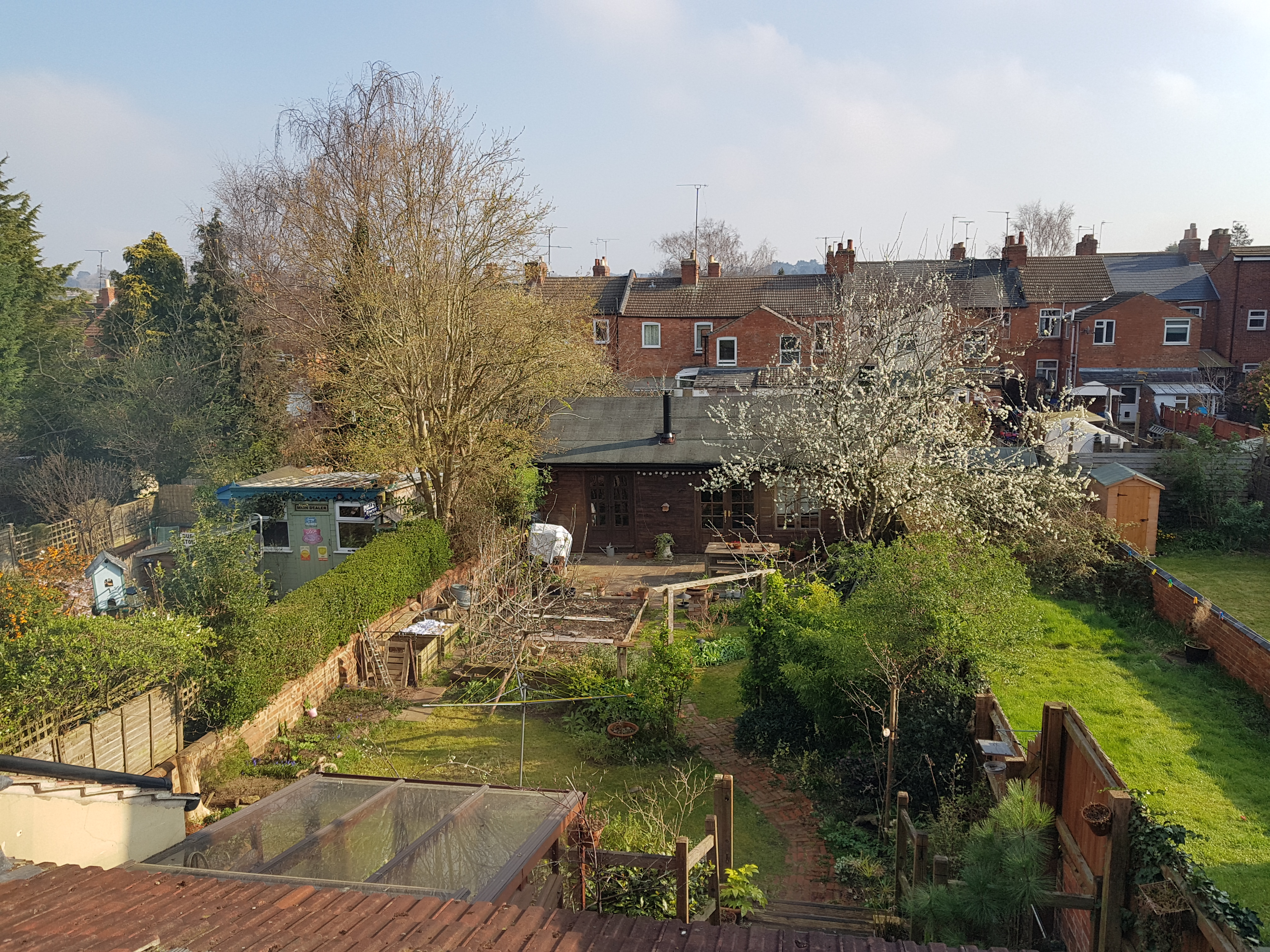
In the current lockdown period of the COVID-19 pandemic, a lot of ecologists are stuck at home: universities and research institutes are closed and it’s not possible to get out and do field work.  Staring out of the window into our garden the other day I had a bright idea and I sent out this email to my network of colleagues in the UK who work on pollinator ecology:

Hi everyone,

I hope you’re all keeping well and safe during this difficult time. Given that we’re all supposed to be socially isolating as much as possible I wondered if we could use the time to generate some interesting data and keep ourselves sane in the process. The idea I had was for as many UK & Irish pollination ecologists as possible to carry out standardised garden surveys of insect-flower visitor interactions over the coming weeks. Combined with information about location, size of garden, floral diversity, etc. etc., it could give us some useful information about early spring plant-visitor garden networks along latitudinal and longitudinal gradients.

For those with kids at home it might be a good way of getting them out into fresh air and giving them something to do.
The response has been phenomenal and a lot of colleagues have agreed to take part.  We’ve worked out a protocol and we are starting to collect data.  If anyone (in the UK or elsewhere in the world) with the requisite pollinator and plant identification skills and experience wants to get involved, please send me an email: jeff.ollerton [at] northampton.ac.uk

Of course others who are less experienced can still help out by taking part in the Pollinator Monitoring Scheme’s  FIT (Flower-Insect Timed) counts: https://www.ceh.ac.uk/our-science/projects/pollinator-monitoring

However, it also struck me that there are plenty of other ecologists who could use their gardens, and networks of colleagues, to collect a large amount of useful data, in a standard way, across a wide geographical area, e.g. plant-herbivore interactions, bird behaviour, earthworm counts, etc. etc.

Let’s get away from our computers and into the fresh air and start generating results!

Reliable videos explaining the medical science around coronavirus COVID-19: please add to them

There’s a lot of crap floating around online about COVID-19: conspiracy theories,  unreliable reports, racist claptrap, and so on.  As scientists and educators I think it’s important that we share the reliable sources as far and wide as possible.  Here’s some very good videos and lectures that explain some of the medical science about the pandemic.  If you know of others please post them in the comments below.

If you are experiencing symptoms or want to know what to look out for, here the NHS’s advice site which is regularly updated: https://www.nhs.uk/conditions/coronavirus-covid-19/


How can we control the coronavirus pandemic? | Adam Kucharski TED Q & A:


Some background to vaccines and the search for one for COVID-19:


Why COVID-19 is hitting us now — and how to prepare for the next outbreak – a TED Talk:


Really interesting talk on the link between the wildlife trade and COVID-19.  Makes a very important point:  “The majority of the people in China do NOT eat wildlife animals. Those people who consume these wildlife animals are the rich and the powerful –a small minority”:


Most of what I’ve found has been in English, but here’s some talks that are in other languages:


Digital resources for teaching biodiversity online: some ideas to steal

Andrena bicolor

As I mentioned in an earlier post this week, the University of Northampton is stopping all face-to-face teaching from Friday.  Other UK universities have already done that, more will surely follow.  Luckily we are close to the end of term and I only have a few teaching session left to deliver for my Biodiversity & Conservation class.  For one of these I’ve dusted off an old “virtual seminar” that I put together a few years ago when I had to miss another class (I think I was ill).  If anyone is in need of a teaching resource like this, you are most welcome to steal it.  It’s infinitely adaptable.  The range of digital resources can be changed to reflect different countries and languages.  Also, I’ve deliberately kept it broad in scope, but you could tailor it in multiple ways.

It could also be integrated into the two other taxonomy and biodiversity teaching sessions I’ve discussed in the past:

The Taxonomy of Gastronomy – https://jeffollerton.wordpress.com/2016/11/17/engaging-students-with-the-fundamentals-of-biodiversity-1-the-taxonomy-of-gastronomy/

An Assessed Plant Taxonomy Questionnaire – https://jeffollerton.wordpress.com/2016/11/22/engaging-students-with-the-fundamentals-of-biodiversity-2-an-assessed-plant-taxonomy-questionnaire/

Again, feel free to steal these if they are useful


Here’s the text I send to students:


Digital resources for biodiversity: a virtual seminar

One of the great advances in understanding how biodiversity is distributed in time and space, and how it is changing, is the huge amount of digital resources (both raw data and data visualisation) that are available via the internet at no cost.  In this virtual seminar you will explore just a fraction of these resources; bear in mind that many more are available.

First of all, read this blog post about the definition of “biodiversity” and what it really means:

https://jeffollerton.wordpress.com/2016/01/22/tight-but-loose-just-what-is-biodiversity/

[Note: if that post isn’t suitable, you could point them to another definition, e.g. the Wikipedia entry: https://en.wikipedia.org/wiki/Biodiversity.]

Next, take a look at each of the digital resources for biodiversity listed below.  Spend some time exploring each website and the information that is available.  As you are doing so, consider this: do these digital resources provide data and information that corresponds with all aspects of biodiversity, as defined in that blog post and by your own understanding of the term?  If not, what’s missing, what else is required?  Do a web search and see if you can find resources to fill any gaps yourself.  [Note: at this point you could ask more specific questions about these resources and their usefulness for particular tasks or objectives, or set up a chat room in a VLE or similar to discuss issues raised].

Digital resources:

Global Biodiversity Information Facility (GBIF)

https://www.gbif.org/


United Nations Environment Programme (UNEP) Data Explorer

http://geodata.grid.unep.ch/


Interaction Web Database

https://www.nceas.ucsb.edu/interactionweb/


Kew Herbarium

http://apps.kew.org/herbcat/gotoHomePage.do


National Biodiversity Network (NBN) Atlas

https://nbnatlas.org/


Database of Insects and their Food Plants

http://www.brc.ac.uk/dbif/


Natural History Museum Data Portal

data.nhm.ac.uk/


British Trust for Ornithology (BTO) Garden Birdwatch

https://www.bto.org/volunteer-surveys/gbw/results


British Trust for Ornithology (BTO) Bird Trends

https://www.bto.org/about-birds/birdtrends/2019


Global Biotic Interactions (GloBI)

https://www.globalbioticinteractions.org/about.html


Global Invasive Species Database

http://www.iucngisd.org/gisd/


Ecologists in a time of COVID-19

20200311_140421

Yesterday I was involved in what’s likely to be be my last face-to-face teaching and meetings from some weeks, possibly months.  In the morning my colleague Duncan McCollin and I watched our final year students take part in an assessed debate that pitted two sides against one another to argue whether or not Brexit will have a negative effect on biodiversity.  The students did very well, they had a great grasp of the issues and the facts and figures.  The end result was very much a draw:

2020-03-16 10.35.33

Teaching at the University of Northampton will go online from the end of the week and a field trip for our first year undergraduates that we had planned for this Thursday has been pulled.  Our annual Tenerife Field Course has also been cancelled: this will be the first year since 2003 that I have not visited the island and it’s going to leave a hole in my long-term data sets.  Perhaps the universe is telling me that it’s time to write them up for publication?

Last week I did a quick vox pop on Twitter to ask how COVID-19 has affected ecology field work at other universities:

The response was interesting and it’s clear that overseas field courses have been massively impacted.  Following the UK Government’s advice yesterday about limiting social contact it seems that local field work for student groups will also be affected.  Hopefully those undertaking individual field work, especially PhD and postdoctoral researchers, will still be able to carry out their data collection.  Do let me know in the comments if it’s affecting your work.

There were also some Twitter responses from professional ecological consultants pointing out that they may not be able to carry out surveys of sites for planning and development purposes.  This is yet another way in which COVID-19 is going to impact our economy.

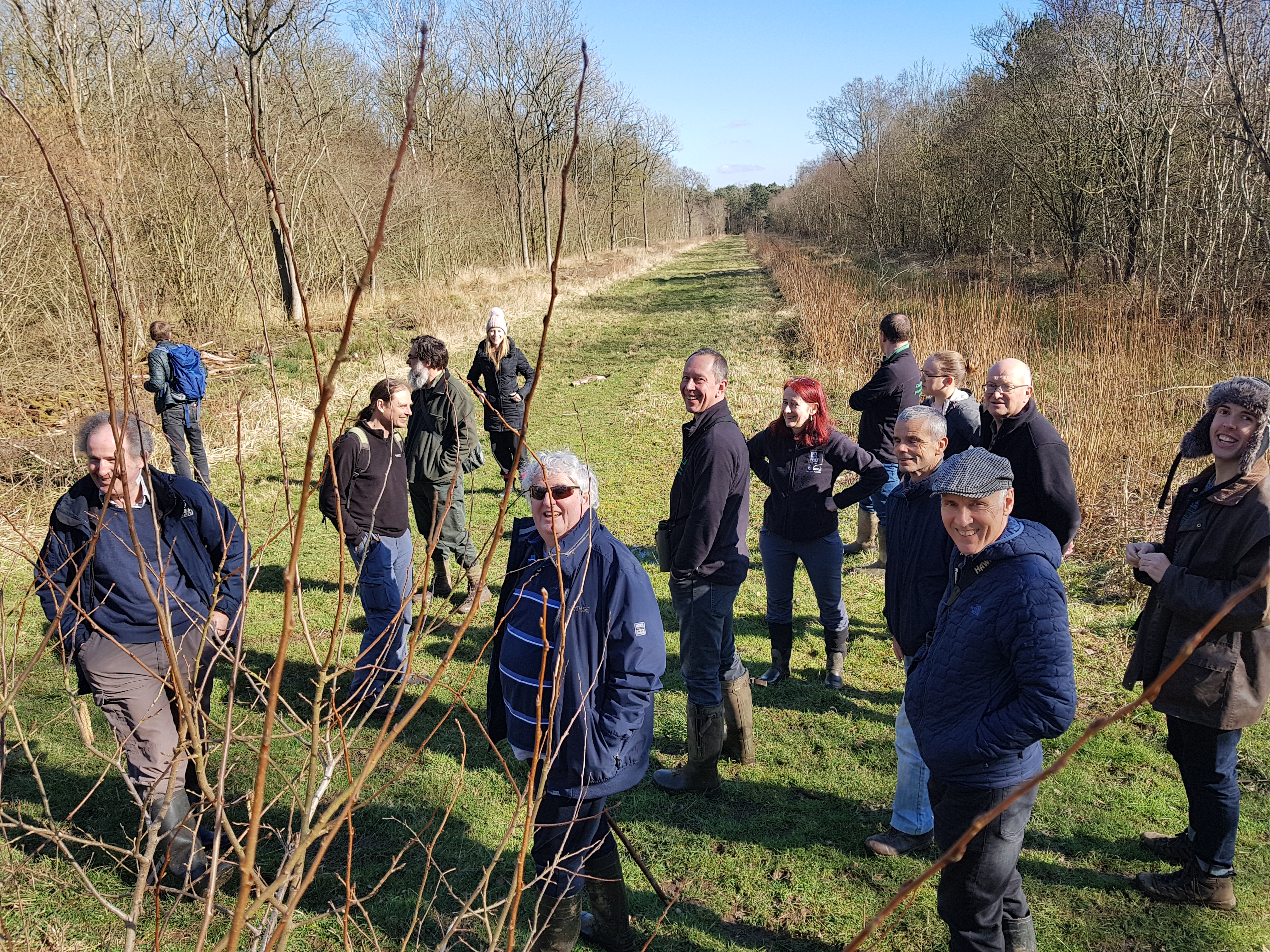
Following the student debate, Duncan and I headed out to catch up with a meeting of the steering group of the Chequered Skipper Reintroduction Project   We missed the morning’s presentations but arrived in time for the lunch and a short field trip:

2020-03-16 14.25.51

The location of the reintroduction is still being kept secret, as is a second site where a further reintroduction of butterflies from the Belgium population is being considered.  However there was much discussion as to whether restrictions on travel means that this would have to be delayed until next year.

On the way to that site, during a 15 minute drive, we spotted seven red kites.  They are now so common that seeing these amazing birds hardly requires comment.  But we should never forget what an incredibly successful conservation story this has been.  To cap it all, when we arrived at the site I had the pleasure of meeting Karl Ivens, one of the main drivers behind the reintroduction of red kites to Northamptonshire. He now estimates the regional population to be a couple of thousand birds.  The guy deserves a statue, or at least a blue plaque on his house!

On the way home I was thinking about my next blog post and what to write, and whether or not to bring the pandemic into it.  There’s a lot of information, and misinformation, about COVID-19 online and I’m not qualified to add to that: I’m not an epidemiologist.  However I’d like to link to a few things I think are worth reading.

Over at the Dynamic Ecology blog, Brian McGill has posted an open thread on ecologists discussing the coronavirus pandemic.  There are some interesting contributions in the comments, particularly around the response of the UK Government to the crisis.  I was struck by Jeremy Fox’s comment that Britain has some brilliant epidemiological modelers and that “even if you don’t think much of Boris Johnson or his senior advisers, the modelers who are feeding them information and advice are intellectually honest, hardworking, care deeply about protecting the public, and are as good at their jobs as anybody in the world.”  As I pointed out in a reply, this is undoubtedly true, but a lot depends on whether the government is willing to implement that advice. And its track record so far is not inspiring: for years it ignored expert advice on the effects of badger culling on the spread of bovine TB and continued to kill badgers. It’s only just reversed that decision.  Let’s hope that they have learned from that experience.

I am also hoping that there will be at least one positive outcome from the current pandemic on top of recent extreme weather patterns linked to climate change (for example the drought and fires in Australia that I blogged about in January).  I hope that it serves to  remind the public, governments and large corporations just how dependent on the environment our society is.  Despite our advanced technologies, we are incredibly sensitive to disruptions in the natural world.  As this old piece from the New York Times points out: “most epidemics — AIDS, Ebola, West Nile, SARS, Lyme disease and hundreds more that have occurred over the last several decades — don’t just happen. They are a result of things people do to nature“.   That was in 2012, long before COVID-19 was discovered.  To update this, check out the Wildlife Conservation Society’s ongoing series of articles about the relationship between our destruction of natural habitats, the trade in illegally (and legally) hunted animals, and emerging diseases such as COVID-19.

I realise that I’m fortunate and that there’s a lot that I can do by working from home.  For the next few weeks I’ll be doing just that, supporting students online, completing grant and manuscript reviews, having Zoom/Skype meetings, and completing the book that I am writing.  Stay safe everyone.

Forest restoration for climate change: don’t forget the pollinators and seed dispersers

2020-02-07 09.29.47

There’s been much discussion in the news and online recently about seed collecting, habitat restoration, and tree planting as a way of storing carbon in an effort to reduce the effects of climate change.  This is one of the (many) elements proposed by the recent Drawdown Framework.  In fact their “Table of Solutions” ranks tropical forest restoration in the top 5 to 10 ways of reducing CO2 in the atmosphere, and temperate forest restoration and planting in the top 20.

At one end of the spatial scale, Markus Eichhorn relates the story of his father’s obsession with collecting oak seedlings to reforest the local countryside.  At the other, there’s some very high profile forest restoration schemes going on at the moment; here’s a couple that immediately come to mind:

Grain for Green – China’s attempt to restore vegetation to abandoned farmland to reduce soil erosion and flooding.  According to the Wikipedia entry “Grain for Green has involved 124 million people in 1,897 counties in 25 provinces……. By 2010, around 15 million hectares of farmland and 17 million hectares of barren mountainous wasteland were converted back to natural vegetation”.

Great Green Wall – a multinational initiative in Africa aimed at restoring the vegetation on the southern edge of the Sahara to combat desertification and mitigate climate change.

Several countries have also made a great deal of noise about marshaling huge public efforts to plant hundreds of millions of trees in a single day,  for example India and Ethiopia.

These big schemes are all well and good: they generate a lot of publicity for actions on climate change and a warm, fuzzy feeling that governments and people are Doing Something.  But there’s a couple of problems.  First of all, planting trees is not enough: we could not plant enough trees in the world to reduce CO2 to pre-industrial levels.  Secondly, planted trees require nurturing.  It is not enough just to put in some young plants and hope for the best; a high proportion of trees die even when well looked after.  If they are just planted and ignored, who knows how many will survive?

However habitat restoration is important; it’s not a silver bullet solution to climate change, but it is part of our toolbox of Things We Can Do.  Just as importantly, restoring habitats provides more opportunities for species to move in response to changing climates, and to recolonise areas from where they have been extirpated.  And of course diverse, functioning ecosystems support human societies in ways both tangible and unquantifiable.

With all of this in mind I was interested to read a piece by John Carey in PNAS entitled   “The best strategy for using trees to improve climate and ecosystems? Go natural“. There’s some really inspiring stories in here, it’s well worth taking a look.  The main message of the article is that allowing forest vegetation to naturally regenerate, from seeds, and dormant roots and stumps, is by far the best way to ensure that trees survive and the restoration is successful.  However there’s something fundamental missing from that article: the role of species interactions in determining the survival of these forests over long time scales.

The vast majority of the world’s plants are animal pollinated; this includes trees.  Even in the UK where we often associate trees with wind pollination, about 65% of our native species are insect pollinated.  In the tropics this can rise to 100% of species within a community.  Although many of those trees can engage in some self-pollination, in the long term this is likely to result in genetic problems associated with inbreeding.  Outcrossing sex is common in plants for a good reason.

Similarly many trees require animals to move their offspring away from the parent plant.  This avoids competition between parent and offspring, and the impacts of diseases and pathogens caused by the Janzen-Connell Effect.  I don’t have any comparable statistics on the proportion of trees, regionally and globally, that use animals as seed dispersers (does anyone?  Please comment below if I’ve missed something).  But I’m willing to bet that it’s a high proportion.

Without pollinators and seed dispersers, restored forests will not flourish in the long term.  There seems to be an implicit assumption that once the forests are established, the pollinators and seed dispersers will follow.  That may be true up to a point, but it shouldn’t be taken for granted, particularly for isolated fragments of forest with no ecological connections to more established areas of woodland.  These are the aspects that are missing from John Carey’s (otherwise fine) article, and indeed from wider discussions about forest restoration and tree planting.  As so often when we talk about the conservation of biodiversity we neglect to consider the role of species interactions.  I’ve been trying to press home that point for years, on the blog and in papers, and I was pleased to see an interesting contribution to this topic by Pedro Luna and colleagues from Mexico on “Measuring and Linking the Missing Part of Biodiversity and Ecosystem Function: The Diversity of Biotic Interactions“.

Let’s not forget: species do not occur in isolation, and the biodiversity of species interactions in fundamental to the ecology of the planet.

Impact of extreme events on pollinators: download it for free

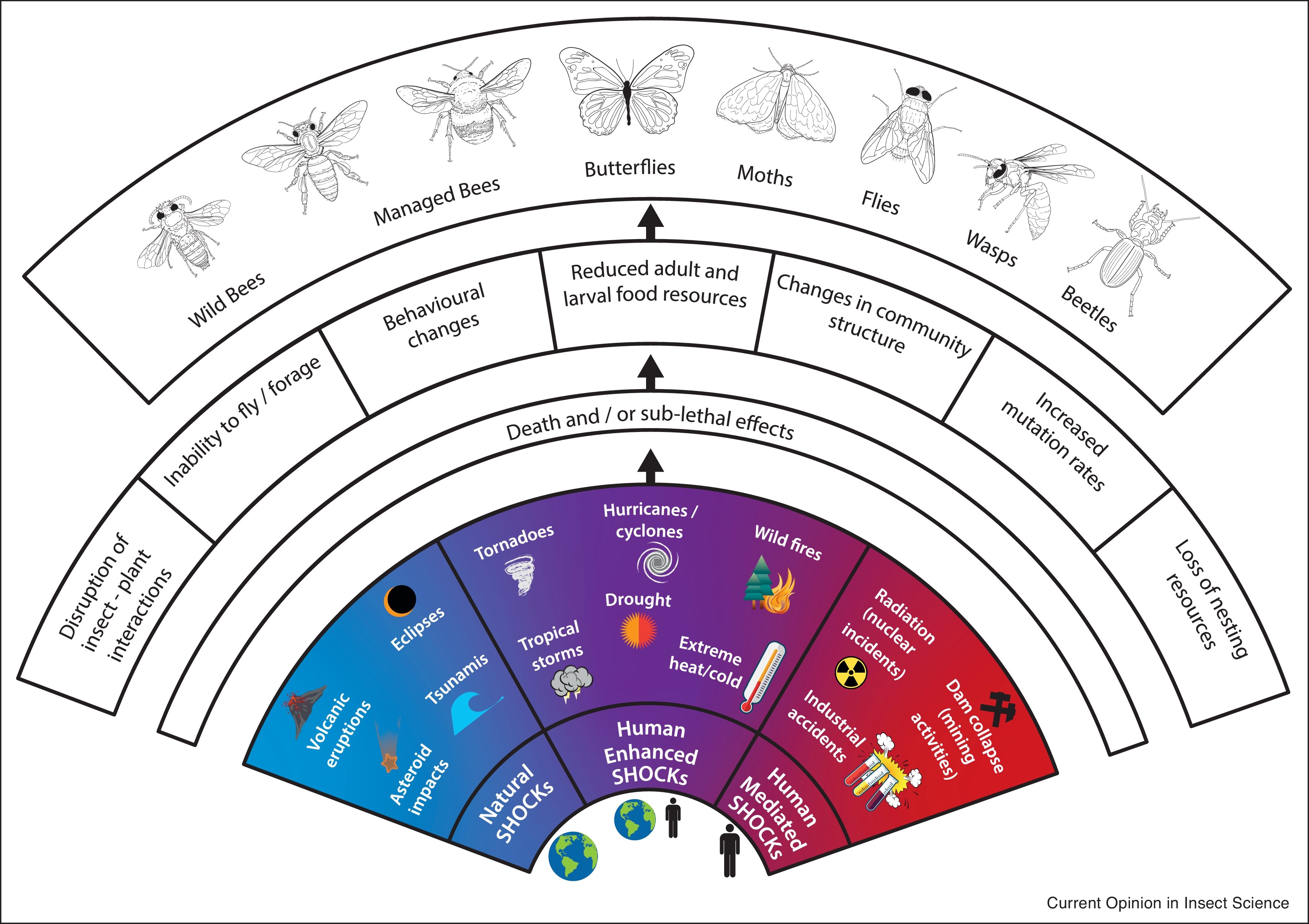
SHOCKs image

In my last post I highlighted a couple of recent papers on climate change and extreme events, and how they impact pollinators.  The Erenler et al. (2020) mini-review paper that I mentioned has now been published and is available for free download for the next 50 days.  Follow the hot link here:

Erenler, H.E., Gillman, M.P. & Ollerton, J. (2020) Impact of extreme events on pollinator assemblages.  Current Opinion in Insect Science 38: 34-39

This review is one of several from a themed issue of Current Opinion in Insect Science devoted to Ecology.  The issue is edited by Tom Ings from Anglia Ruskin University and Sarah Arnold from University of Greenwich.


Pollinators, climate change, and extreme events: two recent publications

SHOCKs image

Well, we’re back in the UK now and have just about got over the jet lag.  I’ve returned to teaching, admin, and meetings, and both Karin and I are trying to find time to finish our books.  But the persistent backdrop to our stay in Australia – the bushfires and the role of climate change, and the ensuing tensions between scientific evidence and politics – is still fresh in our minds.  It’s timely, then, to highlight two new papers that focus on extreme events, climate change and pollinators.  The first is one of my own, led by Dr Hilary Erenler who carried out her PhD research in my group.  It’s an invited mini-review in the journal Current Opinion in Insect Science entitled “Impact of extreme events on pollinator assemblages” (Erenler et al. 2020).  The review is available as a pre-print on the journal’s website; we’ve not yet even seen the proofs, though the final version should not be too different.  If you want a copy, just ask.

In this essay we focus on what we term SHOCKS: events that provide a Sudden, High-magnitude Opportunity for a Catastrophic ‘Kick’ to the environment that can negatively affect pollinator assemblages in many different ways.  Such events can be natural, human-mediated or human-enhanced, and occur suddenly, at a high-magnitude and with possibly catastrophic outcomes for those pollinators. There are many examples of such SHOCKs, as we illustrate in the figure above which comes from the paper.  However one of our main conclusions is just how little we understand about the outcomes of such events on pollinators.  Ideally we need before, during and after event monitoring to assess how pollinators have been affected and may respond.  But SHOCKs are, by their very nature, infrequent and unpredictable, and often we don’t have the baseline data with which to compare to post-event data.  I know from conversations with Australian pollination ecologists that some have had their field sites burned and they are going to use this as an opportunity to assess how the fires have impacted pollinators.  Field experiments such as the one by Biella et al. (2019) that I discussed last year, in which flowers were removed from a plant community, may also give us some insights into the response of plant-pollinator networks to sudden SHOCKs.  But we need more research focus on this topic, especially consideration of how the impacts of SHOCKs can be reduced and mitigated.

One set of emerging human-enhanced SHOCKs highlighted by Erenler et al. (2020) is extreme weather events that are being exacerbated (in scale or frequency) by anthropogenic climate change.  We cite several papers and reviews that have considered this, but there’s still few empirical studies that have actually looked at how weather SHOCKs might be impacting pollinators.  It’s therefore timely that this week’s Science includes a very impressive study of how climate change has affected populations of bumblebees (Bombus spp.) in Europe and North America (Soroye et al. 2020).

The title of the paper rather gives away its findings:  “Climate change contributes to widespread declines among bumble bees across continents“.  This study shows that, for the 66 species of Bombus studied, there had been a decline in species diversity in 100 km x 100 km quadrats of, on average, 46% in North America and 17% in Europe.  This loss of diversity has occurred in the period 2000–2014, relative to a baseline of 1901–1974.  Using some sophisticated analyses they show that climate change has been the main driver of these losses, and has been more important than factors such as changes in land use, pesticides, etc.  Which is not to discount those other contributors to pollinator loss: they can interact with climate change and are all part of the assault that we are imposing on the environment.

The most significant finding of the Soroye et al. (2020) study, and the reason why I’m discussing Erenler et al. (2020) in the same post, is that it’s extreme heat which seems to be the driving factor in determining Bombus declines.  Bumblebees are large, hairy insects because they are adapted to cooler conditions: they are not, by and large, tropical insects, except in mountainous areas.  Not surprisingly, then, it is the number of days of temperatures higher than those historically encountered by particular bee species that is the main driver of their loss from a region.  In relation to the figure above, this is the result of human-enhanced SHOCKs, and for heat-sensitive species like bumblebees, they are occurring more often than we had imagined when we wrote our review.  I fear that the coming years will see more examples of this as the effects of anthropogenic climate change continue to play out and our world experiences more extremes of weather events that are hotter, wetter, colder, drier, windier, and more combustible than we have previously known.

References

Biella P., Akter A., Ollerton J., Tarrant S., Janeček Š., Jersáková J. & Klecka J. (2019) Experimental loss of generalist plants reveals alterations in plant-pollinator interactions and a constrained flexibility of foraging. Scientific Reports 9: 1-13

Erenler, H.E., Gillman, M.P. & Ollerton, J. (2020) Impact of extreme events on pollinator assemblages.  Current Opinion in Insect Science (in press)

Soroye, P., Newbold, T. & Kerr, J. (2020) Climate change contributes to widespread declines among bumble bees across continents. Science 367: 685-688 [see also the commentary by Bridle and van Rensburg pp. 626-627 of the same issue]

Neither left nor right, but international environmentalism: Australia reflections part 8

2020-01-13 12.17.33

The NASA Earth Observatory reported this week that “explosive fire activity” has caused smoke from the Australian bushfires to enter the stratosphere and be carried half way around the world.  That smoke is currently creating hazy skies and colourful sunrises and sunsets across South America.  In the coming months the smoke will complete a full circuit and arrive back in Australia, and then continue onwards … for who knows how long?

Nothing I’ve read this week sums up better the fact that the world’s environmental challenges, including climate change, are global in scale and scope.  They therefore require global initiatives to solve.  But as I’ll argue below, equating “green” politics with the left and “anti-environmental” policies with the right is an unhelpful characterisation.

Despite the need for global action, the world’s political landscape seems to be going in the opposite direction.  Inward-looking, right-wing populism is on the rise, and governments are hunkering down into a siege mentality of denying that there are any environmental problems that require serious, long-term action.  The Australian government, bolstered by the Murdoch-owned media empire (see Michael Mann’s recent piece on this in Newsweek), sees the bushfire crisis as “business as usual” even though all the evidence is to the contrary – demonstrated in this interesting piece from two Australian climate scientists.

Elsewhere in the world, Presidents Bolsonaro in Brazil and Trump in the USA are tearing up environmental regulations and “green tape” and allowing “the people” (or at least big business interests) to ransack the natural world for their own gain.  At the same time, one of the less-well-reported elements of Boris Johnson’s various speeches over the past few months has been its emphasis on the environment (he even used the word “biodiversity” in one of them) and the pressure he put on the other leaders of the G7 countries at their most recent meeting.  Perhaps that should come as no surprise given that Boris’s father, former Conservative MEP Stanley Johnson, has sound credentials as an environmentalist, particularly during his time with the European Commission. Indeed, in the mid 1980s Stanley Johnson received an award from Greenpeace for “Outstanding Services to the Environment”.  He’s even written for The Guardian, which is not the natural home for a member of the Conservative party.  There are other Conservatives with sincere pro-environmental attitudes (Zac Goldsmith and Rory Stewart come immediately to mind) and whatever you may think about their views on other topics, you can’t doubt their sincere environmental commitments.  And of course there are pro-environmental politicians in the Labour Party, and the Liberals and the SNP and Plaid Cymru and…..well, just about all of them.

Globally, both right- and left-governed states have variable environmental policies. Two countries recently reported that they had made extraordinary progress in tree planting restoration schemes: India (a right-wing, populist government) and Ethiopia (much more left-leaning).  China (communist in name but who knows what we should call it?) has a very mixed record on the environment, with huge investments in both solar power and coal mining.  It’s hard to get firm environmental data out of communist North Korea but the evidence so far suggests that they are not doing well: see this piece from 2009 by journalist Peter Hayes.

Closer to home, in the last few months on Twitter I’ve been called an “eco-loony” by a farmer; told that my objections to the High Speed 2 (HS2) rail infrastructure project were providing support for climate change deniers by a couple of train buffs; and accused of “sleeping with the enemy” by an environmental activist who didn’t like my stance on another large project.  The latter also tweeted a made-up quote from me to emphasise just how morally corrupt I was. Irony was lost on them I think.  I don’t know the political allegiances of those individuals but if I was a betting man I’d be fairly sure of a good return – definitely a mix across the spectrum.

Hopefully these examples make something abundantly clear: the relationship between politics and environmentalism is not straightforward.  That’s been obvious to me, and many others, for a long time.  But I’m not sure how widely understood this is because the impression that is presented to the public by both the right- and left-leaning media, is that “green equals left”.  And whilst there may be some truth to that currently in relation to the political alliances formed between various Green Parties, there is no historical basis for this correlation.  It’s even mixed up in the minds of the modern-day socialists. A few months ago a left-wing journalist opined that the left had “always” been pro-environmental, yet the (supposedly) socialist website Spiked has been publishing pieces arguing that environmentalists are against the working class and that de-carbonisation strategies will cost jobs – see this piece for instance.  Before anyone comments, I’m aware that Spiked has an odd and paradoxical history…..

Historically, both the far left and the far right have a mixed track record on the environment.  I read an appalling story recently about the Soviet Union whaling fleet killing whales simply to meet targets, not because they were of value economically; the author described it as “the most senseless environmental crime of the 20th century“.  However, communist Cuba set aside 10% of its area as national parks and biosphere reserves, and has a strong environmental track record.  In the 1950s, Maoist China had a policy of killing sparrows and other “pests” that was partly the cause of the Great Chinese Famine in which tens of millions of people died of starvation.  The first National Parks in the world were set up in the USA by what we could broadly consider conservative presidents, but the American legacy of nuclear testing and the fossil fuel industry is nothing to be proud of.  Finally, there is a long history of “green” fascism, from the environmental policies of the Nazis (I’ve not read this book but it looks fascinating), to individuals such as Jorian Jenks who was a founding member of the Soil Association, to modern day “eco-fascists” whose justification for carrying out mass-murder and domestic terrorism is rooted in arguments about reducing population growth in order to “save the Earth”.

It’s telling that Big Capitalism is starting to think more seriously about global environmental problems, how they can be solved, and at the same time create jobs and prosperity (and a buck or two for investors – I’m not naive).  Outgoing head of the Bank of England Mark Carney  has argued that firms and banks need to stop investing in fossil-fuels.  Many are following his lead, or are ahead of that curve, including the bank Goldman Sachs and the $7 trillion investment firm BlackRock which has recently stated that “climate change will become the centre of the firm’s investment strategy“.  Nobel Prize-winning economist Paul Krugman  has argued this week that Australia is showing us “the road to hell” and that governments and businesses of all political stripes and inclination better get on board with the environmental agenda.  Soon!

I firmly believe that neither the left nor the right are the friend nor the foe of environmentalism: there are plenty of historical and current examples of rapacious right-wing and left-wing governments, and also examples of such governments being highly pro-active at reducing  their country’s environmental impact.  The one thing that seems to me to be environmentally damaging is a rigid ideology that is followed through regardless of where it is positioned.

The title of this piece is a word play on a slogan adopted by the Socialist Workers Party: “Neither Washington nor Moscow but International Socialism”.  The environmental challenges facing our planet, our species, and the species with which we share this biosphere, are international in scope and it requires international, multi-partisan political action to address.   Whatever your personal political leanings, if you care about the planet, that statement must be blindingly obvious.  That’s why I’m so supportive of organisations like the UN’s IPBES (Intergovernmental Science-Policy Platform on Biodiversity and Ecosystem Services).  Now, more than ever, the world needs this level of pan-national leadership.

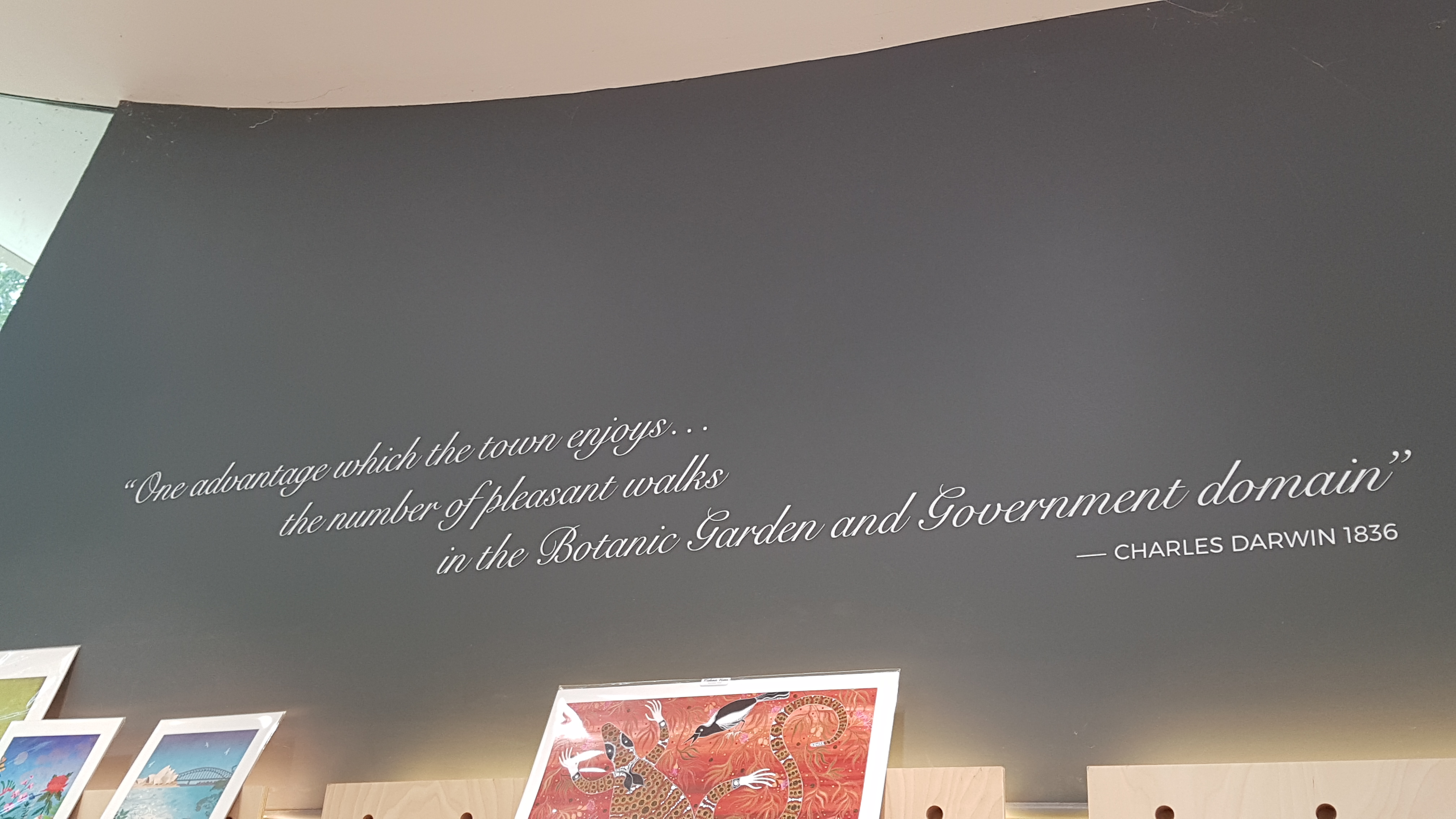
If I’ve learned one thing as an ecologist it’s that the world is a complex, historically contingent and often unpredictable place: simplistic notions of socialism = good/bad and capitalism = good/bad are not going to solve the current crisis of climate change, loss of biodiversity, pollution, and a host of other environmental problems.  Only thinking outside of narrow ideologies is going to do that, and using the tools and strategies that are available to us, including market forces, open democracy, local activism, global movements, and whatever else works.  I’m still optimistic that the world can provide humanity with the kind of  metaphorical “pleasant walks” that Charles Darwin wrote about when he visited the Royal Botanic Gardens, Sydney:

2020-01-13 14.48.59

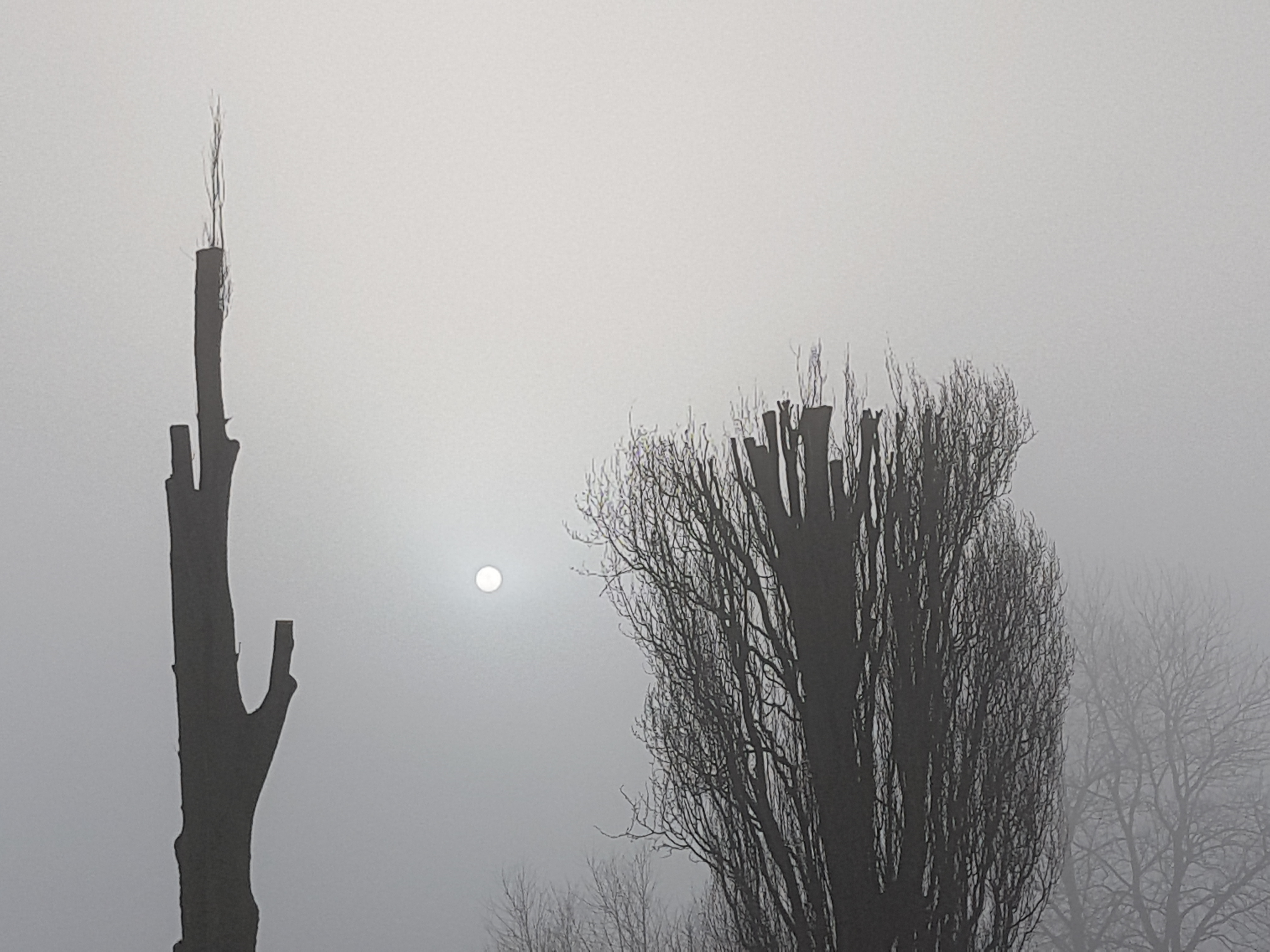
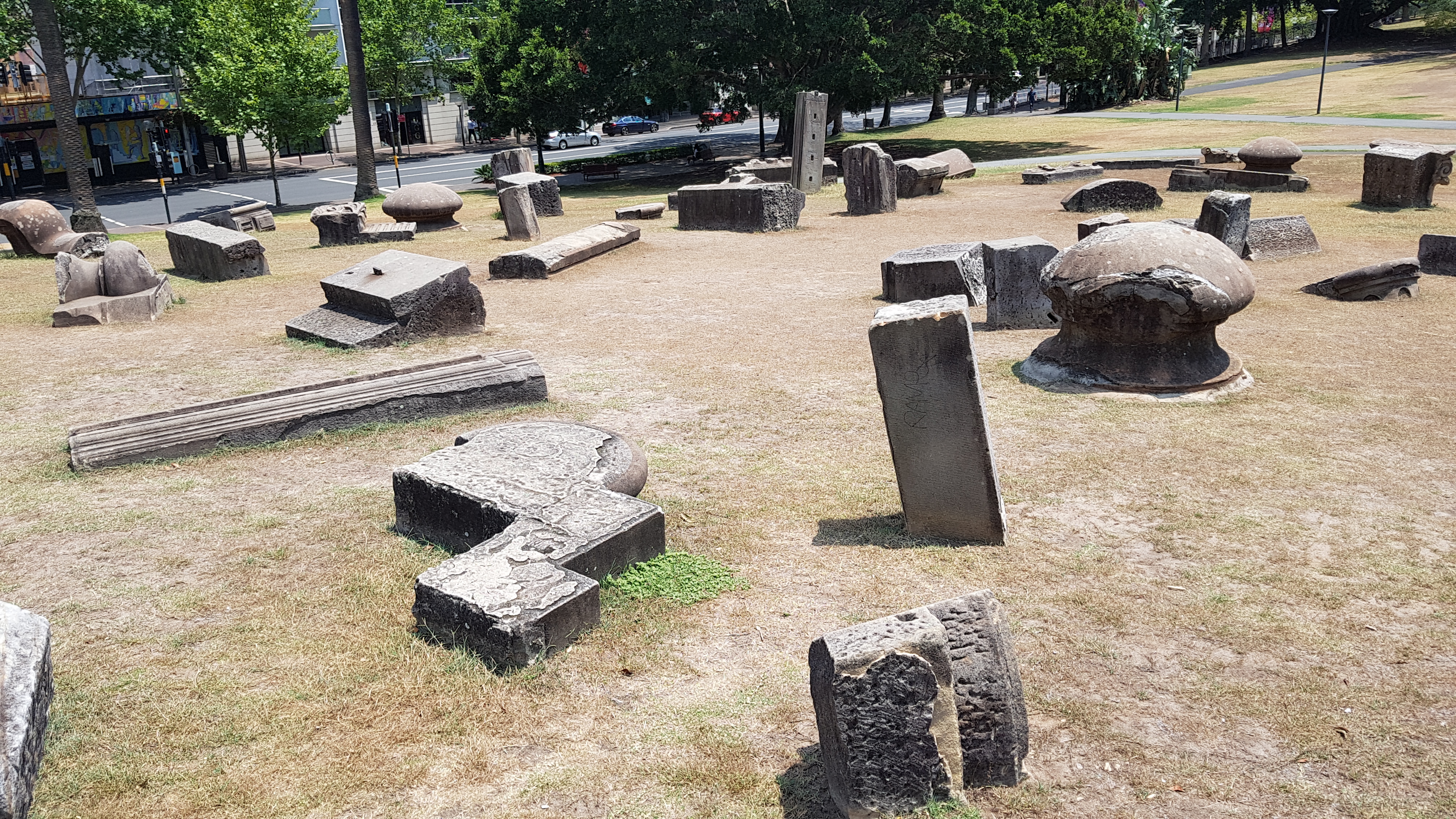
But we have to act fast.  Otherwise the ruins of civilization, and of the biosphere, may be our species’ legacy: that’s why I chose the image that opens this piece.