Tag Archives: Nature

The Living Planet Report 2016 – taking stock with a student seminar

20160118_1319391

This morning I started the first in a series of weekly two-hour seminar sessions with my final year undergraduate students on their Biodiversity and Conservation module.  By this stage in their BSc programme the students are being weaned off lectures and being encouraged to take a more critical perspective on the published scientific literature.  Each week we deal with a specific issue relating to biodiversity such as: measuring biodiversity; current trends; spatial patterns; biodiversity and  ecosystem services; and how much is there still to discover about biodiversity?

This morning we focused on the Living Planet Report 2016, the latest installment of an annual assessment of the rate and extent to which we are losing animals across the globe.  The report, which came out last month, generated a lot of media attention with headlines such as “World wildlife falls by 58% in 40 years” and “World on track to lose two-thirds of wild animals by 2020“.

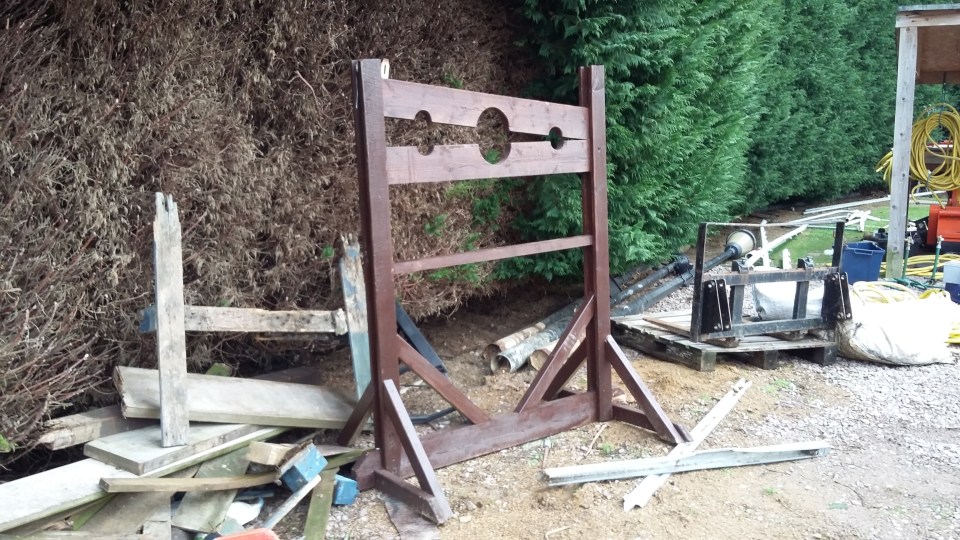
As preparation for the seminar I asked the students to read the first chapter of the report and then during the session I divided them into groups of three in order to take stock* of the report and answer a series of questions such as:

What do you understand by the “Anthropocene”?

What do you understand by the “Living Planet Index” (LPI)?

How do the LPIs vary across the planet and across taxonomic groups?

What is the evidence base for these trends?

Which LPIs show the greatest declines and which LPIs show the least declines? Can you account for these patterns?

Which LPI trend do you consider to be the most worrying, and why?

By way of a counter-point to the media hype, and to consider one potential area of criticism of the report, I also ask the students to look at critiques written by Simon Leather (You don’t need charismatic megafauna to go on an exciting safari) and Ryan Clarke (What about the little things?).  In both of these posts the bloggers take the report to task by pointing out that it ignores the vast majority of animal life, i.e. invertebrates such as insects, crustaceans, and so forth.

Simon and Ryan have a valid point, of course, but the fact of the matter is that we simply don’t have the same quality of long-term population data for invertebrates as we do for  birds, mammals, fish, reptiles and amphibians.  The exception to that is the butterflies which the Living Planet Report does discuss, devoting a whole page to grassland butterflies.  It also states (p20) that “Methods to incorporate invertebrates and plants are now in development”.

Although the hype around the report is a bit over the top, nonetheless this focus on the best possible data sets does emphasise the fact that the world’s biodiversity is declining in species richness and abundance.  The final question I ask the students is whether, in their opinion, we on the verge of a “Sixth Mass Extinction” (as the report suggests).  A show of hands at the end showed that about half think “yes”, a quarter think “no”; and a quarter (myself included) said “we don’t know”.  It was a nice demonstration of the complexities around coming to any kind of consensus when it comes to reports such as this.

All-in-all it was a great session, the students really engaged with it and raised some very interesting points.  I’m looking forward to the rest of these seminars, they promise to be very stimulating.


*Before anyone comments, yes, I know that the photo shows a pillory not a set of stocks.  But we don’t have a set of stocks at the university, only a pillory.  Exactly why we have a pillory on campus is another matter…..


Scientist as Poet as Scientist – from Dark Mountain 10

Dark Mountain on Tenerife 1

What follows is the text from an article that has just been published in Dark Mountain issue 10. Click on that link and you can read more extracts from this volume of poetry, prose, and illustration, and even purchase a copy.  Dark Mountain 10 focuses on “poetics”, hence the title and topic of my contribution.

The Dark Mountain project is a fascinating, vibrant, loose network of writers, thinkers, musicians and artists, whose work and ideas I’ve discussed previously (see:  Up a mountain darkly and We are so very ‘umble).  It’s a great achievement that they (we) have made it to ten issues; here’s to the next 10.


Poet as Scientist as Poet

For as long as I can recall I have been a scientist. Early memories as a child include turning over rocks and probing under bushes in search of elusive insects, dissecting knowledge from road kill, and splitting it from fossil-rich shale. But also, for as many years as I can remember, I have created poetry. Sometimes this has been permanent written text, other times only thoughts and fragments, committed to temporary memory and ultimately lost like the bugs I studied in jars and released back into the wild. Over time the science has become public-facing as hobbies were turned into a career. The poetry remained turned inward, written for myself, only occasionally on show to lovers or to audiences at local spoken-word events.

Perhaps the idea of scientist as poet is too contradictory to bear serious scrutiny, but both of these aspects of my life relate to a deep, enquiring curiosity that has always been present. Both reflect a need to understand something of this complex, confusing world we inhabit, and the place of people and their relationships with one another, and with the environment in a wider, encompassing nature.

In the first volume of Dark Mountain I stepped out as a scientist-poet and contributed an essay-with-poetry entitled ‘W(h)ither Science?’, which was a very personal take on the role of scientists, and the knowledge they generate, in the early 21st century. This piece was framed within the context of Uncivilised ideas of ‘what happens when it all goes wrong?’ I prefer to think of it as ‘if’ rather than ‘when’ because, as I originally put it, ‘knowledge is not predictable’. In other words, we don’t know what will happen in the future, so we can only prepare for a range of outcomes. If we take the best of the sciences and of the arts, and of the education they generate, perhaps we can survive as a species and as a set of communities.

Was that really only six years ago? So much has happened in the intervening period; the science has turned ever more outward, with more writing for scientific journals, magazines, my blog, and more presentations of the research undertaken by my group to other scientists, to policy makers and NGOs, and to the public. The poetry, meanwhile, has remained private, which led me to consider whether it was time to give up a little more. The two short poems in this essay were both written more than ten years ago, though they have been revised and polished periodically. Even as I began to construct this piece I was revising words and reconsidering sentence structure, much as I might revise the analysis of a data set or reconsider its interpretation when writing a scientific paper. One of the things I love about producing poetry is that its form is malleable, it’s never complete, I can change it when I wish. This malleability is also a feature of science: we revise our ideas when confronted with new evidence, rejecting previously supported hypotheses in favour of more accurate notions of the universe.


Chains of Copper, Locks of Lead

Mention a river:
I may have heard of it,
Or talked to a woman who has gazed at its bed.
Cage its waters, bind its banks,
With chains of copper, and locks of lead.

Ultimately bending to time, eroding
The surge and the volume sustaining, removing.

Weighed down, I lay down,
And the river unconscious
Passed over my body and on to the sea.
While my lover cast stones from the bank to the current.
The banks of my body, the river of me.


Due to their inherent chemical properties, both lead and copper are relatively ductile, weak metals: they cannot withstand the force of a river indefinitely. In the same way, no matter how much we believe we can tame rivers or seas or any other component of the natural world, ultimately the environment will prevail. It just takes time. We might canalise a river to prevent flooding or dam it to provide hydro-electricity, but not realise that in its untamed state the river is more valuable, as it provides food, allows travel, brings fertility to flood plains. What, then, does it mean to ‘know’ something about a river? Whose knowledge is more valuable, which expert do we trust? The internet is awash with information, but knowledge, first and second-hand, can both enlighten us and sometimes prevent us from really understanding.


Ordinary by Choice

She chose the route and chose her topics,
Modular waypoints across years of work.
Decisions based on the balance of a gyroscopic
Pursuit of life, work, and an honours degree.
Finally, she elected to be
Ordinary by choice.


A student who chooses not to complete a final year dissertation
module – and so graduate with Honours – but rather exit university with an Ordinary degree, is described as ‘Ordinary by choice’. The phrase strikes me as both poetic and prophetic. Could anyone choose to be ‘ordinary’, and even if they could, is such a thing desirable? Is the course of a simple, ordinary life preferable to one that is complex and extra-ordinary? Does anyone truly believe that their experience of our rich, intricate world, in which decisions are made about priorities and ‘balance of life’, is ordinary, no matter how they make a living or what they do to fill their days?

Education in its widest sense, both formal and informal, taught and autodidactic, is a constant and destinationless journey that takes us from ignorant to less-than-ignorant. It is no coincidence that we use the same word (‘course’) in education, and to describe a river, and a life. A river’s function, as far as people are concerned, depends on choices that we make as to its course and fate. But even without human intervention that course naturally shifts over time and its destination is not necessarily the sea: much depends on geological events and the resulting topography of the land, at time scales uncaptured by the course of an individual’s experience.

The scientific research that I undertake is an attempt to capture truths about the ecological functioning of our planet and how it underpins human societies, no matter how technological or industrialised. It takes collected, often hard-won, data, internally scrutinises it for meaning, and externalises the findings into tables, graphs and written texts, that may influence other scientists or emerge in government reports or policy documents. My poetry takes ideas, emotions, feelings, and projects that mix of internal and external worlds into forms that sometimes, but not always, make sense to me. Empirical truths and emotional truths are not the same thing, and in fact may be contradictory and counter-factual. But empirical rationalism and emotional construction can coexist, and often do within the minds and personalities of scientists. Most do not produce poetry, but every scientist I know is emotionally invested in their subject and openly describes their science in terms of delight, rage, obsession, elation and disappointment, every bit as intense as any poet.


The full reference for this is:

Ollerton, J. (2016) Scientist as Poet as Scientist  Dark Mountain 10: 185-189

John Clare: Landscape & Learning – Northampton – 11th November

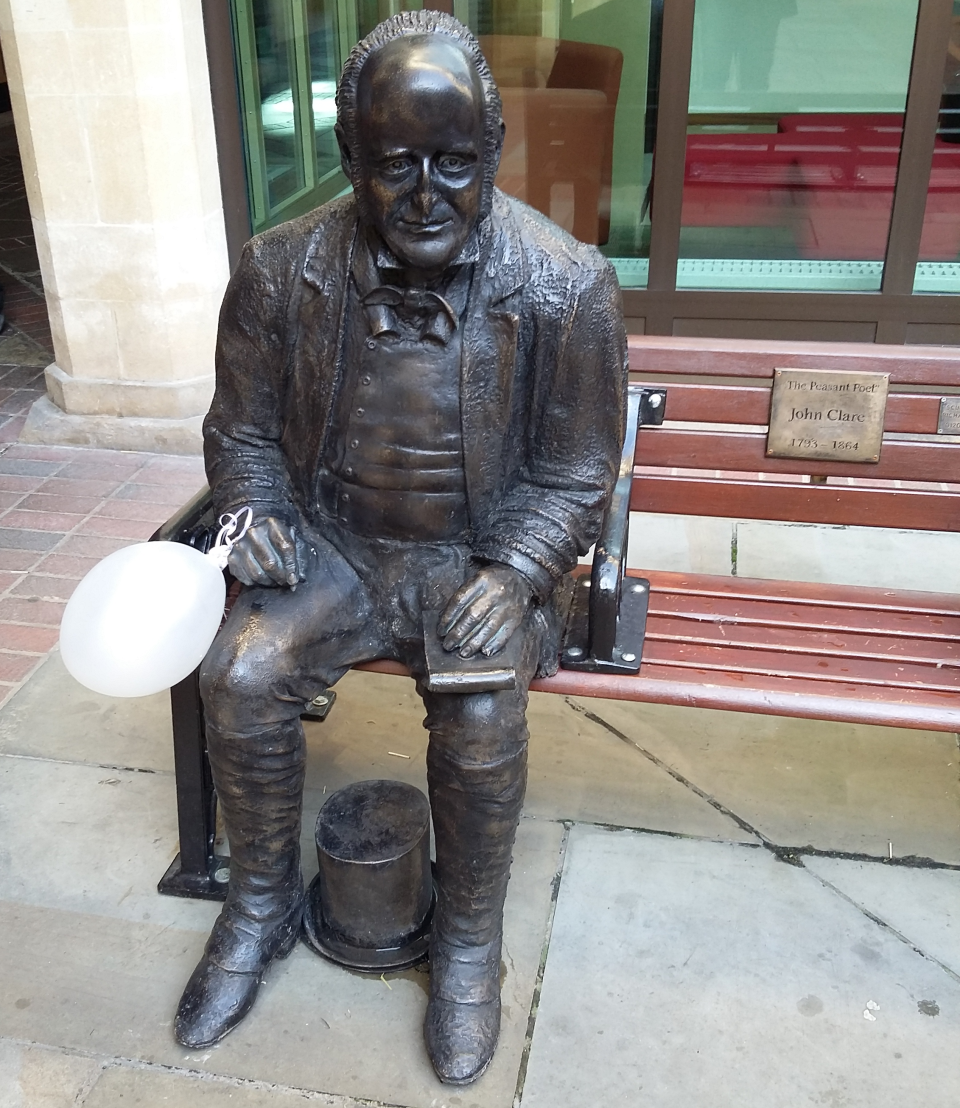
John Clare - 20161017_104834.png

Following my recent post about John Clare’s poem “Wild Bees“, I’ve been invited to give a short presentation on this at a forthcoming meeting about the Northamptonshire poet and documenter of environmental change.


Here’s the details:

John Clare: Landscape & Learning

Short presentations & discussions on aspects of John Clare

Venue: Room MY120 University of Northampton, Avenue Campus, NN2 6JD


FRIDAY 11th NOVEMBER: 10am arrival – 4pm close


Culminating with the JOHN CLARE LECTURE 2016 to be given by Professor John Goodridge


Contributors include: Jeff Ollerton, Erin Lafford, Charles Bennett, Clare Abbatt, Christy Edwall, Stephen Sullivan, Carry Akroyd, on topics such as:

John Clare’s Sonnets * Clare & the Bees * Clare the Fiddle Player * Clare as Inspiration * Clare & Weather * ‘The Nightingale’ * Clare in the Fields * ‘St Martin’s Eve’

Free and open to all. Bring lunch or use cafeteria on site.

Spiral Sunday #3 – Blackberries

2014-08-23 11.11.25

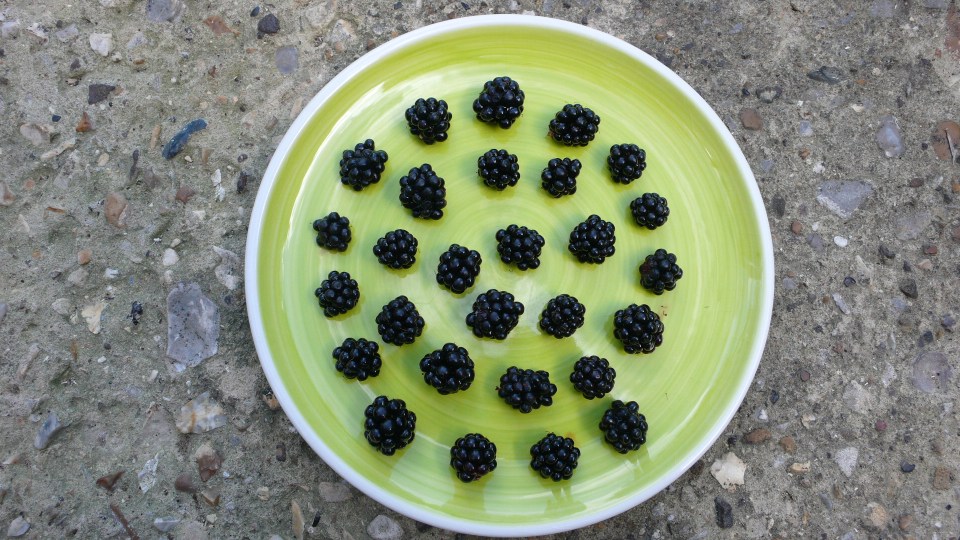
For the third of my Spiral Sunday posts I’m using a photograph I originally took for an old post from 2014 called Blackberry Week, which was about how the timing of the seasons (and specifically autumn) have changed since I was a kid.  Seems appropriate this month, at least from a northern hemisphere perspective.

The blackberries were wild ones picked from the garden.  It’s not immediately apparent but there is also a spiral on the plate, so this is a two-for-one post.

Why do bumblebees follow ferries?

Sejero - 20160910_180359.png

A few years ago I mentioned in my post “Garlicky archipelago” that I had seen bumblebees (Bombus spp.) following the ferry from Southampton to the Isle of Wight, a distance of about 1.5km across water.  If I remember correctly it was my colleague Scott Armbruster who first mentioned this to me: he lives on the Isle of Wight and commutes regularly to the mainland.

I’ve not thought much about this since then as 1.5km is a fairly modest distance for a bumblebee to fly.  But then a few weeks ago I saw the same thing in Denmark, but this time over a much longer distance.

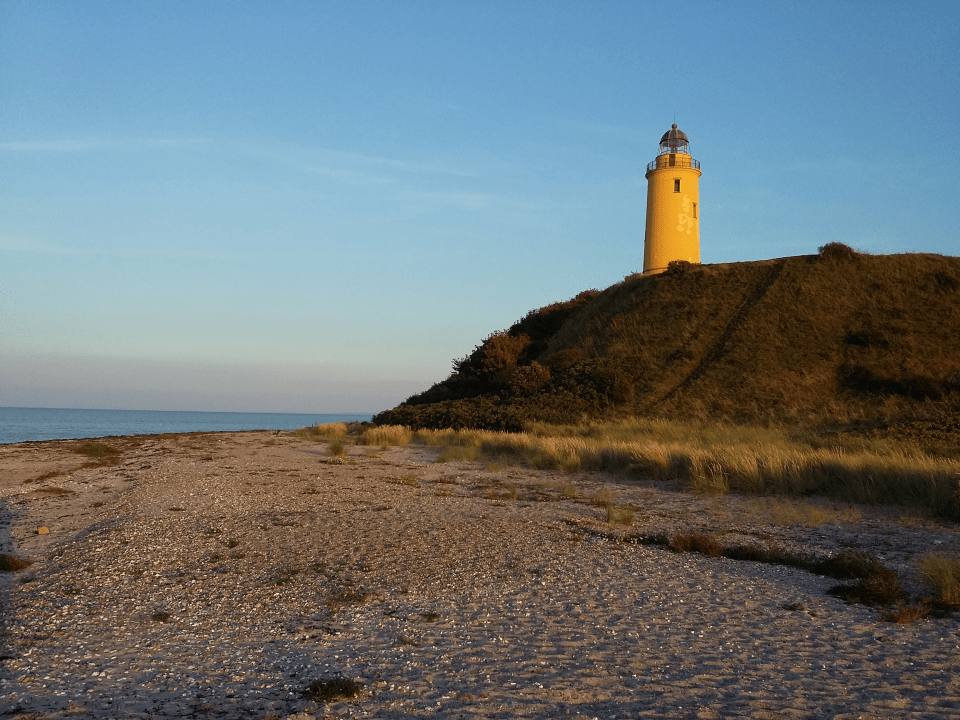
Karin and I were visiting friends on the small island of Sejerø, which (at its closest point) is about 8km from the mainland of Zealand.  To get there you have to catch a ferry which takes about an hour to cross this stretch of water.  About half-way across,  whilst looking over the stern of the ship, I spotted a bumblebee following the ferry.

So that’s twice, on two different ferries and under very different contexts, that I’ve seen this phenomenon.  A pattern is starting to form….  Has anyone else observed this?  Please do comment.

I can think of a few explanations/hypotheses for what’s going on here (some of which are not mutually exclusive):

  1.  Clearly bumblebees do fly across significant stretches of open seawater.  Perhaps all I’m seeing is bees that do this, but spotted from the only vantage point where it’s viewable (i.e. the ferry).
  2. These bumblebees are taking advantage of the slipstream created by the ferry to reduce the energy required to fly these long distances.
  3. The bees are hitching a lift on the ferry and I only observe them as they arrive or depart.
  4. The bees are following the wake of the ship to navigate between the island and the mainland, in order to exploit significant flower patches.  Work by one of my PhD students, Louise Cranmer, a few years ago showed that bumblebees follow linear features such as non-flowering hedgerows to navigate – see Cranmer et al. (2012) Oikos.  Perhaps something similar is happening here?

There’s probably other possibilities I’ve not thought of.  But whatever the explanation, it looks to me as if there’s some potential for interesting experiments marking and recapturing bees on islands/mainland, releasing bees on ferries to see if they follow the wake, etc.  If only Northampton wasn’t so far from the coast….


Spiral Sunday #1 – the start of an obsession

Spiral tomato 20160925_135721.png

Spirals have been a bit of an obsession with me for many years, as evidenced by the main image that has always adorned this blog (which, one day, I will tell the story of).  Not sure where that obsession originated but it’s manifested itself in a collection of ceramic bowls with spiral motifs, and with a growing set of photographs that I’ve taken.

This spiral obsession has some relevance to biodiversity.  Spirals are a recurrent feature of nature, and crop up everywhere from the flower heads of members of the daisy family to the whorled shells of gastropod molluscs.  Some of these are governed by mathematical processes such as the Fibonacci Series.  The spiral is also a much better description of the natural sequence of life and death than “the circle of life“.  Circles go back to where they started, which life never does; a spiral, it seems to me, captures that circular forward motion much more effectively, at least when viewed in three dimensions.

Some of the photographs I’ve taken are also of human constructs and cultural artefacts, because the spiral has been a motif used by artists and crafts people for thousands of years, as well as a useful bit of geometry for engineering and architectural purposes.

But, mainly, I just like spirals.  And I need an outlet for this obsession beyond scouring eBay and antique shops for interesting bowls.  Hence I thought I’d start Spiral Sunday*, a regular (maybe) posting of spiral images that I’ve captured, together with a brief description.  It’s possible that this may amuse no one except me, but ho hum.

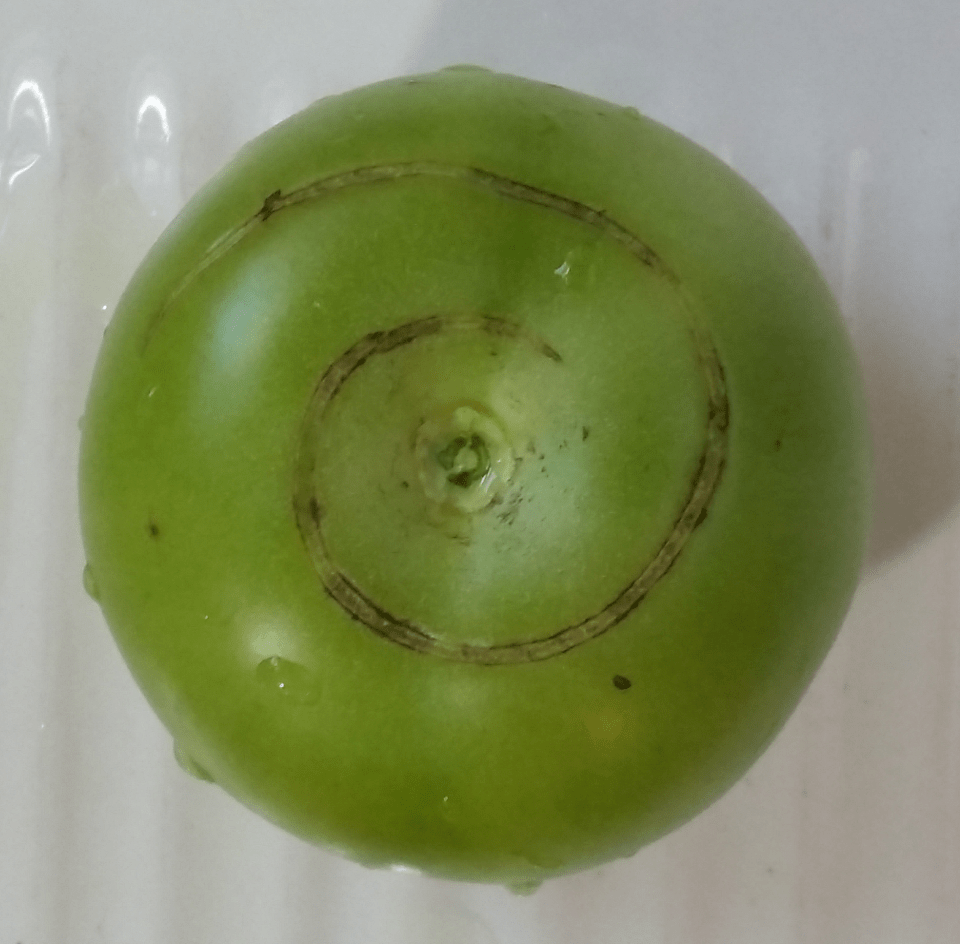
Spiral Sunday #1 was taken this morning as I harvested the last of our tomatoes.  An undisciplined water regime on our part has meant that some of the fruits have split; in this case tensions within the tomato skin have resulted in a spiral split.


*I freely admit to having been inspired by the “Silent Sunday” feature on the Murtagh’s Meadow blog.  Check it out if you don’t know it.


The macroecology of animal versus wind pollination – a new study just published

In collaboration with colleagues in Brazil, Denmark, and elsewhere in the UK, we’ve just published a new research paper which looks at the global spatial distribution of wind and animal pollinated plant species, and the underlying historical and contemporary ecological causes of that distribution.  It’s a study that builds on my “How many flowering plants are animal pollinated?” paper in Oikos, and has been a long time in its gestation.  We’re very excited by its findings and plan to develop this project in the future.

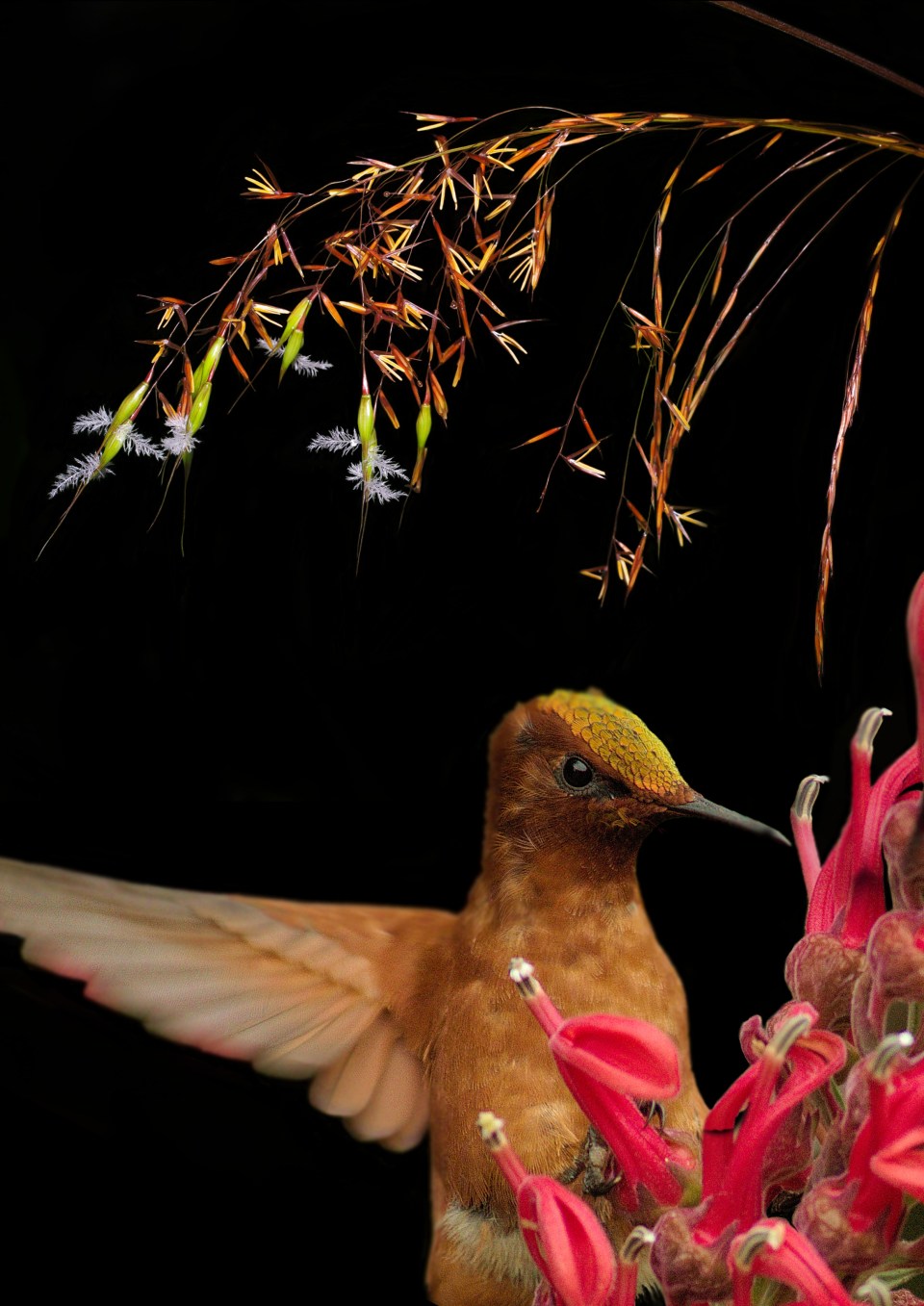
As a bonus we made the cover of the journal with the amazing image below!  Big thanks to Pedro Viana and Jesper Sonne for the photos.

Here’s the citation with a link to the publisher’s website; the abstract is below.  If anyone wants a PDF copy, please ask.

Rech AR, Dalsgaard B, Sandel B, Sonne J, Svenning J-C, Holmes N & Ollerton J (2016) The macroecology of animal versus wind pollination: ecological factors are more important than historical climate stability. Plant Ecology & Diversity 9: 253-262


Abstract:

Background: The relative frequency of wind- and animal-pollinated plants are non-randomly distributed across the globe and numerous hypotheses have been raised for the greater occurrence of wind pollination in some habitats and towards higher latitudes. To date, however, there has been no comprehensive global investigation of these hypotheses.

Aims: Investigating a range of hypotheses for the role of biotic and abiotic factors as determinants of the global variation in animal vs. wind pollination.

Methods: We analysed 67 plant communities ranging from 70º north to 34º south. For these we determined habitat type, species richness, insularity, topographic heterogeneity, current climate and late-Quaternary climate change. The predictive effects of these factors on the proportion of wind- and animal-pollinated plants were tested using correlations, ordinary least squares (OLS) and logistic regression analyses with information-theoretic model selection.

Results: The proportion of animal-pollinated plant species was positively associated with plant species richness and current temperature. Furthermore, in forest, animal pollination was positively related to precipitation. Historical climate was only weakly and idiosyncratically correlated with animal pollination.

Conclusion: Results were consistent with the hypothesised reduced chance for wind-transported pollen reaching conspecific flowers in species-rich communities, fewer constraints on nectar production in warm and wet habitats, and reduced relative effectiveness of wind dispersal in humid areas. There was little evidence of a legacy of historical climate change affecting these patterns.

andre-capa-1


Two-day Steven Falk bee ID course at Oxford University Museum 15th-16th October 2016

Male B lap on Salvia cropped P1120309

One of the most exciting, pollinator-related publishing events of last year was the publication of Steven Falk’s eagerly-anticipated Field Guide to the Bees of Britain and Ireland.  Not only does this book provide a state-of-the art account of the natural history and identification keys for all of the bees currently known from Britain (over 270 species) but it’s backed up by Steven’s own Flikr site with more photographs of the bees, including lots of close ups, and an ongoing list of updates and corrections.

But as Steven himself acknowledges, the identification of many of our bees is a challenge, even with the book and the additional imagery.  Anyone who is really keen to get to grips with bee identification is therefore recommended to book onto a hands-on identification course.  Steven has just announced that he is running a two-day course in Oxford on 15th to 16th October, at a cost of £60 per person – here’s a link to the booking page.  Seems like good value to me!

Release today of the IPBES Summary for Policymakers of the Assessment Report on Pollinators, Pollination and Food Production

Inula at Ravensthorpe 20160710_145426Following on from the press release earlier this year announcing of the Intergovernmental Science-Policy Platform on Biodiversity and Ecosystem Services (IPBES) assessment of pollinators, pollination and food production (which I reported on in February) it looks as though the full report may shortly be published.  A Summary for Policymakers has just been released by IPBES and can be downloaded by following this link.  I’ll put up a link to the full report once it becomes becomes available.

Bees and pesticides – a major new study just published – UPDATED

Male B lap on Salvia cropped P1120309

An important new study about the effects of neonicotinoid pesticides on wild bees has just been published in the journal Nature Communications – here’s the details and a link to the paper, which is open access:

Woodcock, B. A. et al. (2016) Impacts of neonicotinoid use on long-term population changes in wild bees in England. Nat. Commun. 7:12459 doi: 10.1038/ncomms12459

As I’ve previously discussed on this blog (e.g. here and here) there are widespread concerns amongst environmentalists, and some scientists, about the impact that these relatively new pesticides are having on pollinators and other biodiversity.  The Woodcock et al. paper is a major contribution to this discussion as it uses a huge dataset to model the changes in populations of 62 wild bee species that are known to forage on oilseed rape (canola) over 18 years.  These changes can be related to the spatial extent of oilseed rape cultivation and the authors found that whilst bees “….foraging on oilseed rape benefit from the…[nectar and pollen provided by]….this crop….[they]….were on average three times more negatively affected by exposure to neonicotinoids than…” bees which didn’t forage on the crop.

The authors further conclude that “This study provides the first evidence for community level national scale impacts on the persistence of wild bee populations resulting from exposure to neonicotinoid treated oilseed rape crops.”

Neonicotinoid pesticides are, of course, not the whole story when it comes to understanding declines in pollinator diversity and abundance.  But these pesticides are the latest in a long history of changes to British agriculture that have had significant consequences for the biodiversity of our country (as we showed in our study of bee and wasp extinctions).

Reactions to the study have been, well, predictable.  A long feature on the BBC News website* quoted a representative from Bayer as saying:

“we believe….[the study’s]….findings would be more correctly headlined that intensive agriculture is causing some issues with pollinators…..  Whether this is due to the use of insecticides is not clear; a lack of nesting sites and pollen and nectar sources in these areas may also be critical factors.”

Which rather ignores the fact that this was a comparative study of bees that forage on oilseed rape versus those that don’t.

Likewise the National Farmer’s Union’s position was that:

“While this study claims to provide an important contribution to the evidence base underpinning the current EU moratorium on some uses of neonicotinoids, experts reviewing all the evidence have concluded that there are still major gaps in our knowledge and a limited evidence base to guide policymakers”

Which sounds to me like a statement designed to fudge the issue: the “experts reviewing all the evidence” would not have reviewed this particular study!  And which begs the question – how much evidence and how many studies would be enough for the NFU?

The study’s authors do not make any suggestions as to what the next step should be in this continuing saga but are quoted as saying that “simplistic solutions” such as banning these pesticides are not the answer because this will encourage use of pesticides that are even more damaging.  That may be the case but it’s clear that an independent root-and-branch reassessment of the use of pesticides (and herbicides) in UK agriculture is long overdue.


*As an aside, this BBC News piece wrongly states that bumblebees were not included in the study, which is not the case.


UPDATE:  After I published this post I noticed that Manu Saunders has also written about the bee study, plus a second study that I’d not seen linking neonicotinoid use to declining butterfly populations in California.  Here’s a link to Manu’s blog.