Category Archives: Pollination

My Hooper Moment

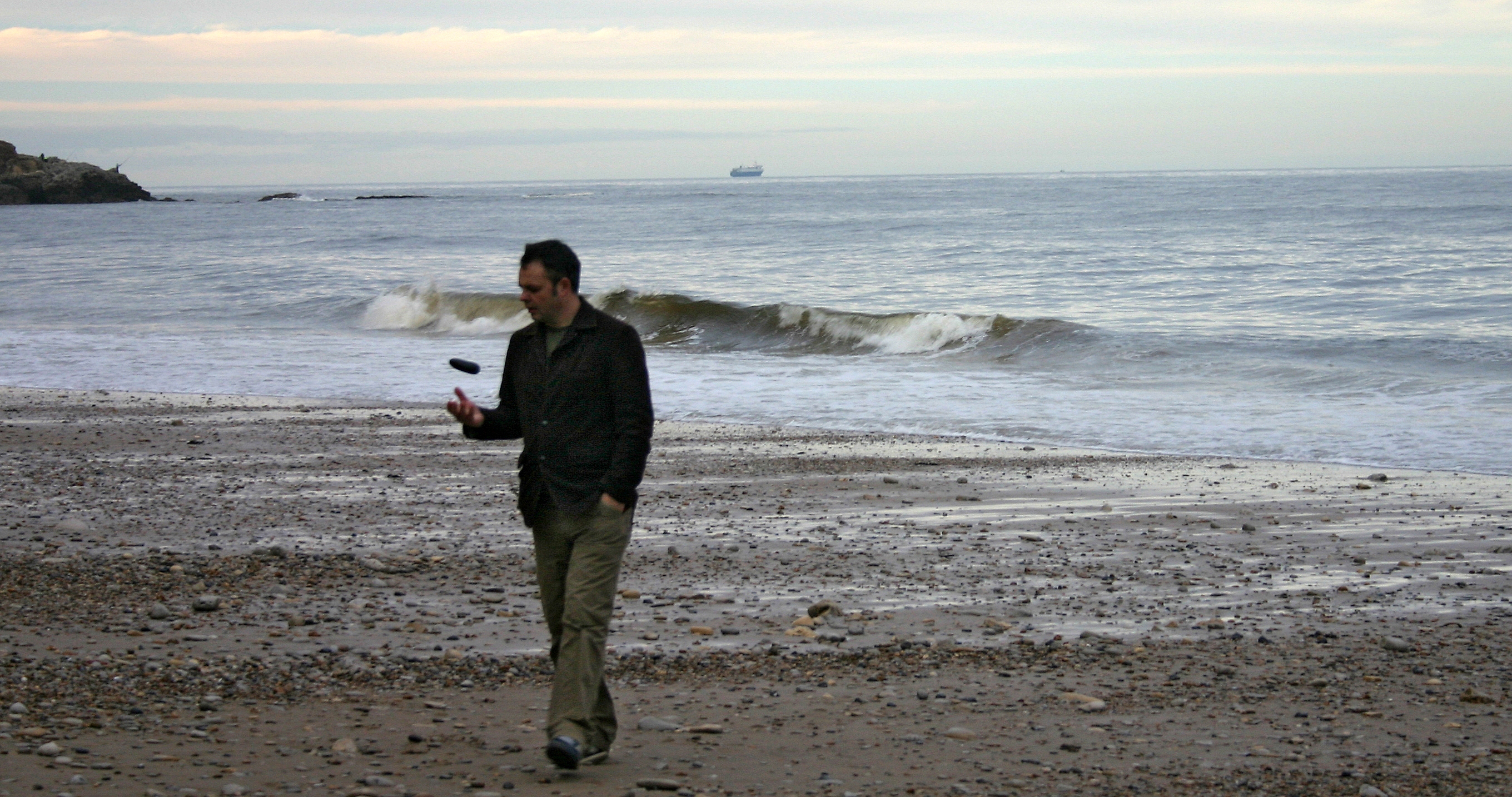
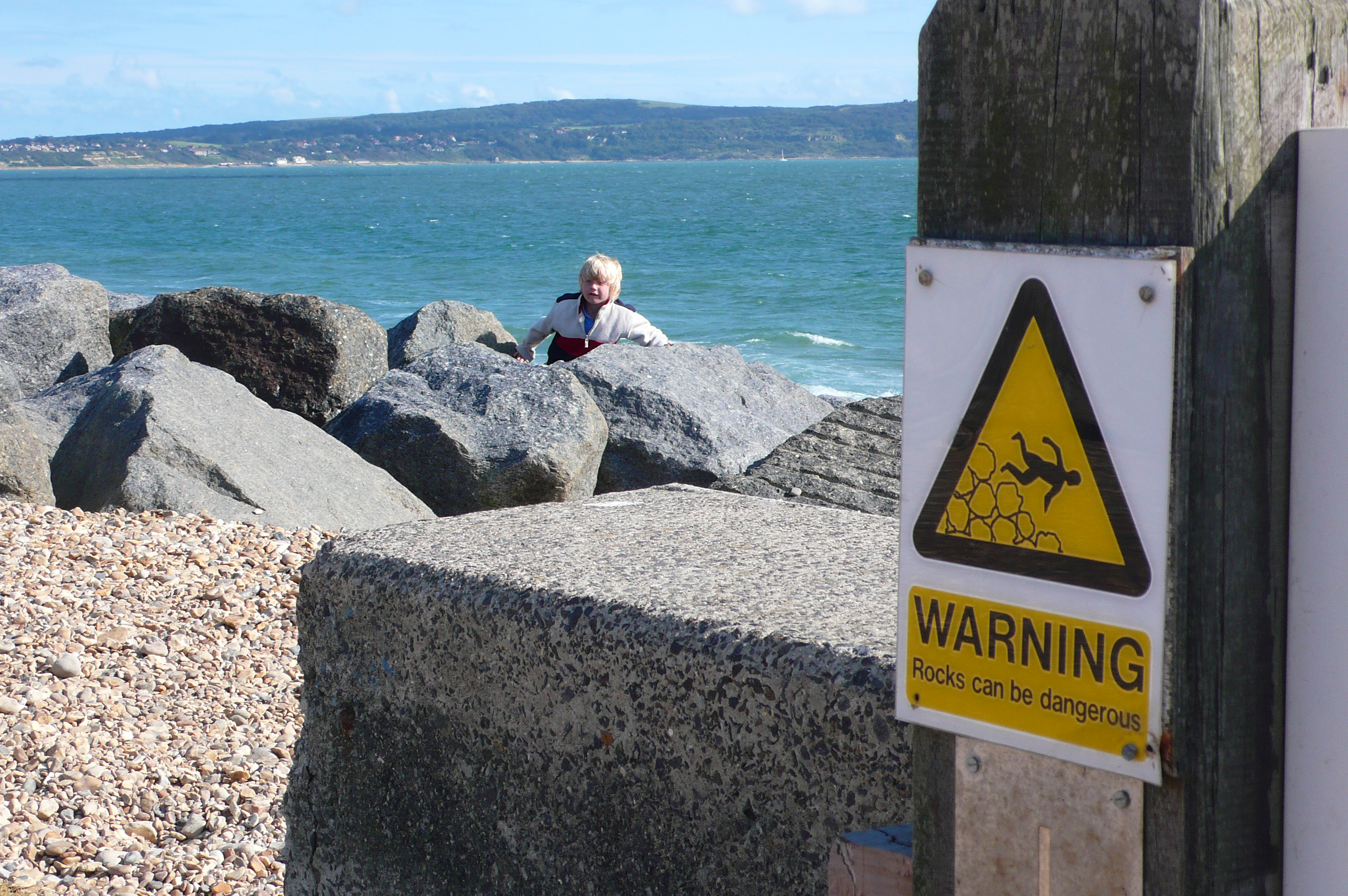
Jeff on the beach

Despite the clunkiness of some of the special effects, Jaws is a great movie that influenced a whole generation of organismal biologists into becoming marine ecologists, or at least terrestrial ecologists with a toe in the water.  The movie contains some iconic characters and wonderful lines.  One of my favourite scenes* is the exchange between Hooper, the shark expert, and Mayor Larry Vaughn, the head-in-the-sand local politician:


Hooper:  What we are dealing with here is a perfect engine, an eating machine.  It’s really a miracle of evolution.  All this machine does is swim.  And eat.  And make little sharks.  That’s all.  [Gestures to advertising sign on which a huge shark fin has been drawn]  Now why don’t you take a long, close look at this sign. Those proportions are correct….

Mayor Vaughn:  Love to prove that wouldn’t you? Get your name into the National Geographic[Walks away, smiling dismissively]

Hooper:  [pause, then slightly maniacally] ….hahahaha….hahahahaha….


Well today I got my Hooper Moment, my name in the National Geographic following an interview about pollination biology with James Owen, one of their writers.  It’s the online version, not the printed magazine, but I’m counting it anyway.  It’s a nice piece and, for once, doesn’t dwell on honey bees, or even bees at all.

In 1975 I was 10 years old and was accompanied to the cinema to see Jaws by my late parents.  Neither were impressed:  my mother watched the whole movie with her hands over her face and my father opined that it “was not as good as King Kong in the 1930s”.  Nonetheless, I’d like to think that they’d have been proud of my Hooper Moment.

[Thanks to Mark for capturing a moment on the North East coast, some years ago]


*With apologies for the crappy music and dumb repeat-edits – scroll forward to 2:25.


Rational explanations

P1110810

It has been a week for rational explanations, for assessing evidence in a logical way, a subject on which I have posted in the past and which goes to the heart of the scientific endeavour.

There was a lot of media attention about a study published in PNAS that claimed to show that hurricanes with female names (Katrina, Sandy, etc.) cause more damage than those with male names, because (to quote the abstract of the study) “hurricane names lead to gender-based expectations about severity and this, in turn, guides respondents’ preparedness to take protective action”.  In other words, people take feminine words less seriously than masculine words.  Is that true?  Are people really that socially attuned to gender-specific language?  Turns out that the original study may have made too many assumptions with regards to data and the statistical model they used, according to a re-analysis by Bob O’Hara and GrrlScientist on the Guardian science pages.  However in a further twist, a re-analysis of the re-analysis by Florian Hartig on the Theoretical Ecology blog found some (although very, very weak) support for a gender effect.  Florian makes an interesting point, however, that “the authors would have probably found it much more challenging to place this study in [a top science journal such as] PNAS if they would have done a more careful and conservative statistical analysis”.  In other words, science is certainly not immune to the effects of hyperbole and controversial findings.

Speaking of “hyperbole and controversial findings”, Richard Dawkins made headlines by apparently suggesting that reading fairy tales to children is not in their best interest: “Is it a good thing to go along with the fantasies of childhood, magical as they are? Or should we be fostering a spirit of scepticism?” Not surprisingly there was a big backlash against Dawkins who clarified his views on Twitter (!) and claimed they had been taken out of context. Perhaps so, but he has a track record of increasingly controversial views that he surely knows will raise his profile.  But then he’s an author with books to sell, who long ago gave up being a practising scientist by not publishing any peer-reviewed papers in science journals for over 30 years.  Dawkins’ role at Oxford was as Professor for Public Understanding of Science and unfortunately he gives the impression that scientists are all about rational thought and logical arguments in every facet of their lives. Which we’re not, I can assure you: I possess a whole raft of personal, irrational idiosyncrasies, including sending a little prayer to the Gods of Science every time I submit a new manuscript to a journal.  Which they often ignore, the f**kers.

There was also an odd quote from Dawkins in relation to the logic of fairy tales, that there is “a very interesting reason why a prince could not turn into a frog – it’s statistically too improbable”.  Nope, it’s not statistically improbable – it’s biologically impossible!  “Statistically too improbable” suggests that it could happen, given enough time.  Not sure that this helps with public understanding of science….

Something which is statistically improbable, but which does happen occasionally, is finding new fossils which make us rethink our understanding of the biodiversity of species interactions.  Such a find was published recently in the journal Biology Letters:  a 47 million year old fossil bird of a previously undescribed group that provides the earliest evidence of flower feeding, and possibly pollination by a birds.  The evidence in this case is the presence of pollen grains preserved in the gut area of the fossil, which could also represent flower eating (a range of birds do this, for example bullfinches) rather than nectar feeding and legitimate pollination.  Nonetheless it’s a stunning find and links nicely with a February post of mine.

Another new discovery this week, for me at least, was that (contrary to rumours, errr, started by me….) Dr Georges Aad does indeed exist.  Apologies to him, though it was fun while it lasted.

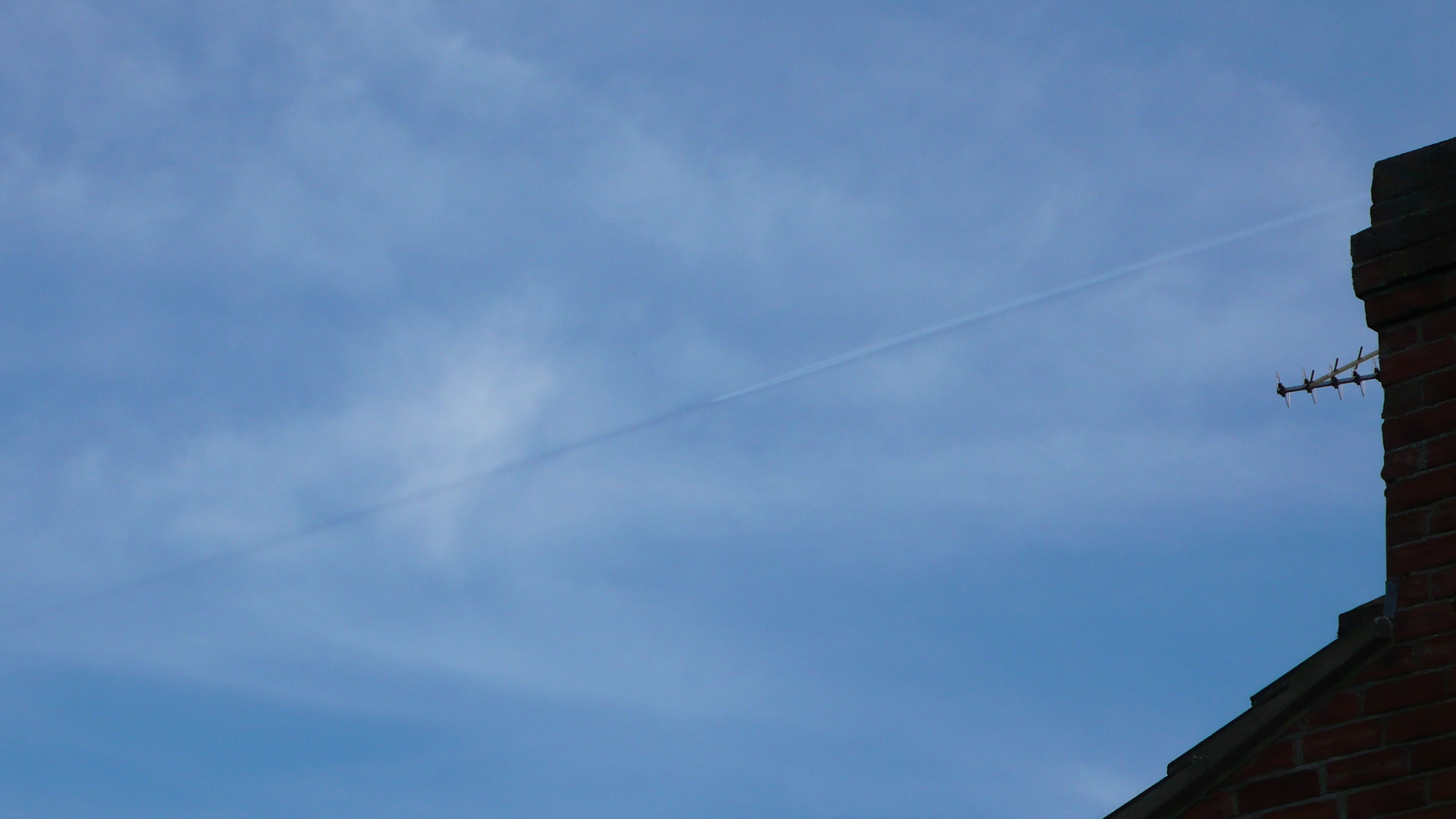
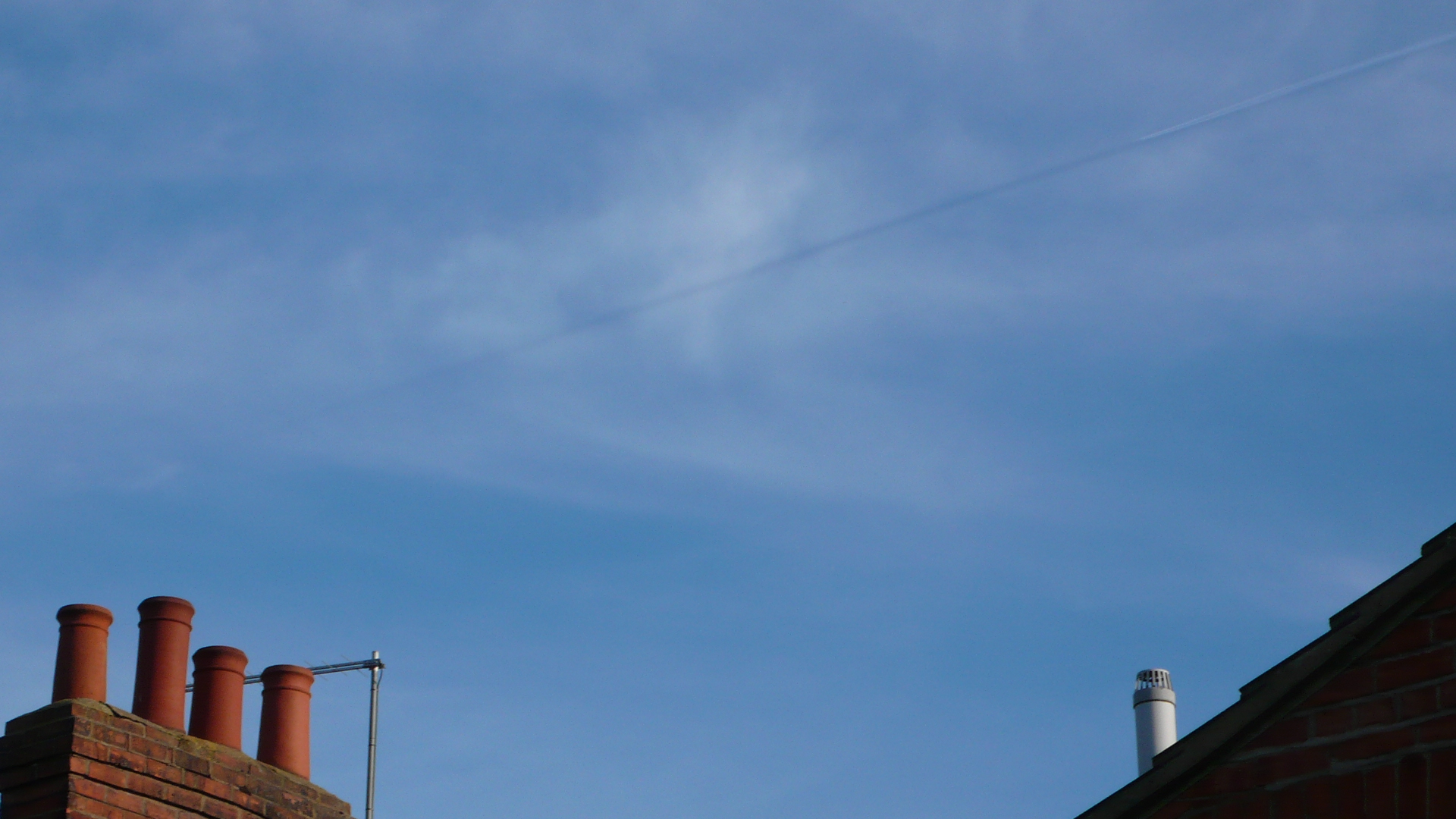
Finally to the intriguing photos that grace the start and end of this post.  I took these from the garden a couple of evenings ago. It shows a plane apparently flying into a dark tunnel that stretches out ahead of it (click on the images for a better view).  We watched the plane for several minutes and the “tunnel” appeared to be moving ahead of the plane as it travelled across the sky.  Karin had a plausible explanation, that what we were seeing was the shadow of the contrail because of its position relative to the low angle of the setting sun.  This was confirmed by a web site showing other examples of this phenomenon, which apparently is not uncommon, though judging from the comments on the site, some people prefer US government covert chemical spraying as a rational explanation.  Evidence and data will always be open to interpretation.


P1110809

Nature as gardener (Darwin’s Unrequited Isle part 5)

P1110741

Gardening and gardens are a long-standing interest of mine, as I’ve mentioned in a few posts, such as “Harvest of evidence” and “In defence of lawns“.  At the moment the RHS Chelsea Flower Show is running and medals are being awarded to gardens and plants, some of which I like, some of which I don’t: make up your own mind from this gallery of images taken around the show.

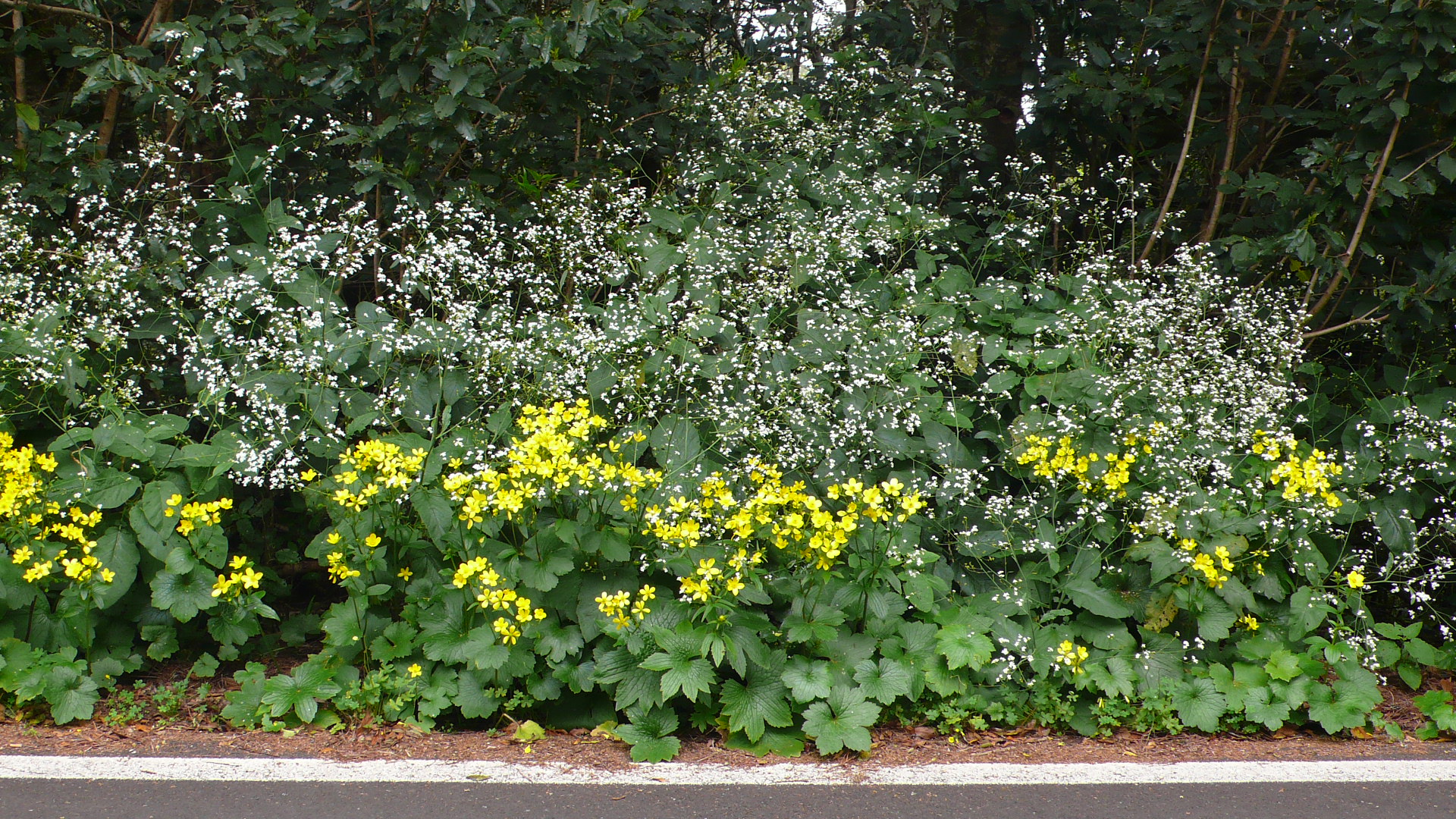
But nature often trumps us when it comes to aesthetically pleasing plant combinations.  The photograph above (which you can click to see a larger version) was taken in the Anagas Mountains during our recent Tenerife Field Course. Although it’s along a roadside, these two plants have grown there spontaneously – nature as gardener!  The plants are both endemic Macaronesian species:  the billowy white flowers of a Canary Island sea kale (Crambe strigosa) found only on Tenerife and La Gomera, spill over the vivid yellow blooms of a large buttercup (Ranunculus cortusifolius, from the Canary Islands and the Azores).

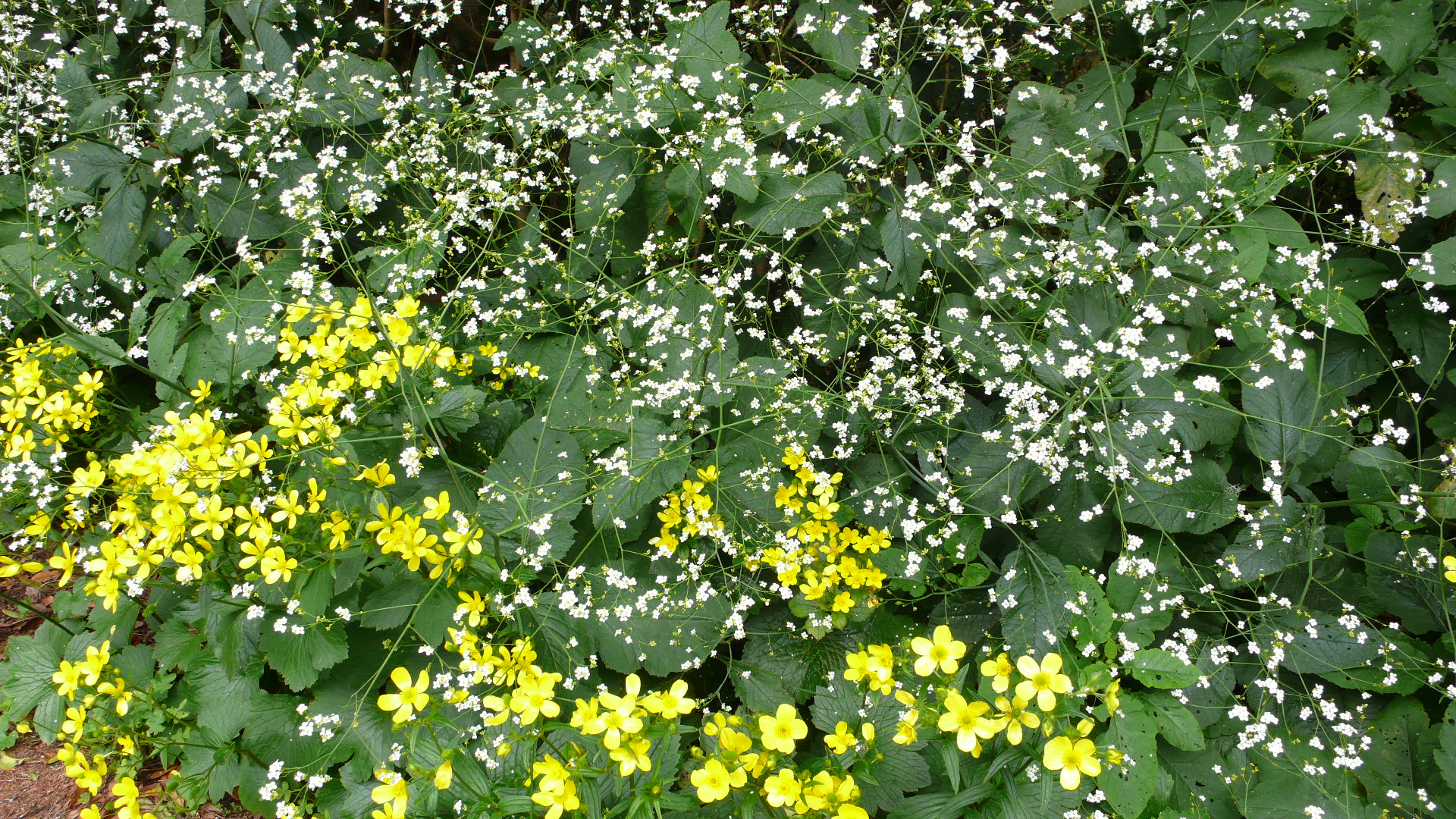
Up close it makes for a subtle but effective combination (again, looks better if you click to open it):

P1110742

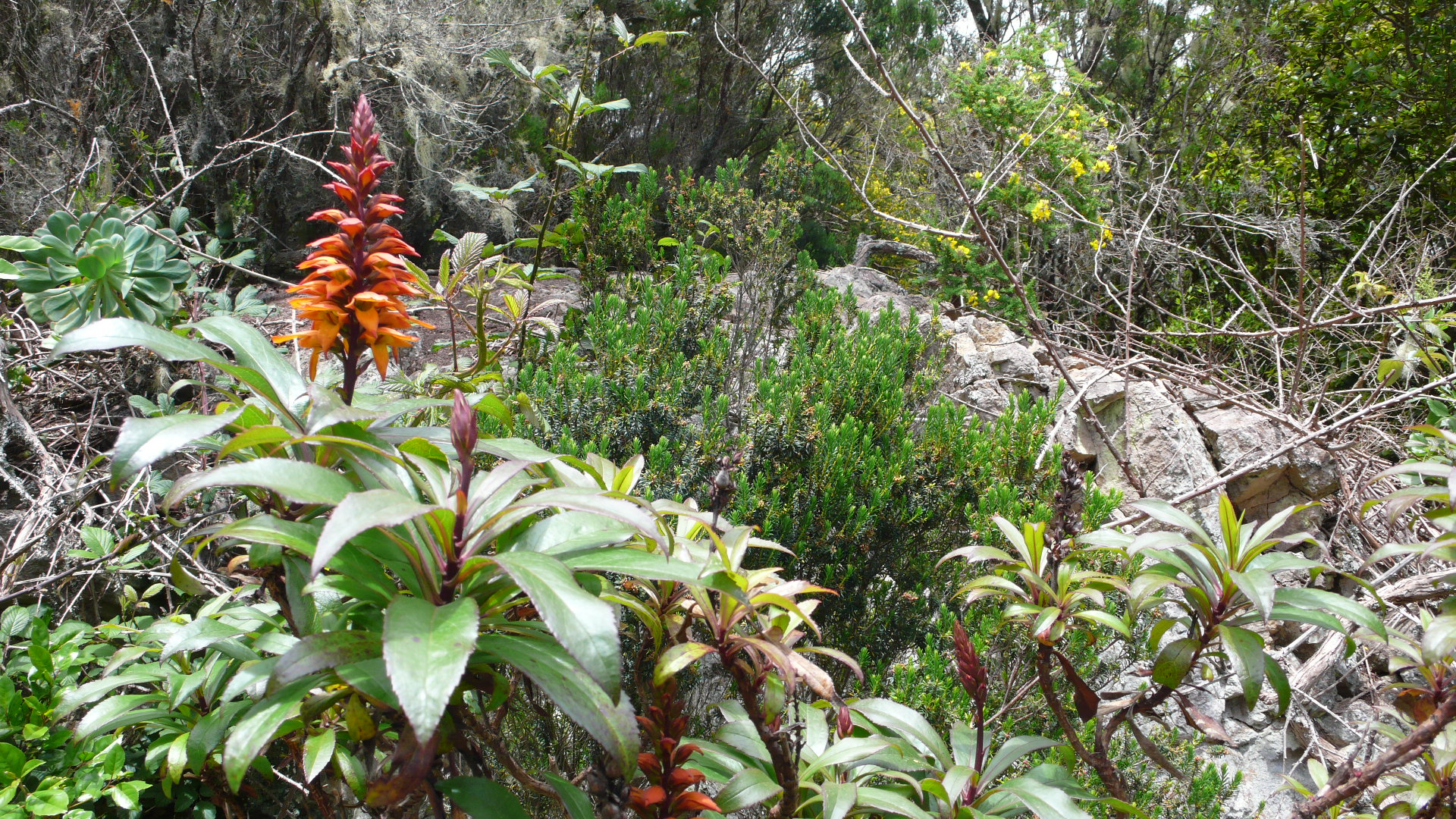
The plants of Tenerife never fail to impress – here’s the Canary Island Foxglove (Isoplexis canariensis) one of the bird-pollinated plants of Tenerife that we’ve studied in the past:

P1110767

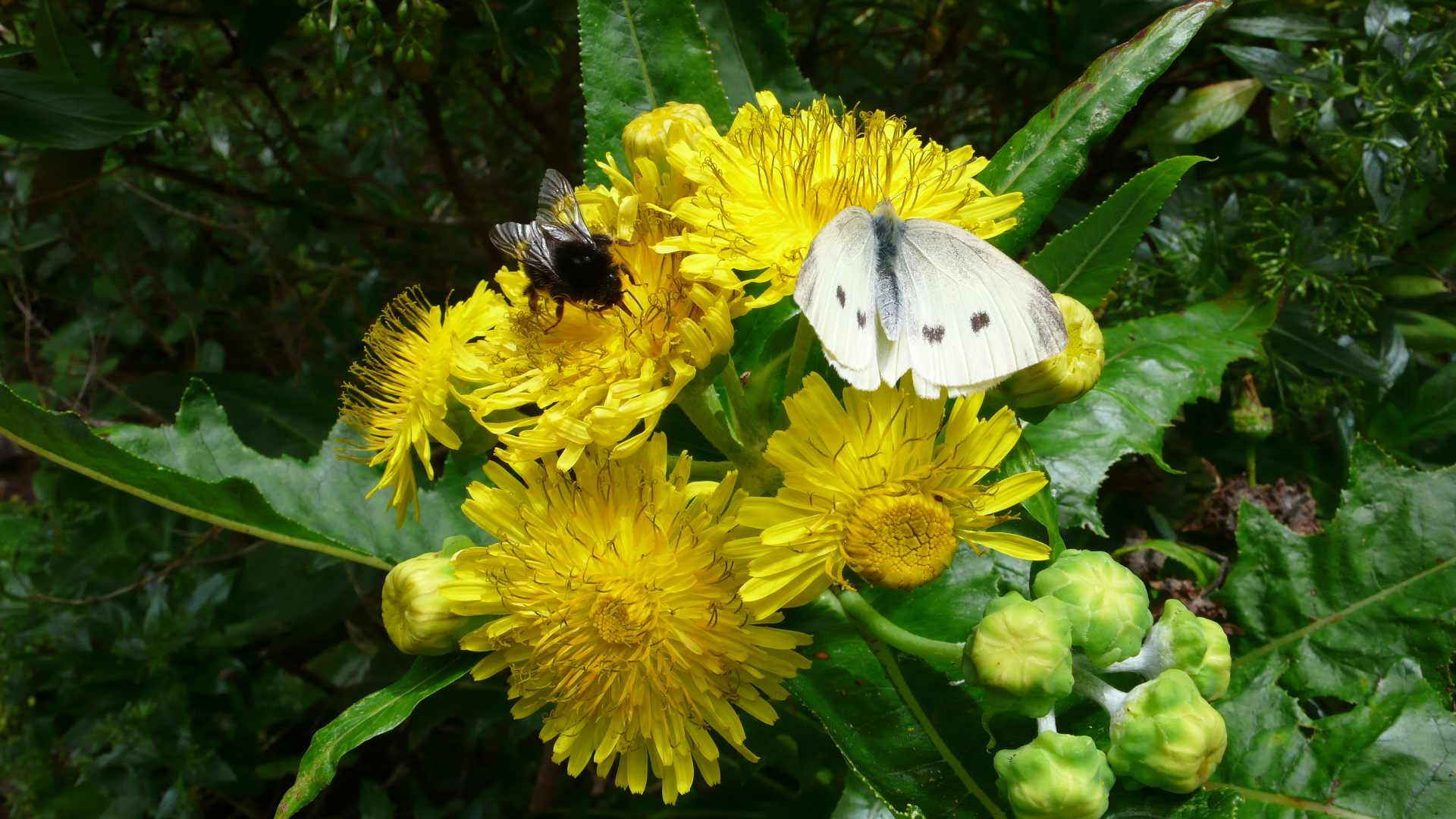
This post is largely deflection behaviour to take me away from grading student dissertations.  So before I return to it I’ll leave you with a gratuitous shot of three endemic Canary Island species:  a woody sow thistle (Sonchus sp.) being pollinated by the Canary Island Bumblebee (Bombus terrestris canariensis), and the Canary Island Large White butterfly (Pieris cheiranthi) whose caterpillars, to take us back to the beginning, feed on Crambe strigosa:

P1110763

Now, back to the coal face…..


Guest blogging: Are species interactions stronger and more specialized in the tropics?

P1080615

In hushed tones the narrator describes the intricate details of yet another highly specialized relationship between one species of indescribable beauty and a second species with intricate behaviour that is about to eat/infect/cooperate with/exploit it [delete as appropriate].

The camera view pulls back to reveal the green cathedral of a tropical rainforest: 

“The tropics” continues the narrator “are special…….…”


Yes, the tropics are special.  But how special?  Or more to the point, how different are tropical communities to temperate communities?  Over at the Dynamic Ecology blog, Jeremy Fox has invited Angela Moles and myself to contribute a guest blog on the subject of whether the idea that species interactions are always stronger and more specialized in the tropics is outmoded and not backed up by the evidence.  In Jeremy’s parlance, is it a zombie idea?

The subject of latitudinal variation in species interactions is one that has interested me for a while and I’ve written a few papers on the topic, especially in relation to how plant-pollinator interactions vary with latitude.  You’ll find references to some of them in the Dynamic Ecology piece, plus a fuller over view of our arguments.

So what are you doing reading this?  Get over to Dynamic Ecology and read that!

“These things aren’t to study. They’re to turn up very loud and say, hey, once upon a time, everything was just as easy as this”

May June 2010 Garden, River of Flowers, Cambridge 011

The title of this brief post is a quote by Led Zeppelin frontman Robert Plant, from an interview that the BBC reported just this morning, regarding the forthcoming release of previously unheard Zeppelin material.  You can read the story and hear the interview here.

Regular readers of this blog will know that I’m not averse to sprinkling musical references into my posts, and this was a great quote that seemed to chime with something else I read this morning.  Over at the Small Pond Science blog, evolutionary ecologist Amy Parachnowitsch has a thought provoking post entitled “Save the bees, but maybe not this way“.  I’ll let you read it for yourself, but in a nutshell Amy is concerned about the scientific legitimacy of a “Save the Bees” campaign being crowd funded by online activist network Avaaz.org.

I share this concern and it worries me that whoever is organising the campaign is exploiting the genuine desire by people to “do something for the bees” without any regard for what exactly it is that’s “being done”.  It seems to me to be purely a campaign fund-raiser by people who don’t understand the issues or how science works, the message being: “These things aren’t to study. They’re to turn up very loud and say, hey, once upon a time, everything was just as easy as this”.

The organisers promise “the world’s first large scale, grass-roots supported, totally independent study of what’s killing our bees that decisively challenges the junk science of big pharma”.  As Amy notes, this is hugely offensive to independent scientists who are working on bee conservation issues (such as myself).  But without ever actually saying what they are going to do with the money, they’ve already had pledges of money from over 78,000 people!  If only raising funds for real research was that easy!

To reiterate what I said in the comments to Amy’s post, something that really worries me is that over-emphasis on pesticides and honey bees as single issues affecting “pollinator conservation” deflects attention from other factors which are at least as important, such as habitat loss. Colleagues and I have a manuscript in preparation at the moment showing that native bee and flower-visiting wasp extinctions in Britain began in the mid-19th century and reached their highest rate during the period 1929-1959, during a time of rapid agricultural intensification (but prior to the introduction of neonicotinoid pesticides that is currently exercising many people).  Loss of pollinator diversity is an issue that has deep roots.

In actual fact, although wild bee diversity is declining in the UK, overall abundance seems to be stable as some species are doing extremely well, including a new natural colonist, the Tree Bumblebee (Bombus hypnorum) which is spreading fast and is locally common.  But clearly greater diversity provides us with future insurance against losses of other species.

There are positive things that can be done for pollinator populations by every citizen, beyond giving money to crappy, pseudo-scientific campaigns, as I talked about in a recent post of mine.  So please don’t contribute to this Avaaz.org request, and use the money you save to buy some wild flower seeds and/or the Led Zeppelin reissues.  It will make the world a better place.


Book review: “Pollination and Floral Ecology” by Pat Willmer

2013-11-28 14.48.27

Review of “Pollination and Floral Ecology” by Pat Willmer (2011) Princeton University Press. £65. pp. 832.

Some backstory:  In early 2012 I was asked by the review editor of the journal Annals of Botany to review this book, and I jumped at the chance as it’s the first major single-author overview of the field of pollination ecology for a number of years, by a well respected academic in the field.  Unfortunately the review took a lot longer than I expected, in part because I was also coordinating my department’s Research Excellence Framework submission, on top of other teaching, research and admin duties, and it was taking up quite a bit of my time.

In addition I had mixed feelings about the book and wanted my review to do it justice, not be over-critical but at the same time highlight what I saw as flaws.   In the words of the  Fairport Convention song, Who Knows Where the Time Goes? – my review was only completed last Christmas and duly submitted. Turns out that the journal has a backlog of book reviews to publish and the editor asked that, given it’s been a couple of years since the book was published, would I mind if the review was posted on the Annals of Botany blog rather than in the printed journal.  I happily agreed as it’s likely to get more readers on the blog, and said I’d also post it on my own blog.  So here it is:


Any text book that tries to assess and summarise the whole of a multidisciplinary research field such as pollination ecology and floral biology is required to be four things:  (1) comprehensive in its scope; (2) up to date in its coverage of the literature; (3) accurate in its assessment of the current state of the field; and (4) authoritative in the conclusions it presents.

This volume by Professor Pat Willmer of the University of St Andrews certainly ticks the first box.  It’s a huge book, and covers everything relating to the evolution of flower attraction and reward systems, ecological interactions with pollinators, biochemistry, physiology, agriculture and conservation; all in 29 chapters split into three sections, with 87 pages of references.  The literature extends to 2010, which is impressive for a book published in 2011 (though see my comments below about completeness of the literature).   Specialist terms are highlighted in bold to direct the reader to the glossary at the back, a useful device even if there are a few inaccuracies, which I’ll mention later.

So far so good, and the author is to be congratulated on putting together such a comprehensive, not to mention timely, single-author book.  It’s clearly the summation of a career devoted to studying pollinators and flowers, and the author’s passion for her subject is apparent throughout.

However when we come to points 3 and 4, things are less straightforward.  There are some issues with accuracy that are troubling in a book aimed at newcomers to the field as well as established researchers.  To give just a few examples:

– on p.18 we are told that asclepiads have “one stamen” (they have five); on p.169 and in the glossary that asclepiad pollinia are the pollen grains from one anther (they are the contents of half an anther); and on p.170 that the pollinaria are “glued” to pollinators (they actually clip on).

– in the glossary, tree ferns are referred to as “cycads”, an error that is repeated on p.89.

– on p.88 there is a statement suggesting that tree fern spores were dispersed by “animal fur” 300 million years ago, long before the evolution of mammals, and that this (and dispersal of spores of fungi and mosses) is the equivalent of pollination: it is not, it equates to seed dispersal.

These are troubling errors of basic botany that are forgivable in an early draft of the book (everyone makes mistakes) but not in the final published version, after it’s been read, reviewed, checked and edited.  If the book goes to a second edition I hope that these (and other) mistakes will be fixed.  But they do hint at a fundamental problem with a book (and a field) as large and complex as this: a single author is arguably unlikely to be able to do justice to all of the subject matter.

There are parts of the book where it is unclear (to me at least) what the author is actually saying.  For example, on p.96 there is a graph which, it is suggested, demonstrates that pollination by animals is “technically uncommon when assessed in terms of the numbers of broad taxonomic groups that use it”, though the legend to the figure claims that “most orders of plants have no families” that possess wind pollination.  This is confusing: what is to be concluded by someone new to the field?  Is animal pollination common or rare?  Likewise, on p.91 we are told that the “first angiosperms…would probably have had their pollen moved mainly by wind…”, but then on p.92 that “an element of insect pollination could be regarded as almost ancestral”.  Which is correct?

There are other aspects to the book that are simply out of date; for example the linear, rather deterministic schemes set out in Figures 4.6 and 4.8 showing that Cretaceous flowers were open and radially symmetrical, and only later evolved into complex, bilateral flowers in the Tertiary, ignores fossil discoveries showing that orchids evolved in the Cretaceous (Ramírez et al., 2007).  Likewise, discussion of “counterproductive” crypsis in flowers (p.124) neglects recent findings of cryptic, wasp-pollinated plants in South Africa (e.g. Shuttleworth & Johnson, 2009).

There is a theme emerging here: some of the botany that the book presents is inaccurate, confused or out-dated.  Fortunately the zoological aspects of the book are much better, as one might hope from a Professor of Zoology.

The final criterion, that the book should be “authoritative in the conclusions it presents”, is however, in my view, the main weakness of this volume.  The author is unhappy with recent developments in the field, particularly as they relate to community-scale assessments of plant–pollinator interactions, in terms of network analyses and predictive utility of pollination syndromes.  Clearly Professor Willmer is on a mission to rebalance what she perceives as failings within some of the current trends in studying pollination.  A book review is not the place for a technical dissection of the author’s arguments, which is best left to the peer-reviewed literature (though I would argue that that’s also the place to present some of the criticisms the author introduces, rather than into a text book such as this).  I could focus the whole of this review on these topics because: (a) they take up a large proportion of the book, about one-third of the text pages; and (b) they are highlighted on the cover as being one of the main contributions of the book; specifically, that the author provides a critique of previous work that does not distinguish between “casual visitors and true pollinators” that can in turn result in “misleading conclusions about flower evolution and animal-flower mutualism”. Unfortunately her targets are straw men, and one – I believe quite telling – example will suffice.

On p.447 there is a criticism of the use by Waser et al. (1996) of Charles Robertson’s historical data set, and specifically that the analyses they present “…did not distinguish visitors from pollinators even though Robertson’s database did include information on this”.  However Waser et al. clearly state (p.1045 of their paper) that only pollinators were included in the analyses, not all flower visitors, and that “visitation is not a synonym for pollination…non-pollinating visitors are excluded (as in Robertson 1928)” (p.1048).

Why should Professor Willmer make a statement to the contrary?  Evidently she wishes to impress upon her readers that (in her opinion) there are fundamental problems in current approaches to studying pollination at a community level.  But even if that were the case (and I don’t believe it is) misrepresenting previous studies to suit an argument is poor scholarship at best.

Regardless of whether some of her criticism is well founded, the author does not seem to appreciate that plant–flower visitor interaction networks are ecologically important regardless of whether or not a flower visitor acts as a pollinator.  More fundamentally, true pollination networks possess similar attributes to flower visitor networks, for example a nested pattern of interactions, and arguments about level of generalisation of species are a matter of scale, not category (Ollerton et al., 2003).

At the end of her Preface, Professor Willmer reveals to us quite a lot about her personal attitude to research when she states that some readers might find her approach “too traditional” in an “era where ecological modelers [might be claimed to] have more to tell us than old-style field workers”.  What the author fails to appreciate is that this is a grossly false dichotomy and that most of the pollination ecologists who have embraced new analytical methodologies for understanding plant–pollinator interactions are also “old-style field workers” with considerable experience of studying the ecology of flowers and their pollinators beyond the computer screen.

In summary this is a book that, for all its good qualities of comprehensiveness and (mostly) up to date coverage, should be read with caution: parts of it are neither as accurate nor as authorative as the field of pollination and floral ecology deserves.


LITERATURE CITED

Ollerton J, Johnson SD, Cranmer L, Kellie, S. 2003. The pollination ecology of an assemblage of grassland asclepiads in South Africa. Annals of Botany 92: 807-834.

Ramírez SR, Gravendeel B, Singer RB, Marshall CR,  Pierce NE. 2007. Dating the origin of the Orchidaceae from a fossil orchid with its pollinator. Nature 448: 1042-1045.

Shuttleworth A, Johnson SD. 2009. The importance of scent and nectar filters in a specialized wasp-pollination system. Functional Ecology 23: 931-940.

Waser NM, Chittka L, Price MV, Williams N, Ollerton J. 1996. Generalization in pollination systems, and why it matters. Ecology 77: 1043-1060.

What are YOU doing for our pollinators this year? (reduce, reuse, recycle part 6)

2012-08-02 13.41.13

Earlier this year I was asked to write a short article by my former PhD student, and still a current collaborator, Dr Sam Tarrant.  Sam works for the RSPB as the CEMEX UK-funded Biodiversity Advisor, and wanted something on pollinator conservation that could be circulated in the CEMEX company’s e-newsletter.  In the spirit of reworking and reusing odd bits of writing, I thought I’d post it here too.


Insects are vital for our country’s economy.  Don’t believe me?  Then read on….

Beneath a large black mulberry tree near the University of Northampton’s Newton Building there is a plaque that commemorates its planting “On Shakespeare Commemoration Day, 3rd May 1916”.  Despite its age this tree annually produces large crops of succulent berries, aided by the fact that wind eddies are sufficient to disperse its pollen, ensuring pollination and fruit set.  Each year it’s a scramble between students, lecturers and birds, to see who can eat the most.

In contrast, the old apple trees in the grounds possess a different strategy – pollination by insects that move from flower to flower each spring.  This form of pollination is both more sophisticated and less reliable than wind pollination, and is currently under considerable threat: whilst there will never be a shortage of wind currents in Britain, insect pollinators are in decline.

The apples trees are not alone in requiring insects to pollinate them, so to do other farm and garden crops, including oil seed rape, field beans, courgettes, runner beans, and strawberries and other soft fruit.  It’s worth at least £440 million annually to the British economy, and most of it is done by wild bees and hoverflies, rather than managed hives of honey bees.

But all is not well with these insects in Britain – they are in decline.  Although the extent of the “pollination crisis” is debated by scientists, long term records show us that these insects are under pressure: 23 species of bee and flower-visiting wasp have gone extinct since the mid 1800s, as have 18 species of butterflies.  Less obviously, other species have considerably reduced in abundance so that they are now found in only a small part of their previous distribution.

There are lots of gardeners who want to “do something” for the pollinators, and keeping honey bees is often mentioned.  By all means, if you wish to help the honey bees (which are suffering their own problems) then keep a hive or two.  That will not, however, help our wild, native pollinators; the analogy I use is that it’s the equivalent of trying to help our declining songbirds by opening a chicken farm!

If you want to make a real difference for pollinators in your own garden, here are a few ideas:

  • start by planting nectar and pollen rich flowers; there’s a useful list on the Royal Horticultural Society’s website (see below).
  • allow plants such as clover and dandelion to flower in your lawn, bees love them.
  • as well as food, pollinators also need nest and egg laying sites, so you could help by allowing some of the far corners of your plot to run a little wild.
  • wait until late Spring to cut back hollow stemmed perennials as they are used as hibernating places by some of our bees.
  • allow mason bees to nest in old walls and don’t worry about them, the wall won’t fall down.
  • And finally, stop using pesticides!

Changing some of our gardening habits can help a group of insects on which we rely and which supports our economy in a very real way.


Further reading and information:

Bees Wasps and Ants Recording Society:   http://www.bwars.com/

Bumblebee Conservation Trust:  http://www.bumblebeeconservation.org.uk/

Butterfly Conservation:  http://www.butterfly-conservation.org/

Hoverfly Recording Scheme:  http://www.hoverfly.org.uk/

Royal Horticultural Society’s list of plants for pollinators:  http://www.rhs.org.uk/Gardening/Sustainable-gardening/Plants-for-pollinators

Ménage à trois mutualism

Lymington 2007 057

Relationships involving a “household of three” hold a fascination that is part prurient and part wonderment: prurient for perhaps obvious reasons, and wonderment as it’s sometimes hard enough to make a ménage à deux work! Historically this domestic arrangement has been the lifestyle of choice of a surprisingly large and diverse set of influential thinkers and creative individuals, including Aldous Huxley, Lord Nelson, Carl Jung, Erwin Schrödinger, and Hattie Jacques.  Indeed, one of my favourite musicians, David Crosby, wrote a song about such relationships (Triad) which got him kicked out of The Byrds.

In nature, ménage à trois are occasionally encountered and may be more common than we think, and have been on my mind because this week I’ve been talking about mutualistic relationships with my first year undergraduates.  Mutualisms are interactions between species in which both benefit, as opposed to exploitative relationships such as predation or parasitism in which one of the partners is at a disadvantage (being eaten is a great disadvantage….)  Mutualistic interactions are common and important, and include many (but not all) plant-pollinator interactions, seed dispersal by birds and other animals, mycorrhizal relationships between plants and fungi, and many more.  As well as studying plant-pollinator interactions, I’ve a long-standing interest in the full breadth of these examples of “biological barter“, in all their varied forms.

In most cases mutualistic relationships involve pairs of species (for example a plant and a pollinator) although these species pairs are embedded within a larger network of interactions: that plant may have many pollinators, and those pollinators may service other plants.  In this sense it requires just two partners to make the interaction work – a “household of two”.  More rarely, research on the biodiversity of species interactions throws up examples of “households” involving three species, and a fascinating case has recently been worked out and published by Jonathan Pauli and colleagues.  This involves three-toed sloths and their relationship with the algae and moths that colonise the sloth’s fur – you can read the abstract here.  In summary, the algae benefit from nutrients provided by the moths living in the fur; the sloths eat the algae to supplement a restricted diet of leaves; the moths benefit from the sloths transporting them to defecation sites where they lay their eggs, then recolonise the sloths.  This slothy ménage à trois is a wonderful instance of interdependency within nature.

The other case of a three-part mutualism with which I’m familiar is that between anemonefish, and sea anemones and the algae which are housed in their tentacles.  The fish and the anemones provide mutual defence of one another, whilst the algae photosynthesise and provide carbohydrates to the anemone, and benefit from the nitrogenous waste produced by the fish.  It’s a system that I’ve done a little work on with marine biologist colleagues, specifically the broad scale biogeography of the interaction and its local assemblage structure, but we’ve not studied the whole three-part system. 

What other three-part examples are there in nature?  I’d be very interested to hear about any of which you’re aware.

It begs a question as to whether three is an upper limit to the number of species that can engage in such relationships?  Are there any four- or five-part mutualisms?  Or are these too unstable over evolutionary time, because if one species goes extinct it could cause the extinction of other species?  Interesting questions about fascinating interactions!

Thank the insects for Christmas (REBLOG)

P1110606

It’s become a tradition (ok, only for the past two years, but a tradition has to start somewhere!) for me to post a version of this festive blog entry.  I’ve updated the stats for 2013.  Hope you enjoy it.

Christmas!  A time to relax and enjoy ourselves, to share time with family and friends, and to unwind during the cold and gloom of winter.  Whatever your faith, or lack of it, Christmas should be about taking a break and reflecting on the year that has passed.  We’re helped in that respect by the ceremonial seasonal trimmings: the Christmas tree, strings of flashing lights, baubles and tinsel.  So while you’re kissing a loved one under the mistletoe, admiring that glossy holly wreath, or tucking into your Christmas dinner, spare a thought for the insects.

What in Saint Nicholas’s name”  you are asking ”have insects got to do with Christmas?!”  Well, like the turkey, we’d be stuffed without them:  they play an essential part in providing us with the things we associate with Christmas.  If we had no flies, wasps, bees and other bugs acting as pollinators there’d be no berries on your mistletoe or your holly.  Kissing and admiring would be a less festive affair and that’s just for starters.  These insects also pollinate many of the vegetables, herbs and spices on your plate, as well as some of the forage that went to fatten your roast bird or tender joint of meat.   Not to forget much of what went into the nut roast that’s feeding the vegetarian relatives.

The economic value of insect pollination in the UK was estimated by the recent National Ecosystem Assessment to be about £430 million per year.  In fact this is a huge under valuation because the labour costs alone of paying people to hand pollinate those crops would run into billions of pounds.  This sounds far fetched but it’s already happening to fruit crops in parts of China.  The answer is to encourage wild insects, not artificially  managed honey bees, because collectively the former are far more abundant, and often more effective, as pollinators.  Their diversity is an insurance against losing any one species in the future. The NEA’s valuation is also too low because it only deals with commercial edible crops, and does not include those we grow in our gardens and allotments.  It also does not take account of ornamental crops such as mistletoe and holly, both of which are dioecious species, which is to say that individuals are either male or female, rather than hermaphrodite as are most plants.  This means that the plants cannot self pollinate and insects are absolutely vital to their reproduction and to the production of the decorative berries we so value (a holly wreath without berries is just a big spiky doughnut, in my opinion).

Whilst researching the economic value of the annual mistletoe and holly crops for this blog posting last year I had a conversation with Jonathan Briggs over at Mistletoe Matters and he told me that “the mistletoe trade in Britain is entirely unregulated and not documented in any tangible way”, and the same is true of holly.  We therefore have no idea what the economic value of these non-food crops actually is.  But some back-of-the-red-and-gold-Christmas-lunch-napkin calculations can at least give us an insight.  Auction reports for 2013  show that on average the best quality berried holly was selling for £2.50 per kg whilst equivalent quality holly without berries sold for only 80p per kg.  In other words, pollination by insects increases the value of that crop by more than 300%!   Similarly the high quality mistletoe averaged £1.20 per kg, whilst the second grade stuff was only 40p per kg.  And the best holly wreaths (presumably with berries!) were averaging £7.00 each.

These are wholesale prices, of course; retail cost to the customer is much greater.  A decent holly wreath will set you back between £15 and £30 whilst online shopping for mistletoe is in the £5 to £20 range, depending on how much you want.  The national census of 2011 shows us that there are 23.4 million households in England and Wales, plus there are 2.36 million in Scotland and 0.70 million in Northern Ireland.  Let’s round it down and say there’s 26 million households in the whole of the UK.  Let’s also be very conservative and estimate that only 5% of those households bought one holly wreath and some mistletoe at a total cost of £20.  Multiply that by the small proportion of households buying these festive crops and you arrive at a figure of about £26.5 million!  And that doesn’t include non-household use in shops, offices and businesses.  So there you have it: an industry worth a few tens of millions (at least) all being ultimately supported by insects.

With pollination, timing is everything, and Jonathan also made the point that spring flowering mistletoe and holly can be important early nectar sources for insects.  Therefore despite the poor  summer weather in 2012, that year was a good one for mistletoe berries because the pollination happened before the heavy rains began.  Despite being quite common plants, rather little research has been done on either holly or mistletoe pollination in the UK and it would make for an interesting student project.  The Landscape and Biodiversity Research Group here at the University has for many years been working to understand the ecology of plants and pollinators, and how to best conserve them.  In this blog I’ve referred a few times to some ongoing projects researching how the wider landscape is supporting pollinators in habitats such as country house gardens  (Hilary Erenler’s PhD work which she completed this year) and urban centres (ongoing PhD work by Muzafar Hussain).  There’s also the work completed a few years ago by Sam Tarrant and Lutfor Rahman on pollinator (and other) biodiversity on restored landfill sites.   Plus research that’s recently started by Kat Harrold on how whole landscapes support pollinators in the Nene Valley Nature Improvement Area. This is all part of a broader programme of research into the conservation of biodiversity in our region and beyond, including our Biodiversity Index, a contribution to the Shared Enterprise Empowering Delivery (SEED) sustainability project.

Biodiversity matters and its importance to our society is being increasingly recognised by government, business and the public. So if you make one New Year’s resolution on the 31st December, let it be that you will put away your garden bug sprays for 2014 and learn to love the insects (even wasps!) who give us so much and help to support our economy in a very real way.  It costs us nothing; all we need to give them is well managed, diverse, unpolluted habitats in which to live. Have a great Christmas everyone!

Cockroach with a hint of lemon – Brazil Diary 7

P1110560

Hummingbirds have been a continuous feature of my travels around south-east Brazil since day one when I ticked off the Sword-tailed hummingbird from my list at FUNCAMP.  Since then I’ve kept a special ear and eye out for their whirring wing beats and rapid, darting movements, partly because they are significant pollinators in these Neotropical plant communities, but also because members of our research group have a long-standing interest in their ecology.  Stella Watts for example has worked on hummingbird-flower interactions in Peru, and our friend and colleague Bo Dalsgaard spent a year in Northampton during his PhD research on Caribbean hummingbirds, and we now collaborate on some macroecological questions about hummingbird specialization in relation to current and past climates.  And I did some work on their role as (probable) pollinators of some forest Apocynaceae in Guyana during field work in the late 1990s, which remains unpublished.  Must write up those data one day… 

The bird guide I’m using for this trip lists more than 80 hummingbird species for Brazil, many of which are found within the Atlantic Forest system.  Over the last few days we’ve seen several of them in the lowland rainforest around Ubatuba, which proved to be a lot drier and warmer than the montane forest I described last time.  It’s been good to have Pietro Maruyama on hand to identify the birds as they flash past.  Pietro’s been studying the interactions between these birds and the flowers on which they feed as part of his PhD work, and has recently published a great paper on the subject.

On most days of field work we might see two or three species, but the day before yesterday we saw 11 species in just an hour.  We were visiting a private garden belonging to a retired gentleman named Jonas who has been feeding the hummingbirds in and around his property constantly for about 12 years.  The day we visited, Jonas had 13 bottles of sugar solution hung up around the house and we estimated that over 100 individual birds were using them.  It’s hard to be more accurate as these birds move so fast, disappearing and re-appearing without warning, like hyperactive kids on a outing to a chocolate factory.  It’s a quite stunning sight.

The 11 species we observed are about half of the total number Jonas has recorded since he began feeding the birds and there’s a regular annual rhythm to their appearance, presumably in response to temperature and plant flowering in other parts of the country.  The density and richness of birds in this one small property is clearly artificial and we saw nothing like it out in the forest.   Jonas is concerned that by feeding the birds so frequently (he uses 5kg of sugar a day and replenishes each feeder several times) he might be negatively affecting plant pollination in the surrounding forest.  I doubt that this is the case and reassured him that his efforts were probably positive, certainly compared to some of the other activities that go on around the area, such as building, clearing forest, agriculture, and so on.  Assuming that food availability limits the population size of these birds (which may or may not be the case) then feeding the hummingbirds should result in a population increase in that area which will spill out into the wider forest.  Similar arguments apply to feeding garden birds in the UK, particularly in the winter.

As I watched the birds crowd and jostle around the feeders, frequently erupting into conflict and chase, I reflected that my trip to Brazil was passing as swiftly as the waft from a hummingbird’s wing on my skin.  These last few days in lowland rainforest and restinga vegetation were spent conducting another two surveys of wind versus animal pollination, to add to the previous ones.  This lowland forest is very similar in structure to the montane forest 1000 m higher, whilst the coastal restinga forest has rather shorter trees and is also drier.  The coastline is stunningly beautiful but there’s a clear tension between its roles as a tourist destination and as an area of rich biodiversity.  Humans are often drawn to such places and may unintentionally destroy what they so value, one of the ironic aspects to ecotourism as an ecosystem service.

Over the last few days I’ve been talking a lot with the students who are accompanying us, about their research data and what it means.  One of our ongoing themes is the idea of flower colour, shape, smell, etc., as hypotheses about the likely pollinators of those flowers, a notion captured in the idea of “pollination syndromes”.  For some flowers the syndromes are probably good predictors, for example the red tubular hummingbird-pollinated species of Fuchsia, Aeschynanthus and other Atlantic Forest plants.  But there are also lots of examples of plants with flowers that don’t fit the conventional, “classic” syndromes.  Yesterday on a 6km hike we encountered a species of Piper with very oddly smelling flowers, which by general agreement we described as “cockroach with a hint of lemon”.  We have no idea what pollinates this plant, though we have some predictions.  The genus Piper with its deceptively simple flowers has long fascinated me, ever since I undertook a short postdoctoral project on some Australian species in 1993-94.  Hopefully Andre and Coquinho will spend some time observing the plants with their digital movie camera when they are in the forest next month; the results could be fascinating.  

The Brazilian students I have met are a committed, passionate bunch who believe strongly in the importance of the natural heritage they are studying and trying to conserve.  Though I’ve come and gone from their country like a hummingbird to a feeder, I hope I’ve made some impression on them.  They’ve certainly impressed me and I’ve learned a lot from them, from their professors, and from the places we’ve visited.  It’s been an amazing adventure but it’s time to come home now and see my family and friends, and colleagues.  Over-and-out from Brazil.

P1110537