Category Archives: Biodiversity
The Danish for garden is “haven”: five reasons why I love Gardeners’ World

20160702_100724

The latest series of the BBC’s flagship horticulture programme Gardeners’ World started on Friday, heralding its 50th year of broadcast – quite an achievement.  I’ve long been a fan, and a few years ago jumped at the chance to take part in one Science in the Garden special episode with Carol Klein (which I’ve posted about previously).  Since Friday I’ve given some thought as to what I get from the programme and have come up with a list of the main reasons why I love watching it:

1.  At its heart, Gardeners’ World is about the main subject of this blog and of my career: biodiversity.  Specifically the programme is centred on the biological richness of wild plants and the diversity of the horticultural varieties that we have created from them, for food and for ornament.  Spinning off from this is the acknowledgement that, although much of it is not native to Britain, this plant biodiversity (and the way in which we manage it in our gardens) can have important positive benefits for the wildlife of our country, including birds, amphibians and reptiles, and insects such as bees and butterflies.  This is particularly the case in urban settings and I’ve noticed a welcome trend in recent years for Gardeners’ World to include more features about city horticulture.

2.  Gardeners’ World has long championed a more environmentally friendly approach to horticulture, bringing in ideas about using peat-free compost, minimal use of biocides, recycling and upcycling, composting, and growing your own food, long before any of this became fashionable.  Indeed there’s a strong argument to be made that earlier presenters such as the late Geoff Hamilton were responsible for such fashions gaining mainstream exposure, influencing the habits of millions of people in Britain.  That kind of influence should not be under-estimated.

3. Gardeners’ World reminds me of my dad, who died in 1996.  I can recall him watching it back in the 1970s when Percy Thrower was the presenter and my dad had an allotment a short walk from our small terraced cottage house, with its tiny concrete backyard.  Some of my earliest memories of plants and nature relate to that allotment: a huge rambling rose along the fence; a greenhouse made from old window panes, filled with the rich scent of tomatoes; a toad that dad put in that greenhouse to eat the slugs; rainwater tanks hosting little communities of wriggling insect larvae.  After the allotment plots were cleared by the local council and sold for development my dad erected a greenhouse in the backyard, and grew shrubs and bedding in large pots.  In the early 1980s this was joined by a second small greenhouse for my cactus and succulent collection, many of which I still have.  Some of the best stories in Gardeners’ World are as much about people and their relationships with one another and with their gardens, as they are about plants and gardening per se (see also number 5, below).

4.  Despite having watched the programme for many years I still get new things from it.  Each season I gain inspiration for new plants and new ways of working with the garden that Karin and I are developing here in Northampton, which I’ve talked about quite a few time; see for example:  Renovating a front garden…, my post about Scientists and gardens, and the series I did on pollinators in the garden for Pollinator Awareness Week.  Gardeners never stop learning.

5. Being from the north of England I’m intrigued by the linguistic links between that part of our country and Scandinavia, particularly shared words such as “bairn”, and place-name elements such as “holm”.  Karin is Danish and these connections of language are something we often discuss.  Recently she pointed out that the Danish word for garden is “haven”.  Although it’s not pronounced in the English manner that word is probably the best single way of describing how I feel about our garden; it’s a haven from from the outside world, a place of rest and security, contemplation and physical activity, emotionally supporting us, and providing resources and space for the wildlife that uses it.  Although we don’t do much work in the garden during the winter, each year the start of a new season of Gardeners’ World reminds me of the pleasures to come in our own haven.

Of course there are sometimes things that irritate me about the programme: it can be a bit too cosily middle class at times, occasionally the advice offered can be simplistic or inaccurate, and some of the “scientific” trials of plant varieties lack rigour and replication.  Nonetheless, it’s a programme I have grown up with and one that I love to watch.  Happy Anniversary Gardeners’ World, here’s to 50 more years!

Some upcoming public lectures

2014-08-16 15.36.53

Giving public lectures to special interest groups in and around Northamptonshire is always a pleasure as the audiences are usually very receptive.  Just been through my diary and realised that I’m giving five such lectures over the next few months, on pollinators, conservation,  ecosystem services, and so on:

8th March – “Bees for dinner?  The importance of pollinators in a changing world” – Long Buckby Women’s Institute – open to all and not just women!

22nd March – “A city without trees is like a bird without feathers” – Litchborough Gardening Club [title is slightly wrong on that link…]

5th April 2 – “Darwin’s Unrequited Isle: a personal natural history of Tenerife” – Friends of Linford Lakes (Milton Keynes)

27th June – “Pollinator diversity” – Chalfonts Beekeepers (Buckinghamshire)

12th July – “Plants & pollinators – more than just honey bees” – Cancer Research UK ladies lunch club fundraiser at Wellingborough Golf Club

Some of these will certainly be open to guests if you’re not a member and want to come along and hear what I have to say.

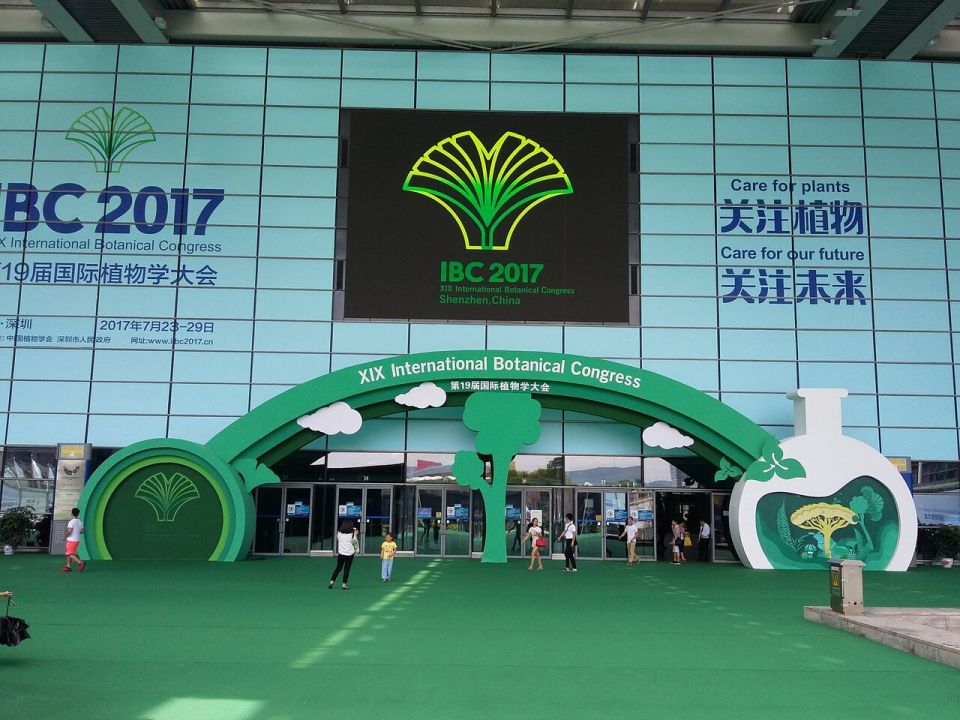
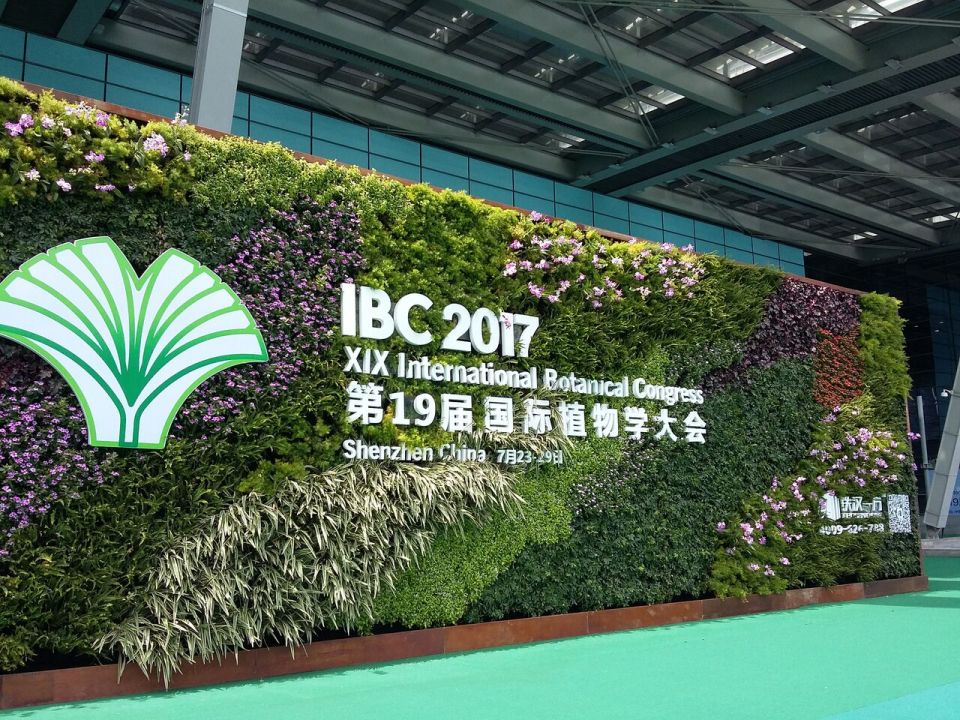
Happy to discuss giving a talk to other groups, please do get in touch, though I’m probably not available until after the summer as I’m also giving a keynote lecture at the PopBio conference in Germany in May and a couple of short talks at the International Botanical Congress in China in July.

Spiral Sunday #24 – a Roman snail

Roman snail cropped 20170303_123004.png

Although it is technically a non-native species, as it was almost certainly brought to Britain by the Romans, Helix pomatia (the edible or Roman snail) is nonetheless protected by the Wildlife and Countryside Act (1981), and in England it is an offence to sell, collect, kill or injure this species. That’s an unusual situation for an alien animal or plant in this country, and I’m struggling to think of another example – are there any?

Regardless of its status, the large shells of the Roman snail (several times bigger than the common garden snail Cornu aspersum when fully grown) form a beautiful spiral for today’s Spiral Sunday posting.

Thanks to Dr Tim Astrop for allowing me to photograph this dead specimen.

Proposals to “sequence the DNA of all life on Earth” suffer from the same issues as “naming all the species”

Tanzania ichneumonid P1000757

There’s a short piece on the website of the journal Science this week entitled “Biologists propose to sequence the DNA of all life on Earth“.  I don’t propose to say much about it except to say to anyone interested: read that piece, then read my recent post entitled “The road to degradation: is ‘naming all the species’ achievable or even desirable?

In my view “naming all the species” and “sequencing the DNA of all life” suffer the same issues and flaws. At a time when research funding is becoming ever more difficult to obtain (in part because it’s becoming more concentrated on fewer institutions and individuals) such multi-billion dollar initiatives make great headlines, but are they value for money?

At the moment Science also has a series of stories on its conservation news web pages, and you can find others all over the web, that point to our inability to conserve even large, charismatic species such as elephants and the big cats, and how this in turn can impact on human survival and wellbeing.  Perhaps we should devote more funding and more research energy to fixing these issues before we attempt such large-scale projects?

As always, your opinions and comments are welcomed.

Links to some recent pollinator-related papers, posts, projects…. and pedals

oxalis-fly-p1030303

For weeks now I’ve been meaning to post some links to pollinator-related items that have caught my eye, but have only just found time to pull them together, hence some of these are a little dated but should still be of interest:

  • By pure coincidence Hazel Chapman (the senior author of that paper) came to Northampton a few weeks ago to give a seminar about her Nigerian Montane Forest Project which is well worth checking out and which, in the future, will have a large pollinator focus.
  • The Journal of Pollination Ecology (where I remain an editor) has a new volume out – it’s open access and has some really nice papers – here’s the link.
  • There’s been a few stories doing the rounds about robot pollinators and how they are going to replace insects.  It’s all nonsense, of course, and in a recent blog post Dave Goulson nails the arguments very well – see: Are robotic bees the future? [spoiler alert – the answer’s “No”].  Likewise, over on her blog, Manu Saunders opines that: “Artificial pollinators are cool, but not the solution“.  What the technologists who are promoting these ideas, and related concepts around the “Internet of Things”, don’t seem to get is that all of this tech has environmental costs associated with it: resource/pollution costs for making it; energy costs for using it; and disposal/pollution costs when it reaches the end of its life.  Applying a green wash of “let’s use drones for pollinating flowers” doesn’t make the tech any more environmentally sustainable, quite the opposite.  Sorry, rant over…
  • Ben Geslin and colleagues have written an interesting review in Advances in Ecological Research called “Massively Introduced Managed Species and Their Consequences for Plant–Pollinator Interactions” that focuses on both mass-flowering crop plants (e.g. oil seed rape) and domesticated, highly abundant pollinators such as honey bees, and what their increase might mean for natural communities of plants and pollinators, particularly in sensitive environments such as oceanic islands.
  • There’s a guitar effects pedal called the Pollinator – from the review:  “The Pollinator is a living thing, sensitive to its environment and surroundings, and it becomes an extension of the guitarist playing it.”  Quite.
  • Nine species of bee in the genus Perdita that are new to science have been described from localities in the the southwestern USA.  Here’s a link to a lovely video that shows these bees, their distinguishing features, and how they were named (mainly for characters from Shakespeare’s plays).  Not very impressed with the snarky “if scientists had bothered to look” title of the article though.
  • Finally, a new citizen science project has been launched designed to understand how hoverflies evolve mimicry of bees and wasps – looks interesting, please take part – here’s the link.  Just be aware, it’s a bit addictive!

As always, feel free to suggest links to items you found of interest.

Waxwings on my birthday!

waxwings-by-stephen-valentine

Waxwings (Bombycilla garrulus) may possibly be my favourite bird, and I’ve posted a couple of times about encounters with them – see: Waxwing winter and Waxwings in Northants.

So for my birthday last weekend I was stunned and delighted by a gift from my wife Karin: a specially commissioned illustration of waxwings by a very talented artist friend of ours, Stephen Valentine, who is based in Denmark.

I think Stephen has beautifully captured both the alert intelligence of these birds, always on the look-out for food and predators, and their subtle and striking colouration.  It’s such an honour to own a piece like this!

If you’re interested, Stephen regularly takes commissions; you can find him on Facebook by searching for “Studio Sejerø”, or I can put you in touch with him.

Thanks Karin, thanks Stephen! 🙂

What’s green, waxy and smells of cheese? The flowers of Deherainia smaragdina!

img_2908

A tweet this morning from Chris Howell at Birmingham Botanical Garden reminded me that for some time I’ve been meaning to post up images of an enigmatic flower that has intrigued me for over a decade, ever since I encountered it in the Palm House at Kew.

It was the smell that I first noticed: strong and pungent like a ripe blue cheese, or unwashed feet.  This drew me to a small, evergreen shrub with the wonderfully eliding name of Deherainia smaragdina, a Mexican member of the primula family (Primulaceae) though older sources put it in the Theophrastaceae, a family no longer recognised by most botanists.

cheese-tree-1

At first I couldn’t spot where the smell was coming from, then I saw the flowers: larger than I was expecting (a couple of centimetres across) given that they were not immediately obvious, and very waxy and stiff to the touch.  In fact (to the human eye) it was quite well camouflaged against the plant’s own leaves, not at all what one expects from a flower.  However camouflaged flowers that rely only on scent for attracting insects are not unknown in the plant kingdom, and probably under-recorded: see for example Adam Shuttleworth and Steve Johnson’s work on wasp-pollinated flowers of asclepiads (Apocynaceae) in South Africa, where the “cryptic colouring” is similar in reflectance to the background vegetation.  “Smaragdine” means emerald-like, so a very fitting species name.

The scent tends to come and go, perhaps affected by temperature or light levels.  Under the scanning electron microscope the surface of the petals has some intriguing bulbous cells (which I’d hypothesise produce the scent) and the wavy, waxy covering of the cuticle is clearly visible:

deherainia-close1

deherainia-close2

Another intriguing thing about Deherainia smaragdina is that the bisexual flowers are in a male phase when they first open, moving into female phase only after a day or two. Compare the two flowers below.  In the male phase (left) the pollen-bearing stamens are centered in the flower, hiding the female stigma (which is probably not receptive at this stage); over time the stamens move outwards to expose the stigma and the flower goes into female phase (the flower on the right):

cheese-tree-3

Why this plant should smell of cheese is a mystery, but it’s probably attracting a particular type of pollinator – though what they are no one knows !  It’s never been studied, as far as I’m aware.  We might predict from the scent that it’s flies, but I think that wasps are also a possibility.  If anyone is doing field work in the parts of Mexico where this plant grows, please look out for it and try to photograph flower visitors: I’d love to hear from you!

The road to degradation: is “naming all the species” achievable or even desirable?

structure4

In 2013 Mark Costello, Robert May and Nigel Stork published a review paper in the journal Science called “Can We Name Earth’s Species Before They Go Extinct?”  It’s a paper that I discuss with my students in their final year Biodiversity and Conservation module, and it always generates a lot of interest, and it’s has been well cited since it first appeared (143 citations* to date according to Web of Science).  There was an interesting response by Mora et al., with a riposte by Costello et al., but overall the original paper has been rather influential in framing some discussions about taxonomic effort and description of species, and the idea that we can “name everything” with additional resources.  At the end of the review Costello and colleagues answered their own question by stating: “We believe that with modestly increased effort in taxonomy and conservation, most species could be discovered and protected from extinction” [my emphasis].

Is their optimism justified?  Can “most species be discovered”?  And what are the implications for how we go about “discovering” these species that are unknown to science?

In my professional life I’ve been fortunate enough to carry out field work with some great colleagues in some wonderful parts of the world, including tropical rainforest and savannah in Guyana and Gabon, mountain scrub in the High Andes of Peru, seasonal dry forest in Australia, montane grasslands in South Africa, Namibian desert, and Brazilian cerrado and Atlantic rainforest.  All of these were sites where non-biologists would rarely venture: off the beaten track and (usually**) away from the typical tourist haunts.  It would be tempting to describe these places as “remote” but really they were not, because they all shared something in common: accessibility.  We were able to reach these sites by traveling along roads, of variable quality, usually in four-wheel drive vehicles.  The roads were often not in good condition, and frequently not metaled, but they were roads nonetheless.

It’s sometimes said that if one were to map the geographical coordinates of plant specimens stored in herbariums such as the one at Kew, you would end up with a road map of the world.  That’s because collecting biological specimens, or carrying out field work, requires us to be able to gain access to an area.  And accessibility usually means roads, unless one is working on the coast or along a river or lake, or have lots and lots of funding to allow teams to be helicoptered into an area (which is rare, but makes for exciting television).  Therefore most collecting of biological specimens is done in areas not far from roads.

So, any initiative that intends to “name all the species” in a particular group is going to require access to the remotest parts of the planet, areas that currently have no roads running through them.

There are still areas of the world that we can consider “remote” and “wilderness”, areas that are more than 100km from the nearest road – as a study published at the end of 2016 demonstrated.  But these are often found in the most biologically rich parts of the planet, for example tropical rainforest and mountainous areas, where we wouldn’t necessarily want to put roads to make them accessible to taxonomists (or even ecologists).  That’s because where roads go, people go, and accessibility to an area is usually followed by exploitation and degradation: illegal hunting, logging, mining, poaching of specimens for sale, etc. etc.

orchidmarket

Now, don’t get me wrong, taxonomy is absolutely vital to the conservation of the earth’s biodiversity.  It also underpins much ecological, bio-molecular and agricultural research and technology.  But the trade off for taxonomists is that they must gather their specimens and data from accessible areas, and that often means roads, and roads mean degradation.

The impetus for this post came from Twitter where a taxonomist highlighted the very good work done by the Virtual Institute of Spider Taxonomy Research (VINT) and described it as an “initiative to discover all spider species of the world in 30 years”.  Interestingly I can’t find that aspiration on the VINT website, but if it exists I’m not sure it’s achievable for spiders or any other diverse group of species, without being able to access parts of the world that are best left un-degraded.  Again, this is particularly true of the tropics where species can have very limited distributions.  A number of years ago an Australian botanist told me about how he was only able to collect some epiphytic Hoya specimens in Papua New Guinea by going into areas of rainforest that had been illegally logged, removing the plants from crowns of the felled trees, with no little risk to his own safety if the loggers had spotted him.  Some of those species might have remained undescribed if the area had not been opened up by a road prior to deforestation.  That would have been a loss for Hoya taxonomy, but surely positive for conservation.

Can “most species be discovered”?  Is this even a desirable thing?  I used to think so, because of the oft-stated view that we can’t conserve what we don’t know.  Now I’m not so sure, for reasons I hope I’ve articulated.  But as always I’d welcome your comments and criticisms.


*Including one in the conference: Annual Forum on Grumpy Scientists: the Ecological Conscience of a Nation:Royal Zoological Society, Sydney, Australia.  I’d have liked to have been a fly on the wall at that meeting!

**Usually, but not always: I have a few papers where some or all data collection was done in and around back-packers hostels, hotels, and tourist lodges.  Hey, you take your opportunities where you find them in this game!

When did plastic plants become acceptable?

Plants are important.  Really, really important.  They play important roles in society and in the nature that supports our societies: plants feed us; they are a source of many pharmaceuticals; they produce oxygen and store up carbon dioxide; they can remove pollutants from city atmospheres; and they are the foundation for much of the world’s ecological functioning.  In addition they inspire poets, artists, musicians, and have huge cultural significance, as well as bringing beauty and biodiversity to even the most urban of environments. Plants positively add to our quality of life, and make us happy, whether we are aware of it or not.

OK, there’s a bit of personal bias going on here: I’ve always loved studying and growing plants, they are a huge part of my life.  But the basic facts of what I laid out in that opening paragraph are correct: plants matter.  So I find it troubling that there seems to be a recent trend in using artificial (mainly plastic) plants indoors and in outside “gardens”.  When did this happen?  When did plastic plants become acceptable?

It first struck me that there had been a recent shift in how we view plastic plants back in the summer when I visited the newly refurbished main restaurant at the university’s Park Campus.  The refurb was very nicely done and there’s a big display about how much of the university’s waste we are recycling, and there’s lots of greenery about the place – except that most of it is plastic.

Then in November we visited my son Patrick in Lancaster.  We stayed a night in a nice hotel in the city centre, in a room that led out into a private courtyard – full of plastic plants.  There was a plastic lawn, a plastic palm, even plastic ivy.  Ivy!  One of the easiest plants in the world to grow – why would you need to make it out of plastic?!  It makes itself perfectly well which you can see if you peep over the wall at the back of the courtyard:

lancaster-courtyard-20161113_101336

Then the following week I was in London at the Wellcome Trust to take part in a project review panel.  The Wellcome’s building near Euston Station is wonderful, really striking on the inside, full of light and life.  I was initially please to see an avenue of fig trees in large containers arrayed along the centre of the main concourse:

wellcome-trust-20161115_123554

But when I looked closely I realised that although the trunks and branches were real, these were not living plants: the leaves are artificial, made from wire and synthetic material.  So someone has gone to the trouble of growing real fig trees only to dismember them and festoon them with faux foliage.  Please, no one tell Mike Shanahan!

I’m really surprised at the Wellcome Trust, an organisation I have a lot of respect for;  we know that real plants have a positive effect on psychology and health, though I very much doubt that the same can be said for artificial ones.  In their defence the Wellcome Trust building does have some real plants scattered about the place, but they missed a huge opportunity in not using real figs here.  Even that cathedral to capitalism that is the Milton Keynes shopping centre uses real plants in most of its displays, including some lovely tree ferns:

mk-tree-fern-20161204_162151

And splendid palms:

mk-palm-20161204_150755

Finally, insult was added to injury as we entered the New Year.  As I mentioned in my Spiral Sunday post a couple of weeks ago, we bought a wreath as a Christmas decoration and I took it apart to compost and recycle at the start of the year.  What I hadn’t noticed when we bought it was that half of the holly berries were plastic:

wreath-20170107_130333

This was hugely ironic given our recent study of how insects boost the value of holly by pollinating the female flowers that produce the berries!

All of this is more than just snobbery on my part.  Yes, you can argue that plastic plants are a bit naff and can never take the place of the “real” thing.  But my main concern here is an environmental one: plastic plants require resources (usually oil-based polymers and energy) to make.  And I doubt very much whether they are recycled very often.  Yes, real plants also cost resources to grow (though that can be minimised depending on how they are grown).  But they also provide a range of benefits and, at the end of their life, they can be composted.  Not something I can do with my plastic holly berries.  Not only that, but I suspect that most (all?) of the plastic plants that are sold are manufactured in the Far East.  Using British- or Europe-grown real plants would cut down on the carbon-miles required and support more local horticultural industries.

Early in 2017 Andrew Lucas at Swansea University, on Twitter, described what he thought was the most depressing tweet of 2017 so far:  “Transform your garden today: buy Artificial Grass from ExpressGrass. Cut to your size for easy DIY installation”.

Agreed, hugely depressing, but we can do something about it: stop buying fake plants.  Perhaps we need a Campaign for Real Plants?  Its theme tune could be Radiohead’s Fake Plastic Trees:

Her green plastic watering can
For her fake Chinese rubber plant
In the fake plastic earth
That she bought from a rubber man
In a town full of rubber plans
To get rid of itself…..

……It wears me out

Spiral Sunday #17 – sculpted hair from Louisiana

Sculpted hair 20160911_125622.png

This week’s Spiral Sunday features a close-up of  hair sculpted in marble, taken during the visit to Copenhagen’s Louisiana Museum of Modern Art I mentioned in Spiral Sunday 5. Sadly I forgot to note down the name of the artist, but I do like the way s/he has depicted the hair as deeply carved, close-set spirals.