Over the past few months I’ve done a large number of online talks for a variety of audiences, including natural history and gardening societies, beekeeping groups, private companies, university estates departments, and ecological consultancies. I thought it would be useful to provide a list of what I offer, with a short description. All talks are accessible and understandable to a broad audience, and can be tailored to the individual needs of the group:
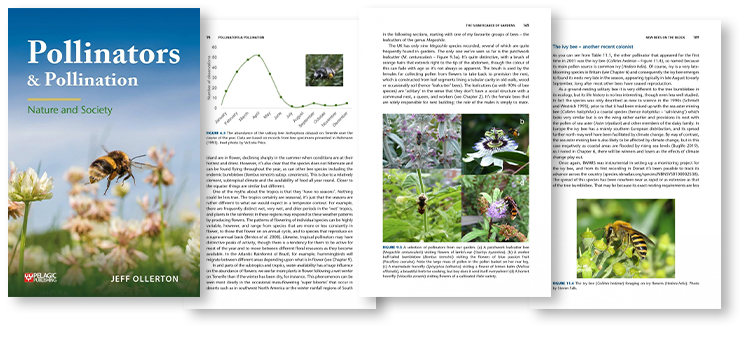
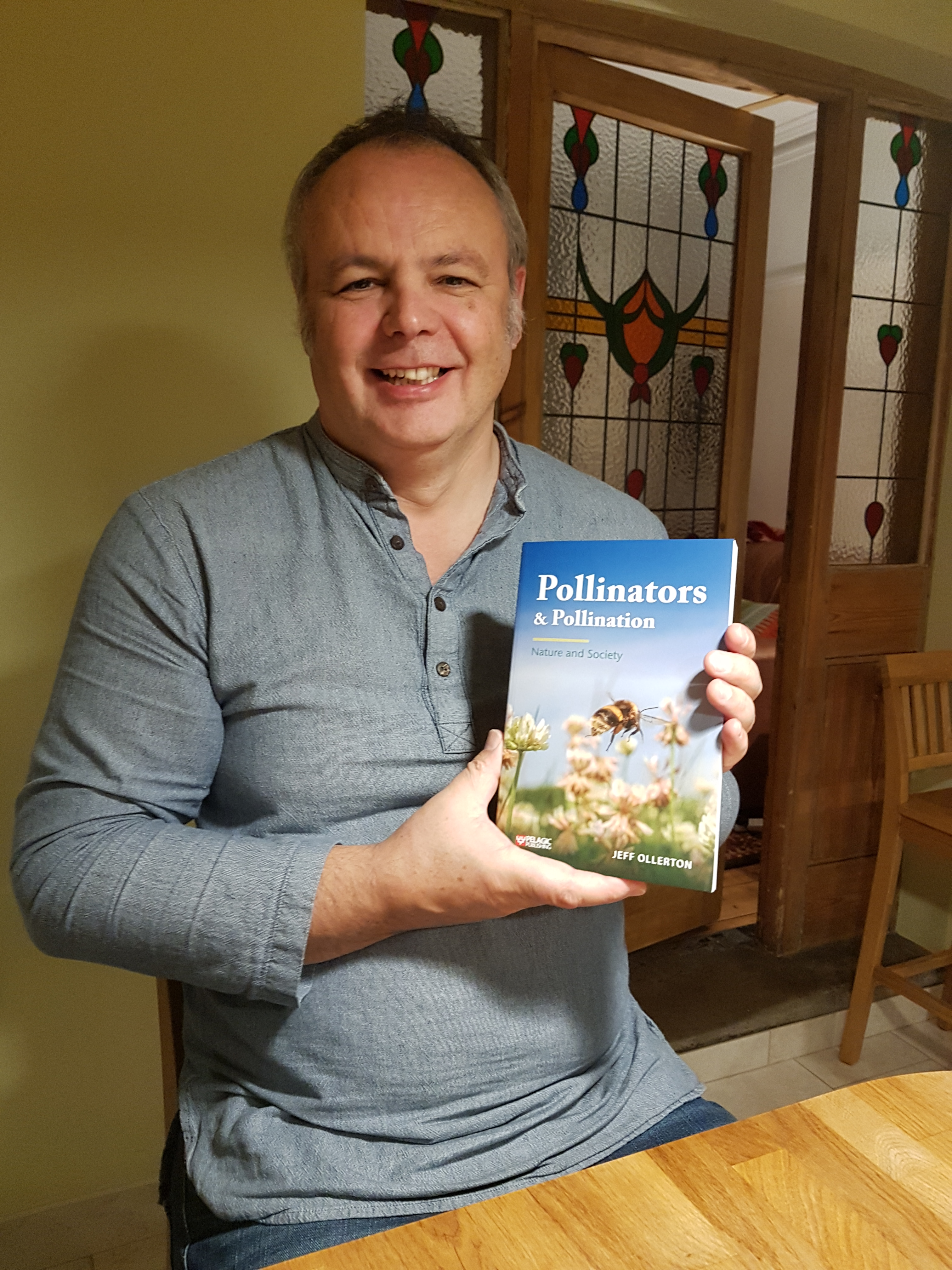
Pollinators & Pollination: Nature and Society is an introduction to the importance of pollinators and the pollination services that they provide to both wild and crop plants. The name, of course, reflects that of my recent book.
The Politics of Pollination is an account of how society (governments, organisations and individuals) has responded to the current “pollination crisis” (if that’s what it actually is…)
Bees in Cities: an Introduction to Urban Pollinators focuses on the positive roles that urban environments can play for pollinators, and the potential threats of city living.
Pollinators in Gardens gives practical advice on how to make your garden “pollinator friendly”.
Pollinator Conservation: Threats and Opportunities describes how and why pollinators are declining and what we can do about it at the individual and societal level.
Habitat Creation and Management for Pollinators gives an introduction to how NGOs, estates departments, consultancies, and so forth, can effectively support pollinators in ways that go beyond just planting flowers and putting up a few “bee hotels”.
To Be a Flower is an introduction to how flowers function and the ways in which they manipulate the behaviour of their pollinators to ensure reproduction.
Darwin’s Unrequited Isle: a Personal Natural History of Tenerife describes some of the field work that we’ve been doing on this most fascinating of the Canary Islands.
Biodiversity: What Is It and Why Should We Care? gives a very general overview of the topic of biodiversity and ecosystem services.
Talks typically last for around 50 minutes, following which I’m happy to answer questions and discuss any issues that have arisen. I also offer a half- or full-day of training for those organisations that need more depth, for example ecological consultancies. Note that I charge for all of my talks and training. If you would like to enquire about any of this, please use the form on the Contact page.