It’s been a couple of years since I last did a talk or workshop for the Wildlife Trust for Bedfordshire, Cambridgeshire & Northamptonshire. But I’m pleased to say that they’ve invited me back and you can join me tomorrow evening for an online introductory talk about pollinators and pollination in the UK.
The talk starts at 7pm UK time and full details of how to sign up are in the link below:
It’s been quite a while since I posted about the Chequered Skipper Reintroduction Project – see my earlier posts here and here. But my involvement has continued, albeit geographically removed from Northamptonshire, and I thought I’d give a brief update with two good news stories.
The headline story is, of course, the success of the project. Since its reintroduction in summer 2018, the Chequered Skipper population has thrived and grown and is now the first self-sustaining population in England since it went extinct there in 1976. Not only that, but the management within Rockingham Forest that was designed to improve the habitat for this butterfly has also benefitted a range of other species, including plants, insects and birds.
How do we know this? Well, the situation on the ground is being intensively monitored by the project team and the passionate volunteers who are helping to count butterflies and other species every year. The data collected from these activities has fed into Jamie Wildman’s PhD thesis where he’s collated and analysed the results. And that’s the second item of good news: yesterday Jamie successfully defended his PhD thesis and was awarded a pass with very minor corrections!
I’m actually not surprised because it’s a great thesis with some fascinating results that not only document this reintroduction but also rewrite the history of the decline and extinction of the English populations of Chequered Skipper. The first paper from that is out – see this post – and there’s more to follow shortly.
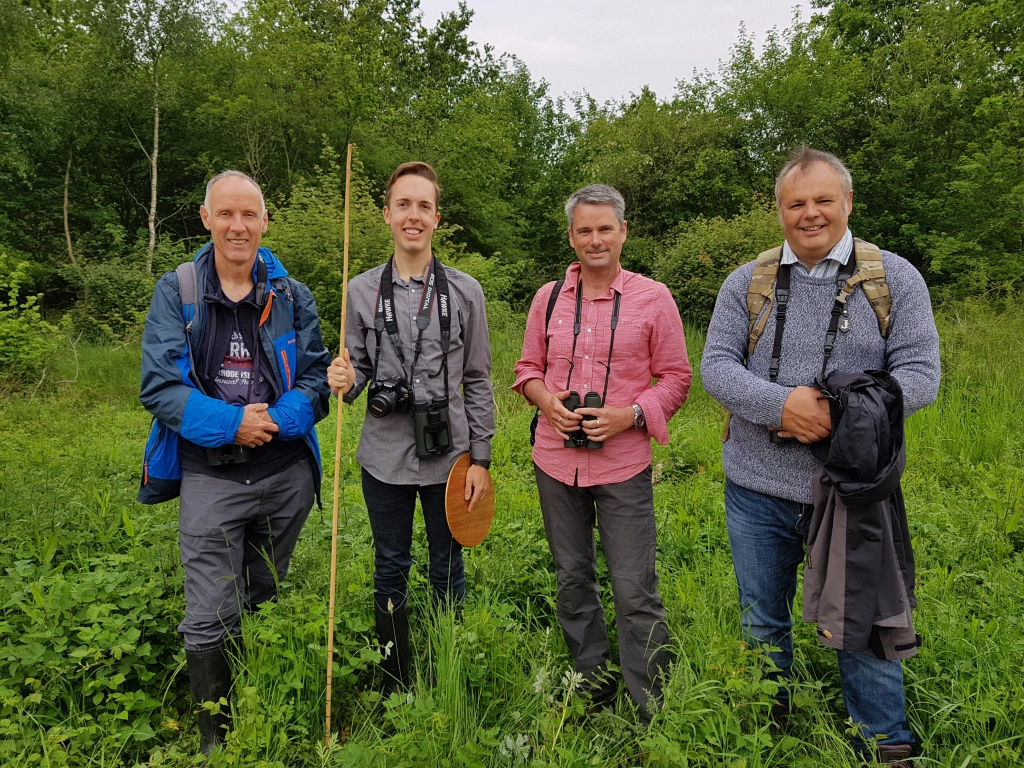
Once again, huge congratulations to Jamie and thanks to the project team and the other supervisors for their hard work. Here’s my favourite photo of Jamie, second from the left and just starting out on his PhD journey back in 2018.
It’s been an interesting start to the year in the world of pollinators and pollination. The European Union has revised its 2018 initiative for pollinator conservation with an update called “A New Deal for Pollinators“. At the same time the UK Government has released its plans for Post-Brexit farm subsidies, many of which focus on environmental action that can support pollinators, such as planting hedgerows. I think that it’s fair to say that there’s been a mixed response to these planned subsidies. There’s also mixed news in Butterfly Conservation’s State of the UK’s Butterflies 2022 report. The headline figure is that 80% of butterflies in the UK have decreased since the 1970s. However there are enough positive conservation stories in that report to demonstrate that this decline does not have to be irreversible, we can turn things around.
Against this wider backdrop of pollinator actions, I was pleased to have a new research paper published this week, which is an output from the SURPASS2 project with which I’ve been involved. Led by Brazilian researcher Nicolay Leme da Cunha, this paper assess the variability of soybean dependence on pollinators. Although soybean is one of the most widely grown crops globally, there’s still much that we don’t understand about which of the many different varieties have improved yields when visited by bees, and which are purely self-pollinating. One of our main findings was that for some varieties, especially in the tropics, an absence of pollinators results in a decline in yield of about 50%.
The paper is open access and you can download a copy by following the link in the reference:
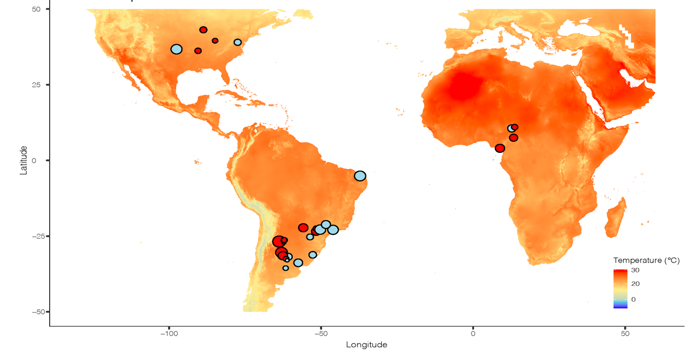
Identifying large-scale patterns of variation in pollinator dependence (PD) in crops is important from both basic and applied perspectives. Evidence from wild plants indicates that this variation can be structured latitudinally. Individuals from populations at high latitudes may be more selfed and less dependent on pollinators due to higher environmental instability and overall lower temperatures, environmental conditions that may affect pollinator availability. However, whether this pattern is similarly present in crops remains unknown. Soybean (Glycine max), one of the most important crops globally, is partially self-pollinated and autogamous, exhibiting large variation in the extent of PD (from a 0 to ∼50% decrease in yield in the absence of animal pollination). We examined latitudinal variation in soybean’s PD using data from 28 independent studies distributed along a wide latitudinal gradient (4–43 degrees). We estimated PD by comparing yields between open-pollinated and pollinator-excluded plants. In the absence of pollinators, soybean yield was found to decrease by an average of ∼30%. However, PD decreases abruptly at high latitudes, suggesting a relative increase in autogamous seed production. Pollinator supplementation does not seem to increase seed production at any latitude. We propose that latitudinal variation in PD in soybean may be driven by temperature and photoperiod affecting the expression of cleistogamy and androsterility. Therefore, an adaptive mating response to an unpredictable pollinator environment apparently common in wild plants can also be imprinted in highly domesticated and genetically-modified crops
This is a guest post by Dr Annemarie Heiduk about a new species that she’s recently described.
—————————————————————————————————————————-
In an earlier blog post about the discovery of a novel Ceropegia species, Jeff’s finishing sentence was: “I wonder what else is still waiting to be discovered in the stunning grasslands of South Africa?”
I am happy to provide a first answer to this question: Ceropegia stylesii.
This new species does not have the tubular kettle-trap flowers typical of Ceropegia, which temporarily trap pollinators, but open-rotate corollas where the gynostegium (fused male and female reproductive organs) is freely accessible to pollinators. So, in the traditional sense, C. stylesii is not a Ceropegia. This needs some explanation here!
Ceropegia is a genus in the plant family Apocynaceae (Jeff’s favourite family of plants!) and therein the genus is placed in the subfamily Asclepiadoideae which originally was a family on its own (“Asclepiadaceae”).
Within this subfamily, the genus Ceropegia belongs to the Stapeliinae – a subtribe which comprises ca. 720 species. About 220 species thereof have exciting looking and very cleverly designed kettle-trap flowers which attract small flies as pollinators via deceptive strategies (see http://plantlifesouthafrica.blogspot.com/2019/07/plantlife-sa-volume-473-july-2019.html). The remaining species in Stapeliinae are the well-known stem-succulent stapeliads (ca. 355 species in >30 genera) and ca. 140 species known as Brachystelma.
With increasingly better molecular methods to study the evolutionary relationships of species in Stapeliinae, the traditional grouping of the species was illuminated as being artificial, i.e., species with kettle-trap flowers are not actually a natural group and Brachystelma species are scattered among them; the stapeliads are also nested in Ceropegia but as a single (monophyletic) group. These results based on DNA-sequence similarities are not compatible with the traditional generic concept in Stapeliinae, and as a result, changes were instigated.
Some colleagues wish to see all 720 species of Ceropegia, Brachystelma and the stapeliads merged into one single large genus Ceropegia, a solution which would entail more than 400 new name combinations. Others prefer to adopt a less dramatic change of concept and only include Brachystelma in an enlarged Ceropegia while keeping the stapeliads separate based on their monophyly and distinct vegetative features. This pragmatic solution considers both taxonomic and phylogenetic facts and reduces the previously multiple cases of paraphyly to a single case. More importantly, it avoids hundreds of name changes in the group. Both concepts are correct in their own right and justified, so it is a personal decision which one to follow.
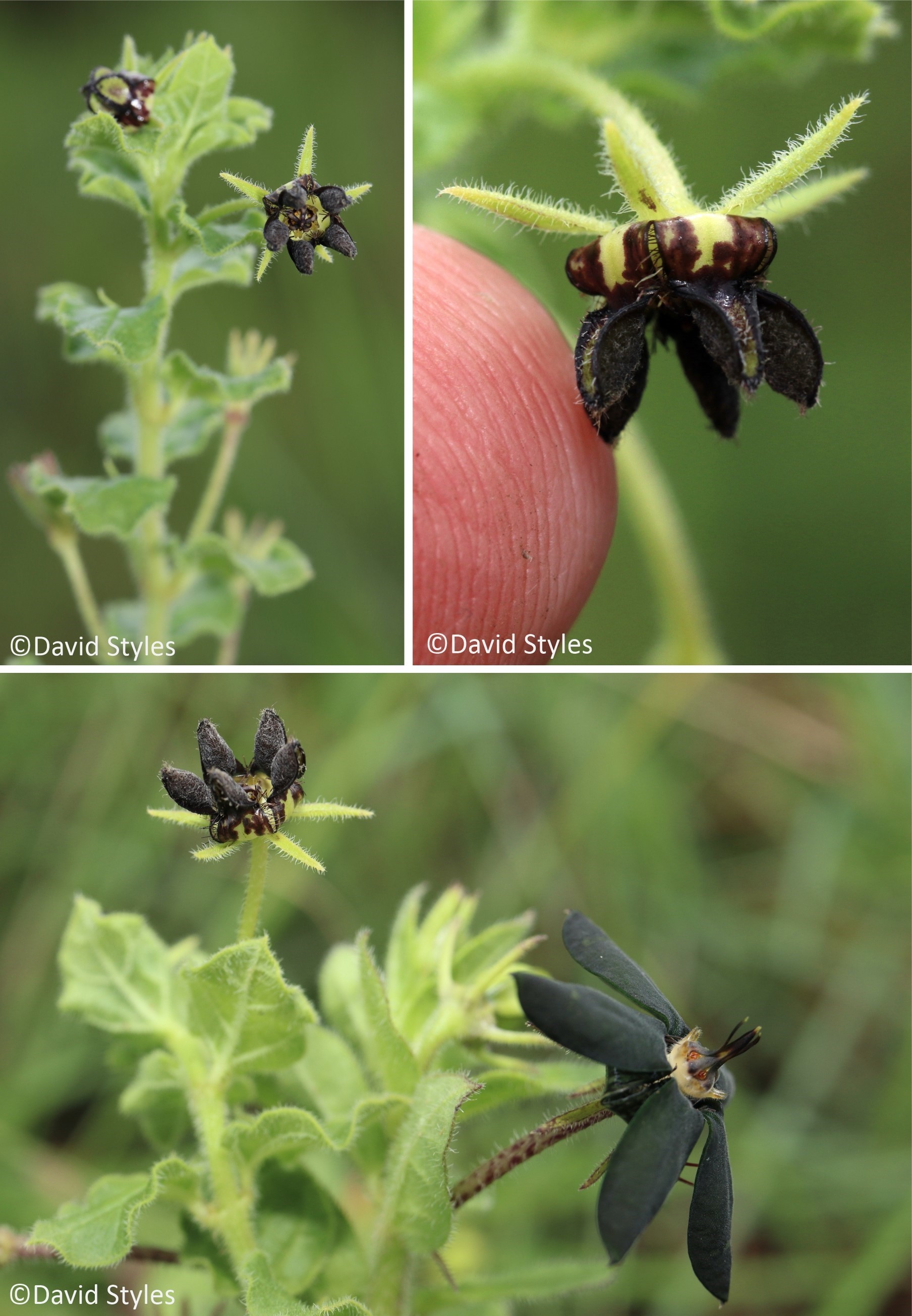
The newly described species C. stylesii would traditionally have been placed in Brachystelma as it is lacking tubular kettle-trap flowers. After the inclusion of Brachystelma into Ceropegia, C. stylesii is placed within section Bowkerianae – a group comprising species both with and without tubular kettle-trap flowers. With the description of C. stylesii, the section now has 15 members of which 10 have open-rotate flowers. Among these, C. stylesii appears to be most closely related to C. gerrardii from which it can only readily be distinguished when in flower (see the lower most image above).
The flowers of C. stylesii superficially look like miniature versions of a dark-flowered form of C. gerrardii, which growths in the same habitat. C. stylesii flowers are only about 6 mm in size whereas those of C. gerrardii are about three times larger. While C. gerrardii occurs in grasslands throughout eastern South Africa, C. stylesii is believed to be endemic to Ngome, where it is known from two localities with a total of less than 10 plants. After the recent discovery of C. heidukiae at Ngome, the area revealed another outstanding member of this amazing plant group, and thereby once again proves its conservation importance.
C. stylesii is named for David Gordon Alexander Styles, botanical explorer and collector, to honour his valuable contribution to botanical knowledge in South Africa. David is renowned for “…his daring nature to go leaps and bounds for the specimen he is interested in” (see Chetty 2021), a statement I can readily confirm based on personal experience. Many of David’s collections (by now well over 6000 specimens donated to various herbaria) are novelties awaiting to be described. With C. stylesii, a total of five plant species bear his name. I am delighted that eventually a Ceropegia species could be named for him as David’s knowledge on the distribution and habitats of these special plants is of great value to my research on this plant group.
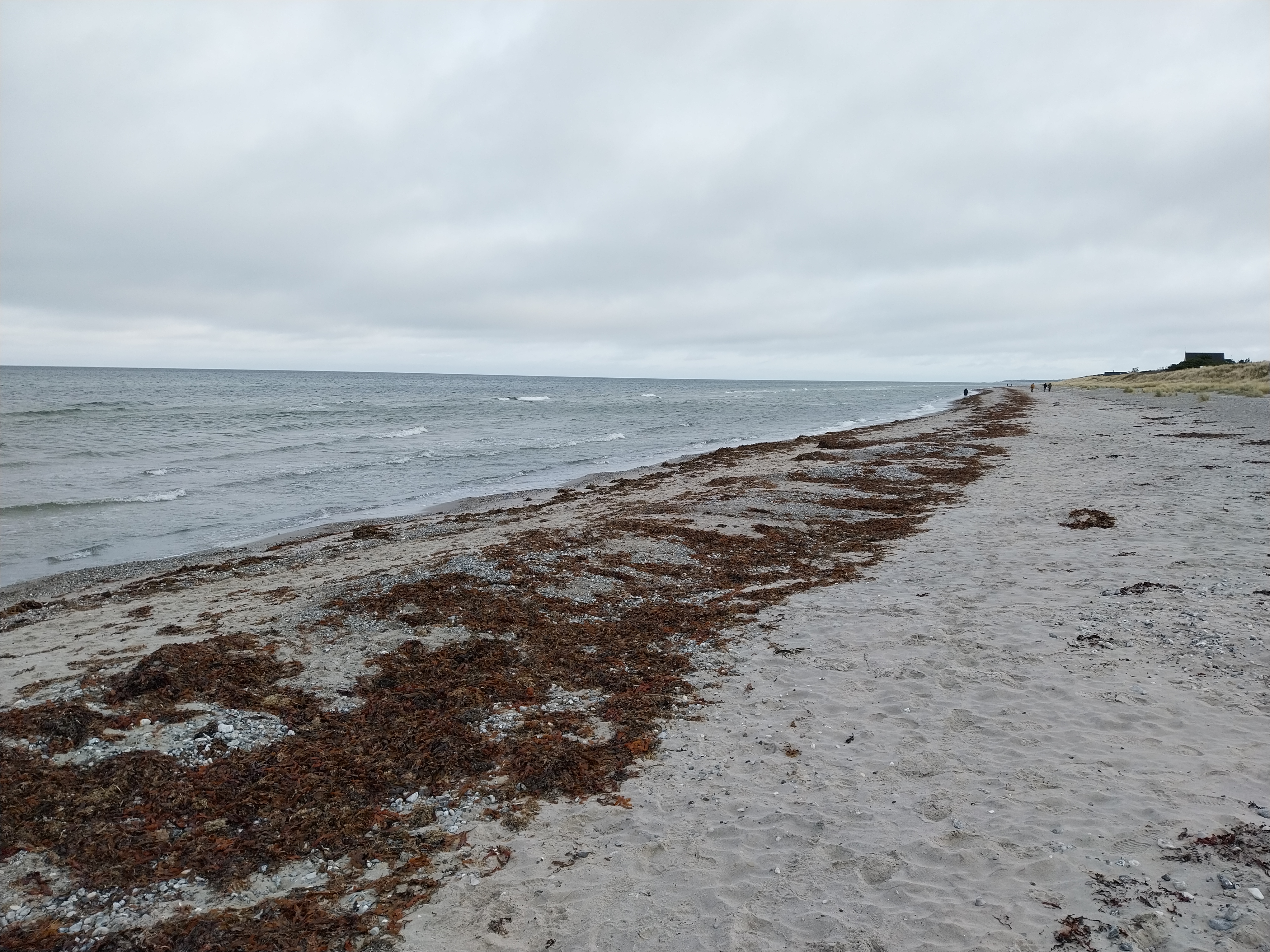
On Sunday Karin and I rode our bicycles down to the local beach at Nordstrand. It was a chilly day, maybe 4C, with a raw coastal wind that made it feel that much colder. Our local bit of shallow ocean – the Kattegat – is normally quite calm but there was a swell bringing in seaweed and the (very) occasional item of rubbish. I collected a golf ball but otherwise the beach was free of plastic. That’s the usual state of affairs here, despite it being a popular tourist destination in the summer. If only beaches elsewhere in the world were as clean.
As we walked Karin and I chatted about some of our plans for the coming year. We’re both working on our next books and relishing the process of swapping chapters to read out loud to the writer. The occasional hardy soul, also enjoying being out in the elements, passed us by and we nodded in acknowledgement. Above us the gulls were wheeling and calling, a constant reminder that they were here before us and will remain when we are gone. Moving from the strand line into the sand dunes we found a convenient bench to sit, drink from our water bottles, scoff some nuts and raisins, and admire the view until the cold wind won the argument and moved us on.
Walking back to the bikes we paused to look at the verdant moss growing on the steep faces of the dunes. Small seedlings had germinated in these planty blankets, a promise of growth and flowers during the year to come. Here and there birds had torn out sections in their constant search for insect larvae. Life goes on even in these cold days.
On our ride back through the neat summerhouses that are settled within the nearby pine woodland, male Great Tits were voicing their claims to territory. Spring is surely just round the corner, we hope.
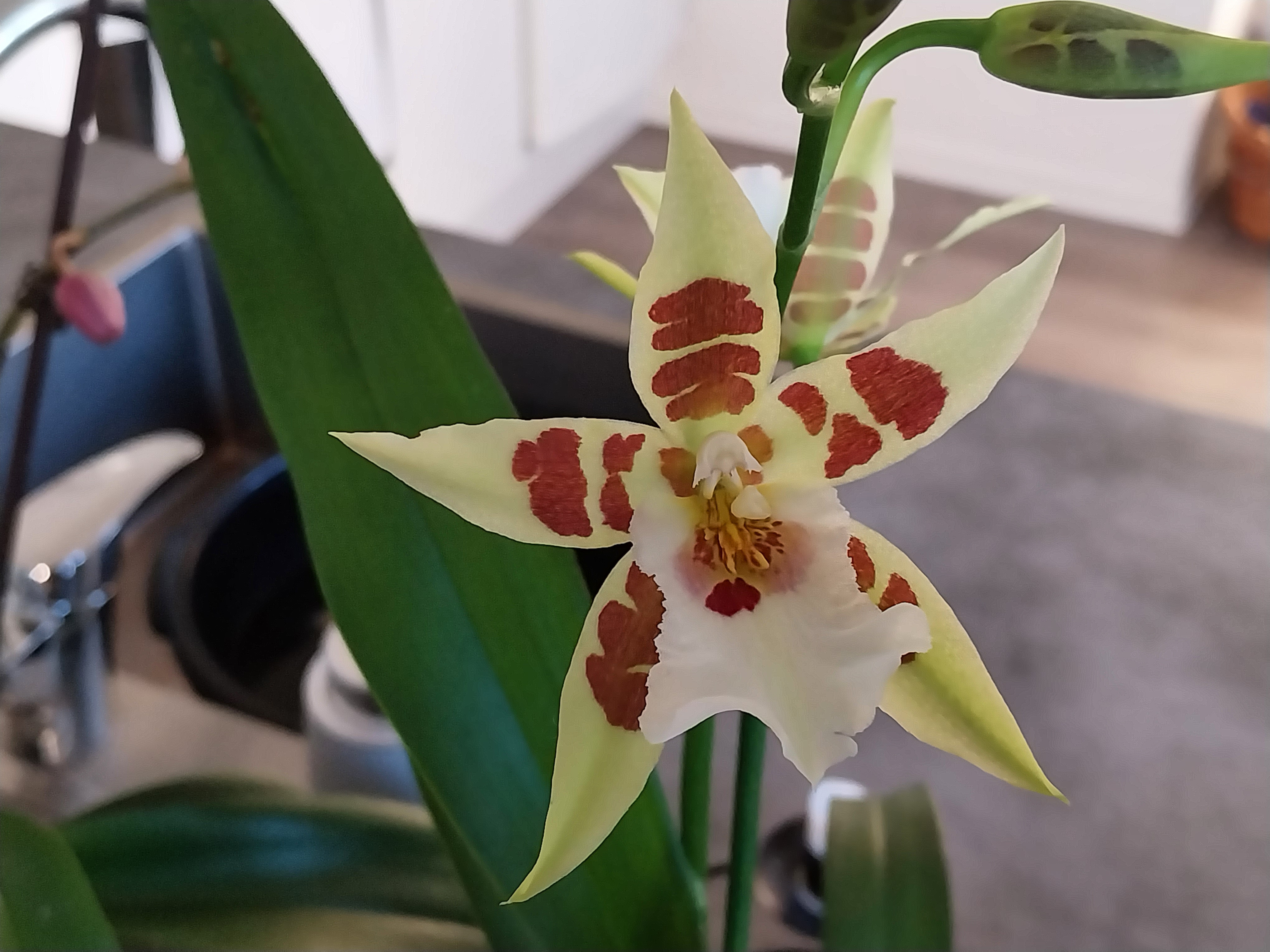
The other day Karin bought a Miltonia orchid to add to the ever-expanding collection of orchids she’s accumulating. It’s nowhere near as large as the collection she accumulated in our old place in the UK – part of it is pictured in this old post of mine – but it’s only a matter of time. This morning I showed her how to extract orchid pollen from the flower and her squeals of delight were something to hear!
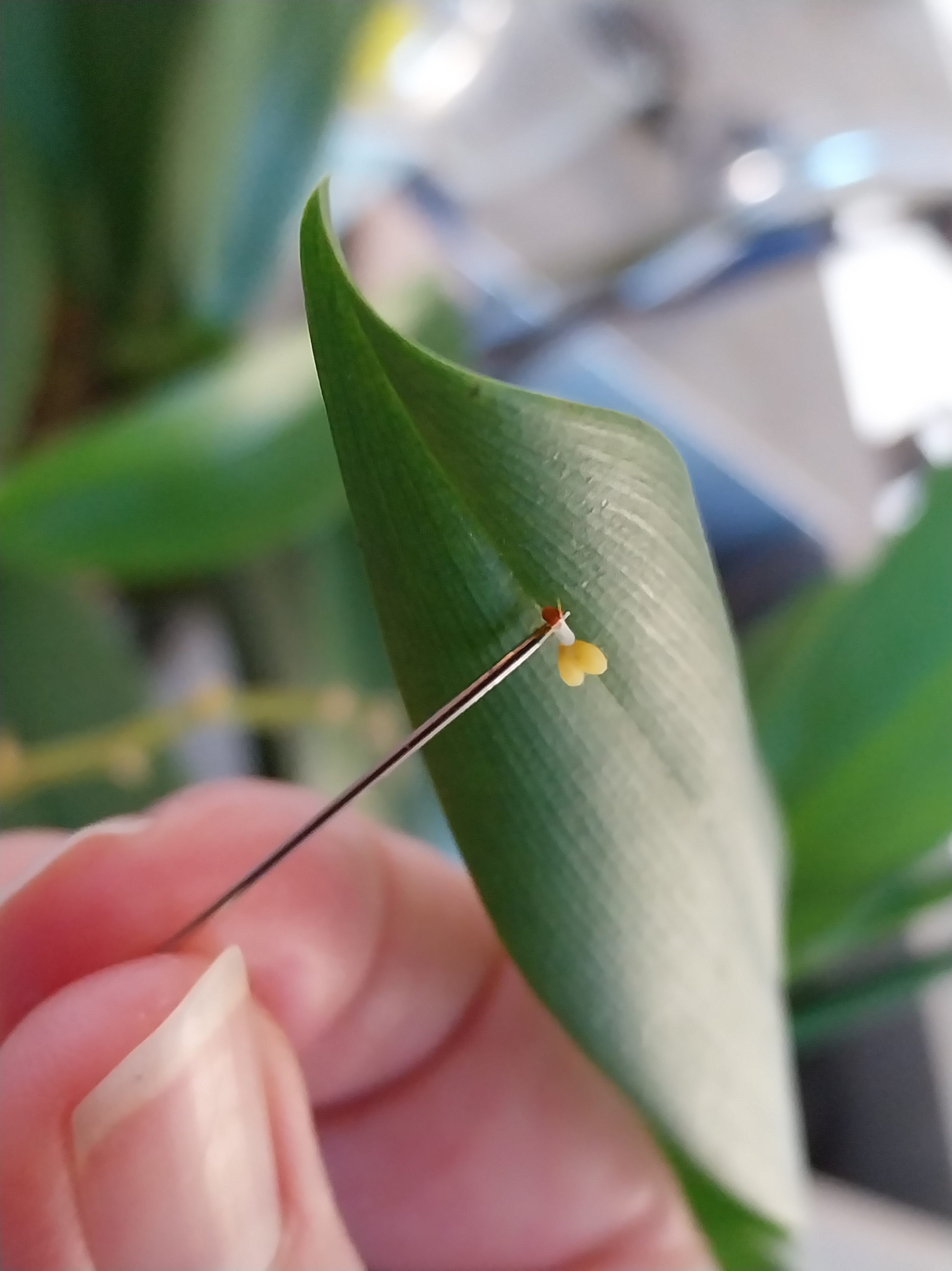
As you can see in the image above, these orchids package their pollen into discrete structures that we term “pollinia” – two of them in this case, though the form and number of pollinia vary between different groups of orchids. The pollinia plus the sticky organ that attaches them to a pollinator is collectively termed a “pollinarium”. The only other plants that present their pollen in this way are my beloved asclepiads in the family Apocynaceae. The orchids and the asclepiads are only very distantly related to each other so this is a clear example of convergent evolution, where both plant groups have come up with the same solution to a problem. In this case, the problem is probably that bees collect a lot of pollen which has a reproductive cost for plants. Packaging the pollen in this way prevents bees from stealing it, amongst other advantages.
If you want to look at this yourself, you’ll find the pollinaria tucked under the front of the central “column” of the flower, which comprises the fused male and female reproductive parts. Just take a fine needle and gently stroke the underside of the column. In the image below, taken just after we extracted the pollinarium, you can see the “anther cap” which covered them lying just below the column.
It’s possible to learn a lot about botany from studying even common houseplants such as these!
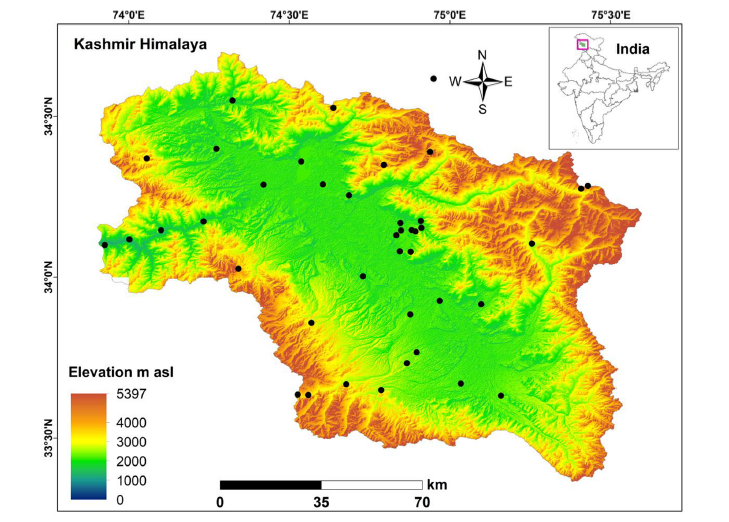
Although we sometimes like to think that we have a “global” perspective on plant-pollinator interactions, in truth there are large parts of the world where we have little or no information. That’s especially true of biodiversity hotspots. One such hotspot is the Kashmir Himalaya, a relatively small area (just 135 km long by 32 km wide) that nonetheless contains an estimated 2,000 species of flowering plant, more than 150 of which are endemic to the area. In addition, over 1,280 insect pollinator species have been described, including at least 29 species of bumblebees and as many as 40 species of butterflies.
Recently I’ve been collaborating with Dr Zubair Rather from the University of Kashmir and his colleagues on a data set that represents the first network analysis of plant-pollinator interactions from the region. The network is presented at a large spatial scale – what is often termed a “meta-network”. As Dr Kit Prendergast and I noted in our recent paper, scale matters when it comes to analysing these sorts of networks. Nonetheless (to quote the current paper):
“meta-networks represent the “backbone” of plant-pollinator interactions to which smaller, local networks are attached”
Even at this very large scale we’re seeing some fascinating patterns emerging with respect to the plants, for example the importance of cultivated apples in supporting the wider network of flower visitors. Also notable, and I believe demonstrated for the first time, is the fact that both the indigenous Asian Honeybee (Apis cerana) and the introduced Western Honeybee (A. mellifera) utilise exactly the same, extremely broad array of plants from which to collect nectar and pollen.
Our Kashmir meta-network is, hopefully, the starting point for further work on plant-pollinator interactions in this fascinating and diverse part of the world. The paper is published in a special issue of the journal Flora that’s dedicated to the importance of natural history when considering the ecology and evolution of plant-pollinator relationships. The special issue is a celebration of the work of Professor Marlies Sazima and is edited by Dr Pedro Bergamo.
Here’s the reference with a link to download a free copy which should be valid up to and including 23rd January 2023:
Plant-pollinator studies are increasingly using network analysis to investigate the structure and function of such communities. However, many areas of high biodiversity largely remain unexplored in this way. Our study describes a plant-pollinator meta-network from an understudied biodiversity hotspot, the Kashmir Himalaya, where we specifically investigate plant-pollinator network nestedness and modularity, as well as the influence of alien species and the impacts of simulating species extinctions on network structure. Natural history observations were used to document the meta-network between 230 plant and 80 pollinator species forming 1958 (11% of the possible) interactions. Among the plants Malus domestica and among the pollinators Apis mellifera and A. cerana formed the largest number of interactions with significant influence over the whole network. Network cumulative degree distribution depicted a higher number of degree levels in pollinators than plants. A moderately high number of realized interactions were revealed, thereby indicating potential structural and functional stability in the network. Eight strongly defined modules were observed in the network which varied in their composition. For example, the Ephedra module exclusively comprised of native species whereas the Apis module comprised of all the four different types of interacting species (i.e. native and alien plants and pollinators) and also integrated the highest number of alien species. In the network overall, 40% of interactions were by alien species, reflecting how well these were integrated. Extinction simulations suggested that the network would collapse more quickly when the most connected pollinators are removed, rather than the most connected plant species. Our study is the first assessment of a plant-pollinator network from this Himalayan biodiversity hotspot; and will help to inform the ecological and economic implications of plant-pollinator interactions in an era of global biodiversity crisis.
Note: This is a guest blog post by Guthrie Allen who is a PhD candidate at the University of East Anglia.
Though often overlooked, woodlands have great potential to support wild bees in farmed landscapes. Both the understory and canopy can provide large quantities of early-season nectar. The pollen of woodland-tree taxa such as Acer can form a large proportion of the early-season diets of bumblebees and solitary bees. Even the pollen from wind-pollinated trees such as Quercus can form a significant part of the diets of several common solitary bee species. Woodlands are also believed to provide ample nesting opportunities. These factors may explain why several studies have found positive correlations between bee abundance and/or diversity and woodland cover at the landscape scale. Despite this, a large-scale European study has shown that interior woodland understories support very few bees compared to exposed woodland edges.
Sampling the canopy – at heights of up to 20 metres – is not easy, but unlike the understory, this habitat remains sun-exposed after canopy closure and could be favourable for bees. In Europe, however, our knowledge of bee activity in the woodland canopy is very limited. Furthermore, whilst canopy-tree taxa have been identified as suitable food sources for many bees, we have little evidence that these trees are used for forage when located within woodlands. To explore the role of the canopy, we trapped bees in late spring in the understory and canopy – at the exposed edges and in the interiors – of 15 woodland sites across an English agricultural landscape.
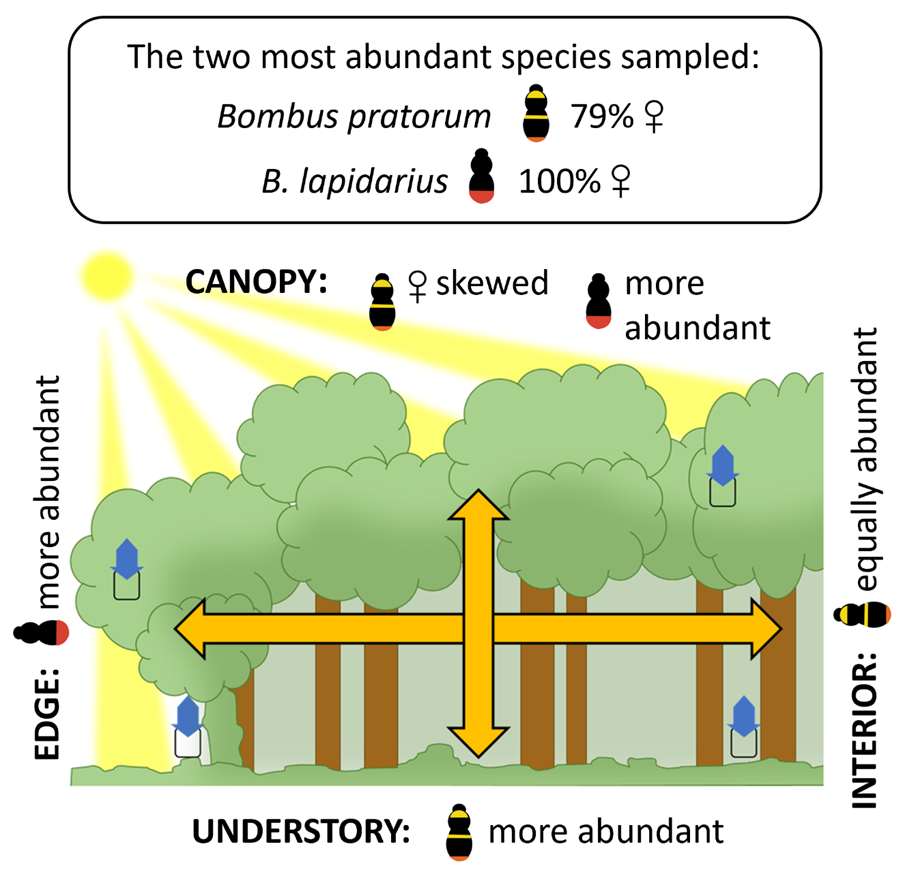
A significant proportion of bee abundance was found in the canopy, represented by 23 of the 29 total sampled species. Interior canopy activity was much higher when nectar-producing Sycamore (Acer pseudoplatanus) trees were nearby. Communities differed between the canopy and understory: of the seven most common species sampled, three were more active in the understory, while the opposite was true of one species – Bombus lapidarius. Interestingly, we found the sex ratio of the most abundant species – B. pratorum – to be female-skewed in the canopy. For four of these species, and contrary to expectations, we found no evidence that understory activity was any higher at woodland edges compared to woodland interiors.
Further research is needed to understand community differences between the canopy and understory. Nonetheless, our results suggest that both these habitats have a significant role to play in supporting farmland bees. We demonstrate that a diverse bee community has the potential to exploit canopy resources, with nectar-producing trees in woodland interiors likely to provide forage for many bees. And we show the unexpected potential of interior woodland understories to support bee abundance.
Here’s the full reference with a link to the open access paper:
Allen, G. & Davies, R.G. (2022) Canopy sampling reveals hidden potential value of woodland trees for wild bee assemblages. Insect Conservation and Diversity. Available from: https://doi.org/10.1111/icad.12606
Here’s the abstract:
Woodlands can play an important role in supporting bee abundance and diversity in agricultural landscapes. However, in temperate-region studies, the canopy is rarely sampled, and our understanding of its contribution is limited. To explore this, we sampled bees in late spring with blue vane traps in the understory (n = 30) and crowns of mature Quercus robur (n = 35) at the exposed southern edges and in the interiors (ca. 25–75 m from woodland edges) of 15 woodland sites across an English agricultural landscape. A significant proportion of bee abundance and diversity was found in the canopy: canopy-trap catches were estimated to be a third as large as understory-trap catches, and 23 of the 29 sampled species were present in the canopy. Of the seven most common species sampled, four were equally abundant in woodland edge and interior traps; three were more abundant in understory traps, and a single species—Bombus lapidarius—was more abundant in canopy traps. The sex ratio of the most abundant species, B. pratorum, was female-skewed in the canopy. Additionally, the presence of nearby Acer pseudoplatanus trees in flower greatly increased canopy-trap catches in woodland interiors. These results suggest that both the woodland canopy and understory have a significant role to play in supporting farmland bee communities; they indicate the importance of nectar-producing trees in woodland interiors, opening avenues for canopy-based management; and they demonstrate that a diverse bee community has the potential to exploit canopy floral resources.
Although we are still in the early part of November, it’s never too soon to be thinking about buying Christmas gifts for friends and family. And what better gift than a book? Here’s a few suggestions for some that I’ve read this year that I think will make fine presents.
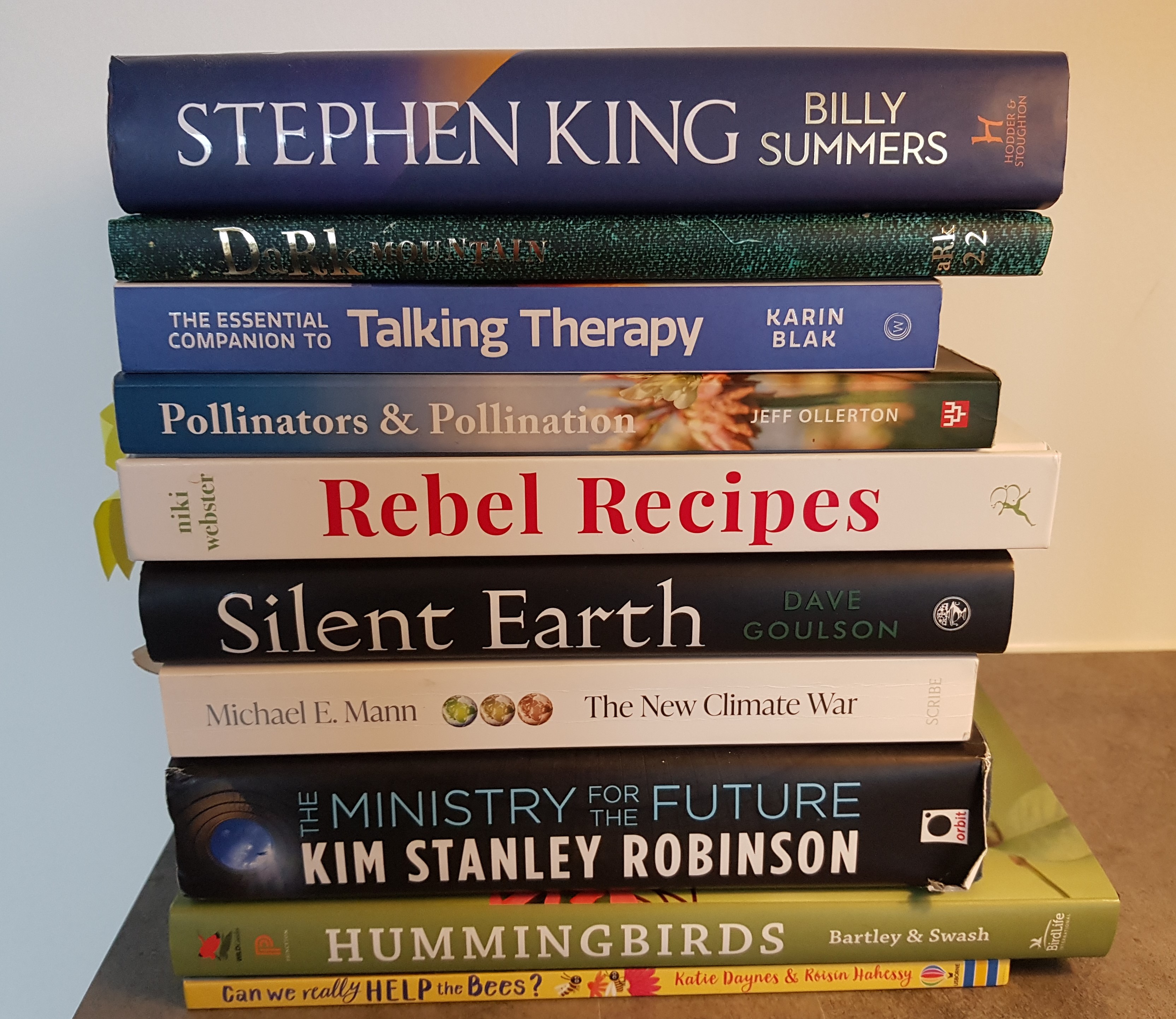
Who doesn’t love a good story, and Stephen King is a master storyteller. I’ve really enjoyed his more recent novels and Billy Summers stands out for me. It’s part thriller, part romance, and as always there’s a little touch of the uncanny. Very different, but just as much a page turner, is The Ministry for the Future by Kim Stanley Robinson. Although Robinson is known as a science fiction writer, this novel is set in the near future when climate change breakdown is forcing governments and businesses into making radical changes. As much as anything this is a road map for how we can get ourselves out of the current climate crisis.
Talking of which, Michael Mann’s The New Climate War should be read by everyone interested in understanding how big corporations have colluded with the media and governments to trivialise and misrepresent the problems that we currently face. I reviewed this and a book about the insect biodiversity crisis, Silent Earth by Dave Goulson, in this blog post.
If you are looking for a book to help young children understand the importance of bees and other pollinators then I can highly recommend Can We Really Help the Bees? by Katie Daynes and Róisín Hahessy, for which I acted as science advisor.
For the ornithologically minded you might want to consider the lavishly illustrated Hummingbirds: A Celebration of Nature’s Jewels by Glenn Bartley and Andy Swash. Those who love writing and art with an environmental focus would appreciate an annual subscription to Dark Mountain, which gives you two beautifully produced volumes every year. A couple of my essays appeared in earlier volumes and the quality of the contributions never fails to impress me.
For the budding or experienced cook, Niki Webster’s Rebel Recipes serves up some amazing vegan dishes that Karin and I have really enjoyed trying. And speaking of my wife, of course I have to include her Essential Companion to Talking Therapy as the perfect gift for anyone considering or currently undergoing counselling or therapy, or who is thinking about becoming a practitioner.
Finally, if you’re looking for particular book ideas or just like browsing through lists of what others recommend, there’s lots of inspiration over at the independent Shepherd site.
I hope that you’ve found this useful. Feel free to comment with suggestions for other books that you’ve enjoyed.
Human populations across the planet are locked into complex economic, agricultural, social, political and ecological systems that provide them with food or, under extreme circumstances, fail to provide that sustenance. The complexity of these food systems requires that they are studied from a multi-disciplinary perspective because no one subject, or individual, can possibly do justice to this crucial topic.
One of the most pressing questions related to food systems is how we ensure that they are resilient to the current and future challenges of war, pandemics, climate change, economic shocks, biodiversity loss (including pollinators, of course), and a host of other factors. Some of these are predictable, others are not, except that recent and distant history tells us that such challenges are always going to be a feature of our societies and we need to prepare as best we can. This review of our current understanding of resilience in food systems is therefore timely and important.
Food system resilience has multiple dimensions. We draw on food system and resilience concepts and review resilience framings of different communities. We present four questions to frame food system resilience (Resilience of what? Resilience to what? Resilience from whose perspective? Resilience for how long?) and three approaches to enhancing resilience (robustness, recovery, and reorientation—the three “Rs”). We focus on enhancing resilience of food system outcomes and argue this will require food system actors adapting their activities, noting that activities do not change spontaneously but in response to a change in drivers: an opportunity or a threat. However, operationalizing resilience enhancement involves normative choices and will result in decisions having to be negotiated about trade-offs among food system outcomes for different stakeholders. New approaches to including different food system actors’ perceptions and goals are needed to build food systems that are better positioned to address challenges of the future.



 Prof. Jeff Ollerton - ecological scientist and author