Tag Archives: Nature

Urban Pollinator Knowledge Exchange summary – Bristol 22nd February

P1110838The importance of urban environments for supporting pollinator populations is a topic that I’ve covered several times on the blog, for example: “Urban pollinators for urban agriculture” and “Urban bee diversity – a new study“.  It’s a subject that’s generating a lot of interest at the moment with some really exciting research being published and conservation practice taking place.  However there’s clearly a lot to do if we are really to understand where pollinators are distributed across out townscapes, and how we can best manage urban habitats to support this diversity and increase their numbers – here’s a link to an interesting round table discussion on this very topic.
Recently I was invited to take part in a workshop event co-organised by Defra, NERC, and Dr Kath Baldock from Bristol University entitled: Knowledge Exchange: urban grassland management and creating space for pollinators.  As well as doing a short talk which contextualised the current scientific knowledge on urban pollinators, I facilitated one of the breakout discussion sessions.

The workshop was very well attended with some 50 delegates from a wide range of organisations, including local and national authorities, businesses, NGOs, and universities.  Feedback from those delegates was generally positive and most people learned something about managing urban settings for pollinators, and made some useful connections.  I certainly learned a lot: it’s good to get out of academia sometimes and talk with practitioners.

If you follow this link you’ll find a PDF of the summary from the facilitated sessions, covering topics such as grassland and verge management, the urban edgeland, innovative projects, and green infrastructure.

Over at the Bumblebee Conservation Trust’s blog, Sam Page has a very nice summary of the whole day which is also worth reading:  Trials and tribulations of managing urban grasslands for pollinators.

Many thanks to all of the organisers for their work in putting on this event.

Bumblebee Working Group meeting – University of Sussex – 30th March

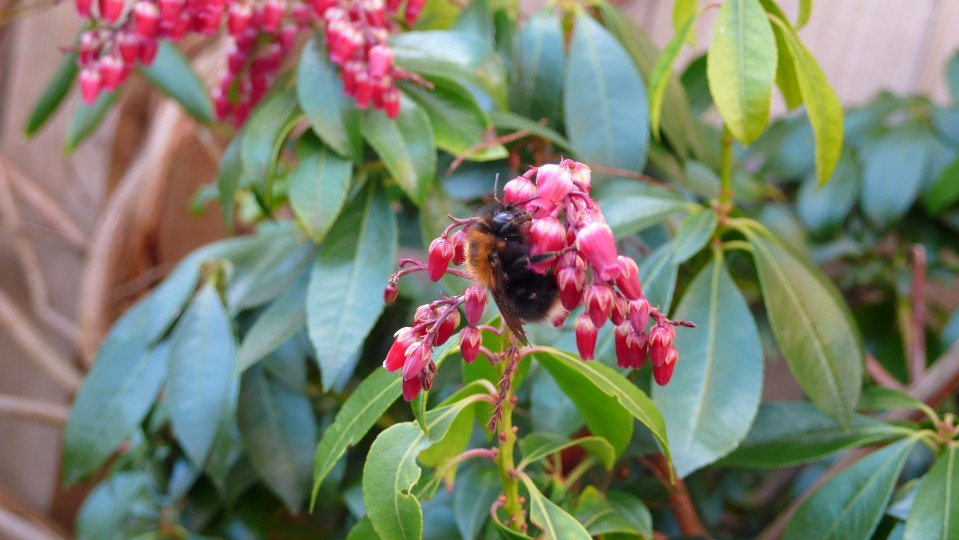
Bombus hypnorum

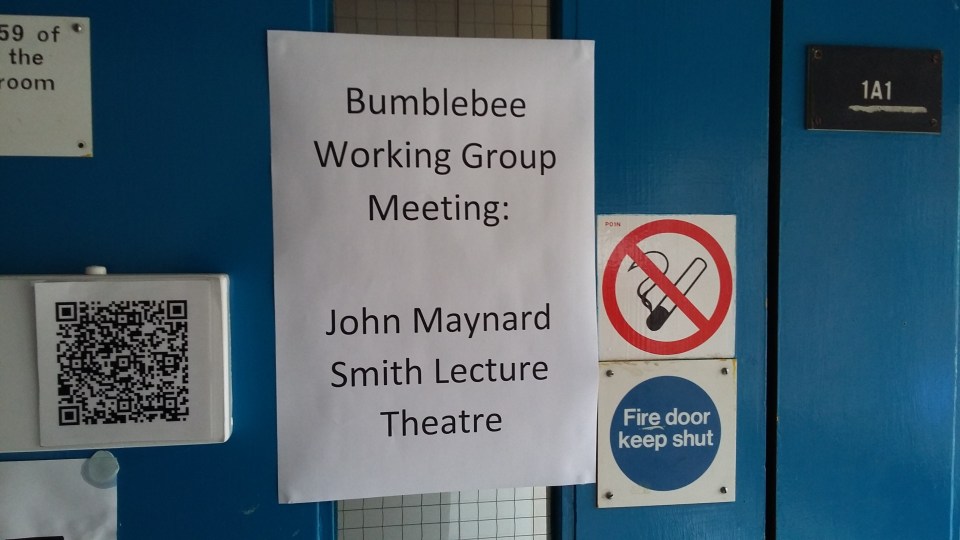
It’s been three years since the last meeting of the semi-formal Bumblebee Working Group, which I hosted at the University of Northampton, and British Bombus researchers  are eagerly looking forward to the next one which is being organised by Professor Dave Goulson at the University of Sussex on 30th March.  There is no charge and if anyone with an interest in bumblebees wishes to attend, please contact Dave.

Here’s the programme for the day, which starts at 10am and finishes at 4.30pm:

Goulson, Dave – Welcome

Williams, Paul  – Bumblebees of extreme environments

Alger, Samantha – RNA viruses in Vermont bumblebees

COFFEE BREAK

Baron, Gemma – Impacts of a neonicotinoid pesticide on colony founding bumblebee queens

Becher, Matthias Bumble – BEEHAVE: using bumblebee colony models as a conservation management tool in agricultural landscapes

Breeze, Tom – Knowledge gaps for effectively valuing pollination services

Cresswell, James – New European Union protocols for testing the toxicological impacts of agro-chemicals on bees

Crowther, Liam – Inferring invertebrate dispersal distances from biological records

LUNCH

Rotheray, Ellie – Quantification of the floral landscape in agro-ecosystems and its effect on bumblebee colonies

Nicholls, Beth – Pesticides in rural and urban bumblebee nests

Benton, Ted – Status of the BAP carders in Essex

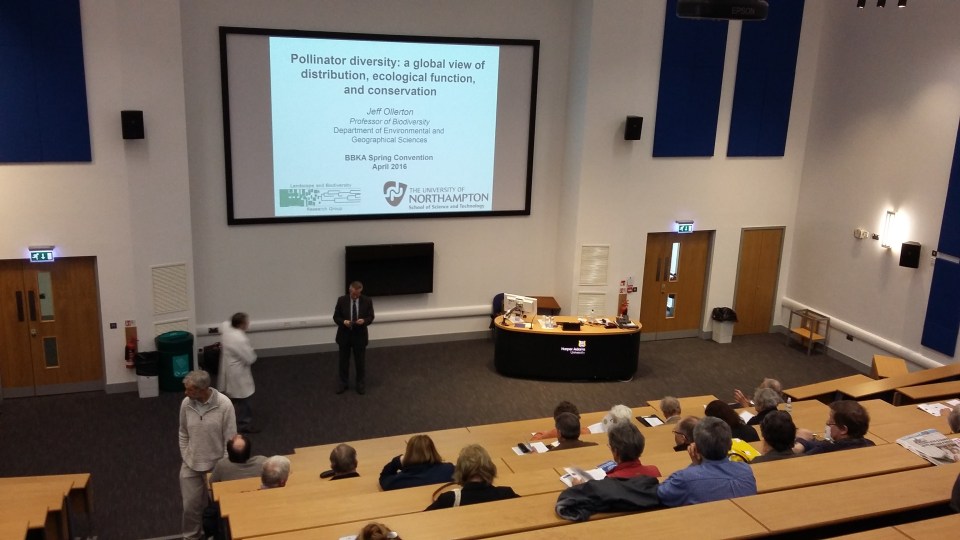
Ollerton, Jeff – Exceptional urban nest density of the Tree Bumblebee Bombus hypnorum during summer 2014

SHORT BREAK

Raine, Katherine – Chernobyl bumblebees: Understanding fitness consequences of living in the exclusion zone

Jackson, Laurie  – B-lines

Gammans, Nikki – An update on the progress of reintroducing the short-haired bumblebee, Bombus subterraneus 

CLOSE

The integration of alien plants in mutualistic plant–hummingbird networks – a new study by Maruyama et al. (2016)

The collaborations with researchers in Brazil and Denmark in which I’ve been involved in recent years, focused particularly on hummingbirds and networks of plant pollinator interactions, have been very productive, most recently seen in a study of the effects of hummingbird feeders on diversity and abundance of the birds.

This collaboration continues with a new study that has just been published in the journal Diversity and Distributions which deals with the way in which non-native plant species are exploited by assemblages of hummingbirds in the New World.  Here’s the abstract:


Aim:  To investigate the role of alien plants in mutualistic plant–hummingbird networks, assessing the importance of species traits, floral abundance and insularity on alien plant integration.

Location: Mainland and insular Americas.

Methods: We used species-level network indices to assess the role of alien plants in 21 quantitative plant–hummingbird networks where alien plants occur. We then evaluated whether plant traits, including previous adaptations to bird pollination, and insularity predict these network roles. Additionally, for a subset of networks for which floral abundance data were available, we tested whether this relates to network roles. Finally, we tested the association between hummingbird traits and the probability of interaction with alien plants across the networks.

Results: Within the 21 networks, we identified 32 alien plant species and 352 native plant species. On average, alien plant species attracted more hummingbird species (i.e. aliens had a higher degree) and had a higher proportion of interactions across their hummingbird visitors than native plants (i.e. aliens had a higher species strength). At the same time, an average alien plant was visited more exclusively by certain hummingbird species (i.e. had a higher level of complementary specialization). Large alien plants and those occurring on islands had more evenly distributed interactions, thereby acting as connectors. Other evaluated plant traits and floral abundance were unimportant predictors of network roles. Short-billed hummingbirds had higher probability of including alien plants in their interactions than long-billed species.

Main conclusions: Once incorporated into plant-hummingbird networks, alien plants appear strongly integrated and, thus, may have a large influence on network dynamics. Plant traits and floral abundance were generally poor predictors of how well alien species are integrated. Short-billed hummingbirds, often characterized as functionally generalized pollinators, facilitate the integration of alien plants. Our results show that plant–hummingbird networks are open for invasion.


The full reference is: Maruyama, P.K. et al. (2016) The integration of alien plants in mutualistic plant–hummingbird networks across the Americas: the importance of species traits and insularity.  Diversity and Distributions (in press).

Happy to send a PDF to anyone who would like one.

Emerging threats to the Białowieża Forest, one of Europe’s last remaining wilderness areas

From various news sources and personal contacts I’m hearing about some emerging threats to the Białowieża Forest, which at 216,200 ha (2,162 km2 or 835 square miles) is one of Europe’s largest and most ancient forested wilderness areas, and one of the few places where you’ll still see European bison (Bison bonasus)roaming free.

Despite its designation as a World Heritage Site, in recent months the Polish government has revealed plans to increase the amount of logging in the forest, ostensibly as a tree disease control measure.  However Polish scientists dispute this and claim that the real motivation is commercial – see the commentary and letters in this week’s Nature.  Here’s a quote from that article which provides some context to the concerns:

“[the] Białowieża management plan limits logging in the forest to 48,000 cubic metres of wood per year — enough to allow locals to gather firewood. But on 10 November, the local forest administration proposed an amendment that would allow large-scale logging in sections outside the central 17% of the forest that is a national park. They cited an outbreak of the bark beetle pest (Ips typographus) in Białowieża’s Norway spruce (Picea abies). In one forest district where logging is currently limited to 6,000 cubic metres per year, the allowable yearly volume would increase to 53,000 cubic metres”.


Interestingly, both Ips typographus and Picea abies are native to these forests and any large-scale outbreak would probably constitute a disturbance that is part of the natural dynamics of the forest. A recent piece on the National Geographic site by conservation biologist Stuart Pimm is worth quoting from in this regard:

“To…scientists studying biodiversity, the main value of the Białowieża Forest is accumulated in a massive occurrence of large and old trees, high amounts of dead-wood and natural dynamics of forest stands all being very unique to this area and supporting thousands of different specialised species ranging from birds and mammals using cavities or building nests in the canopy to lichens, fungi and microbes dependent on different stages of tree life and its decomposition.  It is not surprising that Białowieża Forest has been an invaluable reference area for scientists studying natural characteristics of European forests.” [my emphasis]


This is not the first time that concerns have been raised about the Białowieża Forest – here’s an article from the Guardian newspaper from 2011:  http://www.theguardian.com/world/2011/apr/06/poland-environmentalists-foresters-primeval-forest

Is it too much to hope that the Polish government takes notice and strengthens, not weakens, the protection of its natural heritage?  And allows natural processes to determine what happens in this woodland, rather than trying to manage every aspect of its ecology.

Pollinators, Pollination and Food Production: IPBES gains momentum

Bee on apple blossom - 1st May 2015

The over-arching themes of this blog have been about understanding biodiversity; the science behind its study; why it’s important; how it contributes to human well being, (including both intangible and economic benefits); and how policy informed by science can support the conservation of species and ecosystems.  These are all issues that have a global perspective beyond the bounds of my home country (the United Kingdom), or even my continent (Europe) because species, ecosystems and the threats to them do not respect political borders.

Enter IPBES – the Intergovernmental Science-Policy Platform on Biodiversity and Ecosystem Services (sometimes shortened to Intergovernmental Platform on Biodiversity and Ecosystem Services).

IPBES is a United Nations body established in 2012 that in many ways is a parallel entity to the IPCC ( Intergovernmental Panel on Climate Change), bringing together scientists, policy makers and stakeholders, with a mission:

to strengthen the science-policy interface for biodiversity and ecosystem services for the conservation and sustainable use of biodiversity, long-term human well-being and sustainable development

Which has got to be a good thing: science informing policy, what’s not to like?

The first output from IPBES will be a Thematic Assessment of Pollinators, Pollination and Food Production, and it’s just been discussed (today) at the 4th Plenary meeting of IPBES in Kuala Lumpur – here’s a link to the press release.

In the coming weeks I’ll talk more about IPBES and its Thematic Assessment (for which I acted as a reviewer), but for now I’ll just repeat some of the headline figures from the report:

  • 20,000 – Number of species of wild bees. There are also some species of butterflies, moths, wasps, beetles, birds, bats and other vertebrates that contribute to pollination.
  • 75% – Percentage of the world’s food crops that depend at least in part on pollination.
  • US$235 billion–US$577 billion – Annual value of global crops directly affected by pollinators.
  • 300% — Increase in volume of agricultural production dependent on animal pollination in the past 50 years.
  • Almost 90% — Percentage of wild flowering plants that depend to some extent on animal pollination*.
  • 1.6 million tonnes – Annual honey production from the western honeybee.
  • 16.5% — Percentage of vertebrate pollinators threatened with extinction globally.
  • +40% – Percentage of invertebrate pollinator species – particularly bees and butterflies – facing extinction.


*They are quoting a figure that I calculated, and very proud of it I am too 🙂

Rewilding reconsidered: academic disagreements, big science, and beavers.

P1110320Rewilding has been the topic of a couple of blog posts over the last few years  (for example here, in relation to the George Monbiot-narrated video about the wolves of Yellowstone Park; and also here, about the notion that perhaps we should also think about rewilding the human digestive ecosystem).

Since then there’s been a lot of activity with respect to rewilding, some of it practical and adding to the evidence base, some of it conceptual and controversial.  So I thought I’d do a quick round up of rewilding-related items I’d seen recently: feel free to suggest others.

In an open-access paper in Current Biology, entitled “Rewilding is the new Pandora’s box in conservation” David Nogués-Bravo and colleagues ask “what exactly is rewilding, and is it based on sound ecological understanding?”  Their conclusion is that “there is a worrying lack of consensus about what rewilding is and what it isn’t” and that “scientific support for the main ecological assumptions behind rewilding, such as top-down control of ecosystems, is limited”.  They go on to discuss the potential dangers of (re)introducing species into existing ecosystems, including both ecological and economic concerns.

Meanwhile Jens-Christian Svenning and colleagues have an open access paper in Proceedings of the National Academy of the USA about “Science for a wilder Anthropocene: Synthesis and future directions for trophic rewilding research” which takes a much more positive view of the potential benefits of rewilding, though still urges caution and further research, pointing out that “empirical research on trophic rewilding is still rare, fragmented, and geographically biased, with the literature dominated by essays and opinion pieces.”  Science writer John Carey provides some useful wider context to this discussion in a companion piece.

Subsequently Dustin and Daniel Rubenstein critiqued the Svenning et al. paper with an opinion piece called “From Pleistocene to trophic rewilding: A wolf in sheep’s clothing“, to which Svenning and colleagues replied: “Time to move on from ideological debates on rewilding“.

Svenning et al.‘s request for more empirical data on the effects of rewilding has been heeded this month by a study in Freshwater Biology from Alan Law and colleagues on “Habitat engineering by beaver benefits aquatic biodiversity and ecosystem processes in agricultural streams“.  Focusing on the recent reintroduction of beaver to Scotland, these researchers documented positive effects of the beaver on removal of inorganic nutrients from streams, and overall freshwater invertebrate diversity.

I find it really exciting that so much interesting debate and data are now being generated on the topic of rewilding: it’s fascinating and important science with a clear practical component that could leave the planet richer and in better condition for future generations.  It certainly deserves to be better funded, perhaps taking a slice of the “big science” pie from physics and astronomy, an argument that has been raised several times by Charley Krebs on his Ecological Rants blog.

As a researcher I don’t have a horse in this race (or even a Konick pony, such as are being used in a small-scale rewilding project at Wicken Fen). However I do wonder what a “rewilded” landscape would look like for pollinators in Britain, given that most of their diversity and abundance is associated with open grassland and heathland habitats, which were rare in these islands prior to human deforestation.  Having said that, a greater density of large mammalian herbivores can certainly open up woodland – see Bakker et al.‘s paper on “Combining paleo-data and modern exclosure experiments to assess the impact of megafauna extinctions on woody vegetation“.

As a teacher these discussions provide a lot of scope for interesting class exercises and seminars on the topic, which I’ll certainly be developing more next year.  Expect this to be an ongoing topic on the blog.


Pollinators and pollination – something for the weekend #9

The latest in an (ir)regular series of posts to biodiversity-related* items that have caught my attention during the past few weeks; this one’s focused on pollinators and pollination because there’s been so much emerging on this recently it’s been impossible to decide what to write more fully about!


Feel free to recommend links that have caught your eye.

*Disclaimer: may sometimes contain non-biodiversity-related items.

When Charles collide: Darwin, Bradlaugh, and birth control for Darwin Day 2016

Darwin-Bradlaugh

The town of Northampton celebrates a number of local heroes from sports, the arts, and even science.  These include the footballer Walter Tull, the co-discoverer of the structure of DNA, Francis Crick, author Alan Moore, and former resident thespian Errol Flynn. I could go on, but in honour of Darwin Day 2016 I thought I’d focus on the great naturalist.

Darwin had several personal associations with Northampton and Northamptonshire. He was a corresponding member of the Northamptonshire Natural History Society, which is now one of the oldest surviving societies of its kind. Darwin also corresponded with Walter Drawbridge Crick a Northampton shoe manufacturer and amateur naturalist who was grandfather of Francis.

Further afield in Northamptonshire, Darwin had a number of friends and correspondents, including the Reverend John Downes, vicar of Horton & Piddington. By coincidence, the captain of the Beagle, Robert FitzRoy, lived in Northamptonshire for much of his early life.

A Darwin link to Northampton that’s not widely known about is the brief correspondence he engaged in with Charles Bradlaugh the radical reformer and MP for the town during the 1880s.  Bradlaugh is a real local hero, with a very prominent statue in the town, and a pub, a local country park, and one of the university’s student residences named after the great man.

On 5th June 1877 Bradlaugh wrote to Darwin asking for his support in a court case by appearing as a witness for the defence: Bradlaugh and his colleague Annie Besant were charged with obscenity for writing a pamphlet that promoted contraception.  Darwin replied the very next day and politely declined.

As far as I’m aware the texts of both letters have never been published in full, only snippets are available.  An extract of Darwin’s letter is given in Charles Bradlaugh: a record of his Life and Work, written by his daughter:

“I have been for many years much out of health, and have been forced to give up all society or public meetings; and it would be great suffering to me to be a witness in Court. It is, indeed, not improbable that I may be unable to attend. Therefore, I hope that, if in your power, you will excuse my attendance…. If it is not asking too great a favour, I should be greatly obliged if you would inform me what you decide, as apprehension of the coming exertion would prevent the rest which I require doing me much good”.

At the Darwin Correspondence Project, Darwin’s response is summarised as follows and gives a very different flavour to his reaction:

“[Darwin] would prefer not to be a witness in court. In any case CD’s opinion is strongly opposed to that [of Bradlaugh and Besant].  [Darwin] believes artificial checks to the natural rate of human increase are very undesirable and that the use of artificial means to prevent conception would soon destroy chastity and, ultimately, the family.”

Bradlaugh’s letter has only a very brief summary and I’ve not seen any direct quotes (though perhaps I’ve missed them?)

The correspondence, its historical context, and the subsequent trial have been written about several times (see for example Peart and Levy 2005 and Peart and Levy 2008) and there’s some more recent commentary on Dan Allosso’s blog.

All of this gives a fascinating insight into Darwin as a socially conservative member of the English upper middle class, despite the radical implications of his ideas about evolution.  Bradlaugh and Besant (both true radicals in all senses of the word) were found guilty, fined and sentenced to six months in prison, though following an appeal the conviction was later overturned due to a legal technicality.

Happy Darwin Day to my readers!

Tropical Zombies: Moles & Ollerton (2016) is now published

P1080615Back in March 2014 I reported about a guest blog that Angela Moles (University of New South Wales) and I had written for the Dynamic Ecology blog entitled “Are species interactions stronger and more specialized in the tropics?”  The post generated a lot of comments, not all of them supportive of what we were saying.  It also resulted in an invitation from the editor of the journal Biotropica to write up the post as a commentary.  This we did and duly submitted, it went through a couple of rounds of peer review, and has now finally been published.

The paper is currently open access on the Biotropica website as an early view item; here’s the reference hyperlinked to it:

Moles, A. & Ollerton, J. (2016) Is the notion that species interactions are stronger and more specialized in the tropics a zombie idea? Biotropica DOI: 10.1111/btp.12281 

Ecological intensification and pollinator diversity: a new study by Garibaldi et al. (2016)

2013-04-15 13.54.19-2Think of “farming” and those of us living in the more industrialised parts of the world usually envision large fields that are intensively worked using heavy machinery and regular inputs of fertilisers, pesticides and herbicides. But for 2 billion of the world’s farmers, agriculture takes place on smallholdings of less than 2 ha in size, with little money available for vehicles and chemicals.  Maximising food outputs in such systems can be difficult.

Now a new study by Lucas Garibaldi, Luisa Carvalheiro and colleagues entitled “Mutually beneficial pollinator diversity and crop yield outcomes in small and large farms” has demonstrated that these small-scale farmers can increase the yields from insect pollinated crops on their farms by allowing native vegetation to grow alongside the crops, which supports a greater diversity and abundance of pollinators that then spill over into the adjacent fields.

It’s a great study that delivers a message that large agro-chemical firms probably will not wish to hear: that yields can be enhanced without throwing ever more fertiliser or pesticides onto the crops.

The paper is paywalled so you’ll have to ask the authors for a copy unless you (or your institution) has an e-subscription to Science.  But here’s the original abstract:

Ecological intensification, or the improvement of crop yield through enhancement of biodiversity, may be a sustainable pathway toward greater food supplies. Such sustainable increases may be especially important for the 2 billion people reliant on small farms, many of which are undernourished, yet we know little about the efficacy of this approach. Using a coordinated protocol across regions and crops, we quantify to what degree enhancing pollinator density and richness can improve yields on 344 fields from 33 pollinator-dependent crop systems in small and large farms from Africa, Asia, and Latin America. For fields less than 2 hectares, we found that yield gaps could be closed by a median of 24% through higher flower-visitor density. For larger fields, such benefits only occurred at high flower-visitor richness. Worldwide, our study demonstrates that ecological intensification can create synchronous biodiversity and yield outcomes.


The challenge from this paper is two-fold.  First of all it’s how to operationalise this kind of research on the ground, to farmers and agronomists who are unlikely to be readers of the journal Science.  This is where organisations such as the UN’s FAO, country-level government agencies, and non-governmental organisations  have a crucial role to play, translating research into action.

The second challenge is likewise difficult – how do we bring “ecological intensification” into the industrialised agriculture of more developed nations?  I have no immediate answer to that, but research such as this shows what the potential benefits can be, for both agriculture and biodiversity.

The reference is:  Garibaldi, L.A. et al. (2016) Mutually beneficial pollinator diversity and crop yield outcomes in small and large farms.  Science 351: 388-391