PREDICTS (Projecting Responses of Ecological Diversity In Changing Terrestrial Systems) is one of the most important sources of data for large-scale modelling of how changes in land use is impacting biodiversity. Marry that with future climate models and you have a powerful tool for understanding how these two major factors in global change will shape both biodiversity and human society over the coming decades.
In recent years it’s been a privilege to be part of a project led by Joe Millard and Tim Newbold that’s using PREDICTS to model how pollinators and pollination services are likely to be impacted by human activities. The first paper from that work (which was Joe’s PhD) was entitled ‘Global effects of land-use intensity on local pollinator biodiversity’ and came out in 2021, as I documented on my blog at the time.
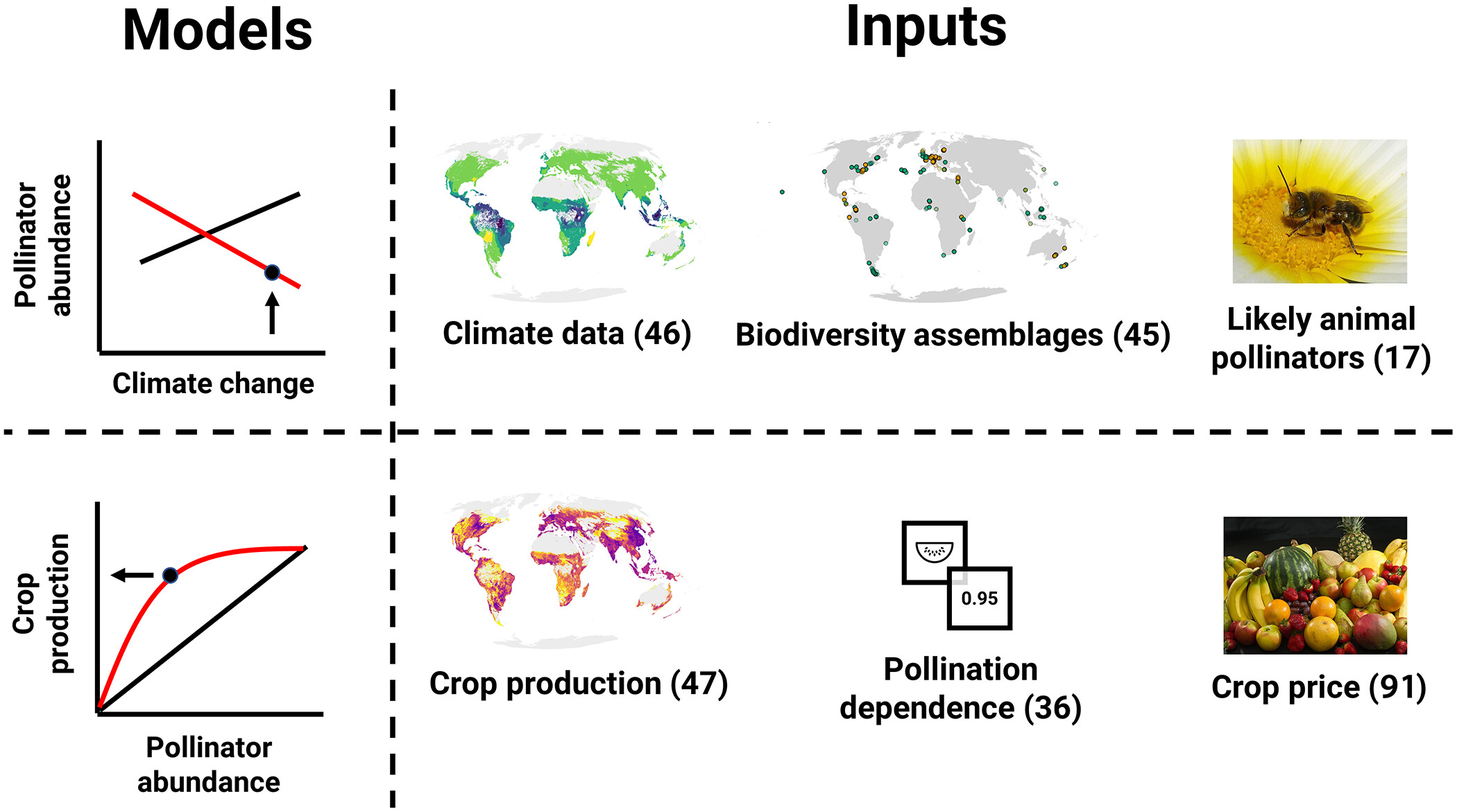
Yesterday a second paper was published, this time focused on how land use and anthropogenic climate change interact to potentially affect insect-pollinated crops across the world.
Our main finding is that it’s tropical crops, especially cocoa, mango, watermelon, and coffee, that in the future will suffer the greatest negative impacts from loss of pollinators. Although we can have perfectly healthy diets without consuming any of those, they currently support tens of millions of farmers across the tropics and are part of global supply chains worth billions of dollars per year.
Here’s the full reference with a link to the paper, which is open access:
Insect pollinator biodiversity is changing rapidly, with potential consequences for the provision of crop pollination. However, the role of land use–climate interactions in pollinator biodiversity changes, as well as consequent economic effects via changes in crop pollination, remains poorly understood. We present a global assessment of the interactive effects of climate change and land use on pollinator abundance and richness and predictions of the risk to crop pollination from the inferred changes. Using a dataset containing 2673 sites and 3080 insect pollinator species, we show that the interactive combination of agriculture and climate change is associated with large reductions in insect pollinators. As a result, it is expected that the tropics will experience the greatest risk to crop production from pollinator losses. Localized risk is highest and predicted to increase most rapidly, in regions of sub-Saharan Africa, northern South America, and Southeast Asia. Via pollinator loss alone, climate change and agricultural land use could be a risk to human well-being.
‘…people would need to be very weak in the head… before it would occur to them to go into the garden and eat snails…’
Anon. (1867)
Delighted to announce that my essay “A short history of snail-eating in Britain” will be in October’s issue of British Wildlifemagazine. This is a topic that’s intrigued me for many years because it has a close connection to the snail-eating habits of folks (my own family included) in the area of the north-east of England where I grew up. Hopefully it will also interest, and surprise, the readers of British Wildlife!
There’s a frequently cited statistic that one third of the food produced for human consumption is wasted every year. That waste occurs for a variety of reasons, including spoilage, over-production and inefficient processing methods. This has clear environmental (and therefore human) consequences, for example in terms of increased carbon dioxide and other greenhouse gas production; excessive use of fertilisers and pesticides; unsustainable water extraction; and conversion of natural habitats to farmland.
Much of the wastage occurs before the food ever reaches shops and markets, so individual consumers have little control over the waste, other than to try to pressure business and political leadership into action. However, we can all do our bit when it comes to reducing food waste in our home, which has positive impacts on our health and our bank balance.
When it comes to fruit and vegetables, we in the west often throw away perfectly edible parts, I suspect because it doesn’t fit with our expectations of what the food “should” look like. A good example is radishes (Raphanus raphanistrum subsp. sativus) where it’s not uncommon to discard the perfectly edible leaves. People who grow them often pull out plants that have flowered, despite the fact that the seed pods are delicious and arguably nicer than the roots, as I discussed in this blog post from a few years ago.
There’s lots of other examples like this, one of my favourites being the crunchy central pith that you find in the thick stems of broccoli (Brassica oleracea var. italica). I love it raw and it has a flavour quite distinct from the normal part that we consume.
It was only quite recently that Karin introduced me to the fact that the mature pods of peas (Pisum sativum) are also edible, if you know how to process them correctly. If you eat the pod as it is, the texture is tough and stringy and not very pleasant. But if you carefully peel away and discard the thin inner membrane of the pod, the remaining flesh is sweet and delicious. It’s fiddly and takes a bit of practice. The easiest way is to gently snap one corner of the half-pod and peel from there – see the example third from the top in the accompanying photograph. Below that in the photo is the thin membrane, which can be put into your food waste or composted, and below that the edible portion of the pod.
Karin and I just eat this raw, but no doubt you could add the pod flesh to any number of dishes. If you have children or grandkids, set them the task of removing the membrane in one piece – it’s not easy!
Please leave a comment below and let me know your favourite bits of edible fruit and veg that are normally discarded.
It’s been an interesting start to the year in the world of pollinators and pollination. The European Union has revised its 2018 initiative for pollinator conservation with an update called “A New Deal for Pollinators“. At the same time the UK Government has released its plans for Post-Brexit farm subsidies, many of which focus on environmental action that can support pollinators, such as planting hedgerows. I think that it’s fair to say that there’s been a mixed response to these planned subsidies. There’s also mixed news in Butterfly Conservation’s State of the UK’s Butterflies 2022 report. The headline figure is that 80% of butterflies in the UK have decreased since the 1970s. However there are enough positive conservation stories in that report to demonstrate that this decline does not have to be irreversible, we can turn things around.
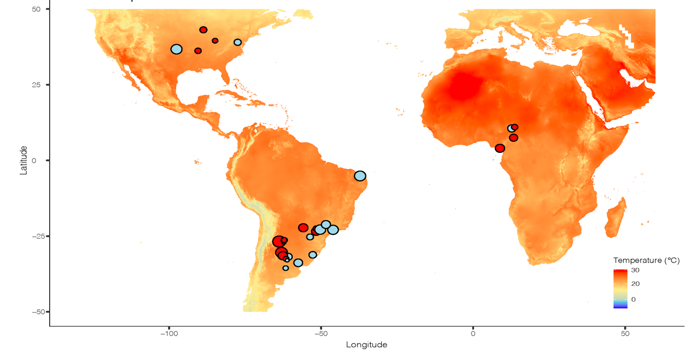
Against this wider backdrop of pollinator actions, I was pleased to have a new research paper published this week, which is an output from the SURPASS2 project with which I’ve been involved. Led by Brazilian researcher Nicolay Leme da Cunha, this paper assess the variability of soybean dependence on pollinators. Although soybean is one of the most widely grown crops globally, there’s still much that we don’t understand about which of the many different varieties have improved yields when visited by bees, and which are purely self-pollinating. One of our main findings was that for some varieties, especially in the tropics, an absence of pollinators results in a decline in yield of about 50%.
The paper is open access and you can download a copy by following the link in the reference:
Identifying large-scale patterns of variation in pollinator dependence (PD) in crops is important from both basic and applied perspectives. Evidence from wild plants indicates that this variation can be structured latitudinally. Individuals from populations at high latitudes may be more selfed and less dependent on pollinators due to higher environmental instability and overall lower temperatures, environmental conditions that may affect pollinator availability. However, whether this pattern is similarly present in crops remains unknown. Soybean (Glycine max), one of the most important crops globally, is partially self-pollinated and autogamous, exhibiting large variation in the extent of PD (from a 0 to ∼50% decrease in yield in the absence of animal pollination). We examined latitudinal variation in soybean’s PD using data from 28 independent studies distributed along a wide latitudinal gradient (4–43 degrees). We estimated PD by comparing yields between open-pollinated and pollinator-excluded plants. In the absence of pollinators, soybean yield was found to decrease by an average of ∼30%. However, PD decreases abruptly at high latitudes, suggesting a relative increase in autogamous seed production. Pollinator supplementation does not seem to increase seed production at any latitude. We propose that latitudinal variation in PD in soybean may be driven by temperature and photoperiod affecting the expression of cleistogamy and androsterility. Therefore, an adaptive mating response to an unpredictable pollinator environment apparently common in wild plants can also be imprinted in highly domesticated and genetically-modified crops
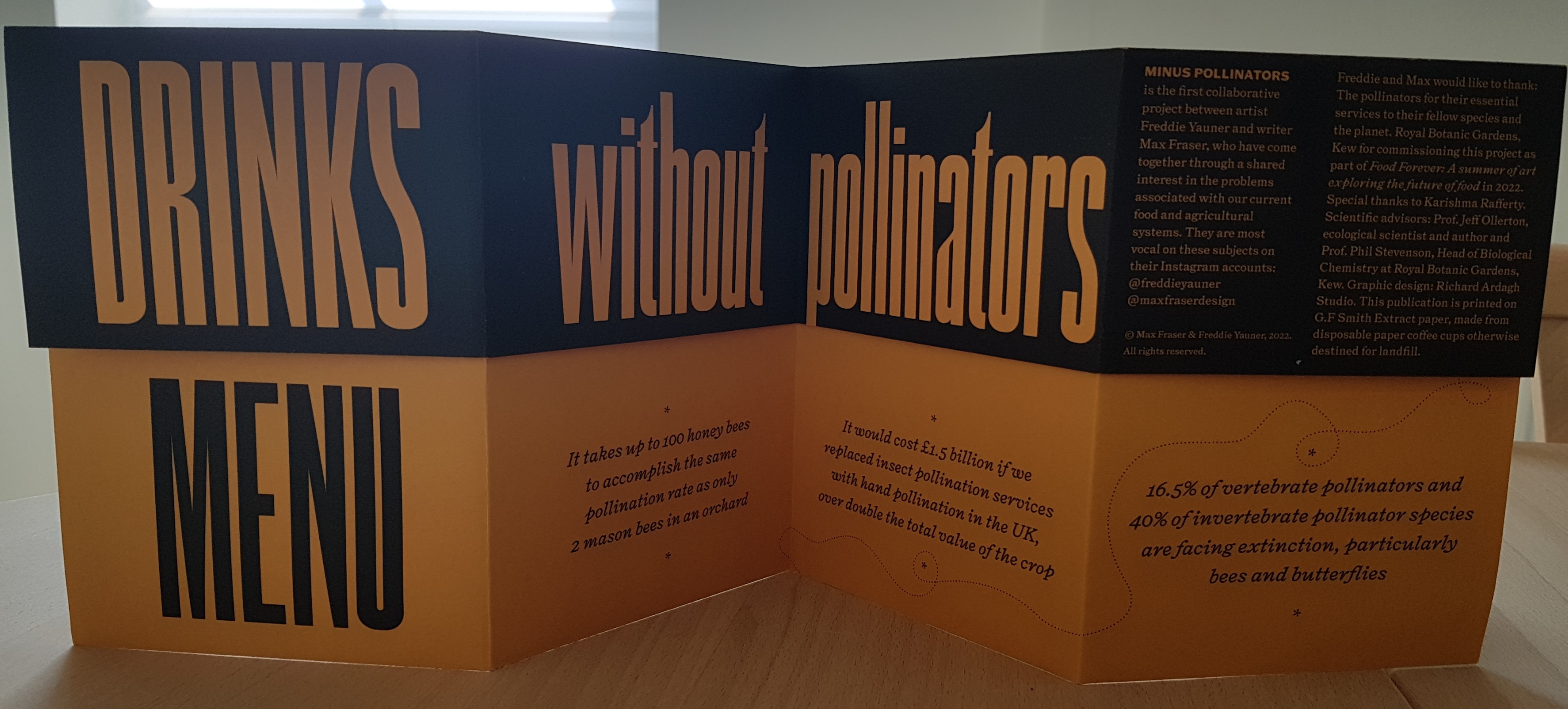
Recently Phil Stevenson and I advised on an art/science project called Minus Pollinators which considered what a small café menu might look like if there were no pollinators to help produce the many, many fruits and vegetables and nuts that are animal pollinated.
The project is a collaboration between writer and consultant Max Fraser and artist Freddie Yauner. To quote Freddie’s description on his website, the project represents:
A dystopian future in the form of a drinks kiosk where the staples such as coffee, teas, juices, chocolate etc. are no longer available due to pollinator decline…the mobile drinks kiosk acts as an exhibition display, with artworks painted in pollen…and a take-away pamphlet…detailing the importance of insect pollinators for our collective future on this planet.
Minus Pollinators was commissioned as part of a summer-long event called Food Forever at the Royal Botanic Gardens, Kew, after which it goes to the Groundswell festival.
It was a pleasure to work with Max, Freddie and Phil on this because art/science projects are a great way of getting the message across about the importance of biodiversity and the current environmental crisis that we are facing.
As kids, my friends and I did a lot of digging. We always seemed to be burrowing into slopes or excavating trenches, pretending to be archaeologists or treasure hunters. Indeed, there was a lot of ground treasure to be found in the part of Sunderland where I grew up. The area has a long history of pottery and glass making, and ship building, and the remnants of these industries could be uncovered every time we stuck a spade in the earth. Over time I developed my own small museum of interesting, unearthed fragments, including bits of hand-painted ceramics, glass bottles, and unidentifiable metal shards, alongside various animal bones I’d excavated. My parents quietly indulged this interest, and my muck-streaked face and clothes, even if they didn’t quite understand what I was doing.
Aged about 10, my first encounter with a bumblebee nest was during one such dig. On the waste ground behind a large advertising hoarding, we began digging into a low, grass-covered mound and accidentally excavated what was probably a small nest of Buff-tailed Bumblebees (Bombus terrestris). I can recall being fascinated by the waxy, odd shaped cells and by the sticky fluid that some of them were leaking. Being an adventurous sort of child I tasted the liquid: it was sweet and sticky, and that was my first encounter with bumblebee “honey”.
I’m going to leave those quotation marks in place because if you do an online search for “do bumblebees make honey?” you generally find that the answer is “no, only honey bees make honey”.
Now, defining honey as something made by honey bee strikes me as a circular argument at best. And it also neglects the “honey” made by meliponine bees that is central to the culture of stingless bee keeping by indigenous groups in Central and South America, and the long tradition pre-colonial tradition of honey hunting by Aboriginal Australians. So if we widen our definition of “honey” as being the nectar*-derived fluid stored in the nests of social bees, then Apis honey bees, stingless bees and bumblebees must all, by logic, make honey. And likewise there’s wasps in the genus Brachygastra from Central and South America that are referred to as “honey wasps” because, well, I’m sure you can work it out!
But this is where things become a little trickier, because turning nectar* into honey involves some complex evaporation and enzymatic activity, so that the resulting fluid is more concentrated and dominated by the sugars glucose and fructose. Although analysis of honey bee honey is commonplace, and there’s been some research conducted on the honey of stingless bees, I don’t know of any studies that have compared Bombus honey with that of other bees, or with what is stored in the nests of honey wasps**. If I’ve missed anything, please do comment and let me know, but this strikes me as an area of research demanding some attention.
So do bumblebees make honey? That very much depends on our definitions, but I’m happy to accept that they do because “honey” is not a single thing: it’s an insect-derived substance that can take a range of forms but serves the same broad purpose of feeding the colony. And although insects have probably been producing it for millions of years, I think I’ve known the answer to the question for almost 50 of them…
UPDATE: A couple of people have commented on social media that there are legal definitions of “honey” as a foodstuff. Here’s the definition according to UK law***:
“the natural sweet substance produced by Apis mellifera bees from the nectar of plants or from secretions of living parts of plants or excretions of plant-sucking insects on the living parts of plants which the bees collect, transform by combining with specific substances of their own, deposit, dehydrate, store and leave in honeycombs to ripen and mature”
So, legally, we can’t call anything that isn’t made by Apis mellifera “honey”, at least from a foodstuffs regulation perspective. But that’s clearly different to what we have been discussing above, which is about a biological definition of honey.
It’s also interesting to look at the compositional requirements of honey as a foodstuff (presented in Schedule one of that document, if you follow the link above). The lower limit for moisture content is 20%. Now if you consider that most nectar in flowers has a sugar content of between about 20% and 50%, clearly there’s been a lot of evaporative work done by the bees to reduce the amount of water in the honey. I would love to know how bumblebee (and other insect) “honey” compares to this: do they put the same kind of effort into evaporating the water from the stored nectar? Given that the purpose of reducing the water content is to prevent fermentation by yeasts when it’s stored for a long time, and that there are bumblebee species which have colonies that are active for more than one year, I imagine that at least some species in some parts of their range may employ similar tactics.
Thanks to everyone who has been commenting and discussing the topic. It never ceases to amaze me how much we still do not understand about some fundamental aspects of the natural history of familiar species!
*And honeydew to a greater or lesser extent.
**I’m going to ignore honey pot ants for now as this is complex enough as it is and they don’t store the “honey” in nest cells.
***From what I can gather definitions in other countries are similar.
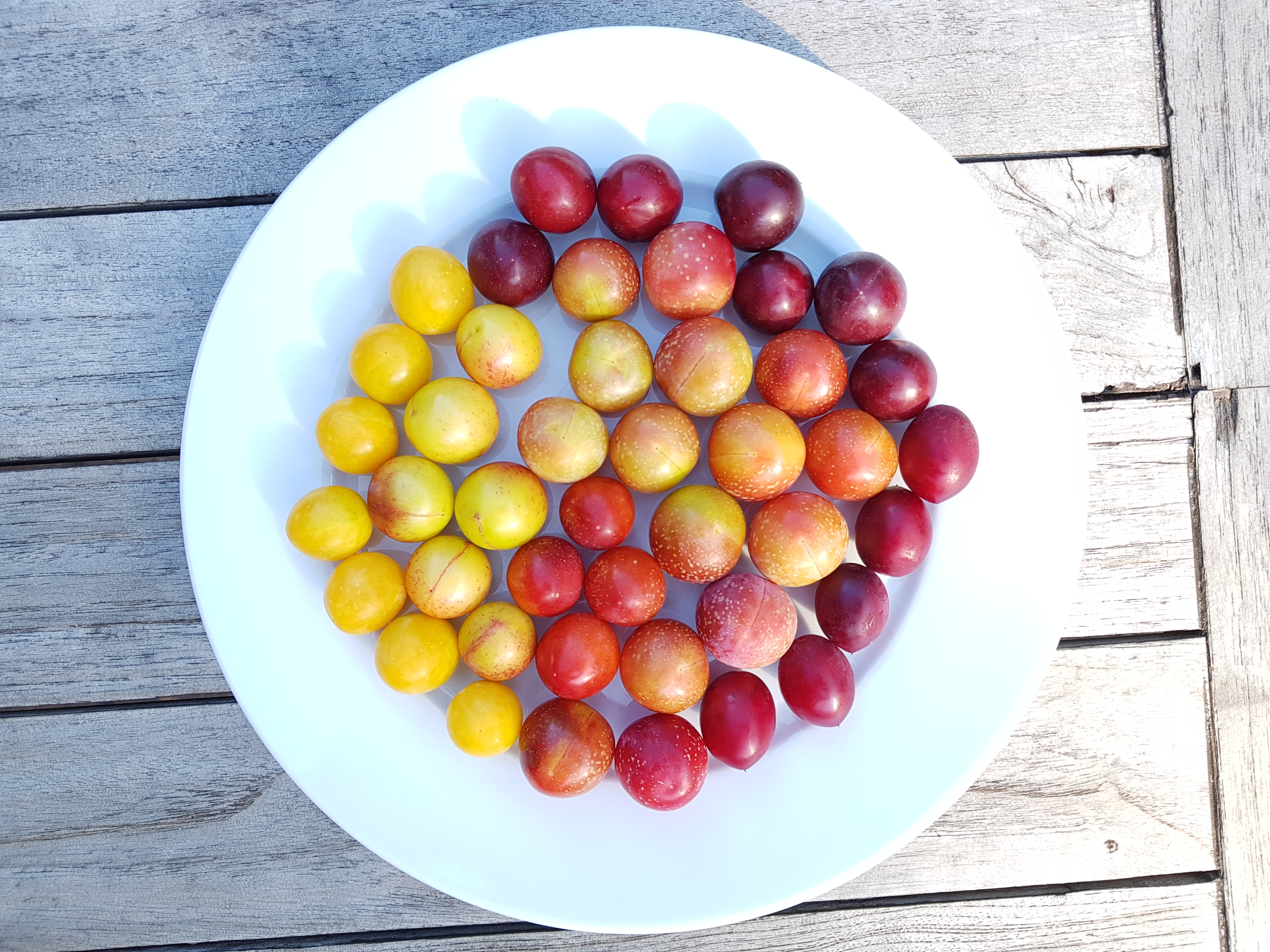
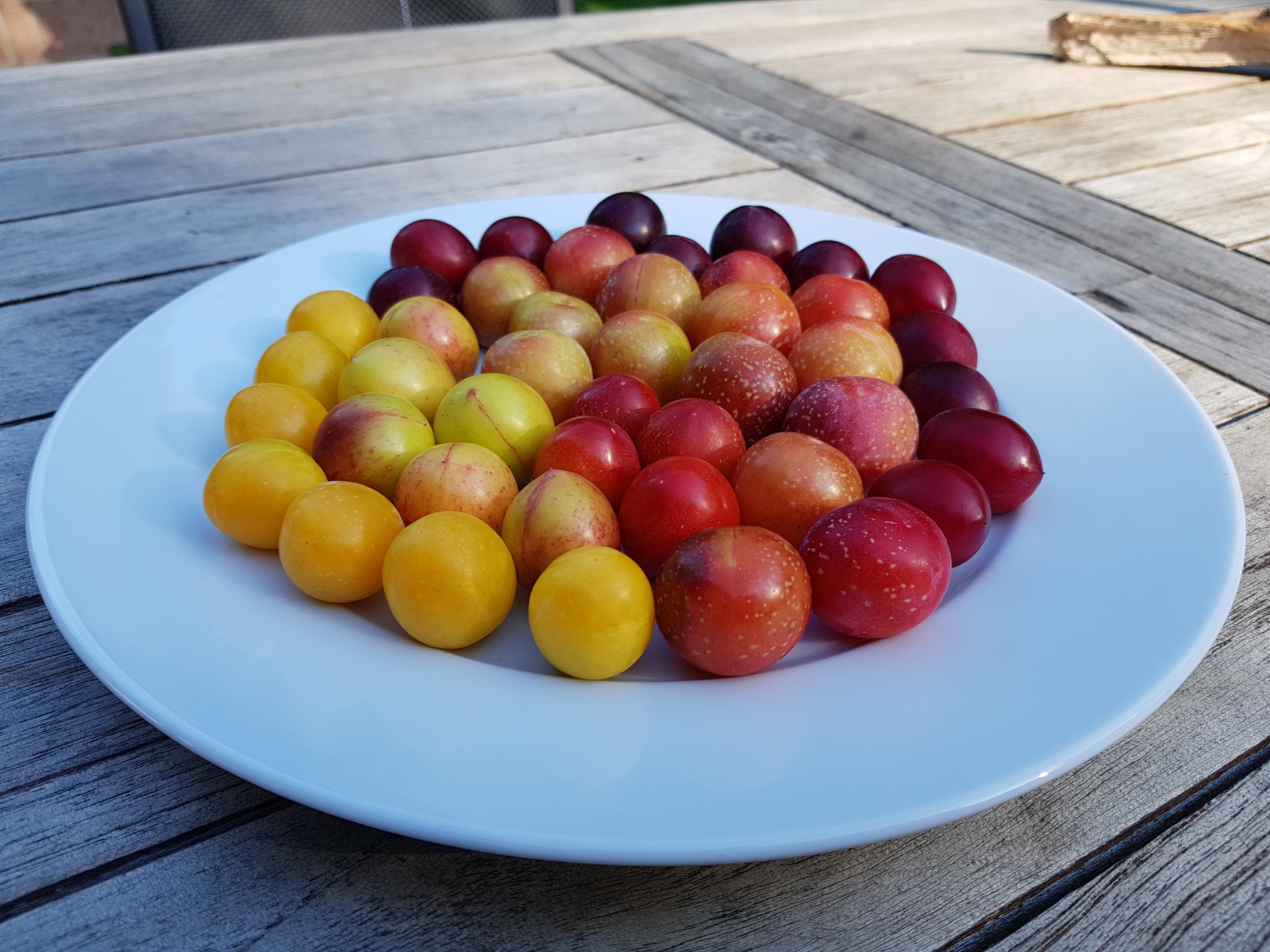
Cycling back from town this afternoon, Karin and I passed a hedgerow that was bursting with wild myrobalan or (cherry) plums (Prunus cerasifera). We had to stop and collect some, and soon filled a bag. What’s always intrigued me about these small, tart little plums is just how diverse they are: the image above shows the plums from six different trees. All of these are, in theory, the same species; but clearly there’s a lot of genetic diversity. In colour, the ripe fruits range from golden yellow through to dark purple, and vary in the amount of dark-contrasting streaking, lighter speckling, and waxy bloom. They are also variable in size, shape and taste.
All of this variation probably reflects the long history of cultivation of this European archaeophyte. The species is originally native to southeast Europe and western Asia, and was likely spread throughout Europe by the Romans. The local deer population is very fond of the fruit and we’re seeing a lot of deer droppings that are packed with seeds. We don’t usually think of these large mammals as seed dispersers, but I suspect that they are very successful in that ecological role.
As well as being a great source of wild fruit, for humans and wildlife alike, at the other end of the year these trees are important for pollinating insects. As I pointed out in my book Pollinators & Pollination: Nature and Society, Prunus cerasifera is one of the earliest flowering woody plants in northern Europe, and its flowers are an important nectar and pollen source for early emerging bumblebee queens, hoverflies, and honey bees.
Delicious, abundant fruit combined with a valuable role for pollinators: what’s not to like?
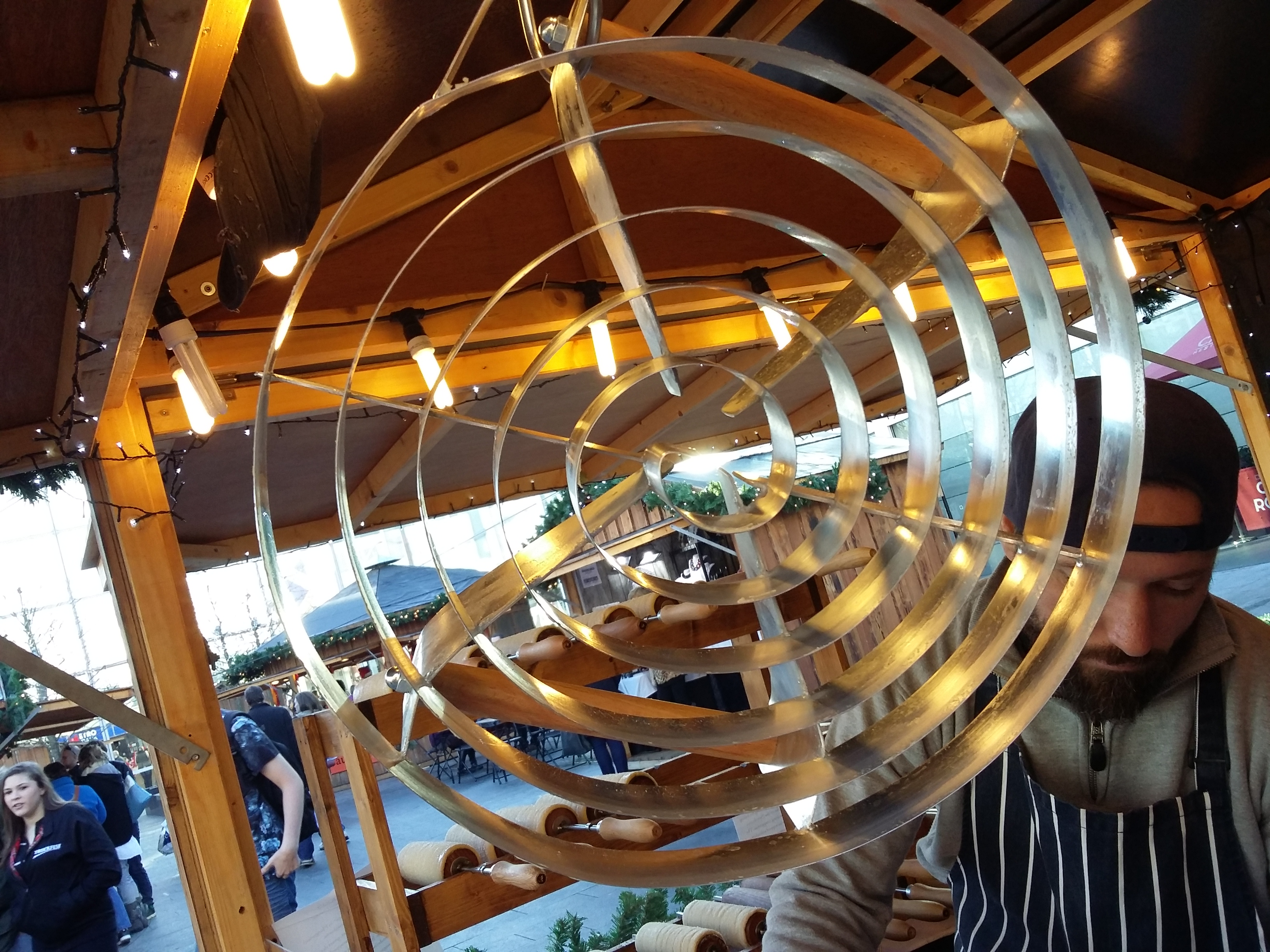
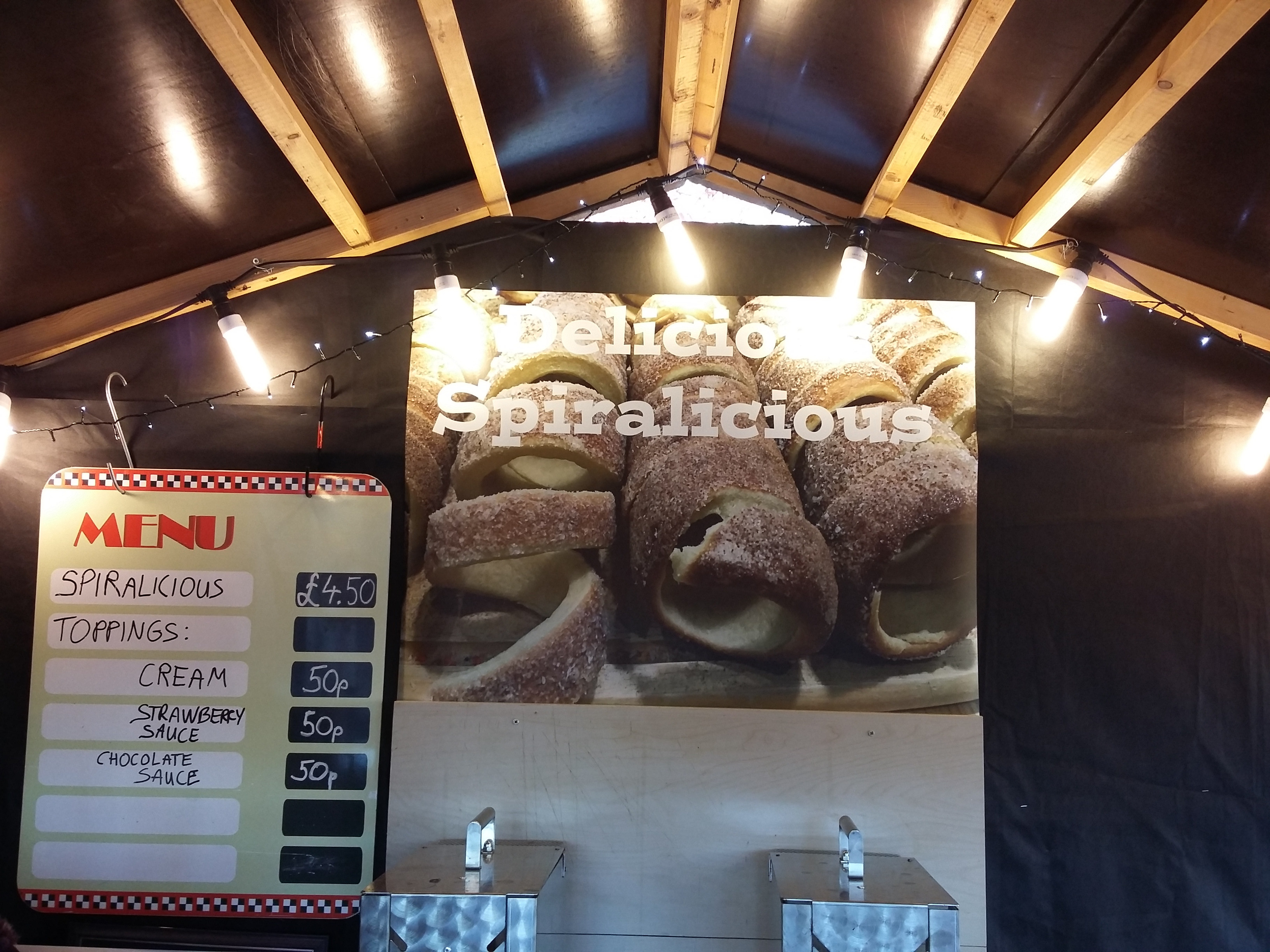
This week’s Spiral Sunday post features a couple of shots I took today in Milton Keynes where we spent a tiring day Christmas shopping. One of the outdoor stalls is selling a traditional baked sweet pastry from Transylvania, the name of which they have Anglicised to “Spiralicious”. It’s made with a very neat spiral-shaped dough cutter, which was just begging to be photographed.
This term we have started refreshing and reformatting our first year undergraduate modules, partly in preparation for the move to our new Waterside Campus, but also because they were beginning to feel a bit tired and jaded. We have begun with ENV1012 Biodiversity: an Introduction, a 20 CATSmodule which mainly services our BSc Environmental Science and BSc Biology programmes.
One of the changes has been to go from a “long-thin” delivery of 2 class hours per week over two terms, to a “short-fat” delivery of 4 hours per week in one term. The advantages of this, we think, are two-fold: (1) it provides students with a richer, more immersive experience because they are not mind-flitting between different topics; (2) it frees up longer blocks of time for academic staff to focus on programme development, research activities, etc.
For now we have opted to deliver the 4 hours in a single session. That’s quite a long time for the students (and staff) to be taught (teaching) but it’s punctuated by short breaks and includes a lot of practical work in the field, lab, and computer suite.
One of the aims of ENV1012 Biodiversity: an Introduction is to engage the students with the use of taxonomic names of species and higher groups, familiarise them with the principles of biological classification, why this is important (and why it underpins the rest of biology and much of the environmental sciences), and so forth. Building confidence in how scientific names are used, and the diversity of species that all of us encounter on a day-to-day basis, are important aspects of this, and I developed a couple of new exercises that we are trialling this term which are focused on these areas.
The first one is called “The Taxonomy of Gastronomy” and was partly inspired by a conversation I had with Steve Heard when he posted about The Plant Gastrodiversity Game. It works like this. I begin with an interactive lecture that sets out the basic ideas behind taxonomic classification and its importance. After a short break the students then begin the hands-on part of the exercise. Working in groups of three they use a work sheet that lists 10 culinary dishes, including: fried cod, chips, and mushy peas; spotted dick; spaghetti bolognese; Thai green curry with tofu & okra; chocolate brownies, etc. (this can easily be varied and adapted according to needs).
The students’ first task is to find a recipe online for each dish. For each biological ingredient in that dish, they list its common name and find its taxonomic family, genus, and species (italicising the latter two, as per taxonomic conventions). I emphasise that it is important to be accurate with names as they will be doing something similar in a later assessed exercise.
This takes a couple of hours and then they feedback their results in a debriefing session, including finding out who had the longest list of species in a meal – the winner was 17 species in a moussaka recipe, with a Jamie Oliver fish and chips recipe coming a credible second with 12! We also discuss particularly common taxa that turn up frequently, for example plant families such as Solanaceae – the relatedness of tomatoes, chillies, peppers, potatoes, and aubergine, the students found very intriguing.
By the end of this exercise the students will have gained familiarity with researching, understanding, handling, and writing scientific names of species and higher taxonomic groups. In addition they will have a better understanding of the taxonomic diversity of organisms that we consume, and their relatedness. It may also have encouraged them to try out some new recipes!
If anyone wishes to comment or add suggestions for improvements, please do. If you’d like to try this yourself with your own students feel free to adapt it to your own needs, though an acknowledgement somewhere would be polite.




 Prof. Jeff Ollerton - ecological scientist and author