For the past year I’ve been keeping a secret from all but a few trusted confidantes: the subject and title of my next book! My publisher – Pelagic – has now announced it on their website and so it’s time to make it public. “Birds & Flowers: An Intimate 50 Million Year Relationship” will be the first book that covers bird pollination in its entirety, going beyond just hummingbirds, sunbirds and honeyeaters, to consider the more than 60 other bird families that interact with flowers, and the tens of thousands of plants that rely on them as pollinators. You can read more about it on Pelagic’s website.
The 3D mock-up of the cover shown above features an illustration by my good friend Stephen Valentine, a very talented artist who you may remember produced this painting of waxwings that Karin bought for my birthday a few years ago. I’m extremely pleased with how Pelagic have incorporated this into the design of the cover.
The book will be available by autumn I hope, if my writing schedule goes to plan!
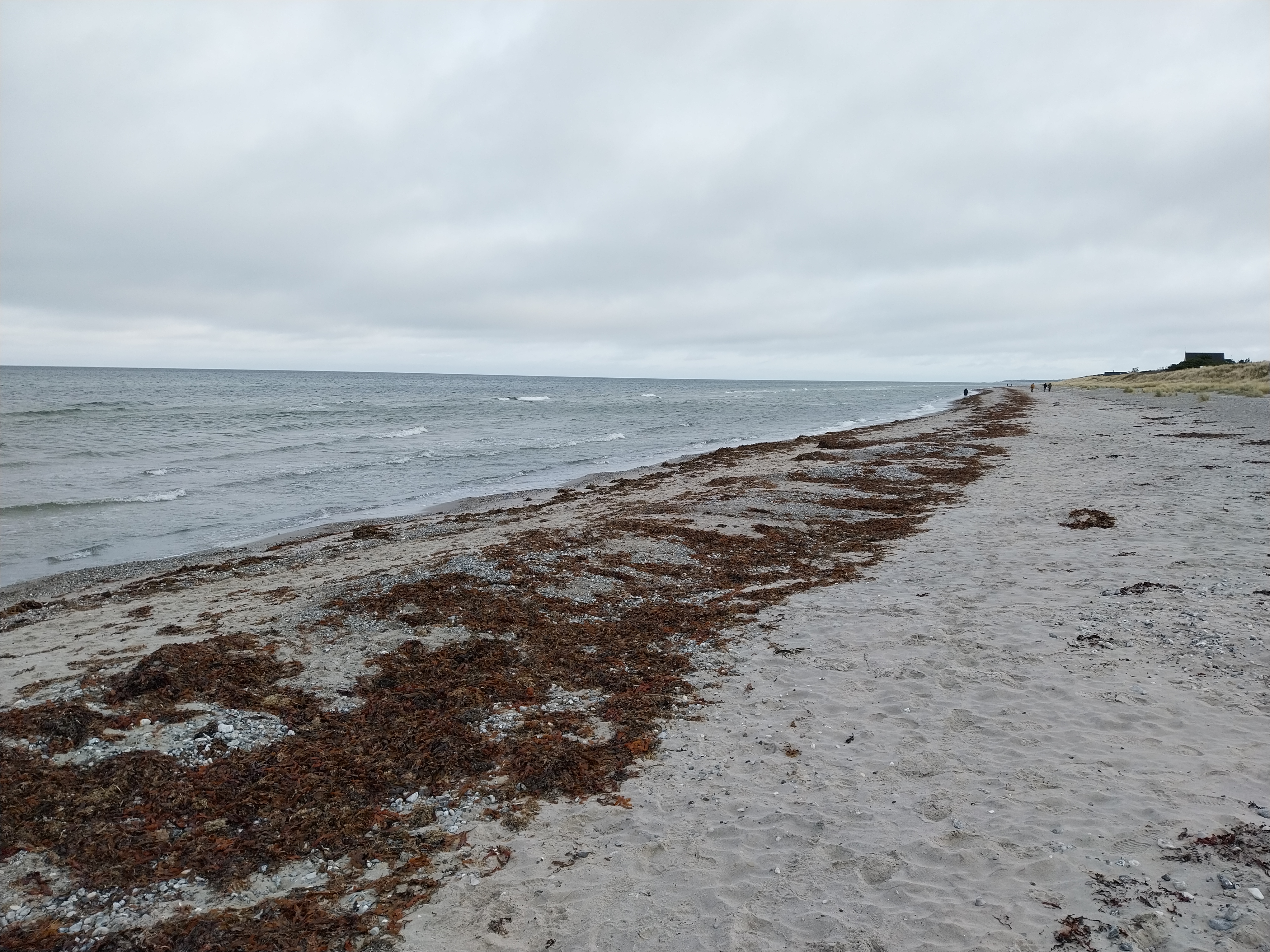
On Sunday Karin and I rode our bicycles down to the local beach at Nordstrand. It was a chilly day, maybe 4C, with a raw coastal wind that made it feel that much colder. Our local bit of shallow ocean – the Kattegat – is normally quite calm but there was a swell bringing in seaweed and the (very) occasional item of rubbish. I collected a golf ball but otherwise the beach was free of plastic. That’s the usual state of affairs here, despite it being a popular tourist destination in the summer. If only beaches elsewhere in the world were as clean.
As we walked Karin and I chatted about some of our plans for the coming year. We’re both working on our next books and relishing the process of swapping chapters to read out loud to the writer. The occasional hardy soul, also enjoying being out in the elements, passed us by and we nodded in acknowledgement. Above us the gulls were wheeling and calling, a constant reminder that they were here before us and will remain when we are gone. Moving from the strand line into the sand dunes we found a convenient bench to sit, drink from our water bottles, scoff some nuts and raisins, and admire the view until the cold wind won the argument and moved us on.
Walking back to the bikes we paused to look at the verdant moss growing on the steep faces of the dunes. Small seedlings had germinated in these planty blankets, a promise of growth and flowers during the year to come. Here and there birds had torn out sections in their constant search for insect larvae. Life goes on even in these cold days.
On our ride back through the neat summerhouses that are settled within the nearby pine woodland, male Great Tits were voicing their claims to territory. Spring is surely just round the corner, we hope.
When I was teaching undergraduate ecology I always impressed upon my students the idea that the categorisations we use to describe “communities” and “ecosystems” are really loose, artificial attempts to put boundaries around borderless ecological systems. Nowhere is this more true than in coastal ecosystems, where the transition from “sea” to “shore” to “sand dune” to “coastal woodland”, for example, is a blur of overlapping habitat types linked by the movement of organisms, nutrients and energy from one to another.
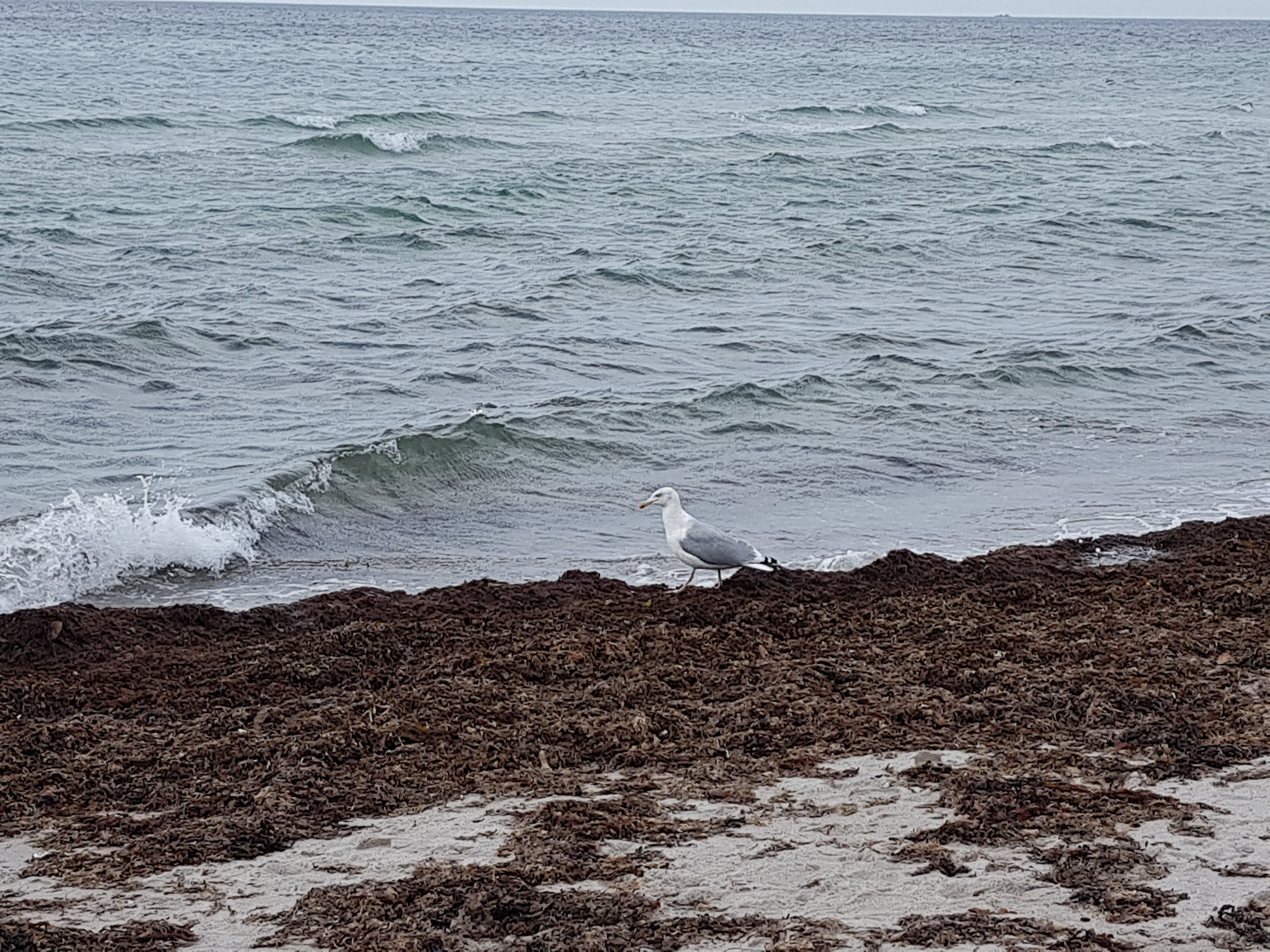
Birds are especially important linkages in this respect, because they are highly mobile and thus effective at connecting “land” to “sea”. Consider gulls, for example, which may be feeding in coastal waters and on grasslands some distance away, and defecating and being preyed upon in both, resulting in transfer of sea-derived nutrients and energy into terrestrial ecosystems, and vice versa. There’s considerable interest amongst ecosystem ecologists in understanding such transfers; for example, here’s the opening sentences from the abstract from the 2013 paper Donor-Control of Scavenging Food Webs at the Land-Ocean Interface by Thomas Scholar and colleagues:
Food webs near the interface of adjacent ecosystems are potentially subsidised by the flux of organic matter across system boundaries. Such subsidies, including carrion of marine provenance, are predicted to be instrumental on open-coast sandy shores where in situ productivity is low and boundaries are long and highly permeable to imports from the sea.
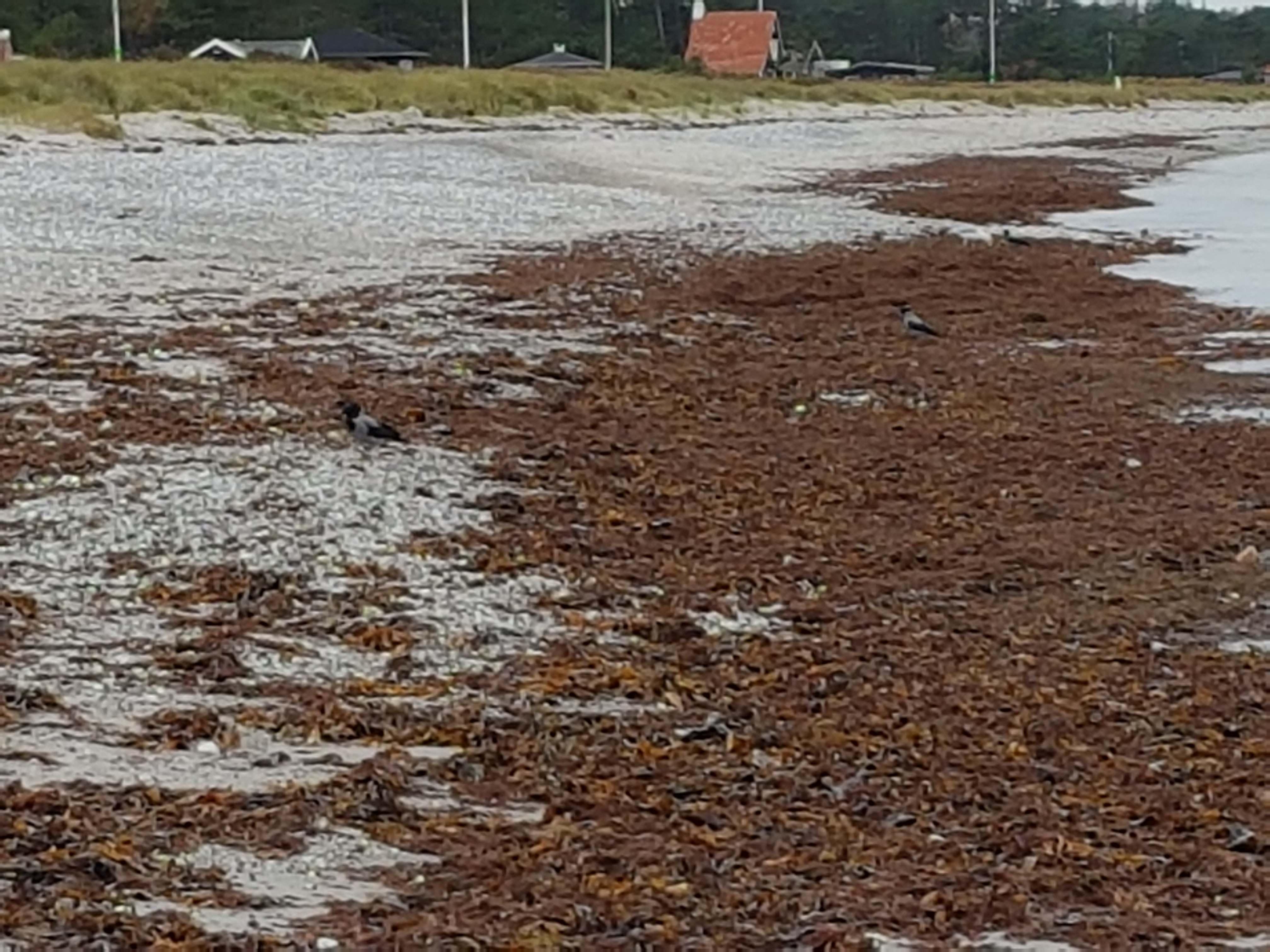
Here on the coastal beaches of the Kattegat I’ve been intrigued by the behaviour of hooded crows (Corvus cornix), which are acting, it appears, as just such facilitators of the “flux of organic matter” from sea to land.
There are six corvid species in the area, and hooded crows are by no means the most common: there’s at least as many rooks (Corvus frugilegus) and jackdaws (Coloeus monedula), and we often see all three species foraging together on ploughed fields or suburban grassland. That’s not surprising, because like many members of the crow family these species are opportunistic omnivores that eat a wide range of animal and plant material, both living and dead, as well as clearing up human food waste, which I described a few years ago during a visit to Kathmandu.
But hooded crows are the only species that we see scavenging on the shoreline.
On Sunday, for example, I took a late afternoon stroll along the local beach with my binoculars and, as usual, I saw hooded crows in small groups of two or three, sometimes in the company of gulls. As I watched, in quick succession I saw two lesser black-backed gulls (Larus fuscus) paddle onto the beach, one with a large, flapping flatfish in its beak, the other with a struggling shore crab. As the gulls tore apart their respective prey they were quickly joined by some hooded crows that had been hanging around nearby. Once the gulls had eaten their fill the crows moved in and demolished the rest. The crows seem to be particularly adept at getting the last bit of meat from inside crab carapaces.
That’s behaviour I’ve seen a many times since we arrived here in August, crows picking over the remains of fish or crabs or (in one instance) a dead harbour porpoise that had also attracted the interest of gulls.
This focus on relatively large carrion items by the crows is understandable, but relatively rare because it’s controlled by the frequency with which such dead animals become available on the shore. It´s much more common to see the crows working their way systematically along the strandline, turning over seaweed in search of insects, crustaceans, and other small food items. I’ve even seen them hack away at washed-up acorns in the beach. It must be a productive way of finding food because they do it with such regularity.
But there’s a number of things about this behaviour that are puzzling me.
For example, why is it only the crows that work the strandline? Why do we never see jackdaws or rooks, which are at least as common, and equally omnivorous scavengers? They are also just as intelligent as the hooded crows and presumably could learn that this is a good place to find food. Also, are the crows that we see strandline “specialists” that spend most of the time on the beach, and nest in the nearby dune woodlands? Or is there a constant turnover of individual birds from the surrounding countryside to the beach and back? Do the birds learn this behaviour from one another and is it passed down from parents to offspring?
I’d be interested in your comments on these observations, as always. If you’d like to know more about corvid behaviour and ecology, I can highly recommend Dr Kaeli Swift’s Corvid Research Blog.
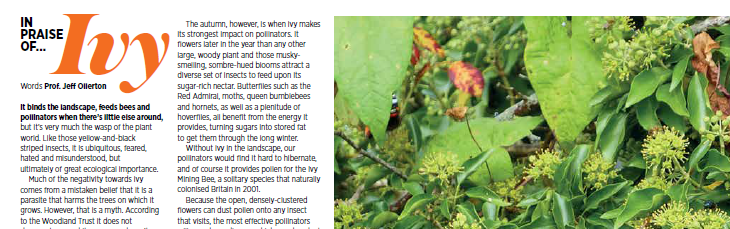
Although it can be invasive and an environmental nuisance in parts of the world where it’s introduced, common or European ivy (Hedera helix) is clearly one of the most vital plants across its native range of Europe, southern Scandinavia and the Mediterranean. Its clinging stems bind the landscape and provide habitat for a diversity of creatures. By offering nectar at a time when there’s few other plants in flower, and berries at a crucial point in the winter, ivy bridges a food gap for both nectar feeding insect and fruit eating birds and mammals.
Ivy is a very popular subject for student research because it’s in flower at the start of the university academic year. In the past I’ve had several students carry out their final year projects using ivy to test ideas about pollinator effectiveness and plant reproductive success. Because the open, densely-clustered flowers can dust pollen onto any insect that visits, the most effective pollinators will vary depending on which are abundant at any time and place, and include various types of flies and bees, plus those much-misunderstood wasps!
Perhaps we should leave the final word on ivy to the Northamptonshire ‘Peasant Poet’ John Clare who wrote ‘To the Ivy’ in the early 19th century:
Jacobs, J.H., Clark, S.J., Denholm, I., Goulson D., Stoate, C. & Osborne J.L. (2010) Pollinator effectiveness and fruit set in common ivy, Hedera helix (Araliaceae). Arthropod-Plant Interactions 4: 19–28
Ollerton, J. (2021) Pollinators & Pollination: Nature and Society. Pelagic Publishing, Exeter, UK
Ollerton, J., Killick, A., Lamborn, E., Watts, S. & Whiston, M. (2007) Multiple meanings and modes: on the many ways to be a generalist flower. Taxon 56: 717-728
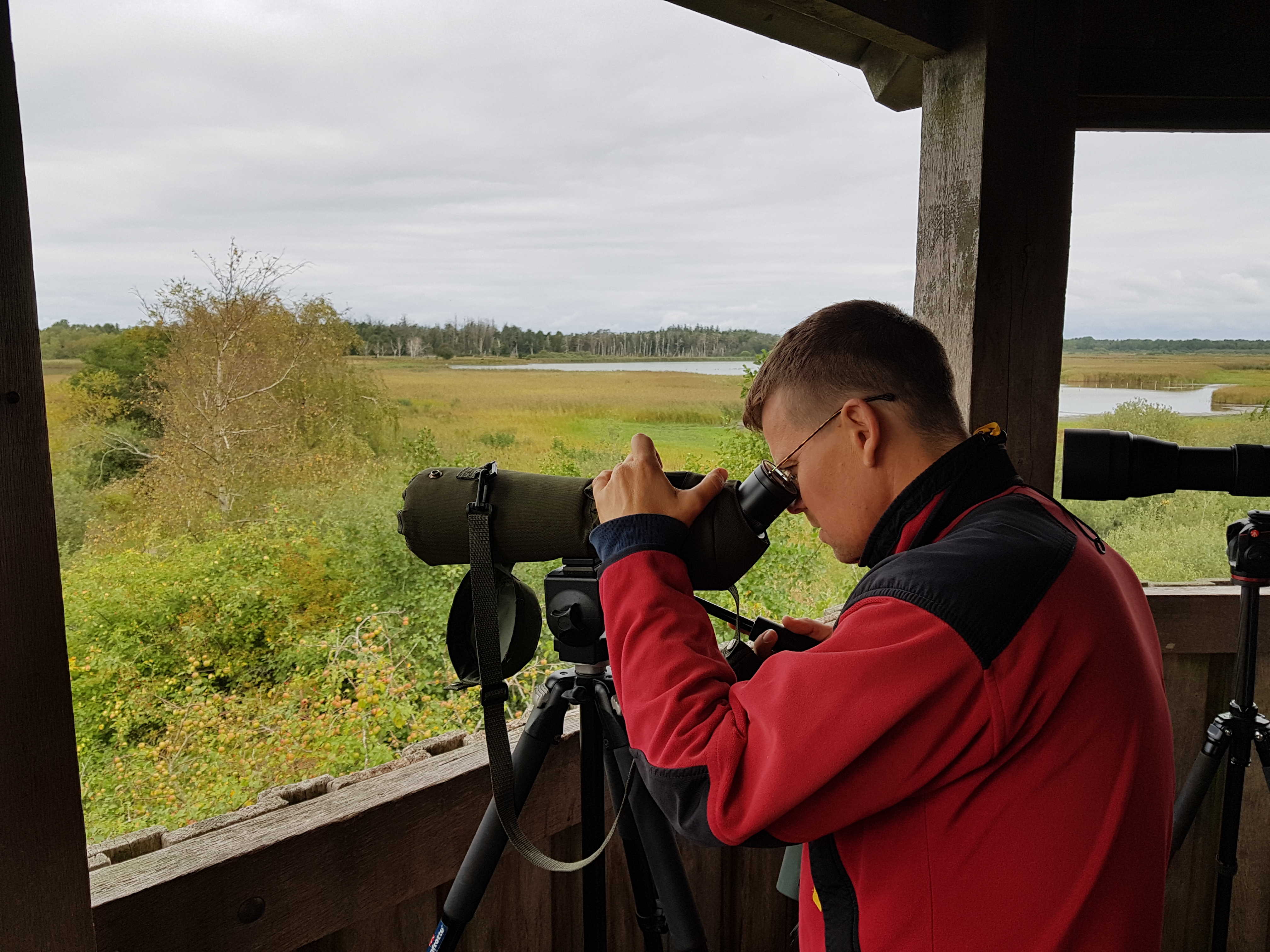
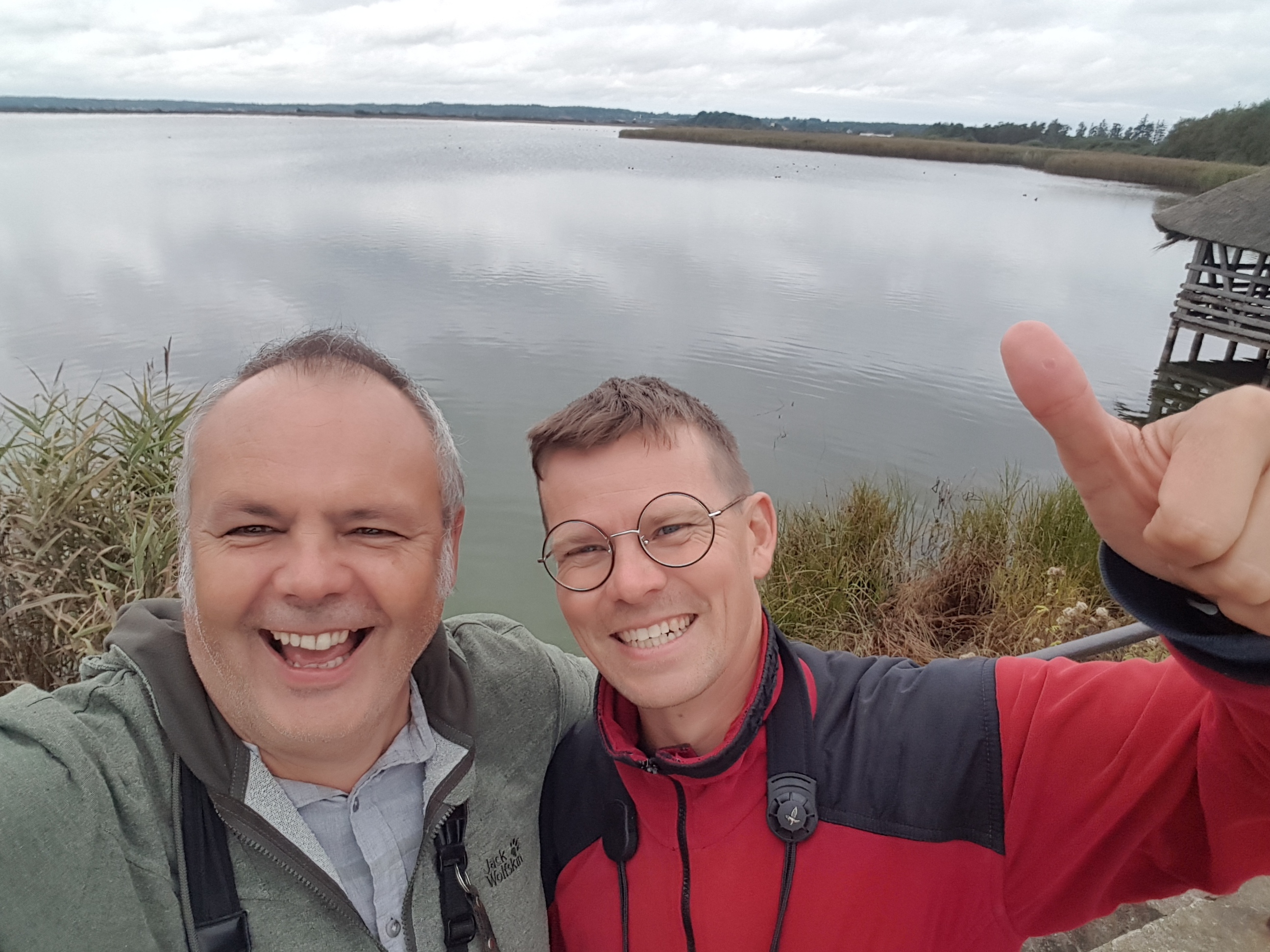
As well as working on a variety of writing and research projects, Karin and I have spent the last few weeks getting out and about in the Odsherred region of Denmark, exploring the culture and ecology of our new home. Not far from where we are living is the Hov Vig bird reserve which I’d put off visiting until last weekend when my friend and colleague Bo Dalsgaard was due to come and stay with us. Bo is primarily an ornithologist (we’ve collaborated on quite a few hummingbird-flower network studies), so it was going to be a good opportunity to get to know more about the birds of this part of the world.
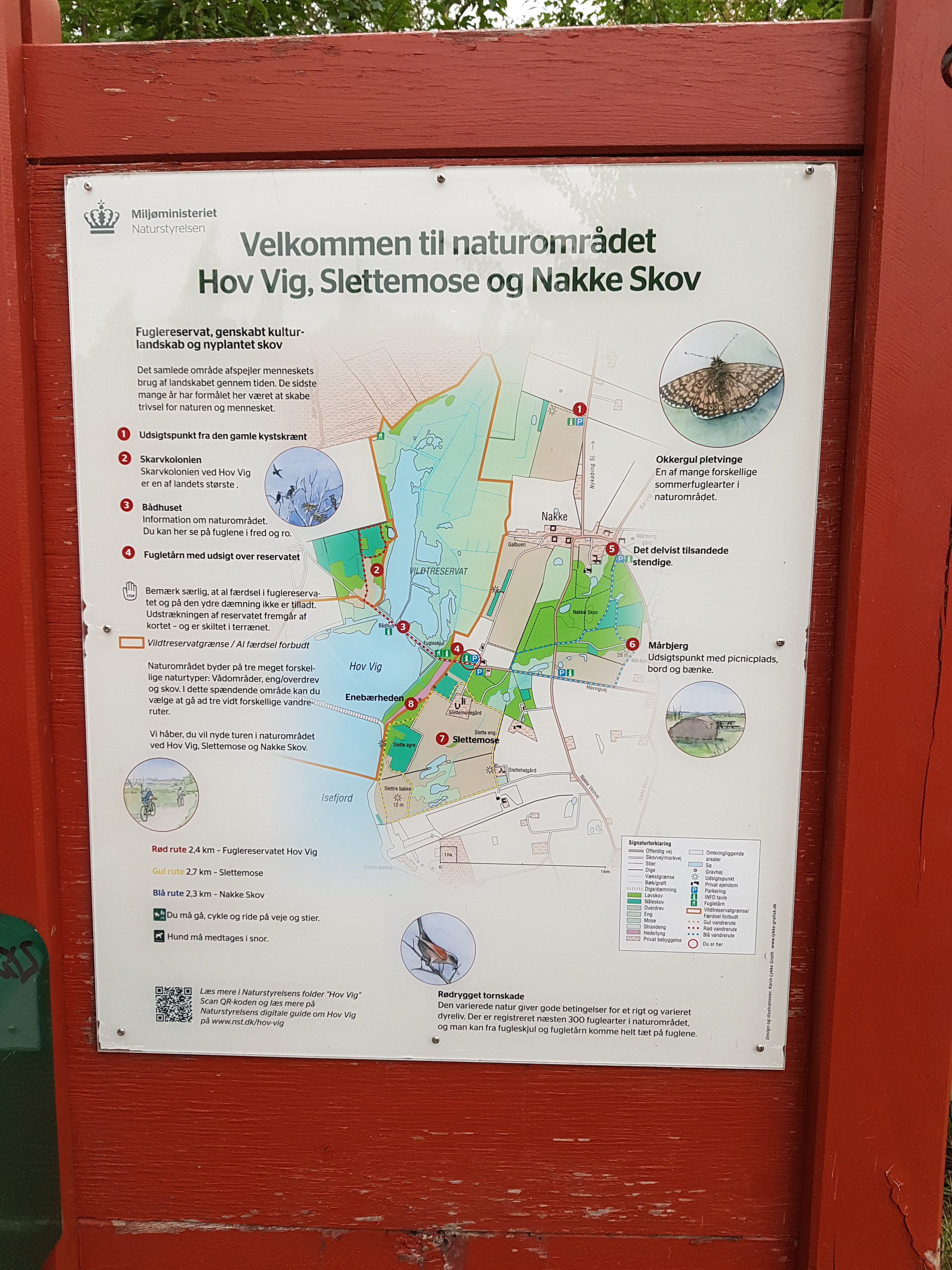
After an early breakfast we set out for Hog Vig and I have to say that I was extremely impressed by the reserve. As you can see from the map below it’s been created by installing a low causeway across a bay in the fjord, resulting in a shallow, brackish lagoon that is absolutely teeming with bird life! Shallow lagoons like this are very productive, with lots of invertebrates and plants on which the birds can feed.
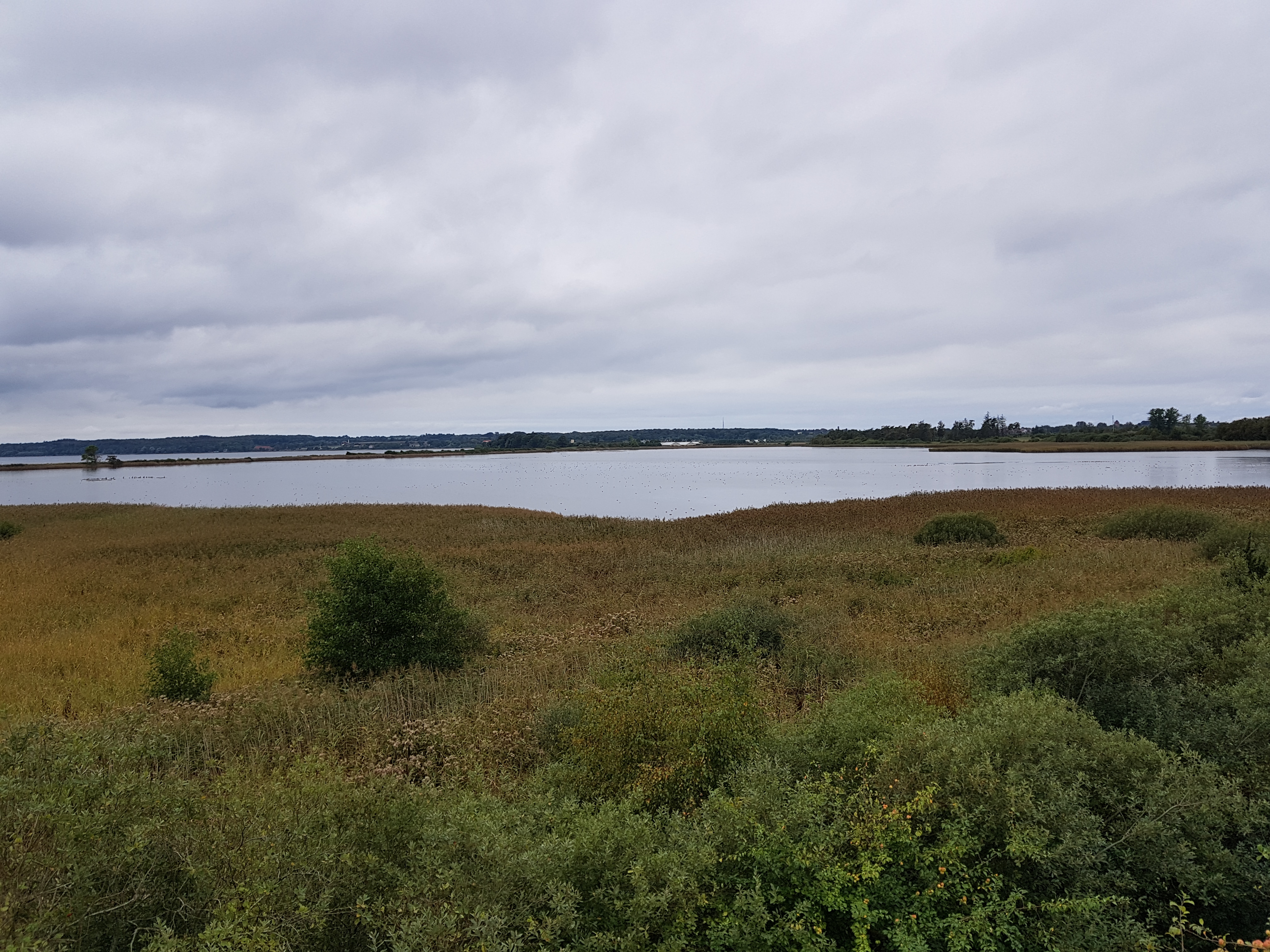
You can see the start of the causeway on the middle left of this photo:
I hadn’t realised just how shallow the lagoon was until I spotted a Great White Egret wading across the centre, the water barely reaching the middle of its legs. In all we counted 8 of these egrets, though a local birder we encountered told us he’d seen 14 that day. Interestingly, Little Egrets are considered quite uncommon here, a reverse of the situation in the UK.
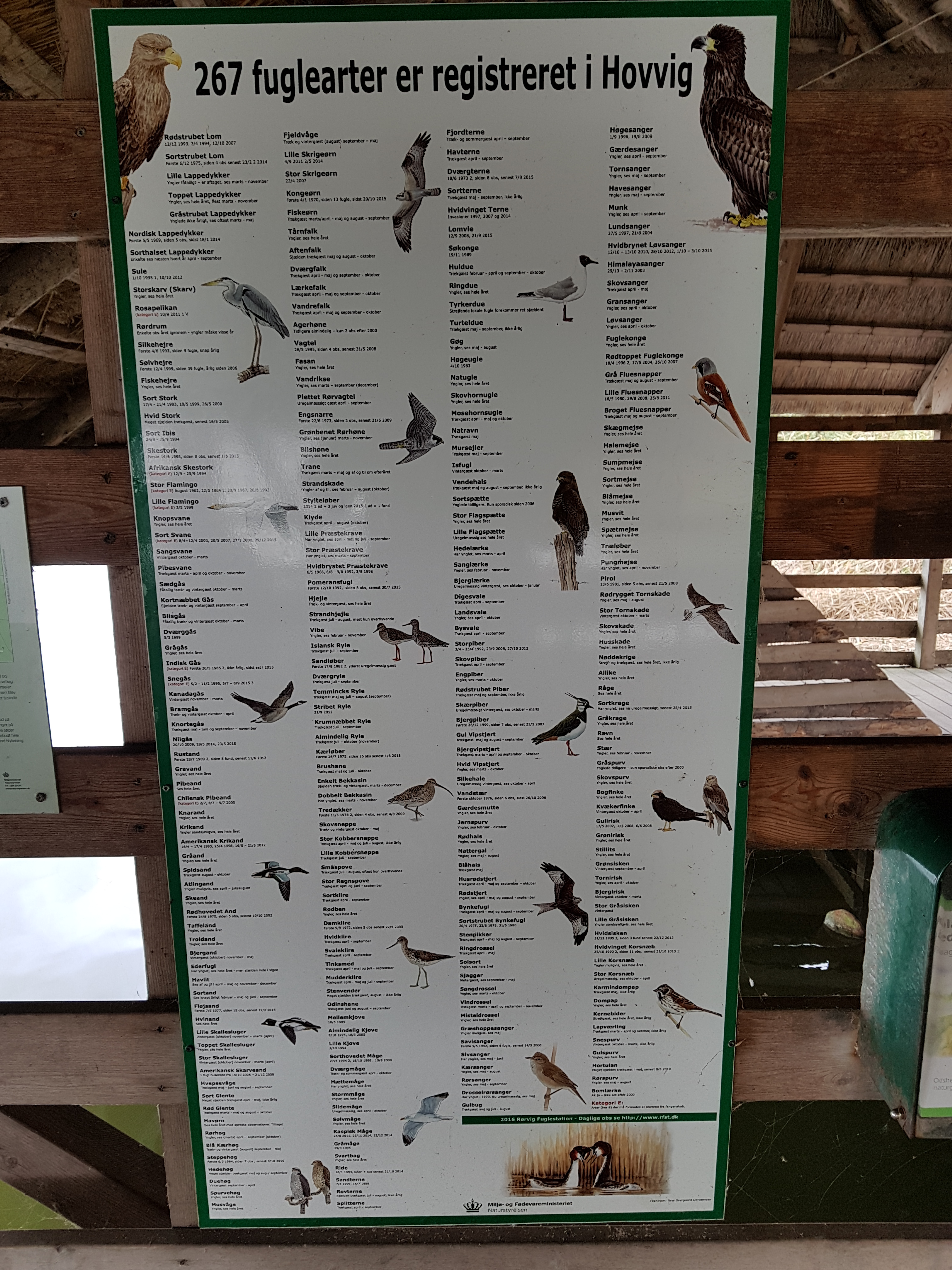
Although the total area of the reserve, including woodland, is only 334 ha, an extraordinary 267 species of birds have been recorded there:
On the reserve itself we identified 39 species, and a handful more when we visited the nearby coast. Including those that we were unsure of we had just over 50 species, not bad for a day of birding. As well as the egrets, particular highlights were huge numbers of Teal, on the water, large active flocks of Golden Plovers and Lapwings set into motion by a hunting Sparrowhawk, and Bar-tailed Godwits, Stonechats and Eiders.
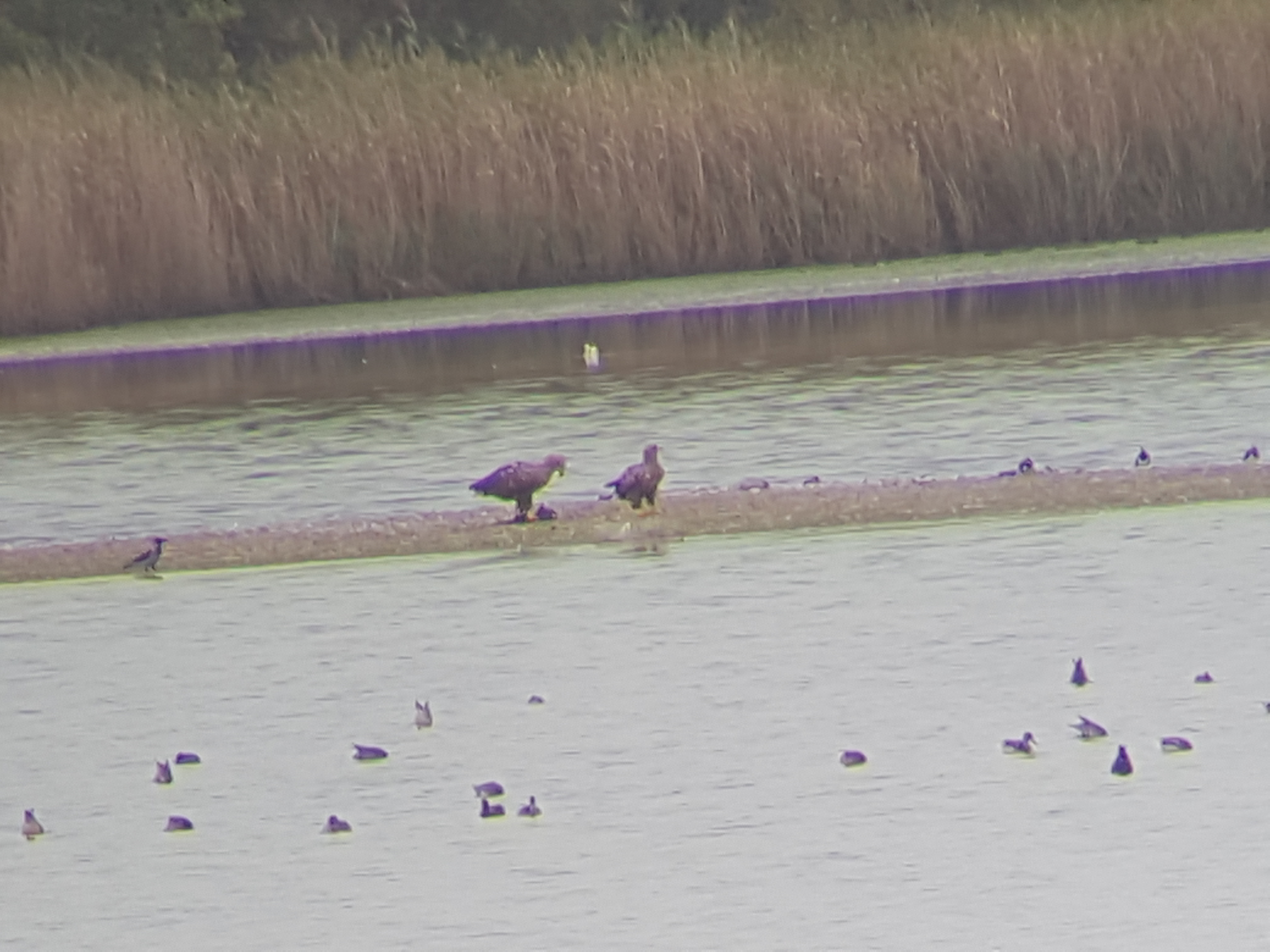
The most exciting birds for us, however, was a pair of White-tailed Sea Eagles that descended onto one of the low islands in the lagoon to feed on a dead cormorant! The locals describe these birds as ‘flying doors’, very apt given their huge wingspans. Needless to say, their appearance also sent much of the bird life into the air. Here’s a poor photo taken with my camera through Bo’s telescope:
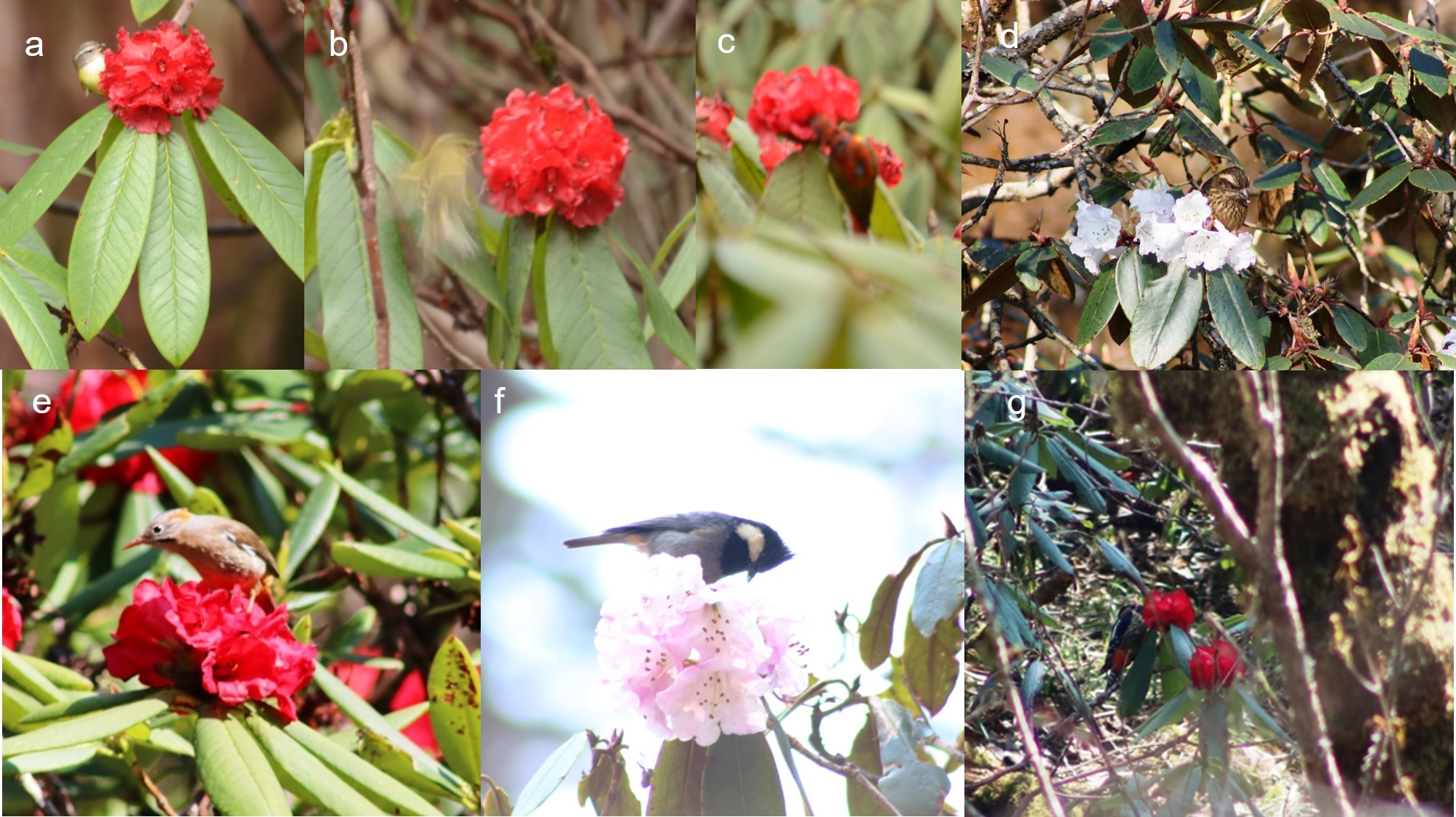
Back in April I posted a series of reports on a student field trip that I was involved with in Nepal, supporting our University of Northampton partner college NAMI in Kathmandu; the first one is here. During that trip, my NAMI colleagues and I made some interesting observations about the role of generalist passerine birds and specialist flower-feeding sunbirds as pollinators of rhododendrons in the Himalayas. This was subsequently followed up with another set of observations in which I didn’t take part, and then written up as a short research note. I’m pleased to say that it has now been published in the new, open-access journal Plants, People, Planet. Here’s a link to the paper which you can download for free:
The report really asks more questions than it answers. It points out how important these rhododendron forests are for the people of Nepal but that we know virtually nothing about the pollination biology of the dominant trees and therefore the long-term persistence of Rhododendron species in the face of forest exploitation and climate change. Our hope is that it stimulates both further research on the topic and increased awareness of how important it is to protect these habitats.
When it comes to golf I’m largely in agreement with Mark Twain who was reported to have described the game as “a good walk spoiled”. As with so many of these well known and iconic quotes, Twain did not originate the phrase and almost certainly did not say it. Reminds me of what Einstein didn’t say about bees. Regardless of how you feel about golf*, and I appreciate that many people enjoy and play the game, golf courses represent an interesting set of environmental challenges and opportunities. On the one hand maintaining areas of perfect turf requires a big input of water, fertilisers, biocides, even grass dye, and energy – there are some interesting thoughts on this in a recent blog post at goingzerowaste.com (though it’s riddled with adverts so be patient). One of the links I picked up from that blog was to the Audubon Society in the USA which has an Audubon Cooperative Sanctuary Program for Golf certification scheme. Its aim is to help course management teams to reduce the impact of their activities and, importantly, to maximise and protect the biodiversity on their golf courses.
There are similar schemes elsewhere in the world, for example the Golf Environment Awards in the UK. Of course building new golf courses that irreparably damage important wildlife sites is unforgivable. For existing courses these are moves in the right direction because typically less than half of a course is the playing area. The rest comprises rough grass, woodland, lakes and streams and so forth: in other words, good habitat for a broad range of wildlife.
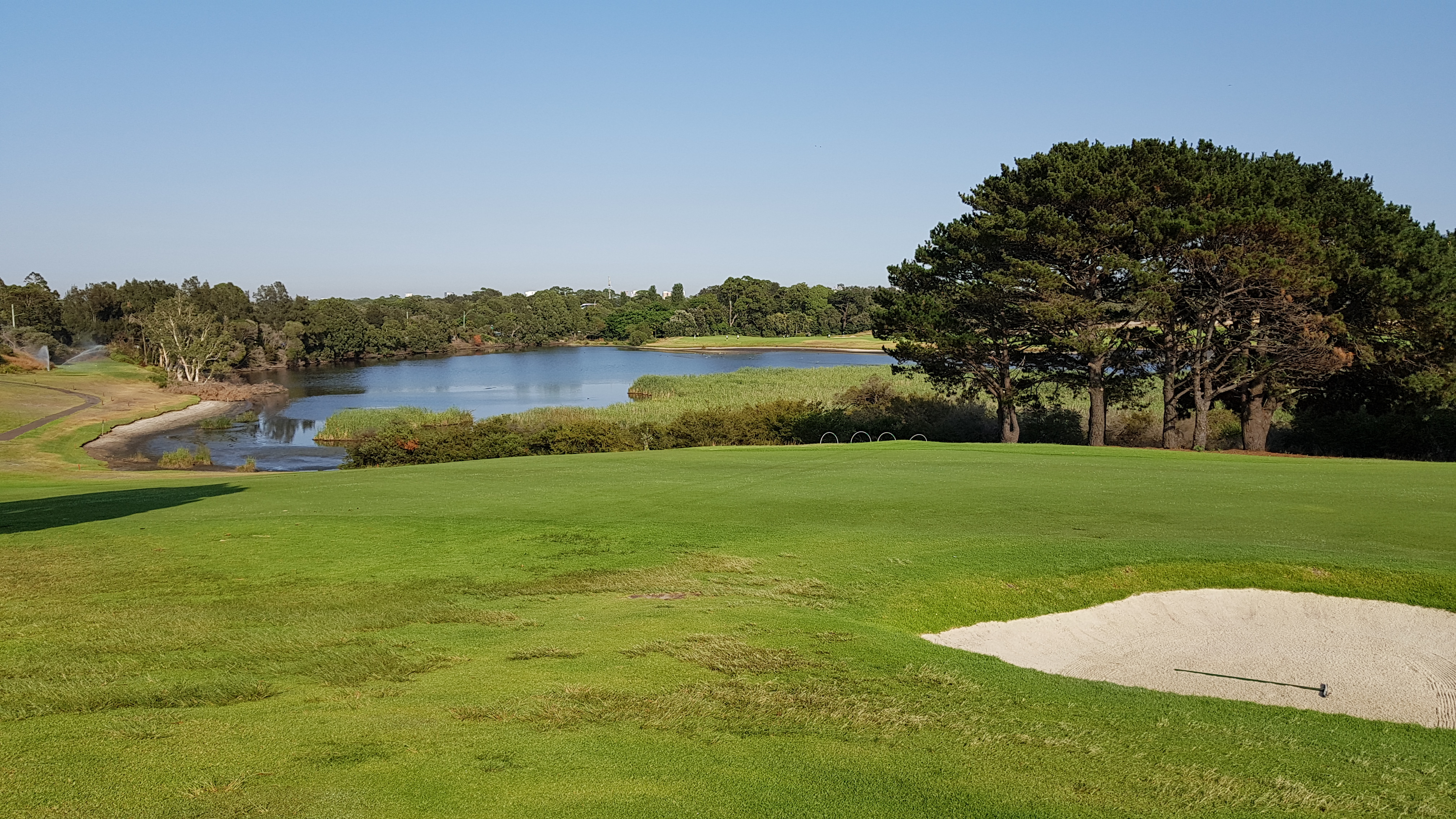
All of this was on my mind last Wednesday when I was invited on an early morning birding trip to the urban Eastlake Golf Course by UNSW bird researcher Dr Corey Callaghan. We were joined by other staff members and postgrads from the department. Six of us spent a very enjoyable couple of hours from 6:15 am walking a route that took us close to the large bodies of water that give the course its name, through woodland and bush dominated by species of Banksiaand Casuarina. The latter, despite being true flowering plants, look for all the world like the familiar conifers of many a British golf course.
Over a period of two hours we saw 70 species of birds. To put this in perspective, our Waterside Campus bird surveys back in Northampton also take around two hours and start early in the morning, through a similar mosaic of grassland, woodland patches, and a water body (the River Nene). On these surveys we typically see between 20 and 30 species; the most we’ve ever recorded in one morning is 39, and that really was exceptional. Remember also that Sydney is not in the tropics – at around 33 degrees south we’re technically subtropical here. Given the latitudinal gradient in bird diversity, a two hour survey on a tropical golf course should yield even more records, all else being equal.
Of those 70 bird species, I think about 20 were new to me, i.e. lifers in birding parlance, though I still need to write up the list of birds I’ve seen so far on this trip. Perhaps I’ll do that this afternoon as temperature in Sydney peak and its frankly too hot to do much else. As I write it’s midday and official temperature for the Coogee area is already 29 degrees C, and that’s with a cooling sea breeze. Western Sydney is likely to top 40 degree later today.
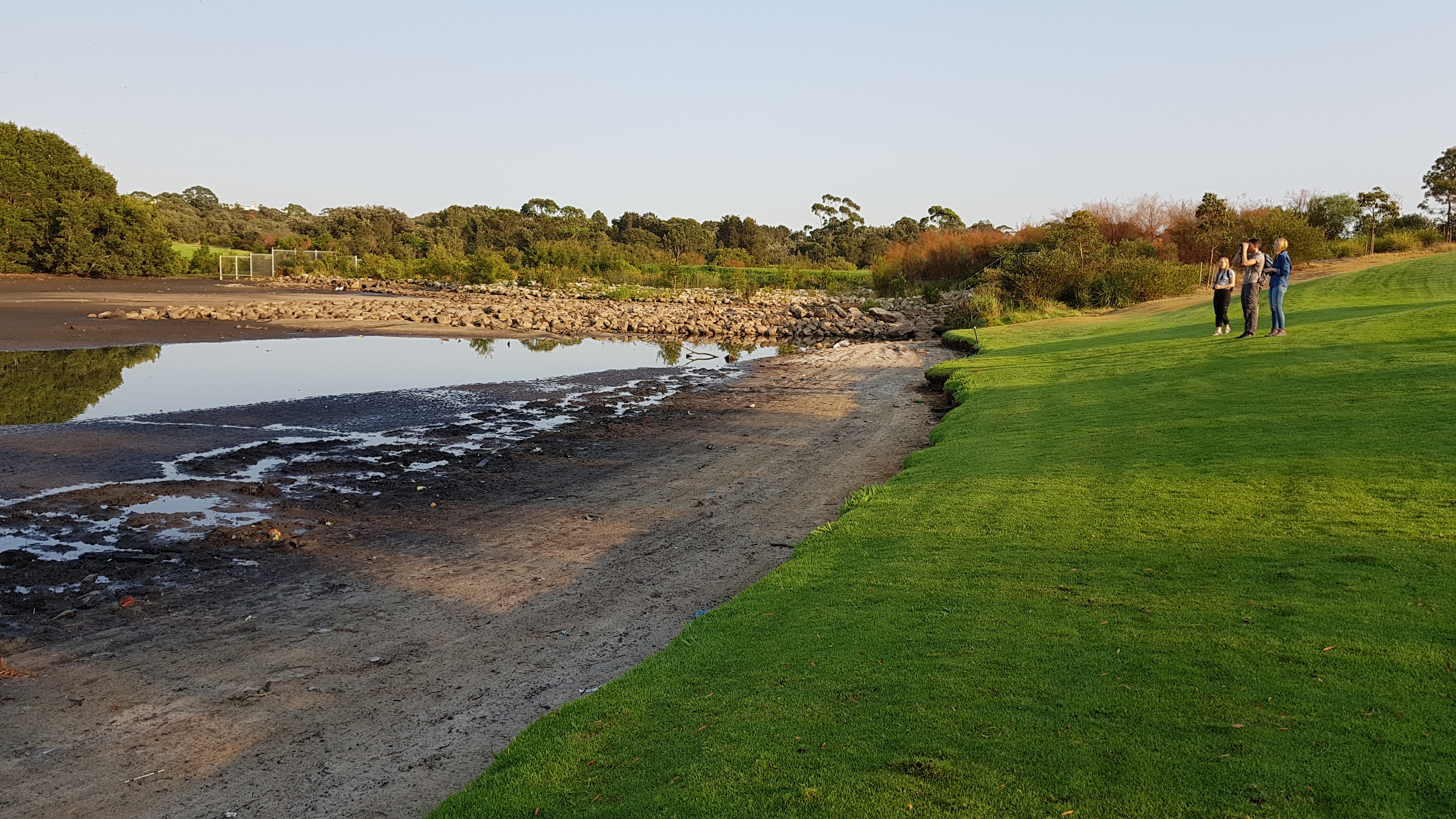
Although whole families of birds in this region are unfamiliar to us in the Northern Hemisphere, there were others that we saw on Wednesday which would not be out of place in Northamptonshire. For example, we saw common greenshank, which overwinters here after an epic journey from northern climes, and Australian raven which is a different species to the ravens and crows from the UK, but very similar looking. The wading birds such as greenshank and sharp-tailed sandpiper were benefiting from the drought conditions that has exposed parts of the lake bed. Though if this continues there’s a danger of most of the water being lost completely, impacting the large eels and other fish we saw in the shallows, as well as the semi-aquatic Eastern water dragon.
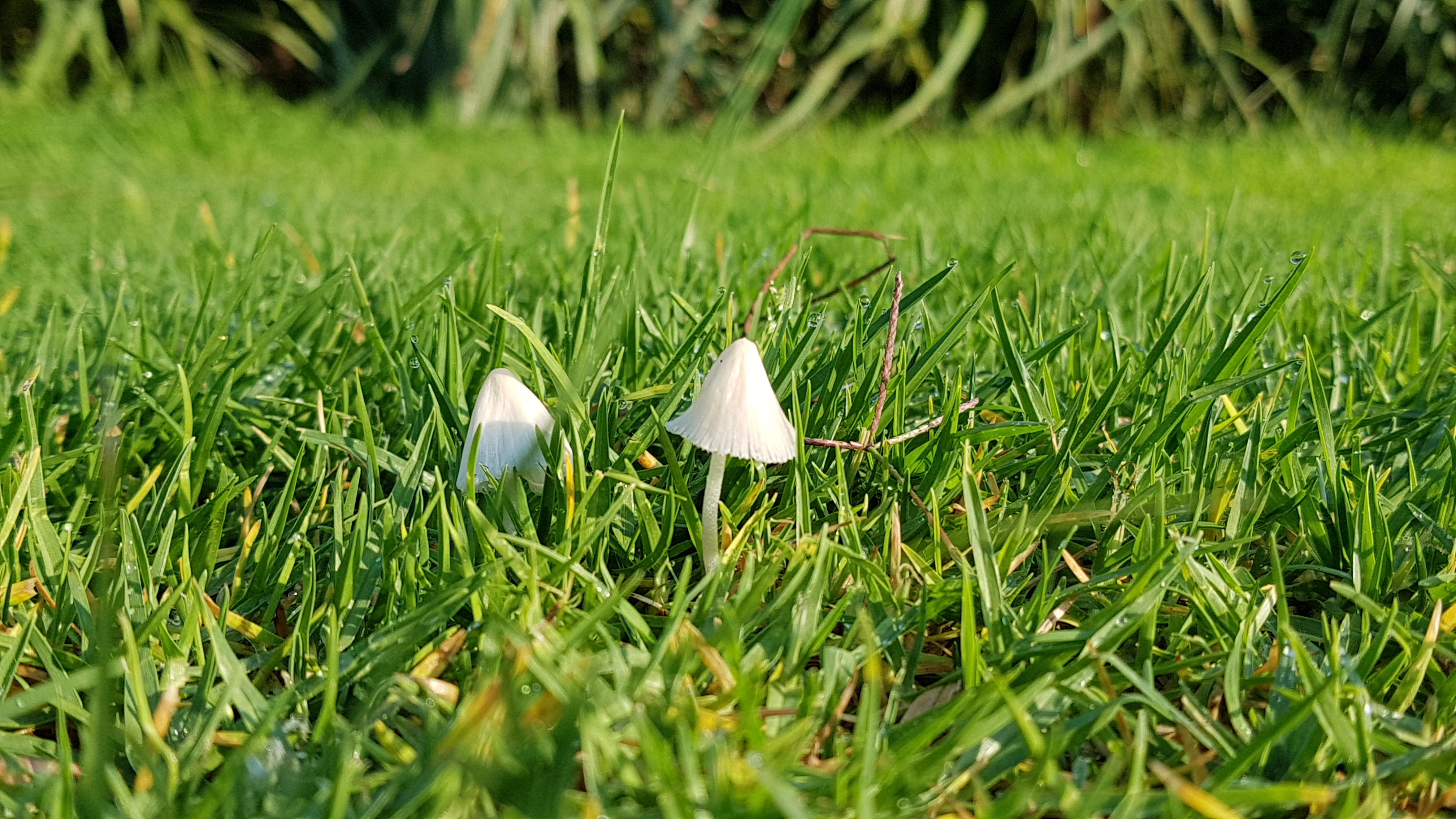
Birds, plants, fish and lizards were not the only wildlife we saw at Eastlake however – some very delicate fungi were benefiting from the regular watering of the fairway:
It’s not all been birding and swimming in the (not very) warm sea, however. This week Angela, Stephen and I were joined by our CSIRO collaborator Dr Raghu Sathyamurthy for an intense week of writing. This manuscript boot camp has gone better than we expected and we have a very good first draft of a paper that should be in a position to submit to a journal by the time my visit here ends on 2nd February.
*I make an exception for crazy golf at seaside resorts which I play with my old university mates with beer, gusto, and not a little rivalry.
We start the new term with a guest speaker from New Zealand – Dr Hazel Chapman – who is coming to give a research seminar this Friday at 1pm in Newton NW205, University of Northampton, Avenue Campus. Here’s the details:
Conservation ecology of West Africa’s montane forest habitats – seed dispersers and their substitutes.
The Nigerian Montane Forest Project (NMFP) is a conservation and biodiversity research program founded on a field station located on the Nigeria-Cameroon border. Run out of the University of Canterbury, New Zealand, the Project is aimed at understanding the ecology of Nigeria’s montane forest fragments for informed management of this fragile ecosystem. The research focus is predominantly plant-animal mutualisms and forest restoration. This talk will introduce the NMFP and present research aimed at understanding how seed dispersal processes are changing in response to forest fragmentation and hunting.
Hazel Chapman is an Associate Professor at the University of Canterbury (UC) NZ, where she lectures in evolutionary ecology. Hazel’s research focus is tropical forest conservation and she is the Founder and Director of the NMFP. Since 2004, the Project has seen a stream of international and Nigerian postgraduate students enrolled at UC doing their field research in Nigeria. In addition the NMFP trains undergraduate Nigerian students in conservation biology, and works with local schools and the community. The Project is run almost entirely by the local community. It is home to a 20ha Smithsonian CTFS Forest Geo Plot.
This afternoon I spent a very pleasant couple of hours watching a flock of 14 waxwings (Bombycilla garrulus) a beautiful and enigmatic bird that I’ve mentioned before on this blog. This flock has been hanging around the village of Roade just outside Northampton since the 29th December, feeding on a crop of rowan berries (Sorbus aucuparia var.) and amusing the locals. As usual they were very confiding and unperturbed by neither traffic nor twitchers (which at one point, I was told, numbered around 40 people). Feeding with the waxwings were a couple of blackbirds that may well have travelled down from the far north with them. Here’s a few pictures:
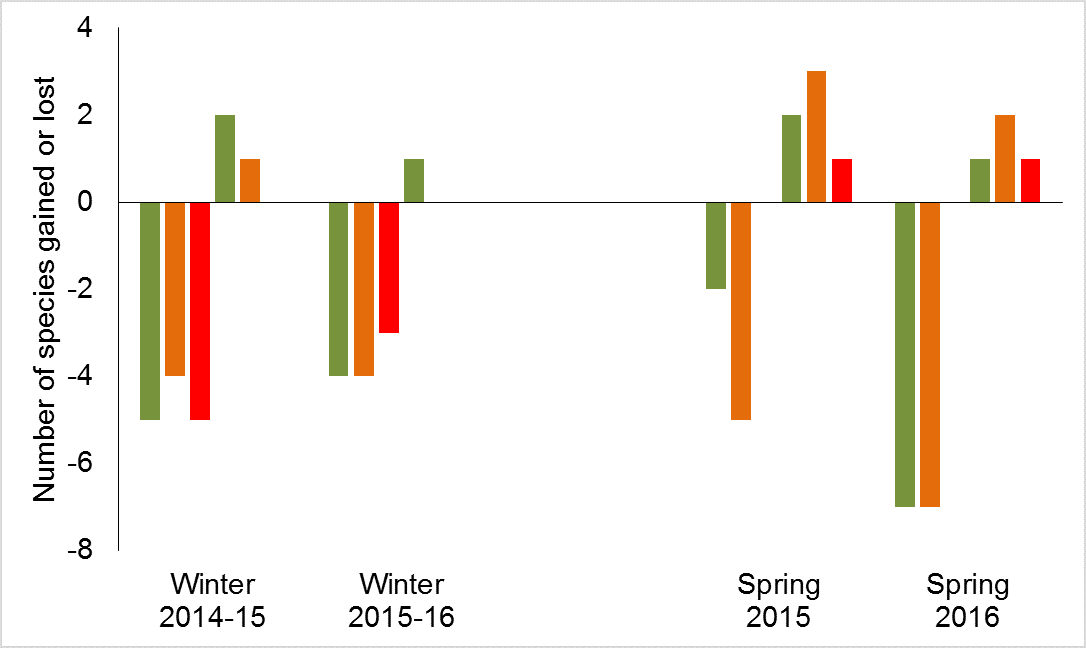
As you will see it’s a mixed picture, with some losses and some gains of species, but we are broadly optimistic that the planned landscaping and habitat creation will have a positive effect come the 2018 opening date of Waterside Campus. It’s important to note that studies such as this which follow up initial ecological surveys and assess the subsequent impact over time are extremely rare as there is no statutory obligation to do so.
Winter surveys will begin shortly and I will report back late next year, time willing. Any questions or comments, please let me know.
Executive summary
Surveys of winter and spring bird diversity are being carried out to assess the effects of construction activities and habitat creation on local biodiversity at the University of Northampton’s new Waterside Campus.
These results are compared to pre-construction baseline surveys in winter 2012-13 and spring 2013, undertaken as part of the ecological impact assessment of the site.
Results after two repeat sets of surveys (winter 2014-15 and 2015-16; spring 2015 and 2016) are presented, with birds grouped into RSPB Green, Amber and Red categories.
Winter bird diversity has dropped from 41 species to 31 species; more Red and Amber listed birds have been lost than Green listed species.
Spring bird diversity has dropped from 40 to 36 species; more Green and Amber listed birds were lost, but the number of Red listed species increased slightly.
As well as losing species the site has gained birds that were not recorded in the baseline surveys, including Green-listed Coot and Treecreeper, the Amber-listed Stock dove, and the Red-listed House sparrow.
In addition, most of the “missing” birds are known to occur at sites 500m to 1000m from Waterside and could return following the end of construction and appropriate habitat creation.
Surveys will continue until after Waterside Campus opens in 2018, and analyses will be undertaken to tease out how these changes in bird numbers are related to changes to both the local and regional environments.
Outputs from this project so far include two conference presentations and two final year dissertations (one completed and one planned). At least one peer-reviewed research paper is anticipated.







 Prof. Jeff Ollerton - ecological scientist and author