Tag Archives: Bees

Managing for Pollinators – a special issue of the Natural Areas Journal

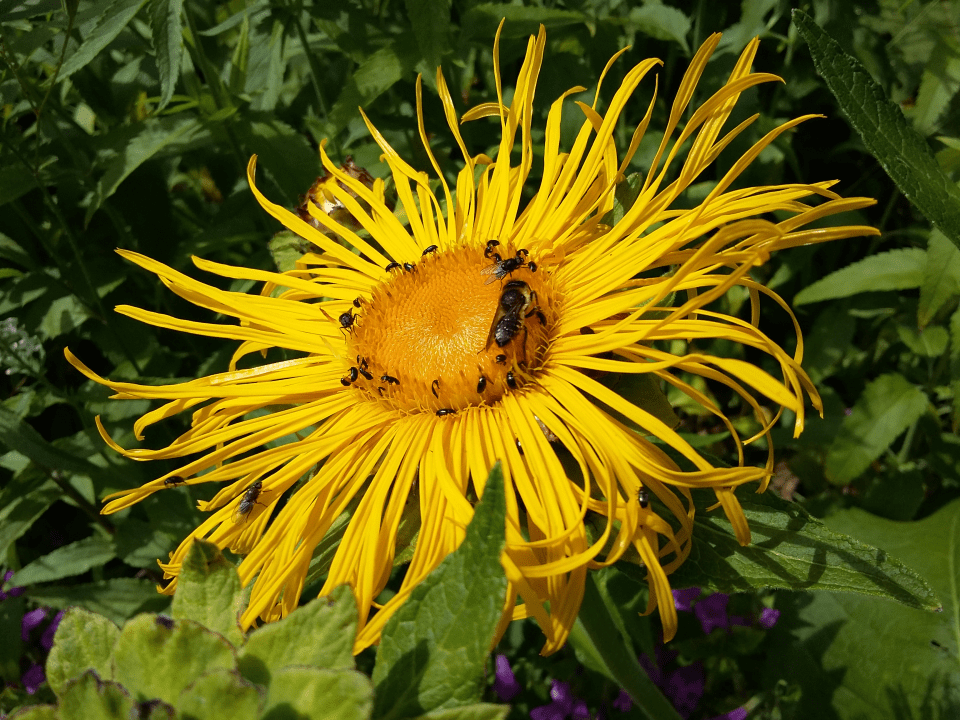
Inula at Ravensthorpe 20160710_145426The October issue of the Natural Areas Journal is a special one devoted to the topic of “Managing for Pollinators”.  All of the papers have a North American focus but I think that they will be of general interest to anyone, anywhere in the world, who is concerned with how best to manage habitats for pollinators.  Here’s the contents page of the issue, copied and pasted from the site; I’m not sure if the full text links will work if you or your institution does not have full text access, but you should at least be able to view the abstracts:

Editorial: Pollinators are in Our Nature Full Access

Introduction by USFS Chief Tidwell – Pollinators and Pollination open access

pg(s) 361–361

Citation : Full Text : PDF (227 KB)

National Seed Strategy: Restoring Pollinator Habitat Begins with the Right Seed in the Right Place at the Right Time Full Access

Peggy Olwell and Lindsey Riibe
pg(s) 363–365

Citation : Full Text : PDF (1479 KB)

Hummingbird Conservation in Mexico: The Natural Protected Areas System Full Access

M.C. Arizmendi, H. Berlanga, C. Rodríguez-Flores, V. Vargas-Canales, L. Montes-Leyva and R. Lira
pg(s) 366–376

Abstract & References : Full Text : PDF (1302 KB)

Floral Guilds of Bees in Sagebrush Steppe: Comparing Bee Usage of Wildflowers Available for Postfire Restoration Full Access

James H. Cane and Byron Love
pg(s) 377–391

Abstract & References : Full Text : PDF (1500 KB)

The Role of Floral Density in Determining Bee Foraging Behavior: A Natural Experiment Full Access

Bethanne Bruninga-Socolar, Elizabeth E. Crone and Rachael Winfree
pg(s) 392–399

Abstract & References : Full Text : PDF (1219 KB)

Common Methods for Tallgrass Prairie Restoration and Their Potential Effects on Bee Diversity Full Access

Alexandra Harmon-Threatt and Kristen Chin
pg(s) 400–411

Abstract & References : Full Text : PDF (300 KB)

Status, Threats and Conservation Recommendations for Wild Bumble Bees (Bombus spp.) in Ontario, Canada: A Review for Policymakers and Practitioners Full Access

Sheila R. Colla
pg(s) 412–426

Abstract & References : Full Text : PDF (420 KB)

Conserving Pollinators in North American Forests: A Review Full Access

James L. Hanula, Michael D. Ulyshen and Scott Horn
pg(s) 427–439

Abstract & References : Full Text : PDF (1711 KB)

Dispersal Limitation, Climate Change, and Practical Tools for Butterfly Conservation in Intensively Used Landscapes Full Access

Laura E. Coristine, Peter Soroye, Rosana Nobre Soares, Cassandra Robillard and Jeremy T. Kerr
pg(s) 440–452

Abstract & References : Full Text : PDF (4647 KB) : Supplementary Materials

Revised State Wildlife Action Plans Offer New Opportunities for Pollinator Conservation in the USA Full Access

Jonathan R. Mawdsley and Mark Humpert
pg(s) 453–457

Abstract & References : Full Text : PDF (249 KB)

Diet Overlap of Mammalian Herbivores and Native Bees: Implications for Managing Co-occurring Grazers and Pollinators Full Access

Sandra J. DeBano, Samantha M. Roof, Mary M. Rowland and Lauren A. Smith
pg(s) 458–477

Abstract & References : Full Text : PDF (1537 KB)

The Role of Honey Bees as Pollinators in Natural Areas Full Access

Clare E. Aslan, Christina T. Liang, Ben Galindo, Hill Kimberly and Walter Topete
pg(s) 478–488

Abstract & References : Full Text : PDF (467 KB)

Food Chain Restoration for Pollinators: Regional Habitat Recovery Strategies Involving Protected Areas of the Southwest Full Access

Steve Buckley and Gary Paul Nabhan
pg(s) 489–497

Abstract & References : Full Text : PDF (732 KB)

Forbs: Foundation for Restoration of Monarch Butterflies, other Pollinators, and Greater Sage-Grouse in the Western United States Full Access

R. Kasten Dumroese, Tara Luna, Jeremiah R. Pinto and Thomas D. Landis
pg(s) 499–511

Abstract & References : Full Text : PDF (1716 KB)

Using Pollinator Seed Mixes in Landscape Restoration Boosts Bee Visitation and Reproduction in the Rare Local Endemic Santa Susana Tarweed,Deinandra minthornii Full Access

Mary B. Galea, Victoria Wojcik and Christopher Dunn
pg(s) 512–522

Abstract & References : Full Text : PDF (2880 KB)

Save Our Bats, Save Our Tequila: Industry and Science Join Forces to Help Bats and Agaves Full Access

Roberto-Emiliano Trejo-Salazar, Luis E. Eguiarte, David Suro-Piñera and Rodrigo A. Medellin
pg(s) 523–530

Abstract & References : Full Text : PDF (463 KB)

The Importance of Phenological Diversity in Seed Mixes for Pollinator Restoration Full Access

Kayri Havens and Pati Vitt
pg(s) 531–537

Abstract & References : Full Text : PDF (2208 KB) : Supplementary Materials

Stewardship in Action Full Access

Sarah Riehl
pg(s) 538–541

Citation : Full Text : PDF (595 KB)

Bumblebees, ferries, and mass migrations: an update

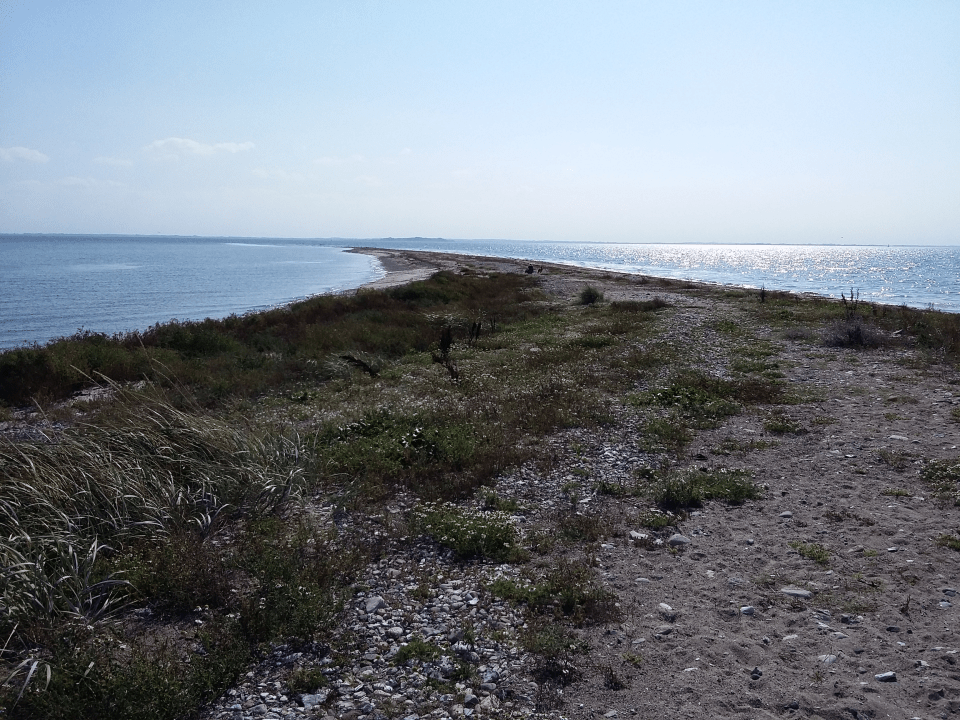
Sejero - 20160910_113537.png

The post earlier this week on the question of “Why do bumblebees follow ferries?” generated quite a few comments, both on the blog and on Facebook.  As I’d hoped a number of people have chimed in to say that they have observed the same thing, or commented that they often see bumblebees when sailing or kayaking out at sea.

Here are the additional observations in increasing distance order to nearest larger area of land.  Distances are approximate and in some cases it’s unclear where exactly the observations were made:

Isle of Mull to the Isle of Staffa: 6.5km

Skye and the Outer Hebrides going in both directions: 24km

Ferry to Jersey: 28.4km

Estonia to Helsinki: 80km – described in a short paper by Mikkola (1984).

However this is nothing compared to evidence that queen bumblebees may engage in mass migrations (involving thousands of bees) across the North Sea from England to Holland, a distance of 165km!  See Will Hawkes’s short article “Flight of the Bumblebee“.

This idea of mass migration is new to me, though the Mikkola (1984) paper cites some earlier literature on the topic.  And this morning I had a quick phone chat with Dave Goulson who tells me that he occasionally gets people contacting him to tell him about such events.  But it’s unclear why these bees should be flying such large distances, how they coordinate their migrations, or indeed how much energy they need to store to travel that far. In addition there are implications for gene flow between British and Continental subspecies of bees such as the Buff-tailed Bumblebee (Bombus terrestris). Even a relatively well studied group of insects such as the bumblebees can continue to surprise us with new questions!

Thanks to everyone who contributed observations and ideas, it’s much appreciated.

Why do bumblebees follow ferries?

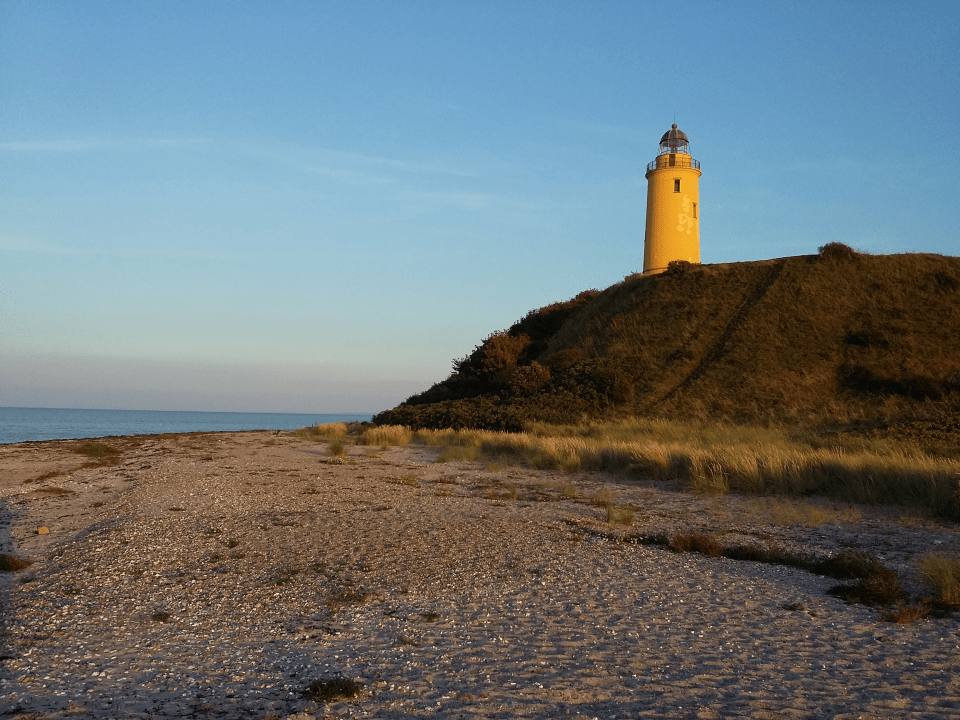
Sejero - 20160910_180359.png

A few years ago I mentioned in my post “Garlicky archipelago” that I had seen bumblebees (Bombus spp.) following the ferry from Southampton to the Isle of Wight, a distance of about 1.5km across water.  If I remember correctly it was my colleague Scott Armbruster who first mentioned this to me: he lives on the Isle of Wight and commutes regularly to the mainland.

I’ve not thought much about this since then as 1.5km is a fairly modest distance for a bumblebee to fly.  But then a few weeks ago I saw the same thing in Denmark, but this time over a much longer distance.

Karin and I were visiting friends on the small island of Sejerø, which (at its closest point) is about 8km from the mainland of Zealand.  To get there you have to catch a ferry which takes about an hour to cross this stretch of water.  About half-way across,  whilst looking over the stern of the ship, I spotted a bumblebee following the ferry.

So that’s twice, on two different ferries and under very different contexts, that I’ve seen this phenomenon.  A pattern is starting to form….  Has anyone else observed this?  Please do comment.

I can think of a few explanations/hypotheses for what’s going on here (some of which are not mutually exclusive):

  1.  Clearly bumblebees do fly across significant stretches of open seawater.  Perhaps all I’m seeing is bees that do this, but spotted from the only vantage point where it’s viewable (i.e. the ferry).
  2. These bumblebees are taking advantage of the slipstream created by the ferry to reduce the energy required to fly these long distances.
  3. The bees are hitching a lift on the ferry and I only observe them as they arrive or depart.
  4. The bees are following the wake of the ship to navigate between the island and the mainland, in order to exploit significant flower patches.  Work by one of my PhD students, Louise Cranmer, a few years ago showed that bumblebees follow linear features such as non-flowering hedgerows to navigate – see Cranmer et al. (2012) Oikos.  Perhaps something similar is happening here?

There’s probably other possibilities I’ve not thought of.  But whatever the explanation, it looks to me as if there’s some potential for interesting experiments marking and recapturing bees on islands/mainland, releasing bees on ferries to see if they follow the wake, etc.  If only Northampton wasn’t so far from the coast….


Two-day Steven Falk bee ID course at Oxford University Museum 15th-16th October 2016

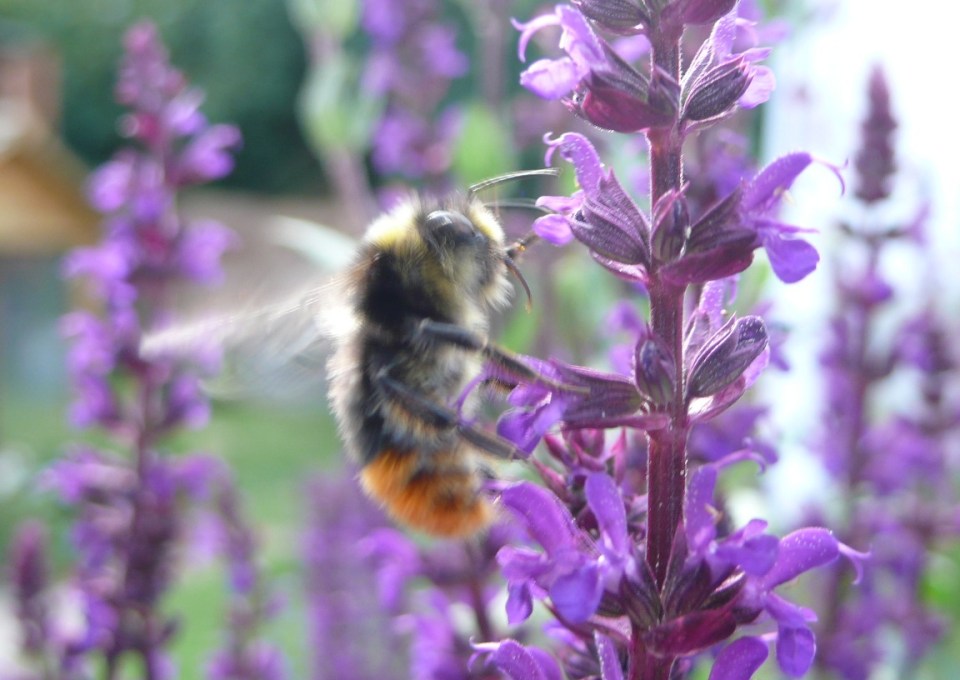
Male B lap on Salvia cropped P1120309

One of the most exciting, pollinator-related publishing events of last year was the publication of Steven Falk’s eagerly-anticipated Field Guide to the Bees of Britain and Ireland.  Not only does this book provide a state-of-the art account of the natural history and identification keys for all of the bees currently known from Britain (over 270 species) but it’s backed up by Steven’s own Flikr site with more photographs of the bees, including lots of close ups, and an ongoing list of updates and corrections.

But as Steven himself acknowledges, the identification of many of our bees is a challenge, even with the book and the additional imagery.  Anyone who is really keen to get to grips with bee identification is therefore recommended to book onto a hands-on identification course.  Steven has just announced that he is running a two-day course in Oxford on 15th to 16th October, at a cost of £60 per person – here’s a link to the booking page.  Seems like good value to me!

Bees and pesticides – a major new study just published – UPDATED

Male B lap on Salvia cropped P1120309

An important new study about the effects of neonicotinoid pesticides on wild bees has just been published in the journal Nature Communications – here’s the details and a link to the paper, which is open access:

Woodcock, B. A. et al. (2016) Impacts of neonicotinoid use on long-term population changes in wild bees in England. Nat. Commun. 7:12459 doi: 10.1038/ncomms12459

As I’ve previously discussed on this blog (e.g. here and here) there are widespread concerns amongst environmentalists, and some scientists, about the impact that these relatively new pesticides are having on pollinators and other biodiversity.  The Woodcock et al. paper is a major contribution to this discussion as it uses a huge dataset to model the changes in populations of 62 wild bee species that are known to forage on oilseed rape (canola) over 18 years.  These changes can be related to the spatial extent of oilseed rape cultivation and the authors found that whilst bees “….foraging on oilseed rape benefit from the…[nectar and pollen provided by]….this crop….[they]….were on average three times more negatively affected by exposure to neonicotinoids than…” bees which didn’t forage on the crop.

The authors further conclude that “This study provides the first evidence for community level national scale impacts on the persistence of wild bee populations resulting from exposure to neonicotinoid treated oilseed rape crops.”

Neonicotinoid pesticides are, of course, not the whole story when it comes to understanding declines in pollinator diversity and abundance.  But these pesticides are the latest in a long history of changes to British agriculture that have had significant consequences for the biodiversity of our country (as we showed in our study of bee and wasp extinctions).

Reactions to the study have been, well, predictable.  A long feature on the BBC News website* quoted a representative from Bayer as saying:

“we believe….[the study’s]….findings would be more correctly headlined that intensive agriculture is causing some issues with pollinators…..  Whether this is due to the use of insecticides is not clear; a lack of nesting sites and pollen and nectar sources in these areas may also be critical factors.”

Which rather ignores the fact that this was a comparative study of bees that forage on oilseed rape versus those that don’t.

Likewise the National Farmer’s Union’s position was that:

“While this study claims to provide an important contribution to the evidence base underpinning the current EU moratorium on some uses of neonicotinoids, experts reviewing all the evidence have concluded that there are still major gaps in our knowledge and a limited evidence base to guide policymakers”

Which sounds to me like a statement designed to fudge the issue: the “experts reviewing all the evidence” would not have reviewed this particular study!  And which begs the question – how much evidence and how many studies would be enough for the NFU?

The study’s authors do not make any suggestions as to what the next step should be in this continuing saga but are quoted as saying that “simplistic solutions” such as banning these pesticides are not the answer because this will encourage use of pesticides that are even more damaging.  That may be the case but it’s clear that an independent root-and-branch reassessment of the use of pesticides (and herbicides) in UK agriculture is long overdue.


*As an aside, this BBC News piece wrongly states that bumblebees were not included in the study, which is not the case.


UPDATE:  After I published this post I noticed that Manu Saunders has also written about the bee study, plus a second study that I’d not seen linking neonicotinoid use to declining butterfly populations in California.  Here’s a link to Manu’s blog.


Just published: A horizon scan of future threats and opportunities for pollinators and pollination

A team of pollinator researchers from across the globe has just published an interesting new paper which looks at potential threats to pollinators and the pollination services that they provide, as well as opportunities for future conservation and agricultural gains.  The paper is open-access and free to download – here’s the reference and a link to the paper:

Brown, MJF et al. (2016) A horizon scan of future threats and opportunities for pollinators and pollination.  PeerJ

The paper has also gained some media coverage, e.g. on the BBC News website.

The bee that lives on a volcano!

Nature can adapt to even the most unpromising and uncompromising of physical environments, from deep oceans to arid deserts.  And now we have a bee that lives in close proximity to an active volcano!  The work is by one of my former PhD students, Dr Hilary Erenler (who is still a Visiting Researcher at the University of Northampton), and is featured in a big news story in the journal Science.

Here’s a link to the story.

The full reference for the study, with a link to the journal, is:

Hilary E. Erenler, Michael C. Orr, Michael P. Gillman, Bethan R. B. Parkes, Hazel Rymer and Jean-Michel Maes (2016) Persistent nesting by Anthophora Latreille, 1803 (Hymenoptera: Apidae) bees in ash adjacent to an active volcano. Pan-Pacific Entomologist 92:67-78.

Well done Hils, it’s a great study!


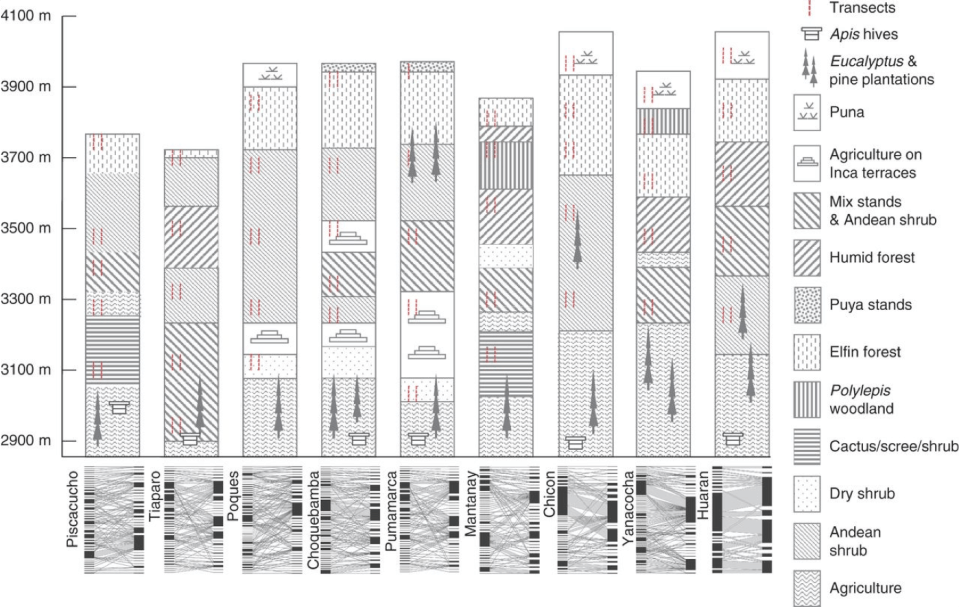
The influence of floral traits on specialization and modularity of plant–pollinator networks in a biodiversity hotspot in the Peruvian Andes – Watts et al. (2016)

Watts et al Figure 1

The second paper from the PhD thesis of my former student Dr Stella Watts has just been published in Annals of Botanyhere’s a link to the journal’s website.  It summarises the major findings from her field work on plant-pollinator interactions in the high Andes of Peru:

Watts, S., Dormann, C.F., Martín González, A.M. & Ollerton, J. (2016) The influence of floral traits on specialization and modularity of plant–pollinator networks in a biodiversity hotspot in the Peruvian Andes.  Annals of Botany doi: 10.1093/aob/mcw114

This paper represents a major piece of research, including extensive field data collection over multiple sites in a challenging environment at altitude; state-of-the-art data analysis; and then summarising all of this into a single, digestible paper, with some great figures.  I’m very proud to have been part of it!

Here’s the abstract; please email me or Stella if you’d like a copy of the full PDF:

Background and Aims:  Modularity is a ubiquitous and important structural property of ecological networks which describes the relative strengths of sets of interacting species and gives insights into the dynamics of ecological communities. However, this has rarely been studied in species-rich, tropical plant–pollinator networks. Working in a biodiversity hotspot in the Peruvian Andes we assessed the structure of quantitative plant–pollinator networks in nine valleys, quantifying modularity among networks, defining the topological roles of species and the influence of floral traits on specialization.

Methods: A total of 90 transects were surveyed for plants and pollinators at different altitudes and across different life zones. Quantitative modularity (QuanBiMo) was used to detect modularity and six indices were used to quantify specialization.

Key Results:  All networks were highly structured, moderately specialized and significantly modular regardless of size. The strongest hubs were Baccharis plants, Apis mellifera, Bombus funebris and Diptera spp., which were the most ubiquitous and abundant species with the longest phenologies. Species strength showed a strong association with the modular structure of plant–pollinator networks. Hubs and connectors were the most centralized participants in the networks and were ranked highest (high generalization) when quantifying specialization with most indices. However, complementary specialization d’ quantified hubs and connectors as moderately specialized. Specialization and topological roles of species were remarkably constant across some sites, but highly variable in others. Networks were dominated by ecologically and functionally generalist plant species with open access flowers which are closely related taxonomically with similar morphology and rewards. Plants associated with hummingbirds had the highest level of complementary specialization and exclusivity in modules (functional specialists) and the longest corollas.

Conclusions: We have demonstrated that the topology of networks in this tropical montane environment was non-random and highly organized. Our findings underline that specialization indices convey different concepts of specialization and hence quantify different aspects, and that measuring specialization requires careful consideration of what defines a specialist.

Third International Conference on Pollinator Biology, Health and Policy – Pennsylvania – 18-20 July, 2016

P1030210

Keeping with the theme of Bees’ Needs Week, and the importance of pollinators to natural and agricultural ecosystems*, the Third International Conference on Pollinator Biology, Health and Policy takes place at Penn State University, USA,  from the 18th to 20th July.

Here’s a link to the PDF of the programme with the abstracts, speakers’ details, etc.  I won’t be attending** but I am involved as a collaborator*** in one of the talks being presented – Luísa Carvalheiro’s project on “Direct and indirect effects of soil eutrophication on pollination services“.

Best of luck to all the speakers and attendees, looks like it’s going to be a great conference.


*Wednesday’s grumpiness has almost disappeared, though it reached a new peak yesterday when we had a paper rejected by a journal after 10 months.  There was one positive review, one middling review, and then a third in which the reviewer provided no comments – just “reject”!  I was not happy about that and made my feelings known to the editor…..

**I’m actually in the Azores next week attending the Island Biology 2016 conference.  More about that at the weekend.

***With about a gazillion other people!  Luisa has pulled together an amazing data set.


“Insect pollinated” crops that don’t actually require insect pollination

Cucumber fruit 20160713_103558

Yesterday evening I learned that a large grant application that I’d submitted earlier this year had failed to secure funding.  Statistically there was a high likelihood of this happening but that doesn’t make it feel any better: weeks and weeks of work have come to nothing.

So in a mood of bloody-minded contrariness and general displeasure at the unfairness of the world I thought I’d provide an alternative to the Bees’ Needs week I mentioned yesterday by focusing on food crops that look as though they should be insect pollinated (and their ancestors certainly were) but which don’t actually require pollinators.

The example pictured above is an F1 hybrid cucumber (Cucumis sativus) variety called “Mini Munch”, kindly grown from seed and given to me by my friend and colleague Dr Janet Jackson.  Many cucumbers don’t need insect pollination, despite their large, colourful flowers, and the fact that related crops (melons, courgettes, squashes, etc.) generally do require pollinators.  Indeed some varieties taste bitter if they are pollinated.  I can recommend this web page on how to grow cucumbers for further advice.

As I was taking that photograph, and in another demonstration of how the world is against me at the moment, I spotted a bee feeding on one of the all-female flowers of this variety.

Megachile on cucumber 20160713_103627

It spent some time there probing the centre with its tongue, so I think these flowers still produce nectar despite them not needing pollinators, a hang-over from their ancestry.  Plants have a whole range of mechanisms that ensure reproduction without the agency of insects and other animal pollinators, and this has been exploited by crop breeders who have selected crop varieties for their ability to self pollinate or to reproduce asexually via apomixis (as in the case of this cucumber).

The same bee then flew onto a tomato (Solanum lycopersicum) flower (another group which varies in its demands for pollination) and I got a better look – seems to be a Leaf-cutter Bee of the genus Megachile.

Megachile on tomato 20160713_103712

The final example of a crop which requires little or no insect pollination are the chillies (Capsicum spp.) all of which are self-pollinating, I believe.  This variety is a scrambling purple type called Orzoco*.

Orzoco chilli 20160713_102213

So, crops vary hugely in their need for pollinators and the presence of certain traits of animal pollination, such as large, brightly coloured flowers and nectar, is no guarantee that the crop really does have to be serviced by pollinators.  The only way to be certain is to experimentally test the plants, a topic I hope to come back to later in the summer.

Don’t worry, this grumpiness won’t last long, in no time at all I’ll be back to banging on about the importance of pollinators.  At least Monty, one of our two cats, still loves me.


*At least, that’s what it said on the seed packet; I’ve also seen it referred to as Orozco – does anyone know which name is correct?