Category Archives: University of Northampton

Six bees, one stone: recent pollinator-related talks and workshops

BBKA lecture April 2016As I write this I’m painfully conscious that (a) it’s a couple of weeks since I last posted on the blog; and (b) I have a long list of things to complete before I head off to Tenerife for ten days of field work on Friday.  The absence of posting has been due to my current work load, including the number of conferences, talks and workshops I’ve been involved with in the past month, which seems to have taken up a disproportionate amount of my time.  It’s all been interesting and useful, however, and reflects the rising activity stemming from the National Pollinator Strategy, and increasing interest in pollinators more broadly.  I’ve certainly learned a lot and hopefully my own expertise contributed to the success of these events.

In this post I thought I’d briefly summarise what I’ve been up to recently, in the process expanding the numerical and phylogenetic parameters of “killing two birds with one stone“:

16th March – took part in a workshop to map the latest phase of Buglife’s B-Lines across Bedfordshire, Northamptonshire, Buckinghamshire and Oxfordshire.  This was a really interesting exercise and I felt that we’d actually achieved rather a lot by the end of the day.  Once the final maps are completed I’ll post a link so you can see where the routes go through these counties and how they meet up.

23rd March – spoke at a one-day conference on “delivering biodiversity” organised by the Environmental Association of Universities and Colleges at the University of Worcester.  Although I was talking about our bird surveys on the University of Northampton’s new Waterside Campus, pollinators did receive some attention during a workshop on creating wildflower meadows.  I’ll post an update on the Waterside work once we’ve completed the next set of spring surveys.

30th March – spoke at the Bumblebee Working Group at the University of Sussex – have already posted an account of that.

6th April – took part in a”Pollinator Experts Elicitation” workshop at the University of Warwick, along with a group of nine other academics, and members of stakeholder groups such as FERA and the NFU.  Run as part of Warwick’s Food and Behavioural Science Global Research priority groups, the organisers, from the university’s Department of Statistics, used the Delphi Method to assess the likelihood of sustaining pollinator populations under different scenarios of disease, climate change, and habitat degradation.  It was a fascinating process and interesting to see how often experts’ views converged on the same opinion.  Also rather humbling to see the degree of our uncertainty in our forecasts.  The workshop garnered quite a bit of media attention including pieces on the BBC’s Midlands Today and the Farming Today programmes.

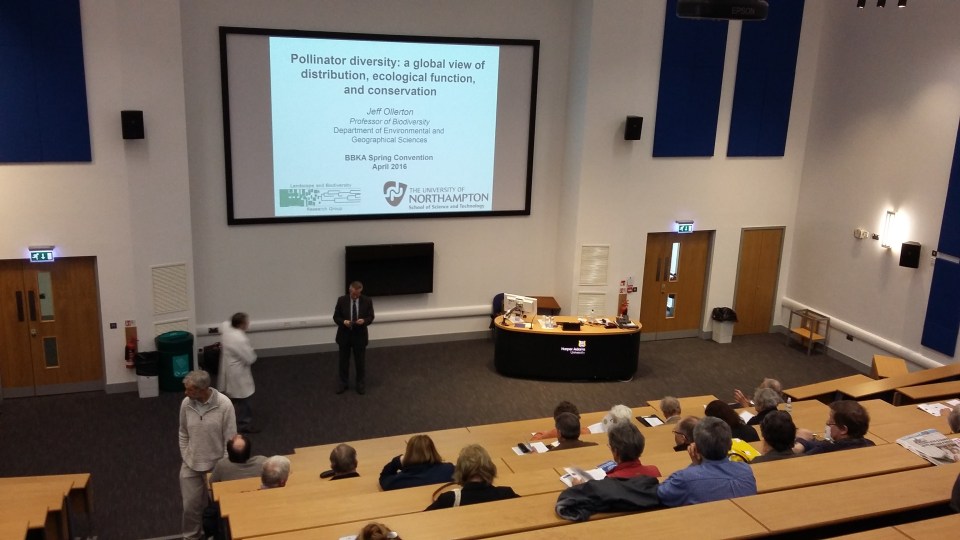
8th-9th April – delivered two lectures at the British Beekeepers Association’s Spring Convention at Harper Adams University.  Rather disconcerting to be the least-informed person in the room, given my limited knowledge of bee keeping, but they were a friendly and curious lot with good-sized audiences for my talks on the diversity of bees to be found in urban settings, and the global diversity and functional importance of pollinators.

13th April – spoke to a very receptive audience at the Friends of Linford Lakes Nature Reserve near Milton Keynes, on the topic of “Bees for dinner?  The importance of pollinators in a changing world“.  Great evening and lots of interesting questions afterwards, though my talk was a bit too long (must cut it for next time).

That’s it for now, hope to do some posts from Tenerife while we are there.
 

Bumblebee Working Group meeting – University of Sussex – 30th March

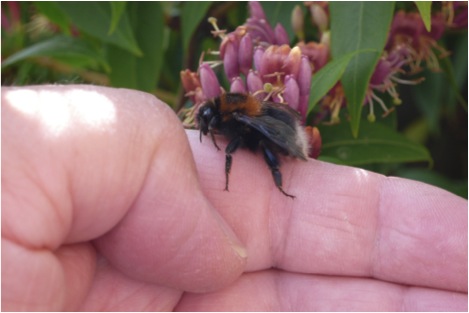
Bombus hypnorum

It’s been three years since the last meeting of the semi-formal Bumblebee Working Group, which I hosted at the University of Northampton, and British Bombus researchers  are eagerly looking forward to the next one which is being organised by Professor Dave Goulson at the University of Sussex on 30th March.  There is no charge and if anyone with an interest in bumblebees wishes to attend, please contact Dave.

Here’s the programme for the day, which starts at 10am and finishes at 4.30pm:

Goulson, Dave – Welcome

Williams, Paul  – Bumblebees of extreme environments

Alger, Samantha – RNA viruses in Vermont bumblebees

COFFEE BREAK

Baron, Gemma – Impacts of a neonicotinoid pesticide on colony founding bumblebee queens

Becher, Matthias Bumble – BEEHAVE: using bumblebee colony models as a conservation management tool in agricultural landscapes

Breeze, Tom – Knowledge gaps for effectively valuing pollination services

Cresswell, James – New European Union protocols for testing the toxicological impacts of agro-chemicals on bees

Crowther, Liam – Inferring invertebrate dispersal distances from biological records

LUNCH

Rotheray, Ellie – Quantification of the floral landscape in agro-ecosystems and its effect on bumblebee colonies

Nicholls, Beth – Pesticides in rural and urban bumblebee nests

Benton, Ted – Status of the BAP carders in Essex

Ollerton, Jeff – Exceptional urban nest density of the Tree Bumblebee Bombus hypnorum during summer 2014

SHORT BREAK

Raine, Katherine – Chernobyl bumblebees: Understanding fitness consequences of living in the exclusion zone

Jackson, Laurie  – B-lines

Gammans, Nikki – An update on the progress of reintroducing the short-haired bumblebee, Bombus subterraneus 

CLOSE

When Charles collide: Darwin, Bradlaugh, and birth control for Darwin Day 2016

Darwin-Bradlaugh

The town of Northampton celebrates a number of local heroes from sports, the arts, and even science.  These include the footballer Walter Tull, the co-discoverer of the structure of DNA, Francis Crick, author Alan Moore, and former resident thespian Errol Flynn. I could go on, but in honour of Darwin Day 2016 I thought I’d focus on the great naturalist.

Darwin had several personal associations with Northampton and Northamptonshire. He was a corresponding member of the Northamptonshire Natural History Society, which is now one of the oldest surviving societies of its kind. Darwin also corresponded with Walter Drawbridge Crick a Northampton shoe manufacturer and amateur naturalist who was grandfather of Francis.

Further afield in Northamptonshire, Darwin had a number of friends and correspondents, including the Reverend John Downes, vicar of Horton & Piddington. By coincidence, the captain of the Beagle, Robert FitzRoy, lived in Northamptonshire for much of his early life.

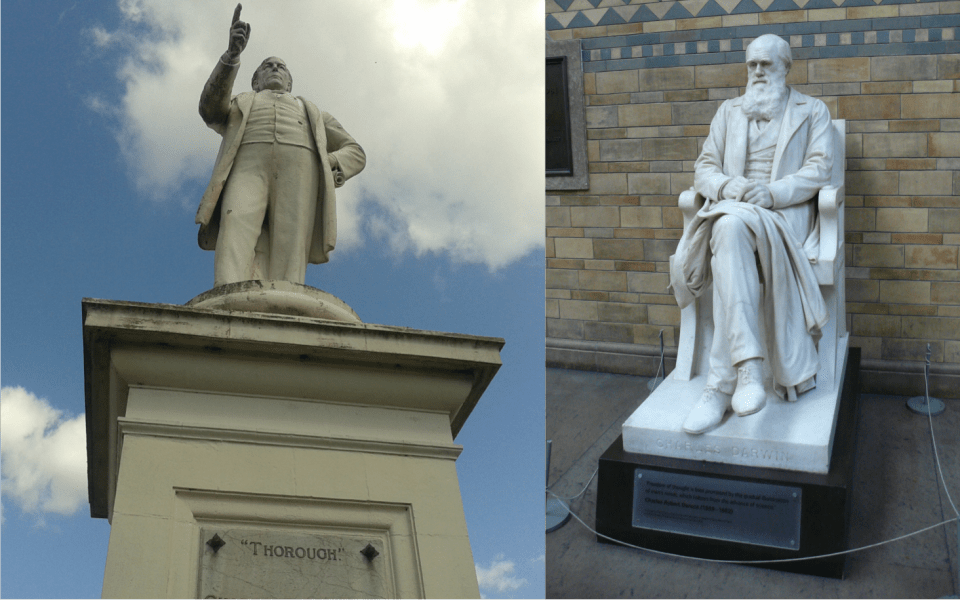
A Darwin link to Northampton that’s not widely known about is the brief correspondence he engaged in with Charles Bradlaugh the radical reformer and MP for the town during the 1880s.  Bradlaugh is a real local hero, with a very prominent statue in the town, and a pub, a local country park, and one of the university’s student residences named after the great man.

On 5th June 1877 Bradlaugh wrote to Darwin asking for his support in a court case by appearing as a witness for the defence: Bradlaugh and his colleague Annie Besant were charged with obscenity for writing a pamphlet that promoted contraception.  Darwin replied the very next day and politely declined.

As far as I’m aware the texts of both letters have never been published in full, only snippets are available.  An extract of Darwin’s letter is given in Charles Bradlaugh: a record of his Life and Work, written by his daughter:

“I have been for many years much out of health, and have been forced to give up all society or public meetings; and it would be great suffering to me to be a witness in Court. It is, indeed, not improbable that I may be unable to attend. Therefore, I hope that, if in your power, you will excuse my attendance…. If it is not asking too great a favour, I should be greatly obliged if you would inform me what you decide, as apprehension of the coming exertion would prevent the rest which I require doing me much good”.

At the Darwin Correspondence Project, Darwin’s response is summarised as follows and gives a very different flavour to his reaction:

“[Darwin] would prefer not to be a witness in court. In any case CD’s opinion is strongly opposed to that [of Bradlaugh and Besant].  [Darwin] believes artificial checks to the natural rate of human increase are very undesirable and that the use of artificial means to prevent conception would soon destroy chastity and, ultimately, the family.”

Bradlaugh’s letter has only a very brief summary and I’ve not seen any direct quotes (though perhaps I’ve missed them?)

The correspondence, its historical context, and the subsequent trial have been written about several times (see for example Peart and Levy 2005 and Peart and Levy 2008) and there’s some more recent commentary on Dan Allosso’s blog.

All of this gives a fascinating insight into Darwin as a socially conservative member of the English upper middle class, despite the radical implications of his ideas about evolution.  Bradlaugh and Besant (both true radicals in all senses of the word) were found guilty, fined and sentenced to six months in prison, though following an appeal the conviction was later overturned due to a legal technicality.

Happy Darwin Day to my readers!

Nature Improvement Area final report published today by Defra

As regular readers of the blog will be aware, over the past three years my research group has been involved as a lead partner in the Nene Valley Nature Improvement Area (NIA) project, one of 12 NIA schemes across England.  I’ve posted regular updates on the the Nene Valley NIA, for example see my posts entitled Angry Birds! (and startled bees), To Dream a River, and Biodiversity conservation pays its way.

Although our group still has work to do on writing up the results for our ecosystem services assessment of the Nene Valley, the NIA scheme has formally ended, and today Defra has issued a final NIA Monitoring and Evaluation Report, plus an accompanying press release.  Defra (and the government) judges the NIA scheme to be a resounding success and I have to agree with them.  To quote from the press release and from the final report:

  • Nearly 20,000 hectares of natural habitat – the equivalent of almost 23,000 football pitches – has been created, restored or preserved across England.
  • The Nature Improvement Areas have also helped people reconnect with nature, with volunteers contributing over 47,000 days, school children earning their green fingers by planting trees, and communities getting involved in decision making.
  • The NIA partnerships mobilised resources with an equivalent value of £26.2 million (including the financial value of volunteer time and services in-kind) in addition to the initial government grant funding. Of this total, £15.3 million was from non-public sources (e.g. private sector and nongovernmental organisations).
  • Learnings from the Nature Improvement Areas will now help to inform Defra’s 25 year plan for action on the environment which will be published later in the year as part of a comprehensive, long-term vision to protect the country’s natural heritage.

This last point is a critical one; much was achieved with the government’s initial investment of £7.5 million over three years.  Continuation of this type of funding, for the original 12 NIAs and additional projects, would achieve so much more, especially if it was tied in with upland and river restoration projects that focused on natural flood defences (which we know will work).  The potential savings from such investment could run into 100s of millions of pounds.  Let’s hope Defra has the strategic vision to make this happen.

Advice for senior scientists and the importance of first-author publications

The internet is awash with bloggers and dedicated sites giving advice to early-career scientists and graduate research students (what I’ll collectively refer to as ECRs).  Much of it is very good (see for example The Thesis Whisperer, any number of posts over at Dynamic Ecology and Small Pond Science, and the University of Northampton’s own Research Support Hub), though sometimes it’s contradictory and comes down to matters of taste and opinion (see for example the differing comments on a post of mine about giving effective conference presentations).

There are also any number of books, including Peter Medawar’s Advice to a Young Scientist and James Watson’s Avoid Boring People (hopefully to be followed up with a sequel entitled Avoid Alienating People With Crass Statements)*.

But there is very little guidance and advice out there for more senior scientists who are mid- to late-career.  I did a quick search and found only one article that mentioned this topic, specifically about mid-career mentoring, and that was from 2012.

Why is this?  Is it because (as I suspect) more senior scientists are assumed to have their careers sorted out, they “know the ropes”, they are networked and publish, and have only a bright sunny future in academia to look forward to?  Clearly this is nonsense; as that article I linked to stated:

Do complicated career issues evaporate after tenure** and/or do we all magically know how to deal with everything that academe throws at us? No, and no

So I’d be interested in hearing any bits of advice or guidance, or links to useful resources, and would encourage new posts by other bloggers, related specifically to more senior scientists in academia.  To get the ball rolling, my contribution would be: make sure you keep publishing as a first-author (and preferably single-author) throughout your career.

In academia it’s easy to get lost as to what it actually is to be a scientist (idea generator/data collector/analyser/writer) in amongst all of the other requirements and pressures of the job at a senior level (grant writing/committee memberships/teaching/administration and paperwork/manuscript and grant reviewing/editorial duties/ECR supervision and line management/external meetings and advisory groups/etc.)

As a senior scientist it’s possible to publish good papers frequently as last author (indicating seniority as head of the research group and/or ECR supervisor), and as mid author in amongst tens or hundreds of other scientists with whom you are collaborating on some level.  In these papers other people are conducting the bulk of the “science”, and that’s fine, I publish in both of these ways myself.  But the question then arises, that if this is all that a senior scientist is currently doing, have they lost something of themselves as scientists?  Have they become something more akin to a science-manager than a “real” scientist (whatever that actually means)?

Personally, I try to publish at least one first-author output (not necessarily a peer-reviewed paper, could be a commentary or a popular article) each year, and have succeeded in most years.  I believe (though I may be fooling myself) that it keeps me in touch with what it is to be a scientist and why I became one in the first place.  For reasons I can’t fully articulate it feels important to me to be involved in research and writing in which I do the bulk of the data collection, analysis, and/or writing myself, and to see an output through the editorial process from manuscript preparation to submission, dealing with reviewers’ comments, and to final publication.

Is this a reasonable goal/expectation for a senior scientist?  It’s important for me but I can well understand that other scientists will have other priorities, different things that they focus on.

Coincidentally, as I was finishing off writing this post, Dr Kath Baldock drew my attention to this short piece by Kaushal et al. entitled Avoiding an Ecological Midlife Crisis that’s just been published in the January issue of the Bulletin of the Ecological Society of America.  Although specifically focused on professional ecologists, their advice to “nurture the original connection to nature” will surely resonate with scientists from all fields if we substitute “nature” for other, discipline-specific words and phrases.


*This is all very positive and as it should be: ECRs need advice and guidance as to how to navigate their profession, and that needs to come from multiple sources because sometimes (often?) their own institution doesn’t give adequate guidance.  However I do have some misgivings about more senior scientists advising their more junior colleagues based on their own experiences: the world of academia is a fasting-moving place and what applied to a previous generation may not necessarily apply to the current one.

**It’s an American article: British universities don’t even know how to spell “tenure”.

Six Kingdoms for Christmas: the cultural biodiversity of a winter festival

P1120504

Since beginning this blog in 2012 I’ve traditionally posted one or two Christmas-themed items around this time of year, including a piece on “Thanking the pollinators for Christmas” and a true story from 2013, “A Christmas vignette“.  The role of pollinators in producing much of the traditional Christmas fare has subsequently been picked up by others (last year the University of Bristol, this year a blog from Trinity College Dublin) so I’ve decided to break with tradition and consider the ways in which biodiversity (both wild and farmed, though the latter of course originated as the former) adds to the cultural experience of Christmas through its traditions and rituals.

In this regard I’m coming at the topic as a north-European agnostic who values Christmas as an opportunity to relax and unwind at the darkest, coldest* part of the year, rather than as a Christian.  And because I’m a British scientist much of what I say relates to British customs, though I’ve tried to include non-British examples where I’m aware of them – feel free to let me know about examples I’ve missed by commenting below.

I’ve decided to structure this post taxonomically and focus on a Six Kingdom Classification** of life on Earth as that’s been the theme of my first year undergraduate teaching since October.  Four of the six Kingdoms can be dealt with fairly quickly as their significance to Christmas is marginal or non-existent.  The two “bacterial” Kingdoms (Archaea and Eubacteria) contribute little to Christmas other than providing much of the gut flora that’s going to help us digest our Christmas dinner. Important but not specifically festive.  Likewise the protists and algae (Kingdom Protoctista) add nothing specific to Christmas unless there are traditions associated with seaweed of which I am unaware.

The other three Kingdoms are the ones where cultural biodiversity associations are more apparent.  The Kingdom Fungi (yeasts, mushrooms and moulds) provides us with several Christmas traditions including (in Germany) hanging mushrooms on the Christmas tree for good luck, and in parts of Scandinavia hanging strings of dried mushrooms around the house as decorations and as a source of winter food.  There is also the association between the red-and-white colour scheme of fly agaric magic mushrooms (Amanita muscaria) and the robes of Santa Claus, though I’ve seen that idea debunked in a few places and it appears that the “traditional” interpretation of Santa’s suit originated in the USA in the 19th century.

The Kingdom Animalia (both invertebrates and vertebrates) affords us a host of cultural connections to Christmas.  Birds include the turkey (Meleagris gallopavo) which in times past were famously walked to London from Norfolk; the domestic goose (Anser anser domesticus); and much of the song Twelve Days of Christmas refers to birds, including the turtle dove (Streptopelia turtur) one of the UK’s most declining and threatened bird species.  Mammals we associate with Christmas include of course reindeer (Rangifer tarandus) pulling Santa’s sleigh, led by the nasally-advantaged Rudolph, but also domesticated farm animals.  For example in Denmark in osme households it’s more traditional to eat pork (Sus scrofa domesticus) for Christmas dinner than goose.

Staying with the vertebrates, in our house it’s traditional to have smoked salmon (Salmo salar) with scrambled eggs for breakfast on Christmas Day, and (again in Denmark) sild (Clupea harengus) is also traditionally served as a starter, but I don’t know of other fish traditions.  Likewise I’m unaware of any invertebrates that are specifically associated with Christmas, though there have been recent reports of sustainably-sourced lobsters (Homarus americanus and H. gammarus)  becoming “traditional” in Europe.  There are also some local traditions such as honey bees singing in their hives on Christmas Eve.

The last of the Six Kingdoms is the Plantae, which, whilst the least taxonomically diverse, provides us with a wealth of cultural associations to Christmas.  These traditionally include evergreen plants that have been used to decorate homes, probably since the earliest pagan Yuletide festivals, such as: Christmas trees (various conifers in the genera Picea, Abies and Pinus); European ivy (Hedera helix); holly (Ilex aquifolium); and mistletoe (Viscum album).  However such traditions evolve and adapt to local needs and availability of plants.  For example in North and South America other genera of conifers not found in europe, such as Pseudotsuga and  Araucaria, may be used as Christmas trees***.  Likewise the absence of European mistletoe in North America means that people have adopted native mistletoes in the related genus Phoradendron for decorating and snogging traditions.  Over at her blog, ecologist Manu Saunders has recently discussed how native Australian species can substitute European plants for Christmas decorations.

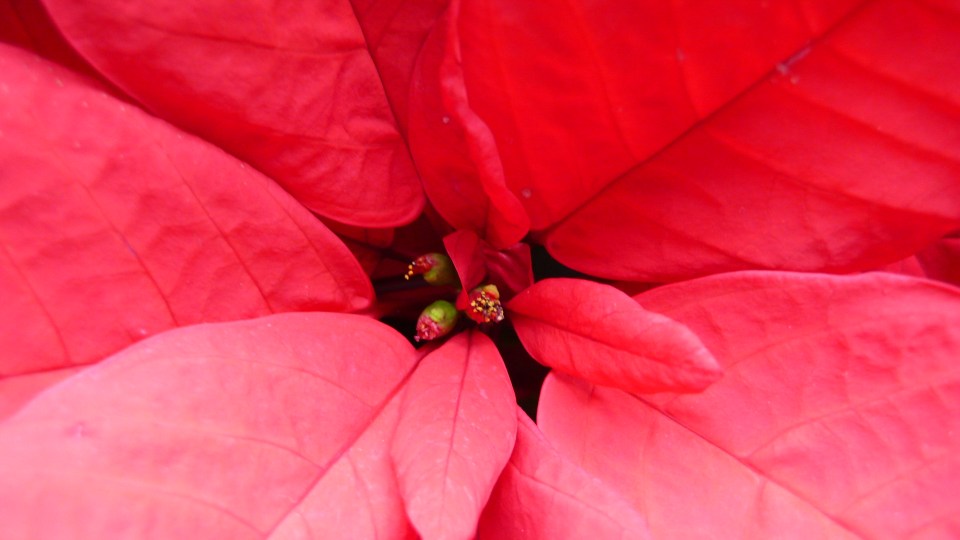
The final example from the Plantae is the poinsettia (Euphorbia pulcherrima) which I’ve pictured above.  In many ways this is an unusual plant to have such a strong cultural association with Christmas: it’s a mildly toxic species of spurge from tropical Mexico that was introduced to North America in the 19th century, then subsequently to Europe.  However its festive connotations date back to the earliest period of Spanish colonisation in the 16th century, so it’s older than some of the other Christmasy traditions I’ve discussed.

Of course biodiversity is about more than just species and taxonomic diversity, it also encompasses the diversity of habitats in which that life is found.  Here too we see strong influences of the natural world on the culture of Christmas, including festive scenes of snow-bound boreal conifer forest.  As our planet warms, however, that might be a view that is found only on Christmas cards and old movies, rather than directly experienced*.

And on that sobering note, I wish all of my readers and restful and biodiverse holiday: have a great Christmas everyone!


*Ha!  It’s looking to be the warmest December on record, and at times has felt more like early summer than mid-winter.

**I’m aware that there are other Kingdom-level classifications out there which could be used, but the Six Kingdom approach is a good starting point.

***Closer to home, colleagues in the office adjacent to mine have adorned their large weeping fig (Ficus benjamina) with home-made Christmas decorations.  Looks good.

SCAPE conference 2015 – day 1 – welcome to the sanatorium

The first day of the 29th SCAPE conference drew to a close and as I started to draft this post I could hear around me some intense discussions of Amy Parachnowitsch’s “crazy idea” (her words!) that flowers may be able to “eavesdrop” on one another via their floral scents. It was a very thought provoking way to end a stimulating day. And I look forward to reading the discussion paper on which the talk was based, in Trends in Plant Sciences.

What else did I learn on the first day? Here’s a few things I noted, with a link to the programme, but certainly not an exhaustive list:

Paul CaraDonna told us about the way that interactions between plants and pollinators have a faster turnover early in the season than later in the season. We discussed this afterwards and it could be because of newly emerged, naïve individual pollinators encountering and exploring flowers they’ve not previously seen.

Jane Stout described the history and future of the All-Ireland Pollinator Plan, and how it was driven from bottom-up by two scientists (Jane herself and Una Fitzpatrick) – a salutary tale of what can happen when passionate scientists become advocates for change.

Markus Sydenham discussed his work on power line corridors in Norway and the fact that these linear landscape elements, though artificial, can be good for solitary bees in appropriately managed by cutting and removal of woody vegetation.

A project encouraging organic Danish farmers to assess the quality of their own land for pollinating bees was described by Vibeke Langer. Interesting example of “citizen science” that goes directly to those who might benefit most from larger and more stable pollinator populations.

In Hawaii, Robert Junker and colleagues have found evidence that the flowers of the endemic plant Metrosideros polymorpha have evolved in less than 150 years to be more effectively pollinated by introduced honey bees rather than its native bird pollinators, which have declined substantially. Some individuals of this species seem to be pre-adapted for bee pollination; is this evidence that a larger bee species once existed on Hawaii but is now extinct?

The “complex, messy” ecology behind the co-existence of different Medicago species (facilitated by the interaction of plant genotypic kinship and allelopathic chemicals produced by Thymus species, was the focus of Bodil Ehlers work.

Judith Trunschke showed how ecotype morphology in hawkmoth-pollinated orchid Platanthera bifolia seems to be driven by different pollinators in grassland and woodland habitats. Are we seeing the early stages of the evolution of two new species here?

I had the honour of being the first speaker yesterday morning, talking about the macroecology of wind versus animal pollination, and the University of Northampton was further represented by Kat Harrold, who is working on her PhD as part of the Nene Valley Nature Improvement Area project. Kat presented a short over view of her work during the poster session.

There was much more, of course, and all of it stimulating and interesting, but that’s at least a taster.   The conference is taking place in a fascinating conference facility that was a former TB sanatorium. It’s a step up from the ex-leper colony that SCAPE used in Finland a few years ago….

Gull use of urban parks in winter – data I’ll never publish (2)

P1120146

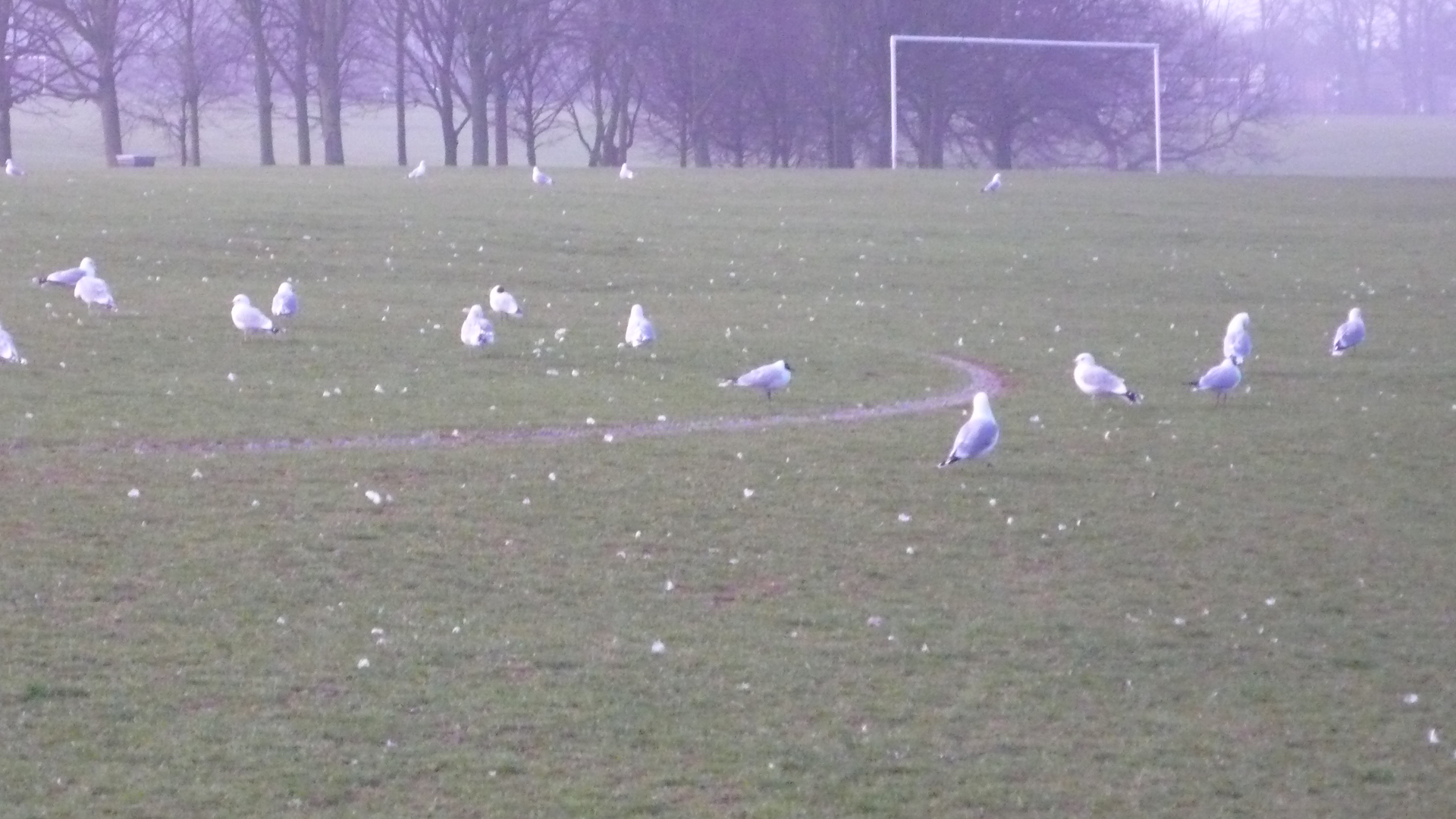
For the second in my occasional series of “data I’ll never publish” I want to present a short post about how two species of gulls use an urban Northampton park in the winter.  The park is called the Racecourse (I’ve mentioned it before) and is en route to the campus on which I work.  It’s long been apparent that the numbers of gulls using the park increases from autumn into winter and declines to zero in the spring and summer, when they head off to breed in and around Northamptonshire’s reservoirs and gravel pits, and further afield. During the winter they spend their time feeding on earthworms, squabbling, chasing crows, and generally relaxing prior to the next breeding season.

What I was interested in knowing was just how quickly the numbers built up, whether it was a slow, steady build-up or a rapid influx of birds, and also the relative numbers of the two commonest species to be found there, Black-headed gull (Chroicocephalus ridibundus) and Common gull (Larus canus).

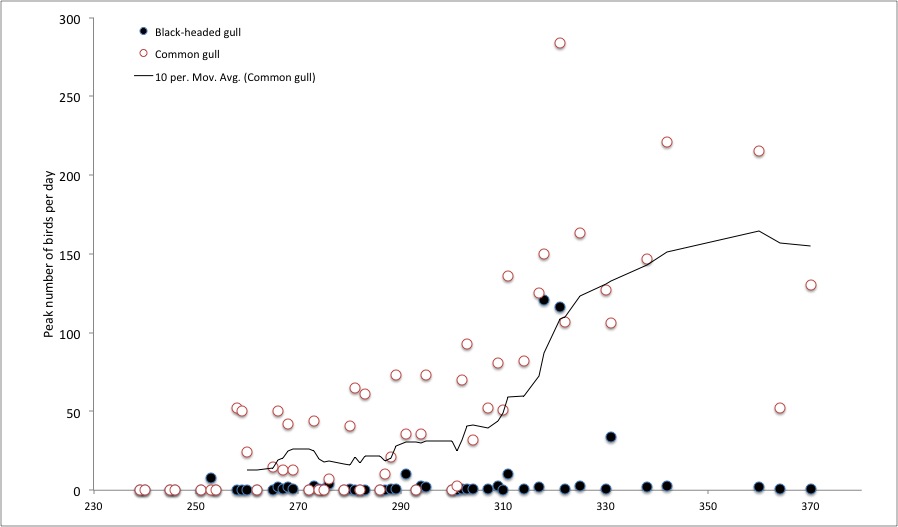
So during my walks to work between late August 2014 and early January 2015 I simply counted the numbers of birds I saw in the quadrant of the park that I passed.  Certainly not the most onerous data collection I’ve ever carried out, and done purely because it interested me, not with any view to conducting a serious study.  Here’s the data plotted up as peak birds seen per day, with day of the year on the x-axis, running from 27th August to 5th January:

Gulls on Racecourse 2014

A few things intrigue me about this.  First of all, Common gulls are much more, er, “common”, on the park than Black-headed gulls, despite the fact that Black-headed gulls are far more abundant in the UK during the winter (estimated as 2.2 million versus 710,000 birds).  However anecdotally I’ve observed that other parks in Northampton appear to have more Black-headed gulls, suggesting that the two species are to some extent dividing up the urban parks and other grasslands between themselves, like rival gangs with different local patches.

That’s purely speculative and would be worth pursuing as a student project, to test if (a) this hypothesis is correct; and (b) whether that division of the parks is stable between years.

The other thing that’s of interest from these data is that, as you can see from the 10-day moving average, the Common gulls suddenly increase in numbers around the middle of November.  I wonder whether this is due to an influx of migrant birds coming in from further north and east in Europe and Scandinavia?  At the same time I recorded an unusually large flock of Black-headed gulls: were these also migrants just passing through?

Urban gulls have been getting some bad press recently; but they really are fascinating birds that add a lot to the biodiversity interest of our parks and playing fields.  They deserve further study because we take them for granted and there’s really not much published on their urban ecology.

BBC Wildlife magazine for October features Northampton harvest mice research

BBC WIldlife Magazine

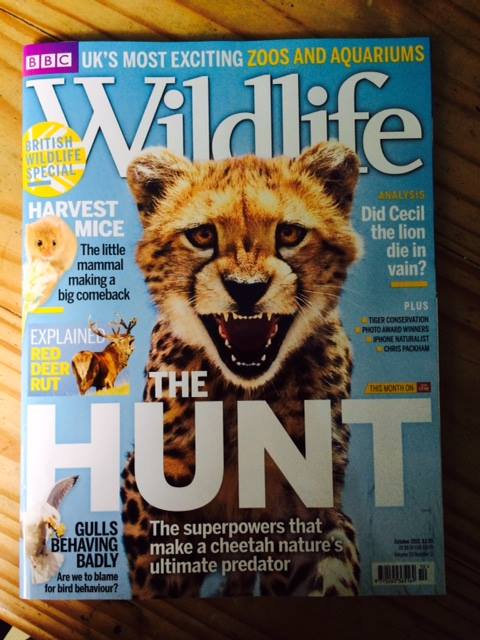
The October issue of BBC Wildlife has a feature on the research being done by Emily Howard-Williams into the ecology and conservation of one of the UK’s most charismatic mammals, the harvest mouse. Emily is a Lecturer in Countryside Management at Moulton College and a PhD student at the University of Northampton, supervised by my colleagues Dr James Littlemore (at Moulton) and Dr Duncan McCollin (at Northampton).

Well done to Emily!  You can find out more about her research in this press release.

Spiders: a guide for first-year students!

P1120445

Yesterday I had a phone call from a colleague in the university’s marketing department.  Apparently there’s been a lot of complaints, and some hysteria on social media, about spiders appearing in the rooms of first year students in our halls of residence.  My colleague asked if I’d write something about spiders, and how they were harmless and nothing to worry about, that they could use to placate the students’ worries.  This is what I wrote and I thought it worth sharing on the blog.

—————————————-

Spiders! Ugly. Unpleasant. Spooky. Dangerous…..even deadly?! Spiders in Britain are all of these things, right?

No! Absolutely not! Spiders are fascinating, sometimes beautiful, and are an ecologically important groups of animals. Although it’s true that large spiders can sometimes give us the jitters, myself included: I don’t like walking into them in the garden! In fact as a kid I had a real phobia of spiders that I got over by handling increasingly bigger ones until eventually I could pick up even the largest spider we have in this country.

Most of the fear of spiders is based on myths and misconceptions, rather than reality. Ignore the DRAMATIC HEADLINES about False Widow Spiders – it’s an uncommon species and it’s extremely rare to encounter one of these, never mind be bitten. They make their webs near rocks where there are deep cracks into which they can hide. So you’re not likely to find them in your room!

Spiders play a really important role in the environment by eating large numbers of flies, including some that bite or carry disease or that might otherwise be much more harmful to humans than spiders. Spiders in turn are a food source for many of our birds, and in the spring some birds also use spider webs to construct their nests. If we had no spiders then we’d lose a lot of the birds that are so familiar in our gardens, such as Blue Tits and Blackbirds.

At this time of the year spiders are more apparent than ever, and the one you are most likely to see is a large, beautifully patterned species know as the European Garden Spider. The big ones are the females; males are much smaller. They sometimes make their way into houses and can construct large webs. But they are harmless and would only bite if held tightly in the hand, and they are much happier outside than in your room. They can’t jump on you and they do not attack!

What to do if you find a spider in your room and you want to get it out but can’t bear to go near? Find a friend who is not so squeamish and ask them to use a glass and a book or piece of cardboard to gently capture the spider and take it outside. Don’t worry, it won’t find its way back! Before you release it, though, try to find the courage to look really closely at this creature: they are attractively speckled and really very pretty!

The other thing you can do is find some conkers from the Horse Chestnut trees on campus and put them on your windowsill. It’s an old folk tradition that spiders don’t like the smell of conkers and there is some evidence that it keeps them out of the house.

I’ll let you into a secret. As Professor of Biodiversity I’ve done ecological field work all over the world, including the rainforests of Africa and the savannahs of South America. Every now and again I come across spiders that are much larger, and potentially more dangerous, than anything we find in Britain. Initially they still give me a shiver; but once I’ve spotted them I can take time to study their colours and forms and beautiful webs, and appreciate just how amazing and important spiders really are.

Have a great year at university and don’t worry about the spiders!