Category Archives: Geology

The Black Cats go green, and go up!

It’s impossible to be a native of Sunderland and not to have at least a passing interest in football. If you’ve seen the Netflix series Sunderland ‘Til I Die, you’ll know that in my home town, football is more of a religion than a leisure activity. It’s a passion that extends back to the foundation of Sunderland Association Football Club (SAFC) in 1879, whose nickname is the Black Cats.

Growing up, football was always a topic of discussion in our house. My dad played Sunday League football for many years and my Uncle Gordon Howe was a professional footballer. But to the general disappointment of my family, I’ve never had a deep interest in the sport, though I do keep a watch on how well the team of my birthplace is doing. And as of yesterday they are doing extremely well! The team beat Sheffield United (ironically, one of the teams that Uncle Gordon played for) in a thrilling, close-run match to earn promotion back into the Premier League. I watched it live with friends in a local pub, and there was a great reception to the win, even among customers who had no vested interest in the club.

It brought back memories of the mid-1970s when I attended matches at SAFC’s old Roker Park stadium, buoyed up by the club’s ‘giant killing’ win over Leeds United in the 1973 FA Cup Final. But even after my childhood interest in football waned, replaced by a growing fascination with natural history, home matches were frequently a backdrop to Saturdays. The famous Roker Roar always signaled that the team had scored. That shout echoed across the town and down through the Magnesian Limestone gorge of the River Wear, part of which you can see in the photograph above. Exploring the exposed geology, and the grassland and brownfield habitats of that river valley, is an important reason why I became an ecologist, as I recounted on the blog a decade ago.

The shot was taken in early 1986 and it shows the view from the back of the house in which I grew up. On the south side of the river, you can see cranes and sheds associated with the shipbuilding industry, for hundreds of years one of the two main engines of the local economy. Directly ahead, situated on a promontory, you can see an example of the second engine: Wearmouth Colliery, a 2,000 ft deep coal mine that extended out under the North Sea. The mine employed quite a number of members of my family, including my grandfather and several uncles*, one of whom was killed in the early 1900s after a pit pony kicked him. My dad was also a miner for a time but he worked further up river at the Hylton Colliery, which produced more than its fair share of professional footballers, as well as coal.

In 1993 Wearmouth Colliery closed and the site was quickly cleared – see this amazing set of photos that was taken at the time. Four years later, SAFC closed Roker Park and moved to a new purpose-built stadium on the colliery site. They called it The Stadium of Light, a name that honours the ‘miners at Wearmouth Colliery [who] carried with them a Davy lamp as part of their working lives’. Here’s a shot of the stadium perched above the river, taken by my good friend Mark:

Not only have Sunderland gone up, they have also gone green, with a commitment to be carbon neutral and generate their own power from solar installations (though that scheme has attracted some controversy). They are also making the team’s kit from recycled plastic bottles and looking at more environmentally friendly ways of dealing with match day waste – see this press release on their ‘Ready Eco’ initiative. There’s also a plan to tap into the geothermal potential of the mine to heat local houses, though that has been delayed, unless anyone has more recent news on the scheme?

Biodiversity, always the Cinderella of environmental mission statements, is missing from that initiative, which is a shame because the stadium lies adjacent to some very interesting habitats. To the left of the stadium, on the steep slopes of the gorge, you can see patches of Magnesian Limestone Grassland, a relatively rare plant community that is virtually confined to the North East of England.

This minor gripe aside, it’s great to see Sunderland being promoted and taking a lead in thinking about how football as the national sport has an environmental impact. It makes me even prouder of my home town.

*When I was researching this post I came across the following article from the local newspaper. It mentions my Uncle Walter Ollerton who earned a safety badge that is still in my possession. At the outbreak of World War 2 he enlisted and fought in the Far East, where he was captured by the Japanese and held in a prisoner of war camp. After his release he returned to his job as a miner in Sunderland, but his health was never the same:

A “weed” that you should be eating and an introduction to our new garden

It’s been a rather nomadic couple of years. After Karin and I sold our house in Northampton, we travelled around in the UK and then in Denmark, renting places as we needed them, plus we spent a month in Kenya. We’ve now become more settled in Sjælland and, after some deliberation about whether to buy a house or continue renting, we’ve reached a compromise and bought into an andelsbolig, one of the many Danish cooperative housing schemes – see this article in The Guardian for more details.

The development of twenty-eight small properties has been newly built to the highest standards of insulation and is plugged into the district heating system which uses a combination of solar warming and gas (in part using methane generated from food waste).

It’s nice to have a garden again. I hadn’t realised how much I’d missed having a space in which to plant and potter. All gardens present challenges, of course, and this one is no exception. Until about 600 years ago the area was under the shallow Kattegat sea. It’s now above sea level due to post-glacial rebound and in fact this whole region of Odsherred is a UNESCO Global Geopark because of the postglacial landscape.

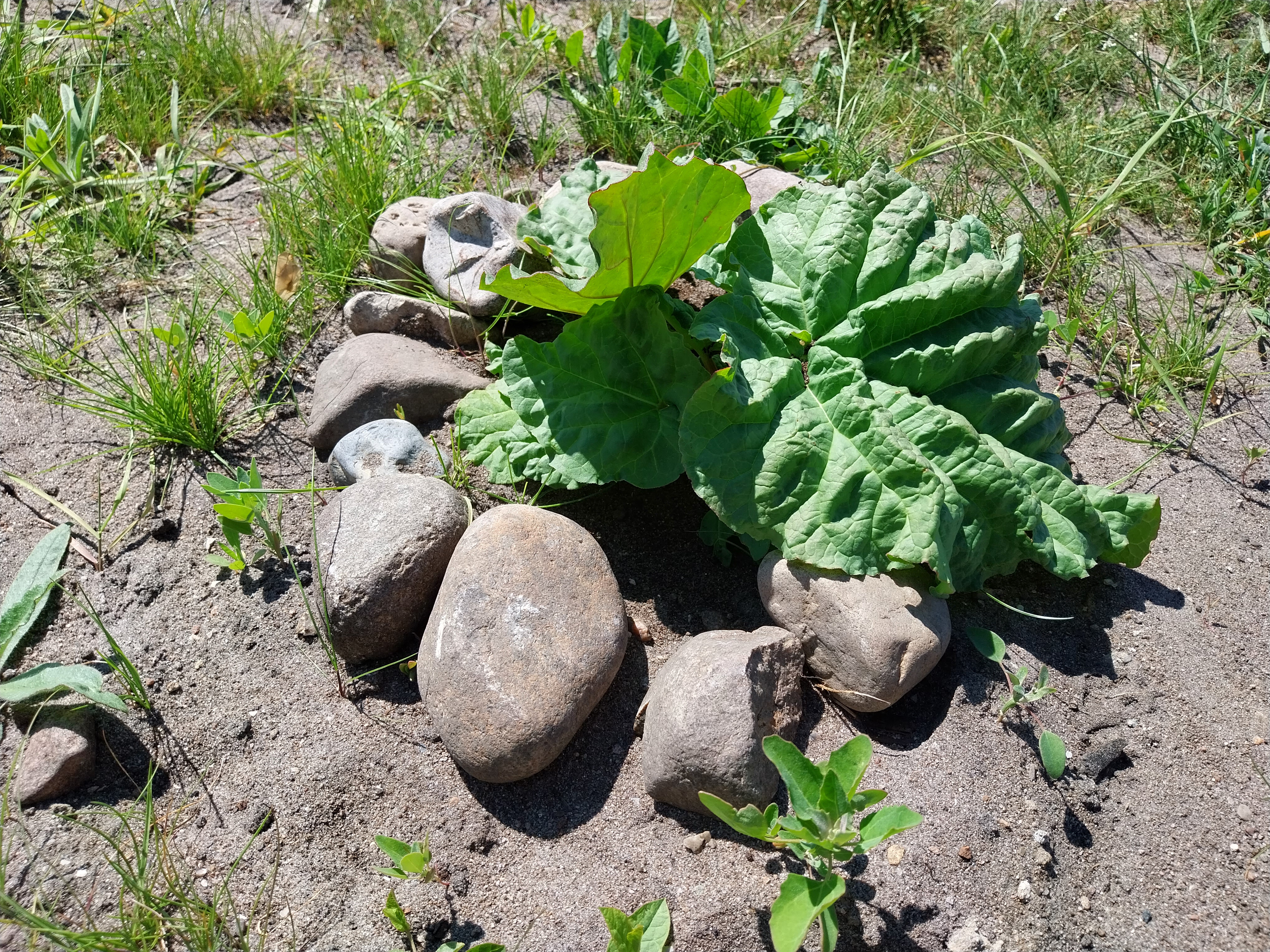
What this means for us is that we are gardening on “soil” which has a very high sand content and is filled with stones, large and small.

Added to that, we’re in one of the driest parts of Denmark (certainly this year) and a persistent coastal wind rapidly strips the moisture from the soil. So as we dig up or find large stones we are using them around plants to retain water and mulching with the smaller stones that we find in abundance. As yet we don’t have any rain water butts so we’re using the kitchen water from washing up to supplement the hosepipe.

It’s not easy gardening here, but we like a challenge and we’re calling in favours from friends and family to provide us with cuttings and divisions of plants from their own gardens, which should mean that they are better adapted to the local conditions than most of the shop-bought plants. We’ve also started a small vegetable and fruit patch and planted apples and pears around a paved patio that over time we will train as self-supporting espaliers.

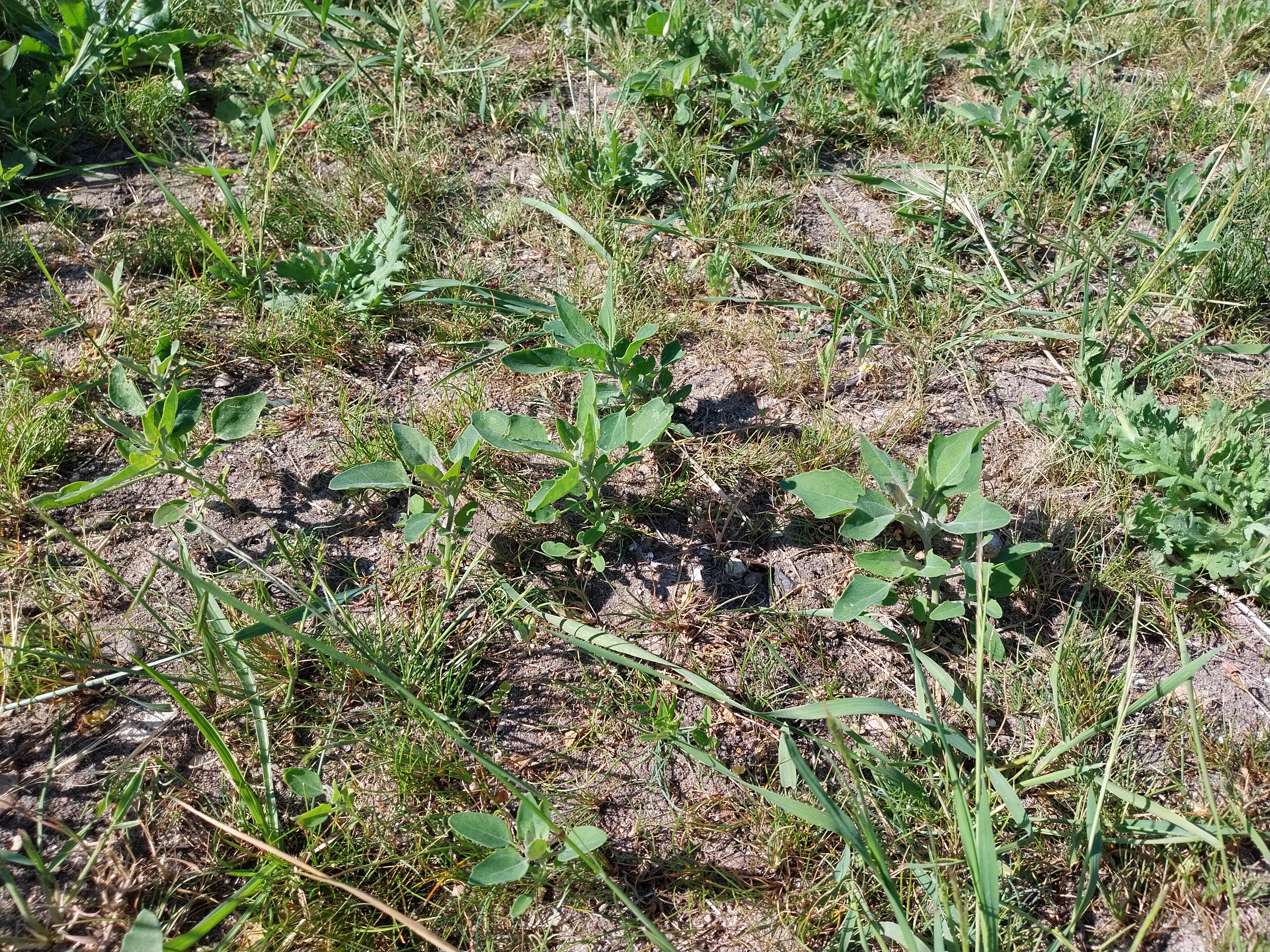
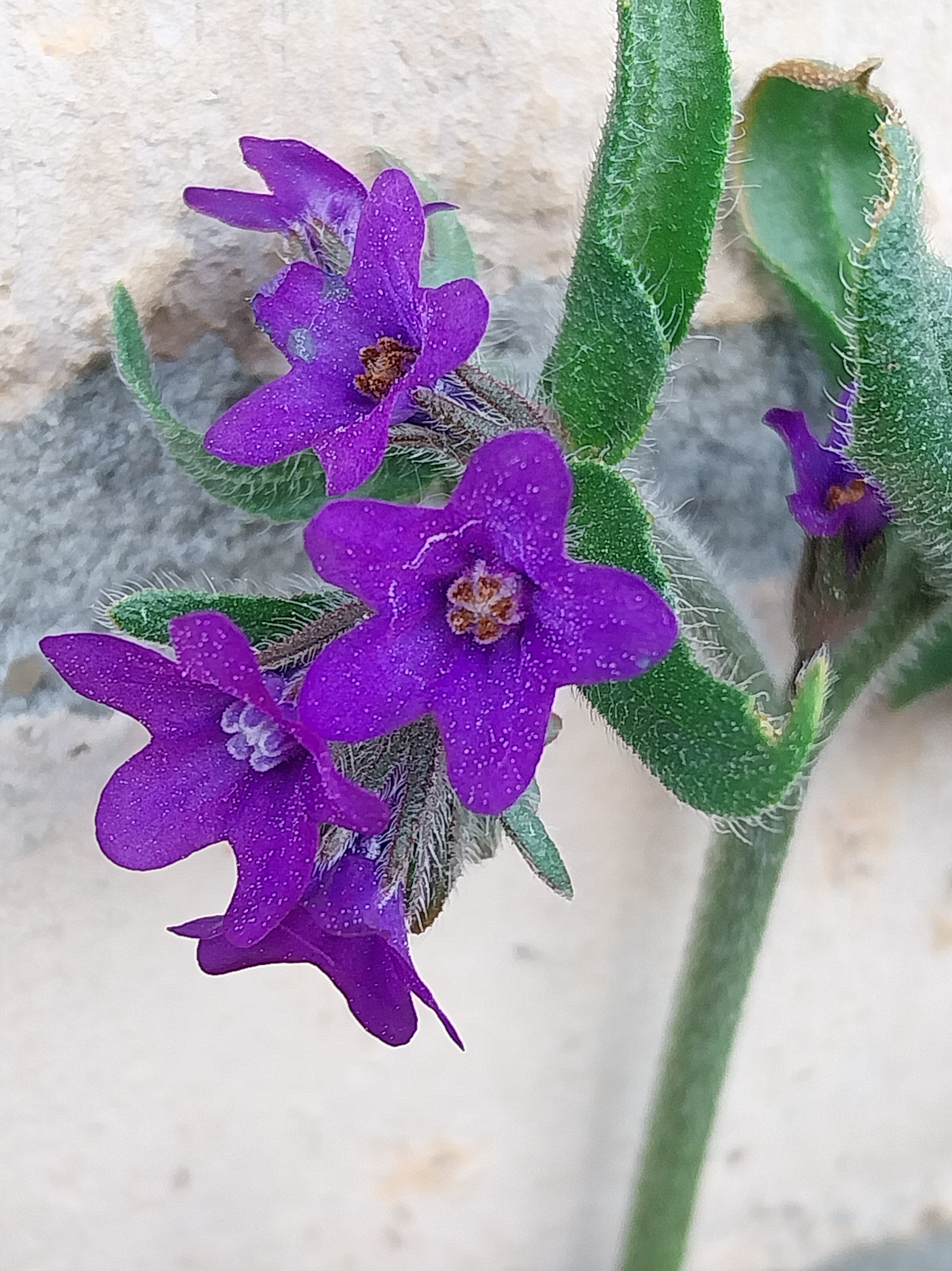
Gradually we’ll fill up the space and move things around as needed. But for now I’m also interested in seeing what plants come up spontaneously, especially the annual species that are benefitting from the disturbance. I don’t use the term “weed” to refer to these: weeds are just plants in the wrong place at the wrong time. Many such plants are ecologically important, especially as nectar and pollen sources for bees and other insects. This includes Common Bugloss (Anchusa officinalis) with its richly purple, velvet-textured flowers.

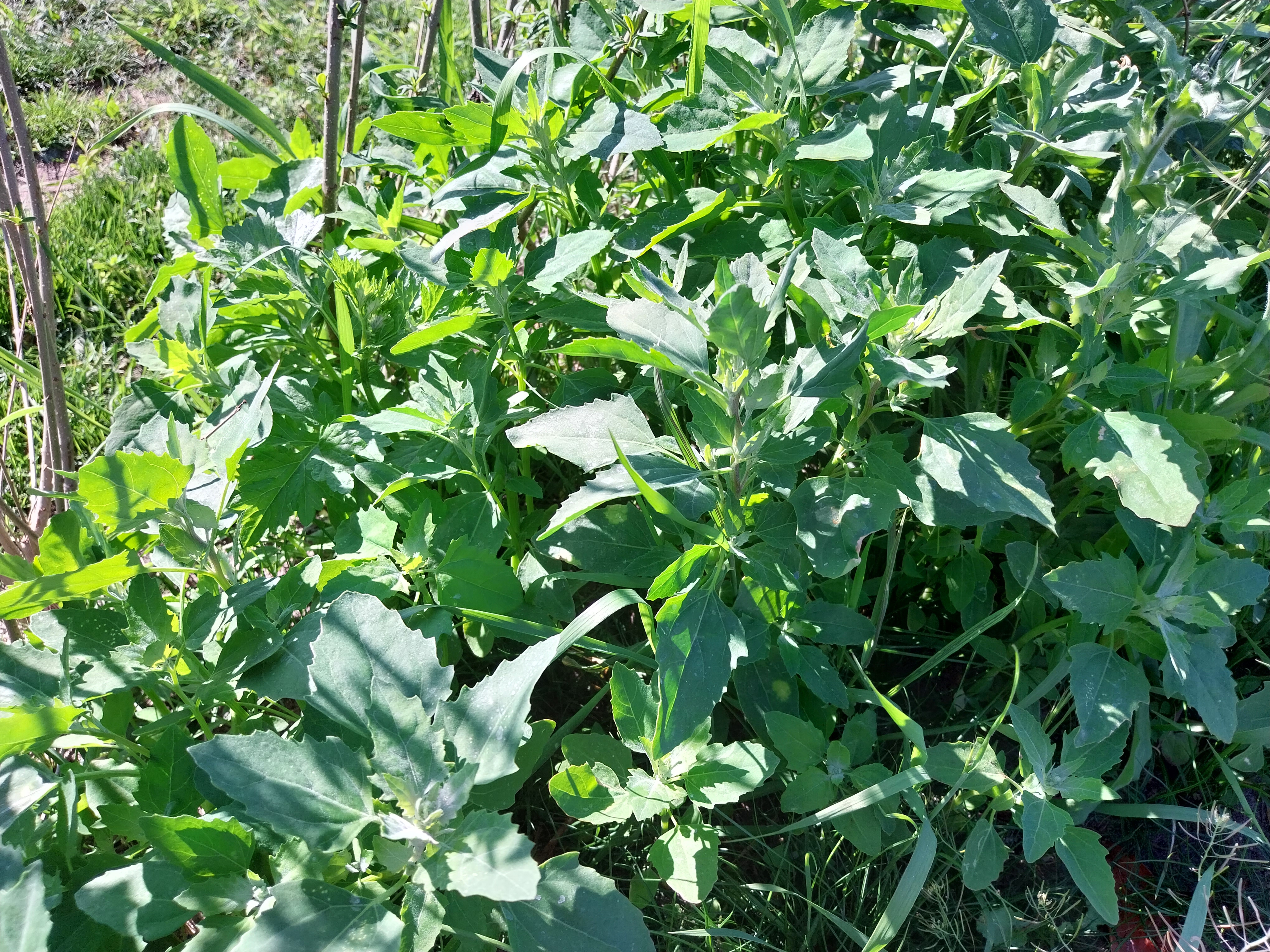
Another plant that we are tolerating is a fast-growing relative of spinach that’s variously called Goosefoot or Fat Hen (Chenopodium album). I’d long known that it was edible (it’s grown as a crop in parts of Asia) but until last night I’d not cooked with it.

In fact it’s delicious! I threw some roughly chopped leaves and stems into a mushroom omelette and I have to say that it was better than any commercial spinach I’ve bought or grown. In particular, the texture is much nicer as the leaves are very water-repellant which mean that they don’t absorb as much moisture during cooking. Highly recommended as an alternative to spinach but make sure you correctly identify the plant before you try it – there’s some good advice on this website: https://www.wildfooduk.com/edible-wild-plants/fat-hen/.

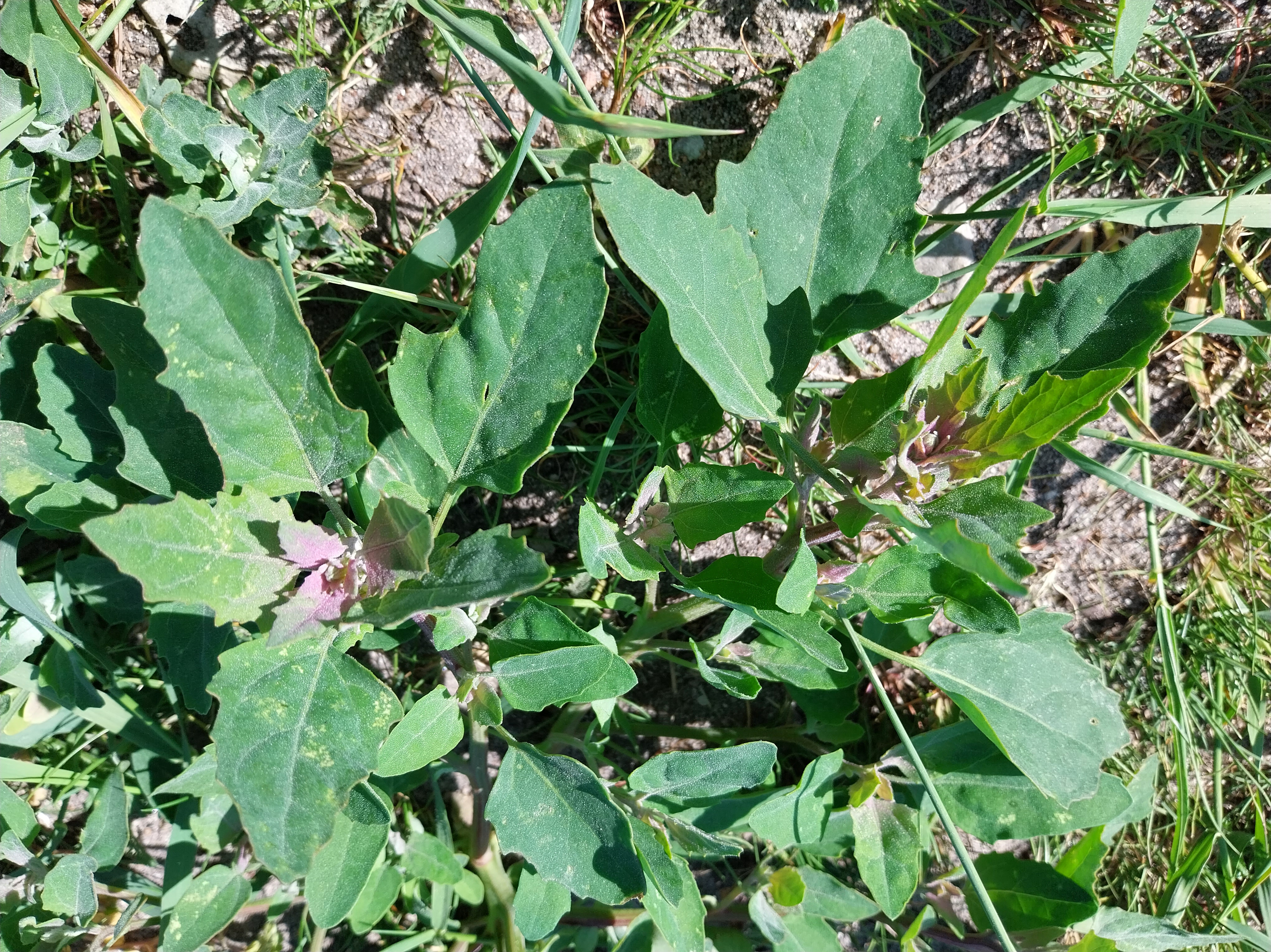
As well as Fat Hen we also have the close relative Tree Spinach (Chenopodium giganteum), with it’s beautiful magenta-tinged leaves, coming up in the garden. I’m looking forward to trying that too:

I’ll try to post more as the garden progresses, if I have time. But as I mentioned yesterday, even though the manuscript is complete and submitted to the publisher, there’s still lots to do on my next book! Have a good weekend.

Insect pollination in deep time – a new review just published

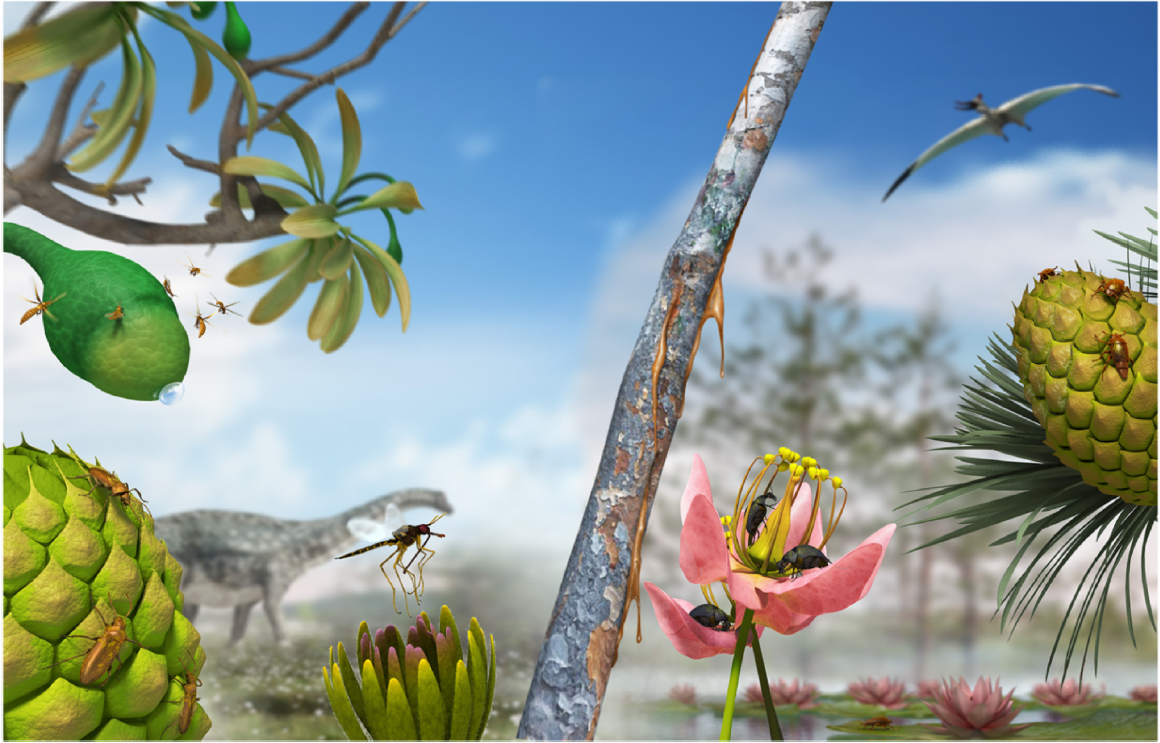
As a teenager one of my main interests was collecting fossils. In search of specimens I wandered for hours, scouring the Carboniferous coal shale heaps and Permian reef outcrops of my native Sunderland. I spent so much time bothering the geology curator at the local museum with my inquiries that he offered to host me for a year as the placement part of my college course. If I had been able to convince my tutors that paleontology was really just biology in deep time I may have ended up as a professional fossil researcher. But it was not to be and instead I spent a (mostly happy) year working in the microbiology laboratory of a local brewery.

My interest in the ecology of the past has never left me, and over the years I’ve contributed a few articles to journals commenting on the latest fossil findings as they relate to pollination and flowering plant evolution. So I was delighted to be asked by Spanish paleontologist David Peris to help with a new review of insect pollination in deep time, led by PhD candidate Constanza Peña-Kairath. That review has just been published in Trends in Ecology & Evolution, and for the next 50 days it’s available for free download by following the link in the reference:

Peña-Kairath, C., Delclòs, X., Álvarez-Parra, S., Peñalver, E., Engel, M.S., Ollerton, J. & Peris, D. (2023) Insect pollination in deep time. Trends in Ecology & Evolution (in press)

Here’s the abstract:

Inferring insect pollination from compression fossils and amber inclusions is difficult because of a lack of consensus on defining an insect pollinator and the challenge of recognizing this ecological relationship in deep time. We propose a conceptual definition for such insects and an operational classification into pollinator or presumed pollinator. Using this approach, we identified 15 insect families that include fossil pollinators and show that pollination relationships have existed since at least the Upper Jurassic (~163 Ma). Insects prior to this can only be classified as presumed pollinators. This gives a more nuanced insight into the origin and evolution of an ecological relationship that is vital to the establishment, composition and conservation of modern terrestrial ecosystems.

Life between the tides: Australia reflections part 6

2019-12-08 13.35.05

That last post about climate change and politics was a bit heavy, for which I make no apologies.  But there’s always space for something lighter on this blog.  Sometimes it’s nice to reflect on what brought me to the point of being a scientist with an interest in biodiversity.  Some of my earliest exposure to natural history involved peering into rock pools on the coast near Sunderland in the north east of England.  In an old family album there’s a photograph of me aged about four, intently gazing at the welks, crabs and anemones as they wait for the next tidal surge to bring food or predators.  If I wasn’t in Australia I’d go and hunt that photo down and share it with you.  Right into my 20s my dad would tell any and every one about my childhood obsession with “gannin’ on the yocks”.  The word “gannin'” is north eastern colloquial English for “going” while “yocks” was me not being able to pronounce “rocks”.  “I’m gannin’ on the yocks” became a family catchphrase that could be used in any number of circumstances.  It might just sum up my professional career if I think hard about it….

Later, at school and then college, I took part in several class projects that involved running transect lines down the shore and examining the zonation of the creatures: more hardy organisms, predictably, at higher points, the sensitive species lower down.  Generations of biology students must have done similar studies.  Do they still?

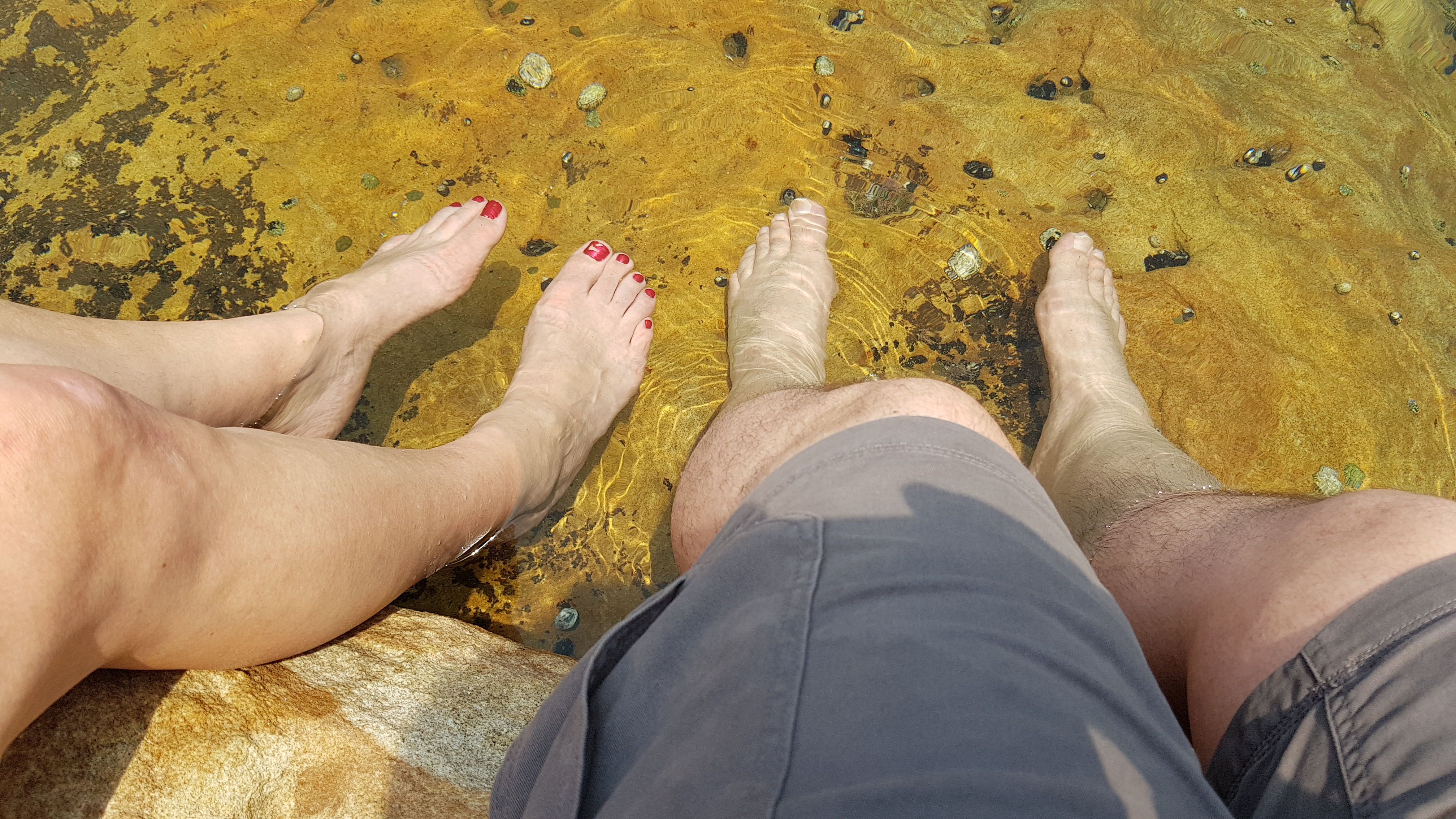
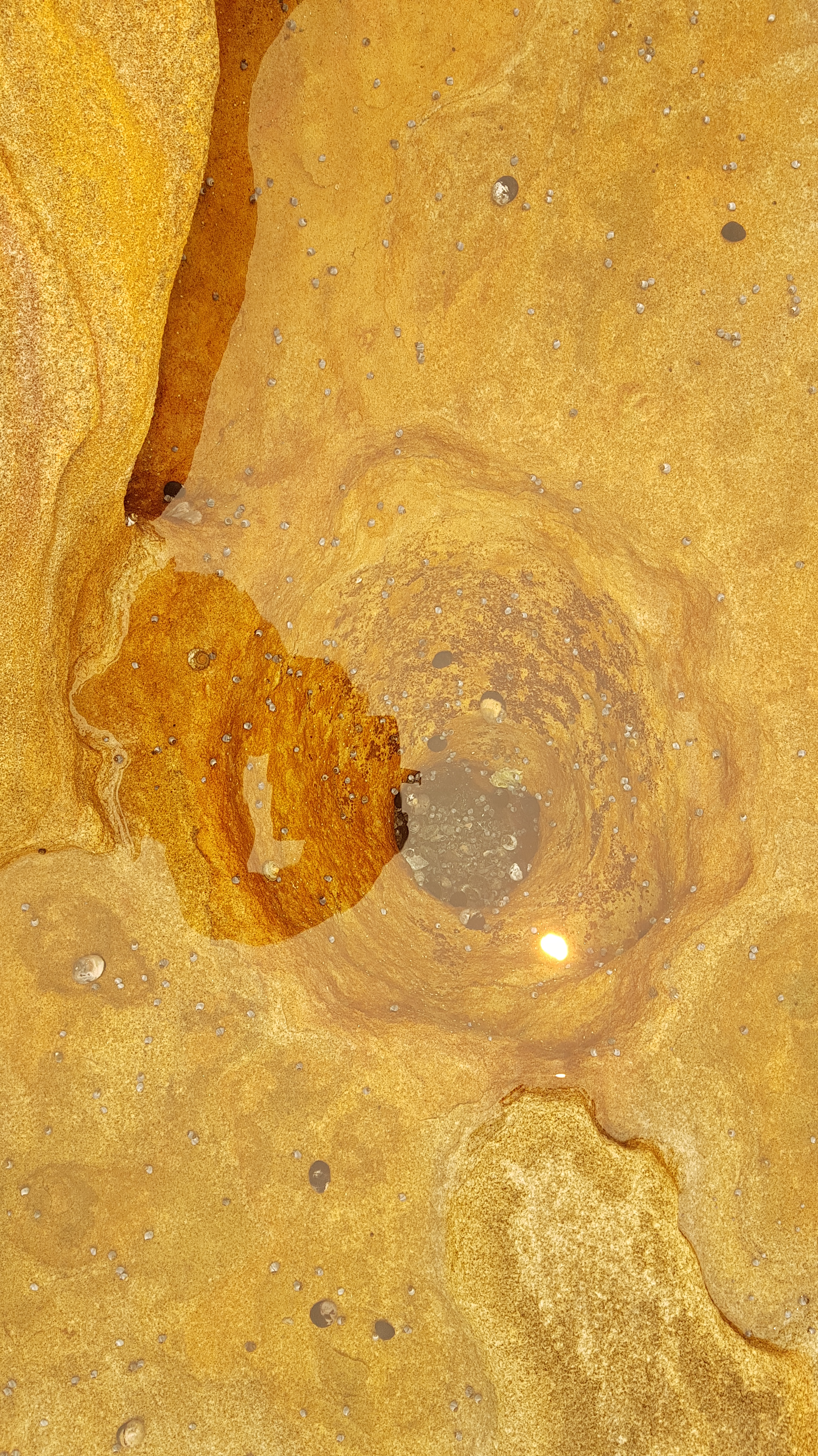
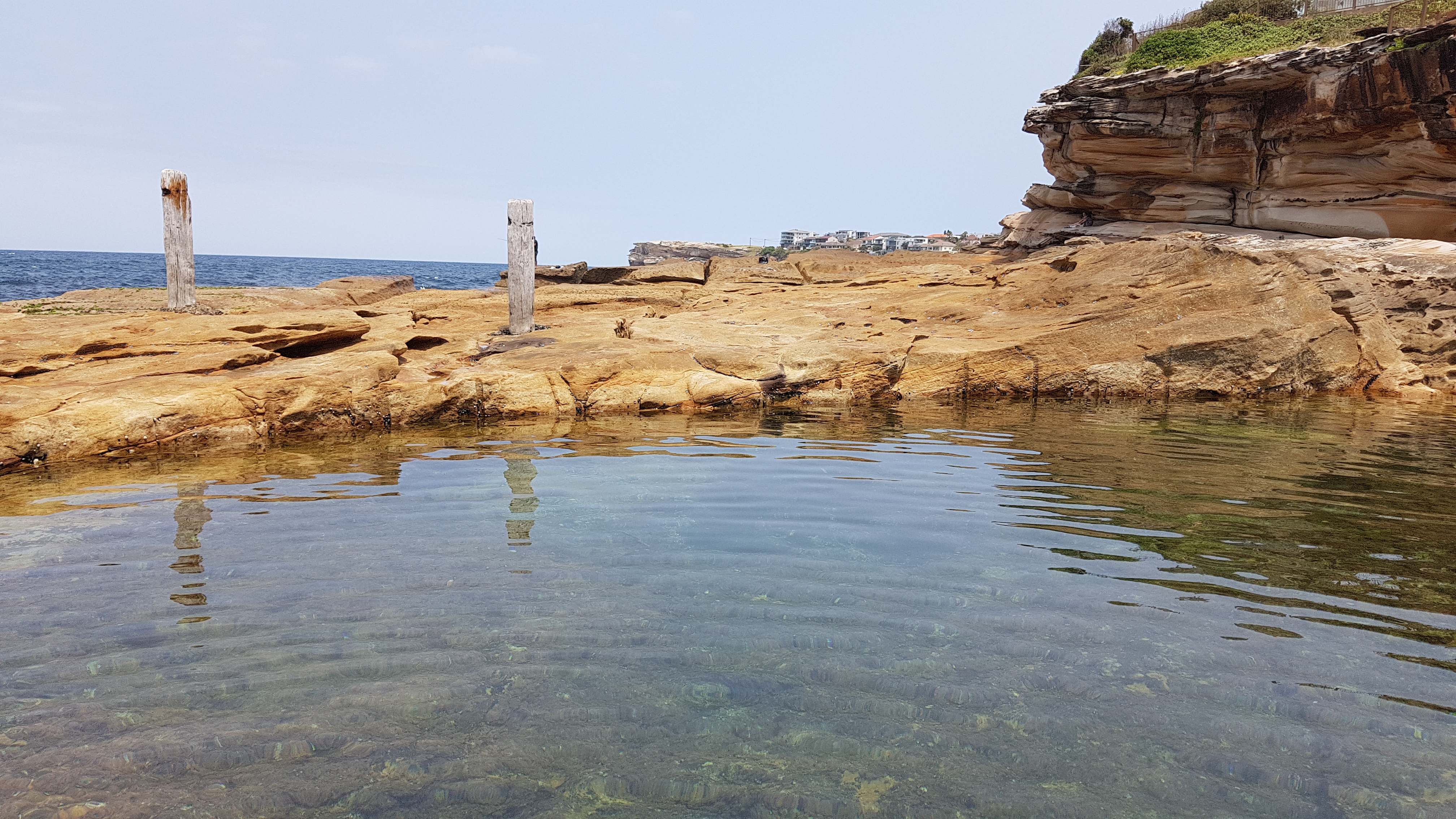
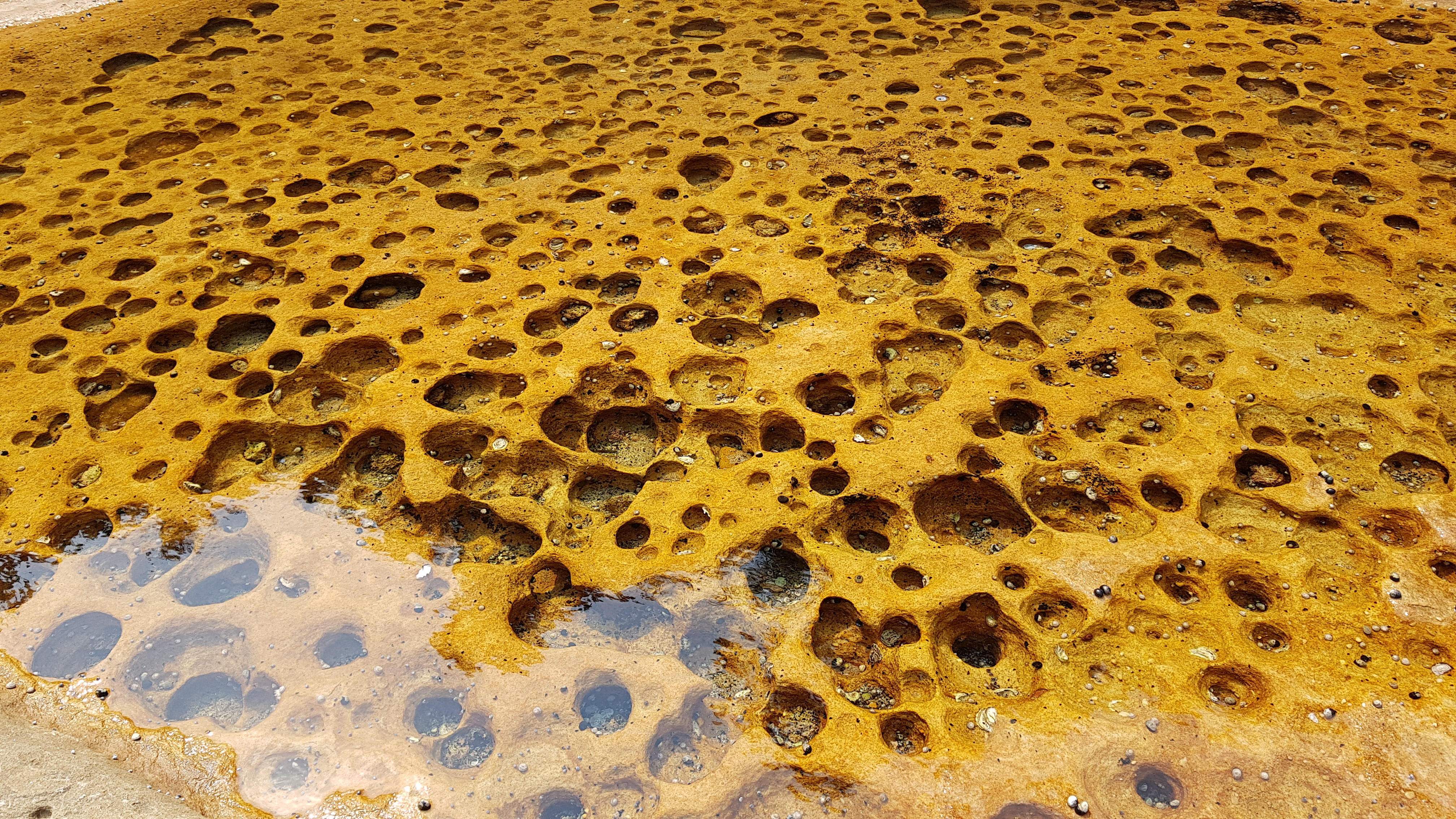
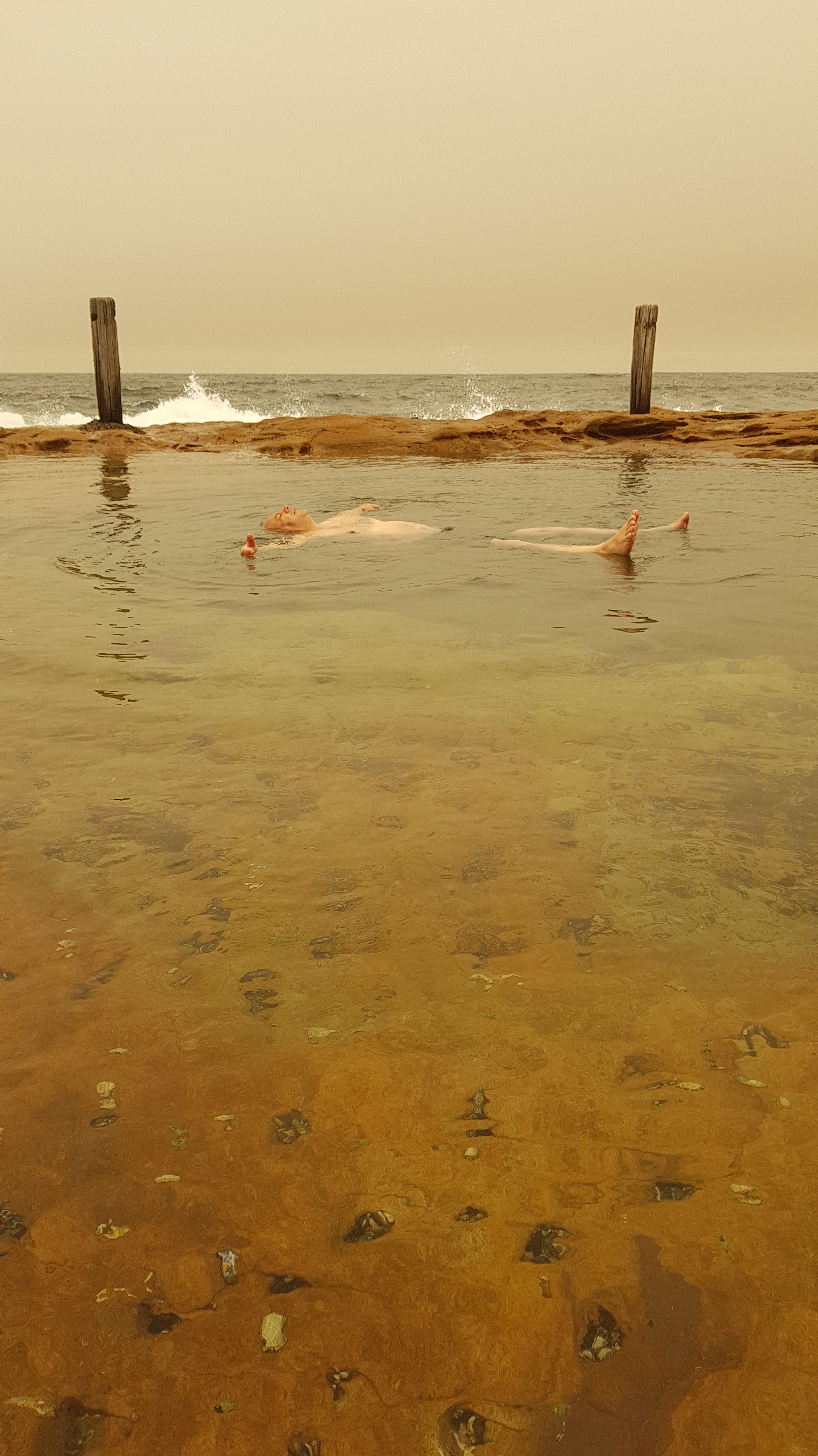
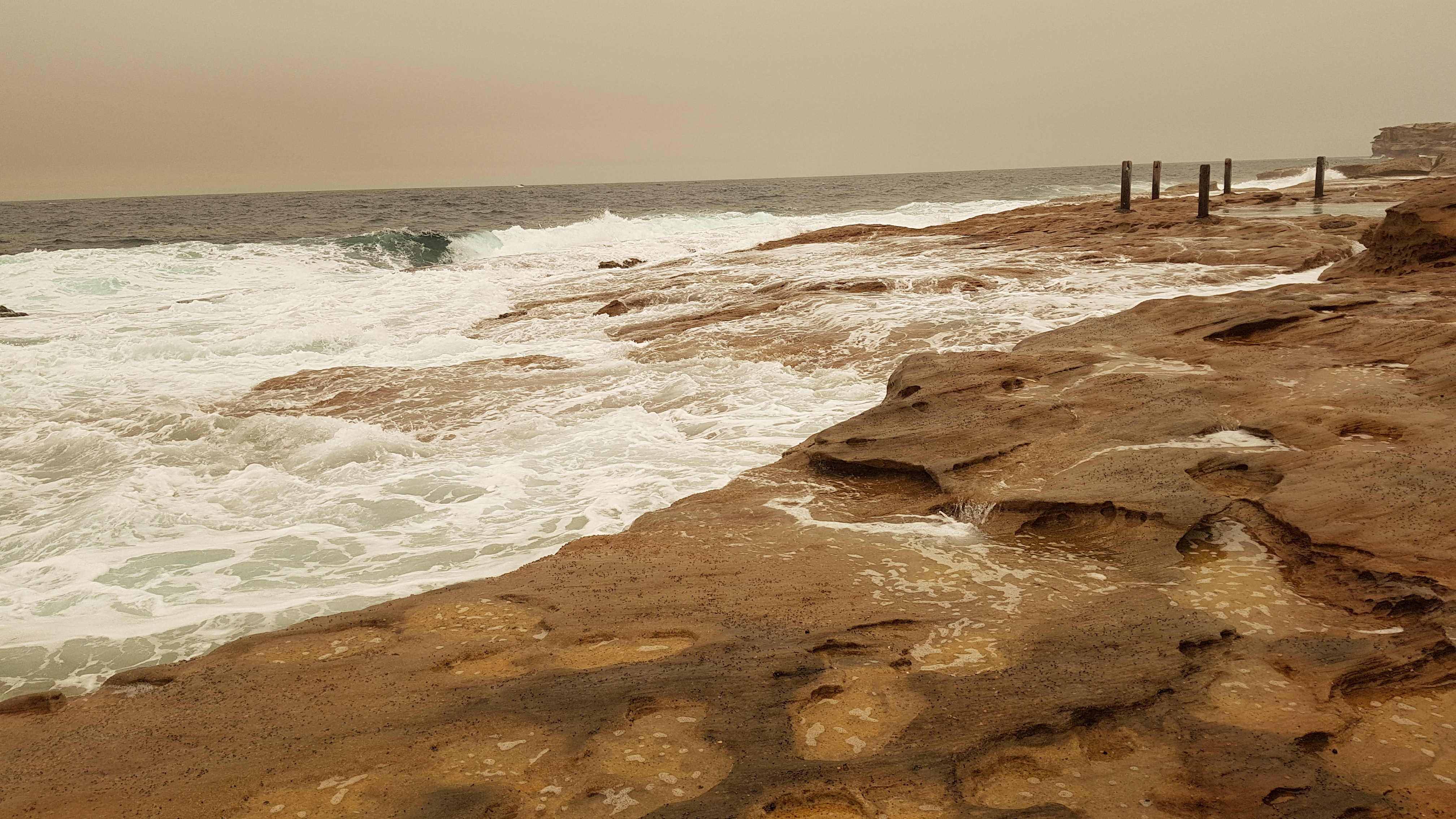
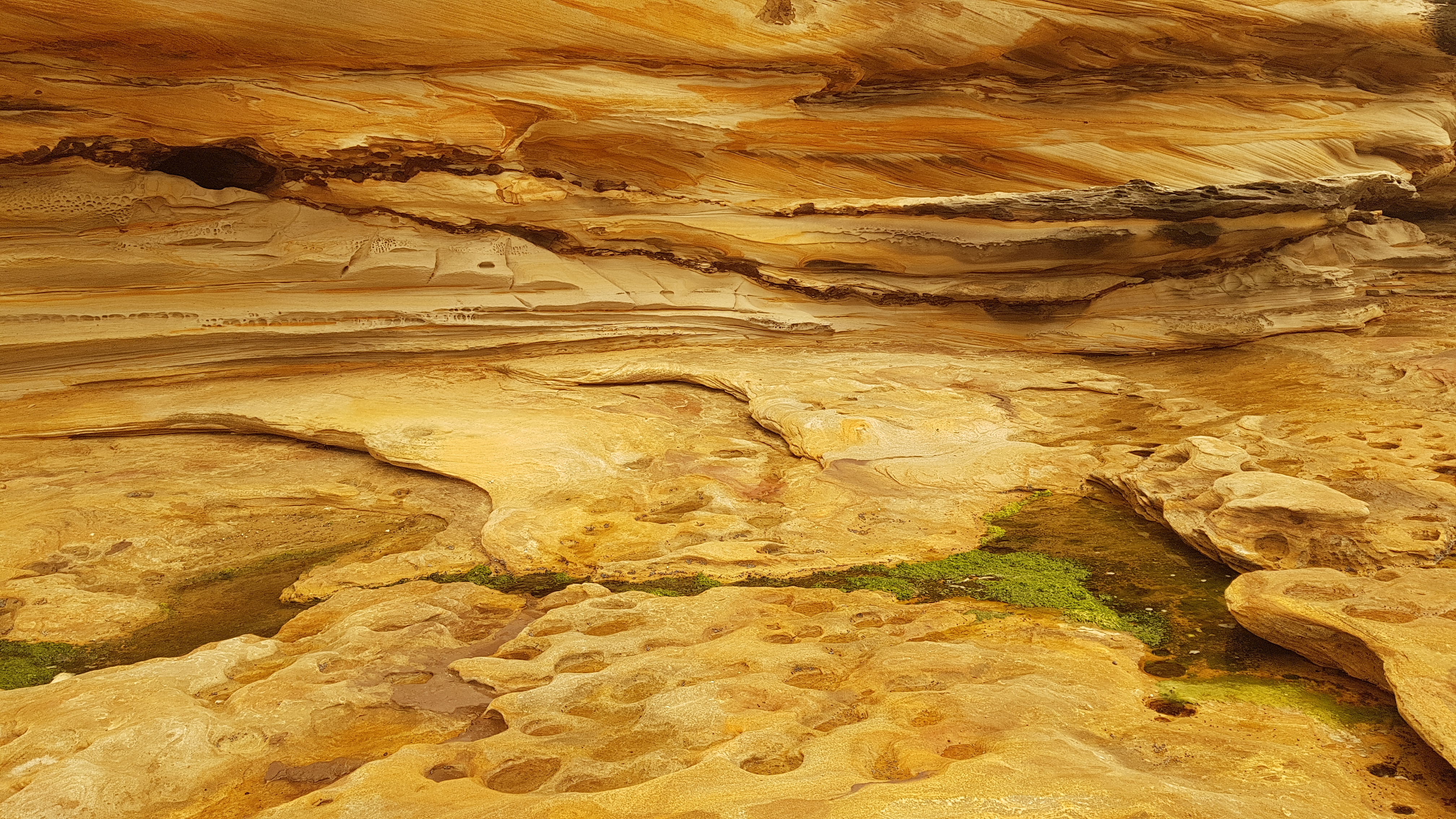
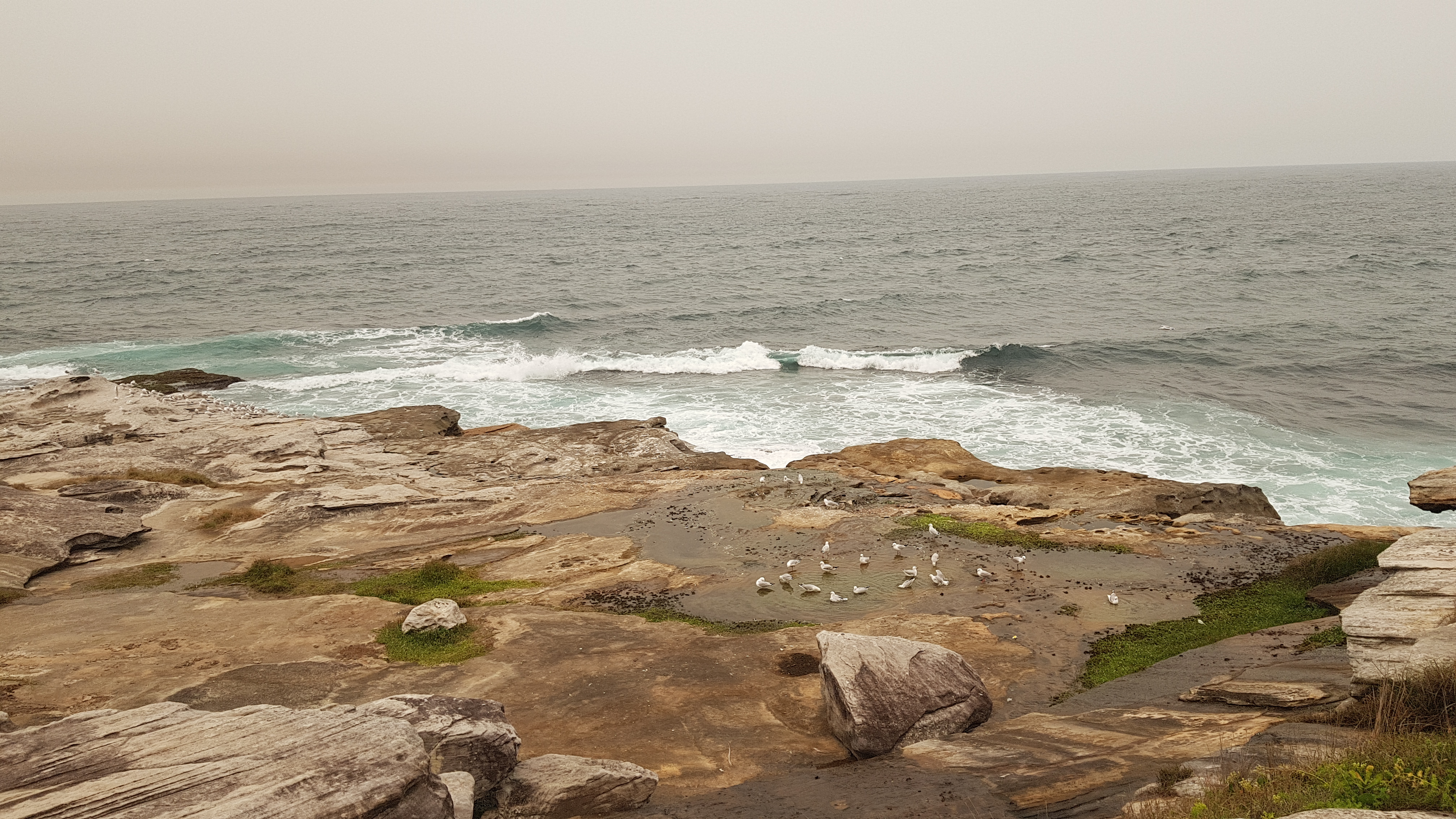
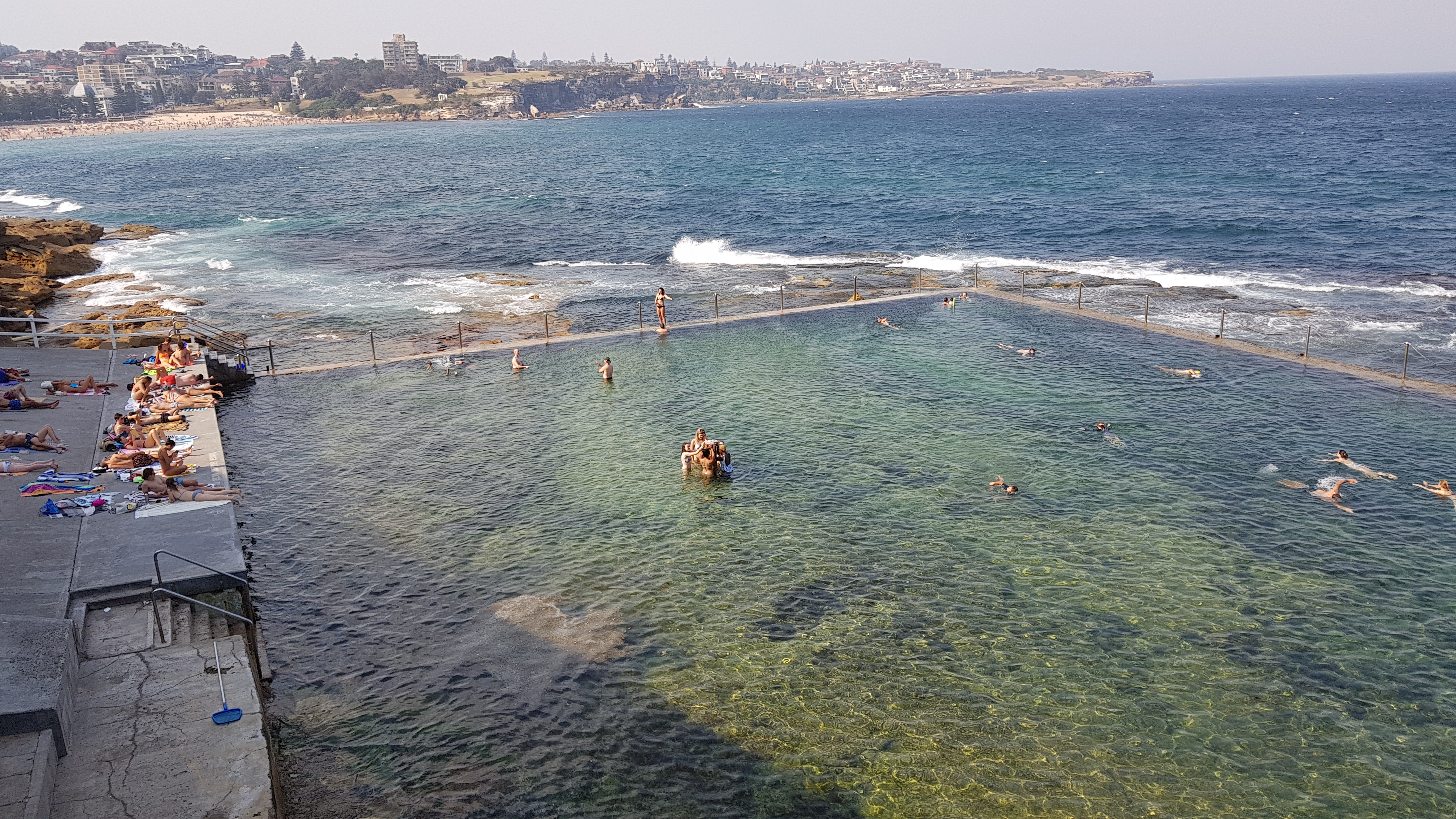
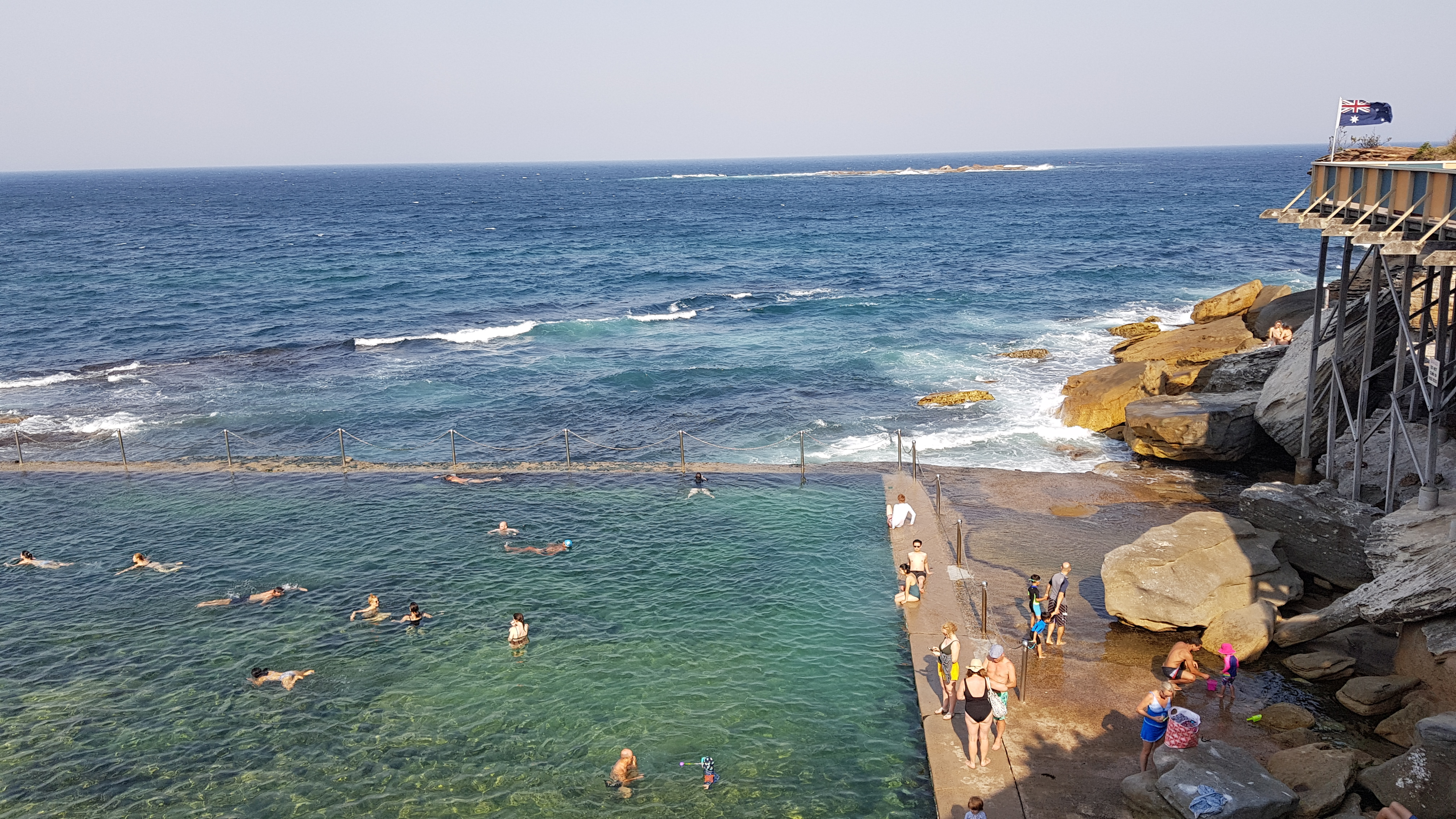
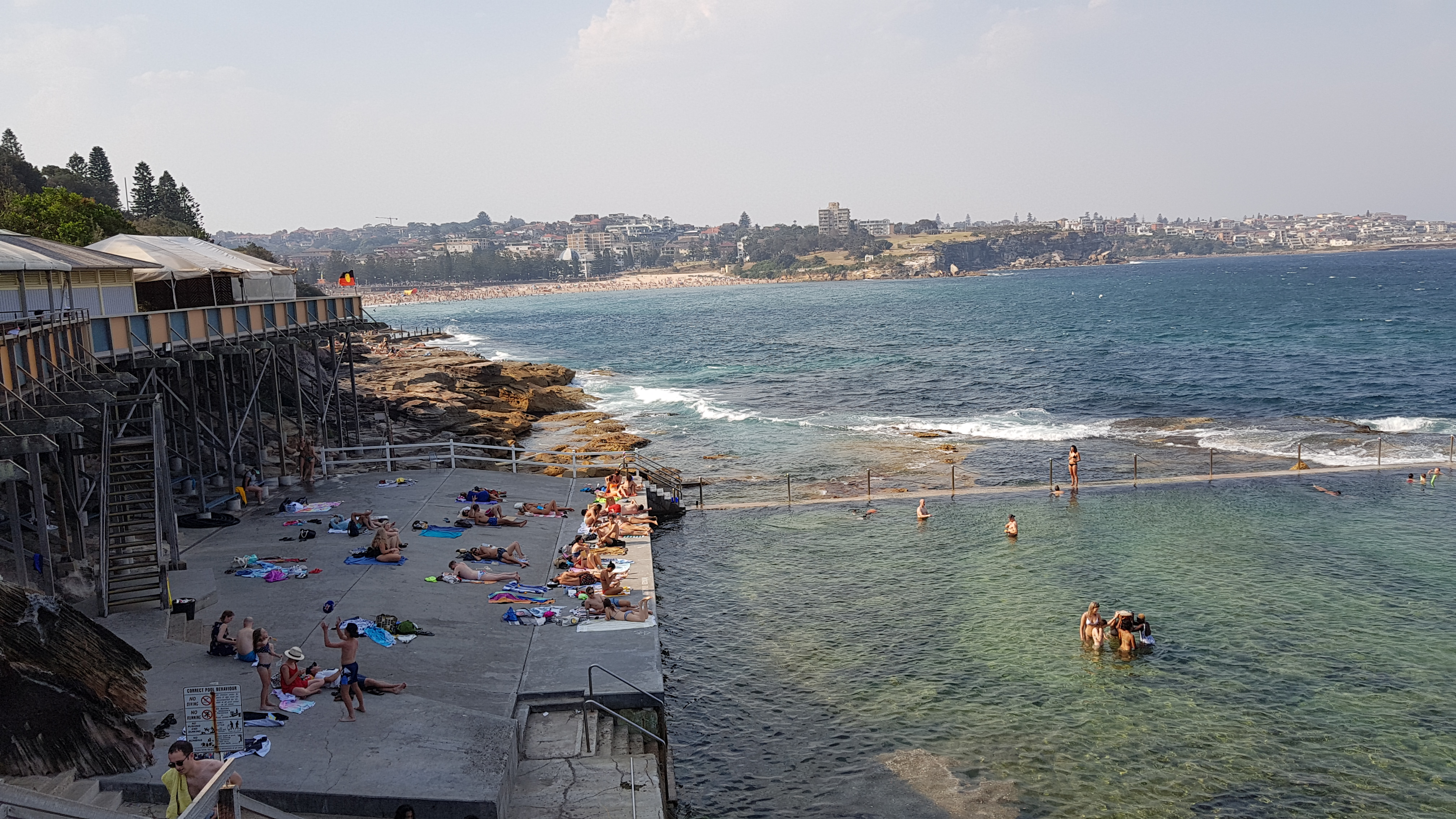
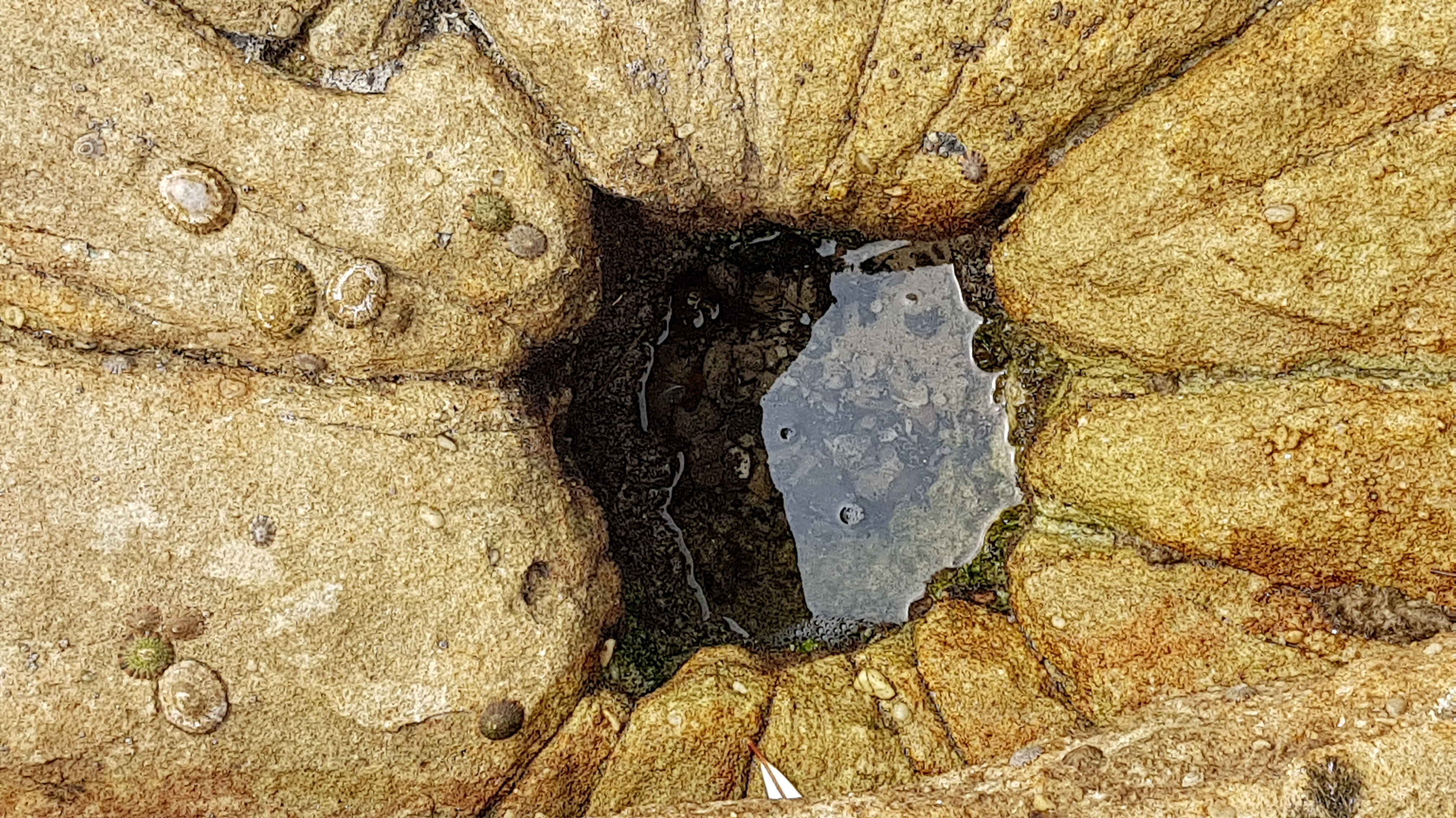
These rocky shore reminiscences have been inspired by a great piece of writing about tide pooling by Sarah Jean McPeek over at the Lively Discussions blog.  I can’t match Sarah’s eloquent lyricism but I can match her love of a rocky shore.  There are some great ones on the coast near Coogee, ranging from very small, deep holes, up to huge, artificial ones that were built as ocean swimming pools. Here’s some photos:

2019-12-29 13.36.56

2019-12-08 13.35.11

Holes within a pool.  This is a great opportunity for a rocky shore ecologist to do a replicated manipulation experiment:

2019-12-08 15.21.19

This is a different kind of experiment to test the hypothesis that water in large pools has evaporated enough to make it significantly more saline and thus increase the buoyancy of the human body.  Hypothesis supported:

2019-12-29 13.21.30

2019-12-29 13.28.41

A classic wave-cut platform:

2019-12-15 11.29.49

2019-12-29 13.34.41

This very distinctive seaweed is known as Neptune’s necklace (Hormosira banksii):

2019-12-29 13.34.04

This pool is being influenced by a freshwater spring that’s coming in from the left:

2019-12-29 13.28.45

These fresh water streams and pools are important for the local coastal birds, including silver gulls (Chroicocephalus novaehollandiae) which belong to the same genus as black-headed gulls (C. ridibundus) in the northern hemisphere but which I think is a prettier species:

2019-12-29 14.15.45

2020-01-07 19.46.07

Australian white ibis (Threskiornis molucca) also enjoy the fresh water pools:

2020-01-02 14.21.02

Humans have inhabited this coastal area for at least 20,000 years and its the traditional land of the Cadigal people.  In more recent times the locals have enjoyed the huge tidal swimming pool known as Wylie’s Baths.  I’ve snorkeled here a few times and seen some beautiful fish and invertebrates:

2020-01-04 17.09.02

2020-01-04 17.09.07

2020-01-04 17.09.11

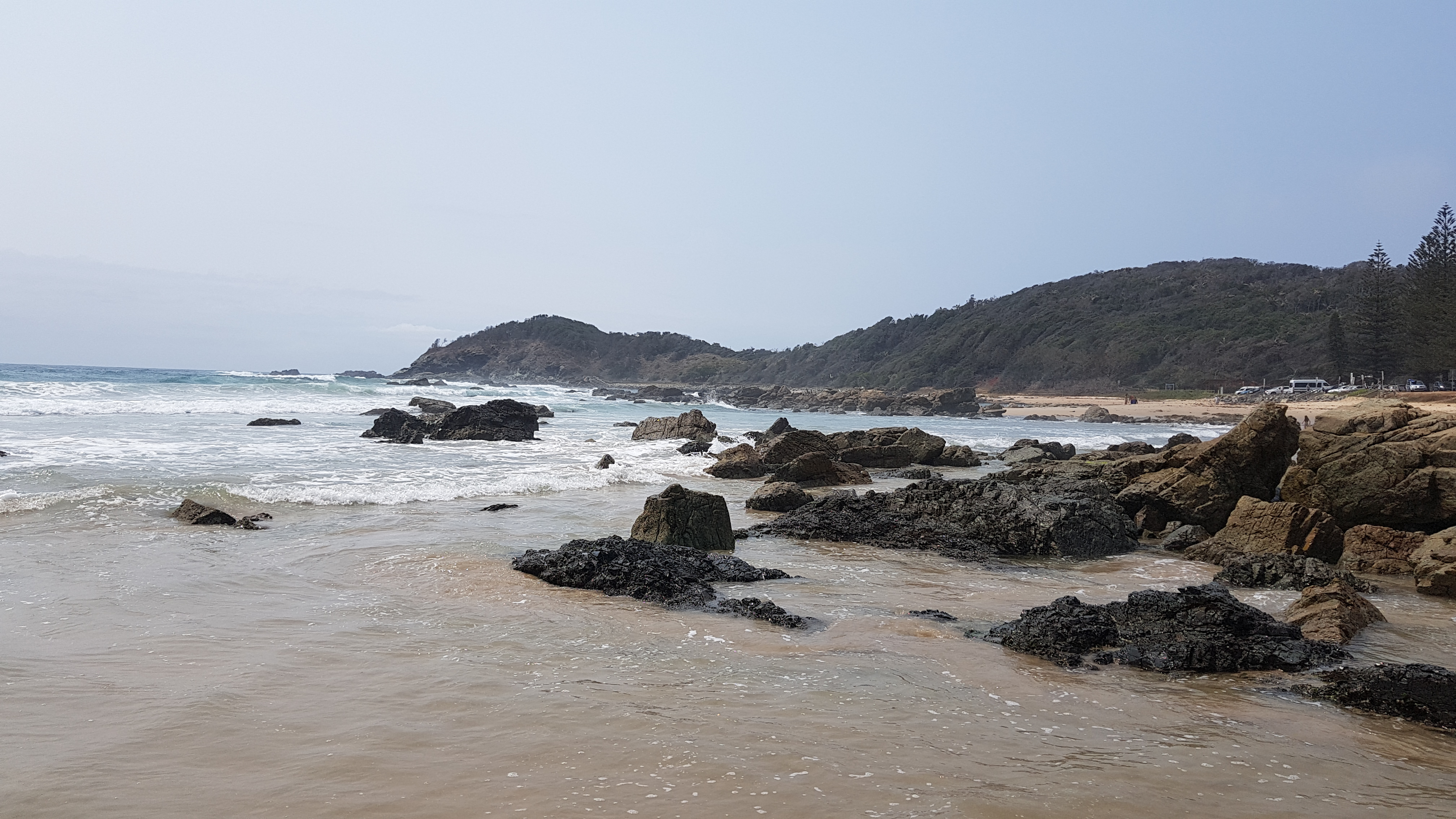
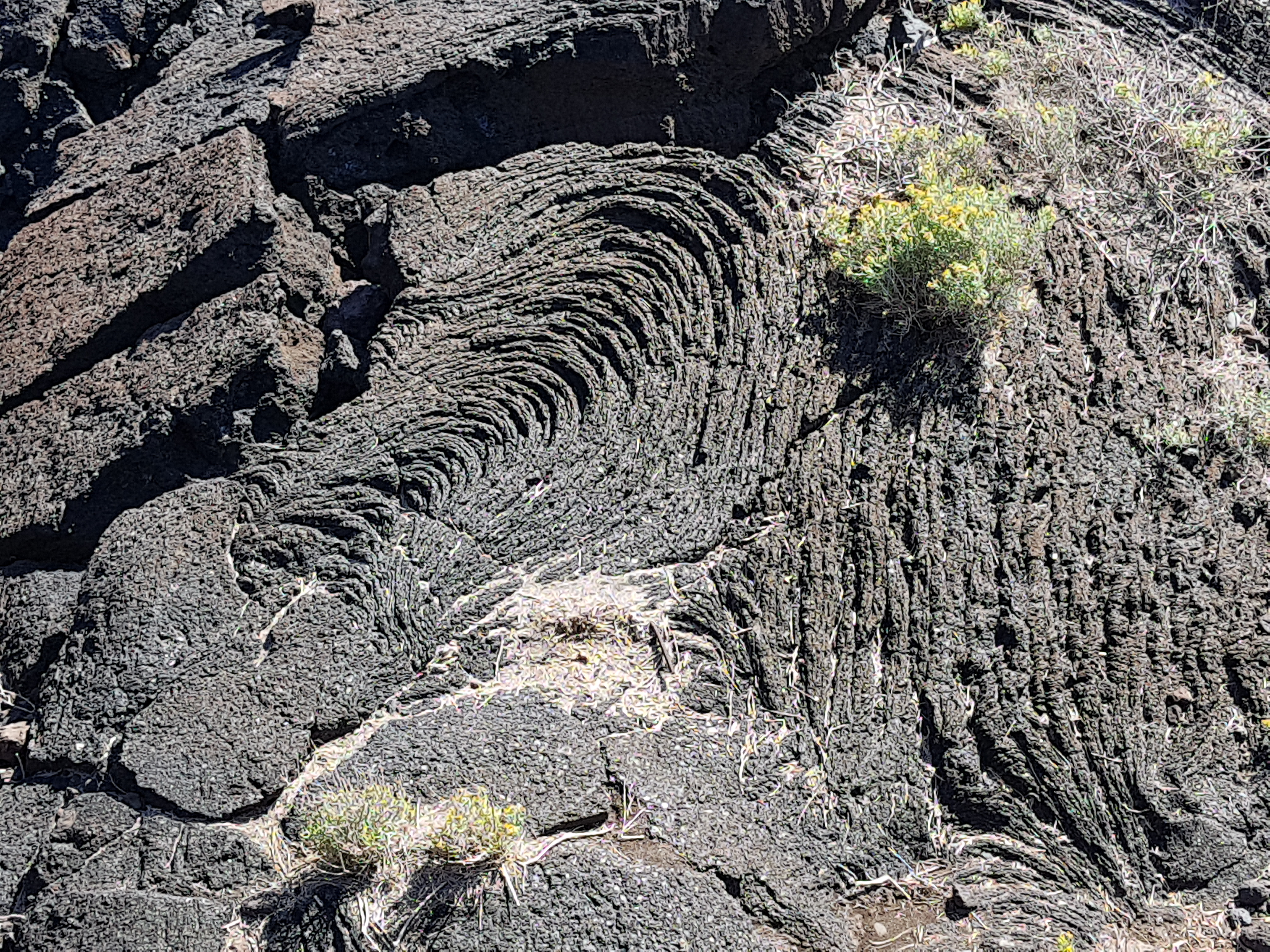
Much further up the coast at Port Macquarie, which we visited over Christmas as I recalled in this post, the geology is very different.  The rocky shores are composed of hard volcanic basalt rather than the softer Sydney sandstone:

2019-12-26 09.56.13

2019-12-24 11.01.32

This is an incredibly dynamic environment.  According to my relatives in Port Macquarie, the place where Karin is standing was until recently a rock pool almost two metres deep that was rapidly filled up by the shifting sands of the coast.  Winter storms will probably scour the sand out again.  Will the limpets and barnacles have survived I wonder?

2019-12-24 11.04.12

2019-12-22 15.24.06


When did the flowering plants evolve? Two new studies come to different conclusions

2019-04-23 17.42.40.jpg

The angiosperms (flowering plants) are far and away the most diverse group of plants ever to have evolved.  There are an estimated 350,000 to 370,000 species, more than all other groups of plants (ferns, conifers, cycads, mosses, etc.) combined, living and extinct.  The origin of the flowering plants was termed an “abominable mystery” by Charles Darwin – or perhaps it wasn’t: see this essay by Prof. Richard Buggs for an alternative view of what Darwin was describing, and this paper by Prof. William Friedman giving a different interpretation.

These disagreements about what Darwin meant are as nothing compared to disagreements about when the flowering plants actually evolved and how we interpret fossils and evidence from molecular phylogenies.  Two new studies illustrate this point: they use some of the same information to come to completely different conclusions.  I’ve copied the details and abstracts below, with links to the originals, and emphasised the areas of disagreement in bold text.  And I’m going to leave it at that; I don’t have a horse in this race and I have no idea which (if either) is correct.

There are, however, profound implications for understanding when and how relationships between flowering plants and their pollinators evolved, as I noted in my recent review of pollinator diversity.  If the much earlier, Triassic origin of the angiosperms is correct then perhaps the earliest flowering plants did not co-opt pollinators that were already servicing gymnosperms.  Perhaps the relationships between plants and pollinators originated with the (Triassic) angiosperms and the gymnosperms subsequently evolved to exploit this.  My feeling is that only more, better fossils will provide definitive answers.

Here’s the details of the studies:

Coiro et al. (2019) How deep is the conflict between molecular and fossil evidence on the age of angiosperms? New Phytologist

Abstract: The timing of the origin of angiosperms is a hotly debated topic in plant evolution. Molecular dating analyses that consistently retrieve pre‐Cretaceous ages for crown‐group angiosperms have eroded confidence in the fossil record, which indicates a radiation and possibly also origin in the Early Cretaceous. Here, we evaluate paleobotanical evidence on the age of the angiosperms, showing how fossils provide crucial data for clarifying the situation. Pollen floras document a Northern Gondwanan appearance of monosulcate angiosperms in the Valanginian and subsequent poleward spread of monosulcates and tricolpate eudicots, accelerating in the Albian. The sequence of pollen types agrees with molecular phylogenetic inferences on the course of pollen evolution, but it conflicts strongly with Triassic and early Jurassic molecular ages, and the discrepancy is difficult to explain by geographic or taphonomic biases. Critical scrutiny shows that supposed pre‐Cretaceous angiosperms either represent other plant groups or lack features that might confidently assign them to the angiosperms. However, the record may allow the Late Jurassic existence of ecologically restricted angiosperms, like those seen in the basal ANITA grade. Finally, we examine recently recognized biases in molecular dating and argue that a thoughtful integration of fossil and molecular evidence could help resolve these conflicts.


Li et al. (2019) Origin of angiosperms and the puzzle of the Jurassic gap. Nature Plants

Abstract: Angiosperms are by far the most species-rich clade of land plants, but their origin and early evolutionary history remain poorly understood. We reconstructed angiosperm phylogeny based on 80 genes from 2,881 plastid genomes representing 85% of extant families and all orders. With a well-resolved plastid tree and 62 fossil calibrations, we dated the origin of the crown angiosperms to the Upper Triassic, with major angiosperm radiations occurring in the Jurassic and Lower Cretaceous. This estimated crown age is substantially earlier than that of unequivocal angiosperm fossils, and the difference is here termed the ‘Jurassic angiosperm gap’. Our time-calibrated plastid phylogenomic tree provides a highly relevant framework for future comparative studies of flowering plant evolution.


Silver Medal for the BES’s pollinator’s display at RHS Chelsea Flower Show!

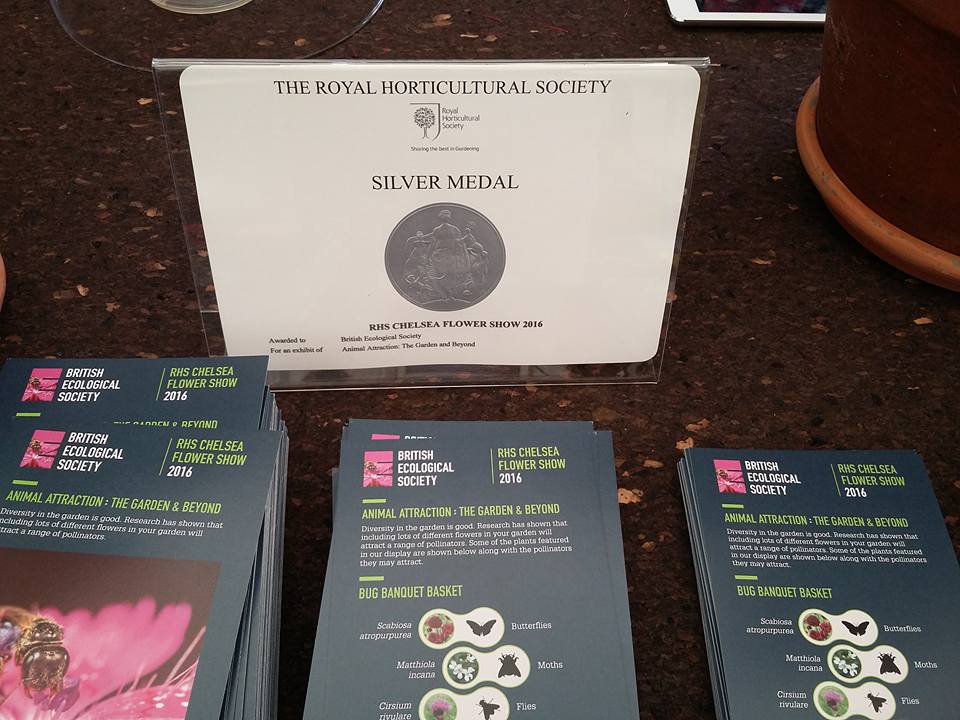
RHS Silver Medal

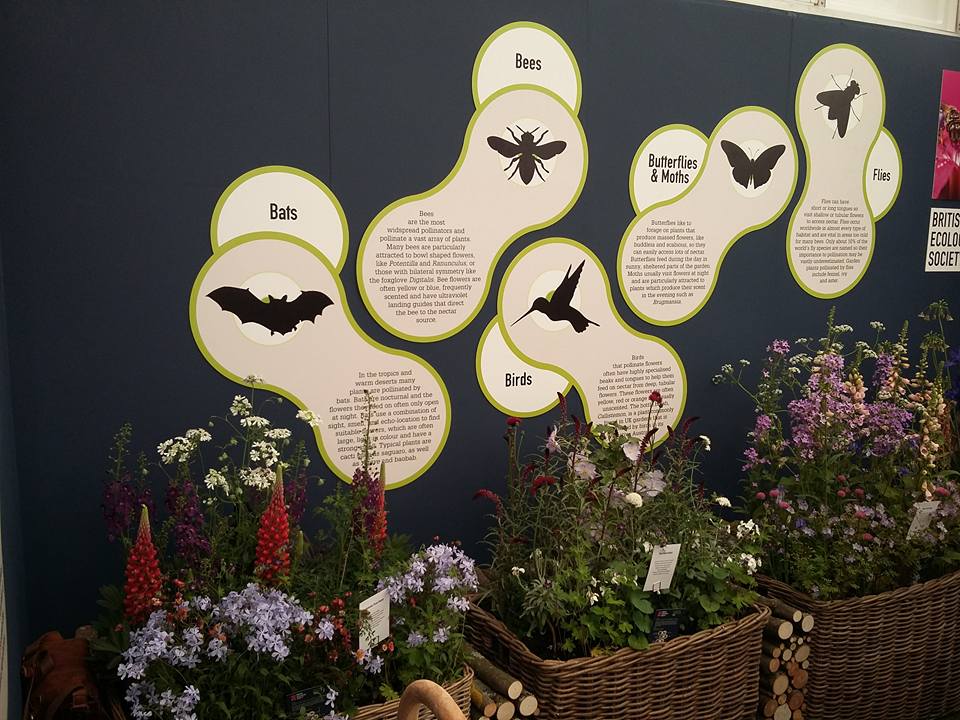
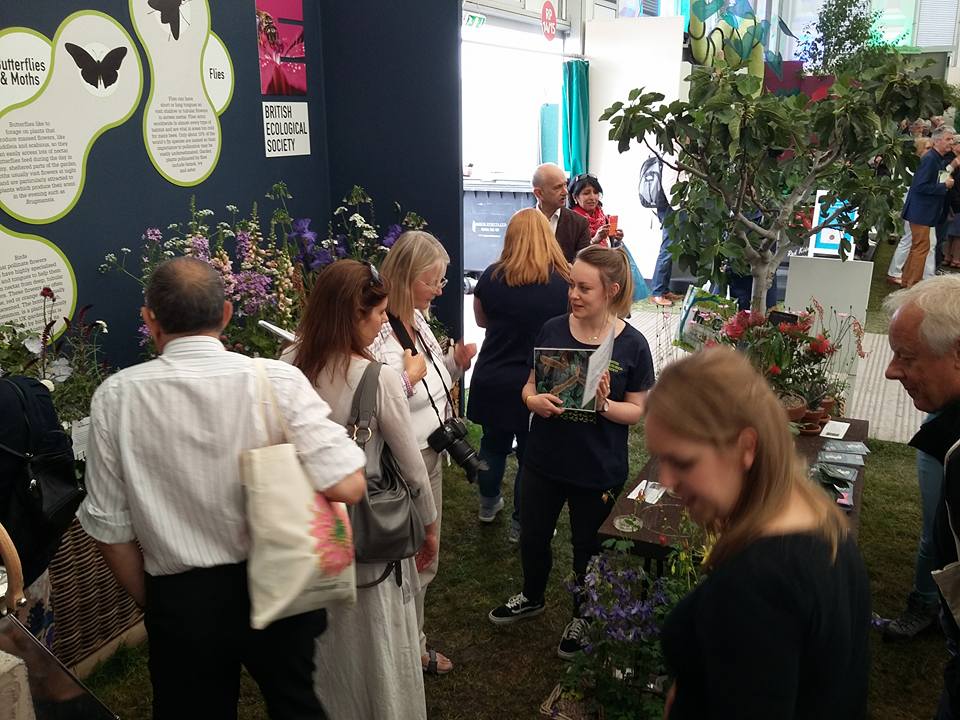
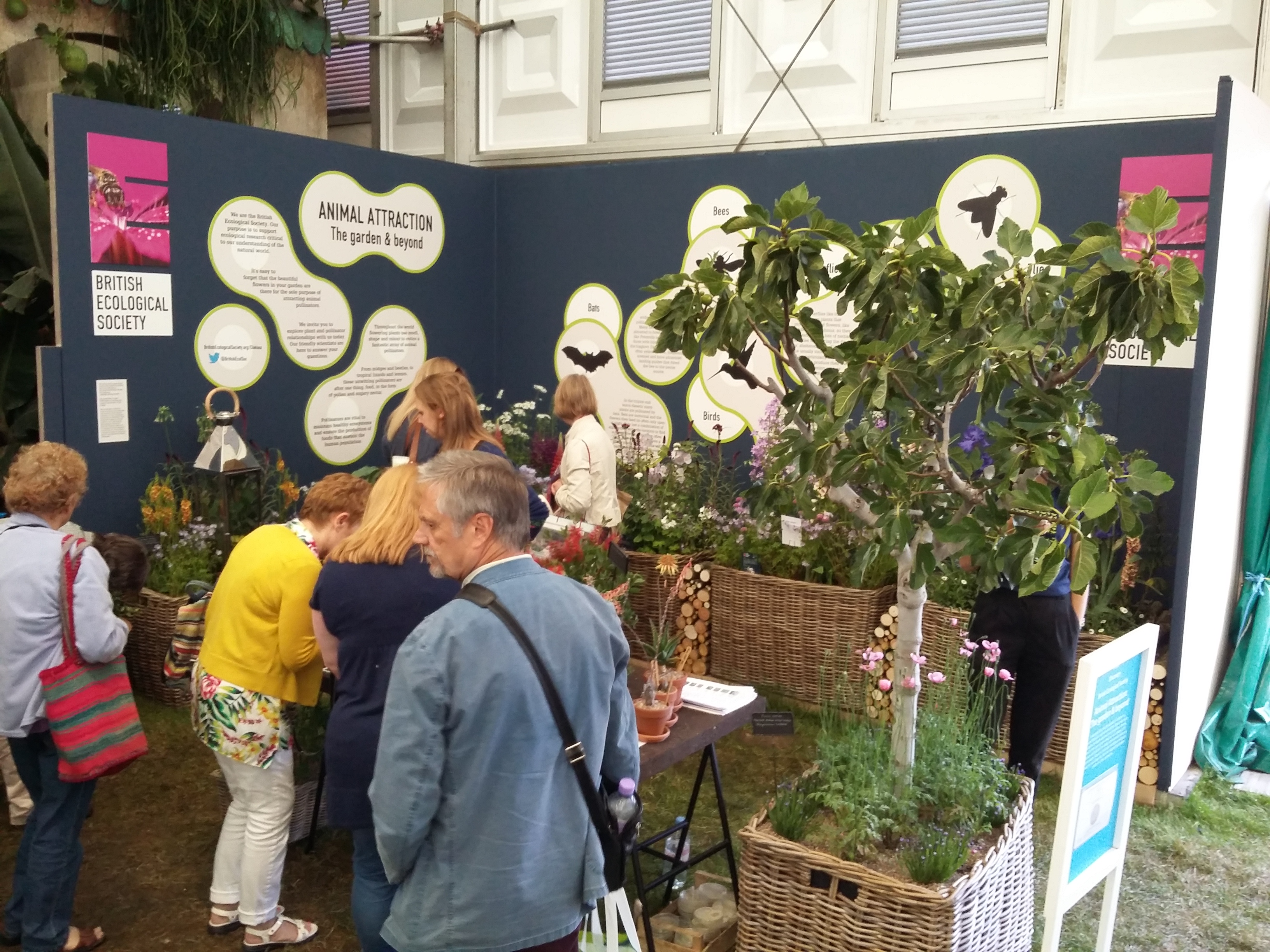
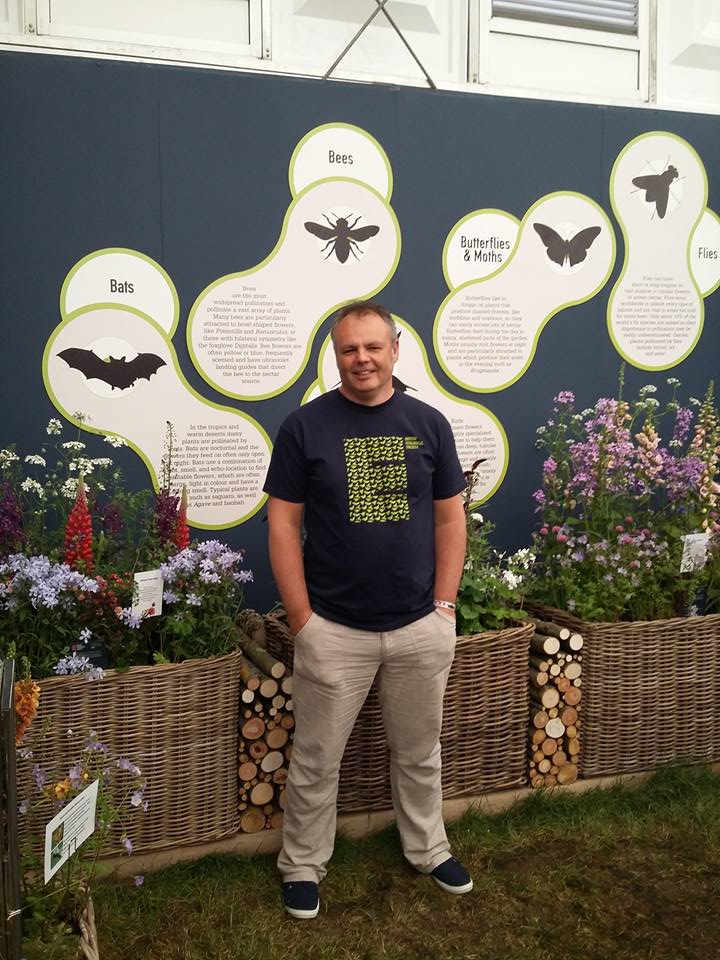
An early train to London yesterday got me to the RHS Chelsea Flower Show in time for the gates opening at 8am.  I’d agreed to spend the day staffing the British Ecological Society’s Animal Attraction: The garden and beyond display, which deals with the relationships between plants and their pollinators – see my recent posts here and here.

The first thing I noticed as I approached the display was how impressive and well designed it looked, with some wonderful planting to complement the simple, bold scientific information.  The second thing I noticed was that we had won a Silver Medal!  The whole team was very pleased – it’s the third year that the BES has been represented at Chelsea, but the first time that it’s won a medal.  I’m proud to have made a small contribution to that by advising on the plants and the scientific content, but the main kudos goes to the BES’s staff and to the garden designer Emily Darby.

Over the course of a long day we talked to hundreds of visitors about the display, what it represented, and the different ways that flowers are adapted to their pollinators.  There was a huge amount of public interest and support, very gratifying to see.  Here’s some pictures from the day:

RHS display

RHS crowd

RHS crowd with fig

RHS Jeff

RHS display


Something for the weekend #5

The latest in a regular series of posts to biodiversity-related* items that have caught my attention during the week:

  • The British Government’s official line on the impact of neonicotinoid pesticides on bee health is largely based on a widely criticised study conducted by the UK’s Food & Environment Research Agency (FERA) which concluded that there was no link to bumblebee pesticide exposure and colony performance.  Professor Dave Goulson at the University of Sussex has now reanalysed the original data and shown that in fact there was a significant effect of the pesticides on those nests.  You can read the study in full here.  How could the FERA scientists get it so wrong?  Were they influenced by Defra’s desire to come to a particular conclusion?
  • It will be interesting to see how FERA responds to this criticism of their work, though it may take a while to get a full answer: the lead scientist on the study now works for agrochemicals firm Syngenta….
  • The story has also been picked up by some media outlets, notably the Guardian.  Pity they confused honey bees with bumblebees though – managed honey bees use human-made hives; bumblebees use nests (even artificial ones).
  • The RSPB’s Big Garden Birdwatch, which I talked about in a post earlier this year, has reported its results.  There seems to be good news for some species, but for others it was bad: for example, there’s been an 80% drop in observations of starling since the scheme began in 1979.  Starlings are now RSPB Red Status due to their worrying decline; whilst they are still common, they are not anywhere near as common as they used to be.

Feel free to recommend links that have caught your eye.

*Disclaimer: may sometimes contain non-biodiversity-related links.