Category Archives: Gardens

What to do with plastic plant labels? Here’s one idea.

20180408_132052

This spring Karin and I are continuing to develop our garden which I have previously talked about in relation to the Big Garden Birdwatch and Renovating a Front Garden, for instance, as well as various posts about the pollinators I’m recording (search the blog for “garden pollinators” and you’ll see what I mean).

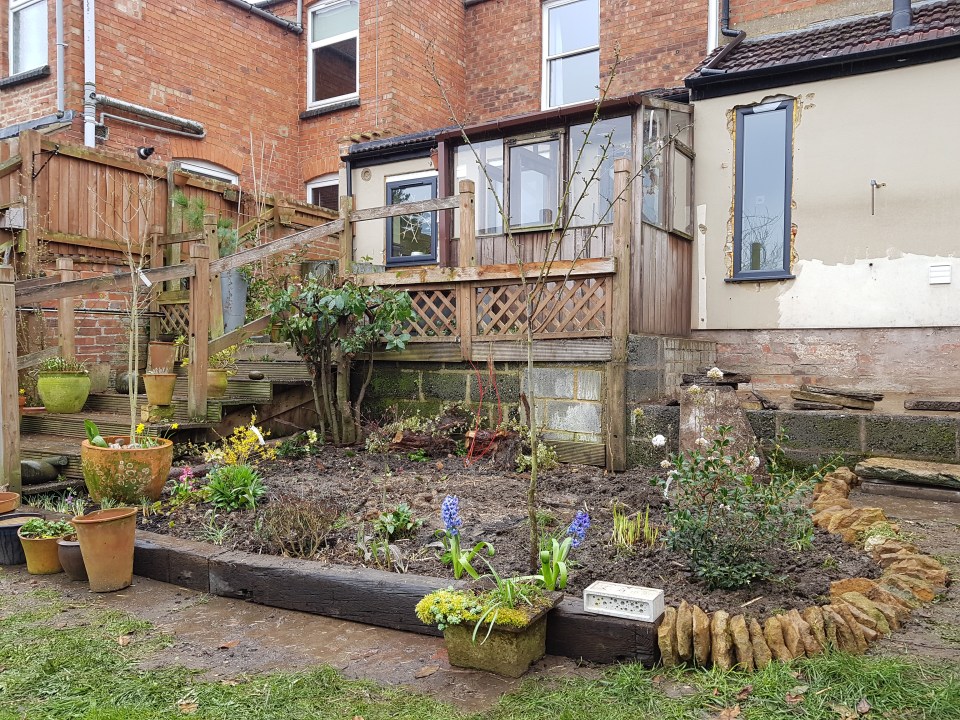
The main task over the past couple of weeks has been to demolish the old chicken run and plant it as a mixed border that will give interest all year round.  We’ve put in some plants that have been hanging around in pots for a few years waiting for a space to open up, plus bought clearance-area bulbs and perennials such as crocuses, narcissi, hyacinths and hellebores at knock-down prices (they look a bit scrappy at the moment but will be great next year).  Plus we’ve spent a bit of money on some nice flowering shrubs and small fruit trees.

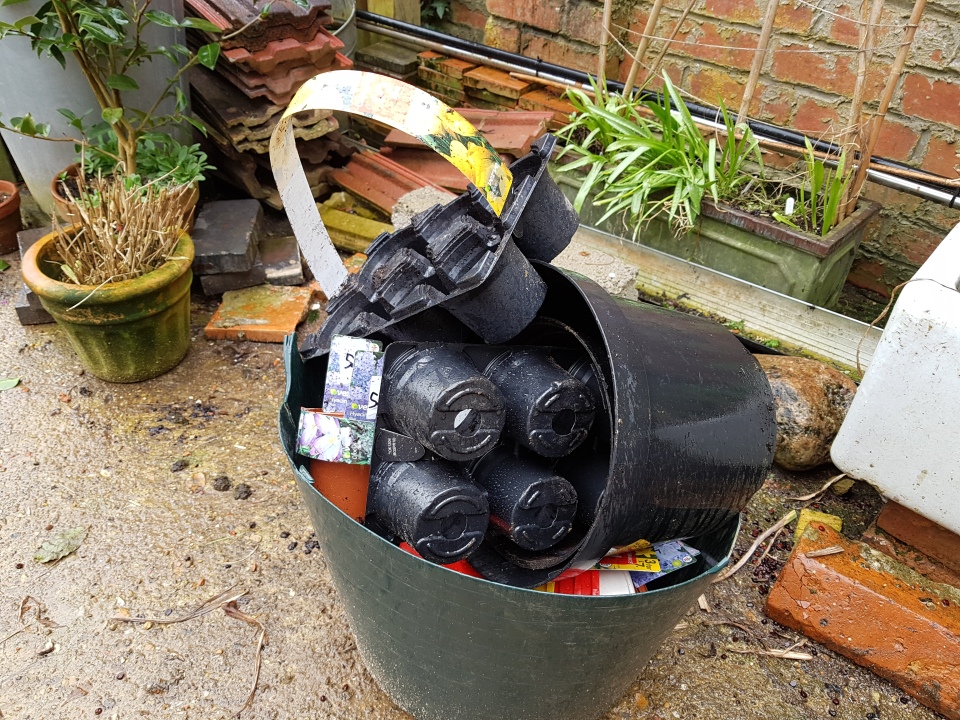
The plants we’ve bought invariably come in a plastic pot which we re-use for propagating and giving plants away to friends.  However they usually also come with a plastic label that tells us at least the name of the species and variety, plus often cultivation details and a colour image.  The question is: what to do with these labels?  The obvious thing is to leave them on the plant or push them into the ground next to it to remind us what it is.  The problem with this is that (in my experience) the labels never last more than a year or two before the ink fades.  Over time the plastic starts to break down and you end up with fragments of the label in the soil.  There’s a lot of discussion online about how harmful different types of plastic can be, but there’s no doubt that some types can release toxins into the soil.  Regardless, it seems to us a bad idea to allow these plastic labels to disintegrate in the garden.  It also feels like a waste of resources: those labels took oil and energy to produce.

This year the BBC’s Gardeners’ World series is looking at ways to reduce the use of plastic in the garden, which is a good idea and another reason why I love the programme, as I’ve previously written about on the blog.  That got me thinking about the best way to deal with plastic plant labels, what else can you do with them other than leave them in the garden?

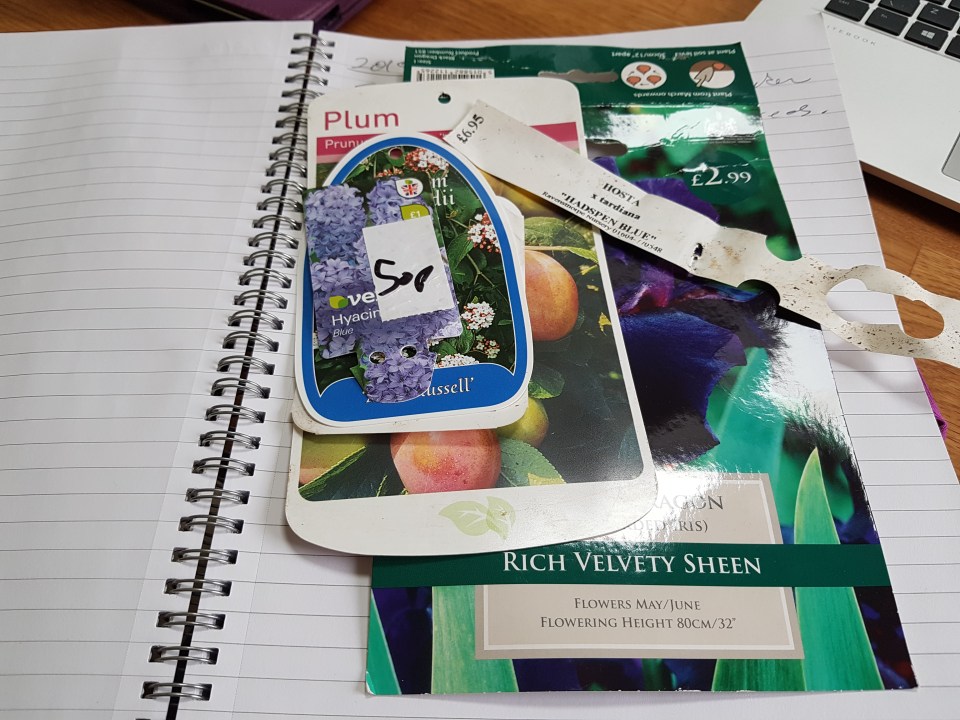
I suspect that if we put them out with the weekly plastic recycling they’ll just be landfilled, so that’s not an option.  However, like a lot of gardeners we keep a log book of what we’ve been planting, but we’re a bit lazy about keeping it up to date.  So we’ve taken to slipping those labels between the pages of the log book to remind us of what we have put into the garden.  The book is one of those with an elasticated retainer to keep it closed, so the labels don’t fall out when we move it on and off the shelf.  Hopefully the labels will last for years in there away from damp and light, and be a useful source of information for us in the future.

20180408_142102

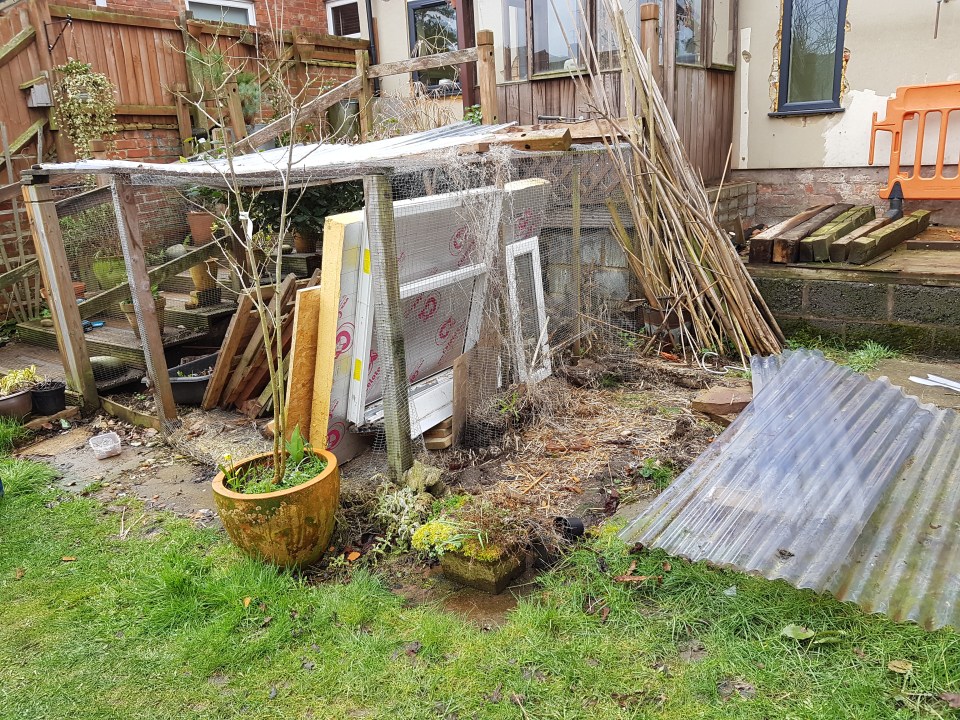
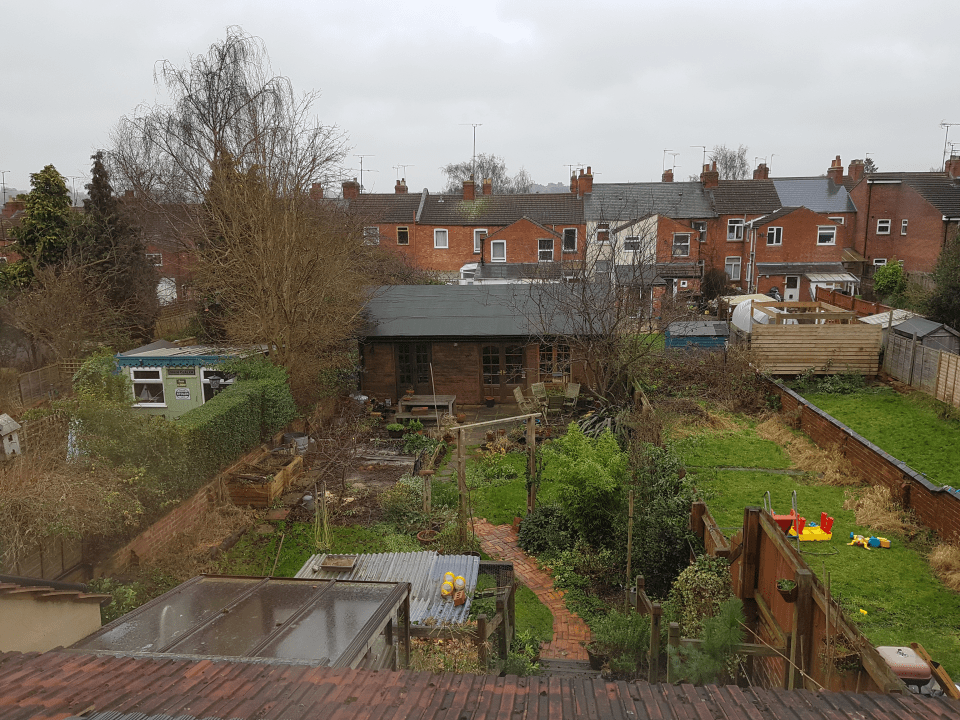
If you’ve curious, here’s how that part of the garden looked before we started working on it; everything you see here has been re-used or recycled in one way or another:

20180330_105640.jpg And this is what it looks like now; we still have more plants to add and hopefully the border will fill out come the summer:
20180408_131949


Can pollinators survive sudden changes in the weather?

Snow-Warm garden comparison

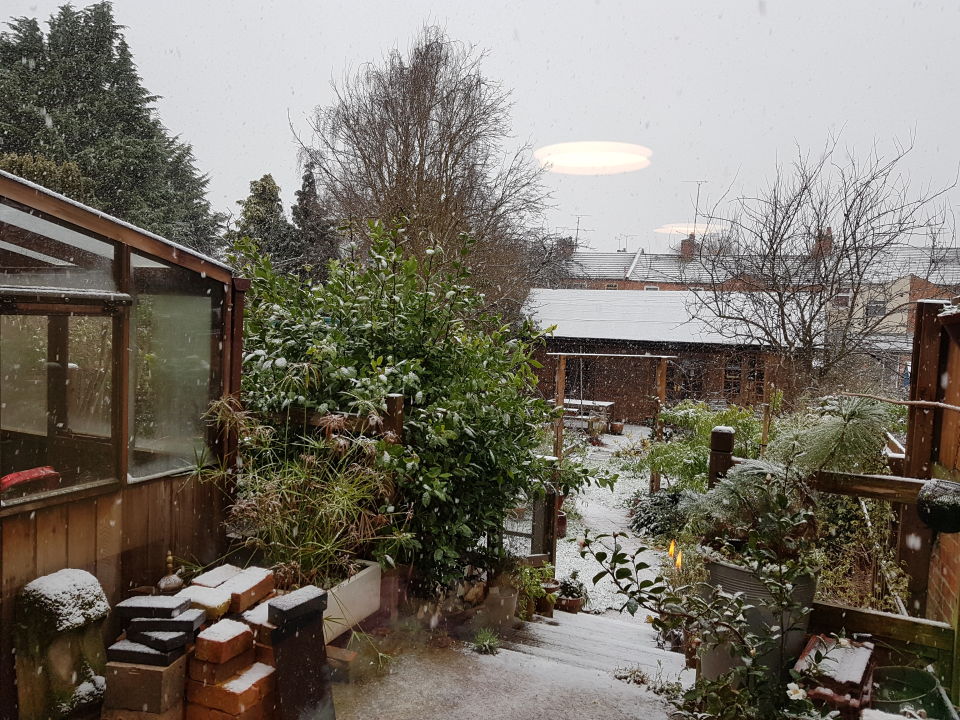
Just how pollinators cope with sudden changes in the weather early in the season is a bit of a mystery.  Take 2018 as an example; my wife Karin spotted the first queen bumblebee in the garden on 6th January, investigating a camellia flower just outside the kitchen.  Over the course of the next few weeks I saw a few more at various sites, plus occasional hibernating butterflies such as the red admiral. The various social media outlets were reporting similar things, it looked as though we were going to have an early spring.

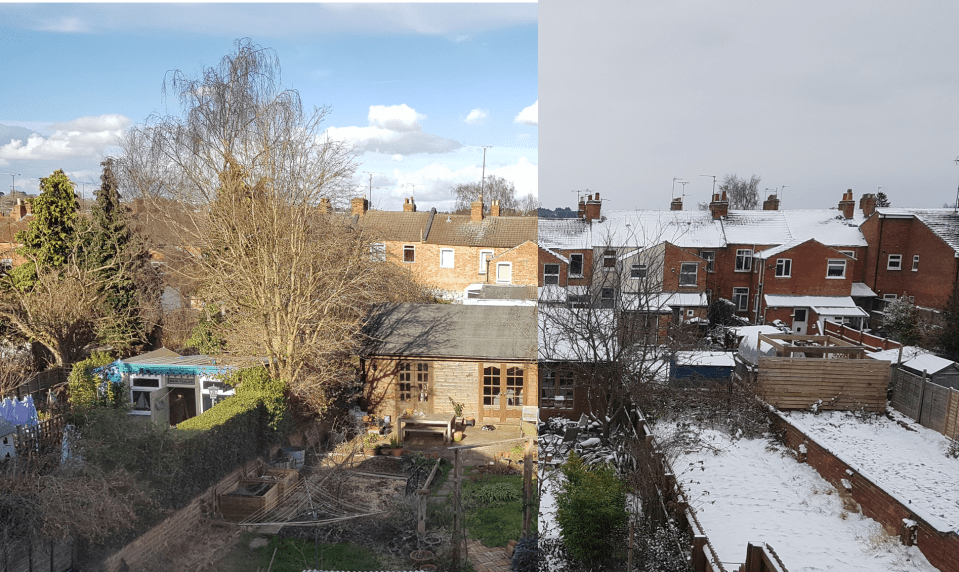
Then at the end of February “The Beast from the East” hit the UK, a weather system from Siberia that brought some of the coldest weather and heaviest snow the country had experienced for several years.  That persisted for over a week then things got much milder.  On 16th March I was in the garden and spotted the first male hairy-footed flower bee of the year, plus a mining bee (Andrena sp.), and a brimstone butterfly, and a queen bumblebee, and a red admiral.  Great I thought, spring really is here!  The next day it snowed.  A “Mini Beast From the East” had arrived, rapidly: the two pictures above making up the composite view of our garden were taken two days apart.

What happened to all of those insects I saw? Were they killed by the cold weather?  Or did they survive?  We have no firm data to answer that question – as far as I’m aware no one has ever tagged early emerging pollinators and followed their progress (I could be wrong – please let me know if I am).  It would make an interesting, though labour intensive, project but could be done using non-toxic paint of various colours to mark the insects.

I suspect that some of the pollinators I saw were killed, but most were not and simply went back into hibernation for a short period, hunkering down in safe, sheltered spots.  That makes much more evolutionary sense: any insects in the UK that cannot survive sudden changes in the weather would have gone extinct long ago.  Another clue to support this idea is the fact that plants in flower early in the season, and in some cases the flowers themselves, usually survive the cold weather and come back as if nothing had happened.  If the flowers can do it, and they have to stay where they are, surely the mobile pollinators can also do it?

As always I’d be interested in your thoughts on this topic, feel free to comment.  And while we wait for the UK to thaw, here’s some topical and rather catchy music to listen to – The Beelievers singing “Mr Gove”.

Big Garden Birdwatch – our first six years of data

Big garden bird watch

This morning I spent an hour gazing out of our bedroom window with a coffee, a notebook, and a pair of binoculars.  Not sure what the neighbours opposite us thought I was doing but I was happy – this weekend is the RSPB’s Big Garden Birdwatch!  I’ve taken part in it every year since Karin and I moved into our present house in February 2012, and I thought it was time to show the results to date.

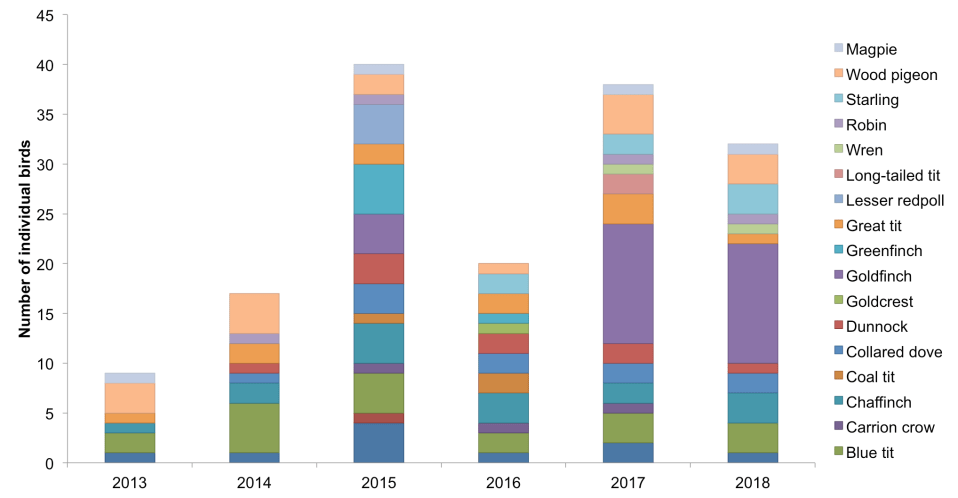
As you can see in the graph above, for the first couple of years there were relatively few birds (only 6 species in 2013, 8 in 2014).  Then in 2015 it jumped to 15 species, including some that I’ve not recorded in the garden since such as Lesser redpoll.  Two reasons for this sudden increase I think.  First of all, January 2015 was particualrly cold which meant that more birds were moving into urban areas looking for food and a little more warmth.  But secondly, and the reason why higher bird diversity has been maintained since then, is that we’ve been developing the garden and planting more shrubs, small trees, etc.

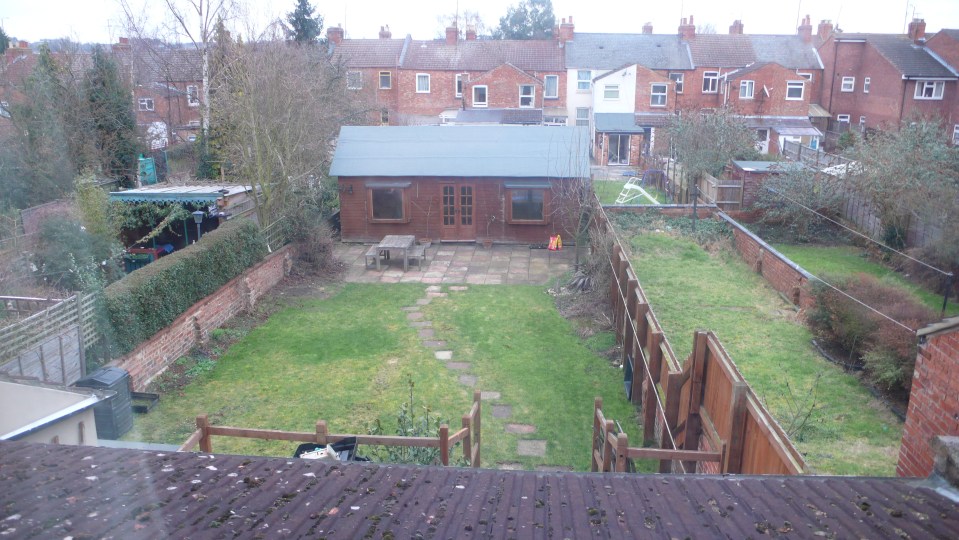
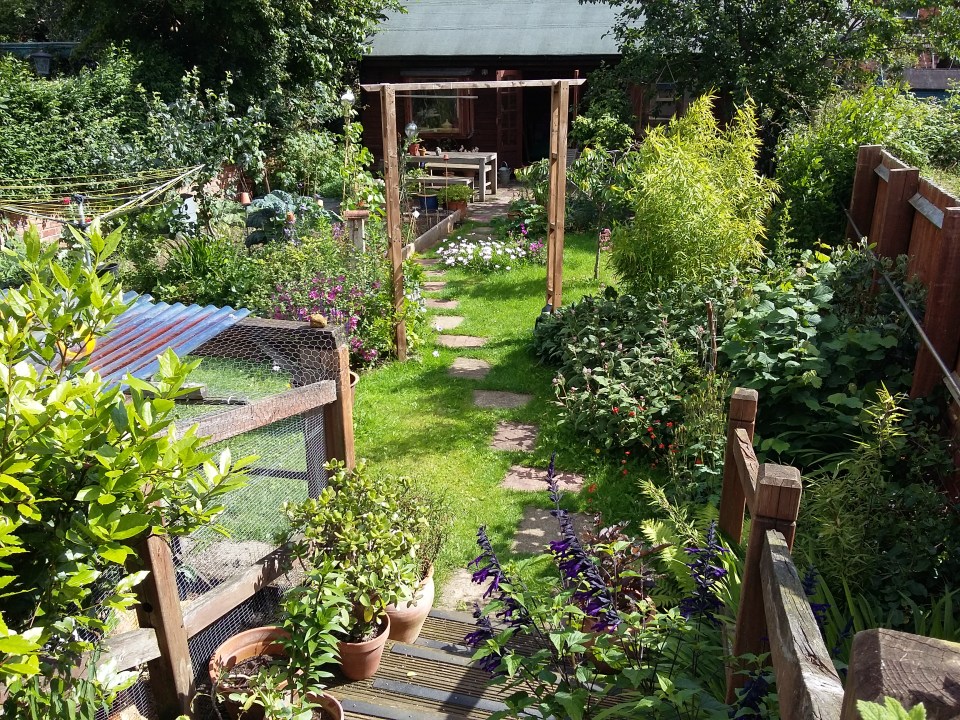
So since 2012 we’ve gone from this:

2012-02-22 10.19.23

To this:

The garden 20180127_114638.png

This planting and development of the garden has been good for other wildlife including bees, butterflies and other pollinators, as I’ve recounted a number of times.  So here’s a close up from last summer just to remind us that, on this grey, drizzly January day, spring is not so far away:

20160702_100724

Of course you don’t need to have a garden to take part in the Big Garden Birdwatch – the RSPB also accepts data from surveys of public parks and green space.  In fact tomorrow morning I’m leading a group of residents around our local park, The Racecourse, to do just such a survey.

Right, must go and upload this years data to the RSPB’s site.

Split the kipper: snowfall thoughts of breakfast, fish and childhood games

Kipper 2018-01-21 10.39.16.png

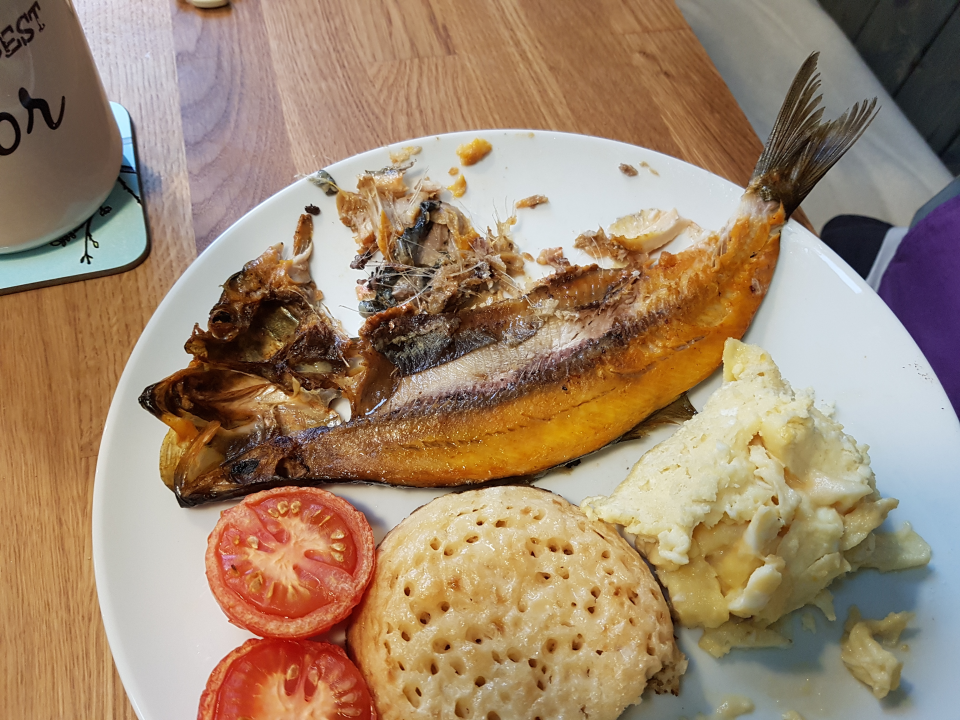
Karin and I had kippers for breakfast this morning, a satisfying and warming treat on this cold Sunday as we watched the snow fall into the garden, softening the edges and hedges:

Snow in the garden 2018-01-21 11.20.48.png

I do like a nice kipper!  Smoking fish to make it last longer has been repeatedly discovered and transmitted as an idea across cultures, and represents a fascinating intersection where wild biodiversity meets human ingenuity.  The north east of England, where I grew up, has a great and ancient tradition of smoking herrings to preserve a portion of the catch, a practice that may have originated with the Vikings who colonised that part of the country over one thousand years ago.

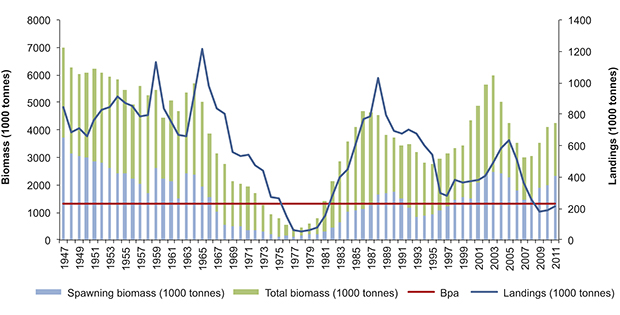
Of all of the North Sea’s edible biodiversity I feel most comfortable eating herring; although there were issues with over-fishing in the 1960s and 70s, current stocks look to be being managed sustainably.  The most up to date information I’ve found is in a Norwegian government report from which I took this graph:

Print

Kippers have had subtle, but interesting, influences on culture, spawning phrases, songs and games. To be “done up like a kipper”* is to be taken advantage of by someone or bamboozled, whilst a “kipper tie” is a fashion hangover from the 60s and 70s, named for its broad proportions.  Of course Supertramp sang about having kippers for breakfast, particularly in Texas “cos everyone’s a millionaire”.  That strikes me as an odd line as herrings (in whatever form) have always been considered a cheap dish. Though I suppose importing them from Craster to Dallas could be quite expensive.

Back to the north east and my childhood, where we played a game called “Split the Kipper”. This involved standing opposite a friend on a grassy field and taking it in turns to throw a knife near to your opponent’s foot.  If it stuck into the ground then your opponent had to slide their foot to that point.  This continued until one of you had your legs so far apart that you fell over – the kipper had been split!  Not the safest game for kids but I never knew anyone to get injured playing it. Like all the best games the point was not just to win but to win beautifully: inching your adversary’s legs apart with accurate knife throws gradually ramped up the tension of the game.  I wonder where the game originated? Is it too fanciful to imagine that it was brought over by the Vikings?

The snow is still falling – wonder what’s for lunch….?


*Whatever you do, don’t search the Urban Dictionary for the definition of the word “kippered”….

Something for Blue Monday – the only known blue flowered asclepiad

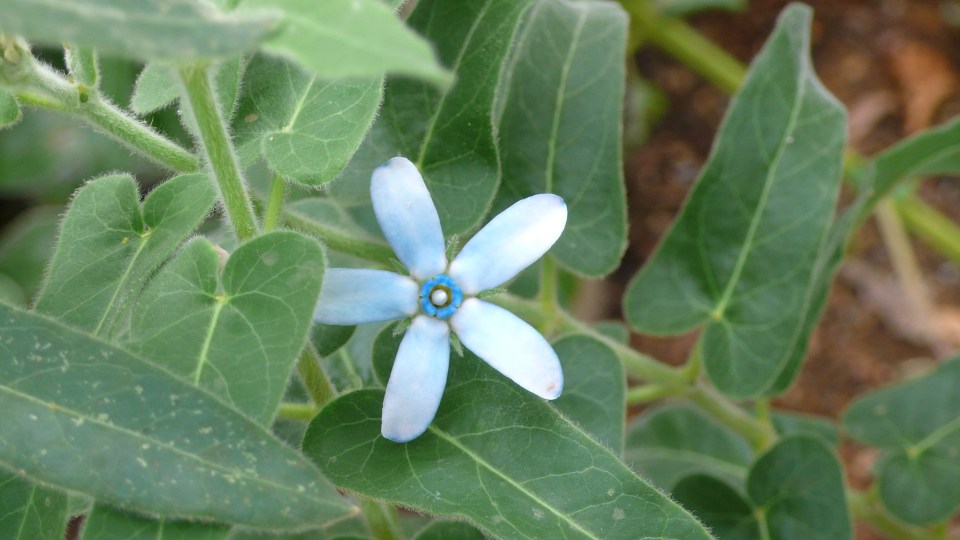
Tweedia caerulea - OBG 2014-11-06 11.33.14

Today is Blue Monday – reckoned to be the most depressing day of the year, though I’m in a very good mood: just back from a great 9am seminar with my final year students taking the Biodiversity & Conservation module.  They presented some really interesting, diverse and thought provoking papers as part of their assessment for this module; it’s a great group to teach.

But if you are suffering from the blues this morning, here is a photograph to cheer you up.  As far as I am aware Tweedia caerulea (also known as Oxypetalum coeruleum)  is the only known blue flowered asclepiad (that’s to say, a member of the family Apocynaceae subfamily Asclepiadoideae – what used to be the family Asclepiadaceae*).

No one is sure why blue is such a rare colour within the asclepiads (and indeed the Apocynaceae as a whole) and it may be connected to the pollination system of this plant.  However we don’t know what pollinates Tweedia caerulea in the wild so it’s hard to test that idea; other species within this group are variously pollinated by wasps, bees, flies, moths, etc.  Truly blue flowers (as opposed to some shade of purple or violet) are relatively uncommon generally amongst the flowering plants and the source of much interest and excitement in those groups where they do occur, for example the Himalayan Poppies (Meconopsis).

Tweedia caerulea is easy to grow from seed but not so easy to get through the winter in the UK, so in the past I’ve grown it as an annual in the garden.  Apart from the colour, one of the other reasons I like this plant is that it’s named after the 19th century plant collector John Tweedie whose life I’ve been researching over the past 20 years or so – see this paper for example.


*The asclepiads are my favourite group of plants, and one that I’ve published quite a bit of research on, so I was a bit miffed when the taxonomic rank of the family was relegated to subfamily.  But it makes evolutionary sense and now gives me a much larger family of plants on which to research, so every cloud etc. etc.

A bad botanical pun

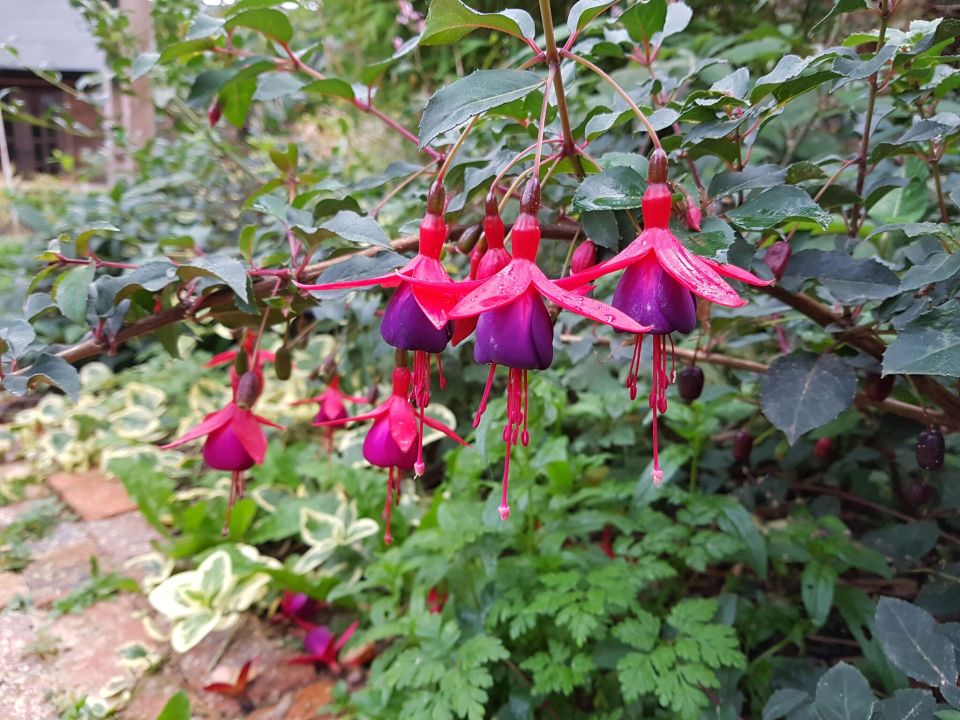
fucksia not fewsha 20171012_080602_001_preview

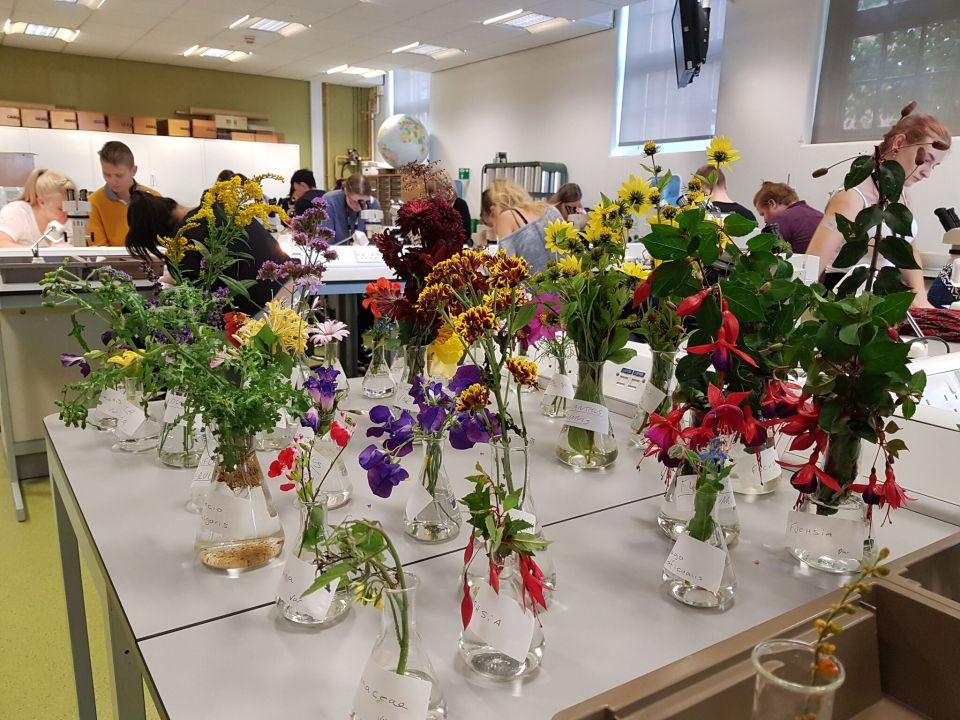
Not all of the poetry that I write – such as these pieces – is serious and high-minded, some of it is whimsical, funny, or just plain dumb.  Today I taught a morning class on flower structure and pollination, so in its honour here’s an example of the latter:


A Bad Botanical Pun

“Don’t become a gardener – there’s no fuchsia in it!”

Not a great pun, but I’ve heard worse.

However, it may be pedantic, but I have to point out

That the genus Fuchsia was named in honour of Leonard Fuchs

(A sixteenth century Bavarian botanist, as you ask).

His name is pronounced as a definite, Germanic “fucks”,

Not a prim, Victorian “fewsh”.

So, don’t become a botanist – it’ll Fuchsia!


Students in the pollination practical 20171012_111355_preview

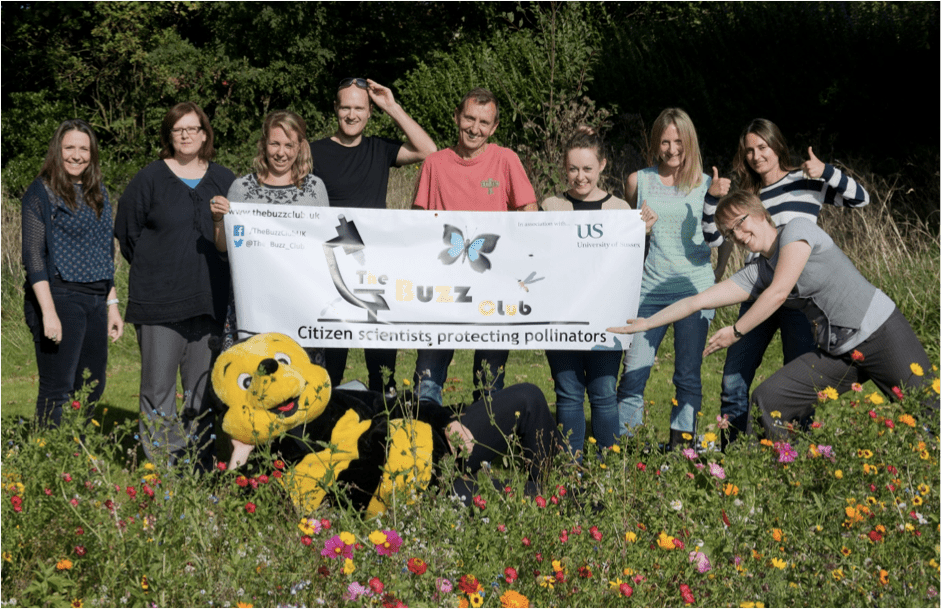
The Buzz Club: citizen scientists protecting pollinators

Buzz Club 1.png

This is a guest post by Charlie Dance who is Development Officer at The Buzz Club.


It’s hard to over-stress the importance of pollinators. Not only do they play an indispensable role in global food security, they’re also essential in maintaining the diversity of plant species in natural habitats, thus supporting nature as a whole. The UK is home to thousands of different pollinators including bees, wasps and hoverflies. However, while many of these species seem to be declining or disappearing, we know surprisingly little about the majority of them. Why are some disappearing, and how quickly is it happening? What can we do to help? How can we turn our gardens into pollinator havens? It was to help answer questions like these that the Buzz Club was founded in 2015.

Run by volunteers at the University of Sussex, The Buzz Club is a citizen-science charity using the power of the public to provide important data on pollinators. We run a variety of nationwide surveys and experiments suitable for all ages and ideal for wildlife and gardening enthusiasts. Furthermore, we provide information about how to make our urban landscapes more pollinator friendly.

For more information and for a list of current projects, please visit our website: http://thebuzzclub.uk/

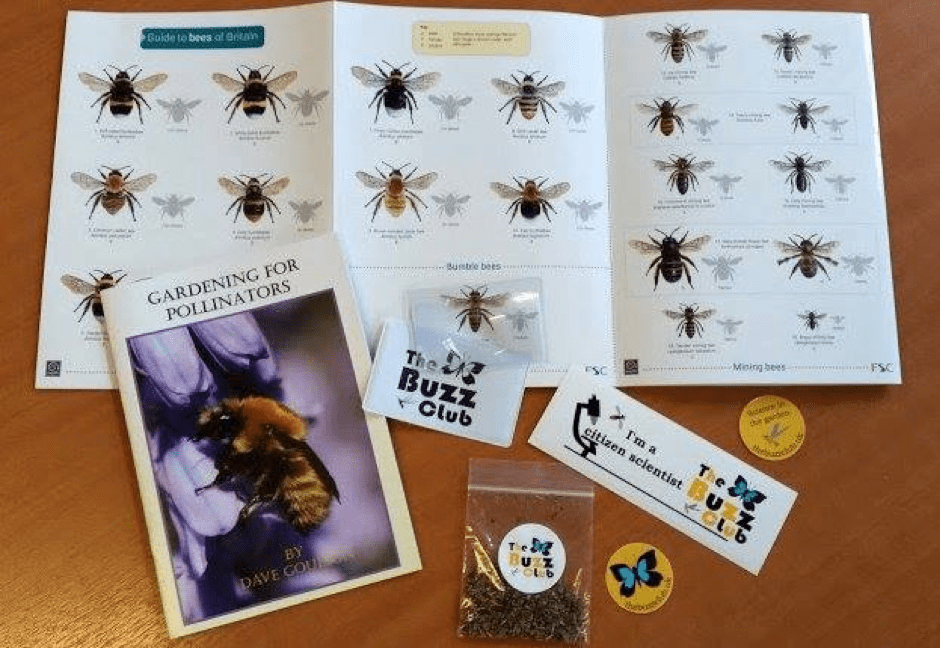
As a membership-based organisation, we rely on the small donation of £2 per month from members, all of which goes directly towards running the charity. Not only do new members receive a complementary welcome pack containing a specially designed seed mix, bee identification chart, pollinator-friendly gardening guide, magnifying lens and stickers (see photo below), they also get to learn more about pollinators whilst helping to generate useful data that can be used in our projects.

We believe that with your help we can find out how best to conserve bees and other pollinators. Our ultimate goal is to ensure that we look after insects, giving them and us a future.

Join the Buzz Club here: https://alumni.sussex.ac.uk/buzzclub

Facebook: http://www.facebook.com/TheBuzzClubUK

Twitter: http://www.twitter.com/The_Buzz_Club


From Jeff:  if citizen science is your thing, don’t forget that the Ivy Pollinators project will run again this year: https://jeffollerton.wordpress.com/2016/10/11/ivy-pollinators-citizen-science-project/


Buzz Club 2.png

Another new garden pollinator record – Lunar Hornet Moth

Lunar Hornet Moth cropped

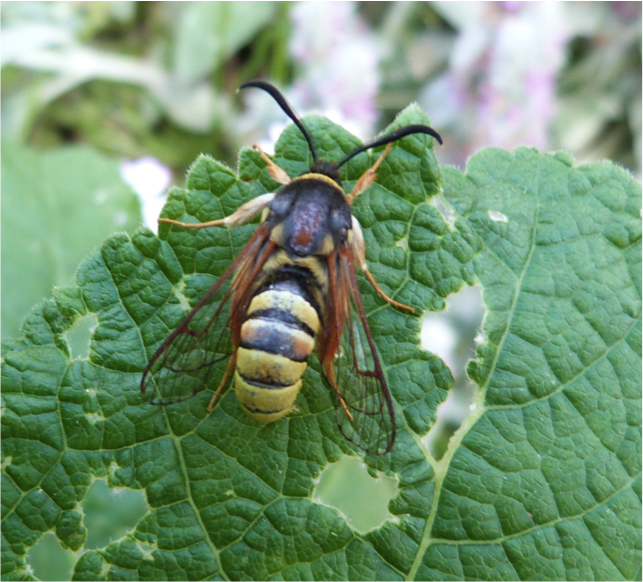
Following on from last week’s post about the Ashy Mining Bee, here’s yet another new record for our garden that I spotted yesterday – the Lunar Hornet Moth (Sesia bembeciformis), one of the Clearwing Moths (family Sesiidae).  It’s a fabulous example of Batesian Mimicry in which a harmless species (the moth) has evolved to resemble a more dangerous or toxic species, in this case large wasps or hornets.  I certainly had to look twice when I saw it!  

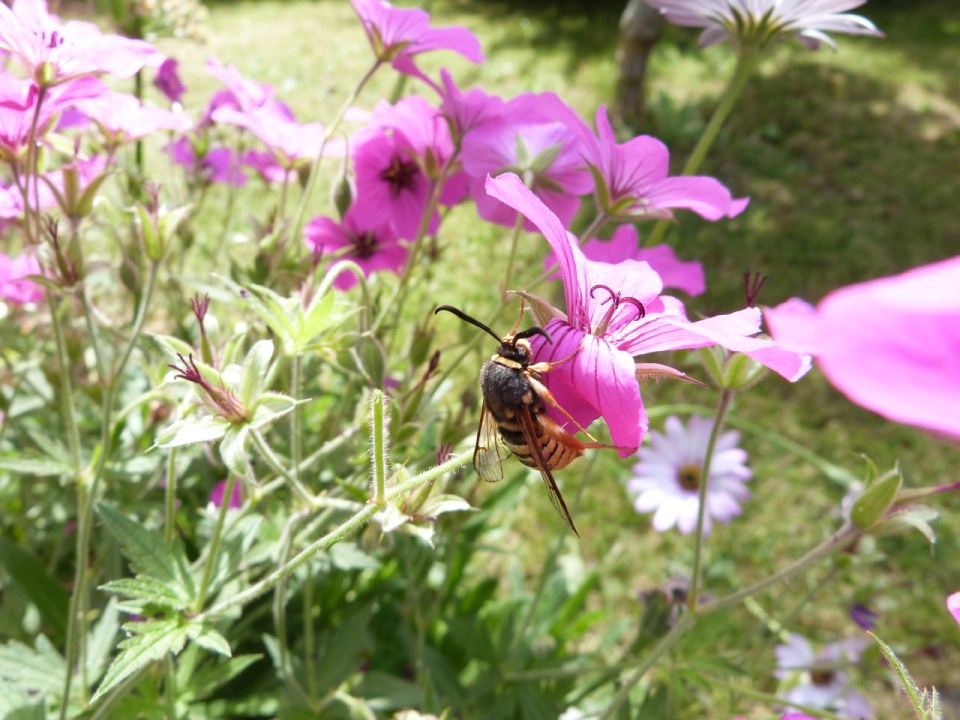
These moths do sometimes visit flowers such as umbellifers though the shot below is posed: the moth flew out of my hands as I was moving it and landed on this cultivated geranium.  The larvae feed on sallow and willow (Salix spp.) which we don’t have in the garden, but there’s lots in and around this part of the town.

Looking at the NBN Atlas account for the species I think that this may be a first record for Northampton town itself, though it is recorded out in the county.

Lunar Hornet Moth on GeraniumP1040014

A new pollinator for our garden: the Ashy Mining Bee

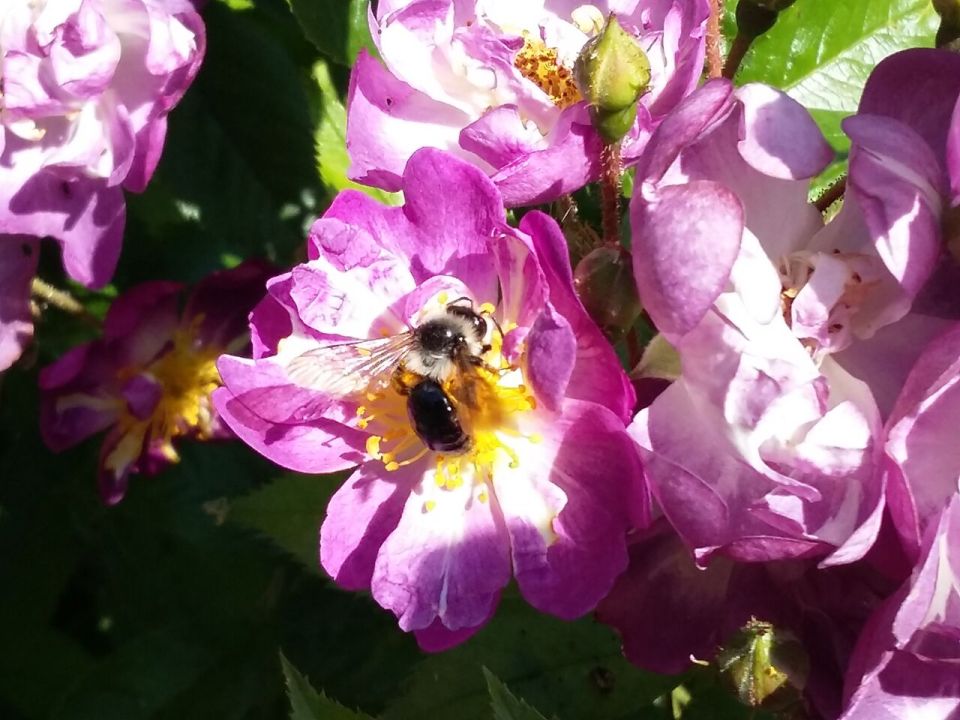
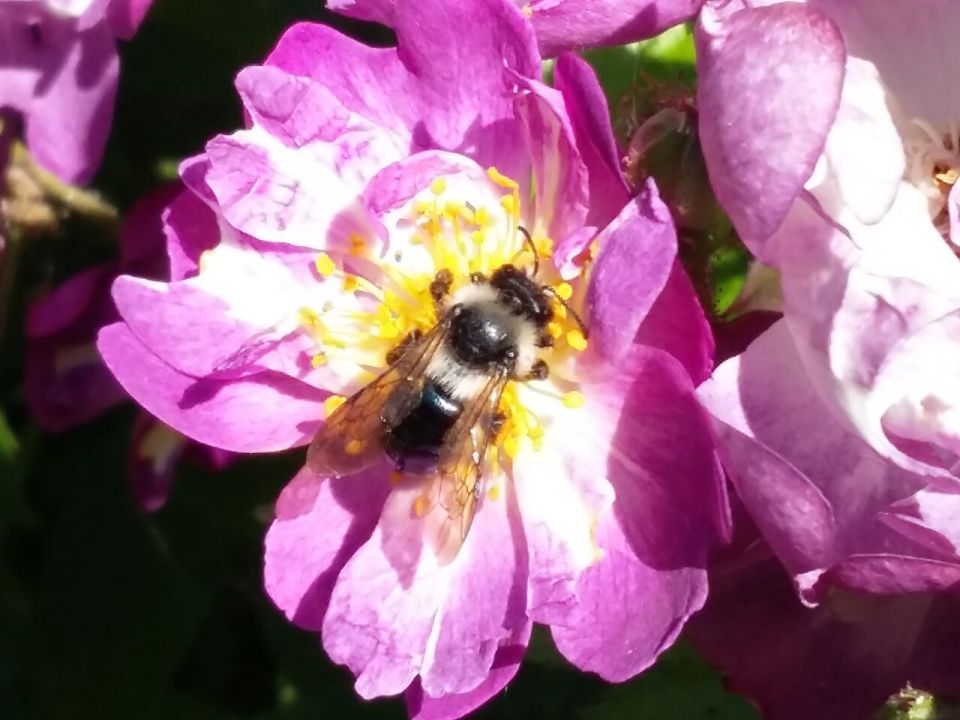
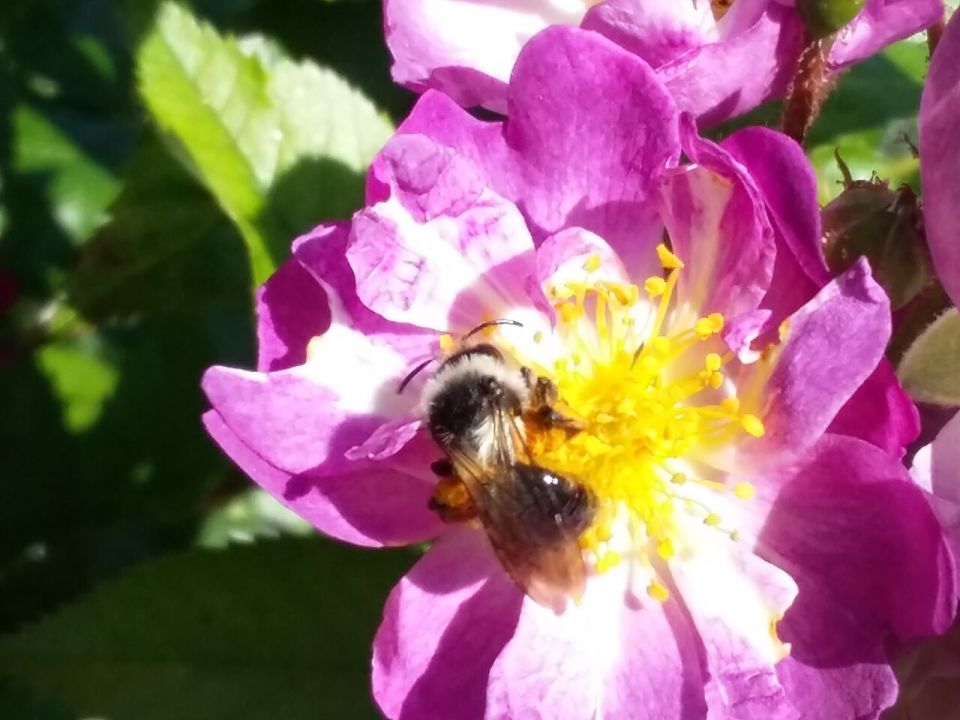
Today I’ve been cracking on with the refurbishment of the old summer house at the back of the garden that previous owners have let fall into rotten disrepair, whilst Karin attends a conference in London.  The renovation has been a slow job, due to lack of time, but a lot of fun, and a good excuse to play with power tools.  In between sawing and drilling, however, I’ve been keeping an eye out for bees and other flower visitors and was delighted to spot a new species for the garden – the Ashy Mining Bee (Andrena cineraria).  It’s a beautiful and distinctive insect that I know from other sites in Northampton, but had not recorded here previously.  The record has been submitted to the BWARS recording scheme for this species.

Do look out for this bee, it’s difficult to confuse it with anything else (which is rare in Andrena….)  Here’s a few photographs of a female collecting pollen from a cultivated rose, that I took with my phone:

Ashy Mining Bee 2017-06-17 10.55.45Ashy Mining Bee 2017-06-17 10.55.53

Ashy Mining Bee 2017-06-17 10.56.10


Saved by a bee: a true story, with reflections and photos from PopBio2017

1

The blog has been a bit quiet of late, due to a lot of traveling on my part, starting with field work in Tenerife, then a weekend away with friends on the Isle of Wight, followed by the topic of this post: PopBio2017 – the 30th Conference of the Plant Population Biology Section of the Ecological Society of Germany, Austria and Switzerland in Halle, Germany.  And I’d like to begin with a story….

The organisers of PopBio2017 had invited me to be one of five keynote speakers at the conference and I was due to deliver a talk on “The macroecology of wind and animal pollination” first thing (09:00) on Thursday morning.  So the night before I duly set my phone’s alarm for 07:00, thinking I’d have enough time to get ready, have breakfast, then take the tram to the venue (a 15 minute ride/walk).

It was a very hot night and I left the windows open, but my mind was restless with thoughts of how to deliver the talk most effectively.  So I kept waking up during the night, and actually slept through the alarm.  The next thing I know it is 07:45 and I am being woken up by an urgent buzzing noise….from a bee!

I swear this is true: a bee had flown in through the window, buzzed for a few seconds right in front of my face, and woke me up in time to deliver my talk on pollinators!  It then turned around and flew straight back out of the window.

It actually wasn’t until I’d jumped out of bed and into the shower that I’d woken up sufficiently to appreciate what had happened…and wondered if anyone would actually believe me!  Anyway, I got to the venue with 15 minutes to spare, the talk seemed to go well, and it’s a story I think I’ll enjoy telling for some time to come.

The conference was really fabulous, with some very impressive science on show.  It was a good mix of postdocs, PhD students, and established researchers talking on a diverse range of plant ecology topics, not just “plant population biology” (whatever that really is – there was some discussion on that score).   The organisers had arranged the programme so that the keynotes in each session were followed by shorter talks broadly related to that topic, so I was followed by a series of presentations on pollination biology.  And very good they were too.

Here’s some photos from the week:

A slightly blurry audience waiting for my talk to begin (not as blurry as me after the dash to the venue however…):

2

I was fascinated by the coypu that are common in the River Salle which flows through the city of Halle.  They are classed as an invasive species, but are very, very cute:

3

Indeed so cute I couldn’t resist taking a selfie…

4

Some interesting urban greenery including swales for flood defence:


5

6

7

8

9

Wall plants surviving the graffiti:

10

Halle’s most famous resident, Handel:

11

There’s a Harry Potter feel to some parts of the town:

12

The fabulous double-double-spired cathedral:

13

There had to be a spiral or two, of course:

14

On the Saturday after the talks had finished we took an excursion to the fascinating “Porphyry Hills” dry grasslands – unique western extensions of plant communities and species normally found in the east, including many plants of the steppe:

15

These rocky outcrops have become exposed as agricultural ploughing caused the surrounding soil level to drop:


Some of the grassland areas have very thin soils with resultant high plant diversity:


22

Lots in flower, though not as many pollinators as I would have liked:

23

24

25

On the last evening a couple of us had a private tour of the university’s botanic garden, and well worth a visit it is too:

It was a thirsty conference – “To beer or not to beer….”?

30

Finally thanks to the organisers of PopBio2017 for the invitation to speak, and to all of the conference attendees who made it such a special meeting.