Category Archives: Biodiversity

Bumblebees, ferries, and mass migrations: an update

Sejero - 20160910_113537.png

The post earlier this week on the question of “Why do bumblebees follow ferries?” generated quite a few comments, both on the blog and on Facebook.  As I’d hoped a number of people have chimed in to say that they have observed the same thing, or commented that they often see bumblebees when sailing or kayaking out at sea.

Here are the additional observations in increasing distance order to nearest larger area of land.  Distances are approximate and in some cases it’s unclear where exactly the observations were made:

Isle of Mull to the Isle of Staffa: 6.5km

Skye and the Outer Hebrides going in both directions: 24km

Ferry to Jersey: 28.4km

Estonia to Helsinki: 80km – described in a short paper by Mikkola (1984).

However this is nothing compared to evidence that queen bumblebees may engage in mass migrations (involving thousands of bees) across the North Sea from England to Holland, a distance of 165km!  See Will Hawkes’s short article “Flight of the Bumblebee“.

This idea of mass migration is new to me, though the Mikkola (1984) paper cites some earlier literature on the topic.  And this morning I had a quick phone chat with Dave Goulson who tells me that he occasionally gets people contacting him to tell him about such events.  But it’s unclear why these bees should be flying such large distances, how they coordinate their migrations, or indeed how much energy they need to store to travel that far. In addition there are implications for gene flow between British and Continental subspecies of bees such as the Buff-tailed Bumblebee (Bombus terrestris). Even a relatively well studied group of insects such as the bumblebees can continue to surprise us with new questions!

Thanks to everyone who contributed observations and ideas, it’s much appreciated.

Why do bumblebees follow ferries?

Sejero - 20160910_180359.png

A few years ago I mentioned in my post “Garlicky archipelago” that I had seen bumblebees (Bombus spp.) following the ferry from Southampton to the Isle of Wight, a distance of about 1.5km across water.  If I remember correctly it was my colleague Scott Armbruster who first mentioned this to me: he lives on the Isle of Wight and commutes regularly to the mainland.

I’ve not thought much about this since then as 1.5km is a fairly modest distance for a bumblebee to fly.  But then a few weeks ago I saw the same thing in Denmark, but this time over a much longer distance.

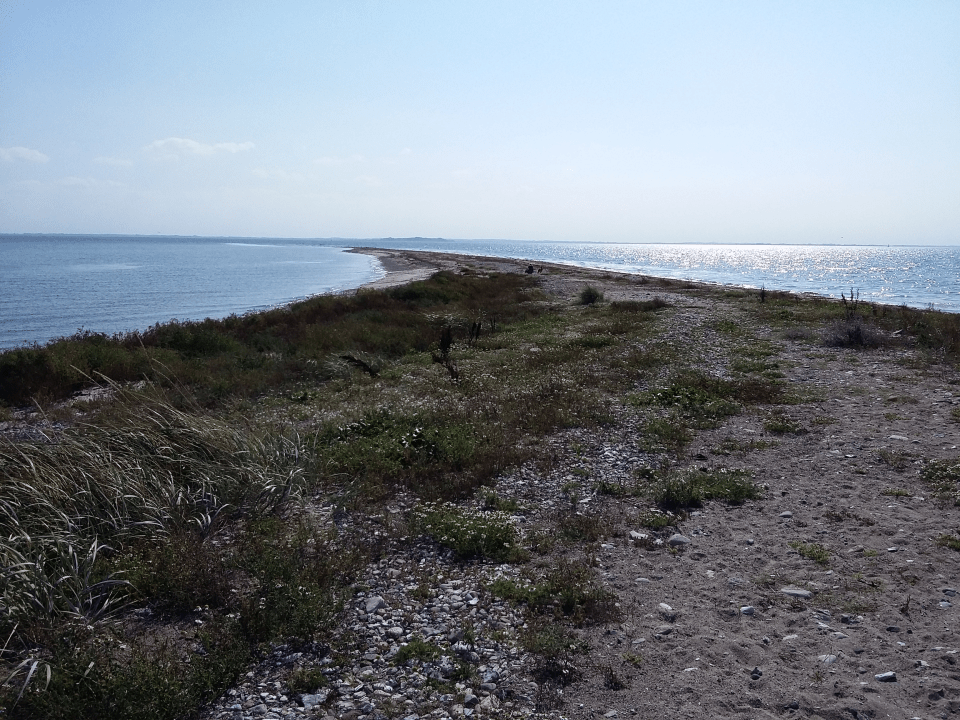
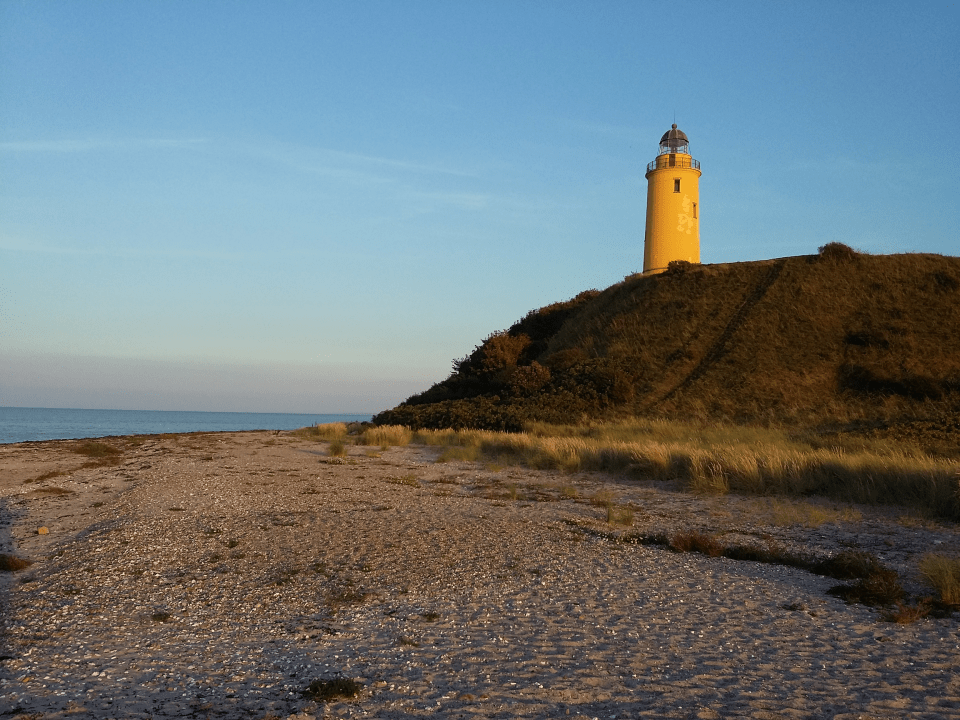
Karin and I were visiting friends on the small island of Sejerø, which (at its closest point) is about 8km from the mainland of Zealand.  To get there you have to catch a ferry which takes about an hour to cross this stretch of water.  About half-way across,  whilst looking over the stern of the ship, I spotted a bumblebee following the ferry.

So that’s twice, on two different ferries and under very different contexts, that I’ve seen this phenomenon.  A pattern is starting to form….  Has anyone else observed this?  Please do comment.

I can think of a few explanations/hypotheses for what’s going on here (some of which are not mutually exclusive):

  1.  Clearly bumblebees do fly across significant stretches of open seawater.  Perhaps all I’m seeing is bees that do this, but spotted from the only vantage point where it’s viewable (i.e. the ferry).
  2. These bumblebees are taking advantage of the slipstream created by the ferry to reduce the energy required to fly these long distances.
  3. The bees are hitching a lift on the ferry and I only observe them as they arrive or depart.
  4. The bees are following the wake of the ship to navigate between the island and the mainland, in order to exploit significant flower patches.  Work by one of my PhD students, Louise Cranmer, a few years ago showed that bumblebees follow linear features such as non-flowering hedgerows to navigate – see Cranmer et al. (2012) Oikos.  Perhaps something similar is happening here?

There’s probably other possibilities I’ve not thought of.  But whatever the explanation, it looks to me as if there’s some potential for interesting experiments marking and recapturing bees on islands/mainland, releasing bees on ferries to see if they follow the wake, etc.  If only Northampton wasn’t so far from the coast….


Urban areas as a refuge for insect pollinators: conservation for the city

Waterside - 20160527_081706.png

Urban conservation ecology is a fast growing field that has mainly focused on how towns and cities can support populations of plants, animals and fungi that may be declining or threatened in the surrounding rural environment.  That is, the city for wildlife conservation.  In a new essay in the journal Conservation Biology, written with colleagues from across the world, we argue that conservation for the city (an idea originally conceived, I believe, by Steward Pickett) should also be a focus of future research and management activities.

Conservation, or ecology, for the city in essence means that plants, animals and fungi, as well as being supported by the city (see our recent urban bees example), play a role in supporting the city itself through the provision of ecosystem services such as decomposition, flood alleviation, and crop pollination.

It’s pollinators and pollination that we particualrly focus on in this essay – here’s the abstract:

Urban ecology research is changing how we view the biological value and ecological importance of cities. Lagging behind this revised image of the city are natural resource management agencies’ urban conservation programs that historically have invested in education and outreach rather than programs designed to achieve high-priority species conservation results. This essay synthesizes research on urban bee species diversity and abundance to suggest how urban conservation can be repositioned to better align with a newly unfolding image of urban landscapes. We argue that pollinators put high-priority and high-impact urban conservation within reach. In a rapidly urbanizing world, transforming how environmental managers view the city can improve citizen engagement while exploring more sustainable practices of urbanization.

I’m happy to send the PDF to anyone who wants a copy; here’s the full citation:


The macroecology of animal versus wind pollination – a new study just published

In collaboration with colleagues in Brazil, Denmark, and elsewhere in the UK, we’ve just published a new research paper which looks at the global spatial distribution of wind and animal pollinated plant species, and the underlying historical and contemporary ecological causes of that distribution.  It’s a study that builds on my “How many flowering plants are animal pollinated?” paper in Oikos, and has been a long time in its gestation.  We’re very excited by its findings and plan to develop this project in the future.

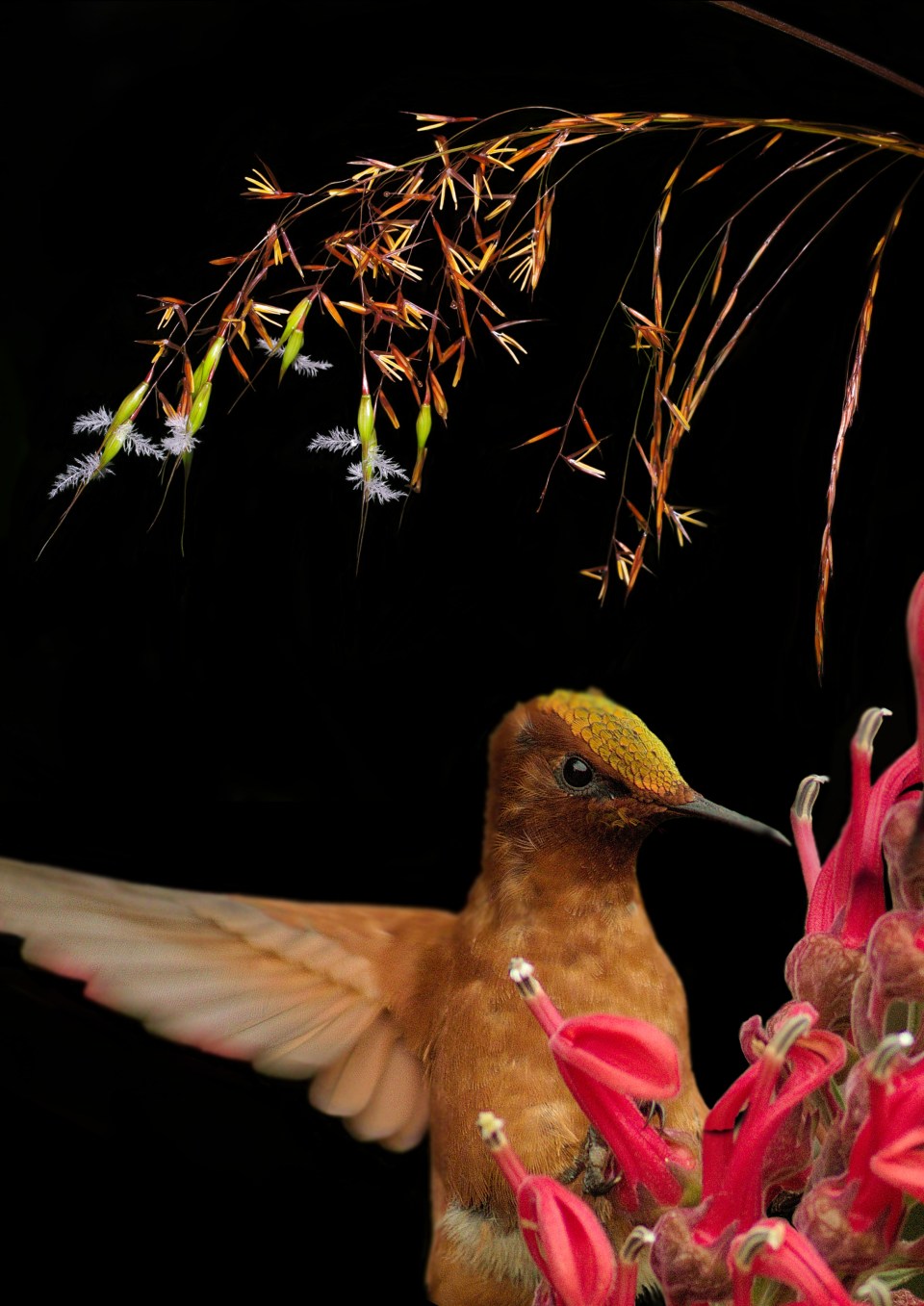
As a bonus we made the cover of the journal with the amazing image below!  Big thanks to Pedro Viana and Jesper Sonne for the photos.

Here’s the citation with a link to the publisher’s website; the abstract is below.  If anyone wants a PDF copy, please ask.

Rech AR, Dalsgaard B, Sandel B, Sonne J, Svenning J-C, Holmes N & Ollerton J (2016) The macroecology of animal versus wind pollination: ecological factors are more important than historical climate stability. Plant Ecology & Diversity 9: 253-262


Abstract:

Background: The relative frequency of wind- and animal-pollinated plants are non-randomly distributed across the globe and numerous hypotheses have been raised for the greater occurrence of wind pollination in some habitats and towards higher latitudes. To date, however, there has been no comprehensive global investigation of these hypotheses.

Aims: Investigating a range of hypotheses for the role of biotic and abiotic factors as determinants of the global variation in animal vs. wind pollination.

Methods: We analysed 67 plant communities ranging from 70º north to 34º south. For these we determined habitat type, species richness, insularity, topographic heterogeneity, current climate and late-Quaternary climate change. The predictive effects of these factors on the proportion of wind- and animal-pollinated plants were tested using correlations, ordinary least squares (OLS) and logistic regression analyses with information-theoretic model selection.

Results: The proportion of animal-pollinated plant species was positively associated with plant species richness and current temperature. Furthermore, in forest, animal pollination was positively related to precipitation. Historical climate was only weakly and idiosyncratically correlated with animal pollination.

Conclusion: Results were consistent with the hypothesised reduced chance for wind-transported pollen reaching conspecific flowers in species-rich communities, fewer constraints on nectar production in warm and wet habitats, and reduced relative effectiveness of wind dispersal in humid areas. There was little evidence of a legacy of historical climate change affecting these patterns.

andre-capa-1


Two-day Steven Falk bee ID course at Oxford University Museum 15th-16th October 2016

Male B lap on Salvia cropped P1120309

One of the most exciting, pollinator-related publishing events of last year was the publication of Steven Falk’s eagerly-anticipated Field Guide to the Bees of Britain and Ireland.  Not only does this book provide a state-of-the art account of the natural history and identification keys for all of the bees currently known from Britain (over 270 species) but it’s backed up by Steven’s own Flikr site with more photographs of the bees, including lots of close ups, and an ongoing list of updates and corrections.

But as Steven himself acknowledges, the identification of many of our bees is a challenge, even with the book and the additional imagery.  Anyone who is really keen to get to grips with bee identification is therefore recommended to book onto a hands-on identification course.  Steven has just announced that he is running a two-day course in Oxford on 15th to 16th October, at a cost of £60 per person – here’s a link to the booking page.  Seems like good value to me!

Release today of the IPBES Summary for Policymakers of the Assessment Report on Pollinators, Pollination and Food Production

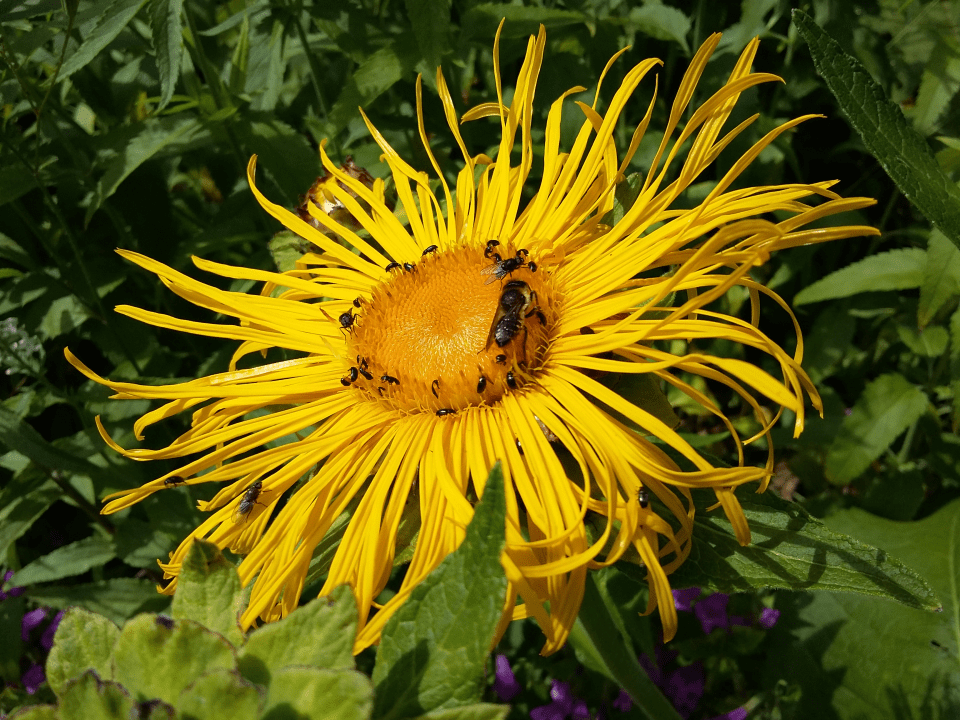
Inula at Ravensthorpe 20160710_145426Following on from the press release earlier this year announcing of the Intergovernmental Science-Policy Platform on Biodiversity and Ecosystem Services (IPBES) assessment of pollinators, pollination and food production (which I reported on in February) it looks as though the full report may shortly be published.  A Summary for Policymakers has just been released by IPBES and can be downloaded by following this link.  I’ll put up a link to the full report once it becomes becomes available.

Why has a 102 year old ecologist been asked to vacate his university office?

David W. Goodall is an Australian ecologist with an outstandingly long career – he received his PhD 75 years ago!  Over that period he has produced some seminal works in the field of vegetation analysis, and acted as Editor-in-Chief of the 36 volume, highly influential Ecosystems of the World series.

Until recently David had been allocated office space at Edith Cowan University in Perth, and commuted into campus by bus and train at least four days a week.  As reported in the Australian media, however, David has now been asked to give up his office and only come on to campus, accompanied, for pre-arranged meetings.

The university claims that it made the decision in David’s own interest, but his own daughter (who surely knows him and his capabilities better than the university authorities) says it’s the “the worst thing …[they]… could possibly do, I don’t know if he would survive it”.

I really hope Edith Cowan University reconsiders this, it seems a very shabby way to treat a distinguished researcher with such a long working history, who is still active (his most recent paper is from 2014!) and contributing to the scholarly life of his department.

Please read the original story and, if you feel so inclined, tweet your reaction to @EdithCowanUni

Identifying British ichneumonid wasps: an introductory guide from the NHM

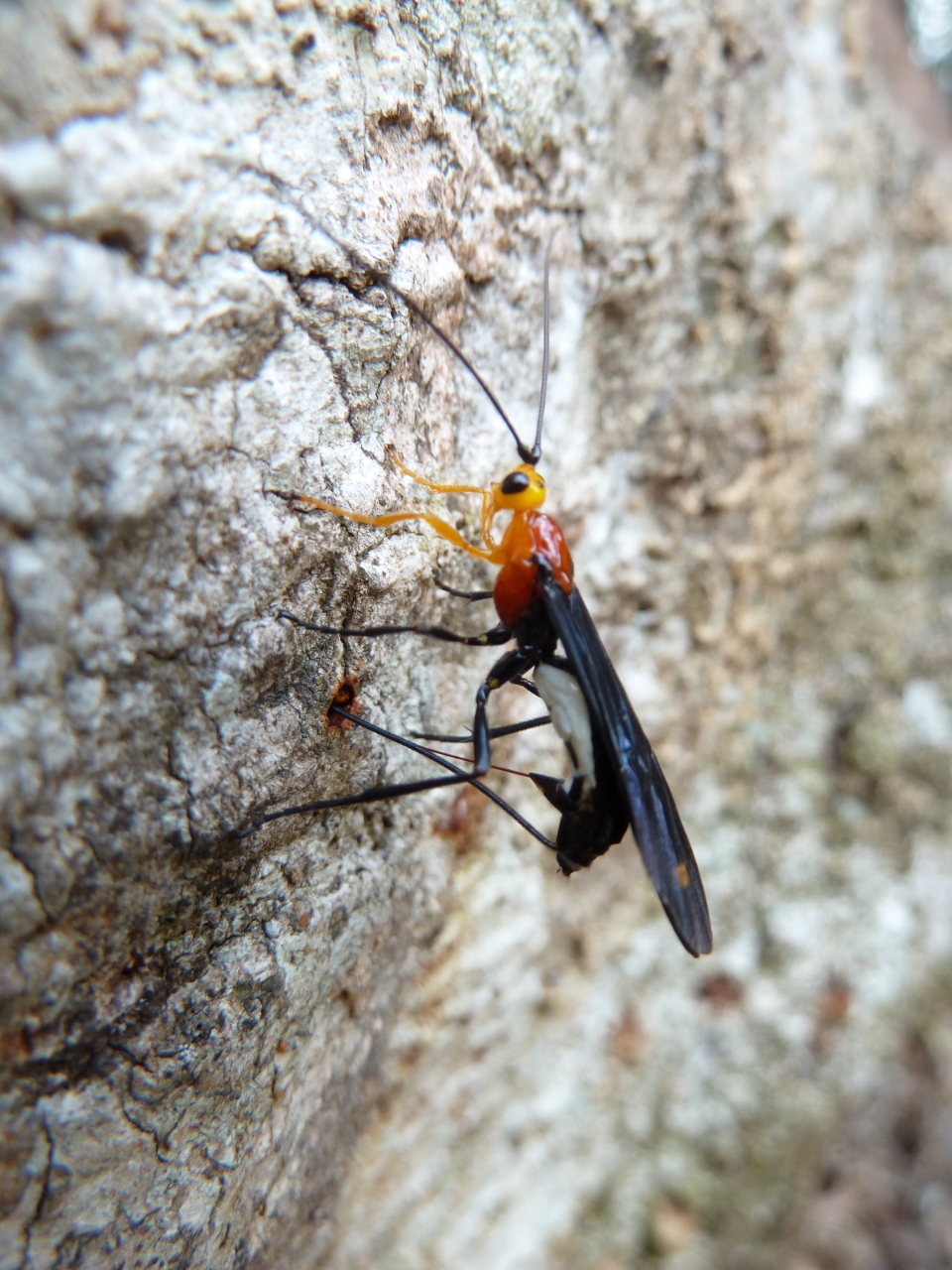
Tanzania ichneumonid P1000757

The ichneumonid wasps (Hymenoptera: Ichneumonidae) are a fantastically diverse group of insects that mostly share a similar parasitic life history: they lay their eggs in or on a host insect.  Around 24,000 species have been described, and estimates for their full diversity range between 60,000 and 100,000 species.

In Britain there are approximately 2,500 species, almost 10 times our bee diversity. Many species visit flowers, particularly umbellifers, and they can therefore be quite significant (though under-studied) pollinators of things like Wild Carrot (Daucus carota) and its relatives.

With so many species to deal with, identifying ichneumonids can be a daunting task. However the Natural History Museum (London) has produced a free beginner’s guide to identifying them – here’s a link to it.

Although it only covers 22 commonly encountered species (i.e. less than one hundredth of Britain’s species diversity) it’s nonetheless a useful introduction to a fascinating group. However you’ll not be able to identify the species pictured above – I photographed that in Tanzania a few years ago!

Bees and pesticides – a major new study just published – UPDATED

Male B lap on Salvia cropped P1120309

An important new study about the effects of neonicotinoid pesticides on wild bees has just been published in the journal Nature Communications – here’s the details and a link to the paper, which is open access:

Woodcock, B. A. et al. (2016) Impacts of neonicotinoid use on long-term population changes in wild bees in England. Nat. Commun. 7:12459 doi: 10.1038/ncomms12459

As I’ve previously discussed on this blog (e.g. here and here) there are widespread concerns amongst environmentalists, and some scientists, about the impact that these relatively new pesticides are having on pollinators and other biodiversity.  The Woodcock et al. paper is a major contribution to this discussion as it uses a huge dataset to model the changes in populations of 62 wild bee species that are known to forage on oilseed rape (canola) over 18 years.  These changes can be related to the spatial extent of oilseed rape cultivation and the authors found that whilst bees “….foraging on oilseed rape benefit from the…[nectar and pollen provided by]….this crop….[they]….were on average three times more negatively affected by exposure to neonicotinoids than…” bees which didn’t forage on the crop.

The authors further conclude that “This study provides the first evidence for community level national scale impacts on the persistence of wild bee populations resulting from exposure to neonicotinoid treated oilseed rape crops.”

Neonicotinoid pesticides are, of course, not the whole story when it comes to understanding declines in pollinator diversity and abundance.  But these pesticides are the latest in a long history of changes to British agriculture that have had significant consequences for the biodiversity of our country (as we showed in our study of bee and wasp extinctions).

Reactions to the study have been, well, predictable.  A long feature on the BBC News website* quoted a representative from Bayer as saying:

“we believe….[the study’s]….findings would be more correctly headlined that intensive agriculture is causing some issues with pollinators…..  Whether this is due to the use of insecticides is not clear; a lack of nesting sites and pollen and nectar sources in these areas may also be critical factors.”

Which rather ignores the fact that this was a comparative study of bees that forage on oilseed rape versus those that don’t.

Likewise the National Farmer’s Union’s position was that:

“While this study claims to provide an important contribution to the evidence base underpinning the current EU moratorium on some uses of neonicotinoids, experts reviewing all the evidence have concluded that there are still major gaps in our knowledge and a limited evidence base to guide policymakers”

Which sounds to me like a statement designed to fudge the issue: the “experts reviewing all the evidence” would not have reviewed this particular study!  And which begs the question – how much evidence and how many studies would be enough for the NFU?

The study’s authors do not make any suggestions as to what the next step should be in this continuing saga but are quoted as saying that “simplistic solutions” such as banning these pesticides are not the answer because this will encourage use of pesticides that are even more damaging.  That may be the case but it’s clear that an independent root-and-branch reassessment of the use of pesticides (and herbicides) in UK agriculture is long overdue.


*As an aside, this BBC News piece wrongly states that bumblebees were not included in the study, which is not the case.


UPDATE:  After I published this post I noticed that Manu Saunders has also written about the bee study, plus a second study that I’d not seen linking neonicotinoid use to declining butterfly populations in California.  Here’s a link to Manu’s blog.


The biodiversity of restored landfill sites: a new study of snails just published

Snails - 20160813_124310

The latest paper in a series* studying the biodiversity of restored landfill sites in comparison to nearby nature reserves has just been published.  This work comes from the linked PhD research of two of our former students, Dr Lutfor Rahman and Dr Sam Tarrant.

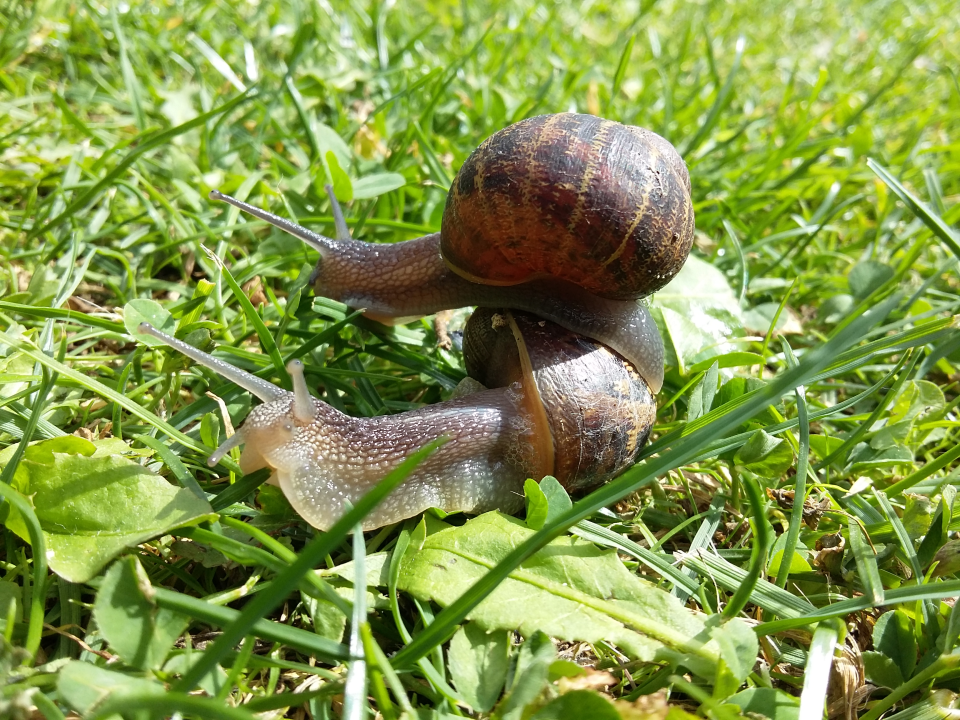
This new paper deals with the larger snails to be found on these novel grasslands and assesses the value of such sites for conserving the diversity of an ecologically important group of molluscs.  Snails play a vital role in nutrient turnover and are a major food source for higher trophic levels, such as some birds, small mammals, and beetles.

The take home message from the study:  restored landfill sites are as rich in species as nature reserves, but a higher proportion is of non-native, introduced species.

Here’s a link to the paper, with the abstract below; it’s paywalled but if you’d like a PDF, just ask:

Rahman, L. Md., Tarrant, S.,Ollerton, J. & McCollin, D. (2016) Effect of soil conditions and landscape factors on macro-snail communities in newly created grasslands of restored landfill sites in the UK.  Zoology and Ecology (in press)


Abstract

Though restored landfill sites provide habitat for a number of taxa, their potential for land snails remains unexplored. In this study, large-sized land snails (>5 mm) were surveyed using transect sampling at nine restored landfill sites and nine corresponding nature sites in the East Midlands region of the UK, during 2008. The effect of restoration was investigated by examining the composition, richness and diversity (Shannon index) of land snail species in relation to habitat and landscape structure. Thirteen macro-snail species were recorded in total, and rarefied species richness and diversity at restored landfill sites was not found to be statistically different from that of reference sites. One third of the snail species at restored landfill sites accounting for 30% of their total abundance were non-native species. Soil electrical conductivity was the strongest predictor of richness and diversity of land snails. Road density was found to be positively related to snail species diversity. Given the high percentage of introduced species at study sites, further research is needed to elucidate management implications of restored landfill sites and dynamics of native vs. non-native species.


*The other papers in this series are:

Rahman, L. Md., Tarrant, S., McCollin, D. & Ollerton, J. (2015) Vegetation cover and grasslands in the vicinity accelerate development of carabid beetle assemblages on restored landfill sites. Zoology and Ecology 25: 347-354

Tarrant, S., Ollerton, J., Rahman, L. Md., Griffin, J. & McCollin, D. (2013) Grassland restoration on landfill sites in the East Midlands, UK: an evaluation of floral resources and pollinating insects. Restoration Ecology 21: 560–568

Rahman, L. Md., Tarrant, S., McCollin, D. Ollerton, J. (2013) Plant community composition and attributes reveal conservation implications for newly created grassland on capped landfill sites. Journal for Nature Conservation 21: 198-205

Rahman, L. Md., Tarrant, S., McCollin, D. & Ollerton, J. (2012) Influence of habitat quality, landscape structure and food resources on breeding skylark (Alauda arvensis) territory distribution on restored landfill sites. Landscape and Urban Planning 105: 281–287

Rahman, L. Md., Tarrant, S., McCollin, D. and Ollerton, J. (2011) The conservation value of restored landfill sites in the East Midlands, UK for supporting bird communities. Biodiversity and Conservation 20: 1879-1893

Again, if you’d like PDFs of any of these, just ask.