Category Archives: Bees

Identifying the “Wild Bees” in John Clare’s poem – UPDATED

P1030210

John Clare is one of the most celebrated English poets of rural landscapes and nature in the 19th century. To quote his biographer, Clare was “the greatest labouring-class poet that England has ever produced. No one has ever written more powerfully of nature”.  Not only that, he was born and lived for much of his life in my adopted county, hence his epithet as “The Northamptonshire Peasant Poet”.

One of his less well-known poems is called Wild Bees and is a stunning example of Clare’s ability to make detailed observations of the natural world and to translate those observations into poetry.  So good are those observations that, as I show below, it’s possible to identify Clare’s bees from the descriptions he gives.  First of all, here’s the full poem:

Wild Bees

These children of the sun which summer brings
As pastoral minstrels in her merry train
Pipe rustic ballads upon busy wings
And glad the cotters’ quiet toils again.
The white-nosed bee that bores its little hole
In mortared walls and pipes its symphonies,
And never absent couzen, black as coal,
That Indian-like bepaints its little thighs,
With white and red bedight for holiday,
Right earlily a-morn do pipe and play
And with their legs stroke slumber from their eyes.
And aye so fond they of their singing seem
That in their holes abed at close of day
They still keep piping in their honey dreams,
And larger ones that thrum on ruder pipe
Round the sweet smelling closen and rich woods
Where tawny white and red flush clover buds
Shine bonnily and bean fields blossom ripe,
Shed dainty perfumes and give honey food
To these sweet poets of the summer fields;
Me much delighting as I stroll along
The narrow path that hay laid meadow yields,
Catching the windings of their wandering song.
The black and yellow bumble first on wing
To buzz among the sallow’s early flowers,
Hiding its nest in holes from fickle spring
Who stints his rambles with her frequent showers;
And one that may for wiser piper pass,
In livery dress half sables and half red,
Who laps a moss ball in the meadow grass
And hoards her stores when April showers have fled;
And russet commoner who knows the face
Of every blossom that the meadow brings,
Starting the traveller to a quicker pace
By threatening round his head in many rings:
These sweeten summer in their happy glee
By giving for her honey melody.


Here are the bees that I think Clare is talking about:

The white-nosed bee that bores its little hole, In mortared walls and pipes its symphonies

This is the least obvious of the bees to identify, but my best guess, due to the “little hole” and “white nose“, is one of the small Yellow-Faced Bees (Hylaeus spp.) some of which (despite the name) have white faces.  UPDATE:  following discussion with Matt Smith in the comments (below) I’m going to change my mind and suggest that Clare is referring to male Hairy-footed Flower Bee (Anthophora plumipes) – I think the “never absent couzen” part is the give-away.

And never absent couzen, black as coal, That Indian-like bepaints its little thighs

This has to be the female Hairy-footed Flower Bee (Anthophora plumipes) which is all black except for its orange pollen brush on its rear legs, and which also nests in old walls.

The black and yellow bumble first on wing, To buzz among the sallow’s early flowers, Hiding its nest in holes from fickle spring

I’m going to suggest that this is referring to the Buff-tailed Bumblebee (Bombus terrestris), the queens of which tend to emerge earlier than other, similar species, hence “first on wing“.  It also usually nests in rodent holes.

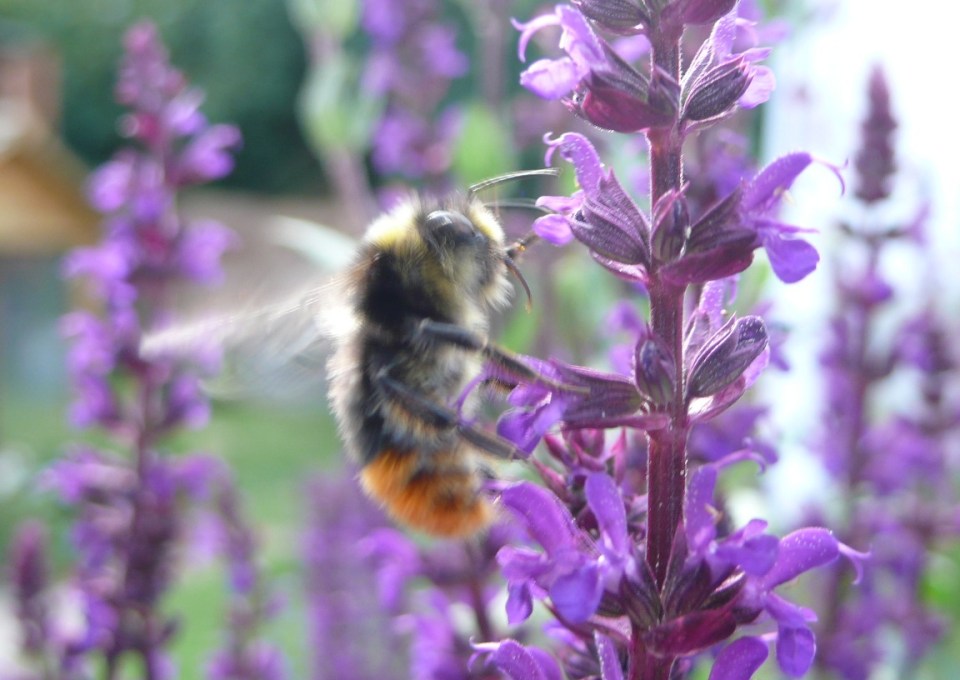
In livery dress half sables and half red, Who laps a moss ball in the meadow grass

This can only be the Red-shanked Carder Bee (Bombus ruderarius) the only red and black bee in the UK that makes a mossy nest above ground.

And russet commoner who knows the face, Of every blossom that the meadow brings

Finally, this must be one of my favourite bumblebees, the all-brown, Common Carder Bee (Bombus pascuorum), which is as common as the name suggests, and is renowned for foraging on a wider range of flowers than most others, and therefore “knows the face of every blossom“.

If you have any suggestions for alternative bee identifications, please comment below.

UPDATE:  it occurred to me after I posted this that all of the bees that Clare describes are still common in Northamptonshire with the exception of the Red-shanked Carder Bee (Bombus ruderarius) which has seen a huge decline throughout its range – see the BWARS account for this species.


Just published: A horizon scan of future threats and opportunities for pollinators and pollination

A team of pollinator researchers from across the globe has just published an interesting new paper which looks at potential threats to pollinators and the pollination services that they provide, as well as opportunities for future conservation and agricultural gains.  The paper is open-access and free to download – here’s the reference and a link to the paper:

Brown, MJF et al. (2016) A horizon scan of future threats and opportunities for pollinators and pollination.  PeerJ

The paper has also gained some media coverage, e.g. on the BBC News website.

Renovating a front garden for pollinators: because there has to be more to a scientist’s life than just…..science!

Over at the Standingoutinmyfield blog, the author has posted some “Photos from a hardwood floor“, and contrasted the satisfaction to be derived from a project such as (in this case) laying a new floor in her home (and great it looks too!) with the dissatisfaction that life as a scientist can bring.  Don’t get me wrong, I think I have the best job in the world, but I agree with her that there has to be more than science in the life of a scientist.

It’s probably not widely realised amongst non-academics, but failure and rejection are MUCH more common than success and acceptance in our professional lives.

Rejection rates for most journals are greater than 50%, and frequently as high as 80% to 90%; success rates for large grants are typically lower than 20%.  In the past seven months I’ve had one grant application and five papers rejected.  It can be very disheartening,  which is why I have to have more in my life than just science.

Of course there’s the teaching and admin that is a vital part of my job, but, like Standingoutinmyfield, other projects are important.  So Karin and I have spent part of the summer refurbishing an old summer house at the back of the garden (on-going) and renovating and planting our front garden (almost done).  As the latter project involves plants that are good nectar and pollen sources for pollinators, I thought I’d post some photographs:

P1020964

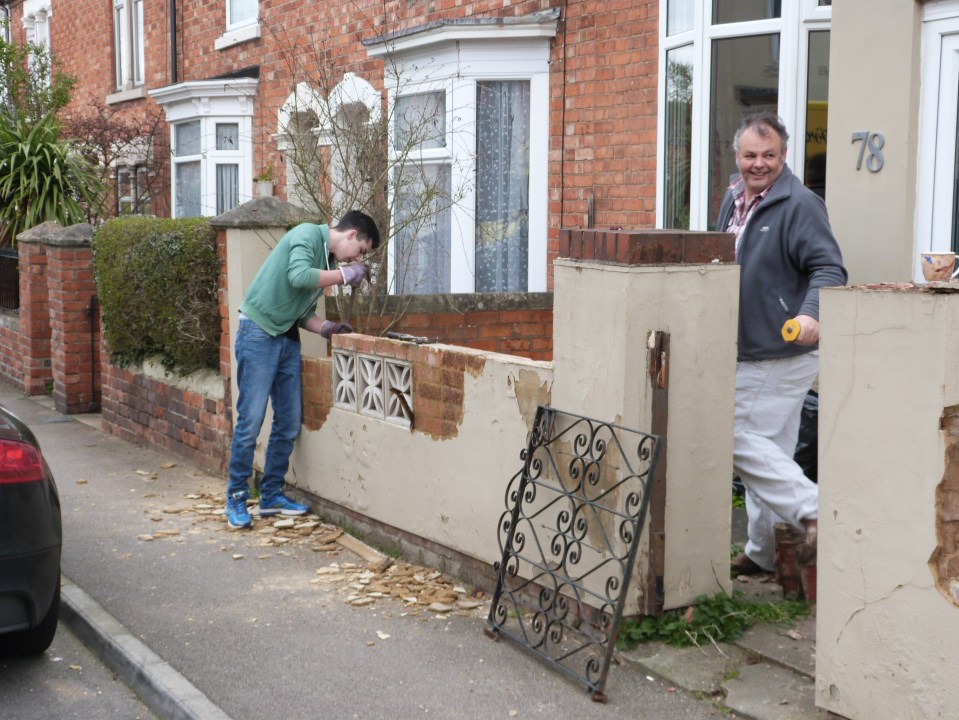
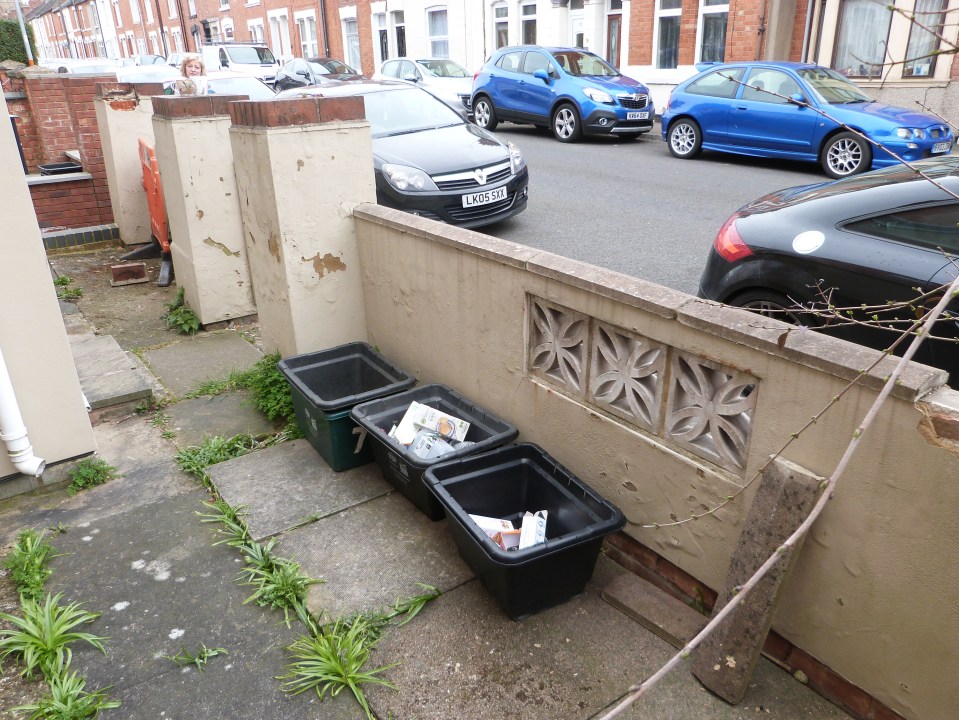
The original front wall – built in the late 1980s/early 1990s I think, and not at all in character with the late Victorian house.

The garden itself was paved and concreted over:
P1020962

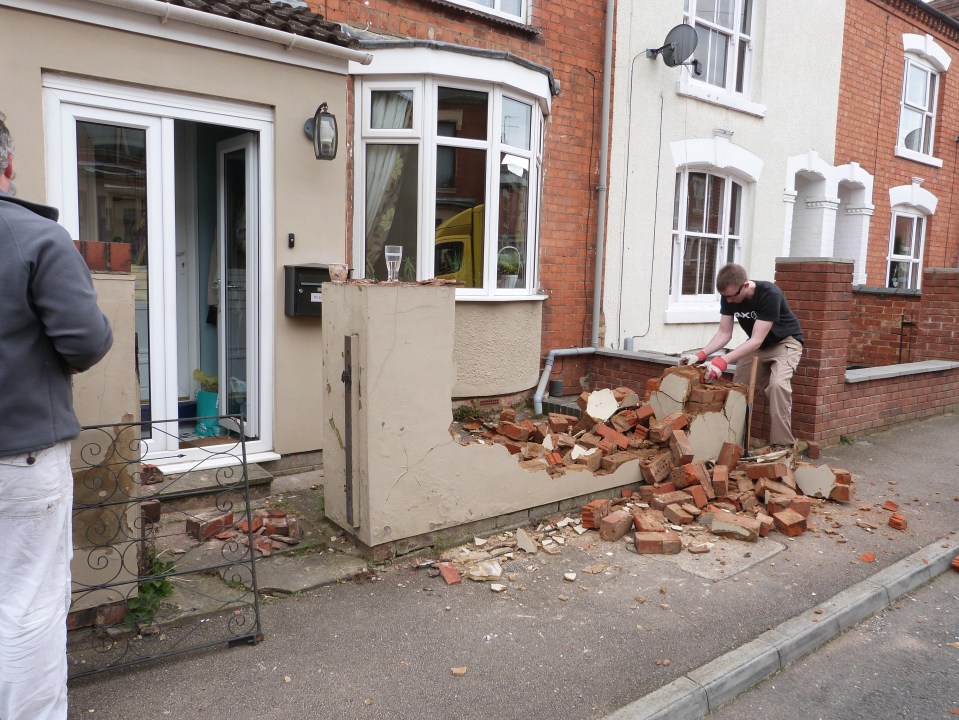
Demolition in progress!  While I supervise…..:
P1020968

P1020970

We salvaged what bricks we could, for other projects, and the rubble was taken to the local recycling centre to be used as hardcore.

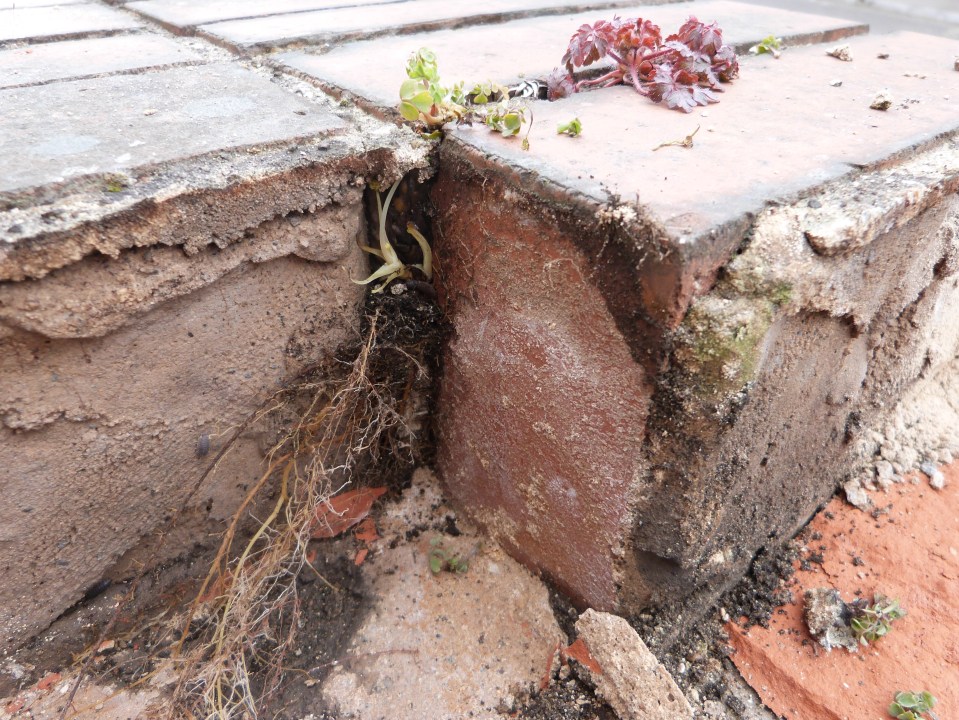
It’s amazing where plants will grow:
P1020971

The site is almost cleared, ready for a local semi-retired bricklayer (with 56 years of experience!) to build us a new wall using similar bricks to those of the house:

P1020982

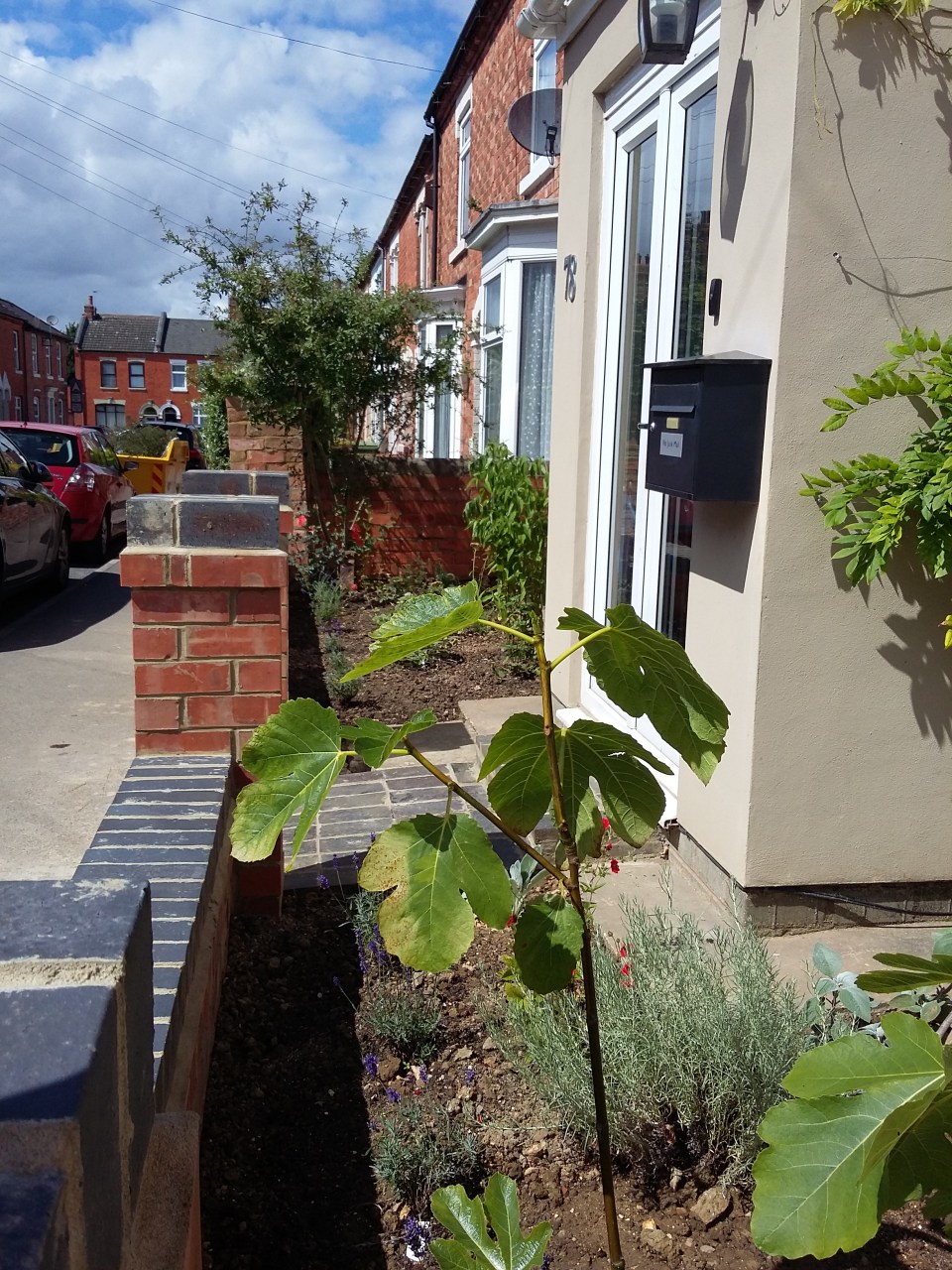
And here it is:

P1030286

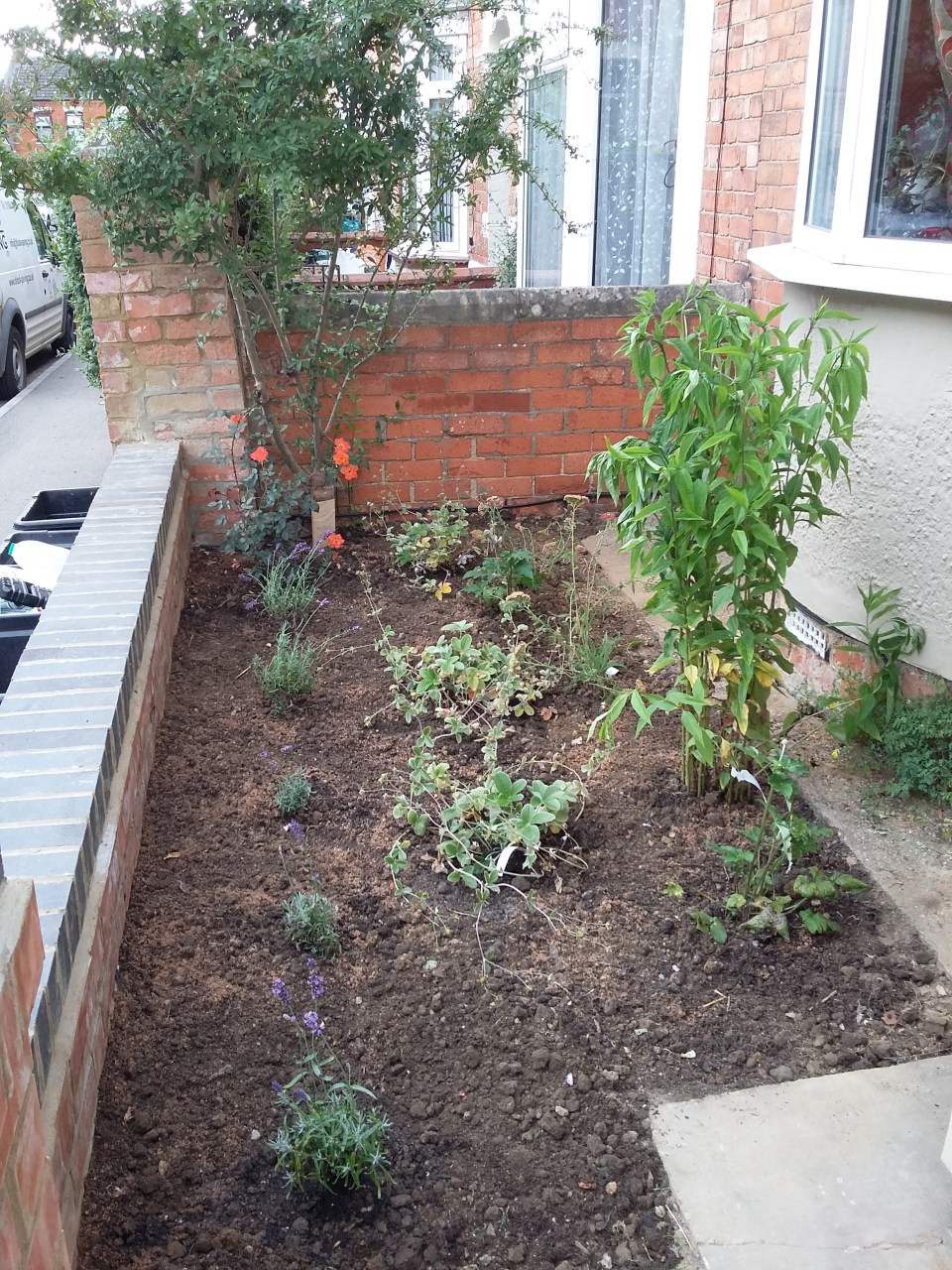
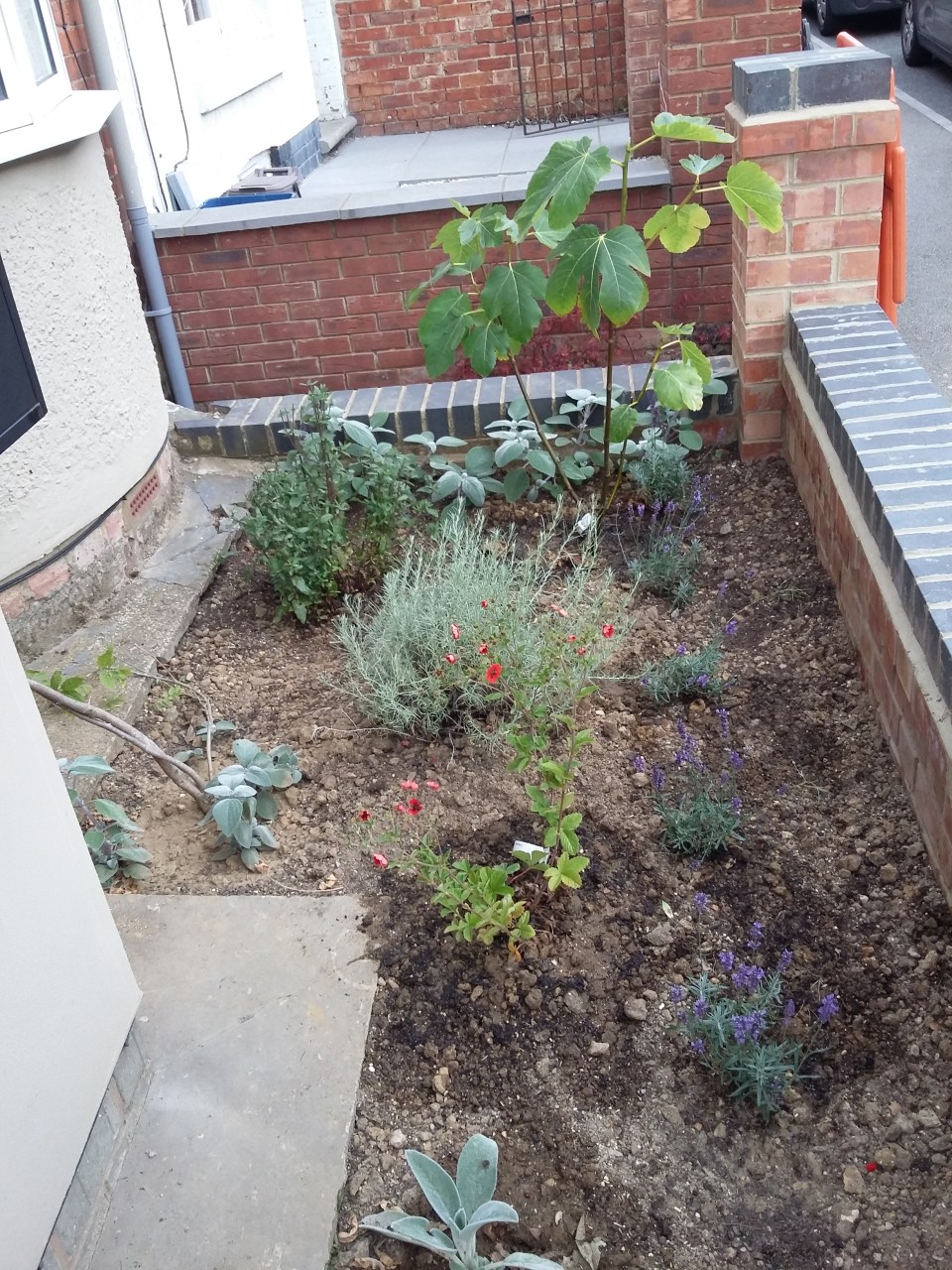
The soil in the front garden was very poor, varying from solid clay to builder’s rubble, so needed a lot of peat-free compost and sharp sand to improve it.  But finally we were ready to plant it up:
20160731_17551720160803_14024220160731_17550720160803_140249

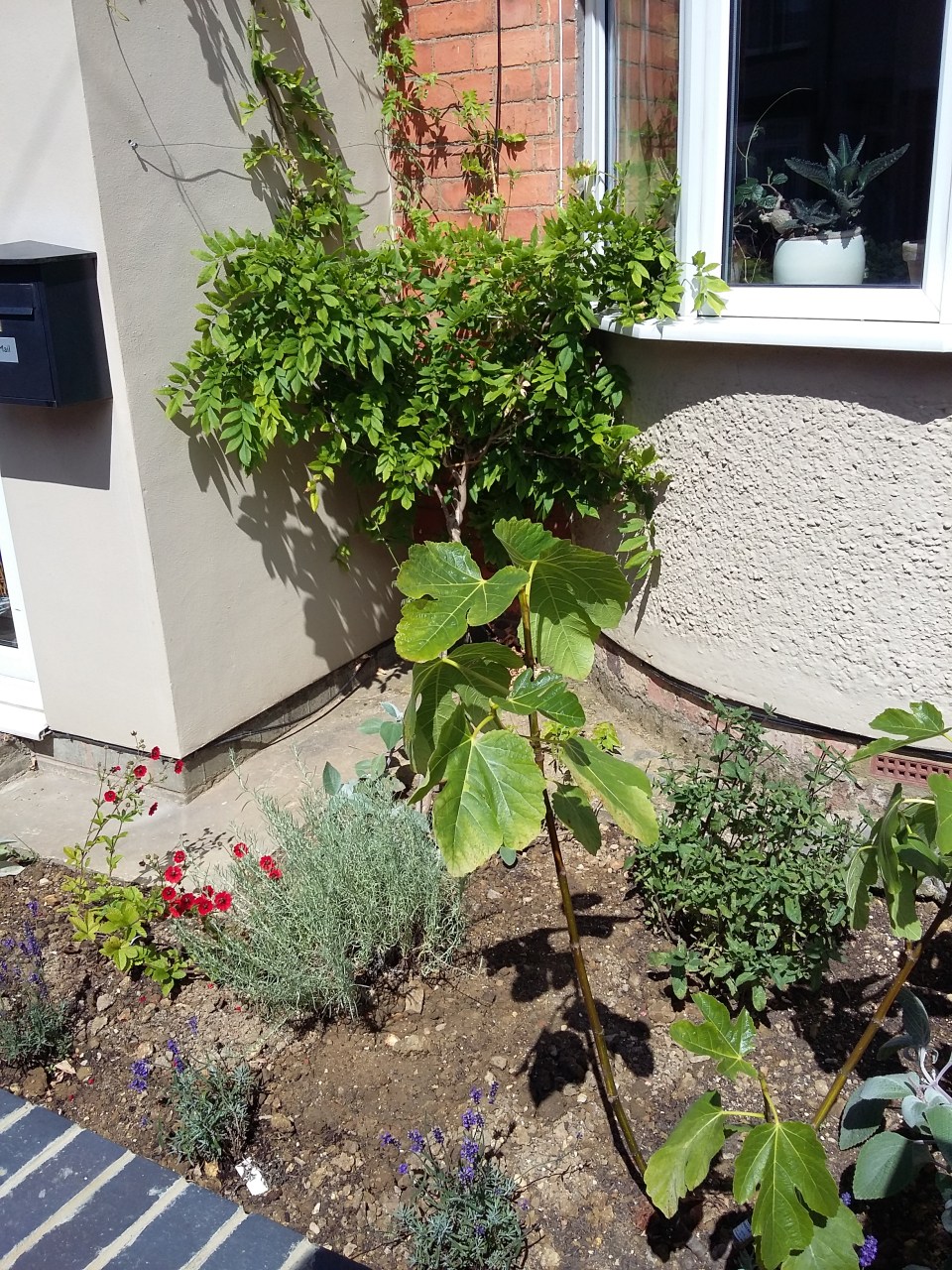
The garden is south facing so we had to choose plants that would do well in a hot, dry summer (not that we have many of those at the moment….).  It will take a year or two for them to get established and knit into a full display.  The plants are a mixture of pollen- and nectar-sources for pollinators plus things we just like – here’s the full list:

A small scrambling rose Rosa “Warm Welcome” – a beautiful, unusual colour, a very nice scent, and appropriate name for the front garden!

Lavender “Hidcote” – planted as a low hedge along the full length – even as we were putting in the plants, worker Buff-Tailed Bumblebees were visiting the flowers.

Plectranthus argentatus –  not hardy here but a lovely foliage plant, fast growing, and with flowers that bees like.  I’ll take cuttings in the autumn to keep it going.

Wisteria – this is quite a large plant that was a birthday present for Karin.  But I’ve lost the variety name so will have to try to track it down.

A fig – Ficus “Panache” – because we like figs.  The roots have been constrained in a sunken container to encourage the plant to produce more fruit and less growth.

A self-sown privet (probably Ligustrum vulgare) that was already in the front garden; we allow it to flower (rather than treating it as a hedge) as the bees love it and the black fruit can be eaten by birds.

Potentilla “Gibson’s Scarlet and “Jean Jabber” – deep red and vivid orange, respectively.

Achillea “Fanal” – also deep red and favoured by hoverflies.

Salvia nemorosa “Caradonna” – beautiful, intense purple.

Curry plant (Helichrysum italicum) because we love the smell and hoverflies love the flowers.

Japanese Anemone x hybrida “Honorine Jobert” – pure white and late flowering.

A perennial sunflower Helianthus “Lemon Queen” – likewise a late flowering hit with the pollinators.

Lamb’s Ear – Stachys byzantina – particularly favoured by the Wool-carder bee Anthidium manicatum.

There will be more to come in the near future.  Meanwhile, here’s a before-and-after shot:


The bee that lives on a volcano!

Nature can adapt to even the most unpromising and uncompromising of physical environments, from deep oceans to arid deserts.  And now we have a bee that lives in close proximity to an active volcano!  The work is by one of my former PhD students, Dr Hilary Erenler (who is still a Visiting Researcher at the University of Northampton), and is featured in a big news story in the journal Science.

Here’s a link to the story.

The full reference for the study, with a link to the journal, is:

Hilary E. Erenler, Michael C. Orr, Michael P. Gillman, Bethan R. B. Parkes, Hazel Rymer and Jean-Michel Maes (2016) Persistent nesting by Anthophora Latreille, 1803 (Hymenoptera: Apidae) bees in ash adjacent to an active volcano. Pan-Pacific Entomologist 92:67-78.

Well done Hils, it’s a great study!


The influence of floral traits on specialization and modularity of plant–pollinator networks in a biodiversity hotspot in the Peruvian Andes – Watts et al. (2016)

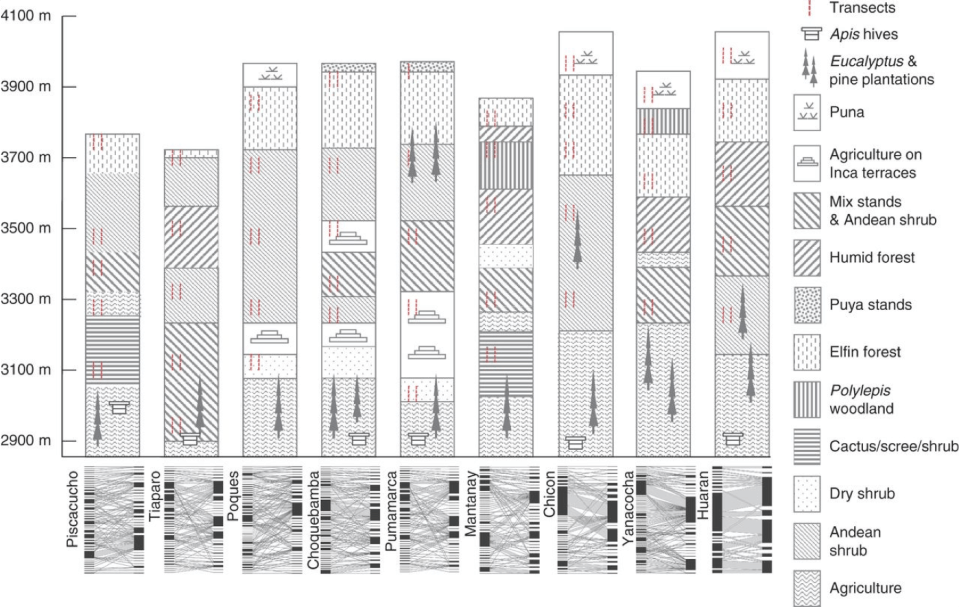
Watts et al Figure 1

The second paper from the PhD thesis of my former student Dr Stella Watts has just been published in Annals of Botanyhere’s a link to the journal’s website.  It summarises the major findings from her field work on plant-pollinator interactions in the high Andes of Peru:

Watts, S., Dormann, C.F., Martín González, A.M. & Ollerton, J. (2016) The influence of floral traits on specialization and modularity of plant–pollinator networks in a biodiversity hotspot in the Peruvian Andes.  Annals of Botany doi: 10.1093/aob/mcw114

This paper represents a major piece of research, including extensive field data collection over multiple sites in a challenging environment at altitude; state-of-the-art data analysis; and then summarising all of this into a single, digestible paper, with some great figures.  I’m very proud to have been part of it!

Here’s the abstract; please email me or Stella if you’d like a copy of the full PDF:

Background and Aims:  Modularity is a ubiquitous and important structural property of ecological networks which describes the relative strengths of sets of interacting species and gives insights into the dynamics of ecological communities. However, this has rarely been studied in species-rich, tropical plant–pollinator networks. Working in a biodiversity hotspot in the Peruvian Andes we assessed the structure of quantitative plant–pollinator networks in nine valleys, quantifying modularity among networks, defining the topological roles of species and the influence of floral traits on specialization.

Methods: A total of 90 transects were surveyed for plants and pollinators at different altitudes and across different life zones. Quantitative modularity (QuanBiMo) was used to detect modularity and six indices were used to quantify specialization.

Key Results:  All networks were highly structured, moderately specialized and significantly modular regardless of size. The strongest hubs were Baccharis plants, Apis mellifera, Bombus funebris and Diptera spp., which were the most ubiquitous and abundant species with the longest phenologies. Species strength showed a strong association with the modular structure of plant–pollinator networks. Hubs and connectors were the most centralized participants in the networks and were ranked highest (high generalization) when quantifying specialization with most indices. However, complementary specialization d’ quantified hubs and connectors as moderately specialized. Specialization and topological roles of species were remarkably constant across some sites, but highly variable in others. Networks were dominated by ecologically and functionally generalist plant species with open access flowers which are closely related taxonomically with similar morphology and rewards. Plants associated with hummingbirds had the highest level of complementary specialization and exclusivity in modules (functional specialists) and the longest corollas.

Conclusions: We have demonstrated that the topology of networks in this tropical montane environment was non-random and highly organized. Our findings underline that specialization indices convey different concepts of specialization and hence quantify different aspects, and that measuring specialization requires careful consideration of what defines a specialist.

Third International Conference on Pollinator Biology, Health and Policy – Pennsylvania – 18-20 July, 2016

P1030210

Keeping with the theme of Bees’ Needs Week, and the importance of pollinators to natural and agricultural ecosystems*, the Third International Conference on Pollinator Biology, Health and Policy takes place at Penn State University, USA,  from the 18th to 20th July.

Here’s a link to the PDF of the programme with the abstracts, speakers’ details, etc.  I won’t be attending** but I am involved as a collaborator*** in one of the talks being presented – Luísa Carvalheiro’s project on “Direct and indirect effects of soil eutrophication on pollination services“.

Best of luck to all the speakers and attendees, looks like it’s going to be a great conference.


*Wednesday’s grumpiness has almost disappeared, though it reached a new peak yesterday when we had a paper rejected by a journal after 10 months.  There was one positive review, one middling review, and then a third in which the reviewer provided no comments – just “reject”!  I was not happy about that and made my feelings known to the editor…..

**I’m actually in the Azores next week attending the Island Biology 2016 conference.  More about that at the weekend.

***With about a gazillion other people!  Luisa has pulled together an amazing data set.


“Insect pollinated” crops that don’t actually require insect pollination

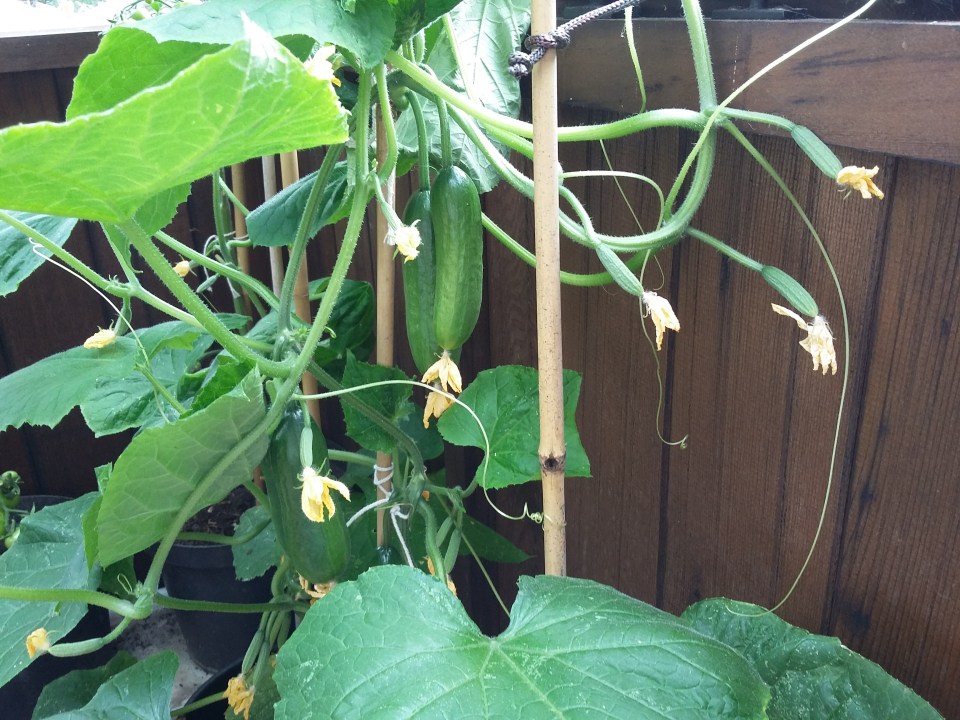
Cucumber fruit 20160713_103558

Yesterday evening I learned that a large grant application that I’d submitted earlier this year had failed to secure funding.  Statistically there was a high likelihood of this happening but that doesn’t make it feel any better: weeks and weeks of work have come to nothing.

So in a mood of bloody-minded contrariness and general displeasure at the unfairness of the world I thought I’d provide an alternative to the Bees’ Needs week I mentioned yesterday by focusing on food crops that look as though they should be insect pollinated (and their ancestors certainly were) but which don’t actually require pollinators.

The example pictured above is an F1 hybrid cucumber (Cucumis sativus) variety called “Mini Munch”, kindly grown from seed and given to me by my friend and colleague Dr Janet Jackson.  Many cucumbers don’t need insect pollination, despite their large, colourful flowers, and the fact that related crops (melons, courgettes, squashes, etc.) generally do require pollinators.  Indeed some varieties taste bitter if they are pollinated.  I can recommend this web page on how to grow cucumbers for further advice.

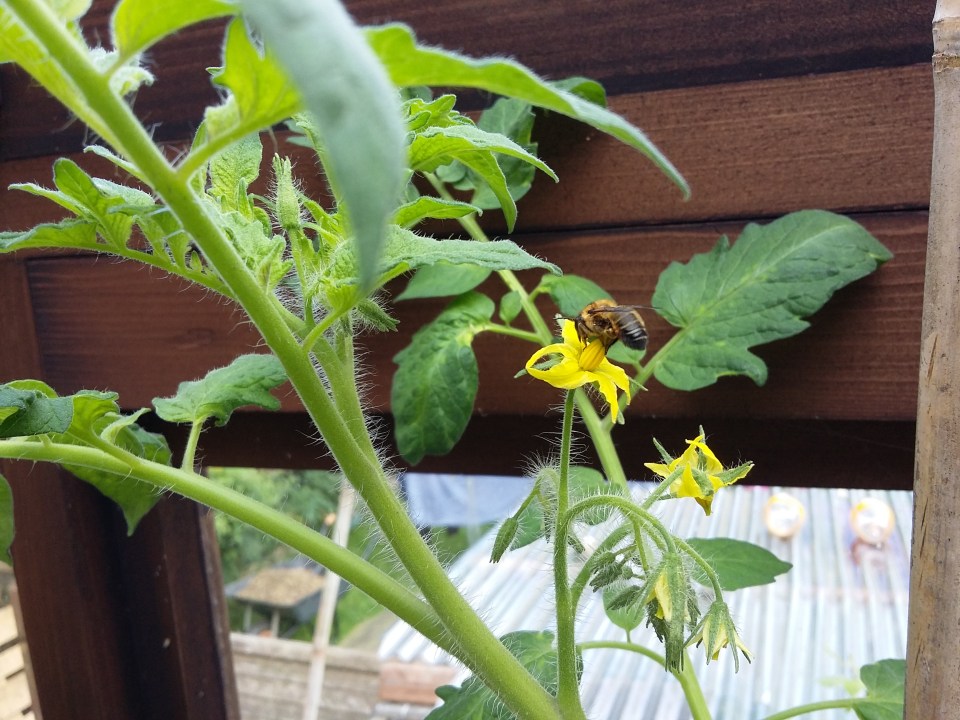
As I was taking that photograph, and in another demonstration of how the world is against me at the moment, I spotted a bee feeding on one of the all-female flowers of this variety.

Megachile on cucumber 20160713_103627

It spent some time there probing the centre with its tongue, so I think these flowers still produce nectar despite them not needing pollinators, a hang-over from their ancestry.  Plants have a whole range of mechanisms that ensure reproduction without the agency of insects and other animal pollinators, and this has been exploited by crop breeders who have selected crop varieties for their ability to self pollinate or to reproduce asexually via apomixis (as in the case of this cucumber).

The same bee then flew onto a tomato (Solanum lycopersicum) flower (another group which varies in its demands for pollination) and I got a better look – seems to be a Leaf-cutter Bee of the genus Megachile.

Megachile on tomato 20160713_103712

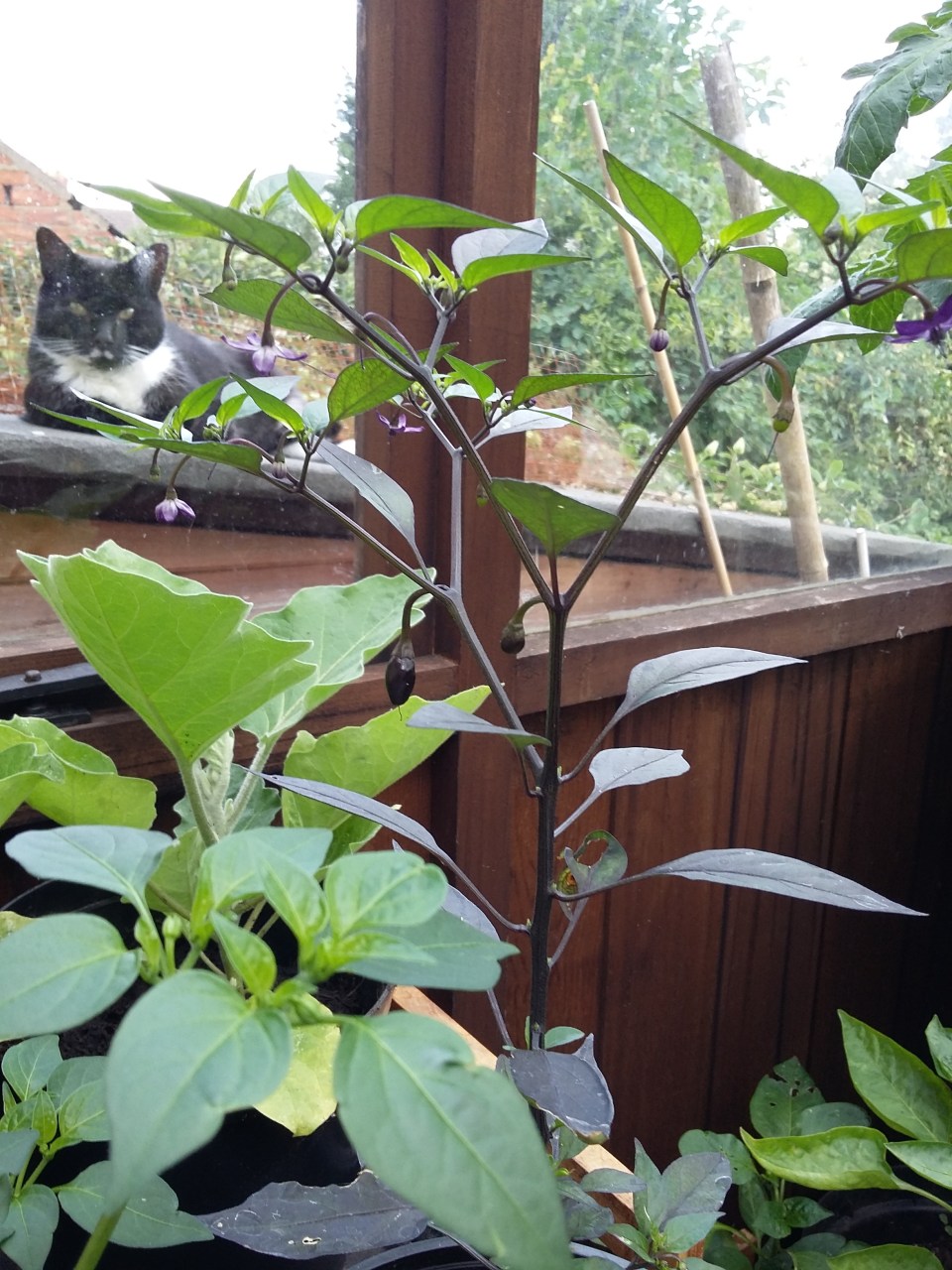
The final example of a crop which requires little or no insect pollination are the chillies (Capsicum spp.) all of which are self-pollinating, I believe.  This variety is a scrambling purple type called Orzoco*.

Orzoco chilli 20160713_102213

So, crops vary hugely in their need for pollinators and the presence of certain traits of animal pollination, such as large, brightly coloured flowers and nectar, is no guarantee that the crop really does have to be serviced by pollinators.  The only way to be certain is to experimentally test the plants, a topic I hope to come back to later in the summer.

Don’t worry, this grumpiness won’t last long, in no time at all I’ll be back to banging on about the importance of pollinators.  At least Monty, one of our two cats, still loves me.


*At least, that’s what it said on the seed packet; I’ve also seen it referred to as Orozco – does anyone know which name is correct?

Bees’ Needs week (9th to 17th July) #BeesNeeds

Inula at Ravensthorpe 20160710_145426.png

In the current political turmoil around the Chilcot Enquiry, Brexit, leadership challenges and a change of Prime Minister you’d be forgiven for having missed the fact that 9th to 17th July 2016 has been designated “Bees’ Knees” week, as a follow on to the Pollinator Awareness Week of 2015.

Here’s the link to the Defra press release.

Unlike last year I’ve no specific plans to do any regular posts on the topic, but I will provide links to relevant items as and when I see them, starting with these two:

Why insects are declining globally, and why it matters.

Dave Goulson is trying to crowdfund a project to look at pesticides in plants from garden centres.


How to deal with bumblebees in your roof [UPDATED]

Bombus hypnorum

This week I’ve had two enquiries from colleagues at the University of Northampton asking advice on what to do about colonies of bumblebees that have set up home in their roofs.  In both cases these were nests of the Tree Bumblebee (Bombus hypnorum), a species that only colonised the British Isles in 2001 and has since spread rapidly (see this post from last year for a more detailed account).  Because of their association with human settlements they are significant pollinators of garden produce: over the past few weeks I’ve been watching them pollinating the raspberries in our garden and we now have a large crop.

But having a bee nest in your home is, for many people, a real concern.  I thought it might be useful to discuss the issue by quoting from the email correspondence I had with my first colleague, Paul.


Paul wrote:   I wonder if you can give me some advice. I returned home from holiday on Saturday to find that a colony of bees had taken up residence in a roof space above my front porch. The bees are not domestic honey bees but large bumblebees with white rears. I am not sure how many there are, they buzz furiously when I close the door…..  They are not in the house and I cannot see them from my loft…..so they are not causing a problem at the moment other than a moderate dead rabbit smell in the porch.

I am considering contacting the local council pest controllers, but fear they may just gas and kill them as they are not honey bees. What would your advice be, would it be safe to leave them alone, if so how long are they likely to stay, how large is the colony likely to become, are they likely to cause any damage or mess?

Here’s my response:   From your description they are almost certainly Tree Bumblebees which often use loft spaces, bird boxes, etc. As the name suggests they naturally nest in holes in trees. The colony is not likely to get much bigger though over the next few weeks you may find males patrolling the front of the nest, waiting for the virgin females to emerge so that they can mate. That sometimes makes the colony seem larger than it actually is – there are not likely to be more than about 150 bees in there.

I’ve had Tree Bumblebees in my roof a few times and they’ve never caused any damage. All bumblebee colonies die over the winter and the newly-mated females fly off and hibernate. So by late August or September (perhaps earlier if the weather ever gets warmer….) the bees should have gone. At that time you could seal the entrance to the roof space, though they are unlikely to return next year (although it’s not unknown).

Yes, a pest controller would kill the colony. But they are unlikely to be aggressive unless you stick your fingers in the nest hole! My advice is to let them be and take pride in your own bee colony – they are very discerning and don’t nest just anywhere 🙂


So there you have it: my advice is, leave them alone.  Of course if you or your family have a particular sensitivity to bee stings you may need to think carefully about this advice, but in my experience bumblebees are only aggressive if they feel directly threatened.  In over 25 years of field work focused on bees and other pollinators, I’ve only ever been stung a few times, and mainly by honey bees.

UPDATE: A commenter on Facebook had a great suggestion, that I provide a link to Dave Goulson’s nice little video showing what the inside of a bumblebee nest looks like – so here it is.


What does Brexit mean for British biodiversity?

Friday 24th June 2016.  What a surreal day.  I spent it trying to understand why a small majority of the voting public had committed us to leaving the European Union, an organisation that has had a demonstrably positive impact upon our lives, our society, our economy, and our environment.  That dream-like state was not helped by the fact that I’d stayed up most of the night with my youngest son James, watching the results roll in.

Saturday 25th June 2016.  Twenty four hours later, after a good night’s sleep, I feel less dislocated but no less confused and disappointed.  It is what it is, let’s get on with it.

It’s much too early to properly answer the question of what this all means for British biodiversity, of course.  But as I pointed out in my post about the environmental arguments for remaining in the EU, there’s a whole raft of policies, legislation, agreements and initiatives that the government and NGOs need to consider.  Just to give a couple of examples, what will happen to the All-Ireland Pollinator Plan, or the Special Protected Area status of places such as the Upper Nene Valley?

What I really hope is that we can continue as before, building on the current situation rather than tearing up the whole thing.  To some extent I’m optimistic that we can for the near future, because the government will have (as it sees it) bigger things to worry about.  But I do worry that eventually we will get left behind as EU environmental legislation evolves.  That’s something we have to be mindful of in the coming years.

The ecological internet is already starting to discuss these issues; here are links to a few pieces that I’ve seen:

Adventuresinbeeland has discussed what leaving the EU means for British bees and beekeepers, pointing out that EU funding has enabled bee inspectors to carry out apiary inspections and work with beekeepers on issues such as bee pests and diseases.

The Wildlife Trusts are trying to look positively at the future, with Brian Eversham, Chief Executive for the Wildlife Trust for Bedfordshire, Cambridgeshire and Northamptonshire, summing it up very well:  “Many of those who disagreed over the Referendum agree strongly that wildlife, our countryside and the natural environment matter, now and for the future. We need their voices loud and clear in the coming months. As we are now responsible for our own, independent future, it is up to all of us to make sure that we keep the environment firmly on the national agenda.”

Mark Avery has also summed up the current situation very succinctly on his blog – one cartoon says an awful lot.

Finally, here’s Craig Bennett, CEO of Friends of the Earth, writing on how can we make Brexit work for the environment?

No doubt there will be more coming soon and I’ll try to provide updates on the blog.

In terms of my day job as an academic at the University of Northampton, things will also change across the whole British Higher Education sector, of course.  On one level that’s a different set of issues to what I’ve been discussing, but there are also links: a great deal of ecological research activity is being funded by the European Union and involves cross-border collaborations.  Scientists across Europe have to continue to make that work.