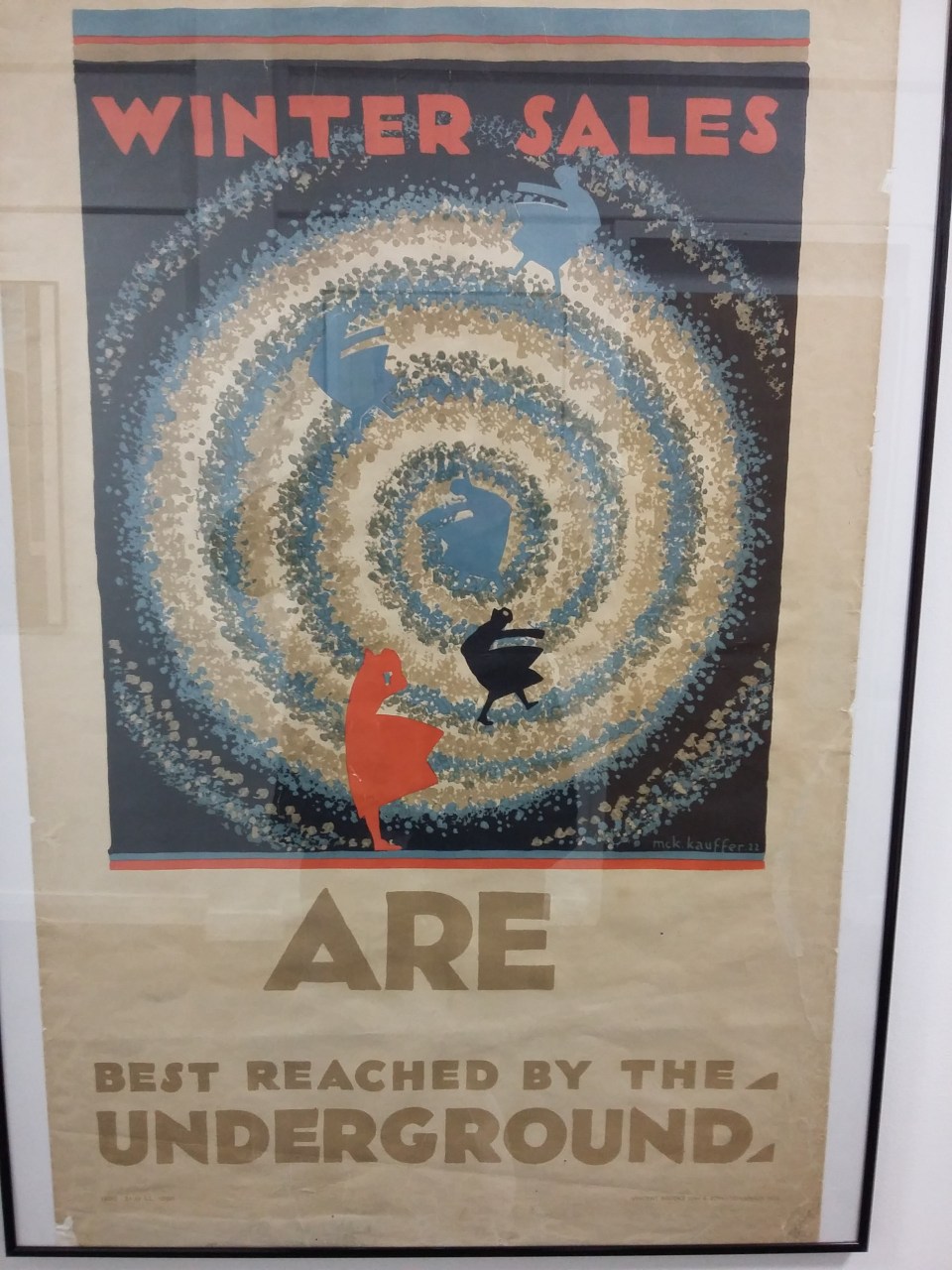
Spiral Sunday #25 – a London Underground poster from the Osborne Robinson collection

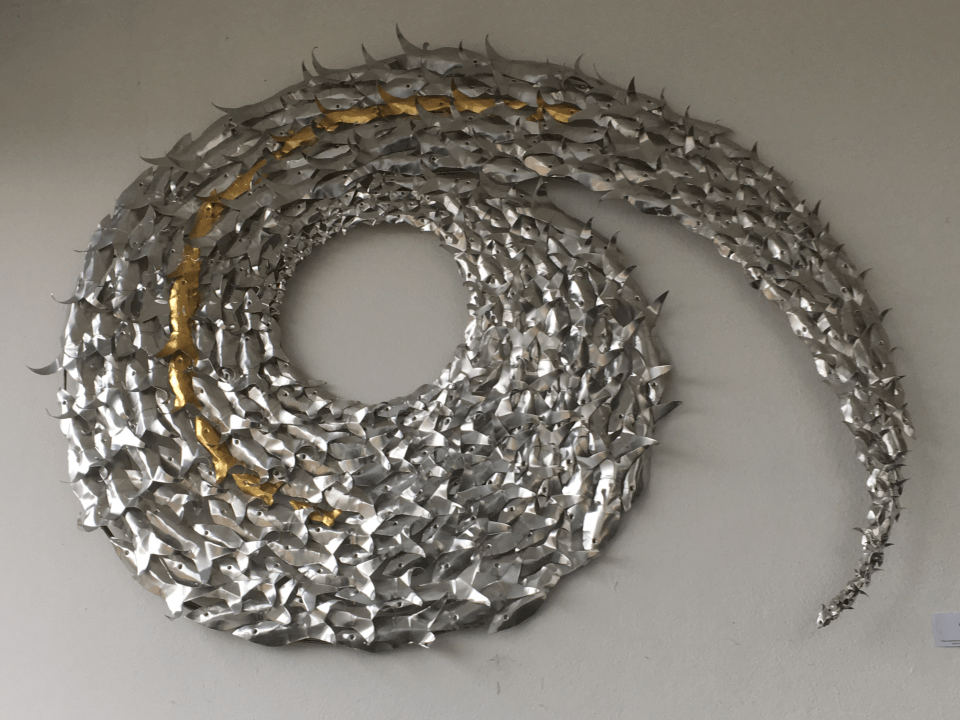
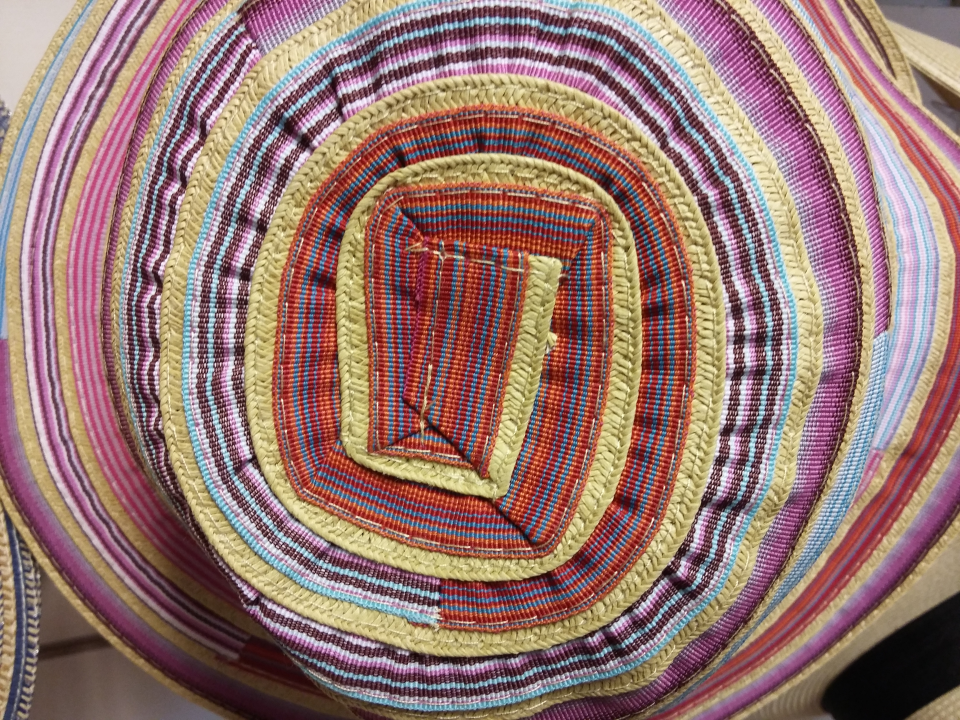
Underground spiral 20170303_140031The University of Northampton is custodian of one of the best collections of posters in Britain.  The Osborne Robinson Collection now contains over 10,000 items and the university regularly displays them internally and at other venues.
This week’s Spiral Sunday shows a poster currently on display that caught my eye as I was passing.  The poster is by Edward McKnight Kauffer for London Underground (or Underground Electric Railways Co. of London, Ltd as it was), and dates from 1922.

The Danish for garden is “haven”: five reasons why I love Gardeners’ World

20160702_100724

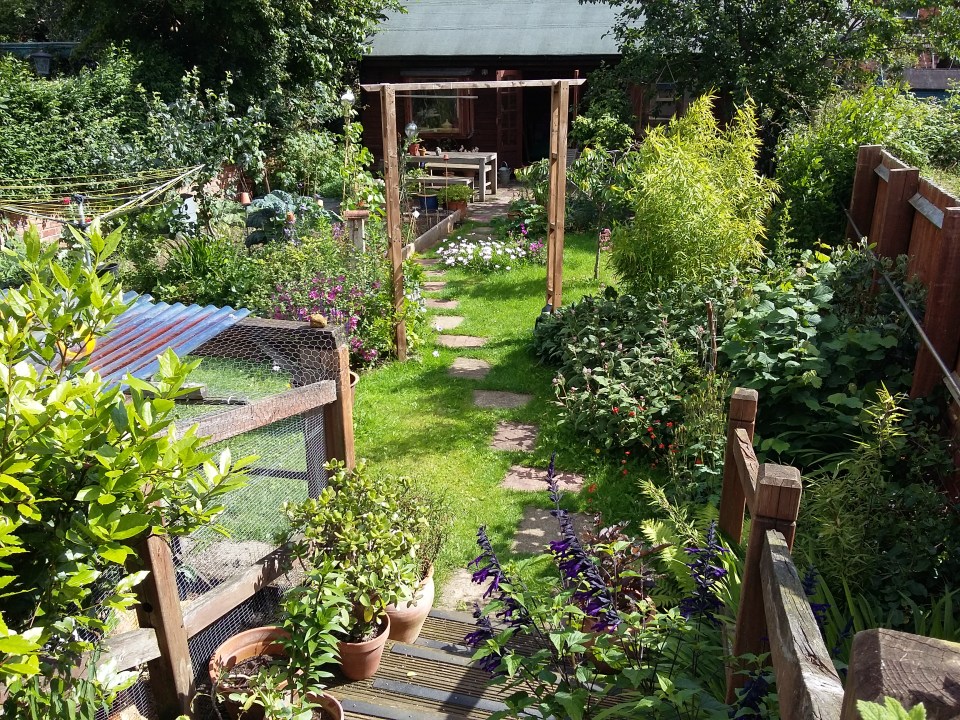
The latest series of the BBC’s flagship horticulture programme Gardeners’ World started on Friday, heralding its 50th year of broadcast – quite an achievement.  I’ve long been a fan, and a few years ago jumped at the chance to take part in one Science in the Garden special episode with Carol Klein (which I’ve posted about previously).  Since Friday I’ve given some thought as to what I get from the programme and have come up with a list of the main reasons why I love watching it:

1.  At its heart, Gardeners’ World is about the main subject of this blog and of my career: biodiversity.  Specifically the programme is centred on the biological richness of wild plants and the diversity of the horticultural varieties that we have created from them, for food and for ornament.  Spinning off from this is the acknowledgement that, although much of it is not native to Britain, this plant biodiversity (and the way in which we manage it in our gardens) can have important positive benefits for the wildlife of our country, including birds, amphibians and reptiles, and insects such as bees and butterflies.  This is particularly the case in urban settings and I’ve noticed a welcome trend in recent years for Gardeners’ World to include more features about city horticulture.

2.  Gardeners’ World has long championed a more environmentally friendly approach to horticulture, bringing in ideas about using peat-free compost, minimal use of biocides, recycling and upcycling, composting, and growing your own food, long before any of this became fashionable.  Indeed there’s a strong argument to be made that earlier presenters such as the late Geoff Hamilton were responsible for such fashions gaining mainstream exposure, influencing the habits of millions of people in Britain.  That kind of influence should not be under-estimated.

3. Gardeners’ World reminds me of my dad, who died in 1996.  I can recall him watching it back in the 1970s when Percy Thrower was the presenter and my dad had an allotment a short walk from our small terraced cottage house, with its tiny concrete backyard.  Some of my earliest memories of plants and nature relate to that allotment: a huge rambling rose along the fence; a greenhouse made from old window panes, filled with the rich scent of tomatoes; a toad that dad put in that greenhouse to eat the slugs; rainwater tanks hosting little communities of wriggling insect larvae.  After the allotment plots were cleared by the local council and sold for development my dad erected a greenhouse in the backyard, and grew shrubs and bedding in large pots.  In the early 1980s this was joined by a second small greenhouse for my cactus and succulent collection, many of which I still have.  Some of the best stories in Gardeners’ World are as much about people and their relationships with one another and with their gardens, as they are about plants and gardening per se (see also number 5, below).

4.  Despite having watched the programme for many years I still get new things from it.  Each season I gain inspiration for new plants and new ways of working with the garden that Karin and I are developing here in Northampton, which I’ve talked about quite a few time; see for example:  Renovating a front garden…, my post about Scientists and gardens, and the series I did on pollinators in the garden for Pollinator Awareness Week.  Gardeners never stop learning.

5. Being from the north of England I’m intrigued by the linguistic links between that part of our country and Scandinavia, particularly shared words such as “bairn”, and place-name elements such as “holm”.  Karin is Danish and these connections of language are something we often discuss.  Recently she pointed out that the Danish word for garden is “haven”.  Although it’s not pronounced in the English manner that word is probably the best single way of describing how I feel about our garden; it’s a haven from from the outside world, a place of rest and security, contemplation and physical activity, emotionally supporting us, and providing resources and space for the wildlife that uses it.  Although we don’t do much work in the garden during the winter, each year the start of a new season of Gardeners’ World reminds me of the pleasures to come in our own haven.

Of course there are sometimes things that irritate me about the programme: it can be a bit too cosily middle class at times, occasionally the advice offered can be simplistic or inaccurate, and some of the “scientific” trials of plant varieties lack rigour and replication.  Nonetheless, it’s a programme I have grown up with and one that I love to watch.  Happy Anniversary Gardeners’ World, here’s to 50 more years!

Some upcoming public lectures

2014-08-16 15.36.53

Giving public lectures to special interest groups in and around Northamptonshire is always a pleasure as the audiences are usually very receptive.  Just been through my diary and realised that I’m giving five such lectures over the next few months, on pollinators, conservation,  ecosystem services, and so on:

8th March – “Bees for dinner?  The importance of pollinators in a changing world” – Long Buckby Women’s Institute – open to all and not just women!

22nd March – “A city without trees is like a bird without feathers” – Litchborough Gardening Club [title is slightly wrong on that link…]

5th April 2 – “Darwin’s Unrequited Isle: a personal natural history of Tenerife” – Friends of Linford Lakes (Milton Keynes)

27th June – “Pollinator diversity” – Chalfonts Beekeepers (Buckinghamshire)

12th July – “Plants & pollinators – more than just honey bees” – Cancer Research UK ladies lunch club fundraiser at Wellingborough Golf Club

Some of these will certainly be open to guests if you’re not a member and want to come along and hear what I have to say.

Happy to discuss giving a talk to other groups, please do get in touch, though I’m probably not available until after the summer as I’m also giving a keynote lecture at the PopBio conference in Germany in May and a couple of short talks at the International Botanical Congress in China in July.

Spiral Sunday #24 – a Roman snail

Roman snail cropped 20170303_123004.png

Although it is technically a non-native species, as it was almost certainly brought to Britain by the Romans, Helix pomatia (the edible or Roman snail) is nonetheless protected by the Wildlife and Countryside Act (1981), and in England it is an offence to sell, collect, kill or injure this species. That’s an unusual situation for an alien animal or plant in this country, and I’m struggling to think of another example – are there any?

Regardless of its status, the large shells of the Roman snail (several times bigger than the common garden snail Cornu aspersum when fully grown) form a beautiful spiral for today’s Spiral Sunday posting.

Thanks to Dr Tim Astrop for allowing me to photograph this dead specimen.

The decline of the “humble bee” – a short follow-up from yesterday’s post

The piece I posted yesterday about whether the names two of our most well known pollinators should be spelled honey bee/honeybee or bumblebee/bumble bee generated a lot of interesting comments on Facebook, Twitter, and on the blog.  A few people pointed me to the “Snodgrass Rule” that informal names should be combined only if the species concerned are not members of that particular taxon (e.g. “butterfly” rather than “butter fly”, because they are not “flies”), in which case “honey bee” and “bumble bee” are correct.

If I was ever aware of this entomological convention I’d certainly forgotten about it, but it strikes me that there’s a lot of examples outside of entomology that break the rule, e.g. hummingbird, goldfinch, catfish, ground ivy, etc.

A couple of commentators also asked me about the old term “humble bee”, as used in Frederick Sladen’s 1912 book “The Humble-Bee, its Life-History and How to Domesticate It”.  So I added this to the bumblebee/bumble bee search on the Google Ngram Viewer, taking the time frame back to 1500, and the results are very intriguing:

screen-shot-2017-03-01-at-09-59-55 It would appear that “bumble bee” pre-dates “humble bee” by a considerable period, with the former being superseded by the latter from the late 1600s onwards, until “humble bee/humblebee” started to decline in use from the end of the 19th century.

I’ve also searched using the term “dumbledore”, which is an old local name, but it was also applied to other buzzing insects such as chafers, making interpretation of the results difficult.  There’s more on the etymology of bumblebees on Wikipedia if you’d care to follow it up.

Many thanks to everyone who contributed to the discussion!


Honey bee or honeybee; bumblebee or bumble bee?

screen-shot-2017-02-28-at-10-18-20

Language is fascinating, particularly the way in which it changes over time to incorporate new words, or old words used differently.  In science this has important implications for understanding: semantics matter.  With this in mind I’ve been curious about the alternative ways in which authors write the informal names of species.  Scientific names (Genus species)  should be fairly stable in their spelling and presentation (though not always, especially in the older literature); but “common” names of species vary widely geographically and temporally.

Here’s an example using Google’s Ngram Viewer which is a useful tool for tracking changes in word use over time.  Different authors currently use the terms “honey bee” and “honeybee”, sometimes in the same publication.  But as the image above shows. historical analysis suggests that “honey bee” is the more traditional term, and that “honeybee” only came into common usage from the start of the 20th century, and by the late 1920s had taken over “honey bee”.

Likewise “bumblebee” and “bumble bee”; despite “bumble bee” having a much earlier usage, “bumblebee” has dominated since the late 19th century:

screen-shot-2017-02-28-at-10-16-51It’s interesting to speculate about what might have caused these shifts in use, and it’s possible that in these examples it was the publication of especially influential books that used one term over another and influenced subsequent writers.  Could make a good project for a student studying how use of language varies in different time periods.

For my own part I tend to prefer “honey bee” and “bumblebee”, but I can’t precisely articulate why; perhaps it’s because in Europe we talk about “the honey bee” as a single species (Apis mellifera) but not “the bumblebee” because there is usually more than one co-occurring Bombus species in a particular area.  Do others have a particular preference?

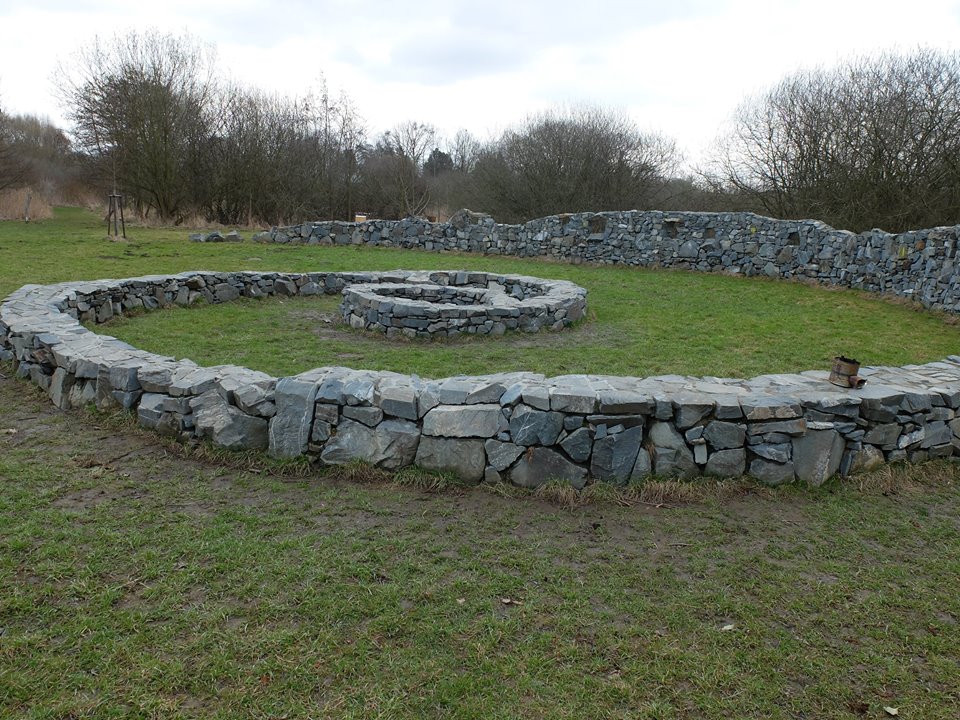
Spiral Sunday #23 – a granite spiral from Norway

2012-10-27 14.28.28I took this week’s Spiral Sunday photograph at a small sculpture park in an old quarry on the coastal path on Kirkøy (Hvaler) in Norway when we were attending the SCAPE 2012 conference in Skjærhalden.

If I recall correctly it was late afternoon and there was a wonderful low light on the stones, hard shadows sharpening the carved edges of the sculptures.  It was magical to come across these sculptures unexpectedly on a long circular hike; I’d recommend a visit if you are in the area.

Proposals to “sequence the DNA of all life on Earth” suffer from the same issues as “naming all the species”

Tanzania ichneumonid P1000757

There’s a short piece on the website of the journal Science this week entitled “Biologists propose to sequence the DNA of all life on Earth“.  I don’t propose to say much about it except to say to anyone interested: read that piece, then read my recent post entitled “The road to degradation: is ‘naming all the species’ achievable or even desirable?

In my view “naming all the species” and “sequencing the DNA of all life” suffer the same issues and flaws. At a time when research funding is becoming ever more difficult to obtain (in part because it’s becoming more concentrated on fewer institutions and individuals) such multi-billion dollar initiatives make great headlines, but are they value for money?

At the moment Science also has a series of stories on its conservation news web pages, and you can find others all over the web, that point to our inability to conserve even large, charismatic species such as elephants and the big cats, and how this in turn can impact on human survival and wellbeing.  Perhaps we should devote more funding and more research energy to fixing these issues before we attempt such large-scale projects?

As always, your opinions and comments are welcomed.

Links to some recent pollinator-related papers, posts, projects…. and pedals

oxalis-fly-p1030303

For weeks now I’ve been meaning to post some links to pollinator-related items that have caught my eye, but have only just found time to pull them together, hence some of these are a little dated but should still be of interest:

  • By pure coincidence Hazel Chapman (the senior author of that paper) came to Northampton a few weeks ago to give a seminar about her Nigerian Montane Forest Project which is well worth checking out and which, in the future, will have a large pollinator focus.
  • The Journal of Pollination Ecology (where I remain an editor) has a new volume out – it’s open access and has some really nice papers – here’s the link.
  • There’s been a few stories doing the rounds about robot pollinators and how they are going to replace insects.  It’s all nonsense, of course, and in a recent blog post Dave Goulson nails the arguments very well – see: Are robotic bees the future? [spoiler alert – the answer’s “No”].  Likewise, over on her blog, Manu Saunders opines that: “Artificial pollinators are cool, but not the solution“.  What the technologists who are promoting these ideas, and related concepts around the “Internet of Things”, don’t seem to get is that all of this tech has environmental costs associated with it: resource/pollution costs for making it; energy costs for using it; and disposal/pollution costs when it reaches the end of its life.  Applying a green wash of “let’s use drones for pollinating flowers” doesn’t make the tech any more environmentally sustainable, quite the opposite.  Sorry, rant over…
  • Ben Geslin and colleagues have written an interesting review in Advances in Ecological Research called “Massively Introduced Managed Species and Their Consequences for Plant–Pollinator Interactions” that focuses on both mass-flowering crop plants (e.g. oil seed rape) and domesticated, highly abundant pollinators such as honey bees, and what their increase might mean for natural communities of plants and pollinators, particularly in sensitive environments such as oceanic islands.
  • There’s a guitar effects pedal called the Pollinator – from the review:  “The Pollinator is a living thing, sensitive to its environment and surroundings, and it becomes an extension of the guitarist playing it.”  Quite.
  • Nine species of bee in the genus Perdita that are new to science have been described from localities in the the southwestern USA.  Here’s a link to a lovely video that shows these bees, their distinguishing features, and how they were named (mainly for characters from Shakespeare’s plays).  Not very impressed with the snarky “if scientists had bothered to look” title of the article though.
  • Finally, a new citizen science project has been launched designed to understand how hoverflies evolve mimicry of bees and wasps – looks interesting, please take part – here’s the link.  Just be aware, it’s a bit addictive!

As always, feel free to suggest links to items you found of interest.

Spiral Sunday #22 – gravestone carving on a long hike

Gravestone spiral 20170219_121210.png

Karin and I went for a long hike today in the north of the county, a five mile circuit from Easton on the Hill, through Stamford, and back past the amazing ruins of Wothorpe Towers.  In the churchyard at Easton I photographed today’s Spiral Sunday image, a stylised botanical form carved into a slab of the local limestone, a 19th century grave marker for a former inhabitant of the village.  As a bonus, here’s the full carving: I really like the twining bindweed.

20170219_121216.png