Author Archives: Jeff Ollerton

Unknown's avatar

About Jeff Ollerton

Independent consulting scientist and author, working on understanding and conserving biodiversity

The All-Ireland Pollinator Plan 2015-2020

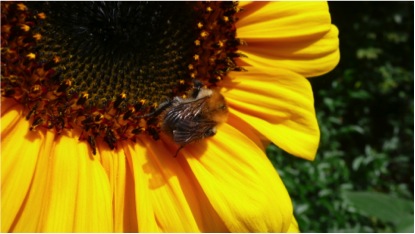
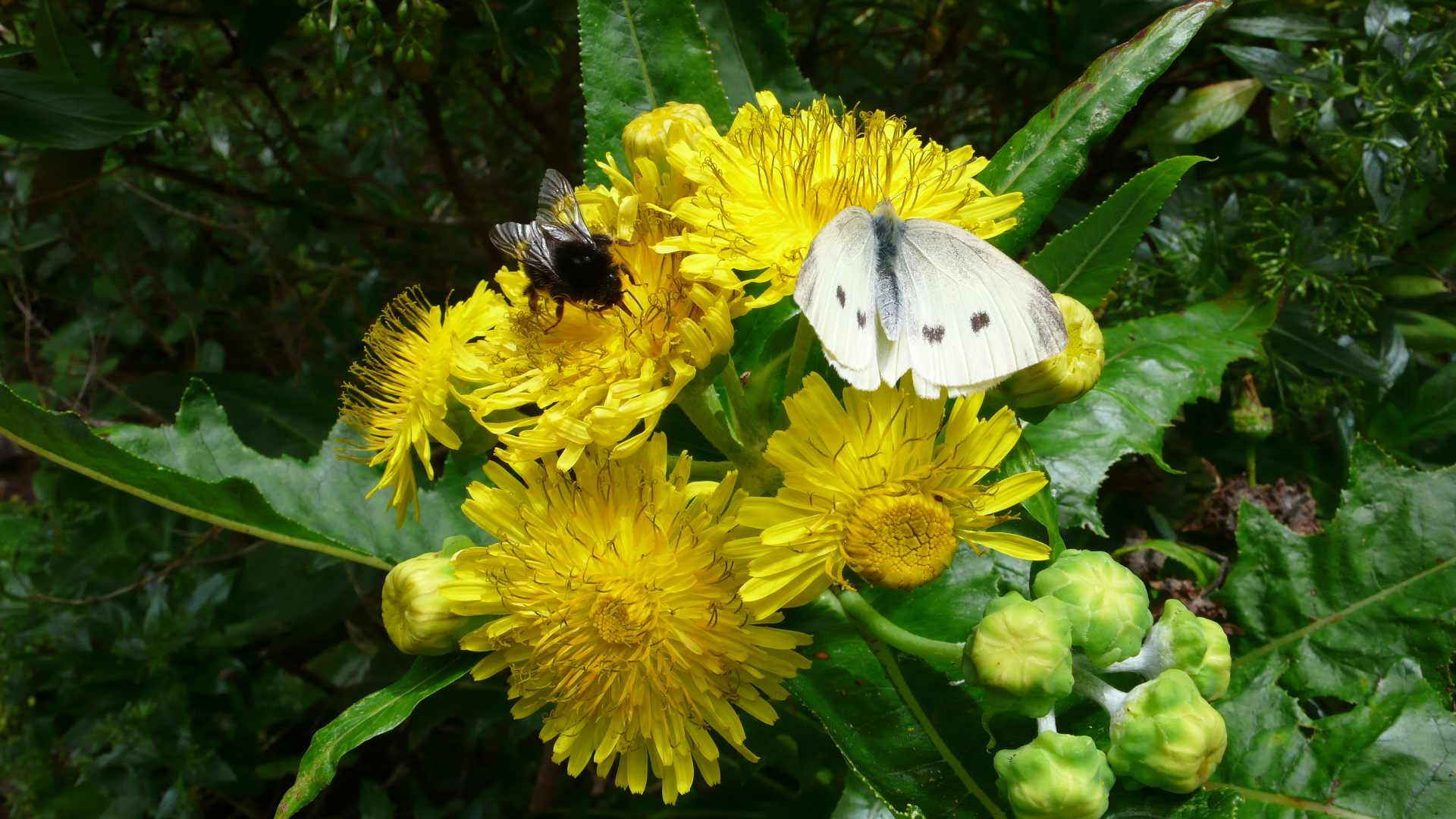
B pasc on sunflower

In the last 12 months we’ve seen the release of the National Pollinator Strategy for England and the USA’s Strategy to Promote the Health of Honeybees and Other Pollinators.  Now the Republic of Ireland and Northern Ireland have joined forces to produce the All-Ireland Pollinator Plan, a strategy for 2015-2020 that has been released today.  Follow that link and you can download a copy.

This appears to be the first cross-jurisdiction pollinator plan in the world and, as such, is to be welcomed; as I said in my reflections on the National Pollinator Strategy, biodiversity does not respect political boundaries.

That “love wasps” article – this is how Friends of the Earth responded

Clearly my quick post this morning got through to Friends of the Earth at some level (thanks to everyone who tweeted it).  Here’s what they have done to the article in response:

  • Removed the not-a-wasp photograph (good)
  • Added some text about other things that wasps pollinate (good) but left in the text about figs (bad)
  • Under the “garden pests” section they have add some text, as follows (bad):

The University of Northampton’s Dr Jeff Ollerton says: “Wasps are part of a whole ecological guild of scavenging animals that includes ants, various birds, etc, which plays a valuable role by removing vast amounts of waste organic material from our towns and cities every year.”

Huh?  What I said had nothing at all to do with eating pests.  Was that not clear when I talked about “waste organic material” rather than “pests”?

Incidentally, and for the record, I’ve had no contact from anyone at Friends of the Earth asking if it was ok to quote me, or check text, or anything.

So, not a complete success then.  Once again, feel free to tweet this at FoE

More poor quality information: Friends of the Earth’s “Love Wasps” campaign

Despite some recent posts in that vein, I don’t want to turn this blog into just an outlet for my frustrations about the lack of science/evidence in otherwise well-meaning conservation initiatives.  However something caught my eye at the weekend that I feel I have to comment on.

Friends of the Earth has recently posted a very well-meaning piece about why we should stop hating wasps and learn to appreciate them.  I whole-heartedly support this: wasps are one of the least understood and most under-valued aspects of local biodiversity, and the article makes some very good points.

But there are also some aspects to the article that make me cringe and add a new layer of inaccuracy to a subject already flooded with crass statements such as “what use are wasps”:

  • The first photograph in the article does not show a wasp: it’s a syrphid fly, specifically a species that mimics wasps but is other wise harmless.  These flies do not sting or bite.
  • “Wasps pollinate figs” – yes they do, but fig pollinating “wasps” are tiny and only distantly related to the kinds of wasps you’re going to see in a British garden.  In any case they do not pollinate commercial edible figs: these wasps spend much of their life-cycle within the fig and who wants to eat a fig full of insects?
  • Having said that, the sorts of wasps the article is referring to ARE important pollinators of a whole range of plants, including some orchids, umbellifers, ivy, etc.  That’s not mentioned at all.
  • The piece misses out the fact that wasps are part of a whole ecological guild of scavenging animals that includes ants, various birds, etc., which plays a valuable role by removing vast amounts of waste organic material from our towns and cities every year.  They also perform a similar function in natural ecosystems.

What’s frustrating about Friends of the Earth’s article is that there are any number of individuals and organisations out there who would be happy to fact-check such a piece, including Buglife, BWARS, and a range of scientists and well-informed specialists in natural history.  Why doesn’t Friends of the Earth make use of them?

As I’ve said before I don’t use Twitter, so if anyone wishes to tweet this at Friends of the Earth, please go ahead.

The biodiversity of the human family tree just got bigger

Tring 8

Today’s announcement of the discovery in South Africa of a new extinct species in the genus Homo, named Homo naledi, is a major scientific discovery that may prove to be one of the findings of the year, if not the decade.  As I’ve mentioned previously, human evolution fascinates me and I could easily have been sucked into the frustrating, controversial and important world of the professional hominid hunter.  But I’m content to view and appreciate from a distance as palaeo-anthropologists make their amazing discoveries about human ancestral biodiversity, and I thought I’d collate the links to some of the main stories and items relating to today’s events:

The scientific paper describing Homo naledi has been published in the open-access online journal eLife, rather than a journal such as Nature or Science, the more usual outlet for such discoveries, presumably because the importance of the find certainly demands rapid publication.  Interestingly its Altmetric score is already 281, having been picked up by numerous news outlets, tweeted, blogged about, etc.

I first saw the story earlier today on the BBC News website; the long article has a video interview with Professor Lee Berger, lead author of the paper.  There is also video footage from today’s press conference in South Africa, presented by Professor John Hawks, in which he describes in more detail the significance of this fossil, with its mix of both primitive and more derived anatomical features.

The Guardian also ran the story, this time with some different video footage, including a view inside the cave where the fossils were found, and there’s a 40 minute podcast.

Finally, National Geographic, which funded the study, has some videos on YouTube, including a fascinating account of the workshop that was convened to study the fossils and more discussion of its significance and amazing footage of how the fossils were recovered from the cave, and how the species was reconstructed.

This is a story that will run and run: we don’t know how old the species is and there’s lots of speculation about the significance of finding such a large number of individuals all together in what appears to be a burial chamber.  It’s an exciting time to be interested in human evolution.

Something for the weekend #8 – the microclimatic value of planting our cities, one Buddhist view of environmentalism, and orchids. Oh, and we got married.

The latest in a regular series of posts to biodiversity-related* items that have caught my attention recently:

  • One of the best environmental writers around at the moment, Paul Kingsnorth, had an interesting essay on how Buddhism is helping him to come to terms with the current environmental crisis.  It was published earlier this year but I’ve only just seen it.  Paul is one of the founders of the Dark Mountain project, which I’ve mentioned before.
  • Here’s a piece about a fascinating study of how different types of vegetation can alter the average temperatures of our cities.
  • Finally, regular readers of this blog know that I often mix some personal stories with my professional reflections, so the Big News of Summer 2015 is that, on the 15th of August, Karin and I were married at The Guildhall, Northampton, accompanied by our family and friends.  We had an incredibly happy day, and I wore a very biodiverse shirt, as you can see:

Karin&Jeff (73 of 477)

Feel free to recommend links that have caught your eye.

*Disclaimer: may sometimes contain non-biodiversity-related items.

The Altmetric Bookmarklet – an instant measure of the reach of academic publications [UPDATED]

Academics seem to be obsessed with metrics of all kinds at the moment, and I’m certainly not immune to it as my recent post on the h-index demonstrated.  So I was intrigued by a new (at least to me) browser plug-in that gives you instant altmetrics such as number of times mentioned on Twitter, Facebook or on news outlets, or cited in blogs, policy documents, Wikipedia, etc.  It’s called the Altmetrics Bookmarklet and can be downloaded (or rather dragged from the screen to the bookmark bar of your browser) from here.

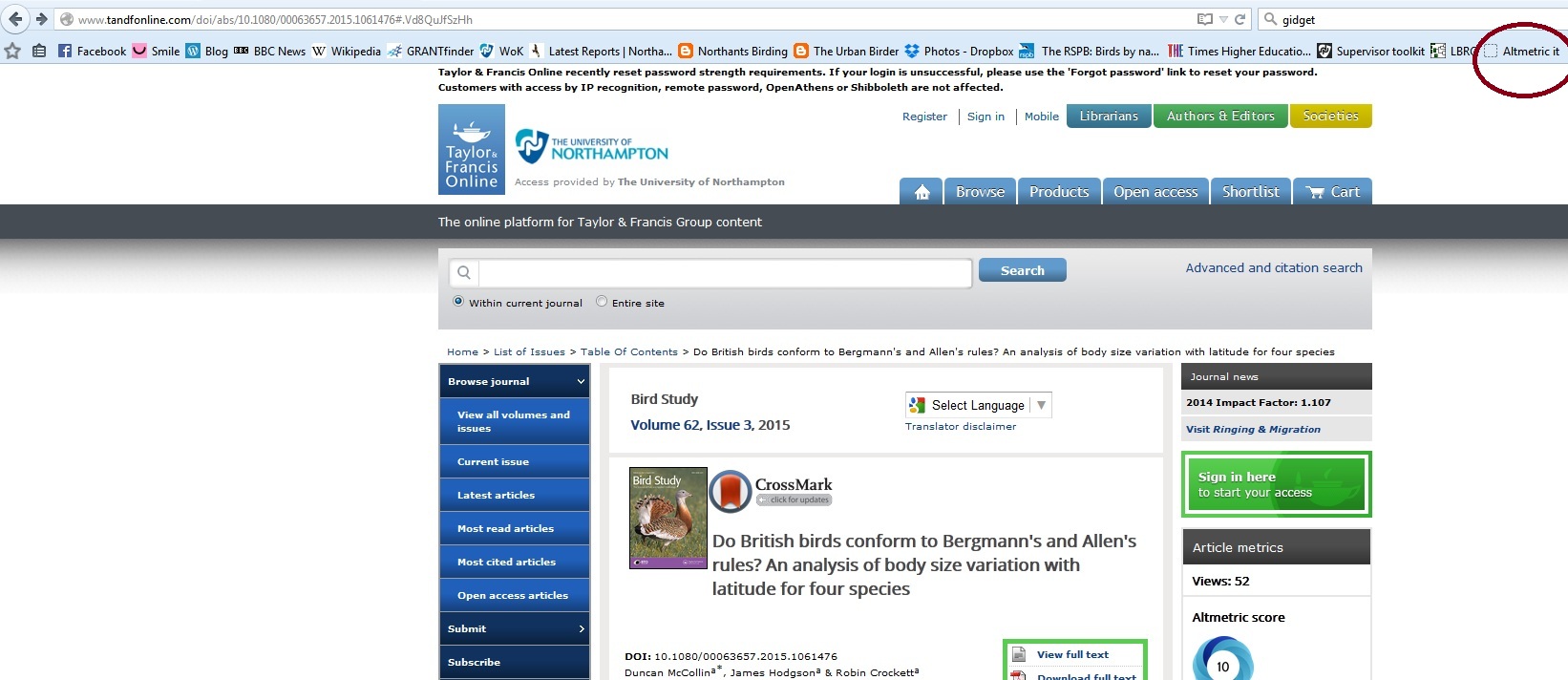
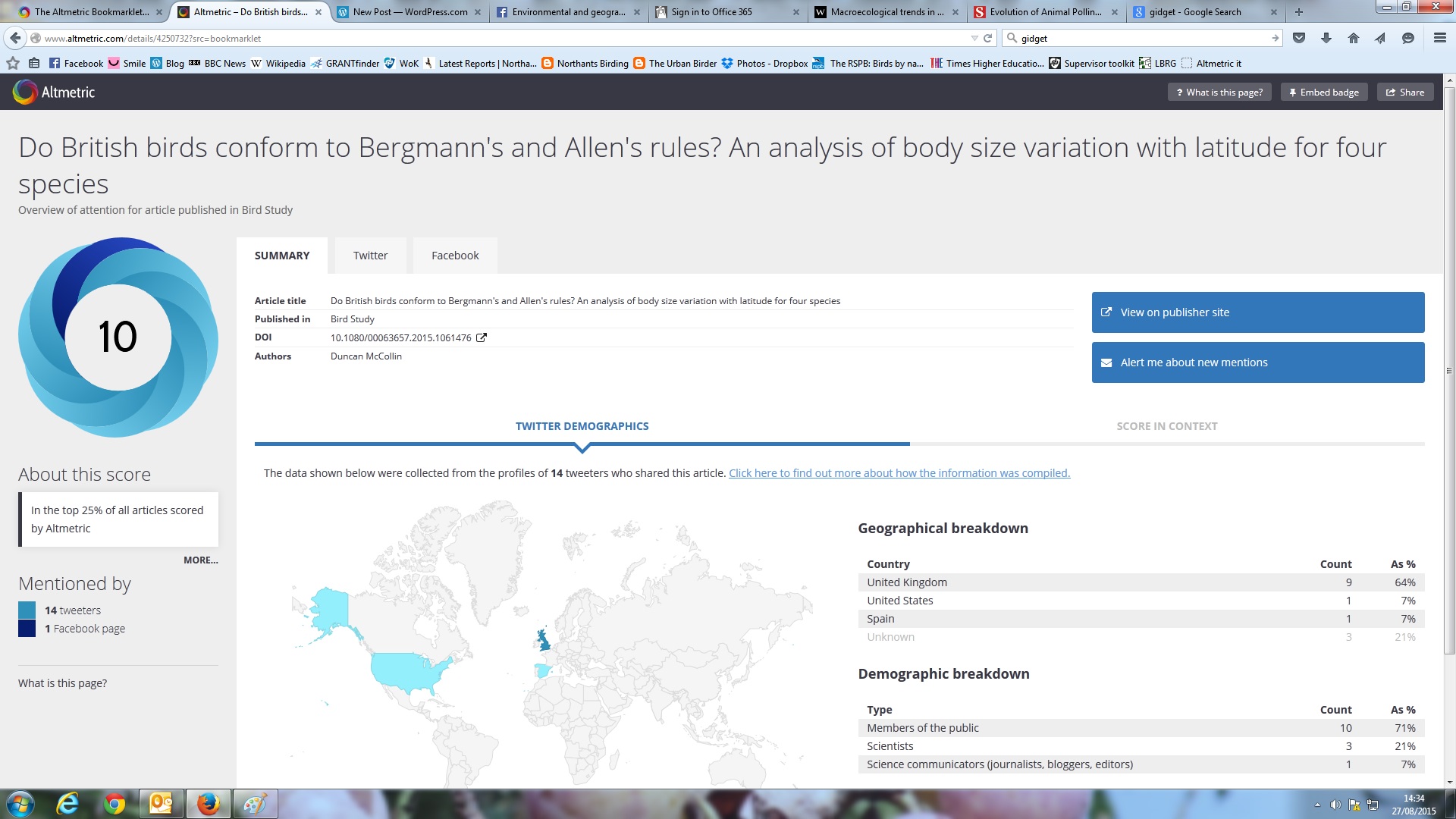
I’ve given it a spin and it seems to do what it says it can do, within narrow publisher and time limits (2011 onward for Twitter, for instance).  It’s very, very simple.  Just find a paper that you are interested in, on the publisher’s official website; here’s a recent one by my colleagues Duncan McCollin and Robin Crockett – click on the Altmetric Bookmarklet (circled):

Altmetric 1

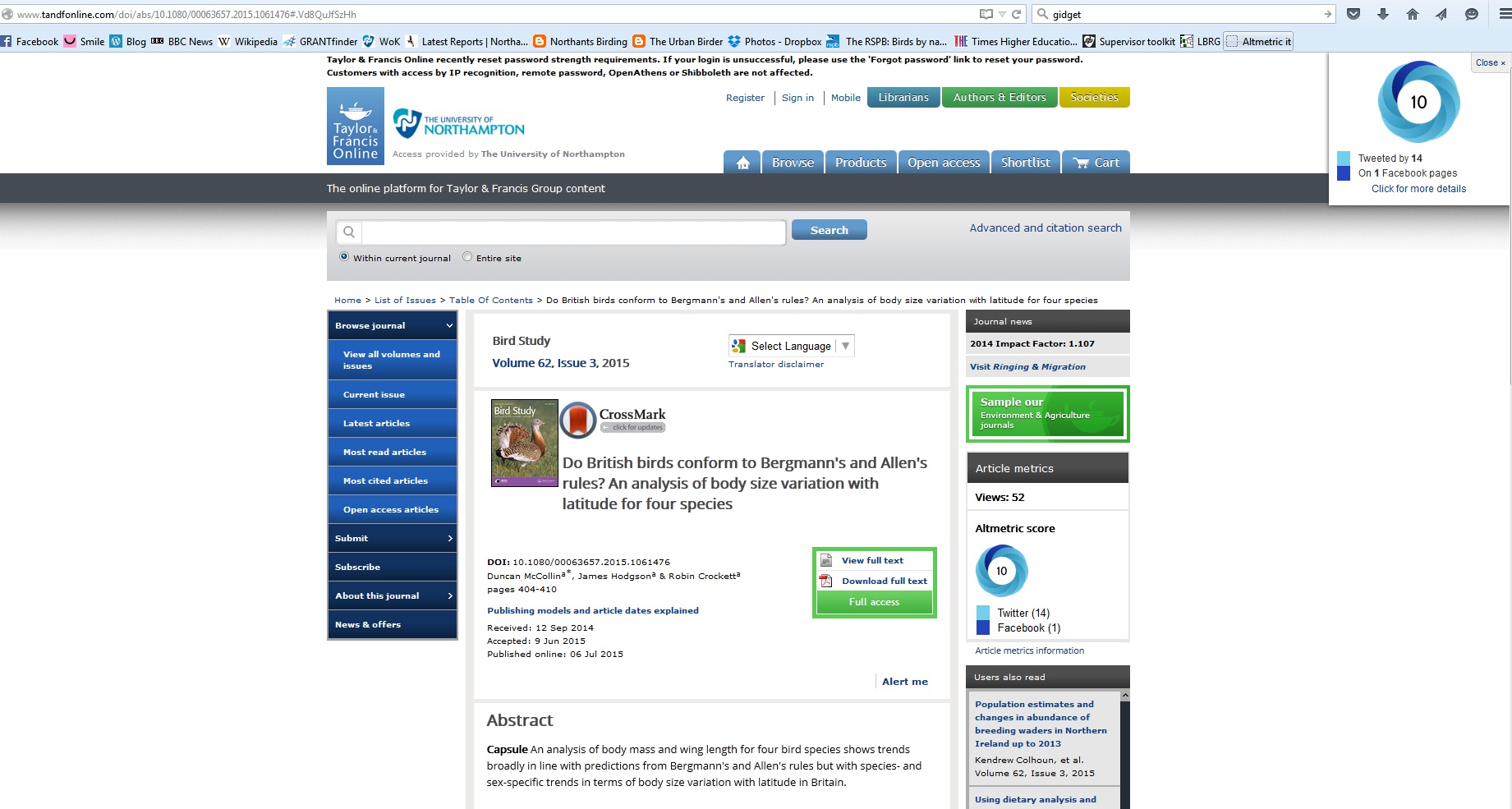
That gives you a drop-down of the current summary altmetrics for the paper which tells us it’s been tweeted by 14 people and mentioned on one Facebook page:

Altmetric 2

(As an experiment I’m going to see if it picks up this blog post once it’s live and will update below*).

If you select “Click for more details” you go to a new page that gives you…. more details:

Altmetric 3

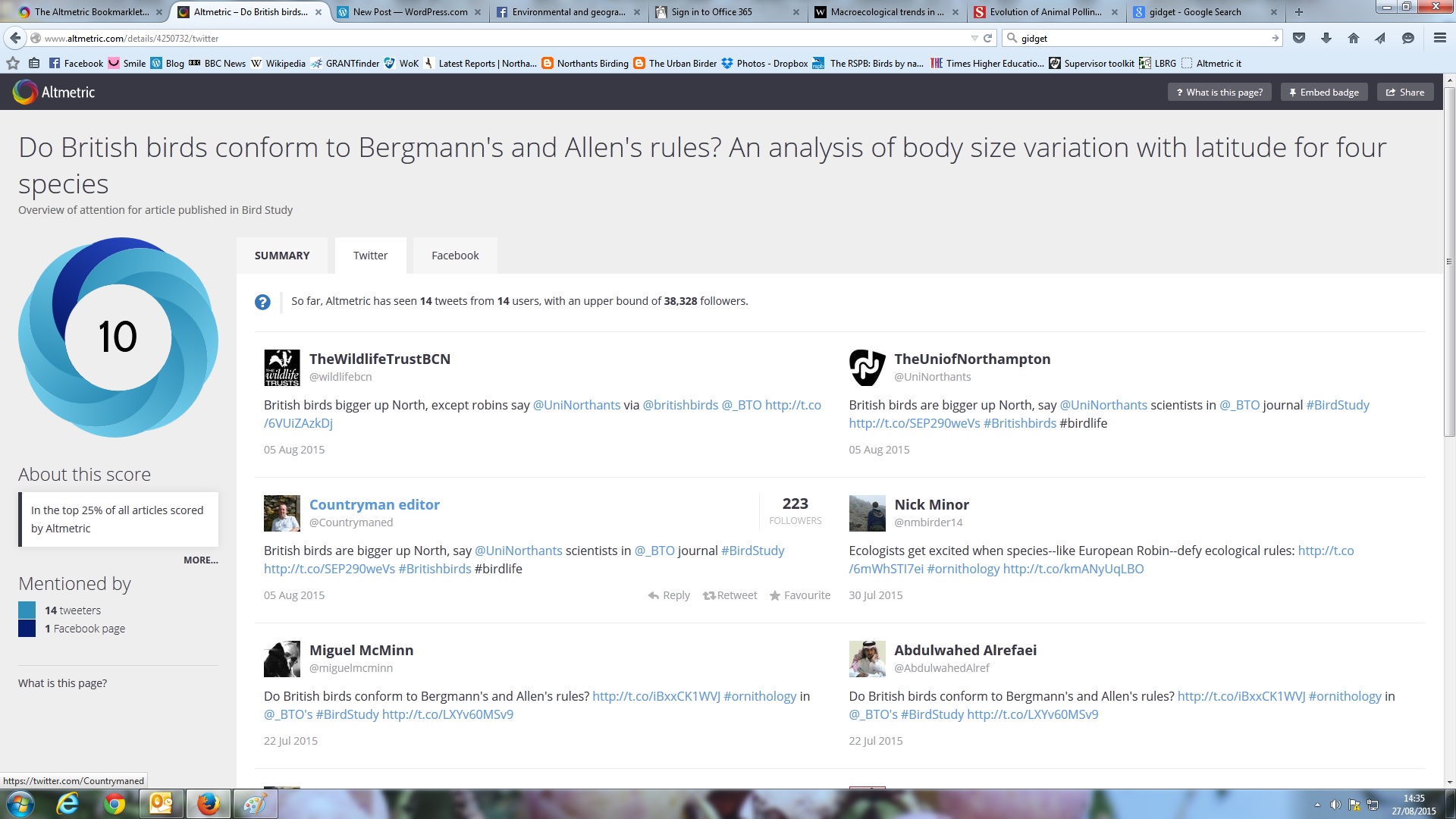
And by selecting the different tabs you can see, for instance, exactly who has tweeted the paper:

Altmetric 4

It also gives you an altmetrics score for the paper (in this case 10) but it’s unclear to me how that’s calculated.  Does anyone know?

That’s all there is to it.  Is it possible to waste a lot of time playing around with this?  Yes.  Will it prove to be useful?  Only time will tell.  But it’s an interesting way of tracking the reach (and potential future impact) of your publications.

*UPDATE:  The Altmetric Bookmarklet had picked up the mention of the paper on this blog in less than 24 hours.

The organisers’ positive response to criticisms of the “honey bee decline” conference

P1120404

Three days ago I wrote a short, fast post expressing my unease (in robust terms) about a forthcoming conference entitled “Biodiversity and Local Partnerships: Halting the Decline of the Honey Bee in the UK”.  I had not anticipated that the post would generate quite as much interest as it did:  2007 views, 16 likes, and 28 comments (including my responses) as of 10am today.

There were also a lot of comments and likes on Facebook, most of it positive and agreeing with my sentiments, though some have suggested that I’m over-reacting, that I may be paranoid, and questioned what my “hidden agenda” is and whether I might be funded by an agrochemical firm (!)  Thanks to everyone who took the time to read the post and/or to respond*, to tweet the post, and even, in one case, phone up the conference organisers.

So it was with some satisfaction that yesterday I received the following email from the conference organisers, Public Policy Exchange (PPE), in response to my initial reply to their invitation:

Thank you for your response to our event, we always appreciate any
feedback from experts such as yourself. Your comments have been passed
on to our researchers and they are currently reviewing this event.

Our researchers do use a variety of sources, though on this occasion it
does appear that some have made sweeping generalisations and
over simplified statements, and ultimately have been unreliable. Clearly
our previous marketing mistakenly overplayed the role of the honey bee
in pollination processes. We certainly don’t want to contribute to a
misinformed narrative around bees and other pollinators; that was never
our intention and so we are looking at how we can improve this event.

Biodiversity is an area which we are very keen to develop further and
your feedback is therefore very helpful to us.

Kind regards,

The Conferences Team

They have also changed the title of the conference to “Biodiversity and Local Partnerships: Halting the Decline of Bees and Other Pollinators in the UK“.

So kudos to PPE for their fast response.  That’s a good outcome as far as I’m concerned and I may consider attending the conference; hell I’d even consider speaking at it if i was asked!

———————————————————-

*Yes, that’s deliberate – I got the impression that some on Facebook were responding without reading it…

Who is feeding the honey bee bullshit machine?

Bee on apple blossom 2 - 1st May 2015

This morning I received an email from Public Policy Exchange (PPE) inviting me to a conference in London in November entitled “Biodiversity and Local Partnerships: Halting the Decline of the Honey Bee in the UK

The opening statement on the website and the official flyer convinced me that the organisers have been misinformed; all of it is wrong:

Healthy honey bee populations are vital to food and crop production, and the natural environment. In the UK, honey bees are responsible for 80% of pollination, and a third of the food we eat is pollinated by bees.”

Where are they getting this  information from?  Who is feeding organisations like the PPE this kind of bullshit?  Is it bee keeping organisations?  I’d really like to know.

Honeybees are responsible for only one third of the crop pollination in the UK (Breeze et al. 2011), and a very small proportion of the wild plant pollination. Wild bees, hoverflies, butterflies, and other pollinators are much more important than honeybees, and collectively they are responsible for this pollination, not just managed honeybees.  No one is denying that honey bees are important, but there is absolutely nothing to gain (and a lot to lose in terms of science credibility) by over-playing their importance, as I’ve argued in the peer-reviewed literature.

It’s not as if this is the only recent example, The Daily Express online has recently been equally ignorant of the facts, and didn’t even get the right bee in the accompanying image.

It’s interesting that the PPE website also uses the infamous not-Einstein quote, though they cite the author as “unknown”.  With good reason, because that’s bullshit too.

I won’t be attending the conference.

Selfie with pollinator

P1120403

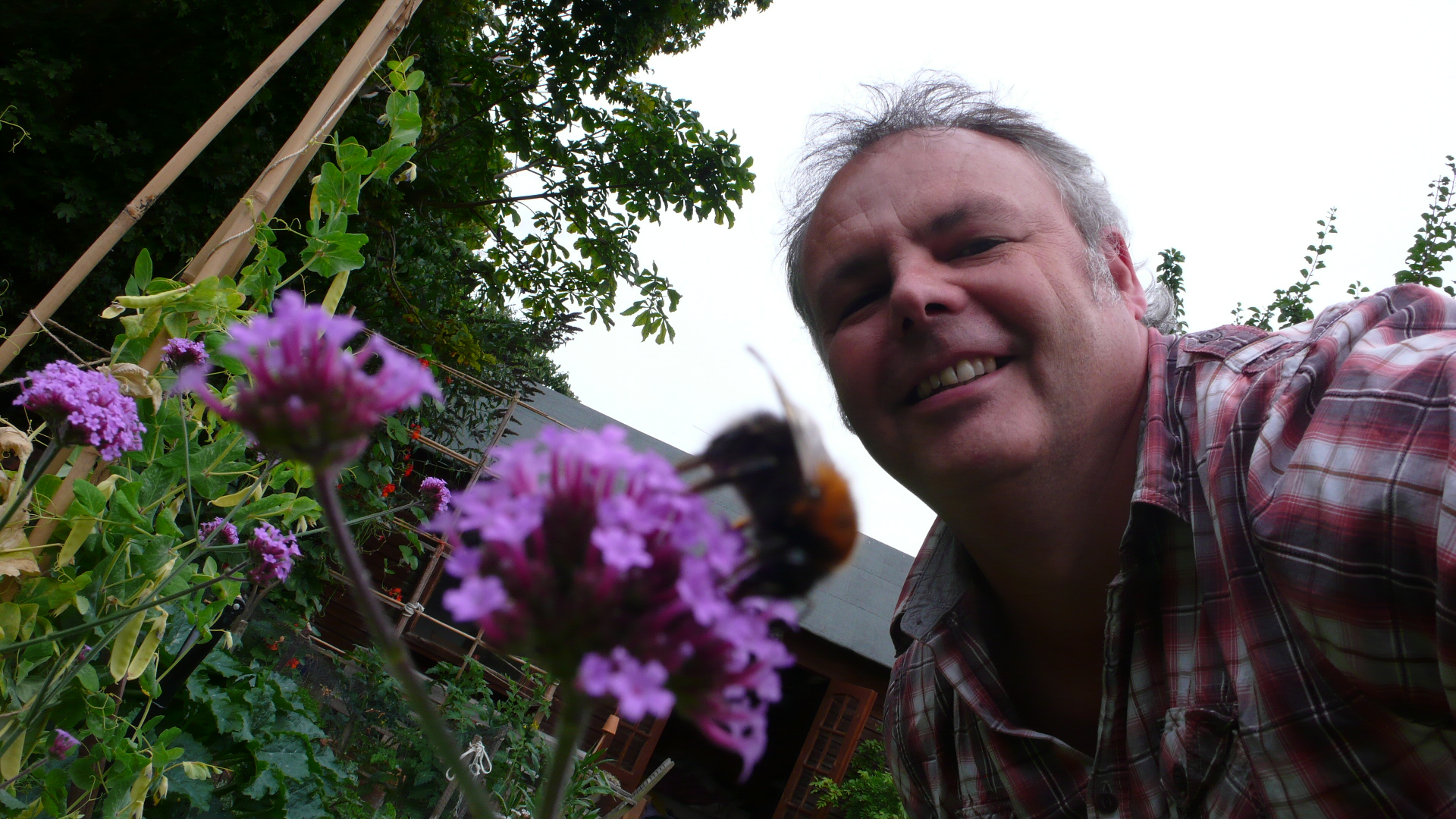
There has been a recent spate of people taking selfies with wild animals, sometimes resulting in serious injury, including the guy who was bitten by a rattlesnake, and ended up with a huge hospital bill*.  Over at the Nothing in Biology Makes Sense blog they had a recent post about this phenomenon, on which I commented that perhaps I should start a new meme, involving selfies with bees (or pollinators more broadly, if you’re allergic to bee stings).

So here it is, me plus Bombus hypnorum, nectaring on Verbena bonariensis, in the garden this afternoon.  Look forward to seeing similar images (unless this turns out to be an n=1 meme…)

—————————–

*This wouldn’t happen in the UK.  We don’t have rattlesnakes.  And we have the NHS.

How much do we really understand about pollination syndromes?

P1110763

Ecologists and evolutionary biologists have, for many years, sought to document repeated patterns that they see in nature; to understand the processes that determine these patterns; and to make predictions about how and when they are going to be observed in the future or in other parts of the world.   There are many examples of such patterns, including: cyclical population dynamics of species such as lemmings; the occurrence of specific types of plant communities (e.g. rainforest, grasslands) in areas with particular climates; and convergent evolution of unrelated species to similar ecological niches, such as large, predatory placental and marsupial mammals (e.g. the dog and wolf family compared to the Tasmanian “wolf”).

An example of convergent evolution that has fascinated botanists since the 19th century is the idea of “pollination syndromes”, which are sets of flower characteristics that have repeatedly evolved in different plant families due to the convergent selection pressures applied by some groups of pollinators. Thus, red, scentless flowers producing lots of nectar are typical of many hummingbird pollinated plants in the New World, whilst white, night-scented flowers often signify moth pollination.  Good examples of plant species possessing these archetypical flower traits are have been used as text book examples for decades, repeatedly used to illustrate the predictable and specialised nature of some plant-pollinator interactions.

The problem is that until recently the pollination syndromes have rarely been subjected to critical tests of their frequency and predictive value (Ollerton et al. 2009 and references therein).  It’s been tacitly assumed that (after more than 150 years of study) we clearly know all there is to know about them, even though there have been criticisms levelled at the syndromes since their inception, a fact that has been subsequently ignored (Waser et al. 2011).

However in the last 20 years biologists have begun to seek answers to questions such as: How often do plant species conform to the expectations of the classical pollination syndromes? How good is our ability to predict the pollinators of a plant based just on its flower characteristics? What is the role played by flower visitors that do not conform to the predictions of the pollination syndromes? Similarly, what is the role of animals that steal nectar or pollen, or act as herbivores, in shaping flower traits?  What new examples of convergent evolution of flower traits remain to be discovered?

Research conducted in many different parts of the world has addressed these questions, questions which some biologists had assumed were already answered or which were not worth asking in the first place. And the answers to them are proving to be both surprising and controversial.

For example, the most comprehensive test of the frequency and predictability of pollination syndromes that has been conducted to date (Ollerton et al. 2009) concluded that only a small proportion of the 352,000 species of flowering plants could be categorised into the pollination syndromes as classically described. Likewise, they estimated that the predictive power of the pollination syndromes was about 30%. Other studies have shown that “secondary” flower visitors can be just as, or more, effective pollinators than the “primary” pollinator predicted by the syndromes (e.g. Waser & Price 1981,1990, 1991); that floral antagonists can play an important a role in shaping flower traits (e.g. Junker and Parachnowitsch 2015 and references therein); and that there are still examples of convergent evolution to “unexpected” pollinators waiting to be discovered in less well researched parts of the world, which in fact is most of the world (Ollerton et al. 2003).

Recently the very prestigious journal Ecology Letters published a paper that has challenged the challengers. Rosas-Guerrero et al (2014), by using a statistical technique called meta-analysis underpinned by a review of the available literature, suggested that pollination syndromes are much more predictable than Ollerton et al. (2009) concluded, and perhaps as high as 75%. However some of my collaborators and I see problems with their approach to studying pollination syndromes that have biased the conclusions that they draw, and therefore undermined the robustness of those conclusions, which we set out in a response to their original paper (Ollerton et al. 2015).  We originally tried to publish this in Ecology Letters but for some reason the journal was not interested; it’s therefore freely available from Journal of Pollination Ecology if you follow that link.

I won’t go into the detail of what we perceive as problems in Rosas-Guerrero et al.’s approach to testing the syndromes (you can read the paper for yourself) but in summary they relate to how the literature review was conducted (which failed to include all of the studies that could have provided data for their meta-analysis); the significant bias in the current literature because plant-pollinator interactions are not studied randomly (biologists are often drawn to large-flowered plants possessing those archetypical, classical flower traits associated with particular syndromes); the variation in how different researchers determine the effectiveness of the pollinators in their system, meaning that these studies are not always comparable; and issues around annual variation in pollinator identity and presentation of data.

Despite providing a focus and framework for understanding pollination biology for over 150 years, the pollination syndromes continue to surprise us and to provide a vital antidote to scientific hubris: we really do not understand nearly as much about them as we assume.

In an era when we are more and more concerned about loss of pollinator diversity, including extinction at both a species- and country-level, do these debates really matter or are they of purely academic concern, of interest to a few botanists and ecologists?  As you might expect, I’d argue that they do matter: there are still some fundamental aspects of pollination ecology that we don’t completely understand, or have only recently been seriously addressing, some of which I’ve worked on myself and which I’ve highlighted in this blog.  These include the number of flowering plants that require animal pollination, the diversity of pollinators at a global and regional level, the relative importance of different types of pollinators, and whether or not plants and pollinators are more specialised in tropical compared to temperate communities.  Without some of this fundamental knowledge we are unable to make effective arguments, policies and strategies for conserving pollinators.

References

Junker RR, Parachnowitsch AL (2015) Working towards a holistic view on flower traits—how floral scents mediate plant–animal interactions in concert with other floral characters. Journal of the Indian Institute of Science 95:43–67.

Ollerton J, Johnson SD, Cranmer L, Kellie S (2003) The pollination ecology of an assemblage of grassland asclepiads in South Africa. Annals of Botany 92:807–834.

Ollerton J, Alarcón R, Waser NM, Price MV, Watts S, Cranmer L, Hingston A, Peter CI, Rotenberry J (2009) A global test of the pollination syndrome hypothesis. Annals of Botany 103:1471–1480.

Rosas-Guerrero V, Aguilar R, Marten-Rodriguez S, Ashworth L, Lopezaraiza-Mikel M, Bastida JM, Quesada M (2014) A quantitative review of pollination syndromes: do floral traits predict effective pollinators? Ecology Letters 17: 388–400.

Waser NM, Price MV (1981) Pollinator choice and stabilizing selection for flower color in Delphinium nelsonii. Evolution 35:376–390.

Waser NM, Price MV (1990) Pollination efficiency and effectiveness of bumble bees and hummingbirds visiting
Delphinium nelsonii. Collectanea Botanica (Barcelona) 19:9–20.

Waser NM, Price MV (1991) Outcrossing distance effects in Delphinium nelsonii: pollen loads, pollen tubes, and seed set.
Ecology 72:171–179.

Waser NM, Ollerton J, Erhardt A (2011) Typology in pollination biology: lessons from an historical critique. Journal of Pollination
Ecology 3:1–7.