
Over the past few weeks I’ve written about two new review papers that I’ve co-authored with international colleagues. The first looked at the importance of insects for birds, mammals and other vertebrates, while the second explored the extraordinary range of ecosystem services that insects provide.
Now a third paper has been published, this time led by Jessica Ware at the American Museum of Natural History, which brings the story much closer to home. Rather than concentrating on ecological functions, we’re asking a broader question: how do insects shape human societies, cultures and quality of life, and what might happen as their populations decline?
The answers extend well beyond the familiar examples of crop pollination, pest control and decomposition. For example, more than 1,600 insect species are traditionally eaten by people around the world, and collecting and selling them provides important livelihoods, particularly for women in parts of Africa and Asia. Insects also support tourism, from the spectacular gatherings of monarch butterflies in Mexico to the synchronised flashing of fireflies in North America and Asia.
Then there are the less tangible contributions. Insects have inspired art, music, literature, dance and religious traditions for thousands of years. They’re important in many Indigenous knowledge systems and cultural practices, and our childhood encounters with butterflies, beetles and other insects can shape how we think about nature for the rest of our lives.
Of course, not all our relationships with insects are positive. Mosquitoes transmit deadly diseases, agricultural pests destroy crops, and I’m not sure anyone would mourn the disappearance of bedbugs! We consider these negative interactions too, including how environmental change might alter the balance between harmful insects and the species that naturally regulate their populations.
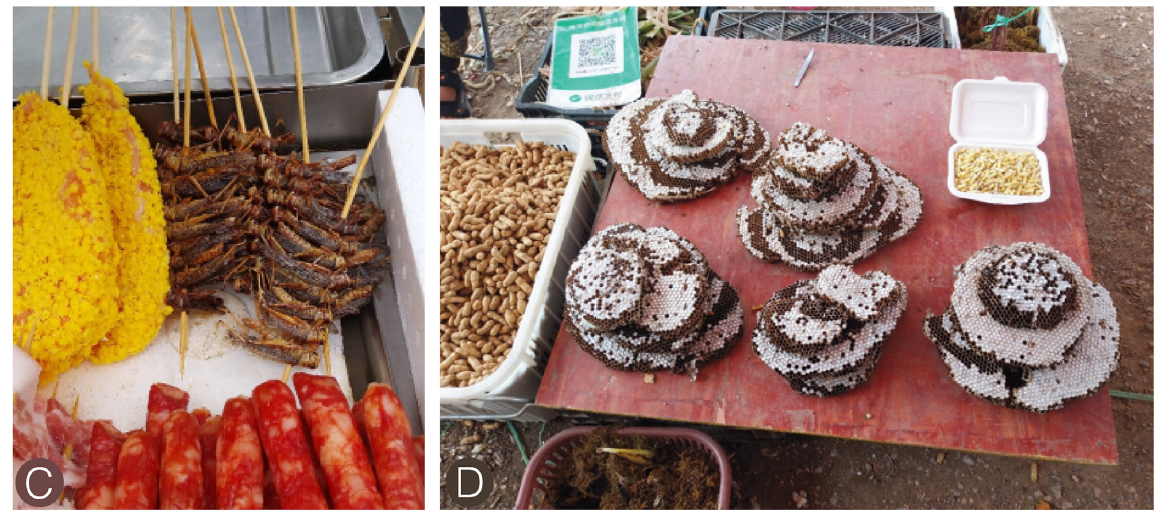
On a personal note, I was pleased to contribute two photographs to the paper taken during my ongoing work in China, showing edible insects for sale in markets in Yunnan: grasshoppers in one, and hornet larvae in the other. They’re a reminder that what might seem unusual to people in Britain is an entirely familiar part of everyday life elsewhere.
All three reviews emerged from the international Status of Insects Research Coordination Network, and together they tell a compelling story about just how deeply insects are woven into the natural world and human society.
For me, one of the central messages is that insect conservation isn’t simply about protecting biodiversity or maintaining ecosystem services. It’s also about protecting livelihoods, traditions, cultural heritage and the many ways in which people experience and enjoy the natural world. And those are things that are very difficult to put a monetary value on.
Here’s the reference and link to the new paper:
Ware, J.L., Birrell, J.H., Elfin, J. et al. (2026) Insects and human cultural identity, social cohesion, and quality of life. Annals of the Entomological Society of America. https://doi.org/10.1093/aesa/saag039
My thanks to Jessica and all the colleagues involved in bringing together another wide-ranging review of why insects matter.

