Tag Archives: Science

How can an understanding of plant–pollinator interactions contribute to global food security? A new discussion paper

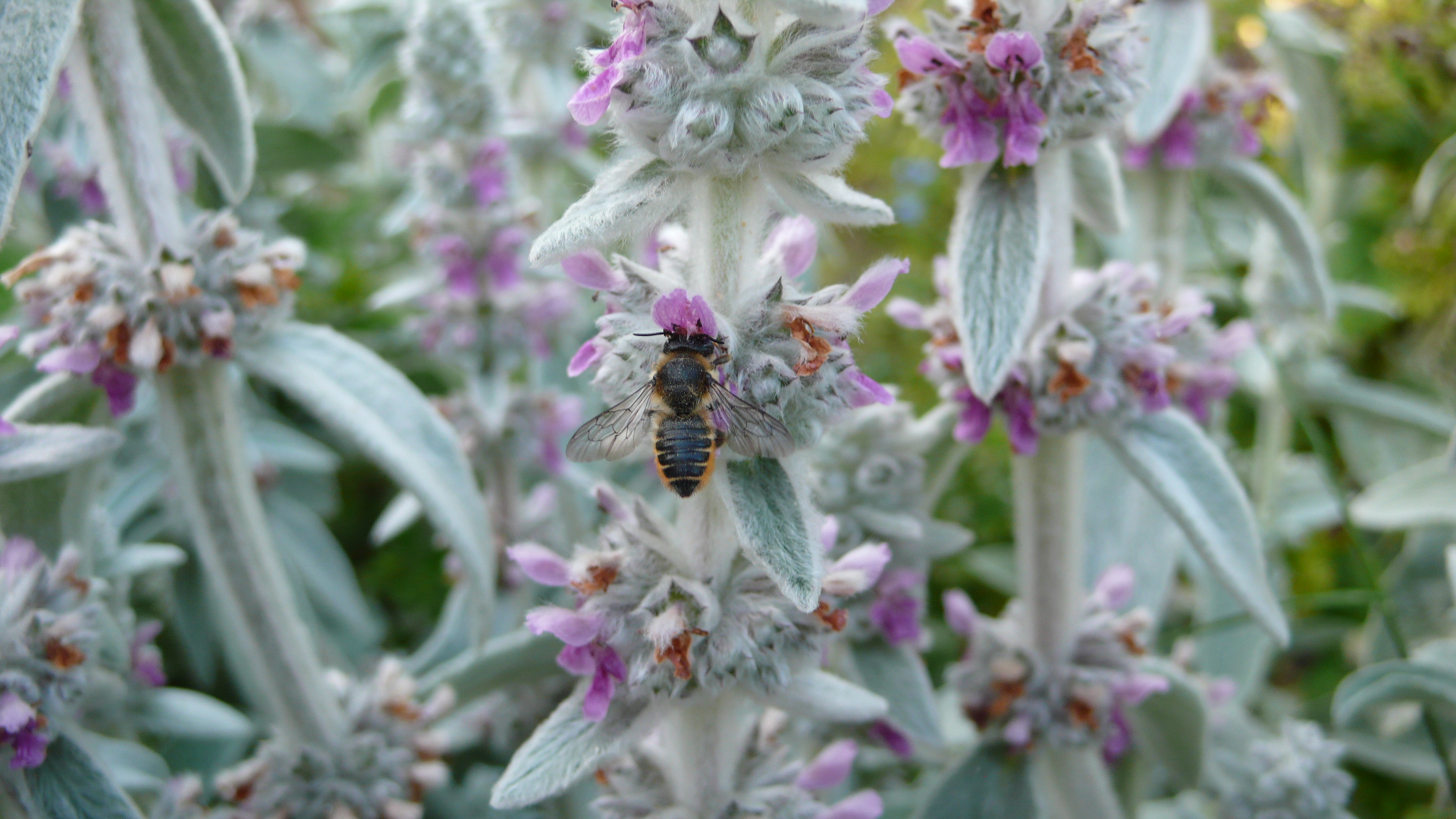
Megachile on lambs ear 2015-06-29 18.16.49

A new discussion/review paper that I contributed to has just been published in the journal Current Opinion in Plant Biology.  Entitled “How can an understanding of plant–pollinator interactions contribute to global food security?” the paper was written in collaboration with Professor Beverley Glover and her PhD students Emily Bailes and Jonathan Pattrick at the University of Cambridge.

The abstract and highlights are copied below; if anyone wants a PDF of the full paper, send me an email or ask in the comments section.

Abstract:

Pollination of crops by animals is an essential part of global food production, but evidence suggests that wild pollinator populations may be declining while a number of problems are besetting managed honey bee colonies. Animal-pollinated crops grown today, bred in an environment where pollination was less likely to limit fruit set, are often suboptimal in attracting and sustaining their pollinator populations. Research into plant–pollinator interactions is often conducted in a curiosity-driven, ecological framework, but may inform breeding and biotechnological approaches to enhance pollinator attraction and crop yield. In this article we review key topics in current plant–pollinator research that have potential roles in future crop breeding for enhanced global food security.

Highlights:

  • Animals are globally, and increasingly, important for the improved yield and quality of many crops.
  • Floral traits are a promising and little explored avenue for the improvement of crop yields.
  • Work surrounding plant–pollinator interactions can inform us on the best strategies to do this.
  • Coordinating crop flowering time with key lifecycle stages of pollinators could benefit both crop yields and pollinators.

The uneasy academic and the importance of dipping outside your discipline: reflections on The Urban University conference

Uneasy Academic 20141011_144756

It’s important for academics to occasionally move out of their disciplinary comfort zones and to interact with academics and practitioners from beyond their own silos, experiencing approaches that are alien and hearing voices that are not repeating the normative values of their own subject area.  Time spent in this way can be both stimulating and mundane, enlightening and boring, exciting and frustrating.  Above all, unpredictable.  At an ecological conference I know what I will experience; drop me into one devoted to the arts or social sciences, and anything can happen.  It’s an uneasy experience.

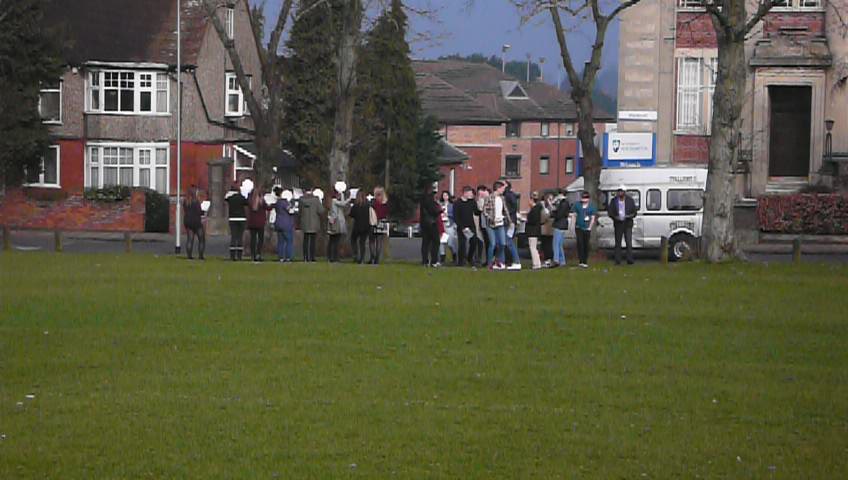
With that in mind I spent the end of last week attending a conference at which I was the lone scientist speaker, and indeed one of the very few people with a science background in the audience, as far as I could tell. The Urban University was sub-titled “Universities as place makers and agents of civic success in medium sized towns and cities” and was largely aimed at urban planners, architects, policy makers, and social geographers.  Not muddy boots ecologists.  However I’d offered the organisers (the University of Northampton’s Collaborative Centre for the Built Environment) a 30 minute talk about the monitoring work we’ve been doing on the bird assemblage at Northampton’s new Waterside Campus, which I discussed in an earlier post. The abstract for my talk is below, co-authored with my colleagues Janet Jackson and Duncan McCollin, plus two of our undergraduate students, Jo Underwood and Charlie Baker.

I had hoped that providing a very different perspective on the role of an urban campus, one focussed on the biodiversity it can potentially support and the ecosystem services that stem from it, might be of interest to this broad-based audience.  In the back of my mind I also thought it might be fun to reverse roles and, for 30 minutes, make them the uneasy ones.  It’s always hard to judge but I got the impression afterwards that the talk was well received and it elicited some discussion and questions.

Overall it was a stimulating couple of days and (I think) I’ve learned a lot, or at least learned more about the approaches and priorities of academics and practitioners beyond my immediate field. The talks ranged from the rather abstract to the very practical, from theoretical discussions to local activism. Particular highlights for me were:

John Goddard‘s overview of the relationship between the university and the city, and the fact that many academics don’t feel a personal link, or responsibility, to the urban centre in which they work.

Allan Cochrane discussing the unintended consequences of a university’s economic and social power, including gentrification and studentification of local residential areas.

Robin Hambleton on universities as a corrective to “placeless power”, i.e. multinational firms that can facilitate enormous social and economic change in an area despite having no geographic connection to the place.  Of course the internationalisation agenda of most UK universities means that they may themselves be in danger of wielding placeless power overseas.

Michael Edwards recounting how UCL academics and students have engaged in local activism in North London, for example fighting destructive planning applications, and sometimes positioned on the opposing side to the university itself.

Wendy Cukier on the experience of her Canadian university’s role as a “changemaker”, and the value of the Ashoka U Changemaker Campus programme, to which the University of Northampton is committed.

Cathy Smith on the medieval origins of the original University of Northampton, which was dissolved in 1265.  By happy coincidence 2015 is both the 750th anniversary of that dissolution and the 10th anniversary of the current University of Northampton’s full upgrade to university status in 2005.

The conference strongly impressed upon me the fact that academics sometimes take their institutions for granted in the sense that they don’t reflect on, or even challenge, the role of higher education within their geographical location. There may even be a danger of this becoming more pronounced as, in the rush to internationalise and chase overseas student fees, we in fact forget the physical and historical roots of our institutions.

Above all the two days I spent trying to navigate these unfamiliar waters reinforced my belief that it can be very dangerous for academics to isolate themselves within their disciplines, no matter how comforting and familiar that may be.  If the only voices that you are hearing (audibly and on the page) are the ones that are telling you stories that you already know and understand (even if you don’t agree with them) then it can be very easy to drift into a kind of disciplinary complacency in which you take the (self) importance and role of your own subject area for granted, without any external perspective on how it might be perceived by those beyond your academic boundaries.

Taking the occasional disciplinary leap could involve as little as going to a seminar in another department, or widening your reading to include areas beyond your subject.  Attending and presenting at a two day conference involves a greater commitment of time and energy, but it’s worth the effort.  It’s an approach to academia that I’ve tried to follow over the past 25 years and I’d recommend it as a way of broadening perspectives.  Sometimes it’s good to feel uneasy.

Many thanks to the organisers of The Urban University conference, particualrly Sabine Coady Schaebitz and Bob Colenutt, for their hard work in putting together such a great couple of days.  Here’s the details of my talk:

Biodiversity monitoring on urban university campuses

Jeff Ollerton, Joanne Underwood, Janet Jackson, Charles Baker & Duncan McCollin

Biodiversity, the variety of species and habitats to be found in a defined area, is a critical component of the natural world, and the ecosystem services that it provides supports modern society in economically tangible ways.  Urban campuses have long been acknowledged as supporting significant biodiversity, as evidenced by the many universities that have written biodiversity action plans.  However there has been relatively little quantitative research published on the biodiversity of British urban campuses, and how that diversity changes over time, particularly with respect to large-scale infrastructure development.  Academics and students in the Department of Environmental and Geographical Sciences have been collecting data on the biodiversity of Park and Avenue Campuses for more than 20 years, including plants, invertebrates, mammals, and birds.  This talk focuses on bird diversity as birds are an indicator group for assessing ecosystems, and are arguably the best understood group of species in the UK.  We present data on the birds that have been recorded on these campuses from 1993 to 2015, assessed in terms of their UK conservation status.  We then discuss the potential impact of the new Waterside Campus on the existing bird assemblage of the site, and present preliminary data showing how bird diversity has changed since building work began.  We end by discussing whether it is possible to maintain or even enhance bird diversity and abundance at the new campus.   The location of Waterside Campus, within the Nene Valley Nature Improvement Area and in close proximity to internationally important wetland bird sites, means that the University of Northampton has a civic duty to maintain the biodiversity of its campuses.

Note: in the end I actually didn’t include the data from Park and Avenue campuses, there wasn’t time to fit everything in!

Plantlife’s road verge advice could negatively affect pollinators

P1020346

Did anyone else hear the item on Radio 4 this morning about Plantlife’s road verge campaign and associated petition?  I listened carefully to the discussion and am broadly supportive of what they are trying to achieve.  But I was immediately struck by a comment that local councils should cut the verges “from mid July onwards” because most plants will have set seed by then.  I’ve seen this advice given before and whilst it might be an appropriate option for plants, it could severely impact local pollinator populations.

The printed advice that Plantlife is offering (which can be found here) states that if it’s only possible to cut a verge once a year:

“Cut the full width of the verge….between mid July and September. This allows plants to flower and, importantly, gives time for seed to be set.”

This misses a vital point: between mid-July and September there is still an abundance of flower-visiting insects that require these flowers to provide resources for their nesting and egg laying activities, or to build up reserves of energy to allow them to hibernate, particularly newly-mated queen bumblebees.

Where’s the evidence to support my assertion?  It’s been demonstrated by a number of studies, but I’ll point you in the direction of a paper that came out of the PhD work of one of my former students, Dr Sam Tarrant, who now works with RSPB.  If you look at Figure 4 of this paper, you’ll see that on restored landfill sites the abundance of pollinators in autumn surveys (conducted September-October) was just as high as for summer surveys.  On nature reserves, which are routinely cut from mid-July onwards (see Figure 2), this was not the case.

Climate change means that flower-visiting insects are now active in the UK for a much longer period of time than was previously the case, up to at least November in the south of the country.  I agree with Plantlife that road verges are important habitats for plants and other wildlife.  But advice that suggests cutting floral resources at a key time of the year for these insects is simply misguided.  A cut between October and December would be much more appropriate.

I don’t use Twitter so if anyone could point this at Plantlife’s account I’d be interested to see what their reaction is.

How good is the evidence base for pollinator declines? A comment on the recent Ghazoul and Goulson Science correspondence

In a recent issue of the journal Science, Dave Goulson and colleagues presented a review entitled “Bee declines driven by combined stress from parasites, pesticides, and lack of flowers”.  This stimulated Jaboury Ghazoul to submit a letter to Science criticising the Goulson et al. paper from a number of perspectives, but particularly the paucity of the evidence base for pollinator declines. Dave and his co-authors robustly responded to that letter, as you might imagine. In some respects this was an unsatisfactory exchange, however, as the focus was largely on agricultural pollinators, rather than pollinators of all plants (including the majority non-cultivated species) and I think that (perhaps with more space?) Dave could have outlined the evidence in more depth.

The most striking statement in Jaboury’s letter was that the “evidence for pollinator declines is almost entirely confined to honeybees and bumblebees in Europe and North America”.

Now, even given the fact that Jaboury was possibly referring specifically to agricultural pollinators, that is a very extreme statement to make. Underlying it is the suggestion that global concerns about declining pollinator biodiversity (a subject I’ve discussed repeatedly on this blog) is underpinned by a taxonomically and geographically thin evidence base. Is that really true? I don’t believe so and I think it’s worth presenting a brief overview of the evidence, not least because Dave’s review and the resulting correspondence is pay-walled at the Science site (though if you Google the titles you might, just might, find copies posted on the web…)

Let me state from the outset that I have considerable respect for both Jaboury and Dave, as individuals and as scientists. I’ve known Dave since we were postgrads together in the early 1990s, and have had occasional contact with Jaboury through conferences and via email. So this isn’t meant to be a criticism of either of them.  But I do believe that the evidence for pollinator declines is considerably more robust than Jaboury acknowledges, and even more wide ranging than Dave and colleagues describe in their response (though in fairness, most of the bee evidence was cited in their original review).

Here’s a summary of where I see the evidence base at the moment; it’s not meant to be a full review, by any means, but rather to give a flavour of the taxonomic and geographical breadth and depth of the evidence as it currently stands:

Wild bees (including bumblebees, and solitary and primitively eusocial bees) – significant reduction of abundance and diversity at local, regional and country-levels documented in Britain (Biesmeijer et al. 2006, Ollerton et al. 2014), Holland (Biesmeijer et al. 2006), Europe as a whole (Kosier et al. 2007, the recent IUCN Red List by Nieto et al 2014), North America (Grixti et al. 2007, Cameron et al. 2011, Burkle et al. 2013), South America (Morales et al. 2013; Schmid-Hempel et al. 2013), China and Japan (Xie et al. 2008; Williams et al. 2009; Matsumura et al. 2004; Inoue et al. 2008), and South Africa (Pauw 2007).

Honey bees – colony declines documented in Europe and North America (see reviews by NRC 2007, Potts et al. 2010) and evidence that global demand for honey bee pollination services is outstripping supply (Aizen and Harder 2009).

Hoverflies (Syrphidae) – diversity declines documented in Holland and Britain (Biesmeijer et al. 2006).

Butterflies and moths – diversity and abundance of Lepidoptera has declined in the UK (Gonzalez-Megias et al. 2008, Fox 2013), whilst in North America some 50 species are IUCN criteria Red Listed and there is particular concern about the iconic Monarch butterfly.  Likewise a significant fraction of butterflies in other parts of the world are of conservation concern, e.g. Southern Africa, Australia, and Europe.

Flower-visiting wasps – reduction in country-level diversity in Britain (Ollerton et al. 2014).

Birds and mammals – the major vertebrate pollinators have recently been assessed at a global level by Regan et al. (2015) using IUCN Red List criteria.  They concluded that: “overall, pollinating bird and mammal species are deteriorating in status, with more species moving toward extinction than away from it. On average, 2.5 species per year have moved one Red List category toward extinction in recent decades, representing a substantial increase in the extinction risk across this set of species”.

Of course a number of the studies cited above have shown that some species are doing better than others and a proportion of the taxa they have assessed are stable or even increasing in abundance (including managed honey bee colonies in some parts of the world). But the current evidence base, as I see it, is pointing towards significant declines in pollinator abundance and diversity at multiple spatial scales across all regions that have so-far been assessed with any rigour, for a wide range of taxa.

I’m happy to receive comments on this topic, particularly pointing me to major sources of evidence that I’ve not covered, or if you disagree with my conclusions.

References

Aizen and Harder (2009) The global stock of domesticated honeybees is growing slower than agricultural demand for pollination. Current Biology 19: 915–918.

Biesmeijer et al. (2006) Parallel declines in pollinators and insect-pollinated plants in Britain and the Netherlands. Science 313: 351–354.

Burkle et al. (2013) Plant-pollinator interactions over 120 years: Loss of species, co-occurrence, and function. Science 339, 1611–161.

Cameron et al. (2011) Patterns of widespread decline in North American bumble bees. Proc. Natl. Acad. Sci. U.S.A. 108: 662–667.

Fox (2013) The decline of moths in Great Britain: a review of possible causes. Insect Conservation and Diversity 6: 5–19.

Gonzalez-Megias, A. et al. (2008) Changes in the composition of British butterfly assemblages over two decades. Global Change Biology, 14: 1464-1474.

Grixti (2009) Decline of bumble bees (Bombus) in the North American Midwest. Biol. Conserv. 142, 75–84 (2009).

Inoue et al. (2008). Displacement of Japanese native bumblebees by the recently introduced Bombus terrestris (L.) (Hymenoptera: Apidae). J. Insect Conserv. 12: 135–146.

Kosior (2007) The decline of the bumble bees and cuckoo bees (Hymenoptera: Apidae: Bombini) of Western and Central Europe. Oryx 41, 79–88.

Matsumura et al. (2004) Invasion status and potential ecological impacts of an invasive alien bumblebee, Bombus terrestris L. (Hymenoptera: Apidae) naturalized in Southern Hokkaido, Japan. Glob. Environ. Res. 8, 51–66.

National Resource Council (2007) Status of Pollinators in North America.  National Academies Press, Washington, DC.

Nieto et al. (2014) European Red List of Bees.  Publication Office of the European Union.

Ollerton et al. (2014) Extinction of aculeate pollinators in Britain and the role of large-scale agricultural changes.  Science 346: 1360-1362.

Pauw (2007) Collapse of a pollination web in small conservation areas. Ecology 88: 1759-1769.

Potts et al. (2010) Declines of managed honey bees and beekeepers in Europe. Journal of Apicultural Research 49: 15–22.

Regan et al. (2015) Global Trends in the Status of Bird and Mammal Pollinators. Conservation Letters DOI: 10.1111/conl.12162

Schmid-Hempel et al. (2013) The invasion of southern South America by imported bumblebees and associated parasites. Journal of Animal Ecology 83: 823–837.

Williams et al. (2009) The bumblebees of Sichuan (Hymenoptera: Apidae, Bombini). Syst. Biodivers. 7: 101–189.

Xie et al. (2008) The effect of grazing on bumblebees in the high rangelands of the eastern Tibetan Plateau of Sichuan. Journal of Insect Conservation 12: 695–703 (2008).

How does a scientist’s h-index change over time?

Since its introduction a decade ago the h-index has rapidly become the most frequently used measure of research productivity and citation impact amongst scientists.  It’s far from perfect and has been criticised from a number of perspectives, particularly when used as a blunt tool for assessing a scientist’s “quality”.  Nonetheless it’s a useful measure that allows some comparison within research fields and (I think more importantly) gives individuals one method, amongst any number, of assessing the influence their work is having on their discipline.

Put simply, an individual’s h-index is calculated by ranking their publications by number of citations; the point at which the rank position of a publication is at least equal to the number of citations for that publication is the h-index.  For example, if a scientist has 18 papers all with at least 18 citations, their h-index is 18.  As soon as another publication reaches 19 citations, their h-index will go up to 19, and so forth.

That’s an important point about the h-index (and indeed all other measures of success/impact/whatever) – they are not static and they change over time.  As the Wikipedia entry that I linked to above notes, the originator of the index, Jorge Hirsch, suggested that 20 years after their first publication the h-index of a “successful scientist” will be 20; that of an “outstanding scientist” would be 40; and a “truly unique” scientist would have an h-index of 60. However, this will vary between different fields, so any comparisons are best done within a discipline.

One question that I’ve not seen widely discussed is how an individual’s h-index changes over time (though see Alex Bateman’s old blog post about “Why I love the h-index“, where he refers to the “h-trajectory”).  Does the “successful scientist” typically accrue those 20 h-index points regularly, 1 point per year, over the 20 years?  Or are there years when the h-index remains static and others when it increases by more than the average of 1 point per year?  If the latter, what’s the largest annual leap in an h-index that one could reasonably expect?  Finally, if we were to plot up the h-index over time, what shape curve can we expect from the graph? [2026 UPDATE: see the comments below about the fact that an h-index can, in rare circumstances, go down].

On one level these are purely academic questions, the result of some musing and window gazing during a bus ride between campuses a couple of weeks ago.  But there’s also a practical aspect to it, if scientists wish to track this measure of their career progression.  For an early career scientist starting out with their first few publications, it’s easy to record their h-index as it changes over time from this point forward.  But what about a mid- or late-career scientist who started publishing long before the h-index was even thought of?  How do they reconstruct the way in which their h-index has evolved over time, should they be so inclined?

As far as I know there’s no simple, automatic way to do it (but please correct me if I’m wrong).  Indexing and citation systems such as Web of Science and Google Scholar give the current h-index and no indication of past history, you have to work it out for yourself.  Which is what I’ve done, and the procedure below is (I think) the most straightforward* way of reconstructing the evolution of an h-index.

So, pour yourself a cup of coffee** and settle in for a bit of academic archaeology.

I’m going to demonstrate the process using Web of Science (WoS)***, but it should be identical in overall procedure, if not in detail, in Google Scholar, Scopus, etc.  However be aware that Google Scholar is much less conservative in what it counts as a citation, hence h-indexes from that source are typically significantly higher than from others.

The first thing to do after you’ve logged on to WoS is to perform a Basic Search by author name, across all years; I’ve done this for All Databases as some of my**** publications (specifically peer-reviewed book chapters) are not listed in the WoS Core Collection database (the default selection):

Screen Shot 1 2015-05-10 at 08.03.59 copy

Perform the search then select Create Citation Report.  This will return a pair of graphs showing number of publications per year and number of citations per year, plus a table with some metrics about average citations per year, etc., and a value for the current h-index of that author:

Screen Shot 2 2015-05-10 at 08.12.12 copy

Below that is a list of publications for Ollerton, J ranked by number of times cited:

Screen Shot 3 2015-05-10 at 08.31.13 copy

As you can see, WoS indicates that the h-index of Ollerton, J is 23.  That’s incorrect, it’s actually 22 (i.e. a not-quite-successful scientist) because despite having a relatively uncommon name, there are other people called Ollerton, J who publish (including my cousin Janice).  However it’s a simple matter to remove any publications that are not your own using the check boxes against each publication and the “Go” button.  Ignore any publications that are ranked lower than your h-index.

Once you have a clean list, use the drop-down menu underneath the page to save your list as either a text or Excel file; again, just save the publications that are contributing to your h-index by choosing the number of records that corresponds to your h-index [UPDATE: however see Vera van Noort’s comment below about the possible influence of early publications that were only cited once or twice on your early h-index.  UPDATE x 2:  see also the later comments by Alex Bateman and Vera – later publications can drop out of the h-index list too.  This wasn’t an issue for my set of publications, but it’s worth checking if you’re following this procedure].

The Excel***** file is easiest to work with: it provides you with the two graphs shown on the WoS citation report plus details of the publications, average citations and so forth, and all the raw data on number of citations per year back to 1950 (click on each image for a larger view):

Screen Shot 4 2015-05-12 at 16.22.15 copy

To make the spreadsheet easier to work with I advise deleting all the stuff you don’t need, including the figures and the columns from 1950 up to the date of your first publication.

You now have to calculate cumulative number of citations over time for each publication using the Sum function (I’ll not go into details, should be straightforward if you know your way around Excel).

Next, copy all of the data and paste-special onto another sheet, selecting “values” (to just paste the data, not the formulae) and “transpose” (to turn the data 90 degrees) from the paste-special options.  Remove the original data to just leave the cumulative citations and then select all of the data and use the Custom Sort function to order the rows by by date of publication:

Screen Shot 4 2015-05-14 at 09.24.38 copy

Now it’s a matter of going along the columns and recording the number of publications that exceed the h-index for the previous column; I’ve colour-coded this below to make it easier to see:

Screen Shot 6 2015-05-14 at 08.37.38 copy

Finally, graph up the data:

Screen Shot 7 2015-05-14 at 09.05.41 copy

The results are interesting (or at least I think so).  In relation to the questions I posed above its clear that there are periods when the h-index doesn’t increase for a couple of years; more periods when the h-index increases by one each year; and a couple of years when the h-index increases by 2 points.  But that’s the maximum and I suspect that increasing by 3 or more index points in a year would be very unusual indeed (though see my second point below).

Although there’s a clear “lag phase” in the first five years when the h-index hardly changes, there are also periods when there’s no increase in h-index much later, e.g. 2013/14, so this stasis is not restricted to the beginning of my career.

Some final points:

1.  Make sure your citation data on Web of Science is accurate.  I have found LOTS of mis-citations of my publications over the years, by  authors who include incorrect dates, volume numbers, page numbers, even authors, in the references they cite.  WoS has a facility for correcting these mis-citations, but you have to let them know, it’s not automatic.

2.  How representative are my results for the population of ecologists or scientists more generally?  I have no idea but I hope others go through the same procedure so that we can begin to build up a picture of how the h-index evolves.

*No doubt this could be automated in some way and perhaps this will stimulate some competent programmer or app developer to do so, but doing it by hand is so straightforward that I’m not sure it’s worth the effort of constructing a working system.  Certainly the Excel part of the procedure could be done more elegantly in R.

**Other beverages are available.

***Other indexing and citation systems are available.

****Other scientists are available 🙂  But it doesn’t seem fair to use someone else as an example.  In any case, consider this another post reflecting on my life and career in my 50th year on this planet!

*****Other spreadsheets are available.  That’s the last one, promise.

Should biodiversity scientists be campaigners and polemicists?

NPS workshop

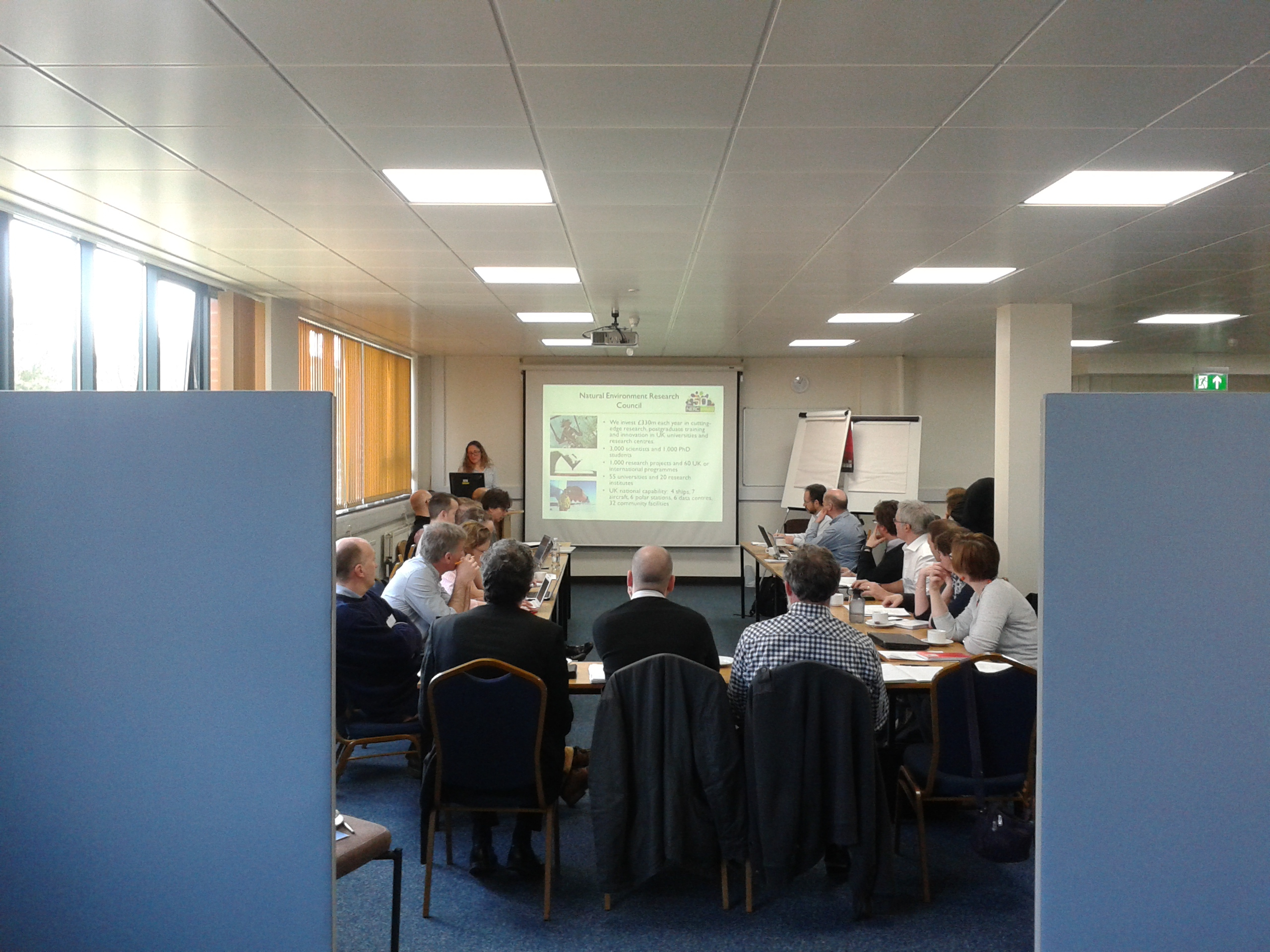
Earlier this week I attended a two day research funding workshop intended to develop initial project ideas to address evidence gaps in the recent National Pollinator Strategy.  It was a productive meeting from which will hopefully emerge some important, focused science.  As is so often the case at scientific meetings, many of the most interesting conversations occurred after the end of the day’s formal work, in the pub.  There was a little bar stool criticism of some of the recent published work on the effects of neonicotinoid pesticides on pollinator health, and specifically whether or not researchers engaged in this kind of controversial science should be polemicists, stirring up controversy, or even activists with particular agendas that they wish to promote.

Whilst I agree that there is a difficult line to walk between scientist as campaigner and scientist as neutral presenter of facts, I also think that polemicist/activist is quite an admirable position for a scientist to take in many ways, as long as the rhetoric is backed up by sound science. It’s also brave given that perceptions of scientists can change the likelihood of their research being funded or even published – reviews and reviewers are rarely as objective as we would like to believe.

So should scientists, and specifically those, like myself, who are engaged with biodiversity science in all its myriad forms, be also engaged in campaigns and polemics?  Is this what wider society wants from its scientists?  How do other scientists feel about this?  I’d really be interested in your views.

In this blog I’ve made no secret of the fact that I take certain positions on subjects such as the impact of poorly conceived development on nature reserves, the fallacies of political spin, and future developments in UK nature conservation.  Those are positions that are predicated as much by my personal motivations as an “environmentalist” (a term I don’t like but which is widely understood and will do for now) as they are by my professional role as a university scientist who does research and teaches.  I am not a neutral observer, though I hope that I’m an objective one.

There’s a lot of questions that can spin off from reflecting on the role of biodiversity science and scientists in the modern age, which I don’t have time to properly explore but which I hope will emerge in the comments.  I was prompted to write this by a really interesting post by Joern Fischer over at the Ideas for Sustainability blog entitled “Losing humanity and other questions science doesn’t ask“.  In it Joern develops some ideas about the kind of science that we should be doing “for it to be of use in the sense of creating a better, more sustainable world”.  I’d add that what is important is not just the science that we do, it’s how we present that science (the passion and the story telling) to a range of audiences, and also the personal positions we take on the issues that the science illuminates.

The state of bees: the European Red List has been published

P1010430

As I’ve frequently reported on this blog, there is growing global concern about declines in pollinator diversity and abundance across many regions, and much research is going on into what is causing those declines, their scale and consequences, and what can be done to reverse pollinator loss. It’s therefore great to see the publication of the European Red List of Bees which provides information on the conservation status of the c. 2000 species of bees in Europe.

The report uses standard IUCN criteria for assessing each species and has been picked up by various media and NGOs, who have typically promoted it with claims such as “Nearly one in 10 of Europe’s wild bee species face extinction“.  However the reality of what the report has found is much more complex and nuanced than the headlines suggest.  Over half of the bee species were classified as Data Deficient, meaning that we don’t have enough information to assess whether they are threatened or not.  Of those that could be classified, 7 species are Critically Endangered, including 3 that are endemic to Europe and found nowhere else in the world; 46 are Endangered including 12 endemics; 24 are Vulnerable, with 7 endemic; 101 are Near Threatened with 17 endemic; 663 are Least Concern (68 endemic), meaning that there are no immediate threats to their survival.

If we turn the “1 in 10” headline around, then a more accurate statement would be “Over 90% of Europe’s bees (for which we have sufficient data) are not immediately threatened by extinction”.  Of course that could change once data for the poorly studied species becomes available.  These are not grounds for complacency; but neither are they grounds for panic.

The scale at which we assess biodiversity is critical if we are to fully understand the threats to species, and when and where limited funds can be prioritised for conservation actions.  Species that are locally endangered or even extinct may actually be quite common when assessed across the whole of their distributional range.  For this reason it’s important to consider the status of species in as wide a geographic region as is possible.  Preferably this would mean a global assessment; but for most species we simply don’t have enough information to be able to undertake such a study, particularly for developing countries where there are limited historical records of species occurrences on which to draw.  Even in a relatively developed region such as Europe, with a long history of natural history observation and monitoring, there are huge gaps in our knowledge – in this case for more than half of Europe’s bees.

With this in mind I looked at the European status of those bee species which are now extinct in the UK, as I discussed in December.  Two of the extinct species are considered Critical (Bombus cullumanus and Andrena tridentata); two are Near Threatened (Dufourea minuta and D. halictula); seven other species are Least Concern; and the remaining two (Andrena lepida and A. lathyri) are Data Deficient.  Clearly some of the UK extinct species are in trouble across Europe, but others are not and may re-colonise the UK in the future, as we believe may have happened in the last couple of years for Andrena vaga.  Or they could be helped to re-colonise via a reintroduction programme, as has been done for Bombus subterraneus

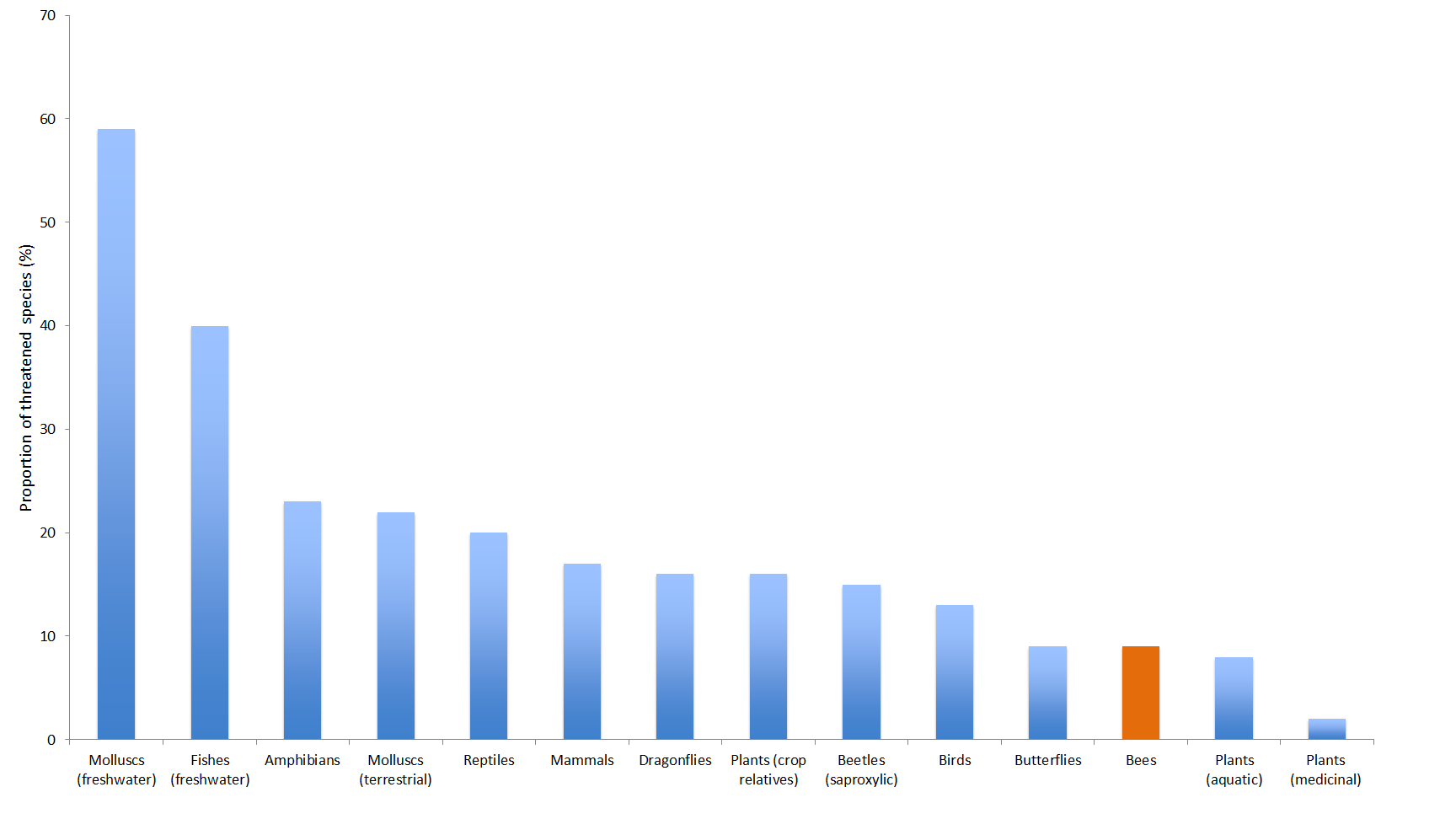
Another way in which to put the findings of this report into a wider context is to consider how the level of threat to bees compares with that of other groups of species.  The authors helpfully provide some comparative data in the summary, which I’ve graphed below (click on it for a better view):

IUCN stats

Overall the proportion of threatened bees is identical to that of butterflies, perhaps because they require some similar resources (flowers on which to feed) and tend to be found in broadly similar habitats.  But other taxa are at much greater risk, particularly freshwater fish and molluscs: yet these taxa have not received the same level of publicity about their plight.  Their are no “Save the Mussels” campaigns, or television series about endangered fish in rivers and lakes.  This is surprising: clearly bees have grabbed the public’s attention because of the role they play in crop pollination, but freshwater fish are also suppliers of ecosystem services either directly (fishing) or indirectly (playing a role in maintaining the “health” of these ecosystems, as do the molluscs). Perhaps more importantly for these species, they are also indicators of water quality, an aspect of natural capital that concerns us all.

The authors of the European Red List of Bees are to be congratulated on a fine piece of work that makes a major contribution to our understanding of pollinator conservation, and is timely, coming soon after the publication of the National Pollinator Strategy for England.  However there’s still a lot of work to do to fill in the gaps for species that are Data Deficient and to understand the more detailed population trends, which are unknown for almost 80% of the bee species.

One of the most surprising findings, though, is that the honey bee (Apis mellifera), the most intensively researched pollinating insect on the planet, is considered Data Deficient “until further research enables us to differentiate between wild and non-wild colonies in order to determine the conservation status of the species in the wild.”  That’s an interesting state of affairs!

Full citation:

Nieto, A., Roberts, S.P.M., Kemp, J., Rasmont, P., Kuhlmann, M., García Criado, M., Biesmeijer, J.C., Bogusch, P., Dathe, H.H., De la Rúa, P., De Meulemeester, T., Dehon, M., Dewulf, A., Ortiz-Sánchez, F.J., Lhomme, P., Pauly, A., Potts, S.G., Praz, C., Quaranta, M., Radchenko, V.G., Scheuchl, E., Smit, J., Straka, J., Terzo, M., Tomozii, B., Window, J. and Michez, D. 2014. European Red List of bees. Luxembourg: Publication Office of the European Union.

How do animals respond to solar eclipses? Please share your observations.

P1120154

If you have been anywhere in the Palearctic during the past 48 hours then you can’t have missed the fact that we experienced that most rare of astronomical phenomena, a solar eclipse.  The eclipse was total only as far north as the Faroe Islands and Svalbard; further south it was partial and here in Northampton the eclipse was perhaps 80-90% total.

It’s been big news with lots of public interest.  As well as explaining the astronomy of eclipses, various commentators on current affairs and science programmes have talked about how animals respond to eclipses.  This is a topic that’s intrigued me ever since the August 1999 eclipse.  During that event I was carrying out field work in a Northampton grassland and as the eclipse reached its maximum the bumblebees and butterflies on the site stopped flying and foraging, and settled into the grass.  Once the eclipse had passed they carried on as before.  I don’t have any hard data to demonstrate the effect, it was purely an observation of what was happening around me.

Since then I’ve waited over 15 years for the next opportunity to observe how solar eclipses affect animal behaviour.  Unfortunately there are few pollinators flying at the moment so I had to content myself with watching the gulls, woodpigeons, carrion crows and other birds on the Racecourse park adjacent to the university.

P1120144

This time I took some video footage before, during and after the eclipse, noted the birds’ behaviour, flying, calls and singing.  And guess what? As far as I could tell the eclipse had no effect on the birds!  They behaved as if nothing was happening.  Even a mistle thrush than had been singing all morning from a perch in one of the boundary lime trees continued its song as the moon passed in front of the sun.

That really surprised me!  I was expecting the birds to at least reduce their activity as has been noted in previous eclipses.  But they didn’t as far as I could tell.  Perhaps it was the type of birds I was observing?  Or the time of year?  Or the fact that the eclipse was only partial?  Lots of questions but it’s difficult to do repeat observations for this kind of science – the next British total eclipse is not until 2090!

What did you see?  Did you notice any effect of the eclipse on animal behaviour?  Or did you, like me, see no effect of the eclipse.  I’d be interested to hear your observations.

P1120136

Something for the weekend #3

The latest in a regular series of posts to biodiversity-related* items that have caught my attention during the week:


  • A new report by WWF documents over 1000 new species discovered in Papua New Guinea between 1998 and 2008, and the risks to their survival from logging and other human activities.


  • How does history inform ecological restoration?  Ian Lunt has a great post on this topic.


  • In the latest in a series of high-profile rewilding initiatives, the conservation charity Lynx UK Trust has launched a survey to elicit public views on their proposal to reintroduce these large cats – make your views known here.


  • The University of Northampton’s annual Images of Research exhibition is available to view online and you can vote for your favourite three images.  Now I’m not saying that you should vote for “An ecosystem in a cup”.  But you could.  If you wanted to.


  • Staying with the University of Northampton, the Press Office has made me the first Staff Blogger of the Month.  Which is nice.  Not sure exactly how many other staff blog, but my impression is that it’s not many so it may be only a matter of time before I’m honoured again.  I thought I’d share what I wrote when asked about why I blog:

“Why do I blog? The main aim is to communicate the science relating to the importance of biodiversity and ecosystem services (and therefore why we need to conserve species and habitats) to as wide an audience as possible, including the general public, students, non-governmental organisations, businesses, and policy makers, as well as other academics.  Some of that communication relates to examples from our own research, and I also draw on the work of others in the field.  A secondary aim is to give my students a flavour of what it is that I actually do in the rest of my job: teaching is only part of the story!”


  • All of which links nicely to the recent post by Jeremy Fox, and subsequent discussion, over at Dynamic Ecology about whether science blogging (and specifically “ecology” blogs, whatever they might be) is on the decline.  For what it’s worth, I don’t think it is and I also think that the definition of what “ecology” blogging actually covers is much wider than the discussion suggests.


Feel free to recommend links that have caught your eye.

*Disclaimer: may sometimes contain non-biodiversity-related links.

What Einstein didn’t say about bees – UPDATE – May 2021

https://i0.wp.com/www.impawards.com/intl/misc/2012/thumbs/sq_more_than_honey.jpg

It’s more than 6 years (!) since I wrote this post. Over that period I’ve been asked many times about the Einstein bee quote and I’ve always replied that it’s made up, and that further more, Einstein was a physicist: he had no interest in bees!

Turns out, that’s not quite correct. There’s still no evidence that Einstein stated the infamous bee quote; however he does seem to have had an interest in bees. A newly-discovered letter from the great man mentions his admiration of the work of Karl von Frisch, whose research on the honey bee ‘waggle dance’ earned him a Nobel Prize. There’s a couple of news stories online about this: here’s one from Cosmos, and another from The Conversation. The original paper discussing the letter, by Adrian Dyer and colleagues, can be viewed here.

So I will have to moderate my response in the future, but it doesn’t change the big picture: Einstein never said it!

———————————————————————————————————————–

In the 100th anniversary year since Albert Einstein published the paper on his General Theory of Relativity, it’s saddening to think that one of the things that he will be best remembered for is something he did not say.  There are various versions of it, but they all amount to the same thing:

“If the bee disappeared off the surface of the globe, then man would have only four years of life left. No more bees, no more pollination, no more plants, no more animals, no more man.”

This statement could be dissected and disproved in numerous ways:  for example, there’s over 20,000 species of bees, so what is “the bee”?  Plus most of our crops are not bee (or even insect) pollinated, they are wind pollinated grasses such as wheat and rice.  Etc. etc.

But what is particularly annoying about it is – EINSTEIN NEVER SAID IT!  As far as anyone is aware he had no interest in bees whatsoever and the original source was a Canadian beekeepers’ journal in the 1940s.

It’s even more annoying that, despite the fact that we’ve known the statement is both factually incorrect and not by the great man, documentary film makers and journalists are STILL using it to support their work.  The latest example I’ve seen is this documentary, the poster of which is shown above.

Rant over: back to reading paperwork for a meeting this afternoon.

UPDATE:  I’d forgotten that Tom Breeze at University of Reading posted a fuller account of Einstein’s (non) quote last year – here’s the link.