Tag Archives: Beekeeping

Have we passed “peak honey bee” in Britain? An update of hive numbers for World Bee Day 2025

Since publishing what I believe are the most comprehensive data on the number of honey bee hives in Britain in my book Pollinators & Pollination: Nature and Society, I’ve posted occasional updates on my blog as more recent data become available. I believe that the last of these was in 2022 – see Have honey bees declined in Britain? An update of the numbers – so it feels like it’s time for another. And what’s more appropriate than to post this on World Bee Day 2025?!

Rather than the complex, multi-coloured graph that I’ve produced in the past, I’ve decided to streamline the presentation and simply fit a smoothed LOESS line with a 95% confidence ribbon to the (sometimes contradictory) data points, in order to show the overall trend (see the graph above). If you compare it with the 2022 update you’ll see that the general message from the data is the same: a peak in numbers of hives in the late 1940s (which may or may not be an artefact*), then a steep decline into the 1970s and 1980s, followed by recovery from the 1990s onwards. Note that I’ve removed the two very early data points because I don’t think that they are at all accurate.

The most recent data (2015 to 2024) come from the National Bee Unit which relies on beekeepers to submit their own records, but are probably no less accurate than some of the other data that’s available! If we take a close look at that time period we see something interesting – honey bee hive numbers are decreasing:

What are we to make of this? In an analogy with peak oil, why do we seem to have passed ‘peak honey bee’? If this is a real pattern (and only time will tell) I suspect that it’s because of at least two factors. The first is that interest in beekeeping reached a peak in the early 2020s, after which some initial enthusiasts discovered that beekeeping is actually quite a technical and demanding hobby, and gave it up. The second factor is that word has spread that , globally, managed Western honey bees are not declining, and too many bee hives in an area can have negative impacts on other, wild pollinators. This may have impacted those people who were persuaded by “Save the Bee” campaigns to take up the hobby, to give up beekeeping.

There could well be other reasons that I’ve not considered and, as always, I’d be interested in your thoughts – please leave a comment below. I’ll finish by saying that I make no judgement on this. There’s no doubt that there are too many hives in some parts of Britain, especially in London, and if the trend I describe reduces the pressures on wild pollinators, that’s a good thing. At the same time, honey bees are important agricultural pollinators in some circumstances, especially where there’s mass-flowering crops that require huge numbers of pollinating bees to be available over a short time period. And I like honey as much as the next person.

Happy World Bee Day to my readers!

*There’s a long-standing suggestion that beekeepers in the post-war years inflated the number of hives that they kept in order to obtain a larger sugar ration.

Which honeybees are declining and which are not?

Over the weekend there was a discussion on Twitter about “beewashing” that was spun out of this tweet by London beekeeper Richard Glassborow. Richard and his colleagues are some of the most responsible beekeepers that I know and they are getting increasingly frustrated by claims from irresponsible companies that keeping a hive of bees in your garden will help to “save the bees”, backed up by spurious claims that “honeybee colonies are dying out”.

The Twitter exchange prompted me to produce the Condescending Wonka meme that you see above because, as I discussed in my recent book Pollinators & Pollination: Nature and Society, pollinator conservation is a really complex area. But there’s no doubt that beekeeping as it’s being widely promoted is not the answer to bee conservation. Let me explain why.

The word “honeybee” does not refer to just one species. It’s most often* applied to bees in the genus Apis, especially the Western Honeybee Apis mellifera, but there are another seven or so Apis species to which the word can be applied. Of those other Apis species, most have never been domesticated and they live as free-living colonies is the various parts of Asia where they evolved. Only Apis cerana is kept in hives, as far as I am aware. The conservation status of most of these other Apis species is unclear but given that they are predominantly forest species, and deforestation is a chronic problem in Asia, we can surmise that some species may be declining. If you want to know more about them the Wikipedia page is a good starting point.

In this short post I just want to consider the Western Honeybee (Apis mellifera). This is a really knotty species to get to grips with because there are multiple subspecies and within subspecies there are various genetic lineages. In addition, the Western Honeybee has been subject to artificial selection for desirable qualities, such as docility, amount of honey produced per hive, and disease resistance, as well as cross-breeding between different subspecies**. The best recent summary of our current understanding of Western Honeybee genetics and conservation is this 2019 review by Fabrice Requier and colleagues, from which I’ve drawn quite a bit of information.

For the purposes of this explaining what’s going on, it’s easiest to think about the species as comprising three “megapopulations”:

Western Honeybees that are managed in hives: For the most part these are not endangered. Britain has as many hives now as it did in the mid-1950s and indeed globally we have more hives than ever (about 90 million hives at the last count). They are found far beyond their natural range and have been introduced into places where they are not native such as the Americas, parts of Asia, and Australia. STATUS: doing just fine.

Western Honeybees that have founded “feral” colonies: These have escaped from hives in countries where they have been introduced and become naturalised. They are doing well, too well in fact: they are a significant conservation issue in places like Australia. STATUS: doing just fine.

Western Honeybees that are living wild in their native range: This is where things become a little muddier. The African populations of the various subspecies seem to be doing well, but more studies are needed to confirm this. In Europe, actually defining what constitutes “wild” honeybees across a region where a lot of selection and hybridization has gone on, probably for thousands of years, is tricky. However there’s no doubt that wild colonies of Apis mellifera are not uncommon in suitable woodland: see this paper about free-living colonies in Ireland by Keith Browne and colleagues, for instance. Note their statement that genetic evidence shows that “the free-living population sampled is largely comprised of pure A. m. mellifera“, i.e. the European Black Honeybee. STATUS: probably doing quite well though more data is needed.

Conclusion: as I said, it’s really complicated and I don’t pretend to have all of the answers, no one does. But what IS clear is that managed Western Honeybees are not declining and keeping yet more hives of them is not going to help us to “Save the Bees”. I’ll leave the last word to Requier et al., whose review I really do recommend: “We argue for the redirection of attention from managed honey bees to the neglected conservation of wild honey bees.” Amen to that.

———————————————————————————————

*The term “honeybee” is sometimes also used for other social bees that produce honey, for example stingless honeybees in the genus Trigona, but there’s no real consensus on what “honey” actually is, and as I’ve argued in another post, bumblebees (Bombus spp.) also produce honey.

**You may be horrified (but perhaps not surprised) to learn that in the 1930s the Nazis enacted policies to ensure that German beekeepers kept only European Black Honeybees (Apis mellifera mellifera), in line with their views on racial “purity”. Then in the early 1940s, German beekeepers suffered a huge number of colony losses due to disease. The restrictions were lifted to allow beekeepers to cross their bees with disease-resistant A. mellifera carnica. Go figure.

Have honey bees declined in Britain? An update of the numbers

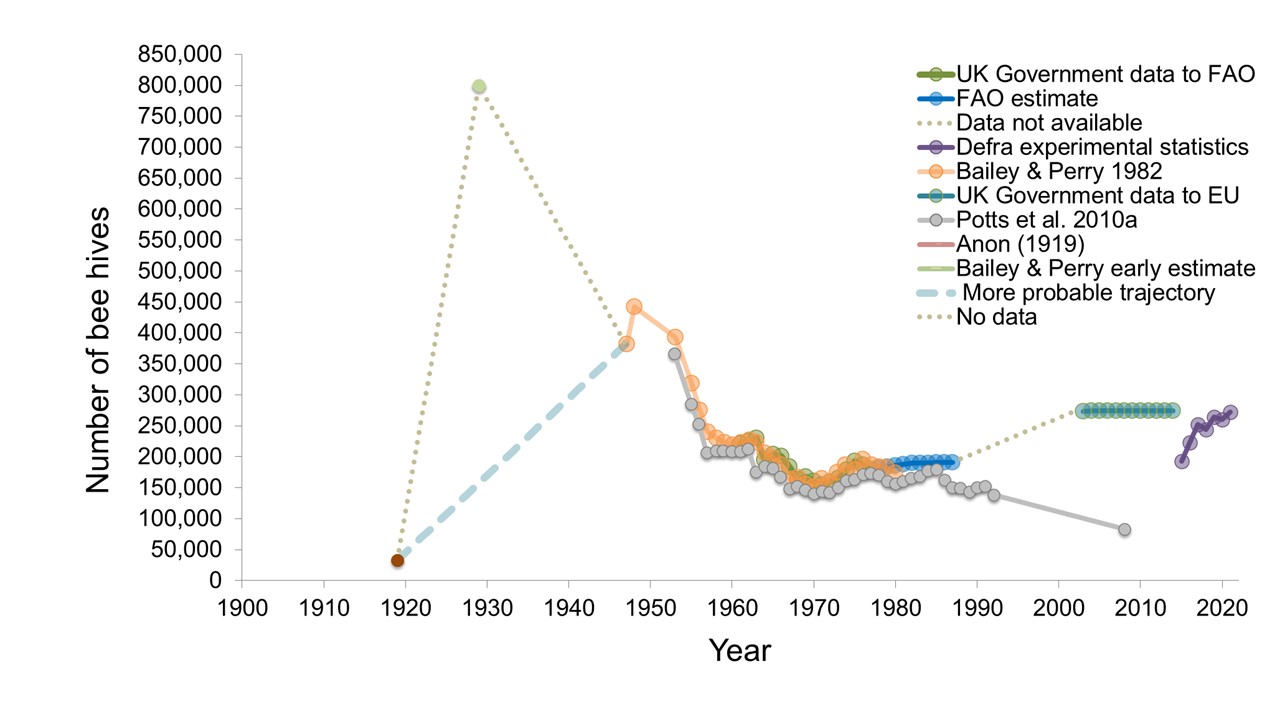
If you’ve read my book Pollinators & Pollination: Nature and Society you’ll know that I have a section in the chapter “The shifting fates of pollinators” that deals with the honey bee situation. In that section I bring together the most comprehensive data set so far available on changes in number of hives in Britain. It’s based on a couple of earlier blog posts and if you’ve not read my book take a look at this one first and then this one to give you some context and more information about the sources of the data.

So far this year I have had several requests from people for the original data (which I’m happy to supply) and queries about what it means. So I thought that the time was right to update the graph with the latest official government figures from BeeBase.

The graph above brings the story up to 2021 where the official estimated number of hives is 272,631. That’s an increase of more than 40% since the first BeeBase estimate in 2015.

The take home from this figure is that the current number of honey bee hives in Britain is similar to what it was in the mid-1950s.

So the answer to the question “have honey bees declined in Britain?” is a resounding NO! They are at least as abundant as they were almost 70 years ago. This reflects the global situation where there’s been a substantial increase in hive numbers since the 1960s, as you can see in the figure below.

So if you want to “Save the Bees” or otherwise support pollinators, please focus on the wild, unmanaged species rather than the managed Western Honeybee (Apis mellifera). As always, comments and questions are welcome below or send me a message via my Contact page.

Do bumblebees make honey? Yes and no…and…maybe [UPDATED]

As kids, my friends and I did a lot of digging. We always seemed to be burrowing into slopes or excavating trenches, pretending to be archaeologists or treasure hunters. Indeed, there was a lot of ground treasure to be found in the part of Sunderland where I grew up. The area has a long history of pottery and glass making, and ship building, and the remnants of these industries could be uncovered every time we stuck a spade in the earth. Over time I developed my own small museum of interesting, unearthed fragments, including bits of hand-painted ceramics, glass bottles, and unidentifiable metal shards, alongside various animal bones I’d excavated. My parents quietly indulged this interest, and my muck-streaked face and clothes, even if they didn’t quite understand what I was doing.

Aged about 10, my first encounter with a bumblebee nest was during one such dig. On the waste ground behind a large advertising hoarding, we began digging into a low, grass-covered mound and accidentally excavated what was probably a small nest of Buff-tailed Bumblebees (Bombus terrestris). I can recall being fascinated by the waxy, odd shaped cells and by the sticky fluid that some of them were leaking. Being an adventurous sort of child I tasted the liquid: it was sweet and sticky, and that was my first encounter with bumblebee “honey”.

I’m going to leave those quotation marks in place because if you do an online search for “do bumblebees make honey?” you generally find that the answer is “no, only honey bees make honey”.

Now, defining honey as something made by honey bee strikes me as a circular argument at best. And it also neglects the “honey” made by meliponine bees that is central to the culture of stingless bee keeping by indigenous groups in Central and South America, and the long tradition pre-colonial tradition of honey hunting by Aboriginal Australians. So if we widen our definition of “honey” as being the nectar*-derived fluid stored in the nests of social bees, then Apis honey bees, stingless bees and bumblebees must all, by logic, make honey. And likewise there’s wasps in the genus Brachygastra from Central and South America that are referred to as “honey wasps” because, well, I’m sure you can work it out!

But this is where things become a little trickier, because turning nectar* into honey involves some complex evaporation and enzymatic activity, so that the resulting fluid is more concentrated and dominated by the sugars glucose and fructose. Although analysis of honey bee honey is commonplace, and there’s been some research conducted on the honey of stingless bees, I don’t know of any studies that have compared Bombus honey with that of other bees, or with what is stored in the nests of honey wasps**. If I’ve missed anything, please do comment and let me know, but this strikes me as an area of research demanding some attention.

So do bumblebees make honey? That very much depends on our definitions, but I’m happy to accept that they do because “honey” is not a single thing: it’s an insect-derived substance that can take a range of forms but serves the same broad purpose of feeding the colony. And although insects have probably been producing it for millions of years, I think I’ve known the answer to the question for almost 50 of them…

UPDATE: A couple of people have commented on social media that there are legal definitions of “honey” as a foodstuff. Here’s the definition according to UK law***:

“the natural sweet substance produced by Apis mellifera bees from the nectar of plants or from secretions of living parts of plants or excretions of plant-sucking insects on the living parts of plants which the bees collect, transform by combining with specific substances of their own, deposit, dehydrate, store and leave in honeycombs to ripen and mature”

So, legally, we can’t call anything that isn’t made by Apis mellifera “honey”, at least from a foodstuffs regulation perspective. But that’s clearly different to what we have been discussing above, which is about a biological definition of honey.

It’s also interesting to look at the compositional requirements of honey as a foodstuff (presented in Schedule one of that document, if you follow the link above). The lower limit for moisture content is 20%. Now if you consider that most nectar in flowers has a sugar content of between about 20% and 50%, clearly there’s been a lot of evaporative work done by the bees to reduce the amount of water in the honey. I would love to know how bumblebee (and other insect) “honey” compares to this: do they put the same kind of effort into evaporating the water from the stored nectar? Given that the purpose of reducing the water content is to prevent fermentation by yeasts when it’s stored for a long time, and that there are bumblebee species which have colonies that are active for more than one year, I imagine that at least some species in some parts of their range may employ similar tactics.

Thanks to everyone who has been commenting and discussing the topic. It never ceases to amaze me how much we still do not understand about some fundamental aspects of the natural history of familiar species!

*And honeydew to a greater or lesser extent.

**I’m going to ignore honey pot ants for now as this is complex enough as it is and they don’t store the “honey” in nest cells.

***From what I can gather definitions in other countries are similar.

Beekeeping at 7000 ft: Nepal field work part 4

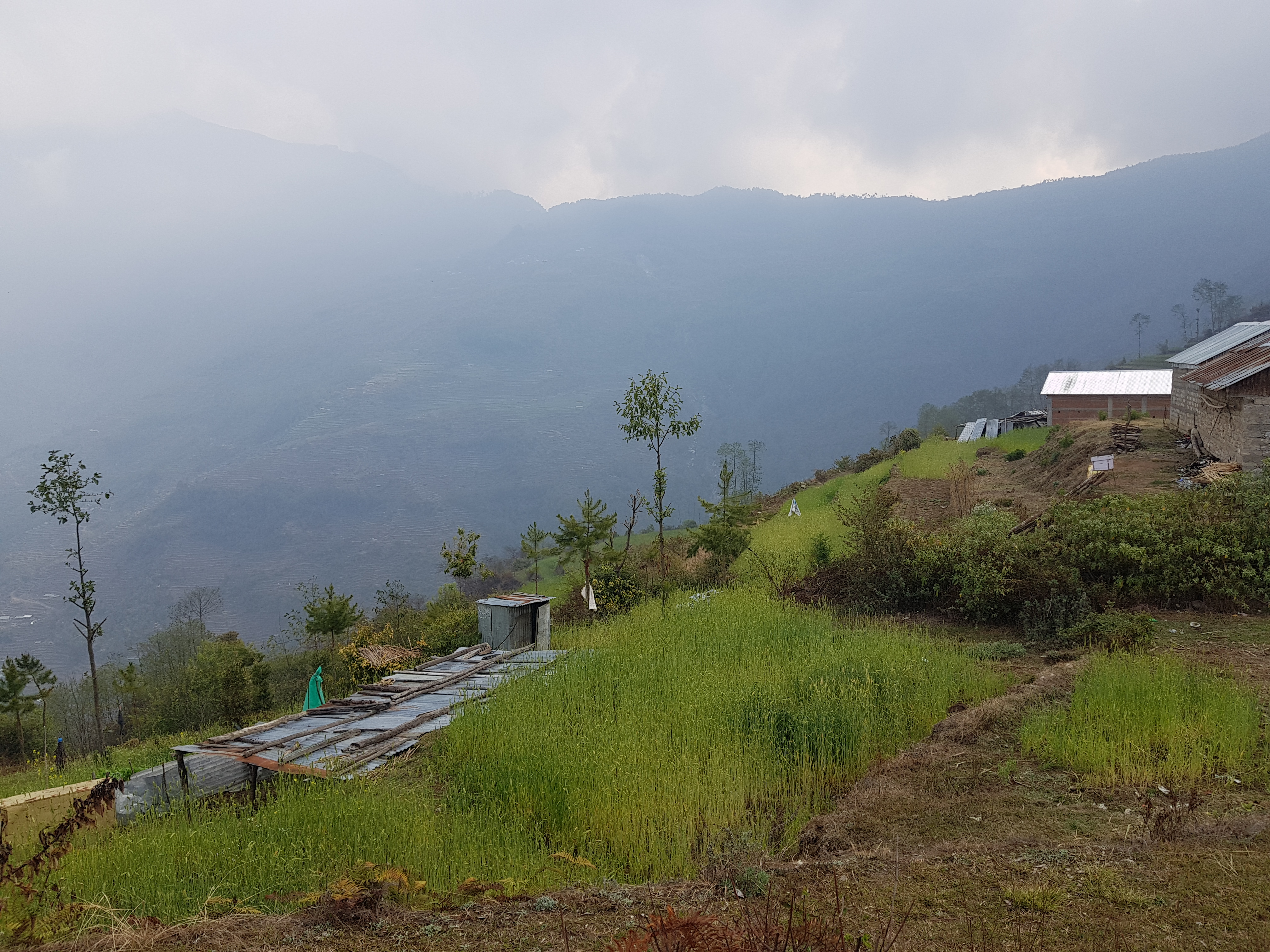
On the last day of field work, while we were waiting for a bus to take us back down to Kathmandu, I spotted some small bee hives next to one of the houses belonging to the local Tamang peoples:

2019-03-29 08.46.24

With a few minutes to spare before the bus left, I quickly investigated and discovered that only one of the hives was actually in use:

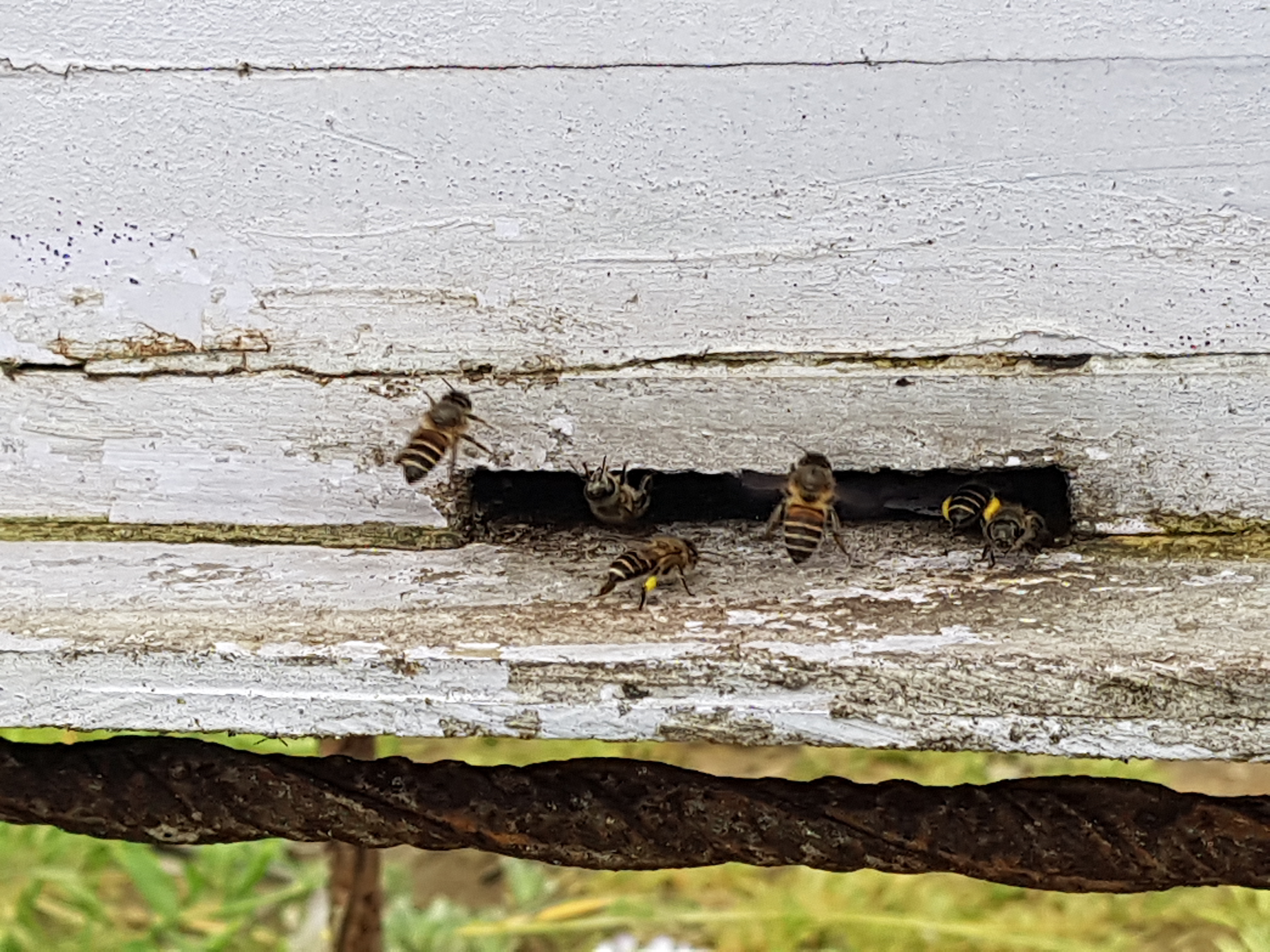
But interestingly, the bees inside were the native Asiatic or eastern honeybee (Apis cerana) rather than the European or western honeybee (A. mellifera) that is more familiar in Europe.  The bees are a bit smaller and more distinctively striped than their western counterpart:

2019-03-29 08.48.34-1

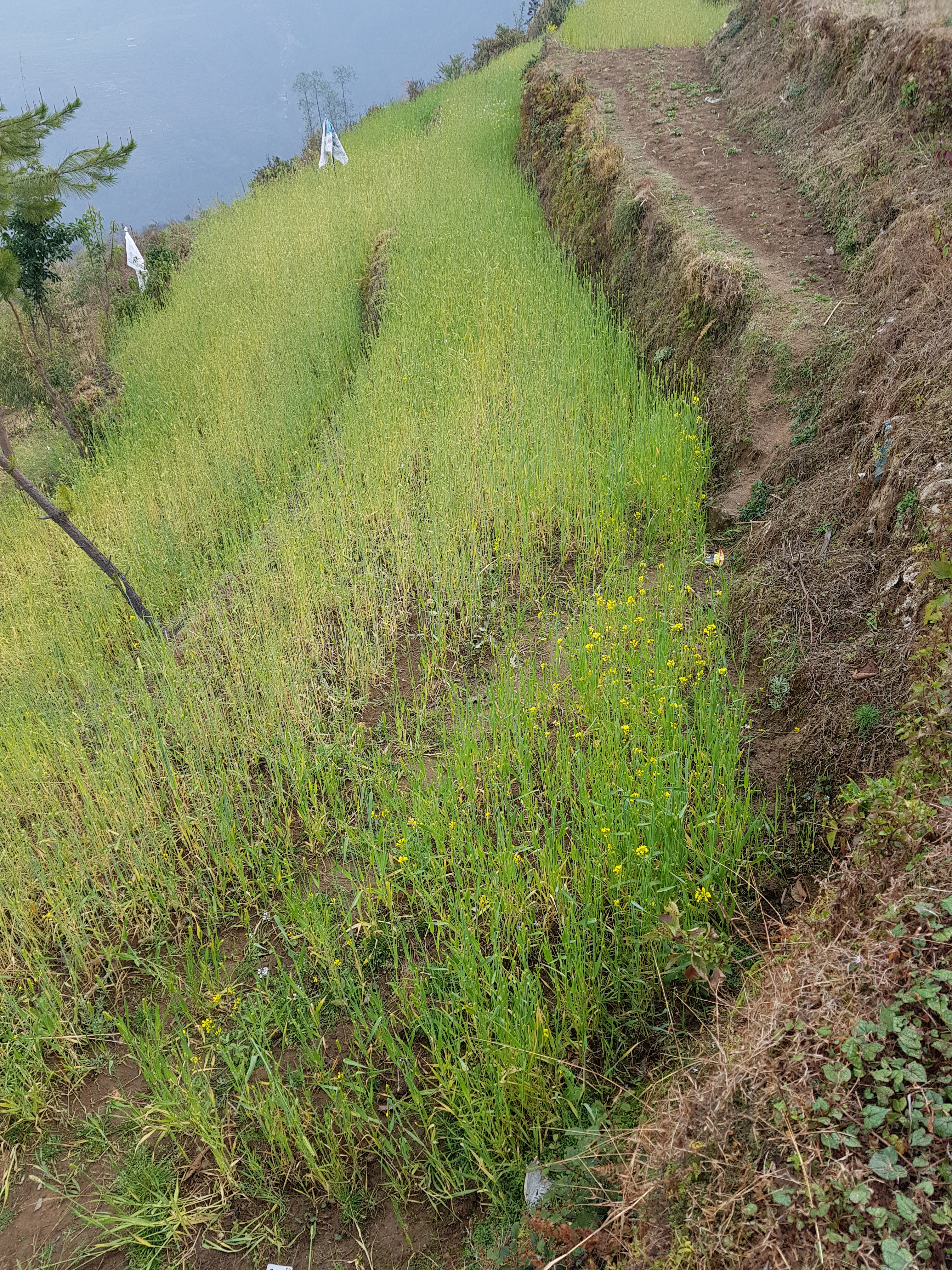
There didn’t seem to be much around for the bees to forage on, just a few flowering mustard plants, so I suspect that they were travelling some distance to find nectar and pollen:

2019-03-29 08.47.28

At this altitude of 2092 masl, or about 7000 feet, the winters are long and cold and the summers dry and hot, so the bees must be tough if they are kept there all year round.  I wonder if A. mellifera would survive these conditions?

All too soon the bus driver sounded his horn and it was time to go; an interesting encounter with a bee species I’d not previously seen.

Spiral Sunday #8 – a skep for honey bees

Co-op skep20161113_145113.png

This week’s Spiral Sunday post is appearing rather later than usual as we’ve just got back from a weekend trip to Lancaster to see my son Patrick.  It was nice to be back in the north and in the homeland of my paternal grandfather’s family: my father’s family hailed originally from Lancashire before his father migrated to the north east in about 1900.

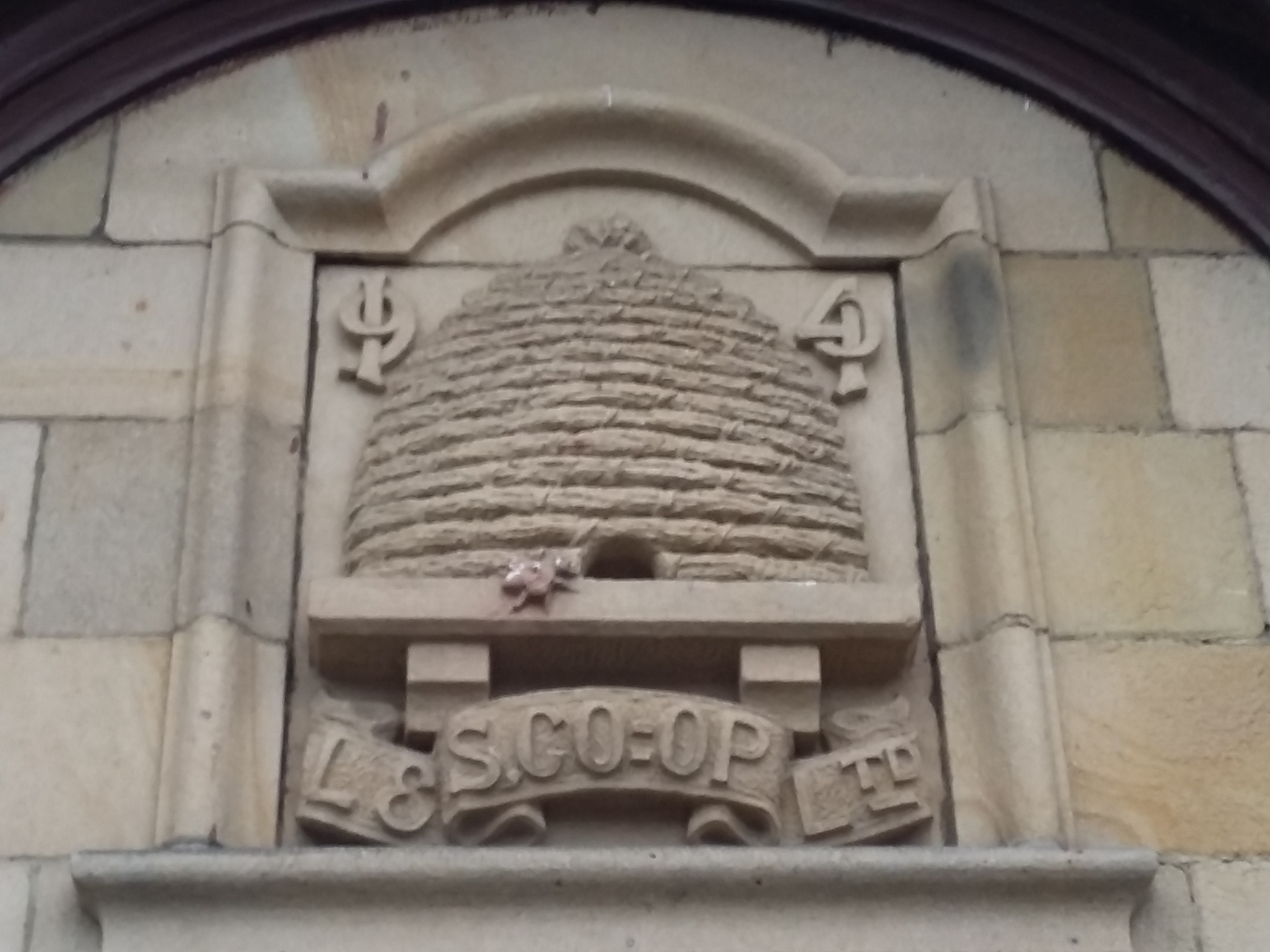
At the top of the street where Patrick’s house is located is a building that used to belong to a local Co-Operative Society store, a fine organisation with its roots in Lancashire.  Above the doorway is a beautiful stone carving of a skep, a traditional honey bee hive made by coiling straw in a spiral to form a dome shape, and the traditional symbol of the Co-Operative Society.  The spiral is not obvious from this, so you’ll just have to trust me!