Category Archives: Pollination

Bad news for British biodiversity and a comment on ecosystem services

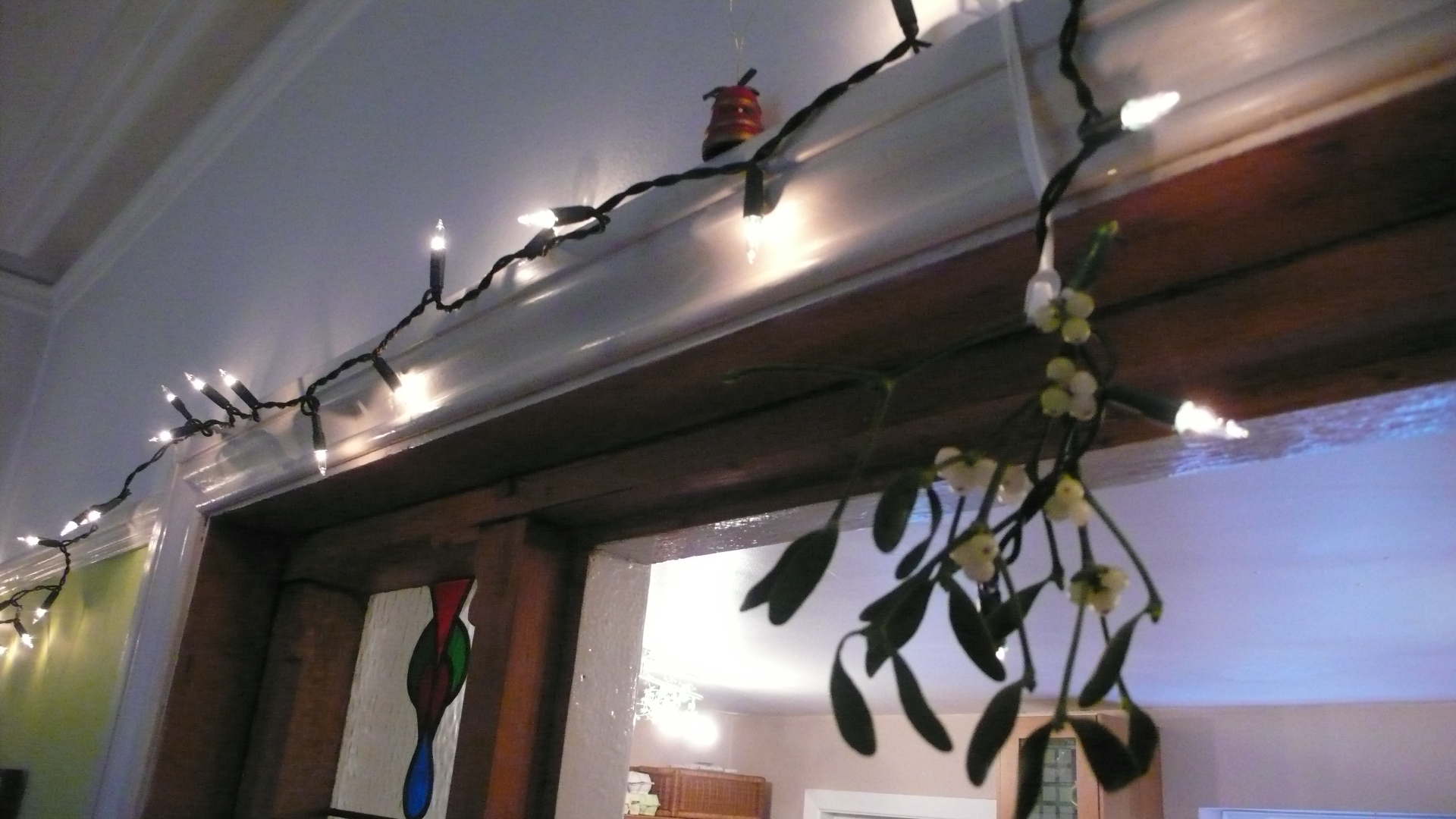
2014-08-16 15.36.53

Two related things have caught my eye this morning that I think deserve a quick blog entry.  The first is that Julia Leventon has posted an interesting piece on her frustrations with the ecosystem services concept over on the Ideas for Sustainability blog.  Go and read it – Julia raises some important points about the mismatch between our ever-more sophisticated concepts of ecosystem services and what it means to actually manage/support them within our society.  One of the things she said really struck me as it chimes with what I feel is a weakness of the current ecosystem services research agenda.  Julia says that:

I feel somewhat as though we are distracting ourselves by creating ever more complex physical constructs that require even more detailed physical understandings, and ever more complex chains of structures, processes, services and benefits.”

This I completely agree with. The underlying science (ecology/biodiversity/natural history/call it what you will) of ecosystem services is hugely complex, even for a reasonably well defined service such as crop pollination. As someone who has studied pollination ecology for 25 years I know how little we truly understand – yet this is supposed to be one of the more “straightforward” ecosystem services!

But to implement the ecosystem services concept within society we don’t need to know the finer details and dynamics of the species/communities/ecosystems involved (as interesting as they are). What we require is as much natural and semi-natural habitat within a landscape as is possible, appropriately managed (or left alone), and with as few anthropogenic stressors on it as possible (e.g. pesticides and other pollutants).  And we’ve known that for many years, long before ecosystem services was coined as a term in the 1980s.

Yet governments and agri-business consistently fail to deliver this basic requirement and our natural environment is becoming ever-less diverse and hospitable to the biodiversity that sustains ecosystem services.  See for example the latest bit of bad news regarding species-rich meadows in the UK, which are still declining long after it was pointed out that over 90% had disappeared: legislation designed to protect these grasslands seems to have had the opposite effect.  These are exactly the same kinds of habitats that are considered most important for the pollinators that agriculture relies upon!

The concept of ecosystem services, in my opinion, is a valuable one for focusing attention on the importance of the natural world, though there are others who disagree.  But the concept does not have to become mired down in the “ever more complex physical constructs” that Julia describes in her post. Let’s keep it simple and focus on what’s important rather than disappearing into a conceptual black hole that excludes practitioners, government, business and the public*.


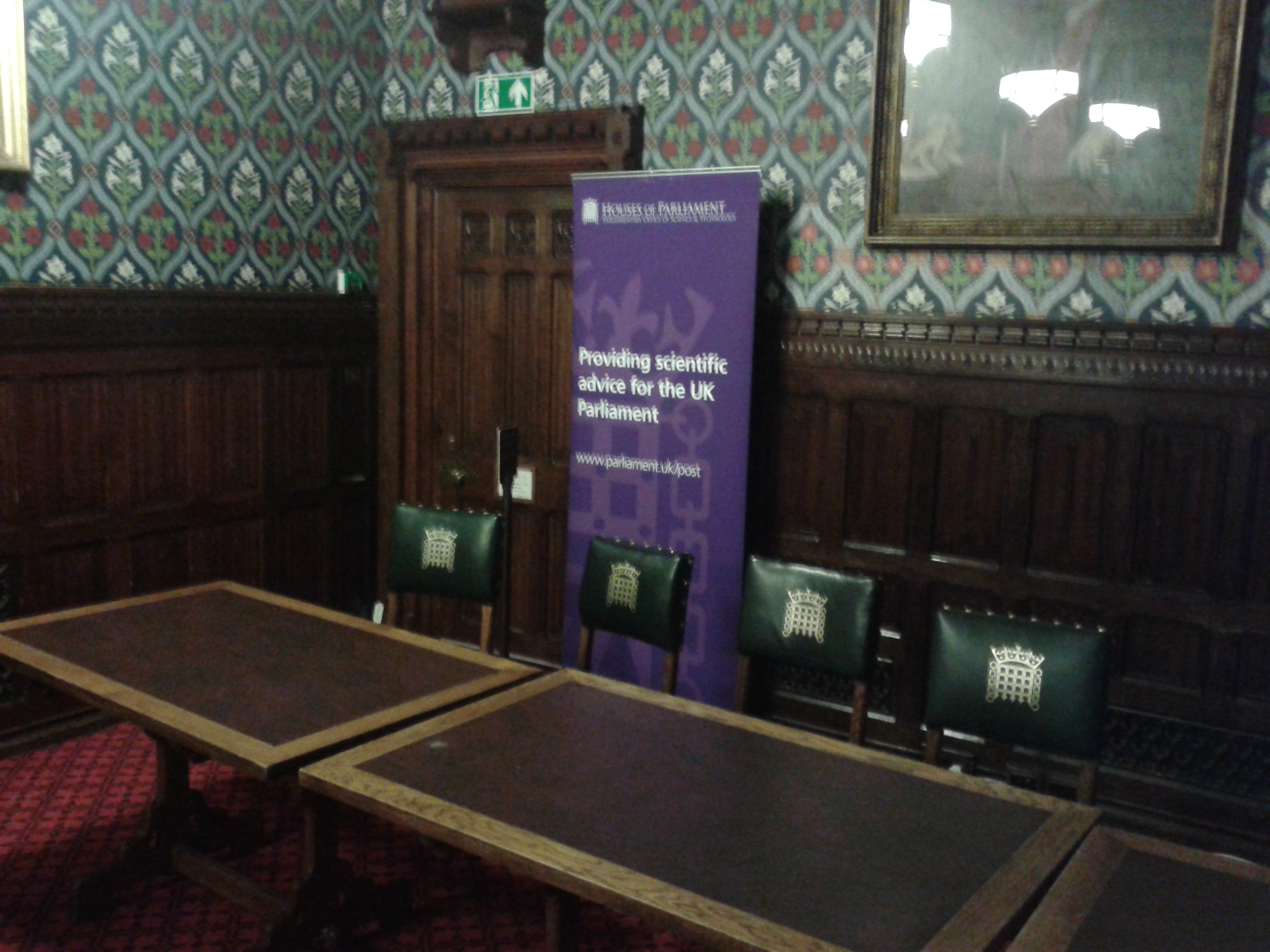
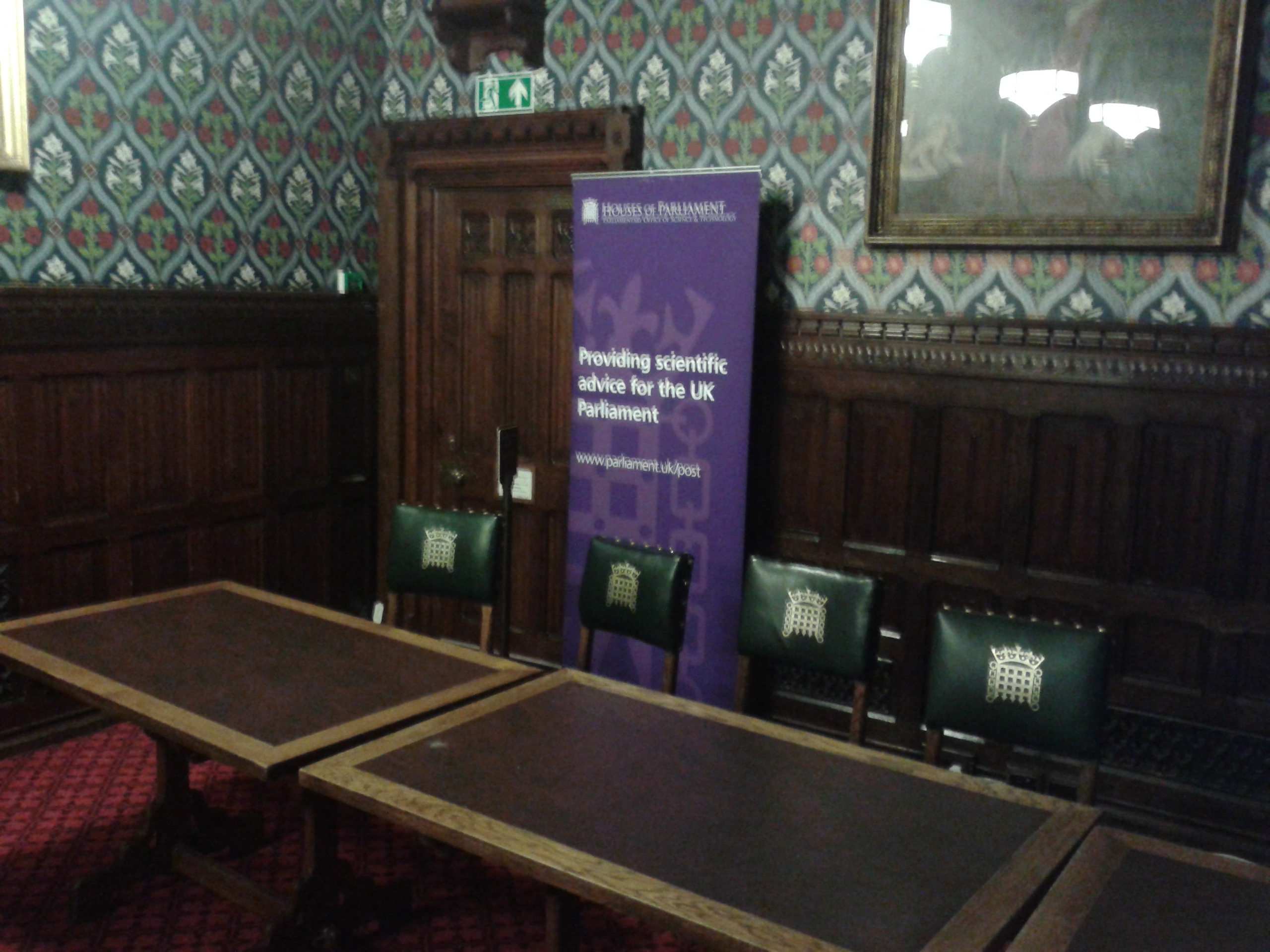
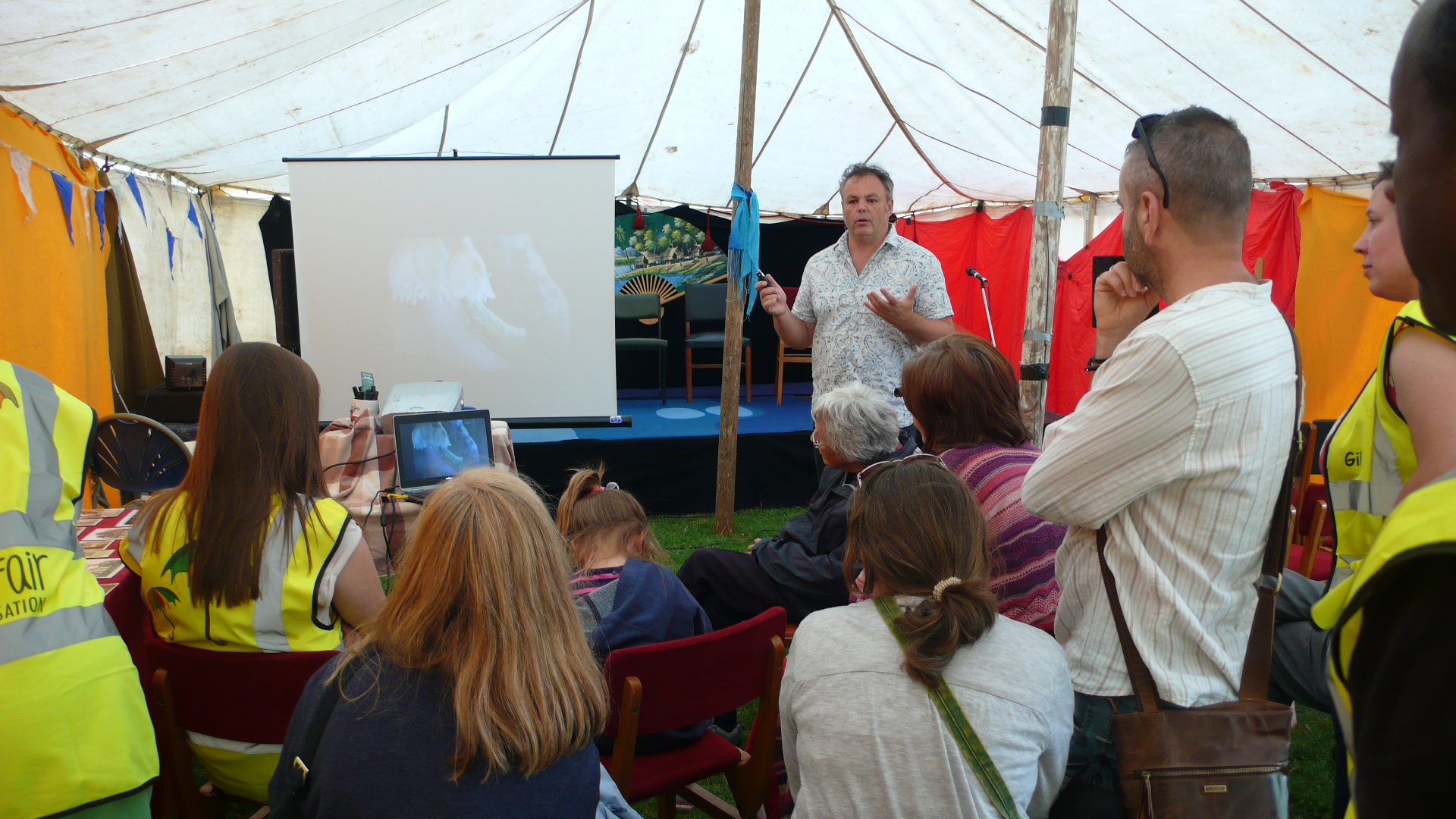
*The photograph above was taken a couple of weeks ago at Northampton’s Umbrella Fair, where I presented an over view of the importance of pollinators, and the idea of ecosystem services, to a small, [ahem] “mixed” audience, which included restless kids and incomprehensible drunks, in a marquee which was too light for the laptop projector to work.  But if even one of those who attended “got” the idea of ecosystem services I consider my job well done!

Blackberry Week

2014-08-23 11.11.25

As a kid growing up in the north-east of England in the 1970s, the half-term school holiday that occurred early in October was always referred to as “Blackberry Week”.  A quick on-line search suggests that the phrase goes back to at least the 1930s (can anyone trace it earlier than this?) and it refers to the time when blackberries (Rubus fruticosus agg.) were ready for picking.  The local kids would spend hours at our favourite blackberry patches, picking bags full of dark, luscious berries to take home for our mothers to cook into pies and crumbles, or stewed to eat with cream. As much fruit was scoffed as was collected (“one for the bag, one for me, one for the bag, one for me…”) and over-ripe ones were pelted at one another until we looked like road casualties.

All of this has been brought to mind recently, since we began to pick blackberries in our garden – at the end of July.  That’s at least two months earlier than I recall doing as a youngster.  Part of this difference can be attributed to latitude; I now live more than 200 miles further south than I did, with a concomitant advance in relative dates of flowering and fruiting, amongst other phenological indicators.  But that can’t be the only answer, the difference is too extreme, though I have not (and I doubt if anyone has) assessed it systematically.

The main reason for the difference, it seems to me, is that our seasons are shifting. We know that spring is generally earlier now in the UK than it was 20 years ago, and with that shift, autumn has likewise been brought forward and is lasting longer, as shown by changes in fungi fruiting patterns.  There’s a lot of research interest in these changes, for example the Centre for Ecology and Hydrology’s collaborative project.  Whilst phenology scientists usually express these changes quantitatively, as number of days difference between events, such as bird migration dates or plant flower times, across a period of years, any person with an interest in the natural world can see these changes for themselves, even in gardens.

Without realising it, as kids we were also making decisions about where to pick blackberries that go directly to the heart of biodiversity, which is essentially about variation and difference in the natural world.  As part of our own knowledge of the local (and very personal) biodiversity of the area in which we played and explored, we would know the best bushes from which to pick fruit, and the ones to avoid because the plants produced berries that were small, or had a poor flavour. Blackberries are hugely variable in all manner of ways, including leaf shape, number and size of prickles, flower size and colour and, most importantly for us, characteristics of fruit quality.

Much of this variation is genetic rather than environmental and reflects the complex biology of the species, or should I say group of species. Let’s go back to the scientific name of blackberries: Rubus fruticosus agg.  I’ve posted in the past about the formalities of writing scientific names of species, and the “agg.” element is an unusual addition not often seen.  It’s an abbreviation of “aggregate”, which in its taxonomic sense means a collection of species that are very similar to, and may even be synonymous with, that species.  The plant that we know and love as the blackberry is actually an aggregate of many hundreds of “microspecies”, at least according to some plant taxonomists.  This is because of the variable sexual behaviour of blackberries and their tendency to hybridise.

Blackberries are often taken for granted and dismissed as invasive woodland dominators that need to be kept in check.  But they are important for their cultural significance, have a fascinating biology, attract a wide range of insects to their flowers, and provide both fruit and habitat for birds and mammals.  Blackberries are worth making space for if your garden is large enough.

How do we value nature? Costanza, Monbiot and the clash of concepts

2012-05-31 13.57.26

Is nature something that we should simply value for its own sake?  Or should we take account of how nature supports our society and our economy in real financial terms?  Back in 1997 Australian academic Robert Costanza and colleagues published a now classic paper in the journal Nature called “The value of the world’s ecosystem services and natural capital” that proved to be hugely influential and has been cited more than 3,500 times by other researchers in ecology, conservation, and ecological economics.  Soon after publication I began to use the paper in some of my classes, asking students how they felt about putting a monetary ($) value on how nature supports ecosystem services such as soil formation, pollination, carbon storage, climate regulation, etc.  Opinions were mixed, reflecting the fact that economic valuation of nature is controversial in theory, difficult to do in practice, and results in vast estimations of the “worth” of nature that seem to be fantastical.  The Costanza et al. study, for example, suggested that ecosystem services were worth $33 trillion per year to the global economy, a figure almost twice as large as the Global GDP at the time!

More than a decade and a half later, Costanza has published a follow up paper that updates the figures in the 1997 paper and arrives at a global valuation of natural capital of between $125 and $145 trillion per year, depending on assumptions made about changes to the area of biomes such as temperate forest, grassland, coral reefs, etc.  This last point is critical as loss of biome area due to changes in land use from agriculture and urbanisation has resulted in an estimated loss of ecosystem services of between $4.3 and $20.2 trillion per year between 1997 and 2011.  That’s a big change and, if nothing else, gives an indication of how we are altering the face of the planet at an ever faster rate, something I will come back to later in this post.

In this new paper Costanza and colleagues have also responded to some of the criticisms of the earlier work, particularly by journalist and activist George Monbiot who, as I’ve previously discussed on this blog, has a genuine, but I feel misguided, aversion to the whole notion of ecosystem services and natural capital. Monbiot’s been repeating these criticisms in a lecture, a video and text of which is available on the Guardian website.  I won’t go into a detailed discussion of his position, some of which I agree with, but I do believe that his major criticisms fail on two points.

The first is that Monbiot mixes up some very different concepts, bundling ecosystem services (a reasonable way of thinking about nature in relation to society) with biodiversity offsetting (a load of bollocks), green infrastructure (the importance of green space to urban development), carbon trading (dubious in theory and practice), and payments for ecosystem services (PES) schemes (which can work on a regional scale, as in the case of South West Water’s upland catchments project), as if they were all the same thing, which they are not.  In the Nene Valley NIA Project, for example, we are using an ecosystem services approach and are trying to develop a PES, but are wholly against biodiversity offsetting.

The second is that Monbiot sees all of this as some kind of neoliberal agenda to sell off the natural world to the highest bidder.  That’s really not the case and ecosystem services are being promoted as a concept by conservationists, NGOs and scientists whose motivation is saving the natural world, not selling it.  As Costanza et al. (2014) rightly state: “It is a misconception to assume that valuing ecosystem services in monetary units is the same as privatizing them or commodifying them for trade in private markets”

In his lecture Monbiot uses the classic rhetorician’s device of using partial quotes to support his point.  For example he quotes Dieter Helm as saying that:

“The environment is part of the economy and needs to be properly integrated into it so that growth opportunities will not be missed”.

Sounds bad, I agree.  But the full quote actually gives a very different and more profoundly “green” message:

“Over the coming decades, there will be a major programme to develop the UK’s infrastructure. The National Infrastructure Plan 2013 sets out ambitious plans – for new railways, roads, airport expansions, energy systems, water resources, sewerage investments, flood defences and a major increase in house building …….. In taking forward this major investment, it is important not to lose sight of natural infrastructure and the integral part that natural capital plays in delivering sustainable economic growth. …… the environment is part of the economy and needs to be properly integrated into it so that growth opportunities will not be missed.  Integrating the environment into the economy is hampered by the almost complete absence of proper accounting for natural assets. What is not measured is usually ignored.”

Monbiot does make some good points in relation to how power can trump any environmental monetary valuation, and how political influence works, but his solution of “mobilisation”, is most effective at a relatively small scale, for example the defeat of Derby Council over plans to develop a nature reserve.  Mobilisation by passionate environmentalists has failed to protect large swathes of Brazil’s natural environment, but arguments about the link between vegetation and rainfall, underscored by financial assessments of agricultural crop reductions, just might.

What is interesting about the lecture (which I encourage you to watch, Monbiot is a great speaker and it’s more entertaining than the transcript) is that not one of the audience questions afterwards actually dealt with the main topic of the lecture, namely the pricing of nature.  Is that because he won over the audience completely with his arguments?  Or is it because the ecosystem services approach to nature conservation is too recent a concept for its technicalities to have embedded themselves within public consciousness, and a general audience such as this might not feel confident enough to make challenging comments?  I suspect the latter because whenever I give public lectures to gardening and wildlife groups, for instance, I always ask who has heard of “ecosystem services”, and invariably it’s a minority of the audience.

If Monbiot was correct and it’s possible to sell off natural capital in the way he describes, then we would expect the coalition UK government, for one, as well as big business, to buy into the concept wholeheartedly and to invest much more than they currently do in order to make a quick buck out of biodiversity.  But they aren’t, and in fact this government has a track record that shows it has only the most cursory of interests in the UK’s natural ecosystems, and is willing to ignore scientific evidence to placate special interest groups who happen to be Conservative Party supporters (witness the recent badger cull debacle and the lack of action over illegal activity on grouse moors).

This is no doubt a debate that will continue but time is running out for the natural world and we don’t have many options: in Table 3 of Costanza et al. (2014) the authors present worrying data on how some biomes have greatly reduced in area since 1997 (e.g. coral reefs, wetlands) whilst croplands and urban settlement has increased.  That can’t go on: the natural world is too valuable, in all senses of that world, to lose, something I’m sure George Monbiot would agree with even if he doesn’t believe that monetary valuation is the way to do it.


7 minutes is a long time in science, 7 goals is a big win in football (BES Macroecology meeting day 2)

Grey heron in Nottingham

Day 1 of the British Ecological Society Macroecology Special Interest Group ended with a drinks reception, kindly bankrolled by the International Biogeography Society, and a stark choice: dinner in a pub with good food and no television on which to watch the Brazil v Germany World Cup semi-final; or dinner in a pub with crappy food but a television.

The split amongst meeting delegates was about 50-50.  As I get older I’m being drawn to things in which I previously had only a passing interest, amongst them bird watching and football.  So I opted for the latter, and was one of only two Brazil supporters in the whole pub, the other being our guest speaker Cathy Graham, largely because we both have more Brazilian than German friends and colleagues. We were rewarded with one of the most excruciatingly clinical dissections of a major international football team that I’ve ever witnessed.  And the food was indeed crappy, but the lager was cold and plentiful.

The next morning, impelled by an uncomfortable mattress on a steel-framed bed in one of the student halls of residence, I woke early enough to do a little bird watching around the University of Nottingham’s Park Campus, which is not unlike the University of Northampton’s Park Campus, except much larger.  There was a modest diversity of birds flying and calling, the highlight being a large grey heron patrolling the edge of a circular pond.  As there were no fish in the pond it seemed to be mainly eating the slugs crawling on the adjacent lawn.  Not a behaviour I’ve ever seen before, though this year’s BBC Springwatch showed footage of parent tawny owls bringing back large slugs for their chick, so perhaps it’s more common than we realise.

Following a mediocre breakfast and disgusting coffee, it was time for the first lecture of the day, the second keynote by Cathy Graham.  Once again she focussed on her hummingbird research and presented some fascinating unpublished data on the structure of bird assemblages along an altitudinal gradient in Ecuador.  Cathy’s team has been using cheap digital cameras which take one frame a second to amass data on infrequently visited rainforest flowers, an approach that trades off time and space: it’s possible to get a long set of data, but for only a limited number of plant species and individuals.

After coffee there were papers by Katie Leach on her PhD work on competition between co-occurring species of Lagomorpha (rabbits, hares, pikas, etc.) and from Richard Field on altitudinal effects on the endemism of plants which chimed with my experiences in Tenerife.  Both of these neatly demonstrated one of the strengths of macroecology: the 21st Century tools it can marshal to use secondary data for understanding ecological patterns and processes at very large spatial scales.

But secondary data can also be a weakness of the field if the quality is poor and it is limited in scope.  This was the subject later in the day of a polemical lecture by Shai Meiri entitled “Laziness in macroecology: a crime and no punishment” that railed against researchers who sometimes fail to augment ready-made data sets with even the most rudimentary of additional data.  My favourite of Shai’s examples was a study which had used a mammalian ecology data set in which the diet of anteaters was coded as “unknown”!  The tee-shirt Shai wore during his often very funny rant read: “If you are not outraged, you were not paying attention” and there was plenty for the audience to feel outraged about, not least his suggestion that we “ban taxonomy” and (even more controversially) get away from our computer screens and into the libraries to source information to fill in the gaps in data sets.

I’d go further and say that some field work would not go amiss as well!  In comparison with using ever more sophisticated analyses, developing better software, and building ever more complex models, collecting field data seems to be low on the list of priorities for many macroecologists, particularly some of the PhD students. Not all of them by any means, and hopefully Cathy Graham’s talks will have inspired them to get into the field, but it strikes me as a trend.  That’s worrying on many levels, and good data are hard won, but then I’m an old-fashioned, muddy boots kind of ecologist who realises that our knowledge of biodiversity is built up from a very small set of data in comparison to what we don’t know: we’ve scratched the surface of the tip of the iceberg as a colleague used to say.

In the afternoon there was an unscheduled talk by Olivia Norfolk on the biodiversity of plants and pollinators of Bedouin gardens in the mountains of Sinai, which included a lot of field data.  This was followed by a second set of seven minute “lightning talks”.  I was third on a diverse bill, sandwiched within research on amphibians, Tyrannosaurus rex, North American lizards and microbial communities.  Seven minutes passes quickly and I overran slightly, but hopefully managed to convey the gist of our work on the relative frequency of wind versus animal pollination across the globe.  No one threw missiles at least and there were a couple of good questions that probed the scope and limitations of the current data, but were nowhere near as challenging as the questions in Copenhagen (though I’d had much more time for that lecture).

Following a hasty set of goodbyes I headed to Nottingham station to catch the 1810 back home, once again via the desolation of Birmingham New Street.  Reflecting on the meeting on the way to Northampton I was struck by the fact that of the forty-odd attending, I was the oldest delegate by some margin, which was even more sobering than Brazil’s loss to Germany.  I consoled myself with a bit of “train spotting” (identifying as many bird species as possible through the windows of the train), and ended up with a respectable 21 species* during the two hours or so of travel.

Thanks to the organising committee of the BES Macroecology SIG, and especially to Adam Algar and his team in Nottingham, for a great meeting.  I look forward to next year’s in Copenhagen.


*Blackbird, buzzard, swift, house martin, tufted duck, mute swan, mallard, jay, goldfinch, collared dove, wood pigeon, feral pigeon, starling, crow, magpie, grey heron, Canada goose, common tern, back-headed gull, common gull, pheasant, (22 if you count chickens in a run).

20140709_070038

All pollinators are equal, but some pollinators are more equal than others

The infamous line from George Orwell’s Animal Farm asserting that “All animals are equal, but some animals are more equal than others” nicely captures an ecological view of pollinators and their relationships with plants.  “Pollinators” by definition move pollen between flowers, but not all pollinators are equally good at transferring pollen of any particular plant: some are more effective than others. I’ll illustrate this with examples from the urban garden that Karin and I are developing, which I’ve discussed before.

As you can see from that link, the garden is modest in size, but nonetheless this year it contains a significant biodiversity of edible plants that require pollinators for some or all of the fruit and seed set, including: strawberries, apples, greengages, cherries, blackcurrants, squashes, courgettes, blackberries, fennel, runner beans, french beans, passion fruit, tomatoes, raspberries, and radishes.

Radishes?!”  I hear you ask.  “But they are grown for their edible swollen roots which don’t require pollination!”  True, usually.  But we let our radishes flower because we mainly grow them for their seed pods which, picked young, are delicious in salads and stir fries, like mustardy mange tout.  They look like this:

2014-07-03 18.14.32

The radish flowers are pollinated by a diversity of insects including butterflies, bees, and small flies:

2014-07-03 19.40.34

These insects will vary in their effectiveness as pollinators of radish, depending on the frequency of visits, how often they move between flowers, and the amount of pollen on their bodies.  This last factor is largely a function of size and hairiness (bigger, hairier insects carry more pollen as a rule), though cleanliness also plays a part: insects often groom the pollen from their bodies and, in the case of bees, may pack it into their pollen baskets where it’s not available for pollination.

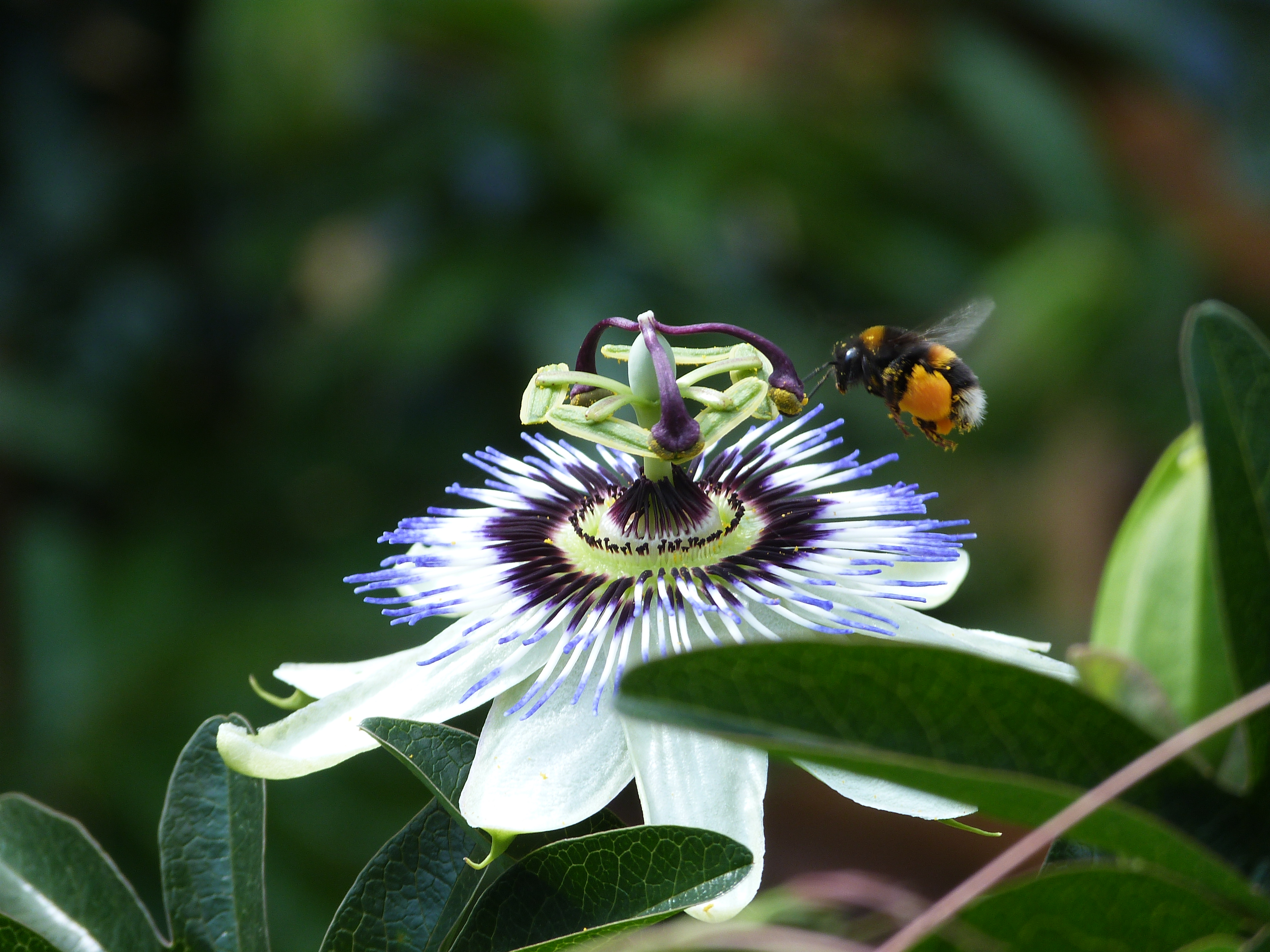
The size and behaviour aspect is best illustrated by some recent photos that I took of visitors to the flowers of passion fruit (Passiflora caerulea var.).  We have a large, sprawling plant growing up a fence which is currently being visited by honey bees, hoverflies, solitary bees and bumblebees.  In comparison to the size of the flower and the position of the anthers (male, pollen producing parts) and stigmas (female, pollen receiving parts), the hoverflies, honey bees and solitary bees are relatively small.  These two images are of honey bees (Apis mellifera):

P1010419

P1010418

Here’s an unidentified solitary bee:

P1010431

These bees were occasionally touching the anthers, mainly with their wings, so some pollen will be moved around.  But from what I observed it’s likely to be a relatively small amount in comparison to bumblebees, which are usually much larger and hairier, and don’t groom themselves as often as honey bees.  Here’s a Buff-tailed bumblebee (Bombus terrestris):

P1010430

They were actively collecting pollen as well as nectar.  Much of this pollen is packed into the pollen baskets on the rear legs and will go back to the nest to feed the developing larvae, but some will be involved in pollination:

P1010428

So it seems to be the bumblebees we have to mainly thank for the deliciously sweet-sour fruit we will enjoy later in the season. Of course to test this properly we would need to set up an experiment in which we excluded larger bumblebees from the flowers and only allowed smaller bees to forage, with appropriate experimental controls.  Would make a great project if any of my students are interested!  But it should give you a sense of just how complex the interactions between flowers and their pollinators are: the ecology of pollination is far from simple, despite what some would have us believe.

2014-07-03 19.40.18


From Chester to Copenhagen

P1110838

It is 6.30am on Sunday morning but I’m wide awake and can hear the hotel in which we are staying stirring into life.  Time to reflect on what has been a long and busy week, rather than the start of a long and relaxing summer holiday as some assume academics enjoy.  That’s a myth: summers for many of us are at least as busy as the main teaching part of the year, though that’s not to say we don’t teach in the summer – I have final year project students to advise, and for students who did not pass first time round there’s still re-sit exams and assignments to be undertaken.

Of course I’m not complaining and the busyness is part of the fun of my job, which includes opportunities to travel, as I’ve previously described on this blog.  Before any travelling this week, however, Monday was taken up listening to my PhD student Kat Harrold give a seminar about the progress of her research on pollinator mapping and habitat modelling in the Nene Valley Nature Improvement Area.  This was followed by an hour’s grilling from the supervisory team and an independent colleague, as we drilled down into the research and suggested ways in which Kat could improve on the already excellent work that she’s doing.  All of this is a formal part of our PhD programme and Kat aquitted herself very well indeed.

Tuesday was the start of the travelling, and was spent in Chester helping with filming for an episode of a new four-part BBC2 series provisionally called Plant Odyssey, fronted by Carol Klein, Gardener’s World presenter and Honorary Fellow of the University. The series is being produced by Oxford Scientific Films and will be broadcast in the spring.  In the following scene we were making a rose perfume based on an ancient Roman recipe from the writings of Pliny the Elder.

P1110827

Now, I know very little about how to make perfume, but I do know a bit about flower scents and how they attract pollinators, so my role was to act as both a foil for Carol’s scent experiment and to add some science to the mix.  This is not the first filming I’ve done with Carol, having also helped out with her Science in the Garden special edition of Gardener’s World a few years ago.  While looking for that last link I discovered that all three episodes of Bees, Butterflies and Blooms is also available on YouTube, which is great to see as the BBC didn’t repeat the series or produce a DVD.  I was involved in the making of episode 2, which helped to kick-start the RHS’s Perfect for Pollinators plant labelling campaign.  Television work is fun and brings science, and the scientists who do it, to a much wider audience.

Wednesday I prepared my talk for Friday’s lecture in Copenhagen (more of which later) and Thursday involved attending the University of Northampton’s annual postgraduate research conference.  This is a highlight of the year for me as it’s an opportunity to see the breadth of postgraduate research going on across the university, something that would be impossible in a larger and more research intensive institution.  I was only able to attend the first session, but that alone covered research on the research process itself; feminist cyborg literature; the legality of the World Bank’s scrutiny panel; pollinator conservation (Kat Harrold again); and the experiences of families with children who have difficulties communicating.  Questions from the audience tended to be broad and non-specialist, and all the better for that: often it’s the straightforward, naive questions which test specialist knowledge.

The rest of Thursday Karin and I packed and then travelled up to Birmingham International for an early evening flight to Denmark.  I’d been invited by my colleague Bo Dalsgaard to present a research seminar at the University of Copenhagen’s Center for Macroecology, Evolution and Climate.  Coming from a small and very diverse department, it was great to visit such a large and specialised group of researchers, though over lunch the Center’s Director Carsten Rahbek told me that a common complaint from his staff was: “Why can’t we employ more people doing what I’m going?”  Everything’s relative I suppose.

P1110878

The title of my talk was “Pattern and process in pollination at large geographic scales”, which gave an overview of some of the research I’ve published over the last decade or so, framed around the following questions:

Quite a number of people in the Center were out doing field work or were otherwise engaged so I spoke to a modest-sized audience of some 30 people: certainly not the smallest audience I’ve ever presented to – that was three people, including the two who had invited me to give the talk!

The lecture seemed to be well received and there were some stimulating questions afterwards, though also a couple of challenging ones about statistical analysis.  One of these I couldn’t answer until afterwards because I’d forgotten the details of the methods we’d used (note to self: re-read old papers before you present their findings).  In answering the other I agreed with the questioner that the data could now be analysed in a more sophisticated way (future task, if I ever get the time).  If Kat’s reading this, I hope she takes satisfaction in not being the only person to be asked difficult questions about their research this week!

Afterwards I chatted with Bo and Carsten about the limitations of the current and paleo-climate data sets we’ve been using in some studies, which are indeed very limited.  But there are only two options.  Do we work with data sets that are flawed, whilst acknowledging that any conclusions are tentative?  Or wait until better data become available, which could be a decade in the future?  My choice is definitely to go with the former, otherwise we’d never publish anything because there are always limitations to data used in studies of ecology and biodiversity. Personal and public honesty about such limitations, and ideas as to how they can be overcome in the future, are surely preferable to stalling research.

Later that afternoon I discussed science with two of Bo’s collaborators, Pietro Maruyama a Brazilian PhD student whom I’d met last November, and Peter, a Danish undergraduate.  Both are doing excellent work on that most charismatic group of pollinators, the hummingbirds.

Friday evening I was exhausted, and Karin and I opted for dinner in the hotel restaurant and an early night, as Saturday was to be spent exploring Copenhagen. It’s a great city for wandering around, with fascinating architecture and unexpected additions to buildings, such as bronze dragons:

P1110840

And parks with statues of artists and writers, such as Hans Christian Andersen:

P1110841

After a roundabout wander, via a gallery selling African tribal art (which we couldn’t afford) and a small lunch (which we could only just afford – Copenhagen’s an expensive city!) we eventually ended up at the University’s Botanical Garden, which has a superb living collection of cacti and succulents, orchids and other epiphytes, and alpine plants.

P1110846

It beautifully illustrates the huge morphological diversity encompassed within the 352,000 or so species of flowering plants, one of the many reasons why I love visiting botanical gardens: I always see something new.  This included two species of bumblebees (Bombus) which I’m sure don’t occur in Britain.  I’ll have to look them up when I get back:  from Chester to Copenhagen and, tomorrow, back to Northampton.

P1110850


My Hooper Moment

Jeff on the beach

Despite the clunkiness of some of the special effects, Jaws is a great movie that influenced a whole generation of organismal biologists into becoming marine ecologists, or at least terrestrial ecologists with a toe in the water.  The movie contains some iconic characters and wonderful lines.  One of my favourite scenes* is the exchange between Hooper, the shark expert, and Mayor Larry Vaughn, the head-in-the-sand local politician:


Hooper:  What we are dealing with here is a perfect engine, an eating machine.  It’s really a miracle of evolution.  All this machine does is swim.  And eat.  And make little sharks.  That’s all.  [Gestures to advertising sign on which a huge shark fin has been drawn]  Now why don’t you take a long, close look at this sign. Those proportions are correct….

Mayor Vaughn:  Love to prove that wouldn’t you? Get your name into the National Geographic[Walks away, smiling dismissively]

Hooper:  [pause, then slightly maniacally] ….hahahaha….hahahahaha….


Well today I got my Hooper Moment, my name in the National Geographic following an interview about pollination biology with James Owen, one of their writers.  It’s the online version, not the printed magazine, but I’m counting it anyway.  It’s a nice piece and, for once, doesn’t dwell on honey bees, or even bees at all.

In 1975 I was 10 years old and was accompanied to the cinema to see Jaws by my late parents.  Neither were impressed:  my mother watched the whole movie with her hands over her face and my father opined that it “was not as good as King Kong in the 1930s”.  Nonetheless, I’d like to think that they’d have been proud of my Hooper Moment.

[Thanks to Mark for capturing a moment on the North East coast, some years ago]


*With apologies for the crappy music and dumb repeat-edits – scroll forward to 2:25.


Rational explanations

P1110810

It has been a week for rational explanations, for assessing evidence in a logical way, a subject on which I have posted in the past and which goes to the heart of the scientific endeavour.

There was a lot of media attention about a study published in PNAS that claimed to show that hurricanes with female names (Katrina, Sandy, etc.) cause more damage than those with male names, because (to quote the abstract of the study) “hurricane names lead to gender-based expectations about severity and this, in turn, guides respondents’ preparedness to take protective action”.  In other words, people take feminine words less seriously than masculine words.  Is that true?  Are people really that socially attuned to gender-specific language?  Turns out that the original study may have made too many assumptions with regards to data and the statistical model they used, according to a re-analysis by Bob O’Hara and GrrlScientist on the Guardian science pages.  However in a further twist, a re-analysis of the re-analysis by Florian Hartig on the Theoretical Ecology blog found some (although very, very weak) support for a gender effect.  Florian makes an interesting point, however, that “the authors would have probably found it much more challenging to place this study in [a top science journal such as] PNAS if they would have done a more careful and conservative statistical analysis”.  In other words, science is certainly not immune to the effects of hyperbole and controversial findings.

Speaking of “hyperbole and controversial findings”, Richard Dawkins made headlines by apparently suggesting that reading fairy tales to children is not in their best interest: “Is it a good thing to go along with the fantasies of childhood, magical as they are? Or should we be fostering a spirit of scepticism?” Not surprisingly there was a big backlash against Dawkins who clarified his views on Twitter (!) and claimed they had been taken out of context. Perhaps so, but he has a track record of increasingly controversial views that he surely knows will raise his profile.  But then he’s an author with books to sell, who long ago gave up being a practising scientist by not publishing any peer-reviewed papers in science journals for over 30 years.  Dawkins’ role at Oxford was as Professor for Public Understanding of Science and unfortunately he gives the impression that scientists are all about rational thought and logical arguments in every facet of their lives. Which we’re not, I can assure you: I possess a whole raft of personal, irrational idiosyncrasies, including sending a little prayer to the Gods of Science every time I submit a new manuscript to a journal.  Which they often ignore, the f**kers.

There was also an odd quote from Dawkins in relation to the logic of fairy tales, that there is “a very interesting reason why a prince could not turn into a frog – it’s statistically too improbable”.  Nope, it’s not statistically improbable – it’s biologically impossible!  “Statistically too improbable” suggests that it could happen, given enough time.  Not sure that this helps with public understanding of science….

Something which is statistically improbable, but which does happen occasionally, is finding new fossils which make us rethink our understanding of the biodiversity of species interactions.  Such a find was published recently in the journal Biology Letters:  a 47 million year old fossil bird of a previously undescribed group that provides the earliest evidence of flower feeding, and possibly pollination by a birds.  The evidence in this case is the presence of pollen grains preserved in the gut area of the fossil, which could also represent flower eating (a range of birds do this, for example bullfinches) rather than nectar feeding and legitimate pollination.  Nonetheless it’s a stunning find and links nicely with a February post of mine.

Another new discovery this week, for me at least, was that (contrary to rumours, errr, started by me….) Dr Georges Aad does indeed exist.  Apologies to him, though it was fun while it lasted.

Finally to the intriguing photos that grace the start and end of this post.  I took these from the garden a couple of evenings ago. It shows a plane apparently flying into a dark tunnel that stretches out ahead of it (click on the images for a better view).  We watched the plane for several minutes and the “tunnel” appeared to be moving ahead of the plane as it travelled across the sky.  Karin had a plausible explanation, that what we were seeing was the shadow of the contrail because of its position relative to the low angle of the setting sun.  This was confirmed by a web site showing other examples of this phenomenon, which apparently is not uncommon, though judging from the comments on the site, some people prefer US government covert chemical spraying as a rational explanation.  Evidence and data will always be open to interpretation.


P1110809

Nature as gardener (Darwin’s Unrequited Isle part 5)

P1110741

Gardening and gardens are a long-standing interest of mine, as I’ve mentioned in a few posts, such as “Harvest of evidence” and “In defence of lawns“.  At the moment the RHS Chelsea Flower Show is running and medals are being awarded to gardens and plants, some of which I like, some of which I don’t: make up your own mind from this gallery of images taken around the show.

But nature often trumps us when it comes to aesthetically pleasing plant combinations.  The photograph above (which you can click to see a larger version) was taken in the Anagas Mountains during our recent Tenerife Field Course. Although it’s along a roadside, these two plants have grown there spontaneously – nature as gardener!  The plants are both endemic Macaronesian species:  the billowy white flowers of a Canary Island sea kale (Crambe strigosa) found only on Tenerife and La Gomera, spill over the vivid yellow blooms of a large buttercup (Ranunculus cortusifolius, from the Canary Islands and the Azores).

Up close it makes for a subtle but effective combination (again, looks better if you click to open it):

P1110742

The plants of Tenerife never fail to impress – here’s the Canary Island Foxglove (Isoplexis canariensis) one of the bird-pollinated plants of Tenerife that we’ve studied in the past:

P1110767

This post is largely deflection behaviour to take me away from grading student dissertations.  So before I return to it I’ll leave you with a gratuitous shot of three endemic Canary Island species:  a woody sow thistle (Sonchus sp.) being pollinated by the Canary Island Bumblebee (Bombus terrestris canariensis), and the Canary Island Large White butterfly (Pieris cheiranthi) whose caterpillars, to take us back to the beginning, feed on Crambe strigosa:

P1110763

Now, back to the coal face…..


Guest blogging: Are species interactions stronger and more specialized in the tropics?

P1080615

In hushed tones the narrator describes the intricate details of yet another highly specialized relationship between one species of indescribable beauty and a second species with intricate behaviour that is about to eat/infect/cooperate with/exploit it [delete as appropriate].

The camera view pulls back to reveal the green cathedral of a tropical rainforest: 

“The tropics” continues the narrator “are special…….…”


Yes, the tropics are special.  But how special?  Or more to the point, how different are tropical communities to temperate communities?  Over at the Dynamic Ecology blog, Jeremy Fox has invited Angela Moles and myself to contribute a guest blog on the subject of whether the idea that species interactions are always stronger and more specialized in the tropics is outmoded and not backed up by the evidence.  In Jeremy’s parlance, is it a zombie idea?

The subject of latitudinal variation in species interactions is one that has interested me for a while and I’ve written a few papers on the topic, especially in relation to how plant-pollinator interactions vary with latitude.  You’ll find references to some of them in the Dynamic Ecology piece, plus a fuller over view of our arguments.

So what are you doing reading this?  Get over to Dynamic Ecology and read that!