Category Archives: Macroecology

Travelling west to go north (BES Macroecology meeting day 1)

2014-06-24 08.00.19

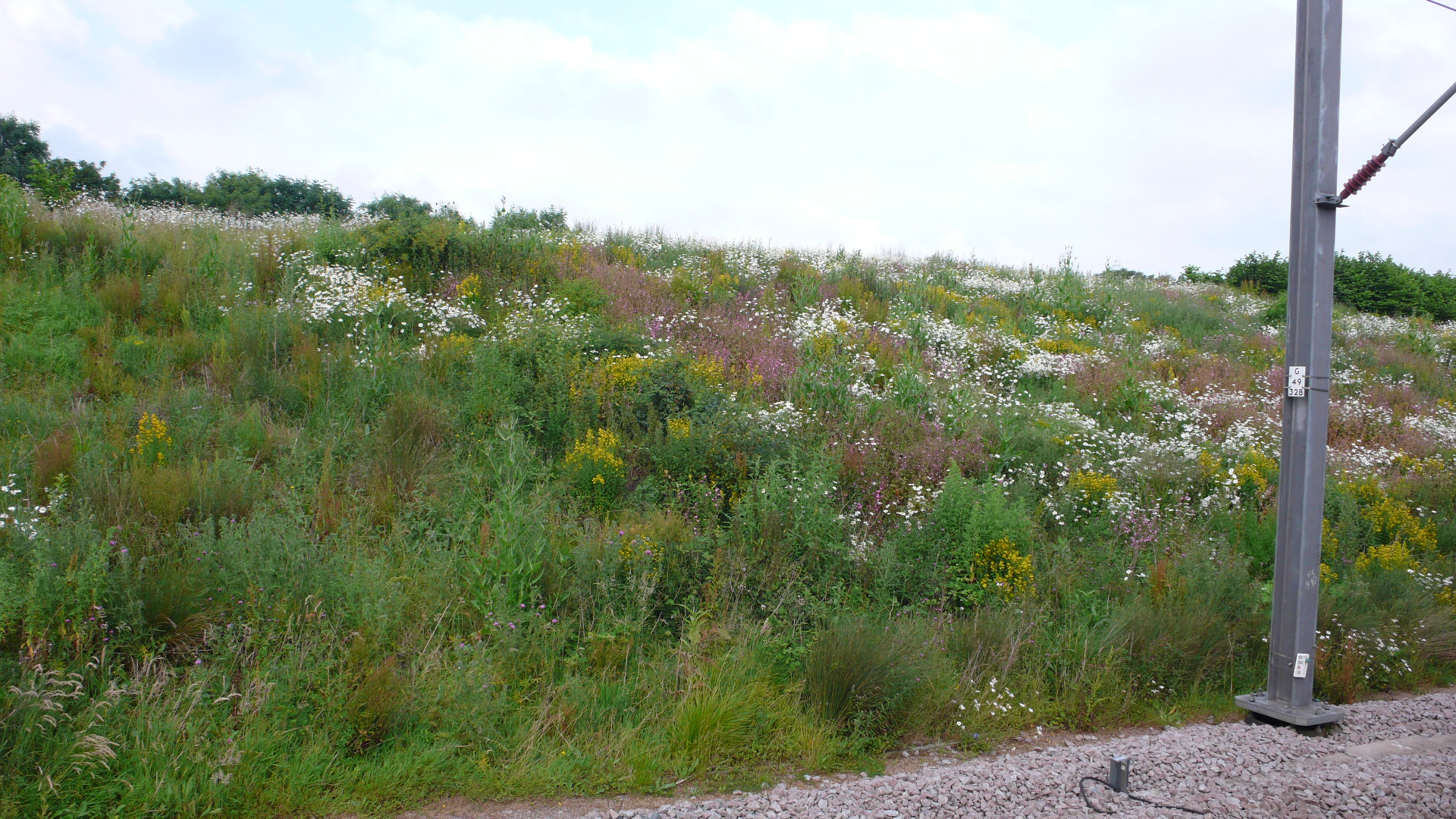
Birmingham New Street, with its subterranean platforms accessed by narrow concrete gullets, must be one of the ugliest and most unpleasant major railway stations in Britain.  It’s also, thanks to the redevelopment work currently being carried out, one of the most confusing for the traveller who only occasionally passes through.  Ugly and unpleasant I can handle if it functions well: but ugly and unpleasant AND confusing is not good.  It’s a huge contrast to Milton Keynes station which I went through last week on the way to Chester, where the open, airy platforms look out onto embankments covered in wild flowers (see the photo above).  While waiting for the train at Milton Keynes I spotted butterflies and bees visiting flowers only feet from passing high-speed engines.

As I start this post I’m sitting on Platform 9A at Birmingham waiting for a train at 0949 to Nottingham where I’m attending the British Ecological Society’s Macroecology Special Interest Group’s annual conference.  In fact I should be on the train which left platform 12A at 0919, but trying to find the unsignposted 12A, followed by a detour to pick up a coffee, meant that I missed the train by about a minute.  Not to worry, gives me an opportunity to rant about Birmingham New Street station.

The BES Macroecology SIG has been established for three years and I blogged about the inaugural meeting in London back in 2012.  I missed last year’s meeting in Sheffield so thought I’d make a special effort to get to the Nottingham event this year, even though it involves heading west (to Birmingham) to travel north (to Nottingham).

Day 1 of the meeting started with the first of two keynote addresses by Catherine Graham from Stony Brook University.  Cathy focused on her work on that most charismatic of flower visitors, the hummingbirds.  In the first talk she dealt with the importance of thinking about phylogenetic scale when conducting analyses.  Lots of thought provoking ideas and a huge amount of information to digest.

As I’m speaking on the second day I could relax and listen to some interesting talks by established and early career researchers, and PhD students, most of whom have been given 7 minutes (!) to present their work.  It’s been a challenge to whittle the final part of the talk I gave in Copenhagen last week into such a short format, but we’ll see how I get on tomorrow.  Highlights of day 1 for me included Joe Bailey talking about urbanisation, climate and alien vascular plants in the UK; Nova Mieszkowska’s work on inter-tidal species; Sive Finaly on whether Madagascan tenrecs are an example of an adaptive radiation (answer = “maybe”); and Guy Harrington on studying fossils in a macroecological manner.  But really but all the talks were good and I learned something from each of them.

As I mentioned in that post back in 2012, defining “macroecology” is problematic and there are still those who see it as synonymous with biogeography.  Perhaps one difference is that biogeography has traditionally tended to focus on patterns (e.g. how species richness changes as one moves form the poles to the tropics) whereas macroecology also seeks to explain those patterns in terms of processes, using very sophisticated statistical and mapping approaches.  But even that fails to fully appreciate biogeography which has a tradition of also trying to infer processes (for example Joseph Hooker’s 19th century work on the distribution of plants included hypothetical explanations), though without the modern analytical tools that are available to the macroecologist.  It’s a debate that will no doubt go on, though perhaps it’s a sterile one.  Does it matter what we call it as long as the science is sound?


From Chester to Copenhagen

P1110838

It is 6.30am on Sunday morning but I’m wide awake and can hear the hotel in which we are staying stirring into life.  Time to reflect on what has been a long and busy week, rather than the start of a long and relaxing summer holiday as some assume academics enjoy.  That’s a myth: summers for many of us are at least as busy as the main teaching part of the year, though that’s not to say we don’t teach in the summer – I have final year project students to advise, and for students who did not pass first time round there’s still re-sit exams and assignments to be undertaken.

Of course I’m not complaining and the busyness is part of the fun of my job, which includes opportunities to travel, as I’ve previously described on this blog.  Before any travelling this week, however, Monday was taken up listening to my PhD student Kat Harrold give a seminar about the progress of her research on pollinator mapping and habitat modelling in the Nene Valley Nature Improvement Area.  This was followed by an hour’s grilling from the supervisory team and an independent colleague, as we drilled down into the research and suggested ways in which Kat could improve on the already excellent work that she’s doing.  All of this is a formal part of our PhD programme and Kat aquitted herself very well indeed.

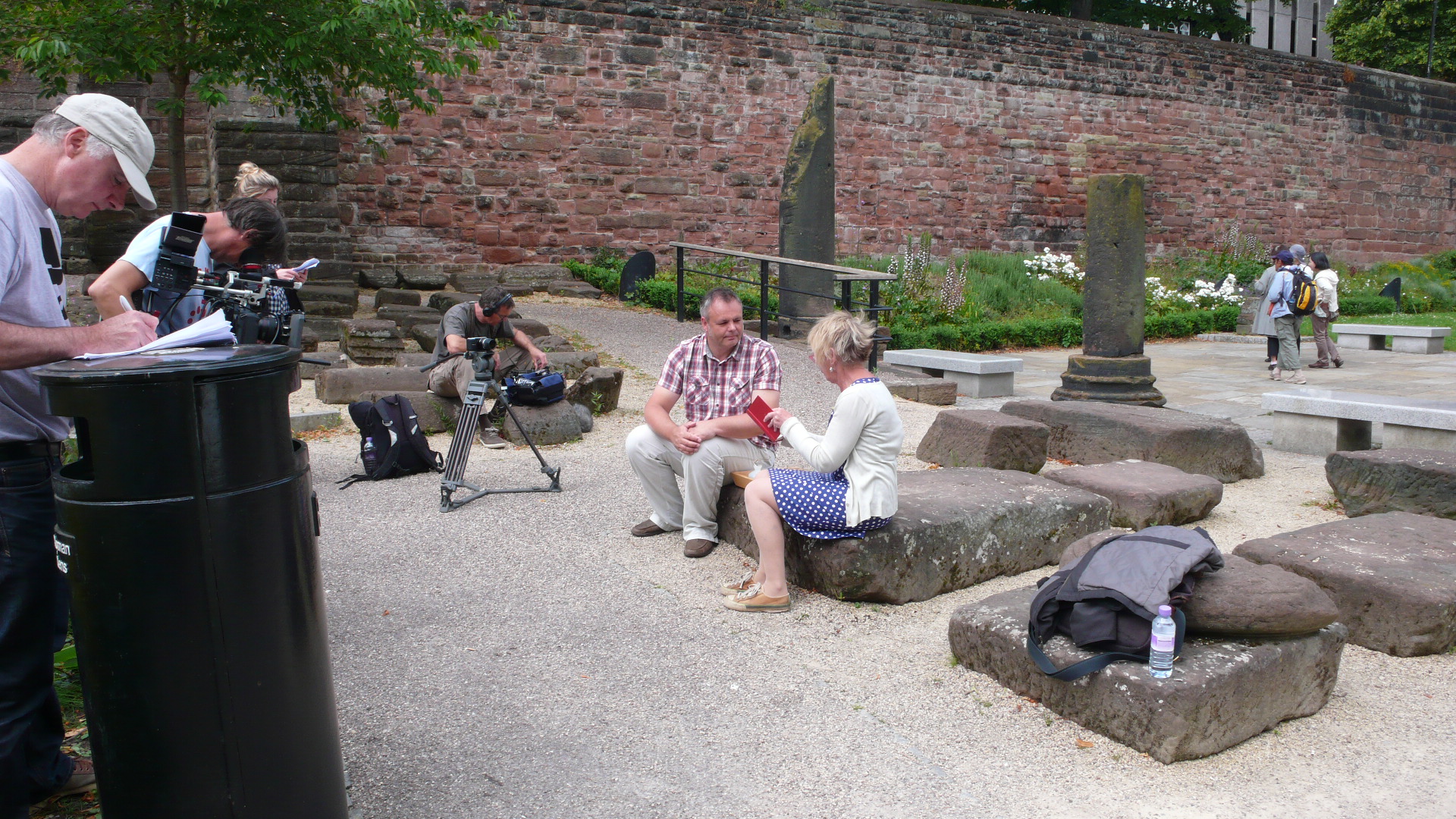
Tuesday was the start of the travelling, and was spent in Chester helping with filming for an episode of a new four-part BBC2 series provisionally called Plant Odyssey, fronted by Carol Klein, Gardener’s World presenter and Honorary Fellow of the University. The series is being produced by Oxford Scientific Films and will be broadcast in the spring.  In the following scene we were making a rose perfume based on an ancient Roman recipe from the writings of Pliny the Elder.

P1110827

Now, I know very little about how to make perfume, but I do know a bit about flower scents and how they attract pollinators, so my role was to act as both a foil for Carol’s scent experiment and to add some science to the mix.  This is not the first filming I’ve done with Carol, having also helped out with her Science in the Garden special edition of Gardener’s World a few years ago.  While looking for that last link I discovered that all three episodes of Bees, Butterflies and Blooms is also available on YouTube, which is great to see as the BBC didn’t repeat the series or produce a DVD.  I was involved in the making of episode 2, which helped to kick-start the RHS’s Perfect for Pollinators plant labelling campaign.  Television work is fun and brings science, and the scientists who do it, to a much wider audience.

Wednesday I prepared my talk for Friday’s lecture in Copenhagen (more of which later) and Thursday involved attending the University of Northampton’s annual postgraduate research conference.  This is a highlight of the year for me as it’s an opportunity to see the breadth of postgraduate research going on across the university, something that would be impossible in a larger and more research intensive institution.  I was only able to attend the first session, but that alone covered research on the research process itself; feminist cyborg literature; the legality of the World Bank’s scrutiny panel; pollinator conservation (Kat Harrold again); and the experiences of families with children who have difficulties communicating.  Questions from the audience tended to be broad and non-specialist, and all the better for that: often it’s the straightforward, naive questions which test specialist knowledge.

The rest of Thursday Karin and I packed and then travelled up to Birmingham International for an early evening flight to Denmark.  I’d been invited by my colleague Bo Dalsgaard to present a research seminar at the University of Copenhagen’s Center for Macroecology, Evolution and Climate.  Coming from a small and very diverse department, it was great to visit such a large and specialised group of researchers, though over lunch the Center’s Director Carsten Rahbek told me that a common complaint from his staff was: “Why can’t we employ more people doing what I’m going?”  Everything’s relative I suppose.

P1110878

The title of my talk was “Pattern and process in pollination at large geographic scales”, which gave an overview of some of the research I’ve published over the last decade or so, framed around the following questions:

Quite a number of people in the Center were out doing field work or were otherwise engaged so I spoke to a modest-sized audience of some 30 people: certainly not the smallest audience I’ve ever presented to – that was three people, including the two who had invited me to give the talk!

The lecture seemed to be well received and there were some stimulating questions afterwards, though also a couple of challenging ones about statistical analysis.  One of these I couldn’t answer until afterwards because I’d forgotten the details of the methods we’d used (note to self: re-read old papers before you present their findings).  In answering the other I agreed with the questioner that the data could now be analysed in a more sophisticated way (future task, if I ever get the time).  If Kat’s reading this, I hope she takes satisfaction in not being the only person to be asked difficult questions about their research this week!

Afterwards I chatted with Bo and Carsten about the limitations of the current and paleo-climate data sets we’ve been using in some studies, which are indeed very limited.  But there are only two options.  Do we work with data sets that are flawed, whilst acknowledging that any conclusions are tentative?  Or wait until better data become available, which could be a decade in the future?  My choice is definitely to go with the former, otherwise we’d never publish anything because there are always limitations to data used in studies of ecology and biodiversity. Personal and public honesty about such limitations, and ideas as to how they can be overcome in the future, are surely preferable to stalling research.

Later that afternoon I discussed science with two of Bo’s collaborators, Pietro Maruyama a Brazilian PhD student whom I’d met last November, and Peter, a Danish undergraduate.  Both are doing excellent work on that most charismatic group of pollinators, the hummingbirds.

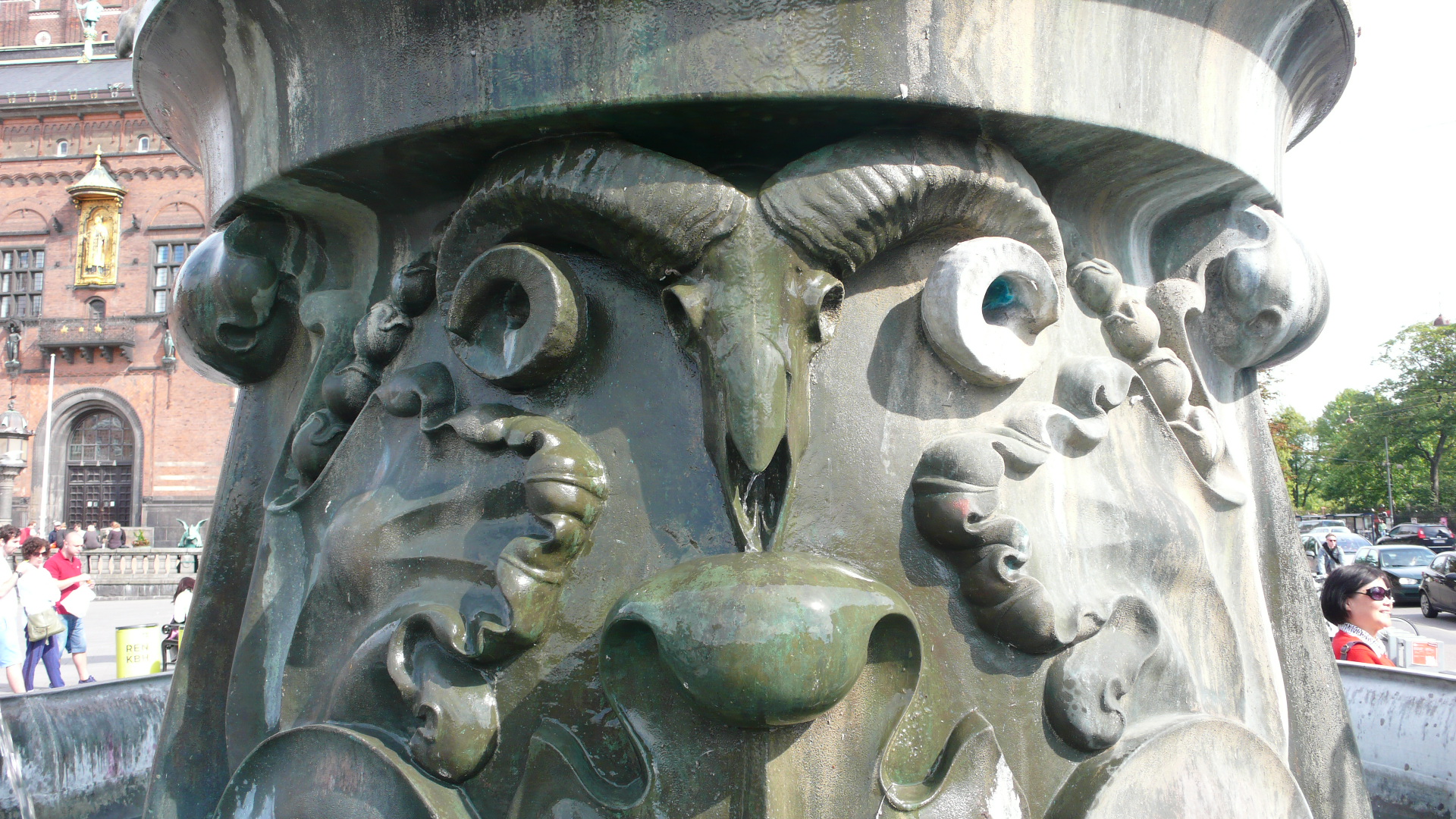
Friday evening I was exhausted, and Karin and I opted for dinner in the hotel restaurant and an early night, as Saturday was to be spent exploring Copenhagen. It’s a great city for wandering around, with fascinating architecture and unexpected additions to buildings, such as bronze dragons:

P1110840

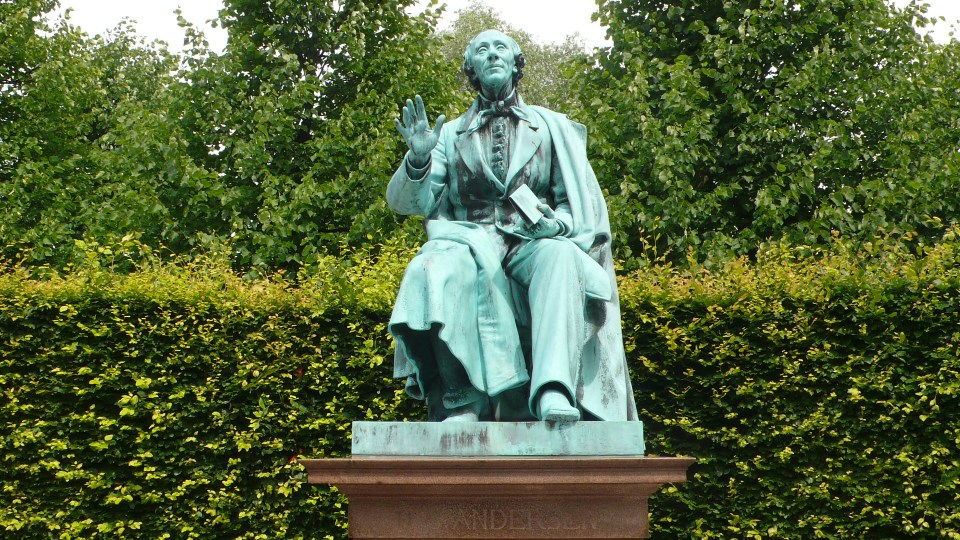
And parks with statues of artists and writers, such as Hans Christian Andersen:

P1110841

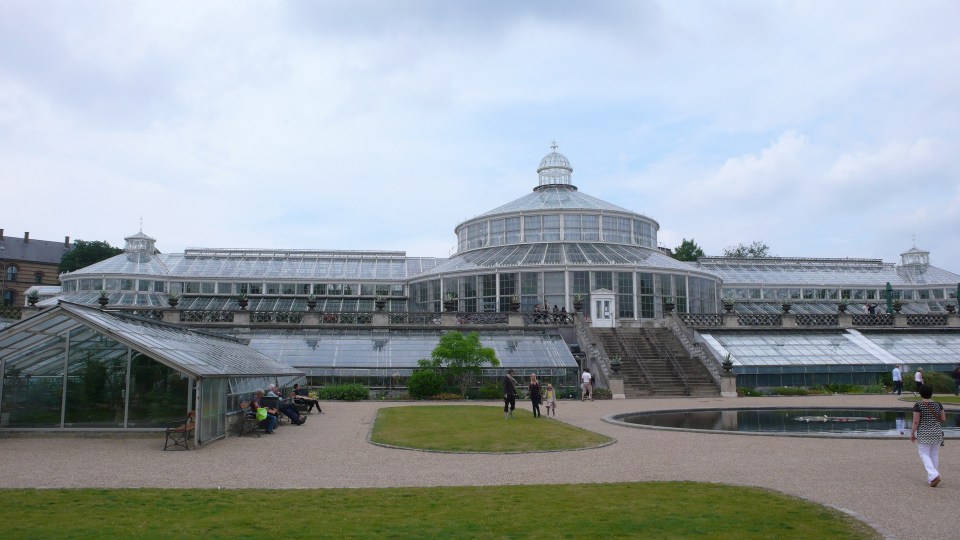
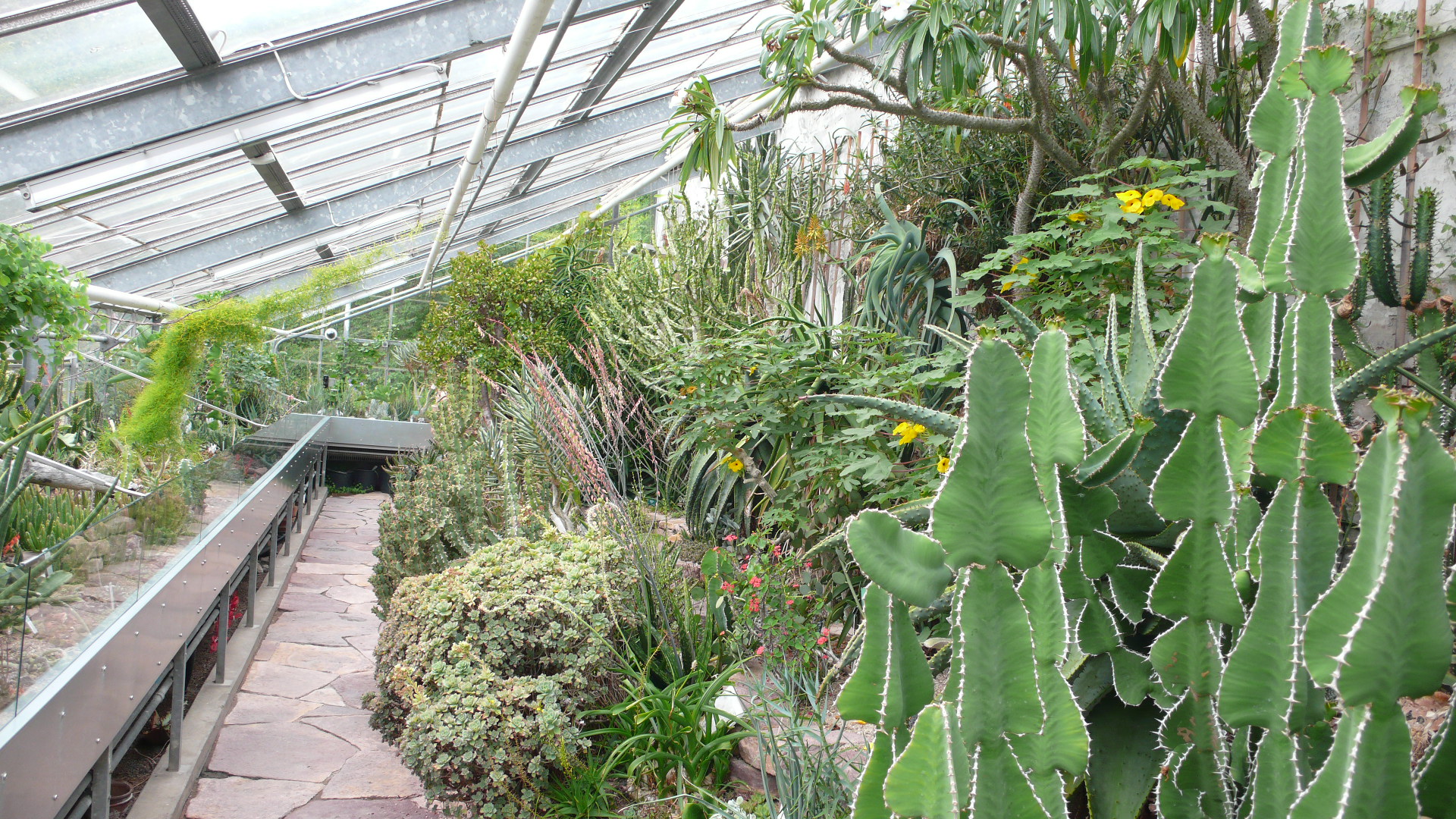
After a roundabout wander, via a gallery selling African tribal art (which we couldn’t afford) and a small lunch (which we could only just afford – Copenhagen’s an expensive city!) we eventually ended up at the University’s Botanical Garden, which has a superb living collection of cacti and succulents, orchids and other epiphytes, and alpine plants.

P1110846

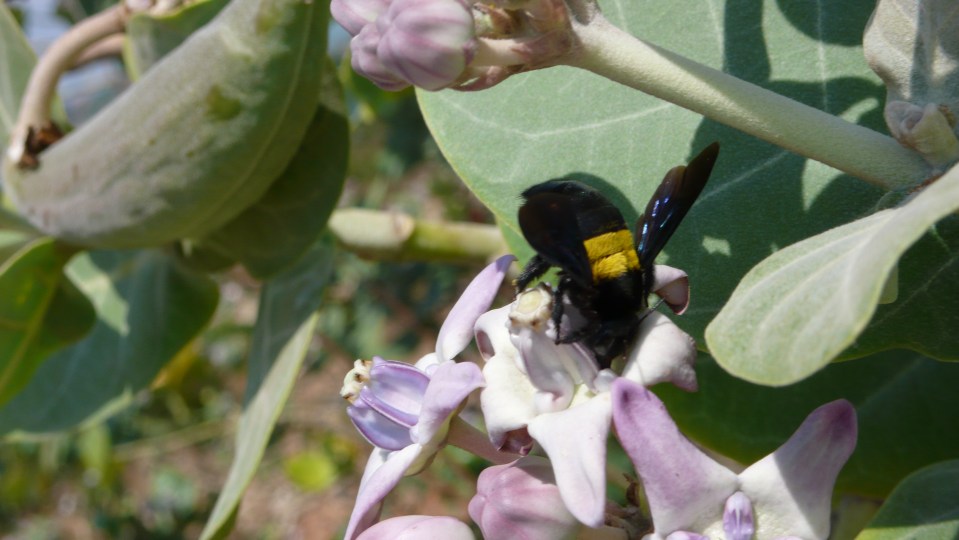
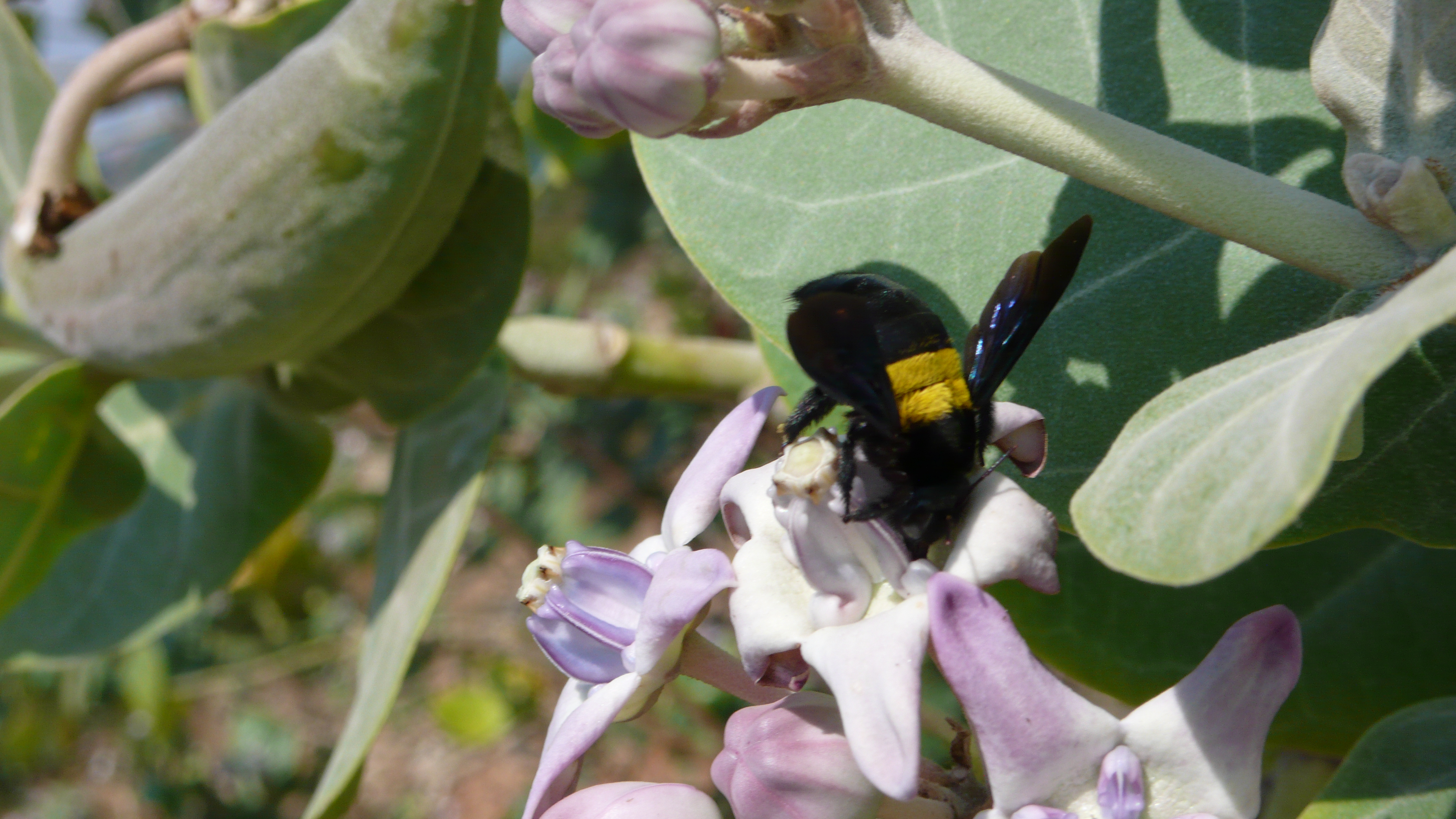
It beautifully illustrates the huge morphological diversity encompassed within the 352,000 or so species of flowering plants, one of the many reasons why I love visiting botanical gardens: I always see something new.  This included two species of bumblebees (Bombus) which I’m sure don’t occur in Britain.  I’ll have to look them up when I get back:  from Chester to Copenhagen and, tomorrow, back to Northampton.

P1110850


Guest blogging: Are species interactions stronger and more specialized in the tropics?

P1080615

In hushed tones the narrator describes the intricate details of yet another highly specialized relationship between one species of indescribable beauty and a second species with intricate behaviour that is about to eat/infect/cooperate with/exploit it [delete as appropriate].

The camera view pulls back to reveal the green cathedral of a tropical rainforest: 

“The tropics” continues the narrator “are special…….…”


Yes, the tropics are special.  But how special?  Or more to the point, how different are tropical communities to temperate communities?  Over at the Dynamic Ecology blog, Jeremy Fox has invited Angela Moles and myself to contribute a guest blog on the subject of whether the idea that species interactions are always stronger and more specialized in the tropics is outmoded and not backed up by the evidence.  In Jeremy’s parlance, is it a zombie idea?

The subject of latitudinal variation in species interactions is one that has interested me for a while and I’ve written a few papers on the topic, especially in relation to how plant-pollinator interactions vary with latitude.  You’ll find references to some of them in the Dynamic Ecology piece, plus a fuller over view of our arguments.

So what are you doing reading this?  Get over to Dynamic Ecology and read that!

There were hummingbirds over the White Cliffs of Dover

Hummingbird bowl from BM

Biogeography has been on my mind of late, in part stimulated by thinking about the work we’re writing up on the frequency of wind versus animal pollination in plant communities in different parts of the world that I mentioned in one of my earlier Brazil posts.  André has added more communities to the data set following some field work in Uruguay, and we are collaborating with Bo Dalsgaard and his colleagues in Denmark on analysing how historical and contemporary climates may have shaped the patterns we’re seeing.  It follows on neatly from the previous work Bo has done on climate and hummingbird-flower interactions.  I’ll report back when we have more to say.

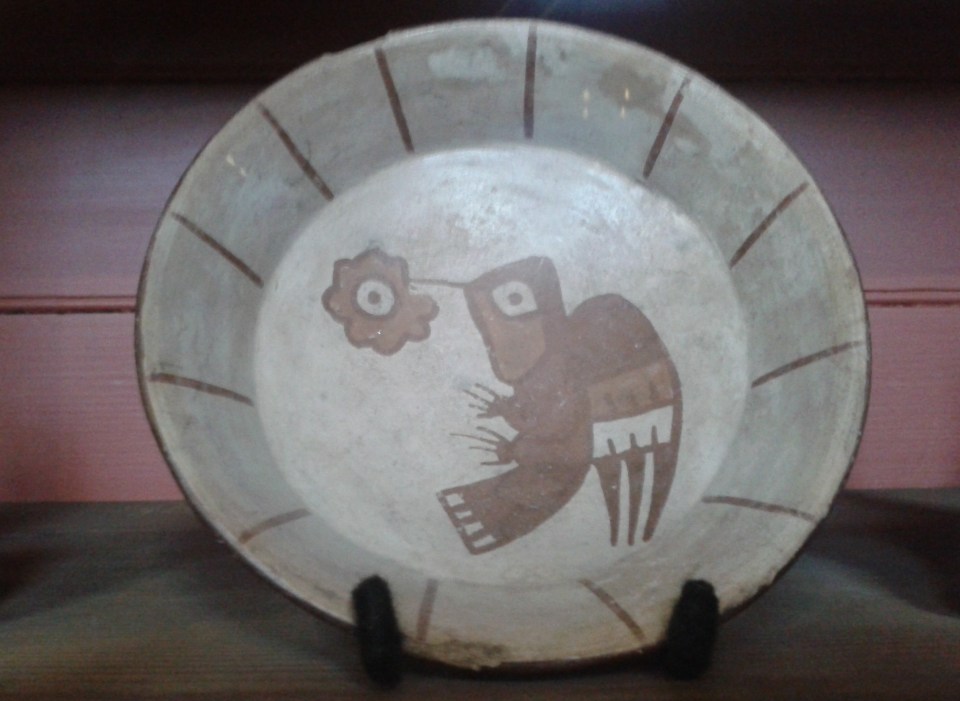
The other reason for thinking about biogeography is that a couple of recent scientific reports have captured my attention.  The first dealt with new fossil discoveries of species related to that enigmatic South American bird the hoatzin (Opisthocomus hoazin).  The report can be read here but in summary, the evidence suggests that the bird family to which hoatzins belong was once much more widespread and may have originated in Europe.  Hoatzins are not the only such example: hummingbirds, which are also currently restricted to the Americas, were found in Europe in earlier times, according to reports from back in 2004 and more recently in 2007.  It appears that contemporary biogeography may not reflect past biogeography for some (perhaps most?) groups of species.

As a lesson in contemporary biogeography, it’s often been pointed out that the famous Vera Lynn song The White Cliffs of Dover falls short in its scientific accuracy:

There’ll be bluebirds over
The White Cliffs of Dover
Tomorrow, just you wait and see

Bluebirds are members of the genus Sialia, a group of three species which do not naturally occur in Britain, in fact are not present in Europe at all.  So you’re not likely to hear them singing in southern England.  But perhaps the genus was present in the distant past?  Who knows?  In the meantime we may have to change the lyrics to the song.  Unless the writer was predicting what might happen in the future when continental drift means that Europe and the Americas will be much closer together.

The other report that caught my eye was of an interesting study that has compared plants and birds in cities across the globe, and looked at how urbanisation reduced the diversity of the native species compared to non-urban areas nearby.  However I do hope that the lead author was being misquoted when she said that: “Owing to the fact that cities around the world share similar structural characteristics – buildings, roads etc – it is thought that cities share a similar biota no matter where they are in the world”.  She goes on to say that they had discovered that some species: “are shared across cities, such as pigeons and annual meadow grass, but overall, the composition of cities reflects the unique biotic heritage of their geographic location”.  Well yes, of course:  any of our undergraduate students taking the second year module in biogeography could have told you that!  As a serious hypothesis to test it lacked rigour: few tropical birds and plants could survive in temperate-zone cities, for example.  There’s more to the study than just this, of course, as you can see from the abstract. Nonetheless it was an odd statement to make in my view.

The Wikipedia definition of biogeography that I linked to at the beginning of this post is perhaps a little limited in its scope:  “the study of the distribution of species and ecosystems in geographic space and through geological time” doesn’t cover the species interactions that have been a focus of my research, for instance.  Perhaps “macroecology” fits it better, though (as I’ve mentioned before) there’s been a lot of debate in the scientific literature about where biogeography ends and macroecology begins, or whether the two are synonymous.  My own view is that the two overlap considerably, but that macroecology is bringing a lot of new tools and approaches to the study of organisms at large spatial scales.  Whether that warrants the definition of a different discipline is debatable, but like all such debates (e.g. the difference between ecology and natural history as recently discussed on the Dynamic Ecology blog) it provides us with a way of reassessing our own views on the work we do, which is always a good thing.

Scientists Must Write (and Speak and Listen and Review and Edit)

“Scientists Must Write” was the title of a book published back in the late 1970s by a former tutor of mine, Robert Barrass, at what was then Sunderland Polytechnic (now the University of Sunderland).  I had assumed the book was now a long gone publishing memory and no longer available.  But it turns out that Robert updated it in the early 2000s and it’s still in print.  Almost 30 years (30!) later I can clearly remember Robert impressing upon us the importance of good writing skills for scientists-in-training.  At the time I was as far from being a professional scientist as it’s possible to be and so didn’t fully grasp this, but nonetheless what he said chimed with my own notions that writing was important, even for a scientist.

Nowadays I realise that it’s not just the writing of standard, academic papers, book chapters and books which  is essential: writing of all kinds is a necessary facet of the life of a research active scientist.   This June sees the publication of two contrasting articles that illustrate this point.  The Royal Horticultural Society’s journal The Plantsman has published a piece entitled “The Importance of Native Pollinators“, whilst the historical journal Notes and Records of the Royal Society has published my paper on “John Tweedie and Charles Darwin in Buenos Aires“.  Neither of these is standard academic fare, at least for me.  The first is a popular article aimed largely at gardeners and others interested in understanding more about pollinator conservation.  The second, whilst academic and rigourously peer reviewed, is primarily historical rather than scientific.

Why am I writing popular conservation articles and historical papers?  Largely for different reasons, though they are linked by my overall fascination with biodiversity.  The Plantsman article is an example of taking ideas and findings from the LBRG‘s research and presenting it to a wider audience who might, at the least, find it interesting and hopefully useful.  One might describe it as “popular science” though I don’t really like the term: it suggests that it’s somehow different to “real” science, which is not the case: it’s really only the format of the presentation which is different.

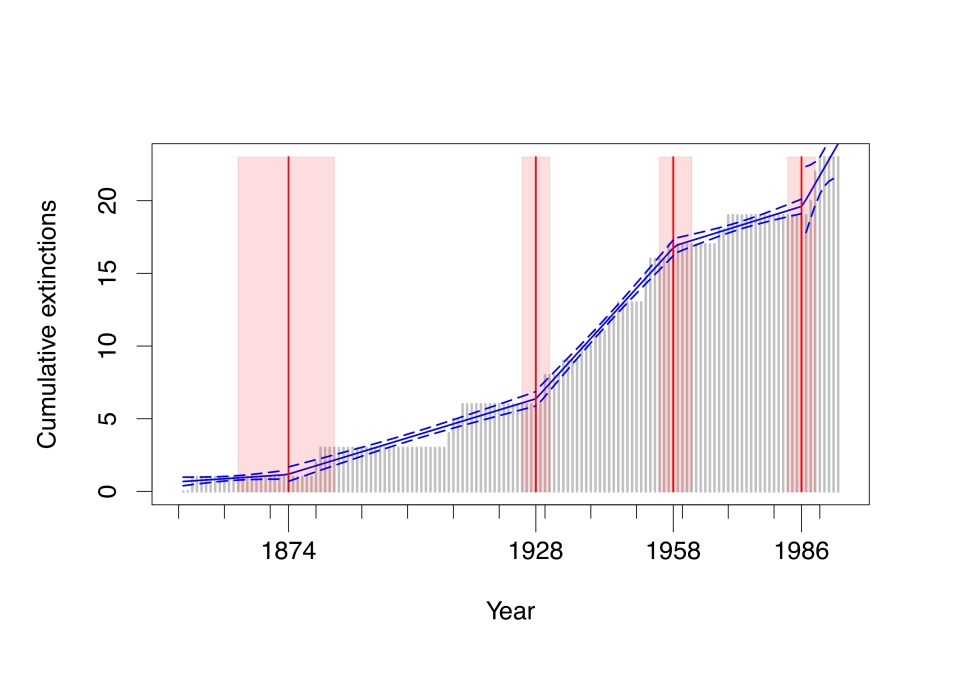
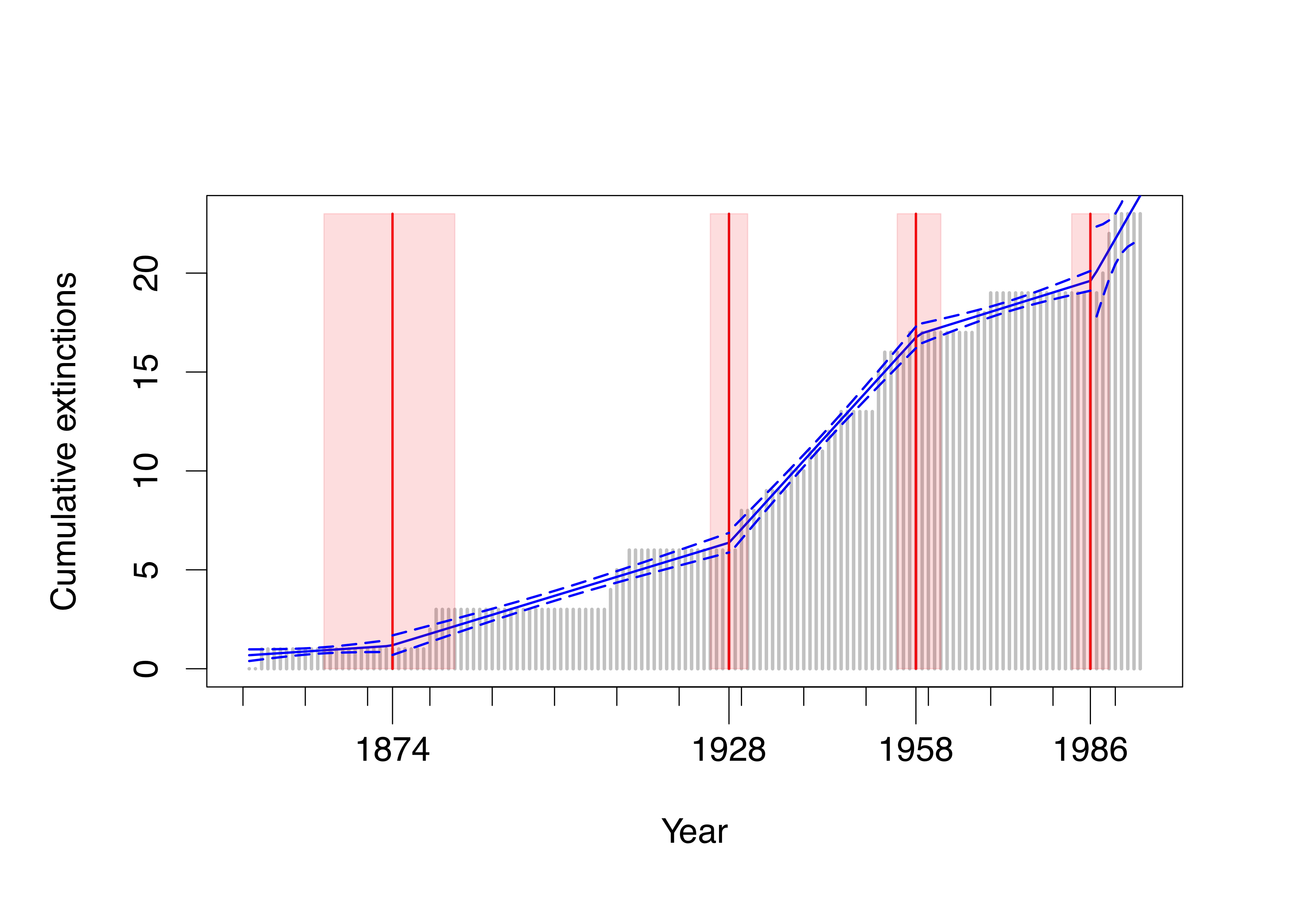
The John Tweedie/Charles Darwin paper reflects my desire to understand where our scientific knowledge of biodiversity comes from.  As scientists and conservationists, we draw conclusions about species’ distributions, conservation threats, extinctions, and so forth, based on information from specimens that have been collected by people like Tweedie and Darwin, and curated at places such as Kew and the Natural History Museum.  By its nature it’s a historical process and historical research helps us to understand how we arrived at our current understanding.  The only reason we know that 23 species of bee have gone extinct in England since about 1800 for example, as I cite in my Plantsman article, is that over the past two centuries specimens and observations have been recorded and analysed.  This is an ongoing process, exemplified by the BWARS project mapping the spread of Bombus hypnorum   the most recent addition to the UK’s native bee list.

As well as writing we scientists gain much from listening to what others in our field have to say and a well attended, and very interesting, meeting in London last week launched the British Ecological Society’s Macroecology Special Interest Group .  The range of talks spanned community structure, interaction networks, ecosystem services, latitudinal gradients and disease biology, all at the large spatial and temporal macroecological scales covered by this subdiscipline of ecology.  Or is it really a multidisciplinary field, a merging of old fashioned biogeography with more modern ecological approaches?  Who knows, perhaps this is sterile semantics; as I mentioned to one of the organisers in the pub afterwards, “macroecology” seems to me to be more about a philosophy of approach rather than a field in itself.

Formal teaching has largely finished for the time being, so in addition to research activities and university administrative work, much of the remainder of the last couple of weeks seems to have been taken up with editorial and peer reviewing duties for journals, including PLoS ONE, for which I’m an academic editor. This can be time consuming and thankless, but is absolutely vital if the whole system of scientific publishing is not to grind to a halt.  Scientists must write, but that writing is supported by a body of individuals who act as peer reviewers, editors, proof readers, and so forth.  Collectively that eats up a lot of scientist-hours and is something we should never take for granted.