Category Archives: Honey bees

Who is feeding the honey bee bullshit machine?

Bee on apple blossom 2 - 1st May 2015

This morning I received an email from Public Policy Exchange (PPE) inviting me to a conference in London in November entitled “Biodiversity and Local Partnerships: Halting the Decline of the Honey Bee in the UK”

The opening statement on the website and the official flyer convinced me that the organisers have been misinformed; all of it is wrong:

“Healthy honey bee populations are vital to food and crop production, and the natural environment. In the UK, honey bees are responsible for 80% of pollination, and a third of the food we eat is pollinated by bees.”

Where are they getting this  information from?  Who is feeding organisations like the PPE this kind of bullshit?  Is it bee keeping organisations?  I’d really like to know.

Honeybees are responsible for only one third of the crop pollination in the UK (Breeze et al. 2011), and a very small proportion of the wild plant pollination. Wild bees, hoverflies, butterflies, and other pollinators are much more important than honeybees, and collectively they are responsible for this pollination, not just managed honeybees.  No one is denying that honey bees are important, but there is absolutely nothing to gain (and a lot to lose in terms of science credibility) by over-playing their importance, as I’ve argued in the peer-reviewed literature.

It’s not as if this is the only recent example, The Daily Express online has recently been equally ignorant of the facts, and didn’t even get the right bee in the accompanying image.

It’s interesting that the PPE website also uses the infamous not-Einstein quote, though they cite the author as “unknown”.  With good reason, because that’s bullshit too.

I won’t be attending the conference.

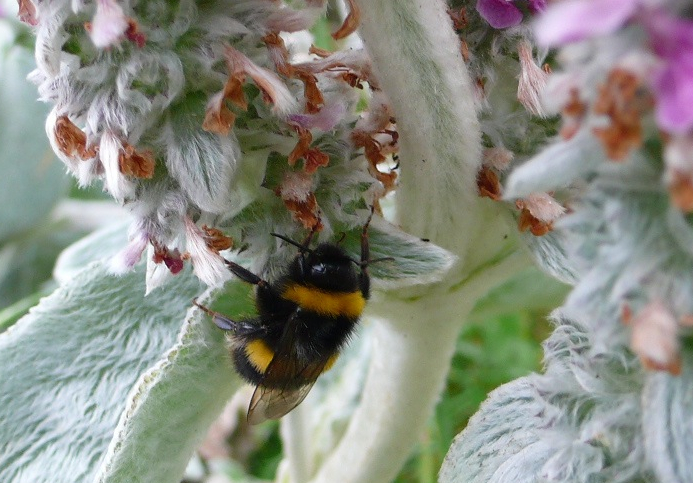
Garden pollinators for PAW no. 6 – Buff-tailed bumblebee (Bombus terrestris)

P1010430

It would be impossible to write a series of blog posts about garden pollinators for Pollinator Awareness Week without considering the bumblebees (genus Bombus) and I intend to devote the last two posts to that group of bees.  The bumblebees are arguably the UK’s most important pollinators of both wild and crop plants, certainly later in the season when colony numbers have increased. Earlier in the season it’s the solitary bees such as the Orange-tailed mining bee that are predominant.

Although common and widespread in gardens, the Buff-tailed bumblebee (Bombus terrestris) belongs to a group of bees in which the workers are rather variable in appearance and can be very difficult to distinguish from those in the Bombus lucorum group, which includes two other species (B. cryptarum and B. magnus).

This is a truly social species with an annual nest comprising workers and a queen.  Nests are founded by queens that have mated the previous year and hibernated.  They usually choose old rodent nests in which to begin their colonies, which is why they are sometimes found in garden compost bins.  An interesting question that I’ve not seen answered is whether the queens actively displace mice or voles from such nests: does anyone know?  This association between bumblebees and mice led Charles Darwin and Thomas Huxley into some speculation as to the role of spinsters in the British Empire.

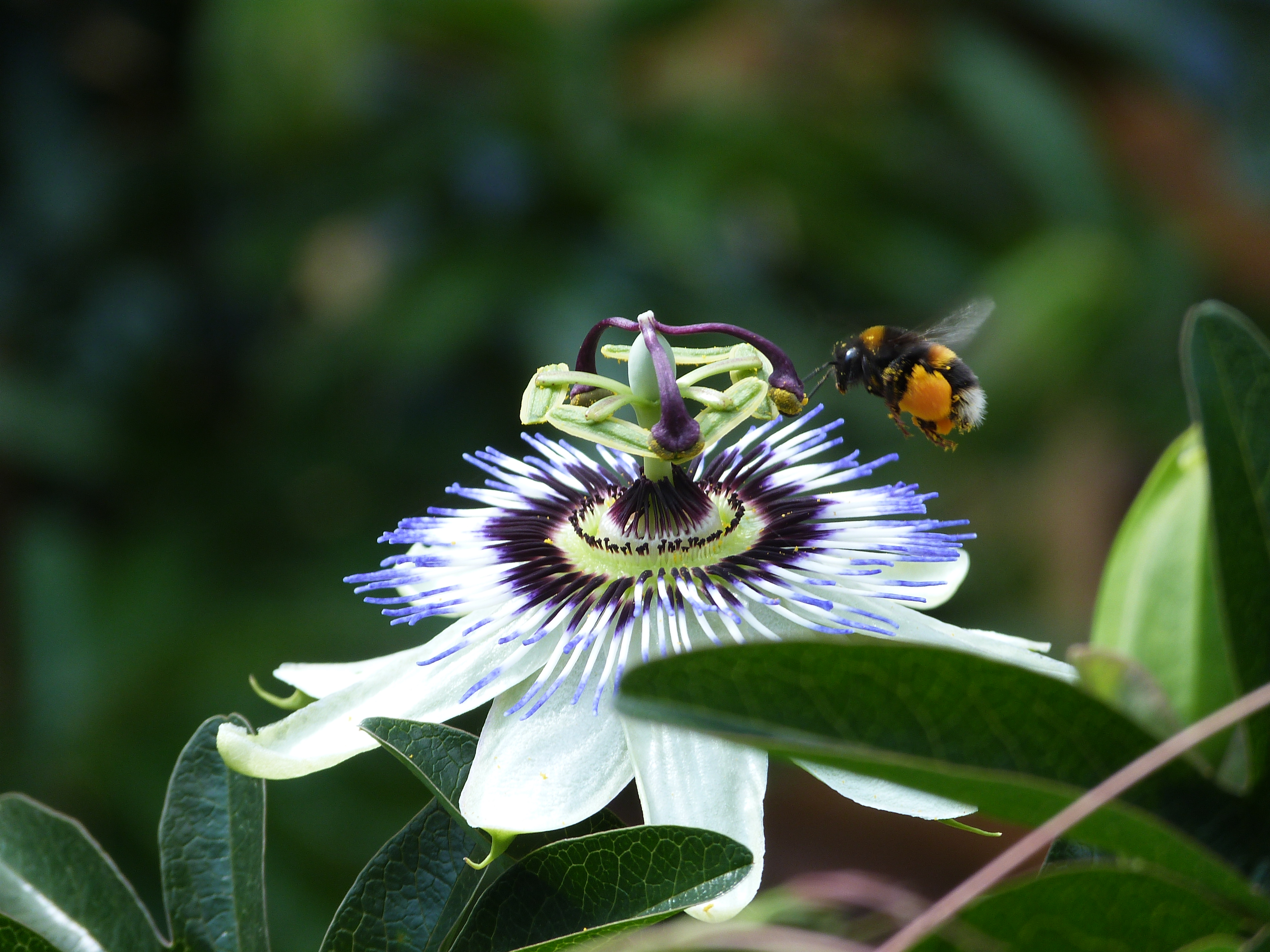
In my garden the Buff-tailed bumblebee pollinates a range of crops including strawberries, squashes, courgettes, blackberries, runner beans, french beans, tomatoes, and raspberries.  As the photo above shows they also visit the flowers of passion fruit, where they seem to be more effective than the smaller honey bees and solitary bees.

Buff atil on Lambs ear cropped July 2015 P1120289 copy

How can an understanding of plant–pollinator interactions contribute to global food security? A new discussion paper

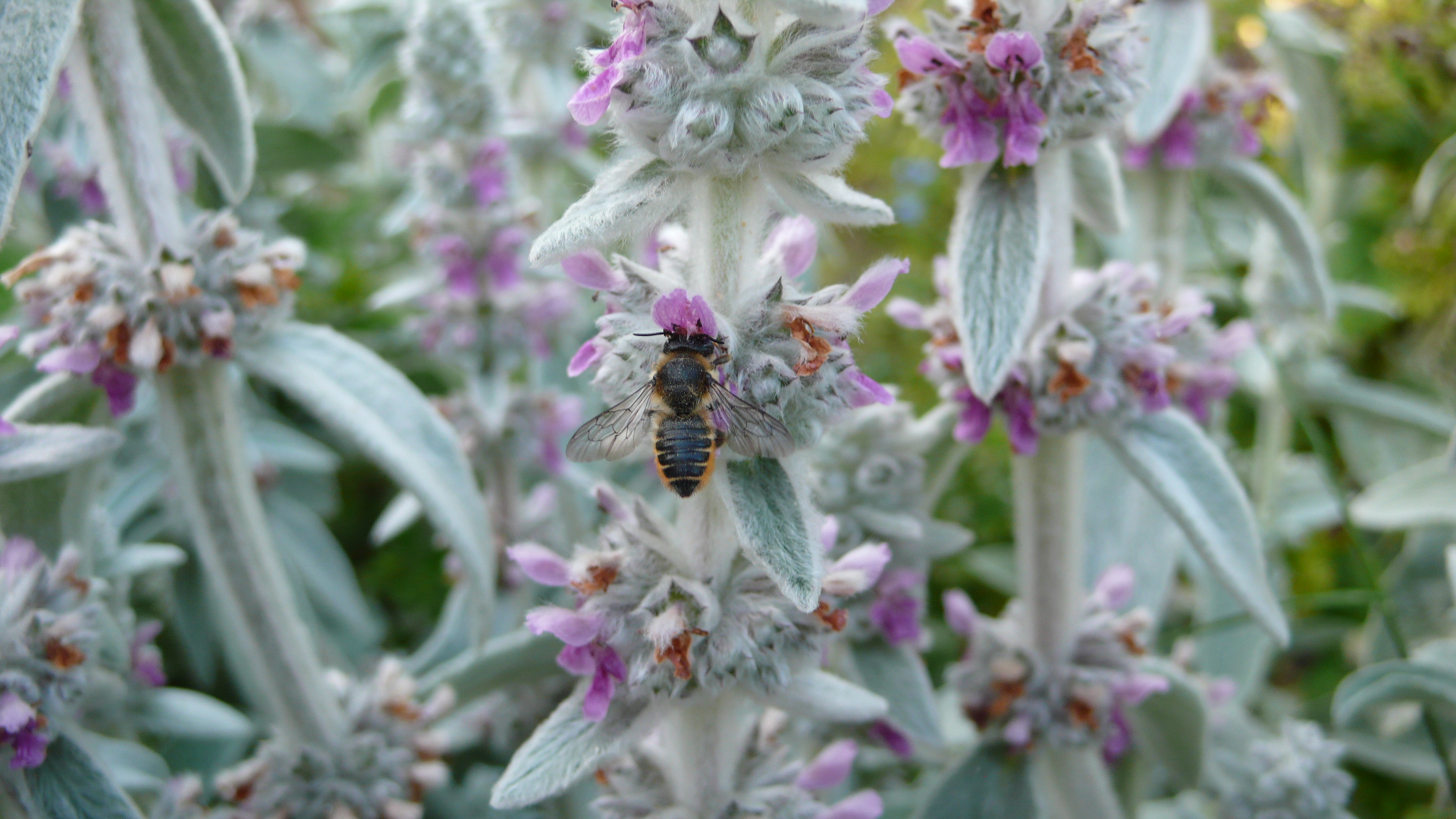
Megachile on lambs ear 2015-06-29 18.16.49

A new discussion/review paper that I contributed to has just been published in the journal Current Opinion in Plant Biology.  Entitled “How can an understanding of plant–pollinator interactions contribute to global food security?” the paper was written in collaboration with Professor Beverley Glover and her PhD students Emily Bailes and Jonathan Pattrick at the University of Cambridge.

The abstract and highlights are copied below; if anyone wants a PDF of the full paper, send me an email or ask in the comments section.

Abstract:

Pollination of crops by animals is an essential part of global food production, but evidence suggests that wild pollinator populations may be declining while a number of problems are besetting managed honey bee colonies. Animal-pollinated crops grown today, bred in an environment where pollination was less likely to limit fruit set, are often suboptimal in attracting and sustaining their pollinator populations. Research into plant–pollinator interactions is often conducted in a curiosity-driven, ecological framework, but may inform breeding and biotechnological approaches to enhance pollinator attraction and crop yield. In this article we review key topics in current plant–pollinator research that have potential roles in future crop breeding for enhanced global food security.

Highlights:

  • Animals are globally, and increasingly, important for the improved yield and quality of many crops.
  • Floral traits are a promising and little explored avenue for the improvement of crop yields.
  • Work surrounding plant–pollinator interactions can inform us on the best strategies to do this.
  • Coordinating crop flowering time with key lifecycle stages of pollinators could benefit both crop yields and pollinators.

How good is the evidence base for pollinator declines? A comment on the recent Ghazoul and Goulson Science correspondence

In a recent issue of the journal Science, Dave Goulson and colleagues presented a review entitled “Bee declines driven by combined stress from parasites, pesticides, and lack of flowers”.  This stimulated Jaboury Ghazoul to submit a letter to Science criticising the Goulson et al. paper from a number of perspectives, but particularly the paucity of the evidence base for pollinator declines. Dave and his co-authors robustly responded to that letter, as you might imagine. In some respects this was an unsatisfactory exchange, however, as the focus was largely on agricultural pollinators, rather than pollinators of all plants (including the majority non-cultivated species) and I think that (perhaps with more space?) Dave could have outlined the evidence in more depth.

The most striking statement in Jaboury’s letter was that the “evidence for pollinator declines is almost entirely confined to honeybees and bumblebees in Europe and North America”.

Now, even given the fact that Jaboury was possibly referring specifically to agricultural pollinators, that is a very extreme statement to make. Underlying it is the suggestion that global concerns about declining pollinator biodiversity (a subject I’ve discussed repeatedly on this blog) is underpinned by a taxonomically and geographically thin evidence base. Is that really true? I don’t believe so and I think it’s worth presenting a brief overview of the evidence, not least because Dave’s review and the resulting correspondence is pay-walled at the Science site (though if you Google the titles you might, just might, find copies posted on the web…)

Let me state from the outset that I have considerable respect for both Jaboury and Dave, as individuals and as scientists. I’ve known Dave since we were postgrads together in the early 1990s, and have had occasional contact with Jaboury through conferences and via email. So this isn’t meant to be a criticism of either of them.  But I do believe that the evidence for pollinator declines is considerably more robust than Jaboury acknowledges, and even more wide ranging than Dave and colleagues describe in their response (though in fairness, most of the bee evidence was cited in their original review).

Here’s a summary of where I see the evidence base at the moment; it’s not meant to be a full review, by any means, but rather to give a flavour of the taxonomic and geographical breadth and depth of the evidence as it currently stands:

Wild bees (including bumblebees, and solitary and primitively eusocial bees) – significant reduction of abundance and diversity at local, regional and country-levels documented in Britain (Biesmeijer et al. 2006, Ollerton et al. 2014), Holland (Biesmeijer et al. 2006), Europe as a whole (Kosier et al. 2007, the recent IUCN Red List by Nieto et al 2014), North America (Grixti et al. 2007, Cameron et al. 2011, Burkle et al. 2013), South America (Morales et al. 2013; Schmid-Hempel et al. 2013), China and Japan (Xie et al. 2008; Williams et al. 2009; Matsumura et al. 2004; Inoue et al. 2008), and South Africa (Pauw 2007).

Honey bees – colony declines documented in Europe and North America (see reviews by NRC 2007, Potts et al. 2010) and evidence that global demand for honey bee pollination services is outstripping supply (Aizen and Harder 2009).

Hoverflies (Syrphidae) – diversity declines documented in Holland and Britain (Biesmeijer et al. 2006).

Butterflies and moths – diversity and abundance of Lepidoptera has declined in the UK (Gonzalez-Megias et al. 2008, Fox 2013), whilst in North America some 50 species are IUCN criteria Red Listed and there is particular concern about the iconic Monarch butterfly.  Likewise a significant fraction of butterflies in other parts of the world are of conservation concern, e.g. Southern Africa, Australia, and Europe.

Flower-visiting wasps – reduction in country-level diversity in Britain (Ollerton et al. 2014).

Birds and mammals – the major vertebrate pollinators have recently been assessed at a global level by Regan et al. (2015) using IUCN Red List criteria.  They concluded that: “overall, pollinating bird and mammal species are deteriorating in status, with more species moving toward extinction than away from it. On average, 2.5 species per year have moved one Red List category toward extinction in recent decades, representing a substantial increase in the extinction risk across this set of species”.

Of course a number of the studies cited above have shown that some species are doing better than others and a proportion of the taxa they have assessed are stable or even increasing in abundance (including managed honey bee colonies in some parts of the world). But the current evidence base, as I see it, is pointing towards significant declines in pollinator abundance and diversity at multiple spatial scales across all regions that have so-far been assessed with any rigour, for a wide range of taxa.

I’m happy to receive comments on this topic, particularly pointing me to major sources of evidence that I’ve not covered, or if you disagree with my conclusions.

References

Aizen and Harder (2009) The global stock of domesticated honeybees is growing slower than agricultural demand for pollination. Current Biology 19: 915–918.

Biesmeijer et al. (2006) Parallel declines in pollinators and insect-pollinated plants in Britain and the Netherlands. Science 313: 351–354.

Burkle et al. (2013) Plant-pollinator interactions over 120 years: Loss of species, co-occurrence, and function. Science 339, 1611–161.

Cameron et al. (2011) Patterns of widespread decline in North American bumble bees. Proc. Natl. Acad. Sci. U.S.A. 108: 662–667.

Fox (2013) The decline of moths in Great Britain: a review of possible causes. Insect Conservation and Diversity 6: 5–19.

Gonzalez-Megias, A. et al. (2008) Changes in the composition of British butterfly assemblages over two decades. Global Change Biology, 14: 1464-1474.

Grixti (2009) Decline of bumble bees (Bombus) in the North American Midwest. Biol. Conserv. 142, 75–84 (2009).

Inoue et al. (2008). Displacement of Japanese native bumblebees by the recently introduced Bombus terrestris (L.) (Hymenoptera: Apidae). J. Insect Conserv. 12: 135–146.

Kosior (2007) The decline of the bumble bees and cuckoo bees (Hymenoptera: Apidae: Bombini) of Western and Central Europe. Oryx 41, 79–88.

Matsumura et al. (2004) Invasion status and potential ecological impacts of an invasive alien bumblebee, Bombus terrestris L. (Hymenoptera: Apidae) naturalized in Southern Hokkaido, Japan. Glob. Environ. Res. 8, 51–66.

National Resource Council (2007) Status of Pollinators in North America.  National Academies Press, Washington, DC.

Nieto et al. (2014) European Red List of Bees.  Publication Office of the European Union.

Ollerton et al. (2014) Extinction of aculeate pollinators in Britain and the role of large-scale agricultural changes.  Science 346: 1360-1362.

Pauw (2007) Collapse of a pollination web in small conservation areas. Ecology 88: 1759-1769.

Potts et al. (2010) Declines of managed honey bees and beekeepers in Europe. Journal of Apicultural Research 49: 15–22.

Regan et al. (2015) Global Trends in the Status of Bird and Mammal Pollinators. Conservation Letters DOI: 10.1111/conl.12162

Schmid-Hempel et al. (2013) The invasion of southern South America by imported bumblebees and associated parasites. Journal of Animal Ecology 83: 823–837.

Williams et al. (2009) The bumblebees of Sichuan (Hymenoptera: Apidae, Bombini). Syst. Biodivers. 7: 101–189.

Xie et al. (2008) The effect of grazing on bumblebees in the high rangelands of the eastern Tibetan Plateau of Sichuan. Journal of Insect Conservation 12: 695–703 (2008).

Something for the weekend #5

The latest in a regular series of posts to biodiversity-related* items that have caught my attention during the week:

  • The British Government’s official line on the impact of neonicotinoid pesticides on bee health is largely based on a widely criticised study conducted by the UK’s Food & Environment Research Agency (FERA) which concluded that there was no link to bumblebee pesticide exposure and colony performance.  Professor Dave Goulson at the University of Sussex has now reanalysed the original data and shown that in fact there was a significant effect of the pesticides on those nests.  You can read the study in full here.  How could the FERA scientists get it so wrong?  Were they influenced by Defra’s desire to come to a particular conclusion?
  • It will be interesting to see how FERA responds to this criticism of their work, though it may take a while to get a full answer: the lead scientist on the study now works for agrochemicals firm Syngenta….
  • The story has also been picked up by some media outlets, notably the Guardian.  Pity they confused honey bees with bumblebees though – managed honey bees use human-made hives; bumblebees use nests (even artificial ones).
  • The RSPB’s Big Garden Birdwatch, which I talked about in a post earlier this year, has reported its results.  There seems to be good news for some species, but for others it was bad: for example, there’s been an 80% drop in observations of starling since the scheme began in 1979.  Starlings are now RSPB Red Status due to their worrying decline; whilst they are still common, they are not anywhere near as common as they used to be.

Feel free to recommend links that have caught your eye.

*Disclaimer: may sometimes contain non-biodiversity-related links.

The state of bees: the European Red List has been published

P1010430

As I’ve frequently reported on this blog, there is growing global concern about declines in pollinator diversity and abundance across many regions, and much research is going on into what is causing those declines, their scale and consequences, and what can be done to reverse pollinator loss. It’s therefore great to see the publication of the European Red List of Bees which provides information on the conservation status of the c. 2000 species of bees in Europe.

The report uses standard IUCN criteria for assessing each species and has been picked up by various media and NGOs, who have typically promoted it with claims such as “Nearly one in 10 of Europe’s wild bee species face extinction“.  However the reality of what the report has found is much more complex and nuanced than the headlines suggest.  Over half of the bee species were classified as Data Deficient, meaning that we don’t have enough information to assess whether they are threatened or not.  Of those that could be classified, 7 species are Critically Endangered, including 3 that are endemic to Europe and found nowhere else in the world; 46 are Endangered including 12 endemics; 24 are Vulnerable, with 7 endemic; 101 are Near Threatened with 17 endemic; 663 are Least Concern (68 endemic), meaning that there are no immediate threats to their survival.

If we turn the “1 in 10” headline around, then a more accurate statement would be “Over 90% of Europe’s bees (for which we have sufficient data) are not immediately threatened by extinction”.  Of course that could change once data for the poorly studied species becomes available.  These are not grounds for complacency; but neither are they grounds for panic.

The scale at which we assess biodiversity is critical if we are to fully understand the threats to species, and when and where limited funds can be prioritised for conservation actions.  Species that are locally endangered or even extinct may actually be quite common when assessed across the whole of their distributional range.  For this reason it’s important to consider the status of species in as wide a geographic region as is possible.  Preferably this would mean a global assessment; but for most species we simply don’t have enough information to be able to undertake such a study, particularly for developing countries where there are limited historical records of species occurrences on which to draw.  Even in a relatively developed region such as Europe, with a long history of natural history observation and monitoring, there are huge gaps in our knowledge – in this case for more than half of Europe’s bees.

With this in mind I looked at the European status of those bee species which are now extinct in the UK, as I discussed in December.  Two of the extinct species are considered Critical (Bombus cullumanus and Andrena tridentata); two are Near Threatened (Dufourea minuta and D. halictula); seven other species are Least Concern; and the remaining two (Andrena lepida and A. lathyri) are Data Deficient.  Clearly some of the UK extinct species are in trouble across Europe, but others are not and may re-colonise the UK in the future, as we believe may have happened in the last couple of years for Andrena vaga.  Or they could be helped to re-colonise via a reintroduction programme, as has been done for Bombus subterraneus

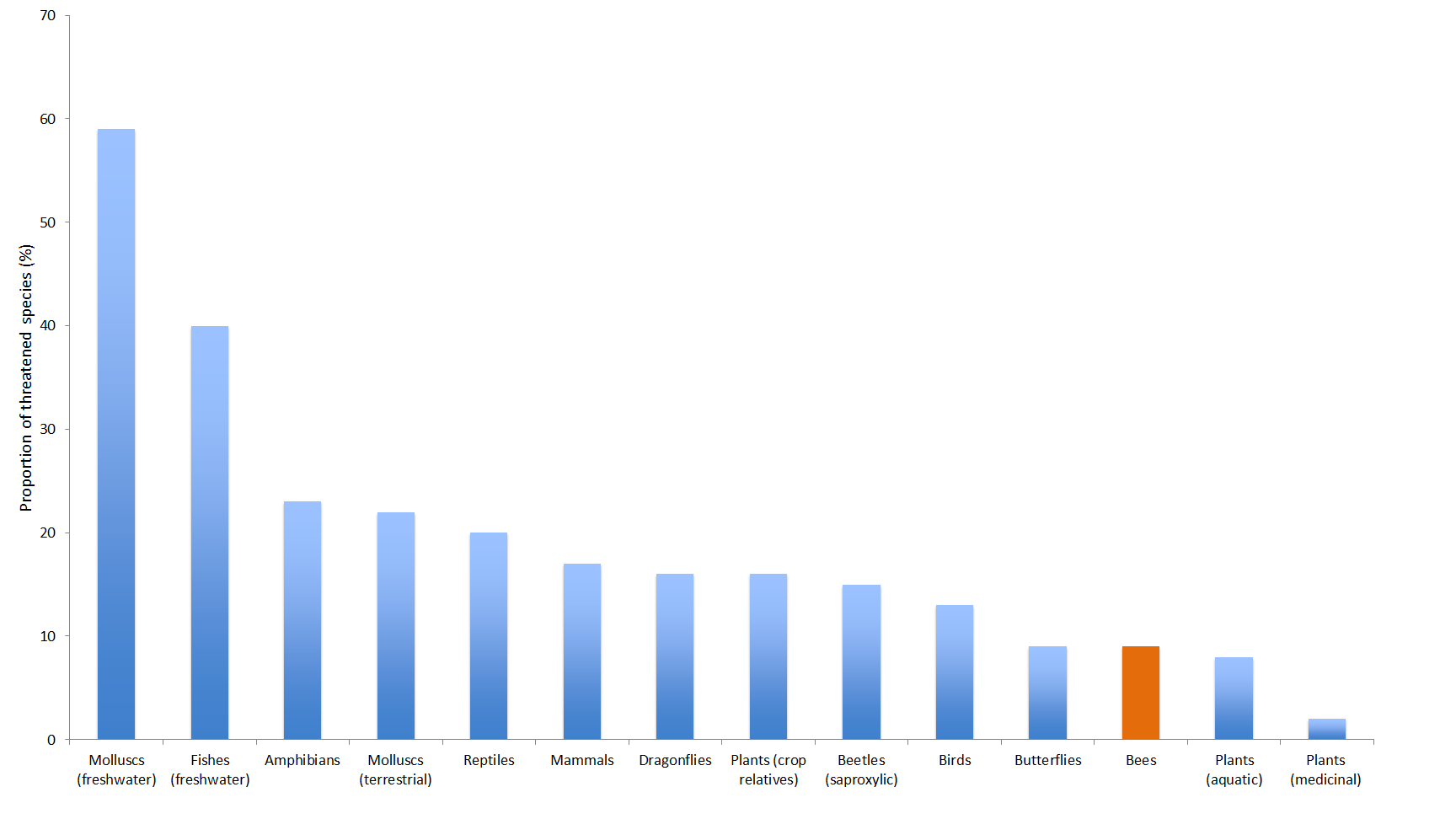
Another way in which to put the findings of this report into a wider context is to consider how the level of threat to bees compares with that of other groups of species.  The authors helpfully provide some comparative data in the summary, which I’ve graphed below (click on it for a better view):

IUCN stats

Overall the proportion of threatened bees is identical to that of butterflies, perhaps because they require some similar resources (flowers on which to feed) and tend to be found in broadly similar habitats.  But other taxa are at much greater risk, particularly freshwater fish and molluscs: yet these taxa have not received the same level of publicity about their plight.  Their are no “Save the Mussels” campaigns, or television series about endangered fish in rivers and lakes.  This is surprising: clearly bees have grabbed the public’s attention because of the role they play in crop pollination, but freshwater fish are also suppliers of ecosystem services either directly (fishing) or indirectly (playing a role in maintaining the “health” of these ecosystems, as do the molluscs). Perhaps more importantly for these species, they are also indicators of water quality, an aspect of natural capital that concerns us all.

The authors of the European Red List of Bees are to be congratulated on a fine piece of work that makes a major contribution to our understanding of pollinator conservation, and is timely, coming soon after the publication of the National Pollinator Strategy for England.  However there’s still a lot of work to do to fill in the gaps for species that are Data Deficient and to understand the more detailed population trends, which are unknown for almost 80% of the bee species.

One of the most surprising findings, though, is that the honey bee (Apis mellifera), the most intensively researched pollinating insect on the planet, is considered Data Deficient “until further research enables us to differentiate between wild and non-wild colonies in order to determine the conservation status of the species in the wild.”  That’s an interesting state of affairs!

Full citation:

Nieto, A., Roberts, S.P.M., Kemp, J., Rasmont, P., Kuhlmann, M., García Criado, M., Biesmeijer, J.C., Bogusch, P., Dathe, H.H., De la Rúa, P., De Meulemeester, T., Dehon, M., Dewulf, A., Ortiz-Sánchez, F.J., Lhomme, P., Pauly, A., Potts, S.G., Praz, C., Quaranta, M., Radchenko, V.G., Scheuchl, E., Smit, J., Straka, J., Terzo, M., Tomozii, B., Window, J. and Michez, D. 2014. European Red List of bees. Luxembourg: Publication Office of the European Union.

What Einstein didn’t say about bees – UPDATE – May 2021

https://i0.wp.com/www.impawards.com/intl/misc/2012/thumbs/sq_more_than_honey.jpg

It’s more than 6 years (!) since I wrote this post. Over that period I’ve been asked many times about the Einstein bee quote and I’ve always replied that it’s made up, and that further more, Einstein was a physicist: he had no interest in bees!

Turns out, that’s not quite correct. There’s still no evidence that Einstein stated the infamous bee quote; however he does seem to have had an interest in bees. A newly-discovered letter from the great man mentions his admiration of the work of Karl von Frisch, whose research on the honey bee ‘waggle dance’ earned him a Nobel Prize. There’s a couple of news stories online about this: here’s one from Cosmos, and another from The Conversation. The original paper discussing the letter, by Adrian Dyer and colleagues, can be viewed here.

So I will have to moderate my response in the future, but it doesn’t change the big picture: Einstein never said it!

———————————————————————————————————————–

In the 100th anniversary year since Albert Einstein published the paper on his General Theory of Relativity, it’s saddening to think that one of the things that he will be best remembered for is something he did not say.  There are various versions of it, but they all amount to the same thing:

“If the bee disappeared off the surface of the globe, then man would have only four years of life left. No more bees, no more pollination, no more plants, no more animals, no more man.”

This statement could be dissected and disproved in numerous ways:  for example, there’s over 20,000 species of bees, so what is “the bee”?  Plus most of our crops are not bee (or even insect) pollinated, they are wind pollinated grasses such as wheat and rice.  Etc. etc.

But what is particularly annoying about it is – EINSTEIN NEVER SAID IT!  As far as anyone is aware he had no interest in bees whatsoever and the original source was a Canadian beekeepers’ journal in the 1940s.

It’s even more annoying that, despite the fact that we’ve known the statement is both factually incorrect and not by the great man, documentary film makers and journalists are STILL using it to support their work.  The latest example I’ve seen is this documentary, the poster of which is shown above.

Rant over: back to reading paperwork for a meeting this afternoon.

UPDATE:  I’d forgotten that Tom Breeze at University of Reading posted a fuller account of Einstein’s (non) quote last year – here’s the link.

Something for the weekend #1

Two of my favourite blogs, Dynamic Ecology and Small Pond Science, both produce end-of-week compilations of links to interesting items on the web.  On the basis that plagiarism imitation is the sincerest form of flattery, I thought I’d follow suit with a regular series of posts to biodiversity-related* items that have caught my attention during the week**.  This is the first one.


  • In an article in the Times Higher, John Warren and colleagues discuss their concern about the decline in graduates with species identification skills.  They raise some valid points that echo worries that others have raised in the past, but I question their assertion that “each year there are fewer than 10 UK graduates who are proficient enough in field identification skills to be employable”.  I’d like to see some evidence to back that up.
  • Mr Spock has died; I’ve always loved Star Trek and Leonard Nimoy’s passing is sad news.  But he lived long, and he prospered, and we can’t ask more from life than that.
  • Tropical deforestation may have actually accelerated, not decreased, according to a new study.  But Brazil is faring better than other countries.
*Disclaimer: may sometimes contain non-biodiversity-related links.
**Feel free to recommend links that have caught your eye.

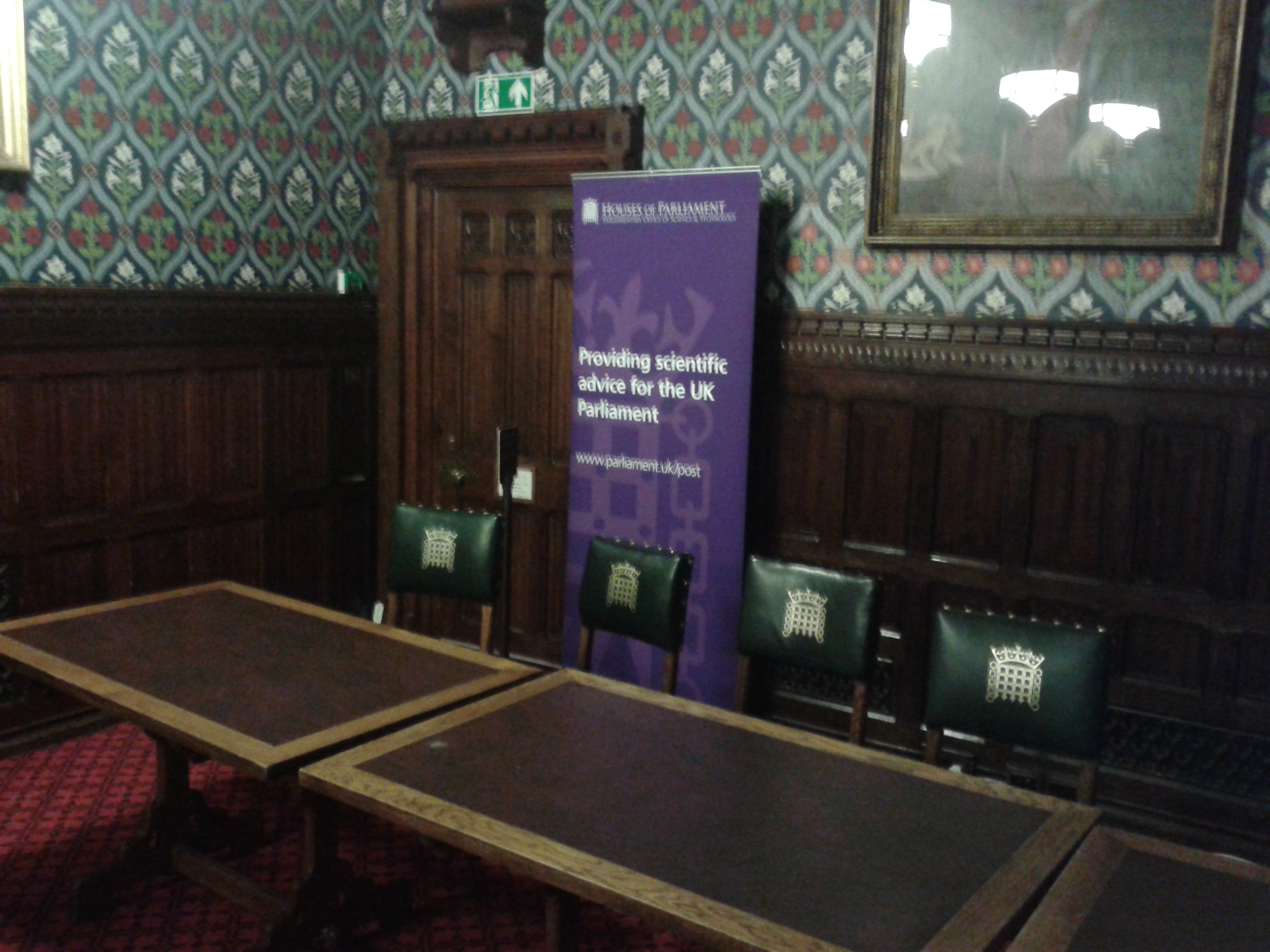
Pollinator seminar at Westminster – the official version – and that 1,500 figure

20141028_180501

Last month I wrote a personal account of the National Pollinator Strategy Seminar held at Westminster.  This week the Parliamentary Office for Science and Technology released their official summary of the event plus PDFs of the slides of some of the participants.  They can be downloaded from this website.  It was an interesting seminar and it’s well worth taking time to study these documents; they are very accessible for the non-specialist.

One thing that’s unclear to me from this account is with regard to the statement that:  “there are approximately 1,500 insect species that pollinate food crops and wild plants, including bees, hoverflies, wasps, flies, butterflies, beetles and moths”.  The National Pollinator Strategy also cites that figure, though says “at least 1,500” species.

Where does the 1,500 figure come from?  Does anyone know the original citation?  I genuinely can’t recall if I’ve ever seen it published.

A quick back of the envelope, conservative calculation suggests to me that 1,500 species is too low:

Aculeates (bees plus wasps minus ants) =  500
Butterflies =     59
Macro-moths (assumed 50% flower visitors) =  400
Hoverflies =  250
Other flies (assumed 10% flower visitors) =  700
Beetles (assumed 5% flower visitors) =  200
Total species = 2109


Links are included to the sources of the original diversity figures.  I’ve rounded some of the figures down and the % flowers visitors figures for moths, flies and beetles is pure guestimate based on my field experience.  But they are not likely to be way out, and if anything could be an under-estimate for flies and beetles; moths could be too high, though most species do feed as adults.  Aculeate Hymenoptera (bees and wasps) could also be an over-estimate, but then that figure doesn’t include the non-aculeate “wasps” that frequently visit flowers, for example many ichneumonids and sawflies.

Does it matter?  I think so: as scientists it’s important that we provide the most accurate data that we can to governments and other bodies that may use it for policy, strategy and advocacy.

As always I’d be pleased to receive your comments.

Urban pollinators for urban agriculture (and horticulture!)

P1010430

Over the past few weeks I’ve been thinking a lot about urban pollinators, that is to say bees, hoverflies, butterflies, and other animals, living and foraging in towns and cities.  As I recounted in my recent post about the National Pollinator Strategy seminar at Westminster, Jane Memmott presented some of the first data from the Urban Pollinators Initiative which is looking very interesting.  At the same time, Muzafar Hussain has submitted the first manuscript from his PhD study of urban solitary bees in Northampton, and will hopefully be defending his thesis early next year.  More recently I was asked to examine the PhD thesis of  Rob Fowler at the University of Birmingham, whose focus has been on pollinators across an urban-rural gradient.  Rob did very well and I look forward to seeing his work published.

Interesting though all this work is, it’s largely being done outside the context of crop pollination per se, focusing mainly on the identity and abundance of these urban pollinators.  It’s timely, therefore that a study has just been published by Thebo et al. in the journal Environmental Research Letters entitled  “Global assessment of urban and peri-urban agriculture: irrigated and rainfed croplands” which gives the first comprehensive figures on the extent of agriculture in and around the world’s large towns and cities.  The paper is open-access so you can read its findings for yourself, but the main message is that urban agriculture is more extensive and important than previously assumed, and there are significant implications for food security and water resources.

The research has (justifiably) received quite a lot of publicity in the media, for example on the BBC News website, and is a great contribution to a still limited field of study.  One aspect jumped out at me though; when discussing the limitations of their methods the authors state that: “the scale and methods used……are not structured to capture very small, spatially dispersed areas of urban croplands”.  In other words, urban gardens and allotments are not included in this assessment.  In the UK at least this is a significant limitation as we know that urban fruit and vegetable growing is widespread, though as far as I’m aware there’s no published figures on the volume and value of this local horticulture of food crops.

Which brings us back to urban pollinators: a significant fraction of these crops (large-scale and local garden) requires pollination by insects.  As I reported back in July, in our own urban garden this includes at least 15 crops (strawberries, apples, greengages, cherries, blackcurrants, squashes, courgettes, blackberries, fennel, runner beans, french beans, passion fruit, tomatoes, raspberries, and radish pods).  An integrated study of urban agriculture/horticulture in the context of pollinator diversity and abundance would be a great piece of research and is long overdue.