Category Archives: Gardens

Garden pollinators for PAW no. 4 – Gatekeeper butterfly (Pyronia tithonus)

Gatekeeper 3 - summer 2014

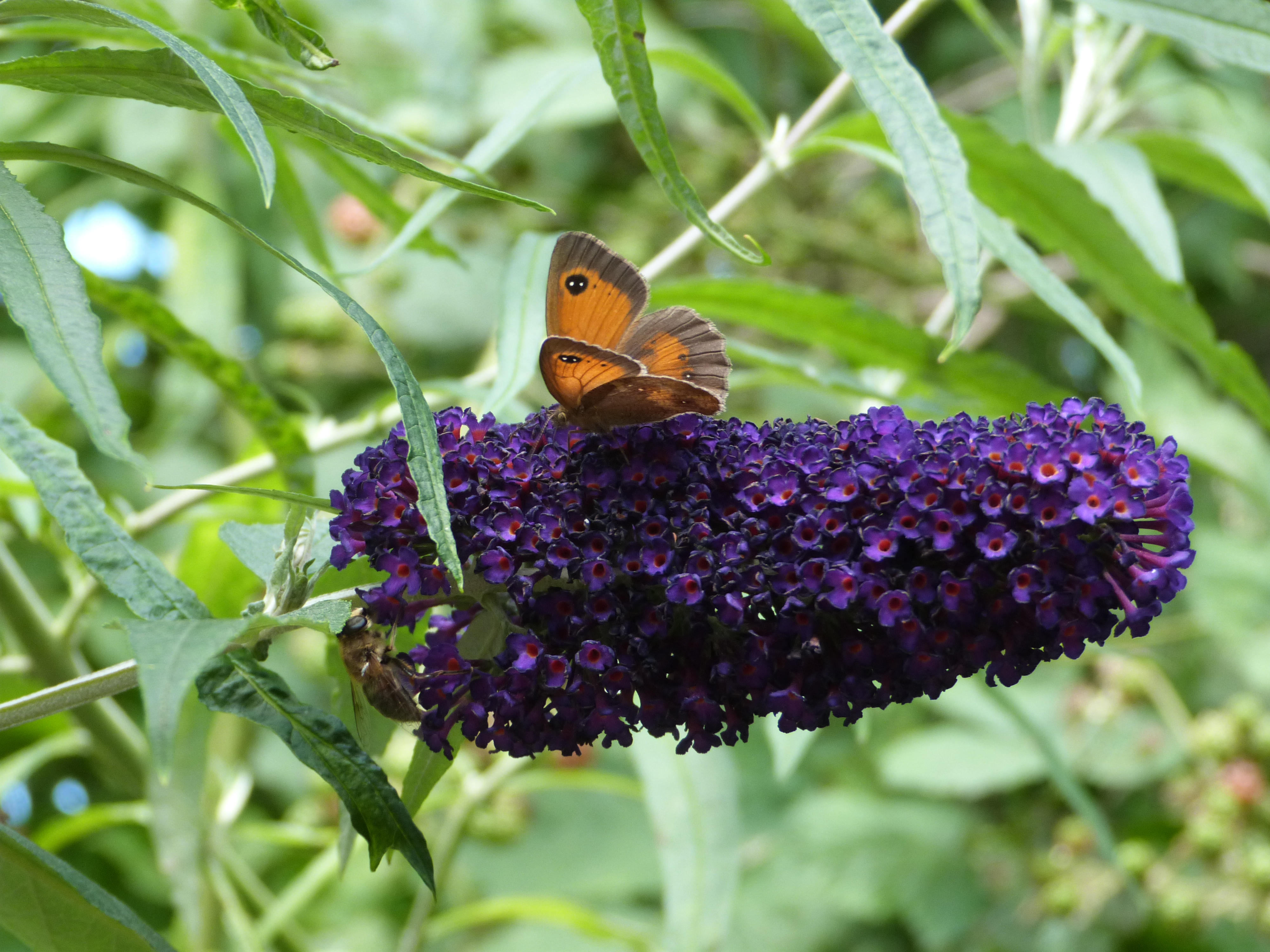
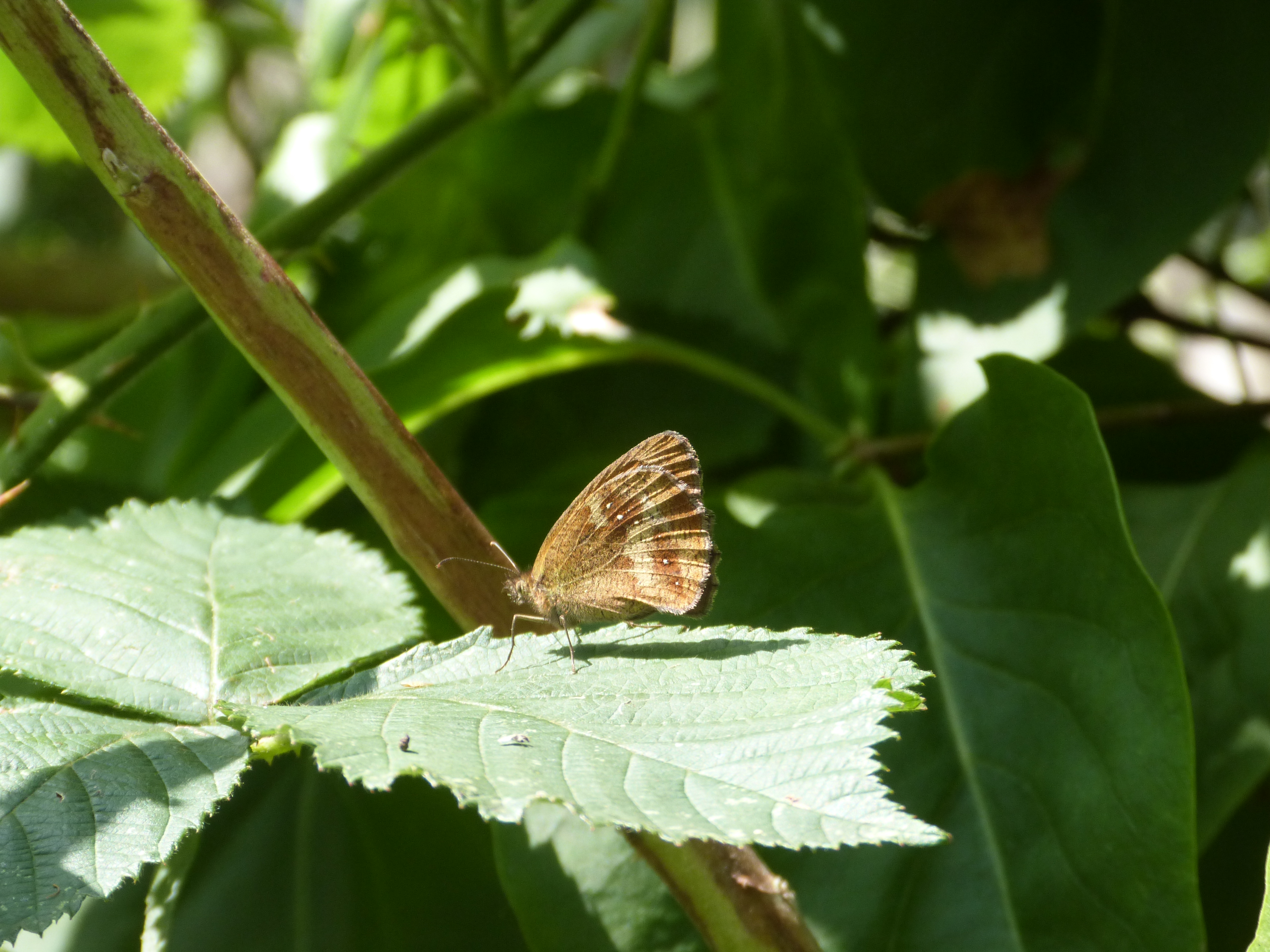
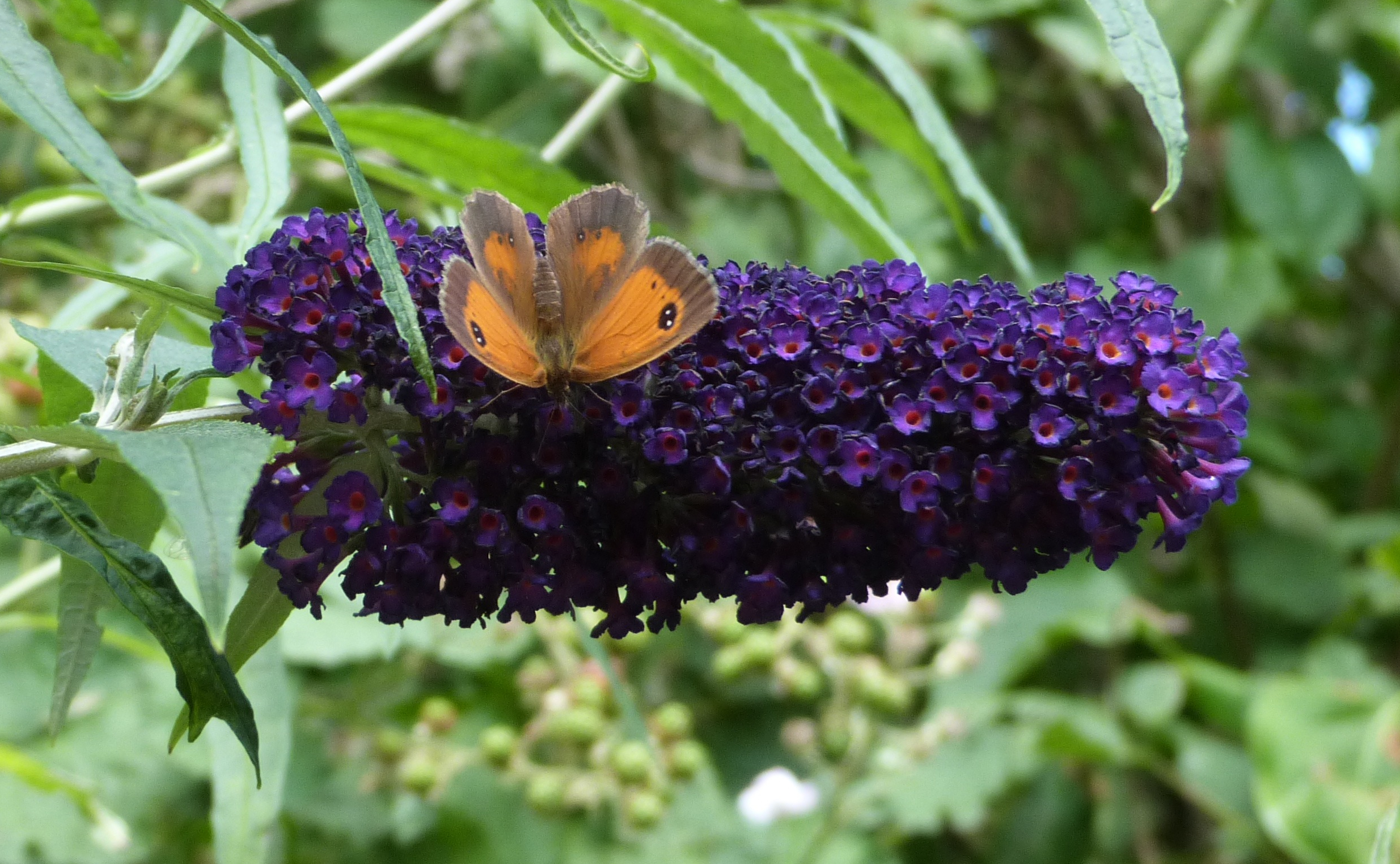
For my fourth contribution to Pollinator Awareness Week I’m going to highlight the Gatekeeper (Pyronia tithonus), a butterfly that I featured on this blog last year.  As I noted in that post, it’s fairly rare to have Gatekeepers in an urban garden which indicates that the shrubs and hedges grown by myself and my neighbours are providing the right microclimate for the adults.  In addition the overgrown lawns of some adjacent gardens give opportunities for egg laying as the caterpillars are grass feeders.

P1010467

Adult butterflies are very well camouflaged when resting with their wings folded. They take nectar from a range of plants in my garden but particularly love the dark, heavily scented infloresences of the buddleia variety pictured here.  They also visit the wild blackberries scrambling through the hedge that separates us from next door’s garden and probably pollinate those flowers.  Although it’s often said that butterflies are poor pollinators compared to bees, due to their general un-hairiness and habit of holding themselves above the stamens and stigmas in a flower, it very much depends on the type of flower.  We have an unpublished manuscript that I hope to submit to a journal later this year showing that butterflies are actually better pollinators of one grassland plant than bumblebees.

Gatekeeper cropped P1010472

Garden pollinators for PAW no. 3 – Little flower bee (Anthophora bimaculata)

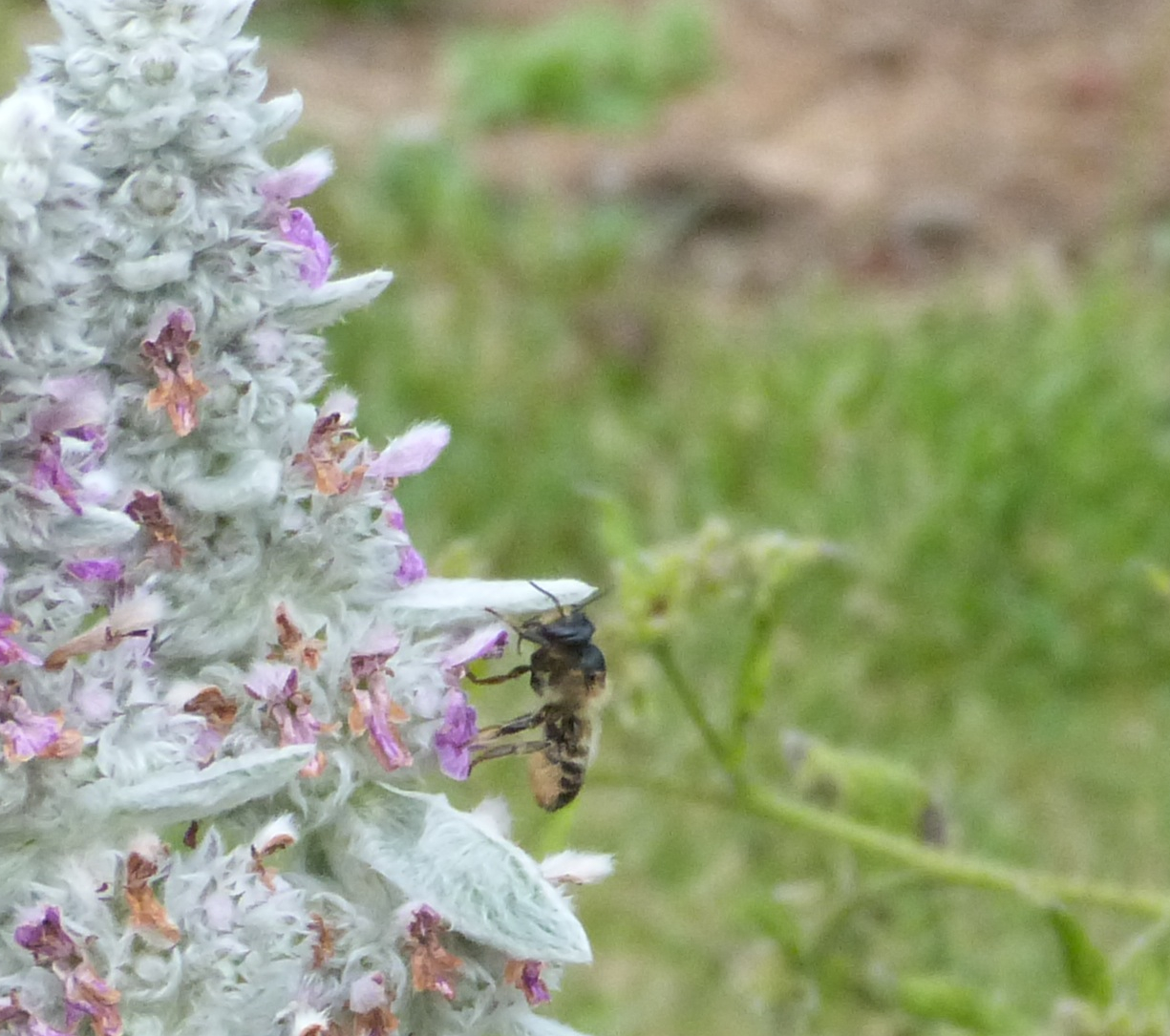
Anthophora bimaculata 1 P1120172

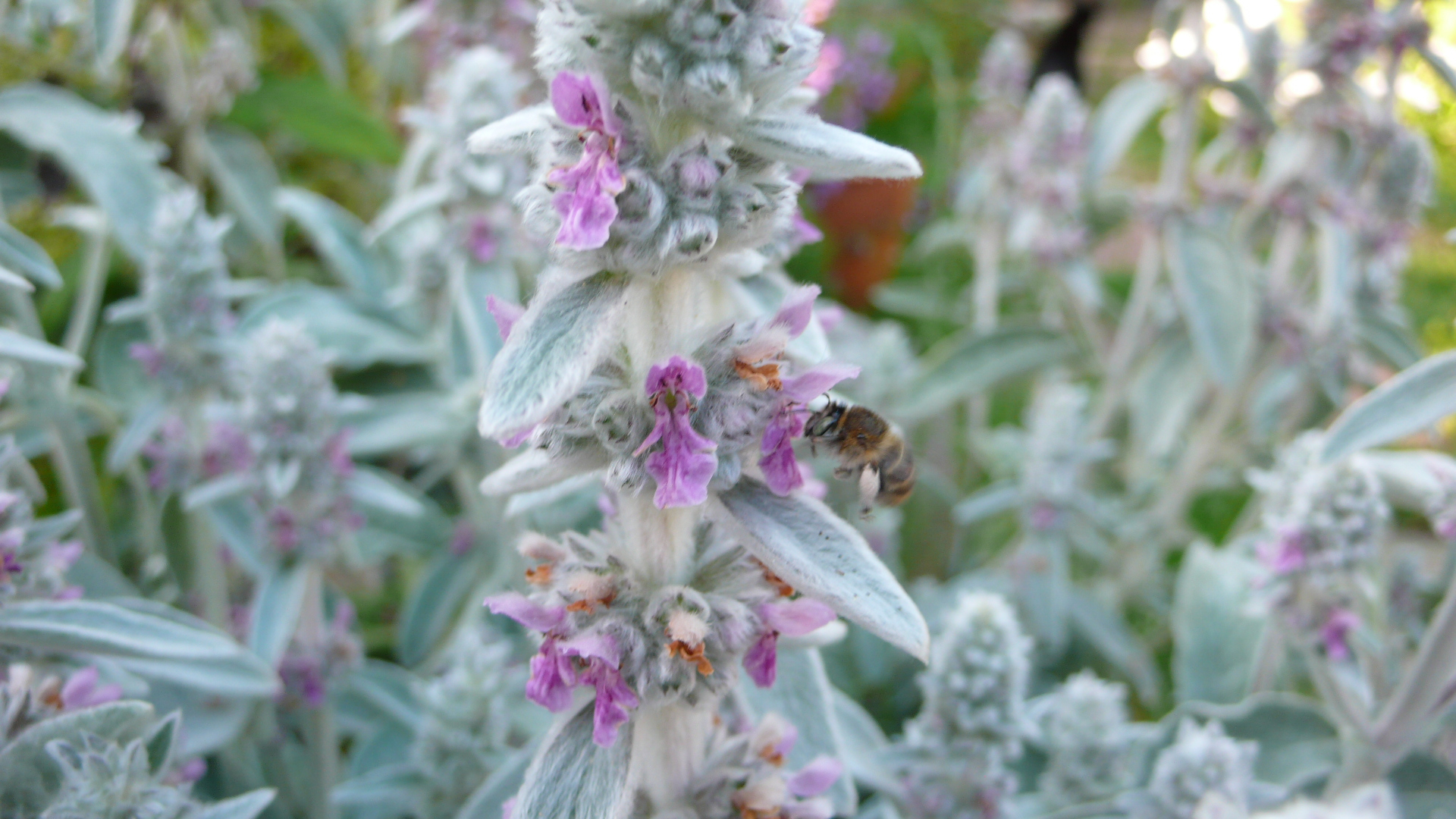
There are only five Anthophora species in the UK and the Little flower bee (Anthophora bimaculata), as the name suggests, is one of the smallest.  This is a fast moving little beast and my fairly bog standard cameras (and a generally impatient personality) struggle to capture it: Steve Falk’s images do it justice better than I ever could.

Once again, as with the Patchwork leaf-cutter bee, the flowers of Lamb’s ear are a real favourite in my garden.  Also like that bee, this is a solitary species, though this is one that nests in dry, sandy soil.  I’ve not been able to locate any nests in my own patch and I wonder whether it’s nesting in a nearby garden.

Another generalist species, I’ve seen this bee visit food crops with open flowers such as blackberry and raspberry in my garden.  Despite its size it is likely to be quite a good pollinator of those fruit as it’s abundant, fast moving between flowers, and hairy, and can carry significant amounts of pollen.

Interestingly, Anthophora bimaculata was not recorded by Muzafar Sirohi during his surveys of bees in Northampton town centre, so it’s another species that we can add to that urban list.

Anthophora bimaculata 2 cropped P1120172 copy

Garden pollinators for PAW no. 2 – Marmalade hoverfly (Episyrphus balteatus)

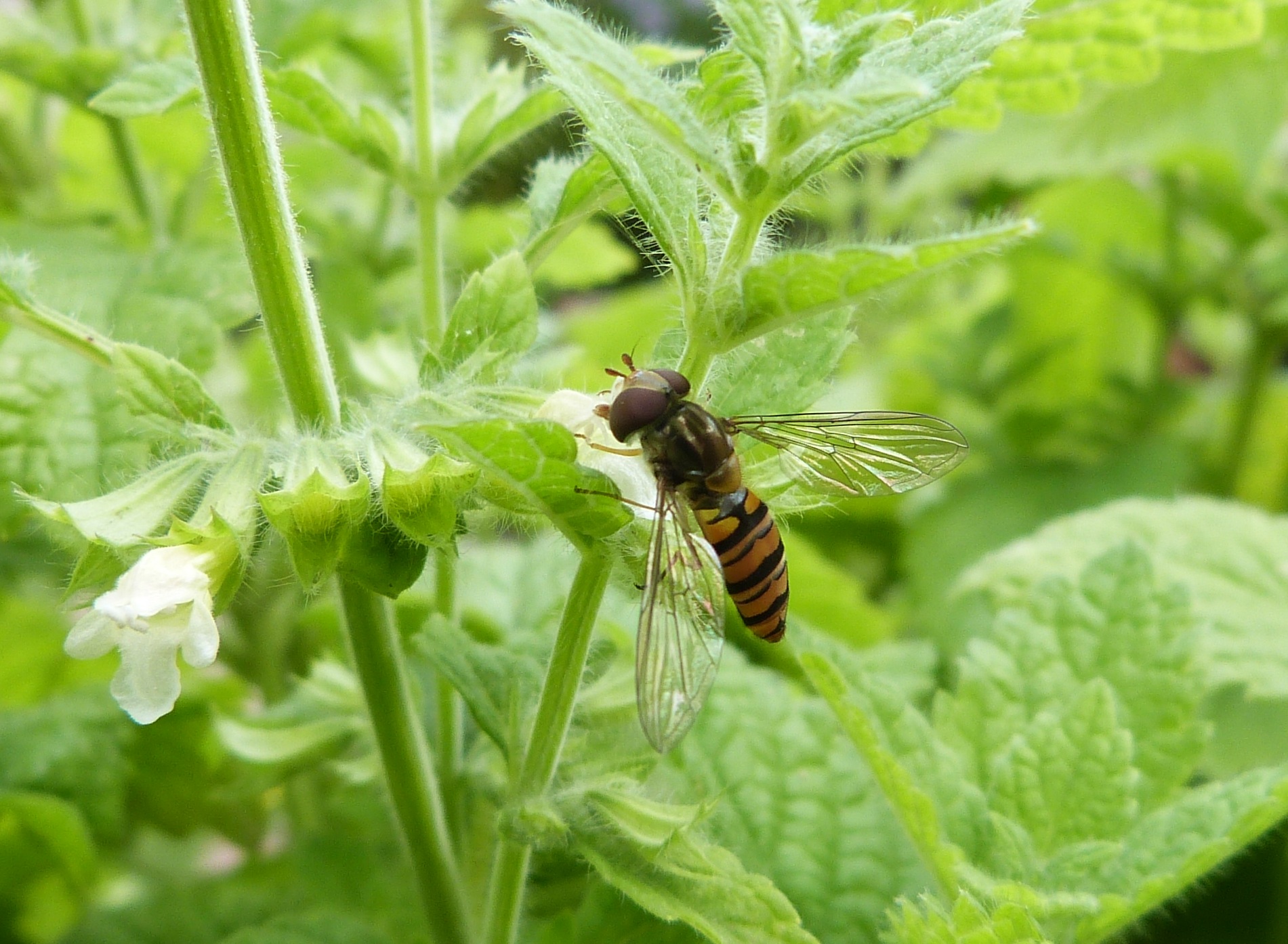
Syrphid on lemon balm 1 cropped - 1P1020548 copyOne of the most frequently encountered of hoverfly species in urban gardens is the beautifully named Marmalade hoverfly (Episyrphus balteatus).  This insect is a “true fly” of the order Diptera that is sometimes confused with superficially similar wasps (order Hymenoptera), though (as the common name suggests) the species is translucent orange and black in colour rather than waspish yellow and black.  It also has a very flat abdomen whereas wasps are rounded, and they certainly don’t sting.

Individual insects are relatively ineffective as pollinators – they are small and not very hairy, so carry little pollen compared to bumblebees for instance.  However they can be extremely abundant and that abundance makes up for any individual ineffectiveness.  It’s a real generalist, visiting lots of different types of flowers, and in my garden they visit radishes (as I noted last year) and raspberries.

I often see individuals patrolling crops such as runner beans, not visiting the flowers but laying eggs on leaves and stems: the larvae of the Marmalade hoverfly is carnivorous and feeds on aphids, so it plays an interesting dual role of both pollinator and pest controller.  Definitely a gardener’s friend!

Syrphid on lemon balm 2 - 1P1020548

Garden pollinators for PAW no. 1 – Patchwork leaf-cutter bee (Megachile centuncularis)

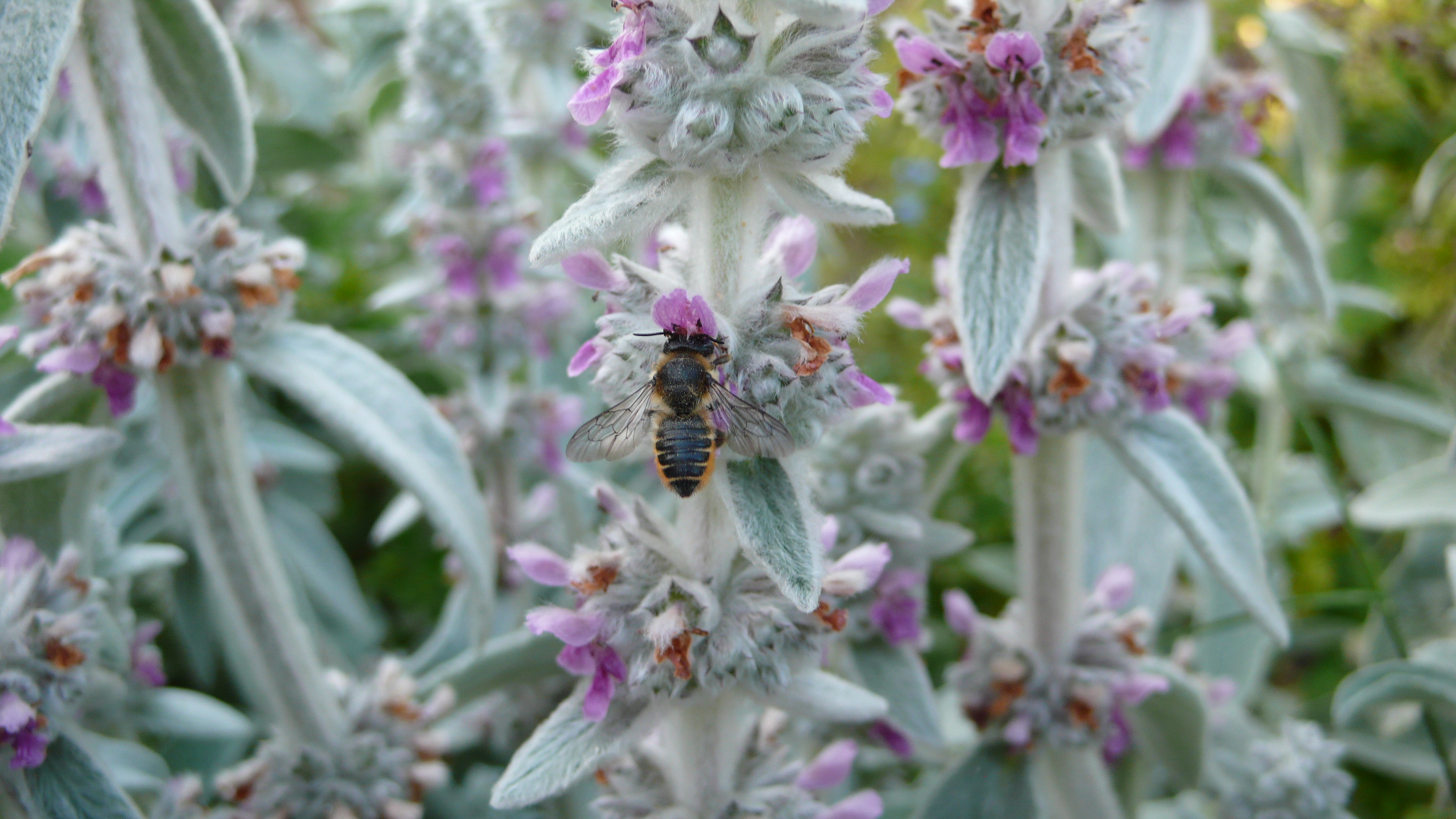
Megachile on lambs ear 2015-06-29 18.16.49

As promised, here’s the first of my posts for Pollinator Awareness Week and I’m going to start with one of my favourite groups of bees – the leaf-cutters of the genus Megachile.  The UK has only nine Megachile species recorded, several of which are quite frequently found in gardens.

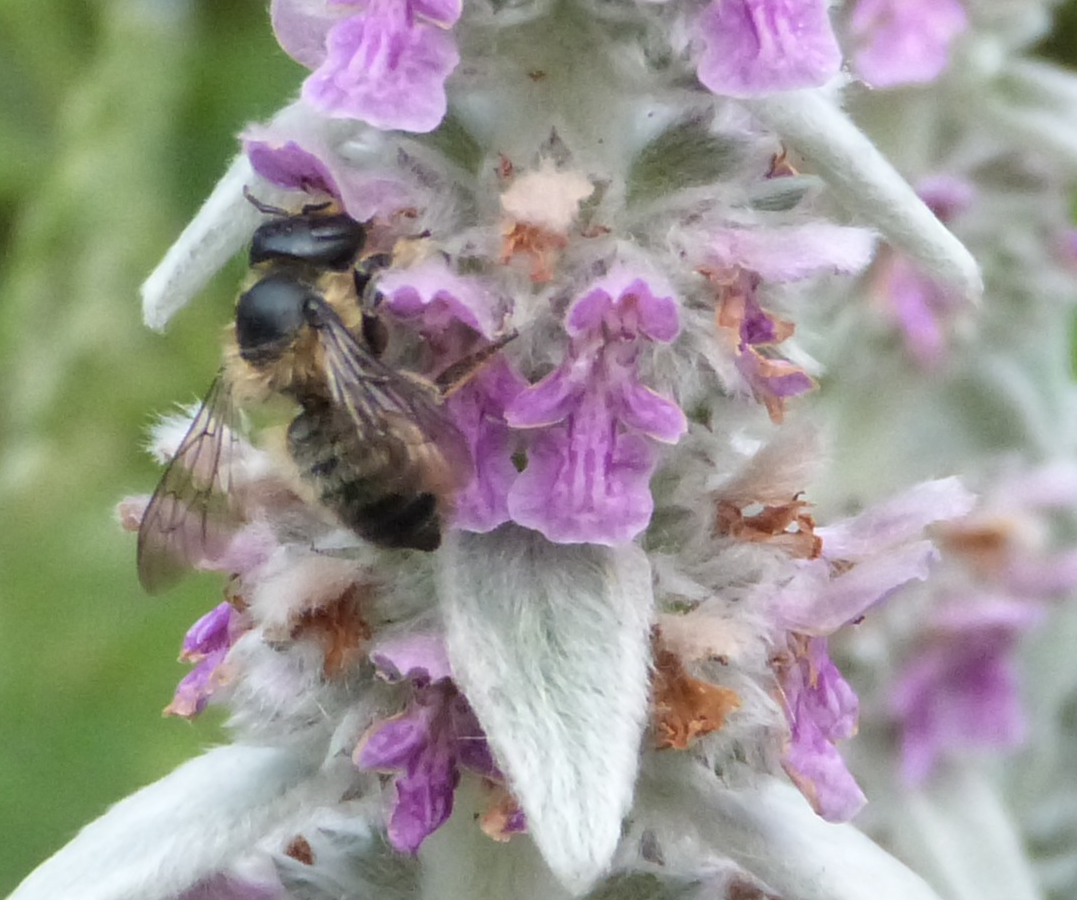
In my urban garden in Northampton I’ve often encountered the Patchwork leaf-cutter (Megachile centuncularis) this summer.  As you can see from the link to Steve Falk’s excellent photographs and description of the species, it’s quite distinctive with a brush of orange hairs that extends right to the tip of the abdomen (see the first picture, though the colour of this can fade with age so it’s not always so apparent).  The brush is used for collecting pollen from flowers to take back to provision its nest, which is constructed from leaf segments lining a tubular cavity in old walls, wood or occasionally soil (hence “leaf-cutter” bees).  The leaf-cutters (as with 90% of bee species) are “solitary” in the sense that they don’t have a social structure with a communal nest, a queen, etc.  It’s the female bees that are solely responsible for nest building; the purpose of the males is simply to mate.

I’ve seen this species visiting my runner beans in the garden and, given their size, they probably pollinate that crop, though not as effectively as bumblebees which are much more abundant.

Megachile female 2 - close up July 2015P1020491

In the image above you can clearly see the pollen that’s been collected by this bee under its abdomen.

Megachile female - close up - July 2015 P1020489 copy

In my garden the Patchwork leaf-cutter is very fond of Lamb’s ear (Stachys byzantina), but I’ve seen it collecting nectar and pollen on a wide range of other plants too.

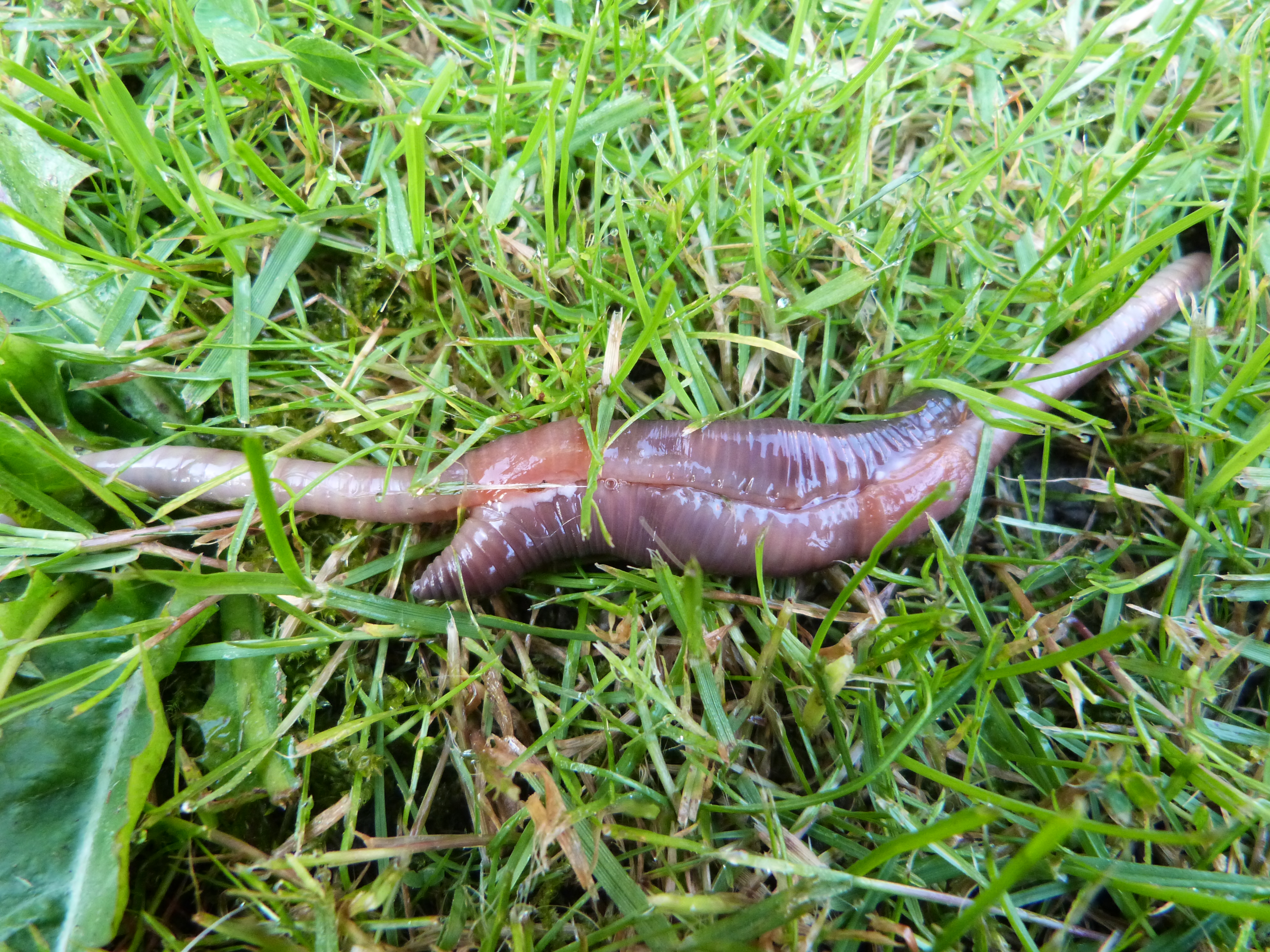
Worm sex

P1020257

This morning I woke early and slipped quietly outside to enjoy the bird song and to let the chickens out of their coop.  The air was cool and the garden fresh and damp.  Slugs were scattered across the lawn heading back to their dark crevices after a night of scoffing our plants, so I decided to round up as many as I could find as a snack for the chickens.

I’d collected about 30 when I spotted something glistening with mucus that was clearly not a slug: two common European earthworms (Lumbricus terrestris) were engaged in some hermaphrodite sex, male/female to male/female.  It was a personal, intimate moment that I felt I should not be witnessing, but I had to watch.  It’s an event that usually takes place under the cover of darkness and one sees it so infrequently; these lovers were clearly caught up in the moment and oblivious to the daylight.  Like a paparazzo who can’t believe what he’s stumbled across, I rushed inside to grab the camera.

Worm sex is quite a complex process involving the mutual transfer of sperm between individuals, which I think may be within that white, milky fluid you can see in the close-up below.

Suddenly the worms sensed I was there and they rapidly separated and slipped back into their respective holes, perhaps to replay the passion tonight?  I hope so: the garden needs as many worms as possible to aerate and turn the soil, and take leaves and other organic matter down into the depths.  They are incredibly important in traditional agricultural systems: Darwin famously wrote a two-volume treatise on earthworms and concluded that: “It may be doubted whether there are many other animals which have played so important a part in the history of the world as these lowly organised creatures”.

There you have it, worm sex for the weekend.  Amazing things happen in our gardens.

P1020258

Urban bee diversity – a new study

Bee on apple blossom 2 - 1st May 2015

Over the past couple of years I’ve mentioned urban pollinators, and specifically the work of my PhD student Muzafar Hussain Sirohi, several times; for example here and here.  Muzafar is currently finishing off the writing of his thesis, and during that time he’s also managed to publish the first paper from the study.

We are really pleased with this paper because not only is it the product of a lot of hard work to systematically sample and identify the bees, but the results are really exciting: Muzafar has shown that the centre of Northampton is home to a more diverse set of bee species than expected. In fact at least 50 species of bees are thought to live within a 500m radius of All Saints Church, which is significantly more than are found in the nature reserves at the edge of the town.

Muzafar’s work involved surveying the small gardens, road verges, traffic islands, and other patches of plants in the urban centre of Northampton.  These areas provide important nectar and pollen sources for the bees, whilst old stone walls and bare soil offer opportunities for nesting sites. This community of bees includes one nationally rare Red Data Book species called Coelioxys quadridentata that is known from rather few sites.

Our estimate of about 50 species of bees is certainly too low because we focussed on the more neglected groups of bees and didn’t include the social bumblebees. The true figure is likely to be over 60 species, a remarkable number given the small area surveyed.

As I’ve discussed many times on this blog, pollinators such as bees are hugely important both ecologically (most plants require them for reproduction) and economically (much of our food production relies directly or indirectly on pollination by animals). However a significant proportion of bee species in the UK are declining in abundance, and some have gone extinct. Understanding how these bees are distributed across the landscape, including urban areas, is crucial to the conservation of such pollinators in a rapidly changing world. The project therefore has implications not only for conservation of biodiversity, but also food security, given the number of urban gardeners who grow their own food, and the ability of many bees to travel significant distance from urban to rural areas.

The research is published in the international, peer-reviewed Journal of Insect Conservation. The full reference (with a link to the abstract) is:

Sirohi, M.H., Jackson, J., Edwards, M. & Ollerton, J. (2015) Diversity and abundance of solitary and primitively eusocial bees in an urban centre: a case study from Northampton (England). Journal of Insect Conservation DOI 10.1007/s10841-015-9769-2

If anyone would like to receive a PDF of the paper, please leave a comment below or drop me an email: jeff.ollerton[at]northampton.ac.uk

Clever crows!

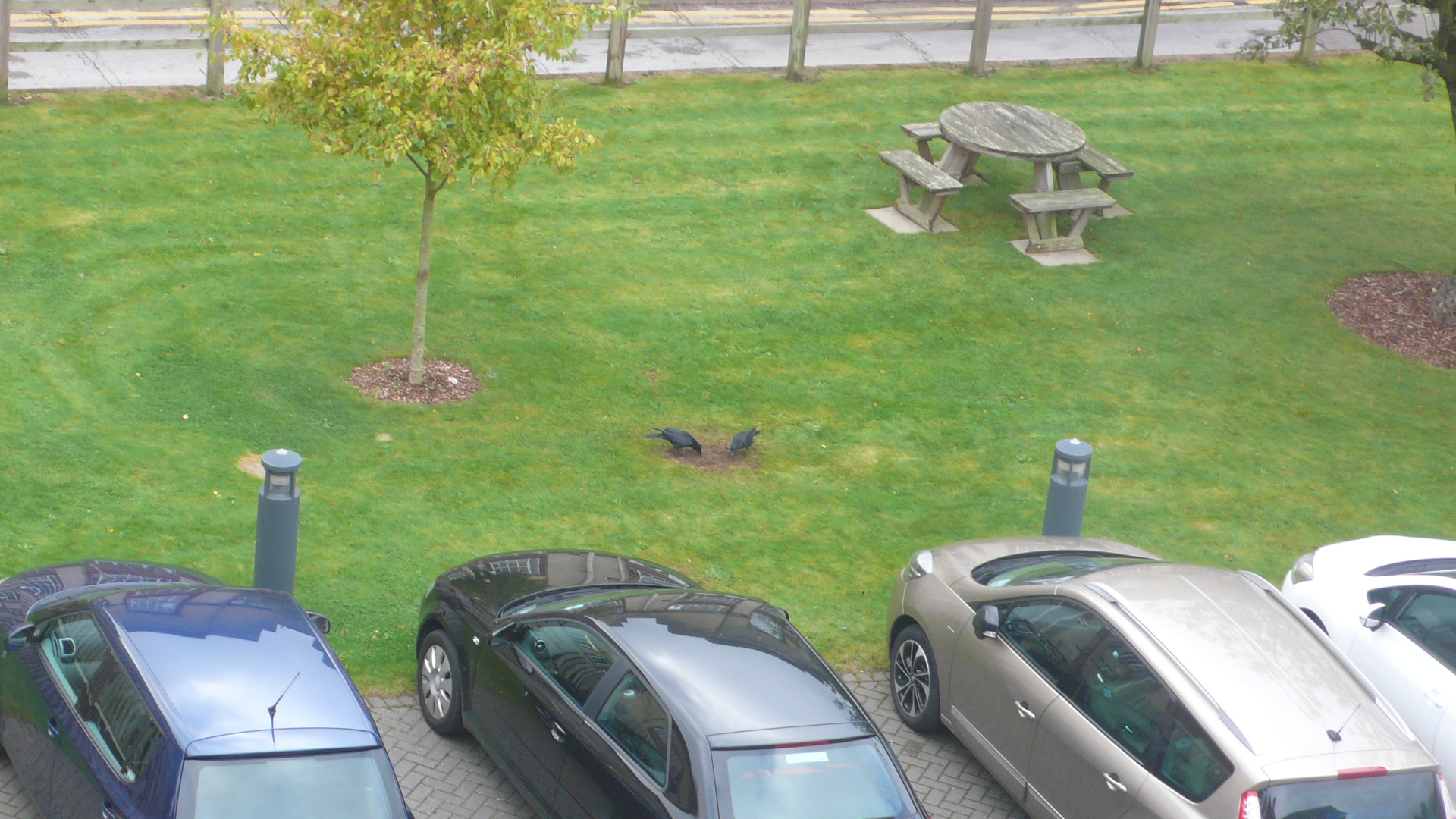
Clever crows

Back in October I was staring out of the window of the office that I share with my colleagues, something I often do when I’m pondering a question or trying to add a tick to our “Birds Seen Out of the Window” list*, when I spotted something odd.  A pair of crows had focused their attention on a brown patch of lawn and appeared to be eating the grass.  I’m not much of a birder but I do know enough about crows to realise that grass is not a regular feature of their diet.  The same behaviour was observed a few other times after that, and on other occasions magpies were seen doing the same thing.  What could be going on?

Once I’d taken a closer look at the patch of dead grass the explanation was clear.  During our first year undergraduate induction week about a month earlier there had been a barbeque set up on that spot which had leaked hot fat onto the grass.  What the birds were eating was dead grass coated in lard, a useful source of fat to store for the cold conditions of the oncoming winter.

That’s one of things I love about urban birds such as corvids and gulls: they are adaptable and will exploit any resource that becomes available.  But how had they located the patch of fatty grass?  Were they simply exploring the lawn and stumbled across it by accident?  Seems plausible especially as they often feed on earthworms on the adjacent parkland.  Could they smell it?  The acuity of birds’ sense of smell has been the topic of considerable debate, but that’s certainly a possibility.

I was reminded to post this (originally half-written before Christmas) by a story on the BBC news website this morning about a young girl in the USA who receives gifts from the crows in her garden.  If you’ve not read it, please do: it’s a wonderful example of positive interactions between humans and the rest of biodiversity.

Crows (and other corvids) get a bad press, being often described as “evil” (surely a term that only applies to humans) and blamed for the demise of “nicer” birds – a reputation that is not completely justified, as a recent post on Kaeli Swift’s crow research site demonstrates.

So, learn to appreciate (even love) the crows in your local neighborhood; they will reward you with some entertainment as you watch their behaviour, if not necessarily with gifts.


*currently standing at 19 species and rising every month.

Bumper Big Garden Birdwatch this year!

P1120052

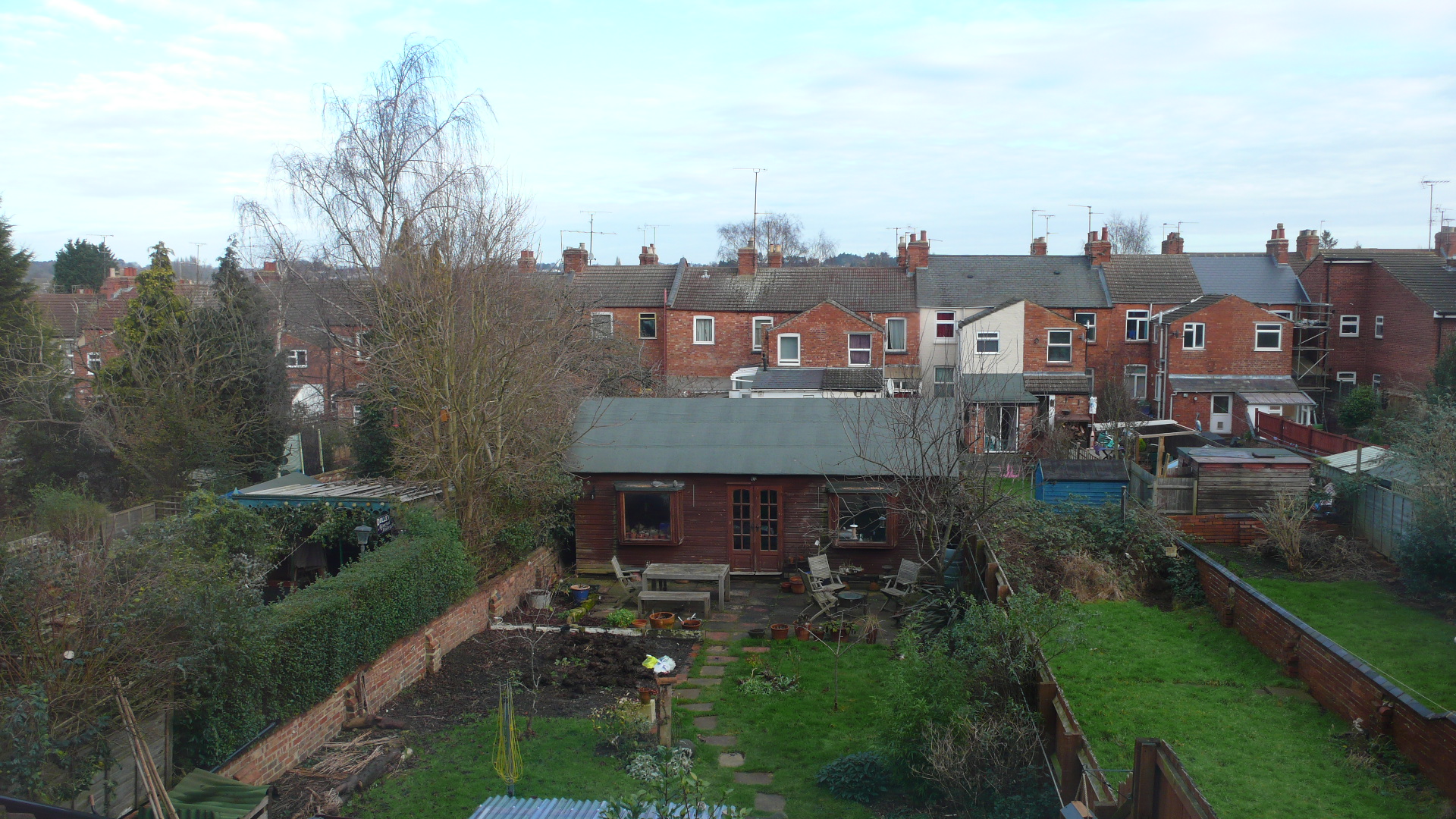
As I posted yesterday, this weekend is the RSPB’s Big Garden Birdwatch, the world’s largest wildlife-watching event, and one that’s been running for 36 years.  I completed my hour of surveying between 09:04 and 10:04 this morning, and it’s been a bumper year!  Armed with a notebook, binoculars, and a cup of coffee, I recorded all the different bird species I observed in the field of view from the tall silver birch to the left across to the patch of brambles on the right (my “garden”, as you can see, encompasses parts of my neighbours’ gardens too).

In 2013 (the first year I did the BGBW at this house) I recorded a disappointing 6 species; in 2014 it was 8 species; this year it’s been a whopping 15 species!  They were (in order of first observation, with numbers of birds):

Robin – 1

Collared dove – 3

Chaffinch – 4

Dunnock – 3

Magpie – 1

Blue tit – 4

Coal tit – 1

Lesser redpoll – 4

Blackbird – 4

Greenfinch – 5

Carrion crow – 1

Great tit – 2

Wood pigeon – 2

Goldfinch – 4

Blackcap – 1

Not bad for an urban garden!  Did you do the BGBW this weekend?  How many species did you count? Was it a higher count than last year?

Big Garden Birdwatch this weekend

2014-11-06 14.00.17

This weekend the RSPB will be running its annual Big Garden Birdwatch, a great example of citizen science in support of biodiversity monitoring.  No matter where your garden is or how small it might be, if you have time, please do get involved.  Even a return of zero birds is useful information because it tells us where birds are not occurring.

As I have for the past couple of years since we moved into this house, I’ll do my hour of watching on Sunday morning from the bedroom window.  Hopefully the current cold weather will persist and bring birds into the garden that are normally found out in the wider countryside.

Happy birding!

Garden chickens and biodiversity – some thoughts

2014-05-01 15.58.49

Keeping chickens as a hobby is very popular at the moment and many gardeners are finding space for a few chooks in their own patch.  It’s been particularly trendy amongst urban gardeners, ourselves included: we have a run with 6 hens that make us self sufficient in eggs and chicken shit (the latter a vital addition to our soil’s fertility).  They are also fascinating, relaxing animals to watch as they go about their chickeny business of scratching, pecking, clucking, and dust bathing.  They are intelligent, social, inquisitive birds, that I’d recommend to anyone who has the space to accommodate a decent sized run and (importantly) the time to look after them.

There are plenty of magazines, books and websites offering advice on keeping hens on a small scale.  One of the most active and interesting blogs is The Garden Smallholder which generally has some good advice and ideas.  Back in November, however, a post about preparing a new kitchen garden caught my attention, specifically the fact that the writer’s chickens were let out onto the plot and that:

Chickens are great at scratching and turning over soil with their enthusiastic feet, and excellent pest control too

Let’s think about that last point, that chickens provide “excellent pest control”.  It’s a statement that I’ve seen repeated many times in books and articles, and it usually doesn’t solicit any comments.  But the logic behind it is that hens can differentiate between “pests” and “non-pests” in a garden, that they will gobble up the slugs and cutworms, leaving behind the worms, beetles, spiders, and other beneficial (or neutral) invertebrates.  This is nonsense, of course: chickens will eat anything they find and do not differentiate between the different elements of soil biodiversity*.

For this reason we don’t allow our hens to free range on our vegetable patch: we want to keep the soil’s fauna intact, allowing the earthworms to aerate and turn over the soil, let the beetles eat the slugs, give ground-nesting bees some space in which to live, and so forth.  A few weeks of digging with chickens present would destroy all of that.

The vast majority of invertebrates that live in the soil are not pests and a significant  proportion are certainly good for our gardens (particularly the earthworms and carnivorous beetles).  Allowing your chickens to feed freely on these animals will significantly reduce your soil biodiversity, which is a bad thing in its own right (if we accept that these animals are a measure of your soil’s “health” and productivity), and could reduce the numbers of invertebrate-eating wildlife, such as thrushes, hedgehogs and toads, visiting your garden.

If you want your chickens to eat garden pests my advice would be to take the pests to them: scoop up several slugs with a trowel, throw them into their run, and watch the birds excitedly scramble for their treat.  But remember that slugs play a positive role in the garden too, demolishing huge amounts of garden waste in compost bins and (in our garden) eating up cat shit.  That’s a topic for a future post though.


*I made a comment to this effect on the Garden Smallholder post but the blog owner saw fit not to allow it to appear.  Draw your own conclusions from that.