Category Archives: Ecosystem services

The environmental argument for the UK remaining in the European Union

Every week I receive an email bulletin called Science for Environment Policy, sent out by the Directorate-General for Environment, which is the European Commission department that sets and monitors European Union policies relating to the environment, for example pollution levels, conservation of biodiversity, etc.  Anyone can subscribe to these bulletins and they provide useful, lay-person summaries of recent research findings that have a direct or indirect bearing on how we manage and protect Europe’s environment.

A scan through the latest few bulletins reveals article titles such as:

  • Atlantic beaches of Europe reshaped in stormy winter of 2013–2014
  • Water management: five policy conditions to help overcome the challenges of an uncertain future
  • Climate change threatens early-flowering plants due to lack of snow
  • Black carbon emissions of individual cars measured under real conditions
  • Are endocrine disrupting chemicals responsible for downward trends in male fertility?
  • Environmental performance of construction and demolition waste management
  • Golden jackal should not be treated as an alien species in Europe
  • Environmental taxation in the right place can increase business productivity 

This set of topics is fairly typical, and demonstrates the complexity and breadth of the environmental issues facing the European Union.  All of these issues, however, share one feature: they do not respect political boundaries and are cross-border in scope.  Species, rivers, air masses, sea currents, economic resources, waste products: all of them can (and do) move through the different countries of Europe and beyond.

What this means is that the policies, laws and regulations that govern the behaviour of individuals and organisations towards the environment, and ultimately protect it, must also be cross-border in scope.  That’s where the European Union comes in, because it is largely EU directives that currently protect our environment.  Some examples of these directives, and some of their achievements, include:

  • Birds Directive which has helped to coordinate action plans for endangered resident and migratory birds.
  • Habitats Directive that relates to the conservation of natural habitats and the fauna and flora they contain, including setting up the Natura 2000 network that currently covers more that 18% of the EU’s land area and almost 6% of its marine territory, making it the world’s largest coordinated network of protected areas.
  • Water Framework Directive that determines action in the area of water policy.
  • Waste Framework Directive likewise determines action in the area of wastes policy and which, together with the Landfill Directive and the Waste Electrical and Electronic Equipment Directive, has been responsible for significantly reducing the amount of waste going into landfill, increased the amount being recycled, and placed pressure on manufacturers to take responsibility for packaging and end-of-life goods and materials.

There are many others, and you can find a list here.  It’s worth pointing out that these directives were not “imposed” on the UK by faceless bureaucrats in Brussels: the UK took an active role in their development and drafting.  In fact Boris Johnson’s father, Stanley Johnson, was one of the original authors of the Habitats Directive and is a prominent advocate of remaining in the EU.

Of course, no one is arguing that these directives are the only mechanism for protecting the environment, there are local regulations too, plus the work of NGOs such as the RSPB and the Wildlife Trusts.  Nor am I arguing that they have been wholly effective: there’s still a long way to go in many of these areas.  But they have had a demonstrably positive impact on the quality and protection of the UK’s environment that could be halted, or even reversed, if the UK was to leave the EU.

This last point is an important one to make and it’s not an example of the fear-mongering that has marked the EU Referendum debate on both sides.  Here is how I see it:  we cannot trust the UK government (whatever its political flavour) to safeguard our environment.

This is because, despite the best efforts of genuinely committed and environmentally savvy politicians, the political parties to which they belong are too focused on short-term goals of winning the next election to really consider the 20, 50, or 100 year perspectives that are required for environmental legislation.  This inevitably means that the environment is low on the list of priorities for most ministers, and environmental policy is subject to undue influence by special interest groups.  For example look at how easily Defra was persuaded to allow exceptions to the EU moratorium on neonicotinoid pesticides.  Likewise the HS2 project which ministers seem determined to keep going despite serious concerns about the environmental impact of the project (see my post “Ordinary by Choice“).

When considering whether or not to vote to remain in the EU, most people (understandably) are focused on the social and economic arguments: the impacts on jobs, standards of living, resources for health, etc.  But in part the environmental argument is a social and economic argument, because the natural environment underpins many jobs, our standards of living (who doesn’t want to live near unpolluted green space that is protected for future generations?), and plays an important part in the nation’s health and wellbeing.  The provision of these “ecosystem services” were clearly spelled out last year in Tony Juniper’s book What Nature Does for Britain, which I reviewed on this blog.

I’m not arguing that everything in the European Union is perfect, or even that the environment of the UK and the rest of the EU is as good as it ought to be, or could be.  But for every statistic about declining species and poor environments, it’s possible to quote figures for the success of other species and improvements in quality.  For example our major rivers such as the Thames, Tees, Mersey and Avon are now swimming with fish where once they were swimming with excrement, as I’ve previously discussed in relation to the River Wear.  Our membership of the European Union is, at least in part, responsible for these positive trends and I hope that they continue.  Please consider this when you’re deciding how to vote on 23rd June.


Postscript: much of what I’ve discussed above is being widely talked about amongst environmentalists, and I don’t know of any major environmental organisation that is in favour of the UK leaving the EU.  In fact a large number have publicly come out in favour of staying, including:

Chartered Institute of Ecology and Environmental Management

The Wildlife Trusts

Greenpeace

The RSPB and WWF-UK, who have produced a joint statement.

Friends of the Earth

Buglife

There is also a group called Environmentalists For Europe

So don’t just take my word for it.


Silver Medal for the BES’s pollinator’s display at RHS Chelsea Flower Show!

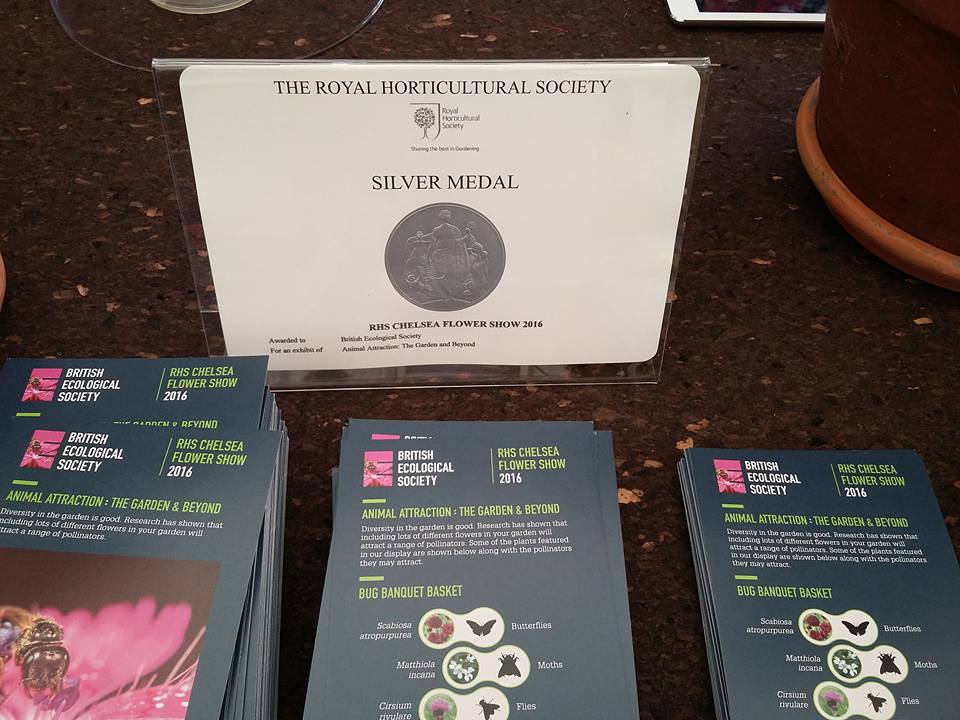
RHS Silver Medal

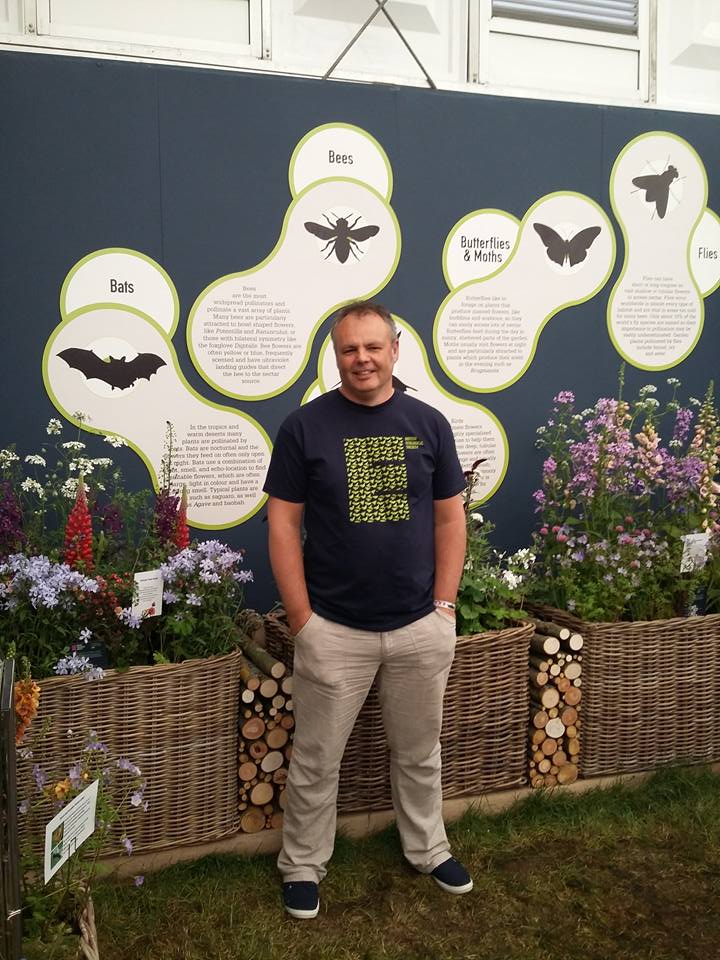
An early train to London yesterday got me to the RHS Chelsea Flower Show in time for the gates opening at 8am.  I’d agreed to spend the day staffing the British Ecological Society’s Animal Attraction: The garden and beyond display, which deals with the relationships between plants and their pollinators – see my recent posts here and here.

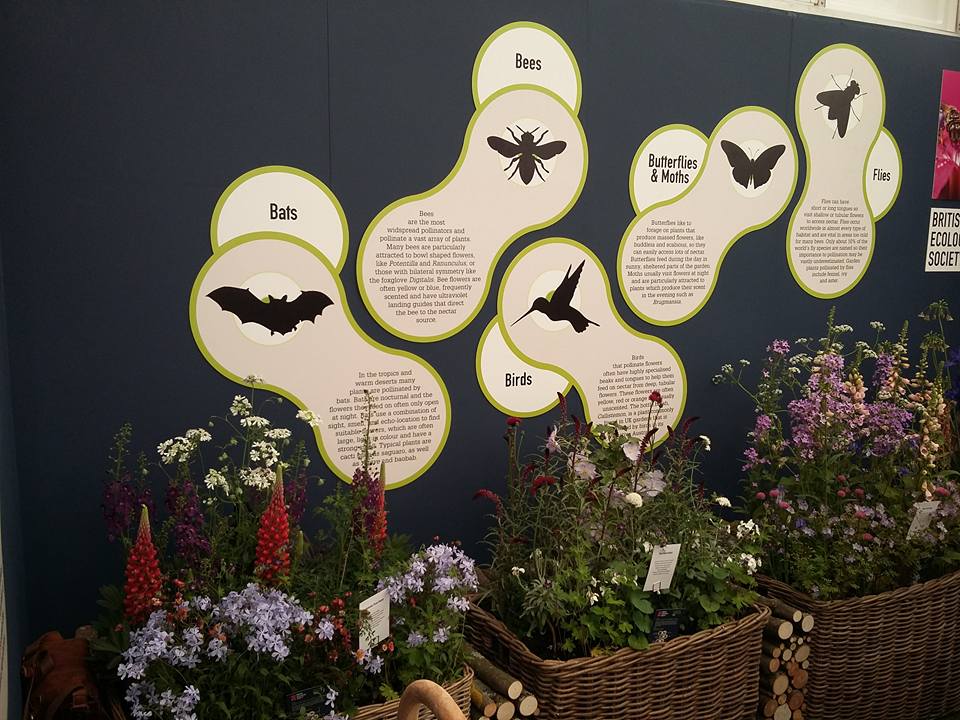
The first thing I noticed as I approached the display was how impressive and well designed it looked, with some wonderful planting to complement the simple, bold scientific information.  The second thing I noticed was that we had won a Silver Medal!  The whole team was very pleased – it’s the third year that the BES has been represented at Chelsea, but the first time that it’s won a medal.  I’m proud to have made a small contribution to that by advising on the plants and the scientific content, but the main kudos goes to the BES’s staff and to the garden designer Emily Darby.

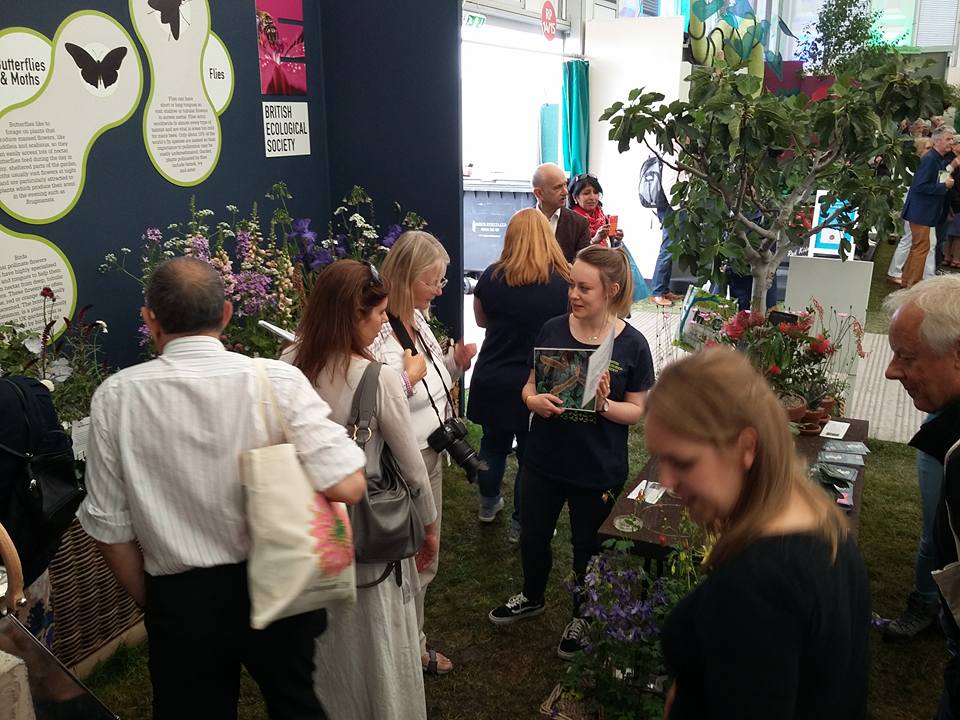
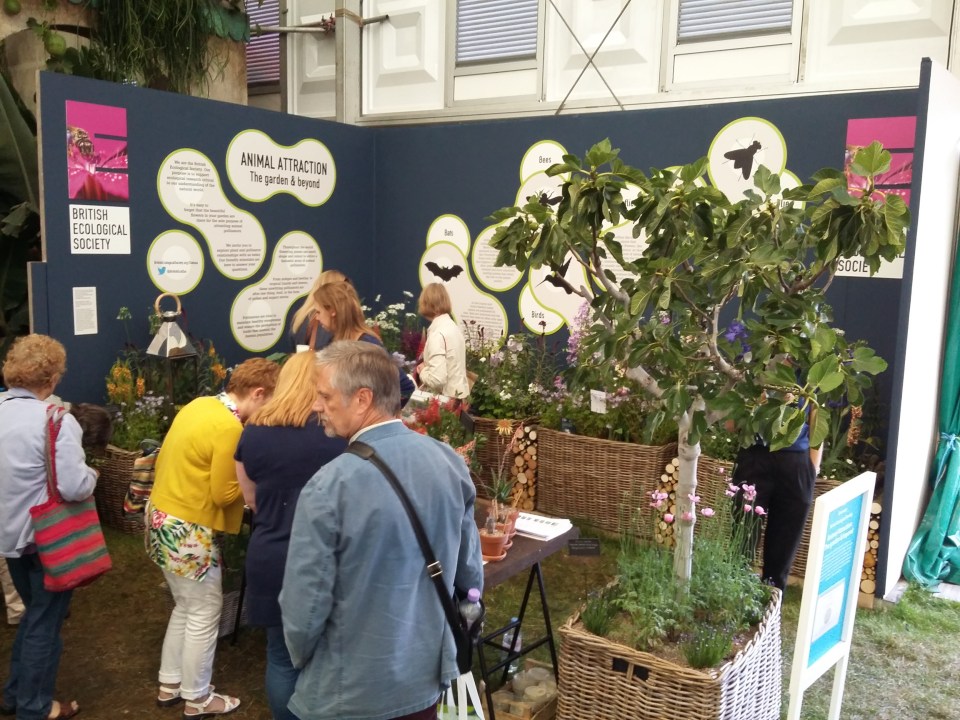
Over the course of a long day we talked to hundreds of visitors about the display, what it represented, and the different ways that flowers are adapted to their pollinators.  There was a huge amount of public interest and support, very gratifying to see.  Here’s some pictures from the day:

RHS display

RHS crowd

RHS crowd with fig

RHS Jeff

RHS display


Pollinators at RHS Chelsea Flower Show

20160518_114732

Pollinators, as regular readers of this blog will know, are diverse and important, both ecologically and agriculturally.  But that diversity is declining and it’s an issue that deserves greater publicity and action.

To that end, for the past eight months I’ve been advising a team from the British Ecological Society (BES) on the content for a display at the RHS Chelsea Flower Show which is running all next week.  The display is called “Animal Attraction: The Garden and Beyond” – if you follow that link you’ll get a sense of what the display is all about, but in essence there are three key messages that the BES is trying to get across:

  • Celebrating the diversity of pollinators (not just bees!) both in the UK and globally.
  • Flowers have evolved many different ways of attracting and rewarding pollinators, leading to the fantastic diversity of floral form that gardeners appreciate.
  • Planting a diversity of flowers in your garden can only be a good thing for helping conserve pollinator populations.

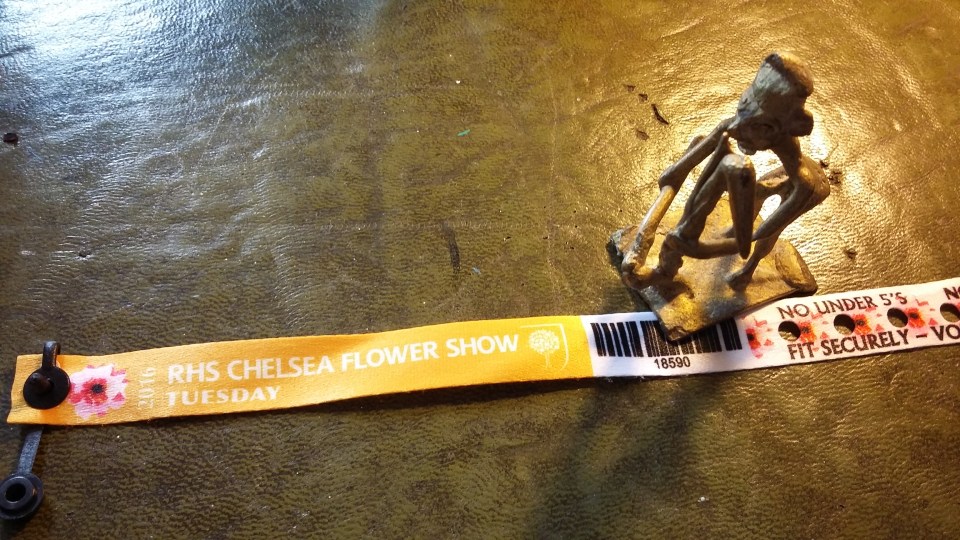
As you can see from my wristband, I’ll be helping to staff the stand all day Tuesday 24th May, so if you’re at the show come and say hello and take a look at what the BES team has produced.

Design and Testing of a National Pollinator and Pollination Monitoring Framework – report published today

B pasc on sunflower

This morning there were swifts flying above the garden – summer’s [almost] here!  As if on cue, the eagerly anticipated report on “Design and Testing of a National Pollinator and Pollination Monitoring Framework“, one of the key recommendations of the National Pollinator Strategy, has been published today by Defra.  Here’s a link to the report and its annexes.

I’ve not had time to read the full report, and even the Executive Summary (ES) is quite long and detailed, but the Conclusion to the ES captures the key points (emphases in bold are mine):

“…there is considerable scope to enhance monitoring of pollinators and pollination services to ensure a robust and rigorous evidence-base to support the needs of policy, however this project has demonstrated clear trade-offs between likely cost and data quality, especially in terms of the taxonomic resolution and accuracy of species identifications. Currently the volunteer sector, namely the NSS*, provides the expertise to deliver monitoring of changes in species occurrence or distributions at a national scale for many, but not all, species. Indeed the total value of voluntary work provided by BWARS and HRS….is estimated, based on current levels, to reach in excess of £5M over ten years. Repeated systematic sampling from a stratified network of sites not typically covered by the NSS has the potential to add considerable value, providing data on pollinator abundance that may link with provision of pollination services and filling gaps in the spatial extent and species coverage. Enhancements to improve the range and accuracy of monitoring pollinators and pollination services over large spatial and temporal scales will depend on adequate resources to support capacity building, coordination and implementation.”

In summary, the volunteer schemes are a hugely valuable asset that need to be enhanced by funding from the public purse in order to set up a pollinator and pollinator monitoring scheme that will be fit for purpose.  Will the current Government show the necessary vision and leadership to provide that funding?  Watch this space….

* NSS = National Recording Schemes and Societies, e.g. Bees Wasps and Ants Recording Society (BWARS), Hoverfly Recording Scheme (HRS), etc.

“Progress in pollination and pollinator research” meeting – University of Reading – 20th April

Skipper on ragwort - cropped

There is to be a joint meeting of the Royal Entomological Society’s Insect Pollination and Insects & Sustainable Agriculture Special Interest Groups on “Progress in pollination and pollinator research” at the University of Reading, 20th April 2016.  Unfortunately I can’t make it (I have meetings at the university all that day and need to get myself organised before heading off to Tenerife for field work on the 22nd) but I thought I’d advertise what looks like a very interesting one day conference.

The programme for the meeting is below and registration is open.  Please register before the meeting via The Royal Entomological Society using the form which can be downloaded from the RES website:

http://www.royensoc.co.uk/content/joint-meeting-insect-pollination-sustainable-agriculture-special-interest-groups-20-april-20

The registration fee will be £20 and includes lunch and all refreshments.

Convenors are Mike Garratt (Insect Pollination SIG) and John Holland (Insects & Sustainable Agriculture SIG) so please contact them if you’d like further information.

Programme

9.30-9.55 – Registration & Coffee

9.55-10.00 – Welcome

10.00-10.20 – Ecological intensification, pollinator diversity, and crop yield gaps in small- and large-holdings (Lucas Garibaldi, Instituto de Investigaciones en Recursos Naturales, Agroecología y Desarrollo Rural, Argentina)

10.20-10.40 – Welfare impact of pollinator decline on the international trade (Nicola Gallai, Ecole Nationale de Formation Agronomique, France)

10.40-11.00 – Conserving one beneficial at the cost of another; does success in promoting pollinators risk farmers ignoring other beneficial insects? (Mark Ramsden, ADAS)

11.00-11.20 – Coffee break

11.20-11.40 – Quantification of the floral landscape in agro-ecosystems and its effect on bumblebee colonies (Ellen Rotheray, University of Sussex)

11.40-12.00 – How many Bumblebees can our landscapes support? Using bumblebee colony models as a conservation management tool in agricultural landscapes (Grace Twiston-Davies, University of Exeter)

12.00-12.20 – Are current agri-environment schemes providing appropriate resources to the wider farmland bee community? (Thomas Wood, University of Sussex)

Short presentations:

12.20-12.25 – Pollination studies in the QuESSA Project (John Holland, Game & Wildlife Conservation Trust)
12.25-12.30 – Pollinator initiatives and research at the Royal Horticultural Society (Andrew Salisbury, RHS Garden Wisley)

12.30-12.35 – Collating evidence on plant traits and ecosystem services to inform multifunctional field margin design (Claire Blowers, Harper Adams University)

12.35-12.40 – Rare bee species and agriculture (Steven Falk, Freelance Entomologist)

12.40-12.45 – Fenland ditch banks as pollinator refuges: Environmental variable influence on pollination service measurements (Hilary Conlan, Anglia Ruskin University)

12.45-12.50 – What’s for dinner? Investigating the foraging preferences of honeybees using pollen DNA metabarcoding (Natasha de Vere, National Botanic Garden of Wales)

12.50-13.00 – Questions

13.00-13.45 – Lunch

13.45-13.50 – The National Pollinator and Pollination Monitoring Framework (Claire Carvell, Centre for Ecology and Hydrology)

13.50-13.55 – Impacts of climate change on plant-pollinator interactions in agro-ecosystems (Ellen Moss, Newcastle University)

13.55-14.00 – Reproductive resilience through outcrossing: pollen movement by insects is more important when plants are under stress (Jake Bishop, University of Reading)

14.00-14.05 – DNA metabarcoding reveals pollen transport by Eristalis hoverflies in grasslands (Andrew Lucas, National Botanic Garden of Wales)

14.05-14.10 – Raspberry pollination (Anders Nielsen, University of Oslo)

14.10-14.15 – Interaction between pollinators and pesticide use in agricultural crops: An ecological-economical modeling approach in South West France (Giorgos Kleftodimos, University of Toulouse)

14.15-14.20 – Estimating the net economic consequences of losing pollination services: evaluating contributions from single protected areas (Fabrizia Ratto, University of Southampton)

14.20-14.30 – Questions

14.30-14.50 – Insect pollinators: utilisation of resources through space and time in an intensive grassland landscape (Lorna Cole, SRUC)

14.50-15.10 – Insecticides and pollinators – Are they really incompatible? (Lin Field, Rothamsted Research)

15.00-15.20 – Monitoring the effects of chronic, larval exposure to neonicotinoids on the solitary bee Osmia bicornis (Beth Nicholls, University of Sussex)

15.20-15.30 – Discussion and close of meeting

Special issue of Leaf Litter devoted to pollinators

Leaf Litter

A short while ago I was interviewed by an American journalist as part of a special issue of the online newsletter Leaf Litter devoted to pollinators.  Produced by a conservation planning and ecological restoration organisation called Biohabitats, this special issue includes:

» Thoughts on Pollinators
» Expert Q&A: Jeff Ollerton
» Expert Q&A: Jerome Rozen
» Expert Q&A: Eugenie Regan
» Inspiration: Promising Progress With Pollinator Habitat
» Non-Profit Spotlight: The Xerces Society
» Video: An ecological planner walks into a cider mill…
» How Saving Pollinators Can Save Water and Fish Resources
» Biohabitats Projects, Places, and People

Here’s a link to Leaf Litter.

Urban Pollinator Knowledge Exchange summary – Bristol 22nd February

P1110838The importance of urban environments for supporting pollinator populations is a topic that I’ve covered several times on the blog, for example: “Urban pollinators for urban agriculture” and “Urban bee diversity – a new study“.  It’s a subject that’s generating a lot of interest at the moment with some really exciting research being published and conservation practice taking place.  However there’s clearly a lot to do if we are really to understand where pollinators are distributed across out townscapes, and how we can best manage urban habitats to support this diversity and increase their numbers – here’s a link to an interesting round table discussion on this very topic.
Recently I was invited to take part in a workshop event co-organised by Defra, NERC, and Dr Kath Baldock from Bristol University entitled: Knowledge Exchange: urban grassland management and creating space for pollinators.  As well as doing a short talk which contextualised the current scientific knowledge on urban pollinators, I facilitated one of the breakout discussion sessions.

The workshop was very well attended with some 50 delegates from a wide range of organisations, including local and national authorities, businesses, NGOs, and universities.  Feedback from those delegates was generally positive and most people learned something about managing urban settings for pollinators, and made some useful connections.  I certainly learned a lot: it’s good to get out of academia sometimes and talk with practitioners.

If you follow this link you’ll find a PDF of the summary from the facilitated sessions, covering topics such as grassland and verge management, the urban edgeland, innovative projects, and green infrastructure.

Over at the Bumblebee Conservation Trust’s blog, Sam Page has a very nice summary of the whole day which is also worth reading:  Trials and tribulations of managing urban grasslands for pollinators.

Many thanks to all of the organisers for their work in putting on this event.

Bumblebee Working Group meeting – University of Sussex – 30th March

Bombus hypnorum

It’s been three years since the last meeting of the semi-formal Bumblebee Working Group, which I hosted at the University of Northampton, and British Bombus researchers  are eagerly looking forward to the next one which is being organised by Professor Dave Goulson at the University of Sussex on 30th March.  There is no charge and if anyone with an interest in bumblebees wishes to attend, please contact Dave.

Here’s the programme for the day, which starts at 10am and finishes at 4.30pm:

Goulson, Dave – Welcome

Williams, Paul  – Bumblebees of extreme environments

Alger, Samantha – RNA viruses in Vermont bumblebees

COFFEE BREAK

Baron, Gemma – Impacts of a neonicotinoid pesticide on colony founding bumblebee queens

Becher, Matthias Bumble – BEEHAVE: using bumblebee colony models as a conservation management tool in agricultural landscapes

Breeze, Tom – Knowledge gaps for effectively valuing pollination services

Cresswell, James – New European Union protocols for testing the toxicological impacts of agro-chemicals on bees

Crowther, Liam – Inferring invertebrate dispersal distances from biological records

LUNCH

Rotheray, Ellie – Quantification of the floral landscape in agro-ecosystems and its effect on bumblebee colonies

Nicholls, Beth – Pesticides in rural and urban bumblebee nests

Benton, Ted – Status of the BAP carders in Essex

Ollerton, Jeff – Exceptional urban nest density of the Tree Bumblebee Bombus hypnorum during summer 2014

SHORT BREAK

Raine, Katherine – Chernobyl bumblebees: Understanding fitness consequences of living in the exclusion zone

Jackson, Laurie  – B-lines

Gammans, Nikki – An update on the progress of reintroducing the short-haired bumblebee, Bombus subterraneus 

CLOSE

Pollinators, Pollination and Food Production: IPBES gains momentum

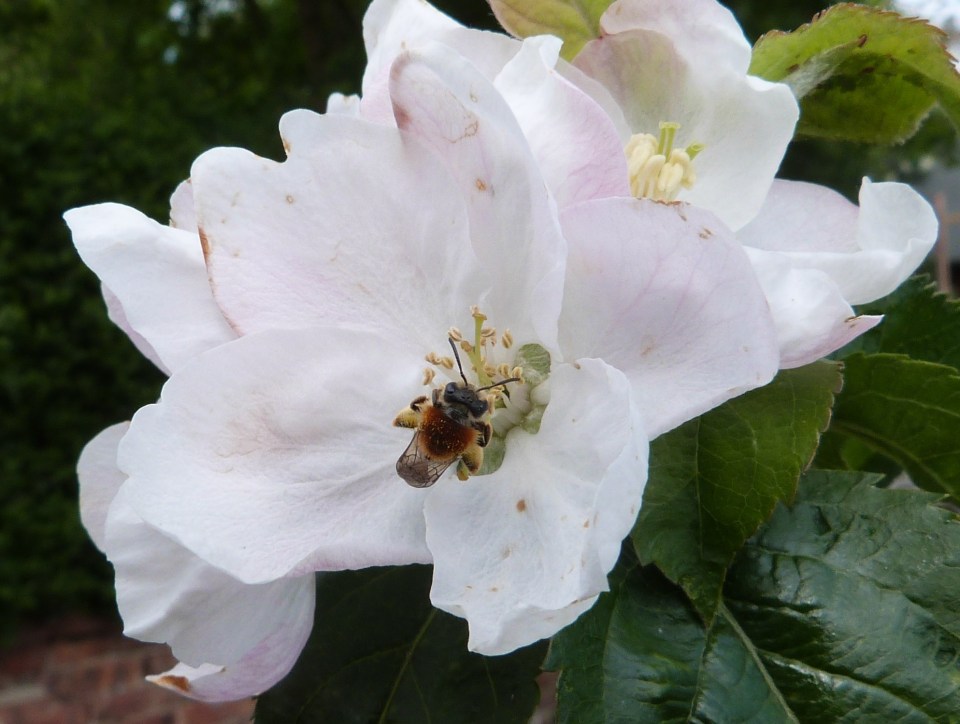
Bee on apple blossom - 1st May 2015

The over-arching themes of this blog have been about understanding biodiversity; the science behind its study; why it’s important; how it contributes to human well being, (including both intangible and economic benefits); and how policy informed by science can support the conservation of species and ecosystems.  These are all issues that have a global perspective beyond the bounds of my home country (the United Kingdom), or even my continent (Europe) because species, ecosystems and the threats to them do not respect political borders.

Enter IPBES – the Intergovernmental Science-Policy Platform on Biodiversity and Ecosystem Services (sometimes shortened to Intergovernmental Platform on Biodiversity and Ecosystem Services).

IPBES is a United Nations body established in 2012 that in many ways is a parallel entity to the IPCC ( Intergovernmental Panel on Climate Change), bringing together scientists, policy makers and stakeholders, with a mission:

to strengthen the science-policy interface for biodiversity and ecosystem services for the conservation and sustainable use of biodiversity, long-term human well-being and sustainable development

Which has got to be a good thing: science informing policy, what’s not to like?

The first output from IPBES will be a Thematic Assessment of Pollinators, Pollination and Food Production, and it’s just been discussed (today) at the 4th Plenary meeting of IPBES in Kuala Lumpur – here’s a link to the press release.

In the coming weeks I’ll talk more about IPBES and its Thematic Assessment (for which I acted as a reviewer), but for now I’ll just repeat some of the headline figures from the report:

  • 20,000 – Number of species of wild bees. There are also some species of butterflies, moths, wasps, beetles, birds, bats and other vertebrates that contribute to pollination.
  • 75% – Percentage of the world’s food crops that depend at least in part on pollination.
  • US$235 billion–US$577 billion – Annual value of global crops directly affected by pollinators.
  • 300% — Increase in volume of agricultural production dependent on animal pollination in the past 50 years.
  • Almost 90% — Percentage of wild flowering plants that depend to some extent on animal pollination*.
  • 1.6 million tonnes – Annual honey production from the western honeybee.
  • 16.5% — Percentage of vertebrate pollinators threatened with extinction globally.
  • +40% – Percentage of invertebrate pollinator species – particularly bees and butterflies – facing extinction.


*They are quoting a figure that I calculated, and very proud of it I am too 🙂

Rewilding reconsidered: academic disagreements, big science, and beavers.

P1110320Rewilding has been the topic of a couple of blog posts over the last few years  (for example here, in relation to the George Monbiot-narrated video about the wolves of Yellowstone Park; and also here, about the notion that perhaps we should also think about rewilding the human digestive ecosystem).

Since then there’s been a lot of activity with respect to rewilding, some of it practical and adding to the evidence base, some of it conceptual and controversial.  So I thought I’d do a quick round up of rewilding-related items I’d seen recently: feel free to suggest others.

In an open-access paper in Current Biology, entitled “Rewilding is the new Pandora’s box in conservation” David Nogués-Bravo and colleagues ask “what exactly is rewilding, and is it based on sound ecological understanding?”  Their conclusion is that “there is a worrying lack of consensus about what rewilding is and what it isn’t” and that “scientific support for the main ecological assumptions behind rewilding, such as top-down control of ecosystems, is limited”.  They go on to discuss the potential dangers of (re)introducing species into existing ecosystems, including both ecological and economic concerns.

Meanwhile Jens-Christian Svenning and colleagues have an open access paper in Proceedings of the National Academy of the USA about “Science for a wilder Anthropocene: Synthesis and future directions for trophic rewilding research” which takes a much more positive view of the potential benefits of rewilding, though still urges caution and further research, pointing out that “empirical research on trophic rewilding is still rare, fragmented, and geographically biased, with the literature dominated by essays and opinion pieces.”  Science writer John Carey provides some useful wider context to this discussion in a companion piece.

Subsequently Dustin and Daniel Rubenstein critiqued the Svenning et al. paper with an opinion piece called “From Pleistocene to trophic rewilding: A wolf in sheep’s clothing“, to which Svenning and colleagues replied: “Time to move on from ideological debates on rewilding“.

Svenning et al.‘s request for more empirical data on the effects of rewilding has been heeded this month by a study in Freshwater Biology from Alan Law and colleagues on “Habitat engineering by beaver benefits aquatic biodiversity and ecosystem processes in agricultural streams“.  Focusing on the recent reintroduction of beaver to Scotland, these researchers documented positive effects of the beaver on removal of inorganic nutrients from streams, and overall freshwater invertebrate diversity.

I find it really exciting that so much interesting debate and data are now being generated on the topic of rewilding: it’s fascinating and important science with a clear practical component that could leave the planet richer and in better condition for future generations.  It certainly deserves to be better funded, perhaps taking a slice of the “big science” pie from physics and astronomy, an argument that has been raised several times by Charley Krebs on his Ecological Rants blog.

As a researcher I don’t have a horse in this race (or even a Konick pony, such as are being used in a small-scale rewilding project at Wicken Fen). However I do wonder what a “rewilded” landscape would look like for pollinators in Britain, given that most of their diversity and abundance is associated with open grassland and heathland habitats, which were rare in these islands prior to human deforestation.  Having said that, a greater density of large mammalian herbivores can certainly open up woodland – see Bakker et al.‘s paper on “Combining paleo-data and modern exclosure experiments to assess the impact of megafauna extinctions on woody vegetation“.

As a teacher these discussions provide a lot of scope for interesting class exercises and seminars on the topic, which I’ll certainly be developing more next year.  Expect this to be an ongoing topic on the blog.