
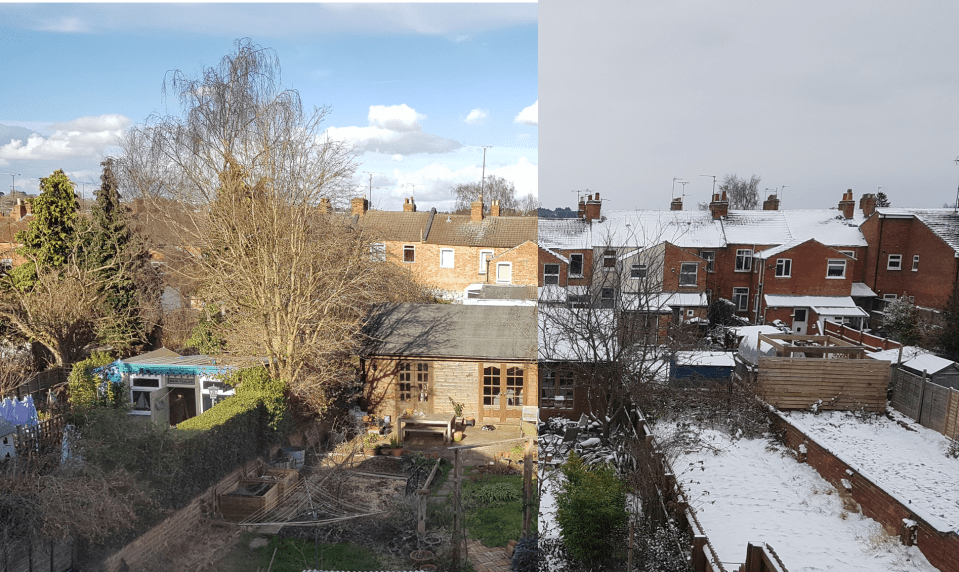
Just how pollinators cope with sudden changes in the weather early in the season is a bit of a mystery. Take 2018 as an example; my wife Karin spotted the first queen bumblebee in the garden on 6th January, investigating a camellia flower just outside the kitchen. Over the course of the next few weeks I saw a few more at various sites, plus occasional hibernating butterflies such as the red admiral. The various social media outlets were reporting similar things, it looked as though we were going to have an early spring.
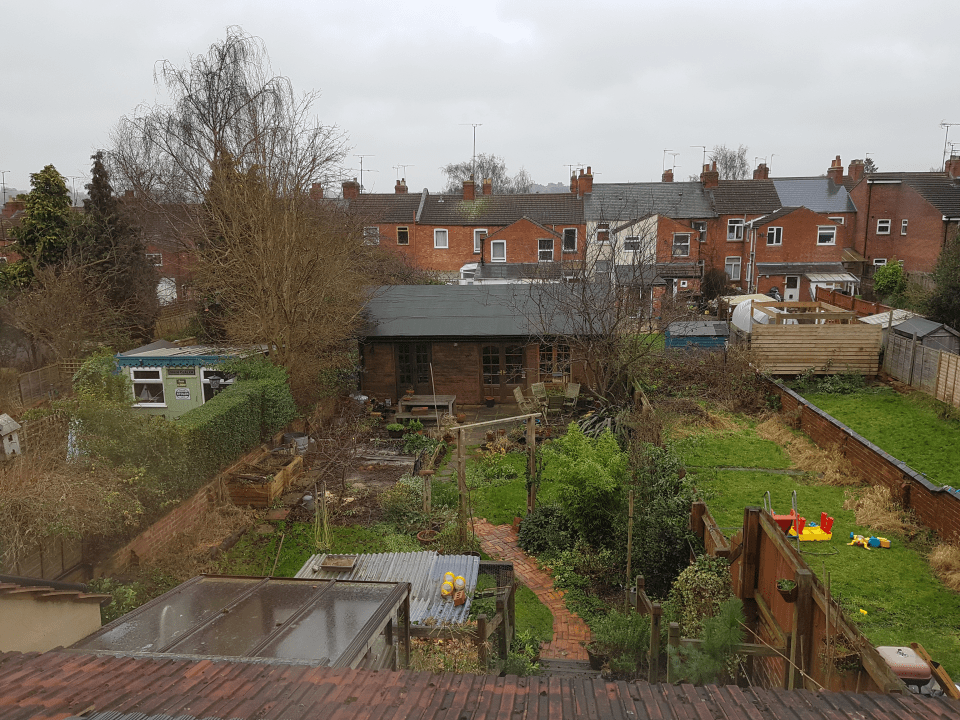
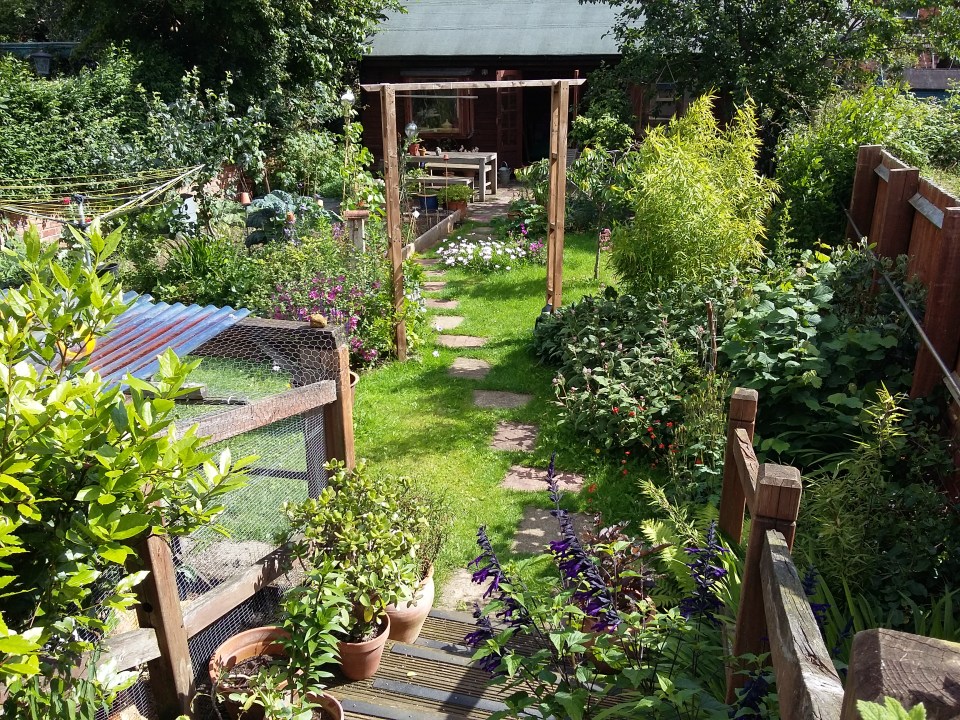
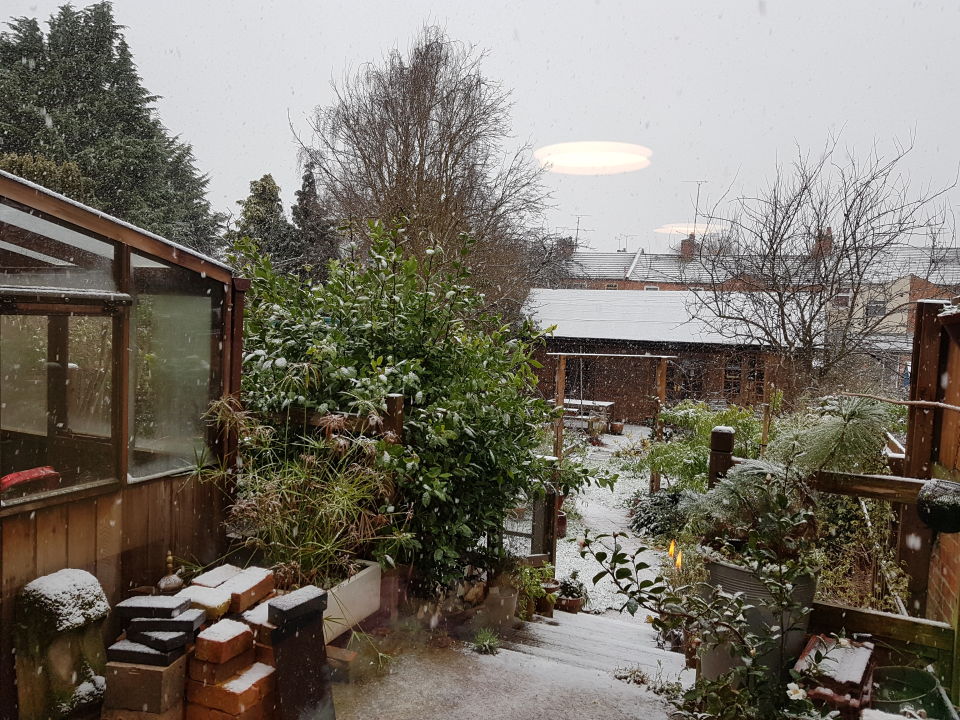
Then at the end of February “The Beast from the East” hit the UK, a weather system from Siberia that brought some of the coldest weather and heaviest snow the country had experienced for several years. That persisted for over a week then things got much milder. On 16th March I was in the garden and spotted the first male hairy-footed flower bee of the year, plus a mining bee (Andrena sp.), and a brimstone butterfly, and a queen bumblebee, and a red admiral. Great I thought, spring really is here! The next day it snowed. A “Mini Beast From the East” had arrived, rapidly: the two pictures above making up the composite view of our garden were taken two days apart.
What happened to all of those insects I saw? Were they killed by the cold weather? Or did they survive? We have no firm data to answer that question – as far as I’m aware no one has ever tagged early emerging pollinators and followed their progress (I could be wrong – please let me know if I am). It would make an interesting, though labour intensive, project but could be done using non-toxic paint of various colours to mark the insects.
I suspect that some of the pollinators I saw were killed, but most were not and simply went back into hibernation for a short period, hunkering down in safe, sheltered spots. That makes much more evolutionary sense: any insects in the UK that cannot survive sudden changes in the weather would have gone extinct long ago. Another clue to support this idea is the fact that plants in flower early in the season, and in some cases the flowers themselves, usually survive the cold weather and come back as if nothing had happened. If the flowers can do it, and they have to stay where they are, surely the mobile pollinators can also do it?
As always I’d be interested in your thoughts on this topic, feel free to comment. And while we wait for the UK to thaw, here’s some topical and rather catchy music to listen to – The Beelievers singing “Mr Gove”.


 Stella Watts is a blur when presenting her work!



 Prof. Jeff Ollerton - ecological scientist and author