Category Archives: Biodiversity and culture

Silver Medal for the BES’s pollinator’s display at RHS Chelsea Flower Show!

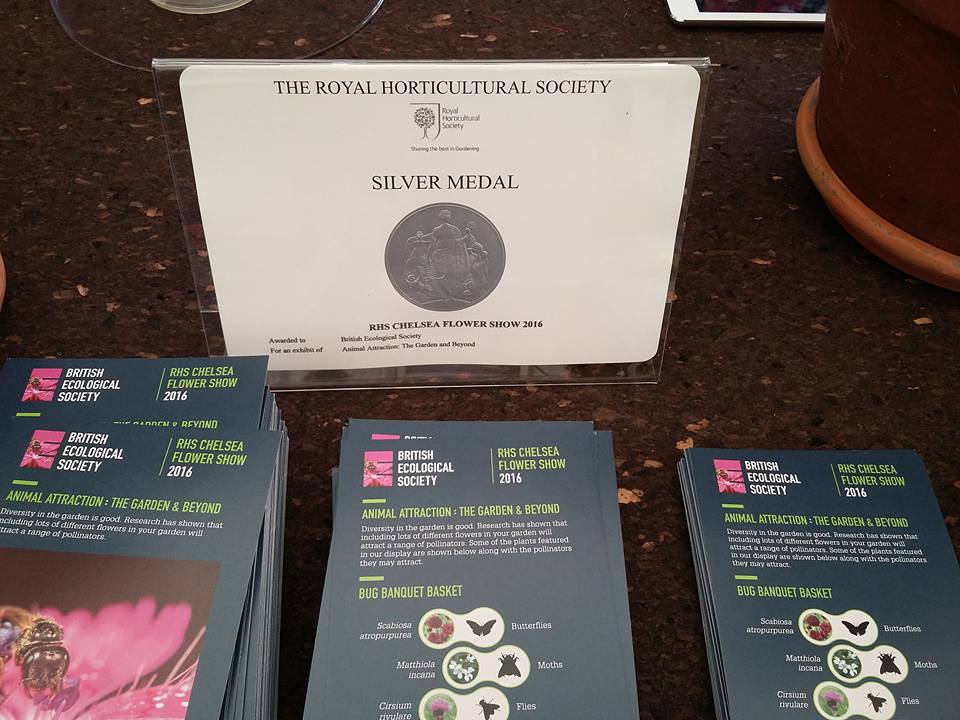
RHS Silver Medal

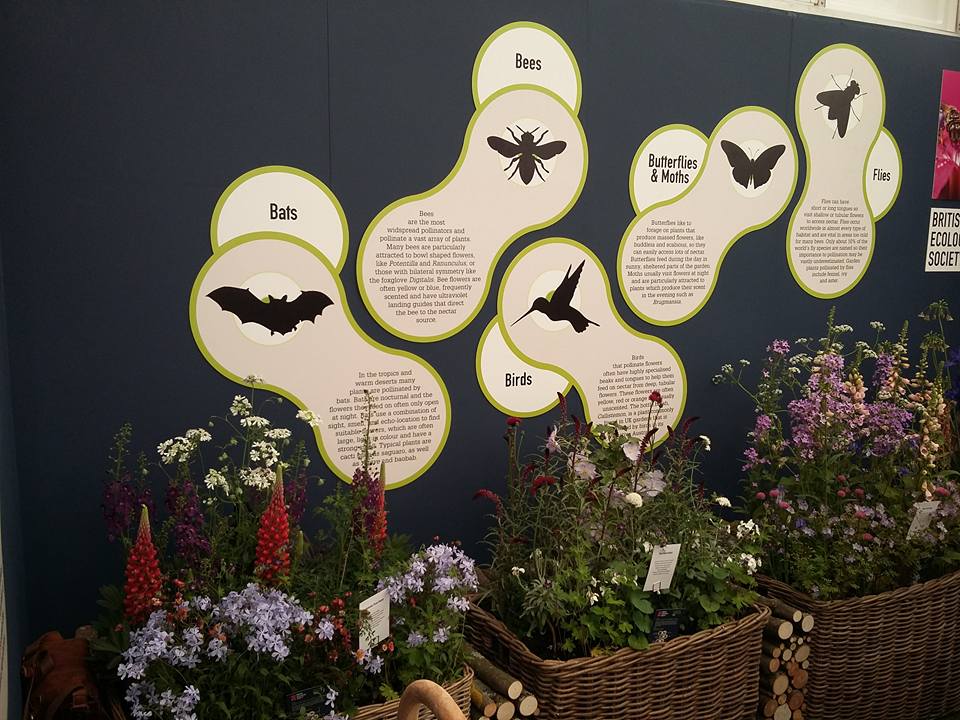
An early train to London yesterday got me to the RHS Chelsea Flower Show in time for the gates opening at 8am.  I’d agreed to spend the day staffing the British Ecological Society’s Animal Attraction: The garden and beyond display, which deals with the relationships between plants and their pollinators – see my recent posts here and here.

The first thing I noticed as I approached the display was how impressive and well designed it looked, with some wonderful planting to complement the simple, bold scientific information.  The second thing I noticed was that we had won a Silver Medal!  The whole team was very pleased – it’s the third year that the BES has been represented at Chelsea, but the first time that it’s won a medal.  I’m proud to have made a small contribution to that by advising on the plants and the scientific content, but the main kudos goes to the BES’s staff and to the garden designer Emily Darby.

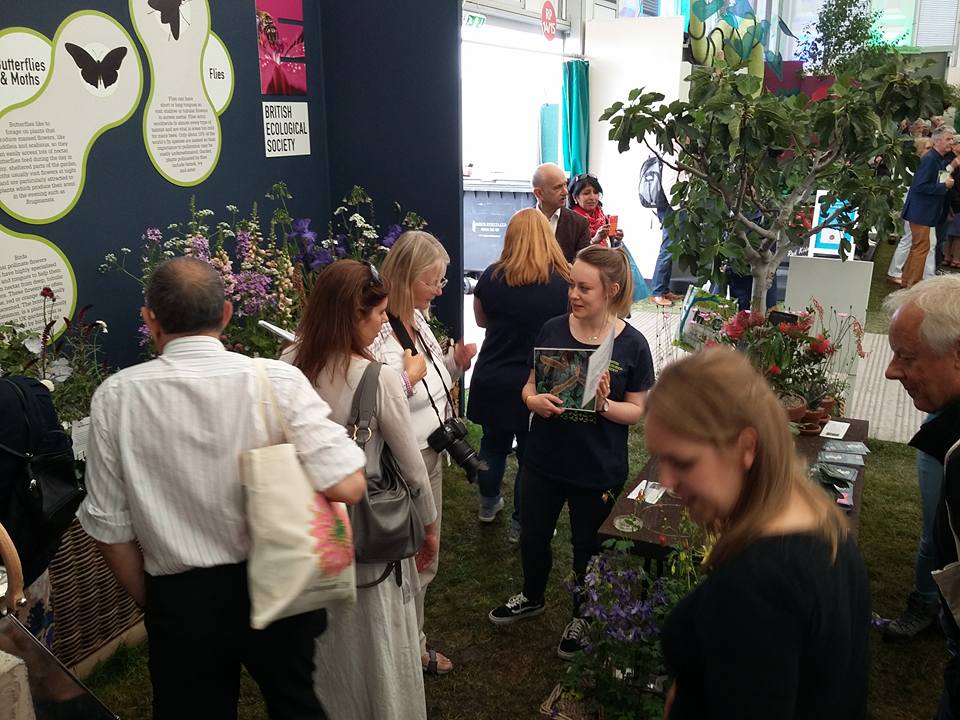
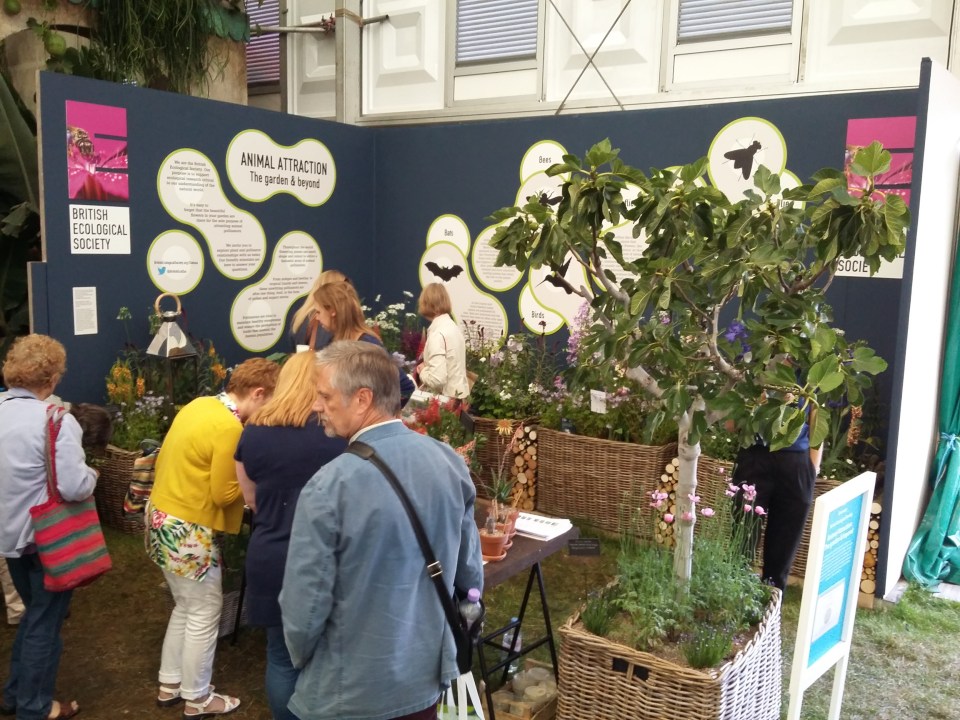
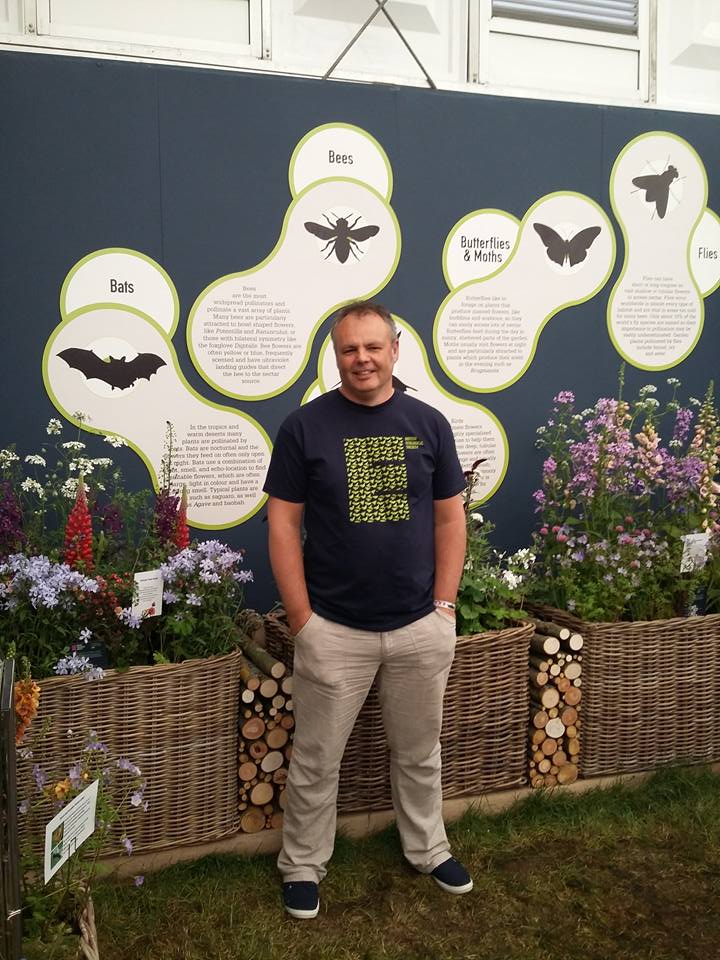
Over the course of a long day we talked to hundreds of visitors about the display, what it represented, and the different ways that flowers are adapted to their pollinators.  There was a huge amount of public interest and support, very gratifying to see.  Here’s some pictures from the day:

RHS display

RHS crowd

RHS crowd with fig

RHS Jeff

RHS display


Connecting with Nash, connecting with “nature” – reflections on a recent discussion

20160520_114753

Last night I took a trip up to London with my long-time friend and sounding board Barry Percy-Smith (Professor of Childhood and Participatory Practice at the University of Huddersfield) to watch Graham Nash being interviewed and playing music for a recording of Radio 4’s Mastertapes series.  Regular blog readers may remember that we did the same thing a couple of years ago when Nash’s compadre David Crosby did a similar recording, which I wove into a blog post.

Although I had no intention of using the Nash gig as a jumping-off point for a post, walking through Maida Vale yesterday evening, looking for a good pub, I was thinking about a discussion that’s going on over at the Ideas for Sustainability blog called “Is connection with nature an oxymoron?“.

The discussion centres around a very interesting recent paper by Robert Fletcher in which he argues that “a sense of separation from “nature” is in fact paradoxically reinforced by the very environmental education and related practices employed to overcome it“.  I’d recommend that you read both the paper and the blog post, with comments: there are a number of points raised on Ideas for Sustainability, including whether or not “oxymoron” is the correct term to use here and, more importantly, that Fletcher’s paper has a very narrow frame of reference in terms of how it’s critiquing “connecting with nature”.

But in addition I think that there’s a point to be made that no person on the planet (unless they have been kept in a sealed, sterile, environment their whole life and fed artificial food supplements) is actually “disconnected from nature”.  Directly and indirectly we are all of us connected with non-human life and landscapes, whether we are aware of it or not – and most of the time we are not – via the food we eat or just the subliminal perception of the commonplace wildlife and horticulture that you can see even in the most urbanised of environments.

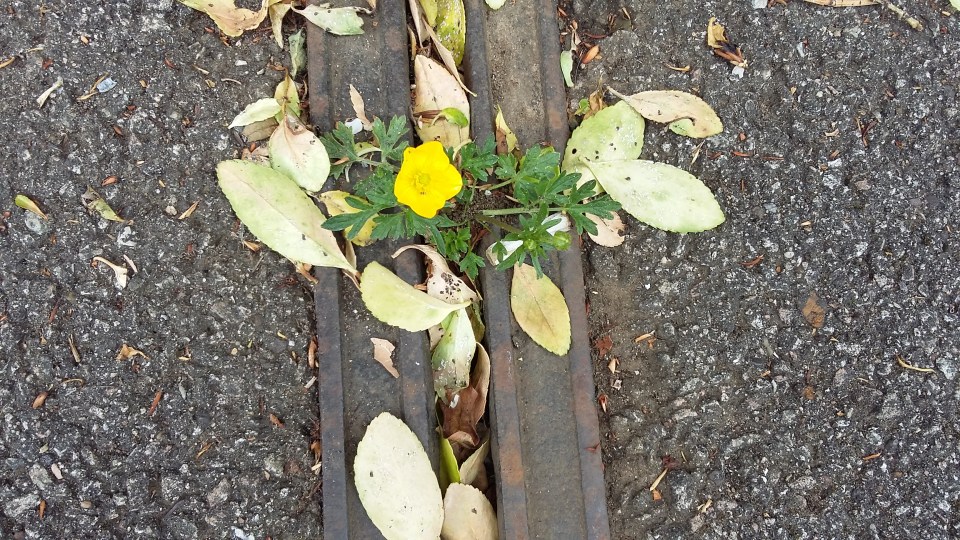
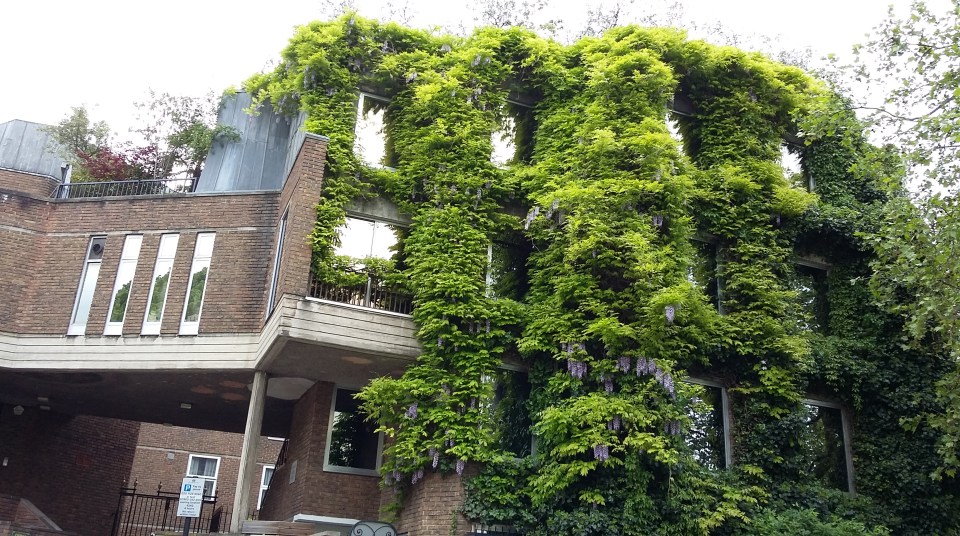
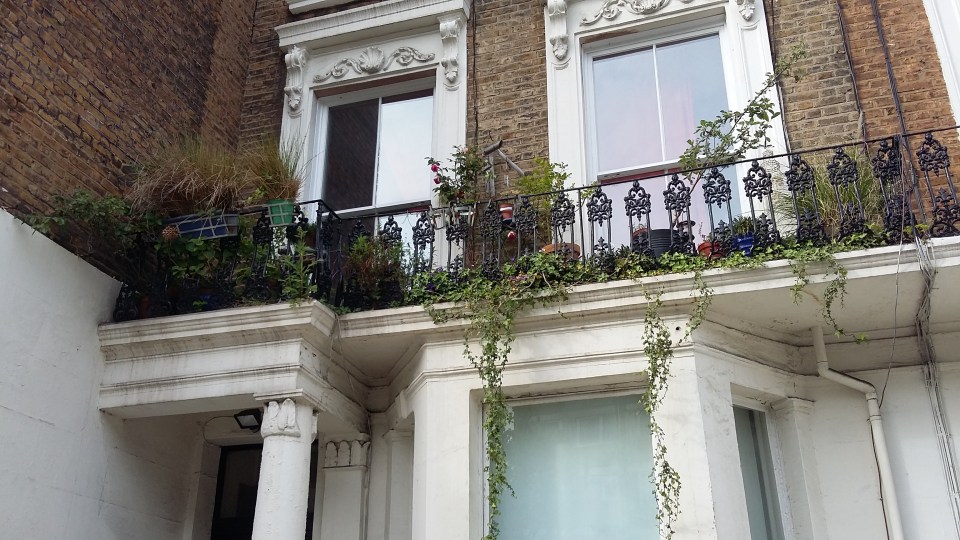
During our pub quest through what is a very built-up part of London – a city synonymous (at least in the UK) with the idea of disconnection from nature – I was seeing non-human life everywhere: plants were growing in the most inhospitable of places (see the images below of a large wisteria covering most of an apartment block, and a proudly tended balcony of plants in pots); large gulls were crying overhead; house sparrows were chirruping in gardens; “weeds” were popping up in the most unlikely spots.

20160520_162101


20160520_174521

Yes it’s common-place stuff, and yes much of it is anthropogenic, but that doesn’t make it any less “nature” or lessen our connection with it. The real question for me is about how many people actually perceive this, either consciously or subliminally. I suspect there’s far more of the latter than the former, but that if the non-human elements of “nature” were removed from even the most built-up parts of large cities like London, that people would notice and respond negatively to its removal.  Perhaps rather than trying to reconnect people with some idealised view of “nature” that is separate from their usual existence we should actually be encouraging (“teaching”?) them to think about the non-human life that they encounter in their daily lives, a process that ought to start at an early age.

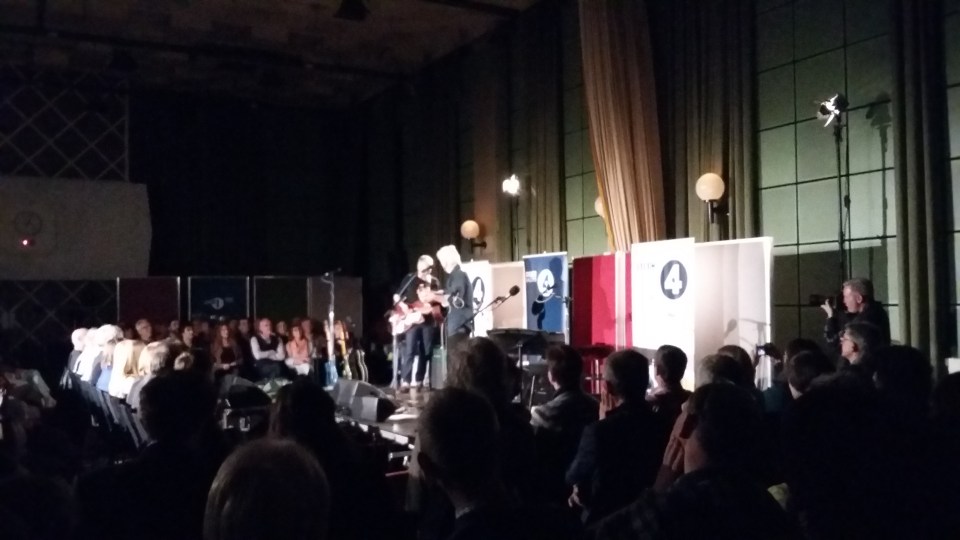
On that note it seems appropriate to sign off with one of my favourite Graham Nash songs – Teach Your Children. – and a bad photo from the gig.

20160520_190405


Pollinators at RHS Chelsea Flower Show

20160518_114732

Pollinators, as regular readers of this blog will know, are diverse and important, both ecologically and agriculturally.  But that diversity is declining and it’s an issue that deserves greater publicity and action.

To that end, for the past eight months I’ve been advising a team from the British Ecological Society (BES) on the content for a display at the RHS Chelsea Flower Show which is running all next week.  The display is called “Animal Attraction: The Garden and Beyond” – if you follow that link you’ll get a sense of what the display is all about, but in essence there are three key messages that the BES is trying to get across:

  • Celebrating the diversity of pollinators (not just bees!) both in the UK and globally.
  • Flowers have evolved many different ways of attracting and rewarding pollinators, leading to the fantastic diversity of floral form that gardeners appreciate.
  • Planting a diversity of flowers in your garden can only be a good thing for helping conserve pollinator populations.

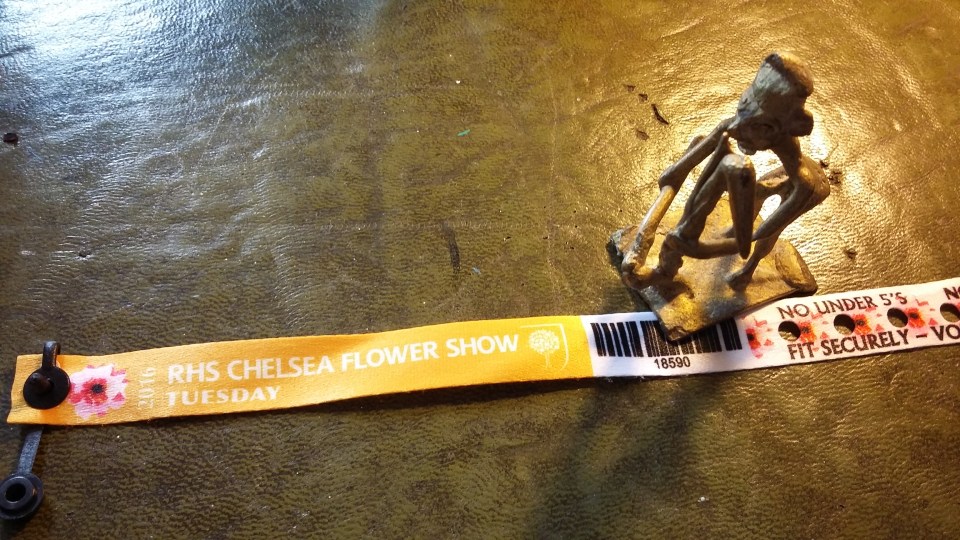
As you can see from my wristband, I’ll be helping to staff the stand all day Tuesday 24th May, so if you’re at the show come and say hello and take a look at what the BES team has produced.

More on Sir David’s dragonfly -“restoring our sense of species”

As a follow-up to my post yesterday about the tributes to Sir David Attenborough, I thought I’d share this link to an open-access article just published in the journal Nature by KD Dijkstra, the dragonfly expert who named Acisoma attenboroughi from Madagascar:

Natural history: Restore our sense of species

It’s a nicely written and well-argued piece exploring the importance of appreciating and documenting the richness of species on this planet.  Well worth reading.

Tributes to Sir David – and he finds time to write to one of our students!

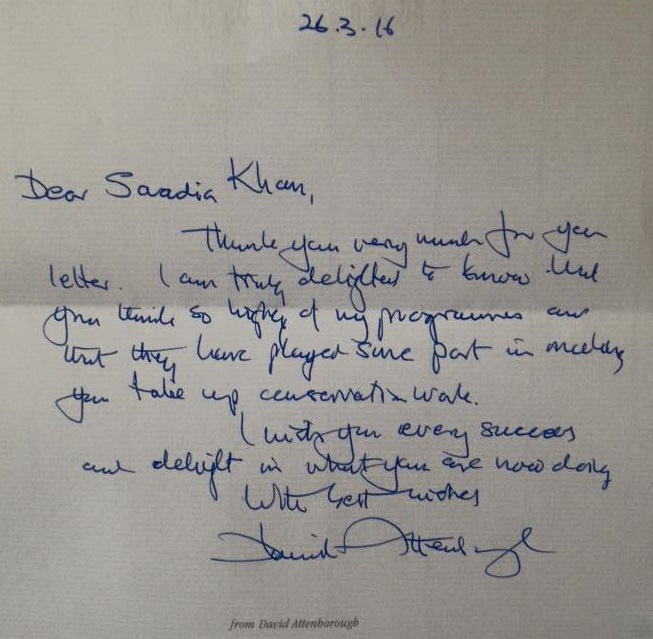
Saadias letter from Sir DavidThere can’t be many people currently working or studying in ecology, conservation, or the environmental sciences who were not in some way inspired by the programmes presented by Sir David Attenborough during his long career.  I certainly was, and I can trace my interest in the richness of our planet’s biodiversity right back to watching his ground-breaking series Life on Earth as a young teenager, and then reading the book, bought for me by my parents.

As you are probably aware, yesterday was Sir David’s 90th birthday, and the tributes to his iconic status as part of the scientific and cultural fabric of our nation, and his international standing, have been extensive and heartfelt. My personal favourites include naming the new NERC research vessel the RSS Sir David Attenborough and having a Madagascan dragonfly named after him by my friend and colleague KD Dijkstra, whose work I’ve highlighted previously on this blog.

But in the midst of all of these tributes and celebrations of a spectacular career, the measure of the man can be summed up by his taking the time to send a hand-written letter to one of our undergraduate students (see photograph).  The story of how Saadia Khan received Sir David’s letter can be read in full on the University of Northampton’s website.

All I can offer by way of my own tribute is to say thank you, Sir David,  for continuing to be such an inspiration, and may you have many more birthdays to come.

Emerging threats to the Białowieża Forest, one of Europe’s last remaining wilderness areas

From various news sources and personal contacts I’m hearing about some emerging threats to the Białowieża Forest, which at 216,200 ha (2,162 km2 or 835 square miles) is one of Europe’s largest and most ancient forested wilderness areas, and one of the few places where you’ll still see European bison (Bison bonasus)roaming free.

Despite its designation as a World Heritage Site, in recent months the Polish government has revealed plans to increase the amount of logging in the forest, ostensibly as a tree disease control measure.  However Polish scientists dispute this and claim that the real motivation is commercial – see the commentary and letters in this week’s Nature.  Here’s a quote from that article which provides some context to the concerns:

“[the] Białowieża management plan limits logging in the forest to 48,000 cubic metres of wood per year — enough to allow locals to gather firewood. But on 10 November, the local forest administration proposed an amendment that would allow large-scale logging in sections outside the central 17% of the forest that is a national park. They cited an outbreak of the bark beetle pest (Ips typographus) in Białowieża’s Norway spruce (Picea abies). In one forest district where logging is currently limited to 6,000 cubic metres per year, the allowable yearly volume would increase to 53,000 cubic metres”.


Interestingly, both Ips typographus and Picea abies are native to these forests and any large-scale outbreak would probably constitute a disturbance that is part of the natural dynamics of the forest. A recent piece on the National Geographic site by conservation biologist Stuart Pimm is worth quoting from in this regard:

“To…scientists studying biodiversity, the main value of the Białowieża Forest is accumulated in a massive occurrence of large and old trees, high amounts of dead-wood and natural dynamics of forest stands all being very unique to this area and supporting thousands of different specialised species ranging from birds and mammals using cavities or building nests in the canopy to lichens, fungi and microbes dependent on different stages of tree life and its decomposition.  It is not surprising that Białowieża Forest has been an invaluable reference area for scientists studying natural characteristics of European forests.” [my emphasis]


This is not the first time that concerns have been raised about the Białowieża Forest – here’s an article from the Guardian newspaper from 2011:  http://www.theguardian.com/world/2011/apr/06/poland-environmentalists-foresters-primeval-forest

Is it too much to hope that the Polish government takes notice and strengthens, not weakens, the protection of its natural heritage?  And allows natural processes to determine what happens in this woodland, rather than trying to manage every aspect of its ecology.

Book review: A Veritable Eden – The Manchester Botanic Garden, a History by Ann Brooks (2011)

This is a book review that’s been in press for many months in the Manchester Region History Review, and I finally found out that it had appeared and I’d missed it!  Anyway I thought this would be a good opportunity to present the review to a wider audience who might be interested, and to correct a couple of typos in the printed version.

A Veritable Eden – The Manchester Botanic Garden, a History. Ann Brooks (2011). Windgather Press, Oxford. RRP – £25.

The plant kingdom globally contains an estimated diversity of 350,000 species. In the UK we can boast only some 1500 native species, a legacy of both our status as a collection of modestly sized, temperate zone islands, and the effect of the last ice age which scoured much of the land surface of its previously established flora. A depauperate flora, combined with plant envy of the botanical riches of other countries, may be one reason why British botanic gardens have been important in cataloguing and describing the world’s plant diversity, and in augmenting that flora by cramming our gardens with exotic specimens from overseas.

This long history of plant study and horticulture can be traced back to at least the mid 17th century, with the founding of what was to become Oxford Botanic Garden. Since that time, Britain’s botanic gardens have played a significant role in the economic development of both the country and its former Empire, and continue to be important in science and education, and in the leisure and recreation of the British people.

Previous work on the history of botanic gardens in Europe has tended to concentrate on the large metropolitan botanic gardens, particularly Kew, with their star botanists and international networks of contacts and collectors (e.g. Brockway 1979, Endersby 2010, Ollerton et al. 2012). The smaller provincial botanic gardens, in contrast, have been rather neglected by historians, despite the fact that almost every large British city possessed one, and that they have been an important part of local leisure and education. This is a tradition that stretches from the early 19th century and continues through to the more recent founding of the Eden Project and the National Botanic Garden of Wales.

The history and current utility of such spaces is, as their study reveals, a story that extends far beyond the horticultural and botanical realms, into social, political and economic history. In A Veritable Eden Ann Brooks introduces us to the “chequered history including national fame and financial disaster” of Manchester Botanic Garden, which existed from 1831 to 1908. This meticulously researched book explores not only the role of the Garden in local social life, but also the local political intrigues, personality clashes and mismanagement that ultimately doomed the garden. This is exemplified in the way that an un-Victorian attitude to financial prudence (commissioning ambitious building works when finances were in poor shape) collided with a very Victorian snobbery: by refusing to allow the paying general public entry to the Garden more than one afternoon a week, a funding stream that may have saved the Garden was effectively curtailed. To paraphrase the author, exclusivity was more important than income.

This was not the only policy that appears inexplicable to the modern reader. Early in its history the subscribing, largely middle class membership of the Garden made it clear that pleasurable perambulations around the site were all that they were interested in, and any pretence to education went when “in 1848 science was eliminated and the horticultural garden…was dismantled”. In this regard it was undoubtedly the people of Manchester, rather than botanical science per se, who were the principle losers, as the large botanic gardens of European capital cities dominated plant exploration and plant science up to the present day. Nonetheless the policy jars with Victorian notions of self-improvement.

A Veritable Eden originated as Dr Brooks’ PhD thesis and in general it is engagingly written, demonstrating the author’s fascination for her subject, and well illustrated with material from her personal collection and elsewhere. But there are some places where a firmer editorial hand would have made for a better book. It is clear that a few small sections have been replicated from the thesis out of context, for example a paragraph about the role of a “putter-out” on pp. 60-61. On p. 91, to give another example, we read that a Garden report concluded that “the Curator should be charged with ‘gross ignorance and mismanagement’ and that he should be replaced”; this is repeated, only three lines later, as “a charge of ‘gross ignorance and mismanagement’ should be brought against [the Curator]”. Finally, to anyone with a botanical, as opposed to historical, training the misspelling and misrendering of scientific names for some plants will jar, such as “Dickensonia” for Dicksonia and “Victoria Regia” for Victoria regia (itself an old synonym, the plant is now called Victoria amazonica).

Such editorial oversights detract only a little from the telling of the story of Manchester Botanic Garden and could easily be rectified if the book goes to a second edition. Which I hope it does; it’s a great contribution both to the local history of the city and to our understanding of the history of provincial botanic gardens.


References

Brockway, L.H. (1979) Science and Colonial Expansion: The Role of the British Royal Botanic Garden. Yale University Press.

Endersby, J. (2010) Imperial Nature: Joseph Hooker and the Practices of Victorian Science. University of Chicago Press.

Ollerton, J., Chancellor, G. & van Wyhe, J. (2012) John Tweedie and Charles Darwin in Buenos Aires. Notes and Records of the Royal Society 66: 115-124


Originally published as:  Ollerton, J. (2014) Book review of: “A Veritable Eden” by A. Brooks. Manchester Region History Review 25: 153-154



Biodiversity rocks: a spider named in honour David Bowie, and a worm for Lemmy

With the death of David Bowie yesterday the world of music and art and fashion lost a cultural icon.  As well as remembering his incredible music and ground-breaking visual and social statements, the great man is immortalised in the name of a huntsman spider: Heteropoda davidbowie.  

I’ve not seen the original paper that named it, but it was presumably because the bright orange hair that covers the spider’s body reminded the author of Bowie’s Ziggy Stardust period in the early 70s, and the name of Ziggy’s band – The Spiders From Mars.

That other recently deceased rock icon, Lemmy Kilmister, also has a species named for him – an extinct polychaete worm called Kalloprion kilmisteri – apparently named “in honor of Lemmy of Motörhead, for musical inspiration during the course of [studying the fossil]”.

I’ll miss them both: biodiversity rocks!

——————————–

With thanks to my friend and colleague Professor Stewart Thompson for bringing the spider to my attention. 

Six Kingdoms for Christmas: the cultural biodiversity of a winter festival

P1120504

Since beginning this blog in 2012 I’ve traditionally posted one or two Christmas-themed items around this time of year, including a piece on “Thanking the pollinators for Christmas” and a true story from 2013, “A Christmas vignette“.  The role of pollinators in producing much of the traditional Christmas fare has subsequently been picked up by others (last year the University of Bristol, this year a blog from Trinity College Dublin) so I’ve decided to break with tradition and consider the ways in which biodiversity (both wild and farmed, though the latter of course originated as the former) adds to the cultural experience of Christmas through its traditions and rituals.

In this regard I’m coming at the topic as a north-European agnostic who values Christmas as an opportunity to relax and unwind at the darkest, coldest* part of the year, rather than as a Christian.  And because I’m a British scientist much of what I say relates to British customs, though I’ve tried to include non-British examples where I’m aware of them – feel free to let me know about examples I’ve missed by commenting below.

I’ve decided to structure this post taxonomically and focus on a Six Kingdom Classification** of life on Earth as that’s been the theme of my first year undergraduate teaching since October.  Four of the six Kingdoms can be dealt with fairly quickly as their significance to Christmas is marginal or non-existent.  The two “bacterial” Kingdoms (Archaea and Eubacteria) contribute little to Christmas other than providing much of the gut flora that’s going to help us digest our Christmas dinner. Important but not specifically festive.  Likewise the protists and algae (Kingdom Protoctista) add nothing specific to Christmas unless there are traditions associated with seaweed of which I am unaware.

The other three Kingdoms are the ones where cultural biodiversity associations are more apparent.  The Kingdom Fungi (yeasts, mushrooms and moulds) provides us with several Christmas traditions including (in Germany) hanging mushrooms on the Christmas tree for good luck, and in parts of Scandinavia hanging strings of dried mushrooms around the house as decorations and as a source of winter food.  There is also the association between the red-and-white colour scheme of fly agaric magic mushrooms (Amanita muscaria) and the robes of Santa Claus, though I’ve seen that idea debunked in a few places and it appears that the “traditional” interpretation of Santa’s suit originated in the USA in the 19th century.

The Kingdom Animalia (both invertebrates and vertebrates) affords us a host of cultural connections to Christmas.  Birds include the turkey (Meleagris gallopavo) which in times past were famously walked to London from Norfolk; the domestic goose (Anser anser domesticus); and much of the song Twelve Days of Christmas refers to birds, including the turtle dove (Streptopelia turtur) one of the UK’s most declining and threatened bird species.  Mammals we associate with Christmas include of course reindeer (Rangifer tarandus) pulling Santa’s sleigh, led by the nasally-advantaged Rudolph, but also domesticated farm animals.  For example in Denmark in osme households it’s more traditional to eat pork (Sus scrofa domesticus) for Christmas dinner than goose.

Staying with the vertebrates, in our house it’s traditional to have smoked salmon (Salmo salar) with scrambled eggs for breakfast on Christmas Day, and (again in Denmark) sild (Clupea harengus) is also traditionally served as a starter, but I don’t know of other fish traditions.  Likewise I’m unaware of any invertebrates that are specifically associated with Christmas, though there have been recent reports of sustainably-sourced lobsters (Homarus americanus and H. gammarus)  becoming “traditional” in Europe.  There are also some local traditions such as honey bees singing in their hives on Christmas Eve.

The last of the Six Kingdoms is the Plantae, which, whilst the least taxonomically diverse, provides us with a wealth of cultural associations to Christmas.  These traditionally include evergreen plants that have been used to decorate homes, probably since the earliest pagan Yuletide festivals, such as: Christmas trees (various conifers in the genera Picea, Abies and Pinus); European ivy (Hedera helix); holly (Ilex aquifolium); and mistletoe (Viscum album).  However such traditions evolve and adapt to local needs and availability of plants.  For example in North and South America other genera of conifers not found in europe, such as Pseudotsuga and  Araucaria, may be used as Christmas trees***.  Likewise the absence of European mistletoe in North America means that people have adopted native mistletoes in the related genus Phoradendron for decorating and snogging traditions.  Over at her blog, ecologist Manu Saunders has recently discussed how native Australian species can substitute European plants for Christmas decorations.

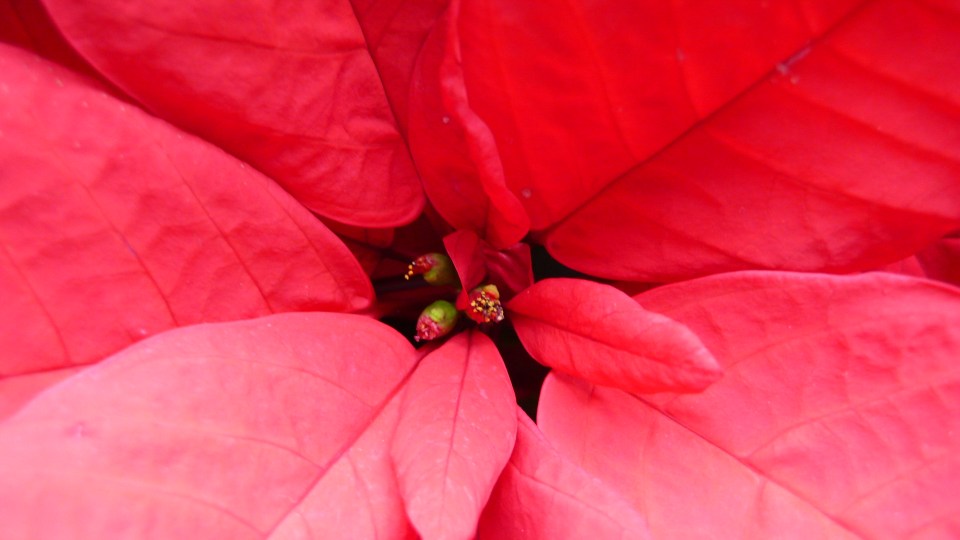
The final example from the Plantae is the poinsettia (Euphorbia pulcherrima) which I’ve pictured above.  In many ways this is an unusual plant to have such a strong cultural association with Christmas: it’s a mildly toxic species of spurge from tropical Mexico that was introduced to North America in the 19th century, then subsequently to Europe.  However its festive connotations date back to the earliest period of Spanish colonisation in the 16th century, so it’s older than some of the other Christmasy traditions I’ve discussed.

Of course biodiversity is about more than just species and taxonomic diversity, it also encompasses the diversity of habitats in which that life is found.  Here too we see strong influences of the natural world on the culture of Christmas, including festive scenes of snow-bound boreal conifer forest.  As our planet warms, however, that might be a view that is found only on Christmas cards and old movies, rather than directly experienced*.

And on that sobering note, I wish all of my readers and restful and biodiverse holiday: have a great Christmas everyone!


*Ha!  It’s looking to be the warmest December on record, and at times has felt more like early summer than mid-winter.

**I’m aware that there are other Kingdom-level classifications out there which could be used, but the Six Kingdom approach is a good starting point.

***Closer to home, colleagues in the office adjacent to mine have adorned their large weeping fig (Ficus benjamina) with home-made Christmas decorations.  Looks good.

What Einstein didn’t say about bees – UPDATE – May 2021

https://i0.wp.com/www.impawards.com/intl/misc/2012/thumbs/sq_more_than_honey.jpg

It’s more than 6 years (!) since I wrote this post. Over that period I’ve been asked many times about the Einstein bee quote and I’ve always replied that it’s made up, and that further more, Einstein was a physicist: he had no interest in bees!

Turns out, that’s not quite correct. There’s still no evidence that Einstein stated the infamous bee quote; however he does seem to have had an interest in bees. A newly-discovered letter from the great man mentions his admiration of the work of Karl von Frisch, whose research on the honey bee ‘waggle dance’ earned him a Nobel Prize. There’s a couple of news stories online about this: here’s one from Cosmos, and another from The Conversation. The original paper discussing the letter, by Adrian Dyer and colleagues, can be viewed here.

So I will have to moderate my response in the future, but it doesn’t change the big picture: Einstein never said it!

———————————————————————————————————————–

In the 100th anniversary year since Albert Einstein published the paper on his General Theory of Relativity, it’s saddening to think that one of the things that he will be best remembered for is something he did not say.  There are various versions of it, but they all amount to the same thing:

“If the bee disappeared off the surface of the globe, then man would have only four years of life left. No more bees, no more pollination, no more plants, no more animals, no more man.”

This statement could be dissected and disproved in numerous ways:  for example, there’s over 20,000 species of bees, so what is “the bee”?  Plus most of our crops are not bee (or even insect) pollinated, they are wind pollinated grasses such as wheat and rice.  Etc. etc.

But what is particularly annoying about it is – EINSTEIN NEVER SAID IT!  As far as anyone is aware he had no interest in bees whatsoever and the original source was a Canadian beekeepers’ journal in the 1940s.

It’s even more annoying that, despite the fact that we’ve known the statement is both factually incorrect and not by the great man, documentary film makers and journalists are STILL using it to support their work.  The latest example I’ve seen is this documentary, the poster of which is shown above.

Rant over: back to reading paperwork for a meeting this afternoon.

UPDATE:  I’d forgotten that Tom Breeze at University of Reading posted a fuller account of Einstein’s (non) quote last year – here’s the link.