Category Archives: Bees

In defence of lawns UPDATED

2012-02-22 10.19.23

Over at the Small Pond Science blog, Terry McGlynn has a thought provoking post which asks ‘Are trees the lawns of the future?‘.  I won’t rehash Terry’s arguments, you can read it yourself, but I was intrigued by his stereotyping of lawns as always bad.  As a keen amateur gardener and a professional with research students who have worked on garden biodiversity projects, I’d have to say that there’s lawns and there’s lawns: it all depends on how they are managed and what the purpose is of a particular lawn. Clearly there’s a continuum from high diversity, natural “lawns” (i.e. close-cropped grassland which can support significant biodiversity such as some chalk grassland and African savannah lawns) through to the high resource input, monoculture, perfectly presented lawns seen on golf courses and around important buildings.  In the part of the continuum that Terry’s railing against, typical urban and suburban householder’s lawns and everything below that in terms of “naturalness”, it’s possible to manage lawns in a low-input way that is both productive and can support biodiversity.

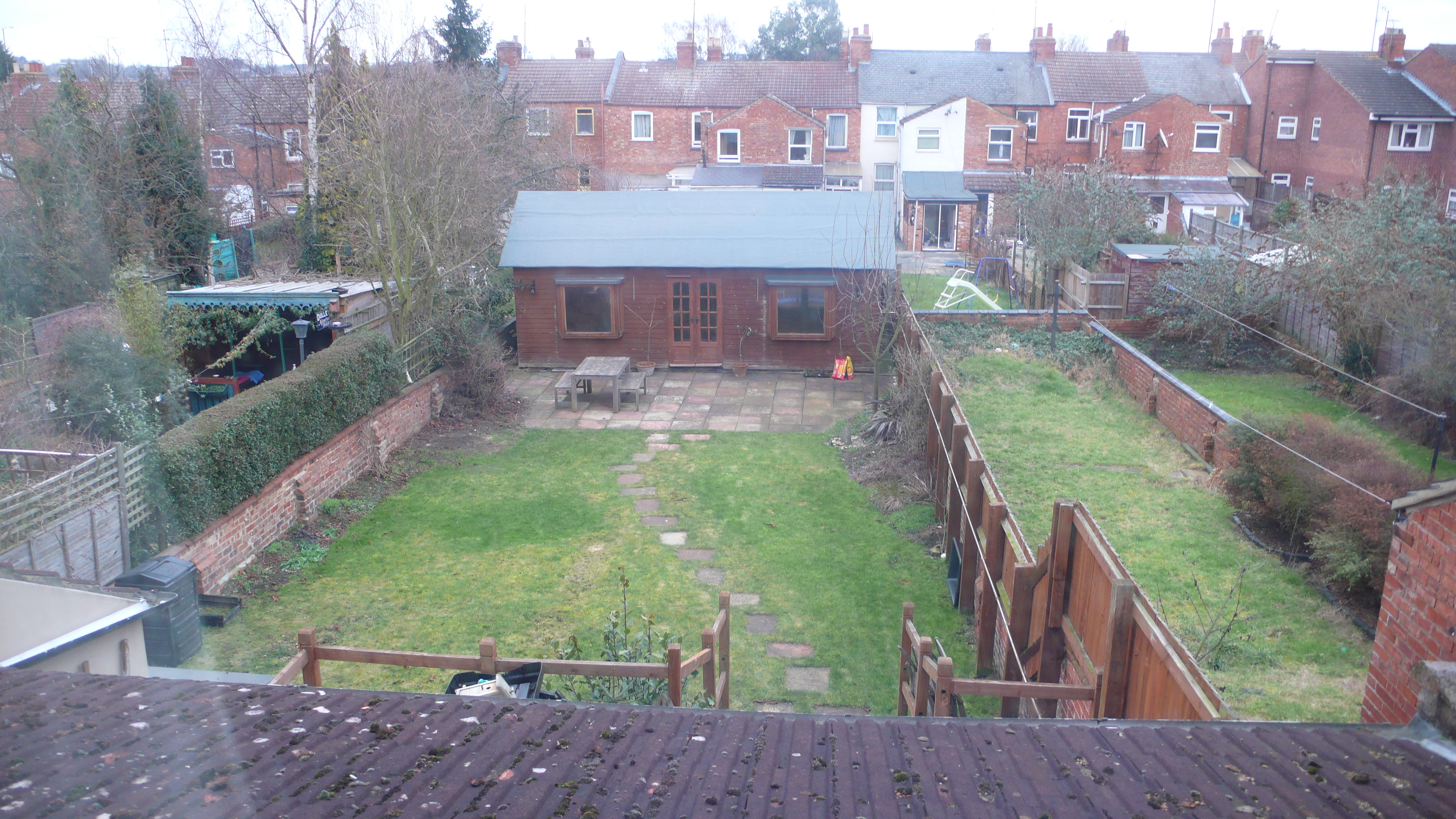
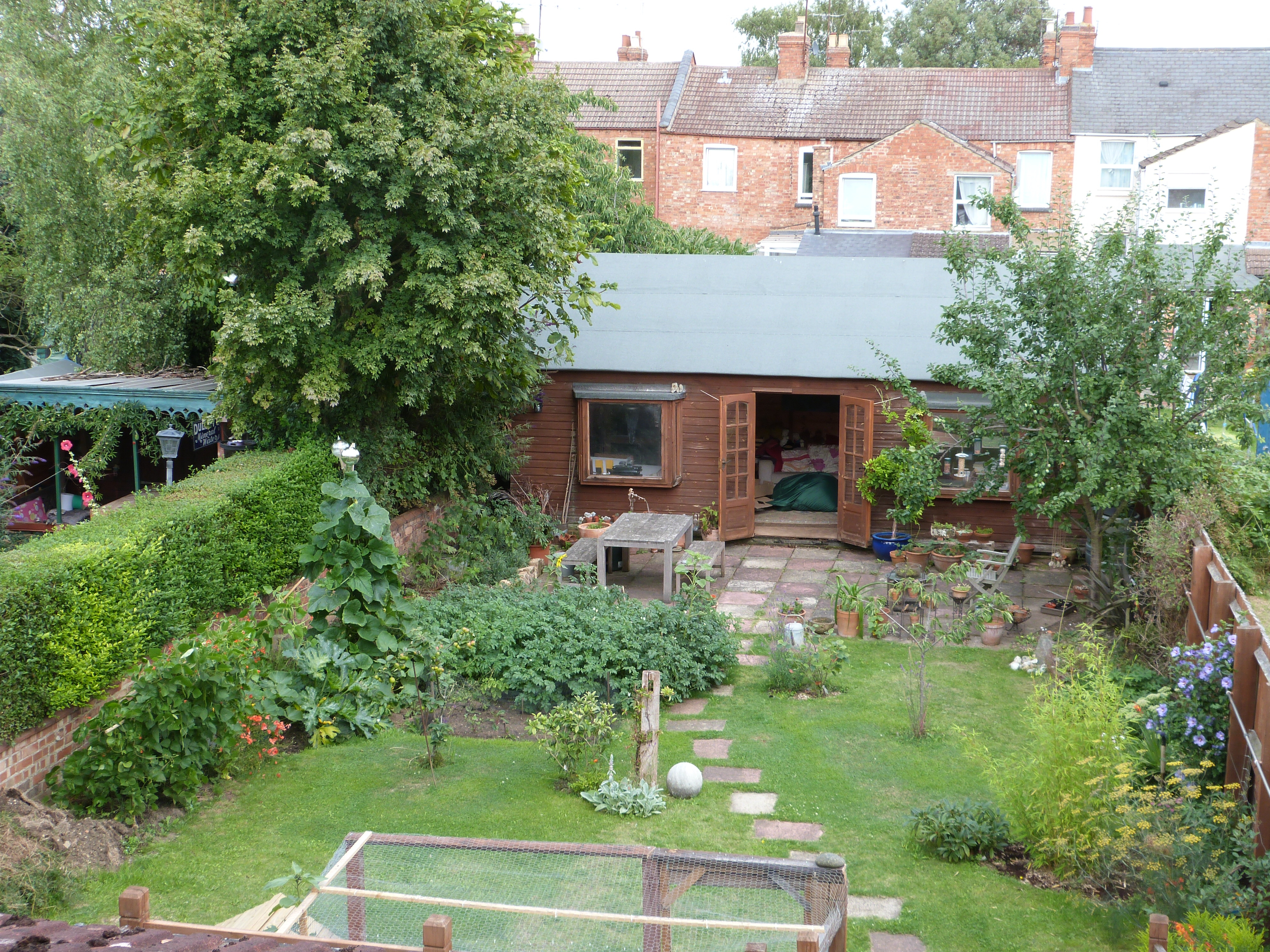
In the house that Karin and I moved into about 18 months ago, the garden was almost wholly laid to lawn; the picture at the top shows you what it was like in early 2012.  Since then we’ve dug flower borders, a vegetable patch and planted fruit trees, but kept about 50% lawn (though this will reduce as we widen borders). We don’t water or fertilise the lawn, just keep it regularly mown. I’ve not assessed it systematically but I’d estimate that, in addition to the grasses (some native, some not) there’s another 10 to 15 native plants growing in it, plus fungi which pop up every now and then. The plants include taxa which are popular nectar sources for bumble bees and solitary bees, e.g. clovers, dandelions, etc. These flower even though we mow regularly, and of course these bees pollinate our squashes, courgettes, apples, plums, etc.  The local blackbirds and starlings also find food on the lawn.

I mentioned that the lawn is “productive” and that’s where the grass cuttings come in. They are either put into the compost heap, fed to our chickens, or added directly to the vegetable patch as a mulch.  It’s also possible that the clover, which is a nitrogen fixing legume, is adding to the soil fertility that can be accessed by the far-reaching roots of the fruit trees.  Would be an interesting hypothesis to test.

So I think it’s possible to have a lawn that adds to local biodiversity and is productive for the gardener, but I accept that we may be unusual in that regard.  It’s not the kind of lawn that would make a grass obsessive proud; but that type, as Terry notes, needs a lot of input of resources, not least time.

UPDATE –  a few people have asked to see a picture of how the garden looks now, so below is more or less the same shot but taken today (15th August 2013) by Karin.  Comparing a British garden in February and August is clearly unfair!  But hopefully you can see that we’ve done quite a bit of work to it, though as with all gardens it’s a work in progress.

Garden 15th August 2013

A (Green) Apple for teacher – The Biodiversity Index wins an award!

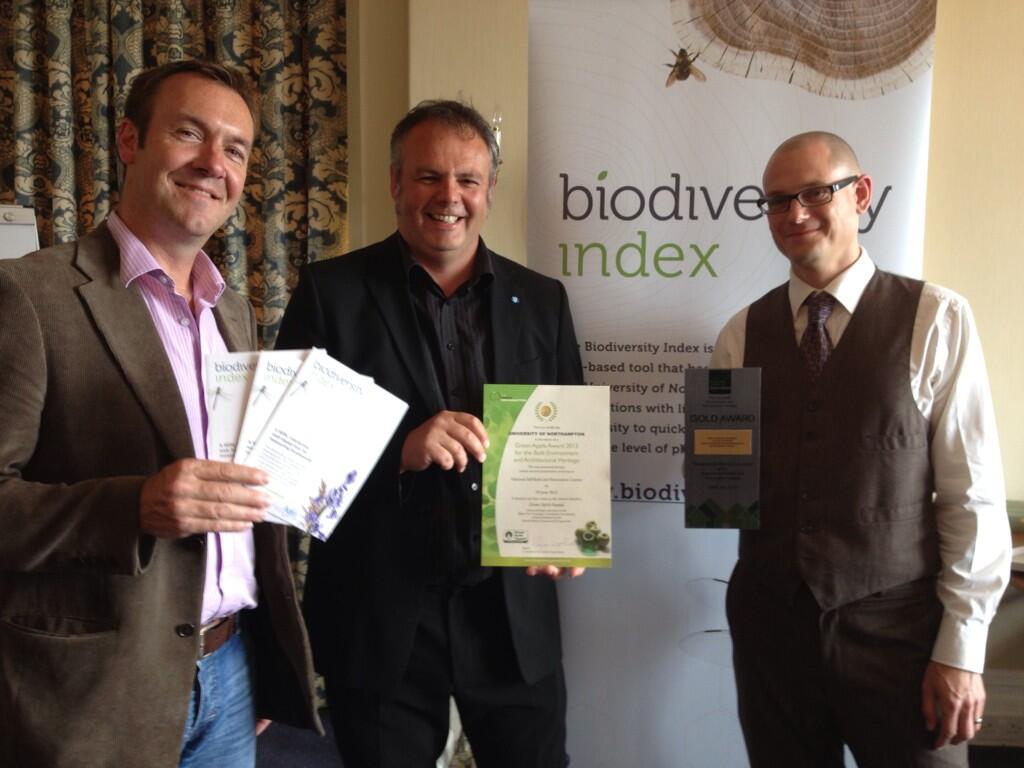
BO-2DbsCcAAZPsu (1)

At a small ceremony attended by businesses and local authorities on Friday, the team who developed the Biodiversity Index received a Green Apple Gold Award from The Green Organisation.  I proudly accepted the award on behalf of everyone and made a short speech which, in the spirit of my “reduce, reuse, recycle” policy, I’m posting here.  Thanks to Bobbie Lane for the photo, Richard Moore for help with the speech, and Gareth Thomas for the notion of biodiversity as the “fourth resource”.  


Ladies and gentlemen.

In June 2011 the UK National Ecosystem Assessment reported to Government that the value of the natural environment to the British economy was at least £30 billion per year in terms of the ecosystem services it provides, such as carbon storage, soil fertility, tourism and pollination.

In contrast, earlier this year the State of Nature Report by 25 of the UK’s leading wildlife organisations, suggested that 60% of animal and plant species for which we have data have declined in the past 50 years.  To add to this, some recent work by my research group at the University of Northampton has shown that 23 species of pollinating bees and wasps have gone extinct in Britain since the late 19th century.

Clearly there’s a contradiction here: at a time when we value biodiversity more than ever, it is declining at an ever-faster rate.  So what can we do about this situation?  How can individuals and organisations help to reverse this trend?  This is one of the aims of the Biodiversity Index.

Energy, water and waste are typically the main resources actively managed by businesses and organisations, but there is growing interest in understanding and managing biodiversity as a fourth resource that is critical for society as a whole.  In contrast to some of the other speakers you have heard today, the Biodiversity Index is not going to make you money.  In fact, if you are in the commercial sector, it will cost you a small amount of cash to join.  But the broader benefits of staff engagement with wildlife conservation, and the positive effect this will have on our country as a whole, are priceless.    

The Biodiversity Index is an interactive web-based tool, developed by the University of Northampton and believed to be the first of its kind anywhere in the world.  It enables organisations with little or no knowledge of biodiversity to undertake a rapid but scientific assessment of the level of plant diversity on their site and suggests ways to improve each habitat.

The Index widens access to the knowledge and tools required to make a start in improving the management of biodiversity on urban sites, with the potential to assist schools and colleges, universities, hospitals, local authorities, SMEs and larger businesses to improve the environment in which we work and live.

The tool was developed as part of the SEED Project and was launched at the Environmental Association for Universities and Colleges annual conference in April 2013.  To date the Biodiversity Index has been used by over 30 UK universities and endorsed by several companies including Ricoh UK Ltd, a Global 100 sustainability company.

On behalf of the team that developed the Biodiversity Index I am delighted to accept this Green Apple Gold Award as an acknowledgment of the innovative work undertaken in this collaboration between the School of Science and Technology and the Department of Infrastructure Services at the University of Northampton.

Thank you.

Are honey bees native to Britain? And does it matter?

2013-04-15 13.54.19-2

It’s no secret that I’ve become frustrated over recent years by the general confusion in the media between the concerns relating to honey bee health (which are largely veterinary/husbandry problems, though pesticides may also play a role) and declines in wild pollinators, which are a wildlife conservation issue mainly due to habitat destruction, though again pesticides are probably having an impact.

That frustration came to a head last year when colleagues and I published a short letter in the influential journal Trends in Ecology and Evolution that was prompted by a throwaway remark in an earlier article stating that honey bees “are essential pollinators for the maintenance of natural biodiversity”  No they are not.  And you can read for yourself why we responded to that article if you follow the link above.

In a recent posting on the Adventuresinbeeland blog, Emily Heath discussed her attendance at a recent British Library event about pollinators and pesticides.   I commented on the blog and in passing mentioned honey bees as being “not native” to which one respondent demurred and wrote:   “I thought honey bees ARE native to Britain, although they have been bred with various breeds ……. Apis mellifera mellifera is a British native, isn’t it?”.   I’ll paraphrase my response here:

The only study that I’m aware of that has addressed this question is Norman Carreck’s paper from 2008 – you can download a PDF of that article here.  Norman is convinced that Apis mellifera mellifera is native to Britain but, as I interpret it,  the evidence he presents is circumstantial and the earliest archaeological remains of honey bees are all associated with human settlements. Even if honey bees were originally native to Britain, the present situation, in which honey bees have been selectively bred and hybridised, is akin to using Tamworth pigs as evidence that wild boar are native.

However for me the most compelling evidence that honey bees are not native is ecological: despite their generalist nature and ability to form large colonies when managed, out in the wider countryside of Britain honey bees do not do particularly well. “Wild” honey bees are never very abundant (compared with some bumblebee species, for instance) and feral colonies in natural settings are few and far between.

This prompted a to-and-fro discussion with Emily that you can read for yourself.

Are honey bees native to Britain?  The jury is out but the balance of evidence as I see it is pointing to them being a human introduction.  Does it matter?  In many respects, no.  Honey bees are (like any other agricultural animal) a utilitarian species that provides us with a range of benefits.  But in one respect it DOES matter – and that is in relation to how we formulate and put in place strategies to reverse the decline of wild pollinators such as bumblebees, hoverflies and butterflies.  If honey bees become the central focus of such strategies (and funding), due to confusion in the minds of the public, MPs, policy makers, businesses, the media and other influential bodies, then wild pollinators would lose out.  In my opinion that would be a great mistake.  I’d be interested to know what other people think.

A coiled Spring

Wellcome Trust - June 2009 006

April, according to T.S. Elliot, “is the cruellest month”.  Not sure about that, though April 2013 proved to be both frustrating (as we in northern Europe waited for Spring to arrive) and busy, as I tried to pack in a whole set of activities.  That’s my only excuse for not updating my blog, so the aim of this post is to catch up with biodiversity-related activities and observations over the past few weeks.

Just as iconic decades begin part-way through a given ten year period (the 60s didn’t really kick off until about 1963, for instance) so April for me actually began at the end of March.  In the last week of that month I completed my formal teaching for the term and celebrated the first anniversary of the Nene Valley Nature Improvement Project.  I also picked up my daughter Ellen from Heathrow Airport, on a two week visit back from working in China.  On the way I counted over 20 red kites flying near the M40 motorway – what an incredible success story their re-introduction has been!

One of the reasons Ellen had come back was that I was due to give my inaugural professorial lecture, entitled “How many bees does it take to wake up in the morning?  The importance of biotic pollination in a changing world”.  Another reason was to to celebrate my eldest son Patrick’s 18th birthday the following day.  Both once in a lifetime events and both had family at their heart.  It was a great week.

Some leave time followed, much needed after what seemed like an endless 12 week university term, during which I hoped to plant potatoes and do some other work in the garden.  But Spring refused to uncoil.  The northerly winds brought cold weather that froze all vernal activity in the act.  Flower and leaf buds were there waiting to unfurl; insects would occasionally appear then just as quickly disappear; and birds clearly wanted to get on with the important activities of raising young.  But all was delayed.  One could sense the tension, the build up of seasonal energy, biology waiting to happen.

A talk at Earlsdon Gardening Club near Coventry on Monday 8th April was well received and took my mind off the organisation of the biennial Bumblebee Working Group meeting on the 11th.  This semi-formal get together of scientists, NGOs, and other Bombus-minded individuals, shifts between venues every two years.  At the last meeting in 2011 I volunteered to host the next event and then put it out of my mind for 18 months.  Organising a scientific meeting is always a bit of a mad panic as the day draws closer and one wonders if anyone will actually turn up.  But as it turned out the event was well attended, with over 80 people listening to talks on diverse topics including the effects of neonicotinoid pesticides on bumblebee colonies;  I’ve uploaded a copy of the programme.

Friday 12th April was a frantic dash around office and lab to get books, equipment and sundries organised for our annual undergraduate Tenerife Field Course, which was flying out on the following Sunday.  A great time was had by all as we explored the biodiversity of Darwin’s Unrequited Isle and we came back with a wealth of great data plus not a little sunburn.  No matter how often I tell students that they really need to wear a hat and use sun block, some will never listen.

Arriving from Tenerife early on Monday 22nd, I slept for a few hours then was back at the university for the oral PhD examination of Hilary Erenler, whose work I have mentioned previously.  These exams are always stressfull for both student and supervisors but in the event Hils performed wonderfully and passed with only minor amendments.  A great result!  Now looking forward to publishing some papers from that work.

April ended, and May began, with a change in the weather.  Much warmer winds blew in from the south west and life suddenly erupted: pressure had been removed from the coiled Spring.  Lots of pollinators appeared in our garden including: Anthophora plumipes, one of my favourites for its glossy, black females and aggressively flower patrolling males; the relatively newly arrived Bombus hypnorum; the bee fly Bombylius major; and several different butterflies.

Clearly it’s time to plant those potatoes!

A (bird) book for bedtime (and a bit about bees besides)

2012-10-27 14.28.28

Biodiversity as it’s generally defined and conceived includes not only diversity of species and habitats, but also diversity within species, often (but not always) genetic in origin.   Eddie Izzard’s new two-part television series Meet the Izzards neatly captures the idea of genetic diversity, and how it informs our  understanding  of the past evolution and prehistorical dispersal of a large, bipedal mammalian omnivore.  “Cultural biodiversity” in Homo sapiens is less easy to define in this way as it has probably only a limited genetic component and is passed from individual to individual by copying and refining.  Other species have “culture”,  for example New Caledonian crows and chimpanzees, but human cultural diversity is more varied than that of any other species.

Take book reading as an example.  Some individuals of our species never read.  Others read only one book.  Incessantly.  And then argue about what it means with others who read the same book.  Other individuals gorge on a book a day or snack on one a  month, or manage on a starvation diet of one per year.  I’m a two book nibbler.  Normally I always have a novel and a volume of non-fiction on the go.  The novel is for last thing at night when I need to turn off my mind and do some easy reading; a few pages then it’s time to sleep.  Nibble, nibble.  The non-fiction is for the morning, if I wake up early enough, or weekends if they are free; or train journeys.  Still nibbling, but this time on more solid fare.

As with all cultural diversity, none of this is inflexible and at the moment I’m also reading a non-fiction book at night:  Fighting for Birds:  25 years. in nature conservation by Mark Avery, former Conservation Director of the RSPB.  Mark kindly came to give a talk at the university recently and brought copies of his book to sign and sell.  It was a stimulating lecture and feedback from the students who attended was very positive.  For those students who didn’t make it (and there were a lot) I have to ask:  why are you paying thousands of pounds a year to not turn up to events that will inspire, educate and develop you?  You had the chance of bending the ear of a very prominent British conservationist.  At the very least you could have asked:  “How do I get to do the job that you do?”  You’re currently investing a LOT of money in your future and, frankly, wasted opportunities such as this are the equivalent of failing to claim a share dividend.

Back to the book.  Although Mark claims Fighting for Birds is not an autobiography,  it is very autobiographical in scope and provides some great personal insights into the RSPB and the development of bird (and broader) conservation in the UK and the EU.  His description of the battles fought over the fate of the Flow Country brought back memories of writing an essay on that topic during my undergraduate years in the late 1980s.  I’ve still not visited that part of Scotland but I have in mind a road trip this summer that may take it in.  The RSPB is one of our partners on the Nene Valley Nature Improvement Area project so I was particularly interested in finding out more about what makes our most important wildlife charity tick.  Mark is an engaging and candid writer, forthright in his opinions political and ecological (and their interactions)  as you can see from his blog.        

By pure coincidence, this week Mark hosted a guest blogger in the shape of Matt Shardlow, Chief Executive of Buglife, talking about the current controversies over banning the group of pesticides known as neonicotinoids.  Matt puts forward a compelling case for withdrawing these chemicals from general use.  I don’t dispute anything he says about the role of neonicotinoids in bee deaths (though there is some debate about dosage levels used in some of the published studies and how this might translate into effects in the field).  But it does concern me that this new focus on pesticides is taking the spotlight off habitat loss, particularly grasslands, which is a far more important threat to pollinator populations.   There is a real danger that this single issue will be seen as an easy fix by government when a broader reform of farming practices is what’s really required.  The decline of wild bees and other pollinators can be tracked back to long before the introduction of neonicotinoids. There were some silly comments on the blog about neonics currently being the single most important conservation issue.  This is short sighted hyperbole and (again coincidently) Lynn Dicks has written an interesting piece on the subject of rhetoric, lies and over-the-top claims in the journal Nature.

The decline and extinction of pollinators in the UK has been an ongoing process since the 19th century.  I’d hate to see the government think that it’s “fixed” the pollinator problem by banning some pesticides, a much simpler task than protecting and restoring habitats, and encouraging farmers to manage their land more sensitively.  With 70% of the UK’s land dedicated to farming, human (agri)culture has got to be a key element in conserving biodiversity.

Thank the insects for Christmas (reduce, reuse, recycle part 2)

2012-11-26 15.38.04

The university term has drawn to a close in a flurry of activity as we complete our pre-Christmas teaching and assessments, and the Department of Environmental and Geographical Sciences conducted a successful five-yearly Periodic Subject Review of its degree programmes.  I’m conscious that some of the things I wanted to write about since my last blog entry have slipped past without action, including a week that was bookended by visits with students to iconic localities on the biodiversity and conservation map.  These were a Monday trip to the Darwin Centre of the Natural History Museum in London with students on my final year Biodiversity and Conservation module; followed by a Friday visit to Wicken Fen, arranged by my colleague Janet Jackson for second year students on her Habitat Ecology and Management module.  Both great days away from the lecture room, if for different reasons.

At the Natural History Museum we looked at the insect research collections, behind the scenes where the public does not normally venture.  Wicken Fen, on the other hand, is open to all and we met birders and walkers as we toured the site.  I kept a tally of the number of bird species we identified and the final count was 29 (30 if you include the chickens being kept in a back garden close to the visitor centre).  It would have been impossible to make a meaningful species count  at the Musuem as we were overwhelmed by the statistics presented by the curators:  85,000 butterfly and moth specimens in the Lepidoptera section, 3 to 4 million specimens of true flies (Diptera).  On it went; wonderful diversity and an incredible scientific resource.

Which brings me neatly to the main topic of this entry: the importance of insects at Christmas!  I’ve mentioned before that one of the intentions of this blog was to reuse some of the writing I’ve done over the years in various fora, sometimes updating and re-casting it ro reflect recent activities or events (hence the “reduce, reuse, recycle” epithet).  The publication this month of the final report of the Government-sponsored workshop Insect Pollinators: Linking Research and Policy in which I was involved has prompted me to modify and re-post an entry that first appeared on the University of Northampton’s blog at this time last year.

The social and economic news is not great, global poverty is on the increase even in the richest countries and the range of human-influenced assaults on the natural environment seems to be escalating on a weekly basis.  But at least it’s Christmas!  A time to relax and enjoy ourselves, to share time with family and friends, and to unwind during the cold and gloom of winter.  Whatever your faith, or lack of it, Christmas should be about taking a break and reflecting on the year that has passed.  We’re helped in that respect by the ceremonial seasonal trimmings: the Christmas tree, strings of flashing lights, baubles and tinsel.  So while you’re kissing a loved one under the mistletoe, admiring that glossy holly wreath, or tucking into your Christmas dinner, spare a thought for the insects.

What in Saint Nicholas’s name”  you are asking ”have insects got to do with Christmas?!”  Well, like the turkey, we’d be stuffed without them:  they play an essential part in providing us with the things we associate with the Christmas.  If we had no flies, wasps, bees and other bugs acting as pollinators there’d be no berries on your mistletoe or your holly.  Kissing and admiring would be a less festive affair and that’s just for starters.  These insects also pollinate many of the vegetables, herbs and spices on your plate, as well as some of the forage that went to fatten your roast bird or tender joint of meat.   Not to forget much of what went into the nut roast that’s feeding the vegetarian relatives.

The economic value of insect pollination in the UK was estimated by the recent National Ecosystem Assessment to be about £430 million per year .  In fact this is a huge under valuation because the labour costs alone of paying people to hand pollinate those crops would run into billions of pounds.  This sounds far fetched but it’s already happening to fruit crops in parts of China.  The answer is to encourage wild insects, not artificially  managed honey bees, because collectively the former are far more abundant, and often more effective, as pollinators.  Their diversity is an insurance against losing any one species in the future.

The NEA’s valuation is also too low because it only deals with edible crops.  Mistletoe and holly are both dioecious species, which is to say that individual plants are either male or female, as is the case with most animals.  This means that the plants cannot self pollinate and insects are absolutely vital to their reproduction and to the production of the decorative berries we so value (a holly wreath without berries is just a big spiky doughnut, in my opinion).  Whilst researching the economic value of the annual mistletoe and holly crops for this blog posting I’ve been having a conversation with Jonathan Briggs over at Mistletoe Matters and he tells me that “the mistletoe trade in Britain is entirely unregulated and not documented in any tangible way” and the same is true of holly.  We therefore have no idea what the economic value actually is.  But some back-of-the-red-and-gold-Christmas-lunch-napkin calculations can at least give us an insight.  Auction reports this year  show that on average the best quality berried holly was selling for £2.50 per kg whilst equivalent quality holly without berries cost only 75p per kg.  In other words, pollination by insects increases the value of that crop by over 300%.   Similarly the high quality mistletoe averaged 80p per kg, whilst the second grade stuff was only 20p per kg.  And the best holly wreaths (presumably with berries!) were averaging £3.40 each.  These are wholesale prices, of course; retail cost to the customer is much greater.  A decent holly wreath will set you back between £15 and £30 whilst online shopping for mistletoe is in the £5 to £15 bracket.  The national census of 2011 shows us that there are 23.4 million households in England and Wales, plus there are 2.36 million in Scotland and 0.70 million in Northern Ireland.  Let’s round it down and say there’s 26 million households in the whole of the UK.  Let’s also be very conservative and estimate that only 5% of those households bought one holly wreath and some mistletoe at a total cost of £20.  Multiply that by the small proportion of households buying these festive crops and you arrive at a figure of about £26.5 million!  And that doesn’t include non-household use in shops, offices and businesses.  So there you have it: an industry worth a few 10s of millions (at least) all being ultimately supported by insects.

With pollination, timing is everything, and Jonathan also made the point that spring flowering mistletoe and holly can be important early nectar sources for insects.  Therefore despite the poor  summer weather, this year has been a good one for mistletoe berries because the pollination happened before the heavy rains began.  Despite being quite common plants, rather little research has been done on either holly or mistletoe pollination in the UK and it would make for an interesting student project.

The Landscape and Biodiversity Research Group here at the university is playing its part by working to understand the ecology of plants and pollinators, and how to best conserve them.  In this blog I’ve referred a few times to some ongoing projects researching how the wider landscape is supporting pollinators in habitats such as country house gardens   (Hilary Erenler’s PhD work which she’s currently writing up) and urban centres (ongoing PhD work by Muzafar Hussain).  There’s also the recently completed work by Sam Tarrant and Lutfor Rahman on pollinator (and other) biodiversity on restored landfill sites.   Plus work that’s only just started by Kat Harrold on how whole landscapes support pollinators in the Nene Valley Nature Improvement Area. This is all part of a broader programme of research into the conservation of biodiversity in our region and beyond, including a contribution to the Shared Enterprise Empowering Delivery (SEED) sustainability project.   Biodiversity matters and its importance to our society is being increasingly recognised by government, business and the public.

So if you make one New Year’s resolution on the 31st December, let it be that you will put away your bug sprays for 2013 and learn to love the insects (even wasps!) who give us so much and help to support our economy in a very real way.  It costs us nothing; all we need to give them is well managed, diverse, unpolluted habitats in which to live.

Have a great Christmas everyone!

The Great eSCAPE

As I begin to write this blog entry, there’s a buzz of voices around me, excitedly discussing future research or past results, or saying goodbye to friends and colleagues, old and new.  It is the last day of SCAPE 2012, the annual meeting of the Scandinavian Association of Pollination Ecologists (or “for Pollination Ecology” or “for Pollination Ecologists” – the name seems to have drifted over the years).  SCAPE was the first overseas conference I attended, as a young and enthusiastic PhD student, in 1991.  Older but no less enthusiastic, SCAPE is for me a regular fixture in the calendar.  Even if I can’t always attend, I try to send my good wishes to the organisers, with a promise to be there the following year.

SCAPE was founded in 1986 as an informal get together of Swedish research students who were all broadly interested in questions of pollination ecology.  Since then it has been held every year, maintaining the informal organisation and circulating between Sweden, Denmark, Finland and Norway, which is the venue for this year’s meeting in Skjærhalden in the beautiful Ytre Hvaler National Park.  Attendance in recent years has varied between 50 and 80 participants, peaking when it’s one of the 5 yearly anniversary specials.  One of the many great things about SCAPE is that it’s a very friendly, open hearted conference at which new research students rub shoulders with established researchers, and can present their provisional research findings safe in the knowledge that they will receive constructively critical feedback.  Those established researchers can expect to have their conclusions challenged, as good scientists should, but it’s never done with malice.

The talks this year have spanned the usual wide range of geographical localities (Brazil, Israel, Spain, Ireland, as well as Scandinavia), scales of research focus (from the genetics of self incompatibility to landscape scale assessments of pollinator diversity), and quality of presentations (overuse of laser pointer on text-dense slides to textbook examples of how to deliver a message in 15 minutes).

Although I enjoyed the whole meeting and gained new knowledge from every presentation,  there have been some talks which really stood out for me because I appreciated the overall approach, the message that was being delivered, or the insights it gave into questions I’d not previously considered.  These include Dara Stanley’s estimate that bumblebees from 800 different nests were foraging on a single field of oil seed rape; Achik Dorchin’s account of the staggering number of bee species in small habitat fragments in Israel (totalling more than in the whole of Britain); a dissection of the question of when pollination can be a limiting ecosystem service for crops by Ignasi Bartomeus; and Robert Junker’s initial account of the huge diversity of bacteria associated with different flower organs.   There were many others I enjoyed, of course, but that gives a taste of how diverse the subjects were.

Although I wasn’t speaking this year, two members of my research group were:  André Rodrigo Rech talked about his PhD work on pollination of Curatella americana in Brazilian savannahs; and Stella Watts presented some of her postdoctoral work on honey bee versus unmanaged bee pollination in an endemic Iris species in Israel.  This last work was undertaken with Amots Dafni, one of the doyens of pollination ecology.  Amots attended the conference and told us he’d finally decided, in his 68th year, to retire from formal university teaching, administration and supervising research students – and begin a new project!  Enjoy your “retirement” Amots!

Karin attended SCAPE with me and enjoyed scientist-watching, a hobby that gives me frequent insights into how we work as a community, and gives her insights into what makes me tick.  Half a day of travel saw us back home at 2am Monday morning; I then had to be in university for a 9am seminar with students on my final year Biodiversity & Conservation module.  Despite being tired the seminar went well, perhaps fuelled by the post-conference buzz I usually feel after these events.  The seminar finished early to enable me to drive up to Park Campus, the university’s other site, for a brief  meet-and-greet with the head of Sandtander Universities and his team.  Banco Santander’s higher education arm has been funding scholarships and research activities at the university for several years now and it was a small grant from them that enabled André to attend SCAPE.  Seemed only polite to say thank you.

A highlight later that week was Thursday, which was taken up with our annual first year undergraduate trip to Oxford Botanic Garden, part of my module Biodiversity: an Introduction.  I also wrote about this in March but for the current academic year we have brought the trip forward.  Our visit  was hosted by the superintendent, Timothy Walker, who engaged the students for an hour as we walked the gardens, covering everything from the medical importance of plants such yew trees (Taxus spp.) in providing treatments for cancer, to the importance of specific trees for two Oxford writers, JRR Tolkien and Phillip Pullman.  Timothy also described how much of the planting is laid out in beds according to plant families as defined by the latest phylogenetic research the (APG III system) stressing the importance of modern systematics to understanding biodiversity.  If you want to know more about this, Timothy wrote and presented a recent television series called Botany: A Blooming History which remains the best account I’ve seen of the history of plant taxonomy and why it is relevant to modern plant sciences.

That evening Karin and I attended the opening of a show at the university’s gallery called “Encounters with Drawing” by artist Angela Rogers.  There’s some very thought provoking material in the show and I recommend a visit if you are local and have time – it runs until 30th November.  We chatted with Angela about the “drawing conversations” she has with people and some of her comments about “how much space do individuals need” chimed with familiar ideas from ecology about intra- and inter-specific competition in organisms and niche theory.

I’m going to end this entry with a link to a video post by my friend K.-D. Dijkstra (who I introduced in an earlier blog).  It’s not often that the actual moment that a species new to science is discovered gets captured for everyone to see, but here’s K.-D. doing just that!

Scientists Must Write (and Speak and Listen and Review and Edit)

“Scientists Must Write” was the title of a book published back in the late 1970s by a former tutor of mine, Robert Barrass, at what was then Sunderland Polytechnic (now the University of Sunderland).  I had assumed the book was now a long gone publishing memory and no longer available.  But it turns out that Robert updated it in the early 2000s and it’s still in print.  Almost 30 years (30!) later I can clearly remember Robert impressing upon us the importance of good writing skills for scientists-in-training.  At the time I was as far from being a professional scientist as it’s possible to be and so didn’t fully grasp this, but nonetheless what he said chimed with my own notions that writing was important, even for a scientist.

Nowadays I realise that it’s not just the writing of standard, academic papers, book chapters and books which  is essential: writing of all kinds is a necessary facet of the life of a research active scientist.   This June sees the publication of two contrasting articles that illustrate this point.  The Royal Horticultural Society’s journal The Plantsman has published a piece entitled “The Importance of Native Pollinators“, whilst the historical journal Notes and Records of the Royal Society has published my paper on “John Tweedie and Charles Darwin in Buenos Aires“.  Neither of these is standard academic fare, at least for me.  The first is a popular article aimed largely at gardeners and others interested in understanding more about pollinator conservation.  The second, whilst academic and rigourously peer reviewed, is primarily historical rather than scientific.

Why am I writing popular conservation articles and historical papers?  Largely for different reasons, though they are linked by my overall fascination with biodiversity.  The Plantsman article is an example of taking ideas and findings from the LBRG‘s research and presenting it to a wider audience who might, at the least, find it interesting and hopefully useful.  One might describe it as “popular science” though I don’t really like the term: it suggests that it’s somehow different to “real” science, which is not the case: it’s really only the format of the presentation which is different.

The John Tweedie/Charles Darwin paper reflects my desire to understand where our scientific knowledge of biodiversity comes from.  As scientists and conservationists, we draw conclusions about species’ distributions, conservation threats, extinctions, and so forth, based on information from specimens that have been collected by people like Tweedie and Darwin, and curated at places such as Kew and the Natural History Museum.  By its nature it’s a historical process and historical research helps us to understand how we arrived at our current understanding.  The only reason we know that 23 species of bee have gone extinct in England since about 1800 for example, as I cite in my Plantsman article, is that over the past two centuries specimens and observations have been recorded and analysed.  This is an ongoing process, exemplified by the BWARS project mapping the spread of Bombus hypnorum   the most recent addition to the UK’s native bee list.

As well as writing we scientists gain much from listening to what others in our field have to say and a well attended, and very interesting, meeting in London last week launched the British Ecological Society’s Macroecology Special Interest Group .  The range of talks spanned community structure, interaction networks, ecosystem services, latitudinal gradients and disease biology, all at the large spatial and temporal macroecological scales covered by this subdiscipline of ecology.  Or is it really a multidisciplinary field, a merging of old fashioned biogeography with more modern ecological approaches?  Who knows, perhaps this is sterile semantics; as I mentioned to one of the organisers in the pub afterwards, “macroecology” seems to me to be more about a philosophy of approach rather than a field in itself.

Formal teaching has largely finished for the time being, so in addition to research activities and university administrative work, much of the remainder of the last couple of weeks seems to have been taken up with editorial and peer reviewing duties for journals, including PLoS ONE, for which I’m an academic editor. This can be time consuming and thankless, but is absolutely vital if the whole system of scientific publishing is not to grind to a halt.  Scientists must write, but that writing is supported by a body of individuals who act as peer reviewers, editors, proof readers, and so forth.  Collectively that eats up a lot of scientist-hours and is something we should never take for granted.

Darwin’s Unrequited Isle (part 2)

During our field trip to Tenerife the two vehicles covered over 900km each, which is not bad on an island only about 80 km in length along its main axis.  We experienced temperatures that ranged in one day from a few degrees above freezing to the mid 20s centigrade.  Up in the laurel forest I mentioned last week the weather was cold and foggy, whilst in the Malpais de Güímar it was hot and dry and we sunburned.  We put in long, tiring days of walking transects, identifying, measuring and recording plants, and observing bee and bird behaviour.  And there were ticks that had to be picked off skin in one of the barrancos we visited.  The Romantic Adventurer within me would therefore like to believe that the aching limbs and upset stomach I suffered when we got back to the UK were due to some exotic virus passed on by these blood sucking arachnids.  However the Cynical Traveller thinks it was more likely to be due to a hamburger of dubious age and temperature that I ate at Tenerife Sur airport on the way home.

The Tenerife Field course was hard work but great fun and I think (I hope!) the students learned a lot.  At the very least they have now experienced just how diverse habitats can be on a small oceanic island.  In that diversity rests both the beauty of Tenerife and part of its scientific interest.  This variability in habitats is a result of its altitude (Tenerife is the second highest oceanic island in the world after Hawaii), subtropical latitude, climate, proximity to Africa, and geological history.  In a single day one can travel from high alpine habitats, through sub-alpine desert scrub and pine forest, into succulent dominated low altitude desert scrub, back up to laurel forest (a form of subtropical rainforest), as well as distinct deep valley and strandline vegetation.

Add to this the occasional hurricanes and forest fires that tear across parts of the island, not to mention volcanic eruptions, plus the human impact, and it makes for a rather dynamic environment at a range of time scales.  These processes probably add to the overall biodiversity, as predicted by the intermediate disturbance hypothesis, plus formation of new land area can select for novel proto-species.  It begs the question of whether volcanic oceanic islands are more diverse than their coralline counterparts, which we might expect to be less dynamic environments.  Has anyone investigated this?  That’s one of the things that keeps my interest in biodiversity going: there are too many questions for a single lifetime.

I’m hoping that “Darwin’s Unrequited Isle” will take off as a new name to refer to Tenerife, replacing the Island of Eternal Spring cliché it currently holds (and shares with Madeira).  Especially as many of the days we were there were spring-like only in the sense that they were wholly unpredictable.   On the roof of Tenerife, in Las Canadas, our car thermometer registered 3 degrees centigrade at 1100am.  And it snowed.  I’ve never experienced that at this time of the year.  We’ve had torrential rains storms but never snow.  In late April.  In the “Island of Eternal Spring”.   I’m not complaining though, it all adds to the fascination of this most interesting of islands and is why we come back year after year.  It’s also better conditions than my colleagues Duncan McCollin and Janet Jackson endured with those students who elected to do field work in Northamptonshire rather than Tenerife.  For most of the time we were away it poured with rain back home, turning the drought-imposed hosepipe bans into flood warnings in some places.

Needless to say, the day of the snow was the day we were due to make some observations of bee behaviour.  By and large bees don’t like snow and low temperatures ground most of them.  So that planned activity was delayed until later in the day when it finally warmed up sufficiently for them to start flying.

This theme of variability in the weather, on a day-to-day basis and compared to previous years, was a recurring one all week.  Tuesday was hot, as I recounted in my previous blog.  But Wednesday was a huge contrast as we headed up into the cold, wet laurel forests of the Anagas Mountains.  It’s always a little chilly on this part of the island due to the prevailing moisture-laden trade winds, but this year was colder and foggier than I can remember.  The students collected data on the distribution of plants up a vertical cliff face that we can compare to similar data from another site collected last year.  I’m intrigued by the way succulent plant groups such as Aeonium and Monanthes are able to survive on these water limited, nutrient poor environments, vertical versions of the desert scrub lower down the mountains.  These succulents add to local plant species richness within the forest and provide nectar and pollen resources when they flower, increasing the overall levels of biodiversity of an already diverse habitat.

As well as studying plant diversity we also did some work with the animals of Tenerife.  The bees I’ve already mentioned, but for the first time we also made some observations of how bird behaviour changes in tourist areas compared to more isolated spots.  Even within a very short distance, no more than a few hundred metres, it’s clear that bird diversity, abundance and range of observed behaviours were greater in the areas where tourists congregate to barbecue and relax.  We did some similar work with lizards for a few years and found that they were bolder close to tourist car stops than further away.  Humans can impact the life of this island in very subtle ways.

We also spent a morning with volunteers from the Atlantic Whale Foundation (AWF) on one of their trips out to record individual whale and dolphin activity off the south west coast.  The AWF piggy backs on one of the commercial whale watching boats and the students are encouraged to think about the synergies and tensions between the conservation-motivated scientific observation of the AWF and the commercial motivations of the tourist boats.  It gets to the heart of what “eco-tourism” is all about and the point at which it does more harm than good.  The only strong opinion that I have about it is that the value of eco-tourism is context dependent; some activities are better than others in some circumstances but not others.  Regardless, the trip is always popular with the students (except one year when a student spent the whole time aboard with her eyes closed, suffering chronic sea sickness) and this year was exceptional, with great views of bottle nosed dolphins and pilot whales, as well as long distance spottings of common dolphins and a 20m fin whale.

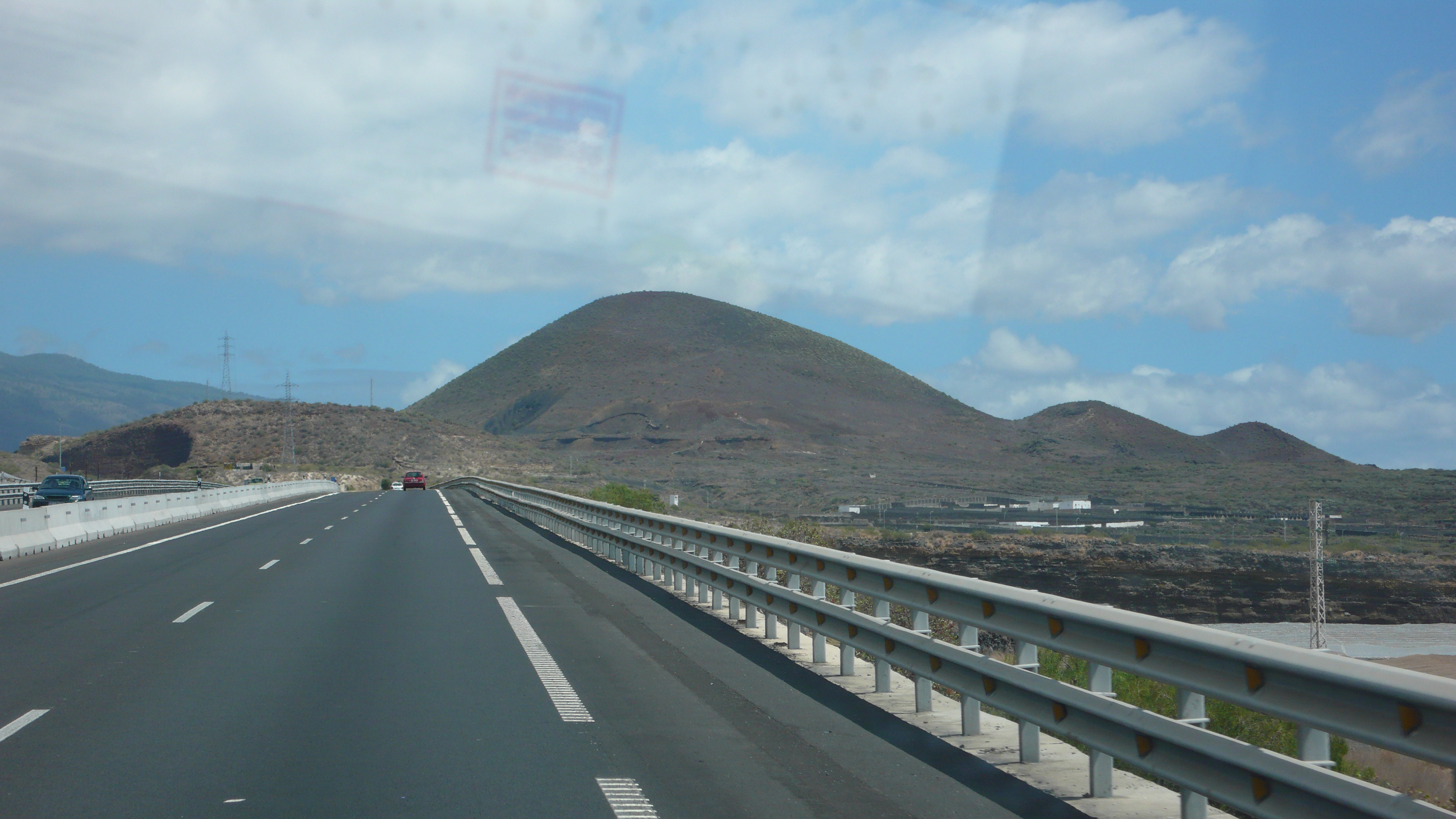
The final day of the trip, prior to getting to the airport, is traditionally spent at the Pyramids of Güímar ethnographic park where the students discover some of Thor Heyerdahl’s left field views about possible pre-Columbian links between Canarian, Mediterranean and New World peoples.  Whatever the truth behind the origin and function of these enigmatic structures, the visit is a pleasant way to end the field course.  Nestled within the protective bowl of the Güímar Valley, I often wonder if it’s a coincidence that the Güímar structures look out towards the three cinder cones adjacent to the Güímar Badlands.  Approaching from the south along the TF1 road, these hills take the form of a heavily pregnant woman lying on her back.  Was it of symbolic significance to the ancient Tenerifeans in the days prior to the Spanish conquest?  I like to think so though we probably will never know.

A small grant from the British Ecological Society means that I’ll be back in Tenerife at the end of May for ten days to do some follow up field work.  Hamburgers will be avoided.

Darwin’s Unrequited Isle (part 1)

A busy week of biodiversity-related activities terminated last Friday in a frantic rush to make sure everything was organised for this week’s field course in Tenerife.  The field course has been running for 10 years and has proven to be both popular with students and productive, generating data for a couple of research papers, with more in the pipeline.

Tenerife is an extraordinary island as Charles Darwin recognised; it’s the place that Darwin really wanted to go to when he embarked on H.M.S. Beagle, though he never made it due to the Beagle having to be quarantined before anyone was allowed onto the island.  The captain decided to sail away and Darwin was devastated.  Hopefully the rest of his trip made up for it, but it’s interesting to speculate whether Darwin’s ideas about evolution may have taken a different path had he been able to visit the Canary Islands, in many ways an Atlantic analogue of the Galapagos……but I’m getting ahead of myself…..this week I hope (time willing) to post some updates about out Tenerifean activities.  But back to last week.

The comments sections below the articles on the Times Higher Education Supplement are frequently mires of vile, obnoxious trolling that would embarrass even Shrek.  However an interesting article by Alice Bell has raised a debate about what exactly it is that scientists (and other academics) should be writing.  Widening science communication should also include giving talks about one’s work to a non-specialist audience.  Which is exactly what I did on Wednesday evening when I spoke to an audience of 65 beekeepers, gardeners and farmers in South Warwickshire.  They were very attentive and asked some insightful questions for about 40 minutes after I’d finished speaking, stopping only when someone mentioned that the tea and biscuits were ready.   All told it was a 90 mile round trip through heavy rain but worth it for such an engaging audience.

Earlier that morning I had been interviewed by BBC Radio Northampton  about a report that has just been released indicating that the “native” [sic] Black Honey Bee variety is more common in the British Isles than previously thought.  Lovely.   Good news for the beekeepers I told them.  Now let’s pay a bit more attention to our 250 REALLY native bees, many of which have declined numbers, and 23 of which have gone extinct since 1800.  Not to mention the butterflies (though there’s recently been some good news as far as they are concerned too) and the hoverflies and other pollinators.

Thursday was Think Tank day for the SEED project and I took part in the biodiversity session, which was ably chaired and coordinated by Gareth.  It went as well as we could have wished and hopefully some concrete partnerships are going to come out of it.  But ultimately it was a talking shop and biodiversity should be about doing and experiencing more than talking.  Which brings us back to Tenerife.

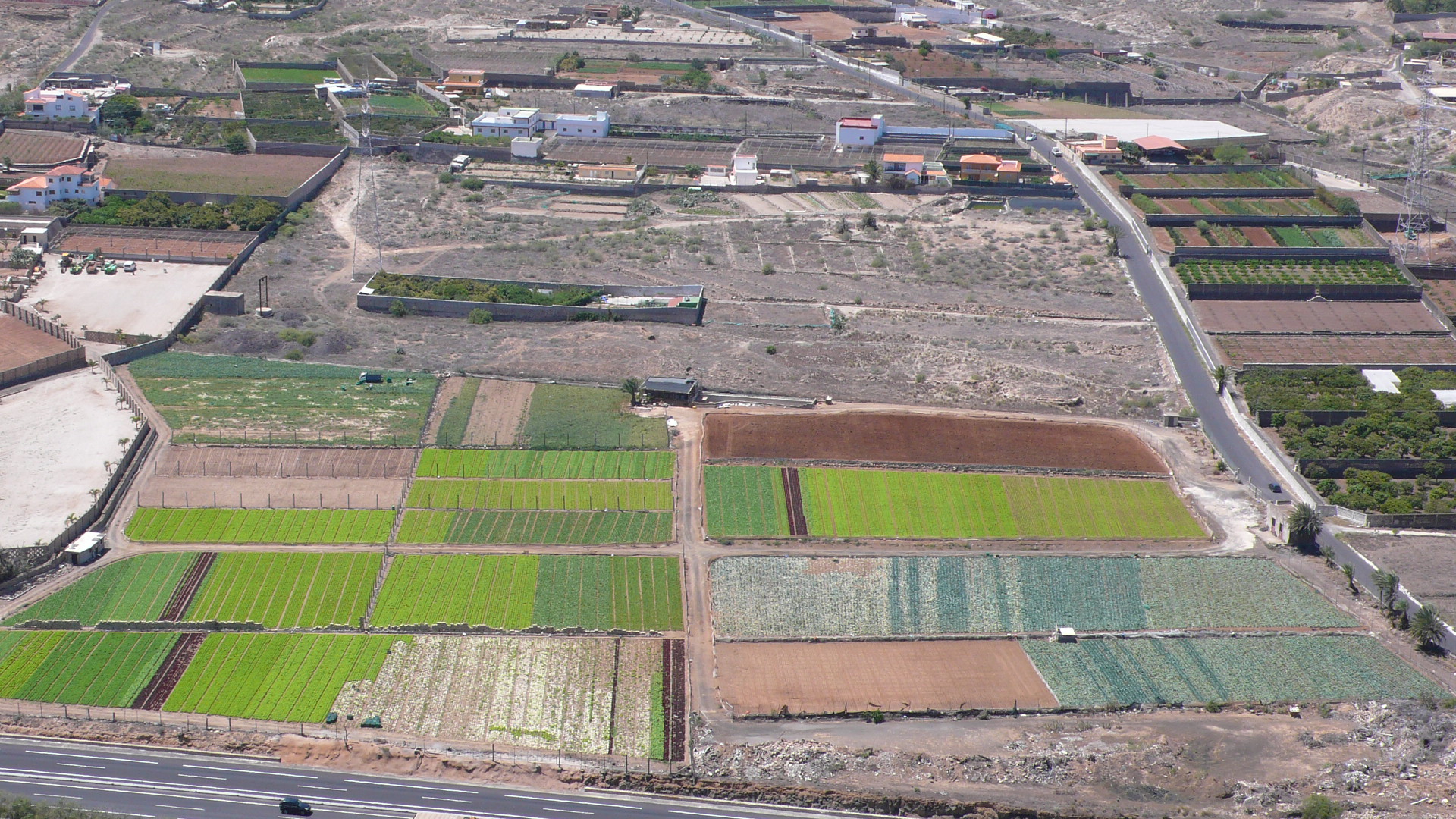
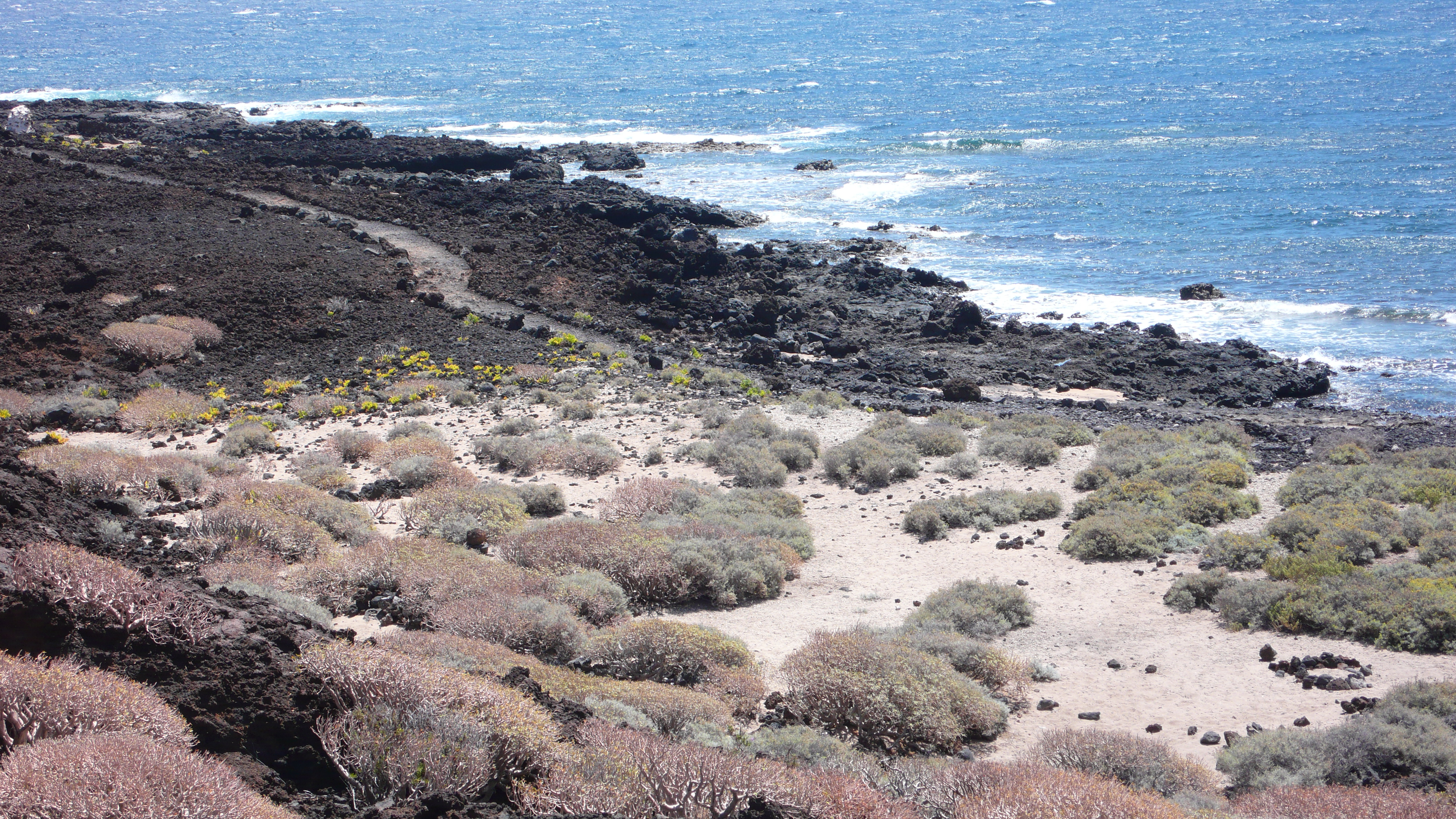
On Monday we took the students up to the Guimar Badlands (Malpais de Guimar) a 40 minute drive north east from where we are staying in San Eugenio.  I like to take students to Guimar on their first day in the field:  the pine and laurel forests that we visit later in the week are physiognomically similar to such forests in Britain.  But the succulent dominated xerophytic scrub of Guimar is utterly unlike anything that most of them have experienced previously.  The field work we do at this site is always related to plant community structure, trying to understand how the biodiversity of the primary producers is “organised”.  There’s lots of different ways to measure community “organisation” in an ecological sense, of course, and this year we are looking at how the plant community changes along a gradient from the strand line limit of the vegetation, inland and away from the salty influence of the sea.  It’s an exercise I’ve wanted to do for a while because it’s always been clear that the plants DO change; we’re just never put numbers on it.  So we ran out four 120 metre transects and identified all of the plants that they intercepted at 5m intervals.  Lots of student frustration as they used a combination of identification keys, hints from me and guesswork to put a name to these unfamiliar species.  But by the peak of the day’s heat in the mid afternoon we had a data set and several sunburned students  [no matter how often you mention the word “sun block” there will always be some who think they don’t need it].

Back at our apartment complex there was time for a rest/shower/power nap, depending on your preference, before we reconvened to enter the data into spreadsheets and start generating some graphs.  And these preliminary data look really good, showing how the salt tolerant halophytes are replaced by the various euphorbias and other species that dominate the rest of the Badlands within about 40m of the lower limit of the vegetation, with other species even less salt tolerant and only making a show after about 90m.  This is biodiversity doing interesting things………

Tuesday was a trip up through the pine forest zone to Las Canadas at the foot of Mt Teide.  A long day through some spectacular scenery, interspersed with collecting data on bird behaviour at a picnic site and checking some populations of an endemic plant the Canary Wallflower (Erysimum scoparium).  Interestingly the populations to the south of Las Canadas have more or less failed to flower this year, probably because of the very dry winter on Tenerife.  Many other species have also not flowered and there are some implications for the pollination biology of this plant which I’m hoping we can quantify later in the week.   Will report back when I get a chance………..over and out for now.