Category Archives: Bees

Darwin’s Unrequited Isle (part 2)

During our field trip to Tenerife the two vehicles covered over 900km each, which is not bad on an island only about 80 km in length along its main axis.  We experienced temperatures that ranged in one day from a few degrees above freezing to the mid 20s centigrade.  Up in the laurel forest I mentioned last week the weather was cold and foggy, whilst in the Malpais de Güímar it was hot and dry and we sunburned.  We put in long, tiring days of walking transects, identifying, measuring and recording plants, and observing bee and bird behaviour.  And there were ticks that had to be picked off skin in one of the barrancos we visited.  The Romantic Adventurer within me would therefore like to believe that the aching limbs and upset stomach I suffered when we got back to the UK were due to some exotic virus passed on by these blood sucking arachnids.  However the Cynical Traveller thinks it was more likely to be due to a hamburger of dubious age and temperature that I ate at Tenerife Sur airport on the way home.

The Tenerife Field course was hard work but great fun and I think (I hope!) the students learned a lot.  At the very least they have now experienced just how diverse habitats can be on a small oceanic island.  In that diversity rests both the beauty of Tenerife and part of its scientific interest.  This variability in habitats is a result of its altitude (Tenerife is the second highest oceanic island in the world after Hawaii), subtropical latitude, climate, proximity to Africa, and geological history.  In a single day one can travel from high alpine habitats, through sub-alpine desert scrub and pine forest, into succulent dominated low altitude desert scrub, back up to laurel forest (a form of subtropical rainforest), as well as distinct deep valley and strandline vegetation.

Add to this the occasional hurricanes and forest fires that tear across parts of the island, not to mention volcanic eruptions, plus the human impact, and it makes for a rather dynamic environment at a range of time scales.  These processes probably add to the overall biodiversity, as predicted by the intermediate disturbance hypothesis, plus formation of new land area can select for novel proto-species.  It begs the question of whether volcanic oceanic islands are more diverse than their coralline counterparts, which we might expect to be less dynamic environments.  Has anyone investigated this?  That’s one of the things that keeps my interest in biodiversity going: there are too many questions for a single lifetime.

I’m hoping that “Darwin’s Unrequited Isle” will take off as a new name to refer to Tenerife, replacing the Island of Eternal Spring cliché it currently holds (and shares with Madeira).  Especially as many of the days we were there were spring-like only in the sense that they were wholly unpredictable.   On the roof of Tenerife, in Las Canadas, our car thermometer registered 3 degrees centigrade at 1100am.  And it snowed.  I’ve never experienced that at this time of the year.  We’ve had torrential rains storms but never snow.  In late April.  In the “Island of Eternal Spring”.   I’m not complaining though, it all adds to the fascination of this most interesting of islands and is why we come back year after year.  It’s also better conditions than my colleagues Duncan McCollin and Janet Jackson endured with those students who elected to do field work in Northamptonshire rather than Tenerife.  For most of the time we were away it poured with rain back home, turning the drought-imposed hosepipe bans into flood warnings in some places.

Needless to say, the day of the snow was the day we were due to make some observations of bee behaviour.  By and large bees don’t like snow and low temperatures ground most of them.  So that planned activity was delayed until later in the day when it finally warmed up sufficiently for them to start flying.

This theme of variability in the weather, on a day-to-day basis and compared to previous years, was a recurring one all week.  Tuesday was hot, as I recounted in my previous blog.  But Wednesday was a huge contrast as we headed up into the cold, wet laurel forests of the Anagas Mountains.  It’s always a little chilly on this part of the island due to the prevailing moisture-laden trade winds, but this year was colder and foggier than I can remember.  The students collected data on the distribution of plants up a vertical cliff face that we can compare to similar data from another site collected last year.  I’m intrigued by the way succulent plant groups such as Aeonium and Monanthes are able to survive on these water limited, nutrient poor environments, vertical versions of the desert scrub lower down the mountains.  These succulents add to local plant species richness within the forest and provide nectar and pollen resources when they flower, increasing the overall levels of biodiversity of an already diverse habitat.

As well as studying plant diversity we also did some work with the animals of Tenerife.  The bees I’ve already mentioned, but for the first time we also made some observations of how bird behaviour changes in tourist areas compared to more isolated spots.  Even within a very short distance, no more than a few hundred metres, it’s clear that bird diversity, abundance and range of observed behaviours were greater in the areas where tourists congregate to barbecue and relax.  We did some similar work with lizards for a few years and found that they were bolder close to tourist car stops than further away.  Humans can impact the life of this island in very subtle ways.

We also spent a morning with volunteers from the Atlantic Whale Foundation (AWF) on one of their trips out to record individual whale and dolphin activity off the south west coast.  The AWF piggy backs on one of the commercial whale watching boats and the students are encouraged to think about the synergies and tensions between the conservation-motivated scientific observation of the AWF and the commercial motivations of the tourist boats.  It gets to the heart of what “eco-tourism” is all about and the point at which it does more harm than good.  The only strong opinion that I have about it is that the value of eco-tourism is context dependent; some activities are better than others in some circumstances but not others.  Regardless, the trip is always popular with the students (except one year when a student spent the whole time aboard with her eyes closed, suffering chronic sea sickness) and this year was exceptional, with great views of bottle nosed dolphins and pilot whales, as well as long distance spottings of common dolphins and a 20m fin whale.

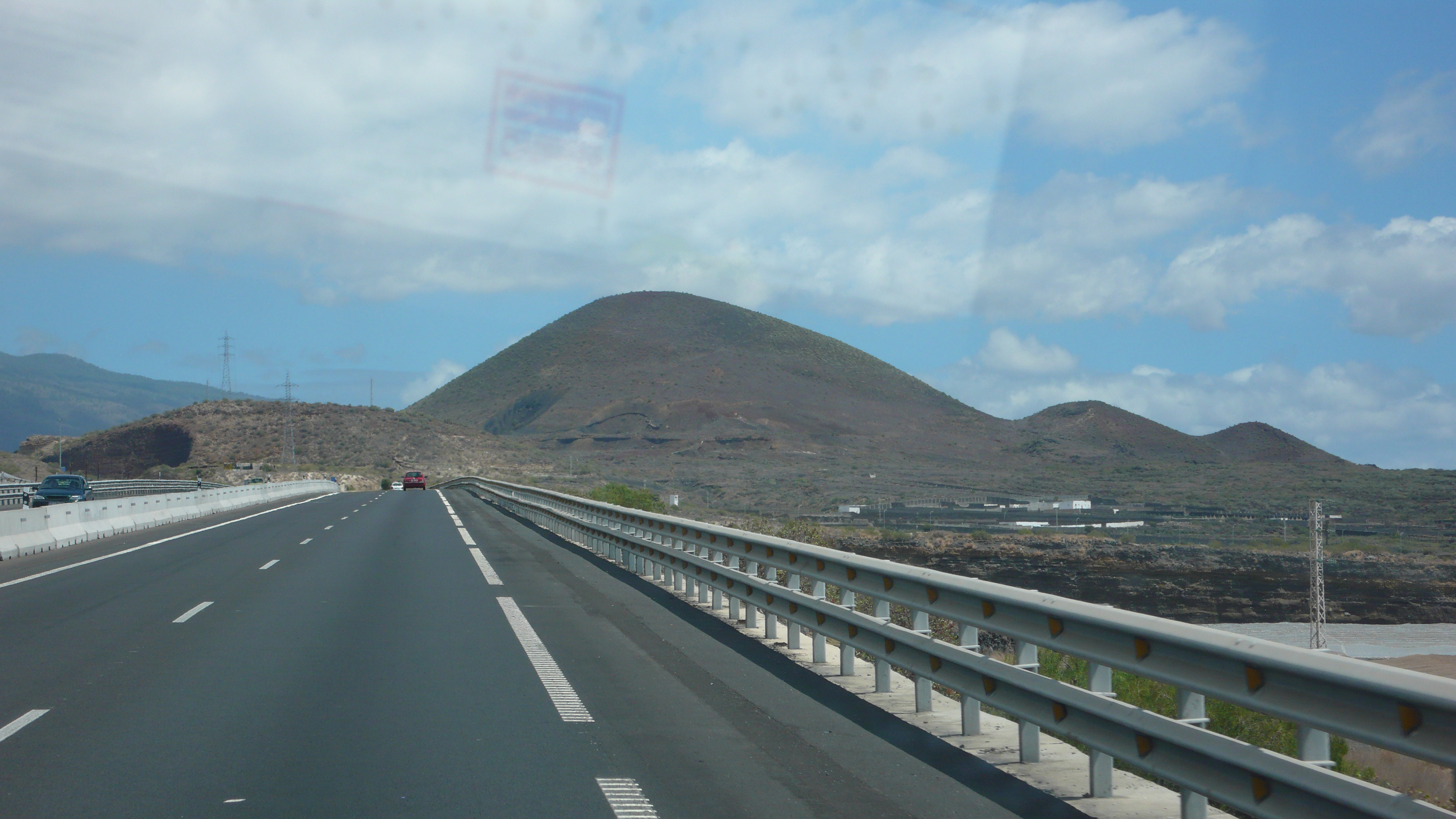
The final day of the trip, prior to getting to the airport, is traditionally spent at the Pyramids of Güímar ethnographic park where the students discover some of Thor Heyerdahl’s left field views about possible pre-Columbian links between Canarian, Mediterranean and New World peoples.  Whatever the truth behind the origin and function of these enigmatic structures, the visit is a pleasant way to end the field course.  Nestled within the protective bowl of the Güímar Valley, I often wonder if it’s a coincidence that the Güímar structures look out towards the three cinder cones adjacent to the Güímar Badlands.  Approaching from the south along the TF1 road, these hills take the form of a heavily pregnant woman lying on her back.  Was it of symbolic significance to the ancient Tenerifeans in the days prior to the Spanish conquest?  I like to think so though we probably will never know.

A small grant from the British Ecological Society means that I’ll be back in Tenerife at the end of May for ten days to do some follow up field work.  Hamburgers will be avoided.

Darwin’s Unrequited Isle (part 1)

A busy week of biodiversity-related activities terminated last Friday in a frantic rush to make sure everything was organised for this week’s field course in Tenerife.  The field course has been running for 10 years and has proven to be both popular with students and productive, generating data for a couple of research papers, with more in the pipeline.

Tenerife is an extraordinary island as Charles Darwin recognised; it’s the place that Darwin really wanted to go to when he embarked on H.M.S. Beagle, though he never made it due to the Beagle having to be quarantined before anyone was allowed onto the island.  The captain decided to sail away and Darwin was devastated.  Hopefully the rest of his trip made up for it, but it’s interesting to speculate whether Darwin’s ideas about evolution may have taken a different path had he been able to visit the Canary Islands, in many ways an Atlantic analogue of the Galapagos……but I’m getting ahead of myself…..this week I hope (time willing) to post some updates about out Tenerifean activities.  But back to last week.

The comments sections below the articles on the Times Higher Education Supplement are frequently mires of vile, obnoxious trolling that would embarrass even Shrek.  However an interesting article by Alice Bell has raised a debate about what exactly it is that scientists (and other academics) should be writing.  Widening science communication should also include giving talks about one’s work to a non-specialist audience.  Which is exactly what I did on Wednesday evening when I spoke to an audience of 65 beekeepers, gardeners and farmers in South Warwickshire.  They were very attentive and asked some insightful questions for about 40 minutes after I’d finished speaking, stopping only when someone mentioned that the tea and biscuits were ready.   All told it was a 90 mile round trip through heavy rain but worth it for such an engaging audience.

Earlier that morning I had been interviewed by BBC Radio Northampton  about a report that has just been released indicating that the “native” [sic] Black Honey Bee variety is more common in the British Isles than previously thought.  Lovely.   Good news for the beekeepers I told them.  Now let’s pay a bit more attention to our 250 REALLY native bees, many of which have declined numbers, and 23 of which have gone extinct since 1800.  Not to mention the butterflies (though there’s recently been some good news as far as they are concerned too) and the hoverflies and other pollinators.

Thursday was Think Tank day for the SEED project and I took part in the biodiversity session, which was ably chaired and coordinated by Gareth.  It went as well as we could have wished and hopefully some concrete partnerships are going to come out of it.  But ultimately it was a talking shop and biodiversity should be about doing and experiencing more than talking.  Which brings us back to Tenerife.

On Monday we took the students up to the Guimar Badlands (Malpais de Guimar) a 40 minute drive north east from where we are staying in San Eugenio.  I like to take students to Guimar on their first day in the field:  the pine and laurel forests that we visit later in the week are physiognomically similar to such forests in Britain.  But the succulent dominated xerophytic scrub of Guimar is utterly unlike anything that most of them have experienced previously.  The field work we do at this site is always related to plant community structure, trying to understand how the biodiversity of the primary producers is “organised”.  There’s lots of different ways to measure community “organisation” in an ecological sense, of course, and this year we are looking at how the plant community changes along a gradient from the strand line limit of the vegetation, inland and away from the salty influence of the sea.  It’s an exercise I’ve wanted to do for a while because it’s always been clear that the plants DO change; we’re just never put numbers on it.  So we ran out four 120 metre transects and identified all of the plants that they intercepted at 5m intervals.  Lots of student frustration as they used a combination of identification keys, hints from me and guesswork to put a name to these unfamiliar species.  But by the peak of the day’s heat in the mid afternoon we had a data set and several sunburned students  [no matter how often you mention the word “sun block” there will always be some who think they don’t need it].

Back at our apartment complex there was time for a rest/shower/power nap, depending on your preference, before we reconvened to enter the data into spreadsheets and start generating some graphs.  And these preliminary data look really good, showing how the salt tolerant halophytes are replaced by the various euphorbias and other species that dominate the rest of the Badlands within about 40m of the lower limit of the vegetation, with other species even less salt tolerant and only making a show after about 90m.  This is biodiversity doing interesting things………

Tuesday was a trip up through the pine forest zone to Las Canadas at the foot of Mt Teide.  A long day through some spectacular scenery, interspersed with collecting data on bird behaviour at a picnic site and checking some populations of an endemic plant the Canary Wallflower (Erysimum scoparium).  Interestingly the populations to the south of Las Canadas have more or less failed to flower this year, probably because of the very dry winter on Tenerife.  Many other species have also not flowered and there are some implications for the pollination biology of this plant which I’m hoping we can quantify later in the week.   Will report back when I get a chance………..over and out for now.

Up a Mountain, Darkly

Someone (probably claiming to be wise) once said something along the lines of:  “There are many paths but only one mountain”.  Or possibly: “There’s only one mountain but many paths”.  Or some other contortion of those words and ideas.  I don’t know where it originated and a quick google doesn’t really help; there’s lots of permutations and attributions out there in cyberspace.  Whoever the author and whatever the original meaning behind it, the notion has now come to refer to religious and spiritual pluralism: believe what you like, worship how you will, we’ll all get to God in the end.

Anyone who knows me well knows that I’m in no way religious, and spiritual only in so far as wild landscapes, beautiful organisms, profound notions and great buildings make me feel a bit strange inside.  But it struck me recently that the paths and mountain concept could equally apply to approaches to environmentalism and biodiversity conservation.  It came out of  a conversation I’ve been following that’s going on over at Thoreau Farm between Wen Stephenson and Paul Kingsnorth.  The discussion began as a rather bad tempered exchange on Twitter but ended with a large degree of mutual respect and an agreement to differ.  It’s worth reading.

A few years ago I met writer and (former) environmental activist Paul Kingsnorth when he came to the university to give a talk about the ideas he was developing (with Dougald Hine) around the Dark Mountain Project.  Paul is an engaging writer and thinker, and the notion of the Dark Mountain intrigued me both as a metaphor and as a framework for exploring what it is to be “environmentally aware” or “green” or an “ecologist” (in all senses of that widely used word).  The debate with Seth centres around his (initial) impression that Paul and the Dark Mountain Project were promoting giving up the environmental struggle and letting things run their course: our society collapses, ultimately, and then we dust ourselves off and build something new.  However a lot of what the Dark Mountain is about is to build stories and ideas and other acts of creativity that will prepare us for this “Uncivilisation”.  As Paul argues, this is very different to “giving up”.

Some months after we met I sent Paul the first draft of an article that was subsequently published in issue one of the Dark Mountain book.  W(h)ither science was a very personal take on the role of scientists, and the knowledge they generate, in the early 21st century.  It was framed within the context of the Dark Mountain’s ideas of “what happens when it all goes wrong?”  I prefer to think of it as “if” rather than “when” because, as I originally put it, “knowledge is not predictable”.  In other words, we don’t know what will happen in the future, we can only prepare for a range of outcomes.  In the last two centuries England has lost about 95% of its diverse meadows and grasslands to intensive agriculture.  Linked to this around 10% of our bee and butterfly species have gone extinct and many others have declined enormously.  Yet our natural and agricultural ecosystems, and the society they support, continue to function.  How long that can last, who knows?

I am drawn to the Dark Mountain because it scares me.  The implications of its message are profound: our western (and increasingly eastern and southern) civilisation in its present form is doomed because our lifestyles cannot possibly be maintained at their present levels of resource use.  The resulting environmental degradation, intensified by climate change, will reach a point where ecosystem services will no longer be sustained and our societies will collapse.  It’s a bleak prospect but Paul sees it as an honest one;  as he puts it: “I am trying to walk away from dishonesty, my own included. Much environmental campaigning, and thinking, is dishonest. It has to be, to keep going.”

Sometimes it’s good to be scared.  Karin and I attended the first Dark Mountain Festival in summer 2010 and thoroughly enjoyed the mix of spoken word, music, art and creativity (but not the Welsh weather, the walk back to the camp site or the crappy beer).  However we missed the second festival in 2011 as I was teaching on the TBA Tanzania field course I referred to in an earlier blog.  Also teaching on that course was a remarkable Dutch entomologist Klaas-Douwe Dijkstra.   K.-D., as he is known universally, is an authority on the Odonata, the dragonflies and damselflies.  He is probably the most widely traveled African odonatologist there is, with an encyclopaedic memory for the details of African dragonfly biodiversity.  This week he and a raft of colleagues have published an important paper on the diversity of African Odonata and how they can be considered as “guardians of the watershed”.

Also this week, our research group has been joined by André Rodgrigo Rech from Universidade Estadual de Campinas in Brazil.  André will be working with me for the next 12 months on his doctoral thesis on pollination and reproductive biology in some neotropical members of the plant family  Dilleniaceae.  He’s also going to get involved with some of this season’s field work.  These collaborative processes are important to scientists as they widen the scope of our knowledge: I’m going to learn a lot about some plants that I’m unfamiliar with and André will gain an understanding of temperate European plants and pollinators.

The contrast between these ways of doing scientific conservation and the Dark Mountain project is striking.  But I see them not as at odds with one another, but as complimentary.   As Paul says in one of his contributions to the debate with Seth: “Do what you need to, and what you have to, and what you feel is right.”  To paraphrase: find your own path.  The mountain is dark and we have no idea what’s at the top.  But there are plenty of mountaineers traveling up its many faces, some on paths well trod and others hacking their own trails.  See you at the summit.

Walking the turkeys to London

The March 2012 issue of the British Ecological Society’s quarterly Bulletin contains an article by Bill Sutherland and colleagues entitled “What are the forthcoming legislative issues of interest to ecologists and conservationists in 2012?”  This is the second of their annual “horizon scanning” exercises and provides a very useful map of UK, European and international developments that relate to the conservation of biodiversity.   The article identifies 35 (THIRTY FIVE!) separate conventions, policies, legislative tools and reviews that we need to keep at least half an eye on over the next 12 months.  These include high profile international events like the Rio+20 UN Conference on Sustainable Development; European initiatives such as the proposed reforms of the Common Agricultural Policy; and UK developments of more (The 2020 Challenge for Scotland’s Biodiversity) or less (Reform of the House of Lords) direct importance to biodiversity.

After reading the article I was left feeling over whelmed by it all.  It’s no wonder that many scientists don’t engage with the societal impacts and implications of their work and stick squarely to the science.  Nothing wrong with that at all and a few years ago I would have agreed with them:  I was happy to keep away from the touchy-feely politico-gabfest end of it all too.  But after 20 years of doing science that was relatively “pure” in the sense that it was concerned with the fundamental aspects of the biodiversity of species interactions (particularly plant-pollinator relationships) my research seems to have shifted more towards work that feeds into biodiversity conservation.  Of course I always argued (and will continue to) that conservation requires a sound scientific underpinning if it is to be effective: it’s hard to conserve what we don’t understand.   But much of the research that’s taken place in the LBRG over the last five years or so has been more or less directly conservation focused.  For example, some of my current and former postgraduates work on topics such as the biodiversity of restored landfill sites (Lutfor Rahman and Sam Tarrant) and the management of small fragments of habitat on commercial sites (Gareth Thomas).   In part this has been purely pragmatic: it’s easier to convince organisations to fund research if you say: “This has important implications for conservation” rather than saying: “This is an interesting scientific question”.  But one should never lose sight of the science that makes the work meaningful in the first place.  Getting that balance between applied conservation (and potentially policy) and the fundamental science can be hard.  Articles such as Bill’s, important though they are, can make one feel like a migrating salmon swimming against the river’s current and trying to make headway in a stream of oncoming information from NGOs, government and international agencies, not to mention the scientific journals.

Overwhelming, as I said, so it’s nice therefore to have some down time.  I’ve been on leave most of this week apart from a couple of meetings on Wednesday, and have caught up with various tasks relating to car, house, life and family.  It’s also been good to get into the garden and plant potatoes and other veg.  We only moved into this house at the end of January so the garden has been slowly evolving from its original state of 90% lawn and 10% side borders, to something a lot more interesting.  Whilst planting I’m keeping track of the number of species of bees and other pollinators I spot in the garden and will report back later in the year.

As well as gardening the Easter break is a good opportunity to reconnect with some real biodiversity rather than just talking and writing about or teaching it.  With this in mind on Thursday Karin and I took ourselves on a six mile round trip hike from home, up through Kingsley and on to Bradlaugh Fields.   Named after 19th century radical atheist politician Charles Bradlaugh, this urban park is one of my favourite places in Northampton, both for relaxing and as a site for teaching and research projects.  As well as a system of very ancient hedgerows, some of which may be at least 1000 years old if you apply Hooper’s Rule, Bradlaugh Fields also includes two ecologically valuable Local Nature Reserves that are managed by one of our graduates, Ian Wilson.  Over the years we’ve visited them with students to look at how different grazing regimes can be used to manage grasslands and how the underlying geology affects the local mosaic of plant assemblages.  Published research from the site includes work on: the function of floral traits in wild carrot (Daucus carota); pollinator sharing between a parasitic plant and its host; and how natural selection may be shaping the flowering times of plant species.  There’s more data to be published in the future including a 15 year (and counting) phenological study of flowering time in the parasitic plant/host system.

The day was rather cold and grey but the fine weather during March meant that quite a lot of plants were in full flower including great swathes of ground ivy (Glechoma hederacea), an important early nectar source for solitary bees, bee flies, queen bumblebees and other early emerging pollinators.

It was a really pleasant walk and set us up for a nice cup of tea when we returned.  But what, I hear you asking, does the title of this blog have to do with biodiversity or conservation or ecology?  Or anything for that matter?  Well, “walking the turkeys to London” was an expression that Karin and I dreamt up on our Bradlaugh Fields walk.  We were chatting about a TV programme we’d watched the other evening about traditional ways of producing food in Britain.  One of the items featured was about black turkey raising in Norfolk.  Following the fattening of the birds on recently harvested grain fields, the birds along with sheep, pigs, and other livestock were transported to Smithfield Market in London.  On foot.  The drovers and their animals would average only 3 miles a day and take several weeks to travel to the capital.  It was all redolent of a slower paced way of life, before there were 35 (THIRTY FIVE!) things to bear in mind before we consider the science.  It seemed to us that “walking the turkeys to London” could be the next catch phrase to follow on from clichés such as “thinking outside the box”, “running it up the flagpole and seeing if it flies” and (my current bête noir) “going forward” (what other bloody direction are events likely to move in?).  Only thing is, we are not sure what “walking the turkeys to London” might refer to.  It could relate to the opening of this blog; the idea of the slow slide of science from the labs and research groups towards informing action and policy in the centre of things at Westminster.  Except that “turkey” has such negative connotations: how many scientists, keen to show that their research has impact, are likely to say “let’s walk this turkey to London”?

Whatever it means, the phrase is out there now; it will either be picked up and used or fall flat.  That’s language and it evolves, or stays static, just like the rest of biodiversity.

Angry Birds! (and startled bees)

The texture of the life academic is nothing if not varied.  After a couple of days working from home thanks to a dose of flu,  Thursday was spent supervising three one hour tests for my first year students, scattered throughout the day from 0930 to 1600.  As I watched over these hurriedly scribbling undergraduates their shifting expressions ranged across boredom, panic, rapt intensity, smugness and exhaustion.   The latter because it’s been a long term and we’ve worked them hard.  The Easter break will be a relief.  Whilst they pored over the questions I shifted between marking second year literature reviews, checking email and gazing thoughtfully out of the window.

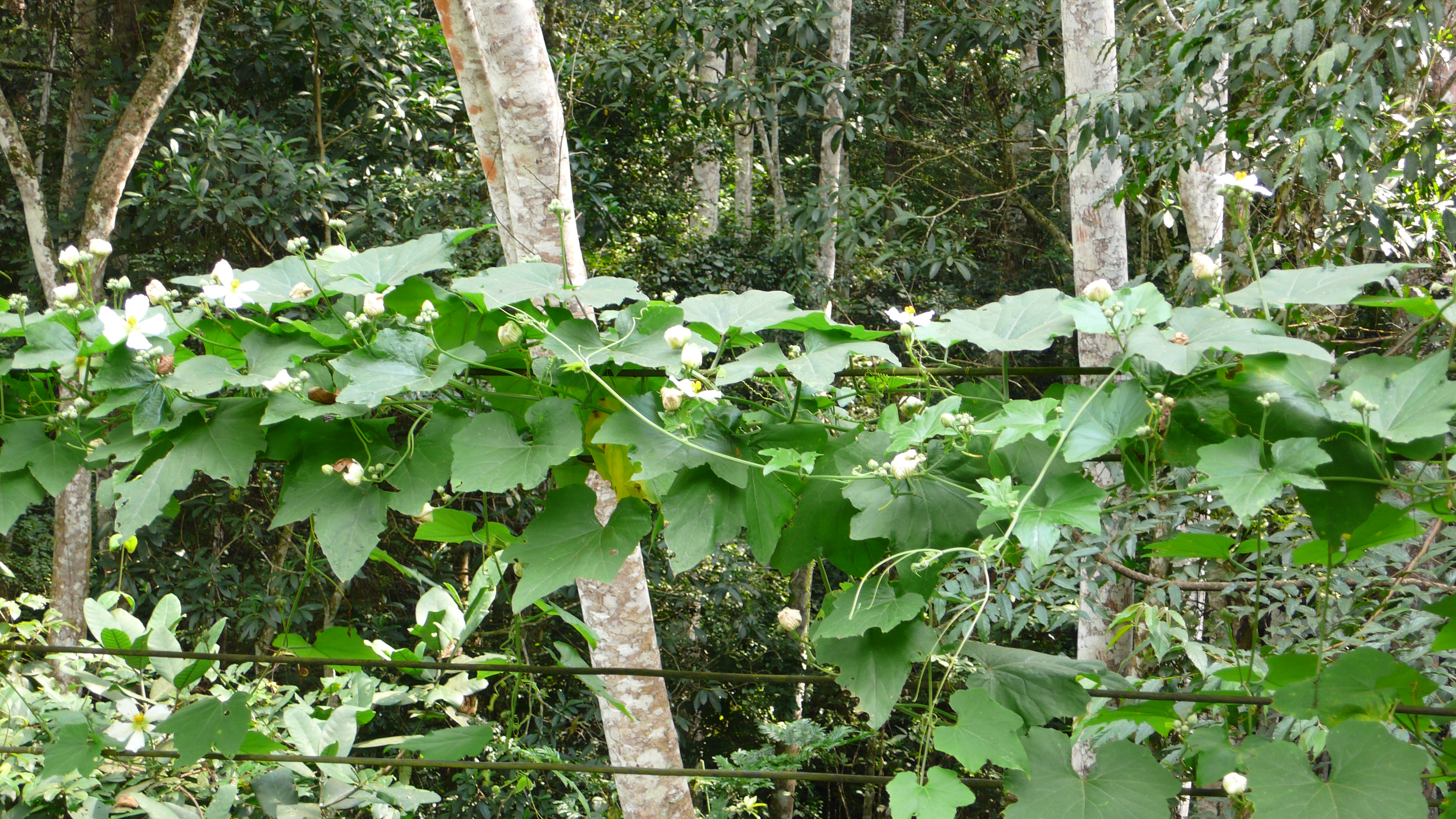
Between tests I went back to the office and worked on completing the first draft of a manuscript that I’ve been promising to send to my co-author Clive Nuttman of the Tropical Biology Association.  It’s based on data we collected in Tanzania last year during the TBA field course whilst observing aggressive interactions between nectar feeding male sunbirds and large Xylocopa carpenter bees.  The bees sneak into the sunbirds’ territories and, if spotted, the birds fly at them, chasing them through the forest.  The plant on which they were feeding is a member of the squash and melon family (Cucurbitaceae) and like many in that family it has separate male and female plants.  Only the male flowers produce nectar;  the females function, in effect, as rewardless mimics of the males.  In addition it seems as though only the bees are pollinators as the birds don’t pick up pollen on their feathers and (crucially) don’t visit the female flowers.  However the birds might be providing a service to the plants by driving the bees to move between plants rather than staying on the male flowers most of the time.  It’s a complex story (which ones in ecology aren’t?) and we’ve only scratched the surface of what is going on, but the aggressive interactions side of it makes a nice starting point for further work.  We’re calling it:   “Angry Birds!  Aggressive displacement of Xylocopa carpenter bees from flowers of Lagenaria sphaerica (Cucurbitaceae) by territorial male Eastern Olive Sunbirds (Cyanomitra olivacea) in Tanzania”.  Let’s see if the journal editor and reviewers will go along with the tongue in cheek pre-title.

Friday started with a meeting between Muzafar Hussain, on of my PhD students you met last time, and Peter Nalder from South Court Environmental.  SCE is a local co-operative dedicated to environmental projects, and organic and permaculture food production.  The group is responsible for managing a number of old, remnant fruit tree orchards around Northampton.  We took a look at a really interesting site over in Abington that was originally a farm.  It’s now been converted into sheltered housing for old folks and a nature conservation area that includes an orchard.  Muzafar is planning to incorporate some of these orchards into his urban bees surveys.  This will add to what we know about the diversity of habitats available to these bees and relates it directly to the ecosystem service of crop pollination that the bees provide.

In the afternoon I drove up to the Wildlife Trust’s offices at Lings House for the first formal meeting of the Nene Valley Nature Improvement Area partners to be held since the announcement that we had secured the funding back in February.   I intend to write more about the Nene Valley NIA in the coming months and years.  But for now it’s enough to say that we’re incredibly excited about the opportunities the NIA will bring to improve the level of biodiversity conservation in the region.  The university is leading on one of five objectives: to assess the range of ecosystem services being delivered in the Nene Valley and the condition of the biodiversity (including habitat as well as taxonomic diversity) that is supporting those services.  We’ll focus on pollination, naturally, but also on other services including fresh water provision and flood alleviation, and possibly carbon storage.  These are new areas for me and it’s going to be a steep learning curve.  A PhD student has already been recruited to work on pollinator diversity and in the near future we’ll take on a post-doc for the main part of the project (if you know of anyone who might be interested ask them to send me their CVs).

Chairing the meeting was Oliver Burke the Wildlife Trust’s energetic and enthusiastic Conservation Manager who has been the real driving force behind the NIA  (which on a map looks like a large intestine squiggling its way across the landscape; in honour of him I renamed it “Oliver’s Colon”.  Not sure if it will stick but I intend to use it in all official NIA documents from now on).  Most of the meeting was concerned with the nuts and bolts of how the finances will work, reporting of activities, membership of the steering group, etc.  Dull but vital if the Nene Valley NIA is to be the success we want it to be.

Also at the meeting was Adrian Southern from the RSPB, standing in for a colleague.  I keep bumping into Adrian in the most unlikely places, first at Biosphere 2 in Arizona in 2001 during an Ecological Society of America meeting that ultimately led to the Waser & Ollerton (2006) edited volume.  Then a few years later at another conference when he was a PhD student at University of East Anglia.  We never really kept in touch so it was a surprise to see him.  Now Adrian’s with the RSPB I hope to talk more with him about some ecosystem services projects he’s working with as part of their Futurescapes programme.  So add that to the lots of different things going on at the moment.  But varied is good.  If tiring.  So looking forward to a week off over Easter.

The Walls of the Garden

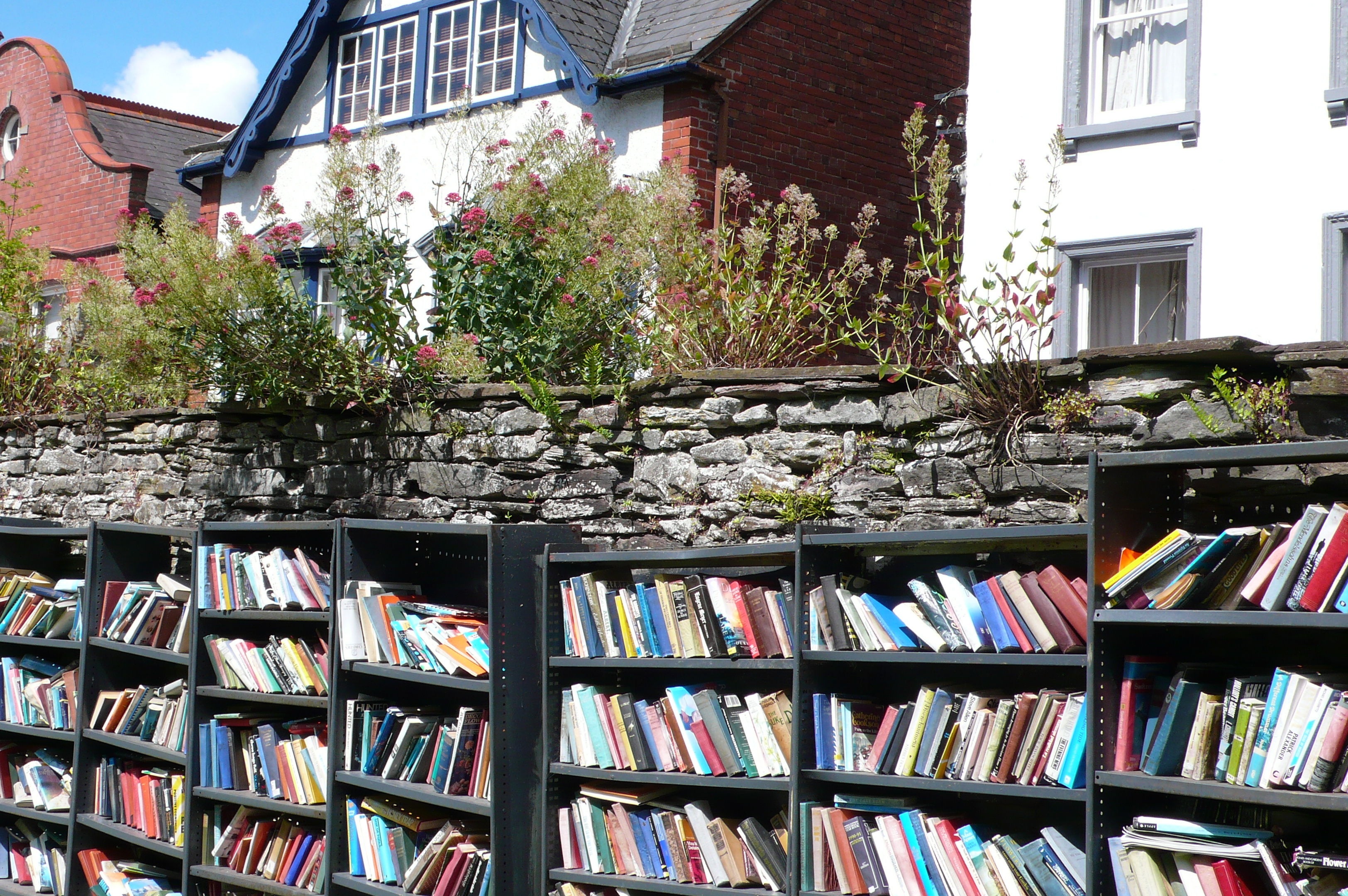
Old stone walls have always held a fascination for me.  Growing up in Sunderland I’d see substantial walls made of the local Magnesian Limestone, rough cut blocks often patterned with impressions and ridges that to my child’s mind looked like exotic coral or fossils of weird animals.  A friend reliably informed me that an odd shaped piece we had found was a “fossil dog’s skull”.  I didn’t believe him.  Even then I was skeptical of unsubstantiated claims.  When I understood more about the intriguing geology of that part of England I discovered that these patterned rocks were of chemical rather than biological origin, but no less interesting for that.

Walls then seemed to become a continuing back drop to my life.  As an undergraduate my final year research project involved clambering around on the 17th century walls of Oxford University’s Botanic Garden, surveying the plants that had naturally colonised them.  The wall flora was an odd mix of exotics and natives, many of which had no obvious means of dispersing on to the walls.  I joked at the time that perhaps the dispersal was by gardeners and ecologists working on the walls.  That may have been close to the truth.

Stone walls provide unique habitats for many plants and animals as they mimic rocky out crops and cliff faces.  Perhaps less obviously, so too do brick walls, as I saw on Friday morning which I spent having a grateful break from the office with Hilary Erenler.  Hils is one of my research students and is funded by the Finnis Scott Foundation.  For the past couple of years she has been surveying the pollinating insects found in the gardens of large country houses around Northamptonshire and into adjacent counties.  Our county is particularly rich in these estates (it’s known as the County of Spires and Squires, a nod to both the large number of churches and the historical pattern of land ownership).  So on Friday we conducted a couple of surveys of some large walled gardens on two private estates.  Amongst other things we measured the lengths and heights of the walls, counted a sample of the density of mortar holes that may have been nest sites for solitary bees such as Osmia rufa.  We also returned some soon-to-emerge bee cocoons to artificial nests as part of an experiment Hils is conducting.

For reasons of privacy and security I’m not allowed to divulge which estates we visited.  But I can say that the walled gardens were fascinating relics of a time when such large households and their staff relied on these sheltered,  productive patches to provide food twelve months of the year.  One garden had retained an avenue of some of the oldest espalier apple trees I’ve ever seen.  Thick and gnarled and festooned with epiphytic lichens and mosses, they must have been planted at least 100 years ago.  Whether the household appreciated it or not, the wild native bees that the walls hosted, and those coming in from the surrounding estate, also played their role by pollinating these apples, as well as pears, cherries, nectarines, beans, squashes and other insect reliant crops.

On the way back to the car we found a small patch of violas, primulas and celandines in a dry spot under a tree.  We counted at least 6 species of bees: two bumblebees (Bombus species); at least two (possibly three) andrenids, including the tawny mining bee Andrena fulvaAnthophora plumipes; and what may have been a Colletes species.  The bumblebees were queens, of course, filling up on nectar to give them energy to look for nesting sites.  But some of the solitary bees were males and exhibited their typical behaviour of patrolling the flowers in search of females with whom to mate.

Back in the office that afternoon I dealt with emails.  One was an unexpected communication from Steve Buchmann regarding a recent paper I’d published with Nick Waser and Andreas Erhardt in Journal of Pollination Ecology.  The paper deals with the historical development of some ideas pertaining to pollination syndromes.  I’ve admired Steve’s work for a long time; together with Gary Nabhan, Steve wrote the now classic book Forgotten Pollinators which can be credited with playing an important role in raising the issue of pollinator extinctions and declines in the public and scientific consciousness.  The JPE paper gives a historical perspective on understanding the interaction between Solanum flowers and their pollinators.  The long standing assumption is that Solanum flowers are pollinated by bees that vibrate their bodies at a particular frequency to shake out the pollen from the anthers, a reproductive strategy termed “buzz pollination”.   Steve was writing to tell me that many years ago he published a paper showing that some Solanum species are buzz pollinated by hoverflies.  I’d missed that paper so am looking forward to reading it when he scans it and sends me a PDF.  It worries me that much of the primary literature from before the widespread use of information technology is going to get neglected like this, because it’s not easy to access electronically.  Depositories that have started to archive older work, such as JSTOR, Biodiversity Heritage Library and Google Books, are great, but there’s still a lot of material to retro-input into these systems.

On the way to invigilate a one hour test for my second year Habitat Ecology and Management students later that afternoon I bumped into Muzafar Hussain, another of my research students, who had been out surveying solitary bees in the urban centre of Northampton.   His first year of surveying in 2011 revealed a surprisingly high diversity of species and he’s continuing that work this year.  Some of these bees are nesting in old stone and brick walls in the back streets behind the main thoroughfares of the town and are exploiting wall plants as pollen and nectar sources, a topic that’s being researched by Lorna, one of my final year project students.  Everything was coming back to walls today…..