Tag Archives: Climate change

Neither left nor right, but international environmentalism: Australia reflections part 8

2020-01-13 12.17.33

The NASA Earth Observatory reported this week that “explosive fire activity” has caused smoke from the Australian bushfires to enter the stratosphere and be carried half way around the world.  That smoke is currently creating hazy skies and colourful sunrises and sunsets across South America.  In the coming months the smoke will complete a full circuit and arrive back in Australia, and then continue onwards … for who knows how long?

Nothing I’ve read this week sums up better the fact that the world’s environmental challenges, including climate change, are global in scale and scope.  They therefore require global initiatives to solve.  But as I’ll argue below, equating “green” politics with the left and “anti-environmental” policies with the right is an unhelpful characterisation.

Despite the need for global action, the world’s political landscape seems to be going in the opposite direction.  Inward-looking, right-wing populism is on the rise, and governments are hunkering down into a siege mentality of denying that there are any environmental problems that require serious, long-term action.  The Australian government, bolstered by the Murdoch-owned media empire (see Michael Mann’s recent piece on this in Newsweek), sees the bushfire crisis as “business as usual” even though all the evidence is to the contrary – demonstrated in this interesting piece from two Australian climate scientists.

Elsewhere in the world, Presidents Bolsonaro in Brazil and Trump in the USA are tearing up environmental regulations and “green tape” and allowing “the people” (or at least big business interests) to ransack the natural world for their own gain.  At the same time, one of the less-well-reported elements of Boris Johnson’s various speeches over the past few months has been its emphasis on the environment (he even used the word “biodiversity” in one of them) and the pressure he put on the other leaders of the G7 countries at their most recent meeting.  Perhaps that should come as no surprise given that Boris’s father, former Conservative MEP Stanley Johnson, has sound credentials as an environmentalist, particularly during his time with the European Commission. Indeed, in the mid 1980s Stanley Johnson received an award from Greenpeace for “Outstanding Services to the Environment”.  He’s even written for The Guardian, which is not the natural home for a member of the Conservative party.  There are other Conservatives with sincere pro-environmental attitudes (Zac Goldsmith and Rory Stewart come immediately to mind) and whatever you may think about their views on other topics, you can’t doubt their sincere environmental commitments.  And of course there are pro-environmental politicians in the Labour Party, and the Liberals and the SNP and Plaid Cymru and…..well, just about all of them.

Globally, both right- and left-governed states have variable environmental policies. Two countries recently reported that they had made extraordinary progress in tree planting restoration schemes: India (a right-wing, populist government) and Ethiopia (much more left-leaning).  China (communist in name but who knows what we should call it?) has a very mixed record on the environment, with huge investments in both solar power and coal mining.  It’s hard to get firm environmental data out of communist North Korea but the evidence so far suggests that they are not doing well: see this piece from 2009 by journalist Peter Hayes.

Closer to home, in the last few months on Twitter I’ve been called an “eco-loony” by a farmer; told that my objections to the High Speed 2 (HS2) rail infrastructure project were providing support for climate change deniers by a couple of train buffs; and accused of “sleeping with the enemy” by an environmental activist who didn’t like my stance on another large project.  The latter also tweeted a made-up quote from me to emphasise just how morally corrupt I was. Irony was lost on them I think.  I don’t know the political allegiances of those individuals but if I was a betting man I’d be fairly sure of a good return – definitely a mix across the spectrum.

Hopefully these examples make something abundantly clear: the relationship between politics and environmentalism is not straightforward.  That’s been obvious to me, and many others, for a long time.  But I’m not sure how widely understood this is because the impression that is presented to the public by both the right- and left-leaning media, is that “green equals left”.  And whilst there may be some truth to that currently in relation to the political alliances formed between various Green Parties, there is no historical basis for this correlation.  It’s even mixed up in the minds of the modern-day socialists. A few months ago a left-wing journalist opined that the left had “always” been pro-environmental, yet the (supposedly) socialist website Spiked has been publishing pieces arguing that environmentalists are against the working class and that de-carbonisation strategies will cost jobs – see this piece for instance.  Before anyone comments, I’m aware that Spiked has an odd and paradoxical history…..

Historically, both the far left and the far right have a mixed track record on the environment.  I read an appalling story recently about the Soviet Union whaling fleet killing whales simply to meet targets, not because they were of value economically; the author described it as “the most senseless environmental crime of the 20th century“.  However, communist Cuba set aside 10% of its area as national parks and biosphere reserves, and has a strong environmental track record.  In the 1950s, Maoist China had a policy of killing sparrows and other “pests” that was partly the cause of the Great Chinese Famine in which tens of millions of people died of starvation.  The first National Parks in the world were set up in the USA by what we could broadly consider conservative presidents, but the American legacy of nuclear testing and the fossil fuel industry is nothing to be proud of.  Finally, there is a long history of “green” fascism, from the environmental policies of the Nazis (I’ve not read this book but it looks fascinating), to individuals such as Jorian Jenks who was a founding member of the Soil Association, to modern day “eco-fascists” whose justification for carrying out mass-murder and domestic terrorism is rooted in arguments about reducing population growth in order to “save the Earth”.

It’s telling that Big Capitalism is starting to think more seriously about global environmental problems, how they can be solved, and at the same time create jobs and prosperity (and a buck or two for investors – I’m not naive).  Outgoing head of the Bank of England Mark Carney  has argued that firms and banks need to stop investing in fossil-fuels.  Many are following his lead, or are ahead of that curve, including the bank Goldman Sachs and the $7 trillion investment firm BlackRock which has recently stated that “climate change will become the centre of the firm’s investment strategy“.  Nobel Prize-winning economist Paul Krugman  has argued this week that Australia is showing us “the road to hell” and that governments and businesses of all political stripes and inclination better get on board with the environmental agenda.  Soon!

I firmly believe that neither the left nor the right are the friend nor the foe of environmentalism: there are plenty of historical and current examples of rapacious right-wing and left-wing governments, and also examples of such governments being highly pro-active at reducing  their country’s environmental impact.  The one thing that seems to me to be environmentally damaging is a rigid ideology that is followed through regardless of where it is positioned.

The title of this piece is a word play on a slogan adopted by the Socialist Workers Party: “Neither Washington nor Moscow but International Socialism”.  The environmental challenges facing our planet, our species, and the species with which we share this biosphere, are international in scope and it requires international, multi-partisan political action to address.   Whatever your personal political leanings, if you care about the planet, that statement must be blindingly obvious.  That’s why I’m so supportive of organisations like the UN’s IPBES (Intergovernmental Science-Policy Platform on Biodiversity and Ecosystem Services).  Now, more than ever, the world needs this level of pan-national leadership.

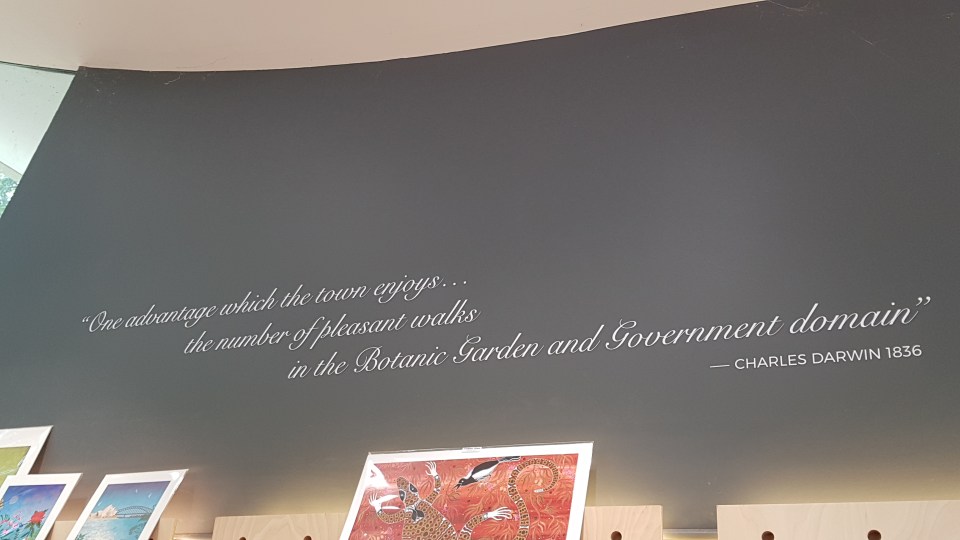
If I’ve learned one thing as an ecologist it’s that the world is a complex, historically contingent and often unpredictable place: simplistic notions of socialism = good/bad and capitalism = good/bad are not going to solve the current crisis of climate change, loss of biodiversity, pollution, and a host of other environmental problems.  Only thinking outside of narrow ideologies is going to do that, and using the tools and strategies that are available to us, including market forces, open democracy, local activism, global movements, and whatever else works.  I’m still optimistic that the world can provide humanity with the kind of  metaphorical “pleasant walks” that Charles Darwin wrote about when he visited the Royal Botanic Gardens, Sydney:
2020-01-13 14.48.59

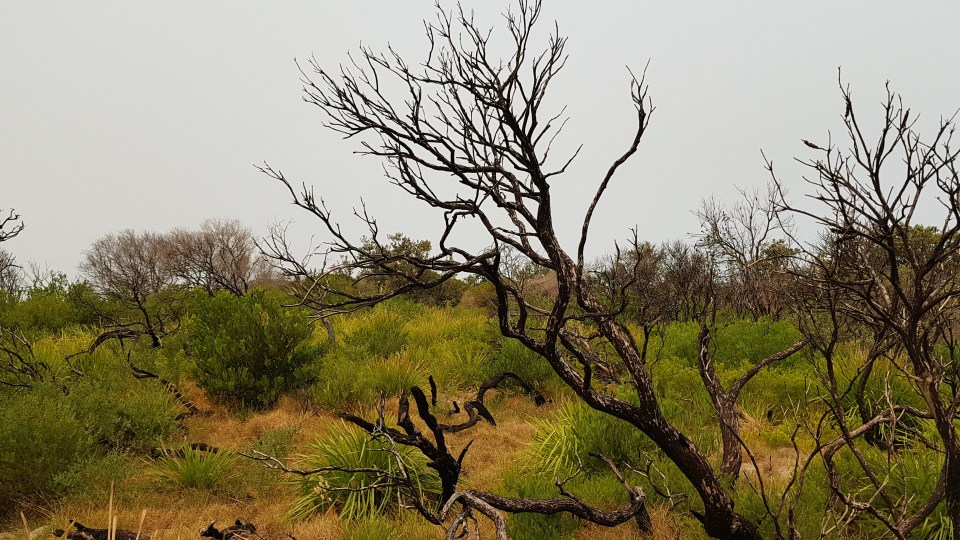
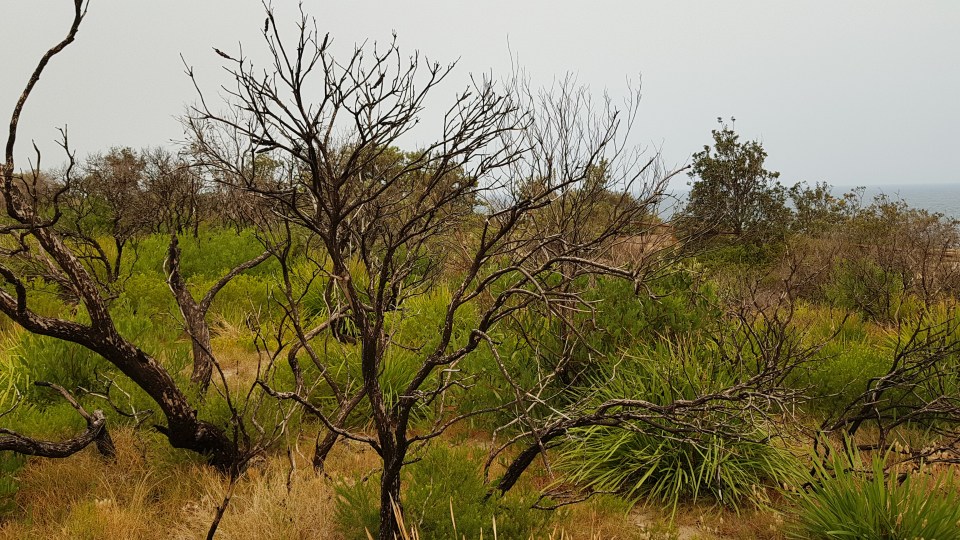
But we have to act fast.  Otherwise the ruins of civilization, and of the biosphere, may be our species’ legacy: that’s why I chose the image that opens this piece.


Climate change, politics and a host of viewpoints: Australia reflections part 5

2020-01-07-14.35.15.jpg

It’s impossible to get away from discussions of climate change and its role in the Australian bushfires at the moment. It’s all over the Australian media, at least that part of the media that isn’t controlled by the Murdoch empire.  Politicians of various stripes are falling over themselves to declare their point of view and some careers are (hopefully) being harmed by crass statements that try to belittle expert, informed opinion – the latest example from Twitter is #NotAWeatherGirl, which has been trendingfor a couple of days now.

If you have any interest in global climate change then the name of Prof. Michael E. Mann will be familiar to you, from his famous hockey stick graph, his work with the Intergovernmental Panel on Climate Change, his books on the topic, the RealClimate blog, as well as numerous media interviews and television appearances.  Until yesterday we’d not met.  But by coincidence, like me, Prof. Mann is also on sabbatical in Australia, is also working at UNSW, and is based near to us.  Via Twitter I invited him for a meet up to discuss what’s happening in Australia at the moment and to set it in a global perspective.  Karin and I met with Mike at a local café, along with an Australian journalist who has asked to remain anonymous, and we chatted for a couple of hours.  From the position of outsiders coming from cultures that politically are moving closer together, and with an expert local perspective, it was interesting to consider what the USA, the UK and Australia have in common and what’s different. And of course, Karin’s Danish heritage provided yet another perspective.  What follows is a short summary of our discussion and some additional thoughts.

One thing that’s clearly true is that the climate change deniers have lost.  Period.  There’s no faux science or dodgy statistics that they can fall back on that have any credibility.  Fudging the data, as some have tried to do for Australia, does not work anymore: anyone willing to listen can see through this charade.

The world’s weather systems are changing, and they are changing EXACTLY in line with the predictions based on human-induced climate change. These changes are causing massive disruptions to natural ecosystems and to human societies, from the drought and fires in Australia and California, to the flooding in Jakarta and the American mid-west, and in parts of the UK.  Karin’s been writing about this recently in relation to human stories from the bushfires and I recommend you take a look; as always, her take on such events complements my own.

The misery that these bushfires and floods have produced among citizens has prompted previously skeptical or agnostic politicians to act, or be seen to be acting.  Those that don’t (and we’re looking here at Aussie Prime Minister Scott Morrison and the increasingly desperate Donald Trump – who’d’ve thunk he’d try to start a war in the middle of a personal political crisis….?) are going to find themselves quickly out of office.  In this regard the British government is rather different, and Boris Johnson appears to be on board with the need to act on climate change.  Even Piers Morgan seems to be hurrying to get on to the right side of history.  But the danger is that it will be too little, too late.  Denmark, of course, along with other Scandinavian countries is showing just how much can be done to cut emissions from energy generation, travel and agriculture, and to invest in a more sustainable future.

In the face of such overwhelming scientific evidence, the consortium of right-wing media barons, plus vested business interests and unfriendly foreign agents, have adopted a different tactic. Rather than deny the science they are targeting the individual influencers who they see as a danger to their power. The vile abuse of Greta Thunberg is the most obvious example, but Mike’s come in for his fair share of abuse too.  Anyone with green credentials who flies or has a less than Spartan lifestyle is accused of hypocrisy, and the focus is being turned on to what individuals should be doing rather than what governments and industry can achieve much more easily and with greater impact.  In Australia it seems there is a campaign to down-play the role of natural processes in the bushfire crisis by claiming that it’s mainly due to a spate of arson, and that “Greenies” have made the situation worse – Twitter bots and trolls have been implicated in this conspiracy.

All of this is an effort to undermine sustainability arguments: that we can have a sound economy based on social justice, environmental protection, green jobs, and a transition to a low-carbon economy.  But we need some structural changes to the global economy, including getting away from this obsession with GDP and “growth”.  This doesn’t mean throwing the baby out with the bath water and dismantling capitalism altogether.  We were agreed that we need to build on the best bits of capitalism and open democracy, and move forward with that, rather than tearing down what has been achieved in terms of human progress.  As I’ve mentioned before, Steven Pinker’s recent book Enlightenment Now has some great arguments on this topic.

Related to this is the fact that environmentalism does not have a political home – it is neither left- nor right-wing in focus: there are greens across the spectrum. Karin summed it up neatly this morning when she said: “Perhaps environmentalism is the catalyst to bring us together, no matter what our political beliefs or backgrounds are?”

This is important to appreciate because we all tend to gravitate towards others who share our views.  Meeting face-to-face with people like Mike and the journalist is inspiring but there’s always the danger that we are talking within a bubble, an echo chamber that just reflects backs our own perspectives on the world. The same is true of social media. One of the discussions we had was about who we aim our blogs, books and Twitter messages at: who are we trying to talk to? Those people too entrenched in their views, who will deny the impact of, or solutions to the world’s environmental problems are a lost cause.  Nothing will sway them.  Those who agree with us don’t need any further convincing: they are already strong allies.  But there’s a huge swathe of the population between these two poles that can hopefully be won over and convinced by sound arguments.  That’s who we need to reach out to, that’s who I hope is following the tragic events in Australia and elsewhere in the world, and seeing what is really happening.

Jeff and Mike Mann


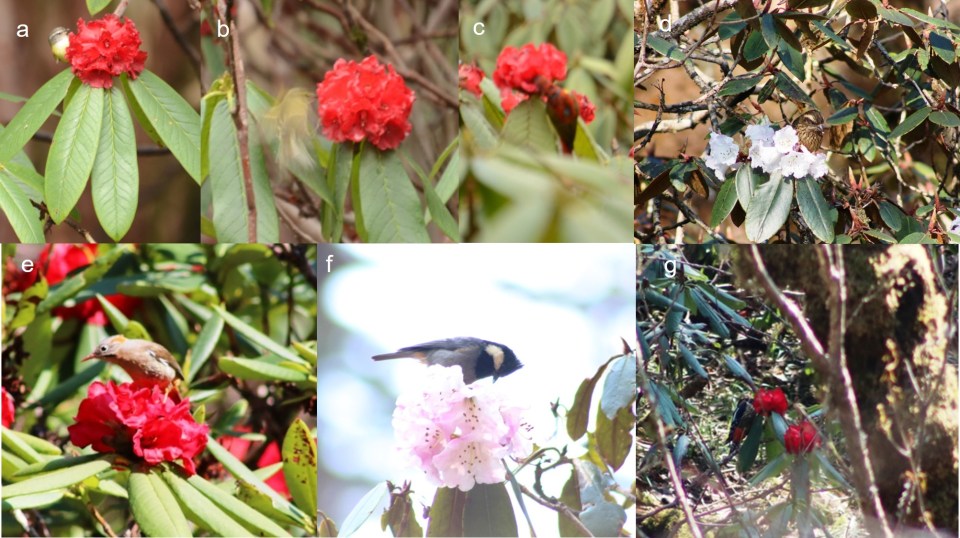
Just published: Interactions between birds and flowers of Rhododendron spp., and their implications for mountain communities in Nepal – download it for free

Figure 3

Back in April I posted a series of reports on a student field trip that I was involved with in Nepal, supporting our University of Northampton partner college NAMI in Kathmandu; the first one is here.  During that trip, my NAMI colleagues and I made some interesting observations about the role of generalist passerine birds and specialist flower-feeding sunbirds as pollinators of rhododendrons in the Himalayas.  This was subsequently followed up with another set of observations in which I didn’t take part, and then written up as a short research note.  I’m pleased to say that it has now been published in the new, open-access journal Plants, People, Planet.  Here’s a link to the paper which you can download for free:

Ollerton J., Koju N.P., Maharjan S.R. & Bashyal B. (2019) Interactions between birds and flowers of Rhododendron spp., and their implications for mountain communities in Nepal. Plants, People, Planet 00:1–6. https ://doi.org/10.1002/ppp3.10091

The report really asks more questions than it answers.  It points out how important these rhododendron forests are for the people of Nepal but that we know virtually nothing about the pollination biology of the dominant trees and therefore the long-term persistence of Rhododendron species in the face of forest exploitation and climate change.  Our hope is that it stimulates both further research on the topic and increased awareness of how important it is to protect these habitats.

A land of fire and water: Australia reflections part 3

Fire and water; those opposing elements have been our constant companions during this trip to Australia.  All the major international news media have been reporting on how serious the bush fire situation is in the south east of the continent.  In East Gippsland, Victoria, tens of thousands of residents and holiday makers have been advised to leave the area.  Four thousand of those who haven’t left were forced to spend last night on the beach, as fires got closer to the town of Mallacoota.  These are just the latest examples of climate change refugees in their own country, something I highlighted in a post about our visit to the USA earlier this year.  Of course, Australia is a continent that is used to bush fires, they are nothing new.  But what is new is the scale of these fires and the extended drought and high temperatures that are making the landscape more flammable than ever.

There’s currently a lot of media discussion in Australia about how landscapes were managed historically by Aboriginal peoples, whose selective and regular burning of the bush reduced fuel loads.  Karin and I have just returned from Port Macquarie where we enjoyed Christmas with an Australian branch of our family.  Several of them have spent a considerable amount of time working with remote Aboriginal communities in the Northern Territory.  We were told a story about an Aboriginal elder who asked one of our relatives to drive him out to an area of bush that had not been burned for over a decade.  It was that elder’s role to burn this land at regular intervals, a family tradition that went back generations.  Having driven for several hours along dirt roads, the elder asked to stop; he hopped out of the vehicle, went up to a patch of dry grass, and casually set fire to it with a small lighter he was carrying.  After pausing a few seconds to make sure that the flame had caught he hopped back into the car and said “Let’s get out of here”.  An hour back down the road the companions stopped and looked back.  The whole landscape was aflame, with a column of black smoke rising, I was told, in a mushroom cloud “like a nuclear explosion”.

This sounds extreme, but these areas are isolated and a long way from any human settlements or infrastructure.  Such activities have been part of toolbox of ways in which Aboriginal peoples have managed these landscapes for thousands of years.  By burning areas on a regular cycle the negative effects of large, out-of-control fires are reduced, and opportunities for seedling establishment and fresh foliage for animals to browse are created.  There’s more information about these practices here and here.

In the more heavily populated parts of Australia, and in the adjacent national parks, fires have long been suppressed, such that when they do occur they are much more violent conflagrations, over a greater area, than would normally be the case.

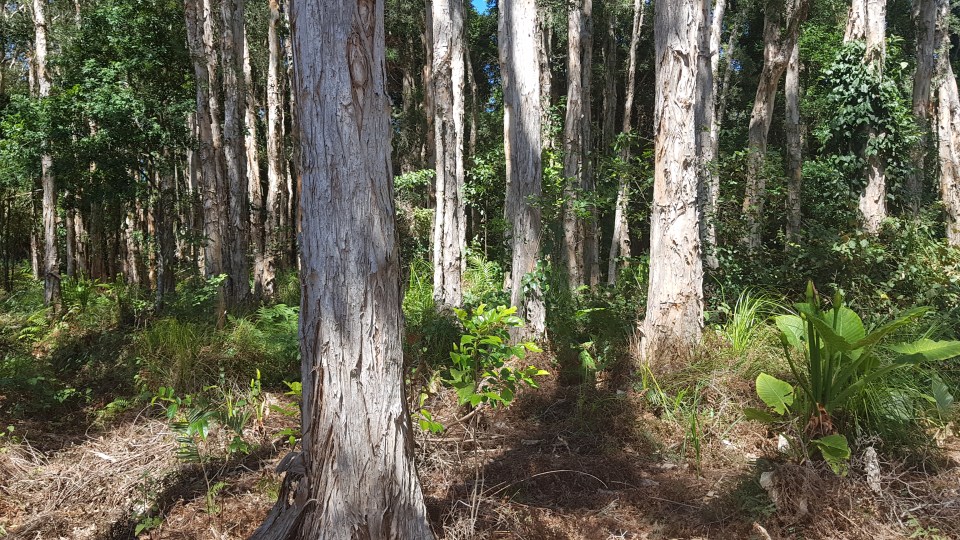
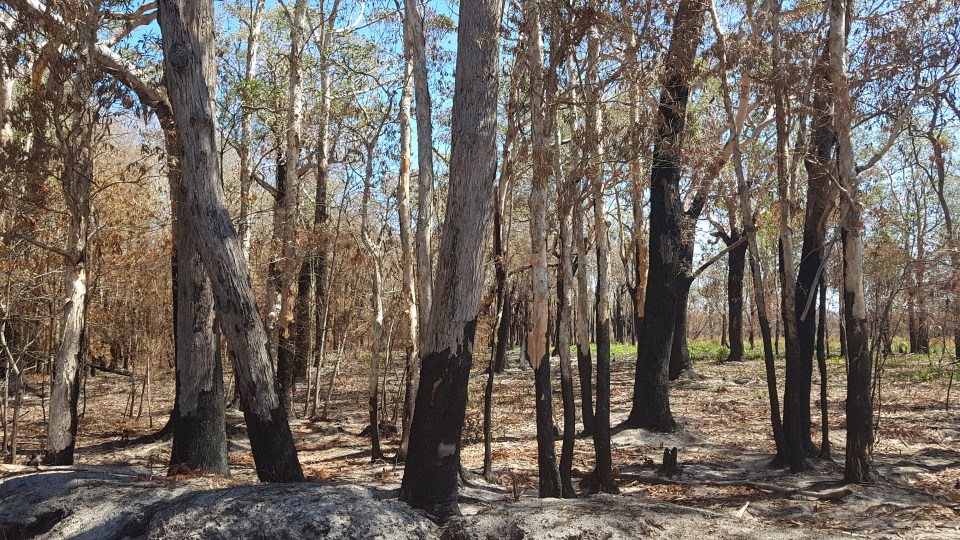
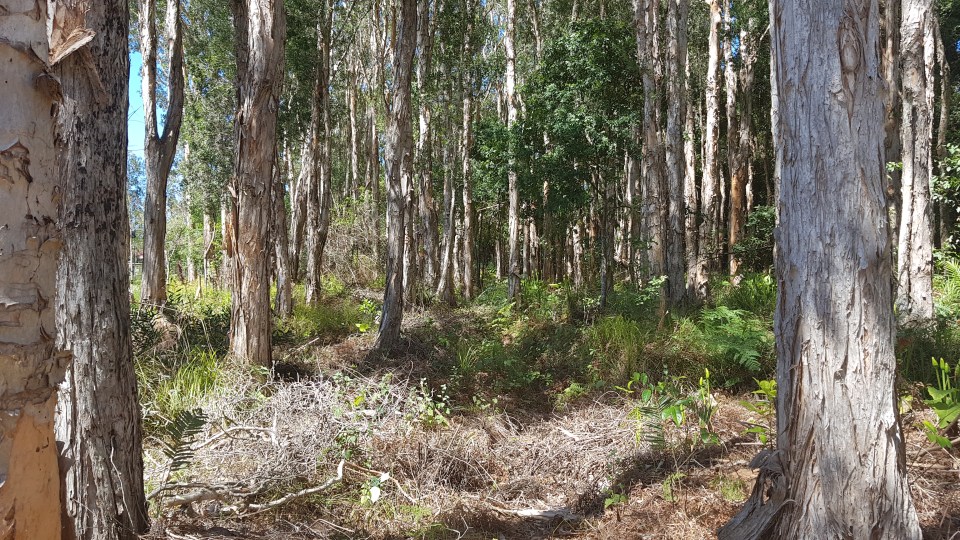
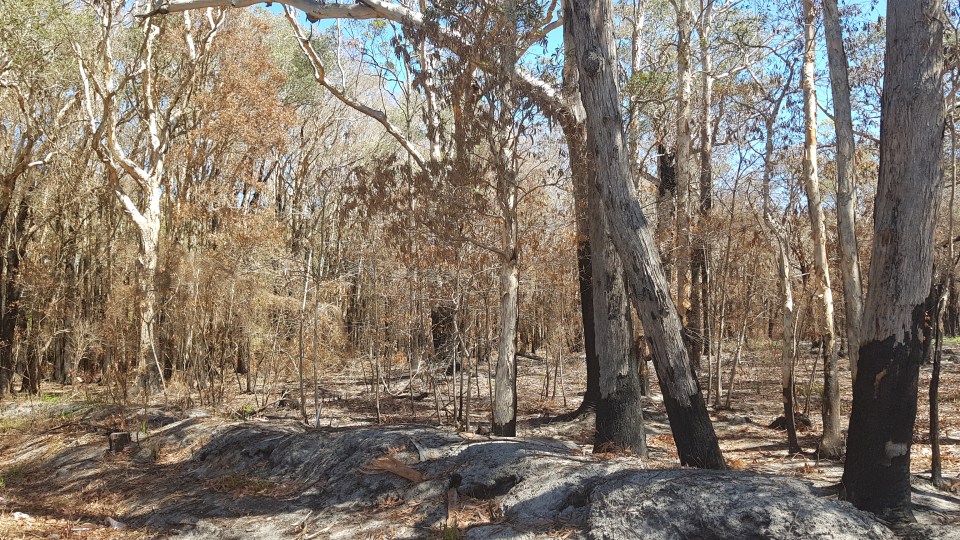
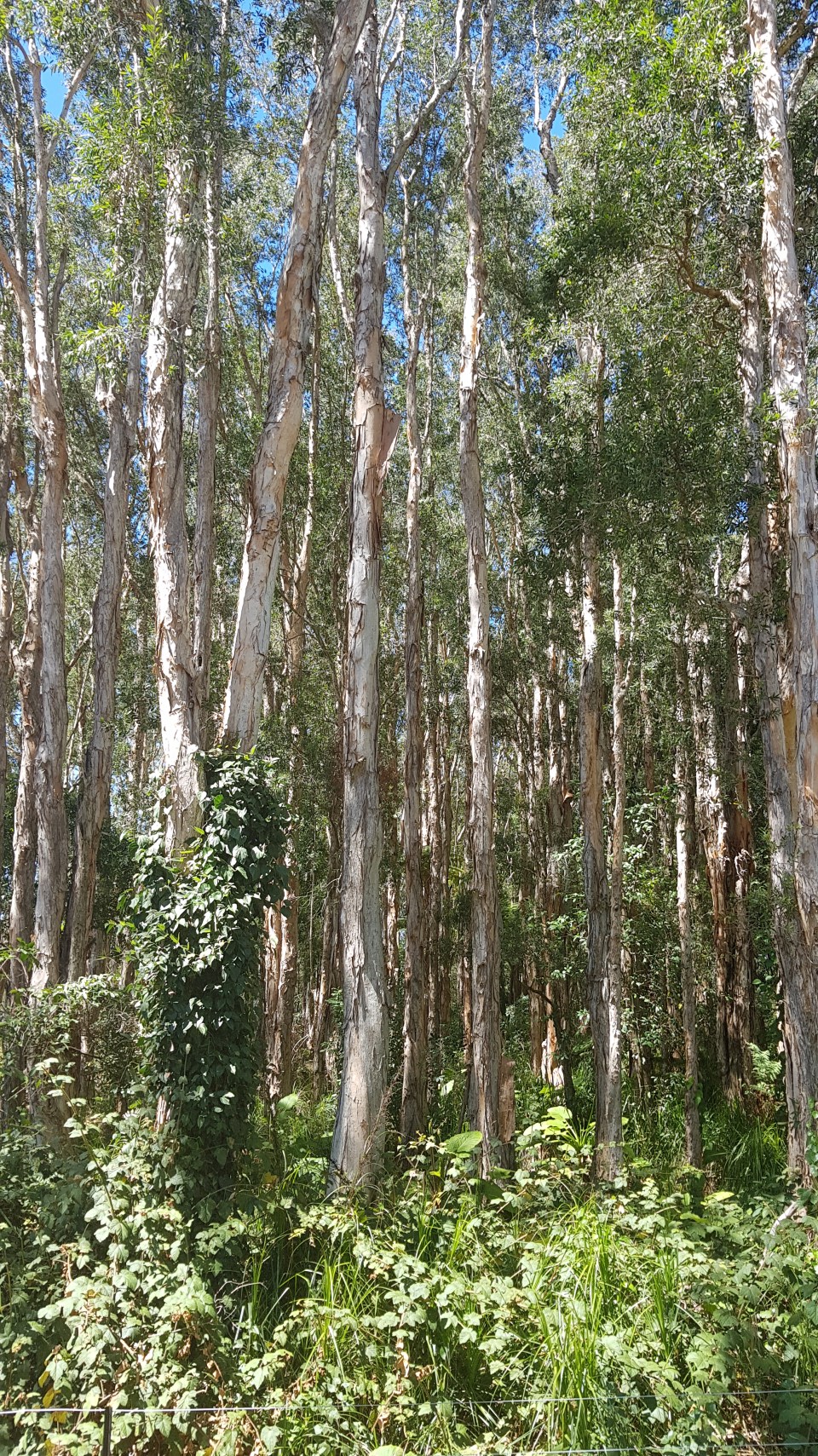
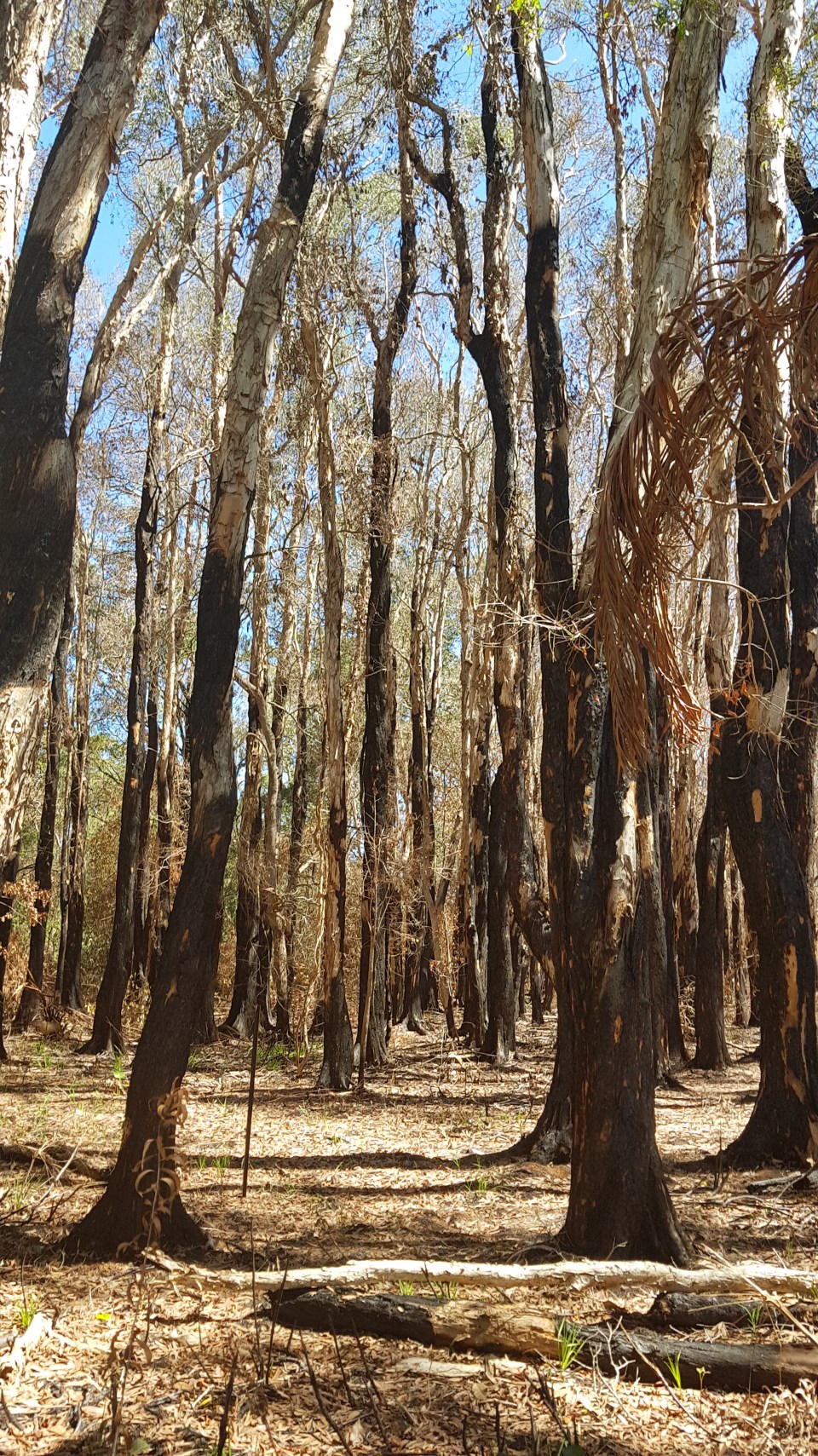
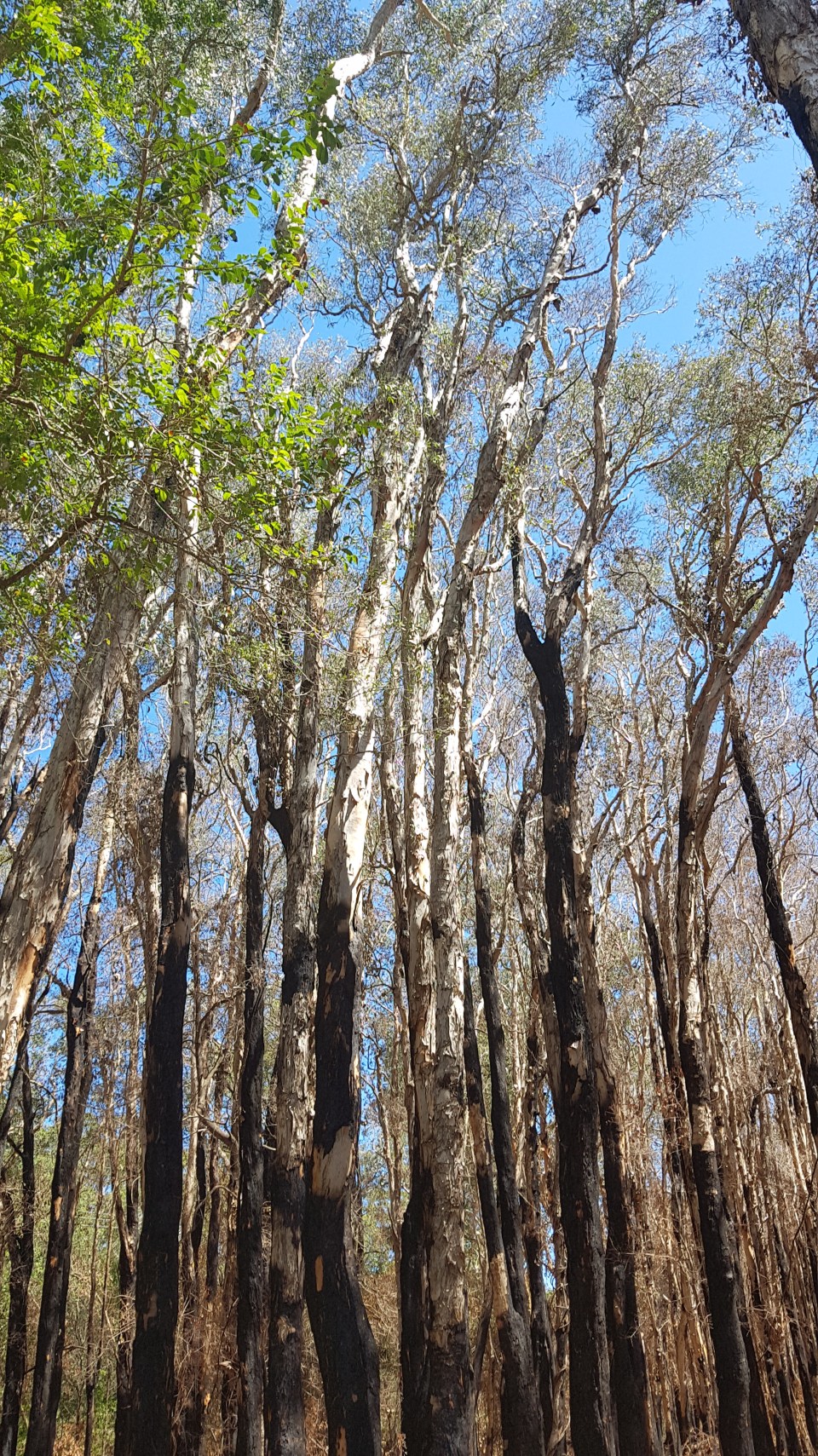
On one of our trips near Port Macquarie we came across an area of woodland that had burned recently, separated by a small road from an adjacent block that had not burned.  In the following set of images I’ve alternated the two blocks so you can see what the woodland looked like before and after burning.  But remember that this was not an especially intense fire; the trees are still living, and there is foliage in their crowns.  Once there’s been some rain and a chance for the vegetation to regrow, the previously burned block will look identical to the currently unburned area.  Indeed in one shot you can already see some green shoots emerging from the ground:

2019-12-27 15.08.13

2019-12-27 15.07.11

2019-12-27 15.08.08

2019-12-27 15.07.20

2019-12-27 15.08.52

2019-12-27 15.09.25

2019-12-27 15.08.16

2019-12-27 15.09.57

So fire in itself is not a problem for these natural communities.  What is a problem, for nature and for the communities of people who live in and around these woodlands, is the intensity, the scale and the frequency of the fires that are currently occurring.  This morning Karin and I watched silently to a news report of yet another volunteer fire fighter who had lost his life overnight.  In this case he had been part of a crew whose 10 tonne fire truck had been lifted up and overturned by cyclone-strength winds created by the blaze itself – there’s a BBC news account of the tragedy here.  “Unprecedented” is a word we’re hearing a lot on ABC News.

Evidence for the number and size of the fires was everywhere in and around Port Macquarie, as we observed when we took a drive up to the peak of North Brother Mountain in Doorgan National Park.  From a height of about 470 m (1500 ft) we could see some amazing panoramic views of the region that also showed black fire scars on the landscape – this is looking south:

2019-12-27 13.13.49

2019-12-27 13.13.56

2019-12-27 13.14.05

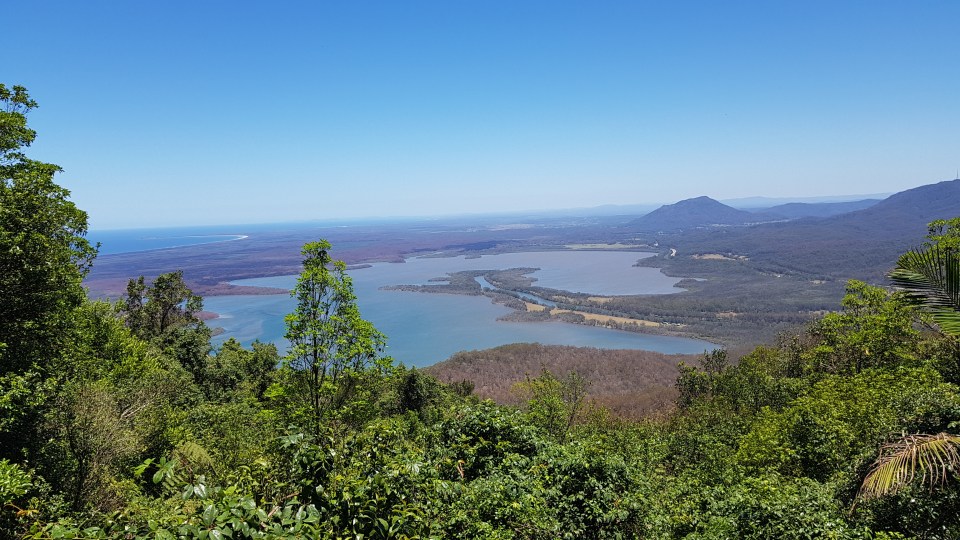
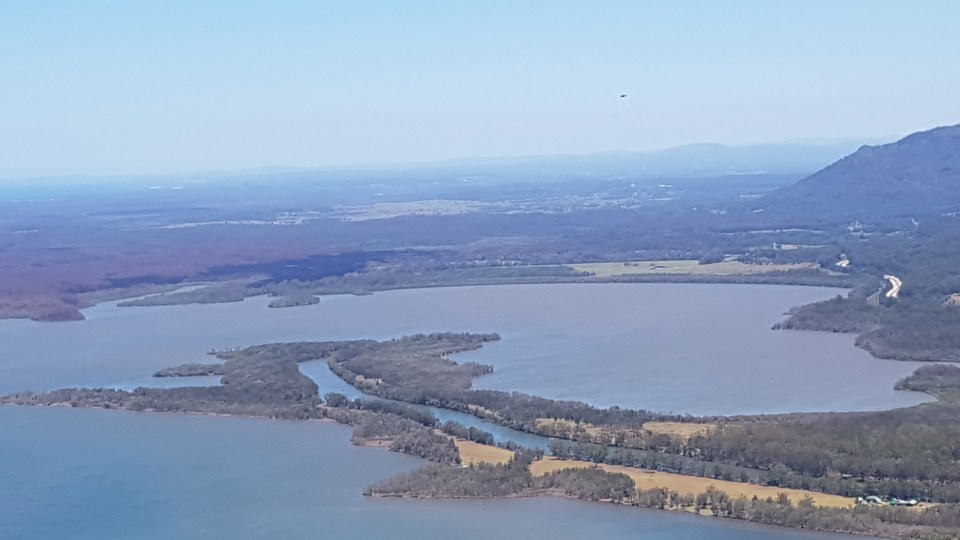
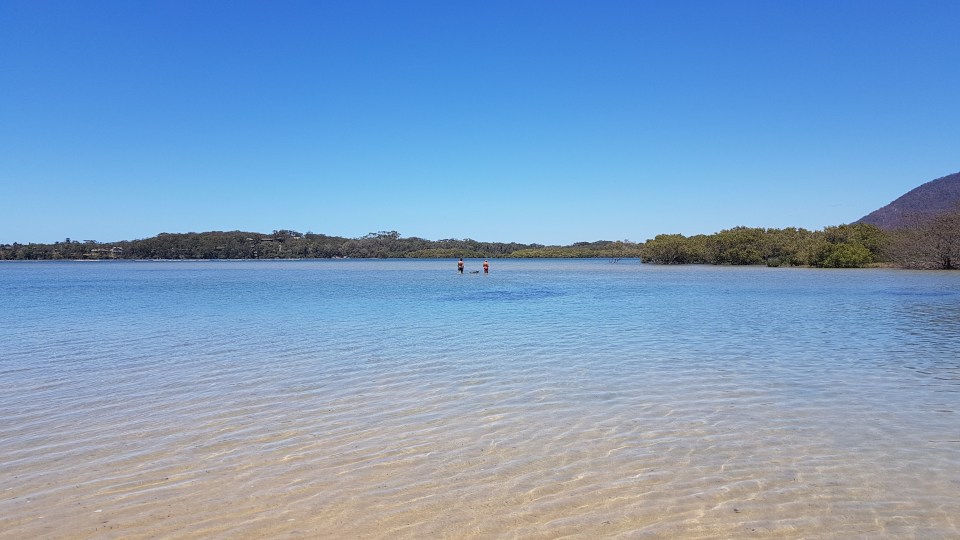
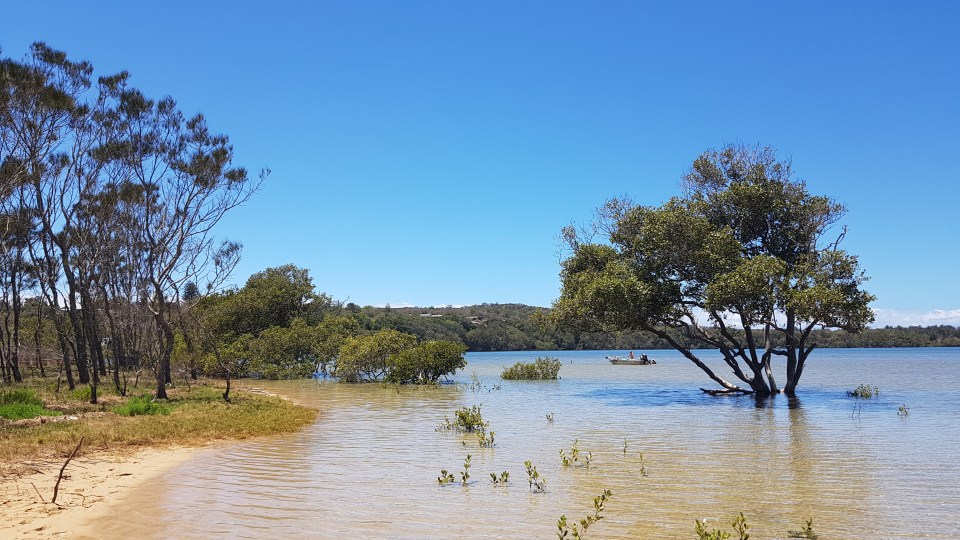
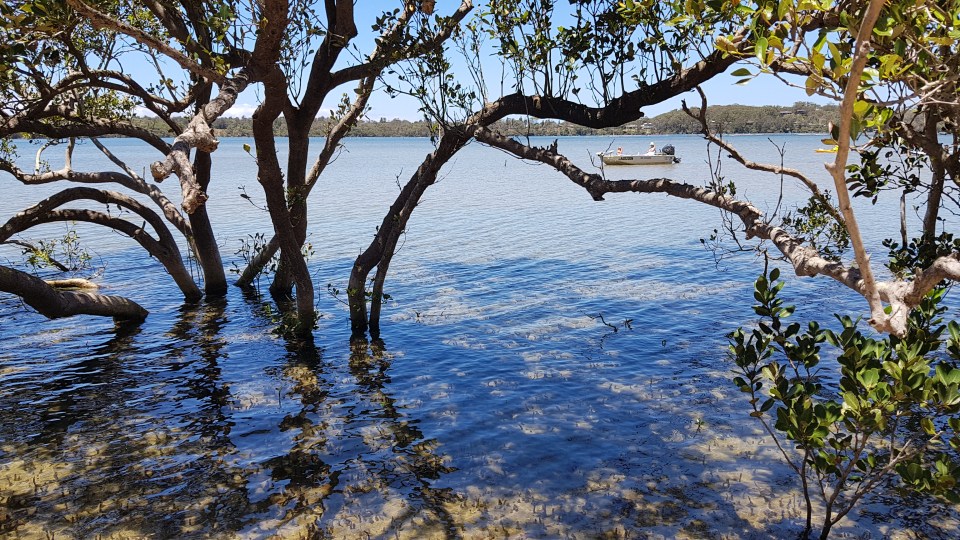
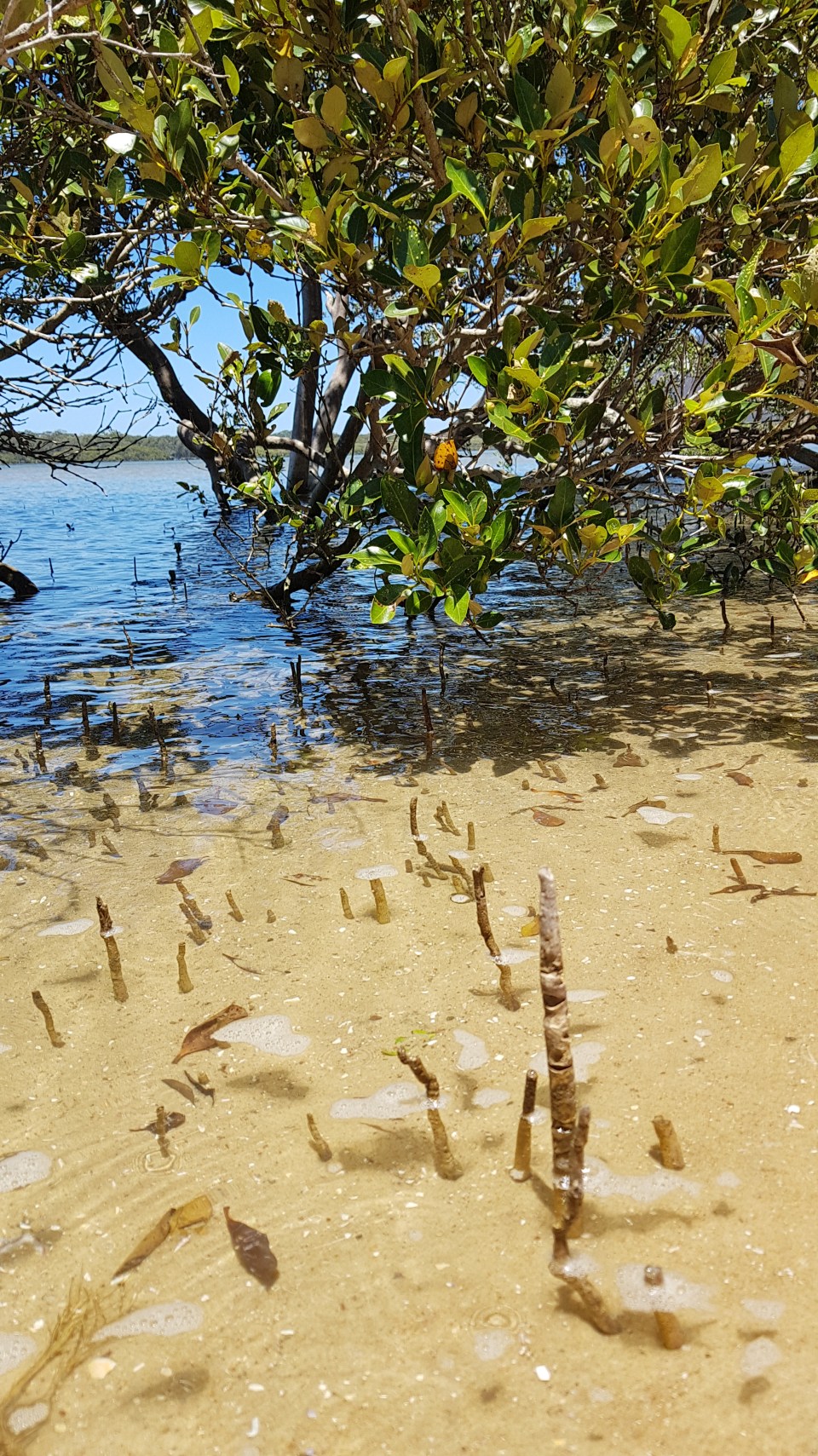
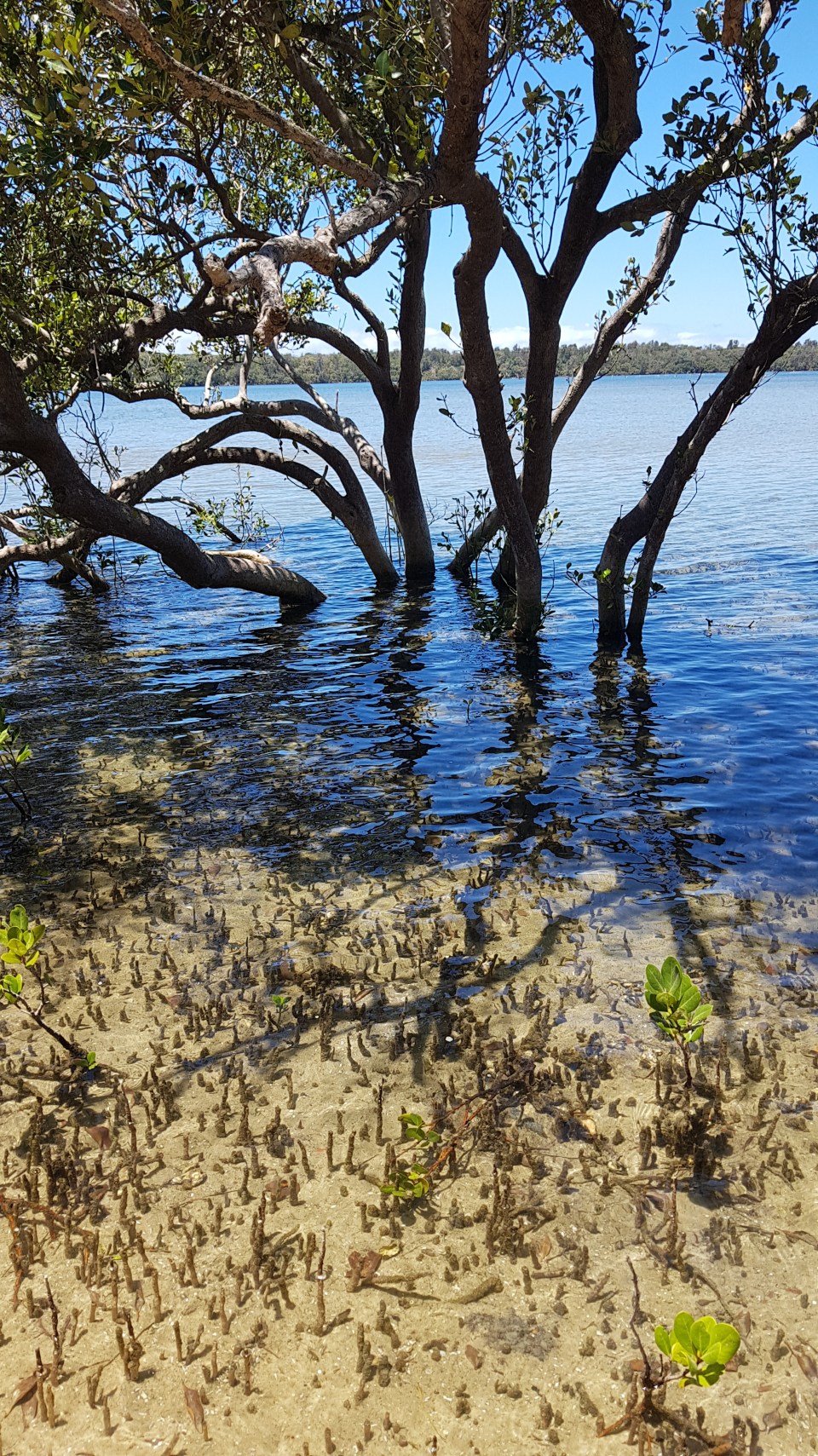
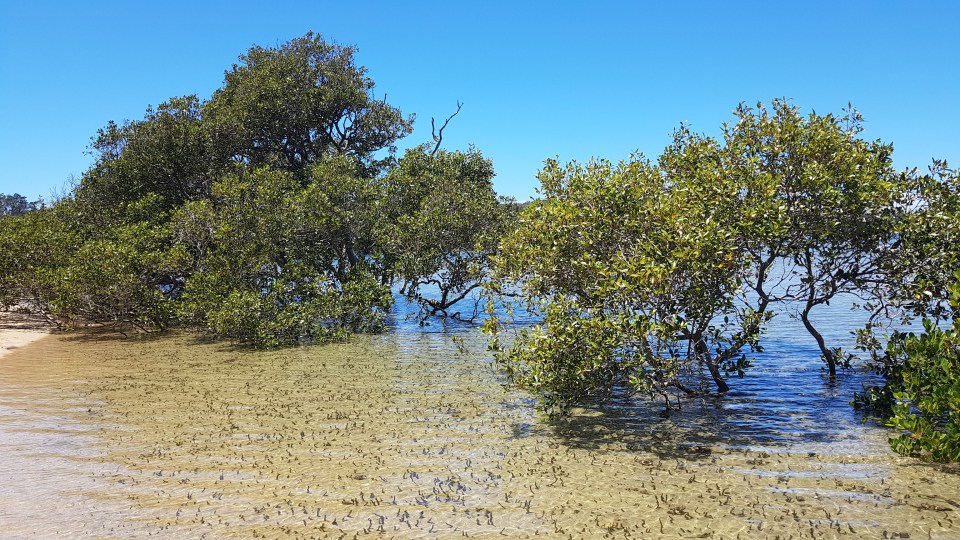
Looking north there’s little evidence of the fires – some have occurred there but much smaller in scale.  But there is a lot of that second element, water.  We were able to explore some shallow coastal lagoons fringed with grey mangroves (Avicennia marina):

2019-12-27 12.07.50

2019-12-27 12.11.47

2019-12-27 12.14.51

Mangrove habitats are fascinating places that are ecologically important as nurseries for marine fish and invertebrates.  They also provide physical protection to coastlines, acting as a buffer to storm surges that would erode the land.  In recognition of this, a recent project around Port Macquarie has involved restoration of these mangrove areas and was instigated by commercial oyster farmers and a local fishing  society.  I’m particularly intrigued by the upward-pointing aerial roots of mangroves; termed pneumatophores, they function to provide oxygen to the trees, but also increase the physical complexity of the floor of the lagoon, providing habitats for small animals:

2019-12-27 12.16.24

2019-12-27 12.14.37

2019-12-27 12.13.28

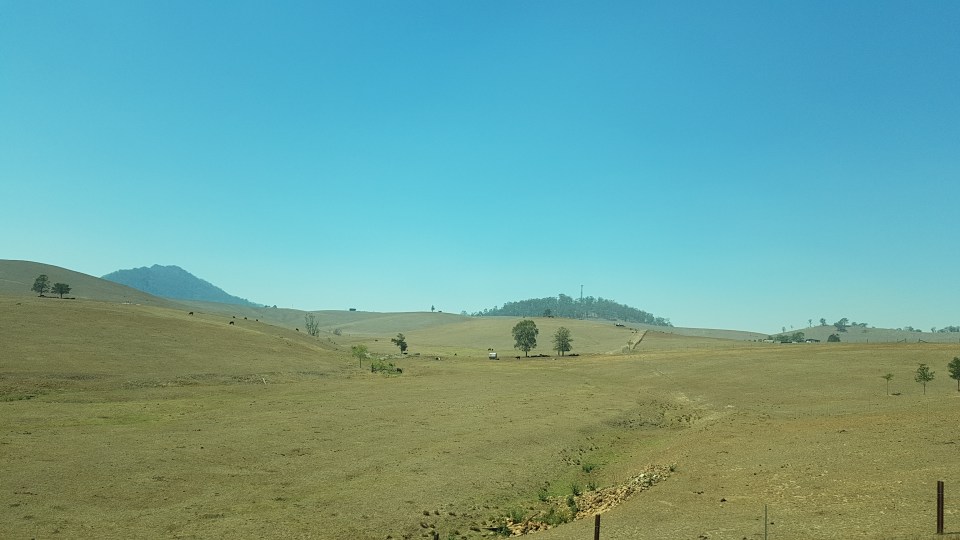
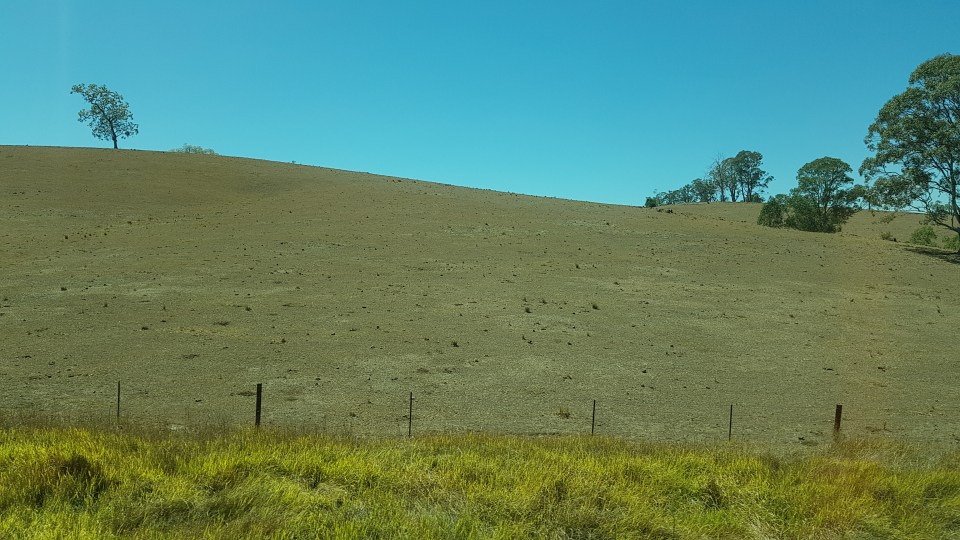
But evidence of the drought in this part of the world is never far away.  On our seven-hour train trip back to Sydney we passed mile after mile of parched farmland, with dried-up waterholes and dust-filled streams.  The only thing stopping it from burning is the absence of vegetation:

2019-12-28 10.50.38

2019-12-28 10.34.32

As I complete this blog post, it’s 31st December and we’re back in Coogee Bay, ensconced in the apartment of my colleagues Angela and Stephen.  They have headed to Stephen’s native Canada to visit family.  It’s going to be cold!  We’re very happy to house sit and see in the New Year in warmer climes.  Best wishes for 2020 to all of my readers: let’s hope that it’s the start of an environmentally more enlightened decade.

Ash on the beach, fire in the bush: Australia reflections part 1

2019-12-13 12.17.43

Although we’ve only been in Australia for less that two weeks, it feels as if we’ve been here forever; once we got over the jetlag and the weird sleeping patterns, Karin and I have easily settled into the life of a Southern Hemisphere summer.  It’s hard to believe that back home in the UK it’s cold, wet and (politically) miserable….

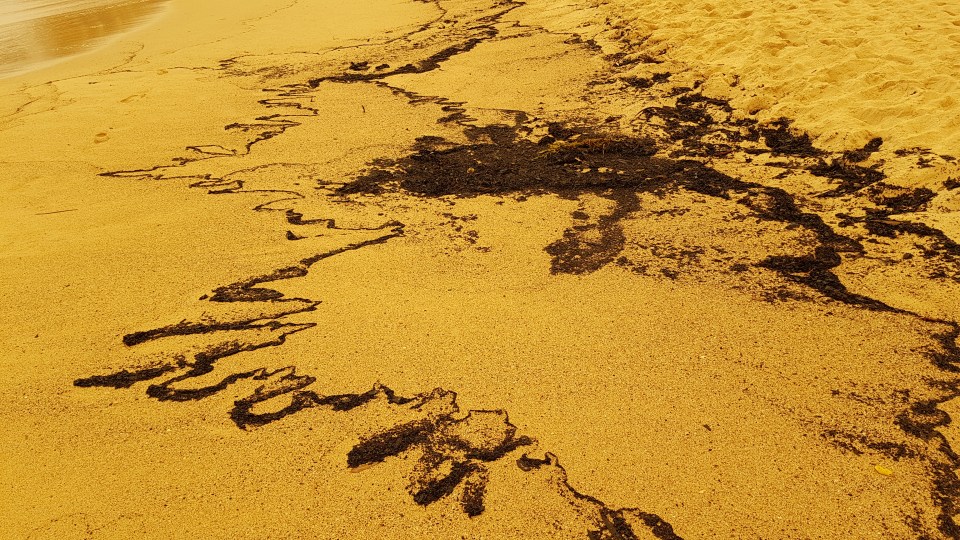
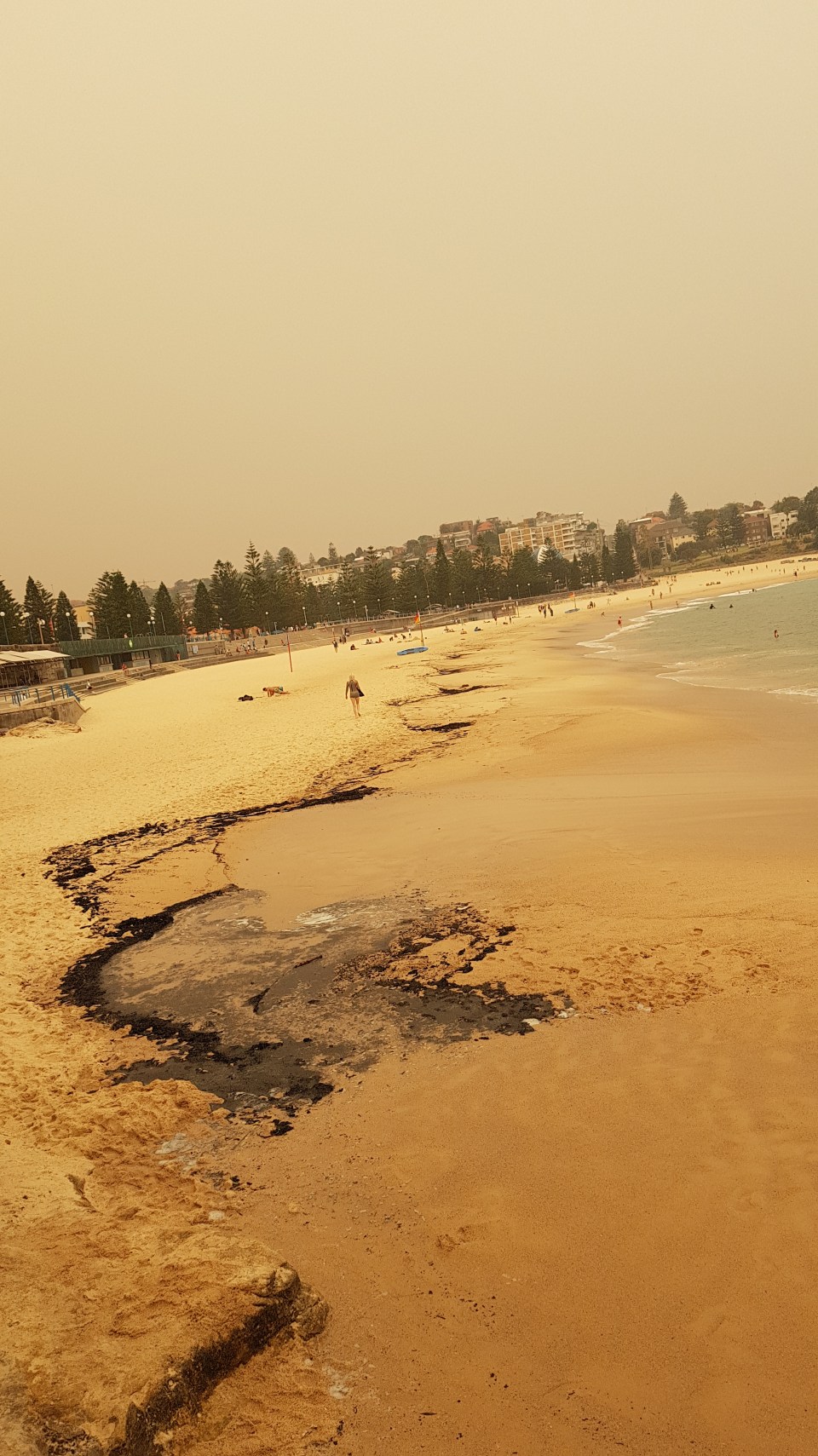
We’re based at Coogee Beach in the eastern suburbs of sprawling Sydney, just a short walk from the University of New South Wales (UNSW) where I’ve spent most of my time, and an even shorter walk from sand and surf.  It sounds idyllic but one of the recurring features of the past week has been the amount of ash and charred leaves washing up on the beaches from the bush fires that surround Sydney at the moment:

2019-12-06 17.53.21

2019-12-06 18.18.34

The region is in the midst of an extended drought and this has worsened the fire season.  The Australian Government seems intent on denying that it’s anything to do with climate change, though recently one of the state ministers has broken ranks.  That’s going to be little consolation this year but may mark the start of some changes in policies.  Let’s see.

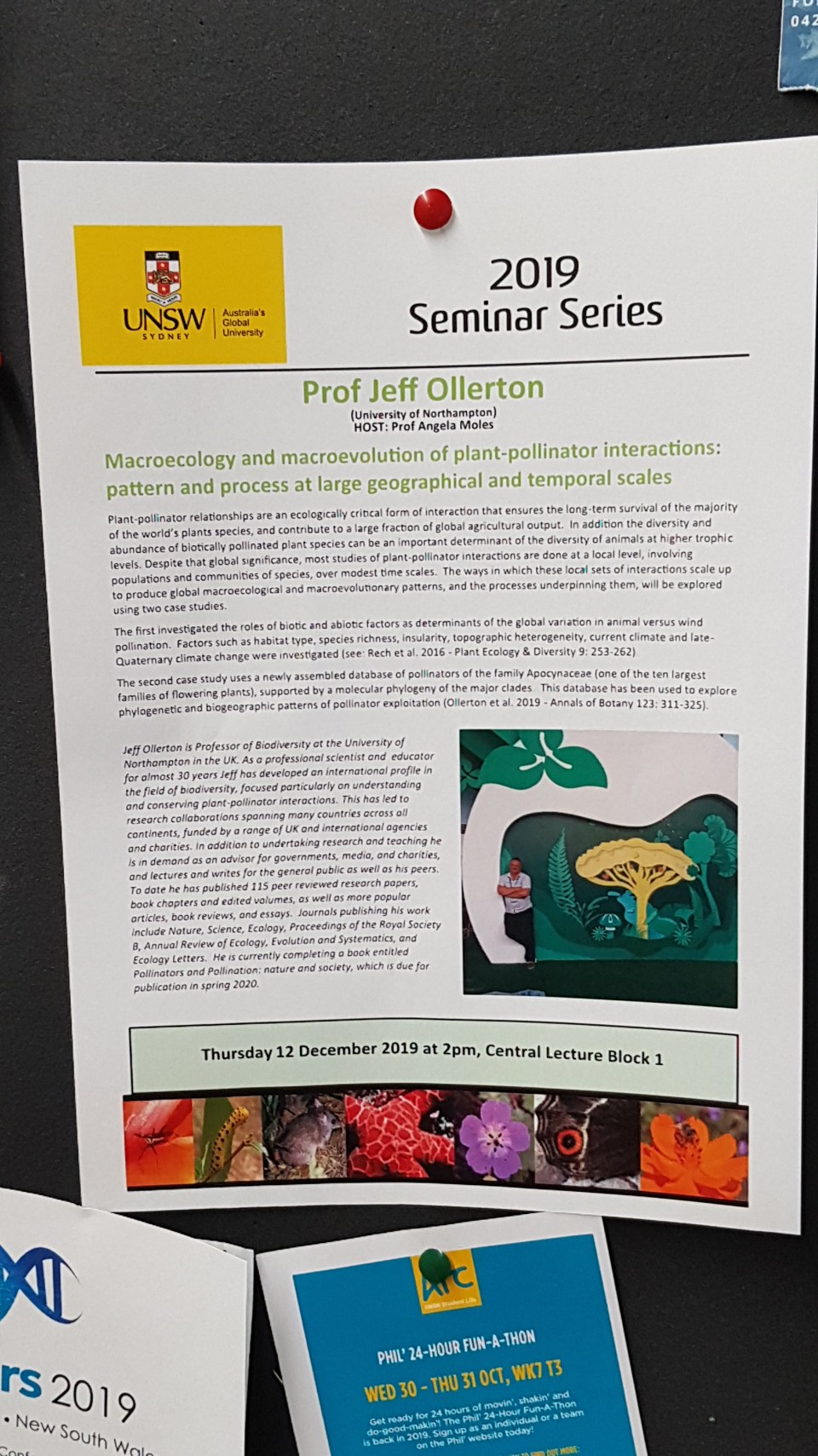
During our time here Karin and I have facilitated a workshop on “Writing for a non-academic audience” which was attended by 17 UNSW postgraduate researchers.  I’ve presented a lecture on “Macroecology and macroevolution of plant-pollinator interactions: pattern and process at large geographical and temporal scales”…..

2019-12-05 10.37.41

….and spent a lot of time chatting with staff and postgrads at UNSW.  In addition, Angela Moles, Stephen Bonser and I have made initial progress with a short paper that I’m hoping will be ready to submit before we head back to the UK in early February.

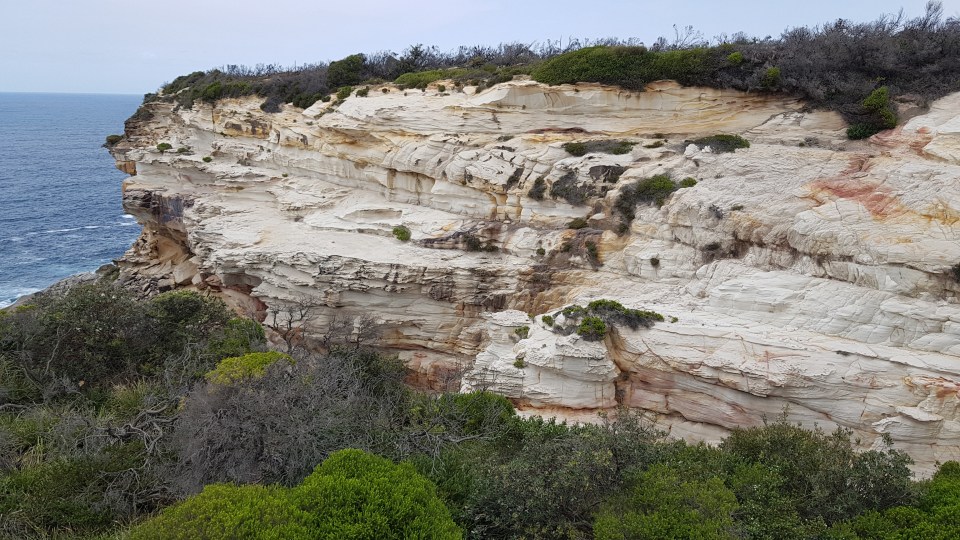
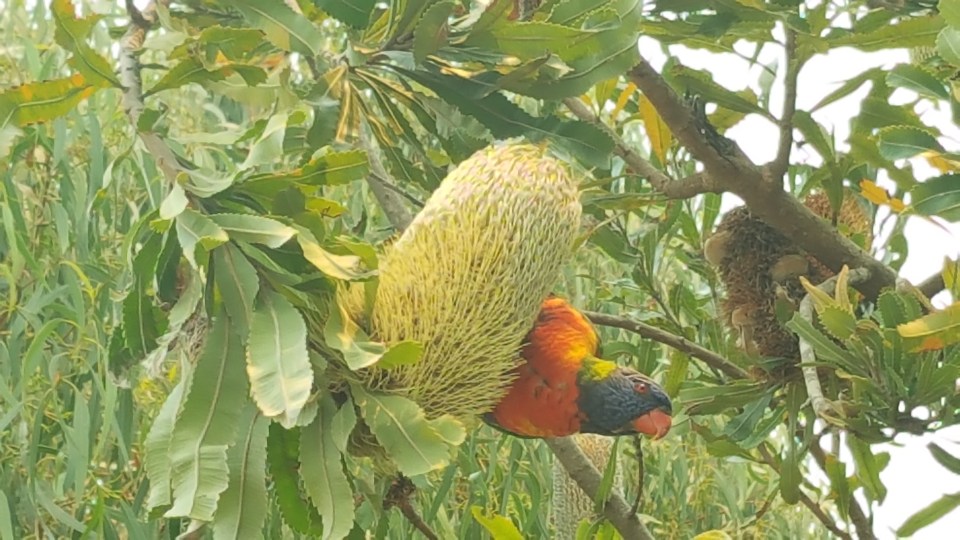
Time to actually get out and see some of the habitats and biodiversity of this part of Australia has been limited.  But we’ve done a couple of hikes north and south of Coogee Beach, along cliff-top trails and boardwalks through remnant coastal heathland habitat, enjoying the novelty of watching rainbow lorikeets visiting the inflorescences of native Banksia trees:

2019-12-04 12.56.12

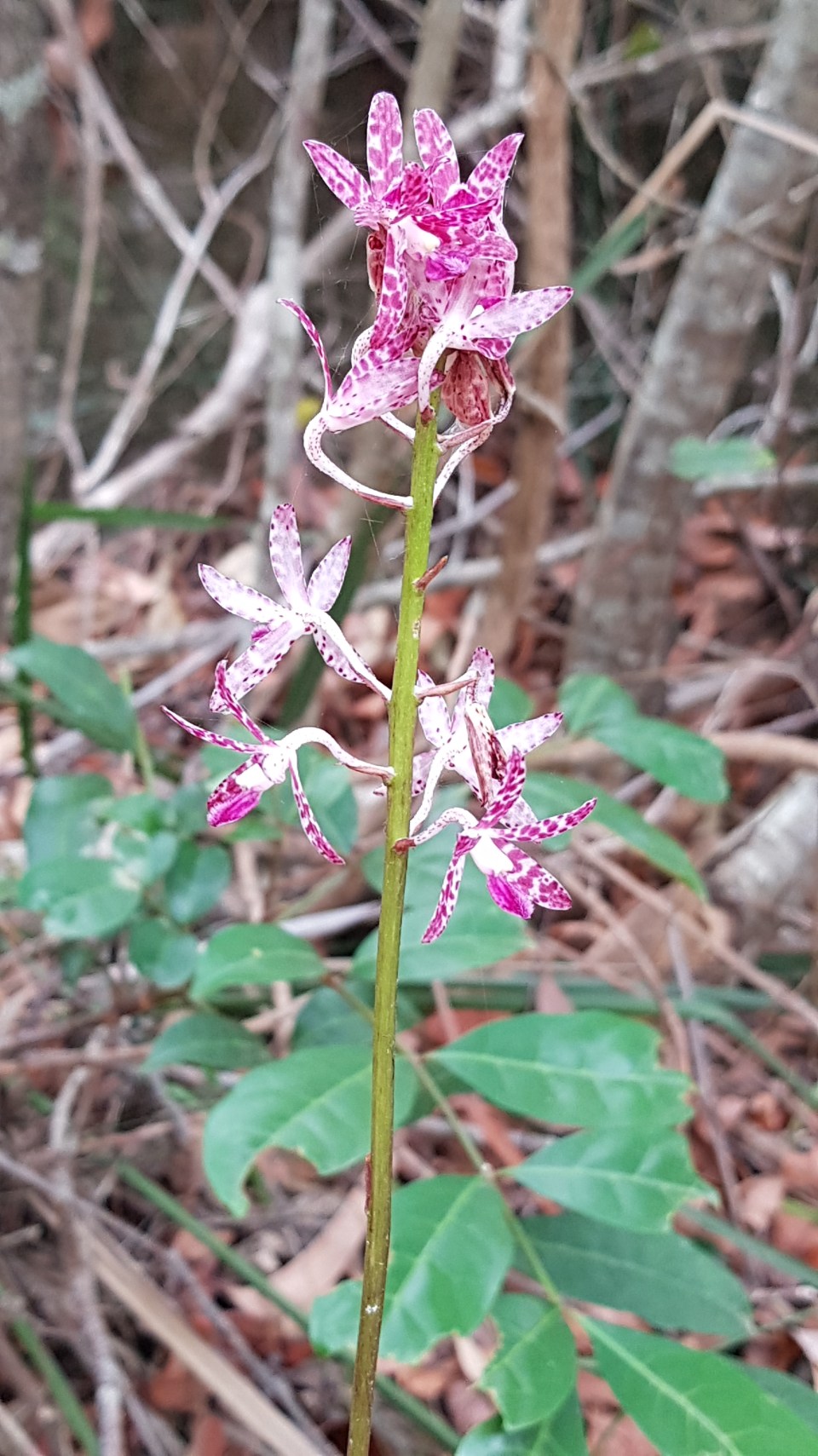
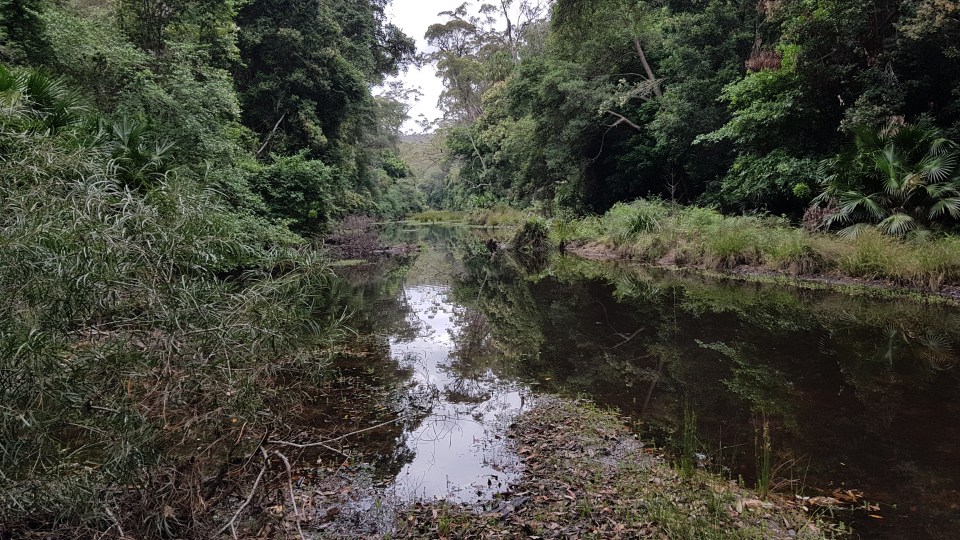
Yesterday we went further afield with a bird watching trip down to the Royal National Park (RNP) with Kew/NRI scientist Phil Stevenson (who is in the country for a couple of weeks on a flying visiting to speak at a conference and meet with colleagues); and Graham Pyke from Macquarie University, whose work on foraging behaviour of pollinators I’ve known for many years, but whom I’d never met.  Leading our trip was Steve Anyon-Smith, a professional bird guide who literally wrote the book on birding in the RNP.  Steve was great, highly knowledgeable, and a mine of information about the Australian environment.  As well as seeing about 67 bird species we encountered a host of other wildlife, and I collected data on wind and animal pollination for another set of species.  Here’s some images from that day:

2019-12-13 10.41.43

An orchid – Dipodium punctatum.

2019-12-13 11.24.25

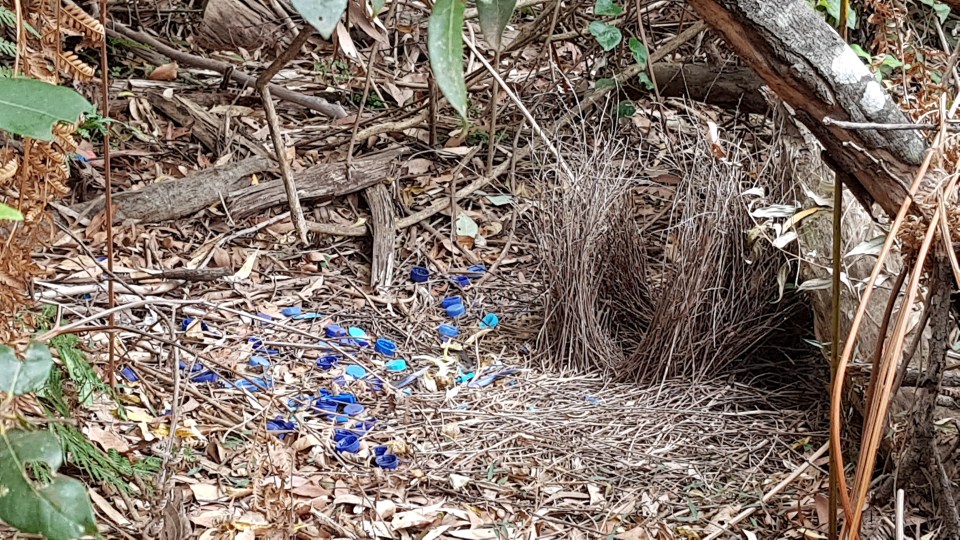
The bower of a male satin bower bird.

2019-12-13 09.17.10

2019-12-13 11.32.03

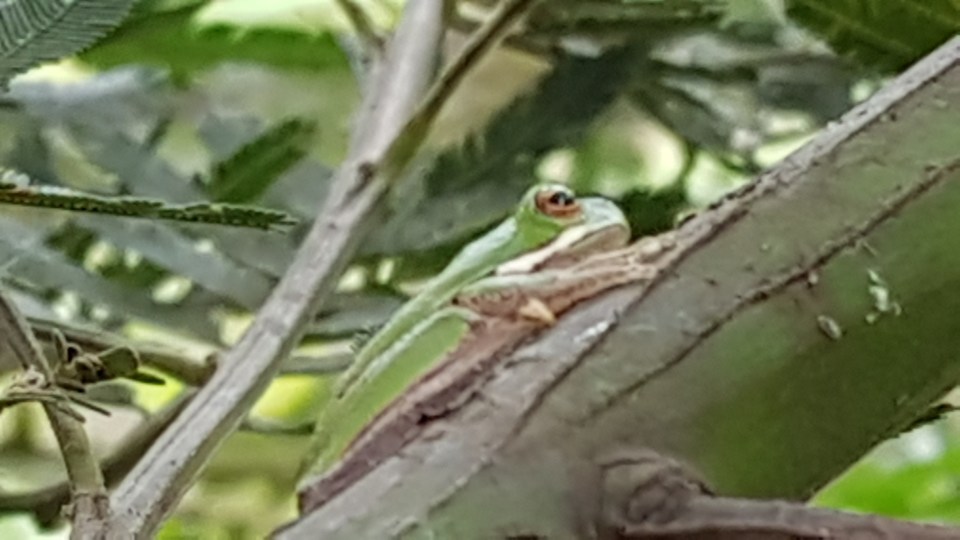
Not a great shot – it’s an Eastern dwarf tree frog.

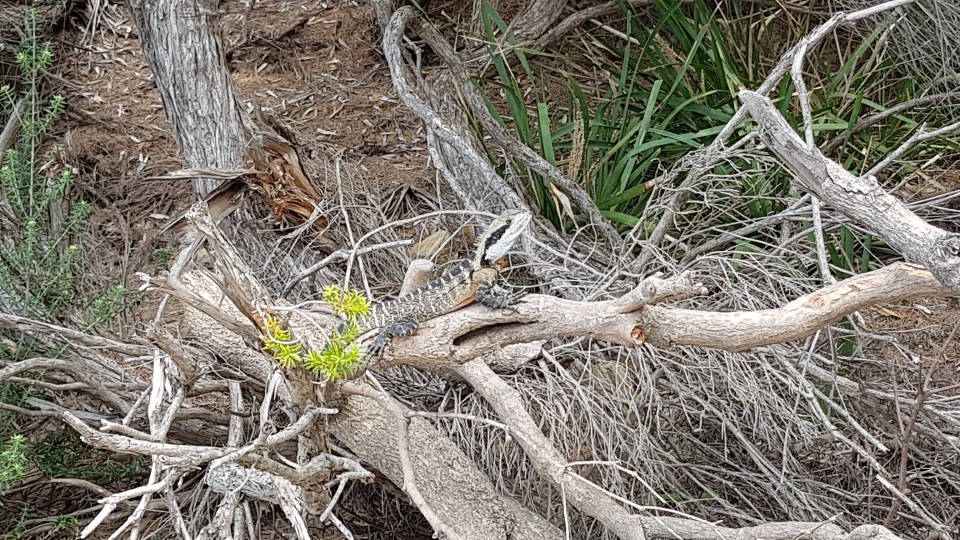
2019-12-13 13.14.41 This is better – a very confiding Eastern water dragon along a well-used coastal trail.
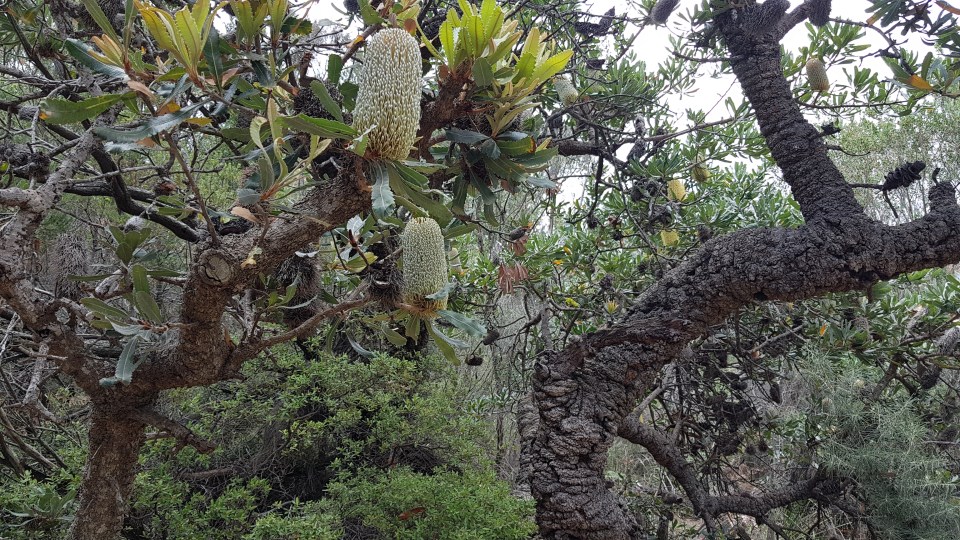
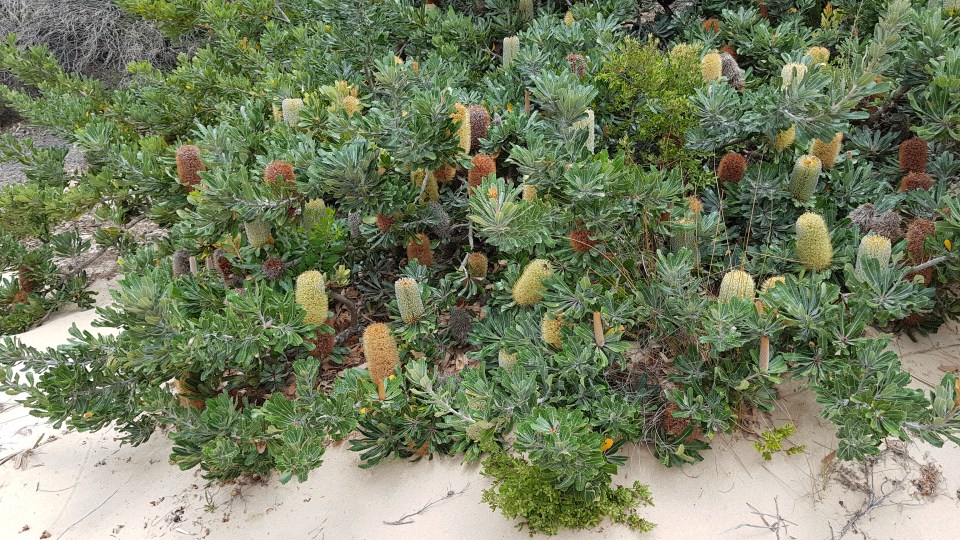
Along that trail we also saw two forms of Banksia serrata – an upright one and a prostrate form – growing quite close together:

2019-12-13 13.17.162019-12-13 12.23.18

I’ve seen a lot of birds visiting the inflorescences of this species but it’s suggested that mammals might be the main pollinators – the flowers have a very thick, yeasty smell.  Perhaps it’s both?
2019-12-13 11.02.52

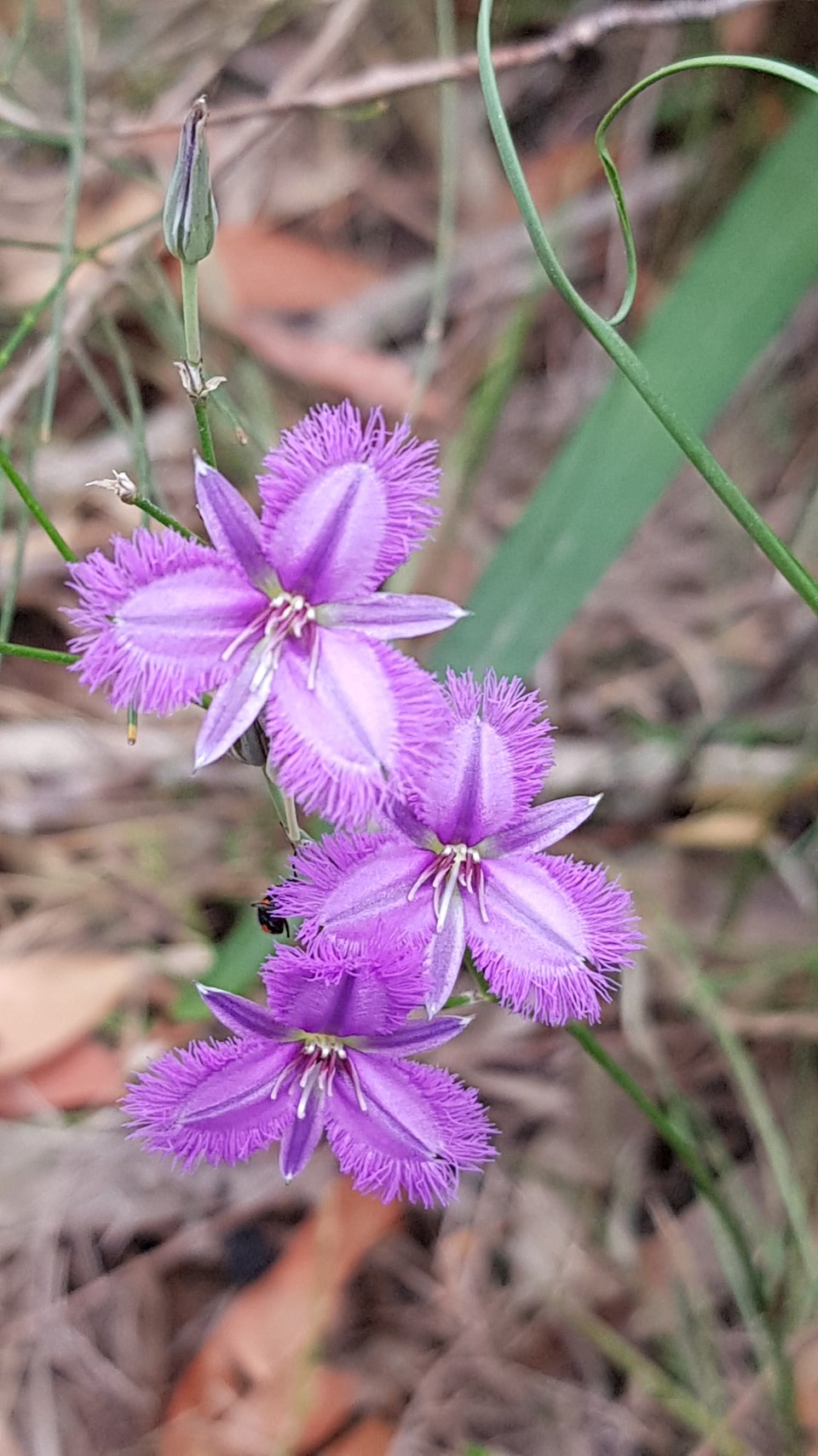
An Australian fringe-lily.
2019-12-13 12.10.16

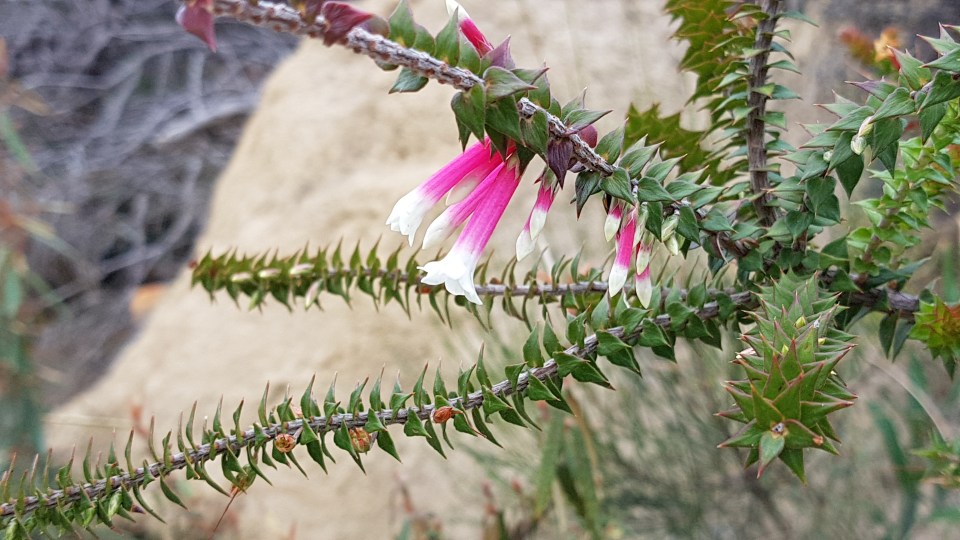
This is Epacris longiflora – thanks to Ryan O’Donnell for the identification.

2019-12-13 14.58.35

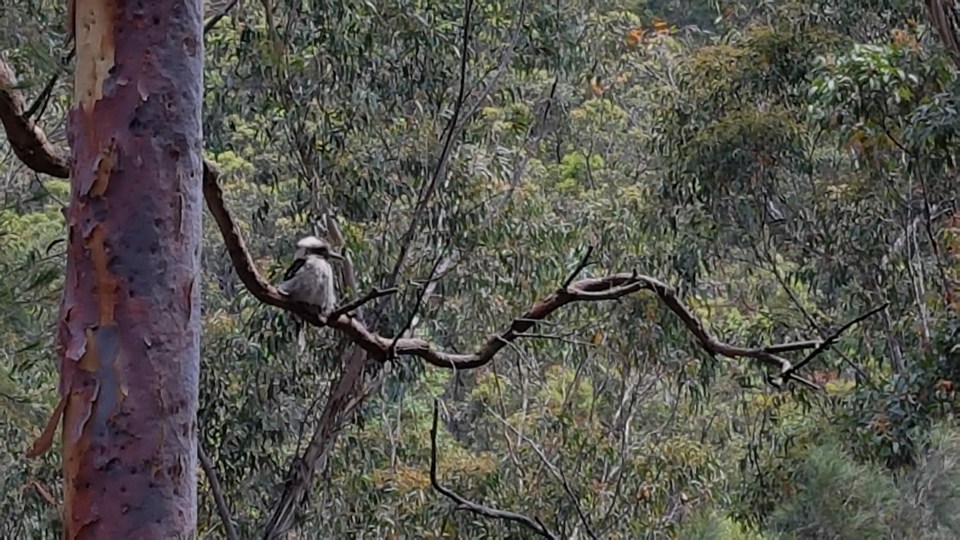
And of course we saw a lot of the iconic laughing kookaburras.

Steve was really concerned that much of the forest and wildlife in the NPR may be destroyed over the summer.  None of it has yet burned and, with temperatures due to rise enormously by next week, much of this habitat could be lost to fire by summer’s end.  I sincerely hope not, it’s too precious and beautiful to lose.  Vegetation in relatively light burns can reestablish itself given time, as we encountered in one of the Coogee remnants that burned a few years ago:

2019-12-07 15.12.472019-12-07 15.12.51 (1)

But the bigger, hotter, more intense fires that are currently sweeping the state are something else entirely, and are alien to these forests.  Aboriginal Australians carefully managed their environment using regular, small burns, a practice that has been lost in most areas.

Fire in Australia is a theme that I keep coming back to.  A few weeks ago, during one of my second-year undergraduate grassland ecology lectures, I was  discussing fire as a threat and a management tool in grasslands.  I mentioned the situation in Australia with respect to Aboriginal use of fire and I asked my students what the purpose of their burning the grasslands was.  Someone suggested that it might relate to their agriculture.  My response then was “no” because Australian Aborigines were nomadic hunter-gatherers who never developed agriculture, which is what the received wisdom has been for decades.  The answer I’d give now is: “yes, quite probably”.  As so often is the case in science, the received wisdom was wrong.

My colleague at the University of New South Wales, Angela Moles, has loaned me a book called Dark Emu which draws on early European settler accounts, Aboriginal oral tradition, and recent archaeological discoveries to turn our understanding of the ecology of pre-European Australia on its head.  In particular, it seems as though the (then) very large Aboriginal population was much more settled and had developed a sophisticated form of agriculture that included the creation and exploitation of huge areas of native grasses for their grains.  This was all destroyed by colonial European agriculture within a short time period, before it was fully understood.  One of the arguments in Dark Emu is that these native grasses are much more suitable to the Australian climate than wheat and may allow more sustainable agriculture in the future.

If you want to know more, here’s a link to a recent review and interview with the author, Bruce Pascoe:

https://www.theguardian.com/books/2019/may/24/dark-emus-infinite-potential-our-kids-have-grown-up-in-a-fog-about-the-history-of-the-land

Strange as it might sound for a professor to say, I was happy to be wrong on this (or indeed any) occasion: scientific understanding only progresses by people being wrong and incorrect ideas being superseded by new knowledge.  I made a point of sending my students an email telling them about what I’d discovered.  It may well form a question on the test they have to take next term…..

A Climate Change Tourist in America

2019-06-05 09.41.15

Following on from my recent post about A train ride through American climate change, my wife Karin has extended this and written a great piece called A Climate Change Tourist in America for Medium.

It’s a really beautifully observed and thoughtful piece of writing that weaves together themes that I would never have considered dealing with: aspects of life, love, tourism, poverty, suicide and desperation, all linked by climate change.  It’s only a 10 minute read: do yourself a favour and take a look.

Monarchs and Milkweeds Workshop summary, Oak Spring, Virginia, June 2019

2019-06-12 09.24.58

As I recounted in my last post about a train ride through American climate change, my wife Karin and I have been in the USA for the past couple of weeks, visiting colleagues in the west and ultimately heading eastwards to Virginia for a workshop on monarch butterflies and their milkweed hosts.  The meeting was organised by Anurag Agrawal, professor at Cornell University and author of the recent book Monarchs and Milkweed, highly recommended to anyone interested in the natural history of plants and insects.  The monarch (Danaus plexippus) is an iconic migrating  species that travels from Mexico to Canada and back, over the course of a few generations.  This behaviour, and their vast over-wintering assemblages, have become the focus of intense efforts to understand their ecology and biology.  Their caterpillar host plants are mainly milkweeds (Asclepias spp.) and bringing together both plant and animal scientists is important for gaining a fuller over view of the issues facing the monarchs and the milkweeds, and how both can be conserved in a time of anthropogenic change.

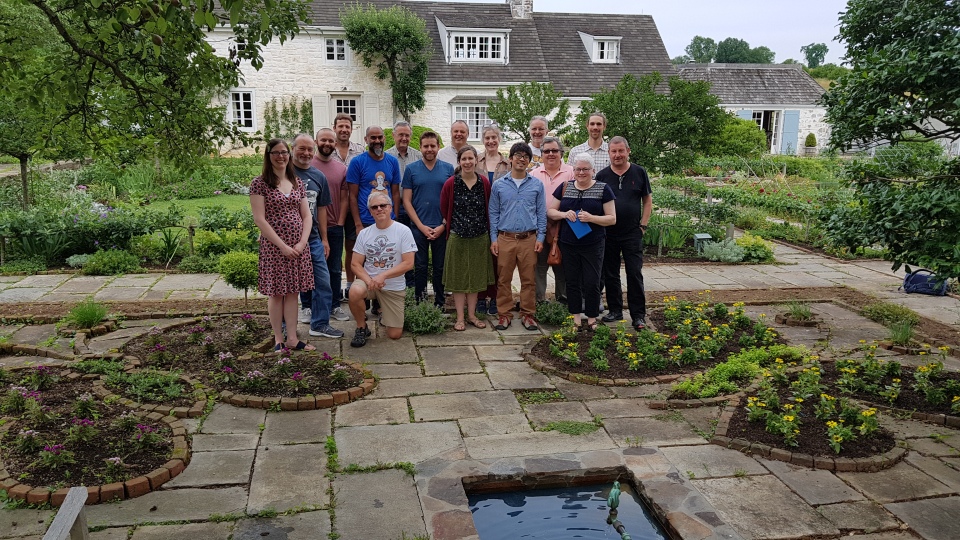
The venue for the workshop was Oak Spring, Upperville, the former home of Paul and Rachel (“Bunny”) Mellon which has been turned into the base of operations for a philanthropic foundation specialising in plant science, horticulture, and botanical art.  The Oak Spring Garden Foundation (OSGF) is “dedicated to inspiring and facilitating scholarship and public dialogue on the history and future of plants, including the culture of gardens and landscapes and the importance of plants for human well-being”.  The OSGF generously funded the workshop, including accommodation and travel for participants.  This brought together a small group of scientists from the USA, the UK and Brazil, together with an artist, a milkweed horticulturalist, and two science writers.  Their brief was to discuss the latest developments in our understanding of monarch butterflies, their decline and conservation, and the taxonomy, evolution and ecology of milkweeds and the wider groups of Lepidoptera and the plant family Apocynaceae to which these organisms belong.  My invitation to take part was due to the research on the pollination ecology of this family I’ve conducted, spanning about twenty five years and culminating in a recently published assessment of the diversity of pollination systems in Apocynaceae.

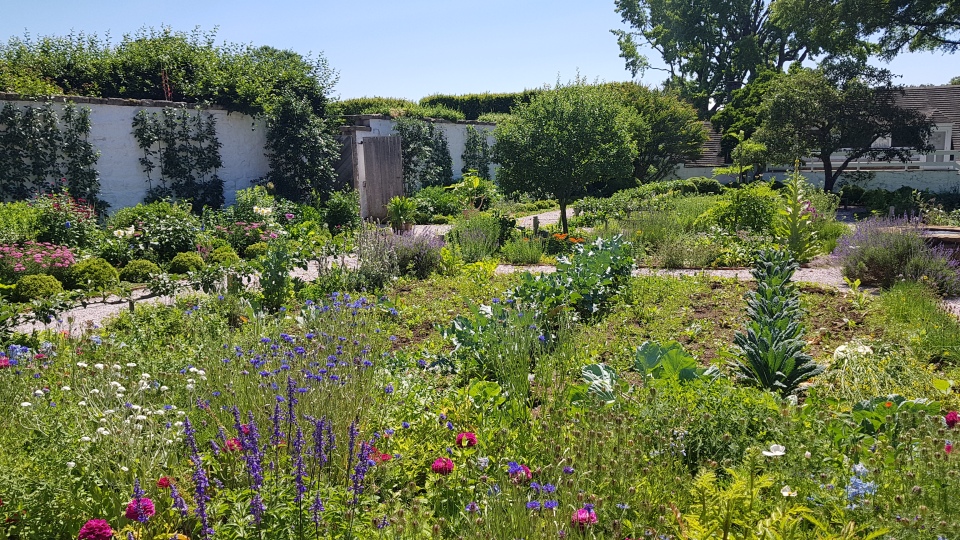
First things first: Oak Spring is one of the most tranquil, beautiful, and inspiring places where it’s ever been my privilege to stay.  Here’s a few photographs, but they really do not do justice to the buildings and garden, their setting, nor to the unique atmosphere of Oak Spring.

2019-06-12 15.27.50

2019-06-11 10.51.48

2019-06-11 14.26.45

2019-06-10 20.21.54

2019-06-12 15.24.31


2019-06-12 13.28.57

2019-06-11 16.26.56

So to the science.  The workshop started with a set of short presentations on our recent research findings and the motivations for our interests in these organisms.  On the second day we then moved on to discussing ideas for future collaborations between the participants and how that work might be funded in the future.  Presentations and discussions were mainly held in the Basket House, named for obvious reasons:

2019-06-12 09.30.08

2019-06-12 09.29.41.jpg

Each of us was also interviewed on camera to build an online archive of the work we do and why we do it.

The advantage of face-to-face meetings such as this, and why Skype and so forth can never fully replace them, is the free-flowing conversations that occur within the formal sessions and outside them.  Among the many things that I learned from presentations and discussions were:

  • The California monarch population has declined by almost 90% this year and there’s an urgent need to understand why this has happened.  Climate change has been implicated, especially in relation to the increased frequency of wildfires in this region.
  • Existing methods of nectar extraction from milkweed flowers may strongly underestimate the volume available to flower visitors, and overestimate the sugar concentration.  Using a small centrifuge to spin out the nectar seems to be the most effective method.
  • Asclepias arrived in the Americas (probably from Africa) some 10 million years ago (mya).  However Danaus only arrived about 3.7 mya, so there was a long period of time in which the plant was not co-evolving with one of its major herbivores.
  • There is strong evidence of migrations along the Andes by a close relative of the monarch, Danaus erippus.  Migrations in this group of butterflies therefore extends beyond the iconic D. plexippus.
  • Sonoran Desert Asclepias are sister group to the rest of the New World Asclepias spp.  The exact route by which the African ancestors made it to the Americas is unknown, it could be via Asia and the Bering Strait, or across the Atlantic by way of island stepping stones.  Either way, the phylogenetic position of the Sonoran milkweeds implies that a lot of Asclepias species have gone extinct over the past 10 million years.
  • Climate change seems to be resulting in more complex and unpredictable windows of opportunity for monarch egg laying and caterpillar development.  The monarchs are most successful in late spring and late summer, but not in all years.
  • Likewise, extreme precipitation of the kind I recently documented in the USA is also likely to have a negative impact on the monarchs and their host plants.
  • There is molecular evidence that monarch butterflies went through a huge genetic bottleneck in the 1960s-1970s, for reasons that are not altogether clear.

All of these findings, and more that there isn’t space to document, point to a need for further research to better understand these organisms if we wish to secure their futures.

By the end of the workshop we had made some concrete decisions on future steps:

  •  The African members of the genus Asclepias, plus about 20 other closely related genera, require more critical taxonomic and phylogenetic assessment in order to understand their systematic relationship to the North and South American Asclepias species.
  • A poster (or possibly series of posters) will be produced that explain the ecology of the monarch, its relationship with milkweeds, the patterns of migration, and the value of milkweeds as nectar sources for a diverse range of pollinators.
  • We will explore a multi-agency grant application to further develop the collaborations between participants.

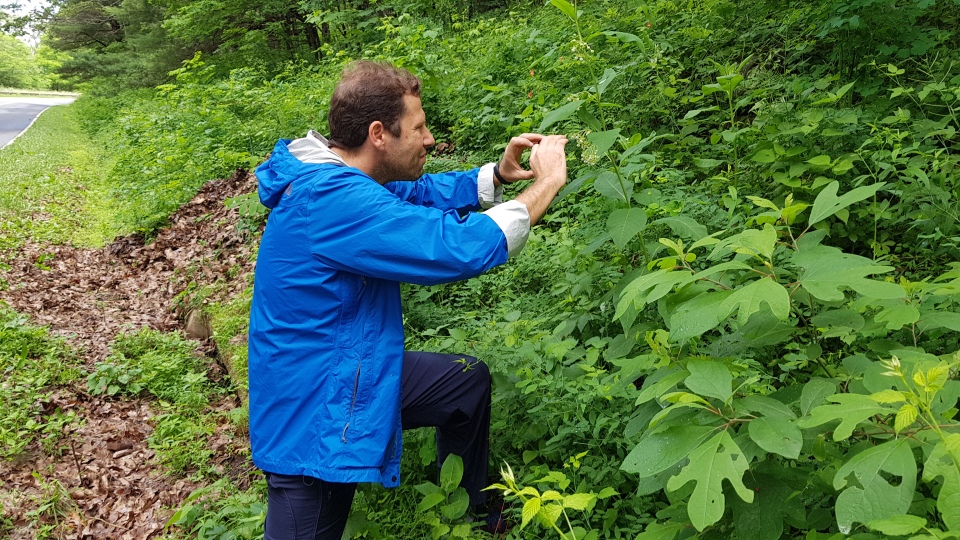
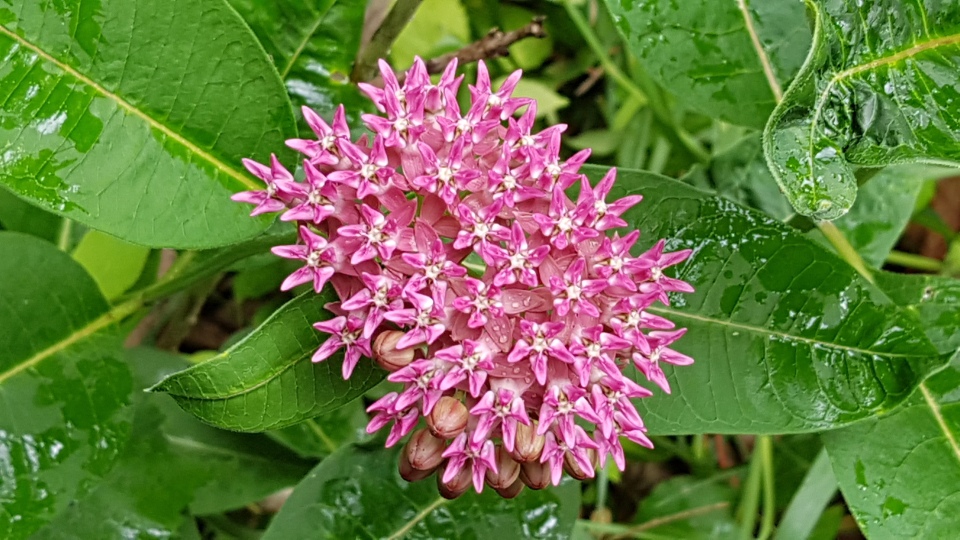
The final day of the workshop involved a field trip around Virginia to see some of the local milkweed species, many of which live in woodland.  That surprised me: I always envision Asclepias spp. as grassland or desert plants.  The leader of the field trip, Mark Fishbein, had a hit list of 8 species that he wanted us to see and in the end we located all of them, including a rare hybrid population of A. syriaca x A. exaltata, plus the tropical milkweed Asclepias curassavica planted in the OSGF garden, plus the distant relative dogbane Apocynum cannabinum.  Here are some images from that day:

2019-06-13 10.52.15

Searching for milkweeds along Skyline Drive, Shenandoah National Park


2019-06-13 10.56.00

Poke milkweed – Asclepias exaltata


2019-06-13 10.57.49

Hunting that elusive hybrid milkweed!


2019-06-13 11.02.21

Caterpillar of the monarch butterfly feeding on a milkweed


2019-06-13 12.20.21

Alessandro Rapini intent on getting a good photo of the A. syriaca x A. exaltata hybrid


2019-06-13 12.36.32

A bumblebee and a butterfly visiting A. exaltata


2019-06-13 15.42.41

Purple milkweed – Asclepias purpurascens


2019-06-13 17.01.45

Common milkweed – Asclepias syriaca – with a visiting skipper butterfly


2019-06-13 18.17.46

Climbing milkvine – Matelea obliqua – a member of a largely fly-pollinated group of New World asclepiads


Thanks to my fellow workshoppers for such a stimulating and enjoyable meeting, and to all the staff at Oak Spring for making us feel so welcome.  Particular thanks go to Prof. Sir Peter Crane who, as President of the Oak Spring Garden Foundation, was hugely supportive of the workshop, and to Angie Ritterpusch, Head of Events and Guest Services, for logistical and organisational support.


A train ride through American climate change

For the past week Karin and I have been travelling in the USA, starting in Denver, driving to Gunnison, then on to Grand Junction, Colorado, to catch the Amtrak California Zephyr train for a 36 hour trip to Chicago. Our final destination is a workshop on conservation of monarch butterflies and their milkweed host plants near Washington DC next week.

I’ll post something about the Gunnison leg of our journey at a later date, and of course the workshop.  But as I write the first draft of this post, we are passing through flooded Iowa farmland and I wanted to get some thoughts down about a repeating theme of our travels so far: climate change.

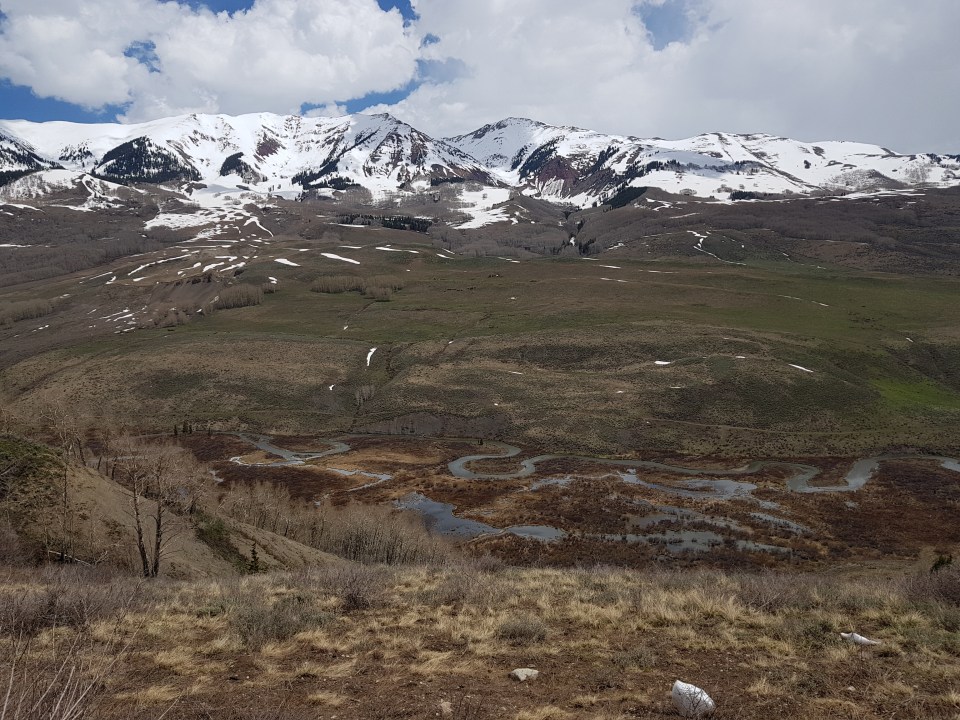
Our original destination in Colorado was the Rocky Mountain Biological Laboratory (RMBL), an almost legendary research venue for pollination ecologists. We were meeting up with my long-time friends and colleagues Nick Waser and Mary Price, with whom I’ve collaborated on various papers since the mid-90s. However we never made it to RMBL: unseasonably late snow had not yet been ploughed from the road up to the site and the only way in and out was with skis or snowshoes. Some hardy researchers were already there, but the limited time we had in Colorado made it impractical for us to make the journey:

2019-06-01 11.46.04

Unseasonable snow does not, of course, climate change make; but that was our first hint that there’s something odd about the weather in North America at the moment.

Fast forward a few days and we picked up the Zephyr in Grand Junction, the start of an incredible journey through spectacular Rocky Mountain scenery and then down into the flat agricultural lands of Nebraska and Iowa. We had a sleeping cabin and, following a stop in Denver, we drifted off to the slow chug-a-chug of the Zephyr’s wheels and the occasional distant whistle from the front engine – it’s a loooong train!

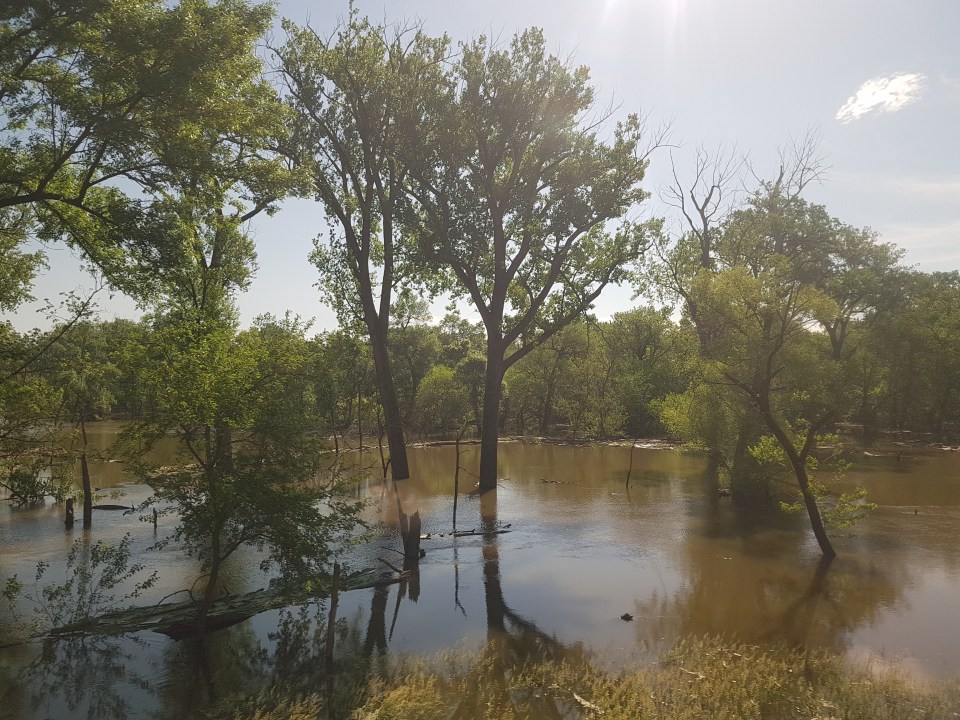
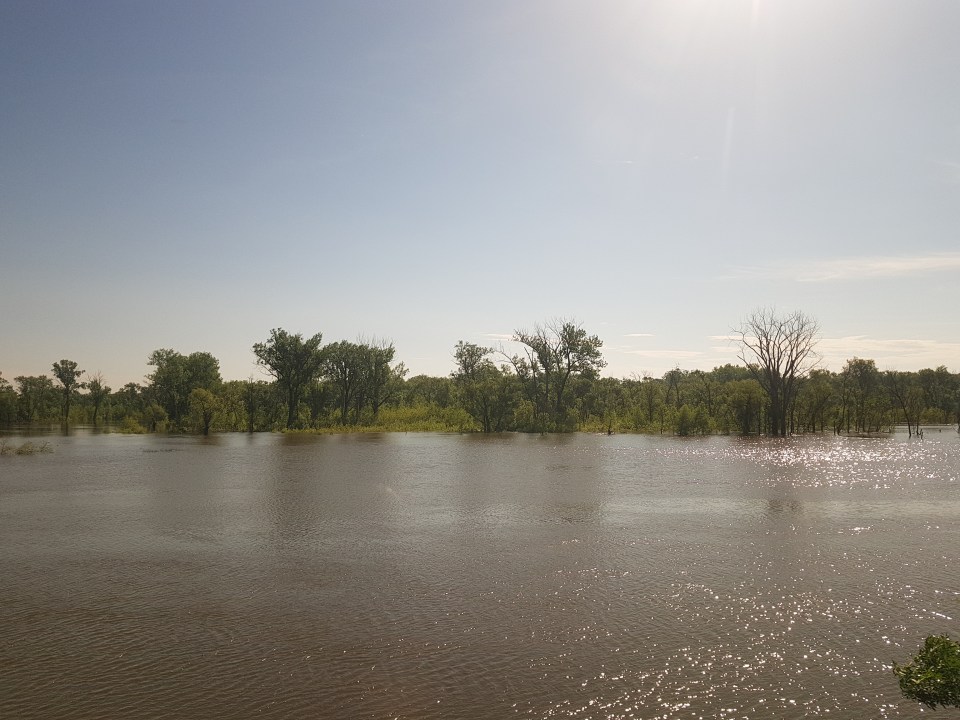
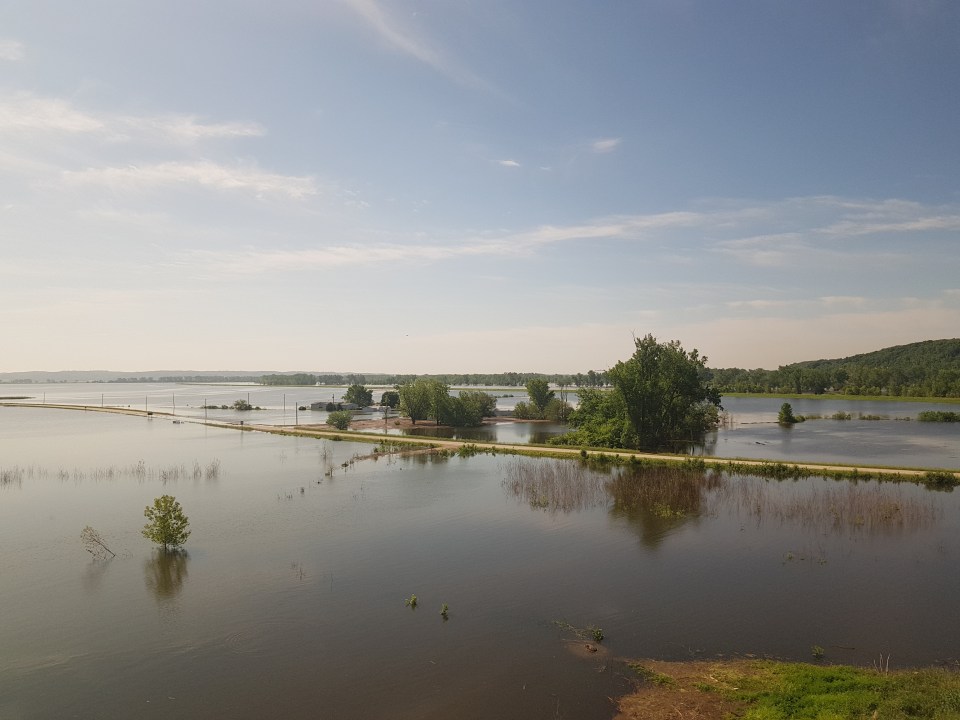
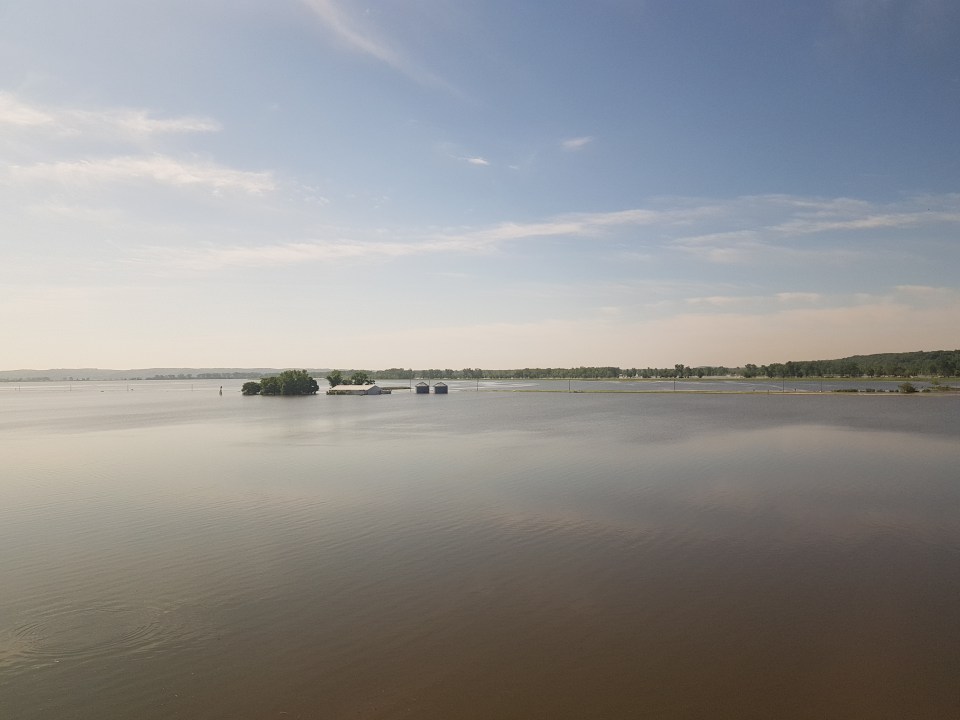
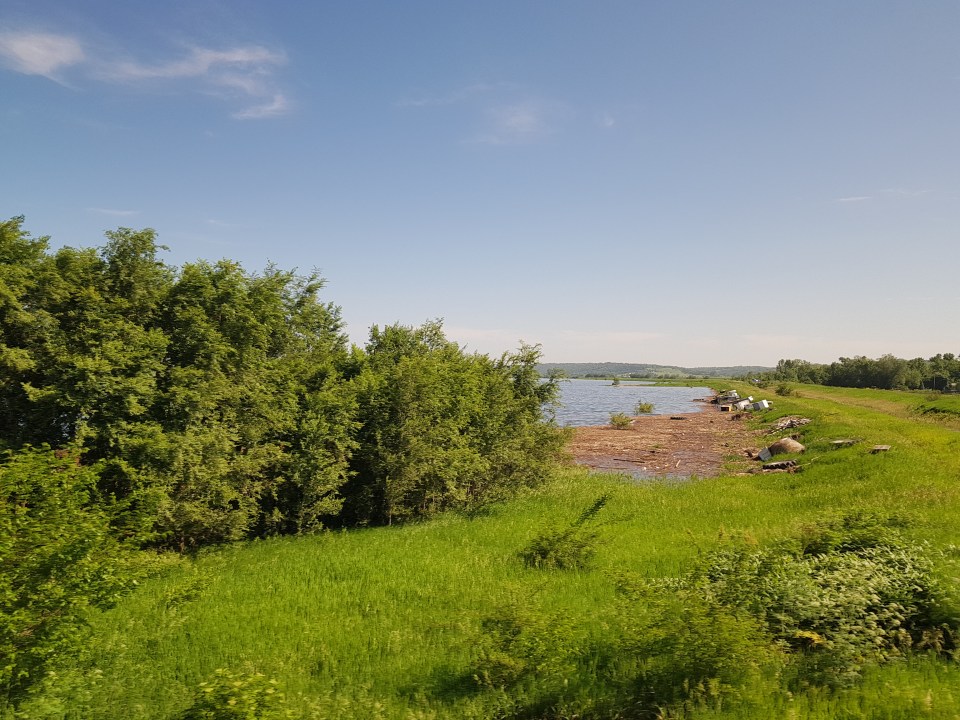
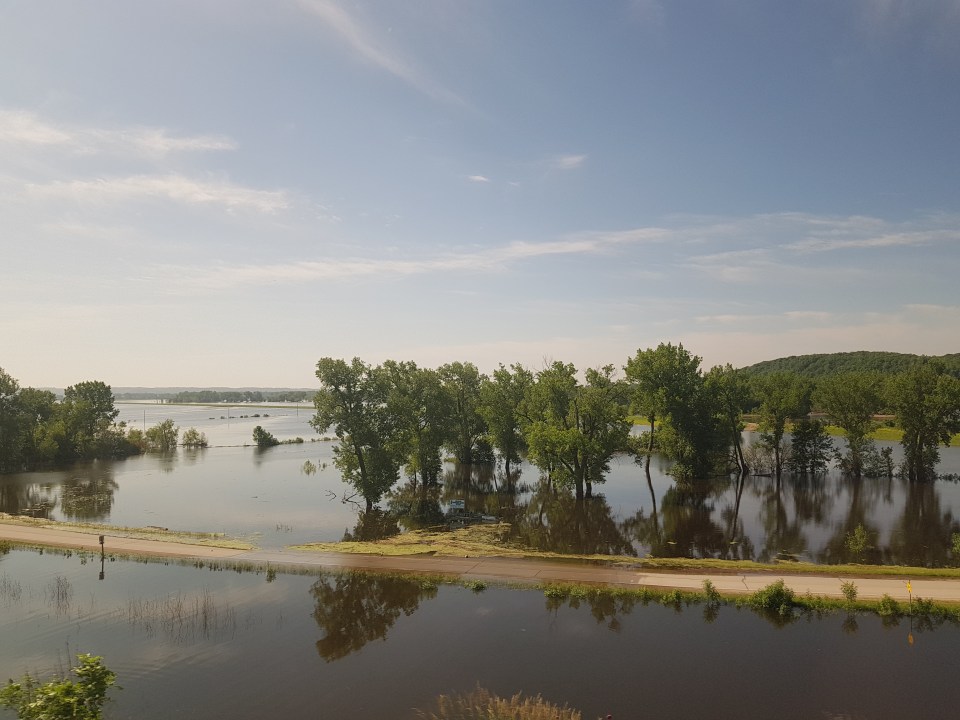
The next morning we were still in Nebraska and it was then that things started to get both interesting and worrisome. One of the conductors gave us a running commentary about the heavy rainfall that had caused flooding in this region during May and June – see this recent account from NASA’s Earth Observatory.  As you can see from the images below (snapped from the train as we passed, so excuse the quality), flooding is still an issue along the Platt and Missouri Rivers, both of which had over-topped their adjacent levees at various points. A conservation area, the Fontanelle Forest Preserve, had turned from woodland into wooded swamp:

2019-06-05 09.29.06

This is not the river Missouri – it’s actually about quarter of a mile beyond those trees:

2019-06-05 09.28.27

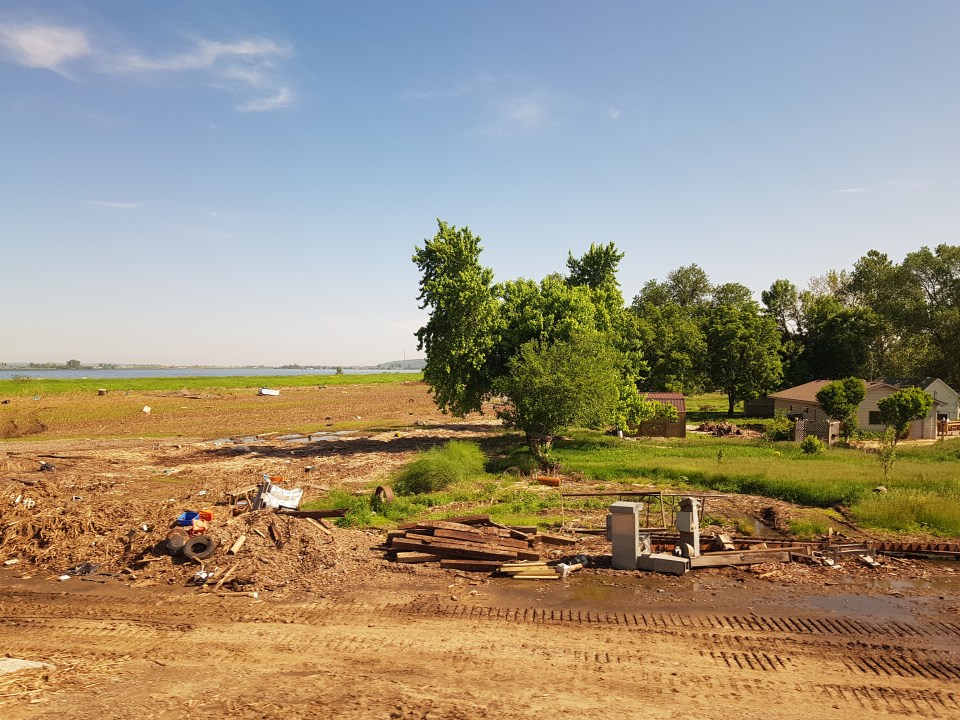
Adjacent farmland was completely flooded shortly after corn crops had been planted. Farm buildings were washed out and their occupants had been forced to leave with little notice. These are areas that do not normally flood and the impact of this heavy rain has been significant and will last long into the future:2019-06-05 09.51.37

2019-06-05 09.51.59

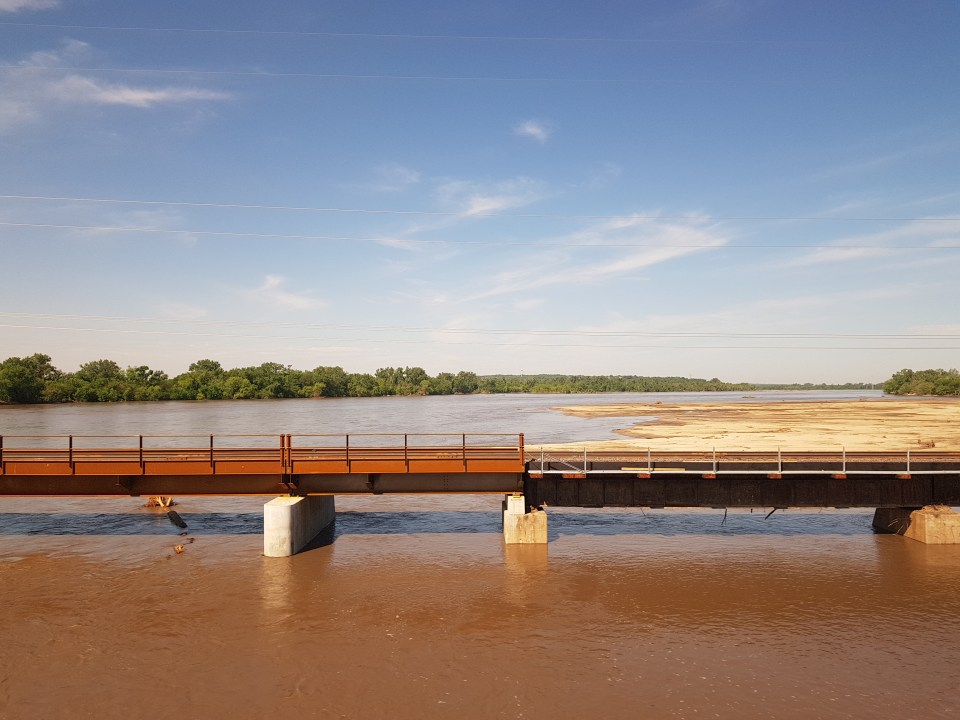
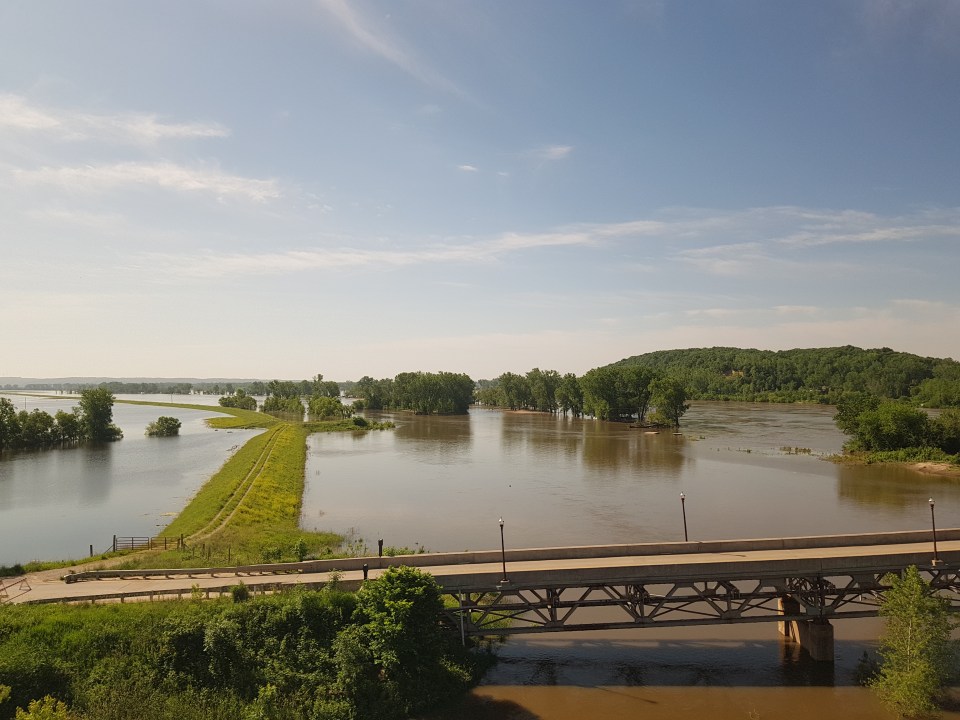
Infrastructure such as roads and bridges were also damaged.  The Union Pacific rail bridge across the Platt was partly washed away and has had to be rapidly rebuilt, but only after a new access road was established:

2019-06-05 09.41.15

Everywhere we looked there was flooding:

2019-06-05 09.51.10

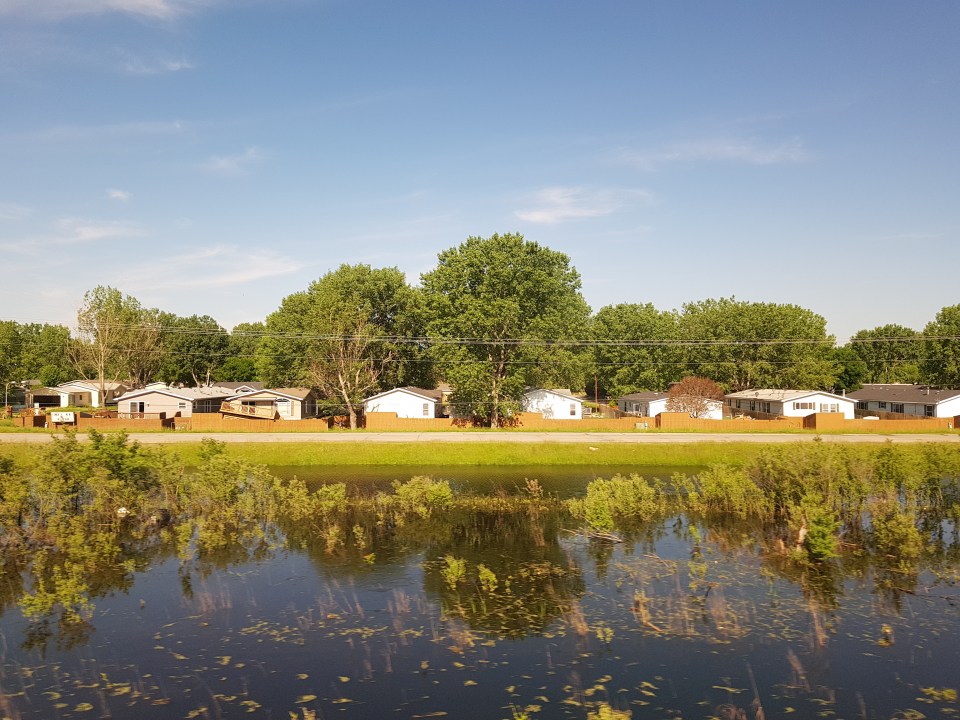
A nearby industrial estate and trailer park had also been flooded, with a lock-up garage of classic American cars under seven feet of water, and the residents and businesses have been told to leave permanently. This area cannot be guaranteed flood-free in the future and will be leveled and allowed to return to nature:

2019-06-05 09.34.40

A local portaloo company was also flooded out and we observed the plastic toilets washed up along a lakeside that used to be a field of corn.  Superficially amusing, until you realise that this represents the loss of someone’s livelihood:

2019-06-05 09.55.44.jpg

Along the train tracks ballast had been piled up to begin a programme of raising the track bed. Residents of the nearby town of Pacific Junction (population about 470) have been told to either sell their homes to the government, and move out, or face ever-rising costs of flood insurance – see this recent local newspaper article. Pacific Junction used to be an important rail terminus and some of the families have been there for generations.   Let’s be clear what this means for these people – they are displaced from their homes, they are climate refugees in their own country.

2019-06-05 09.51.26

2019-06-05 09.55.58

After we had passed through this area I chatted with one of the train stewards who mentioned that his Louisiana home had been flooded out in August 2016. He was forced to pay $400 per year flood insurance to protect his belongings and home from future events, in a part of the state that had no prior history of flooding.  “But your President says that climate change is not a problem” I probed.  He gave me a look that said more than words could ever convey. “Don’t get me started on that” he replied. A nearby passenger, a young guy, chimed in: “We’d be here all day!”  Trump’s rhetoric is changing slightly and, if anything, becoming less coherent and more deranged as he talked yesterday of “good climate” and “weather going both ways”.

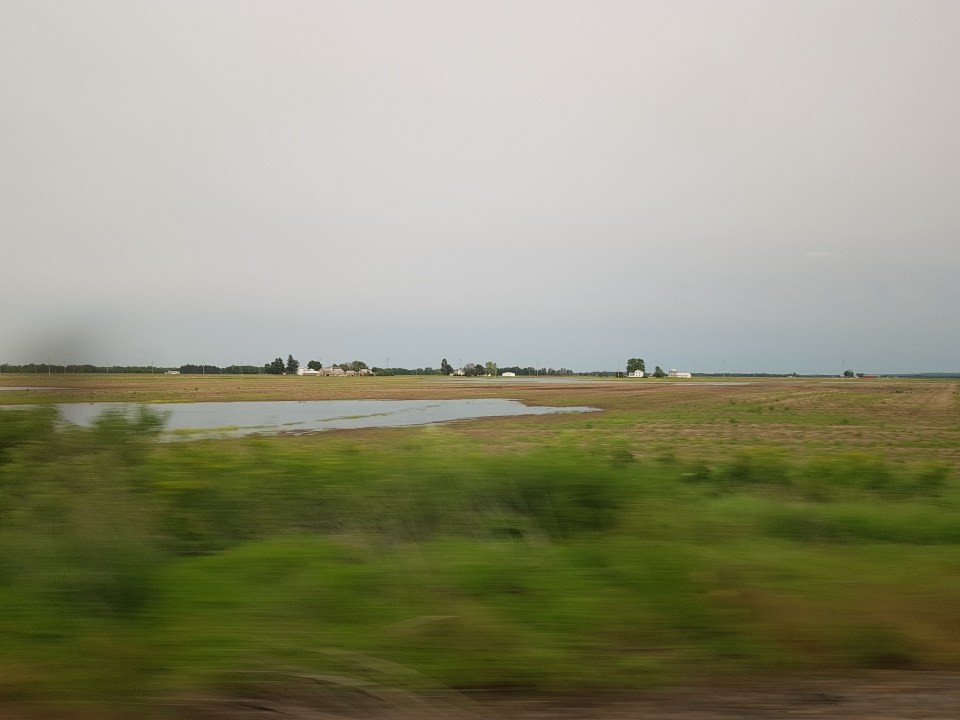
All along the train route to Chicago we saw the same thing, over hundreds of miles and hour after hour – partially or completely flooded fields, crops washed away or submerged under water.  Large ponds in otherwise pristine, planted fields of parallel lines where the first growth of wheat was showing:

2019-06-05 18.44.11

Karin tells me that the flooding around the Mississippi was even worse, but I’m afraid that I slept through it; long train journeys are wonderful, but tiring!

This is just a snap shot of what climate change is doing to the USA at the moment; it’s creating climate refugees in a number of states – see this article for instance. Wildlife seems to be the only thing that’s benefiting as nature reclaims farmland and urban areas: the flooded fields we passed were full of herons, wildfowl, and other water birds. But in the longer term who knows what these changing weather patterns will bring for biodiversity and human society. The only certainty is that change is coming.

Biodiversity and climate change: a hierarchy of options

Conservation hierarchy image

The related issues of how to conserve biodiversity and reduce the impacts of climate change have never had such a high public profile as they do at the moment.  The activities of Extinction Rebellion caught the attention of the media around the world, for example here in London.  Numerous organisations, cities, regions and countries have declared a Climate Emergency.  And IPBES – the Intergovernmental Science-Policy Platform on Biodiversity and Ecosystem Serviceshas released a summary of its first global assessment with the full report due later this year, and explicitly makes the link between conservation of biodiversity and reducing the effects of climate change.

Timed to coincide with all of this, the University of Cambridge has announced that it is setting up a Centre for Climate Repair in order to explore hi-tech “fixes” to climate change, such as spraying sea water into the atmosphere in order to reduce warming at the poles, and sucking CO2 out of the air using large machines.  I think it’s fair to say that this was met with some scepticism on social media; here’s some examples:

Other people have pointed out that nature-based solutions are the most likely to be successful, and provide a boost for biodiversity at the same time:

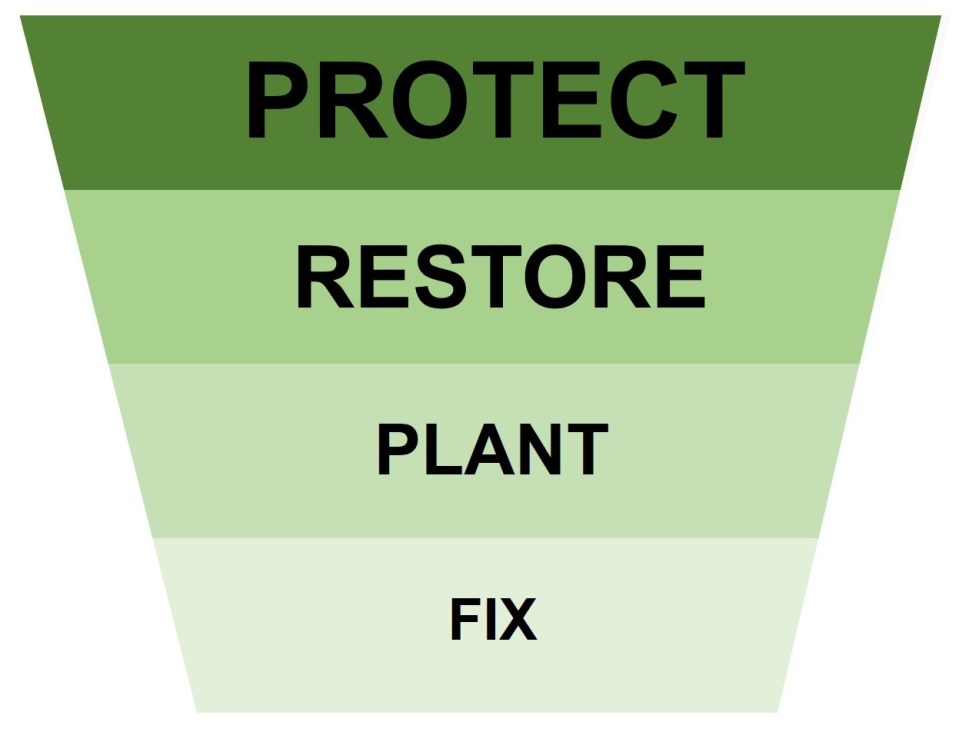
All of this reminds me of the Waste Hierarchy in its various iterations – you know the sort of thing – “Reduce > Reuse > Recycle”, where reduction in waste produced is best, followed by reuse of waste resources, with recycling being the least good option (but still better than just land-filling the waste).  As far as the link between conservation of biodiversity and reduction of the effects of climate change goes, there’s a parallel hierarchy – see the image at the top of this post – that sets out the order of priorities:

PROTECTION of ecosystems using the full force of national and international laws and conventions has got to be the top priority.  Otherwise any of the other activities will result in, at best, humanity running to catch up with what the world is losing.  Let’s stop cutting down ancient forests and degrading peatlands that have accumulated millions of tons of carbon over thousands of years!

FIX – by which I mean the kind of hi-tech solutions proposed above – should be the lowest priority: they do little or nothing directly for biodiversity and there is no compelling evidence that they will even work as intended.

Between these two are RESTORATION of currently degraded habitats (such as re-wetting peatlands as in the Great Fen Project) and PLANTING of trees, which can be a form of habitat restoration under some circumstances.  Large scale examples of this include

Grain for Green – China’s attempt to restore vegetation to abandoned farmland to reduce soil erosion and flooding.

Great Green Wall – a multinational initiative in Africa aimed at restoring the vegetation on the southern edge of the Sahara to combat desertification and mitigate climate change.

While doing a bit of research for this blog post* I became aware that a Conservation Hierarchy has already been developed by the Convention on Biological Diversity but that really only deals with habitat destruction, mitigation of destructive activities, etc.  What I’m suggesting is related more to the direct link between conservation of biodiversity and mitigation of climate change.  So what to call this particular hierarchy?  Perhaps the BioCC Hierarchy?  Can anyone suggest a better name?  Maybe it doesn’t need a name at all, it just needs people to be aware of it and for governments to act logically.


*I googled the term “Conservation Hierarchy” – you get the quality of research you pay for on this blog….


Have we broken the planet?

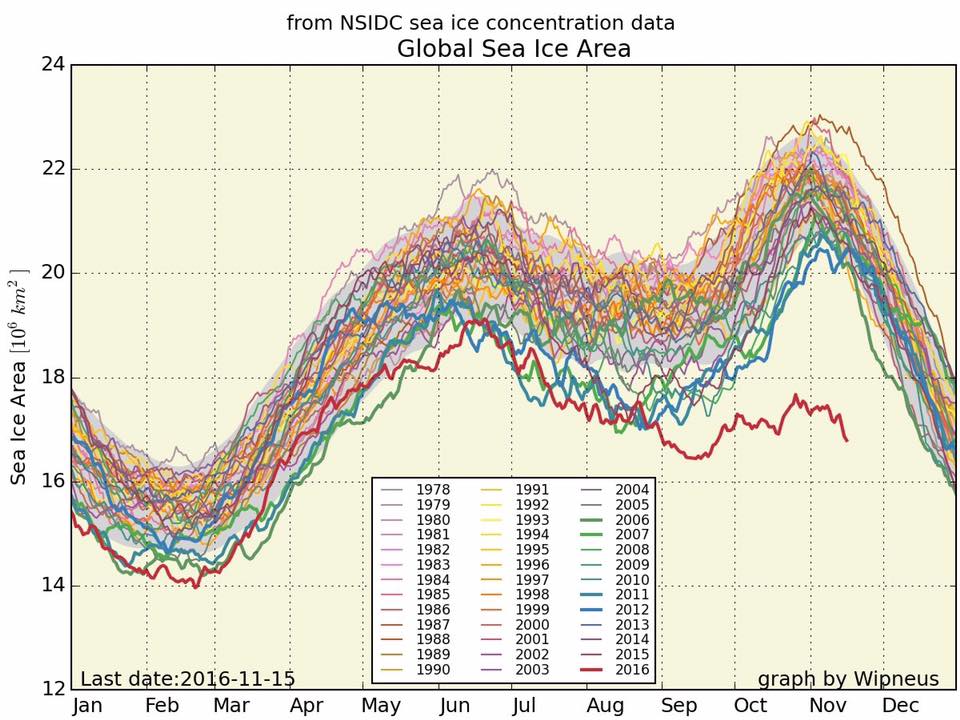
sea-ice-graph-november-2016

A graph showing this year’s figures for area of global sea ice, in comparison with the same data for the past c. 40 years, was widely shared on Twitter yesterday, resulting in a lot of discussion and consternation.  I’m not on Twitter (yet…) and picked this up from Terry McGlynn’s Facebook feed.  The graph shows an anomalously low extent of sea ice compared with what we would expect at this time of the year, in fact a drop of about 25%.

As you can see, something looks to be seriously wrong.  For more discussion about the graph, see this piece over at The Verge.

I’ve not discussed climate change much on this blog, it’s not my area of specialism and there are plenty of other good bloggers out there who are far more knowledgeable than I.  But graphs like this are hugely worrying because they not only suggest that aspects of our climate may be at a tipping point where they change from one state/predictable pattern to another.  That’s a concern on a global level, because it’s strong evidence for global warming.  However the reduction in sea ice also has huge implications for the biodiversity that depends upon the ice.

If I hear any more news on this I’ll post it, but in the meantime it’s worth pondering whether perhaps the UK’s signing up for the Paris Climate Agreement this week is a bit too late.  As my colleague Duncan McCollin put it: “we’ve broken the planet”.  I hope he’s wrong.