Category Archives: Pollination

The Great eSCAPE

As I begin to write this blog entry, there’s a buzz of voices around me, excitedly discussing future research or past results, or saying goodbye to friends and colleagues, old and new.  It is the last day of SCAPE 2012, the annual meeting of the Scandinavian Association of Pollination Ecologists (or “for Pollination Ecology” or “for Pollination Ecologists” – the name seems to have drifted over the years).  SCAPE was the first overseas conference I attended, as a young and enthusiastic PhD student, in 1991.  Older but no less enthusiastic, SCAPE is for me a regular fixture in the calendar.  Even if I can’t always attend, I try to send my good wishes to the organisers, with a promise to be there the following year.

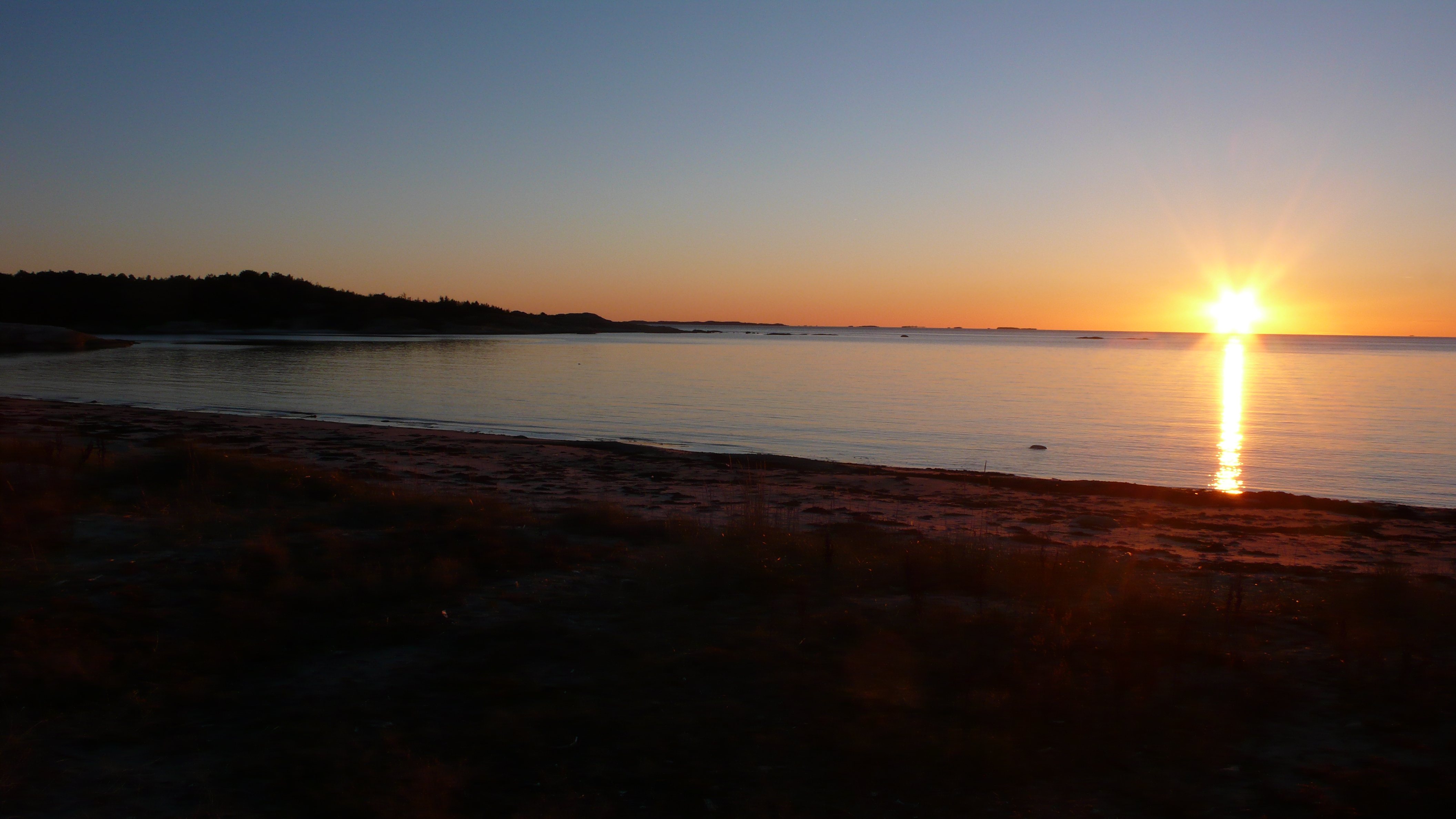
SCAPE was founded in 1986 as an informal get together of Swedish research students who were all broadly interested in questions of pollination ecology.  Since then it has been held every year, maintaining the informal organisation and circulating between Sweden, Denmark, Finland and Norway, which is the venue for this year’s meeting in Skjærhalden in the beautiful Ytre Hvaler National Park.  Attendance in recent years has varied between 50 and 80 participants, peaking when it’s one of the 5 yearly anniversary specials.  One of the many great things about SCAPE is that it’s a very friendly, open hearted conference at which new research students rub shoulders with established researchers, and can present their provisional research findings safe in the knowledge that they will receive constructively critical feedback.  Those established researchers can expect to have their conclusions challenged, as good scientists should, but it’s never done with malice.

The talks this year have spanned the usual wide range of geographical localities (Brazil, Israel, Spain, Ireland, as well as Scandinavia), scales of research focus (from the genetics of self incompatibility to landscape scale assessments of pollinator diversity), and quality of presentations (overuse of laser pointer on text-dense slides to textbook examples of how to deliver a message in 15 minutes).

Although I enjoyed the whole meeting and gained new knowledge from every presentation,  there have been some talks which really stood out for me because I appreciated the overall approach, the message that was being delivered, or the insights it gave into questions I’d not previously considered.  These include Dara Stanley’s estimate that bumblebees from 800 different nests were foraging on a single field of oil seed rape; Achik Dorchin’s account of the staggering number of bee species in small habitat fragments in Israel (totalling more than in the whole of Britain); a dissection of the question of when pollination can be a limiting ecosystem service for crops by Ignasi Bartomeus; and Robert Junker’s initial account of the huge diversity of bacteria associated with different flower organs.   There were many others I enjoyed, of course, but that gives a taste of how diverse the subjects were.

Although I wasn’t speaking this year, two members of my research group were:  André Rodrigo Rech talked about his PhD work on pollination of Curatella americana in Brazilian savannahs; and Stella Watts presented some of her postdoctoral work on honey bee versus unmanaged bee pollination in an endemic Iris species in Israel.  This last work was undertaken with Amots Dafni, one of the doyens of pollination ecology.  Amots attended the conference and told us he’d finally decided, in his 68th year, to retire from formal university teaching, administration and supervising research students – and begin a new project!  Enjoy your “retirement” Amots!

Karin attended SCAPE with me and enjoyed scientist-watching, a hobby that gives me frequent insights into how we work as a community, and gives her insights into what makes me tick.  Half a day of travel saw us back home at 2am Monday morning; I then had to be in university for a 9am seminar with students on my final year Biodiversity & Conservation module.  Despite being tired the seminar went well, perhaps fuelled by the post-conference buzz I usually feel after these events.  The seminar finished early to enable me to drive up to Park Campus, the university’s other site, for a brief  meet-and-greet with the head of Sandtander Universities and his team.  Banco Santander’s higher education arm has been funding scholarships and research activities at the university for several years now and it was a small grant from them that enabled André to attend SCAPE.  Seemed only polite to say thank you.

A highlight later that week was Thursday, which was taken up with our annual first year undergraduate trip to Oxford Botanic Garden, part of my module Biodiversity: an Introduction.  I also wrote about this in March but for the current academic year we have brought the trip forward.  Our visit  was hosted by the superintendent, Timothy Walker, who engaged the students for an hour as we walked the gardens, covering everything from the medical importance of plants such yew trees (Taxus spp.) in providing treatments for cancer, to the importance of specific trees for two Oxford writers, JRR Tolkien and Phillip Pullman.  Timothy also described how much of the planting is laid out in beds according to plant families as defined by the latest phylogenetic research the (APG III system) stressing the importance of modern systematics to understanding biodiversity.  If you want to know more about this, Timothy wrote and presented a recent television series called Botany: A Blooming History which remains the best account I’ve seen of the history of plant taxonomy and why it is relevant to modern plant sciences.

That evening Karin and I attended the opening of a show at the university’s gallery called “Encounters with Drawing” by artist Angela Rogers.  There’s some very thought provoking material in the show and I recommend a visit if you are local and have time – it runs until 30th November.  We chatted with Angela about the “drawing conversations” she has with people and some of her comments about “how much space do individuals need” chimed with familiar ideas from ecology about intra- and inter-specific competition in organisms and niche theory.

I’m going to end this entry with a link to a video post by my friend K.-D. Dijkstra (who I introduced in an earlier blog).  It’s not often that the actual moment that a species new to science is discovered gets captured for everyone to see, but here’s K.-D. doing just that!

Lend us a Darwin?

It’s been a momentous month for science, following the announcement that the CERN group have found the first hard evidence of the existence of the predicted Higgs boson.  Finally we seem to be getting to the crux of what matter actually is, funded by sums of money that those of us involved in biodiversity, ecology and conservation research cannot conceive.  The journalists have clearly enjoyed their role of demonstrating that they understand the highly technical concepts explicit within the Higgs quest.  But why is it that some science writers seem to be able to “get” the most complex of theoretical physics yet struggle to understand what the environment is and why it is important to understand how it functions, its current state, and its preservation?

In sharp contrast to the CERN coverage was a rather silly analysis by BBC correspondent Michael Easton.  His piece concluded that the idea of the UK as a predominantly urban country is a “myth” because the UK National Ecosystem Assessment has found that “6.8% of the UK’s land area is now classified as urban” and further that “78.6% of urban areas is designated as natural rather than built”.  Therefore, in Easton’s opinion, the proportion of the UK that is built upon is 2.27%, ergo, the rest is natural and everything’s ok.  I’ve searched for both of those quotes in the document that he cites but can’t find them.  But leaving aside sloppy scholarship that would shame a first year undergraduate, to focus purely on the directly urbanised fraction of this country ignores the fact that over 40% of the country is designated as “enclosed farmland” with much of the remainder devoted to agriculture of one form or another.    That agriculture supports the urban population, of course, and so the urban “footprint” extends far beyond the physical infrastructure of our towns and cities.

Easton’s analysis assumes that because it’s green, it’s natural.  Which ignores the fact that the majority of our “green and pleasant land” supports only a limited biodiversity.  The notion of what is “natural” is a complex one and can’t simply be equated to attractive landscapes with lots of trees and green fields.  That’s no more “natural” than an aesthetically pleasing painting; both are human constructs and both reflect human interpretations of the world.

The problem with these kinds of ad hoc analyses by journalists is that people who read them assume it’s based on solid evidence and that the writer knows what they are talking about.  In this case, the statistics have been spun to suggest that that we should not worry so much about the UK’s environment because only about 2% is urbanised.  Urbanisation is not the biggest threat to biodiversity by any means and in fact urban environments can support greater levels of biodiversity than “countryside”.

It was therefore nice to see the publication of a perfectly timed study by David Tilman and colleagues showing that biodiversity loss has a greater impact on how ecosystems function, in terms of productivity, than other factors such as nitrogen deposition, drought, increased carbon dioxide, fire, etc.  This is mega-ecological research at CERN-like scales involving thousands of measurements in 11 long-term studies, some lasting over a decade.   It’s the kind of science we require if we are to understand how the loss of biological diversity might affect the environment on which we depend.

One evening last week I took up an invitation to speak to a group of students from Emory University in the States, currently staying in Oxford for a summer school.  They were an attentive lot, and the politest and best dressed group of students I’d ever encountered, though in fairness my talk followed a formal dinner at Regents Park College, their British base.  I began by asking if anyone had a £10 note.  A few held one up and were able to identify the profile of Charles Darwin and the fact that there were images of a hummingbird and flowers, plus HMS Beagle, printed on one side.  “That’s how important Charles Darwin (and pollinators) are to us” I stated “We put them on our money!” 

That’s perhaps stretching the point a little as Darwin’s interest in hummingbirds was limited – on its release the £10 note was originally criticised by Steve Jones as “there are no hummingbirds on the Galapagos Islands”.  True, but it was the whole voyage which inspired Darwin’s ideas, not just his brief visit to that archipelago, and hummingbirds are to be found across mainland South America.  Darwin certainly mentions seeing them in a couple of his Beagle notebooks, which are searchable online.  The great man also had a strong interest in flowers and pollinators, so the images are more fitting than Steve Jones believes.  In any case, a “Darwin” quickly became British slang for a tenner and “Lend us a Darwin?” is a useful shorthand when borrowing money from friends.  As a brilliant writer and explainer of complex ideas, Darwin was a science populariser long before the distinction was made.  Many of his books were best sellers in their day and all were founded on solid data and examples gleaned from his contacts around the world.  Current science writers could learn a lot from him.

Scientists Must Write (and Speak and Listen and Review and Edit)

“Scientists Must Write” was the title of a book published back in the late 1970s by a former tutor of mine, Robert Barrass, at what was then Sunderland Polytechnic (now the University of Sunderland).  I had assumed the book was now a long gone publishing memory and no longer available.  But it turns out that Robert updated it in the early 2000s and it’s still in print.  Almost 30 years (30!) later I can clearly remember Robert impressing upon us the importance of good writing skills for scientists-in-training.  At the time I was as far from being a professional scientist as it’s possible to be and so didn’t fully grasp this, but nonetheless what he said chimed with my own notions that writing was important, even for a scientist.

Nowadays I realise that it’s not just the writing of standard, academic papers, book chapters and books which  is essential: writing of all kinds is a necessary facet of the life of a research active scientist.   This June sees the publication of two contrasting articles that illustrate this point.  The Royal Horticultural Society’s journal The Plantsman has published a piece entitled “The Importance of Native Pollinators“, whilst the historical journal Notes and Records of the Royal Society has published my paper on “John Tweedie and Charles Darwin in Buenos Aires“.  Neither of these is standard academic fare, at least for me.  The first is a popular article aimed largely at gardeners and others interested in understanding more about pollinator conservation.  The second, whilst academic and rigourously peer reviewed, is primarily historical rather than scientific.

Why am I writing popular conservation articles and historical papers?  Largely for different reasons, though they are linked by my overall fascination with biodiversity.  The Plantsman article is an example of taking ideas and findings from the LBRG‘s research and presenting it to a wider audience who might, at the least, find it interesting and hopefully useful.  One might describe it as “popular science” though I don’t really like the term: it suggests that it’s somehow different to “real” science, which is not the case: it’s really only the format of the presentation which is different.

The John Tweedie/Charles Darwin paper reflects my desire to understand where our scientific knowledge of biodiversity comes from.  As scientists and conservationists, we draw conclusions about species’ distributions, conservation threats, extinctions, and so forth, based on information from specimens that have been collected by people like Tweedie and Darwin, and curated at places such as Kew and the Natural History Museum.  By its nature it’s a historical process and historical research helps us to understand how we arrived at our current understanding.  The only reason we know that 23 species of bee have gone extinct in England since about 1800 for example, as I cite in my Plantsman article, is that over the past two centuries specimens and observations have been recorded and analysed.  This is an ongoing process, exemplified by the BWARS project mapping the spread of Bombus hypnorum   the most recent addition to the UK’s native bee list.

As well as writing we scientists gain much from listening to what others in our field have to say and a well attended, and very interesting, meeting in London last week launched the British Ecological Society’s Macroecology Special Interest Group .  The range of talks spanned community structure, interaction networks, ecosystem services, latitudinal gradients and disease biology, all at the large spatial and temporal macroecological scales covered by this subdiscipline of ecology.  Or is it really a multidisciplinary field, a merging of old fashioned biogeography with more modern ecological approaches?  Who knows, perhaps this is sterile semantics; as I mentioned to one of the organisers in the pub afterwards, “macroecology” seems to me to be more about a philosophy of approach rather than a field in itself.

Formal teaching has largely finished for the time being, so in addition to research activities and university administrative work, much of the remainder of the last couple of weeks seems to have been taken up with editorial and peer reviewing duties for journals, including PLoS ONE, for which I’m an academic editor. This can be time consuming and thankless, but is absolutely vital if the whole system of scientific publishing is not to grind to a halt.  Scientists must write, but that writing is supported by a body of individuals who act as peer reviewers, editors, proof readers, and so forth.  Collectively that eats up a lot of scientist-hours and is something we should never take for granted.

The Roof Tiles of Chirche (Darwin’s Unrequited Isle part 3)

Architectural analogies in evolution are not new.  The most famous (and, in its time, controversial) is perhaps Gould and Lewontin’s “Spandrels of San Marcos and the Panglossian Paradigm” in which these prominent evolutionary biologists suggested that some features of the biology of species were secondary “emergent” structures which formed from the conjunction of other, evolved characteristics.  That is to say these features are not evolved in their own right, they are simply by-products of the evolution of other factors.  In this respect they are like “spandrels” – the ornamented space between two structurally significant elements, for example the arches and the domed roof they uphold in the Basilica di San Marco in Rome.  Gould and Lewontin were following a metaphorical path that had been traversed by many major figures in evolutionary biology.  Most notably, Darwin used the notion of the architect, contrasting natural with artificial selection, in a number of his books, including “The variation of animals and plants under domestication”.

Another architectural analogy occurred to me over the past couple of weeks, time Karin and I have spent back in Tenerife pursuing field work funded by a small grant from the British Ecological Society.  We are staying in a cottage in the pretty village of Chirche in the west of the island.  The older properties, our rented castita included, are roofed with traditional, hand made rough clay tiles that are slim, curved and tapering towards one end.  Tiles are carefully laid curve up and curve downwards in alternating rows so as to both shield the building from the weather and to shed the rain from the roof in the channels formed by the up-curved rows.  These same tiles are used along the ridges of the roof, in contrast to roofing back in the UK where differently shaped tiles would serve for roof and ridge.  Not only that but the same basic curved and tapering form serves as a structural element for the tops of walls, as half pipes to direct the flow of water, and as building blocks for chimney stacks, etc.

It’s a wonderful example of economy of manufacture and purpose, using the same basic element to serve multiple functions.  What has this to do with biodiversity you ask?  It’s a fitting observation for this trip, in as much as we are studying flowers and their visitors.  Flowers are another great example of the economy of evolution: all of their basic elements (male stamens, female stigma style and ovary, petals and sepals) have evolved from the same basic botanical element – leaves.  If that seems unlikely take a look (a really close look) at some of the fancy, highly bred flowers for sale at your local garden centre or plant nursery.  Some will have leaf-like structures deep within the flower where genetic mutations have resulted in the expression of organs rather more like their ancestral form than like stamens or petals.

The purpose of returning to Tenerife is to collect more data as part of an on-going project I’ve been running within our undergraduate field course.  The Canary Wallflower (Erysimum scoparium) has flowers that change colour; they are pure white when they first open and from the second day onwards they darken to violet then ultimately purple, staying on the plant for up to 10 days.  At the same time the flowers stop producing nectar.  The pollinators learn to associate white flowers with more reward and focus their attention on the newly opened blossoms.  This is clearly an evolved strategy as it benefits the plant to have its most recent flowers preferentially visited, rather than the older flowers that have already received pollen.

In an earlier paper we demonstrated, by removing purple flowers from experimental plants, that these older flowers act as a long-to-medium range advertisement to pollinators (the plants look purple from a distance).  It’s a very intriguing system.  We now have about 10 years of data showing that the main pollinator is an endemic solitary bee (Anthophora alluadi).  But there seems to be some variation between years, with a wider range of different bee species present in years following very dry winters (such as this one) when there are fewer other plants in flower.  So the idea that we are testing is that the relative specialisation of the plant (i.e. how many pollinator species it has) is context dependent: in some years/sites it is a specialist, in others a generalist.

Biodiversity is not fixed in time or space.  It varies at all scales and, for this plant and its pollinators, the biodiversity of interactions between them is stable only over modest time periods.  Over the millions of years these plants and bees have existed in the Canarian archipelago, their exact roles within the system have probably varied enormously, like actors improvising their parts dependent on the whims of external forces, in this case weather conditions.  The roof tiles of Chirche saw little rainfall during the last winter; bad for the local farmers and the other people who depend on this rain.  But good for ecologists wishing to study how variation in climate can affect biodiversity.

There’s a reason why toilet seats are curved

The recent announcement of a study showing a correlative link between the loss of biodiversity and the decline of human cultural diversity (specifically of local languages) reminds us once again that studying biodiversity is more than just about discovering how many species there are in different geographical locations and how they can be conserved.  The remit of biodiversity covers all levels of biological organisation, from genes to species to ecosystems, including the human species and those ecosystems we have created for ourselves.  Not only that, biodiversity is also about why species occur where they do and how they have adapted to their local conditions, including interactions with the other organisms that shape their ecology and evolution.

Plants and pollinators are a good case in point: if there is not a suitable size or morphological fit between flower and animal, the animal will not be able to obtain its reward and the flower will not receive pollen. Both immediate ecological context (which species are present in a community?) and longer term evolution (how have these species adapted to one another?) are important in this regard.  These thoughts were very much on my mind as I sat uncomfortably on a rectangular toilet seat in a very swish hotel in Switzerland last week.  There’s a reason why toilet seats are usually curved: it fits the usual shape of our arses.  Rectangular toilet seats are not well adapted to their role and do not work effectively: they are uncomfortable and a victory of Swiss style over human functionality.  The same applies to the convex saucers on which breakfast coffee was served.  They were the anthithesis of biological adaptation where the stylish patterns of a butterfly’s wings, say, have evolved for a purpose (display and/or camouflage) rather than to look pretty.

Karin and I were in Switzerland at the invitation of Nadir Alvarez from the University of Lausanne.  Nadir and his  group are using the latest molecular techniques to carry out fascinating research on species interactions and patterns of phylogeography, including work on one of my favourite groups of plants, the genus Arum.  At Nadir’s request I gave rather a broad talk on the theme of the ecology and conservation of plant-pollinator interactions in highly managed landscapes, focusing on the work that members of the LBRG have done in Northamptonshire and adjacent counties.  The questions afterwards suggested that it generated quite a lot of interest in the audience of about 50 faculty members, postdocs and research and MSc students.  Before and after the lunch hour talk I spent time chatting with postgrads and staff about their research projects, moving from office to office in a carefully Swiss-timed fashion, always conscious that outside each window were fantastic views across Lake Geneva to the snow crowned Alps beyond: “You forget it’s there after a few weeks” claimed one postgrad.

Lausanne is a lovely city which is enhanced by the human-contrived biodiversity of planted roofs, green walls, and public green spaces.  And by the species which naturally colonise suitable habitats, such as the moisture loving mosses and algae which have found a home in the stone and steel fountains designed by Georges Descombes  in La Place de la Louve.

Back in Northampton late Friday night, then up early Saturday morning to prepare a talk for the local branch of Friends of the Earth’s Bee Cause campaign launch.  It was the usual general over view of what pollination is, why it’s important, why pollinators are declining etc., etc.  I pointed out at the start that the public audience (once again of about 50) were getting a free taster of what, from September 2012, our students will be paying £8,500 per year to listen to.  They seemed to enjoy it and had some interesting questions afterwards, though one guy claimed my talk was too long and “a bit like being in church”.  This was the same individual who asked me whether “wasps and nettles can sting each other” which perhaps gives an insight into his world view.

Back at the coal face of university life this week, however, the dominant theme has been marking student work.  Lots of of it, as we work to get final grades into the system prior to exam boards in early June.  A pile of about 90 first year reports on woodland community structure, based on field work we carried out last autumn, has been hard work but in many ways enjoyable.  Some of these students have done very well and really engaged with the aims of the assignment.  Quite a number independently found a recent study on the importance of rot holes in trees for maintaining epiphytic lichen diversity.  Has anyone looked at this in British oaks?  It would make an interesting final year student project.  Which brings us back to the links between biodiversity and human culture, because lichens have been used for millenia as sources of pigments for painting, for example in illuminated Saxon manuscripts such as the Lindisfarne Gospels.

Darwin’s Unrequited Isle (part 1)

A busy week of biodiversity-related activities terminated last Friday in a frantic rush to make sure everything was organised for this week’s field course in Tenerife.  The field course has been running for 10 years and has proven to be both popular with students and productive, generating data for a couple of research papers, with more in the pipeline.

Tenerife is an extraordinary island as Charles Darwin recognised; it’s the place that Darwin really wanted to go to when he embarked on H.M.S. Beagle, though he never made it due to the Beagle having to be quarantined before anyone was allowed onto the island.  The captain decided to sail away and Darwin was devastated.  Hopefully the rest of his trip made up for it, but it’s interesting to speculate whether Darwin’s ideas about evolution may have taken a different path had he been able to visit the Canary Islands, in many ways an Atlantic analogue of the Galapagos……but I’m getting ahead of myself…..this week I hope (time willing) to post some updates about out Tenerifean activities.  But back to last week.

The comments sections below the articles on the Times Higher Education Supplement are frequently mires of vile, obnoxious trolling that would embarrass even Shrek.  However an interesting article by Alice Bell has raised a debate about what exactly it is that scientists (and other academics) should be writing.  Widening science communication should also include giving talks about one’s work to a non-specialist audience.  Which is exactly what I did on Wednesday evening when I spoke to an audience of 65 beekeepers, gardeners and farmers in South Warwickshire.  They were very attentive and asked some insightful questions for about 40 minutes after I’d finished speaking, stopping only when someone mentioned that the tea and biscuits were ready.   All told it was a 90 mile round trip through heavy rain but worth it for such an engaging audience.

Earlier that morning I had been interviewed by BBC Radio Northampton  about a report that has just been released indicating that the “native” [sic] Black Honey Bee variety is more common in the British Isles than previously thought.  Lovely.   Good news for the beekeepers I told them.  Now let’s pay a bit more attention to our 250 REALLY native bees, many of which have declined numbers, and 23 of which have gone extinct since 1800.  Not to mention the butterflies (though there’s recently been some good news as far as they are concerned too) and the hoverflies and other pollinators.

Thursday was Think Tank day for the SEED project and I took part in the biodiversity session, which was ably chaired and coordinated by Gareth.  It went as well as we could have wished and hopefully some concrete partnerships are going to come out of it.  But ultimately it was a talking shop and biodiversity should be about doing and experiencing more than talking.  Which brings us back to Tenerife.

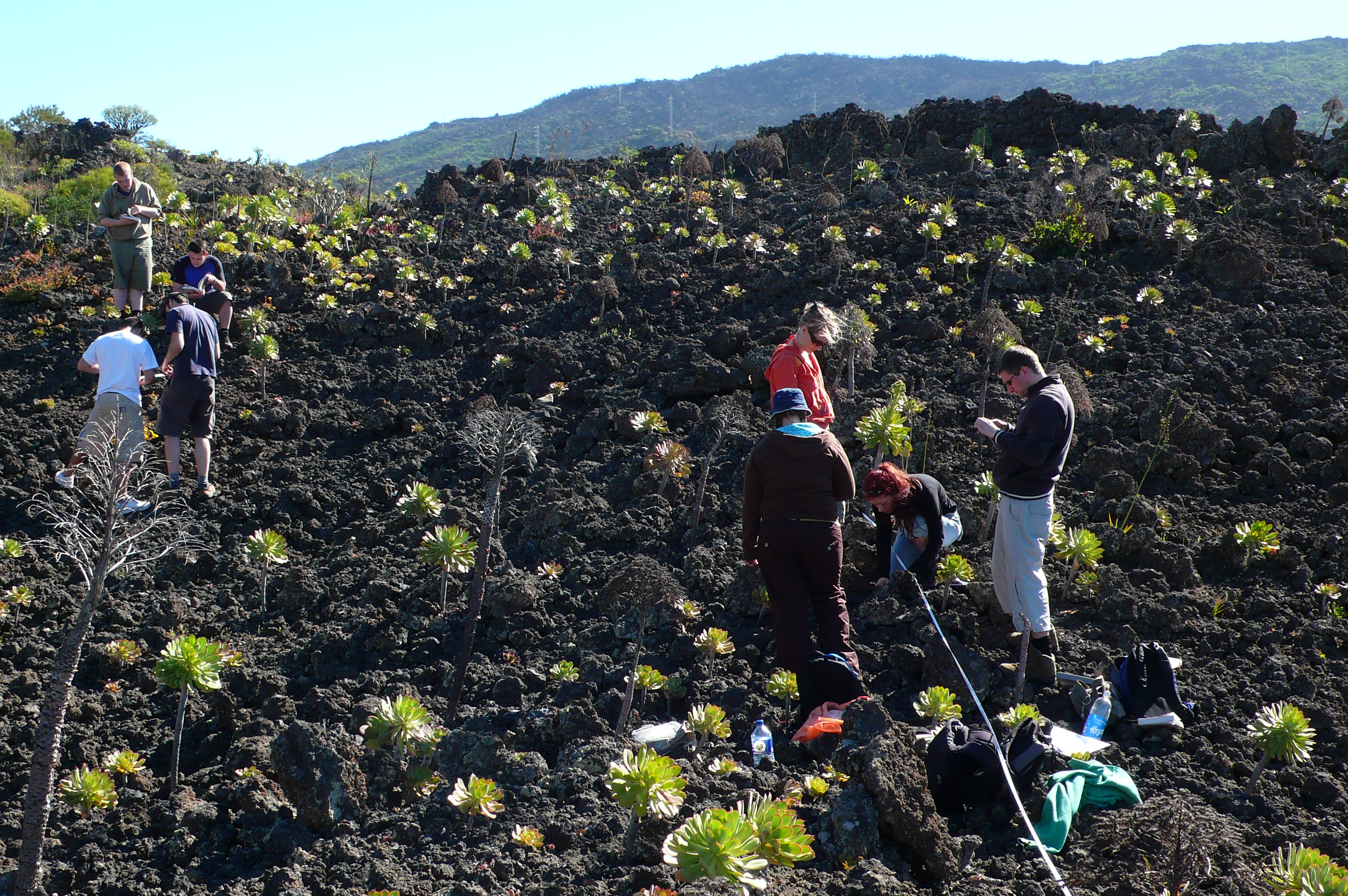
On Monday we took the students up to the Guimar Badlands (Malpais de Guimar) a 40 minute drive north east from where we are staying in San Eugenio.  I like to take students to Guimar on their first day in the field:  the pine and laurel forests that we visit later in the week are physiognomically similar to such forests in Britain.  But the succulent dominated xerophytic scrub of Guimar is utterly unlike anything that most of them have experienced previously.  The field work we do at this site is always related to plant community structure, trying to understand how the biodiversity of the primary producers is “organised”.  There’s lots of different ways to measure community “organisation” in an ecological sense, of course, and this year we are looking at how the plant community changes along a gradient from the strand line limit of the vegetation, inland and away from the salty influence of the sea.  It’s an exercise I’ve wanted to do for a while because it’s always been clear that the plants DO change; we’re just never put numbers on it.  So we ran out four 120 metre transects and identified all of the plants that they intercepted at 5m intervals.  Lots of student frustration as they used a combination of identification keys, hints from me and guesswork to put a name to these unfamiliar species.  But by the peak of the day’s heat in the mid afternoon we had a data set and several sunburned students  [no matter how often you mention the word “sun block” there will always be some who think they don’t need it].

Back at our apartment complex there was time for a rest/shower/power nap, depending on your preference, before we reconvened to enter the data into spreadsheets and start generating some graphs.  And these preliminary data look really good, showing how the salt tolerant halophytes are replaced by the various euphorbias and other species that dominate the rest of the Badlands within about 40m of the lower limit of the vegetation, with other species even less salt tolerant and only making a show after about 90m.  This is biodiversity doing interesting things………

Tuesday was a trip up through the pine forest zone to Las Canadas at the foot of Mt Teide.  A long day through some spectacular scenery, interspersed with collecting data on bird behaviour at a picnic site and checking some populations of an endemic plant the Canary Wallflower (Erysimum scoparium).  Interestingly the populations to the south of Las Canadas have more or less failed to flower this year, probably because of the very dry winter on Tenerife.  Many other species have also not flowered and there are some implications for the pollination biology of this plant which I’m hoping we can quantify later in the week.   Will report back when I get a chance………..over and out for now.

Angry Birds! (and startled bees)

The texture of the life academic is nothing if not varied.  After a couple of days working from home thanks to a dose of flu,  Thursday was spent supervising three one hour tests for my first year students, scattered throughout the day from 0930 to 1600.  As I watched over these hurriedly scribbling undergraduates their shifting expressions ranged across boredom, panic, rapt intensity, smugness and exhaustion.   The latter because it’s been a long term and we’ve worked them hard.  The Easter break will be a relief.  Whilst they pored over the questions I shifted between marking second year literature reviews, checking email and gazing thoughtfully out of the window.

Between tests I went back to the office and worked on completing the first draft of a manuscript that I’ve been promising to send to my co-author Clive Nuttman of the Tropical Biology Association.  It’s based on data we collected in Tanzania last year during the TBA field course whilst observing aggressive interactions between nectar feeding male sunbirds and large Xylocopa carpenter bees.  The bees sneak into the sunbirds’ territories and, if spotted, the birds fly at them, chasing them through the forest.  The plant on which they were feeding is a member of the squash and melon family (Cucurbitaceae) and like many in that family it has separate male and female plants.  Only the male flowers produce nectar;  the females function, in effect, as rewardless mimics of the males.  In addition it seems as though only the bees are pollinators as the birds don’t pick up pollen on their feathers and (crucially) don’t visit the female flowers.  However the birds might be providing a service to the plants by driving the bees to move between plants rather than staying on the male flowers most of the time.  It’s a complex story (which ones in ecology aren’t?) and we’ve only scratched the surface of what is going on, but the aggressive interactions side of it makes a nice starting point for further work.  We’re calling it:   “Angry Birds!  Aggressive displacement of Xylocopa carpenter bees from flowers of Lagenaria sphaerica (Cucurbitaceae) by territorial male Eastern Olive Sunbirds (Cyanomitra olivacea) in Tanzania”.  Let’s see if the journal editor and reviewers will go along with the tongue in cheek pre-title.

Friday started with a meeting between Muzafar Hussain, on of my PhD students you met last time, and Peter Nalder from South Court Environmental.  SCE is a local co-operative dedicated to environmental projects, and organic and permaculture food production.  The group is responsible for managing a number of old, remnant fruit tree orchards around Northampton.  We took a look at a really interesting site over in Abington that was originally a farm.  It’s now been converted into sheltered housing for old folks and a nature conservation area that includes an orchard.  Muzafar is planning to incorporate some of these orchards into his urban bees surveys.  This will add to what we know about the diversity of habitats available to these bees and relates it directly to the ecosystem service of crop pollination that the bees provide.

In the afternoon I drove up to the Wildlife Trust’s offices at Lings House for the first formal meeting of the Nene Valley Nature Improvement Area partners to be held since the announcement that we had secured the funding back in February.   I intend to write more about the Nene Valley NIA in the coming months and years.  But for now it’s enough to say that we’re incredibly excited about the opportunities the NIA will bring to improve the level of biodiversity conservation in the region.  The university is leading on one of five objectives: to assess the range of ecosystem services being delivered in the Nene Valley and the condition of the biodiversity (including habitat as well as taxonomic diversity) that is supporting those services.  We’ll focus on pollination, naturally, but also on other services including fresh water provision and flood alleviation, and possibly carbon storage.  These are new areas for me and it’s going to be a steep learning curve.  A PhD student has already been recruited to work on pollinator diversity and in the near future we’ll take on a post-doc for the main part of the project (if you know of anyone who might be interested ask them to send me their CVs).

Chairing the meeting was Oliver Burke the Wildlife Trust’s energetic and enthusiastic Conservation Manager who has been the real driving force behind the NIA  (which on a map looks like a large intestine squiggling its way across the landscape; in honour of him I renamed it “Oliver’s Colon”.  Not sure if it will stick but I intend to use it in all official NIA documents from now on).  Most of the meeting was concerned with the nuts and bolts of how the finances will work, reporting of activities, membership of the steering group, etc.  Dull but vital if the Nene Valley NIA is to be the success we want it to be.

Also at the meeting was Adrian Southern from the RSPB, standing in for a colleague.  I keep bumping into Adrian in the most unlikely places, first at Biosphere 2 in Arizona in 2001 during an Ecological Society of America meeting that ultimately led to the Waser & Ollerton (2006) edited volume.  Then a few years later at another conference when he was a PhD student at University of East Anglia.  We never really kept in touch so it was a surprise to see him.  Now Adrian’s with the RSPB I hope to talk more with him about some ecosystem services projects he’s working with as part of their Futurescapes programme.  So add that to the lots of different things going on at the moment.  But varied is good.  If tiring.  So looking forward to a week off over Easter.

The Walls of the Garden

Old stone walls have always held a fascination for me.  Growing up in Sunderland I’d see substantial walls made of the local Magnesian Limestone, rough cut blocks often patterned with impressions and ridges that to my child’s mind looked like exotic coral or fossils of weird animals.  A friend reliably informed me that an odd shaped piece we had found was a “fossil dog’s skull”.  I didn’t believe him.  Even then I was skeptical of unsubstantiated claims.  When I understood more about the intriguing geology of that part of England I discovered that these patterned rocks were of chemical rather than biological origin, but no less interesting for that.

Walls then seemed to become a continuing back drop to my life.  As an undergraduate my final year research project involved clambering around on the 17th century walls of Oxford University’s Botanic Garden, surveying the plants that had naturally colonised them.  The wall flora was an odd mix of exotics and natives, many of which had no obvious means of dispersing on to the walls.  I joked at the time that perhaps the dispersal was by gardeners and ecologists working on the walls.  That may have been close to the truth.

Stone walls provide unique habitats for many plants and animals as they mimic rocky out crops and cliff faces.  Perhaps less obviously, so too do brick walls, as I saw on Friday morning which I spent having a grateful break from the office with Hilary Erenler.  Hils is one of my research students and is funded by the Finnis Scott Foundation.  For the past couple of years she has been surveying the pollinating insects found in the gardens of large country houses around Northamptonshire and into adjacent counties.  Our county is particularly rich in these estates (it’s known as the County of Spires and Squires, a nod to both the large number of churches and the historical pattern of land ownership).  So on Friday we conducted a couple of surveys of some large walled gardens on two private estates.  Amongst other things we measured the lengths and heights of the walls, counted a sample of the density of mortar holes that may have been nest sites for solitary bees such as Osmia rufa.  We also returned some soon-to-emerge bee cocoons to artificial nests as part of an experiment Hils is conducting.

For reasons of privacy and security I’m not allowed to divulge which estates we visited.  But I can say that the walled gardens were fascinating relics of a time when such large households and their staff relied on these sheltered,  productive patches to provide food twelve months of the year.  One garden had retained an avenue of some of the oldest espalier apple trees I’ve ever seen.  Thick and gnarled and festooned with epiphytic lichens and mosses, they must have been planted at least 100 years ago.  Whether the household appreciated it or not, the wild native bees that the walls hosted, and those coming in from the surrounding estate, also played their role by pollinating these apples, as well as pears, cherries, nectarines, beans, squashes and other insect reliant crops.

On the way back to the car we found a small patch of violas, primulas and celandines in a dry spot under a tree.  We counted at least 6 species of bees: two bumblebees (Bombus species); at least two (possibly three) andrenids, including the tawny mining bee Andrena fulvaAnthophora plumipes; and what may have been a Colletes species.  The bumblebees were queens, of course, filling up on nectar to give them energy to look for nesting sites.  But some of the solitary bees were males and exhibited their typical behaviour of patrolling the flowers in search of females with whom to mate.

Back in the office that afternoon I dealt with emails.  One was an unexpected communication from Steve Buchmann regarding a recent paper I’d published with Nick Waser and Andreas Erhardt in Journal of Pollination Ecology.  The paper deals with the historical development of some ideas pertaining to pollination syndromes.  I’ve admired Steve’s work for a long time; together with Gary Nabhan, Steve wrote the now classic book Forgotten Pollinators which can be credited with playing an important role in raising the issue of pollinator extinctions and declines in the public and scientific consciousness.  The JPE paper gives a historical perspective on understanding the interaction between Solanum flowers and their pollinators.  The long standing assumption is that Solanum flowers are pollinated by bees that vibrate their bodies at a particular frequency to shake out the pollen from the anthers, a reproductive strategy termed “buzz pollination”.   Steve was writing to tell me that many years ago he published a paper showing that some Solanum species are buzz pollinated by hoverflies.  I’d missed that paper so am looking forward to reading it when he scans it and sends me a PDF.  It worries me that much of the primary literature from before the widespread use of information technology is going to get neglected like this, because it’s not easy to access electronically.  Depositories that have started to archive older work, such as JSTOR, Biodiversity Heritage Library and Google Books, are great, but there’s still a lot of material to retro-input into these systems.

On the way to invigilate a one hour test for my second year Habitat Ecology and Management students later that afternoon I bumped into Muzafar Hussain, another of my research students, who had been out surveying solitary bees in the urban centre of Northampton.   His first year of surveying in 2011 revealed a surprisingly high diversity of species and he’s continuing that work this year.  Some of these bees are nesting in old stone and brick walls in the back streets behind the main thoroughfares of the town and are exploiting wall plants as pollen and nectar sources, a topic that’s being researched by Lorna, one of my final year project students.  Everything was coming back to walls today…..