Category Archives: Pollination

Any friend of coffee is a friend of mine

Beach spiral

As I begin to write this post rain is pattering against the windows with increasing frequency and a brisk wind stirs the browning horse chestnut leaves that overhang the garden from a neighbouring property.  Autumn is here.  It’s a chilly Sunday morning and beside me is a large cup of good coffee, hot, black, and bitter, warming and stimulating in equal measure.  It’s our first Sunday at home for a fortnight as last weekend was taken up by a speaking engagement in Hereford at a large bee keeping convention where coffee featured highly, as I’ll explain.

The Hereford convention wasn’t the kind of academic research conference that I’d normally attend, but I thought it would be fun to go with Karin, and I’d learn more about bee keeping (both proved to be true).  For this broad audience of amateur and professional bee keepers I presented a version of my professorial inaugural lecture from earlier this year entitled “How many bees does it take to wake up in the morning?  The importance of biotic pollination in a changing world”.  It’s a title with multiple layers of meaning, referring to bees as ecosystem service providers, my enjoyment of my work which gets me out of bed every day, and the energising effects of a strong cup of fresh coffee first thing.  

As part of that lecture I present some back-of-the-envelope calculations that are meant to put coffee production into a biodiversity perspective, rather than being a rigorous analysis, but which are nonetheless worth considering.  They go like this.

Global coffee consumption in 2010 (the most recent year for which I could find figures) amounted to 93 million export bags, each weighing on average 60kg (there are larger and smaller bags used in different parts of the world, so we’ll use this figure).  The export value of this crop was estimated at US$15 billion for the (largely tropical) countries that produced it.  That’s the value before it’s processed and sold, which is much more difficult to calculate, though coffee retailing is clearly big business.  For example, Starbucks’ total revenue for the same year was US$10.7 billion and it supports over 150,000 full time employees.  So it’s lucky for us that it pays its taxes.  

Although coffee is partly self pollinating, it relies on insect pollination to produce large crops, mainly involving bees of various types.  I tracked down a number of studies by researchers such as Alexandra-Maria Klein and Taylor Ricketts which showed that managed honey bees are responsible for anywhere between zero and over 90% of flower visits, depending on the diversity and abundance of local wild bees (over 40 species of which are known to pollinate coffee in Costa Rica alone).  At this point I throw out a question to the audience:  how well do we understand this globally important agricultural ecosystem service?  Do we have any idea of how many individual insects are required to support this industry?  Some more calculations:

Each coffee bean is the product of a single fertilisation event following the deposition of at least one pollen grain on a flower’s stigma.  The mean weight of a single coffee bean is 0.103g (I weighed a sample in preparation for the lecture) which means there are approximately 582,524 beans in a 60kg bag.   Total number of coffee beans produced in 2010 is therefore 93 million bags multiplied by 582,524 beans per bag, which equals  54,174,757,281,553.  In words, that’s  more than 54 trillion coffee beans.  As coffee is 50% self pollinating we can half that figure: coffee production requires at least 27,087,378,640,777 (over 27 trillion) pollinator visits.

But here I confess to the audience that it’s impossible to go further and answer the questions I posed above:  we really have no idea how many bees are supporting the coffee industry.  The problem is that there are big gaps in our knowledge of some basic aspects of the natural history of these bees and their interactions with coffee flowers.  For example, how many flowers does an individual bee visit in its lifetime?  How effective are different bees at pollinating  the flowers?  What is the minimum population size for these bees, below which they would go locally extinct?  All that we can say with certainty is that the global coffee industry (and the individual productivity of many workers) is supported by a LOT of bees.   Many billions is my best guestimate.  Perhaps we don’t need to know the number: perhaps it’s enough to know that if we provide sufficient good quality habitat for these bees, they will provide the service.  But at least it illustrates our reliance on these insects and is something to consider when you’re enjoying the first cup of the day.

Bees are not the only animals that we have to thank for coffee production as a recently published study has shown:  birds in Costa Rica help to reduce the impact of an important pest of coffee.  As Jana Vamosifrom whom I shamelessly stole the title of this posting, commented when I posted this link on Facebook:  any friend of coffee is a friend of mine!


In defence of lawns UPDATED

2012-02-22 10.19.23

Over at the Small Pond Science blog, Terry McGlynn has a thought provoking post which asks ‘Are trees the lawns of the future?‘.  I won’t rehash Terry’s arguments, you can read it yourself, but I was intrigued by his stereotyping of lawns as always bad.  As a keen amateur gardener and a professional with research students who have worked on garden biodiversity projects, I’d have to say that there’s lawns and there’s lawns: it all depends on how they are managed and what the purpose is of a particular lawn. Clearly there’s a continuum from high diversity, natural “lawns” (i.e. close-cropped grassland which can support significant biodiversity such as some chalk grassland and African savannah lawns) through to the high resource input, monoculture, perfectly presented lawns seen on golf courses and around important buildings.  In the part of the continuum that Terry’s railing against, typical urban and suburban householder’s lawns and everything below that in terms of “naturalness”, it’s possible to manage lawns in a low-input way that is both productive and can support biodiversity.

In the house that Karin and I moved into about 18 months ago, the garden was almost wholly laid to lawn; the picture at the top shows you what it was like in early 2012.  Since then we’ve dug flower borders, a vegetable patch and planted fruit trees, but kept about 50% lawn (though this will reduce as we widen borders). We don’t water or fertilise the lawn, just keep it regularly mown. I’ve not assessed it systematically but I’d estimate that, in addition to the grasses (some native, some not) there’s another 10 to 15 native plants growing in it, plus fungi which pop up every now and then. The plants include taxa which are popular nectar sources for bumble bees and solitary bees, e.g. clovers, dandelions, etc. These flower even though we mow regularly, and of course these bees pollinate our squashes, courgettes, apples, plums, etc.  The local blackbirds and starlings also find food on the lawn.

I mentioned that the lawn is “productive” and that’s where the grass cuttings come in. They are either put into the compost heap, fed to our chickens, or added directly to the vegetable patch as a mulch.  It’s also possible that the clover, which is a nitrogen fixing legume, is adding to the soil fertility that can be accessed by the far-reaching roots of the fruit trees.  Would be an interesting hypothesis to test.

So I think it’s possible to have a lawn that adds to local biodiversity and is productive for the gardener, but I accept that we may be unusual in that regard.  It’s not the kind of lawn that would make a grass obsessive proud; but that type, as Terry notes, needs a lot of input of resources, not least time.

UPDATE –  a few people have asked to see a picture of how the garden looks now, so below is more or less the same shot but taken today (15th August 2013) by Karin.  Comparing a British garden in February and August is clearly unfair!  But hopefully you can see that we’ve done quite a bit of work to it, though as with all gardens it’s a work in progress.

Garden 15th August 2013

A (Green) Apple for teacher – The Biodiversity Index wins an award!

BO-2DbsCcAAZPsu (1)

At a small ceremony attended by businesses and local authorities on Friday, the team who developed the Biodiversity Index received a Green Apple Gold Award from The Green Organisation.  I proudly accepted the award on behalf of everyone and made a short speech which, in the spirit of my “reduce, reuse, recycle” policy, I’m posting here.  Thanks to Bobbie Lane for the photo, Richard Moore for help with the speech, and Gareth Thomas for the notion of biodiversity as the “fourth resource”.  


Ladies and gentlemen.

In June 2011 the UK National Ecosystem Assessment reported to Government that the value of the natural environment to the British economy was at least £30 billion per year in terms of the ecosystem services it provides, such as carbon storage, soil fertility, tourism and pollination.

In contrast, earlier this year the State of Nature Report by 25 of the UK’s leading wildlife organisations, suggested that 60% of animal and plant species for which we have data have declined in the past 50 years.  To add to this, some recent work by my research group at the University of Northampton has shown that 23 species of pollinating bees and wasps have gone extinct in Britain since the late 19th century.

Clearly there’s a contradiction here: at a time when we value biodiversity more than ever, it is declining at an ever-faster rate.  So what can we do about this situation?  How can individuals and organisations help to reverse this trend?  This is one of the aims of the Biodiversity Index.

Energy, water and waste are typically the main resources actively managed by businesses and organisations, but there is growing interest in understanding and managing biodiversity as a fourth resource that is critical for society as a whole.  In contrast to some of the other speakers you have heard today, the Biodiversity Index is not going to make you money.  In fact, if you are in the commercial sector, it will cost you a small amount of cash to join.  But the broader benefits of staff engagement with wildlife conservation, and the positive effect this will have on our country as a whole, are priceless.    

The Biodiversity Index is an interactive web-based tool, developed by the University of Northampton and believed to be the first of its kind anywhere in the world.  It enables organisations with little or no knowledge of biodiversity to undertake a rapid but scientific assessment of the level of plant diversity on their site and suggests ways to improve each habitat.

The Index widens access to the knowledge and tools required to make a start in improving the management of biodiversity on urban sites, with the potential to assist schools and colleges, universities, hospitals, local authorities, SMEs and larger businesses to improve the environment in which we work and live.

The tool was developed as part of the SEED Project and was launched at the Environmental Association for Universities and Colleges annual conference in April 2013.  To date the Biodiversity Index has been used by over 30 UK universities and endorsed by several companies including Ricoh UK Ltd, a Global 100 sustainability company.

On behalf of the team that developed the Biodiversity Index I am delighted to accept this Green Apple Gold Award as an acknowledgment of the innovative work undertaken in this collaboration between the School of Science and Technology and the Department of Infrastructure Services at the University of Northampton.

Thank you.

Are honey bees native to Britain? And does it matter?

2013-04-15 13.54.19-2

It’s no secret that I’ve become frustrated over recent years by the general confusion in the media between the concerns relating to honey bee health (which are largely veterinary/husbandry problems, though pesticides may also play a role) and declines in wild pollinators, which are a wildlife conservation issue mainly due to habitat destruction, though again pesticides are probably having an impact.

That frustration came to a head last year when colleagues and I published a short letter in the influential journal Trends in Ecology and Evolution that was prompted by a throwaway remark in an earlier article stating that honey bees “are essential pollinators for the maintenance of natural biodiversity”  No they are not.  And you can read for yourself why we responded to that article if you follow the link above.

In a recent posting on the Adventuresinbeeland blog, Emily Heath discussed her attendance at a recent British Library event about pollinators and pesticides.   I commented on the blog and in passing mentioned honey bees as being “not native” to which one respondent demurred and wrote:   “I thought honey bees ARE native to Britain, although they have been bred with various breeds ……. Apis mellifera mellifera is a British native, isn’t it?”.   I’ll paraphrase my response here:

The only study that I’m aware of that has addressed this question is Norman Carreck’s paper from 2008 – you can download a PDF of that article here.  Norman is convinced that Apis mellifera mellifera is native to Britain but, as I interpret it,  the evidence he presents is circumstantial and the earliest archaeological remains of honey bees are all associated with human settlements. Even if honey bees were originally native to Britain, the present situation, in which honey bees have been selectively bred and hybridised, is akin to using Tamworth pigs as evidence that wild boar are native.

However for me the most compelling evidence that honey bees are not native is ecological: despite their generalist nature and ability to form large colonies when managed, out in the wider countryside of Britain honey bees do not do particularly well. “Wild” honey bees are never very abundant (compared with some bumblebee species, for instance) and feral colonies in natural settings are few and far between.

This prompted a to-and-fro discussion with Emily that you can read for yourself.

Are honey bees native to Britain?  The jury is out but the balance of evidence as I see it is pointing to them being a human introduction.  Does it matter?  In many respects, no.  Honey bees are (like any other agricultural animal) a utilitarian species that provides us with a range of benefits.  But in one respect it DOES matter – and that is in relation to how we formulate and put in place strategies to reverse the decline of wild pollinators such as bumblebees, hoverflies and butterflies.  If honey bees become the central focus of such strategies (and funding), due to confusion in the minds of the public, MPs, policy makers, businesses, the media and other influential bodies, then wild pollinators would lose out.  In my opinion that would be a great mistake.  I’d be interested to know what other people think.

The Cliff

Tenerife 2008 057 - students on the Aeonium field

UPDATE: Late conversations with colleagues has convinced me that this “cliff” is an artefact. Web of Science started to include search abstracts around 1990, making it much more likely that specific search terms would appear.

Over the past few months I’ve been thinking a lot about PhDs and doctoral students, and our expectations of them, specifically in contributing to cutting edge biodiversity science.  In part this is because August 2013 will mark the 20th anniversary of the oral examination (“viva”) of my PhD at Oxford Brookes University.  The viva (short for the Latin phrase viva voce or “living voice”) is a peculiarly British method of examining PhD students that differs significantly from its (often public) counterpart in the rest of Europe and Scandinavia, and even more so from its equivalent in North America and the rest of the world.

For those of you unfamiliar with the viva process, I can recommend Simon Leather’s recent posting on the topic.

Since 1993 I’ve had the honour of acting as an examiner for 22PhD theses (4 at the University of Northampton, 18 externally) including two so far this year;  I’ve yet to turn down an opportunity to examine a PhD as it’s flattering to be asked and (more importantly) a great opportunity to see new ideas and data being generated by minds younger than mine.

One of the things that has exercised me recently is how much knowledge the average PhD student in my main discipline of pollination ecology actually has to get to grips with while doing the background research for their topic.  I wondered how this had changed since my time as a postgrad in the 1990s, and how the expectations of my own PhD examiners had changed since the 1970s.  So, using the wildcard term “pollinat*” in Web of Science I searched the contents of seven journals (Oecologia, Ecology, Journal of Ecology, Oikos, Annals of Botany, American Journal of Botany, & American Naturalist) that have published a significant proportion of the literature on pollination ecology over the past forty-odd years.

Of course I expected to see an increase in the number of papers on this topic being published per year over that time period, but not the two orders of magnitude difference that I found.  A PhD student studying pollination ecology in the early 1970s would be confronted with fewer than 10 papers on the topic coming from these seven journals whilst at the present time it’s averaging around 130 per year:

Pollination papers line graph

So it’s no wonder that PhD theses are tending to become more focussed as topics become more specialised.  So far, so expected.  But what I think is more interesting is the shape of the graph; why is there such a steep increase in the number of published papers in 1991?  I’ve nicknamed this point “The Cliff” because of its shape, and also because it seems to symbolise an intellectual barrier to be surmointed: an ability to read and synthesise a lot more information than was available prior to the early 1990s.  What is the reason for The Cliff?  Do other areas of ecology and evolution demonstrate a similar pattern in their historical rates of publication?  I see a link here to a discussion going on over at the Dynamic Ecology blog about the most cited ecology papers of the past few decades, and particularly the fact that “big ideas” papers are becoming less cited than review papers.  Perhaps it’s because we need these reviews to keep on top of literature that we’ve not got round to reading!

But that doesn’t explain why 1991 represents a step change for publishing in the field.  I’d be interested to hear the views of others working in pollination ecology.  What happened in the late 1980s to stimulate such an interest in doing research into plant-pollinator interactions?  Was it the publication of some key papers or books?  Did more funding become available specifically for work in this area?

A coiled Spring

Wellcome Trust - June 2009 006

April, according to T.S. Elliot, “is the cruellest month”.  Not sure about that, though April 2013 proved to be both frustrating (as we in northern Europe waited for Spring to arrive) and busy, as I tried to pack in a whole set of activities.  That’s my only excuse for not updating my blog, so the aim of this post is to catch up with biodiversity-related activities and observations over the past few weeks.

Just as iconic decades begin part-way through a given ten year period (the 60s didn’t really kick off until about 1963, for instance) so April for me actually began at the end of March.  In the last week of that month I completed my formal teaching for the term and celebrated the first anniversary of the Nene Valley Nature Improvement Project.  I also picked up my daughter Ellen from Heathrow Airport, on a two week visit back from working in China.  On the way I counted over 20 red kites flying near the M40 motorway – what an incredible success story their re-introduction has been!

One of the reasons Ellen had come back was that I was due to give my inaugural professorial lecture, entitled “How many bees does it take to wake up in the morning?  The importance of biotic pollination in a changing world”.  Another reason was to to celebrate my eldest son Patrick’s 18th birthday the following day.  Both once in a lifetime events and both had family at their heart.  It was a great week.

Some leave time followed, much needed after what seemed like an endless 12 week university term, during which I hoped to plant potatoes and do some other work in the garden.  But Spring refused to uncoil.  The northerly winds brought cold weather that froze all vernal activity in the act.  Flower and leaf buds were there waiting to unfurl; insects would occasionally appear then just as quickly disappear; and birds clearly wanted to get on with the important activities of raising young.  But all was delayed.  One could sense the tension, the build up of seasonal energy, biology waiting to happen.

A talk at Earlsdon Gardening Club near Coventry on Monday 8th April was well received and took my mind off the organisation of the biennial Bumblebee Working Group meeting on the 11th.  This semi-formal get together of scientists, NGOs, and other Bombus-minded individuals, shifts between venues every two years.  At the last meeting in 2011 I volunteered to host the next event and then put it out of my mind for 18 months.  Organising a scientific meeting is always a bit of a mad panic as the day draws closer and one wonders if anyone will actually turn up.  But as it turned out the event was well attended, with over 80 people listening to talks on diverse topics including the effects of neonicotinoid pesticides on bumblebee colonies;  I’ve uploaded a copy of the programme.

Friday 12th April was a frantic dash around office and lab to get books, equipment and sundries organised for our annual undergraduate Tenerife Field Course, which was flying out on the following Sunday.  A great time was had by all as we explored the biodiversity of Darwin’s Unrequited Isle and we came back with a wealth of great data plus not a little sunburn.  No matter how often I tell students that they really need to wear a hat and use sun block, some will never listen.

Arriving from Tenerife early on Monday 22nd, I slept for a few hours then was back at the university for the oral PhD examination of Hilary Erenler, whose work I have mentioned previously.  These exams are always stressfull for both student and supervisors but in the event Hils performed wonderfully and passed with only minor amendments.  A great result!  Now looking forward to publishing some papers from that work.

April ended, and May began, with a change in the weather.  Much warmer winds blew in from the south west and life suddenly erupted: pressure had been removed from the coiled Spring.  Lots of pollinators appeared in our garden including: Anthophora plumipes, one of my favourites for its glossy, black females and aggressively flower patrolling males; the relatively newly arrived Bombus hypnorum; the bee fly Bombylius major; and several different butterflies.

Clearly it’s time to plant those potatoes!

A (bird) book for bedtime (and a bit about bees besides)

2012-10-27 14.28.28

Biodiversity as it’s generally defined and conceived includes not only diversity of species and habitats, but also diversity within species, often (but not always) genetic in origin.   Eddie Izzard’s new two-part television series Meet the Izzards neatly captures the idea of genetic diversity, and how it informs our  understanding  of the past evolution and prehistorical dispersal of a large, bipedal mammalian omnivore.  “Cultural biodiversity” in Homo sapiens is less easy to define in this way as it has probably only a limited genetic component and is passed from individual to individual by copying and refining.  Other species have “culture”,  for example New Caledonian crows and chimpanzees, but human cultural diversity is more varied than that of any other species.

Take book reading as an example.  Some individuals of our species never read.  Others read only one book.  Incessantly.  And then argue about what it means with others who read the same book.  Other individuals gorge on a book a day or snack on one a  month, or manage on a starvation diet of one per year.  I’m a two book nibbler.  Normally I always have a novel and a volume of non-fiction on the go.  The novel is for last thing at night when I need to turn off my mind and do some easy reading; a few pages then it’s time to sleep.  Nibble, nibble.  The non-fiction is for the morning, if I wake up early enough, or weekends if they are free; or train journeys.  Still nibbling, but this time on more solid fare.

As with all cultural diversity, none of this is inflexible and at the moment I’m also reading a non-fiction book at night:  Fighting for Birds:  25 years. in nature conservation by Mark Avery, former Conservation Director of the RSPB.  Mark kindly came to give a talk at the university recently and brought copies of his book to sign and sell.  It was a stimulating lecture and feedback from the students who attended was very positive.  For those students who didn’t make it (and there were a lot) I have to ask:  why are you paying thousands of pounds a year to not turn up to events that will inspire, educate and develop you?  You had the chance of bending the ear of a very prominent British conservationist.  At the very least you could have asked:  “How do I get to do the job that you do?”  You’re currently investing a LOT of money in your future and, frankly, wasted opportunities such as this are the equivalent of failing to claim a share dividend.

Back to the book.  Although Mark claims Fighting for Birds is not an autobiography,  it is very autobiographical in scope and provides some great personal insights into the RSPB and the development of bird (and broader) conservation in the UK and the EU.  His description of the battles fought over the fate of the Flow Country brought back memories of writing an essay on that topic during my undergraduate years in the late 1980s.  I’ve still not visited that part of Scotland but I have in mind a road trip this summer that may take it in.  The RSPB is one of our partners on the Nene Valley Nature Improvement Area project so I was particularly interested in finding out more about what makes our most important wildlife charity tick.  Mark is an engaging and candid writer, forthright in his opinions political and ecological (and their interactions)  as you can see from his blog.        

By pure coincidence, this week Mark hosted a guest blogger in the shape of Matt Shardlow, Chief Executive of Buglife, talking about the current controversies over banning the group of pesticides known as neonicotinoids.  Matt puts forward a compelling case for withdrawing these chemicals from general use.  I don’t dispute anything he says about the role of neonicotinoids in bee deaths (though there is some debate about dosage levels used in some of the published studies and how this might translate into effects in the field).  But it does concern me that this new focus on pesticides is taking the spotlight off habitat loss, particularly grasslands, which is a far more important threat to pollinator populations.   There is a real danger that this single issue will be seen as an easy fix by government when a broader reform of farming practices is what’s really required.  The decline of wild bees and other pollinators can be tracked back to long before the introduction of neonicotinoids. There were some silly comments on the blog about neonics currently being the single most important conservation issue.  This is short sighted hyperbole and (again coincidently) Lynn Dicks has written an interesting piece on the subject of rhetoric, lies and over-the-top claims in the journal Nature.

The decline and extinction of pollinators in the UK has been an ongoing process since the 19th century.  I’d hate to see the government think that it’s “fixed” the pollinator problem by banning some pesticides, a much simpler task than protecting and restoring habitats, and encouraging farmers to manage their land more sensitively.  With 70% of the UK’s land dedicated to farming, human (agri)culture has got to be a key element in conserving biodiversity.

Waxwing winter

2013-01-04 15.27.49

January has been a month of biodiversity firsts for me.

First New Year celebrated with Karin in our new home, quietly with friends and kids, plus the cats and chickens that are part of our personal biodiversity. I’m going to write a lot more about this notion of “personal biodiversity” later this year, but in short, we’re all of us directly connected to biodiversity physically and in the space we inhabit at home and work.  Think about that next time you’re devouring a pot of Activia or watering the spider plant in your office.

The first paper (hopefully of several) from Sam Tarrant’s PhD thesis has finally been published in the journal Restoration Ecology online ahead of the print version.  In this paper Sam compares the pollinator communities and available floral resources on restored landfill sites to those on nearby nature reserves.  The landfill sites are just as good for pollinators as the reserves, a surprising finding that parallel’s  Lutfor Rahman’s results in relation to bird communities on restored landfill sites .  All of which has implications for how landfill sites might be managed after they have fulfilled their primary function.  Opportunities for biodiversity conservation sometimes come from unexpected sources.

Another first was discovering some of our research cited in the recent United Nations Convention on Biological Diversity’s progress report on the International Initiative for the Conservation and Sustainable Use of Pollinators.   We were very pleased to see our work getting that kind of exposure on the international stage, regardless of what one may think of the Convention on Biological Diversity.  The CBD  is not without its critics  as I recounted the first time I blogged, live from a CBD-associated scientific conference in Germany.  This was later published in Bulletin of the British Ecological Society as “Blogging from Bonn“.    

And I achieved a first by finally (after several years of trying) seeing a flock of waxwings (Bombycilla garrulus) a bird that, whilst not uncommon, is one which you really have to be in the right place at the right time to observe.  They are highly mobile and never in one spot for very long.  A friend of mine who is a very keen birder and has been trying for 25 years to see them and only achieved that birding tick this year.  One of our graduates, who blogs by the pseudonym of the Hooded Birder, has some great images of waxwings – take a look and you’ll see just what a beautiful bird this is, very exotic looking for a winter visitor to Britain.

At this time of year waxwings fly down from Scandinavia like avian vikings, marauding through the countryside devouring fruit from trees and shrubs such as rowan, hawthorn, apple, rose and any many others.  It’s quite a sight to see a bird the size of a starling eating large rose hips in a single swallow.  They are very approachable birds and we got  quite close to them.   Some years are marked by massive irruptions of these birds and are termed “waxwing winters”.  The latest data from the British Trust for Ornithology suggest that this is one such year and the Northants Birds site has regular reports of their appearance around the county.

Although I’m not by any means a serious birder, bird watching falls into the category of cultural/spiritual ecosystem services that is clearly supported by biodiversity.  Birding organisations are popular: the Royal Society for the Protection of Birds has over one million members and financial resources of almost £100 million, for example.

This weekend the RSPB will be running its regular Big Garden Birdwatch, a great example of citizen science in support of biodiversity monitoring.  I’ll do my hour of watching on Sunday morning; the current cold winter weather has brought birds into the garden that are normally found out in the wider countryside.  No waxwings yet but I live in hope.

Thank the insects for Christmas (reduce, reuse, recycle part 2)

2012-11-26 15.38.04

The university term has drawn to a close in a flurry of activity as we complete our pre-Christmas teaching and assessments, and the Department of Environmental and Geographical Sciences conducted a successful five-yearly Periodic Subject Review of its degree programmes.  I’m conscious that some of the things I wanted to write about since my last blog entry have slipped past without action, including a week that was bookended by visits with students to iconic localities on the biodiversity and conservation map.  These were a Monday trip to the Darwin Centre of the Natural History Museum in London with students on my final year Biodiversity and Conservation module; followed by a Friday visit to Wicken Fen, arranged by my colleague Janet Jackson for second year students on her Habitat Ecology and Management module.  Both great days away from the lecture room, if for different reasons.

At the Natural History Museum we looked at the insect research collections, behind the scenes where the public does not normally venture.  Wicken Fen, on the other hand, is open to all and we met birders and walkers as we toured the site.  I kept a tally of the number of bird species we identified and the final count was 29 (30 if you include the chickens being kept in a back garden close to the visitor centre).  It would have been impossible to make a meaningful species count  at the Musuem as we were overwhelmed by the statistics presented by the curators:  85,000 butterfly and moth specimens in the Lepidoptera section, 3 to 4 million specimens of true flies (Diptera).  On it went; wonderful diversity and an incredible scientific resource.

Which brings me neatly to the main topic of this entry: the importance of insects at Christmas!  I’ve mentioned before that one of the intentions of this blog was to reuse some of the writing I’ve done over the years in various fora, sometimes updating and re-casting it ro reflect recent activities or events (hence the “reduce, reuse, recycle” epithet).  The publication this month of the final report of the Government-sponsored workshop Insect Pollinators: Linking Research and Policy in which I was involved has prompted me to modify and re-post an entry that first appeared on the University of Northampton’s blog at this time last year.

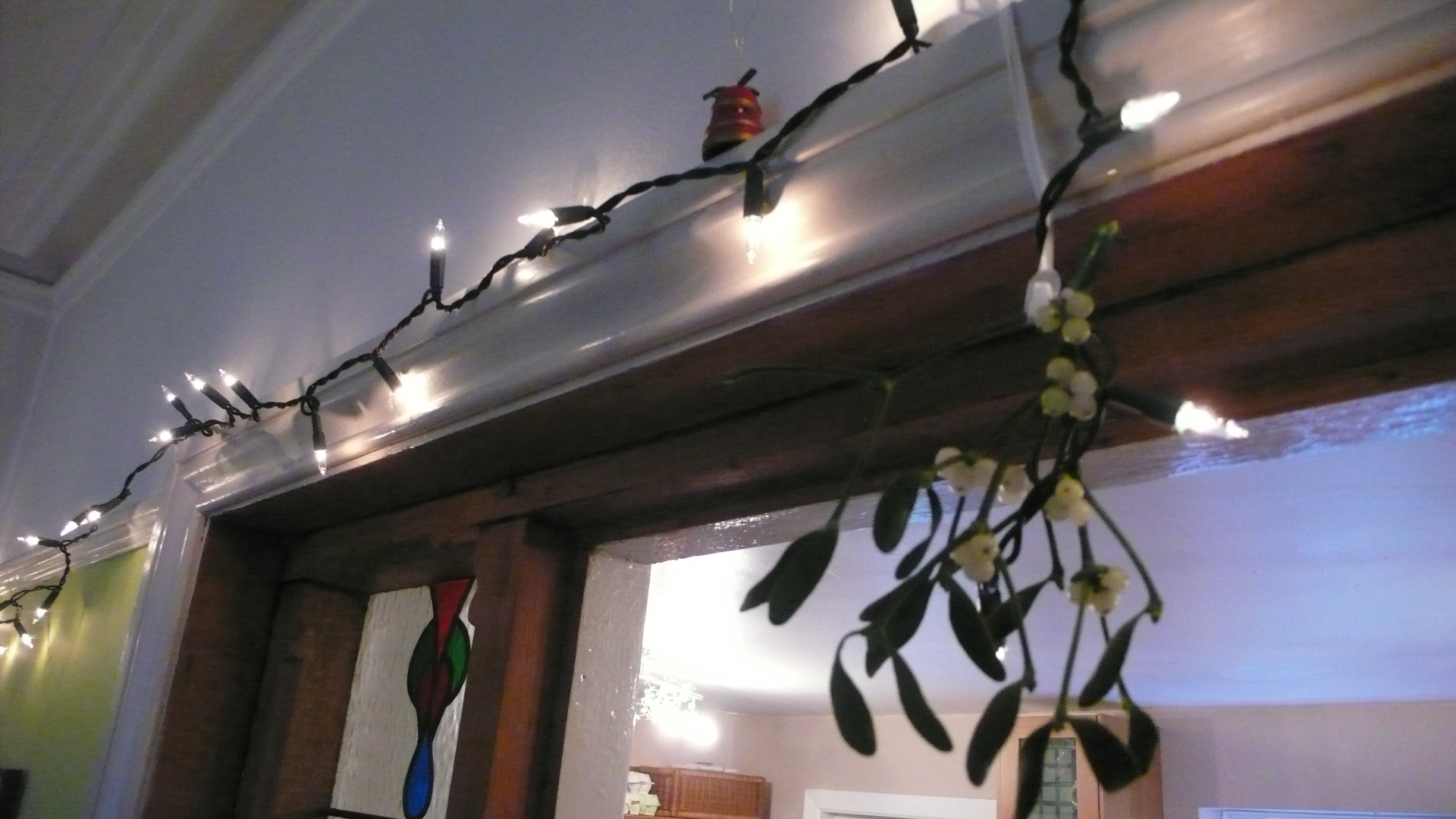
The social and economic news is not great, global poverty is on the increase even in the richest countries and the range of human-influenced assaults on the natural environment seems to be escalating on a weekly basis.  But at least it’s Christmas!  A time to relax and enjoy ourselves, to share time with family and friends, and to unwind during the cold and gloom of winter.  Whatever your faith, or lack of it, Christmas should be about taking a break and reflecting on the year that has passed.  We’re helped in that respect by the ceremonial seasonal trimmings: the Christmas tree, strings of flashing lights, baubles and tinsel.  So while you’re kissing a loved one under the mistletoe, admiring that glossy holly wreath, or tucking into your Christmas dinner, spare a thought for the insects.

What in Saint Nicholas’s name”  you are asking ”have insects got to do with Christmas?!”  Well, like the turkey, we’d be stuffed without them:  they play an essential part in providing us with the things we associate with the Christmas.  If we had no flies, wasps, bees and other bugs acting as pollinators there’d be no berries on your mistletoe or your holly.  Kissing and admiring would be a less festive affair and that’s just for starters.  These insects also pollinate many of the vegetables, herbs and spices on your plate, as well as some of the forage that went to fatten your roast bird or tender joint of meat.   Not to forget much of what went into the nut roast that’s feeding the vegetarian relatives.

The economic value of insect pollination in the UK was estimated by the recent National Ecosystem Assessment to be about £430 million per year .  In fact this is a huge under valuation because the labour costs alone of paying people to hand pollinate those crops would run into billions of pounds.  This sounds far fetched but it’s already happening to fruit crops in parts of China.  The answer is to encourage wild insects, not artificially  managed honey bees, because collectively the former are far more abundant, and often more effective, as pollinators.  Their diversity is an insurance against losing any one species in the future.

The NEA’s valuation is also too low because it only deals with edible crops.  Mistletoe and holly are both dioecious species, which is to say that individual plants are either male or female, as is the case with most animals.  This means that the plants cannot self pollinate and insects are absolutely vital to their reproduction and to the production of the decorative berries we so value (a holly wreath without berries is just a big spiky doughnut, in my opinion).  Whilst researching the economic value of the annual mistletoe and holly crops for this blog posting I’ve been having a conversation with Jonathan Briggs over at Mistletoe Matters and he tells me that “the mistletoe trade in Britain is entirely unregulated and not documented in any tangible way” and the same is true of holly.  We therefore have no idea what the economic value actually is.  But some back-of-the-red-and-gold-Christmas-lunch-napkin calculations can at least give us an insight.  Auction reports this year  show that on average the best quality berried holly was selling for £2.50 per kg whilst equivalent quality holly without berries cost only 75p per kg.  In other words, pollination by insects increases the value of that crop by over 300%.   Similarly the high quality mistletoe averaged 80p per kg, whilst the second grade stuff was only 20p per kg.  And the best holly wreaths (presumably with berries!) were averaging £3.40 each.  These are wholesale prices, of course; retail cost to the customer is much greater.  A decent holly wreath will set you back between £15 and £30 whilst online shopping for mistletoe is in the £5 to £15 bracket.  The national census of 2011 shows us that there are 23.4 million households in England and Wales, plus there are 2.36 million in Scotland and 0.70 million in Northern Ireland.  Let’s round it down and say there’s 26 million households in the whole of the UK.  Let’s also be very conservative and estimate that only 5% of those households bought one holly wreath and some mistletoe at a total cost of £20.  Multiply that by the small proportion of households buying these festive crops and you arrive at a figure of about £26.5 million!  And that doesn’t include non-household use in shops, offices and businesses.  So there you have it: an industry worth a few 10s of millions (at least) all being ultimately supported by insects.

With pollination, timing is everything, and Jonathan also made the point that spring flowering mistletoe and holly can be important early nectar sources for insects.  Therefore despite the poor  summer weather, this year has been a good one for mistletoe berries because the pollination happened before the heavy rains began.  Despite being quite common plants, rather little research has been done on either holly or mistletoe pollination in the UK and it would make for an interesting student project.

The Landscape and Biodiversity Research Group here at the university is playing its part by working to understand the ecology of plants and pollinators, and how to best conserve them.  In this blog I’ve referred a few times to some ongoing projects researching how the wider landscape is supporting pollinators in habitats such as country house gardens   (Hilary Erenler’s PhD work which she’s currently writing up) and urban centres (ongoing PhD work by Muzafar Hussain).  There’s also the recently completed work by Sam Tarrant and Lutfor Rahman on pollinator (and other) biodiversity on restored landfill sites.   Plus work that’s only just started by Kat Harrold on how whole landscapes support pollinators in the Nene Valley Nature Improvement Area. This is all part of a broader programme of research into the conservation of biodiversity in our region and beyond, including a contribution to the Shared Enterprise Empowering Delivery (SEED) sustainability project.   Biodiversity matters and its importance to our society is being increasingly recognised by government, business and the public.

So if you make one New Year’s resolution on the 31st December, let it be that you will put away your bug sprays for 2013 and learn to love the insects (even wasps!) who give us so much and help to support our economy in a very real way.  It costs us nothing; all we need to give them is well managed, diverse, unpolluted habitats in which to live.

Have a great Christmas everyone!

When is a yucca not a Yucca?

Notice the difference?  The italicisation and capital initial of the second Yucca.  That’s how the genus name of a species should be formally presented in a scientific paper, or in a newspaper article, or wherever.  Like Homo – the genus in which our own species (Homo sapiens) sits.

It might seem like a narrow and pedantic point, but it’s important.  Accurate and descriptive naming of species, genera, families and other taxonomic ranks is crucial to those of us who study biodiversity and is at the core of our science: without names for species, for example, we cannot make informed conservation judgements or comparisons between habitats in relation to which species are present or absent.  Names matter.

But it’s not just the names themselves, it’s also how they are presented which is important:  when I see the words yucca and Yucca in print, they signify two different things to me.  The word “yucca” is an informal name for a group of plants that is widely applied by gardeners and has no formal scientific status.  Yucca on the other hand refers to a very specific group of plants and has a clear meaning to a biologist.

To give you an example of this I’ll first have to introduce you to the Northamptonshire Natural History Society (NNHS) which was founded in 1876 and must be one of the oldest surviving local natural history societies in the country.  Some important 19th Century scientists were honorary members, including Charles Darwin, Thomas Huxley and Joseph Hooker.  This perhaps reflects Northampton’s proximity to London though there may be other factors: one could compile quite a long list of scientists with links to Northamptonshire.

The Journal of the Northamptonshire Natural History Society was first published in 1880 and continues to the present day.  Which brings us back to yuccas.  Last year a short article by a NNHS  member summarised the local weather conditions in Northampton for each month of 2010 (J. Northants Nat. Hist. Soc. vol. 45, no. 1).  December of that year was a particularly cold month and the author notes that “the species of Yucca trees planted in Northampton, which although thriving in recent years, were killed by the cold period”.

Strictly speaking Yucca refers to plants of a particular group which are endemic (i.e. only naturally occurring) to the New World.  The genus Yucca is a member of the asparagus family (Asparagaceae), subfamily Agavoideae.  The plants which suffered so much in the cold winter of 2010 are in fact New Zealand Cabbage Trees (Cordyline australis) which, as the name suggests, are endemic to New Zealand.  The genus Cordyline is also a member of the family Asparagaceae but belongs to the subfamily Lomandroideae and is therefore only distantly related to Yucca.

The leaves and stems of Cordyline and Yucca do look very similar, hence gardeners tend to use yucca as an informal name for both.  However when these plants flower it is clear that they are very different.  Flowers of the various species of Yucca are typically quite large and are adapted to pollination by a very specialised group of moths which lay their eggs within the flowers.  The reward for these moth pollinators is a brood site for their caterpillars, which feed on a proportion of the developing seeds of the Yucca plant.  In contrast the flowers of Cordyline australis are small and produced in very large numbers in dense inflorescences.  They are also highly fragrant, to which anyone who has grown one of these plants to maturity in their garden can testify.  The fragrance attracts a range of insects which feed on the nectar produced by the flowers and so pollinate them in the process.  It is these differences in flower structure, more than characters of stems and leaves, which taxonomists use to classify such plants.

Until recently large New Zealand Cabbage Trees were a feature of many front gardens across Northampton.  Some particularly fine examples were to be found along the Kingsthorpe Road between Osborne Road and Balmoral Road.  I suspect that the largest Northampton specimens were planted in the 1970s, perhaps because people wished to recreate something of the exotic feel of package holidays to Spain and Portugal.  Following the freezing weather of December 2010, the growing tips of most of Northampton’s New Zealand Cabbage Trees were killed and the top growth gradually withered and died.  I was sad to see this happen to my own plant, a medium-sized specimen that I had rescued from a skip at the University several years ago, and which had become well established in my garden.  However later in 2011 my plant, and those in neighbouring gardens, re-sprouted from its deep tap root and started to produce multiple rosettes of leaves around the base of its dead trunk.  Give it a few years and Northampton gardens will once again be crowned by these exotic imports from the Southern Hemisphere.  I moved house in early 2012 and wasn’t able to take my rescued plant with me, but I have a feeling it will survive many more cold winters to come.

Names matter to biologists, indeed to scientists of all types.  They signify and tell us things beyond just the words themselves.  To give a very personal example, a few people have asked me why I chose the title “Professor of Biodiversity” rather than “Ecology” (my main area of training, though confused in some peoples’ minds with New Age philosophies); or “Biology” (a much broader designation than I feel comfortable with); or even “Pollination Ecology” (narrow, to the point, but too restrictive).  After a LOT of thought I chose “Biodiversity” because it very broadly reflects my interests in the whole of Earth’s life forms, the interactions between these species, and how they come together as assemblages, communities and ecosystems.   But I’m also interested in the history of our understanding of biological diversity and this title gives me scope to pursue those interests too.

It’s all in the name.