Category Archives: Pollination

If your ears aren’t dirty, you’re not doing it correctly – Brazil Diary 4

P1110320

The first part of this post was written on a long car journey down through Minas Gerais State to Botucatu, with Andre, Felipe Amorim and Ana Moraes.  It’s more than a 1000 km drive from Serra do Cipo state park, so we have done the journey in two parts, beginning at 5.30pm Saturday night, driving for over 3 hours, back through Belo Horizonte to the small town of Igarapé.  Arriving at 9pm, we looked for a hotel in which to spend the night.  The first one was a flea pit and Ana was sure she’d seen an insect running from the light when we assessed the rooms.  All of us love biodiversity, but not that much, so we politely declined.  The second place we tried was the Marketing Palace Hotel and was basic but clean.  After a quick dinner and a few beers we retired to bed.  I dreamt of magic and suicide in vivid technicolour, but fortunately didn’t wake Andre with whom I was sharing.

With little supporting evidence, I put the dreams down to secondary compounds in the Miconia fruit I’d been eating during field work earlier that day.  The morning had started early with a trip into the State Park in search of a population of an orchid that Ana is studying for her postdoctoral project, the species Epidendrum campestre.  Ana has already assessed several populations for their genetic and morphological variability and was keen to add another to her data set.  There is a herbarium collection from this area from 1978 but it’s not been relocated since.  The park is over 33,000 ha in area, soon to increase to about 39,000 ha with the purchase of an adjacent farm that will become part of the park.

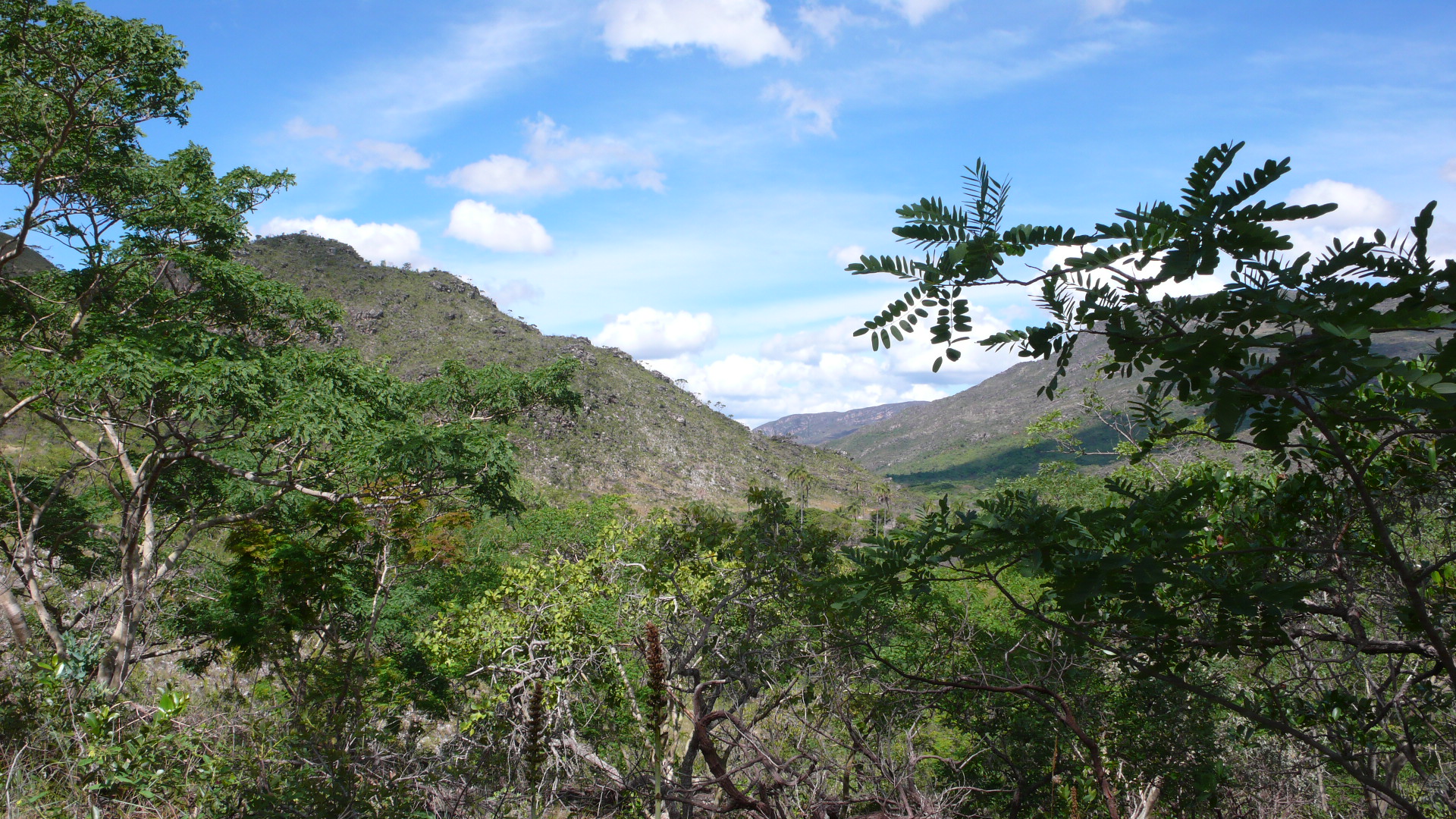
Once we had left the main trail and headed for the low, rocky hills, the walking (really scrambling) became tough, slow going.  As we picked our way from rock to rock, pushing through the less dense patches of vegetation, it was clear that this is an area of incredible plant diversity.  Rocky outcrops and ravines are always good for plant diversity as species that cannot survive the greater competition found in richer soils are able to hang on in crevices and in shallow, humus-filled depressions.  But we had no luck; the orchids were not in that part of the park.

As well as helping Ana and Felipe to search for these legendary orchids, Andre and I recorded all of the plant species that were in flower, and scored them for animal or wind pollination, based on the type of flowers, pollen release, flower visitors, etc.  Over the day we recorded about 60 species in flower (perhaps one quarter of the total flora, as many species were not flowering), of which 10% were wind pollinated.  This fits with the prediction of a study I published in 2011 of around 90% animal pollinated species for these tropical communities, compared to 70-80% on average in the temperate zone.  It’s satisfying when ecology is a predictive science in this way, though understanding why these patterns exist is less straightforward; is it because there are more animals in the tropics that can act as pollinators?  Perhaps, though bee diversity actually peaks in subtropical latitudes, in seasonally dry Mediterranean vegetation rather than in the tropics.

As well as scoring pollination systems, I was also looking out for species from my favourite plant family, Apocynaceae.  And I wasn’t disappointed; not only did we see at least 10 species (most of them flowering) but I was able to taste the fruit of one species, Hancornia speciosa, adding another family to my life list of those that I’ve eaten.

Following a quick lunch of apples, local cheese bread and small pies, it was clear that we were running out of water.   So we decided to follow a small stream up to a point where it was fast flowing and potable.  The community here was low gallery forest, cool and welcoming and with a succession of shallow pools, the humidity allowing the growth of epiphytic sundews, ferns, and a few bromeliads.  Tired by the climb, I sat and watched as a Green Kingfisher bobbed and displayed on a branch.  Although dirty, hot, and aching, I felt myself very fortunate indeed to be in such a special place.  The title of this posting comes from a comment that Andre had made the previous day as we scrumped ripe mangos from a roadside tree; according to his father, when eating mangos, “if your ears aren’t dirty, you’re not doing it correctly”.  The same notion applies to field work; if by the end of a day of tropical field work you are not dripping in sweat, filthy, with insect bites and stressed muscles, and desperate for a shower and a cold beer, you’re not doing it right.

P1110353

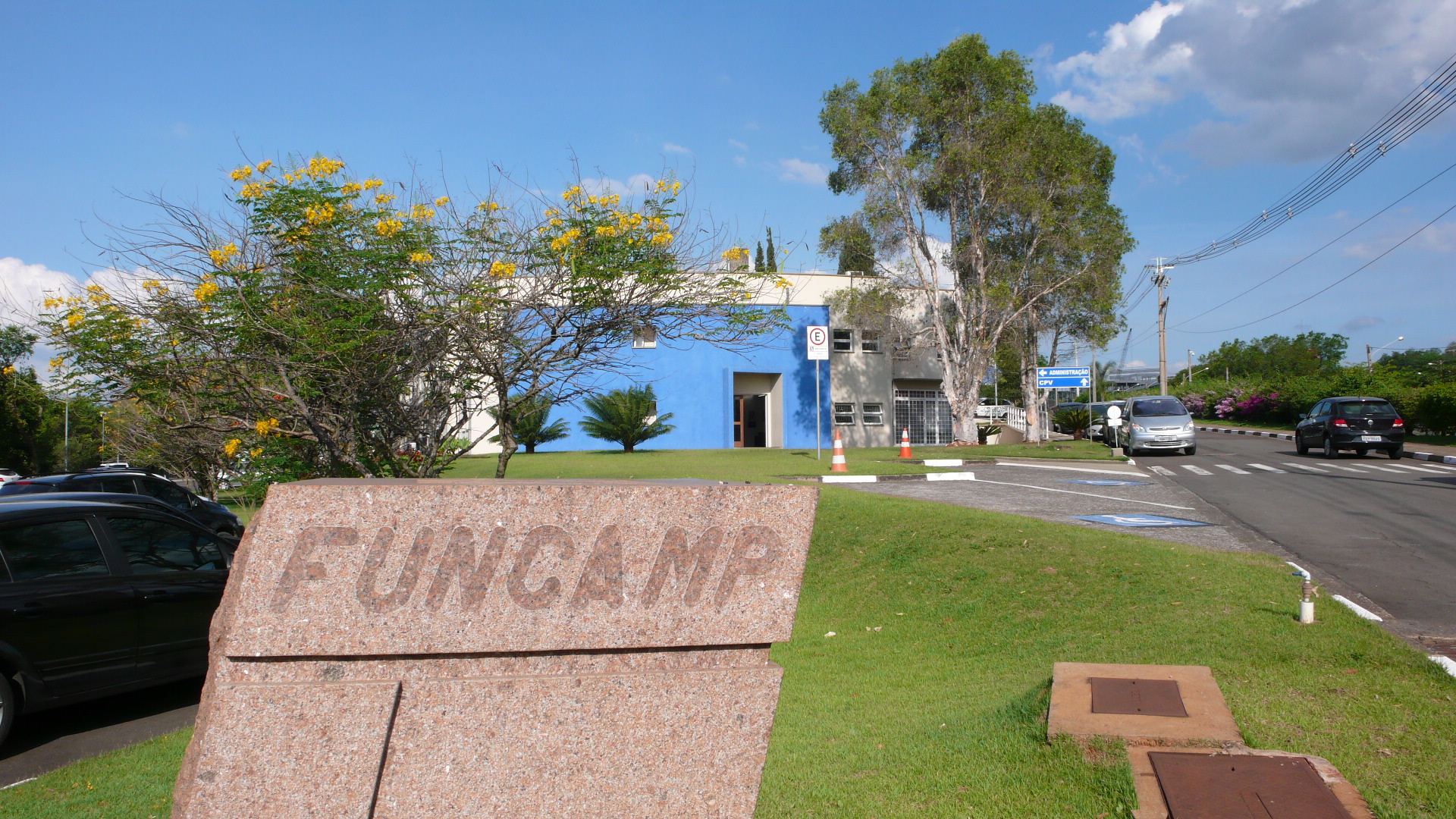
FUNCAMP – Brazil Diary 1

P1100895

“Nobody but a person fond of natural history can imagine the pleasure of strolling under cocoa-nuts, in a thicket of bananas and coffee plants, and an endless number of wild flowers”

Charles Darwin – letter to his father; Brazil, February 1832

When Darwin wrote this letter he was 23 years old and was experiencing the tropics for the first time in his life.  It’s a typically understated, 19th Century view of the sheer unfamiliarity and exuberance that tropical environments impress upon the traveller from north temperate climes.  In actuality Darwin was probably initially overwhelmed by the whole experience: I’m 48 and have made many such trips, and the first few days in the tropics never fail to overwhelm and excite me. Last Friday I arrived in Brazil for a month of teaching, lecturing and research funded by a grant from FAPESP awarded ​to my Brazilian collaborators, Professor Marlies Sazima and André Rodrigo Rech.  This week, with André’s help, I am running a course for graduate students entitled: “Pollination: ecology, evolution and conservation” at the University of Campinas, which everyone refers to as Unicamp, one of the most prestigious  and research active universities in Latin America.  The following week we head to Belo Hori​​zonte where I’m giving a talk at the National Botanical Congress, and a lecture at the Federal University of Minas Gerais. 

​Following all these teaching and lecturing engagements,  I head out into the field with André and some of the other Unicamp postgrads for two weeks of data collection on the ecology of Brazilian plants and their pollinators. The field work starts in the Serra do Cipó National Park, then mov​​​​es on to the Serra do Mar State Park, one of the largest remaining areas of Atlantic Rainforest.

We’re half way through the pollination course and the students have been just great; there are 28 of them, including some postdocs and professors from other universities, which is very flattering.  Each day is structured around a lecture, plus papers to read and the students bring questions to pitch to the group for discussion.  We’re also doing a little field work around the campus though the weather has been rather wet the last couple of days, which has limited what we can do.  

As well as interacting with the students, a real highlight of the trip so far has been the diversity of bird species on the campus.  After checking into my hotel on 1st November I took a stroll around the grounds and immediately spotted bird after bird that I’d never seen before, but which are common in this area.  No sooner had I started to identify one species (initially using Ber van Perlo’s Field Guide to the Birds of Brazil, which I soon augmented by a locally produced guide to the birds on campus ) than another hove into view and I’d have to remember its features in order to identify it next; and then another; and then another.  Information overload and, as I said, overwhelming!  

Bird of the Week has been the Southern Crested Caracara which I first saw sitting at the top of a tree from my bedroom window.  By the 2nd November I had counted 21 bird species; this went up to 36 the next day which included a walk around a small lake on campus.  Current total is about 40, but there are others which I’ve yet to identify and have been too busy with the course to spend much time birding.  But I’ve also added two new plant families to my life list of those I’ve eaten: Aquifoliaceae, the holly family, which provides the popular South American drink maté.  And Dilleniaceae, via the introduced species Dillenia indica the fruit of which is edible and popular in South East Asia, though is hopefully better cooked than raw: to me it tastes of lemon infused with car tyres.

Note to my family, students and colleagues back in Northampton:  whilst it’s true that my hotel is called FUNCAMP, this actually stands for Fundação de Desenvolvimento da Unicamp.  It in no way implies that I’m not working hard!

Je ne egret rien

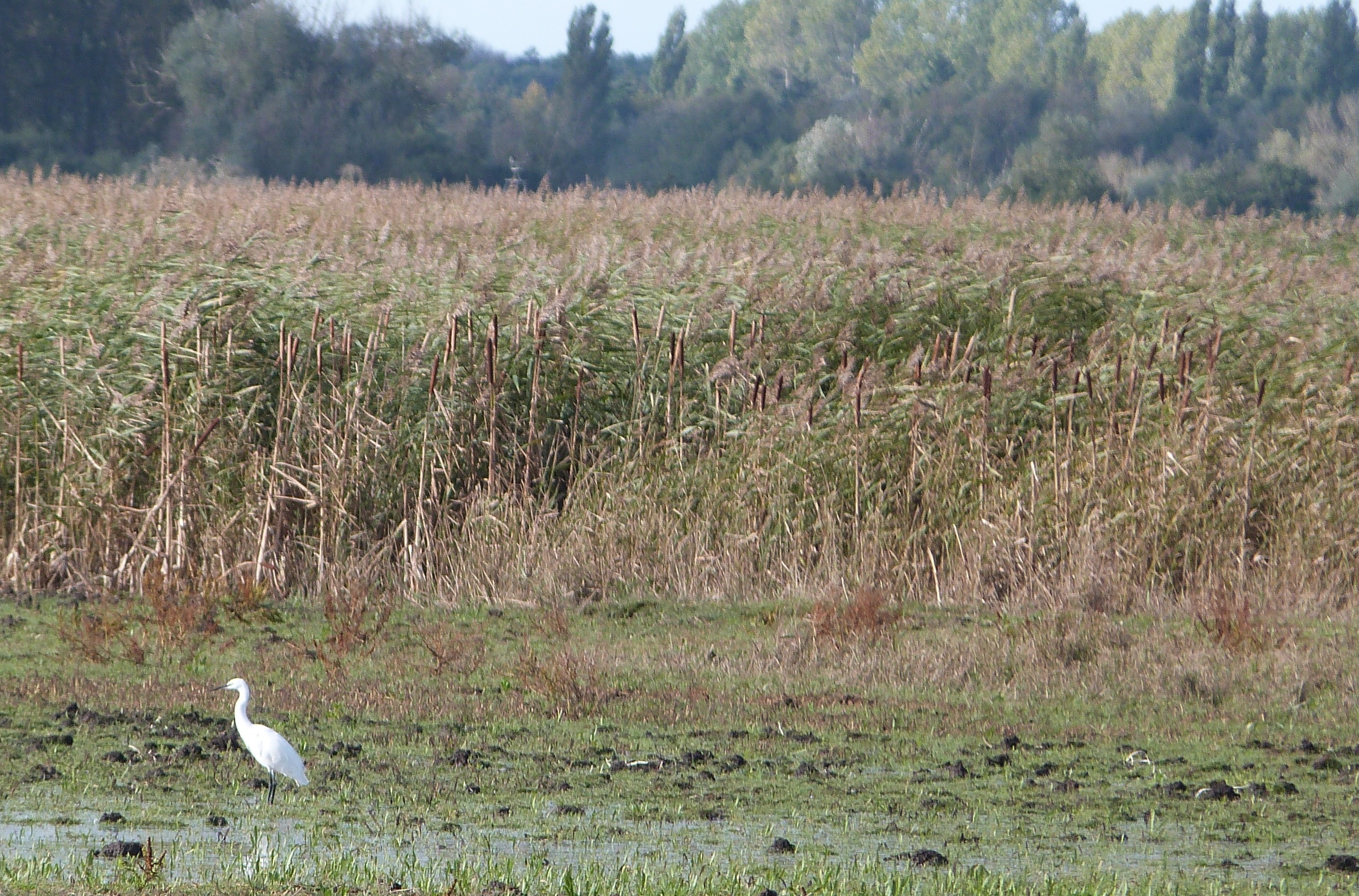
Little Egret - cropped

Conservation does not mean the same as preservation, despite the popular synonymy of these two words.  Preservation implies that something remains the same, is static and held in the same unchanging state.  One can preserve an old book, or fruit, or traditions for instance.  But one cannot preserve biodiversity because species change in abundance and distribution, regardless of the activities of humans.  That’s just how nature is.  One could take a deep time view of such change and consider the ancient habitats and organisms that built much of Britain’s underlying geology, as I mentioned when I described some walking on the Dorset coast a while back.  But even over shorter time scales that are comprehendible to humans, biodiversity changes, by the day, the month and the year.

That’s where egrets, and the pitiful punning title of this post, come in.  At the end of last week Karin and I spent a long weekend on the Suffolk coast, in the village of Walberswick.  It’s an old stomping ground for Karin but I don’t really know this area very well at all.  We spent our time talking and reconnecting, eating local food, drinking the good local Adnams beer, walking along the beaches, through saltmarsh and reed beds, and collecting stones and sea glass (I really like sea glass and have amassed bottles of the stuff over the years that we keep on sunny windowsills – think of it as aesthetic waste management).  And we looked at birds as we encountered them in these rich, diverse habitats.  Final total for the weekend was a respectable 37 species, including a few I couldn’t identify, helped along by a trip to the RSPB’s Minsmere Reserve (with, it seemed, every other birder in Suffolk; we had to queue to get into some hides). 

Two of the species we saw were egrets, a common name that covers several genera in the heron family Ardeiedae.  As the Wikipedia entry for egrets notes: “The distinction between a heron and an egret is rather vague, and depends more on appearance than biology”, as good an argument for the importance of scientific species names as any I’ve encountered. 

The first of the two species I spotted was the Little Egret (Egretta garzetta), an elegantly roaming bird that actively hunts along river margins and through marshland and flooded fields.  I was able to get within 10 metres or so of a bird at Walberswick and could admire its poised movements on vivid yellow feet, contrasting with black legs to make it look like a woman wearing footless stockings, as Karin put it (she took the photograph that accompanies this entry).  The second species of egret was the Great White Egret (Ardea alba), a much taller bird than the first, and an ambush hunter; like the related Grey Heron its strategy is to stand still and wait until prey comes to it.

The earliest record of a Little Egret in Britain was almost 200 years ago, in East Yorkshire in 1826.  However it is not known to have bred in this country until a pair did so in Dorset in 1996.  In other words, just 20 years ago this was an uncommon bird in Britain whose rare arrival would have generated a flurry of local twitching.  Now it hardly gets a mention on birding sites, we are so familiar with it.  Not so the Great White Egret which still raises some excitement when it appears.  Although this species was also recorded as early as 1821 in Britain, Great White Egrets only began to breed in Britain in 2012 and there is considerable anticipation that it will follow the Little Egret in expanding its population in this country.

We could add other birds to this list of species which have naturally colonised Britain within living memory, such as the almost ubiquitous Collared Dove (Streptopelia decaocto) as well as insects such as the Tree Bumblebee Bombus hypnorum and the Ivy Bee Colletes hederae.  Others will undoubtedly follow in the future, and perhaps the Cattle Egret will be the next member of the heron family to take up permanent residence on our shores.

Of course the flip side of new arrivals such as these is extinction, a topic that I will return to at some point as we’re currently putting the finishing touches to what I hope will be an exciting new paper on British bee and wasp extinctions.   Understanding the ebbs and flows of biodiversity over time requires data to be collected and we are fortunate in Britain to have a number of active monitoring schemes that regularly survey different groups of organisms.  This activity is vital if we are to be able to monitor our wildlife and to take action if we see declines, though the most recent results for the Status of Priority Species index makes grim reading:  the overall abundance of threatened species in the UK declined by 68% between 1970 and 2010.  It’s a complex message, though, and there are some success stories within those statistics.  But the animals that have fared worst have been the insects, particularly moths and some of the bees, wasps and ants.

Against this background of monitoring and decline I was happy to accept an invitation last week to attend a Defra-sponsored meeting at the Natural History Museum in London to discuss the setting up of an insect pollinator monitoring scheme.  A group of about 50 scientists and conservationists discussed what such a scheme might look like and how it could be implemented.  I’ll report back in more detail about this in the future once some decisions have been made as to how to proceed.

Meetings such as this, as well as being important in their own right, provide an opportunity to catch up with old friends and colleagues and discuss their latest work, or latest child/house move/job move, as appropriate.  So it was good to have a couple of beers after the meeting and chat with a few people including Dave Goulson, arguably one of the most significant scientists working in British pollinator conservation, and an outspoken critic of the current use of neonicotinoid pesticides.  Dave founded the Bumblebee Conservation Trust and has produced a lot of the scientific literature on bumblebees as he describes with wit and passion in his recent book A Sting in the Tale.  I’ve known Dave for over twenty years (we were PhD students together) so I was a little embarrassed to ask him to sign my copy of his book, but as a collector of signed editions I wasn’t going to let the opportunity slip.  Dave mentioned that the book has been shortlisted for the Samuel Johnson Prize and I hope it wins: ok, I’m biased, and can read it in Dave’s own voice which adds enormously to the book.  But it’s a great read for anyone interested in pollinators, or conservation, or just in the processes which turn a natural history obsessed kid into a professional scientist. 

This will be my last blog entry from Britain for a month; on 31st October I fly out to Brazil to spend time with André Rodrigo Rech, running a short pollination biology course, speaking at the Brazilian Botanical Congress, and conducting field work.  I’ll try to blog as I go along.  In a happy coincidence the Great White Egret is depicted on the Brazilian five real banknote.  I’ll look out for it.

Conservation: from CSN to CSR

P1100235

The history of what might be loosely called “the conservation movement” is a complex one with roots that are both deep and ramified.  In the west, direct antecedents can be found in the work of 19th century pro-environmental writers such as Henry David Thoreau  and George Perkins Marsh, but there are arguably also more subtle influences from other sources, for example the “Northamptonshire Peasant Poet” John Clare  whose natural history inspired verse captured a rural way of life and a landscape that was rapidly disappearing:

All nature has a feeling: woods, fields, brooks
Are life eternal: and in silence they
Speak happiness beyond the reach of books

The later foundation of organisations such as the RSPB, the Audubon Society, and the precursors of the Wildlife Trusts gave impetus to environmental campaigns focused on specific issues such as species extinctions and destruction of important wildlife sites.  But it was in the 1960s that nature conservation, and environmentalism more generally, began to become of wider concern.  Again the influences were broad but certainly included both popular science writing such as Rachel Carson’s Silent Spring, and  the attitudes and campaigning of the counter-culture.   Yet a generation later, as a student studying the subject in the 1980s, it was clear to me that the mainstream had not fully engaged with what was still considered hippy, tree-hugging notions of saving the planet/whale/rainforest/ [delete as appropriate].

Having always been a fan of vintage West Coast rock,  these hippy ideals were on my mind at the start of last week when I travelled to the BBC’s Maida Vale studios to attend a recording of Radio 4’s Mastertapes featuring David Crosby and his band.  As well as playing music from his first solo album, the haunting and majestic If Only I Could Remember My Name, Crosby talked about his life and political activism.  The following evening Karin and I were back in London, this time at the Royal Albert Hall to see Crosby with his compadres Steven Stills and Graham Nash, performing as the incomparable CSN.  A number of songs from their back catalogue feature environmentalism in one form or another and, despite their vintage, they are as in touch with the political scene as ever.

Now, in the first decades of the 21st century, the green agenda has gone mainstream and it seems that every large business discusses the environment in their Corporate Social Responsibility statements.  So with only a few hours sleep I jumped from CSN to CSR, a theme that recurred during  the first Northamptonshire Local Nature Partnership conference held at the University the next day.  One hundred and twenty delegates heard talks that presented environmentalism and nature conservation from the perspectives of citizen health and well being, Christianity, on-the-ground conservation activities, and the needs of business and enterprise.  In the afternoon there were smaller showcase sessions and I presented an overview of pollination as an ecosystem service.  

Every organisation (public and private sector) wants to be “green” these days, which is a good thing of course if it’s genuine and well conceived.  But as David Rolton pointed out in his talk, businesses were few and far between at this event.  During the question-and-answer session I followed up David’s comment with a description of our experiences with the Biodiversity Index.  Despite winning a Green Apple Award, and having lots of verbal encouragement from the private sector, as soon as we explain to businesses that they have to pay to use the Index, all interest dissipates.  These are the same businesses who are willing to invest in green initiatives such as recycling and energy efficiency, presumably because it saves them money as well: it seems that CSR for most businesses does not extend beyond paying lip service to biodiversity, despite an economic input of over £30 billion that the UK receives  from the natural environment every year.  

It took time for businesses and other organisations to acknowledge their responsibilities to the environment, and to develop policies relating to recycling, non-pollution and resource efficiency.  It seems that businesses are only just beginning to acknowledge their societal (rather than corporate) responsibilities with regard to conservation, and it’s an ongoing process that exercises government.  But conservation of biodiversity has got to become a priority; once a species is lost it’s lost forever, and we erode not only a natural heritage that has evolved over billions of years, but also the direct and tangible benefits biodiversity gives us.  In the words of CSN: “It’s been a long time coming; it’s going to be a long time gone.

Any friend of coffee is a friend of mine

Beach spiral

As I begin to write this post rain is pattering against the windows with increasing frequency and a brisk wind stirs the browning horse chestnut leaves that overhang the garden from a neighbouring property.  Autumn is here.  It’s a chilly Sunday morning and beside me is a large cup of good coffee, hot, black, and bitter, warming and stimulating in equal measure.  It’s our first Sunday at home for a fortnight as last weekend was taken up by a speaking engagement in Hereford at a large bee keeping convention where coffee featured highly, as I’ll explain.

The Hereford convention wasn’t the kind of academic research conference that I’d normally attend, but I thought it would be fun to go with Karin, and I’d learn more about bee keeping (both proved to be true).  For this broad audience of amateur and professional bee keepers I presented a version of my professorial inaugural lecture from earlier this year entitled “How many bees does it take to wake up in the morning?  The importance of biotic pollination in a changing world”.  It’s a title with multiple layers of meaning, referring to bees as ecosystem service providers, my enjoyment of my work which gets me out of bed every day, and the energising effects of a strong cup of fresh coffee first thing.  

As part of that lecture I present some back-of-the-envelope calculations that are meant to put coffee production into a biodiversity perspective, rather than being a rigorous analysis, but which are nonetheless worth considering.  They go like this.

Global coffee consumption in 2010 (the most recent year for which I could find figures) amounted to 93 million export bags, each weighing on average 60kg (there are larger and smaller bags used in different parts of the world, so we’ll use this figure).  The export value of this crop was estimated at US$15 billion for the (largely tropical) countries that produced it.  That’s the value before it’s processed and sold, which is much more difficult to calculate, though coffee retailing is clearly big business.  For example, Starbucks’ total revenue for the same year was US$10.7 billion and it supports over 150,000 full time employees.  So it’s lucky for us that it pays its taxes.  

Although coffee is partly self pollinating, it relies on insect pollination to produce large crops, mainly involving bees of various types.  I tracked down a number of studies by researchers such as Alexandra-Maria Klein and Taylor Ricketts which showed that managed honey bees are responsible for anywhere between zero and over 90% of flower visits, depending on the diversity and abundance of local wild bees (over 40 species of which are known to pollinate coffee in Costa Rica alone).  At this point I throw out a question to the audience:  how well do we understand this globally important agricultural ecosystem service?  Do we have any idea of how many individual insects are required to support this industry?  Some more calculations:

Each coffee bean is the product of a single fertilisation event following the deposition of at least one pollen grain on a flower’s stigma.  The mean weight of a single coffee bean is 0.103g (I weighed a sample in preparation for the lecture) which means there are approximately 582,524 beans in a 60kg bag.   Total number of coffee beans produced in 2010 is therefore 93 million bags multiplied by 582,524 beans per bag, which equals  54,174,757,281,553.  In words, that’s  more than 54 trillion coffee beans.  As coffee is 50% self pollinating we can half that figure: coffee production requires at least 27,087,378,640,777 (over 27 trillion) pollinator visits.

But here I confess to the audience that it’s impossible to go further and answer the questions I posed above:  we really have no idea how many bees are supporting the coffee industry.  The problem is that there are big gaps in our knowledge of some basic aspects of the natural history of these bees and their interactions with coffee flowers.  For example, how many flowers does an individual bee visit in its lifetime?  How effective are different bees at pollinating  the flowers?  What is the minimum population size for these bees, below which they would go locally extinct?  All that we can say with certainty is that the global coffee industry (and the individual productivity of many workers) is supported by a LOT of bees.   Many billions is my best guestimate.  Perhaps we don’t need to know the number: perhaps it’s enough to know that if we provide sufficient good quality habitat for these bees, they will provide the service.  But at least it illustrates our reliance on these insects and is something to consider when you’re enjoying the first cup of the day.

Bees are not the only animals that we have to thank for coffee production as a recently published study has shown:  birds in Costa Rica help to reduce the impact of an important pest of coffee.  As Jana Vamosifrom whom I shamelessly stole the title of this posting, commented when I posted this link on Facebook:  any friend of coffee is a friend of mine!


In defence of lawns UPDATED

2012-02-22 10.19.23

Over at the Small Pond Science blog, Terry McGlynn has a thought provoking post which asks ‘Are trees the lawns of the future?‘.  I won’t rehash Terry’s arguments, you can read it yourself, but I was intrigued by his stereotyping of lawns as always bad.  As a keen amateur gardener and a professional with research students who have worked on garden biodiversity projects, I’d have to say that there’s lawns and there’s lawns: it all depends on how they are managed and what the purpose is of a particular lawn. Clearly there’s a continuum from high diversity, natural “lawns” (i.e. close-cropped grassland which can support significant biodiversity such as some chalk grassland and African savannah lawns) through to the high resource input, monoculture, perfectly presented lawns seen on golf courses and around important buildings.  In the part of the continuum that Terry’s railing against, typical urban and suburban householder’s lawns and everything below that in terms of “naturalness”, it’s possible to manage lawns in a low-input way that is both productive and can support biodiversity.

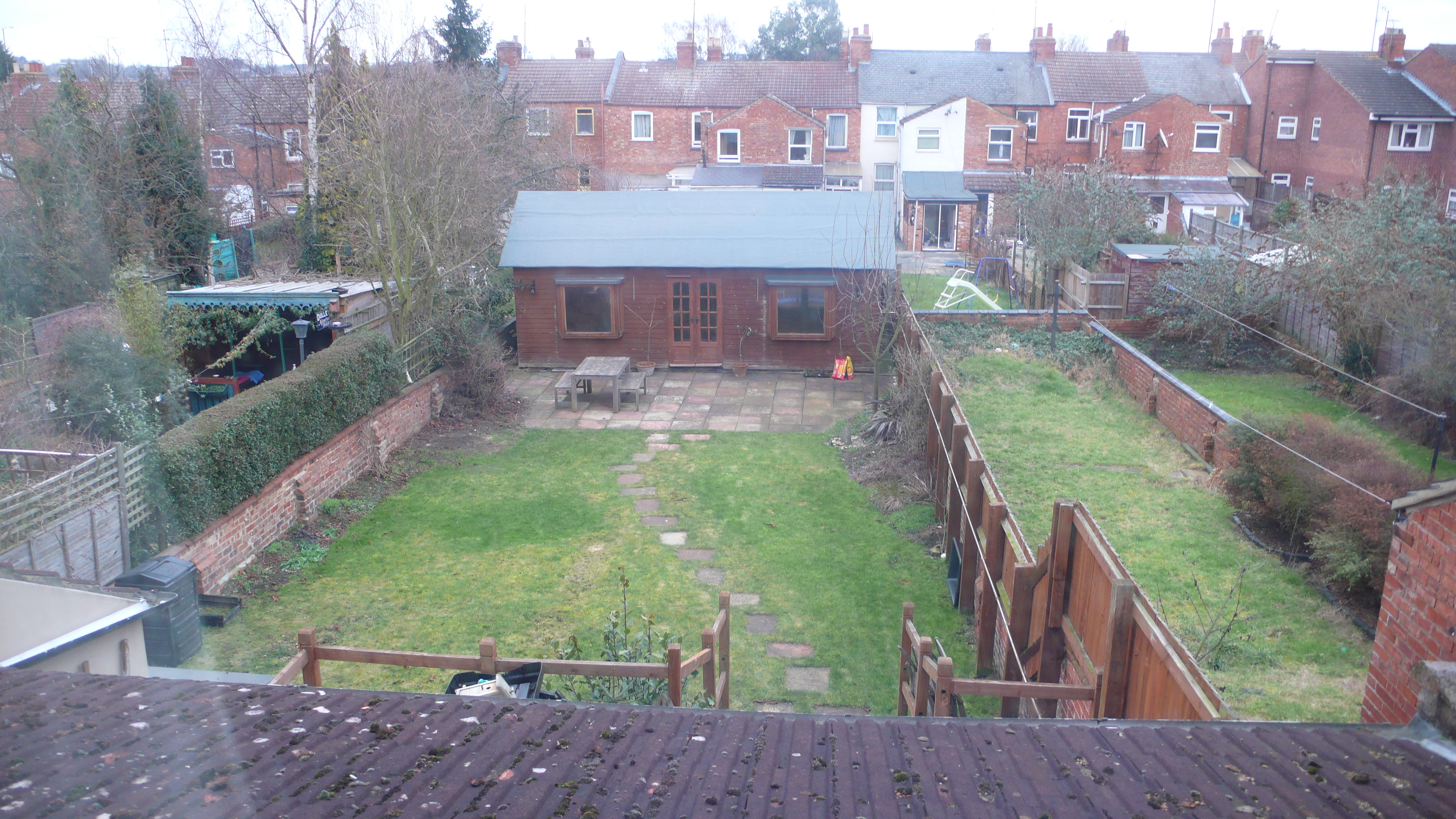
In the house that Karin and I moved into about 18 months ago, the garden was almost wholly laid to lawn; the picture at the top shows you what it was like in early 2012.  Since then we’ve dug flower borders, a vegetable patch and planted fruit trees, but kept about 50% lawn (though this will reduce as we widen borders). We don’t water or fertilise the lawn, just keep it regularly mown. I’ve not assessed it systematically but I’d estimate that, in addition to the grasses (some native, some not) there’s another 10 to 15 native plants growing in it, plus fungi which pop up every now and then. The plants include taxa which are popular nectar sources for bumble bees and solitary bees, e.g. clovers, dandelions, etc. These flower even though we mow regularly, and of course these bees pollinate our squashes, courgettes, apples, plums, etc.  The local blackbirds and starlings also find food on the lawn.

I mentioned that the lawn is “productive” and that’s where the grass cuttings come in. They are either put into the compost heap, fed to our chickens, or added directly to the vegetable patch as a mulch.  It’s also possible that the clover, which is a nitrogen fixing legume, is adding to the soil fertility that can be accessed by the far-reaching roots of the fruit trees.  Would be an interesting hypothesis to test.

So I think it’s possible to have a lawn that adds to local biodiversity and is productive for the gardener, but I accept that we may be unusual in that regard.  It’s not the kind of lawn that would make a grass obsessive proud; but that type, as Terry notes, needs a lot of input of resources, not least time.

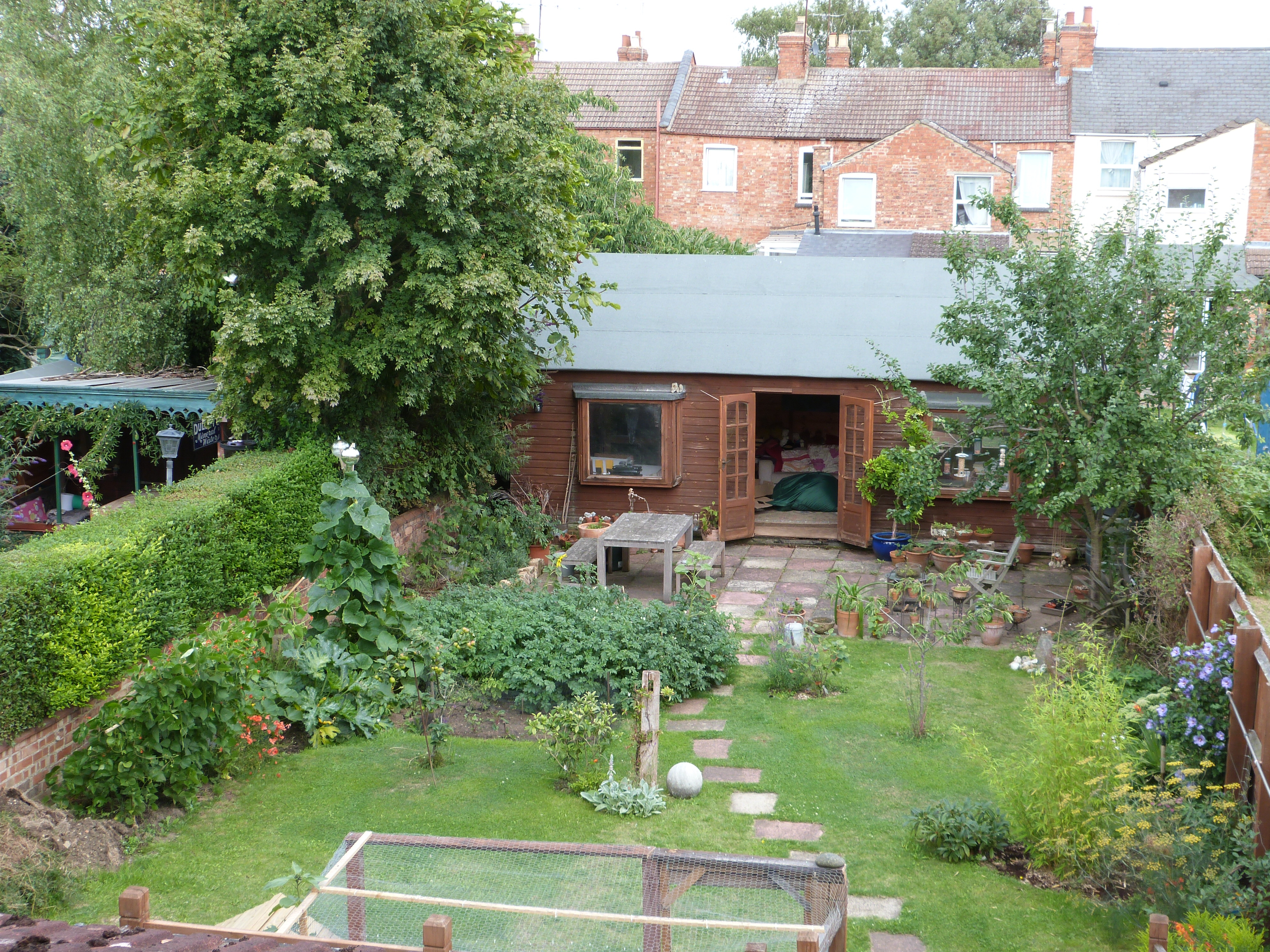
UPDATE –  a few people have asked to see a picture of how the garden looks now, so below is more or less the same shot but taken today (15th August 2013) by Karin.  Comparing a British garden in February and August is clearly unfair!  But hopefully you can see that we’ve done quite a bit of work to it, though as with all gardens it’s a work in progress.

Garden 15th August 2013

A (Green) Apple for teacher – The Biodiversity Index wins an award!

BO-2DbsCcAAZPsu (1)

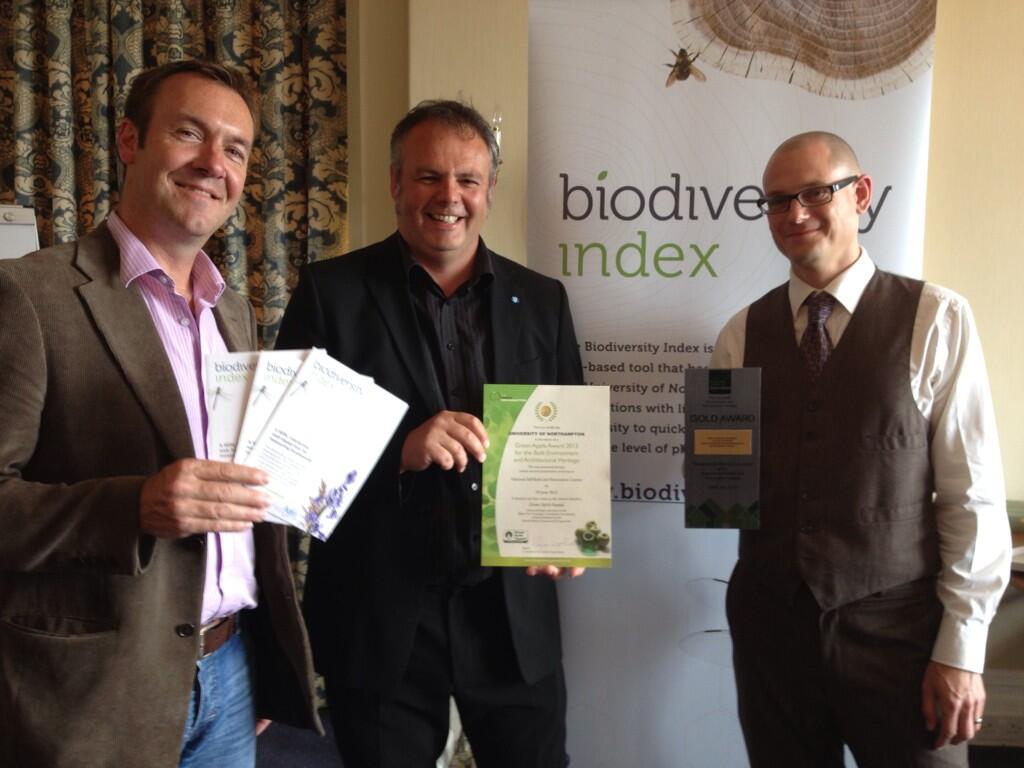
At a small ceremony attended by businesses and local authorities on Friday, the team who developed the Biodiversity Index received a Green Apple Gold Award from The Green Organisation.  I proudly accepted the award on behalf of everyone and made a short speech which, in the spirit of my “reduce, reuse, recycle” policy, I’m posting here.  Thanks to Bobbie Lane for the photo, Richard Moore for help with the speech, and Gareth Thomas for the notion of biodiversity as the “fourth resource”.  


Ladies and gentlemen.

In June 2011 the UK National Ecosystem Assessment reported to Government that the value of the natural environment to the British economy was at least £30 billion per year in terms of the ecosystem services it provides, such as carbon storage, soil fertility, tourism and pollination.

In contrast, earlier this year the State of Nature Report by 25 of the UK’s leading wildlife organisations, suggested that 60% of animal and plant species for which we have data have declined in the past 50 years.  To add to this, some recent work by my research group at the University of Northampton has shown that 23 species of pollinating bees and wasps have gone extinct in Britain since the late 19th century.

Clearly there’s a contradiction here: at a time when we value biodiversity more than ever, it is declining at an ever-faster rate.  So what can we do about this situation?  How can individuals and organisations help to reverse this trend?  This is one of the aims of the Biodiversity Index.

Energy, water and waste are typically the main resources actively managed by businesses and organisations, but there is growing interest in understanding and managing biodiversity as a fourth resource that is critical for society as a whole.  In contrast to some of the other speakers you have heard today, the Biodiversity Index is not going to make you money.  In fact, if you are in the commercial sector, it will cost you a small amount of cash to join.  But the broader benefits of staff engagement with wildlife conservation, and the positive effect this will have on our country as a whole, are priceless.    

The Biodiversity Index is an interactive web-based tool, developed by the University of Northampton and believed to be the first of its kind anywhere in the world.  It enables organisations with little or no knowledge of biodiversity to undertake a rapid but scientific assessment of the level of plant diversity on their site and suggests ways to improve each habitat.

The Index widens access to the knowledge and tools required to make a start in improving the management of biodiversity on urban sites, with the potential to assist schools and colleges, universities, hospitals, local authorities, SMEs and larger businesses to improve the environment in which we work and live.

The tool was developed as part of the SEED Project and was launched at the Environmental Association for Universities and Colleges annual conference in April 2013.  To date the Biodiversity Index has been used by over 30 UK universities and endorsed by several companies including Ricoh UK Ltd, a Global 100 sustainability company.

On behalf of the team that developed the Biodiversity Index I am delighted to accept this Green Apple Gold Award as an acknowledgment of the innovative work undertaken in this collaboration between the School of Science and Technology and the Department of Infrastructure Services at the University of Northampton.

Thank you.

Are honey bees native to Britain? And does it matter?

2013-04-15 13.54.19-2

It’s no secret that I’ve become frustrated over recent years by the general confusion in the media between the concerns relating to honey bee health (which are largely veterinary/husbandry problems, though pesticides may also play a role) and declines in wild pollinators, which are a wildlife conservation issue mainly due to habitat destruction, though again pesticides are probably having an impact.

That frustration came to a head last year when colleagues and I published a short letter in the influential journal Trends in Ecology and Evolution that was prompted by a throwaway remark in an earlier article stating that honey bees “are essential pollinators for the maintenance of natural biodiversity”  No they are not.  And you can read for yourself why we responded to that article if you follow the link above.

In a recent posting on the Adventuresinbeeland blog, Emily Heath discussed her attendance at a recent British Library event about pollinators and pesticides.   I commented on the blog and in passing mentioned honey bees as being “not native” to which one respondent demurred and wrote:   “I thought honey bees ARE native to Britain, although they have been bred with various breeds ……. Apis mellifera mellifera is a British native, isn’t it?”.   I’ll paraphrase my response here:

The only study that I’m aware of that has addressed this question is Norman Carreck’s paper from 2008 – you can download a PDF of that article here.  Norman is convinced that Apis mellifera mellifera is native to Britain but, as I interpret it,  the evidence he presents is circumstantial and the earliest archaeological remains of honey bees are all associated with human settlements. Even if honey bees were originally native to Britain, the present situation, in which honey bees have been selectively bred and hybridised, is akin to using Tamworth pigs as evidence that wild boar are native.

However for me the most compelling evidence that honey bees are not native is ecological: despite their generalist nature and ability to form large colonies when managed, out in the wider countryside of Britain honey bees do not do particularly well. “Wild” honey bees are never very abundant (compared with some bumblebee species, for instance) and feral colonies in natural settings are few and far between.

This prompted a to-and-fro discussion with Emily that you can read for yourself.

Are honey bees native to Britain?  The jury is out but the balance of evidence as I see it is pointing to them being a human introduction.  Does it matter?  In many respects, no.  Honey bees are (like any other agricultural animal) a utilitarian species that provides us with a range of benefits.  But in one respect it DOES matter – and that is in relation to how we formulate and put in place strategies to reverse the decline of wild pollinators such as bumblebees, hoverflies and butterflies.  If honey bees become the central focus of such strategies (and funding), due to confusion in the minds of the public, MPs, policy makers, businesses, the media and other influential bodies, then wild pollinators would lose out.  In my opinion that would be a great mistake.  I’d be interested to know what other people think.

The Cliff

Tenerife 2008 057 - students on the Aeonium field

UPDATE: Late conversations with colleagues has convinced me that this “cliff” is an artefact. Web of Science started to include search abstracts around 1990, making it much more likely that specific search terms would appear.

Over the past few months I’ve been thinking a lot about PhDs and doctoral students, and our expectations of them, specifically in contributing to cutting edge biodiversity science.  In part this is because August 2013 will mark the 20th anniversary of the oral examination (“viva”) of my PhD at Oxford Brookes University.  The viva (short for the Latin phrase viva voce or “living voice”) is a peculiarly British method of examining PhD students that differs significantly from its (often public) counterpart in the rest of Europe and Scandinavia, and even more so from its equivalent in North America and the rest of the world.

For those of you unfamiliar with the viva process, I can recommend Simon Leather’s recent posting on the topic.

Since 1993 I’ve had the honour of acting as an examiner for 22PhD theses (4 at the University of Northampton, 18 externally) including two so far this year;  I’ve yet to turn down an opportunity to examine a PhD as it’s flattering to be asked and (more importantly) a great opportunity to see new ideas and data being generated by minds younger than mine.

One of the things that has exercised me recently is how much knowledge the average PhD student in my main discipline of pollination ecology actually has to get to grips with while doing the background research for their topic.  I wondered how this had changed since my time as a postgrad in the 1990s, and how the expectations of my own PhD examiners had changed since the 1970s.  So, using the wildcard term “pollinat*” in Web of Science I searched the contents of seven journals (Oecologia, Ecology, Journal of Ecology, Oikos, Annals of Botany, American Journal of Botany, & American Naturalist) that have published a significant proportion of the literature on pollination ecology over the past forty-odd years.

Of course I expected to see an increase in the number of papers on this topic being published per year over that time period, but not the two orders of magnitude difference that I found.  A PhD student studying pollination ecology in the early 1970s would be confronted with fewer than 10 papers on the topic coming from these seven journals whilst at the present time it’s averaging around 130 per year:

Pollination papers line graph

So it’s no wonder that PhD theses are tending to become more focussed as topics become more specialised.  So far, so expected.  But what I think is more interesting is the shape of the graph; why is there such a steep increase in the number of published papers in 1991?  I’ve nicknamed this point “The Cliff” because of its shape, and also because it seems to symbolise an intellectual barrier to be surmointed: an ability to read and synthesise a lot more information than was available prior to the early 1990s.  What is the reason for The Cliff?  Do other areas of ecology and evolution demonstrate a similar pattern in their historical rates of publication?  I see a link here to a discussion going on over at the Dynamic Ecology blog about the most cited ecology papers of the past few decades, and particularly the fact that “big ideas” papers are becoming less cited than review papers.  Perhaps it’s because we need these reviews to keep on top of literature that we’ve not got round to reading!

But that doesn’t explain why 1991 represents a step change for publishing in the field.  I’d be interested to hear the views of others working in pollination ecology.  What happened in the late 1980s to stimulate such an interest in doing research into plant-pollinator interactions?  Was it the publication of some key papers or books?  Did more funding become available specifically for work in this area?

A coiled Spring

Wellcome Trust - June 2009 006

April, according to T.S. Elliot, “is the cruellest month”.  Not sure about that, though April 2013 proved to be both frustrating (as we in northern Europe waited for Spring to arrive) and busy, as I tried to pack in a whole set of activities.  That’s my only excuse for not updating my blog, so the aim of this post is to catch up with biodiversity-related activities and observations over the past few weeks.

Just as iconic decades begin part-way through a given ten year period (the 60s didn’t really kick off until about 1963, for instance) so April for me actually began at the end of March.  In the last week of that month I completed my formal teaching for the term and celebrated the first anniversary of the Nene Valley Nature Improvement Project.  I also picked up my daughter Ellen from Heathrow Airport, on a two week visit back from working in China.  On the way I counted over 20 red kites flying near the M40 motorway – what an incredible success story their re-introduction has been!

One of the reasons Ellen had come back was that I was due to give my inaugural professorial lecture, entitled “How many bees does it take to wake up in the morning?  The importance of biotic pollination in a changing world”.  Another reason was to to celebrate my eldest son Patrick’s 18th birthday the following day.  Both once in a lifetime events and both had family at their heart.  It was a great week.

Some leave time followed, much needed after what seemed like an endless 12 week university term, during which I hoped to plant potatoes and do some other work in the garden.  But Spring refused to uncoil.  The northerly winds brought cold weather that froze all vernal activity in the act.  Flower and leaf buds were there waiting to unfurl; insects would occasionally appear then just as quickly disappear; and birds clearly wanted to get on with the important activities of raising young.  But all was delayed.  One could sense the tension, the build up of seasonal energy, biology waiting to happen.

A talk at Earlsdon Gardening Club near Coventry on Monday 8th April was well received and took my mind off the organisation of the biennial Bumblebee Working Group meeting on the 11th.  This semi-formal get together of scientists, NGOs, and other Bombus-minded individuals, shifts between venues every two years.  At the last meeting in 2011 I volunteered to host the next event and then put it out of my mind for 18 months.  Organising a scientific meeting is always a bit of a mad panic as the day draws closer and one wonders if anyone will actually turn up.  But as it turned out the event was well attended, with over 80 people listening to talks on diverse topics including the effects of neonicotinoid pesticides on bumblebee colonies;  I’ve uploaded a copy of the programme.

Friday 12th April was a frantic dash around office and lab to get books, equipment and sundries organised for our annual undergraduate Tenerife Field Course, which was flying out on the following Sunday.  A great time was had by all as we explored the biodiversity of Darwin’s Unrequited Isle and we came back with a wealth of great data plus not a little sunburn.  No matter how often I tell students that they really need to wear a hat and use sun block, some will never listen.

Arriving from Tenerife early on Monday 22nd, I slept for a few hours then was back at the university for the oral PhD examination of Hilary Erenler, whose work I have mentioned previously.  These exams are always stressfull for both student and supervisors but in the event Hils performed wonderfully and passed with only minor amendments.  A great result!  Now looking forward to publishing some papers from that work.

April ended, and May began, with a change in the weather.  Much warmer winds blew in from the south west and life suddenly erupted: pressure had been removed from the coiled Spring.  Lots of pollinators appeared in our garden including: Anthophora plumipes, one of my favourites for its glossy, black females and aggressively flower patrolling males; the relatively newly arrived Bombus hypnorum; the bee fly Bombylius major; and several different butterflies.

Clearly it’s time to plant those potatoes!