Category Archives: Butterflies

How do animals respond to solar eclipses? Please share your observations.

P1120154

If you have been anywhere in the Palearctic during the past 48 hours then you can’t have missed the fact that we experienced that most rare of astronomical phenomena, a solar eclipse.  The eclipse was total only as far north as the Faroe Islands and Svalbard; further south it was partial and here in Northampton the eclipse was perhaps 80-90% total.

It’s been big news with lots of public interest.  As well as explaining the astronomy of eclipses, various commentators on current affairs and science programmes have talked about how animals respond to eclipses.  This is a topic that’s intrigued me ever since the August 1999 eclipse.  During that event I was carrying out field work in a Northampton grassland and as the eclipse reached its maximum the bumblebees and butterflies on the site stopped flying and foraging, and settled into the grass.  Once the eclipse had passed they carried on as before.  I don’t have any hard data to demonstrate the effect, it was purely an observation of what was happening around me.

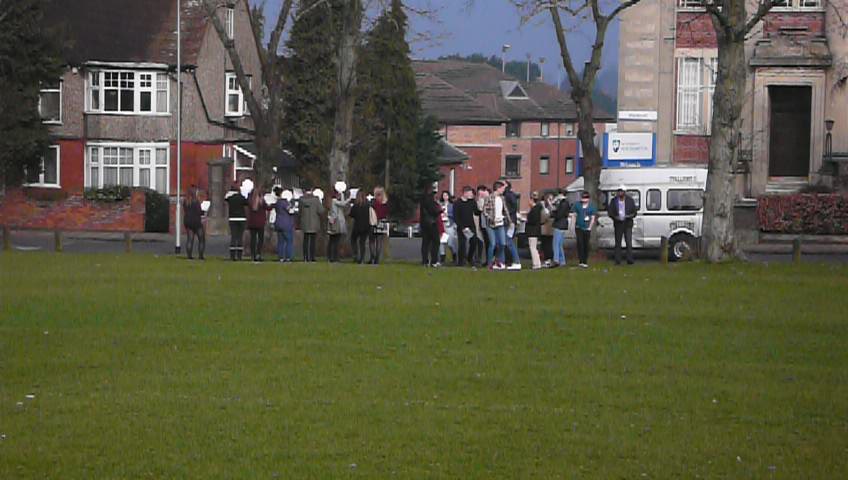
Since then I’ve waited over 15 years for the next opportunity to observe how solar eclipses affect animal behaviour.  Unfortunately there are few pollinators flying at the moment so I had to content myself with watching the gulls, woodpigeons, carrion crows and other birds on the Racecourse park adjacent to the university.

P1120144

This time I took some video footage before, during and after the eclipse, noted the birds’ behaviour, flying, calls and singing.  And guess what? As far as I could tell the eclipse had no effect on the birds!  They behaved as if nothing was happening.  Even a mistle thrush than had been singing all morning from a perch in one of the boundary lime trees continued its song as the moon passed in front of the sun.

That really surprised me!  I was expecting the birds to at least reduce their activity as has been noted in previous eclipses.  But they didn’t as far as I could tell.  Perhaps it was the type of birds I was observing?  Or the time of year?  Or the fact that the eclipse was only partial?  Lots of questions but it’s difficult to do repeat observations for this kind of science – the next British total eclipse is not until 2090!

What did you see?  Did you notice any effect of the eclipse on animal behaviour?  Or did you, like me, see no effect of the eclipse.  I’d be interested to hear your observations.

P1120136

Monitoring the biodiversity impact of the new Waterside Campus

Waterside winter 2014-15 - 2

All human activities can potentially have an impact on the biodiversity of the local environment in which they occur.  That impact can be positive or negative, depending upon how the activity is managed, how impact is mitigated, and the metrics that we use to measure the effects that are occurring.  This is particularly true of large infrastructure developments such as big buildings,  housing developments, roads, and, a category close to home for me at the moment, new university campuses.

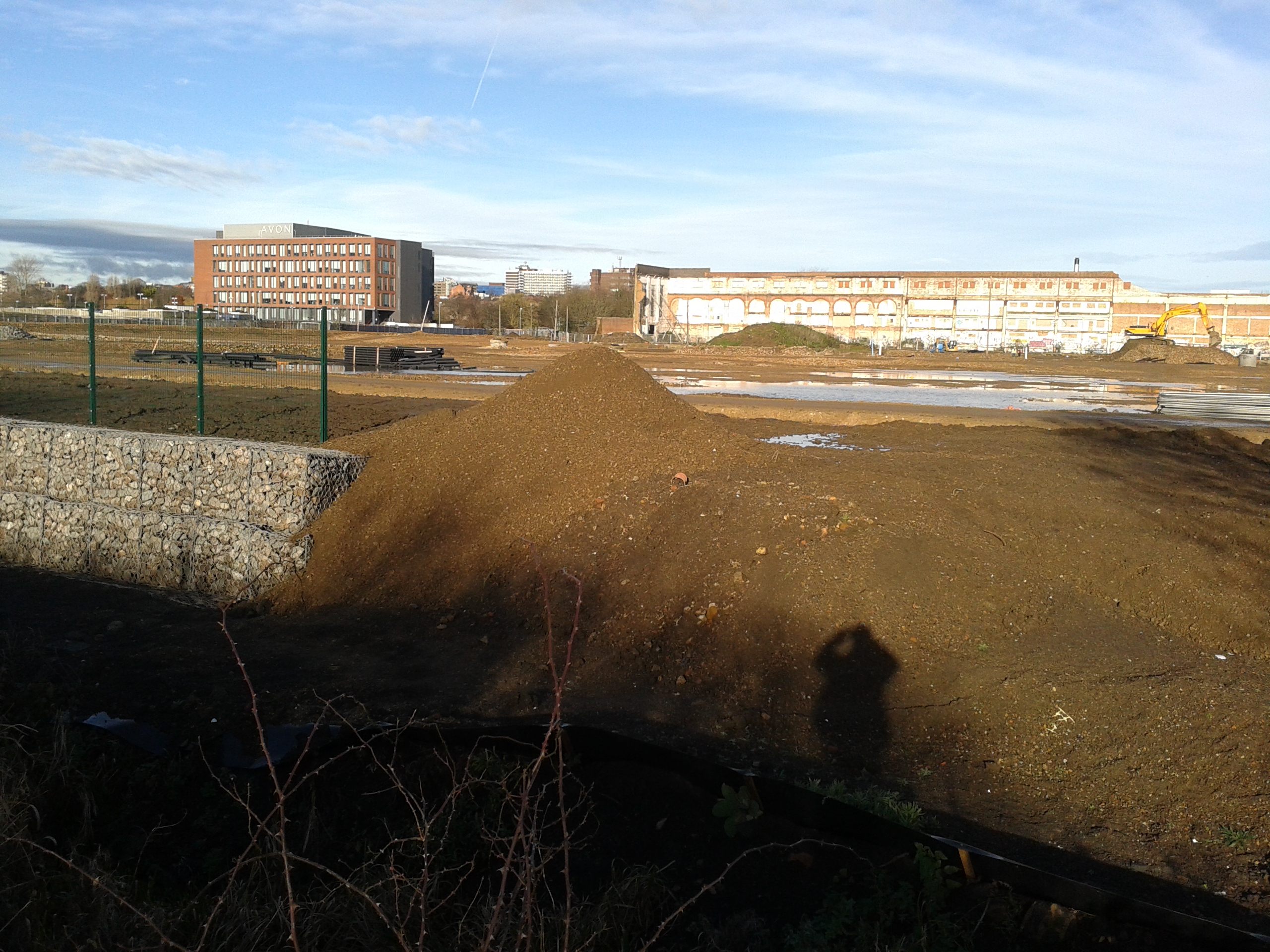
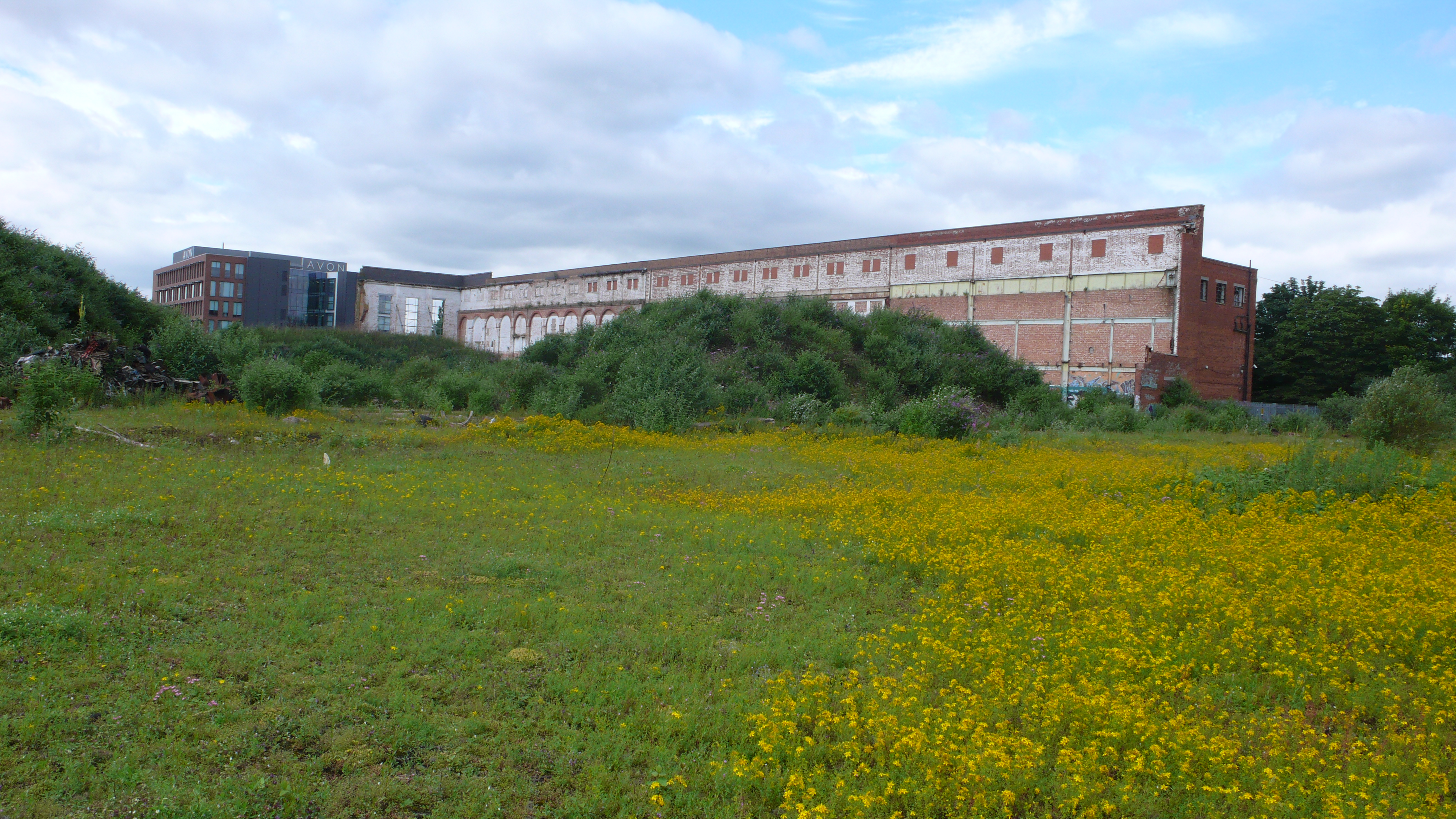
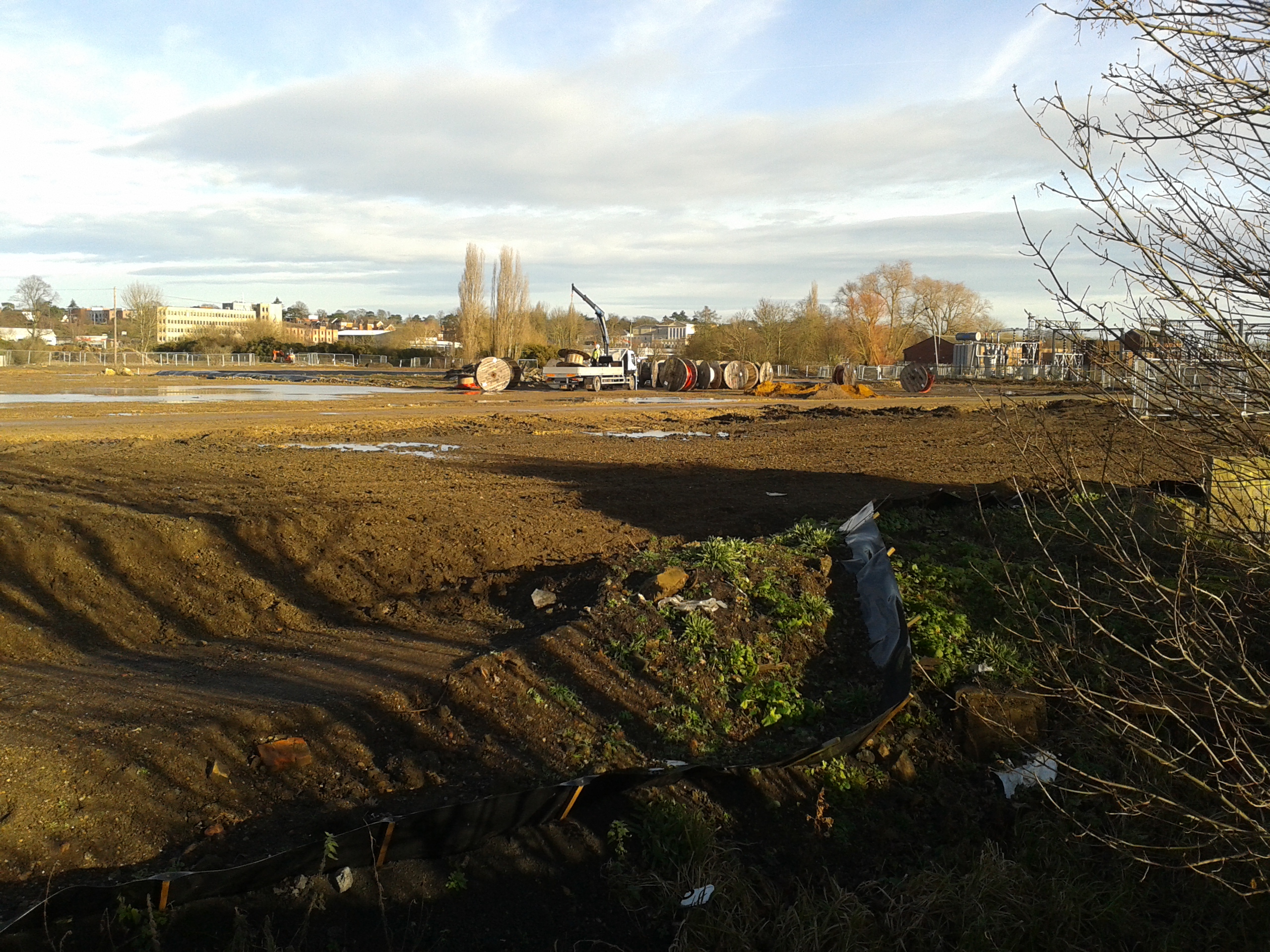
I’ve written before about the University of Northampton’s plans to build the new Waterside Campus on brownfield land close to the River Nene, here and here.  It’s a huge project, likely to cost in excess of £330 million on a site covering about 20 hectares.

As you might imagine, such an ambitious scheme has not been without its controversies and there is much debate within the university about changes to how we work and interact with colleagues and students, provision of teaching and research spaces, etc.  There’s also been much discussion within the town, though the general feeling amongst the public (as far as I perceive it) is that bringing the university closer to the centre of Northampton will provide a much-needed economic boost and add significantly to the town’s life.

But what effect will such a development have on the wildlife in and around this peri-urban site, given that it’s in the middle of the Nene Valley Nature Improvement Area and very close to internationally important bird sites?

Over the past few months, together with my colleague Dr Janet Jackson, I’ve been taking part in meetings with the Waterside project’s landscape architects (LUC), other partners from the NIA project board, and the local Wildlife Trust. We’ve been discussing the current plans for the green infrastructure of the campus and thinking about how these can be enhanced.  It’s been a fascinating process as initial disagreements have been negotiated towards compromises and additions that everyone is happy with, balancing budgetary, function and space restrictions with habitat creation and landscape enhancement.

There’s too much been discussed to give a full account at this stage, and it’s possible that some details will change over time, but  the current Ecology Strategy document produced by LUC shows that there will be more than 10 hectares of habitat creation on the site, including species-rich grassland, woodland patches, brown and green roofs, swales and damp areas, and recreated brownfield habitat.  The latter is particularly exciting and something of an experiment, as much of the (albeit limited) current wildlife interest on the site relates to the brownfield element, including the “urban tundra“.

P1100110

To put the 10 hectares into perspective, the adjacent Wildlife Trust Local Nature Reserve of Barnes Meadow is only 20 hectares in area, so it’s potentially increasing that site by 50%.  It’s rare for academic ecologists such as Janet and myself to be able to influence large building developments, so this has been an exciting opportunity for us to make a contribution that (if all goes to plan) will have a positive effect on biodiversity conservation in the Nene Valley.

But how will we know if the Great Waterside Experiment has been a success and that the biodiversity of the new campus is at least as rich, and preferably richer, in species than it was before building took place?

Monitoring of the wildlife is key to this.  Fortunately we have some base-line surveys of birds, plants and invertebrates (including bees and butterflies) from before building started that we can compare with later surveys during and after the campus build.  That process has already started, and with my colleague Dr Duncan McCollin and with two keen second-year students, Jo and Charlie, we have already completed three winter bird surveys to get a sense of how the current site clearance and ground works is affecting the presence of birds in and around the development, including those using the River Nene.  The plan is to continue these surveys up to and after the campus opens in 2018, to give us a data series showing the influence of the campus on bird diversity and numbers.

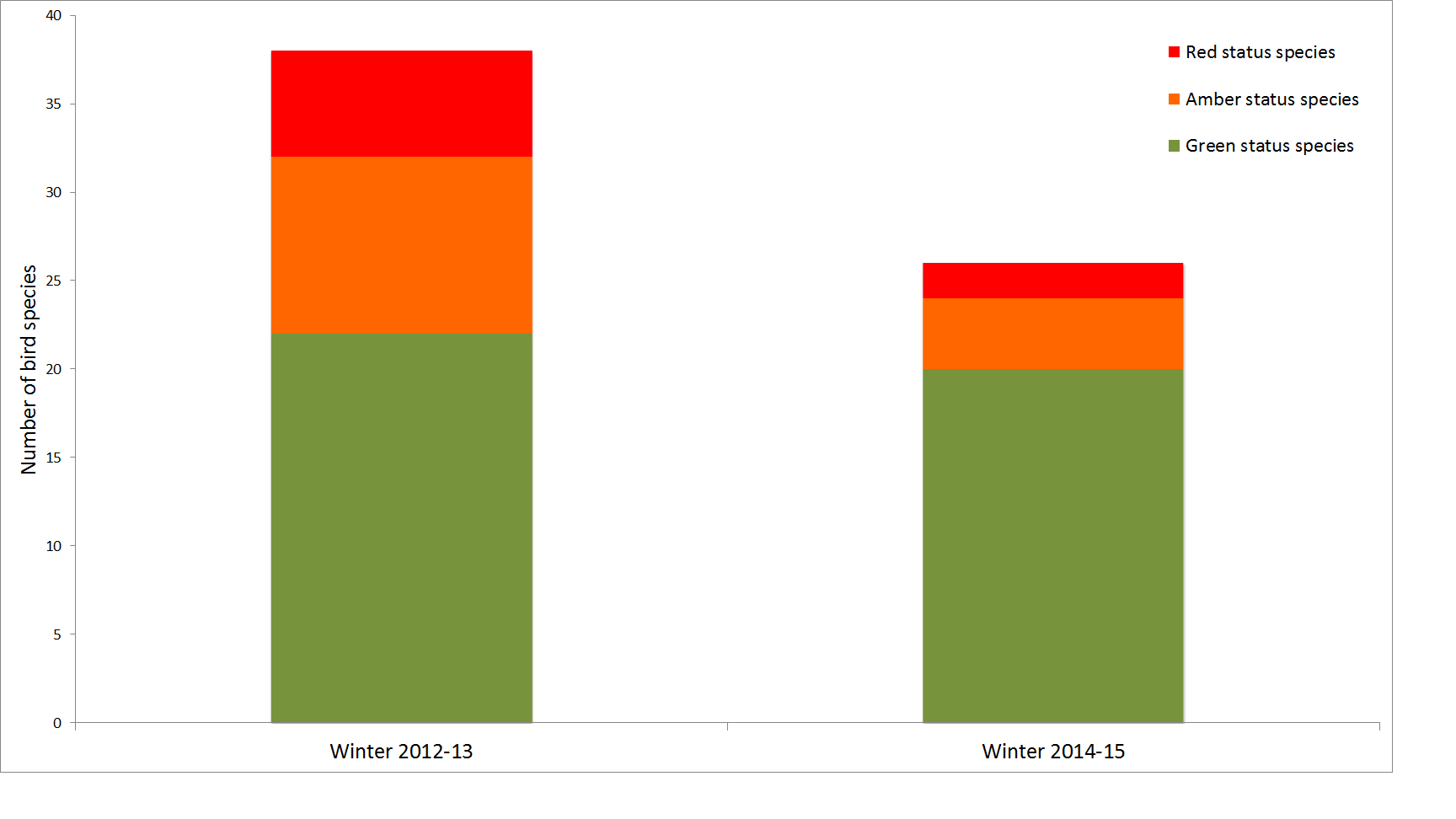
The initial results are currently being analysed and it appears that the current phase of building has reduced overall bird diversity by about 30%, and that red and amber status birds (of most conservation concern) have been affected more than green status birds, as this figure demonstrates (click on it for a closer view):

Waterside bird surveys

These rough figures hide a lot of detail, however.  For example, there has been some addition of species in 2014-15 that were not recorded in 2012-13, including Coot, Treecreeper and the amber-status Stock dove.  More importantly, some of the amber status birds that we didn’t record on site in 2014-15, we know from additional surveys are still present in habitats within 500 metres of the development, for example Dunnock, Green woodpecker, and Bullfinch.  Similarly, red status birds such as resident Starling, and winter migrant Fieldfare and Redwing occur within at least one kilometre of the site.  Hopefully as the building work progresses towards completion these (and other) species will return, so at the moment we’re not too concerned by their disappearance from the site.

Later in the spring we will conduct a couple of breeding bird surveys, and continue surveying for the next few years until the campus opens in 2018.  Only then will we see exactly how successful our influence has been.  In the mean time I’ll report back as and when we have more data to share.

Waterside winter 2014-15


Evolving a naturalist – happy birthday to me!

Jeff in the tee-pee

Somehow, today is my 50th birthday.  So I thought I’d mark it with a short post about my personal evolution as a naturalist and, ultimately, professional scientist.

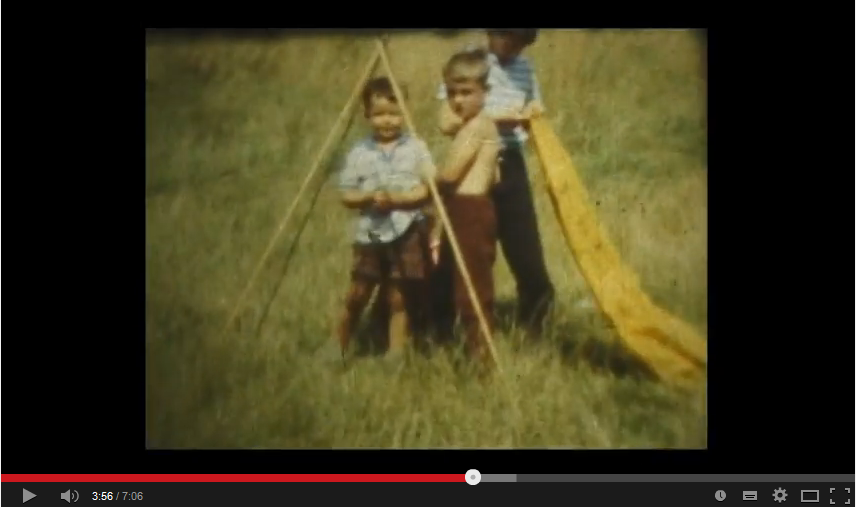
One of the great things about the internet and social media such as Facebook is that you can make exciting discoveries on a weekly basis.  Recently I found out something that means a lot to me on a very personal level: I discovered that a family* who lived in the same street when I was growing up in Sunderland in the 60s and 70s have digitised some old home movies and made them available on YouTube.  In our digital age in which every phone and camera can capture and share events as they happen, it’s sometimes easy to forget that owning a movie camera in the 60s was quite a rarity and the majority of kids living at that time were never filmed.   

These movies are exciting not just because one of them shows me aged about 5 years (in the blue shirt) playing with friends (I’m there from 3’53”) but because it documents, in colour and moving pictures, one of the reasons why I became a professional naturalist with a deep fascination for biodiversity. 

The grassland in which we are erecting a tee-pee is not some country meadow, the kind of wild rural landscape cited by so many other naturalists as inspiring their childhood fascination with natural history.  These grasslands had arisen spontaneously on cleared demolition sites, following the removal of Victorian terraced housing and tenement blocks, some of which were slums and others that had suffered bomb damage in the Second World War (now that does make me sound old!)

Up until the 1950s this area had been very built up, with the houses, shops and pubs serving the local families who were employed mainly in the shipyards and coal mines to the north of the town.  You can get a sense of how urban it was from this 1898 map of Southwick; the places I refer to are just south-west of The Green to the left of the map. 

Following demolition the sites were left to their own ends, and were colonised by plants, insects, birds and mammals from patches of habitat closer to the river that had either been cleared of buildings earlier in the century, or which had never been built upon at all.  There are some nice areas of magnesian limestone grassland nearby along the higher banks of the River Wear valley, and typical calcicole plants such as Greater Knapweed (Centaurea scabiosa) could be found on these post-demolition grasslands.  In fact, in the absence of horse chestnut trees, we used to play a version of conkers using the unripe seed heads of Greater Knapweed.  Was that an echo of earlier children’s games in Britain, prior to the introduction of horse chestnuts in the 17th century?  Apparently similar games were played with snail shells and hazelnuts.  

If you watch the opening minute of this piece of footage from the same series, and ignore the girls posing and playing in the foreground, the background reveals a rich flora of plants, with butterflies hopping between flowers.  The first bird species that I can remember identifying, and being fascinated by its bright colours, was Goldfinch (Carduelis carduelis) feeding on the seeds of tall thistles in the very area where this was filmed.   The first butterfly that I could put a name to was the Small Tortoiseshell (Aglais urticae), also feeding on thistles, but this time on the nectar-rich flower heads, as a pollinator.  We’d collect its caterpillars from the nearby nettles and raise them in jars.

So you don’t have to have had a rural upbringing to appreciate and benefit from nature, and to later influence your profession and passions, any piece of land can inspire interest in kids, regardless of its origin, if nature is left to colonise. Unmanaged, semi-wild green space within towns and cities has huge value, both for wildlife and for the culture of childhood.  They need to be protected just as much as rural nature reserves, including the generally disparaged but actually biodiverse “brownfield” sites, as Sarah Arnold has discussed in a recent blog post.

Some of the riverside grasslands still remain and I hope that they are fascinating new generations of kids with their colour and diversity and flouncing butterflies. But the post-industrial grasslands on which I played and looked for bugs and flowers are all gone; they were cleared and built upon in a flurry of housing and retail development in the 1980s.  Perhaps in the future they may return if those buildings are themselves demolished and the land allowed to lie undisturbed for a while.  That is what nature does: it ebbs and flows across our landscapes in response to human, and natural, interventions, endlessly changing and endlessly fascinating to the curious minds of children and scientists, no matter how old they are.


*My sincere thanks to the Scrafton family who took the original footage, made it available on YouTube, and gave me permission to use it in this post.

Pollinator seminar at Westminster – the official version – and that 1,500 figure

20141028_180501

Last month I wrote a personal account of the National Pollinator Strategy Seminar held at Westminster.  This week the Parliamentary Office for Science and Technology released their official summary of the event plus PDFs of the slides of some of the participants.  They can be downloaded from this website.  It was an interesting seminar and it’s well worth taking time to study these documents; they are very accessible for the non-specialist.

One thing that’s unclear to me from this account is with regard to the statement that:  “there are approximately 1,500 insect species that pollinate food crops and wild plants, including bees, hoverflies, wasps, flies, butterflies, beetles and moths”.  The National Pollinator Strategy also cites that figure, though says “at least 1,500” species.

Where does the 1,500 figure come from?  Does anyone know the original citation?  I genuinely can’t recall if I’ve ever seen it published.

A quick back of the envelope, conservative calculation suggests to me that 1,500 species is too low:

Aculeates (bees plus wasps minus ants) =  500
Butterflies =     59
Macro-moths (assumed 50% flower visitors) =  400
Hoverflies =  250
Other flies (assumed 10% flower visitors) =  700
Beetles (assumed 5% flower visitors) =  200
Total species = 2109


Links are included to the sources of the original diversity figures.  I’ve rounded some of the figures down and the % flowers visitors figures for moths, flies and beetles is pure guestimate based on my field experience.  But they are not likely to be way out, and if anything could be an under-estimate for flies and beetles; moths could be too high, though most species do feed as adults.  Aculeate Hymenoptera (bees and wasps) could also be an over-estimate, but then that figure doesn’t include the non-aculeate “wasps” that frequently visit flowers, for example many ichneumonids and sawflies.

Does it matter?  I think so: as scientists it’s important that we provide the most accurate data that we can to governments and other bodies that may use it for policy, strategy and advocacy.

As always I’d be pleased to receive your comments.

Urban pollinators for urban agriculture (and horticulture!)

P1010430

Over the past few weeks I’ve been thinking a lot about urban pollinators, that is to say bees, hoverflies, butterflies, and other animals, living and foraging in towns and cities.  As I recounted in my recent post about the National Pollinator Strategy seminar at Westminster, Jane Memmott presented some of the first data from the Urban Pollinators Initiative which is looking very interesting.  At the same time, Muzafar Hussain has submitted the first manuscript from his PhD study of urban solitary bees in Northampton, and will hopefully be defending his thesis early next year.  More recently I was asked to examine the PhD thesis of  Rob Fowler at the University of Birmingham, whose focus has been on pollinators across an urban-rural gradient.  Rob did very well and I look forward to seeing his work published.

Interesting though all this work is, it’s largely being done outside the context of crop pollination per se, focusing mainly on the identity and abundance of these urban pollinators.  It’s timely, therefore that a study has just been published by Thebo et al. in the journal Environmental Research Letters entitled  “Global assessment of urban and peri-urban agriculture: irrigated and rainfed croplands” which gives the first comprehensive figures on the extent of agriculture in and around the world’s large towns and cities.  The paper is open-access so you can read its findings for yourself, but the main message is that urban agriculture is more extensive and important than previously assumed, and there are significant implications for food security and water resources.

The research has (justifiably) received quite a lot of publicity in the media, for example on the BBC News website, and is a great contribution to a still limited field of study.  One aspect jumped out at me though; when discussing the limitations of their methods the authors state that: “the scale and methods used……are not structured to capture very small, spatially dispersed areas of urban croplands”.  In other words, urban gardens and allotments are not included in this assessment.  In the UK at least this is a significant limitation as we know that urban fruit and vegetable growing is widespread, though as far as I’m aware there’s no published figures on the volume and value of this local horticulture of food crops.

Which brings us back to urban pollinators: a significant fraction of these crops (large-scale and local garden) requires pollination by insects.  As I reported back in July, in our own urban garden this includes at least 15 crops (strawberries, apples, greengages, cherries, blackcurrants, squashes, courgettes, blackberries, fennel, runner beans, french beans, passion fruit, tomatoes, raspberries, and radish pods).  An integrated study of urban agriculture/horticulture in the context of pollinator diversity and abundance would be a great piece of research and is long overdue.


The National Pollinator Strategy – some reflections

Moth in hand 2014-08-25 19.47.20

After many months of consultation and workshops, the National Pollinator Strategy for England has finally been released by Defra, and can be downloaded from this website.  It reflects an important, wider change in societal attitudes to nature, and specifically the ecosystem services it provides, though the strategy itself is by no means perfect.  I rather wish that it had been a UK-wide strategy, as biodiversity does not respect political boundaries, but such is a the nature of our partly-devolved political system. Wales already has an Action Plan for Pollinators and I hope that the rest of the UK follows, though a strategy for Northern Ireland would surely have to include the Republic of Ireland?

In the following sections I’ve quoted liberally from the summary section of the National Pollinator Strategy, and added a few comments and reflections of my own in italics.  As always, your views and comments would be very welcome.

The 10 year National Pollinator Strategy aims to deliver across five key areas:

1. Supporting pollinators on farmland

  • Working with farmers to support pollinators through the Common Agricultural Policy and with voluntary initiatives to provide food, shelter and nesting sites.
  • Minimising the risks for pollinators associated with the use of pesticides through best practice, including Integrated Pest Management (IPM).

Comment: at the moment many farmers are already pro-actively encouraging pollinators and other wildlife, but most are not.  Will “voluntary initiatives“, including encouraging Integrated Pest Management, be sufficient?  About 70% of the country is farmed and any wildlife conservation strategy has got to include agricultural stakeholders.  But the influence of large agro-chemical businesses should not be under-estimated.  I’ve seen figures suggesting that fields of oil seed rape in this country receive applications of up to 20 different chemicals (biocides and fertilisers) each year.  That represents a significant profit for these companies, who will not want to change the status quo.  Data showing a slow down in the rate of decline of  plants and pollinators in Great Britain, the Netherlands and Belgium may be evidence that CAP agri-environmental schemes have had a positive impact, but I’d like to see more data addressing that question (and not just for pollinators – farmland birds are doing worse than any other category of birds in the UK).

2. Supporting pollinators across towns, cities and the countryside

  • Working with large-scale landowners, and their advisers, contractors and facility managers, to promote simple changes to land management to provide food, shelter and nest sites.
  • Ensuring good practice to help pollinators through initiatives with a wide range of organisations and professional networks including managers of public and amenity spaces, utility and transport companies, brownfield site managers, local authorities, developers and planners
  • Encouraging the public to take action in their gardens, allotments, window boxes and balconies to make them pollinator-friendly or through other opportunities such as community gardening and volunteering on nature reserves.

Comment:  “simple changes to land management” can do a lot for supporting local biodiversity, even in the most unlikely, urban settings, which is the underlying philosophy behind our award-winning Biodiversity Index tool.  Quite a number of local authorities are getting the message that it’s A Good Thing to reduce the frequency of cutting amenity grasslands, both for pollinators and for budgets.  But local authorities are also taking foolish decisions with regard to developing sites that should be protected, and brownfield areas are being specifically targeted for building urban housing, despite the fact that we have long known that they are some of our best sites for pollinators.  How do we reconcile these different priorities?  Brownfield sites by their nature are transitory, early successional habitats, so perhaps local authorities should be encouraged (made?) to have a rolling stock of a minimum proportion of undeveloped brownfield sites as part of their portfolio of land holdings?  Or how about a requirement that all developed areas of brownfield land are replaced by an equivalent area of brown roofs?

3. Enhancing the response to pest and disease risks

  • Working to address pest and disease risks to honey bees whilst further improving beekeepers’ husbandry and management practices to strengthen the resilience of bee colonies.
  • Keeping under active review any evidence of pest and disease risks associated with commercially produced pollinators used for high-value crop production.

Comment:  interestingly there’s no mention of disease risks to non-managed pollinators, yet we know that honey bee diseases can be passed to bumblebees, for instance.

 Actions to support these priority areas:

4. Raising awareness of what pollinators need to survive and thrive

  • Developing and disseminating further advice to a wide range of land owners, managers and gardeners as part of Bees’ Needs.
  • Improving the sharing of knowledge and evidence between scientists, conservation practitioners and non-government organisations (NGOs) to ensure that actions taken to support pollinators are based on up-to-date evidence.

Comment: yes, dissemination of sound, evidence-based knowledge has got to be a priority.

5. Improving evidence on the status of pollinators and the service they provide

  • Developing a sustainable long-term monitoring programme so we better understand their status, the causes of any declines and where our actions will have most effect.
  • Improving our understanding of the value and benefits pollinators provide, and how resilient natural and agricultural systems are to changes in their populations.

Comment: monitoring of pollinators is a real sticking point in the strategy, as there’s still no consensus on what should be monitored, how, where, and how frequently.  This was the subject of a workshop at the Natural History Museum in London that I attended about a year ago, and there’s still much that is undecided.  I know that a partnership led by CEH Wallingford is working on this at the moment, and hopefully a scheme will be in place by next year.  Let’s see what they come up with.

In taking action across these five areas, the National Pollinator Strategy wants to achieve the following outcomes:

  • More, bigger, better, joined-up, diverse and high-quality flower-rich habitats (including nesting places and shelter) supporting our pollinators across the country.
  • Healthy bees and other pollinators which are more resilient to climate change and severe weather events.
  • No further extinctions of known threatened pollinator species.
  • Enhanced awareness across a wide range of businesses, other organisations and the public of the essential needs of pollinators.
  • Evidence of actions taken to support pollinators.

Comment:  “More, bigger, better, joined up…” has been the buzz phrase in British conservation since at least the Lawton Report.  One of the outcomes of that report was the setting up of twelve flagship Nature Improvement Areas (NIAs), one of which is the Nene Valley NIA, a project on which my research group has been working.  The Strategy mentions the NIAs several times and states that “extending the monitoring and evaluation framework for Nature Improvement Areas to include pollinators” is one of its interim aims.  But as I recently mentioned, funding for the NIAs finishes at the end of March 2015 and Defra has indicated that there will be no additional government money.  How will this aim be met?  I’d be very interested to know as the Nene Valley NIA is one of the few which specifically focused on pollinators as part of our remit.  It would be a terrible shame to lose the expertise and momentum that we’ve built up when funding stops next year.  As regards “No further extinctions of known threatened pollinator species“, the talk I gave at SCAPE 2014 was on that very topic and a paper outlining our results is currently in press.  I hope to be able to share those findings with the broad readership of this blog very shortly.

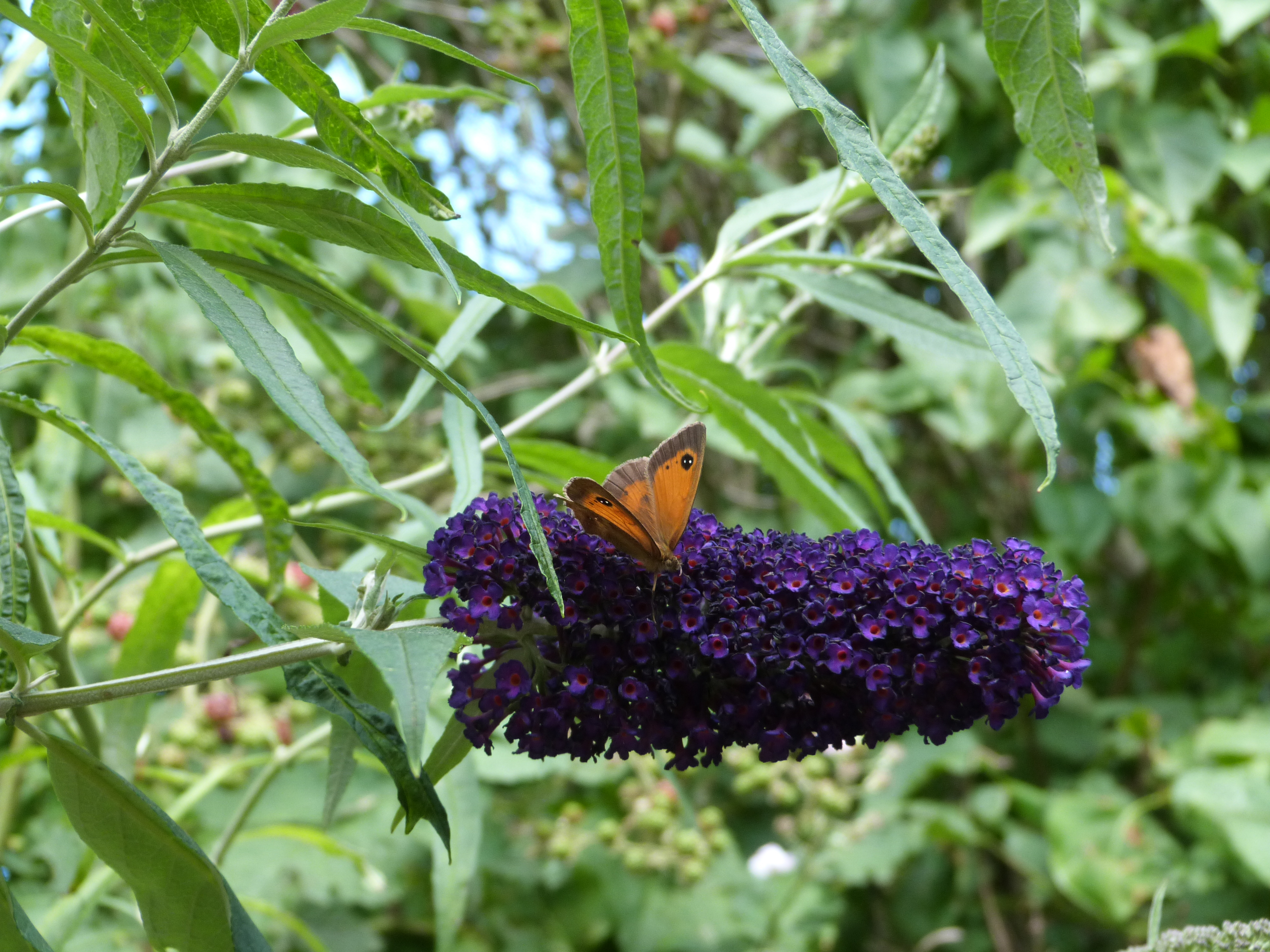
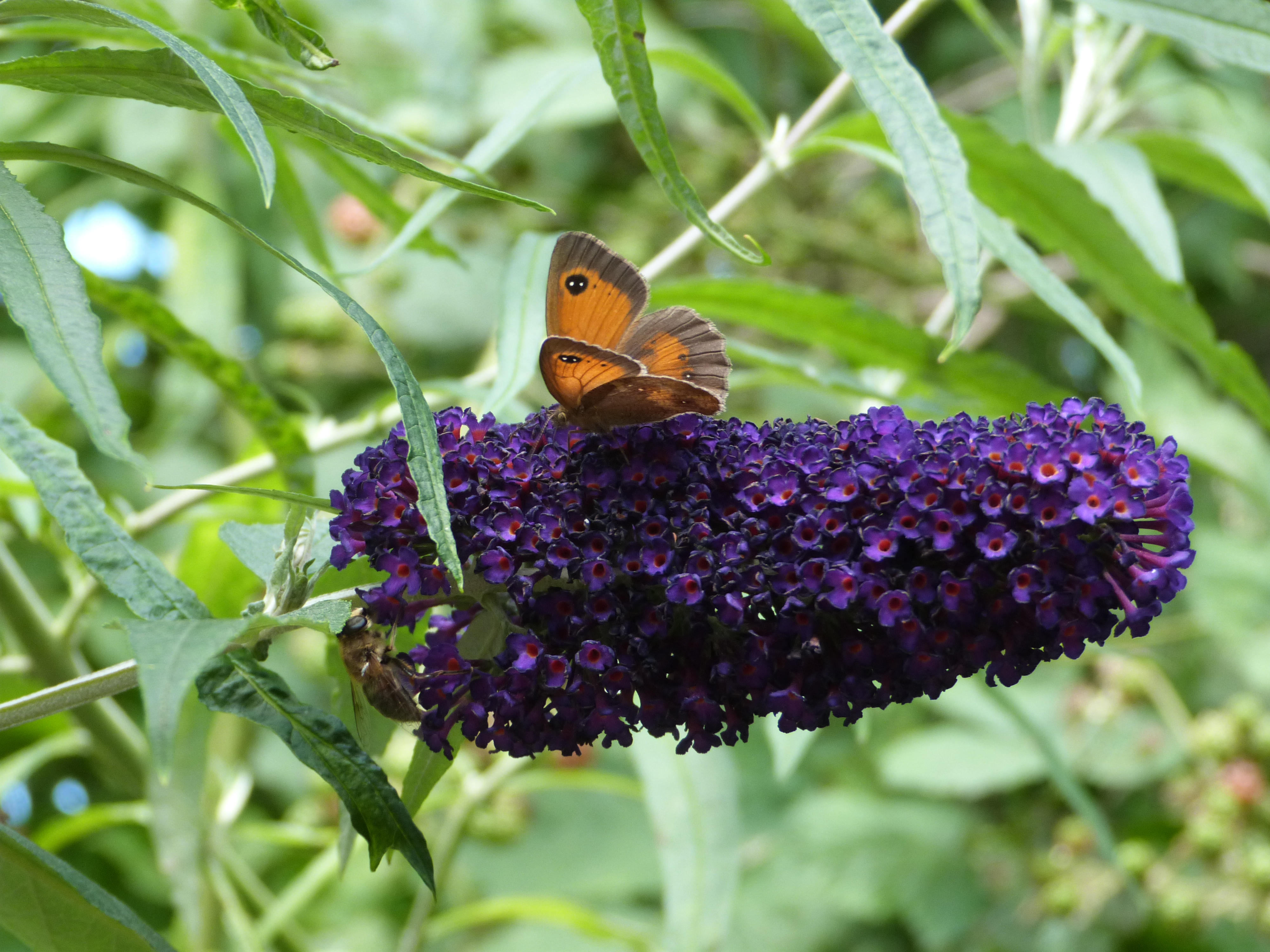
Gatekeeper in the garden

Gatekeeper 1 - summer 2014

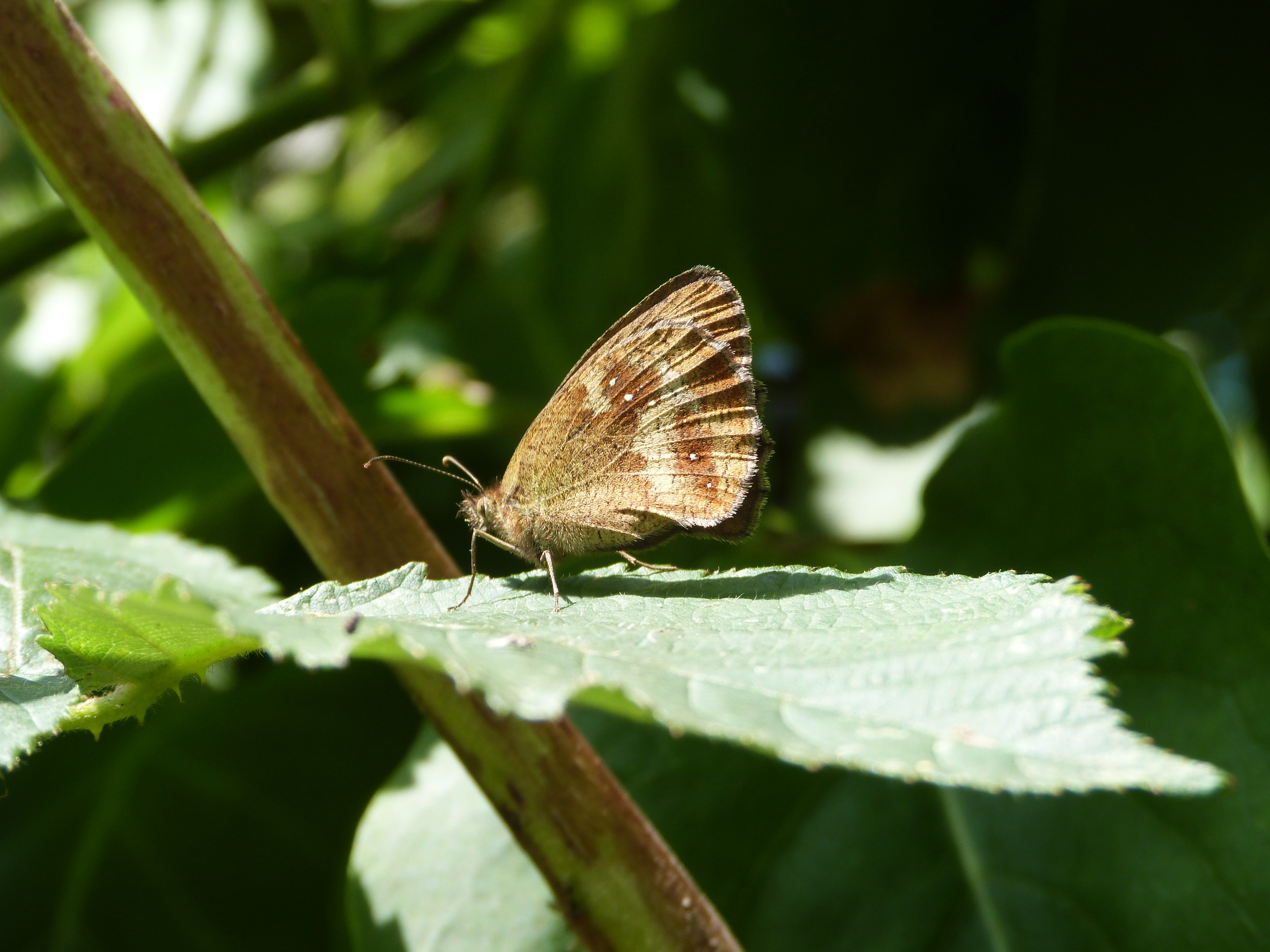
Since moving into our house in January 2012 I’ve been keeping a list of butterflies and day-flying moths seen in the garden (as well as birds and bees, of course). That list currently contains 14 species*, one of the most interesting of which is the Gatekeeper (Pyronia tithonus).

Gatekeeper 3 - summer 2014

According to the account of this species on the UK Butterflies web site, the Gatekeeper:

“can be found wherever shrubs grow close to rough grassland. ……some of the largest colonies can be found at field edges and along hedgerows and we can expect to find this butterfly in scrubby grassland, woodland rides, country lanes, hedgerows and the like anywhere within its range”.

So what is it doing in an urban garden?  The BTO’s summary of the species mentions that:

“It is rare for Gatekeepers to appear in city-centre gardens. However, in recent years this species has been recorded at some urban sites across north-east London and Hampstead Heath and, more recently, on Wimbledon and Mitcham Commons. Such range expansion into urban areas may be due in part to changes in the management of urban parks and cemeteries”.

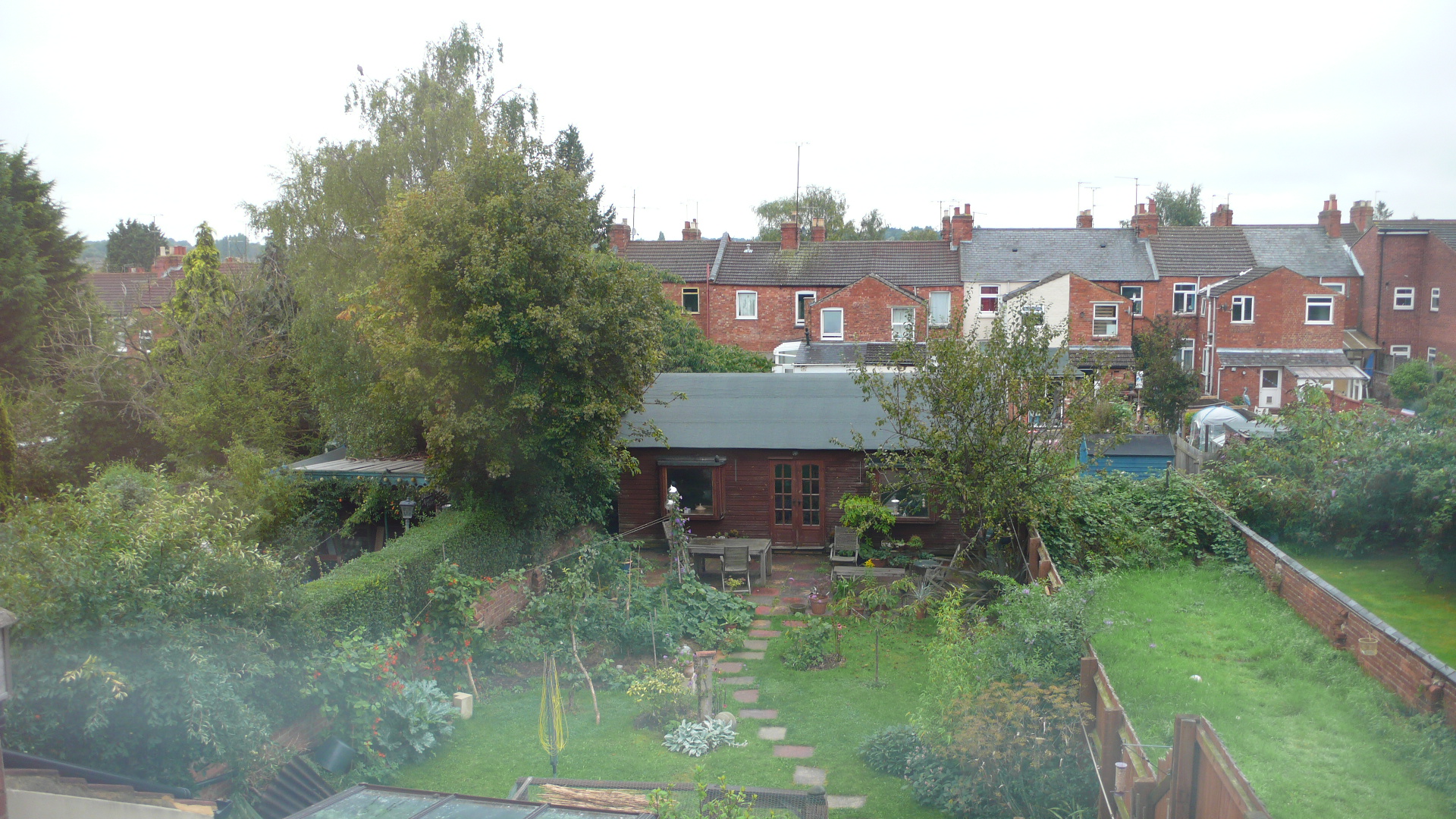
Clearly, in order to exist in an urban setting the Gatekeeper must have its basic requirements met by the habitat in which it finds itself.  As I’ve mentioned before, the lawn in our garden is quite diverse and contains a number of native species, including a range of grasses that could be used as food plants by the caterpillars, though we do keep it quite short.  It’s more likely that the caterpillars are feeding in some of our neighbouring gardens, which are rarely troubled by a mower (do neglected gardens host more biodiversity than highly managed gardens?  I suppose it depends on the type of management; would be an interesting question to research).

Gatekeeper 4 - summer 2014

As well as the larval food plants required by Gatekeepers, there’s a range of nectar sources available in a mixed native/introduced hedge along the northwest boundary, including the bramble I recently discussed, oval-leafed privet (Ligustrum ovalifolium), and the buddleia (Buddleja davidii var.) seen in these photographs.

It will be interesting to see if this colony persists over time (I also recorded the species in 2013 but not in 2012).  I get the impression that there’s only a small number of individuals, though it’s difficult to assess the population size of butterflies without catching and marking individuals, which I plan to do next year. It’s a lovely species and we’re fortunate that it likes our garden.  I’d be very interested to hear from any other urban gardeners who have seen it in their patch.


*Large White, Speckled Wood, Small White, Holly Blue, Red Admiral, Cinnabar, Large Skipper, Meadow Brown, Peacock, Gatekeeper, Comma, Brimstone, Orange Tip, Small Tortoiseshell.

P1110935


All pollinators are equal, but some pollinators are more equal than others

The infamous line from George Orwell’s Animal Farm asserting that “All animals are equal, but some animals are more equal than others” nicely captures an ecological view of pollinators and their relationships with plants.  “Pollinators” by definition move pollen between flowers, but not all pollinators are equally good at transferring pollen of any particular plant: some are more effective than others. I’ll illustrate this with examples from the urban garden that Karin and I are developing, which I’ve discussed before.

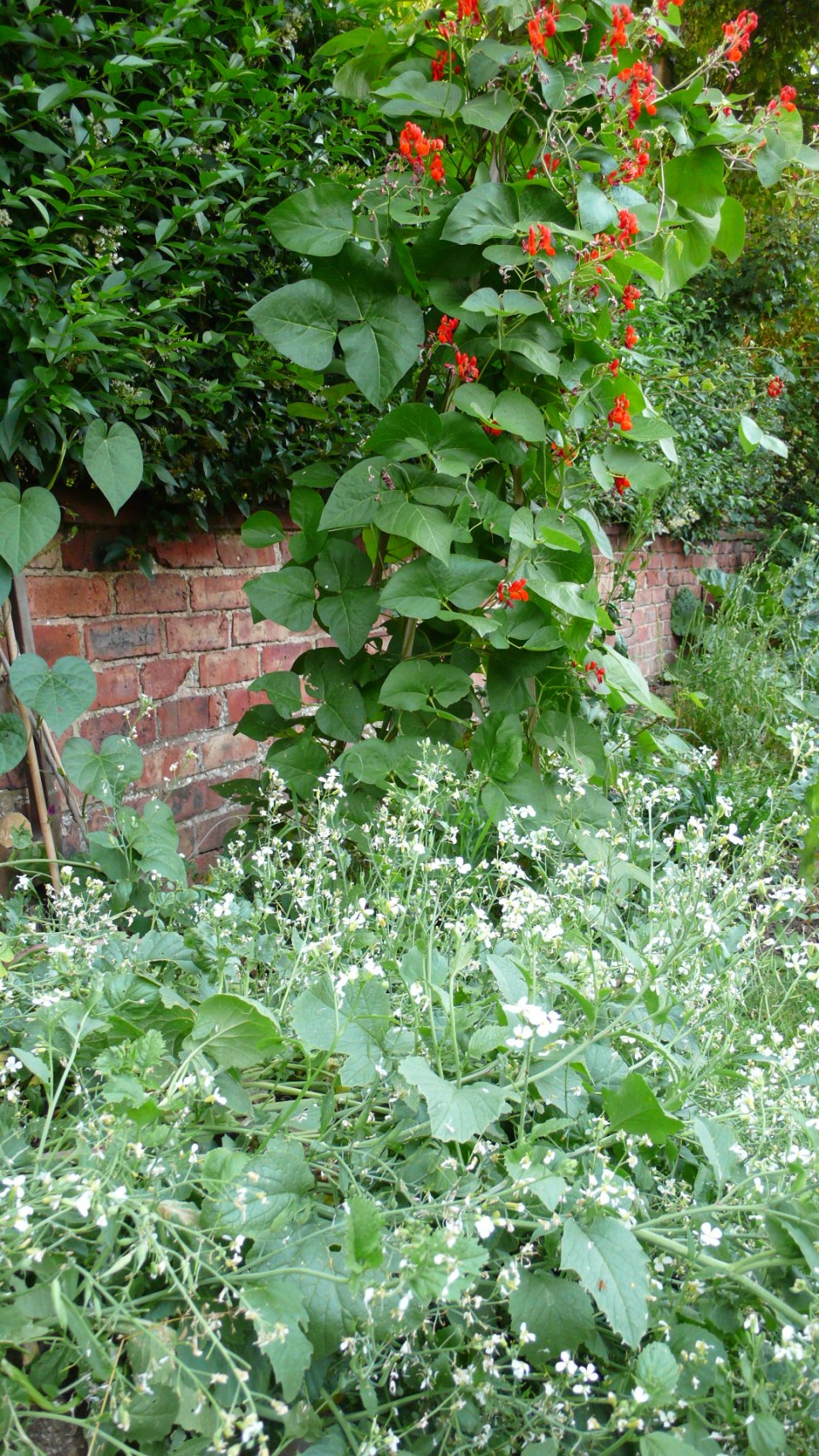
As you can see from that link, the garden is modest in size, but nonetheless this year it contains a significant biodiversity of edible plants that require pollinators for some or all of the fruit and seed set, including: strawberries, apples, greengages, cherries, blackcurrants, squashes, courgettes, blackberries, fennel, runner beans, french beans, passion fruit, tomatoes, raspberries, and radishes.

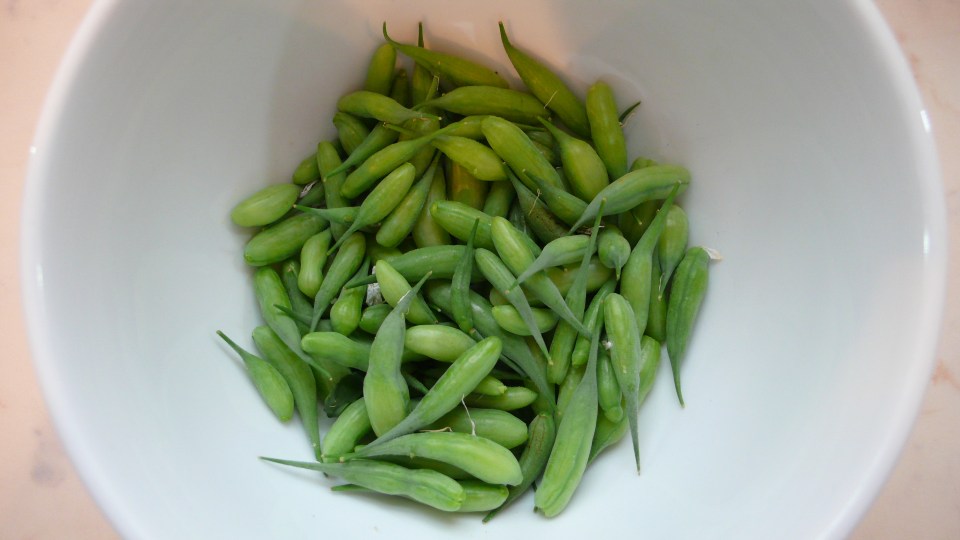
Radishes?!”  I hear you ask.  “But they are grown for their edible swollen roots which don’t require pollination!”  True, usually.  But we let our radishes flower because we mainly grow them for their seed pods which, picked young, are delicious in salads and stir fries, like mustardy mange tout.  They look like this:

2014-07-03 18.14.32

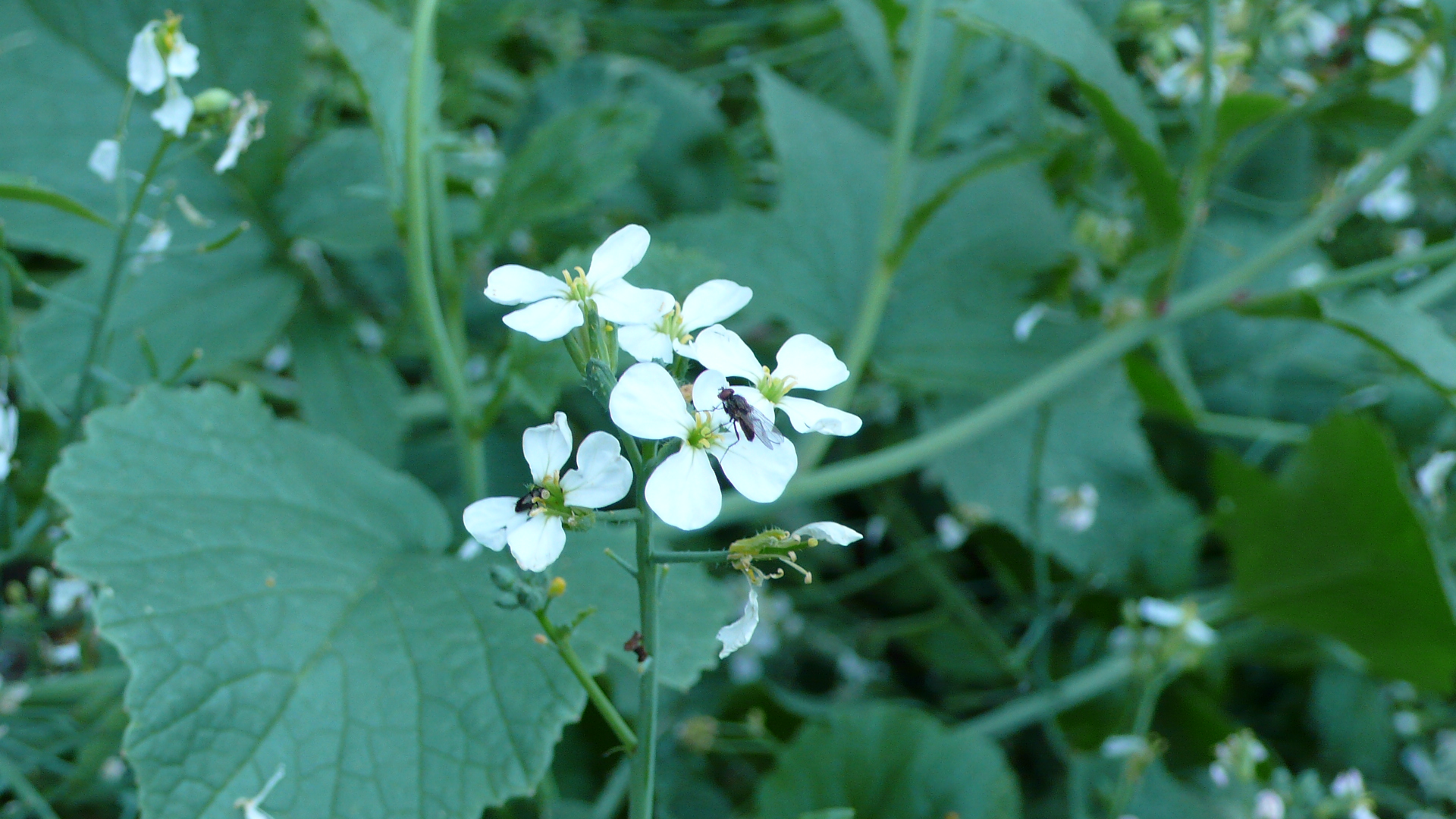
The radish flowers are pollinated by a diversity of insects including butterflies, bees, and small flies:

2014-07-03 19.40.34

These insects will vary in their effectiveness as pollinators of radish, depending on the frequency of visits, how often they move between flowers, and the amount of pollen on their bodies.  This last factor is largely a function of size and hairiness (bigger, hairier insects carry more pollen as a rule), though cleanliness also plays a part: insects often groom the pollen from their bodies and, in the case of bees, may pack it into their pollen baskets where it’s not available for pollination.

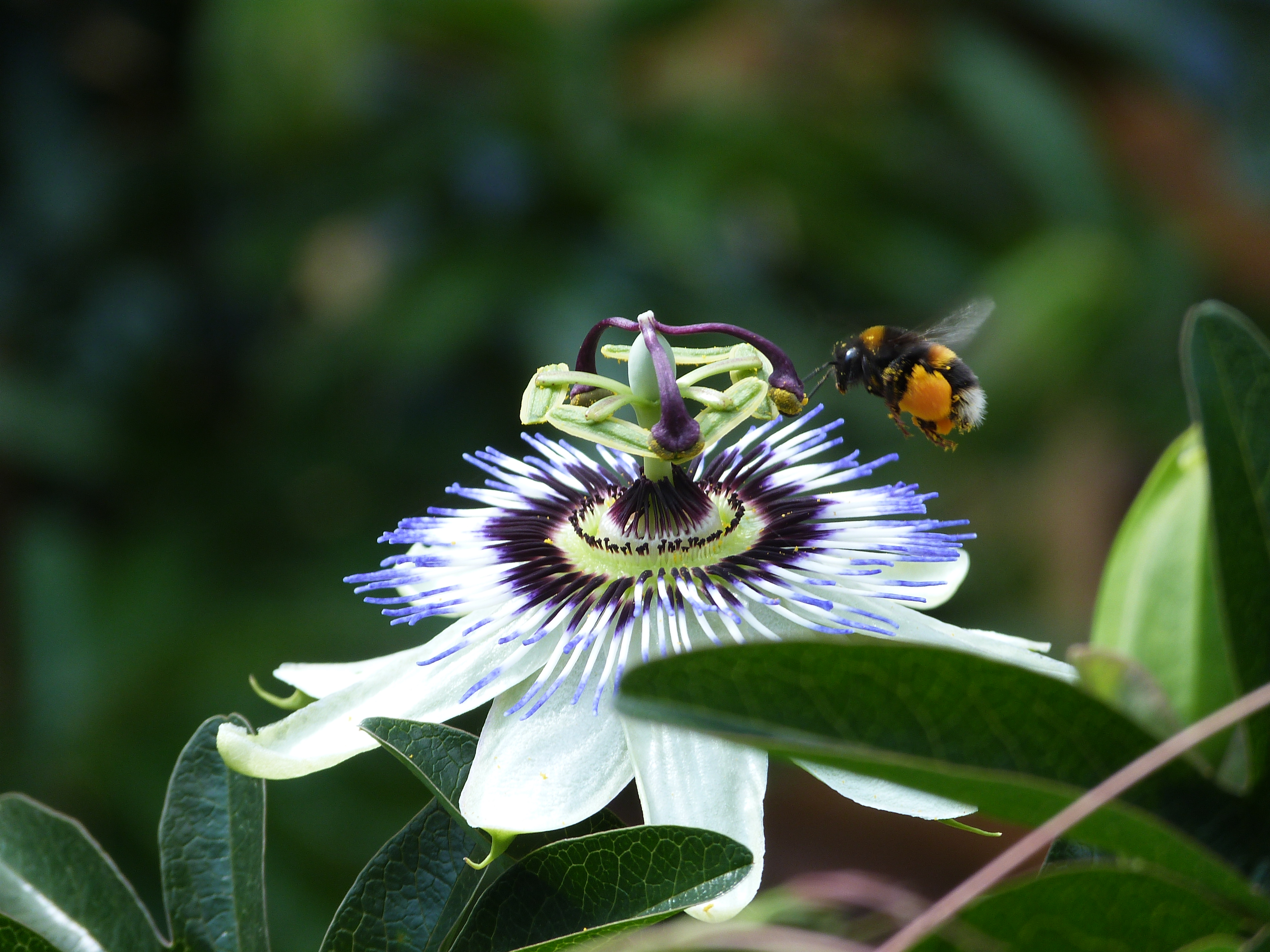
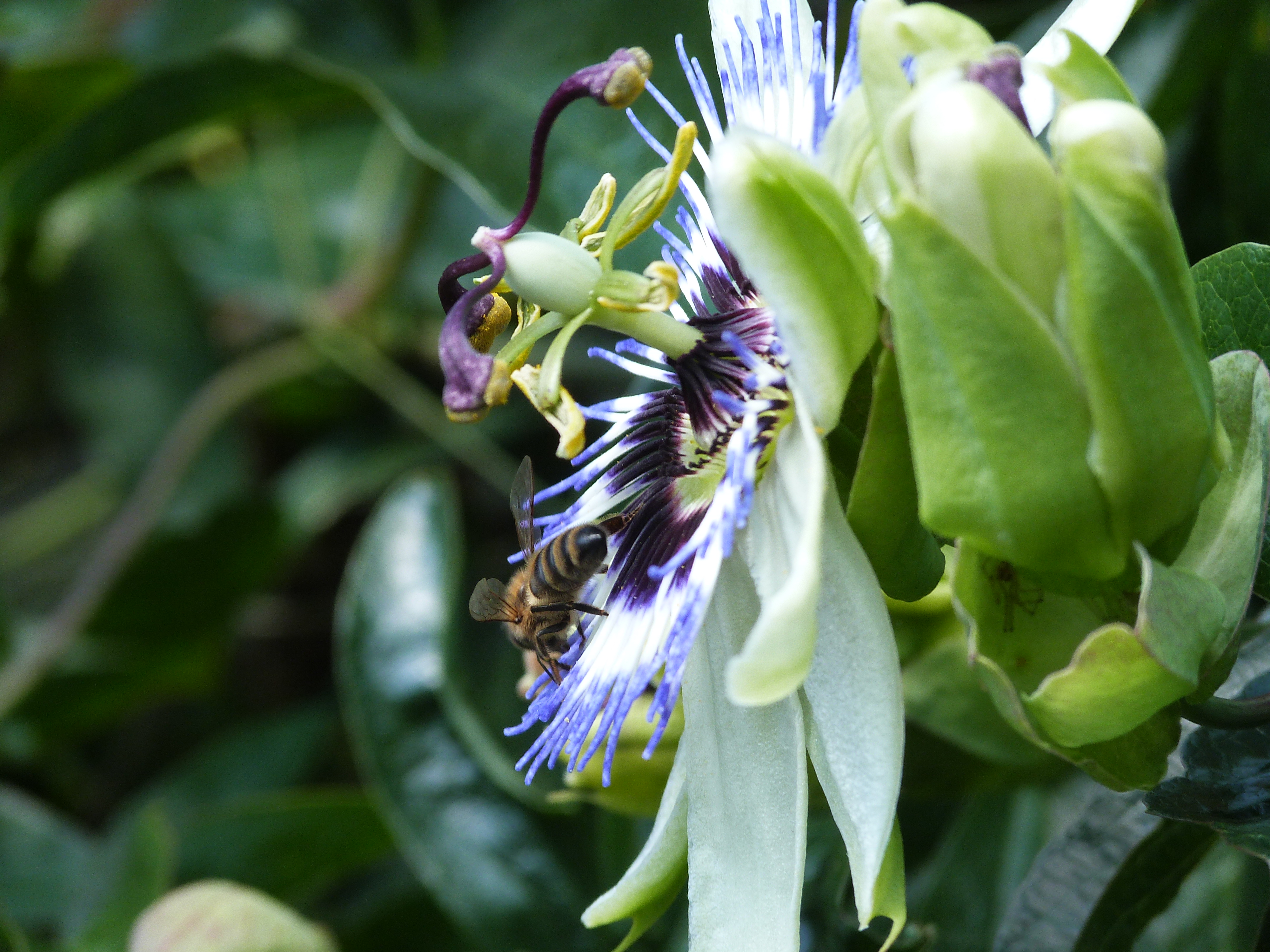
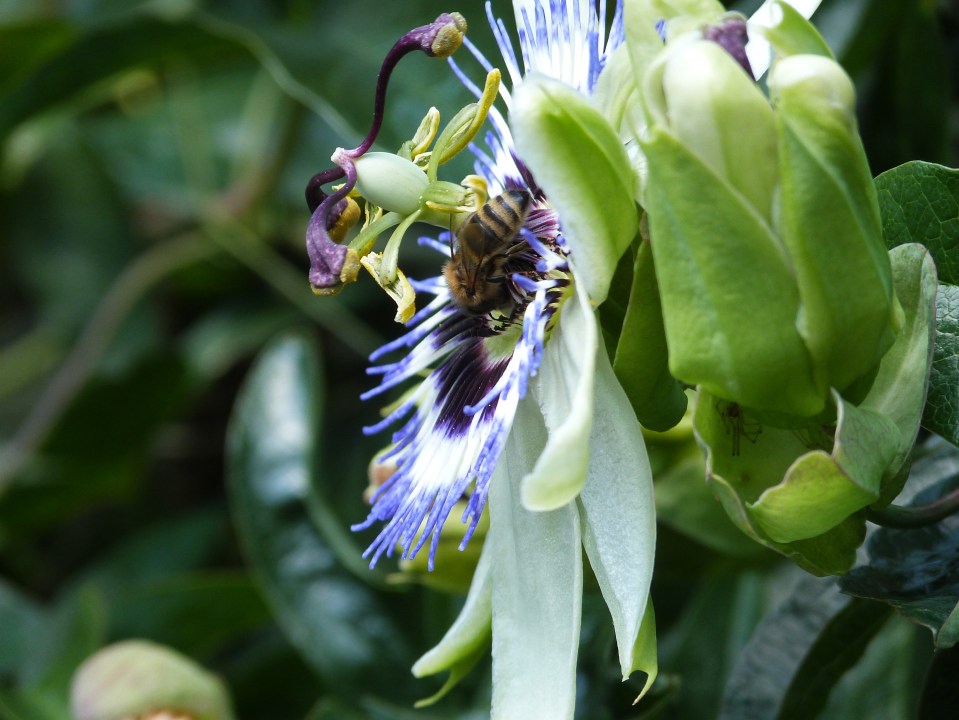
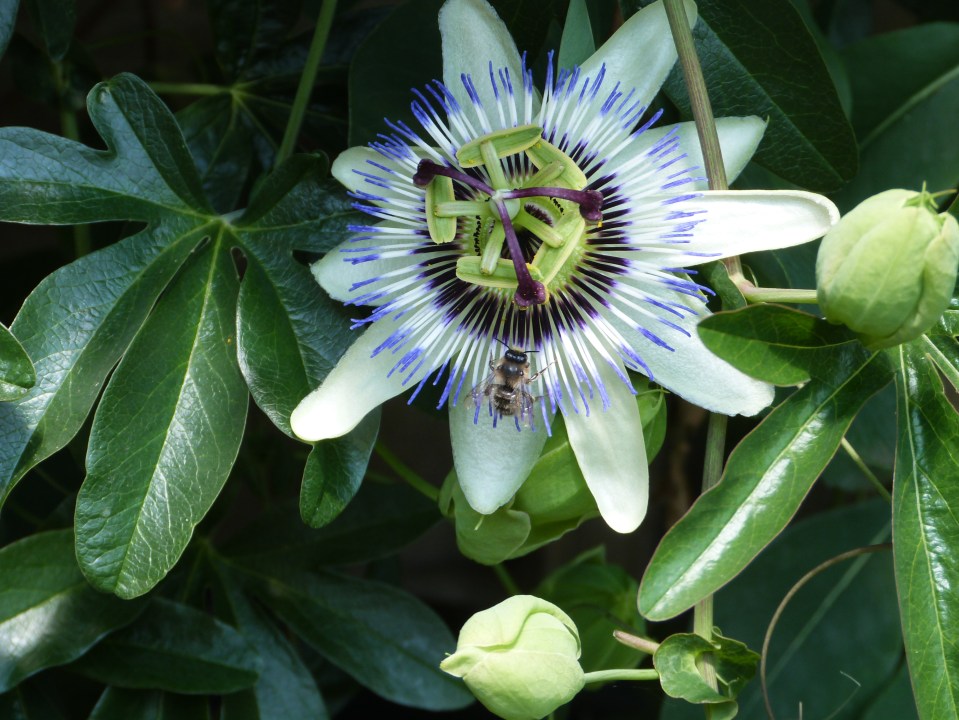
The size and behaviour aspect is best illustrated by some recent photos that I took of visitors to the flowers of passion fruit (Passiflora caerulea var.).  We have a large, sprawling plant growing up a fence which is currently being visited by honey bees, hoverflies, solitary bees and bumblebees.  In comparison to the size of the flower and the position of the anthers (male, pollen producing parts) and stigmas (female, pollen receiving parts), the hoverflies, honey bees and solitary bees are relatively small.  These two images are of honey bees (Apis mellifera):

P1010419

P1010418

Here’s an unidentified solitary bee:

P1010431

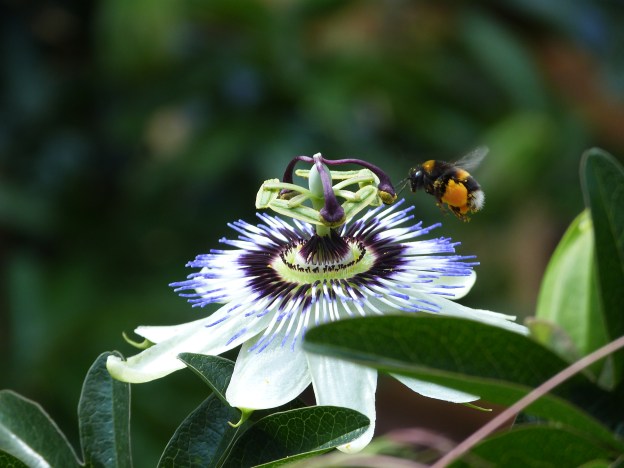
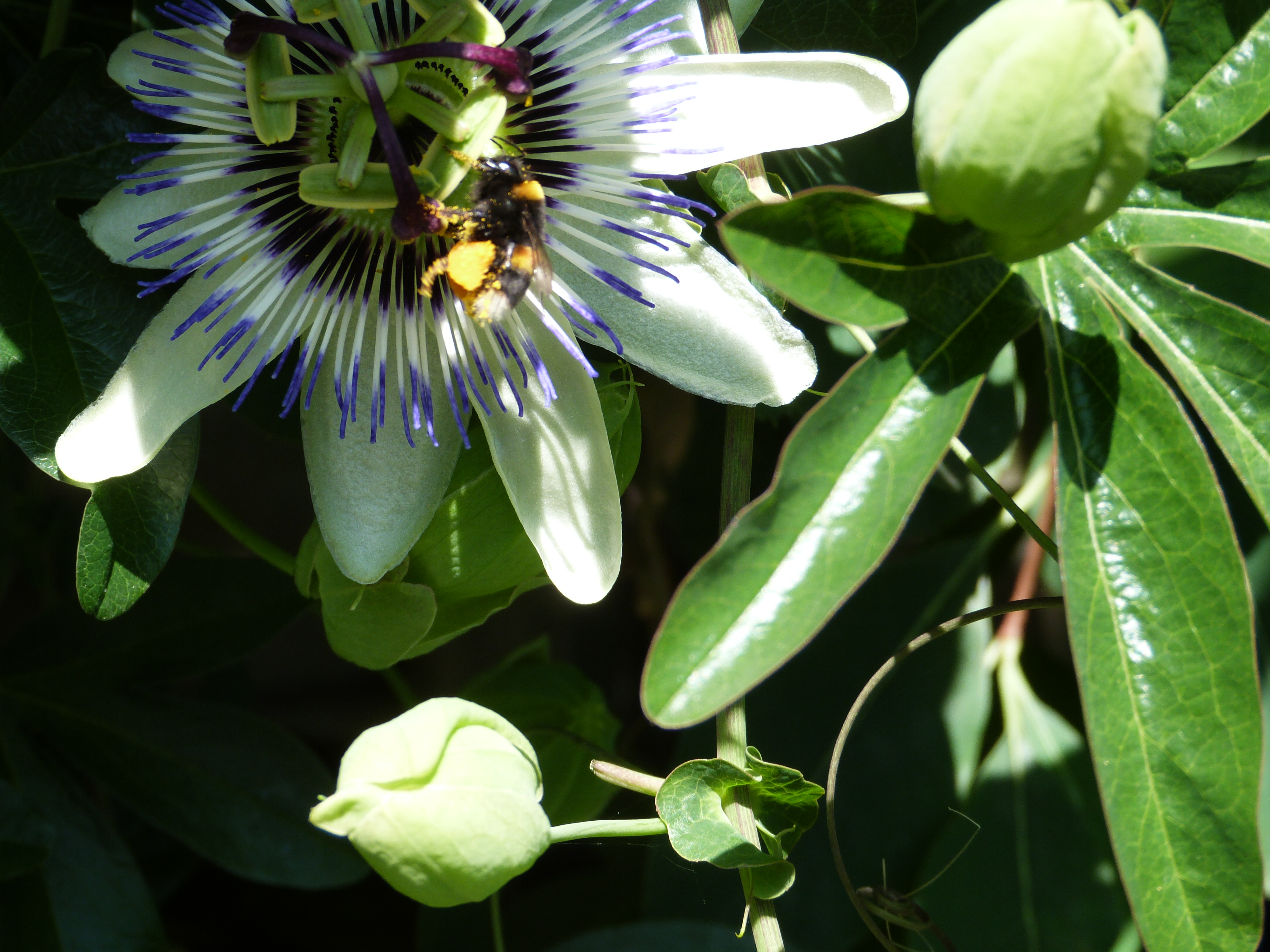
These bees were occasionally touching the anthers, mainly with their wings, so some pollen will be moved around.  But from what I observed it’s likely to be a relatively small amount in comparison to bumblebees, which are usually much larger and hairier, and don’t groom themselves as often as honey bees.  Here’s a Buff-tailed bumblebee (Bombus terrestris):

P1010430

They were actively collecting pollen as well as nectar.  Much of this pollen is packed into the pollen baskets on the rear legs and will go back to the nest to feed the developing larvae, but some will be involved in pollination:

P1010428

So it seems to be the bumblebees we have to mainly thank for the deliciously sweet-sour fruit we will enjoy later in the season. Of course to test this properly we would need to set up an experiment in which we excluded larger bumblebees from the flowers and only allowed smaller bees to forage, with appropriate experimental controls.  Would make a great project if any of my students are interested!  But it should give you a sense of just how complex the interactions between flowers and their pollinators are: the ecology of pollination is far from simple, despite what some would have us believe.

2014-07-03 19.40.18


Nature as gardener (Darwin’s Unrequited Isle part 5)

P1110741

Gardening and gardens are a long-standing interest of mine, as I’ve mentioned in a few posts, such as “Harvest of evidence” and “In defence of lawns“.  At the moment the RHS Chelsea Flower Show is running and medals are being awarded to gardens and plants, some of which I like, some of which I don’t: make up your own mind from this gallery of images taken around the show.

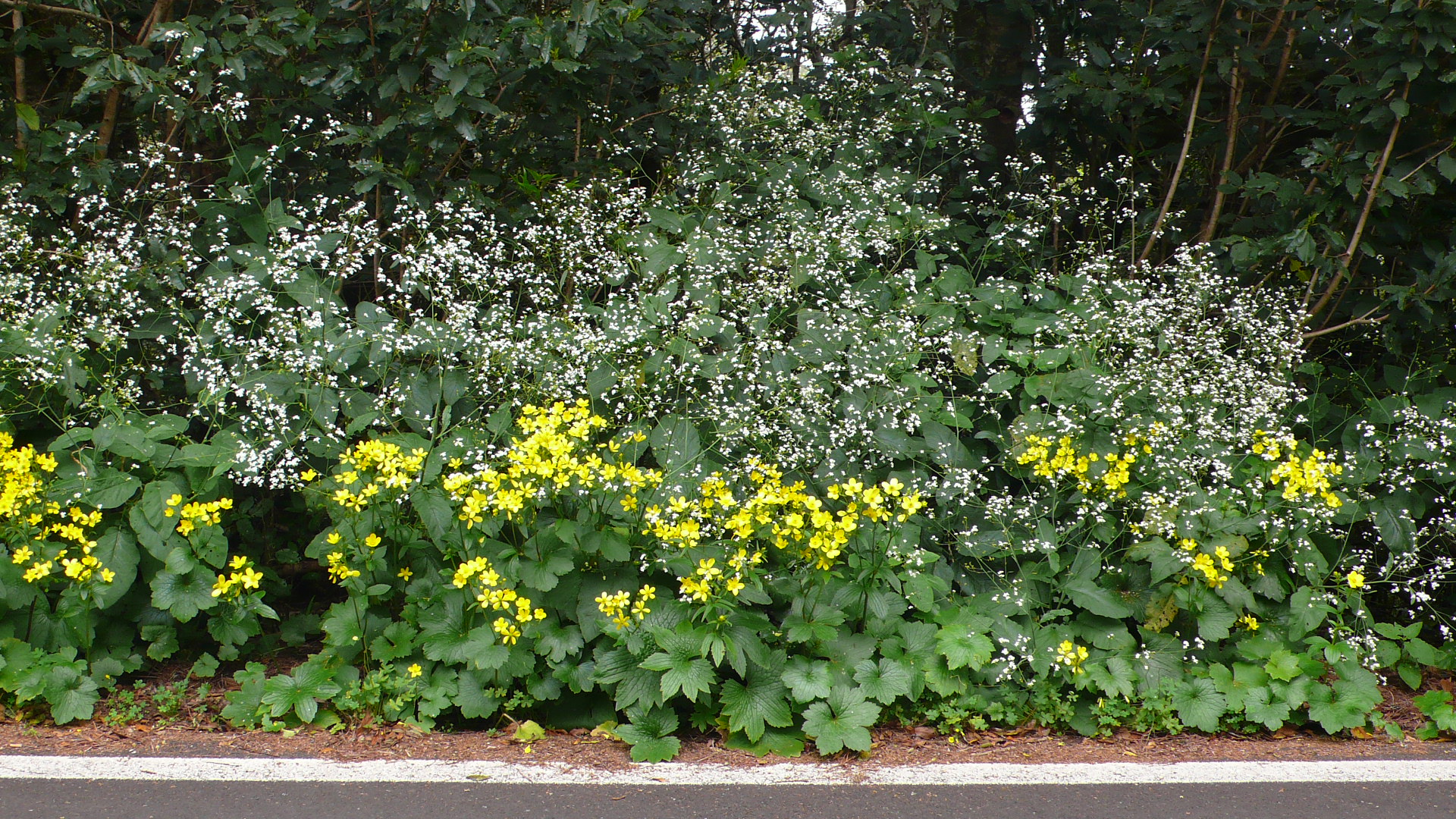
But nature often trumps us when it comes to aesthetically pleasing plant combinations.  The photograph above (which you can click to see a larger version) was taken in the Anagas Mountains during our recent Tenerife Field Course. Although it’s along a roadside, these two plants have grown there spontaneously – nature as gardener!  The plants are both endemic Macaronesian species:  the billowy white flowers of a Canary Island sea kale (Crambe strigosa) found only on Tenerife and La Gomera, spill over the vivid yellow blooms of a large buttercup (Ranunculus cortusifolius, from the Canary Islands and the Azores).

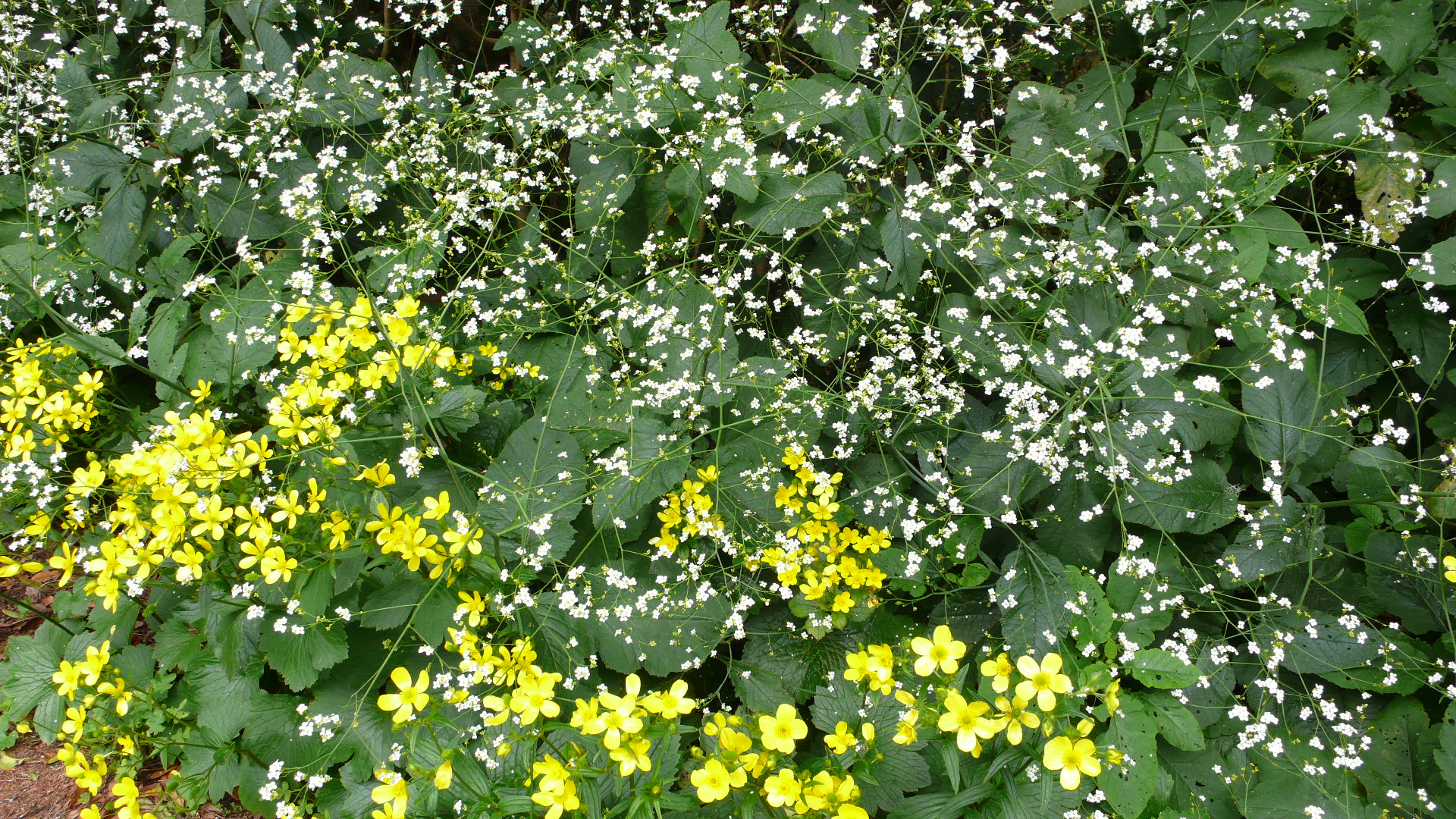
Up close it makes for a subtle but effective combination (again, looks better if you click to open it):

P1110742

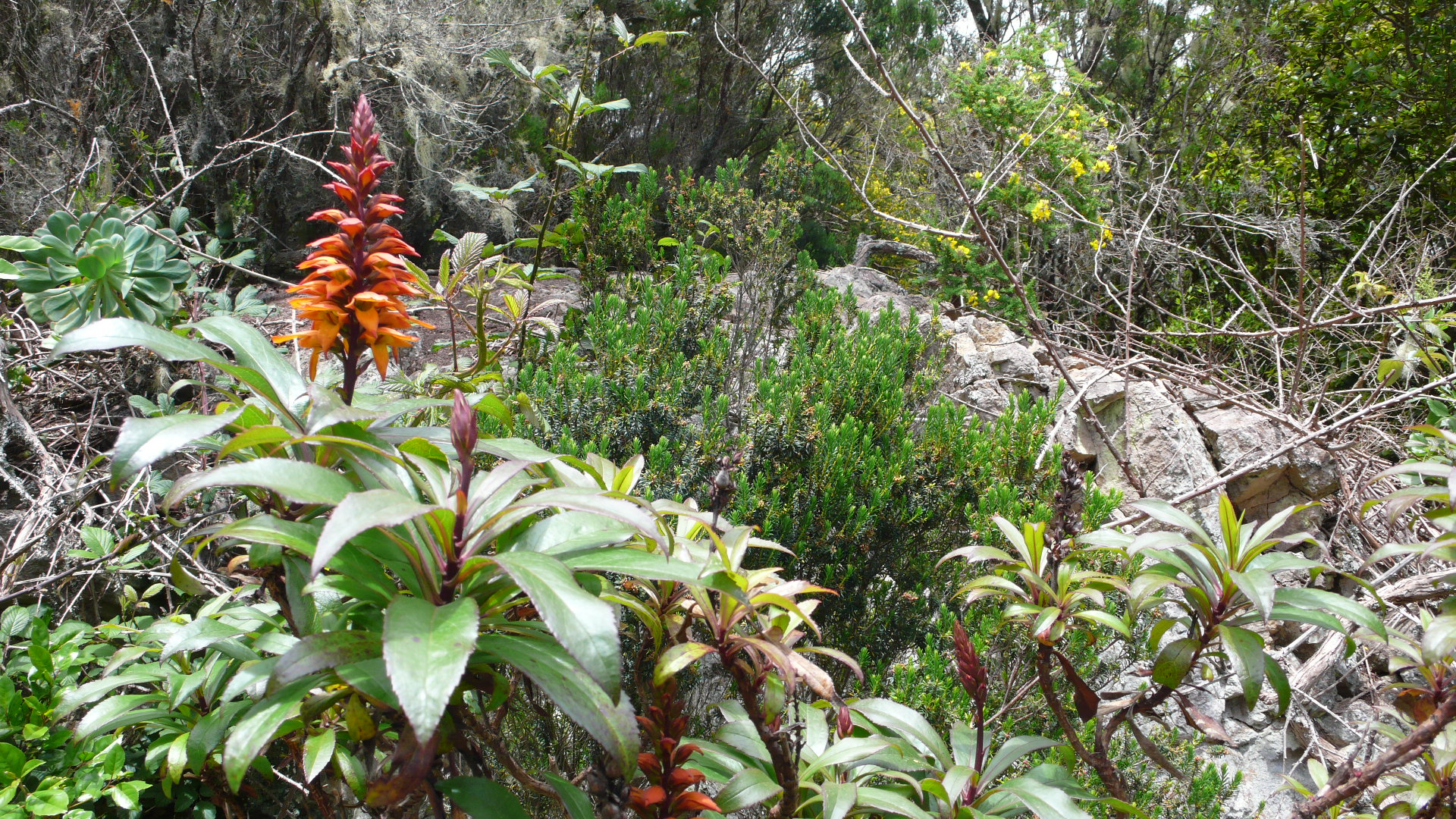
The plants of Tenerife never fail to impress – here’s the Canary Island Foxglove (Isoplexis canariensis) one of the bird-pollinated plants of Tenerife that we’ve studied in the past:

P1110767

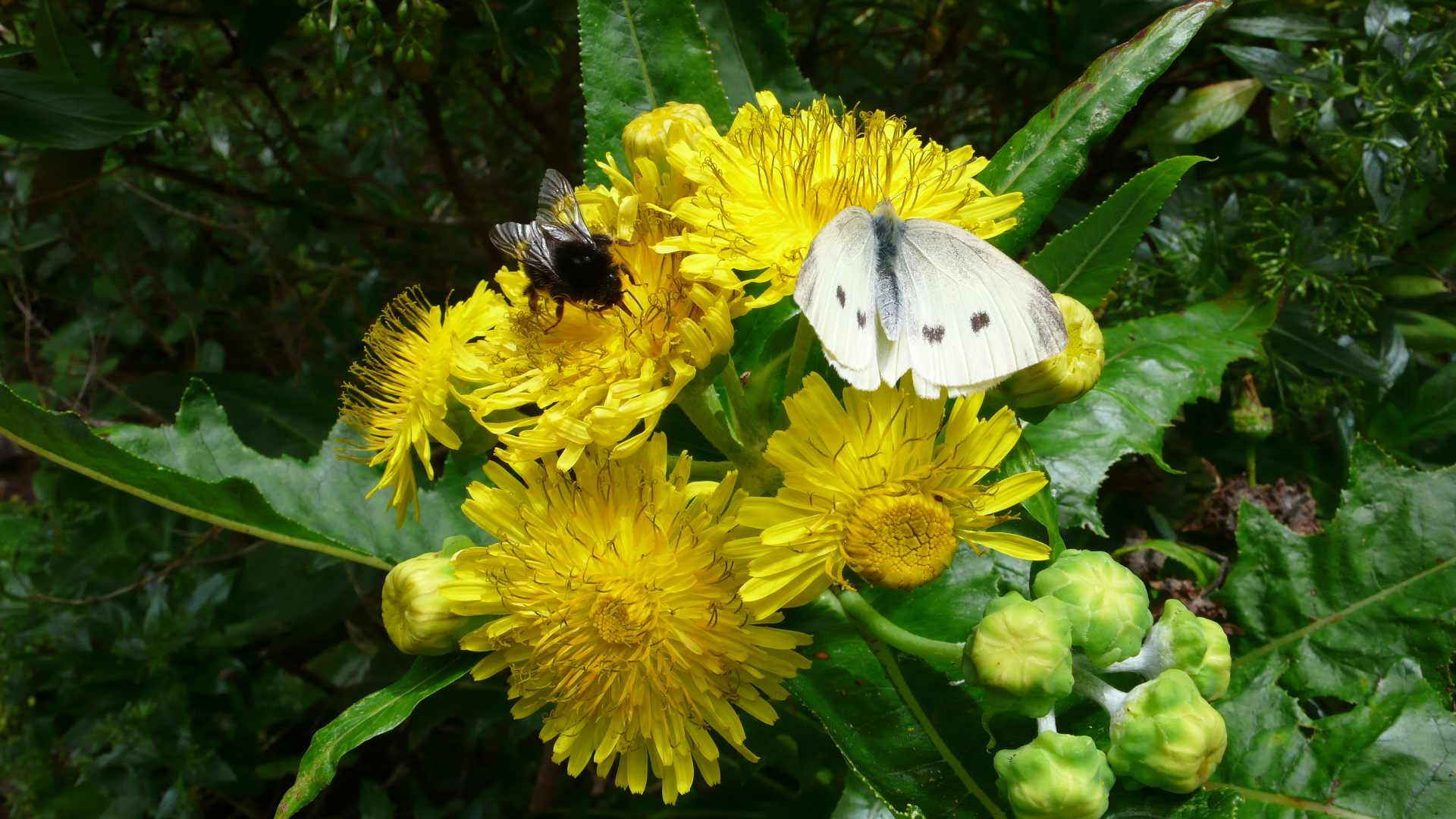
This post is largely deflection behaviour to take me away from grading student dissertations.  So before I return to it I’ll leave you with a gratuitous shot of three endemic Canary Island species:  a woody sow thistle (Sonchus sp.) being pollinated by the Canary Island Bumblebee (Bombus terrestris canariensis), and the Canary Island Large White butterfly (Pieris cheiranthi) whose caterpillars, to take us back to the beginning, feed on Crambe strigosa:

P1110763

Now, back to the coal face…..