Category Archives: Biodiversity

The uneasy academic and the importance of dipping outside your discipline: reflections on The Urban University conference

Uneasy Academic 20141011_144756

It’s important for academics to occasionally move out of their disciplinary comfort zones and to interact with academics and practitioners from beyond their own silos, experiencing approaches that are alien and hearing voices that are not repeating the normative values of their own subject area.  Time spent in this way can be both stimulating and mundane, enlightening and boring, exciting and frustrating.  Above all, unpredictable.  At an ecological conference I know what I will experience; drop me into one devoted to the arts or social sciences, and anything can happen.  It’s an uneasy experience.

With that in mind I spent the end of last week attending a conference at which I was the lone scientist speaker, and indeed one of the very few people with a science background in the audience, as far as I could tell. The Urban University was sub-titled “Universities as place makers and agents of civic success in medium sized towns and cities” and was largely aimed at urban planners, architects, policy makers, and social geographers.  Not muddy boots ecologists.  However I’d offered the organisers (the University of Northampton’s Collaborative Centre for the Built Environment) a 30 minute talk about the monitoring work we’ve been doing on the bird assemblage at Northampton’s new Waterside Campus, which I discussed in an earlier post. The abstract for my talk is below, co-authored with my colleagues Janet Jackson and Duncan McCollin, plus two of our undergraduate students, Jo Underwood and Charlie Baker.

I had hoped that providing a very different perspective on the role of an urban campus, one focussed on the biodiversity it can potentially support and the ecosystem services that stem from it, might be of interest to this broad-based audience.  In the back of my mind I also thought it might be fun to reverse roles and, for 30 minutes, make them the uneasy ones.  It’s always hard to judge but I got the impression afterwards that the talk was well received and it elicited some discussion and questions.

Overall it was a stimulating couple of days and (I think) I’ve learned a lot, or at least learned more about the approaches and priorities of academics and practitioners beyond my immediate field. The talks ranged from the rather abstract to the very practical, from theoretical discussions to local activism. Particular highlights for me were:

John Goddard‘s overview of the relationship between the university and the city, and the fact that many academics don’t feel a personal link, or responsibility, to the urban centre in which they work.

Allan Cochrane discussing the unintended consequences of a university’s economic and social power, including gentrification and studentification of local residential areas.

Robin Hambleton on universities as a corrective to “placeless power”, i.e. multinational firms that can facilitate enormous social and economic change in an area despite having no geographic connection to the place.  Of course the internationalisation agenda of most UK universities means that they may themselves be in danger of wielding placeless power overseas.

Michael Edwards recounting how UCL academics and students have engaged in local activism in North London, for example fighting destructive planning applications, and sometimes positioned on the opposing side to the university itself.

Wendy Cukier on the experience of her Canadian university’s role as a “changemaker”, and the value of the Ashoka U Changemaker Campus programme, to which the University of Northampton is committed.

Cathy Smith on the medieval origins of the original University of Northampton, which was dissolved in 1265.  By happy coincidence 2015 is both the 750th anniversary of that dissolution and the 10th anniversary of the current University of Northampton’s full upgrade to university status in 2005.

The conference strongly impressed upon me the fact that academics sometimes take their institutions for granted in the sense that they don’t reflect on, or even challenge, the role of higher education within their geographical location. There may even be a danger of this becoming more pronounced as, in the rush to internationalise and chase overseas student fees, we in fact forget the physical and historical roots of our institutions.

Above all the two days I spent trying to navigate these unfamiliar waters reinforced my belief that it can be very dangerous for academics to isolate themselves within their disciplines, no matter how comforting and familiar that may be.  If the only voices that you are hearing (audibly and on the page) are the ones that are telling you stories that you already know and understand (even if you don’t agree with them) then it can be very easy to drift into a kind of disciplinary complacency in which you take the (self) importance and role of your own subject area for granted, without any external perspective on how it might be perceived by those beyond your academic boundaries.

Taking the occasional disciplinary leap could involve as little as going to a seminar in another department, or widening your reading to include areas beyond your subject.  Attending and presenting at a two day conference involves a greater commitment of time and energy, but it’s worth the effort.  It’s an approach to academia that I’ve tried to follow over the past 25 years and I’d recommend it as a way of broadening perspectives.  Sometimes it’s good to feel uneasy.

Many thanks to the organisers of The Urban University conference, particualrly Sabine Coady Schaebitz and Bob Colenutt, for their hard work in putting together such a great couple of days.  Here’s the details of my talk:

Biodiversity monitoring on urban university campuses

Jeff Ollerton, Joanne Underwood, Janet Jackson, Charles Baker & Duncan McCollin

Biodiversity, the variety of species and habitats to be found in a defined area, is a critical component of the natural world, and the ecosystem services that it provides supports modern society in economically tangible ways.  Urban campuses have long been acknowledged as supporting significant biodiversity, as evidenced by the many universities that have written biodiversity action plans.  However there has been relatively little quantitative research published on the biodiversity of British urban campuses, and how that diversity changes over time, particularly with respect to large-scale infrastructure development.  Academics and students in the Department of Environmental and Geographical Sciences have been collecting data on the biodiversity of Park and Avenue Campuses for more than 20 years, including plants, invertebrates, mammals, and birds.  This talk focuses on bird diversity as birds are an indicator group for assessing ecosystems, and are arguably the best understood group of species in the UK.  We present data on the birds that have been recorded on these campuses from 1993 to 2015, assessed in terms of their UK conservation status.  We then discuss the potential impact of the new Waterside Campus on the existing bird assemblage of the site, and present preliminary data showing how bird diversity has changed since building work began.  We end by discussing whether it is possible to maintain or even enhance bird diversity and abundance at the new campus.   The location of Waterside Campus, within the Nene Valley Nature Improvement Area and in close proximity to internationally important wetland bird sites, means that the University of Northampton has a civic duty to maintain the biodiversity of its campuses.

Note: in the end I actually didn’t include the data from Park and Avenue campuses, there wasn’t time to fit everything in!
A University of Northampton student interview about bees and pollinator declines

A few weeks ago I was approached by Kady Middleton, a first year undergraduate student studying journalism at the University of Northampton, to be interviewed for a short radio-interview style report that she was putting together as one of her assignments.

The topic was urban bee diversity and pollinators declines – Kady had seen my blog post about urban bees in Northampton.  I was very happy to oblige and I think that Kady’s done a great job; it’s a nice example of how very different university departments can cooperate and collaborate.  You can listen to Kady’s report here:

A plant-pollinator walk-and-talk, Bradlaugh Fields, 14th June

bradlaugh-fields-walk-in-the-meadows-14th-june-2015-007

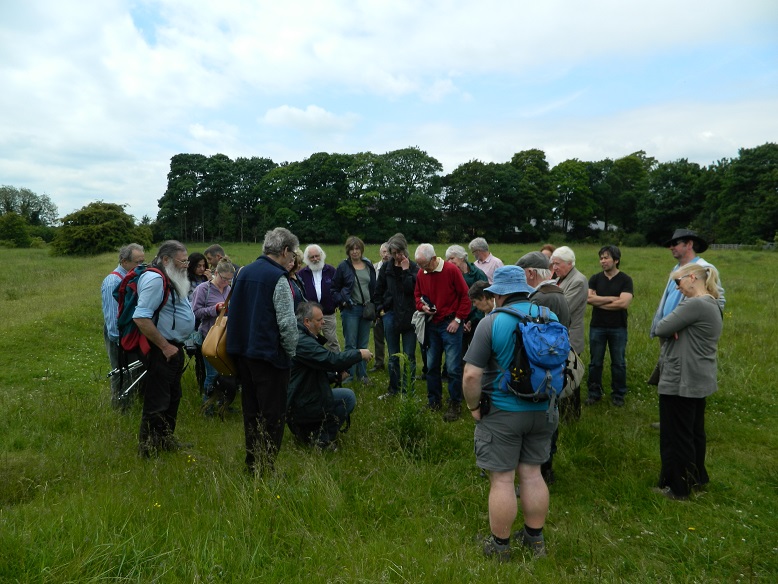
Yesterday afternoon I spent an enjoyable couple of hours leading a group of over 30 people around the nature reserves of Bradlaugh Fields in the centre of Northampton.  The participants were a combination of members of the Northants Natural History Society and local residents who regularly use the park.

We discussed the ecology of the area, focussing on the plants and how they are pollinated.  It was great to see such a range of ages on the walk, and a pleasure to tell them some interesting stories and answer their questions.  Over at the Bradlaugh Fields Visitor blog, Serena (who took the picture above and who organised the event) has a fuller account of the day.

Plantlife’s road verge advice could negatively affect pollinators

P1020346

Did anyone else hear the item on Radio 4 this morning about Plantlife’s road verge campaign and associated petition?  I listened carefully to the discussion and am broadly supportive of what they are trying to achieve.  But I was immediately struck by a comment that local councils should cut the verges “from mid July onwards” because most plants will have set seed by then.  I’ve seen this advice given before and whilst it might be an appropriate option for plants, it could severely impact local pollinator populations.

The printed advice that Plantlife is offering (which can be found here) states that if it’s only possible to cut a verge once a year:

“Cut the full width of the verge….between mid July and September. This allows plants to flower and, importantly, gives time for seed to be set.”

This misses a vital point: between mid-July and September there is still an abundance of flower-visiting insects that require these flowers to provide resources for their nesting and egg laying activities, or to build up reserves of energy to allow them to hibernate, particularly newly-mated queen bumblebees.

Where’s the evidence to support my assertion?  It’s been demonstrated by a number of studies, but I’ll point you in the direction of a paper that came out of the PhD work of one of my former students, Dr Sam Tarrant, who now works with RSPB.  If you look at Figure 4 of this paper, you’ll see that on restored landfill sites the abundance of pollinators in autumn surveys (conducted September-October) was just as high as for summer surveys.  On nature reserves, which are routinely cut from mid-July onwards (see Figure 2), this was not the case.

Climate change means that flower-visiting insects are now active in the UK for a much longer period of time than was previously the case, up to at least November in the south of the country.  I agree with Plantlife that road verges are important habitats for plants and other wildlife.  But advice that suggests cutting floral resources at a key time of the year for these insects is simply misguided.  A cut between October and December would be much more appropriate.

I don’t use Twitter so if anyone could point this at Plantlife’s account I’d be interested to see what their reaction is.

How good is the evidence base for pollinator declines? A comment on the recent Ghazoul and Goulson Science correspondence

In a recent issue of the journal Science, Dave Goulson and colleagues presented a review entitled “Bee declines driven by combined stress from parasites, pesticides, and lack of flowers”.  This stimulated Jaboury Ghazoul to submit a letter to Science criticising the Goulson et al. paper from a number of perspectives, but particularly the paucity of the evidence base for pollinator declines. Dave and his co-authors robustly responded to that letter, as you might imagine. In some respects this was an unsatisfactory exchange, however, as the focus was largely on agricultural pollinators, rather than pollinators of all plants (including the majority non-cultivated species) and I think that (perhaps with more space?) Dave could have outlined the evidence in more depth.

The most striking statement in Jaboury’s letter was that the “evidence for pollinator declines is almost entirely confined to honeybees and bumblebees in Europe and North America”.

Now, even given the fact that Jaboury was possibly referring specifically to agricultural pollinators, that is a very extreme statement to make. Underlying it is the suggestion that global concerns about declining pollinator biodiversity (a subject I’ve discussed repeatedly on this blog) is underpinned by a taxonomically and geographically thin evidence base. Is that really true? I don’t believe so and I think it’s worth presenting a brief overview of the evidence, not least because Dave’s review and the resulting correspondence is pay-walled at the Science site (though if you Google the titles you might, just might, find copies posted on the web…)

Let me state from the outset that I have considerable respect for both Jaboury and Dave, as individuals and as scientists. I’ve known Dave since we were postgrads together in the early 1990s, and have had occasional contact with Jaboury through conferences and via email. So this isn’t meant to be a criticism of either of them.  But I do believe that the evidence for pollinator declines is considerably more robust than Jaboury acknowledges, and even more wide ranging than Dave and colleagues describe in their response (though in fairness, most of the bee evidence was cited in their original review).

Here’s a summary of where I see the evidence base at the moment; it’s not meant to be a full review, by any means, but rather to give a flavour of the taxonomic and geographical breadth and depth of the evidence as it currently stands:

Wild bees (including bumblebees, and solitary and primitively eusocial bees) – significant reduction of abundance and diversity at local, regional and country-levels documented in Britain (Biesmeijer et al. 2006, Ollerton et al. 2014), Holland (Biesmeijer et al. 2006), Europe as a whole (Kosier et al. 2007, the recent IUCN Red List by Nieto et al 2014), North America (Grixti et al. 2007, Cameron et al. 2011, Burkle et al. 2013), South America (Morales et al. 2013; Schmid-Hempel et al. 2013), China and Japan (Xie et al. 2008; Williams et al. 2009; Matsumura et al. 2004; Inoue et al. 2008), and South Africa (Pauw 2007).

Honey bees – colony declines documented in Europe and North America (see reviews by NRC 2007, Potts et al. 2010) and evidence that global demand for honey bee pollination services is outstripping supply (Aizen and Harder 2009).

Hoverflies (Syrphidae) – diversity declines documented in Holland and Britain (Biesmeijer et al. 2006).

Butterflies and moths – diversity and abundance of Lepidoptera has declined in the UK (Gonzalez-Megias et al. 2008, Fox 2013), whilst in North America some 50 species are IUCN criteria Red Listed and there is particular concern about the iconic Monarch butterfly.  Likewise a significant fraction of butterflies in other parts of the world are of conservation concern, e.g. Southern Africa, Australia, and Europe.

Flower-visiting wasps – reduction in country-level diversity in Britain (Ollerton et al. 2014).

Birds and mammals – the major vertebrate pollinators have recently been assessed at a global level by Regan et al. (2015) using IUCN Red List criteria.  They concluded that: “overall, pollinating bird and mammal species are deteriorating in status, with more species moving toward extinction than away from it. On average, 2.5 species per year have moved one Red List category toward extinction in recent decades, representing a substantial increase in the extinction risk across this set of species”.

Of course a number of the studies cited above have shown that some species are doing better than others and a proportion of the taxa they have assessed are stable or even increasing in abundance (including managed honey bee colonies in some parts of the world). But the current evidence base, as I see it, is pointing towards significant declines in pollinator abundance and diversity at multiple spatial scales across all regions that have so-far been assessed with any rigour, for a wide range of taxa.

I’m happy to receive comments on this topic, particularly pointing me to major sources of evidence that I’ve not covered, or if you disagree with my conclusions.

References

Aizen and Harder (2009) The global stock of domesticated honeybees is growing slower than agricultural demand for pollination. Current Biology 19: 915–918.

Biesmeijer et al. (2006) Parallel declines in pollinators and insect-pollinated plants in Britain and the Netherlands. Science 313: 351–354.

Burkle et al. (2013) Plant-pollinator interactions over 120 years: Loss of species, co-occurrence, and function. Science 339, 1611–161.

Cameron et al. (2011) Patterns of widespread decline in North American bumble bees. Proc. Natl. Acad. Sci. U.S.A. 108: 662–667.

Fox (2013) The decline of moths in Great Britain: a review of possible causes. Insect Conservation and Diversity 6: 5–19.

Gonzalez-Megias, A. et al. (2008) Changes in the composition of British butterfly assemblages over two decades. Global Change Biology, 14: 1464-1474.

Grixti (2009) Decline of bumble bees (Bombus) in the North American Midwest. Biol. Conserv. 142, 75–84 (2009).

Inoue et al. (2008). Displacement of Japanese native bumblebees by the recently introduced Bombus terrestris (L.) (Hymenoptera: Apidae). J. Insect Conserv. 12: 135–146.

Kosior (2007) The decline of the bumble bees and cuckoo bees (Hymenoptera: Apidae: Bombini) of Western and Central Europe. Oryx 41, 79–88.

Matsumura et al. (2004) Invasion status and potential ecological impacts of an invasive alien bumblebee, Bombus terrestris L. (Hymenoptera: Apidae) naturalized in Southern Hokkaido, Japan. Glob. Environ. Res. 8, 51–66.

National Resource Council (2007) Status of Pollinators in North America.  National Academies Press, Washington, DC.

Nieto et al. (2014) European Red List of Bees.  Publication Office of the European Union.

Ollerton et al. (2014) Extinction of aculeate pollinators in Britain and the role of large-scale agricultural changes.  Science 346: 1360-1362.

Pauw (2007) Collapse of a pollination web in small conservation areas. Ecology 88: 1759-1769.

Potts et al. (2010) Declines of managed honey bees and beekeepers in Europe. Journal of Apicultural Research 49: 15–22.

Regan et al. (2015) Global Trends in the Status of Bird and Mammal Pollinators. Conservation Letters DOI: 10.1111/conl.12162

Schmid-Hempel et al. (2013) The invasion of southern South America by imported bumblebees and associated parasites. Journal of Animal Ecology 83: 823–837.

Williams et al. (2009) The bumblebees of Sichuan (Hymenoptera: Apidae, Bombini). Syst. Biodivers. 7: 101–189.

Xie et al. (2008) The effect of grazing on bumblebees in the high rangelands of the eastern Tibetan Plateau of Sichuan. Journal of Insect Conservation 12: 695–703 (2008).

Our nature conservation laws need to be defended, not weakened

If you’ve not already heard, there’s a proposal going forward in the European Parliament to review (=weaken) the current EU Nature Directives.  If this happens some of the most important wildlife sites, as well as vulnerable species, could be at risk in the UK and the rest of Europe.

If you have any strong feelings about nature conservation, or if you simply want more information about what’s happening, then I’d urge you to visit the RSPB’s page where you can watch a video about the issue and/or complete a short form to add your voice to the consultation process.

This is important.

Worm sex

P1020257

This morning I woke early and slipped quietly outside to enjoy the bird song and to let the chickens out of their coop.  The air was cool and the garden fresh and damp.  Slugs were scattered across the lawn heading back to their dark crevices after a night of scoffing our plants, so I decided to round up as many as I could find as a snack for the chickens.

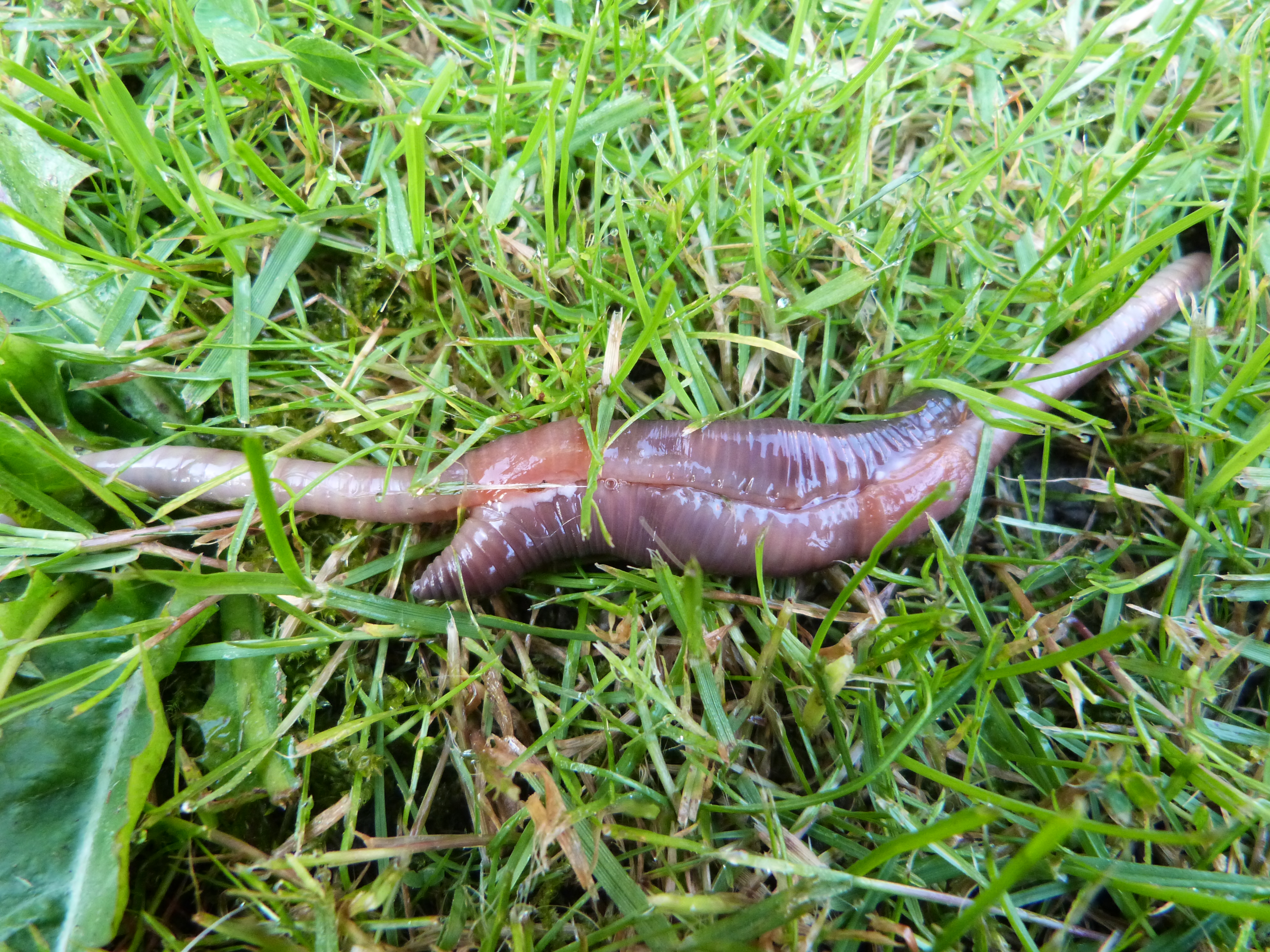
I’d collected about 30 when I spotted something glistening with mucus that was clearly not a slug: two common European earthworms (Lumbricus terrestris) were engaged in some hermaphrodite sex, male/female to male/female.  It was a personal, intimate moment that I felt I should not be witnessing, but I had to watch.  It’s an event that usually takes place under the cover of darkness and one sees it so infrequently; these lovers were clearly caught up in the moment and oblivious to the daylight.  Like a paparazzo who can’t believe what he’s stumbled across, I rushed inside to grab the camera.

Worm sex is quite a complex process involving the mutual transfer of sperm between individuals, which I think may be within that white, milky fluid you can see in the close-up below.

Suddenly the worms sensed I was there and they rapidly separated and slipped back into their respective holes, perhaps to replay the passion tonight?  I hope so: the garden needs as many worms as possible to aerate and turn the soil, and take leaves and other organic matter down into the depths.  They are incredibly important in traditional agricultural systems: Darwin famously wrote a two-volume treatise on earthworms and concluded that: “It may be doubted whether there are many other animals which have played so important a part in the history of the world as these lowly organised creatures”.

There you have it, worm sex for the weekend.  Amazing things happen in our gardens.

P1020258

Something for the weekend #6 – eco-gentrification, neonicotinoid pesticides, bees, birds, and bacteria

The latest in a regular series of posts to biodiversity-related* items that have caught my attention during the week:

  • One of the unintended (and sometimes intended) consequences of greening our cities may be “eco-gentrification”, as property prices increase and low income families are displaced – this interesting article from The Guardian discusses the phenomenon and its possible solutions.
  • The evidence against neonicotinoid pesticides, and specifically their effect on bee populations, continues to mount.  In this recent blog post, Philip Strange provides a very useful summary of the findings of some recent studies.  The latest research was also covered on the BBC News website and I was struck by this quote from Nick von Westenholz, CEO of the Crop Protection Association, which represents the firms that produce neonicotinoid pesticides:  “The latest studies in Nature must be seen in the context of ongoing campaign to discredit neonicotinoid pesticides, regardless of what the real evidence shows.”  As if that’s how science actually works! All of us scientists gang together to discredit things.  Clueless, and clearly fighting a desperate rear-guard action.  There was also some interesting expert reaction on the Science Media website that’s worth reading.
  • The tree of life just got more complex: a newly discovered phylum of prokaryotic microbes has genetic features in common with the eukaryotic domains (animals, plants, fungi, etc.) and provides clues as to how complex, multicellular life may have evolved.  Here’s links to the abstract of the original paper and to a summary on the BBC News website.
  • Finally, as I write this, the results of the General Election are coming in and it looks very likely that the UK will have a majority Conservative government for the next five years.  What that means for controversial, large scale developments such as HS2, and for wildlife, biodiversity, and the state of the UK’s ecosystems more generally, remains to be seen.  It could be a bumpy few years.

Feel free to recommend links that have caught your eye.

*Disclaimer: may sometimes contain non-biodiversity-related items.

Urban bee diversity – a new study

Bee on apple blossom 2 - 1st May 2015

Over the past couple of years I’ve mentioned urban pollinators, and specifically the work of my PhD student Muzafar Hussain Sirohi, several times; for example here and here.  Muzafar is currently finishing off the writing of his thesis, and during that time he’s also managed to publish the first paper from the study.

We are really pleased with this paper because not only is it the product of a lot of hard work to systematically sample and identify the bees, but the results are really exciting: Muzafar has shown that the centre of Northampton is home to a more diverse set of bee species than expected. In fact at least 50 species of bees are thought to live within a 500m radius of All Saints Church, which is significantly more than are found in the nature reserves at the edge of the town.

Muzafar’s work involved surveying the small gardens, road verges, traffic islands, and other patches of plants in the urban centre of Northampton.  These areas provide important nectar and pollen sources for the bees, whilst old stone walls and bare soil offer opportunities for nesting sites. This community of bees includes one nationally rare Red Data Book species called Coelioxys quadridentata that is known from rather few sites.

Our estimate of about 50 species of bees is certainly too low because we focussed on the more neglected groups of bees and didn’t include the social bumblebees. The true figure is likely to be over 60 species, a remarkable number given the small area surveyed.

As I’ve discussed many times on this blog, pollinators such as bees are hugely important both ecologically (most plants require them for reproduction) and economically (much of our food production relies directly or indirectly on pollination by animals). However a significant proportion of bee species in the UK are declining in abundance, and some have gone extinct. Understanding how these bees are distributed across the landscape, including urban areas, is crucial to the conservation of such pollinators in a rapidly changing world. The project therefore has implications not only for conservation of biodiversity, but also food security, given the number of urban gardeners who grow their own food, and the ability of many bees to travel significant distance from urban to rural areas.

The research is published in the international, peer-reviewed Journal of Insect Conservation. The full reference (with a link to the abstract) is:

Sirohi, M.H., Jackson, J., Edwards, M. & Ollerton, J. (2015) Diversity and abundance of solitary and primitively eusocial bees in an urban centre: a case study from Northampton (England). Journal of Insect Conservation DOI 10.1007/s10841-015-9769-2

If anyone would like to receive a PDF of the paper, please leave a comment below or drop me an email: jeff.ollerton[at]northampton.ac.uk

The most important book you’ll read this year: What Nature Does for Britain by Tony Juniper

P1010865

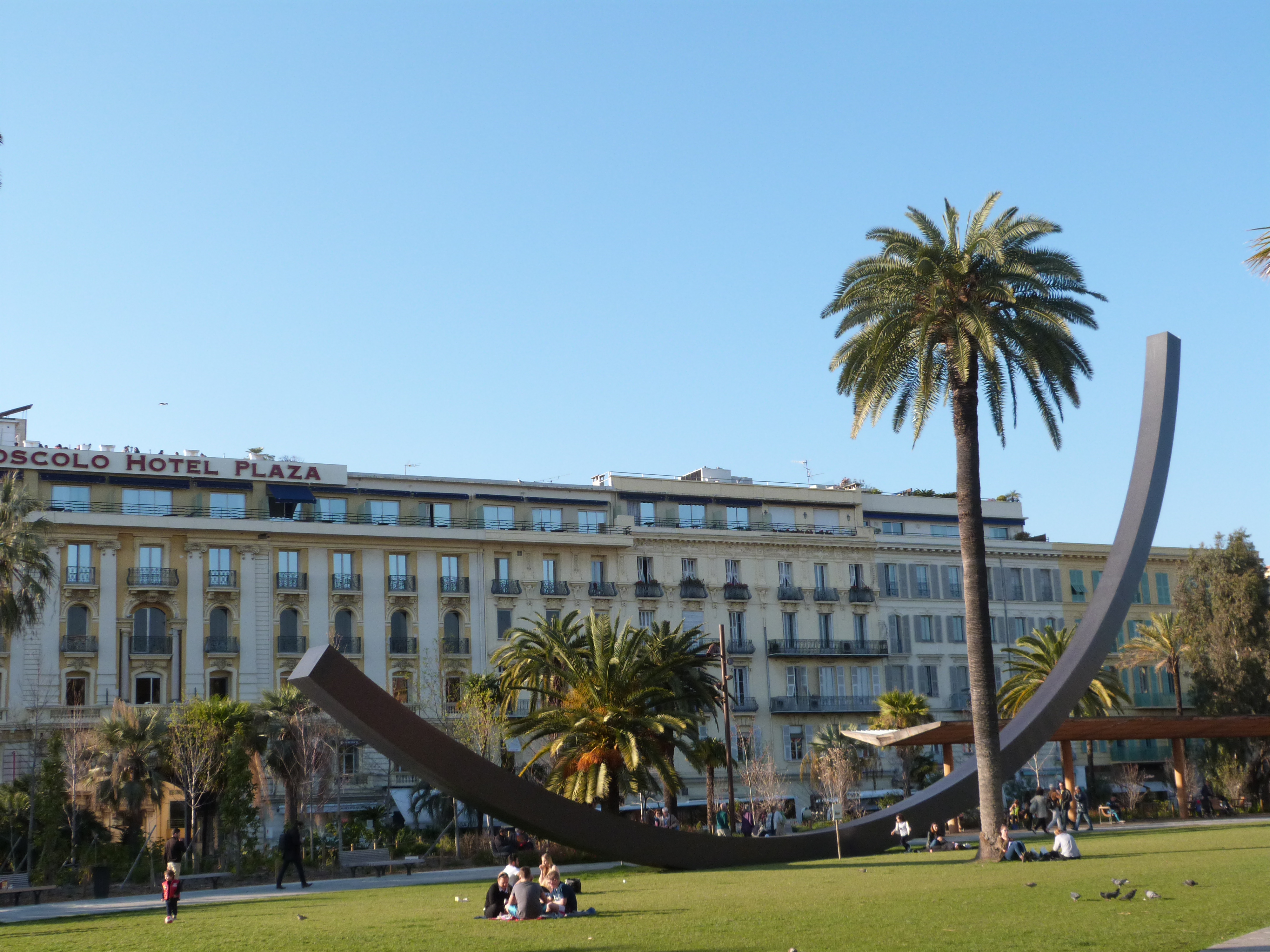
Being on holiday should be about getting away from the pressures of work and the daily routine, and relaxing with an easy novel or some magazines, turning off your brain and recharging ready for a return to reality. So what am I doing writing a book review in a sun-flooded apartment in Nice on France’s Cote d’Azur? A good question that is answered by the fact that this is a book that has been engaging me since I bought it at the airport on the way out. I’d known for some time that What Nature Does for Britain by Tony Juniper was about to be published as I’d received an invitation to the book launch in Cambridge in February. It was an invitation precipitated by the small contribution I’d made to the research for the book, when I was happy to provide some facts and figures on pollinator importance and decline in Britain. Unfortunately I missed the launch due to a prior engagement, and a poorly stocked WH Smith at Luton Airport was my first opportunity to buy a copy.

Tony Juniper is well known for his environmental writing and broadcasting so I had an idea that the book would be readable and interesting. What I wasn’t prepared for, however, was just how good the book actually is, and that it’s the most important book you could read this year. Let me rephrase that: it’s the most important book that our politicians, business leaders, bankers and economists could read this year. In fact individuals with any leverage to influence government policies and business strategies should be made to sit down and read this book. But for anyone with an interest in the future of this country (and indeed of the planet) this really is a book worth reading. And, if you are British, preferably read it before the General Election in May.

Over the course of nine chapters, Juniper looks at how nature (broadly defined and including geology and physical processes, as well as biodiversity) underpins our society through its positive contributions to food production, water resources, flood mitigation, energy security, and our physical and mental health. At the end of each chapter Juniper sets out a series of manifestos that he challenges the government of the next five years to adopt and develop. Whichever party/ies form the government come the May election, its MPs need to rise to this challenge. And whichever parties are in opposition, it’s important that they read them too because they should understand where and how the government can get it right and get it wrong.

One of the refreshing things for me was how holistic and connected are the scenarios Juniper develops as he tours Britain to find case studies of where people and organisations are getting it right, working WITH nature, not against it. It’s easy for those of us working in particular fields, as academics or practitioners, to become over-focused on one’s own specialism: for me that would be obsessing about biodiversity, for others it could be energy generation or the economics of farming or infrastructure investment or wastes management. What this book does brilliantly is to bring together all of these elements, and more, and weave them into a single, seamless narrative. For example, large offshore wind farms generate renewable energy AND contribute to reducing CO2 emissions AND create marine nature reserves for sea life AND thereby boost regional fish stocks AND create jobs on the local mainland AND provide investment opportunities for banks and pension schemes AND develop new, exportable technologies. Yes, there may be downsides and Juniper doesn’t shy away from discussing these, for example bird collisions with turbines. But it ought to be possible to minimise these negatives, such as with appropriate design and siting strategies.

Although I was aware of many of the broad arguments presented in this book, it’s been a revelation to see the details set out so clearly and the linkages made so effectively, and with rigour: my word there’s an impressive amount of research on show here. I mentioned that I was consulted, but Juniper and his researcher Lucy McRobert have talked wide and deep with academics, conservationists, business leaders, civil servants, and other experts. The acknowledgements section runs to more than five pages and I counted over 100 names of individuals who were thanked for their contributions. Presumably everyone who was quoted was given the chance to comment on what was being written, as I was.   The sources for the information presented are provided on Juniper’s website (http://www.tonyjuniper.com/). This is a thorough book, all the more impressive because it had to be researched and written quickly in order to be published, and read, prior to the election.

Juniper’s vision of a future Britain is one in which we can have it all: economic security, functioning ecosystems, endless energy, jobs aplenty, and solutions to our most pressing environmental problems, including future effects of climate change. Clearly he’s an optimist. And that’s refreshing in a country where pessimism and cynicism seems to be the plat du jour (sorry, been eating in too many over-priced French restaurants).  If he isn’t right then the worst that will have happened will be that we have engaged in a series of experiments with our social, natural and economic capital that are no worse, and could be a lot better, than some of the experiments that have been foisted upon us by a series of government and private business strategies. But my gut feeling (supported by the evidence) is that he’s right and that this book provides us with a road map towards a virtuous ecological circle with society at its centre.

The sad thing is that the people who really ought to be reading this book, and who would gain most from its vision, are those politicians, business leaders and economists who are least likely to open its pages because either they’ve “heard it all before”, and disagree, or because the momentum of their vested interests and entrenched views leaves no opportunity to redirect the course on which they are travelling.

Although the focus is on the United Kingdom, the proposals that Juniper sets out could apply to any country and the book be renamed “What Nature Does For _____” [insert country of choice].  In truth the issues presented, and their broad solutions, are global. So, this is the most important book you could read this year, wherever you live.  Buy a copy, read it (on holiday, in bed, while commuting, or wherever) and pass it on to the person you know who is least likely to buy it for themselves. Or send it to your local MP.  That’s what I will be doing in the days following the election.