Author Archives: Jeff Ollerton

Unknown's avatar

About Jeff Ollerton

Independent consulting scientist and author, working on understanding and conserving biodiversity

When is a yucca not a Yucca?

Notice the difference?  The italicisation and capital initial of the second Yucca.  That’s how the genus name of a species should be formally presented in a scientific paper, or in a newspaper article, or wherever.  Like Homo – the genus in which our own species (Homo sapiens) sits.

It might seem like a narrow and pedantic point, but it’s important.  Accurate and descriptive naming of species, genera, families and other taxonomic ranks is crucial to those of us who study biodiversity and is at the core of our science: without names for species, for example, we cannot make informed conservation judgements or comparisons between habitats in relation to which species are present or absent.  Names matter.

But it’s not just the names themselves, it’s also how they are presented which is important:  when I see the words yucca and Yucca in print, they signify two different things to me.  The word “yucca” is an informal name for a group of plants that is widely applied by gardeners and has no formal scientific status.  Yucca on the other hand refers to a very specific group of plants and has a clear meaning to a biologist.

To give you an example of this I’ll first have to introduce you to the Northamptonshire Natural History Society (NNHS) which was founded in 1876 and must be one of the oldest surviving local natural history societies in the country.  Some important 19th Century scientists were honorary members, including Charles Darwin, Thomas Huxley and Joseph Hooker.  This perhaps reflects Northampton’s proximity to London though there may be other factors: one could compile quite a long list of scientists with links to Northamptonshire.

The Journal of the Northamptonshire Natural History Society was first published in 1880 and continues to the present day.  Which brings us back to yuccas.  Last year a short article by a NNHS  member summarised the local weather conditions in Northampton for each month of 2010 (J. Northants Nat. Hist. Soc. vol. 45, no. 1).  December of that year was a particularly cold month and the author notes that “the species of Yucca trees planted in Northampton, which although thriving in recent years, were killed by the cold period”.

Strictly speaking Yucca refers to plants of a particular group which are endemic (i.e. only naturally occurring) to the New World.  The genus Yucca is a member of the asparagus family (Asparagaceae), subfamily Agavoideae.  The plants which suffered so much in the cold winter of 2010 are in fact New Zealand Cabbage Trees (Cordyline australis) which, as the name suggests, are endemic to New Zealand.  The genus Cordyline is also a member of the family Asparagaceae but belongs to the subfamily Lomandroideae and is therefore only distantly related to Yucca.

The leaves and stems of Cordyline and Yucca do look very similar, hence gardeners tend to use yucca as an informal name for both.  However when these plants flower it is clear that they are very different.  Flowers of the various species of Yucca are typically quite large and are adapted to pollination by a very specialised group of moths which lay their eggs within the flowers.  The reward for these moth pollinators is a brood site for their caterpillars, which feed on a proportion of the developing seeds of the Yucca plant.  In contrast the flowers of Cordyline australis are small and produced in very large numbers in dense inflorescences.  They are also highly fragrant, to which anyone who has grown one of these plants to maturity in their garden can testify.  The fragrance attracts a range of insects which feed on the nectar produced by the flowers and so pollinate them in the process.  It is these differences in flower structure, more than characters of stems and leaves, which taxonomists use to classify such plants.

Until recently large New Zealand Cabbage Trees were a feature of many front gardens across Northampton.  Some particularly fine examples were to be found along the Kingsthorpe Road between Osborne Road and Balmoral Road.  I suspect that the largest Northampton specimens were planted in the 1970s, perhaps because people wished to recreate something of the exotic feel of package holidays to Spain and Portugal.  Following the freezing weather of December 2010, the growing tips of most of Northampton’s New Zealand Cabbage Trees were killed and the top growth gradually withered and died.  I was sad to see this happen to my own plant, a medium-sized specimen that I had rescued from a skip at the University several years ago, and which had become well established in my garden.  However later in 2011 my plant, and those in neighbouring gardens, re-sprouted from its deep tap root and started to produce multiple rosettes of leaves around the base of its dead trunk.  Give it a few years and Northampton gardens will once again be crowned by these exotic imports from the Southern Hemisphere.  I moved house in early 2012 and wasn’t able to take my rescued plant with me, but I have a feeling it will survive many more cold winters to come.

Names matter to biologists, indeed to scientists of all types.  They signify and tell us things beyond just the words themselves.  To give a very personal example, a few people have asked me why I chose the title “Professor of Biodiversity” rather than “Ecology” (my main area of training, though confused in some peoples’ minds with New Age philosophies); or “Biology” (a much broader designation than I feel comfortable with); or even “Pollination Ecology” (narrow, to the point, but too restrictive).  After a LOT of thought I chose “Biodiversity” because it very broadly reflects my interests in the whole of Earth’s life forms, the interactions between these species, and how they come together as assemblages, communities and ecosystems.   But I’m also interested in the history of our understanding of biological diversity and this title gives me scope to pursue those interests too.

It’s all in the name.
The Great eSCAPE

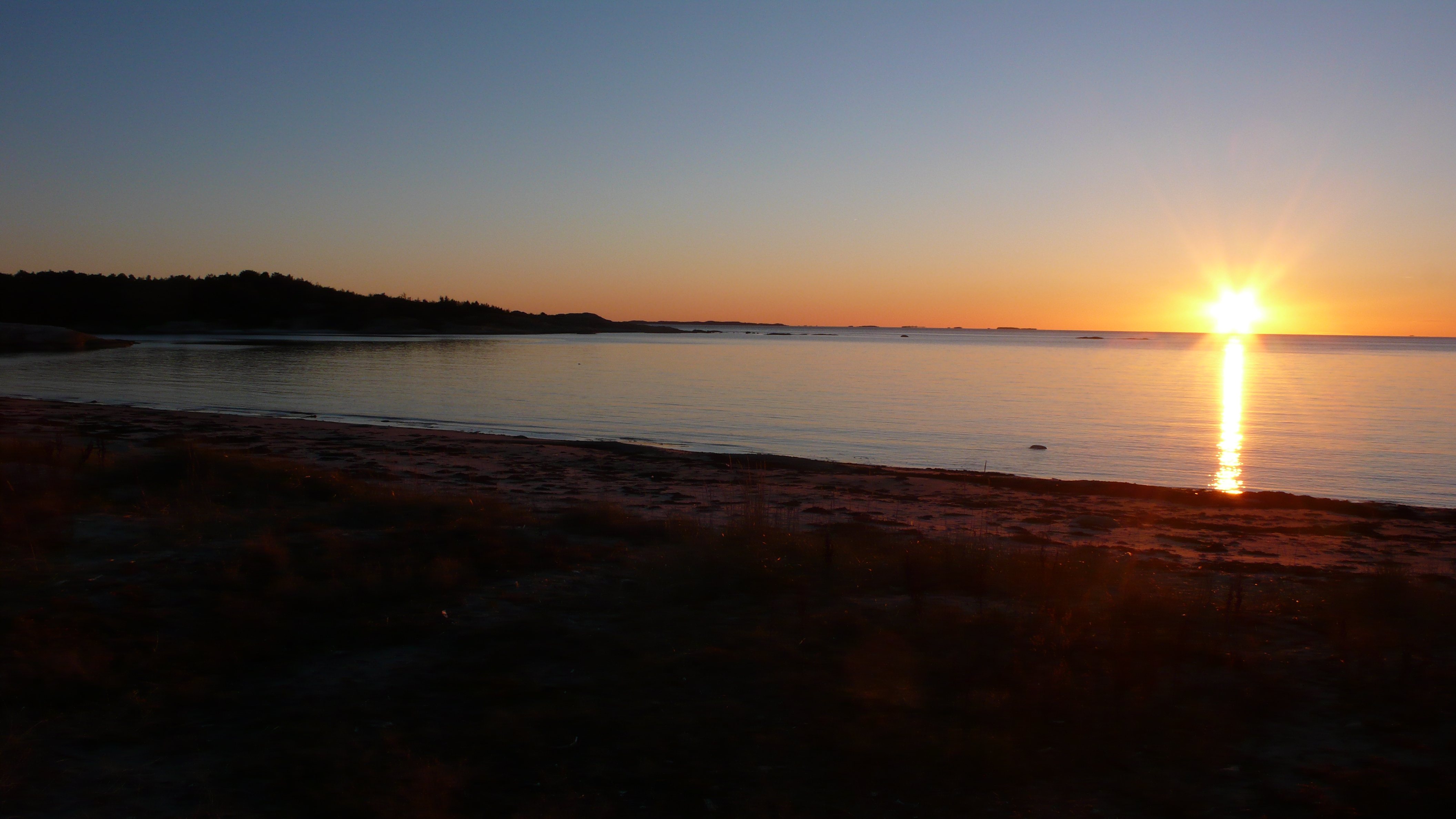
As I begin to write this blog entry, there’s a buzz of voices around me, excitedly discussing future research or past results, or saying goodbye to friends and colleagues, old and new.  It is the last day of SCAPE 2012, the annual meeting of the Scandinavian Association of Pollination Ecologists (or “for Pollination Ecology” or “for Pollination Ecologists” – the name seems to have drifted over the years).  SCAPE was the first overseas conference I attended, as a young and enthusiastic PhD student, in 1991.  Older but no less enthusiastic, SCAPE is for me a regular fixture in the calendar.  Even if I can’t always attend, I try to send my good wishes to the organisers, with a promise to be there the following year.

SCAPE was founded in 1986 as an informal get together of Swedish research students who were all broadly interested in questions of pollination ecology.  Since then it has been held every year, maintaining the informal organisation and circulating between Sweden, Denmark, Finland and Norway, which is the venue for this year’s meeting in Skjærhalden in the beautiful Ytre Hvaler National Park.  Attendance in recent years has varied between 50 and 80 participants, peaking when it’s one of the 5 yearly anniversary specials.  One of the many great things about SCAPE is that it’s a very friendly, open hearted conference at which new research students rub shoulders with established researchers, and can present their provisional research findings safe in the knowledge that they will receive constructively critical feedback.  Those established researchers can expect to have their conclusions challenged, as good scientists should, but it’s never done with malice.

The talks this year have spanned the usual wide range of geographical localities (Brazil, Israel, Spain, Ireland, as well as Scandinavia), scales of research focus (from the genetics of self incompatibility to landscape scale assessments of pollinator diversity), and quality of presentations (overuse of laser pointer on text-dense slides to textbook examples of how to deliver a message in 15 minutes).

Although I enjoyed the whole meeting and gained new knowledge from every presentation,  there have been some talks which really stood out for me because I appreciated the overall approach, the message that was being delivered, or the insights it gave into questions I’d not previously considered.  These include Dara Stanley’s estimate that bumblebees from 800 different nests were foraging on a single field of oil seed rape; Achik Dorchin’s account of the staggering number of bee species in small habitat fragments in Israel (totalling more than in the whole of Britain); a dissection of the question of when pollination can be a limiting ecosystem service for crops by Ignasi Bartomeus; and Robert Junker’s initial account of the huge diversity of bacteria associated with different flower organs.   There were many others I enjoyed, of course, but that gives a taste of how diverse the subjects were.

Although I wasn’t speaking this year, two members of my research group were:  André Rodrigo Rech talked about his PhD work on pollination of Curatella americana in Brazilian savannahs; and Stella Watts presented some of her postdoctoral work on honey bee versus unmanaged bee pollination in an endemic Iris species in Israel.  This last work was undertaken with Amots Dafni, one of the doyens of pollination ecology.  Amots attended the conference and told us he’d finally decided, in his 68th year, to retire from formal university teaching, administration and supervising research students – and begin a new project!  Enjoy your “retirement” Amots!

Karin attended SCAPE with me and enjoyed scientist-watching, a hobby that gives me frequent insights into how we work as a community, and gives her insights into what makes me tick.  Half a day of travel saw us back home at 2am Monday morning; I then had to be in university for a 9am seminar with students on my final year Biodiversity & Conservation module.  Despite being tired the seminar went well, perhaps fuelled by the post-conference buzz I usually feel after these events.  The seminar finished early to enable me to drive up to Park Campus, the university’s other site, for a brief  meet-and-greet with the head of Sandtander Universities and his team.  Banco Santander’s higher education arm has been funding scholarships and research activities at the university for several years now and it was a small grant from them that enabled André to attend SCAPE.  Seemed only polite to say thank you.

A highlight later that week was Thursday, which was taken up with our annual first year undergraduate trip to Oxford Botanic Garden, part of my module Biodiversity: an Introduction.  I also wrote about this in March but for the current academic year we have brought the trip forward.  Our visit  was hosted by the superintendent, Timothy Walker, who engaged the students for an hour as we walked the gardens, covering everything from the medical importance of plants such yew trees (Taxus spp.) in providing treatments for cancer, to the importance of specific trees for two Oxford writers, JRR Tolkien and Phillip Pullman.  Timothy also described how much of the planting is laid out in beds according to plant families as defined by the latest phylogenetic research the (APG III system) stressing the importance of modern systematics to understanding biodiversity.  If you want to know more about this, Timothy wrote and presented a recent television series called Botany: A Blooming History which remains the best account I’ve seen of the history of plant taxonomy and why it is relevant to modern plant sciences.

That evening Karin and I attended the opening of a show at the university’s gallery called “Encounters with Drawing” by artist Angela Rogers.  There’s some very thought provoking material in the show and I recommend a visit if you are local and have time – it runs until 30th November.  We chatted with Angela about the “drawing conversations” she has with people and some of her comments about “how much space do individuals need” chimed with familiar ideas from ecology about intra- and inter-specific competition in organisms and niche theory.

I’m going to end this entry with a link to a video post by my friend K.-D. Dijkstra (who I introduced in an earlier blog).  It’s not often that the actual moment that a species new to science is discovered gets captured for everyone to see, but here’s K.-D. doing just that!

Wrestling the oiled serpent

Understanding the Earth’s biodiversity is not just about knowing where organisms are currently found, their interactions and community structure, and the threats to them and how they can be conserved.  It is also about understanding the evolutionary origins of that biological diversity.  With this in mind I was interested to read a number of news reports over the last few weeks about the relationship between science and religion, including a piece on a debate between scientists and theologians on the origin of the universe, and the removal of a young Earth creationist perspective in an exhibition about the formation of the Giant’s Causeway.

Whilst religious and scientific views of the universe are not necessarily incompatible, literal interpretations of the origin of the world and its biodiversity are clearly at odds with our understanding of the diversification of life through evolutionary processes.  Reading these reports brought back memories (not all of them positive) of an event I was involved in a few years ago.

Back in 2006, Northamptonshire Creation Group (motto: “Let true science speak” [sic]) approached our former Vice-Chancellor with the suggestion that the University of Northampton might care to put forward a speaker to debate creationist versus the evolutionary world views with a prominent Australian creationist who was undertaking a fairly high profile lecture tour of the UK that year.  I was asked if I was interested in taking part and agreed because I have a long-standing interest in creationist arguments.  One of my main research areas, the ecology and evolution of plant-pollinator interactions, is claimed by some to be one of those (supposedly) wonderful examples of how God has created precise interactions between species which could not possibly have evolved.

Richard Dawkins and others have argued that scientists should not be engaging in such debates  as this because it gives creationists publicity and a credence that they do not deserve.  However my perspective has always been that creationists are not going to go away and their influence on school curricula, for example, needs to be tackled head on.

This debate, in front of an audience of about 200 members of the public, colleagues and students, was undoubtedly the most difficult thing I’ve ever had to do professionally:  we were each given 15 minutes to present our case and that is a very short space of time in which to summarise 200 years of scientific research supporting the validity of the evolutionary world view.  But I gave it my best shot and pointed out at the end of the quarter hour that, had I more time, there was so much more evidence I could have presented, evidence which supports the evolutionary hypothesis.

Hopefully, I went on,  I’d convinced some of the audience of the validity of that way of viewing the world and the life it sustains, though I didn’t imagine that I’d changed my opponent’s worldview.  He was clearly a man of great energy and commitment to his cause to have sustained his point of view for 30 years.  But I wished for his sake that he’d not wasted that energy on a debate which was over long ago. which in fact Charles Darwin thought was finished when he died in 1882.

Rather than squabble over the source of biological diversity, I continued, I would rather that these creationists spent their time and energy on trying to save biodiversity.  Human activity has put enormous pressure on the species with which we share this planet and whole ecosystems are being dramatically altered even as we argued that night.  If creationists really care about God’s creation of life, why are they not furious at the way humanity treats it?  Why are they not directing their passion towards saving it?

I thanked the audience for their time and attention and passed the floor to my opponent.  What followed was not the evidence based “creation science” [sic] I was expecting (having researched his previous claims on the subject of the Earth’s age, etc.) but a rapid-fire delivery of theological arguments.  Over those 15 minutes I counted 50 PowerPoint slides, a Biblical smoke and mirrors approach to arguing evolution.  Interestingly, it was clear when he was loading up his presentation that he had about 8 different “Northampton lecture” that he could choose from, depending upon the tack that I took.  Had I gone for a theological approach to the debate, he would have argued “science” I am sure.

After our presentations we had an opportunity to ask one another one question before it was opened up to the audience.  The question that was addressed of me is one that to this day I don’t really understand.  To paraphrase he asked:

“Can you provide a single example of a species which has evolved into another species, without reference to the assumption that evolution has already occurred”

The second half of the question really made no sense to me and perhaps was designed to throw me off.  It worked: I asked my opponent to explain the question and received some heckling from nearby creationists who accused me of being evasive.  But he clarified his question: what he was really asking was, could I provide examples of species evolving recently.  I talked about antibiotic resistance in bacteria, insects which are now immune to pesticides, and also mentioned peppered moth evolution.  Then the debate was opened up to questions from the floor and the first thing I was asked (by a smirking creationist) was what the peppered moths had changed into: other moths or something different?  I explained the difference, in timescales and outcome, of microevolution and macroevolution.  But that was lost on him.

There was also a question about why peacocks and other species were so beautiful, if not for human enjoyment?  I spoke about sexual selection but my opponent countered that sweet peas in his garden were never visited by bees because they self fertilise, so why are they still attractive?  I suggested he grow some different Lathyrus species, ones which had not been selectively bred by people.

So it went on, trading example for example, neither side giving any ground, until we ran out of time .

The woman who asked me the question about beauty happened to be of Afro-Caribbean descent, and came up to me afterwards when the formal debate had ended.  She forcefully asked how I could support a theory which, according to her, stated that “black people are closer to apes and therefore lower on the evolutionary ladder than white people”.  I firmly explained that evolution says nothing about racism and “Darwinian” arguments about racial superiority were a later bastardisation of Darwin’s original ideas.  But to no avail:  the woman “knew” Darwin was a racist; everyone in her church knew that.

Another post-debate exchange with a creationist went something like:

Him:  Darwin states in Origin of Species that the fossil record was insufficient to support his ideas.

Me:  That was 150 years ago.

Him: Yes, but Darwin said it.

Me: But that was 150 years ago; as I showed, we have acquired an enormous amount of new fossil data since then.

Him:  But Darwin said it and he’s the father of evolution.

Me: But he was only one scientist and that was 150 years ago.

Him: But Darwin said it.

Etc. etc. etc.  Darwin seems to have an almost mythic, bogey-man status amongst creationists, as if everything he wrote HAS to be true and if it’s false then evolution is not true.  A weird interpretation of how science works.

At the end of the evening I went home exhausted and not a little depressed.  Wine was drunk and the evening dissected and I wrote up some notes about the event, including the title of this blog.  That phrase struck me as a suitably Biblical description of trying to have rational arguments with creationists: well greased serpents will always have a way of squirming out of the grip of logic and evidence, whilst throwing distracting coils around your limbs.  I don’t regret taking part in the debate but I’m not in a hurry to do another.

Hedge on the edge

It’s been a convoluted month and I’ve tried to find a thread that links it all together in a way that relates to the topic of this blog: biodiversity.  Not sure that I’ve been altogether successful but the linking theme seems to be…….hedgerows?  Perhaps the link is too tenuous in places, we’ll see.

The start of this trail is close to Swanage in Dorset where I spent a weekend away with some friends from my undergraduate days in Oxford at what was then the Polytechnic, now Oxford Brookes University.  A group of anything up to 10 of us try to get together once or twice a year, often camping on the south coast or revisiting Oxford haunts, and pretend that we’re once again in our early 20s and not really in our 40s with careers, mortgages, kids and life issues.  Beer is drunk and the same stories get told, each year more embellished than the last.  Most of us work, one way or another, in the environmental sector and share a love of evocative landscapes, rural and urban.  During this latest reunion we walked along a section of coastal path through some beautiful cliff top grasslands.  The area is riddled with former Portland Stone quarries and deep galleries, making for a dramatic, human-influenced cliffscape.

The plants we encountered were a combination of typical species of chalk and limestone grasslands, together with others that can tolerate (or perhaps require?) the particular combination of salt and exposure found in such maritime habitats, for example sea aster (Aster tripolium).  These cliff top grasslands host a wider variety of crop plant ancestors than any other habitat I know of; on our walk we spotted the wild progenitors of carrot (Daucus carota), beetroot (Beta vulgaris) and cabbage (Brassica oleracea).  Along the path we were protected intermittently by wind trimmed natural hedgerows containing blackberry (Rubus fruticosus), a wild rose (Rosa sp.), blackthorn (Prunus spinosa) and ivy (Hedera helix).  They clung to the edge of the cliff,  exactly pruned to curved shapes as though by an obsessive topiarist.

Our destination was the small 13th century chapel of St Aldhelm’s, an odd little building that may not have had an original religious function at all and was possibly a coastal watch tower for Corfe Castle.  From the chapel we followed more hedges down towards the shore line at Chapman’s Pool where the fissile Kimmeridge Clay deposits yielded some very nice fossil ammonites. One of the fascinating things about this coastline is the way that the modern, living biodiversity is underlain by deposits created by the ancient organisms that built the limestones during the Jurassic period.  Life builds upon life.

The walk ended where all good walks should, in a pub; in this case the 18th century Square and Compass in Worth Matravers (“Twinned with Royston Vasey” according to a very professional looking addition to the village sign).

Back from Dorset on Sunday evening, I packed for an early start the following day to get to the University of Staffordshire for the Hedgerow Futures conference.  I was only able to attend the first day but this proved to be an interesting and diverse set of talks.  In the afternoon I spoke about the research conducted by one of our former PhD students, Louise Cranmer, on how bumblebees use hedgerows to navigate around the landscape.  This work was published last year in Oikos and picked up by the Guardian newspaper as one of their research features.  The talk was well received and there were some interesting questions and comments afterwards.

The latter half of that week was spent in Dublin acting as external examiner for University College Dublin’s MSc Environmental Science course.  I had a chance to chat with a keen group of students on the course and to talk to them about their research theses.  The range of topics studied was impressive, as was their interaction with external bodies and agencies and their use of historical data as a comparison to recent environmental changes.  None of the students worked on hedgerows though I did see some nice ones as I flew into Dublin airport.  The School of Biology and Environmental Science has a large display case containing a number of skeletons, books and other biological artefacts, including a box of glass slides presented to the department many years ago by Alfred Russel Wallace, co-discoverer of evolution by natural selection.  It reminded me that 2013 is the centenary of his death.  Hopefully it will give him more of the attention he deserves, a process that has already started with the launch of the Wallace Online project and a campaign to erect a statue of the great man in the Natural History Museum in London.

Returning to Northampton, work began in earnest to get ready for the start of the new academic year.  It’s always exciting seeing the university coming back to life again after the slower pace of summer and the last two weeks have been a bustle of activity as we welcomed new students and said hello to those returning for their second and third years.  Preparations are under way for student laboratory work and field visits this term, always a process of hope over weather as we leave summer behind.  The month culminated in the announcement that Led Zeppelin’s 2007 reunion gig is to be released as a movie.  This is good news for those (many millions) of us who applied for tickets to the event but were unsuccessful.   So this autumn, if there’s a bustle in your hedgerow, don’t be alarmed now.  It’s probably some of our students doing field work.

We are so very ‘umble

Studying biodiversity can be a humbling experience.  It is humbling to contemplate the intricate ecological context in which species exist, embedded within a matrix of other organisms with which they engage in competition or cooperation or feeding relationships.  It is also humbling to learn that, for some scientists, the focus of their research into ecological complexity and biodiversity is on a single system of species interacting in a single place over a period of decades.

A recent article by Professor Tim Birkhead on the Times Higher Education website illustrates this nicely and conveys beautifully the long term passion and commitment demonstrated by some field biologists and ecologists to research projects.  However I disagree with one of his statements that “….long-term studies are rare. In total there aren’t many more than a dozen or so”.  I suspect that Tim is talking about long term studies of breeding success and population dynamics of vertebrates in the UK.  If one broadens both the taxonomic scale (to take in plants and invertebrates) and the geographic coverage, then there are many, many ecological studies that have continued for decades.  The Park Grass plant community experiment, for example, begun at Rothamsted in 1856, is the oldest ecological experiment anywhere in the world.

Other long term studies are documented in the recent edited volume by Ian Billick and Mary Price – The Ecology of Place.  Highly recommended for its demonstration of the scientific and conservation value of long term ecological research.  Ecology of Place was one of the books I took with me to Tenerife during field work earlier in the summer and I’ve been working through it ever since, absorbed by its chapters more than I can recall in any other edited volume of research.  Some scientists have committed their professional (and sometimes personal) lives to the study of a single locality for over 50 years and the ecological insights from such work have been enormous.  It’s a commitment to the science that I could not possibly mirror; I’m not that kind of scientist.  Whereas I am capable of building up “long term” datasets that span up to 16 years (and counting) these are not the kinds of highly focused, in-depth studies that Mary and Ian have picked for their book.  Perhaps my problem has always been a short attention span and a desire for novelty, like a kid in a toy shop wanting to pick up and play with all of the exciting things on offer.  There’s no single right way to be a scientist (though there are lots of wrong ways).

But back to Uriah Heep and his expressions of ’umbleness.  It’s always been my opinion that  as a society we require some humility when we consider how reliant we are on the processes and resources provided by the biosphere, something that has come to be called ecosystem services, and which I’ve discussed before in a number of blog posts, starting here.  The fact that we rely on the natural world to provide soil nutrients, fresh water, carbon storage, crop pollination, and a whole range of other goods and services, is beyond dispute.  More controversial, however, is the valuation of ecosystem services: how (indeed, should) do we put a monetary value on what nature provides?

A lot of words have been written about these questions in the past few years and recently the writer and environmental activist George Monbiot has weighed into the discussion with an article for the Guardian newspaper that argues that the whole notion of valuation of ecosystem services “diminishes us, it diminishes nature. By turning the natural world into a subsidiary of the corporate economy, it reasserts the biblical doctrine of dominion”.

Now, I have a lot of respect for George, whose writing is always provocative and pulls no punches.  He also puts his money where his mouth is, not least in publicly declaring his earnings.  And on a philosophical level I don’t have a problem with George’s thesis that valuing nature in terms of money is fundamentally wrong; it is wrong, but it’s also the best wrong strategy amongst a whole set of strategies for biodiversity conservation.  Before I explain why, I should also say that I don’t think George argues his case very effectively.  He begins by setting up something of a journalistic straw man in his article by initially claiming that at “a cost of £100,000, [the government] commissioned a research company to produce a total annual price for England’s ecosystems. After taking the money, the company reported….”.

George is presumably referring to the UK National Ecosystem Assessment which as its website clearly states: “was an inclusive process; many government, academic, NGO and private sector institutions helped to design the assessment, contribute information and analyses, review the preliminary findings, and promote the results.”

Not a “research company” then.

George Monbiot also misses the point that spiritual and cultural ecosystem services are explicitly valued within this framework, making a lie of his claim that in the future we won’t ” be able to argue that an ecosystem or a landscape should be protected because it affords us wonder and delight”.  Yes we can, it just so happens that the argument is being framed in economic terms.

Clearly George believes that valuation of ecosystem services is just some neoliberal government/big business conspiracy to rip off the public.  But that’s not its purpose, even if it may be one possible outcome, and one which we must guard against.  As environmentalist Tony Juniper recognises in a response to George Monbiot’s article,  ecosystem service valuation is a serious attempt to value something which has been dismissed by big business as valueless. Regardless of whether the actual monetary values are in any way accurate, it’s backed up by some very sound science and scientists, including some who have the kind of long term commitments to ecology that I discussed above.  Ecosystem services valuation is not perfect but it’s a way forward that should not be dismissed.  It’s an approach that we are using within the Nene Valley Nature Improvement Area project that I’ve talked about previously, most recently with respect to the River Nene.

Those of us who have had an interest in environmentalism and ecology for many years have noticed a slow shift in public attitudes to “green” issues.  What was once the preserve of hippies and tree huggers is now mainstream.  Most people “get” that the environment is important, even if they can’t articulate what that importance is.  There are some, including those good folks currently climbing the Dark Mountain, who believe that despite this mainstreaming of environmentalism, we are still going to hell in a handcart and the future is bleak.  Perhaps we are and it is, I don’t know.  But the valuation of our natural capital and the ecosystem services it provides may be our last chance to save the natural world, including our society and our species.  You will note that I wrote “including” not “and”.  That’s important:  I don’t distinguish between the two because Homo sapiens is part of “nature” – we evolved within and are shaped by this biosphere and nothing that we do is therefore “unnatural”.  Some of our decisions and activities may be perverse and misguided and against the long term interests of both ourselves and the planet we inhabit.  But it’s not against nature.  How can we be against something of which we fundamentally are a part?  Understanding that we are saving ourselves by conserving the biosphere is a more humbling conclusion that any pretence that we have stewardship, or worse dominion, over “nature”.

Flattery Gets You Nowhere (reduce, reuse, recycle part 1)

It was always my intention, when I began this blog, to use it as a vehicle to rework and reuse scraps of writing I’ve done over the years that had no real “official” outlet .  Hence the subtitle of this posting.  The following is a book review I wrote on the Amazon website in 2007, after I had read Christine Garwood’s book Flat Earth: The History of an Infamous Idea.  It’s a really interesting and well written piece of science history that gives a perspective to science that goes far beyond the immediate topic area of cranky ideas.  I have to confess to a potential bias: the author is a friend of mine.  But that doesn’t make the review any less genuine: if I’d not enjoyed the book I’d have kept quiet!

The pathways through which the history of scientific progress can be mapped are strewn with the remains of overturned ideas and outdated pronouncements, some cranky and (with hindsight) nonsensical, others perfectly reasonable given the state of knowledge at the time. Newtonian physics, though sensible at the human scale, suddenly fails to convince at a subatomic level, not because of any failings on the part of Newton, but because technological and mathematical advances have allowed modern physicists to probe closer and deeper.

Similarly, in biology, many established taxonomic ideas concerning the evolutionary relationships between major groups of flowering plants, mammals and other large clades are, thanks to molecular phylogenetics, shown to be erroneous. And so science advances, from the clearly wrong to the (probably) correct, leaving in its wake the cast off ideas of previous generations.  Except sometimes, when science (or at least fringe perceptions of scientific understanding) takes a backwards stride of such length that one begins to question whether scientific “facts” mean the same thing to everyone.

The concept of the Flat Earth may be a unique example of how a fact (the globularity of the Earth) could be established very early in the development of the rational analysis of nature, only to be rejected by a minor, but vociferous, cohort of “true believers”.  As this fascinating book by Christine Garwood relates, observations by Aristotle confirmed the true shape of the world, and there were no serious challenges to this idea until the 19th century.  Mediaeval scholars accepted a spherical Earth (disc-shaped mappae mundi, I was interested to learn, were symbolic, not cartographic, in intention) and the fears raised by the prospect of Columbus plunging over the edge of the world were a nineteenth century fiction concocted by the author Washington Irving.

The emergence of Flat Earth views in Victorian England as a serious (at least to their promoters) attack on received scientific wisdom has to be seen as an unusual reverse in thinking, not least because the “Zetetic” Flat Earthers sought to use science against itself to accumulate evidence to support the idea of the Earth as a plane, not a planet. In this vivid and well researched account, Christine Garwood moves easily between historical scholarship and popular science to follow the development of Flat Earth thinking from its rejection by the Ancient Greeks through to its Victorian revival, when learned men as distinguished as Alfred Russell Wallace could be convinced to take part in parochial experiments along England’s canal system to try to prove that the Earth was a globe. Darwin, Huxley and others saw little value in rising to the Zetetics’ bait, and Wallace himself regretted his involvement in later years (but seems to have needed the cash at the time).

As the author demonstrates, the death of the early major movers in the sphere of Flat Earth promotion was followed by the emergence of other, equally committed and frequently just as eccentric personalities, until eventually popular support for the notion of a Flat Earth ebbed away with the first manned space flights, and the photographs and experiences which were returned to Earth. Flat Earthism did not entirely die, however, and no amount of “proof” could dissuade the opinion of zealots such as Samuel Shenton, founder of the International Flat Earth Research Society. Like fundamentalists of all persuasions, he had an answer for everything, however contrived and paranoid.

In Garwood’s thought provoking book our understanding of the development of fringe ideas in the history of science is advanced through an analysis of the primary sources relating to an intriguing subject. The book is scholarly but accessible, at once entertaining and authoritative, and also topical in the context of the increasingly widespread anti-evolutionary views promoted by some religious groups. Unsurprisingly Garwood finds parallels between Creationism and Flat Earth thinking, not least because until recently they were promoted by groups with similar world views and memberships.

Flat Earth ideas continued to be advanced in the late 1960s and early 1970s, as both an academic jest with serious anti-establishment overtones by the International Flat Earth Society of Canada, and as a continuation of Zetetic thinking by other groups. Currently these ideas are defunct and even the most literal of Biblical literalists reject the notion, making it unlikely to re-emerge. Even if it did, no modern scientist would risk credibility by debating it.

Creationism is a different matter entirely and some professional scientists (myself included) have opted to debate with Creationists despite the views of (amongst others) Steve Jones and Richard Dawkins that such exposure only provides oxygen for their cause. Unlike the Flat Earth theorists, however, anti-evolutionists are not simply going to fade away and their influence is now felt in American classrooms and textbooks. How should scientists respond? With reasoned arguments that convince the public and politicians (if not the fundamentalists, who can believe what the hell they like as far as we’re concerned) or by ignoring them and hoping they might disappear in their own infighting?

Both Flat Earthism and Creationism reflect wider social and attitudinal differences regarding the role of Homo sapiens in nature: as rapacious exploiter; or careful steward of the Earth; or as an ecosystem component in its own right. Science can provide data and theories and models, but it is up to individuals how they choose to interpret and act on such information, or whether they decide to deride or ignore it. Christine Garwood’s first book is a marvellous insight into just how deeply self-delusional beliefs can become embedded in the minds of intelligent, but blinkered, individuals, and it is hoped that her subsequent books examine these themes in more detail. Perhaps her successors 200 years in the future will be similarly taken to write about the incredulous movement that denied that Earth’s climate was changing and that the human species was fundamentally altering the biosphere through pollution and over-exploitation of resources, despite the weight of data. And let us hope that we still have a society that can appreciate the irony.

To Dream a River

The notion of streams and rivers as the veins and arteries of a nation, bringing life giving fluids to the country’s urban hearts, is an overplayed one for sure.  But it’s accurate nonetheless, even if these fluids contain biodiversity enough to give any blood disease specialist palpitations.   Given their importance it is therefore odd (I’m tempted to write “suicidal”)  that in Britain we have a history of our towns turning their backs, both metaphorically and literally, on our rivers, ignoring their cultural, social, biological and frankly life sustaining importance.  I’ve mentioned the brewery and sewage effluent entering the River Wear at Sunderland in an earlier posting.  As the pollution went in so there was a  gradual receding of business, industry and habitation away from the river.  There seems to be a correlation between the use and value of a river and the condition of its water and biodiversity: as rivers become ignored and disconnected from urban centres, so they become dumping grounds for whatever can be flushed or piped into them.

This process of riparian neglect was repeated throughout the twentieth century across the country and Northampton’s River Nene is no exception.  From its central place in the town’s commercial activities in the nineteenth century, with its links to the Grand Union Canal and to the North Sea, the Nene has declined in both importance to the town and in its ability to support wildlife, at least in the stretch running through the town and just down river.  Much of the ecological quality of water in this stretch is considered “moderate” to “poor” against the criteria set out by the Water Framework Directive, the main driver of European (and therefore UK) water management.

Against this backdrop of neglect and  river decline, recently a group of us went for a seven mile hike along the River Nene, from the western fringes of Northampton at Duston Mill, through the centre of the town, out to Billing Mill.   The trek was organised by a former student of ours, Neil Monaghan, now working for the River Nene Regional Park (RNRP).  The purpose of this walk was (quoting Neil’s brief for the day) “to inform the Northampton Enterprise Zone River Nene Re-naturalisation Study” by “identify[ing] issues and opportunities for works in-stream and in areas influencing the watercourse which would be likely to facilitate improvements (or at least negate degradation) through land use change or water management”.  My particular interest in this relates to the work we are doing as part of the Nene Valley Nature Improvement Area (NIA) project I’ve mentioned before. Also taking part in the hike were representatives from most of the groups with an interest in the River Nene’s ecology, water quality and flood risk management, including my university colleagues Duncan McCollin & Chris Holt; another former student Hugh Bunker, now working for the Environment Agency (EA); independent consultant ecologist Steve Brayshaw; Heather Ball and Oliver Burke from the Wildlife Trust; Martin Janes from the River Restoration Centre; and other staff from RNRP, the EA, Northants County Council and Northampton Borough Council.  All in all, a wide range of interests and expertise, giving their own perspectives on the River Nene.

Although I’d visited parts of the area that we walked, I’d never before hiked this whole stretch.  It was a revelation.  We passed some really pleasant stretches of river and lake close to commercial centres in Northampton that I know well, in the sense of “drive there, buy things, drive away”.  But I was wholly ignorant of just how close the river is to some of these points.

One of the reasons why it’s easy to lose track of the water courses and lakes, is that it is so geographically complex.  Take a look at the Nene Valley on Google Earth and what you’ll see what I mean.  The aerial view reveals a network of river branches, tributaries, canals and lakes, traced across the landscape.  Some of these seem to have no obvious starting point, or end abruptly.  At one point a lower lying stream passes under the river via a siphon.  It’s very confusing for a predominantly terrestrial ecologist!  The whole area is historically prone to flooding, as Chris has discussed in some of his published research and so understanding the dynamics of the whole catchment is an important task for the Environment Agency and local government.

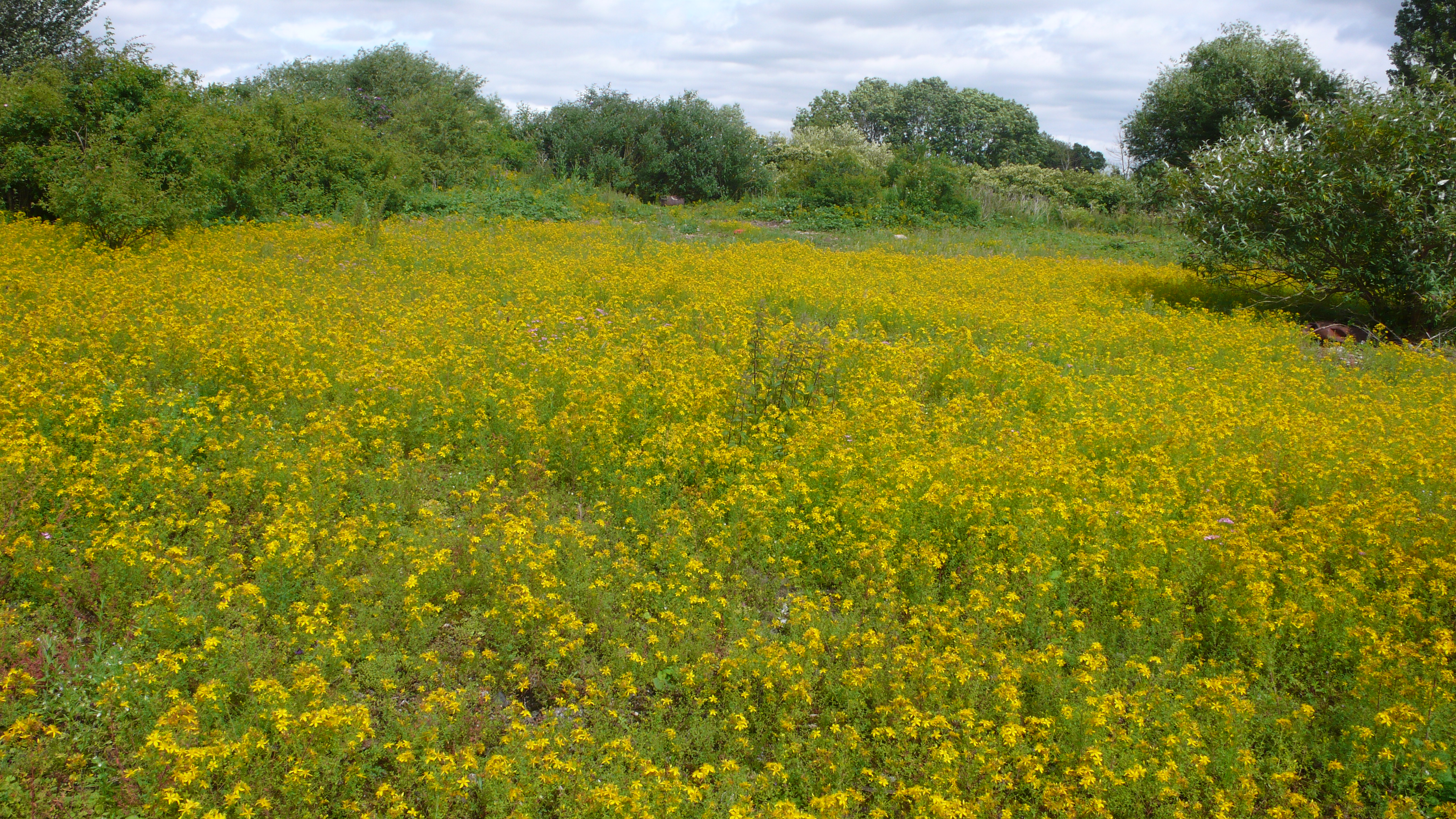
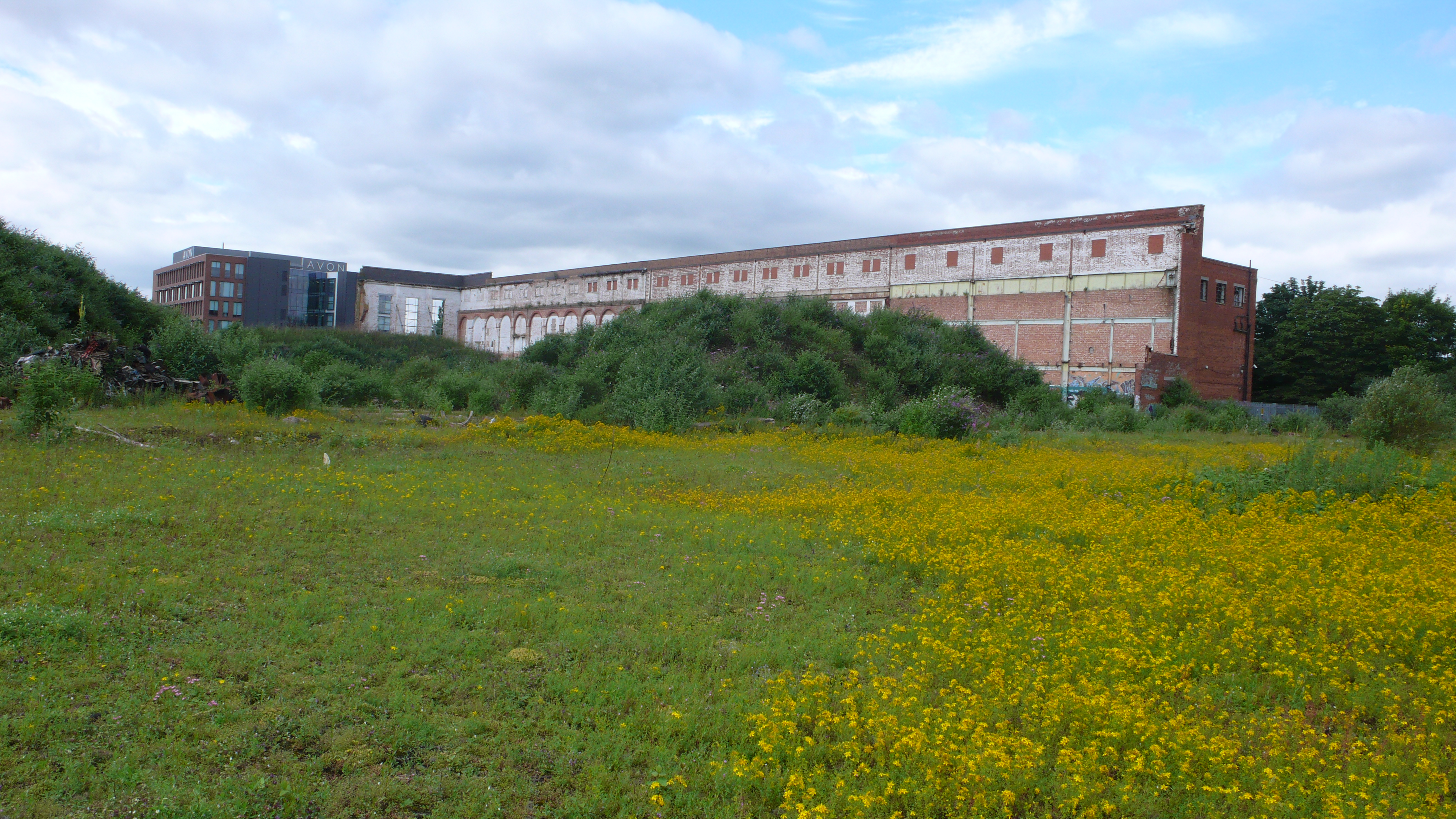
Away from the river, one of the highlights of the trip was a guerrilla visit to a post-industrial site that is posited as the new campus for the university.  It’s actually the site of the former Northampton power station and like many abandoned brownfields across the country, it has developed its own ecological community of invasive alien plants (for example buddleia, in abundance) and native species, many of them normally at home on dry grasslands.  One section was described by Steve, half seriously, as “urban tundra” as it was dominated by a species of lichen from the genus Cladonia.   

Our main attention was the River Nene, of course, never far from the path that we walked.  Further down the course we came to the Northampton Washlands, an area of low lying grassland and flooded gravel pits that serves to store flood water when the river overtops its banks.  It’s also an internationally important site for migratory birds such as lapwing and golden plover, and is part of the recently designated  Special Protection Area (SPA).  It was another highlight in a day of exploration and surprises.

The dream of a river which can support biodiversity, provide drinking water, allow a wide range of recreation, and be flood managed, is a hugely ambitious one.  But there are many people and organisations working hard to see it flourish because the River Nene is a  vital part of the life of the town and the county.  And without dreams, what are we….?

Lend us a Darwin?

It’s been a momentous month for science, following the announcement that the CERN group have found the first hard evidence of the existence of the predicted Higgs boson.  Finally we seem to be getting to the crux of what matter actually is, funded by sums of money that those of us involved in biodiversity, ecology and conservation research cannot conceive.  The journalists have clearly enjoyed their role of demonstrating that they understand the highly technical concepts explicit within the Higgs quest.  But why is it that some science writers seem to be able to “get” the most complex of theoretical physics yet struggle to understand what the environment is and why it is important to understand how it functions, its current state, and its preservation?

In sharp contrast to the CERN coverage was a rather silly analysis by BBC correspondent Michael Easton.  His piece concluded that the idea of the UK as a predominantly urban country is a “myth” because the UK National Ecosystem Assessment has found that “6.8% of the UK’s land area is now classified as urban” and further that “78.6% of urban areas is designated as natural rather than built”.  Therefore, in Easton’s opinion, the proportion of the UK that is built upon is 2.27%, ergo, the rest is natural and everything’s ok.  I’ve searched for both of those quotes in the document that he cites but can’t find them.  But leaving aside sloppy scholarship that would shame a first year undergraduate, to focus purely on the directly urbanised fraction of this country ignores the fact that over 40% of the country is designated as “enclosed farmland” with much of the remainder devoted to agriculture of one form or another.    That agriculture supports the urban population, of course, and so the urban “footprint” extends far beyond the physical infrastructure of our towns and cities.

Easton’s analysis assumes that because it’s green, it’s natural.  Which ignores the fact that the majority of our “green and pleasant land” supports only a limited biodiversity.  The notion of what is “natural” is a complex one and can’t simply be equated to attractive landscapes with lots of trees and green fields.  That’s no more “natural” than an aesthetically pleasing painting; both are human constructs and both reflect human interpretations of the world.

The problem with these kinds of ad hoc analyses by journalists is that people who read them assume it’s based on solid evidence and that the writer knows what they are talking about.  In this case, the statistics have been spun to suggest that that we should not worry so much about the UK’s environment because only about 2% is urbanised.  Urbanisation is not the biggest threat to biodiversity by any means and in fact urban environments can support greater levels of biodiversity than “countryside”.

It was therefore nice to see the publication of a perfectly timed study by David Tilman and colleagues showing that biodiversity loss has a greater impact on how ecosystems function, in terms of productivity, than other factors such as nitrogen deposition, drought, increased carbon dioxide, fire, etc.  This is mega-ecological research at CERN-like scales involving thousands of measurements in 11 long-term studies, some lasting over a decade.   It’s the kind of science we require if we are to understand how the loss of biological diversity might affect the environment on which we depend.

One evening last week I took up an invitation to speak to a group of students from Emory University in the States, currently staying in Oxford for a summer school.  They were an attentive lot, and the politest and best dressed group of students I’d ever encountered, though in fairness my talk followed a formal dinner at Regents Park College, their British base.  I began by asking if anyone had a £10 note.  A few held one up and were able to identify the profile of Charles Darwin and the fact that there were images of a hummingbird and flowers, plus HMS Beagle, printed on one side.  “That’s how important Charles Darwin (and pollinators) are to us” I stated “We put them on our money!” 

That’s perhaps stretching the point a little as Darwin’s interest in hummingbirds was limited – on its release the £10 note was originally criticised by Steve Jones as “there are no hummingbirds on the Galapagos Islands”.  True, but it was the whole voyage which inspired Darwin’s ideas, not just his brief visit to that archipelago, and hummingbirds are to be found across mainland South America.  Darwin certainly mentions seeing them in a couple of his Beagle notebooks, which are searchable online.  The great man also had a strong interest in flowers and pollinators, so the images are more fitting than Steve Jones believes.  In any case, a “Darwin” quickly became British slang for a tenner and “Lend us a Darwin?” is a useful shorthand when borrowing money from friends.  As a brilliant writer and explainer of complex ideas, Darwin was a science populariser long before the distinction was made.  Many of his books were best sellers in their day and all were founded on solid data and examples gleaned from his contacts around the world.  Current science writers could learn a lot from him.

Scientists Must Write (and Speak and Listen and Review and Edit)

“Scientists Must Write” was the title of a book published back in the late 1970s by a former tutor of mine, Robert Barrass, at what was then Sunderland Polytechnic (now the University of Sunderland).  I had assumed the book was now a long gone publishing memory and no longer available.  But it turns out that Robert updated it in the early 2000s and it’s still in print.  Almost 30 years (30!) later I can clearly remember Robert impressing upon us the importance of good writing skills for scientists-in-training.  At the time I was as far from being a professional scientist as it’s possible to be and so didn’t fully grasp this, but nonetheless what he said chimed with my own notions that writing was important, even for a scientist.

Nowadays I realise that it’s not just the writing of standard, academic papers, book chapters and books which  is essential: writing of all kinds is a necessary facet of the life of a research active scientist.   This June sees the publication of two contrasting articles that illustrate this point.  The Royal Horticultural Society’s journal The Plantsman has published a piece entitled “The Importance of Native Pollinators“, whilst the historical journal Notes and Records of the Royal Society has published my paper on “John Tweedie and Charles Darwin in Buenos Aires“.  Neither of these is standard academic fare, at least for me.  The first is a popular article aimed largely at gardeners and others interested in understanding more about pollinator conservation.  The second, whilst academic and rigourously peer reviewed, is primarily historical rather than scientific.

Why am I writing popular conservation articles and historical papers?  Largely for different reasons, though they are linked by my overall fascination with biodiversity.  The Plantsman article is an example of taking ideas and findings from the LBRG‘s research and presenting it to a wider audience who might, at the least, find it interesting and hopefully useful.  One might describe it as “popular science” though I don’t really like the term: it suggests that it’s somehow different to “real” science, which is not the case: it’s really only the format of the presentation which is different.

The John Tweedie/Charles Darwin paper reflects my desire to understand where our scientific knowledge of biodiversity comes from.  As scientists and conservationists, we draw conclusions about species’ distributions, conservation threats, extinctions, and so forth, based on information from specimens that have been collected by people like Tweedie and Darwin, and curated at places such as Kew and the Natural History Museum.  By its nature it’s a historical process and historical research helps us to understand how we arrived at our current understanding.  The only reason we know that 23 species of bee have gone extinct in England since about 1800 for example, as I cite in my Plantsman article, is that over the past two centuries specimens and observations have been recorded and analysed.  This is an ongoing process, exemplified by the BWARS project mapping the spread of Bombus hypnorum   the most recent addition to the UK’s native bee list.

As well as writing we scientists gain much from listening to what others in our field have to say and a well attended, and very interesting, meeting in London last week launched the British Ecological Society’s Macroecology Special Interest Group .  The range of talks spanned community structure, interaction networks, ecosystem services, latitudinal gradients and disease biology, all at the large spatial and temporal macroecological scales covered by this subdiscipline of ecology.  Or is it really a multidisciplinary field, a merging of old fashioned biogeography with more modern ecological approaches?  Who knows, perhaps this is sterile semantics; as I mentioned to one of the organisers in the pub afterwards, “macroecology” seems to me to be more about a philosophy of approach rather than a field in itself.

Formal teaching has largely finished for the time being, so in addition to research activities and university administrative work, much of the remainder of the last couple of weeks seems to have been taken up with editorial and peer reviewing duties for journals, including PLoS ONE, for which I’m an academic editor. This can be time consuming and thankless, but is absolutely vital if the whole system of scientific publishing is not to grind to a halt.  Scientists must write, but that writing is supported by a body of individuals who act as peer reviewers, editors, proof readers, and so forth.  Collectively that eats up a lot of scientist-hours and is something we should never take for granted.

The Roof Tiles of Chirche (Darwin’s Unrequited Isle part 3)

Architectural analogies in evolution are not new.  The most famous (and, in its time, controversial) is perhaps Gould and Lewontin’s “Spandrels of San Marcos and the Panglossian Paradigm” in which these prominent evolutionary biologists suggested that some features of the biology of species were secondary “emergent” structures which formed from the conjunction of other, evolved characteristics.  That is to say these features are not evolved in their own right, they are simply by-products of the evolution of other factors.  In this respect they are like “spandrels” – the ornamented space between two structurally significant elements, for example the arches and the domed roof they uphold in the Basilica di San Marco in Rome.  Gould and Lewontin were following a metaphorical path that had been traversed by many major figures in evolutionary biology.  Most notably, Darwin used the notion of the architect, contrasting natural with artificial selection, in a number of his books, including “The variation of animals and plants under domestication”.

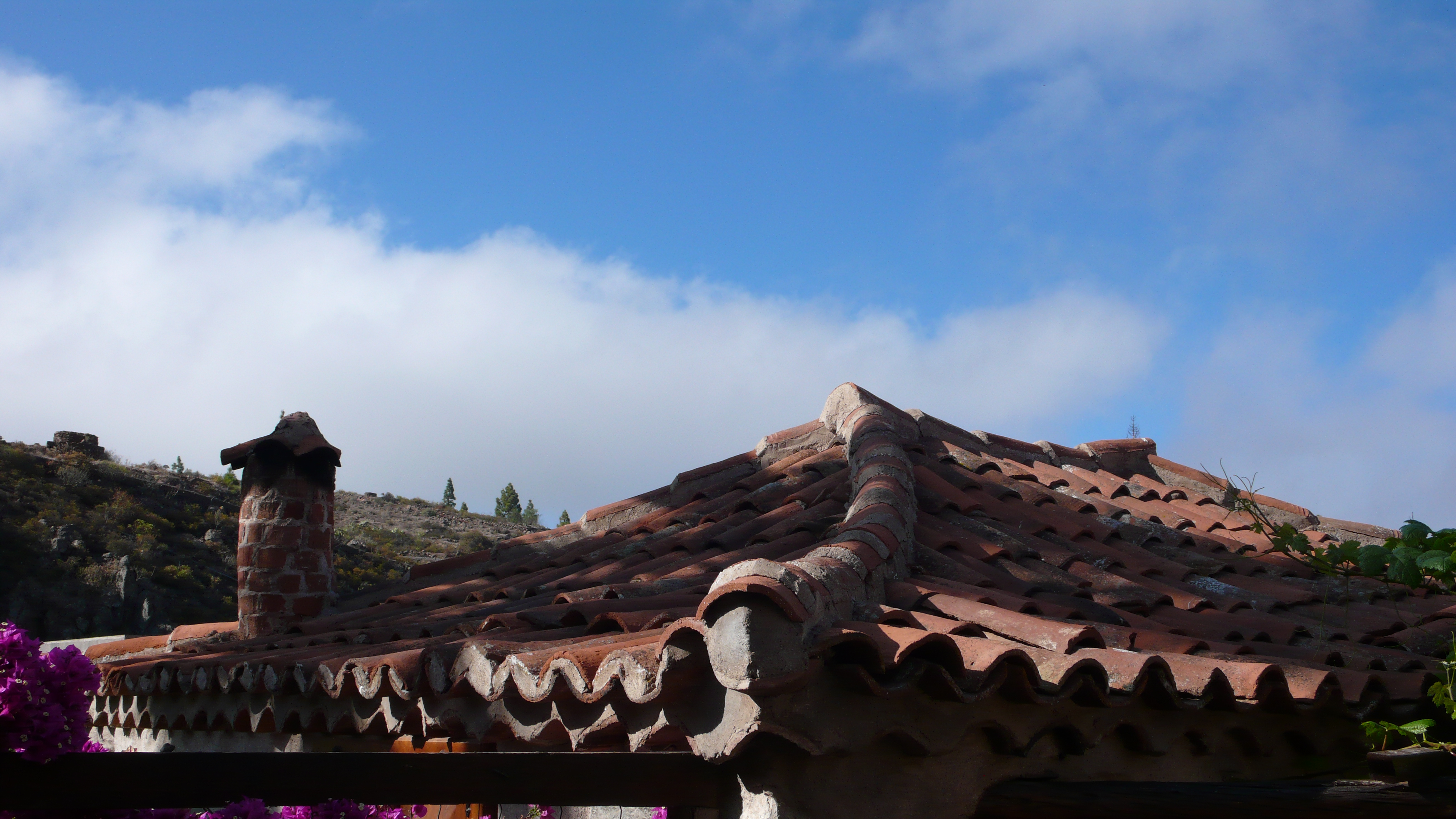
Another architectural analogy occurred to me over the past couple of weeks, time Karin and I have spent back in Tenerife pursuing field work funded by a small grant from the British Ecological Society.  We are staying in a cottage in the pretty village of Chirche in the west of the island.  The older properties, our rented castita included, are roofed with traditional, hand made rough clay tiles that are slim, curved and tapering towards one end.  Tiles are carefully laid curve up and curve downwards in alternating rows so as to both shield the building from the weather and to shed the rain from the roof in the channels formed by the up-curved rows.  These same tiles are used along the ridges of the roof, in contrast to roofing back in the UK where differently shaped tiles would serve for roof and ridge.  Not only that but the same basic curved and tapering form serves as a structural element for the tops of walls, as half pipes to direct the flow of water, and as building blocks for chimney stacks, etc.

It’s a wonderful example of economy of manufacture and purpose, using the same basic element to serve multiple functions.  What has this to do with biodiversity you ask?  It’s a fitting observation for this trip, in as much as we are studying flowers and their visitors.  Flowers are another great example of the economy of evolution: all of their basic elements (male stamens, female stigma style and ovary, petals and sepals) have evolved from the same basic botanical element – leaves.  If that seems unlikely take a look (a really close look) at some of the fancy, highly bred flowers for sale at your local garden centre or plant nursery.  Some will have leaf-like structures deep within the flower where genetic mutations have resulted in the expression of organs rather more like their ancestral form than like stamens or petals.

The purpose of returning to Tenerife is to collect more data as part of an on-going project I’ve been running within our undergraduate field course.  The Canary Wallflower (Erysimum scoparium) has flowers that change colour; they are pure white when they first open and from the second day onwards they darken to violet then ultimately purple, staying on the plant for up to 10 days.  At the same time the flowers stop producing nectar.  The pollinators learn to associate white flowers with more reward and focus their attention on the newly opened blossoms.  This is clearly an evolved strategy as it benefits the plant to have its most recent flowers preferentially visited, rather than the older flowers that have already received pollen.

In an earlier paper we demonstrated, by removing purple flowers from experimental plants, that these older flowers act as a long-to-medium range advertisement to pollinators (the plants look purple from a distance).  It’s a very intriguing system.  We now have about 10 years of data showing that the main pollinator is an endemic solitary bee (Anthophora alluadi).  But there seems to be some variation between years, with a wider range of different bee species present in years following very dry winters (such as this one) when there are fewer other plants in flower.  So the idea that we are testing is that the relative specialisation of the plant (i.e. how many pollinator species it has) is context dependent: in some years/sites it is a specialist, in others a generalist.

Biodiversity is not fixed in time or space.  It varies at all scales and, for this plant and its pollinators, the biodiversity of interactions between them is stable only over modest time periods.  Over the millions of years these plants and bees have existed in the Canarian archipelago, their exact roles within the system have probably varied enormously, like actors improvising their parts dependent on the whims of external forces, in this case weather conditions.  The roof tiles of Chirche saw little rainfall during the last winter; bad for the local farmers and the other people who depend on this rain.  But good for ecologists wishing to study how variation in climate can affect biodiversity.