Tag Archives: Nature

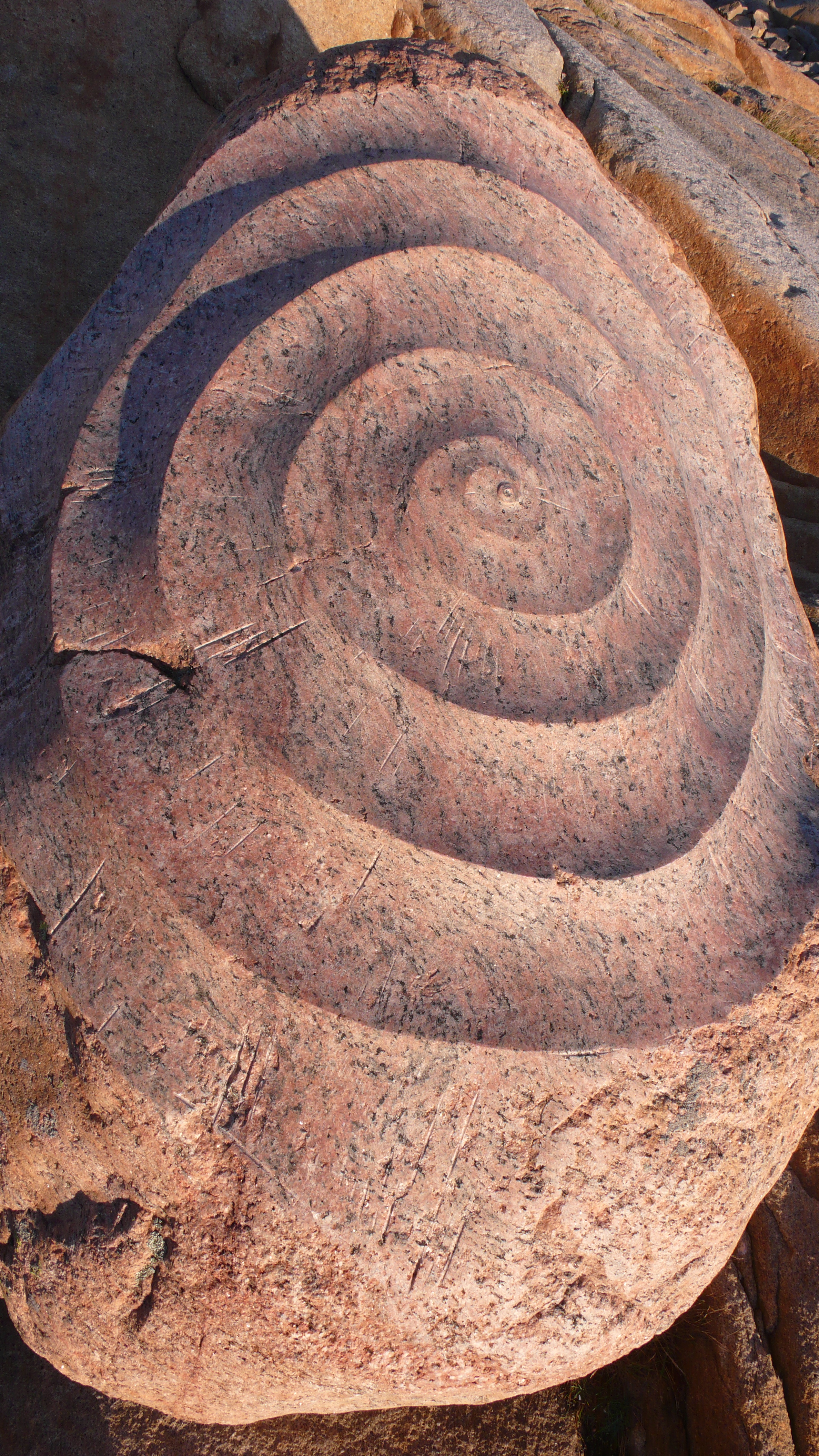
A coiled Spring

Wellcome Trust - June 2009 006

April, according to T.S. Elliot, “is the cruellest month”.  Not sure about that, though April 2013 proved to be both frustrating (as we in northern Europe waited for Spring to arrive) and busy, as I tried to pack in a whole set of activities.  That’s my only excuse for not updating my blog, so the aim of this post is to catch up with biodiversity-related activities and observations over the past few weeks.

Just as iconic decades begin part-way through a given ten year period (the 60s didn’t really kick off until about 1963, for instance) so April for me actually began at the end of March.  In the last week of that month I completed my formal teaching for the term and celebrated the first anniversary of the Nene Valley Nature Improvement Project.  I also picked up my daughter Ellen from Heathrow Airport, on a two week visit back from working in China.  On the way I counted over 20 red kites flying near the M40 motorway – what an incredible success story their re-introduction has been!

One of the reasons Ellen had come back was that I was due to give my inaugural professorial lecture, entitled “How many bees does it take to wake up in the morning?  The importance of biotic pollination in a changing world”.  Another reason was to to celebrate my eldest son Patrick’s 18th birthday the following day.  Both once in a lifetime events and both had family at their heart.  It was a great week.

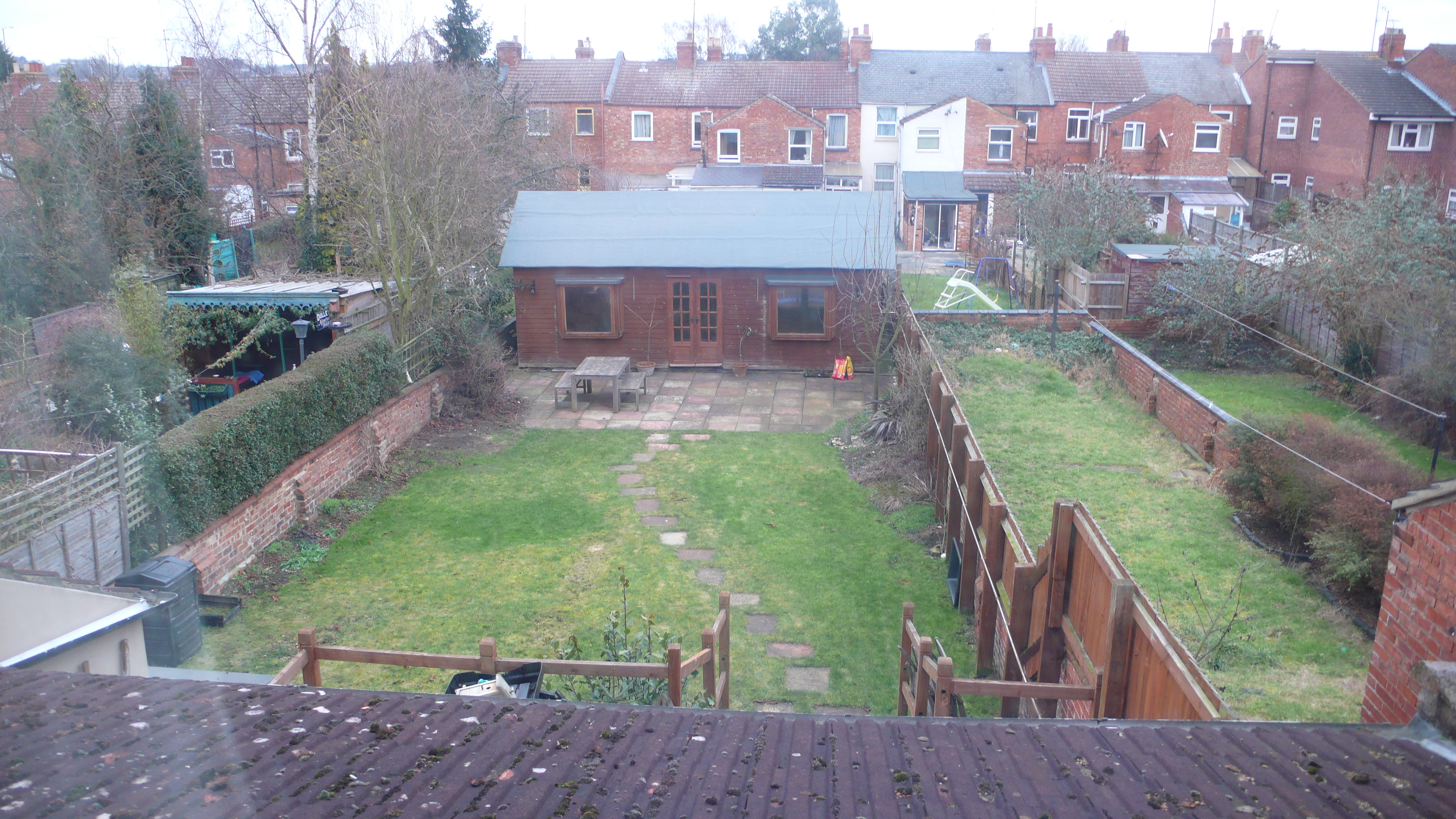
Some leave time followed, much needed after what seemed like an endless 12 week university term, during which I hoped to plant potatoes and do some other work in the garden.  But Spring refused to uncoil.  The northerly winds brought cold weather that froze all vernal activity in the act.  Flower and leaf buds were there waiting to unfurl; insects would occasionally appear then just as quickly disappear; and birds clearly wanted to get on with the important activities of raising young.  But all was delayed.  One could sense the tension, the build up of seasonal energy, biology waiting to happen.

A talk at Earlsdon Gardening Club near Coventry on Monday 8th April was well received and took my mind off the organisation of the biennial Bumblebee Working Group meeting on the 11th.  This semi-formal get together of scientists, NGOs, and other Bombus-minded individuals, shifts between venues every two years.  At the last meeting in 2011 I volunteered to host the next event and then put it out of my mind for 18 months.  Organising a scientific meeting is always a bit of a mad panic as the day draws closer and one wonders if anyone will actually turn up.  But as it turned out the event was well attended, with over 80 people listening to talks on diverse topics including the effects of neonicotinoid pesticides on bumblebee colonies;  I’ve uploaded a copy of the programme.

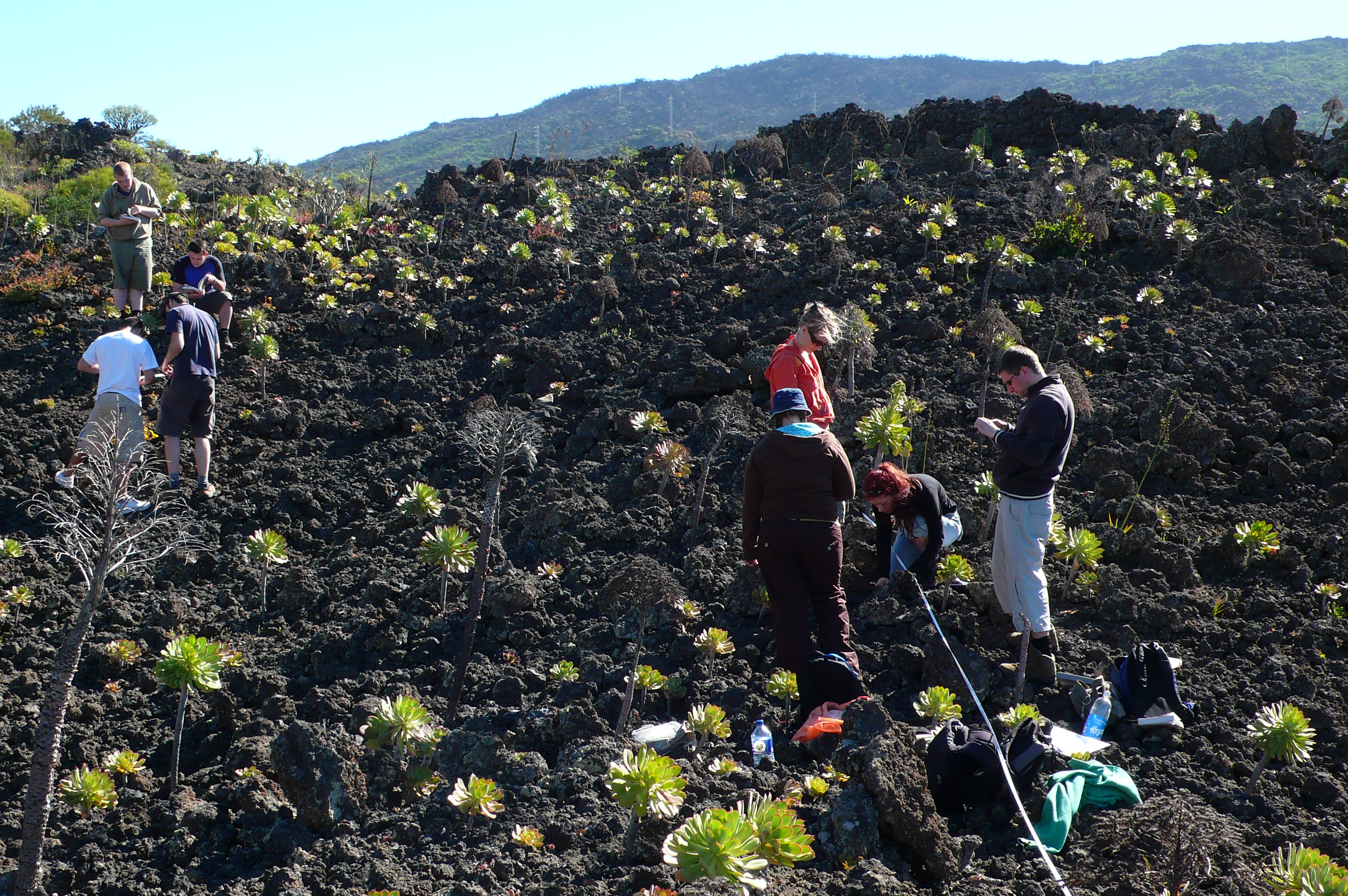
Friday 12th April was a frantic dash around office and lab to get books, equipment and sundries organised for our annual undergraduate Tenerife Field Course, which was flying out on the following Sunday.  A great time was had by all as we explored the biodiversity of Darwin’s Unrequited Isle and we came back with a wealth of great data plus not a little sunburn.  No matter how often I tell students that they really need to wear a hat and use sun block, some will never listen.

Arriving from Tenerife early on Monday 22nd, I slept for a few hours then was back at the university for the oral PhD examination of Hilary Erenler, whose work I have mentioned previously.  These exams are always stressfull for both student and supervisors but in the event Hils performed wonderfully and passed with only minor amendments.  A great result!  Now looking forward to publishing some papers from that work.

April ended, and May began, with a change in the weather.  Much warmer winds blew in from the south west and life suddenly erupted: pressure had been removed from the coiled Spring.  Lots of pollinators appeared in our garden including: Anthophora plumipes, one of my favourites for its glossy, black females and aggressively flower patrolling males; the relatively newly arrived Bombus hypnorum; the bee fly Bombylius major; and several different butterflies.

Clearly it’s time to plant those potatoes!

For she’s a jolly good Honorary Fellow (reduce, reuse, recycle part 4)

August 2009 - Gardeners World 052

The signals of spring are appearing across Northamptonshire.  Despite the current cold and wet weather, a couple of recent ventures out into the wilds revealed Prunus sp. and lesser celandine (Ranunculus ficaria) in flower, as well as lots of frisky birds doing their thing.  But for me there is no surer sign of approaching spring than the start of a new series of Gardeners’ World on BBC 2.  It’s a programme I’ve followed for many years and (as well as useful gardening information) it provides a barometer  for how a significant sub-class of the Great British Public (amateur gardeners) thinks about the environment and its biodiversity.   It’s also an influential programme that changes behaviours,  as I argue in the following piece of writing from last year, when the University of Northampton gave Gardeners’ World presenter and gardening writer Carol Klein an Honorary Fellowship.

Universities award honorary degrees and fellowships to famous people and “celebrities” for a variety of reasons, not all of them laudable and some ethically dubious.  But we proposed Carol Klein because of the effect her work has had on how gardeners garden.  I had the pleasure of introducing Carol at the graduation ceremony, in front of an audience of a couple of thousand graduands and their families.  What follows is the text of that presentation; as I’ve mentioned previously, why waste good words when they can be reduced, reused and recycled?

Following an introduction by the Vice ChancellorOllerton steps up to lectern dressed like an extra from a Harry Potter movie, be-gowned and be-capped. He starts to speak…..

Chancellor, insofar as the Council and Senate of the University have seen fit to establish Honorary Fellowships to confer on eminent individuals, I today present to the Chairman one on whom the Council and Senate have determined to confer such an award.

PAUSE – Carol was guided by a Marshall to stand at the front of the stage.  Once she was in place and the Marshall had returned to his seat, Ollerton continued….

I am delighted to introduce to you Mrs Carol Klein.

SHORT PAUSE – just for effect…..

There can be no doubt that the British are a nation of gardeners.  Whether it’s just developing a window box, a small back garden, or, for the more adventurous, an allotment, horticulture is a hobby that excites both young and old.  This is reflected in some astonishing statistics; the Horticultural Trade Association estimated that in 2010 the Garden Retail Market was worth £4.6 billion to the economy, whilst public gardens such as Kew and the Eden Project both host over one million visitors a year.

Much of this public passion for gardening is both reflected in, and fuelled by, the coverage it is given in newspapers, magazines, radio and (most especially) television.  And since its first broadcast in 1968, the BBC’s Gardeners’ World has been the pre-eminent gardening programme in Britain and Carol Klein is one of its most popular presenters.

Carol was born in Walkden in Salford, Lancashire and has never lost her accent!    Following her school education she trained as an art teacher and taught in schools in London before moving to Devon.  There Carol taught at North Devon College whilst developing her own interest in plants and gardening.

This grew, quite literally, into her own plant nursery, Glebe Cottage Plants, which she set up with her husband Neil.

What was once a hobby had become a career.  The nursery exhibited at all the major Royal Horticultural Society shows, winning gold medals at Hampton Court, Westminster, Malvern and of course Chelsea.  In 1989 a Gardeners’ World feature on Glebe Cottage Plants led to invitations to work as a guest presenter for the BBC and Channel 4.

In 1998 Carol wrote and presented a six-part series Wild About the Garden in which she promoted the ideals of finding space for native flora and fauna in our gardens, something which is very close to the hearts of those of us who teach and carry out research in the Department of Environmental and Geographical Sciences.

Carol has starred in other TV programmes, including two series of Real Gardens, as well as offering her expertise to television programmes such as Garden Doctors, Time Team and even Water Colour Challenge.  Carol’s most recent series, Life in a Cottage Garden, was filmed at her own Glebe Cottage.  In December the High Summer episode from the series won the prestigious Garden Programme TV Broadcast of the Year award at the 2011 Garden Media Guild TV & Radio Broadcast Awards.

Life in a Cottage Garden was also made into a book of the same name because as well as her television presenting work, Carol is a prolific author.  Carol has written a number of bestselling books including Grow Your Own Veg, with over 200,000 copies sold, and contributes articles for periodicals including Garden News, the Guardian, the Daily Telegraph and, of course, Gardeners’ World magazine.

And it is Carol’s weekly appearances as one of the presenters of Gardeners’ World for which she is most famous.  Every Friday night between March and October over 2 million of us watch the programme as it is broadcast, with many more catching up with it later on the BBC iPlayer.

Gardeners, whether experienced or novice, cannot help but be roused by Carol’s passionate and energetic on-screen persona.  However, this is not an act for the benefit of the audience, it’s how she is!  I learned that a couple of years ago when I had the pleasure of working  with Carol for a Gardeners’ World special edition called The Science of Gardening.  During a long day of filming Carol never lost her curiosity and enthusiasm for the subjects we were discussing.

The programme was filmed at Glebe Cottage.  In an article for the Guardian newspaper a few years ago, Carol wrote:  “It has taken a long time to get to know my garden – 30 and a bit years – and I’m still finding out about it……..at every twist and turn it unfolds new revelations.  A garden is a place to enjoy and indulge in, something you can love, somewhere you can nurture. It stimulates all the senses, and its very unpredictability gives it a vitality not often encountered in our contrived and controlled world.”

This, to me, sums up what makes Carol such a special gardening presenter and communicator – even familiar things excite her, whilst the unfamiliar is approached with a keenness to understand and to communicate it to the widest possible audience.  In that sense, Carol’s original training as a teacher has never been lost.

Chancellor, distinguished guests, graduands….

ANOTHER SHORT PAUSE – just for effect….

…..today we are honouring Carol Klein not just because of her work as a public gardening figure but also for her contribution to persuading gardeners to think about and to limit the negative impact of their hobby.

All human activity, including gardening, has an impact on the environment that sustains us.  It is Carol Klein’s championing of gardening in an organic, wildlife friendly way which may be her most lasting contribution.  Tellingly, a recent Public Attitude Survey by Defra showed that almost 70% of respondents “actively encouraged wildlife in their gardens, for example through feeding areas or specific planting”.  It is people such as Carol who have helped to shape public opinion in such a positive way.

As Carol put it in a newspaper article a few years ago, gardening with the environment in mind:  “relies on building up communities of fungi, flora and fauna in the soil, and any interruption or chemical intervention sets it back. It’s not a question of being hardcore; it’s about having faith in nature and natural processes.”  That faith is more than just “tree hugging” or “Saving the Planet”: the UK National Ecosystem Assessment in 2011 estimated that our natural environment contributes over £30 billion to our economy every year through the provision of ecosystem services such as fresh water, carbon storage, pest control and pollination.  Gardeners have an important part to play in ensuring that we do not compromise those ecosystem services and Carol Klein has played a significant role in promoting those values.

Chairman, In accordance with the decision of the Council and Senate, I am privileged to present to you Carol Klein that you may confer an Honorary Fellowship.

Applause from the audience as a very embarrassed looking Carol Klein steps forward to give an engaging and humorous speech.  Ollerton goes back to his seat on the stage, relieved his part is over

A (bird) book for bedtime (and a bit about bees besides)

2012-10-27 14.28.28

Biodiversity as it’s generally defined and conceived includes not only diversity of species and habitats, but also diversity within species, often (but not always) genetic in origin.   Eddie Izzard’s new two-part television series Meet the Izzards neatly captures the idea of genetic diversity, and how it informs our  understanding  of the past evolution and prehistorical dispersal of a large, bipedal mammalian omnivore.  “Cultural biodiversity” in Homo sapiens is less easy to define in this way as it has probably only a limited genetic component and is passed from individual to individual by copying and refining.  Other species have “culture”,  for example New Caledonian crows and chimpanzees, but human cultural diversity is more varied than that of any other species.

Take book reading as an example.  Some individuals of our species never read.  Others read only one book.  Incessantly.  And then argue about what it means with others who read the same book.  Other individuals gorge on a book a day or snack on one a  month, or manage on a starvation diet of one per year.  I’m a two book nibbler.  Normally I always have a novel and a volume of non-fiction on the go.  The novel is for last thing at night when I need to turn off my mind and do some easy reading; a few pages then it’s time to sleep.  Nibble, nibble.  The non-fiction is for the morning, if I wake up early enough, or weekends if they are free; or train journeys.  Still nibbling, but this time on more solid fare.

As with all cultural diversity, none of this is inflexible and at the moment I’m also reading a non-fiction book at night:  Fighting for Birds:  25 years. in nature conservation by Mark Avery, former Conservation Director of the RSPB.  Mark kindly came to give a talk at the university recently and brought copies of his book to sign and sell.  It was a stimulating lecture and feedback from the students who attended was very positive.  For those students who didn’t make it (and there were a lot) I have to ask:  why are you paying thousands of pounds a year to not turn up to events that will inspire, educate and develop you?  You had the chance of bending the ear of a very prominent British conservationist.  At the very least you could have asked:  “How do I get to do the job that you do?”  You’re currently investing a LOT of money in your future and, frankly, wasted opportunities such as this are the equivalent of failing to claim a share dividend.

Back to the book.  Although Mark claims Fighting for Birds is not an autobiography,  it is very autobiographical in scope and provides some great personal insights into the RSPB and the development of bird (and broader) conservation in the UK and the EU.  His description of the battles fought over the fate of the Flow Country brought back memories of writing an essay on that topic during my undergraduate years in the late 1980s.  I’ve still not visited that part of Scotland but I have in mind a road trip this summer that may take it in.  The RSPB is one of our partners on the Nene Valley Nature Improvement Area project so I was particularly interested in finding out more about what makes our most important wildlife charity tick.  Mark is an engaging and candid writer, forthright in his opinions political and ecological (and their interactions)  as you can see from his blog.        

By pure coincidence, this week Mark hosted a guest blogger in the shape of Matt Shardlow, Chief Executive of Buglife, talking about the current controversies over banning the group of pesticides known as neonicotinoids.  Matt puts forward a compelling case for withdrawing these chemicals from general use.  I don’t dispute anything he says about the role of neonicotinoids in bee deaths (though there is some debate about dosage levels used in some of the published studies and how this might translate into effects in the field).  But it does concern me that this new focus on pesticides is taking the spotlight off habitat loss, particularly grasslands, which is a far more important threat to pollinator populations.   There is a real danger that this single issue will be seen as an easy fix by government when a broader reform of farming practices is what’s really required.  The decline of wild bees and other pollinators can be tracked back to long before the introduction of neonicotinoids. There were some silly comments on the blog about neonics currently being the single most important conservation issue.  This is short sighted hyperbole and (again coincidently) Lynn Dicks has written an interesting piece on the subject of rhetoric, lies and over-the-top claims in the journal Nature.

The decline and extinction of pollinators in the UK has been an ongoing process since the 19th century.  I’d hate to see the government think that it’s “fixed” the pollinator problem by banning some pesticides, a much simpler task than protecting and restoring habitats, and encouraging farmers to manage their land more sensitively.  With 70% of the UK’s land dedicated to farming, human (agri)culture has got to be a key element in conserving biodiversity.

Waxwing winter

2013-01-04 15.27.49

January has been a month of biodiversity firsts for me.

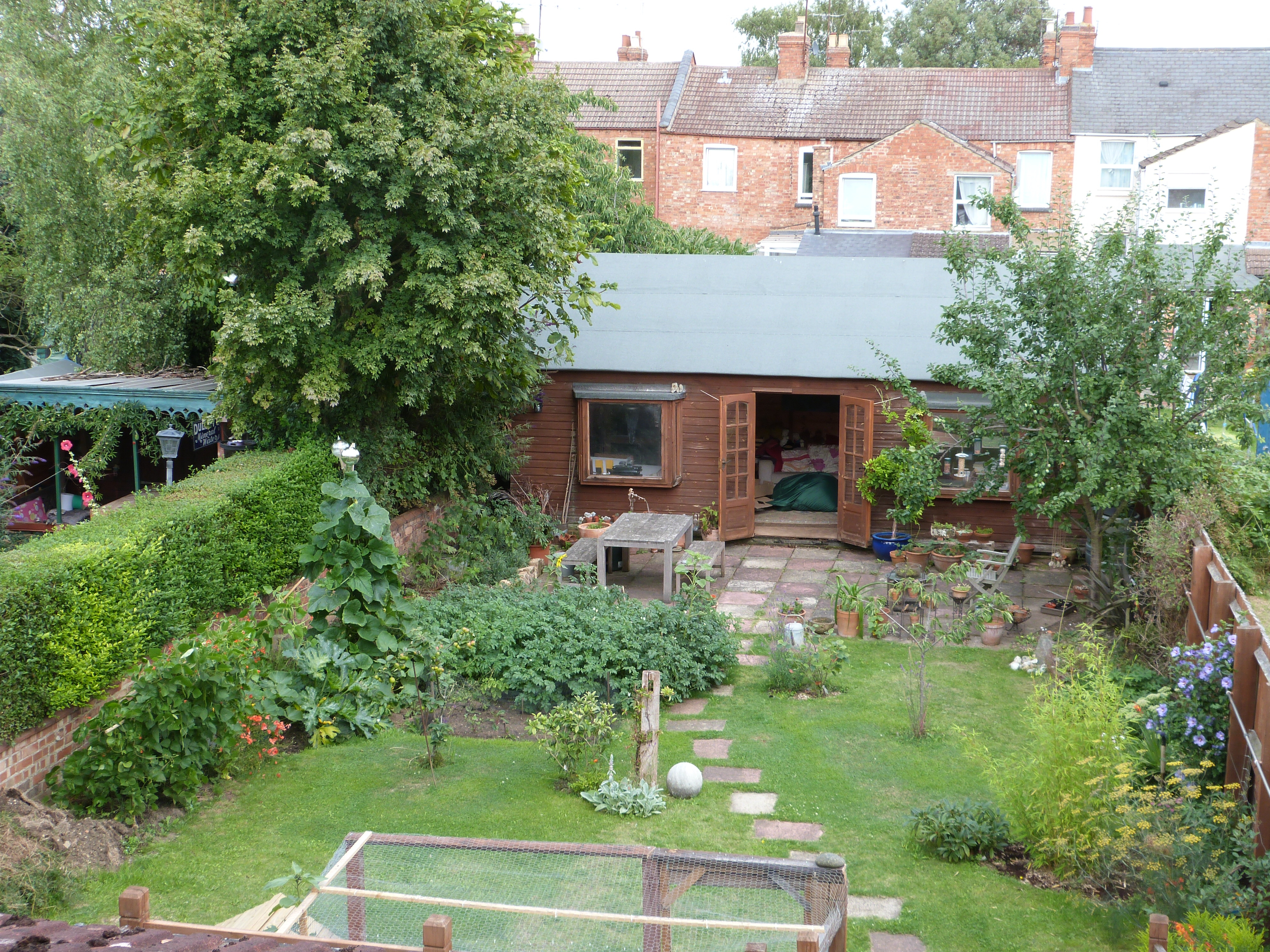
First New Year celebrated with Karin in our new home, quietly with friends and kids, plus the cats and chickens that are part of our personal biodiversity. I’m going to write a lot more about this notion of “personal biodiversity” later this year, but in short, we’re all of us directly connected to biodiversity physically and in the space we inhabit at home and work.  Think about that next time you’re devouring a pot of Activia or watering the spider plant in your office.

The first paper (hopefully of several) from Sam Tarrant’s PhD thesis has finally been published in the journal Restoration Ecology online ahead of the print version.  In this paper Sam compares the pollinator communities and available floral resources on restored landfill sites to those on nearby nature reserves.  The landfill sites are just as good for pollinators as the reserves, a surprising finding that parallel’s  Lutfor Rahman’s results in relation to bird communities on restored landfill sites .  All of which has implications for how landfill sites might be managed after they have fulfilled their primary function.  Opportunities for biodiversity conservation sometimes come from unexpected sources.

Another first was discovering some of our research cited in the recent United Nations Convention on Biological Diversity’s progress report on the International Initiative for the Conservation and Sustainable Use of Pollinators.   We were very pleased to see our work getting that kind of exposure on the international stage, regardless of what one may think of the Convention on Biological Diversity.  The CBD  is not without its critics  as I recounted the first time I blogged, live from a CBD-associated scientific conference in Germany.  This was later published in Bulletin of the British Ecological Society as “Blogging from Bonn“.    

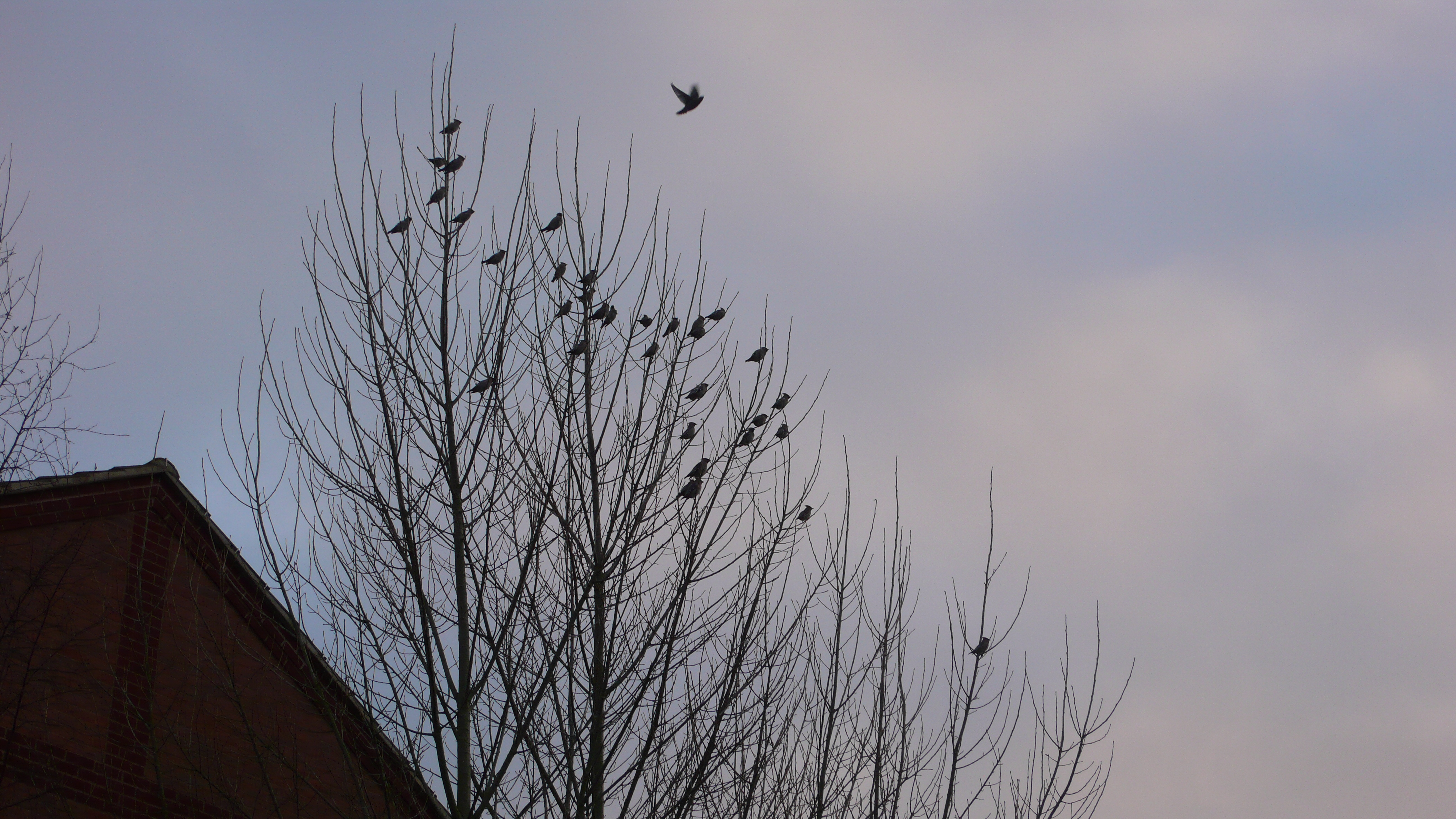
And I achieved a first by finally (after several years of trying) seeing a flock of waxwings (Bombycilla garrulus) a bird that, whilst not uncommon, is one which you really have to be in the right place at the right time to observe.  They are highly mobile and never in one spot for very long.  A friend of mine who is a very keen birder and has been trying for 25 years to see them and only achieved that birding tick this year.  One of our graduates, who blogs by the pseudonym of the Hooded Birder, has some great images of waxwings – take a look and you’ll see just what a beautiful bird this is, very exotic looking for a winter visitor to Britain.

At this time of year waxwings fly down from Scandinavia like avian vikings, marauding through the countryside devouring fruit from trees and shrubs such as rowan, hawthorn, apple, rose and any many others.  It’s quite a sight to see a bird the size of a starling eating large rose hips in a single swallow.  They are very approachable birds and we got  quite close to them.   Some years are marked by massive irruptions of these birds and are termed “waxwing winters”.  The latest data from the British Trust for Ornithology suggest that this is one such year and the Northants Birds site has regular reports of their appearance around the county.

Although I’m not by any means a serious birder, bird watching falls into the category of cultural/spiritual ecosystem services that is clearly supported by biodiversity.  Birding organisations are popular: the Royal Society for the Protection of Birds has over one million members and financial resources of almost £100 million, for example.

This weekend the RSPB will be running its regular Big Garden Birdwatch, a great example of citizen science in support of biodiversity monitoring.  I’ll do my hour of watching on Sunday morning; the current cold winter weather has brought birds into the garden that are normally found out in the wider countryside.  No waxwings yet but I live in hope.

Thank the insects for Christmas (reduce, reuse, recycle part 2)

2012-11-26 15.38.04

The university term has drawn to a close in a flurry of activity as we complete our pre-Christmas teaching and assessments, and the Department of Environmental and Geographical Sciences conducted a successful five-yearly Periodic Subject Review of its degree programmes.  I’m conscious that some of the things I wanted to write about since my last blog entry have slipped past without action, including a week that was bookended by visits with students to iconic localities on the biodiversity and conservation map.  These were a Monday trip to the Darwin Centre of the Natural History Museum in London with students on my final year Biodiversity and Conservation module; followed by a Friday visit to Wicken Fen, arranged by my colleague Janet Jackson for second year students on her Habitat Ecology and Management module.  Both great days away from the lecture room, if for different reasons.

At the Natural History Museum we looked at the insect research collections, behind the scenes where the public does not normally venture.  Wicken Fen, on the other hand, is open to all and we met birders and walkers as we toured the site.  I kept a tally of the number of bird species we identified and the final count was 29 (30 if you include the chickens being kept in a back garden close to the visitor centre).  It would have been impossible to make a meaningful species count  at the Musuem as we were overwhelmed by the statistics presented by the curators:  85,000 butterfly and moth specimens in the Lepidoptera section, 3 to 4 million specimens of true flies (Diptera).  On it went; wonderful diversity and an incredible scientific resource.

Which brings me neatly to the main topic of this entry: the importance of insects at Christmas!  I’ve mentioned before that one of the intentions of this blog was to reuse some of the writing I’ve done over the years in various fora, sometimes updating and re-casting it ro reflect recent activities or events (hence the “reduce, reuse, recycle” epithet).  The publication this month of the final report of the Government-sponsored workshop Insect Pollinators: Linking Research and Policy in which I was involved has prompted me to modify and re-post an entry that first appeared on the University of Northampton’s blog at this time last year.

The social and economic news is not great, global poverty is on the increase even in the richest countries and the range of human-influenced assaults on the natural environment seems to be escalating on a weekly basis.  But at least it’s Christmas!  A time to relax and enjoy ourselves, to share time with family and friends, and to unwind during the cold and gloom of winter.  Whatever your faith, or lack of it, Christmas should be about taking a break and reflecting on the year that has passed.  We’re helped in that respect by the ceremonial seasonal trimmings: the Christmas tree, strings of flashing lights, baubles and tinsel.  So while you’re kissing a loved one under the mistletoe, admiring that glossy holly wreath, or tucking into your Christmas dinner, spare a thought for the insects.

What in Saint Nicholas’s name”  you are asking ”have insects got to do with Christmas?!”  Well, like the turkey, we’d be stuffed without them:  they play an essential part in providing us with the things we associate with the Christmas.  If we had no flies, wasps, bees and other bugs acting as pollinators there’d be no berries on your mistletoe or your holly.  Kissing and admiring would be a less festive affair and that’s just for starters.  These insects also pollinate many of the vegetables, herbs and spices on your plate, as well as some of the forage that went to fatten your roast bird or tender joint of meat.   Not to forget much of what went into the nut roast that’s feeding the vegetarian relatives.

The economic value of insect pollination in the UK was estimated by the recent National Ecosystem Assessment to be about £430 million per year .  In fact this is a huge under valuation because the labour costs alone of paying people to hand pollinate those crops would run into billions of pounds.  This sounds far fetched but it’s already happening to fruit crops in parts of China.  The answer is to encourage wild insects, not artificially  managed honey bees, because collectively the former are far more abundant, and often more effective, as pollinators.  Their diversity is an insurance against losing any one species in the future.

The NEA’s valuation is also too low because it only deals with edible crops.  Mistletoe and holly are both dioecious species, which is to say that individual plants are either male or female, as is the case with most animals.  This means that the plants cannot self pollinate and insects are absolutely vital to their reproduction and to the production of the decorative berries we so value (a holly wreath without berries is just a big spiky doughnut, in my opinion).  Whilst researching the economic value of the annual mistletoe and holly crops for this blog posting I’ve been having a conversation with Jonathan Briggs over at Mistletoe Matters and he tells me that “the mistletoe trade in Britain is entirely unregulated and not documented in any tangible way” and the same is true of holly.  We therefore have no idea what the economic value actually is.  But some back-of-the-red-and-gold-Christmas-lunch-napkin calculations can at least give us an insight.  Auction reports this year  show that on average the best quality berried holly was selling for £2.50 per kg whilst equivalent quality holly without berries cost only 75p per kg.  In other words, pollination by insects increases the value of that crop by over 300%.   Similarly the high quality mistletoe averaged 80p per kg, whilst the second grade stuff was only 20p per kg.  And the best holly wreaths (presumably with berries!) were averaging £3.40 each.  These are wholesale prices, of course; retail cost to the customer is much greater.  A decent holly wreath will set you back between £15 and £30 whilst online shopping for mistletoe is in the £5 to £15 bracket.  The national census of 2011 shows us that there are 23.4 million households in England and Wales, plus there are 2.36 million in Scotland and 0.70 million in Northern Ireland.  Let’s round it down and say there’s 26 million households in the whole of the UK.  Let’s also be very conservative and estimate that only 5% of those households bought one holly wreath and some mistletoe at a total cost of £20.  Multiply that by the small proportion of households buying these festive crops and you arrive at a figure of about £26.5 million!  And that doesn’t include non-household use in shops, offices and businesses.  So there you have it: an industry worth a few 10s of millions (at least) all being ultimately supported by insects.

With pollination, timing is everything, and Jonathan also made the point that spring flowering mistletoe and holly can be important early nectar sources for insects.  Therefore despite the poor  summer weather, this year has been a good one for mistletoe berries because the pollination happened before the heavy rains began.  Despite being quite common plants, rather little research has been done on either holly or mistletoe pollination in the UK and it would make for an interesting student project.

The Landscape and Biodiversity Research Group here at the university is playing its part by working to understand the ecology of plants and pollinators, and how to best conserve them.  In this blog I’ve referred a few times to some ongoing projects researching how the wider landscape is supporting pollinators in habitats such as country house gardens   (Hilary Erenler’s PhD work which she’s currently writing up) and urban centres (ongoing PhD work by Muzafar Hussain).  There’s also the recently completed work by Sam Tarrant and Lutfor Rahman on pollinator (and other) biodiversity on restored landfill sites.   Plus work that’s only just started by Kat Harrold on how whole landscapes support pollinators in the Nene Valley Nature Improvement Area. This is all part of a broader programme of research into the conservation of biodiversity in our region and beyond, including a contribution to the Shared Enterprise Empowering Delivery (SEED) sustainability project.   Biodiversity matters and its importance to our society is being increasingly recognised by government, business and the public.

So if you make one New Year’s resolution on the 31st December, let it be that you will put away your bug sprays for 2013 and learn to love the insects (even wasps!) who give us so much and help to support our economy in a very real way.  It costs us nothing; all we need to give them is well managed, diverse, unpolluted habitats in which to live.

Have a great Christmas everyone!