After what seems like a long wait, for me at least, today marks the official publication of Birds & Flowers: An Intimate 50 Million Year Relationship! I received my advance copies on Friday, an event that Karin commemorated with a short unboxing video:
It’s been a long journey from pitching the initial idea to Pelagic Publishing back in early 2021, through the various drafts that have culminated in the finished book. As you can see from the images on this post and the endorsements on the publisher’s web site, Birds & Flowers has so far been warmly received. I hope that future reviews are as positive!
A few people have asked me what’s next. In fact I have definite plans (as in topics, provisional titles, the start of chapter structure, and even some initial writing) for three more books. The next one is actually about half written, but then I have been working at it, on and off, for 30 years! Watch this space for more details…
In the shorter term, Karin and I are returning (permanently) to the UK at the start of March. We’ve enjoyed our time in Denmark, it’s been a fun two and a half years, but we’re missing our immediate family plus we both have some interesting work possibilities to pursue. In mid-April I will be going to China for three months to work with my colleague Zong-Xin Ren at the Kunming Institute of Botany. I’ll be sure to blog about my adventures there!
In the meantime, if you buy my book or borrow it from the library or from a friend, please let me know what you think in the comments section below.
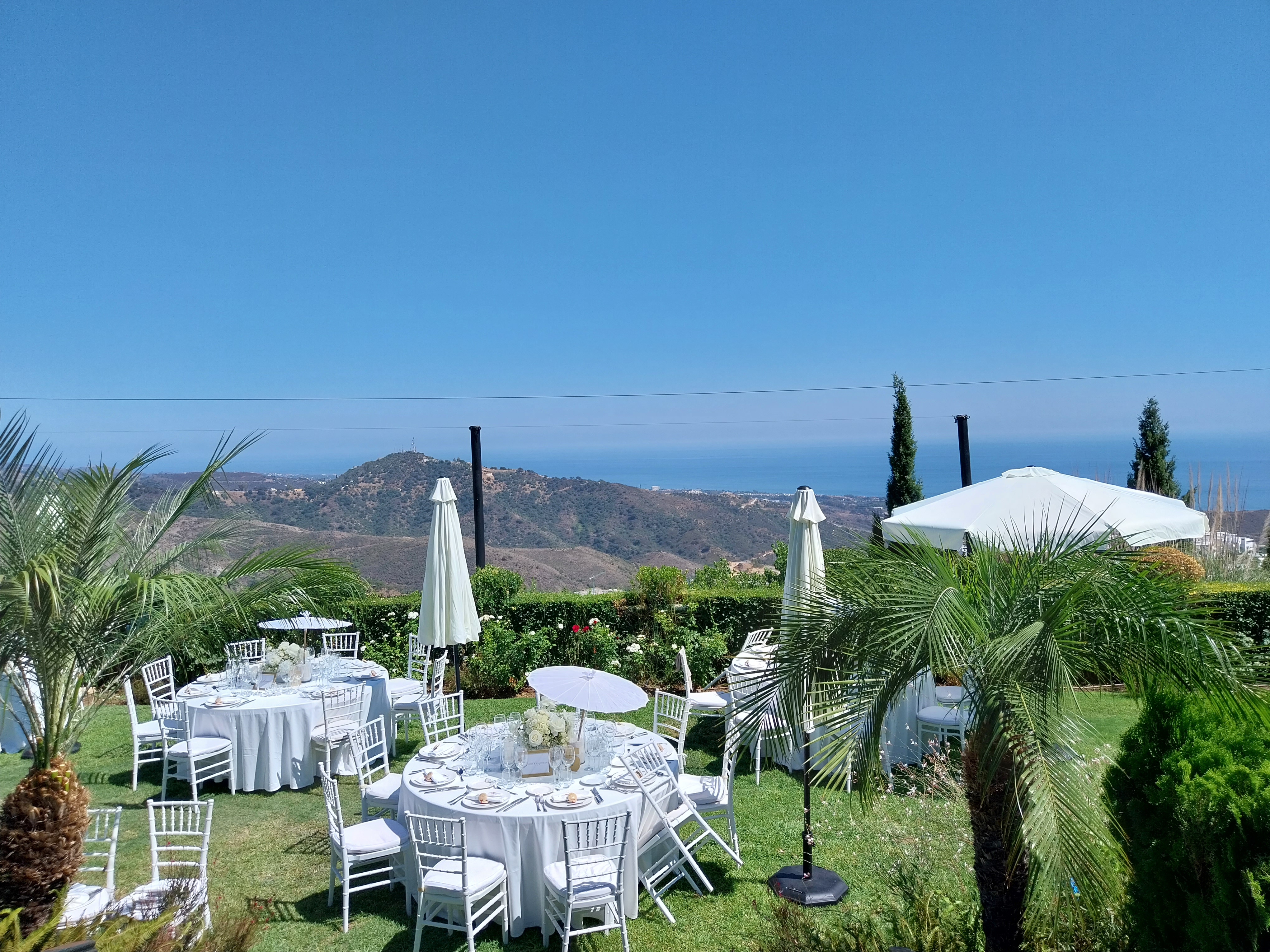
Late on Wednesday night, Karin and I returned, tired but happy, from an eight-day trip to southern Spain, where we celebrated the marriage of our son Oli to his partner Kate. Our base for the trip was the small town of Benahavis, a former Moorish enclave in the mountains above the Costa del Sol.
As well as spending time with Oli and Kate and the other guests, Karin and I took the opportunity to explore some of the many trails that meander through this wonderful landscape. One of these crosses, then follows, the spectacular canyon of the Guadalmina river, the trail shaded by over-arching trees that provided relief from the hot sun.
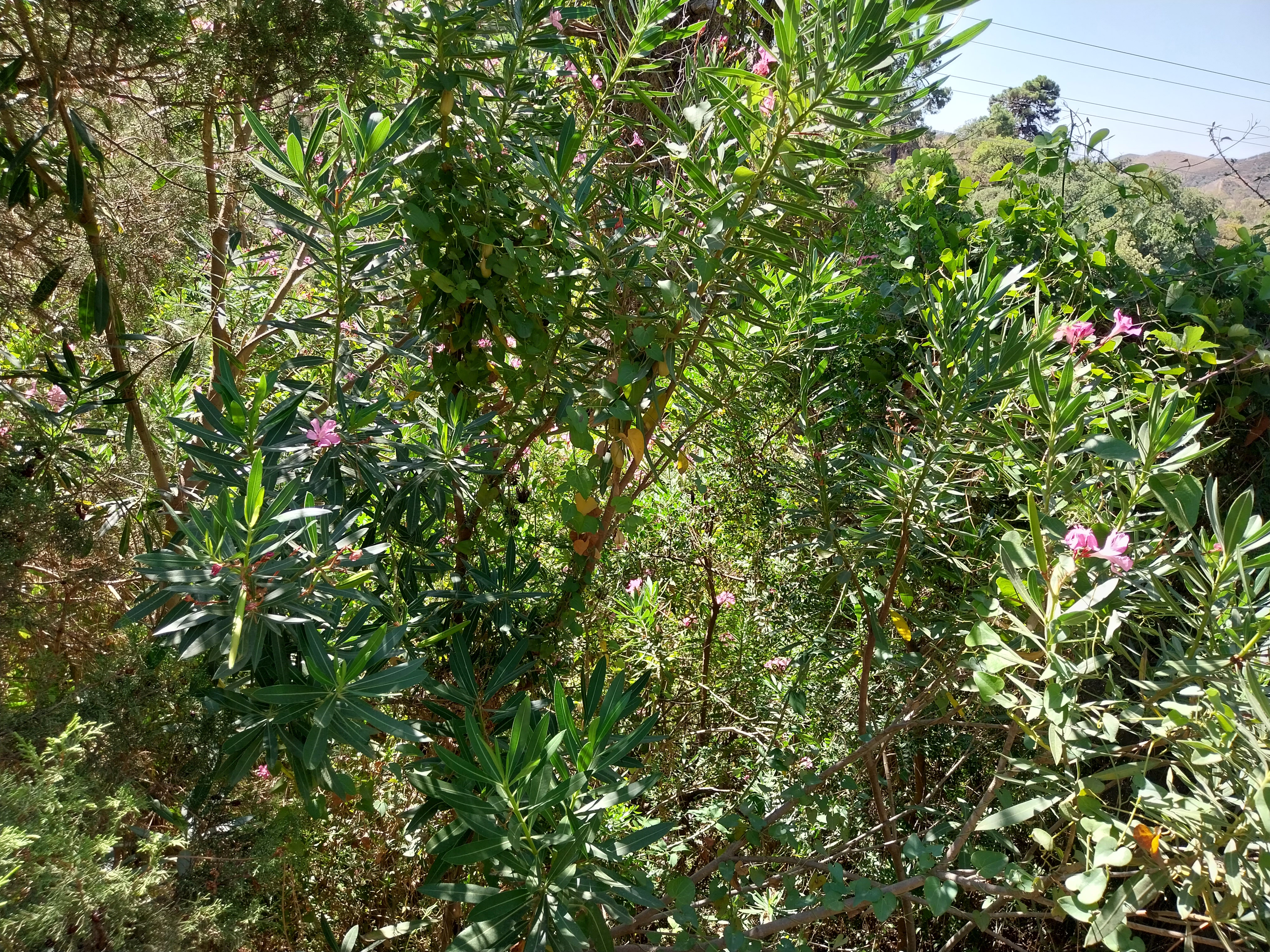
Many of these small trees, I was delighted to see, were oleanders (Nerium oleander) growing in what is (arguably) their natural habitat. It’s been so widely planted for thousands of years that the true origin of this species is unclear, but it’s almost certainly native to the Mediterranean basin.
Twining through one of these oleanders was a plant with heart-shaped leaves and dangling fruit that I instantly recognised – the Andalusian pipe vine (Aristolochiabaetica). As a climber, this plant needs the support of trees and shrubs to enable it to reach the light. The supporting species is not harmed and likely benefits from the nutrients in the dead leaves and flowers that fall beneath it.
The juxtaposition of these two species was so perfectly symbolic of our reason for being in Spain that I had to take the photo that you see above. Why, you may ask? Well the oleander is a member of my all-time favourite plant family, Apocynaceae, that I’ve worked on for more than 30 years. The pipe vine belongs to the Aristolochiaceae, another fascinating family that’s also in my top five favourites.
That’s the thing with families, sometimes they come together and entwine in ways that just feel and look…right. Huge congratulations to Oli and Kate, and our very best wishes for a long and happy future together!
When I was growing up, my dad took out a subscription to the Reader’s Digest book club. One of the books he bought was called Success With Houseplants, which first appeared in 1979. I still have it and I think that it’s one of the best volumes on this topic that’s ever appeared in print. Over the years I’ve often dipped into its pages and it provided my first introduction to exotic plant families that I would later see in the wild, including Gesneriaceae, Commelinaceae, and of course my beloved Apocynaceae.
Dad loved propagating and the windowsills of our small house were cluttered with jars of water-rooted cuttings and trays of sown seed. Growing houseplants is still a passion for me though now that it’s become a social media craze it’s hard to keep up with the latest trends in plants for the home.
Enter Jane Perrone, whose writing and podcasting has opened up the world of houseplants to a wider audience and helps us navigate this sometimes confusing and faddish world with humour and sensible advice. Jane has now published a book called Legends of the Leaf: Unearthing the secrets to help your plants thrive. and I’ve had the mixed pleasure of reading it over the last few days. “Mixed” not because there’s anything wrong with the book (far from it) but because Karin and I have COVID and we’ve been laid low for the past five days and counting. The silver lining is that it’s forced me to get on with the ever-mounting to-read pile, in between scratching away at the last few chapters of my next book.
In Legends of the Leaf, Jane has taken 25 iconic house plants, and provided us with a potted (sorry) account not only of their growing requirements, but also of their origin, ecology, history in cultivation, and some fascinating cultural and sociological context. I learned a lot from this book and it elevates the plants with which we share our homes from being simply decorative to become co-habitants with rich and fascinating stories to tell us. The author also has an imaginative line in metaphors, for example likening the flowers of hearts-on-a-string (Ceropegia woodii) to miniature turkey basters, or the dried seed capsules of living stones (Lithops spp.) to a Trivial Pursuit game counter.
A huge amount of research has gone into this book and Jane does not shy away from telling us about some of the darker aspects of houseplant history including colonial attitudes, treatment of enslaved peoples, and misogynous attitudes. It all makes for an absorbing read and I guarantee that you’ll never look at your leopard lily (Dieffenbachia seguine) the same way again.
Full disclosure: I advised on the section about Ceropegia woodii which earned me a mention, which seems fitting: seeing the account of this species in Success With Houseplants was what started me on a quest to understand the pollination biology of Ceropegia.
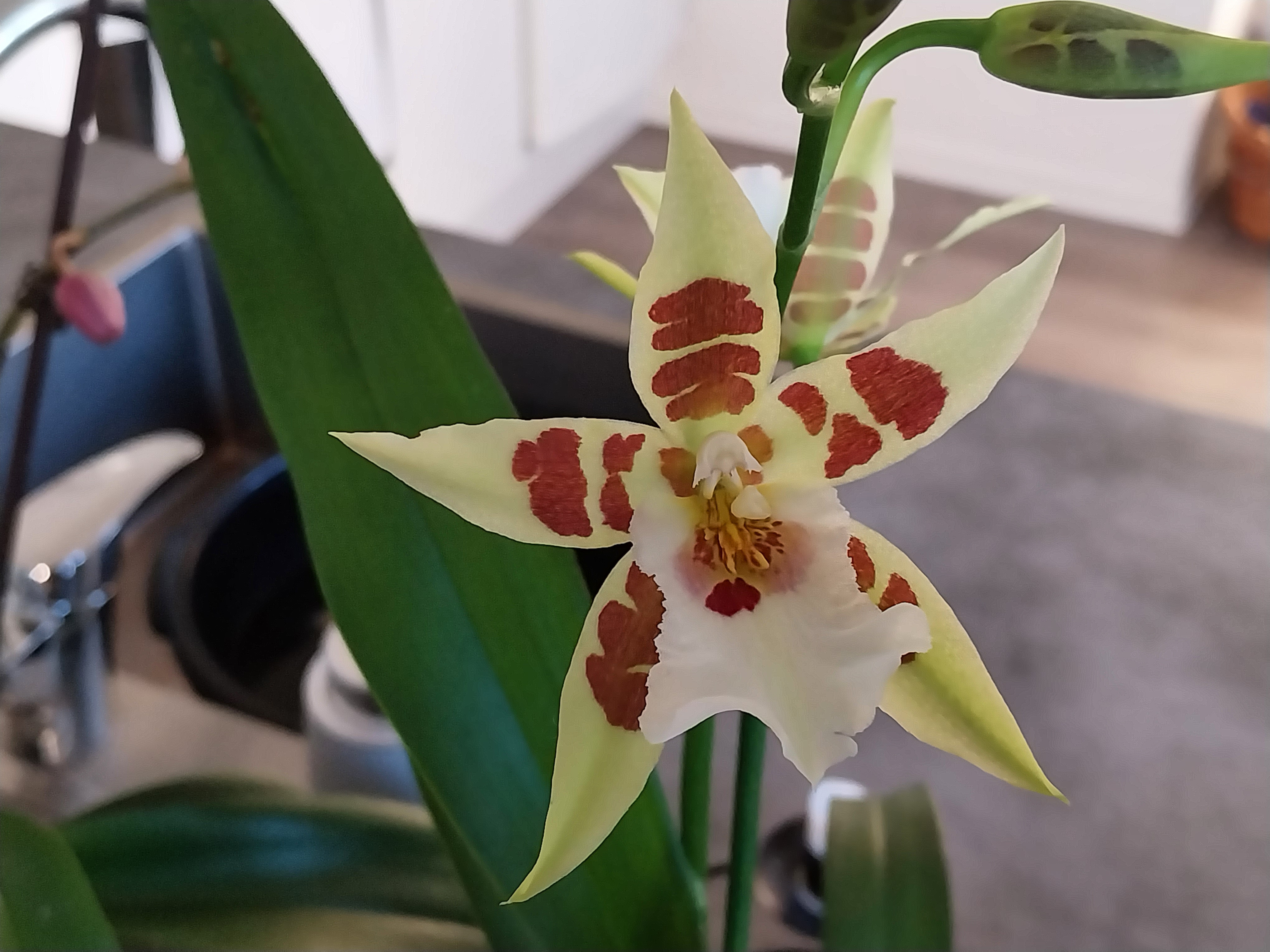
The other day Karin bought a Miltonia orchid to add to the ever-expanding collection of orchids she’s accumulating. It’s nowhere near as large as the collection she accumulated in our old place in the UK – part of it is pictured in this old post of mine – but it’s only a matter of time. This morning I showed her how to extract orchid pollen from the flower and her squeals of delight were something to hear!
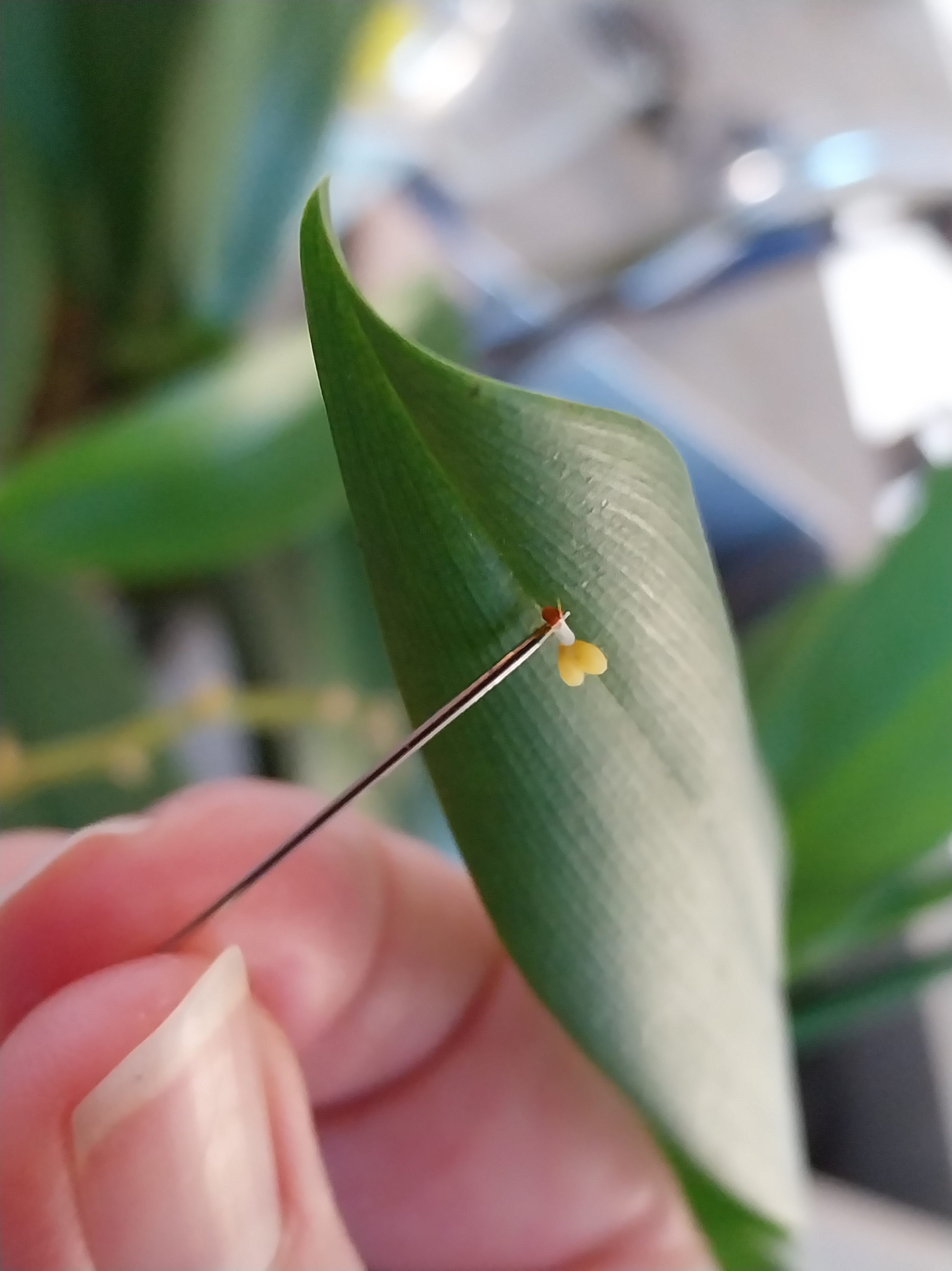
As you can see in the image above, these orchids package their pollen into discrete structures that we term “pollinia” – two of them in this case, though the form and number of pollinia vary between different groups of orchids. The pollinia plus the sticky organ that attaches them to a pollinator is collectively termed a “pollinarium”. The only other plants that present their pollen in this way are my beloved asclepiads in the family Apocynaceae. The orchids and the asclepiads are only very distantly related to each other so this is a clear example of convergent evolution, where both plant groups have come up with the same solution to a problem. In this case, the problem is probably that bees collect a lot of pollen which has a reproductive cost for plants. Packaging the pollen in this way prevents bees from stealing it, amongst other advantages.
If you want to look at this yourself, you’ll find the pollinaria tucked under the front of the central “column” of the flower, which comprises the fused male and female reproductive parts. Just take a fine needle and gently stroke the underside of the column. In the image below, taken just after we extracted the pollinarium, you can see the “anther cap” which covered them lying just below the column.
It’s possible to learn a lot about botany from studying even common houseplants such as these!
I love going to botanic gardens and I keep a “life list” of those that I have visited. So on a visit to Lund University last week, to give a seminar and take part in an MSc defence, I was delighted to be able to add another one to that list. Lund University Botanical Garden is quite small, like many such urban gardens, and this is not the best time of the year to visit. But there was a good show of early spring plants in flowers, the sun was shining, and quite a number of people were enjoying the peace and calm in the middle of a city.
The glasshouses were especially busy, and they have a nice collection of cold-sensitive plants arranged by habitat and taxonomy, such as cacti and succulents, ferns, orchids, and so forth. One of the reasons why I enjoy botanic gardens so much is that I always, without exception, see plants that I have never previously encountered, often doing unexpected things.
Lund was no exception, and I was particularly intrigued by a plant called Monolena primuliflora which was being grown in a hanging basket, as is often the case with epiphytic plants. It’s a species of Melastomataceae, a family that I know well from tropical field work. But this one looked unlike any melastome that I’d ever seen. In particular, I was drawn to the large rhizome or caudex from which the leaves emerge:
This immediately reminded me of some of the epiphytic “ant plants” such as species of Myrmecodia and Hydophytum and especially ferns such as Lecanopteris. All of these myrmecophyte genera have evolved swollen stems or rhizomes which house colonies of ants. The ants in turn defend the plants against herbivores, in a mutualistically advantageous relationship.
Sure enough, when I searched online for information about Monolena primuliflora, it’s widely described in the house plant community as an “ant plant” – see here and here for example. After I tweeted about this, biologist Guillaume Chomicki (who has been researching these ant-plant interactions) was intrigued but asked about the evidence for it being a myrmecophyte:
What's the evidence for it being an ant-plant? It's not obvious based on these photos. If you are anyone has more info or list, please let me know so that I can update my database!
That got me thinking, so I dug around in the botanical literature for the evidence and found…..nothing. The standard monograph on the genus by Warner (2002) doesn’t mention it and as far as I can tell (please someone will correct me if I am wrong) there’s no documented study of this species or genus having a myrmecophytic relationship with ants.
If I’m correct, how has the idea of Monolena primuliflora as an ant plant come about? This is a relatively new introduction to the houseplant trade and I suspect that plant sellers have made assumptions about the swollen rhizome (as I did!) to make the plant sound more interesting. There’s no doubt that the rhizome is fascinating and unusual in the family, but its function may be to store water (as found in many epiphytic orchids) rather than to house ants.
In my recent book Pollinators & Pollination: Nature and Society, and in this article last year in the magazine British Wildlife, I discussed how the world of plants (and pollinators) is full of myths and misunderstandings. This seems to be another one and by writing this blog post I’m hoping that we can clarify the situation with regard to Monolena primuliflora. So if you have any further information about it, please do comment below.
My thanks to everyone on Twitter who commented about the plant, especially Guillaume for asking the question!
Join me this Thursday at a free online talk organised by Buglife where I’ll be giving an introduction to how flowers function and the ways in which their behaviour manipulates pollinators to ensure reproduction. I’ll be covering:
What are flowers and where did they come from?
How flowers function and reward pollinators.
Some case studies from my own research on flower and pollinator behaviour.
Why is it important that we understand floral biology?
I was saddened to learn recently of the death of Professor Leonard B. Thien of Tulane University who passed away at the end of October after a long illness. Although I didn’t know Professor Thien personally, I knew of his work in floral ecology, pollination biology and plant evolution, topics on which he had worked for since obtaining his PhD in 1968. Over the course of his career he published more than 80 articles on a huge range of botanical subjects, including ground-breaking work on mosquito pollination of orchids (Thien 1969). The orchid species Alaticaulia thienii is named in his honour.
The studies Leonard Thien published that really inspired me when I was first starting out on my journey as a researcher, however, involved his work on “relictual” angiosperms, i.e. flowering plants that have very long evolutionary histories and deep phylogenetic roots back to the early Cretaceous period, for example Magnolia and Illicium. Papers with titles such as “Patterns of pollination in the primitive angiosperms” (Thien 1980) piqued my interest and motivated me to work on Australian Piperaceae for a short while following my PhD (Ollerton 1996). It was a topic that I struggled to gain further funding for, and later molecular systematic studies changed many of our ideas about what constitutes the most basal groups of extant flowering plants. But nonetheless, the questions that Leonard inspired in me, regarding the ecologies of these relictual taxa, and whether we can infer the reproductive ecology of the earliest flowering plants from studies of their surviving descendants, are ones that intrigue me to this day (van der Kooi and Ollerton 2020).
Leonard Thien kept up this interest even as new DNA technologies over turned old ideas, and he was the first to study the reproductive ecology of Amborella trichopoda on New Caledonia, a species now considered to be the earliest surviving clade of flowering plants (Thien et al. 2003). This is just one part of a legacy of work that current and future generations will build upon as we develop our understanding of the relationships between pollinators, plants, and evolutionary processes.
I’m grateful to Peter Bernhardt for prompting this post and for sending me a copy of the In Memoriam article that he and and David White will publish in the Plant Sciences Newsletter in March, and to Lorraine Thien for providing the photograph that accompanies this post.
References
Ollerton, J. (1996) Interactions between gall midges (Diptera: Cecidomyiidae) and inflorescences of Piper novae-hollandiae (Piperaceae) in Australia. The Entomologist 115: 181-184
Thien, L.B. 1969. Mosquito pollination of Habenaria obtusata (Orchidaceae). American Journal of Botany 56: 232-237.
Thien, L.B. 1980. Patterns of pollination in the primitive angiosperms. Biotropica 12: 1-14
Thien, L.B., Sage, T.L., Jaffre, T., Bernhardt, P., Pontieri, V., Wesston, P.H., Malloch, D., Azuma, H., Graham, S.W., McPherson, M.A., Hardeep, S.., Sage, R.S. & Dupre, J.-L. 2003. The population structure and floral biology of Amborella trichopoda (Amborellaceae). Annals of the Missouri Botanical Garden 90: 466-490
van der Kooi, C.J. & Ollerton, J. (2020) The origins of flowering plants and pollinators. Science 368: 1306-1308
This month I was appointed to the editorial board of the Turkish Journal of Botany and I’m looking forward to working with the team at the journal to enhance the international profile of this publication. The journal has a long track record: it’s been published continuously since the 1970s and currently has a 5-year impact factor of 1.165.
The Turkish Journal of Botany is one of the official publications of TÜBİTAK (the Scientific and Technological Research Council of Turkey) and is fully open access, with no page charges. All papers are published in English. Although it’s a ‘regional’ journal, the scope of what it publishes is not limited to just Turkey. Looking over the last couple of volumes I see authors from Russia, India, Egypt, Lebanon, Pakistan, USA and China, as well as a new species of lichen from Antarctica!
The journal is particularly keen to publish more papers in the area of pollination, floral evolution, plant reproductive ecology, and related topics. So if you’re working in that area and looking for an outlet for your latest paper, please take a look at the Instructions for Authors and consider the Turkish Journal of Botany.
If you have any questions, please write a comment below or send me a message via the Contact page.
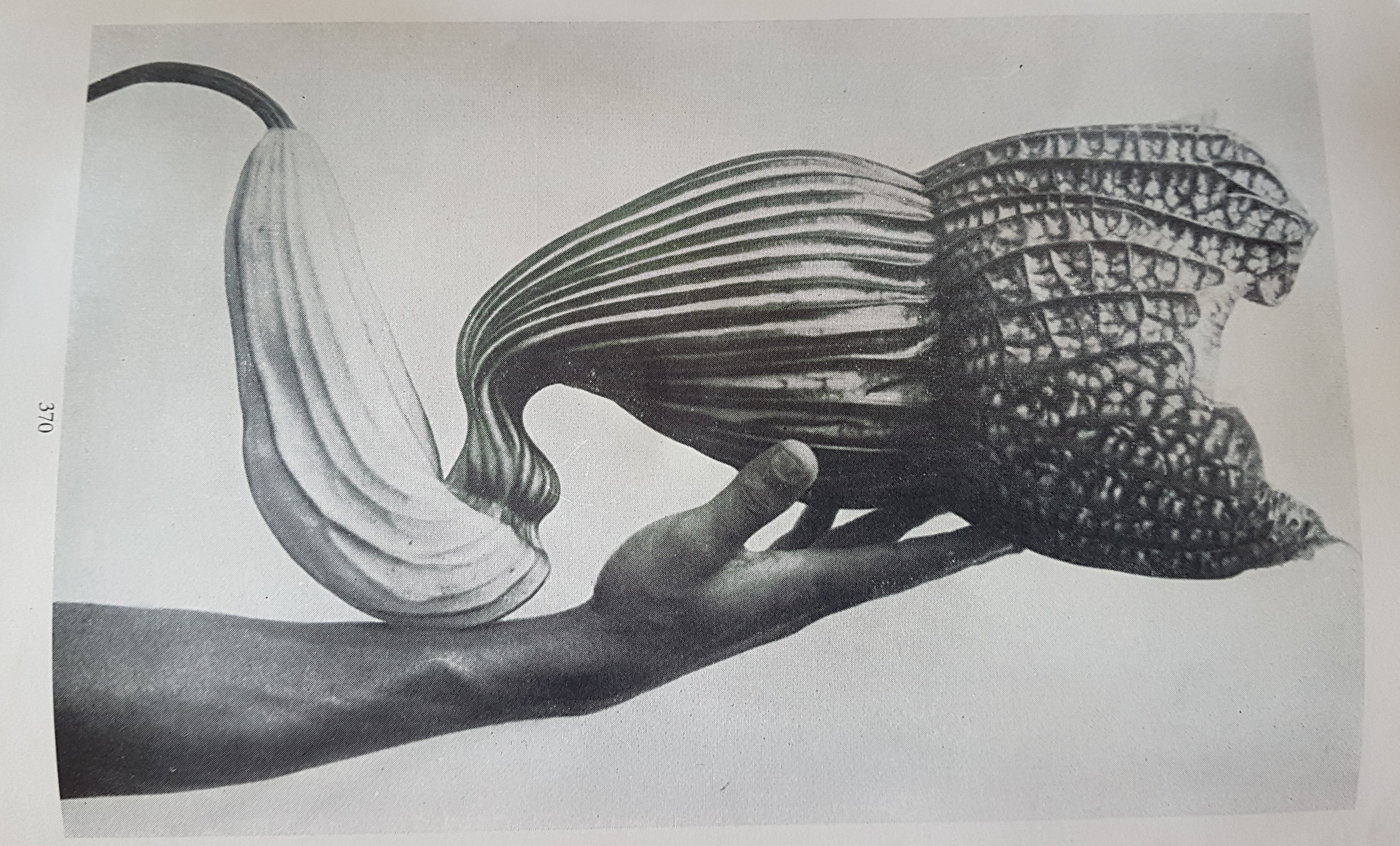
Some years ago, browsing in a second hand bookshop, I happened across a copy of an old magazine from 1950 called Nigeria. Published by the then colonial government, it was a miscellaneous collection of articles about the culture, geography and natural history of that fascinating West African country. Although aspects of the contents are problematical by modern standards, I bought it because of a short article about a wild plant with enormous flowers and a remarkable pollination strategy. In particular, the spectacular photograph of a man holding a flower that’s the length of his forearm grabbed my attention: who couldn’t love a flower like that?!
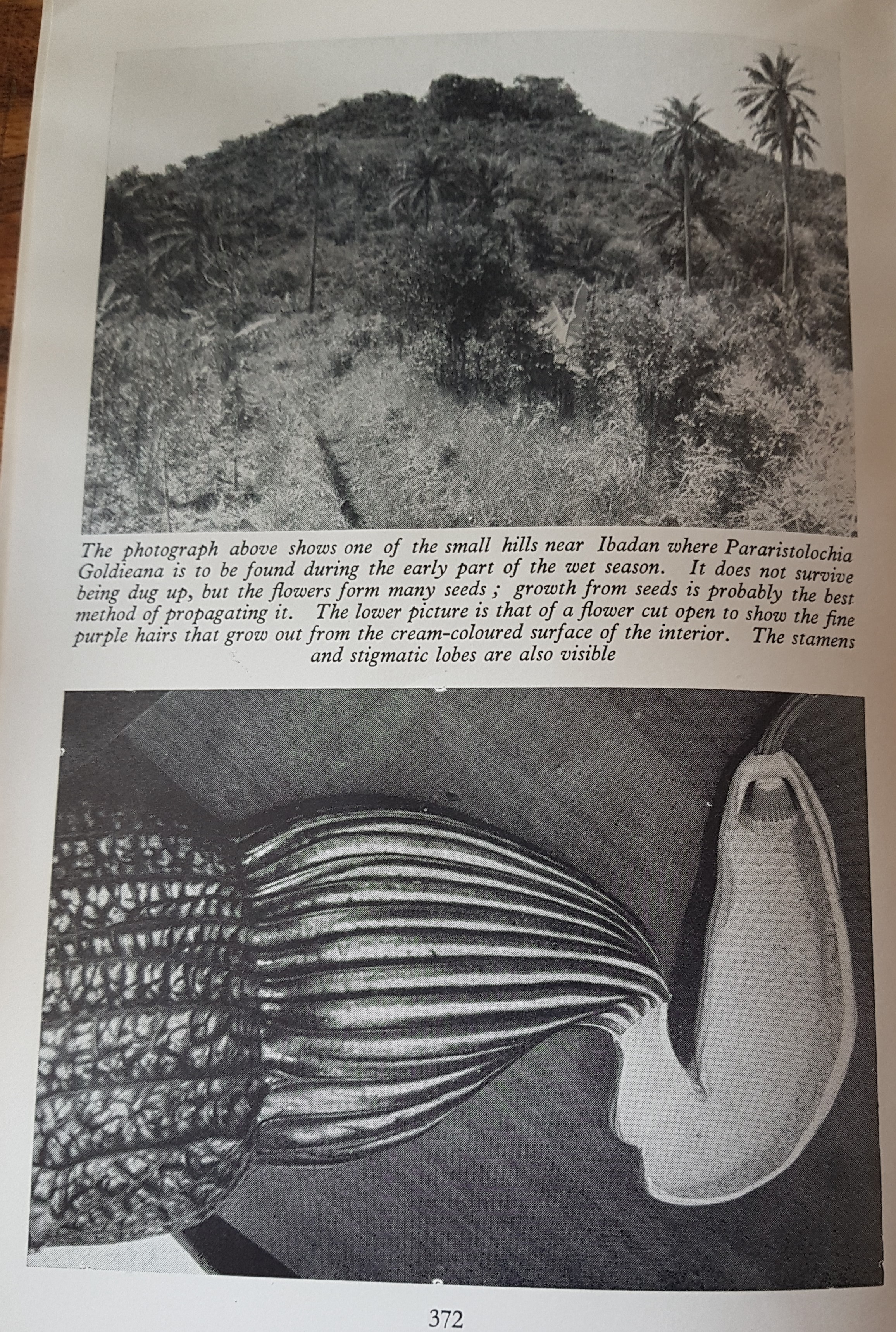
The plant is Pararistolochia goldieana, a vine found in the forests of this region, as described in the introductory text:
These types of flowers are pollinated by flies, a common strategy in the Birthwort family (Aristolochiaceae) to which the plant belongs. This strategy of fly pollination in which flies are deceived into visiting the flowers by their stink and colour, and temporarily trapped in the enclosed chamber, is something that I explore in detail in my book Pollinators & Pollination: Nature and Society, particularly in the genus Ceropegia. Those plants show convergent evolution with the pollination systems of Aristolochiaceae, though they are unrelated.
Pararistolochia goldieana has a wide distribution across West Africa, including Cameroon, Equatorial Guinea, Nigeria, and Sierra Leone. The IUCN Red List categorises it as ‘Vulnerable’ due to habitat loss. The population where these photographs were taken is described on the final page of the article:
The city of Ibadan is one of the largest in Nigeria and has grown enormously, ‘from 40 km2 in the 1950s to 250 km2 in the 1990s‘. I wonder if this forest, and its botanical treasures, still exists?
During field work in Gabon in the 1990s I was fortunate enough to encounter a species of Pararistolochia in the rainforest of Lopé National Park. It was a different species to P. goldieana, with rather smaller but no less spectacular flowers, and it stank to high heaven! We knew it was there long before we saw it. I collected some flies from the flowers and had them identified, though I’ve never published the data: it’s available if anyone is working on a review of pollination in the family.
This 1950 article is anonymous, so I don’t know who to acknowledge for the amazing images. However the botanist R.W.J. Keay was working on a revision of the family for the Flora of West Tropical Africa project at the time, so it may have been written by him.
Finding organisms that have not previously been described by scientists is not unusual; every year, hundreds of ‘new’ species enter the taxonomic literature, a testament to how little we still understand about the Earth’s biodiversity. The majority of these species are insects, because that’s the most diverse group of organisms on the planet. But new species of plants and fungi also turn up regularly: for example in 2020, botanists and mycologists at Kew named 156, including some from Britain.
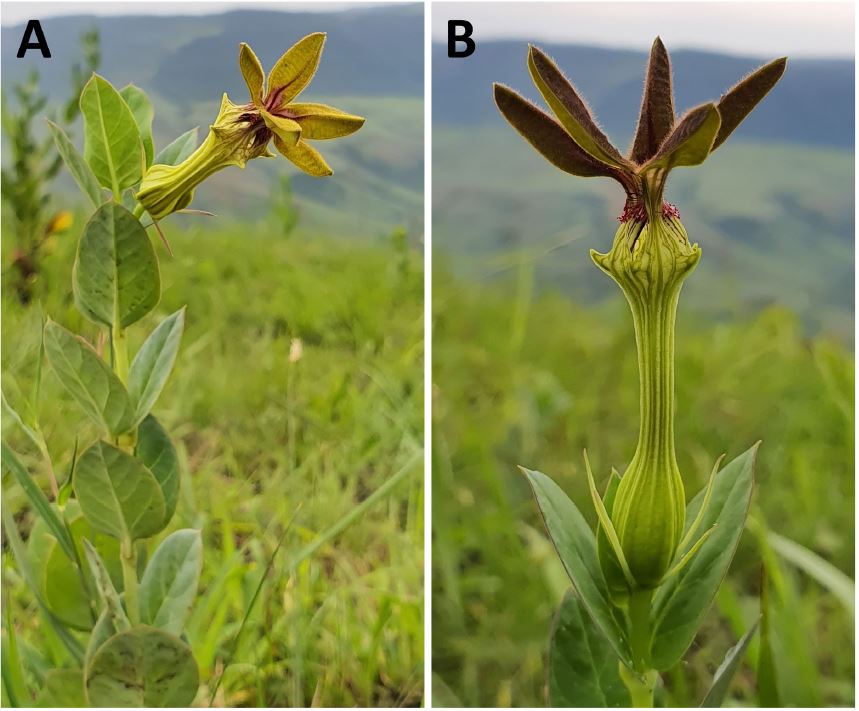
So although discovering undescribed species is not uncommon, any field biologist will tell you that it’s an exciting moment to spot something that you’re never seen before and which could turn out to be new. That was certainly the case when my colleague Dr Annemarie Heiduk’s attention was drawn to a South African plant that was clearly something special. As Anne said to me this week:
‘I will never ever forget the very moment when I spotted it and immediately knew it was something no-one has ever seen before. And I was so lucky to find it in flower. I cannot describe how beautiful it looked sticking out of the surrounding grass vegetation. It is certainly one of a kind and I really know how lucky I was to have found it. Not once did it ever cross my mind that I will discover a novel Ceropegia species, let alone one that is so distinct!’
Anne has been honoured in this way not just because she discovered the plant, but also because, to quote the paper, she:
‘is a pollination ecologist who with her research on the floral chemistry and deceptive pollination strategies of Ceropegia trap flowers has acquired recognition as an expert in this field’
Anne tells me that she has already collected pollinator and floral scent data for this new species, so we can look forward to seeing that published in the near future. I described the fascinating pollination ecology of Ceropegia, including some of Anne’s earlier work, in my recent book. This is a genus of plants that has intrigued me since I first saw photographs of them and started growing them as a teenager, 40 years ago. Since then I’ve published several papers about their pollination strategies, and how they compare with the family Apocynaceae as a whole: see the following links for some examples:
So, a big congratulations to Anne, and to David and Ulrich – it’s an amazing plant! I wonder what else is still waiting to be discovered in the stunning grasslands of South Africa?








 Prof. Jeff Ollerton - ecological scientist and author