Tag Archives: Biodiversity

Should biodiversity scientists be campaigners and polemicists?

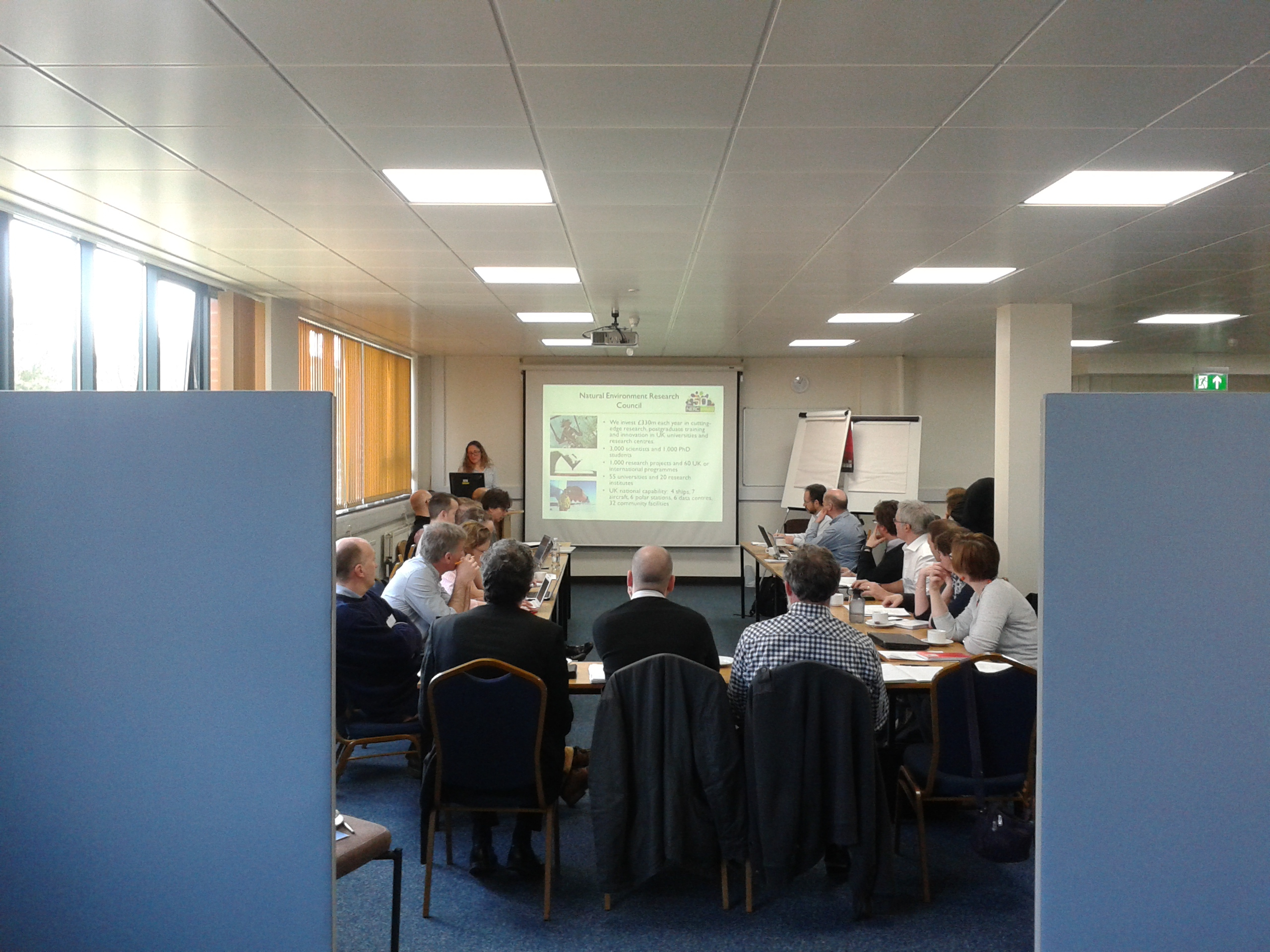
NPS workshop

Earlier this week I attended a two day research funding workshop intended to develop initial project ideas to address evidence gaps in the recent National Pollinator Strategy.  It was a productive meeting from which will hopefully emerge some important, focused science.  As is so often the case at scientific meetings, many of the most interesting conversations occurred after the end of the day’s formal work, in the pub.  There was a little bar stool criticism of some of the recent published work on the effects of neonicotinoid pesticides on pollinator health, and specifically whether or not researchers engaged in this kind of controversial science should be polemicists, stirring up controversy, or even activists with particular agendas that they wish to promote.

Whilst I agree that there is a difficult line to walk between scientist as campaigner and scientist as neutral presenter of facts, I also think that polemicist/activist is quite an admirable position for a scientist to take in many ways, as long as the rhetoric is backed up by sound science. It’s also brave given that perceptions of scientists can change the likelihood of their research being funded or even published – reviews and reviewers are rarely as objective as we would like to believe.

So should scientists, and specifically those, like myself, who are engaged with biodiversity science in all its myriad forms, be also engaged in campaigns and polemics?  Is this what wider society wants from its scientists?  How do other scientists feel about this?  I’d really be interested in your views.

In this blog I’ve made no secret of the fact that I take certain positions on subjects such as the impact of poorly conceived development on nature reserves, the fallacies of political spin, and future developments in UK nature conservation.  Those are positions that are predicated as much by my personal motivations as an “environmentalist” (a term I don’t like but which is widely understood and will do for now) as they are by my professional role as a university scientist who does research and teaches.  I am not a neutral observer, though I hope that I’m an objective one.

There’s a lot of questions that can spin off from reflecting on the role of biodiversity science and scientists in the modern age, which I don’t have time to properly explore but which I hope will emerge in the comments.  I was prompted to write this by a really interesting post by Joern Fischer over at the Ideas for Sustainability blog entitled “Losing humanity and other questions science doesn’t ask“.  In it Joern develops some ideas about the kind of science that we should be doing “for it to be of use in the sense of creating a better, more sustainable world”.  I’d add that what is important is not just the science that we do, it’s how we present that science (the passion and the story telling) to a range of audiences, and also the personal positions we take on the issues that the science illuminates.

Monitoring the biodiversity impact of the new Waterside Campus

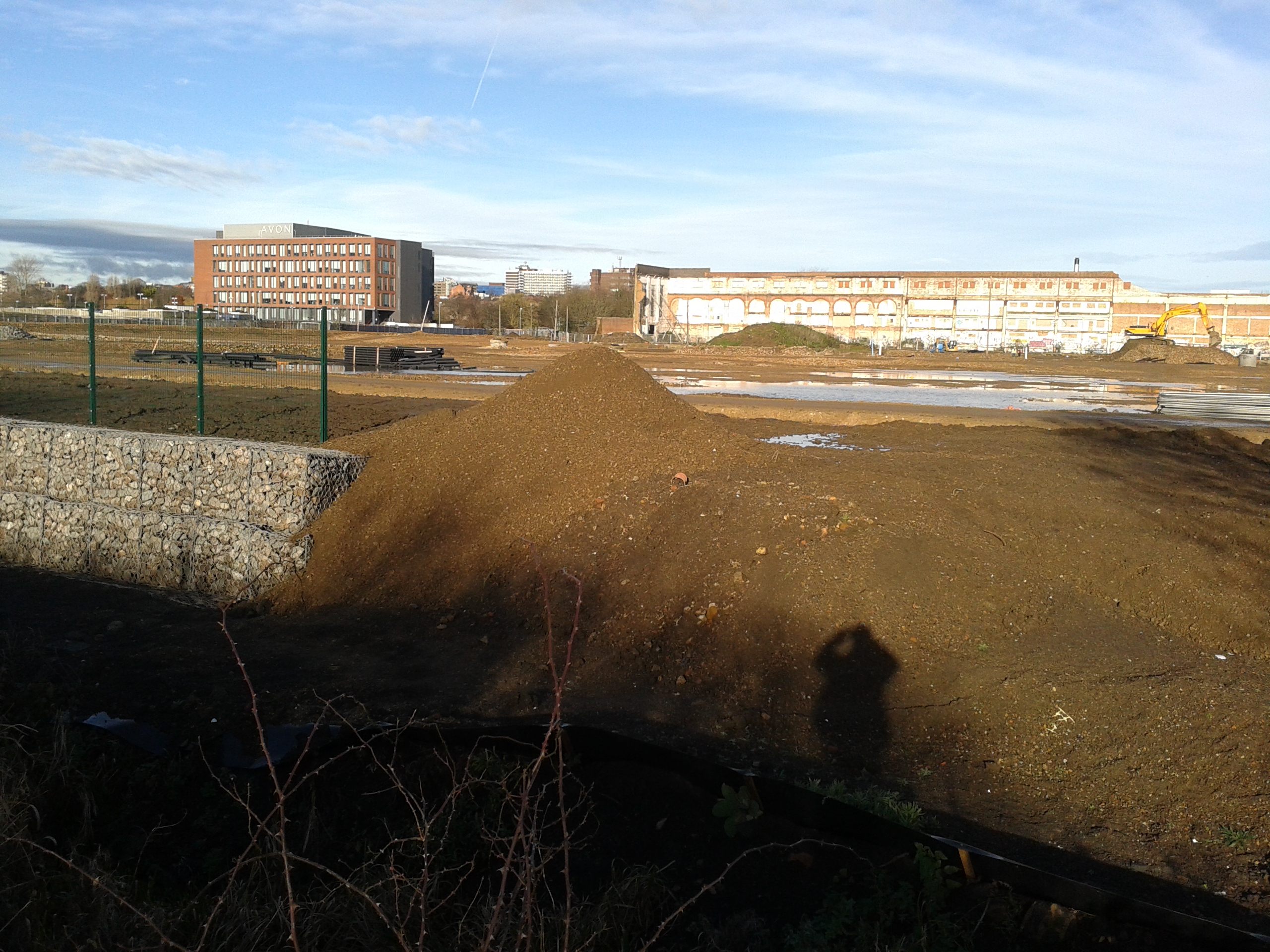
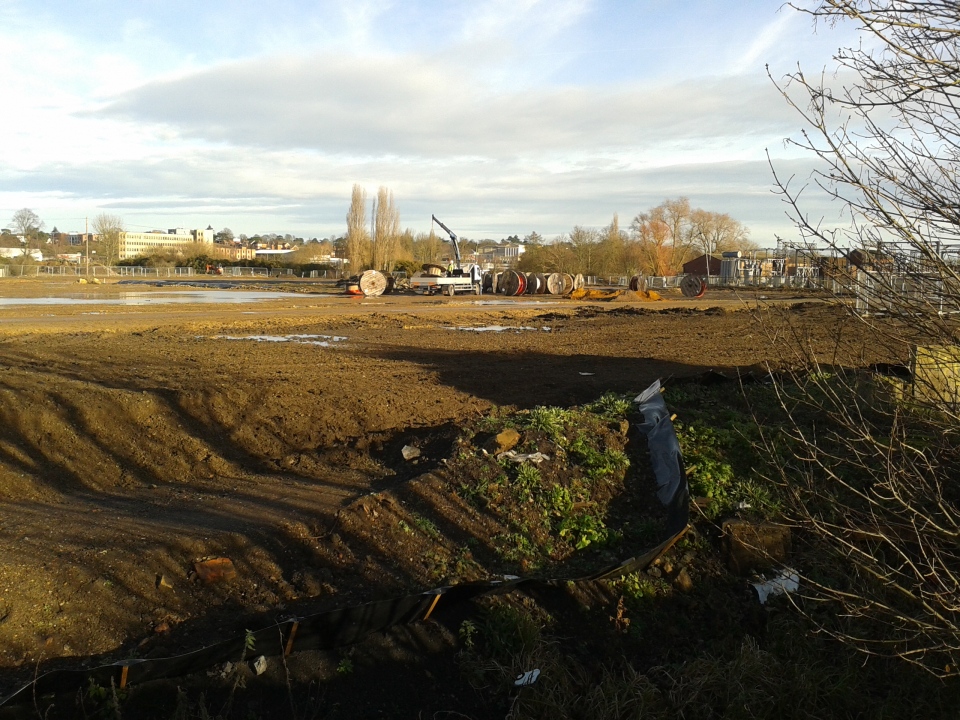
Waterside winter 2014-15 - 2

All human activities can potentially have an impact on the biodiversity of the local environment in which they occur.  That impact can be positive or negative, depending upon how the activity is managed, how impact is mitigated, and the metrics that we use to measure the effects that are occurring.  This is particularly true of large infrastructure developments such as big buildings,  housing developments, roads, and, a category close to home for me at the moment, new university campuses.

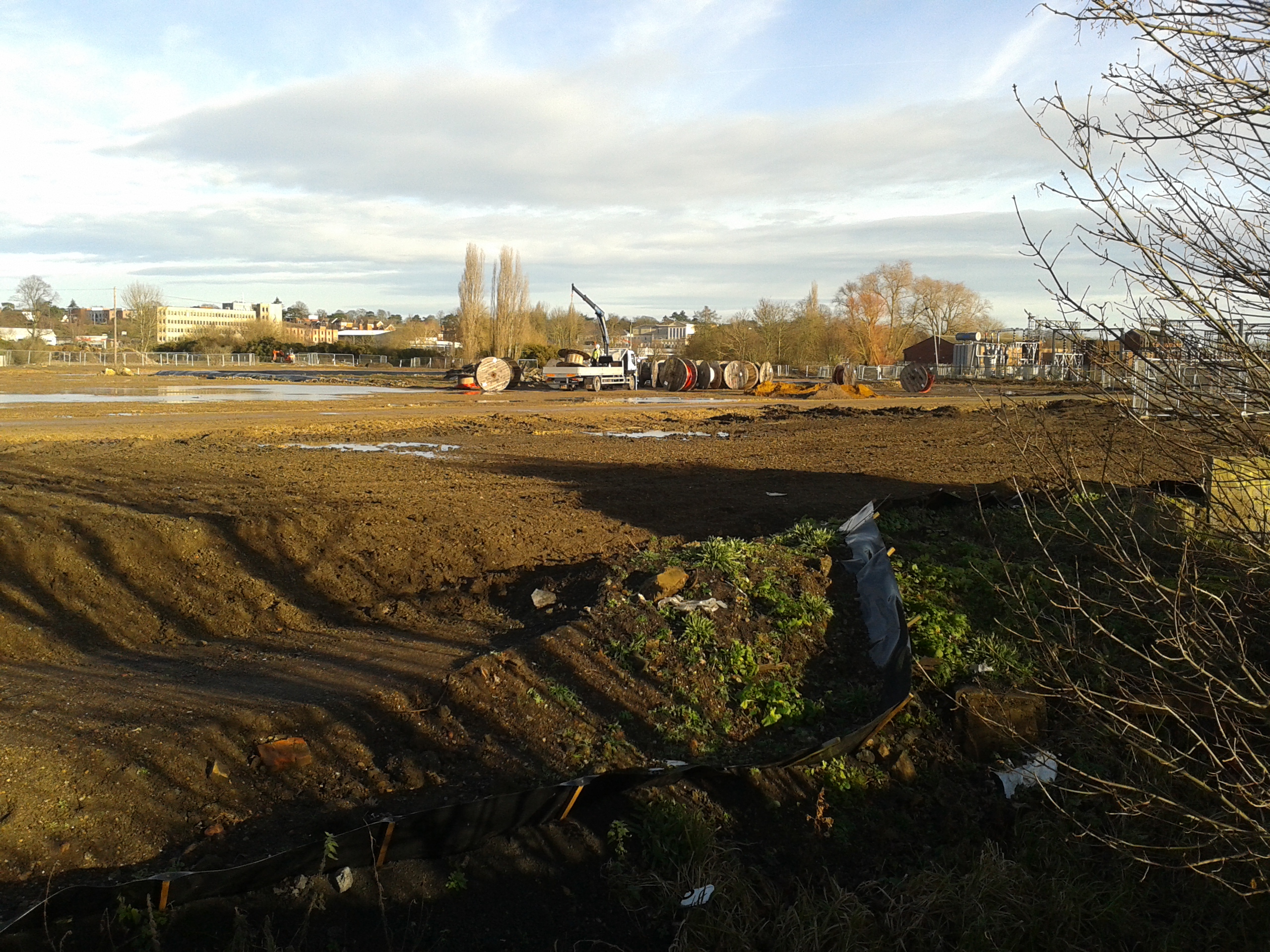
I’ve written before about the University of Northampton’s plans to build the new Waterside Campus on brownfield land close to the River Nene, here and here.  It’s a huge project, likely to cost in excess of £330 million on a site covering about 20 hectares.

As you might imagine, such an ambitious scheme has not been without its controversies and there is much debate within the university about changes to how we work and interact with colleagues and students, provision of teaching and research spaces, etc.  There’s also been much discussion within the town, though the general feeling amongst the public (as far as I perceive it) is that bringing the university closer to the centre of Northampton will provide a much-needed economic boost and add significantly to the town’s life.

But what effect will such a development have on the wildlife in and around this peri-urban site, given that it’s in the middle of the Nene Valley Nature Improvement Area and very close to internationally important bird sites?

Over the past few months, together with my colleague Dr Janet Jackson, I’ve been taking part in meetings with the Waterside project’s landscape architects (LUC), other partners from the NIA project board, and the local Wildlife Trust. We’ve been discussing the current plans for the green infrastructure of the campus and thinking about how these can be enhanced.  It’s been a fascinating process as initial disagreements have been negotiated towards compromises and additions that everyone is happy with, balancing budgetary, function and space restrictions with habitat creation and landscape enhancement.

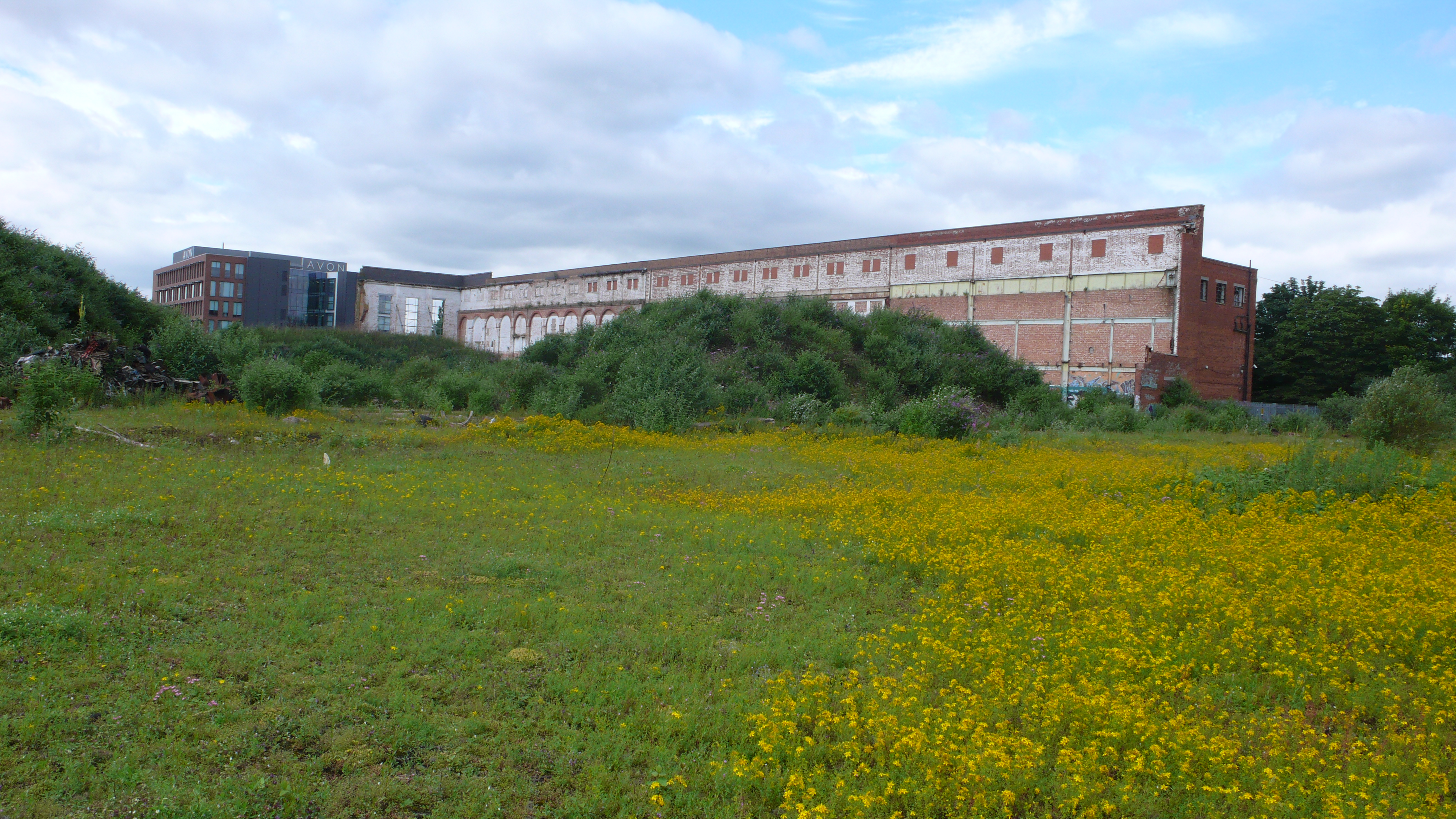
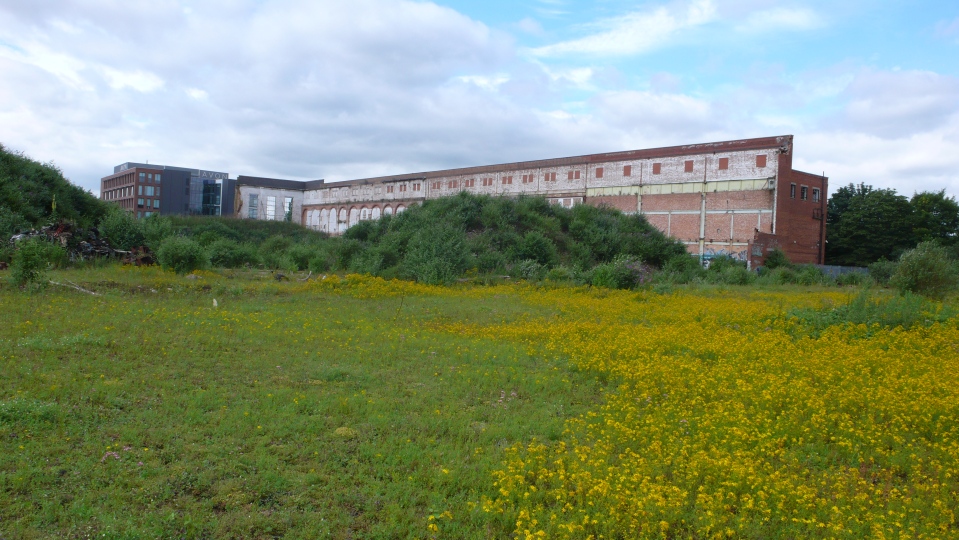
There’s too much been discussed to give a full account at this stage, and it’s possible that some details will change over time, but  the current Ecology Strategy document produced by LUC shows that there will be more than 10 hectares of habitat creation on the site, including species-rich grassland, woodland patches, brown and green roofs, swales and damp areas, and recreated brownfield habitat.  The latter is particularly exciting and something of an experiment, as much of the (albeit limited) current wildlife interest on the site relates to the brownfield element, including the “urban tundra“.
P1100110

To put the 10 hectares into perspective, the adjacent Wildlife Trust Local Nature Reserve of Barnes Meadow is only 20 hectares in area, so it’s potentially increasing that site by 50%.  It’s rare for academic ecologists such as Janet and myself to be able to influence large building developments, so this has been an exciting opportunity for us to make a contribution that (if all goes to plan) will have a positive effect on biodiversity conservation in the Nene Valley.

But how will we know if the Great Waterside Experiment has been a success and that the biodiversity of the new campus is at least as rich, and preferably richer, in species than it was before building took place?

Monitoring of the wildlife is key to this.  Fortunately we have some base-line surveys of birds, plants and invertebrates (including bees and butterflies) from before building started that we can compare with later surveys during and after the campus build.  That process has already started, and with my colleague Dr Duncan McCollin and with two keen second-year students, Jo and Charlie, we have already completed three winter bird surveys to get a sense of how the current site clearance and ground works is affecting the presence of birds in and around the development, including those using the River Nene.  The plan is to continue these surveys up to and after the campus opens in 2018, to give us a data series showing the influence of the campus on bird diversity and numbers.

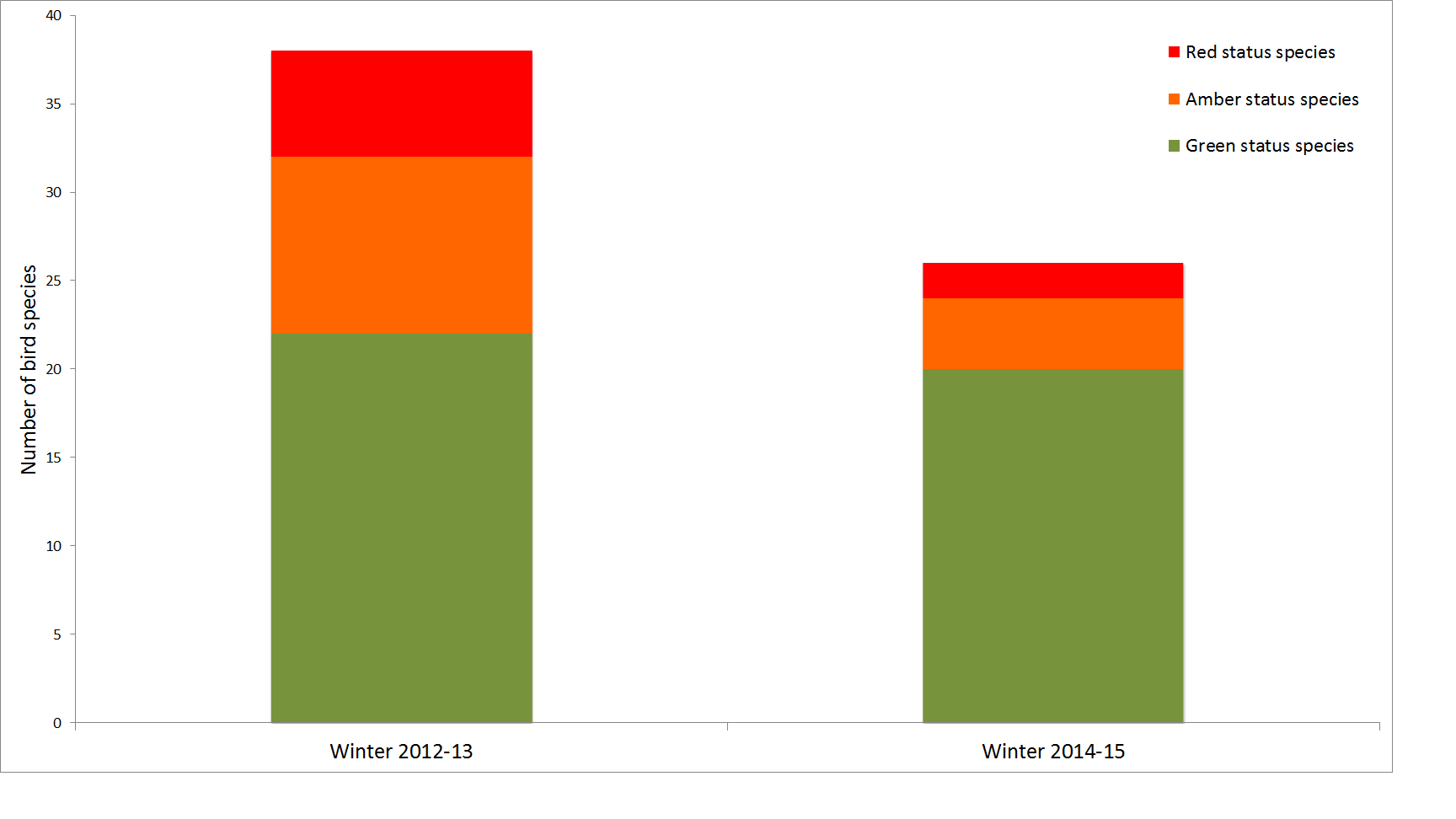
The initial results are currently being analysed and it appears that the current phase of building has reduced overall bird diversity by about 30%, and that red and amber status birds (of most conservation concern) have been affected more than green status birds, as this figure demonstrates (click on it for a closer view):

Waterside bird surveys

These rough figures hide a lot of detail, however.  For example, there has been some addition of species in 2014-15 that were not recorded in 2012-13, including Coot, Treecreeper and the amber-status Stock dove.  More importantly, some of the amber status birds that we didn’t record on site in 2014-15, we know from additional surveys are still present in habitats within 500 metres of the development, for example Dunnock, Green woodpecker, and Bullfinch.  Similarly, red status birds such as resident Starling, and winter migrant Fieldfare and Redwing occur within at least one kilometre of the site.  Hopefully as the building work progresses towards completion these (and other) species will return, so at the moment we’re not too concerned by their disappearance from the site.

Later in the spring we will conduct a couple of breeding bird surveys, and continue surveying for the next few years until the campus opens in 2018.  Only then will we see exactly how successful our influence has been.  In the mean time I’ll report back as and when we have more data to share.
Waterside winter 2014-15


All pollinators are equal, but some pollinators are more equal than others

The infamous line from George Orwell’s Animal Farm asserting that “All animals are equal, but some animals are more equal than others” nicely captures an ecological view of pollinators and their relationships with plants.  “Pollinators” by definition move pollen between flowers, but not all pollinators are equally good at transferring pollen of any particular plant: some are more effective than others. I’ll illustrate this with examples from the urban garden that Karin and I are developing, which I’ve discussed before.

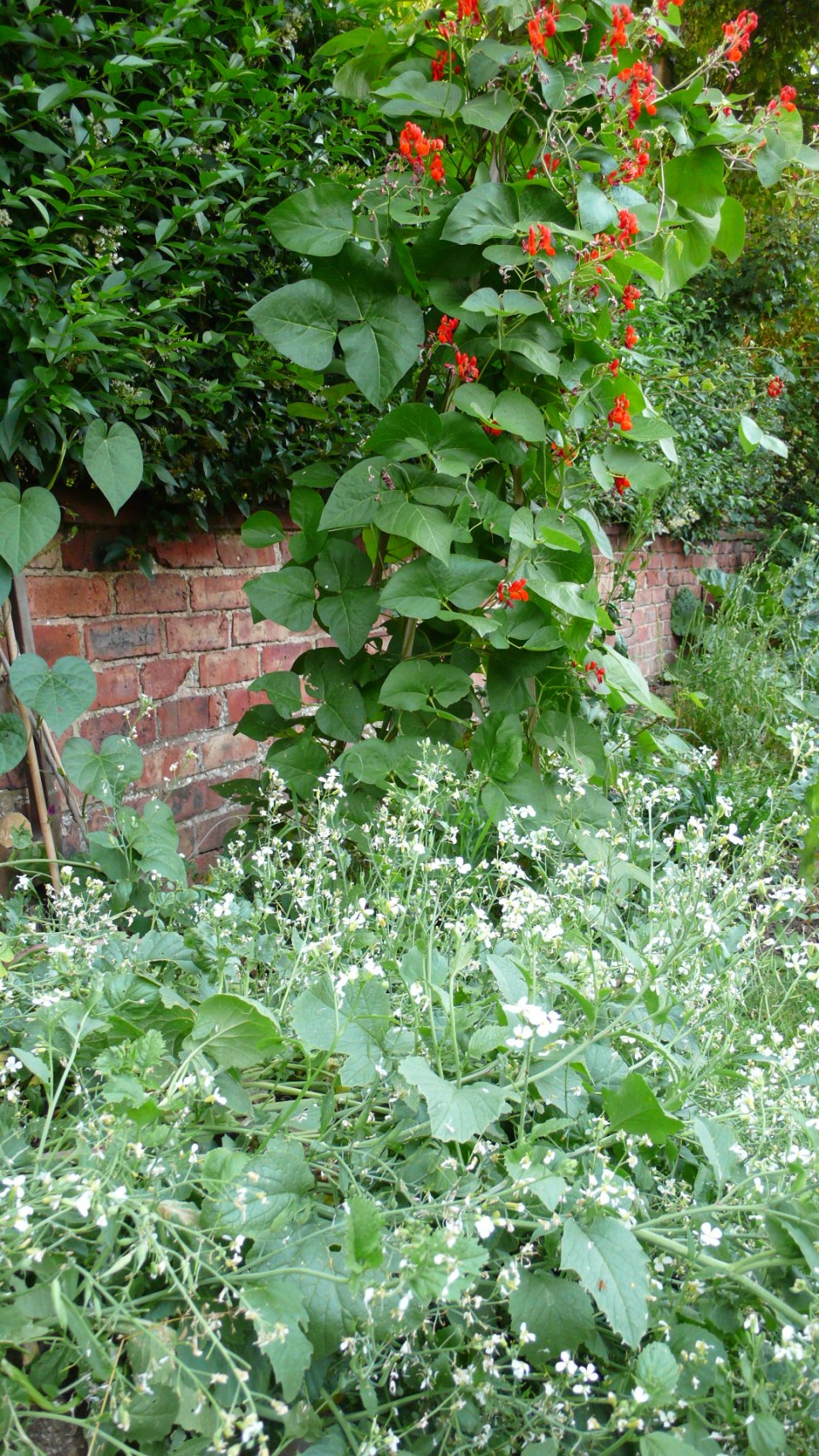
As you can see from that link, the garden is modest in size, but nonetheless this year it contains a significant biodiversity of edible plants that require pollinators for some or all of the fruit and seed set, including: strawberries, apples, greengages, cherries, blackcurrants, squashes, courgettes, blackberries, fennel, runner beans, french beans, passion fruit, tomatoes, raspberries, and radishes.

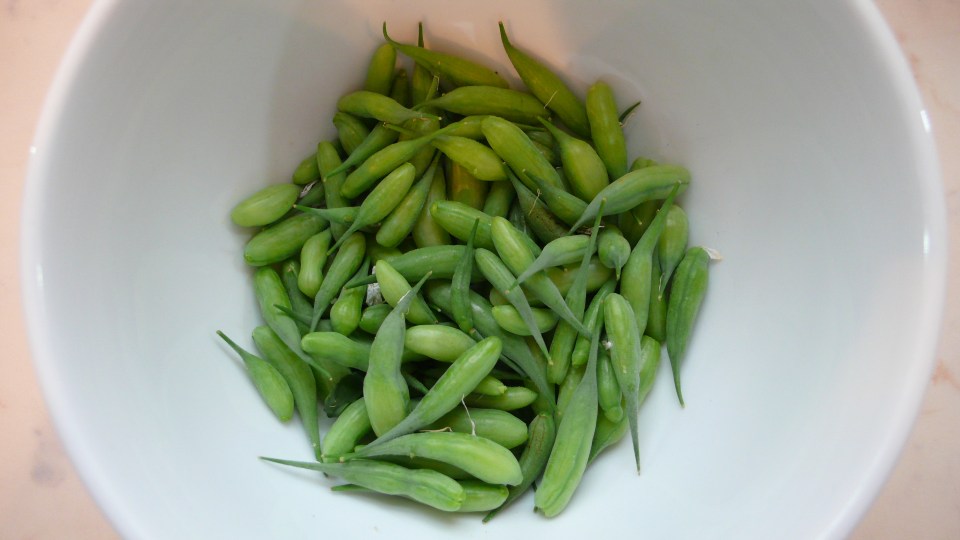
Radishes?!”  I hear you ask.  “But they are grown for their edible swollen roots which don’t require pollination!”  True, usually.  But we let our radishes flower because we mainly grow them for their seed pods which, picked young, are delicious in salads and stir fries, like mustardy mange tout.  They look like this:

2014-07-03 18.14.32

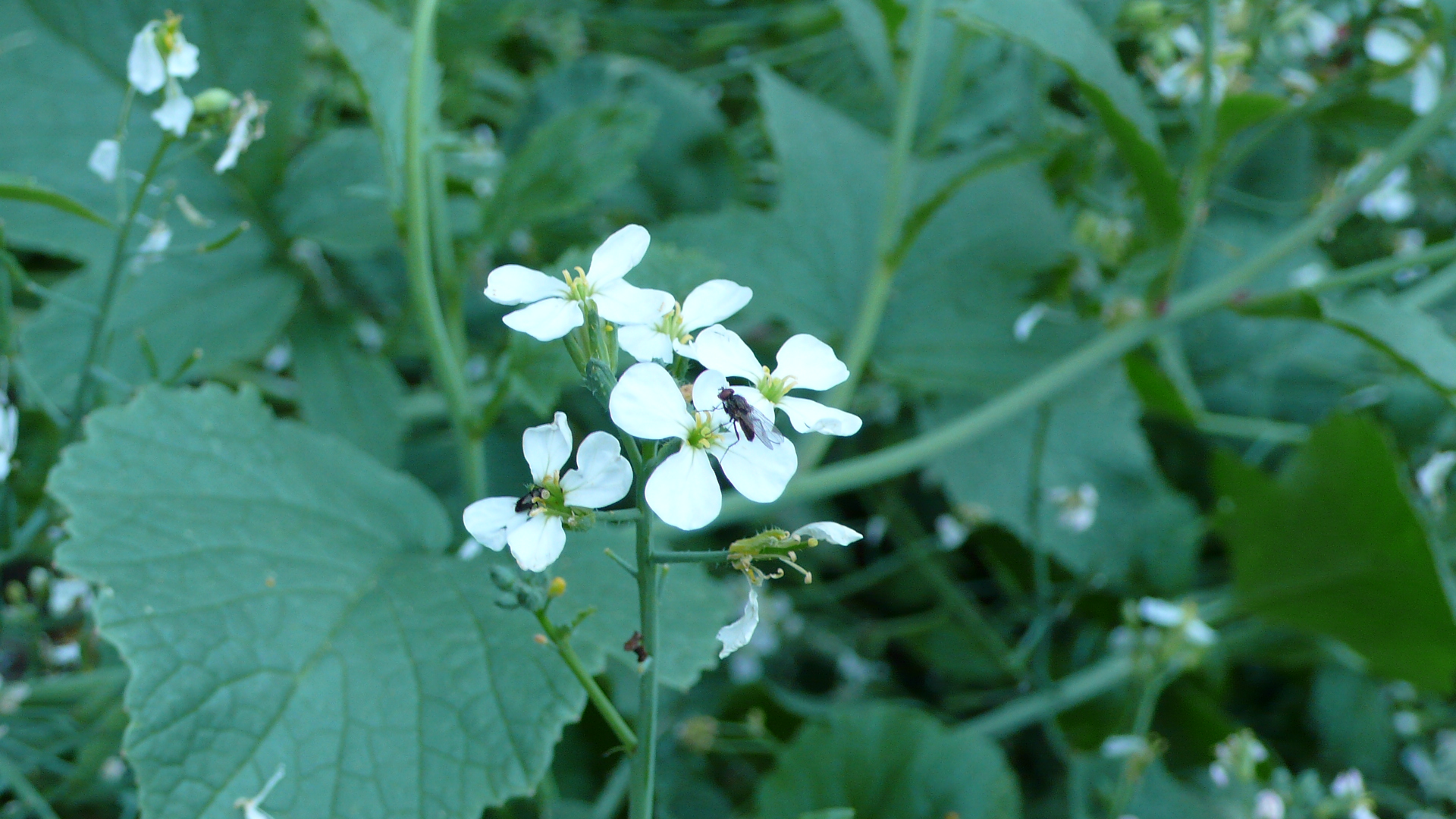
The radish flowers are pollinated by a diversity of insects including butterflies, bees, and small flies:

2014-07-03 19.40.34

These insects will vary in their effectiveness as pollinators of radish, depending on the frequency of visits, how often they move between flowers, and the amount of pollen on their bodies.  This last factor is largely a function of size and hairiness (bigger, hairier insects carry more pollen as a rule), though cleanliness also plays a part: insects often groom the pollen from their bodies and, in the case of bees, may pack it into their pollen baskets where it’s not available for pollination.

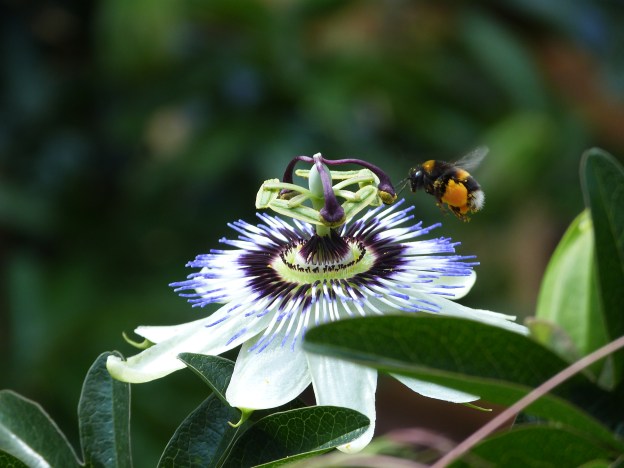
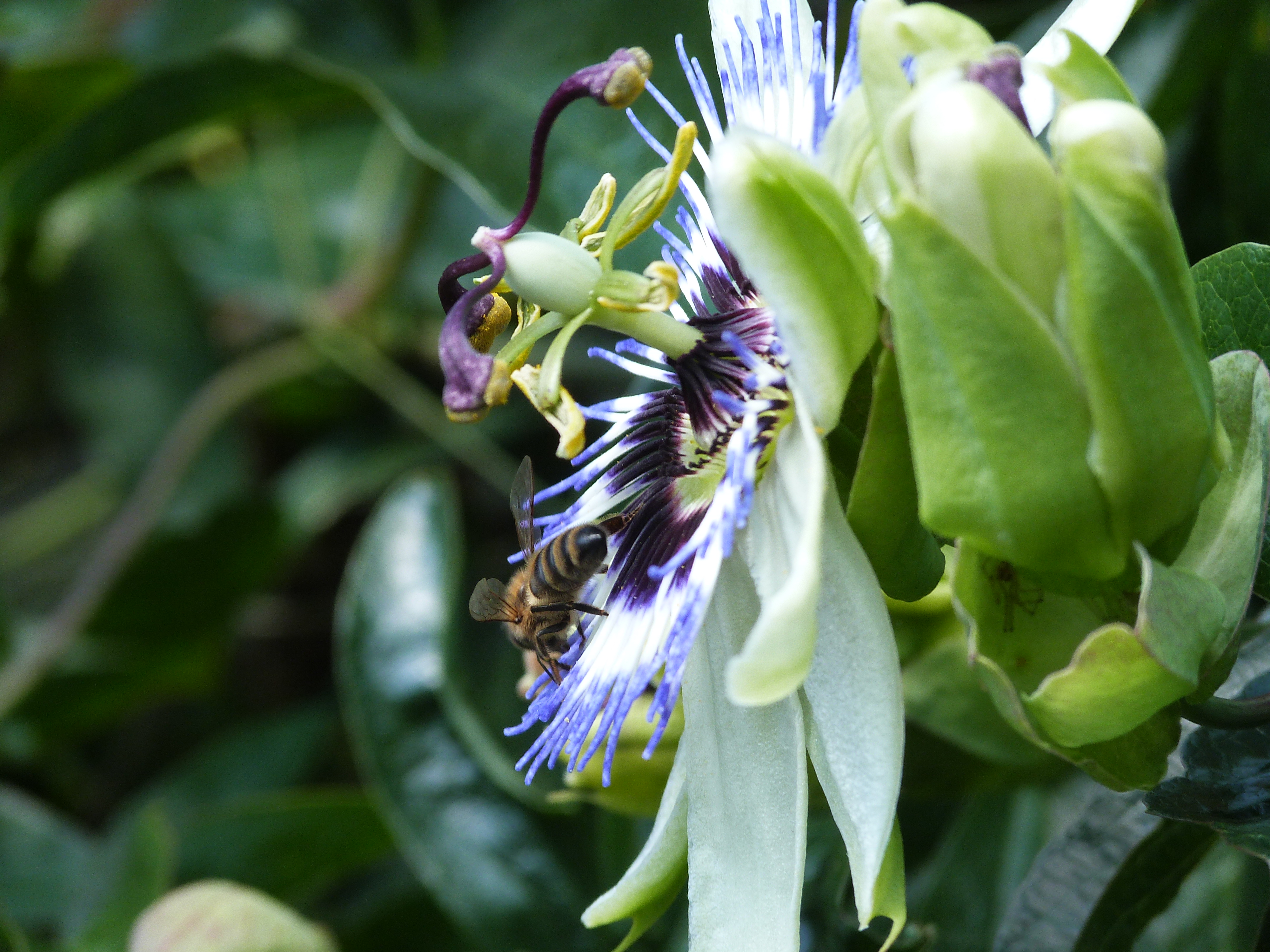
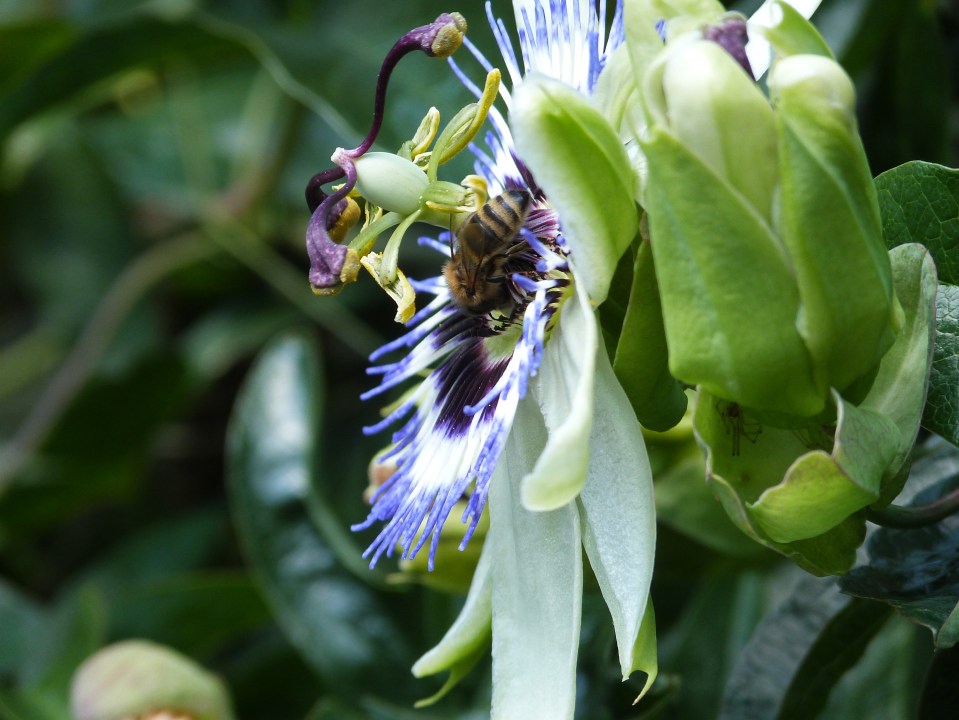
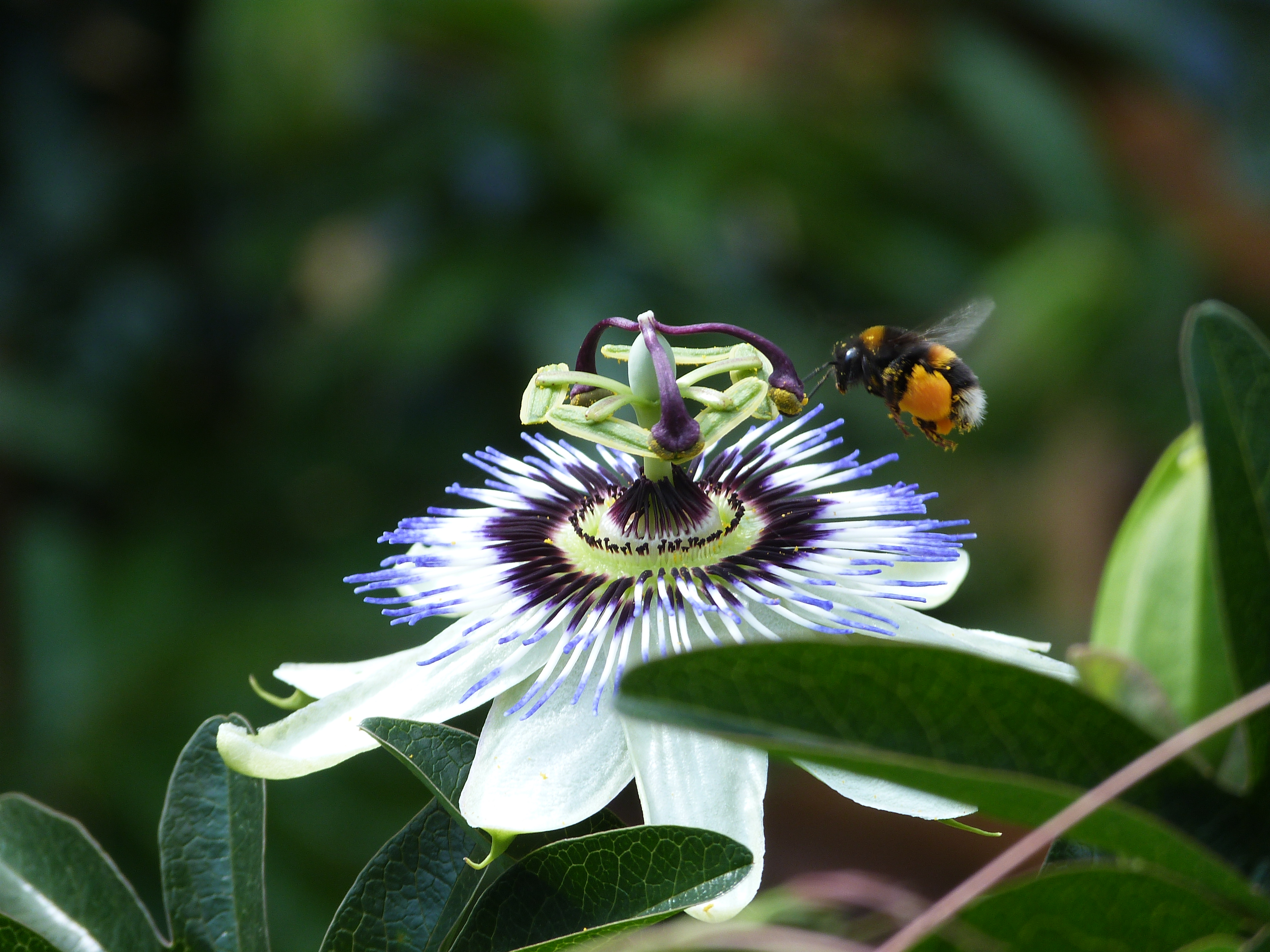
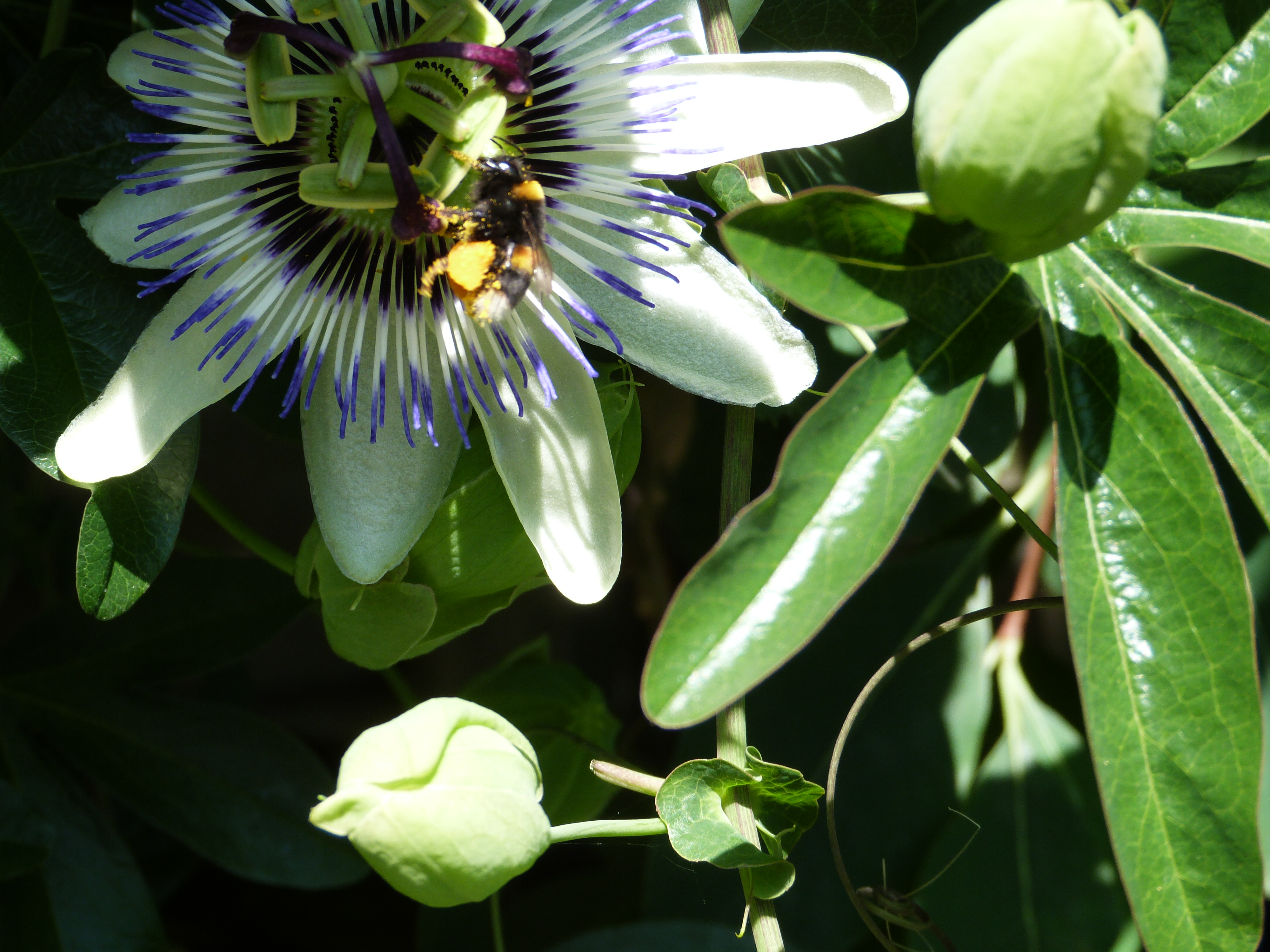
The size and behaviour aspect is best illustrated by some recent photos that I took of visitors to the flowers of passion fruit (Passiflora caerulea var.).  We have a large, sprawling plant growing up a fence which is currently being visited by honey bees, hoverflies, solitary bees and bumblebees.  In comparison to the size of the flower and the position of the anthers (male, pollen producing parts) and stigmas (female, pollen receiving parts), the hoverflies, honey bees and solitary bees are relatively small.  These two images are of honey bees (Apis mellifera):

P1010419

P1010418

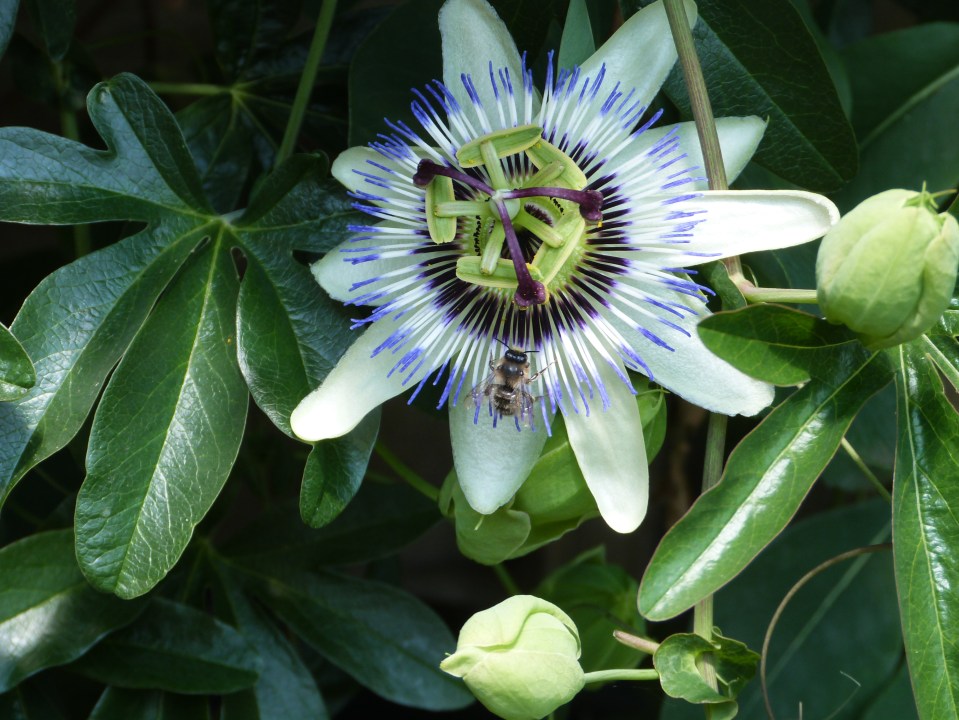
Here’s an unidentified solitary bee:

P1010431

These bees were occasionally touching the anthers, mainly with their wings, so some pollen will be moved around.  But from what I observed it’s likely to be a relatively small amount in comparison to bumblebees, which are usually much larger and hairier, and don’t groom themselves as often as honey bees.  Here’s a Buff-tailed bumblebee (Bombus terrestris):

P1010430

They were actively collecting pollen as well as nectar.  Much of this pollen is packed into the pollen baskets on the rear legs and will go back to the nest to feed the developing larvae, but some will be involved in pollination:

P1010428

So it seems to be the bumblebees we have to mainly thank for the deliciously sweet-sour fruit we will enjoy later in the season. Of course to test this properly we would need to set up an experiment in which we excluded larger bumblebees from the flowers and only allowed smaller bees to forage, with appropriate experimental controls.  Would make a great project if any of my students are interested!  But it should give you a sense of just how complex the interactions between flowers and their pollinators are: the ecology of pollination is far from simple, despite what some would have us believe.

2014-07-03 19.40.18


Hello world!

bi·o·di·ver·si·ty [bahy-oh-di-vur-si-tee]

noun

1.  The variety of life at all levels from species to communities and ecosystems, and ultimately the whole planet, incorporating both genetic and ecological variation. 

2.  What Jeff studies.   

This will (hopefully) become a regular series of blogs all about the variety of life around us and why it’s so important to the continued survival of planet Earth and Homo sapiens sapiens.  Some of it will be linked to my current and past research projects at the University of Northampton, some will be relevant to teaching, and much will be off the cuff comments about stuff that interests me.

Almost 25 years of university teaching and research has convinced me that that there’s far more to still find out about biodiversity than we have so far discovered.  That’s not likely to change very soon.