Tag Archives: Africa

Under every stone, an ecosystem: photosynthesis beneath rocks in the Kenyan savanna

We’re coming to the end of our time here in Kenya and we’ve amassed some amazing memories of the wildlife with great views of large mammals such as giraffe, zebra, elephant, hippos, and a variety of antelopes including the ubiquitous dik-diks. In addition, between us we’ve put together a bird list of about 130 species for the site. But as always it’s the smaller things that have fascinated me the most and some of the student project groups have worked with pollinators, ants, and other invertebrates.

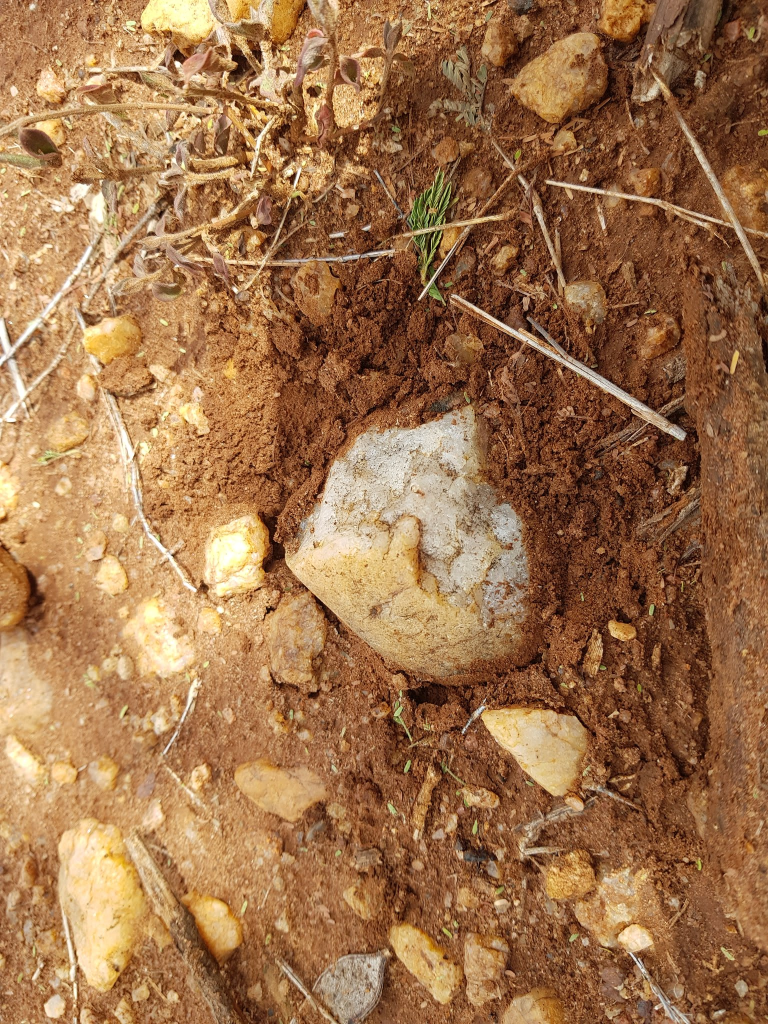
One of those fascinations has been the life that exists beneath some of the rocks that are embedded in the red soils of this part of the savanna. Turn them over and you often find the green growths of what are probably cyanobacteria – so-called “blue-green algae” – which are true bacteria and not at all related to algae, even though they also photosynthesise.

The question arises, of course, of how an organism that requires sunlight to survive is able to grow under a stone? Our investigations have shown that they only live under quartz rocks, mainly those that are lighter in colour. Quartz is of course a crystal and it allows a small amount of sunlight to pass through, typically only one or two percent of the sunshine hitting the rocks. There’s also greater humidity under the stones so it’s a relatively more benign place to grow than the savanna, especially in the dry season.

There’s a great review of these microbial communities, and their ecological importance, by Chan et al. called Hypolithic microbial communities: between a rock and a hard place.

Here’s some photographs that I took of these hypolithic photosynthesisers:

Oh, ok, if you insist: here’s some giraffe:

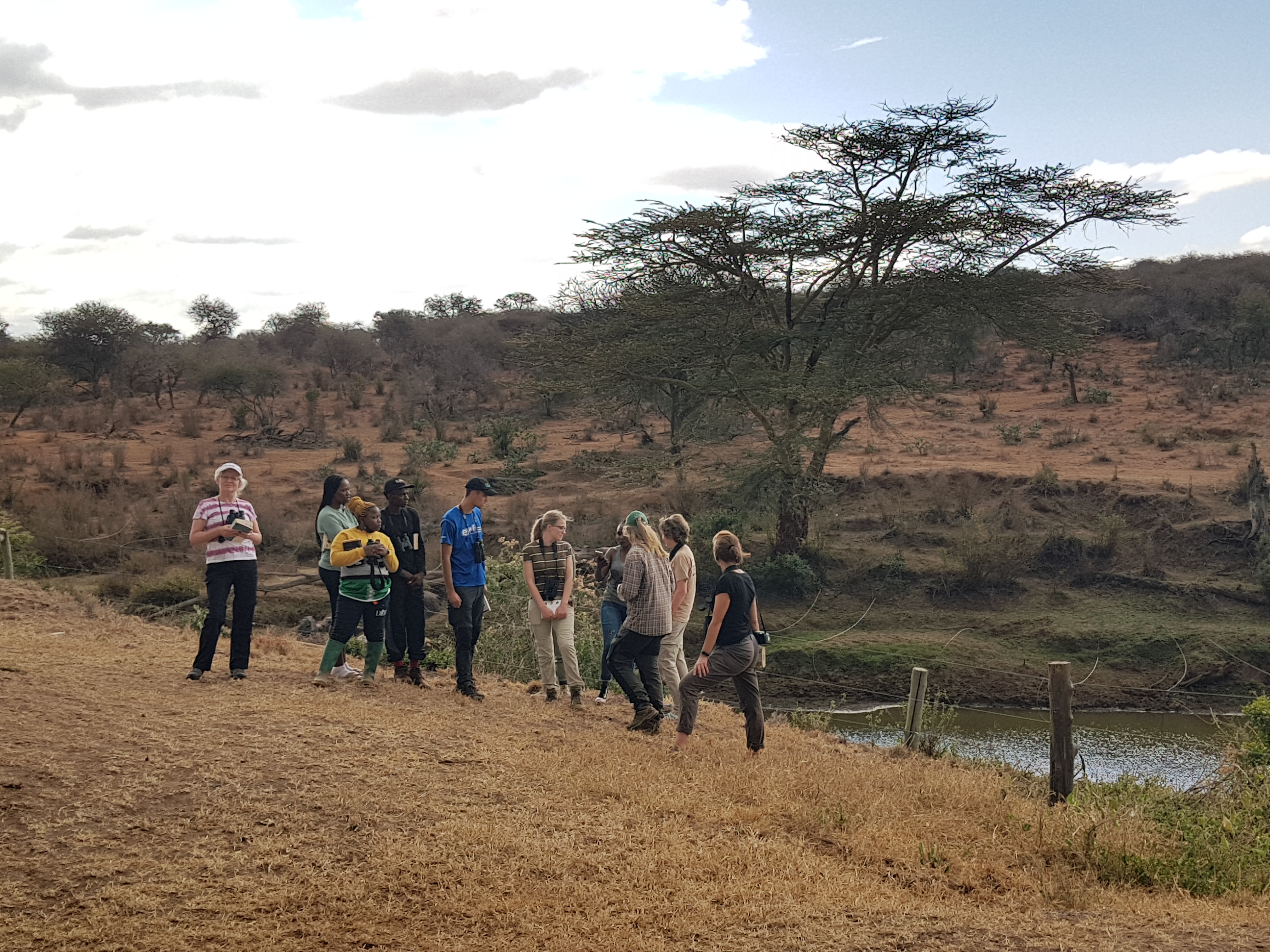
Field work in Kenya with the Tropical Biology Association

The blog has been quiet over August because Karin and I have been in Kenya for most of the month at the Mpala Research Centre. I’m here teaching on a Tropical Biology Association (TBA) field course, as well as doing some writing. In addition to sharing the adventure, Karin is also writing and acting as unofficial field course therapist!

This is the second TBA field course on which I have taught, the other being in Tanzania back in 2011, and it’s a pleasure to give some time to this remarkable organisation. The model is a very simple one: take 24 students, half from Africa and half from Europe, and embed them in a field work environment for a month, where they learn from one another and from their tutors about ecology and conservation. It’s been hugely successful and TBA alumni now hold senior positions in national conservation departments and NGOs, and universities, across Africa and Europe. Some of the African alumni are also returning to help teach on the field course.

We’re back in Denmark around the 9th September but in the meantime here’s a selection of photographs showing where we are staying and the work that we are doing.

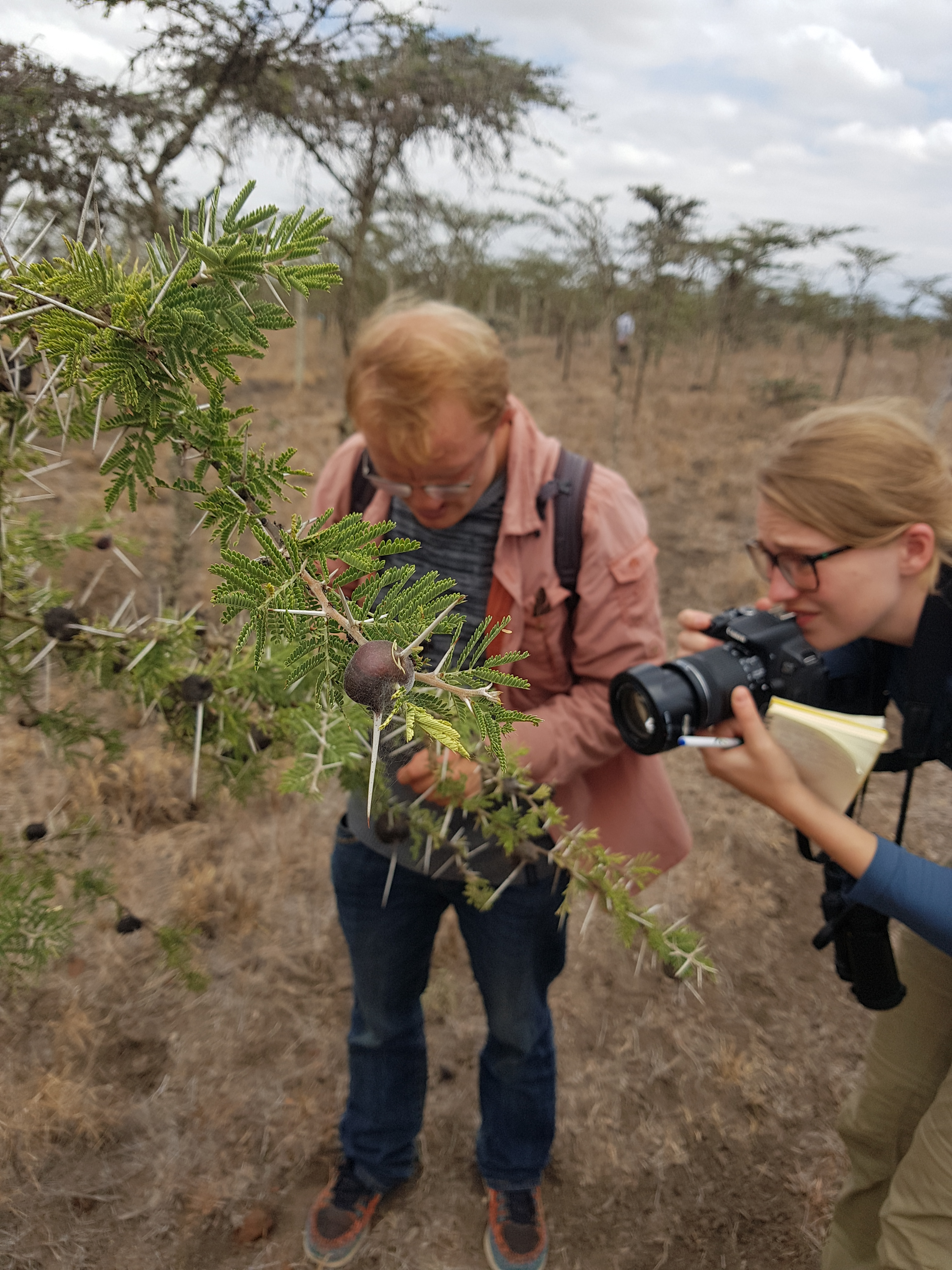
Getting up close with an Acacia species that defends itself by housing colonies of ants in its inflated thorns.

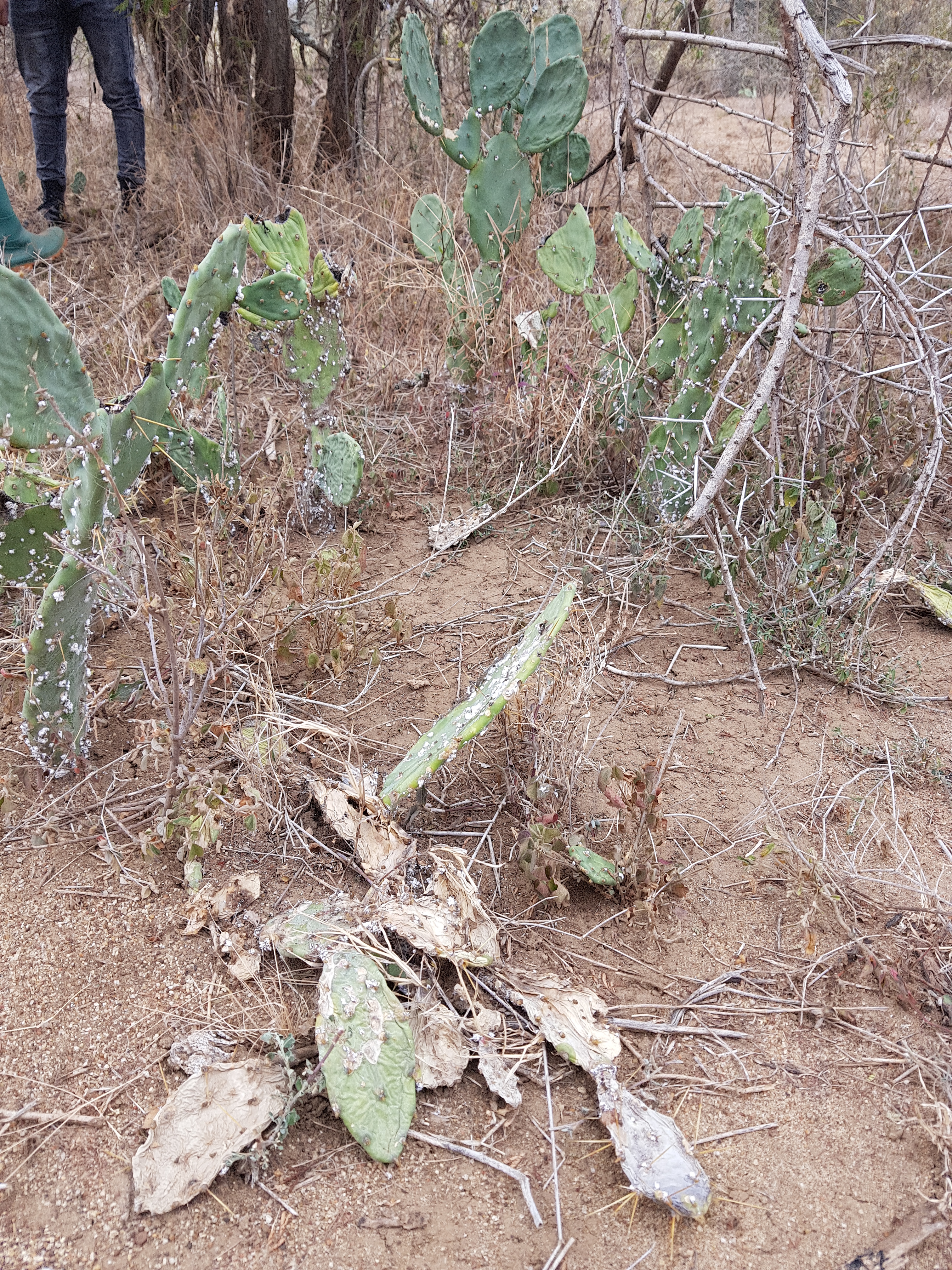
Invasive Prickly Pears (Opuntia spp.) are a growing problem in Kenya, where the cochineal bug has been introduced to help control them.
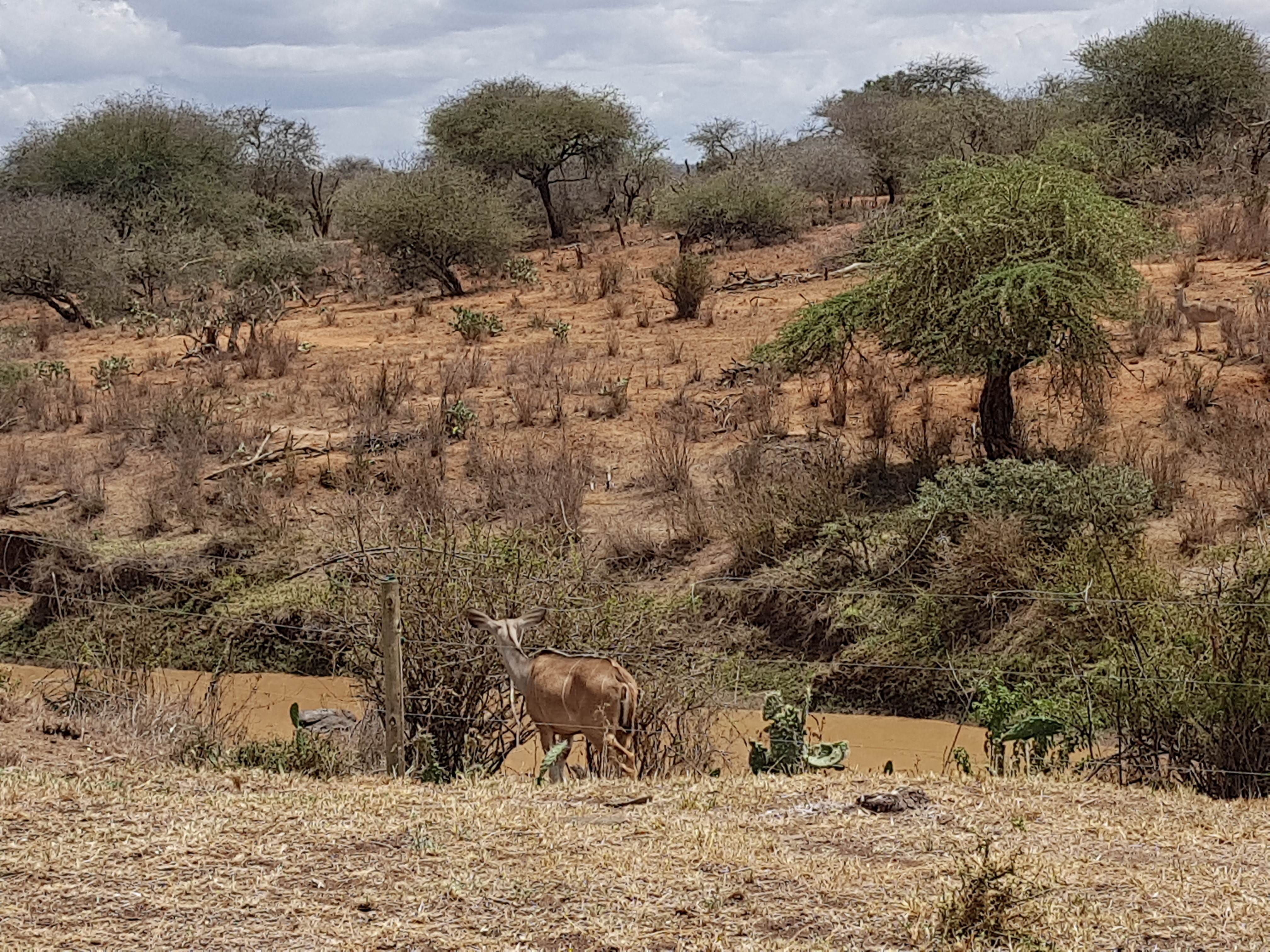
Although there’s an electric fence around the camp site, antelope such as Kudu and Dik Dik are regular visitors.
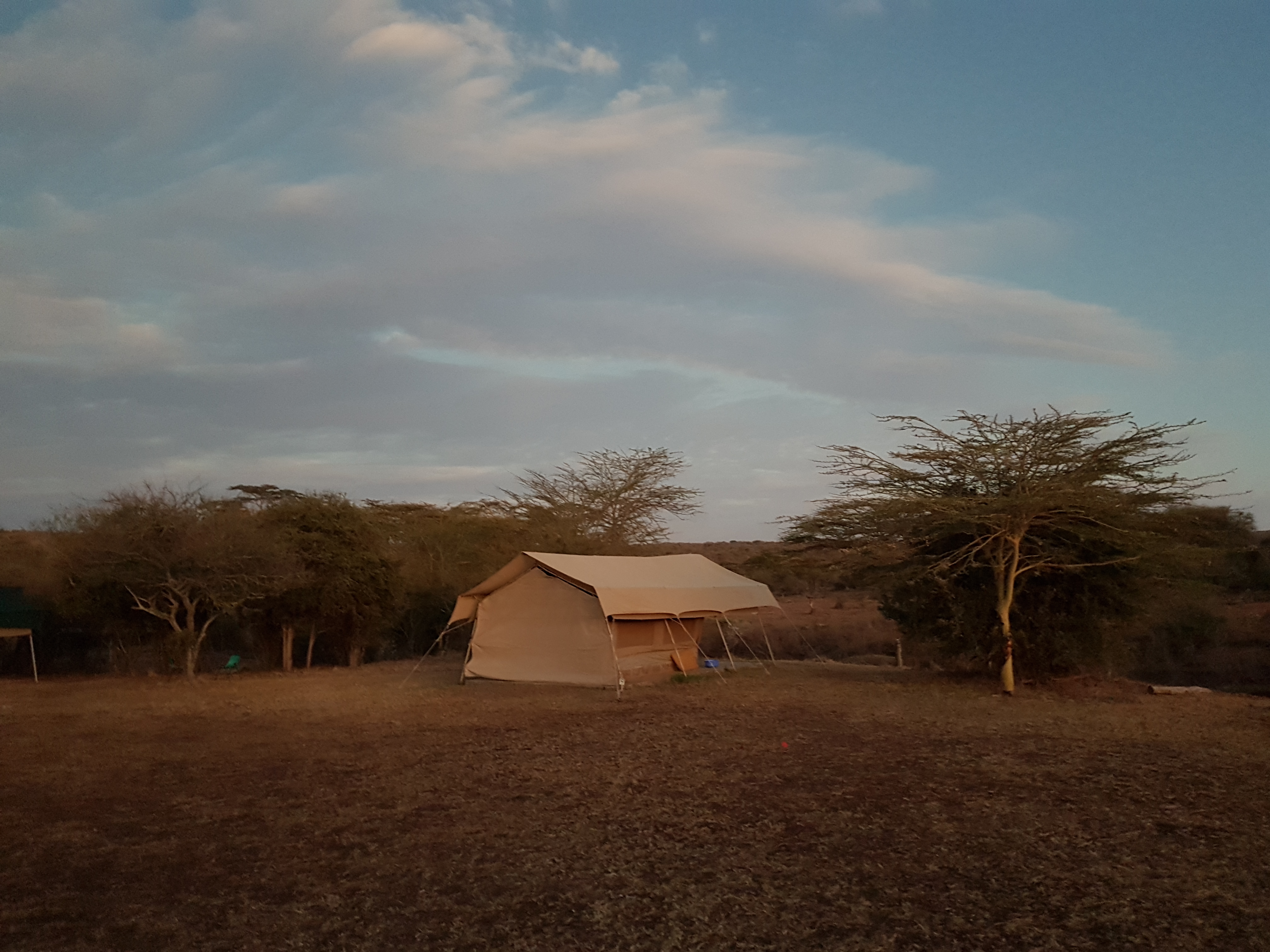
This tent has been our home for most of August. Early in the trip we were confined to it when we both caught COVID. There are worse places to recuperate!
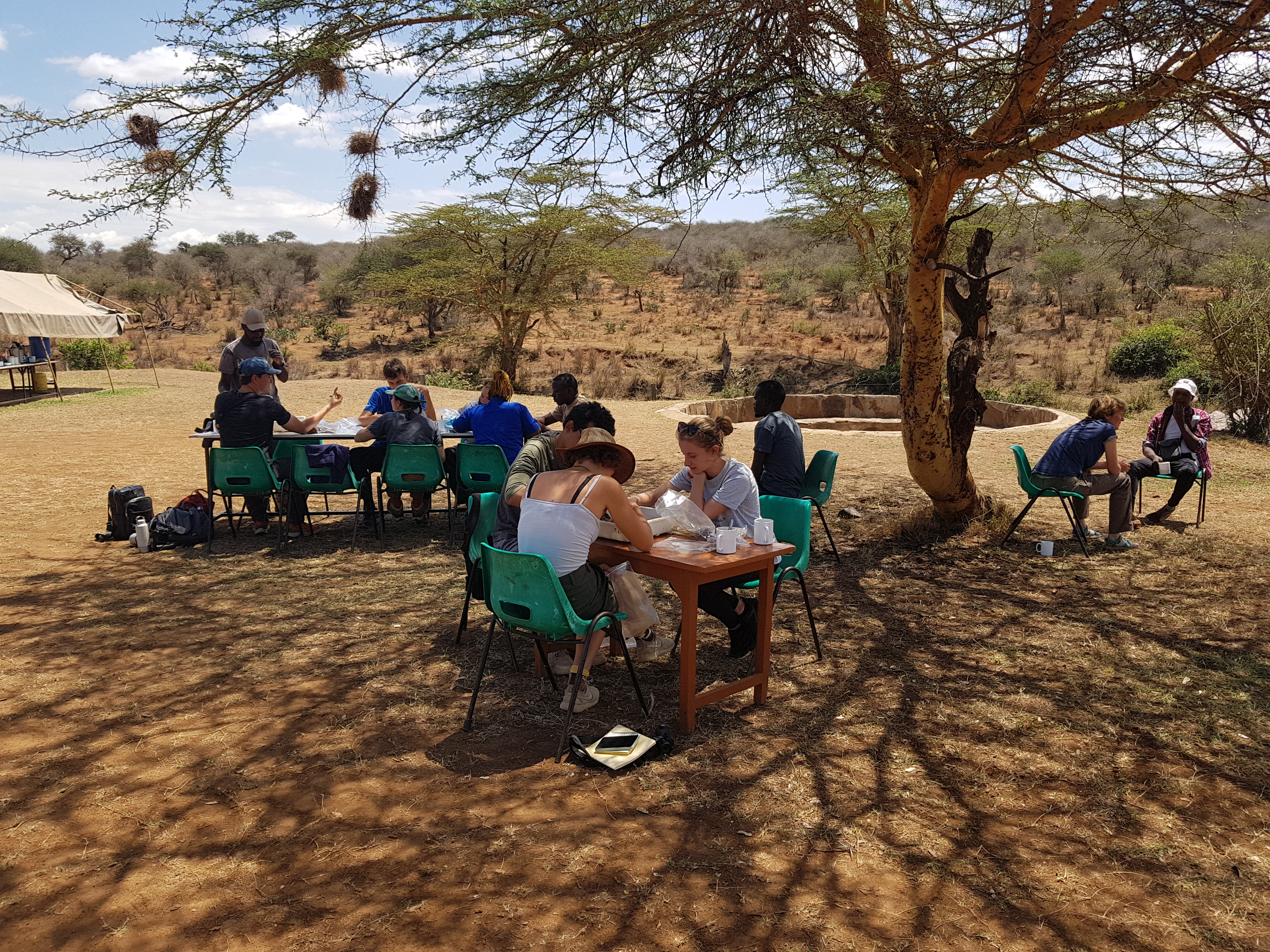
The students sorting samples in our open-air classroom, while the White-browed Sparrow Weavers tolerate our intrusions
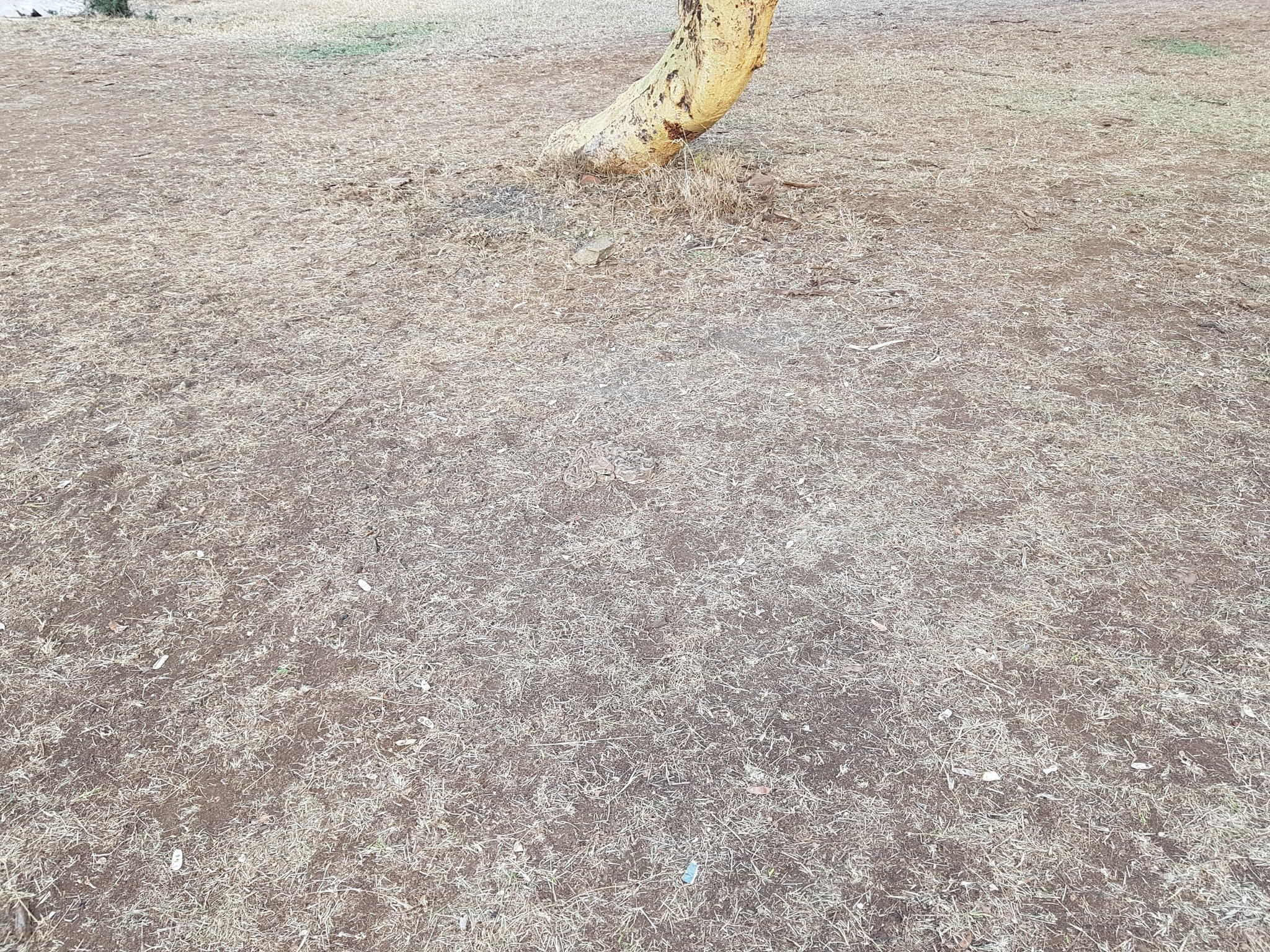
Spot the snake! The Puff Adder is one of the most deadly snakes in Africa. Fortunately one of the students is an experienced herpetologist and qualified to handle these venomous reptiles.
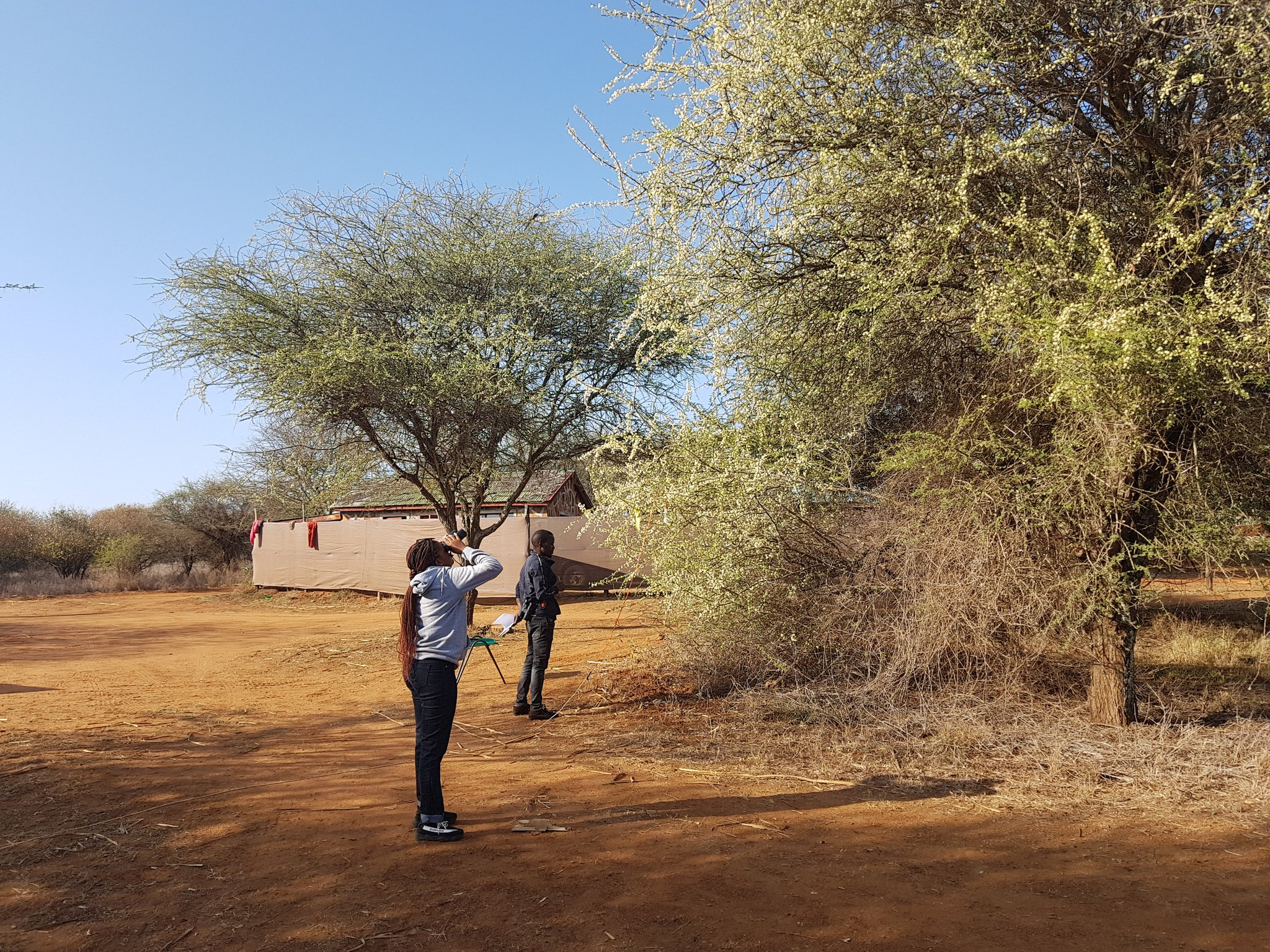
As I write, our TBA students are hard at work on their projects. This is Janeth and Swithin who are looking at competition between honey bees and other pollinators on flowers of this Acacia species.
Karin in African ornithologist mode!
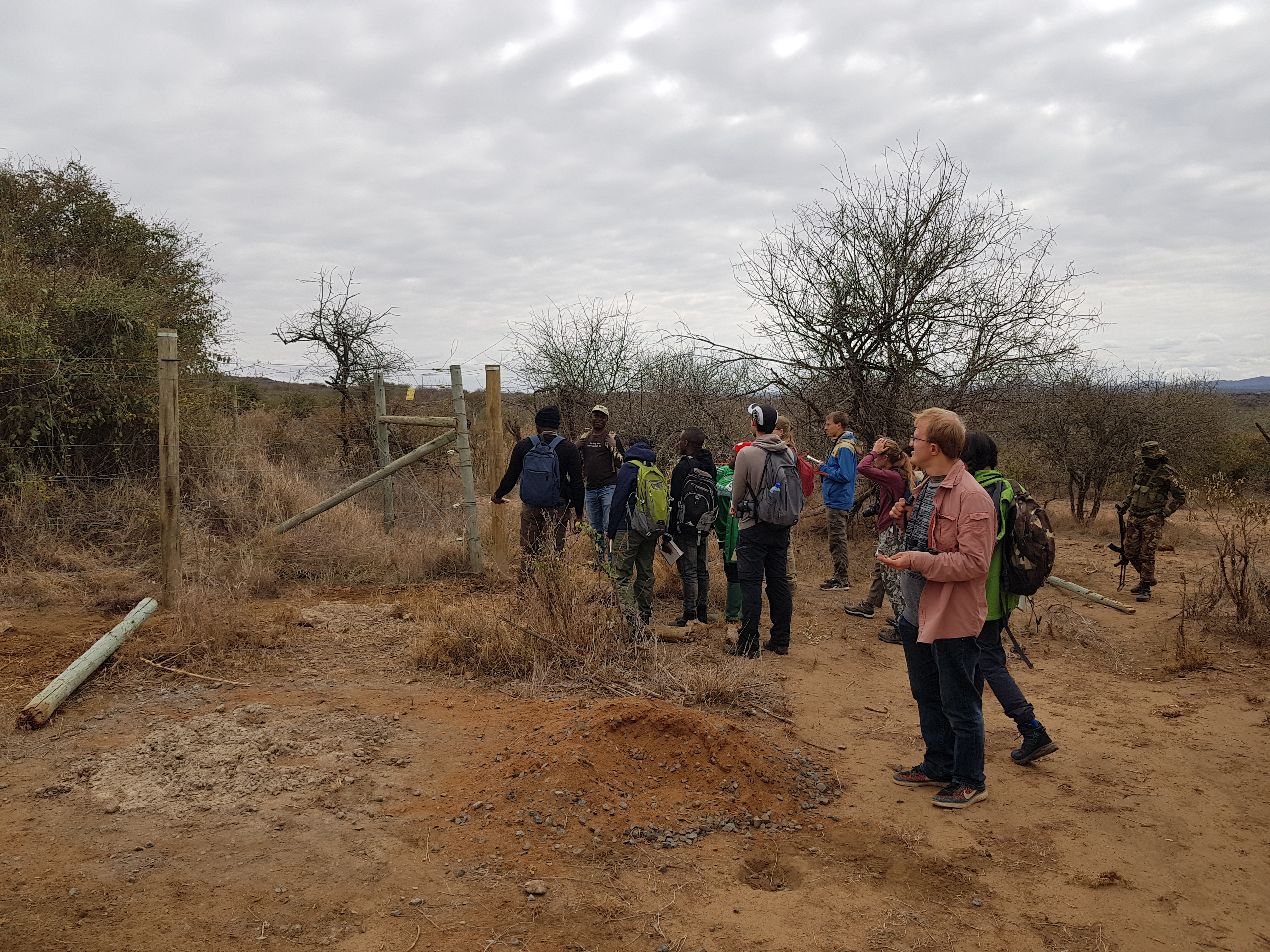
Examining the Kenya Long-term Exclosure Experiment (KLEE) aimed at understanding the role of mega-herbivores in maintaining savanna biodiversity
I’ve donated a copy of my book to the TBA’s Africa library and it’s already inspired some student projects.
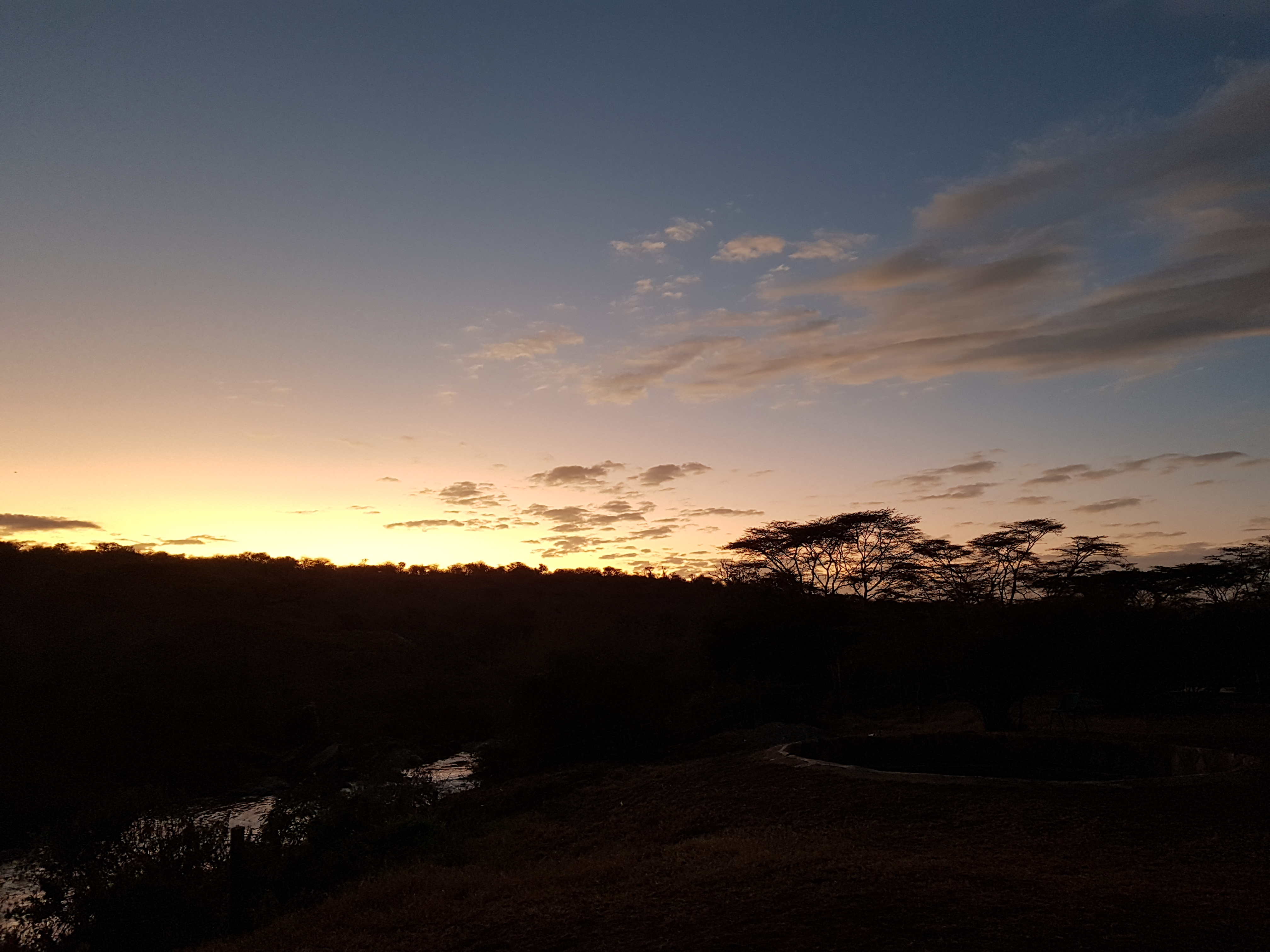
Sunrise on the savanna

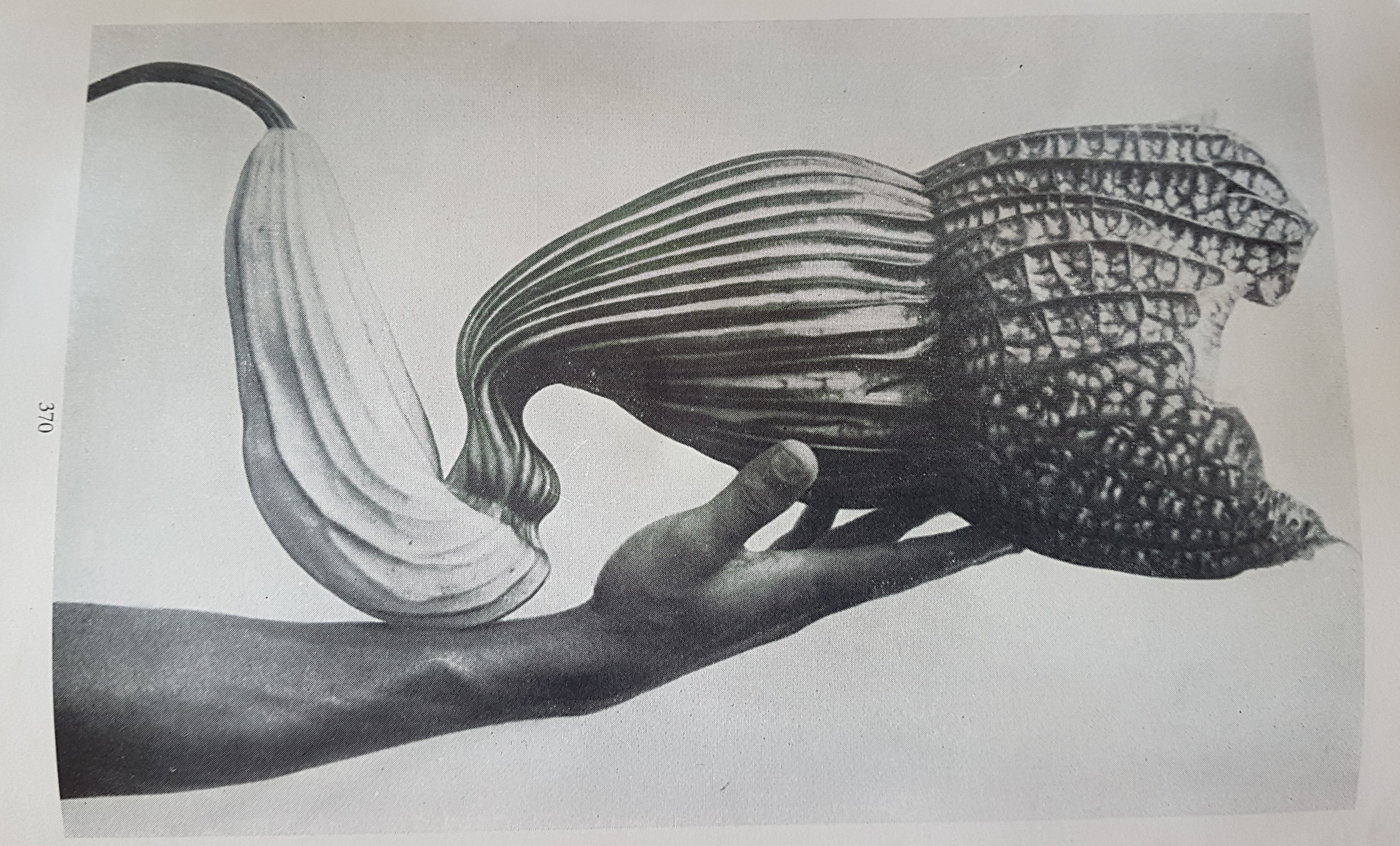
The largest West African flower: Pararistolochia goldieana!

Some years ago, browsing in a second hand bookshop, I happened across a copy of an old magazine from 1950 called Nigeria. Published by the then colonial government, it was a miscellaneous collection of articles about the culture, geography and natural history of that fascinating West African country. Although aspects of the contents are problematical by modern standards, I bought it because of a short article about a wild plant with enormous flowers and a remarkable pollination strategy. In particular, the spectacular photograph of a man holding a flower that’s the length of his forearm grabbed my attention: who couldn’t love a flower like that?!

The plant is Pararistolochia goldieana, a vine found in the forests of this region, as described in the introductory text:

These types of flowers are pollinated by flies, a common strategy in the Birthwort family (Aristolochiaceae) to which the plant belongs. This strategy of fly pollination in which flies are deceived into visiting the flowers by their stink and colour, and temporarily trapped in the enclosed chamber, is something that I explore in detail in my book Pollinators & Pollination: Nature and Society, particularly in the genus Ceropegia. Those plants show convergent evolution with the pollination systems of Aristolochiaceae, though they are unrelated.

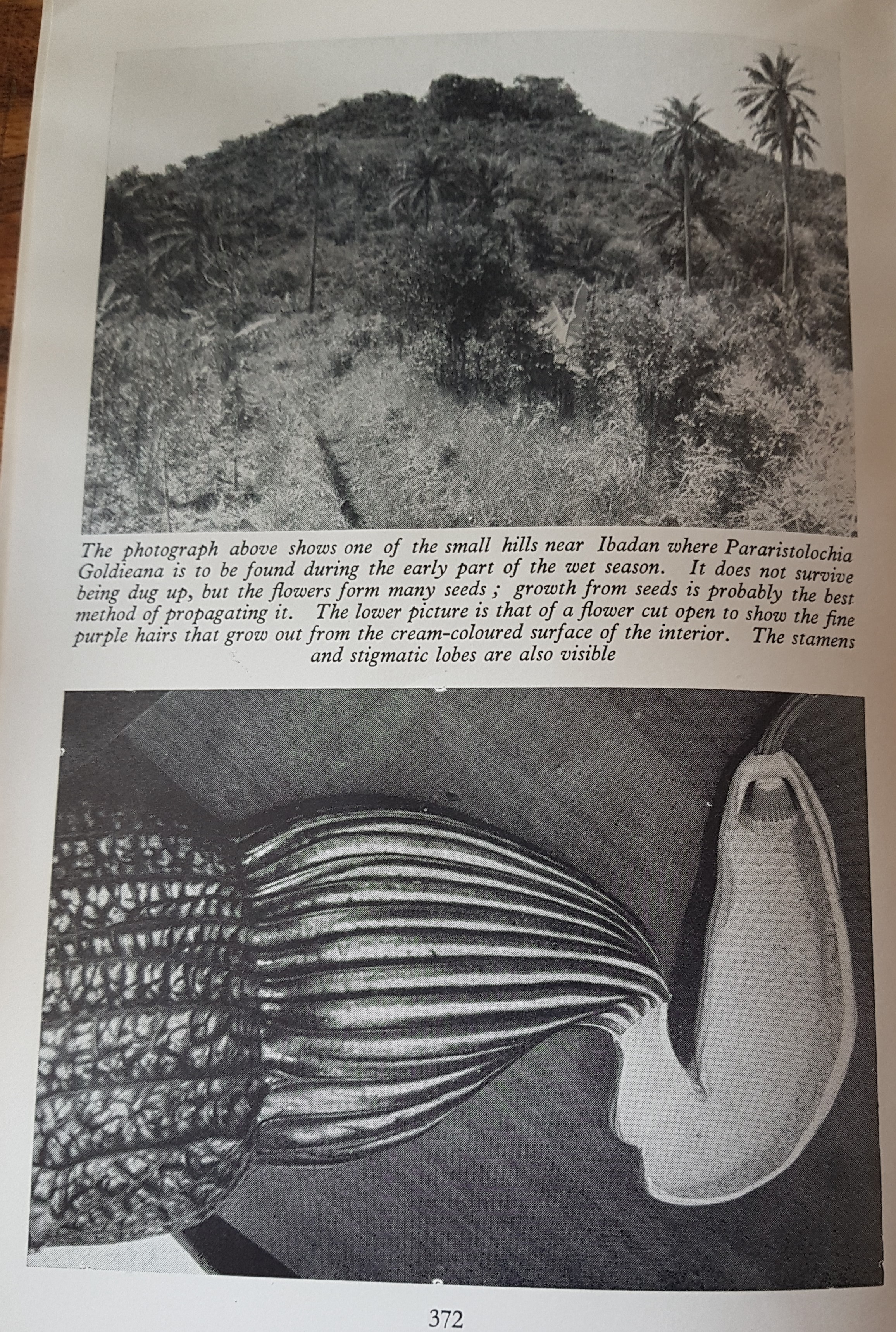
Pararistolochia goldieana has a wide distribution across West Africa, including Cameroon, Equatorial Guinea, Nigeria, and Sierra Leone. The IUCN Red List categorises it as ‘Vulnerable’ due to habitat loss. The population where these photographs were taken is described on the final page of the article:

The city of Ibadan is one of the largest in Nigeria and has grown enormously, ‘from 40 km2 in the 1950s to 250 km2 in the 1990s‘. I wonder if this forest, and its botanical treasures, still exists?

During field work in Gabon in the 1990s I was fortunate enough to encounter a species of Pararistolochia in the rainforest of Lopé National Park. It was a different species to P. goldieana, with rather smaller but no less spectacular flowers, and it stank to high heaven! We knew it was there long before we saw it. I collected some flies from the flowers and had them identified, though I’ve never published the data: it’s available if anyone is working on a review of pollination in the family.

This 1950 article is anonymous, so I don’t know who to acknowledge for the amazing images. However the botanist R.W.J. Keay was working on a revision of the family for the Flora of West Tropical Africa project at the time, so it may have been written by him.

Biodiversity lost and found: extinct island birds and living African dragonflies

Two newly published studies have caught my eye this week as exemplifying two important aspects of biodiversity research: describing new species and understanding which species we’ve recently lost due to human activities.

Researchers working in the Macaronesian islands of the Azores and Madeira have described five new species of endemic water rails (genus Rallus) that are thought to have gone extinct within the period when humans colonised the islands.  One species may even have hung on into historic times.  All of the species were either flightless or had reduced capacity for flying, making them vulnerable to over-exploitation by humans.  That’s a common phenomenon on oceanic islands, with the dodo being the archetypical example.

What’s particularly remarkable is that these five new species increases the known recent diversity of the genus Rallus by about one third!  The reference for the paper, and a link to the pdf, is:

Alcover et al. (2015) Five new extinct species of rails (Aves: Gruiformes: Rallidae) from the Macaronesian Islands (North Atlantic Ocean) Zootaxa 4057: 151–190

The second paper is a mass-naming of 60 (!) new African dragonfly and damselfly species by a team led by KD Dijkstra, a Dutch entomologist whose work I’ve mentioned previously.  I had the pleasure of teaching with KD on a Tropical Biology Association field course in Tanzania a few years ago and his knowledge of African natural history is astounding.

To put these 60 new species into context, it increases the known diversity of African dragonflies and damselflies by almost 10%.  The reference and a link to the paper follows:

Dijkstra et al. (2015) Sixty new dragonfly and damselfly species from Africa (Odonata). Odonatologica 44: 447-678

Finding appropriate names for all of these insect species has required a degree of ingenuity from the authors and a quote from the paper demonstrates how memorable and creative some of them are:

“The Peace Sprite Pseudagrion pacale was discovered on the Moa River near Sierra Leone’s diamond capital Kenema. Twenty years earlier villagers trapped between rebel and government forces on opposite banks drowned in these tranquil waters. Two years later Kenema became the national epicentre of the Ebola outbreak…… The horntail Tragogomphus grogonfla evokes a Liberian pronunciation of ‘dragonfly’, the sparklewing Umma gumma a classic Pink Floyd album…… and the claspertail Onychogomphus undecim simply its date of discovery, 11/11/11.”

One of the things that I’ve tried to impress upon my final year undergraduate students this term during our Monday morning biodiversity seminars is just how little we still don’t understand about life on our planet.  Discoveries of new species are a regular occurrence, and for most we know nothing about their life histories or their interactions with other species (the aspect of biodiversity that particularly interests me).  In other cases (as with the Macaronesian water rails) the species were gone before we knew that they even existed.  I wish that I could be sure that this won’t happen in the future, but it will, until we (and the future generations that we are teaching) do something to address the problems of habitat destruction and inappropriate exploitation of biodiversity.