Category Archives: University of Northampton

The biodiversity of restored landfill sites: a new study of snails just published

Snails - 20160813_124310

The latest paper in a series* studying the biodiversity of restored landfill sites in comparison to nearby nature reserves has just been published.  This work comes from the linked PhD research of two of our former students, Dr Lutfor Rahman and Dr Sam Tarrant.

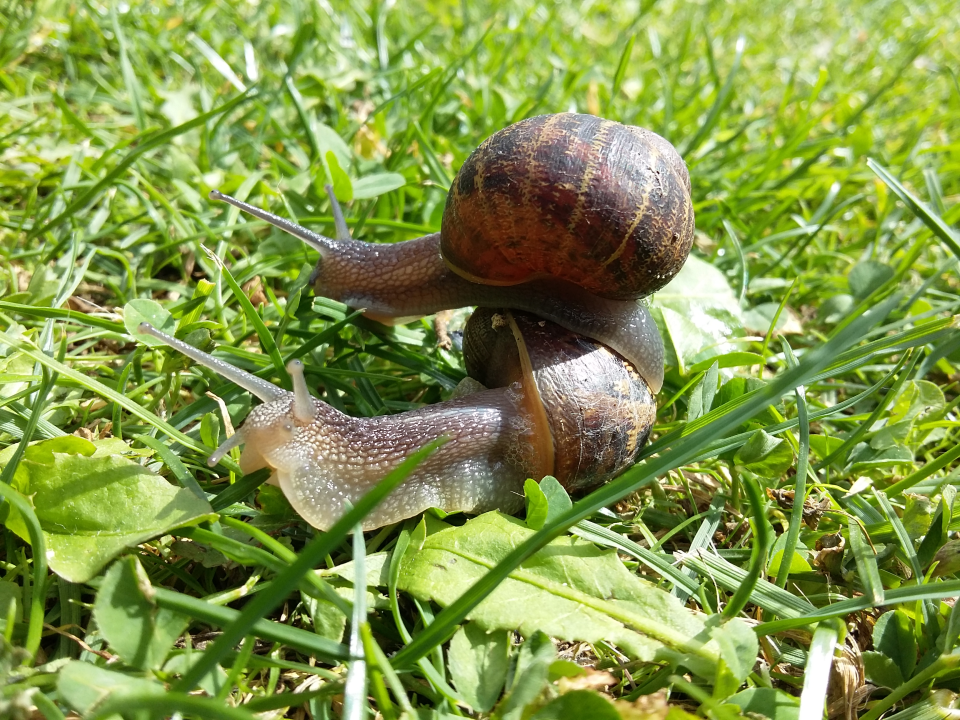
This new paper deals with the larger snails to be found on these novel grasslands and assesses the value of such sites for conserving the diversity of an ecologically important group of molluscs.  Snails play a vital role in nutrient turnover and are a major food source for higher trophic levels, such as some birds, small mammals, and beetles.

The take home message from the study:  restored landfill sites are as rich in species as nature reserves, but a higher proportion is of non-native, introduced species.

Here’s a link to the paper, with the abstract below; it’s paywalled but if you’d like a PDF, just ask:

Rahman, L. Md., Tarrant, S.,Ollerton, J. & McCollin, D. (2016) Effect of soil conditions and landscape factors on macro-snail communities in newly created grasslands of restored landfill sites in the UK.  Zoology and Ecology (in press)


Abstract

Though restored landfill sites provide habitat for a number of taxa, their potential for land snails remains unexplored. In this study, large-sized land snails (>5 mm) were surveyed using transect sampling at nine restored landfill sites and nine corresponding nature sites in the East Midlands region of the UK, during 2008. The effect of restoration was investigated by examining the composition, richness and diversity (Shannon index) of land snail species in relation to habitat and landscape structure. Thirteen macro-snail species were recorded in total, and rarefied species richness and diversity at restored landfill sites was not found to be statistically different from that of reference sites. One third of the snail species at restored landfill sites accounting for 30% of their total abundance were non-native species. Soil electrical conductivity was the strongest predictor of richness and diversity of land snails. Road density was found to be positively related to snail species diversity. Given the high percentage of introduced species at study sites, further research is needed to elucidate management implications of restored landfill sites and dynamics of native vs. non-native species.


*The other papers in this series are:

Rahman, L. Md., Tarrant, S., McCollin, D. & Ollerton, J. (2015) Vegetation cover and grasslands in the vicinity accelerate development of carabid beetle assemblages on restored landfill sites. Zoology and Ecology 25: 347-354

Tarrant, S., Ollerton, J., Rahman, L. Md., Griffin, J. & McCollin, D. (2013) Grassland restoration on landfill sites in the East Midlands, UK: an evaluation of floral resources and pollinating insects. Restoration Ecology 21: 560–568

Rahman, L. Md., Tarrant, S., McCollin, D. Ollerton, J. (2013) Plant community composition and attributes reveal conservation implications for newly created grassland on capped landfill sites. Journal for Nature Conservation 21: 198-205

Rahman, L. Md., Tarrant, S., McCollin, D. & Ollerton, J. (2012) Influence of habitat quality, landscape structure and food resources on breeding skylark (Alauda arvensis) territory distribution on restored landfill sites. Landscape and Urban Planning 105: 281–287

Rahman, L. Md., Tarrant, S., McCollin, D. and Ollerton, J. (2011) The conservation value of restored landfill sites in the East Midlands, UK for supporting bird communities. Biodiversity and Conservation 20: 1879-1893

Again, if you’d like PDFs of any of these, just ask.


The bee that lives on a volcano!

Nature can adapt to even the most unpromising and uncompromising of physical environments, from deep oceans to arid deserts.  And now we have a bee that lives in close proximity to an active volcano!  The work is by one of my former PhD students, Dr Hilary Erenler (who is still a Visiting Researcher at the University of Northampton), and is featured in a big news story in the journal Science.

Here’s a link to the story.

The full reference for the study, with a link to the journal, is:

Hilary E. Erenler, Michael C. Orr, Michael P. Gillman, Bethan R. B. Parkes, Hazel Rymer and Jean-Michel Maes (2016) Persistent nesting by Anthophora Latreille, 1803 (Hymenoptera: Apidae) bees in ash adjacent to an active volcano. Pan-Pacific Entomologist 92:67-78.

Well done Hils, it’s a great study!


The influence of floral traits on specialization and modularity of plant–pollinator networks in a biodiversity hotspot in the Peruvian Andes – Watts et al. (2016)

Watts et al Figure 1

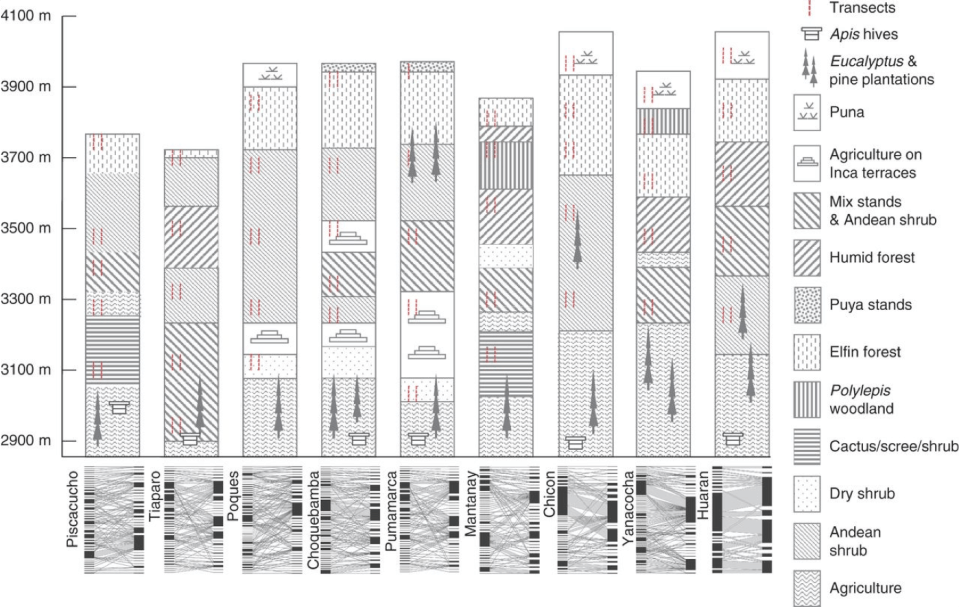
The second paper from the PhD thesis of my former student Dr Stella Watts has just been published in Annals of Botanyhere’s a link to the journal’s website.  It summarises the major findings from her field work on plant-pollinator interactions in the high Andes of Peru:

Watts, S., Dormann, C.F., Martín González, A.M. & Ollerton, J. (2016) The influence of floral traits on specialization and modularity of plant–pollinator networks in a biodiversity hotspot in the Peruvian Andes.  Annals of Botany doi: 10.1093/aob/mcw114

This paper represents a major piece of research, including extensive field data collection over multiple sites in a challenging environment at altitude; state-of-the-art data analysis; and then summarising all of this into a single, digestible paper, with some great figures.  I’m very proud to have been part of it!

Here’s the abstract; please email me or Stella if you’d like a copy of the full PDF:

Background and Aims:  Modularity is a ubiquitous and important structural property of ecological networks which describes the relative strengths of sets of interacting species and gives insights into the dynamics of ecological communities. However, this has rarely been studied in species-rich, tropical plant–pollinator networks. Working in a biodiversity hotspot in the Peruvian Andes we assessed the structure of quantitative plant–pollinator networks in nine valleys, quantifying modularity among networks, defining the topological roles of species and the influence of floral traits on specialization.

Methods: A total of 90 transects were surveyed for plants and pollinators at different altitudes and across different life zones. Quantitative modularity (QuanBiMo) was used to detect modularity and six indices were used to quantify specialization.

Key Results:  All networks were highly structured, moderately specialized and significantly modular regardless of size. The strongest hubs were Baccharis plants, Apis mellifera, Bombus funebris and Diptera spp., which were the most ubiquitous and abundant species with the longest phenologies. Species strength showed a strong association with the modular structure of plant–pollinator networks. Hubs and connectors were the most centralized participants in the networks and were ranked highest (high generalization) when quantifying specialization with most indices. However, complementary specialization d’ quantified hubs and connectors as moderately specialized. Specialization and topological roles of species were remarkably constant across some sites, but highly variable in others. Networks were dominated by ecologically and functionally generalist plant species with open access flowers which are closely related taxonomically with similar morphology and rewards. Plants associated with hummingbirds had the highest level of complementary specialization and exclusivity in modules (functional specialists) and the longest corollas.

Conclusions: We have demonstrated that the topology of networks in this tropical montane environment was non-random and highly organized. Our findings underline that specialization indices convey different concepts of specialization and hence quantify different aspects, and that measuring specialization requires careful consideration of what defines a specialist.

How to deal with bumblebees in your roof [UPDATED]

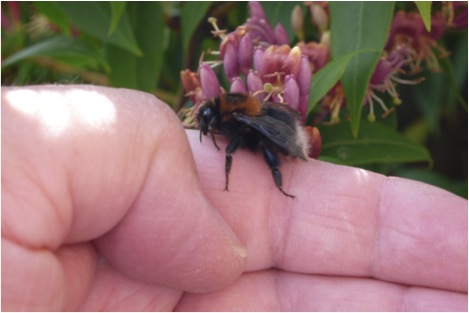
Bombus hypnorum

This week I’ve had two enquiries from colleagues at the University of Northampton asking advice on what to do about colonies of bumblebees that have set up home in their roofs.  In both cases these were nests of the Tree Bumblebee (Bombus hypnorum), a species that only colonised the British Isles in 2001 and has since spread rapidly (see this post from last year for a more detailed account).  Because of their association with human settlements they are significant pollinators of garden produce: over the past few weeks I’ve been watching them pollinating the raspberries in our garden and we now have a large crop.

But having a bee nest in your home is, for many people, a real concern.  I thought it might be useful to discuss the issue by quoting from the email correspondence I had with my first colleague, Paul.


Paul wrote:   I wonder if you can give me some advice. I returned home from holiday on Saturday to find that a colony of bees had taken up residence in a roof space above my front porch. The bees are not domestic honey bees but large bumblebees with white rears. I am not sure how many there are, they buzz furiously when I close the door…..  They are not in the house and I cannot see them from my loft…..so they are not causing a problem at the moment other than a moderate dead rabbit smell in the porch.

I am considering contacting the local council pest controllers, but fear they may just gas and kill them as they are not honey bees. What would your advice be, would it be safe to leave them alone, if so how long are they likely to stay, how large is the colony likely to become, are they likely to cause any damage or mess?

Here’s my response:   From your description they are almost certainly Tree Bumblebees which often use loft spaces, bird boxes, etc. As the name suggests they naturally nest in holes in trees. The colony is not likely to get much bigger though over the next few weeks you may find males patrolling the front of the nest, waiting for the virgin females to emerge so that they can mate. That sometimes makes the colony seem larger than it actually is – there are not likely to be more than about 150 bees in there.

I’ve had Tree Bumblebees in my roof a few times and they’ve never caused any damage. All bumblebee colonies die over the winter and the newly-mated females fly off and hibernate. So by late August or September (perhaps earlier if the weather ever gets warmer….) the bees should have gone. At that time you could seal the entrance to the roof space, though they are unlikely to return next year (although it’s not unknown).

Yes, a pest controller would kill the colony. But they are unlikely to be aggressive unless you stick your fingers in the nest hole! My advice is to let them be and take pride in your own bee colony – they are very discerning and don’t nest just anywhere 🙂


So there you have it: my advice is, leave them alone.  Of course if you or your family have a particular sensitivity to bee stings you may need to think carefully about this advice, but in my experience bumblebees are only aggressive if they feel directly threatened.  In over 25 years of field work focused on bees and other pollinators, I’ve only ever been stung a few times, and mainly by honey bees.

UPDATE: A commenter on Facebook had a great suggestion, that I provide a link to Dave Goulson’s nice little video showing what the inside of a bumblebee nest looks like – so here it is.


What does Brexit mean for British biodiversity?

Friday 24th June 2016.  What a surreal day.  I spent it trying to understand why a small majority of the voting public had committed us to leaving the European Union, an organisation that has had a demonstrably positive impact upon our lives, our society, our economy, and our environment.  That dream-like state was not helped by the fact that I’d stayed up most of the night with my youngest son James, watching the results roll in.

Saturday 25th June 2016.  Twenty four hours later, after a good night’s sleep, I feel less dislocated but no less confused and disappointed.  It is what it is, let’s get on with it.

It’s much too early to properly answer the question of what this all means for British biodiversity, of course.  But as I pointed out in my post about the environmental arguments for remaining in the EU, there’s a whole raft of policies, legislation, agreements and initiatives that the government and NGOs need to consider.  Just to give a couple of examples, what will happen to the All-Ireland Pollinator Plan, or the Special Protected Area status of places such as the Upper Nene Valley?

What I really hope is that we can continue as before, building on the current situation rather than tearing up the whole thing.  To some extent I’m optimistic that we can for the near future, because the government will have (as it sees it) bigger things to worry about.  But I do worry that eventually we will get left behind as EU environmental legislation evolves.  That’s something we have to be mindful of in the coming years.

The ecological internet is already starting to discuss these issues; here are links to a few pieces that I’ve seen:

Adventuresinbeeland has discussed what leaving the EU means for British bees and beekeepers, pointing out that EU funding has enabled bee inspectors to carry out apiary inspections and work with beekeepers on issues such as bee pests and diseases.

The Wildlife Trusts are trying to look positively at the future, with Brian Eversham, Chief Executive for the Wildlife Trust for Bedfordshire, Cambridgeshire and Northamptonshire, summing it up very well:  “Many of those who disagreed over the Referendum agree strongly that wildlife, our countryside and the natural environment matter, now and for the future. We need their voices loud and clear in the coming months. As we are now responsible for our own, independent future, it is up to all of us to make sure that we keep the environment firmly on the national agenda.”

Mark Avery has also summed up the current situation very succinctly on his blog – one cartoon says an awful lot.

Finally, here’s Craig Bennett, CEO of Friends of the Earth, writing on how can we make Brexit work for the environment?

No doubt there will be more coming soon and I’ll try to provide updates on the blog.

In terms of my day job as an academic at the University of Northampton, things will also change across the whole British Higher Education sector, of course.  On one level that’s a different set of issues to what I’ve been discussing, but there are also links: a great deal of ecological research activity is being funded by the European Union and involves cross-border collaborations.  Scientists across Europe have to continue to make that work.

Silver Medal for the BES’s pollinator’s display at RHS Chelsea Flower Show!

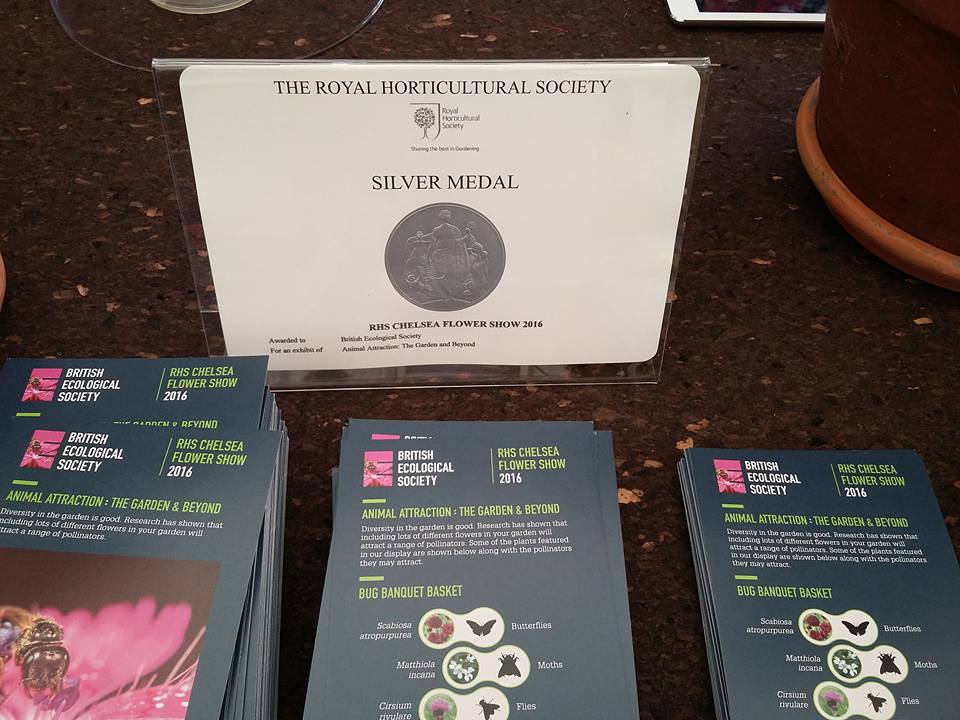
RHS Silver Medal

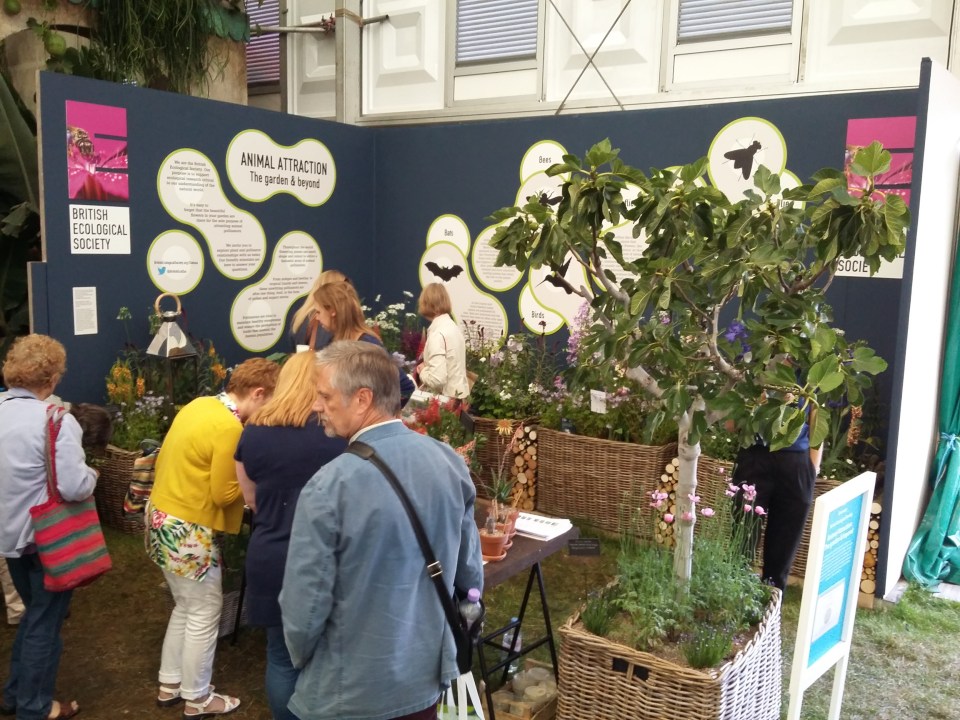
An early train to London yesterday got me to the RHS Chelsea Flower Show in time for the gates opening at 8am.  I’d agreed to spend the day staffing the British Ecological Society’s Animal Attraction: The garden and beyond display, which deals with the relationships between plants and their pollinators – see my recent posts here and here.

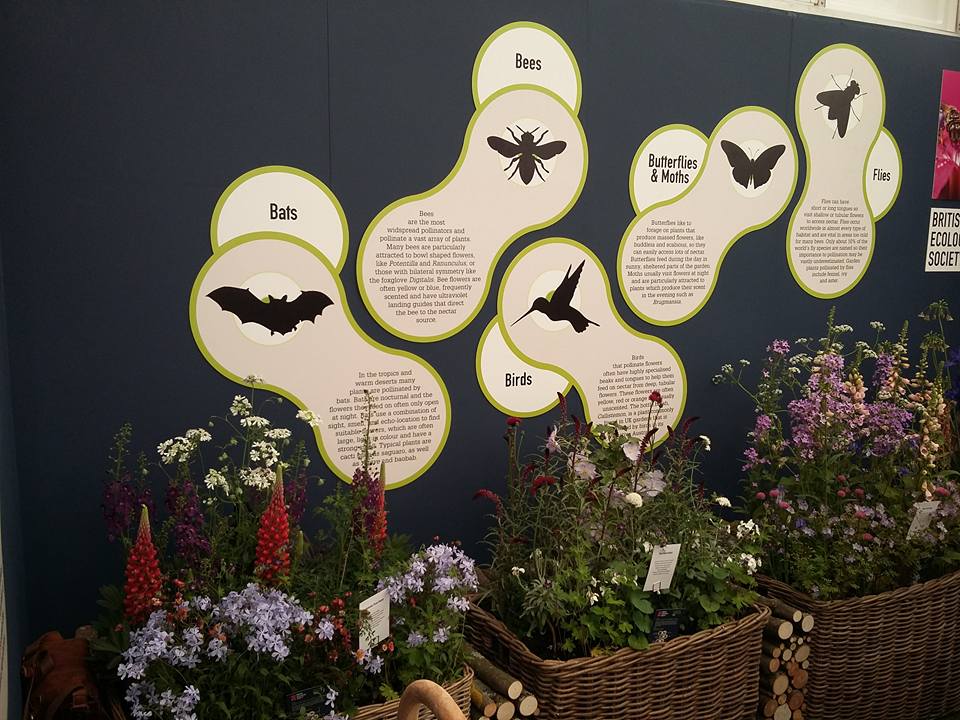
The first thing I noticed as I approached the display was how impressive and well designed it looked, with some wonderful planting to complement the simple, bold scientific information.  The second thing I noticed was that we had won a Silver Medal!  The whole team was very pleased – it’s the third year that the BES has been represented at Chelsea, but the first time that it’s won a medal.  I’m proud to have made a small contribution to that by advising on the plants and the scientific content, but the main kudos goes to the BES’s staff and to the garden designer Emily Darby.

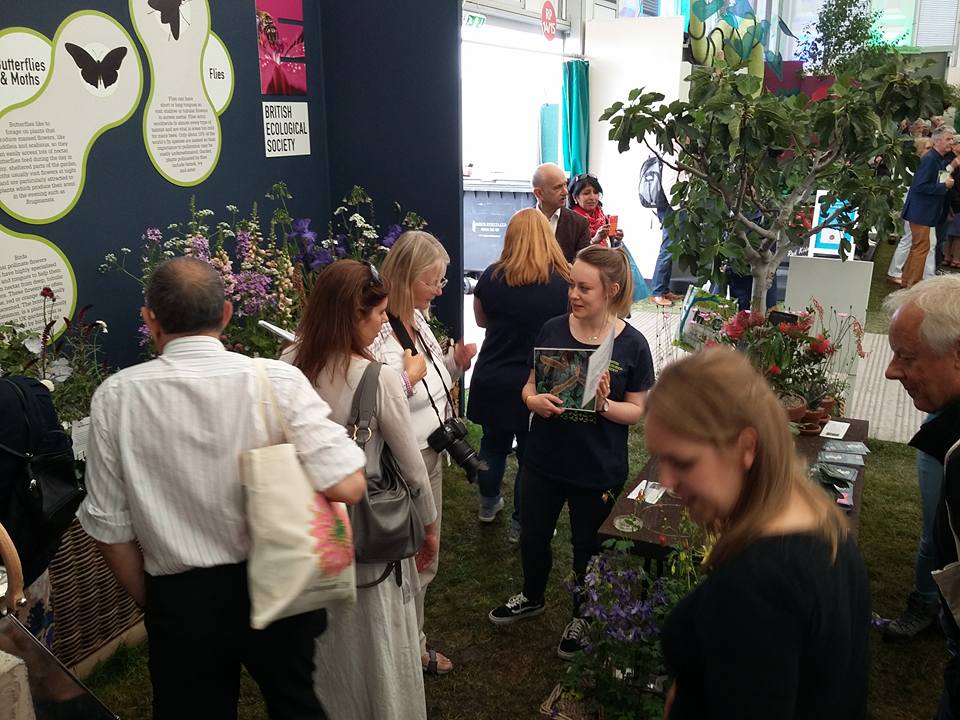
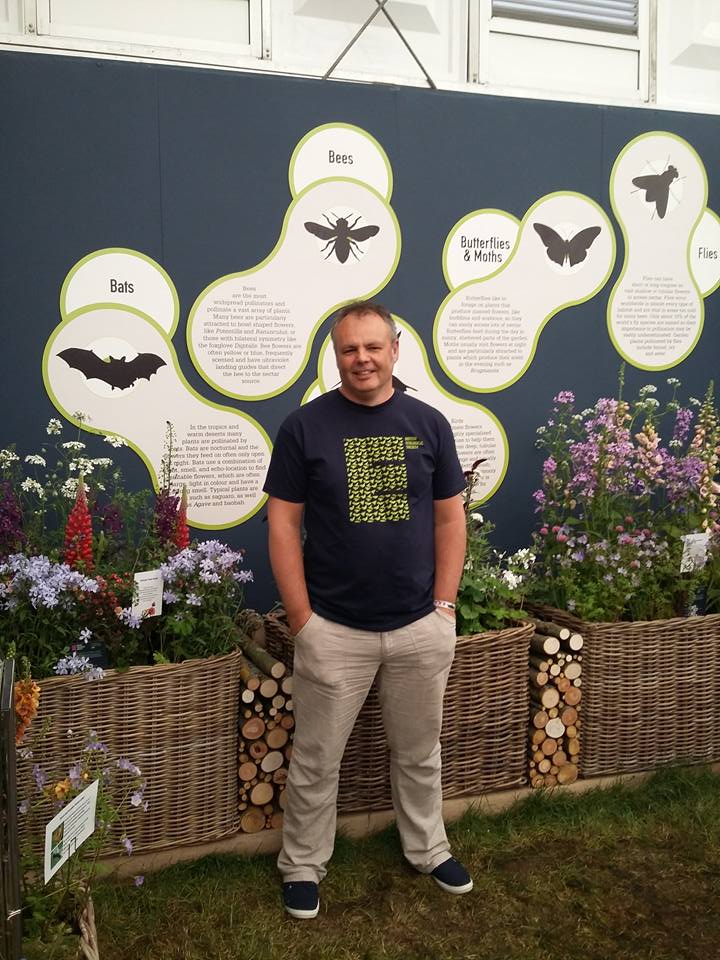
Over the course of a long day we talked to hundreds of visitors about the display, what it represented, and the different ways that flowers are adapted to their pollinators.  There was a huge amount of public interest and support, very gratifying to see.  Here’s some pictures from the day:

RHS display

RHS crowd

RHS crowd with fig

RHS Jeff

RHS display


Pollinators, yeast, and the BES at RHS Chelsea – official press release

P1030210

The official press release for this week’s British Ecological Society display at the RHS Chelsea Flower Show, which I talked about last week, was embargoed until this morning; here’s the full text that’s been tailored by the University of Northampton press office:


Scent, colour and form all shape the choices we make about what to plant in our gardens. Gardeners know that flowers produce nectar and scent to attract the birds, bats, insects and other animals they rely on as pollinators, but few realise that organisms too small to see with the naked eye also play a vital role in this process.

Ecologists have discovered that a yeast called Metschnikowia plays a key part in the pollination story and next week, for the first time, visitors to the RHS Chelsea Flower Show will be able to get a sniff of it and see how it looks under the scanning electron microscope.

The yeast forms part of the British Ecological Society‘s Animal Attraction: The garden and beyond display, which focuses on the relationships between plants and their pollinators – relationships that are amazing in their diversity as well as crucial to global food security. The University of Northampton’s Professor of Biodiversity, Jeff Ollerton, has been advising the British Ecological Society on the project.

Metschnikowia is ubiquitous, present in most flowers in most gardens, yet ecologists are only just beginning to uncover its mysterious role in pollination. The yeast is studied in only four laboratories in the world and Dr Manpreet Dhami from Stanford University has donated the yeast for the British Ecological Society’s garden.

Like other yeasts, Metschnikowia may produce volatile chemicals that mimic the scent flowers use to attract pollinators, thus helping the flower to attract more pollinators and therefore set more seed. In return, the yeast becomes attached to birds, insects and other pollinators, which it relies on for dispersal.

Professor Ollerton explained: “It was a pleasure to work with the British Ecological Society on this project as it highlights two important points about the natural world: that pollinators other than bees are just as important to both wild plants and crops, and that the diversity and abundance of many of these groups is declining worldwide.” Professor Ollerton’s recent study, published in Science, found that 23 species of British bees and flower-visiting wasps have gone extinct since the 19th century.

According to Jessica Bays of the British Ecological Society: “To tackle this decline, we need to understand its causes, including climate change, habitat loss and pesticide use, and we also need to understand the role played by yeasts such as Metschnikowia, which is why we decided to bring it to Chelsea this year.”

Tickets are still available for the RHS Chelsea Flower Show 2016 – for more information click here.

A bee in a hurry, a plant at its leisure – for Biodiversity Day 2016

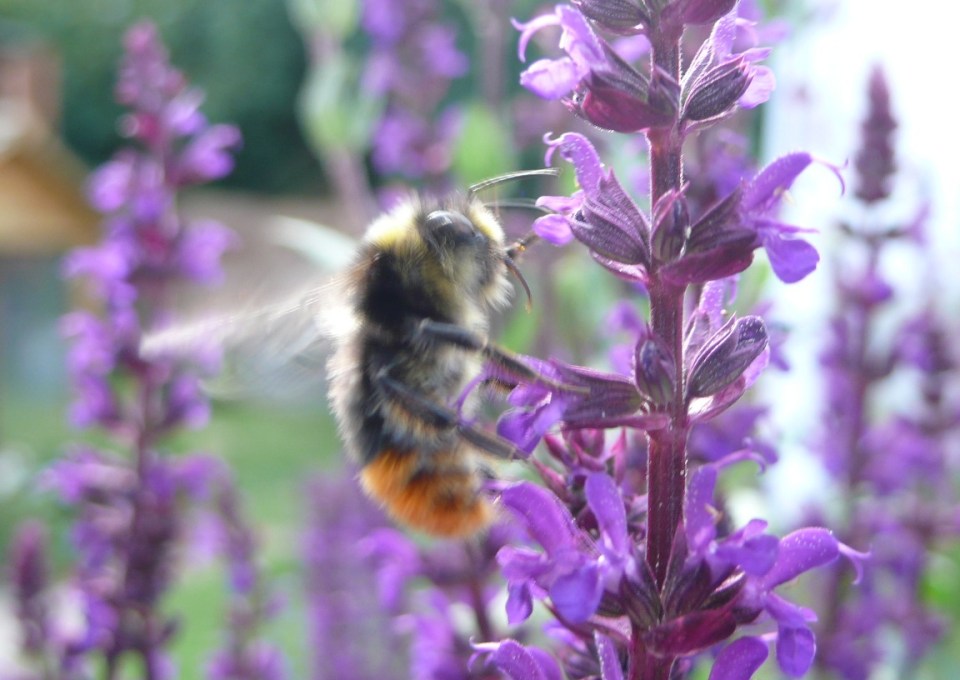
Male B lap on Salvia cropped P1120309Happy Biodiversity Day everyone!  In celebration I thought I’d share with you my entry for this year’s University of Northampton Images of Research competition, the winners of which have just been announced (I wasn’t one of them, but congratulations to those who were).

Here’s the text I wrote to accompany the image:

Sometimes it’s difficult to photograph fast-moving bees, but this blurred image of a male Red-tailed Bumblebee (Bombus lapidarius) captures something of the essence of why plants use pollinators such as bees. Plants are static and cannot go searching for mates, so they sit and wait and use pollen vectors to move their male gametes to the flowers of other plants of the same species. Sometimes this involves wind or water currents; but for most plants this means using animal pollinators.

The bumblebee has been caught with its tongue extended, having just loaded up on nectar to fuel its search for virgin queen bumblebees with which to mate. The plant is a cultivated salvia variety growing in my garden: some of my research group’s work has involved studying pollinator diversity in urban and rural gardens, with a view to understanding the role of these artificial environments for conserving pollinators.

Biodiversity monitoring on the University of Northampton’s new campus – a video of my recent talk

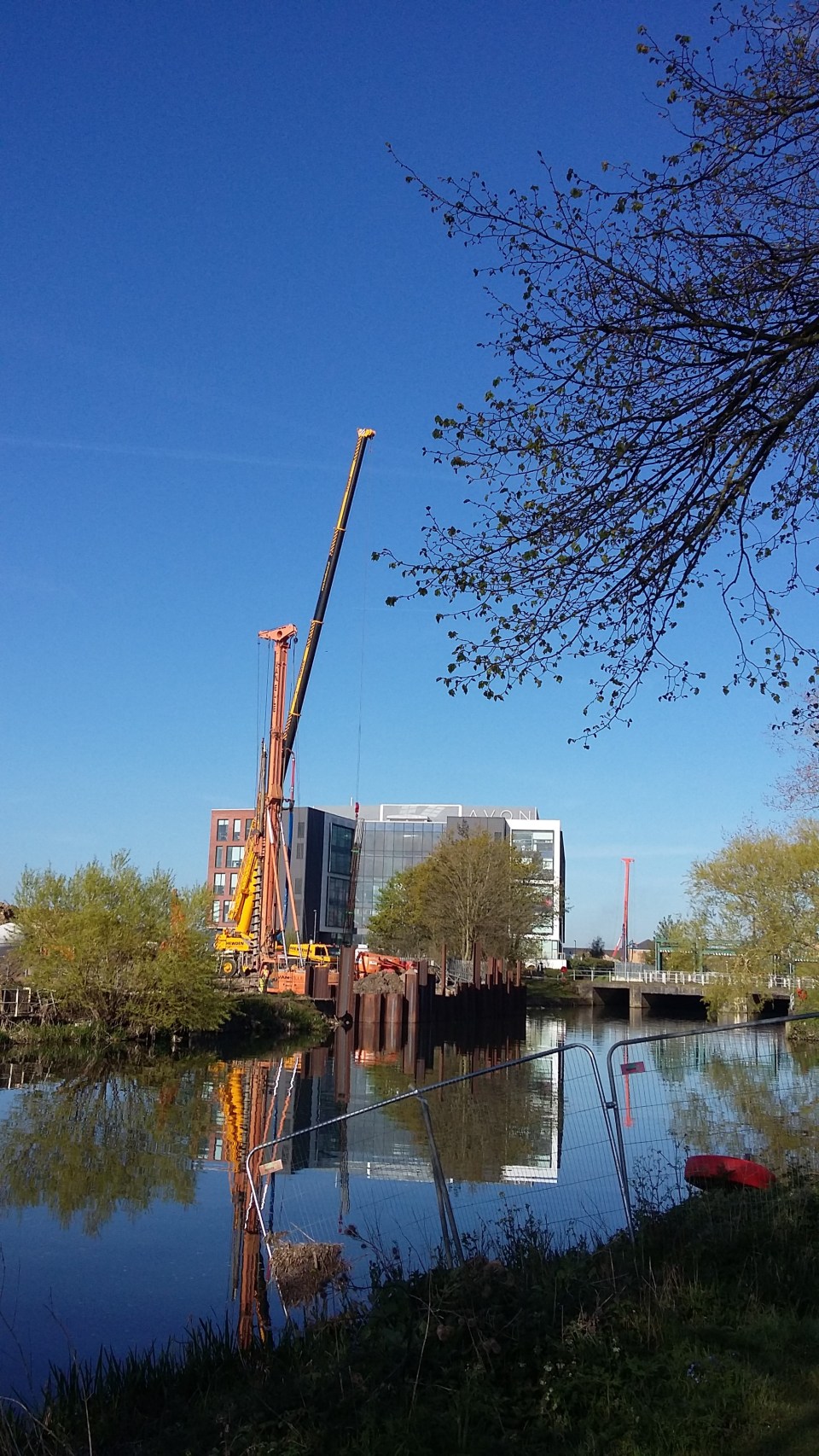
Waterside - 20160504_081622

In a recent post I mentioned the talk that I had presented at a one-day conference on “delivering biodiversity” organised by the Environmental Association of Universities and Colleges at the University of Worcester.  The subject of the presentation was the work we’ve been doing with a couple of our students looking at how the building of the University of Northampton’s new Waterside Campus is impacting on biodiversity on the site, with a particular focus on birds.

The talks from that conference were videoed and can be viewed on the EAUC event site.  All of the presentations are worth viewing, but if you’re particularly interested in the Waterside project, my talk is the fourth one down.  I’ll apologise in advance for the occasional pauses – someone in the first couple of rows was wearing perfume and it was really catching my throat!

Tributes to Sir David – and he finds time to write to one of our students!

Saadias letter from Sir DavidThere can’t be many people currently working or studying in ecology, conservation, or the environmental sciences who were not in some way inspired by the programmes presented by Sir David Attenborough during his long career.  I certainly was, and I can trace my interest in the richness of our planet’s biodiversity right back to watching his ground-breaking series Life on Earth as a young teenager, and then reading the book, bought for me by my parents.

As you are probably aware, yesterday was Sir David’s 90th birthday, and the tributes to his iconic status as part of the scientific and cultural fabric of our nation, and his international standing, have been extensive and heartfelt. My personal favourites include naming the new NERC research vessel the RSS Sir David Attenborough and having a Madagascan dragonfly named after him by my friend and colleague KD Dijkstra, whose work I’ve highlighted previously on this blog.

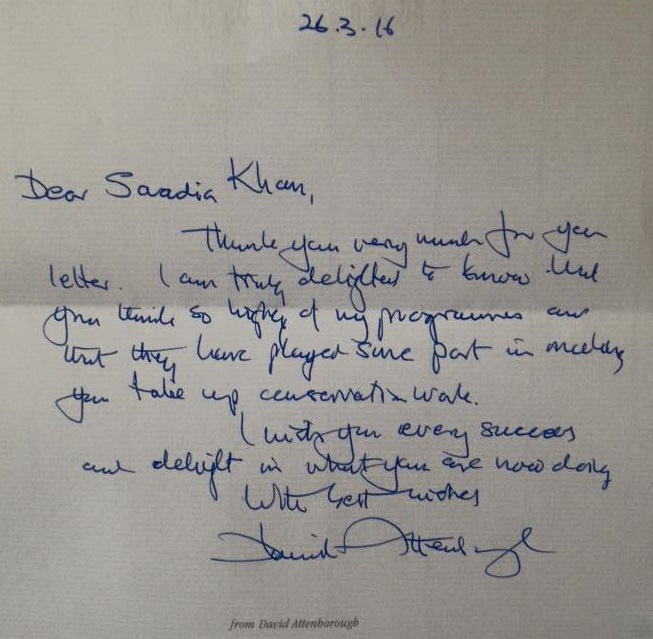
But in the midst of all of these tributes and celebrations of a spectacular career, the measure of the man can be summed up by his taking the time to send a hand-written letter to one of our undergraduate students (see photograph).  The story of how Saadia Khan received Sir David’s letter can be read in full on the University of Northampton’s website.

All I can offer by way of my own tribute is to say thank you, Sir David,  for continuing to be such an inspiration, and may you have many more birthdays to come.