Category Archives: Pollination

The influence of floral traits on specialization and modularity of plant–pollinator networks in a biodiversity hotspot in the Peruvian Andes – Watts et al. (2016)

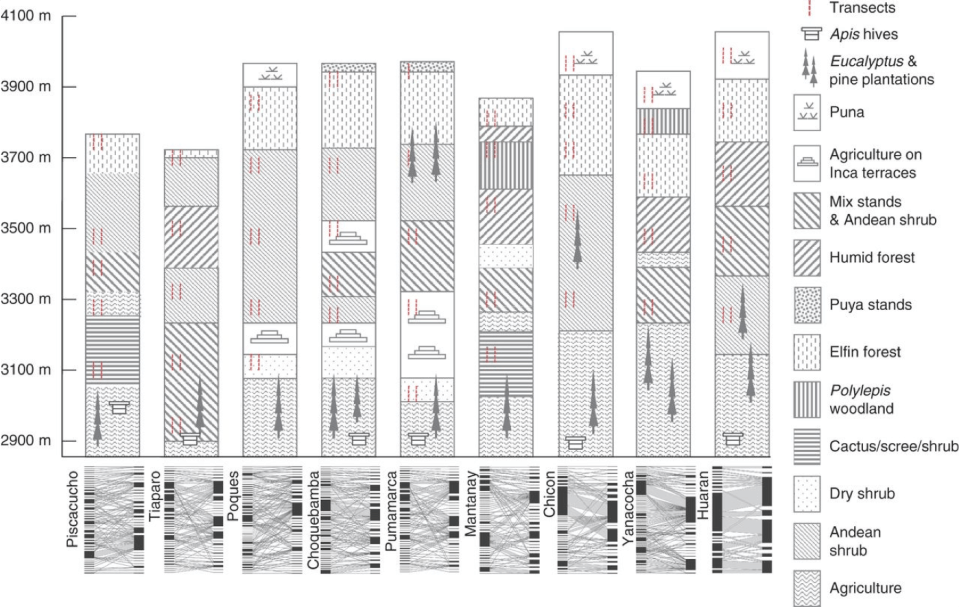
Watts et al Figure 1

The second paper from the PhD thesis of my former student Dr Stella Watts has just been published in Annals of Botanyhere’s a link to the journal’s website.  It summarises the major findings from her field work on plant-pollinator interactions in the high Andes of Peru:

Watts, S., Dormann, C.F., Martín González, A.M. & Ollerton, J. (2016) The influence of floral traits on specialization and modularity of plant–pollinator networks in a biodiversity hotspot in the Peruvian Andes.  Annals of Botany doi: 10.1093/aob/mcw114

This paper represents a major piece of research, including extensive field data collection over multiple sites in a challenging environment at altitude; state-of-the-art data analysis; and then summarising all of this into a single, digestible paper, with some great figures.  I’m very proud to have been part of it!

Here’s the abstract; please email me or Stella if you’d like a copy of the full PDF:

Background and Aims:  Modularity is a ubiquitous and important structural property of ecological networks which describes the relative strengths of sets of interacting species and gives insights into the dynamics of ecological communities. However, this has rarely been studied in species-rich, tropical plant–pollinator networks. Working in a biodiversity hotspot in the Peruvian Andes we assessed the structure of quantitative plant–pollinator networks in nine valleys, quantifying modularity among networks, defining the topological roles of species and the influence of floral traits on specialization.

Methods: A total of 90 transects were surveyed for plants and pollinators at different altitudes and across different life zones. Quantitative modularity (QuanBiMo) was used to detect modularity and six indices were used to quantify specialization.

Key Results:  All networks were highly structured, moderately specialized and significantly modular regardless of size. The strongest hubs were Baccharis plants, Apis mellifera, Bombus funebris and Diptera spp., which were the most ubiquitous and abundant species with the longest phenologies. Species strength showed a strong association with the modular structure of plant–pollinator networks. Hubs and connectors were the most centralized participants in the networks and were ranked highest (high generalization) when quantifying specialization with most indices. However, complementary specialization d’ quantified hubs and connectors as moderately specialized. Specialization and topological roles of species were remarkably constant across some sites, but highly variable in others. Networks were dominated by ecologically and functionally generalist plant species with open access flowers which are closely related taxonomically with similar morphology and rewards. Plants associated with hummingbirds had the highest level of complementary specialization and exclusivity in modules (functional specialists) and the longest corollas.

Conclusions: We have demonstrated that the topology of networks in this tropical montane environment was non-random and highly organized. Our findings underline that specialization indices convey different concepts of specialization and hence quantify different aspects, and that measuring specialization requires careful consideration of what defines a specialist.

Third International Conference on Pollinator Biology, Health and Policy – Pennsylvania – 18-20 July, 2016

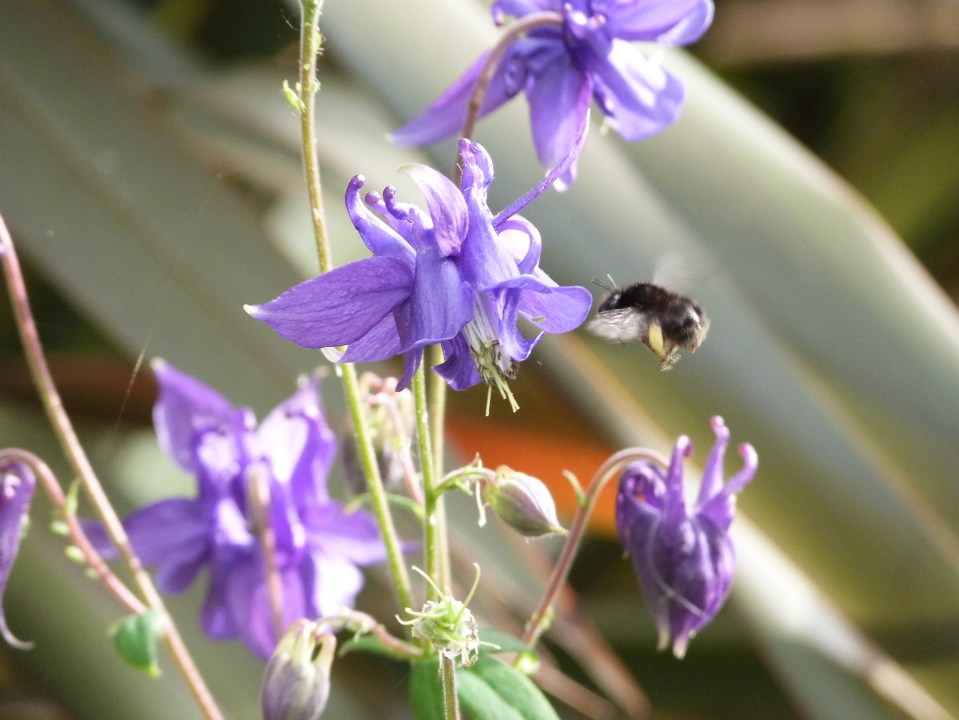
P1030210

Keeping with the theme of Bees’ Needs Week, and the importance of pollinators to natural and agricultural ecosystems*, the Third International Conference on Pollinator Biology, Health and Policy takes place at Penn State University, USA,  from the 18th to 20th July.

Here’s a link to the PDF of the programme with the abstracts, speakers’ details, etc.  I won’t be attending** but I am involved as a collaborator*** in one of the talks being presented – Luísa Carvalheiro’s project on “Direct and indirect effects of soil eutrophication on pollination services“.

Best of luck to all the speakers and attendees, looks like it’s going to be a great conference.


*Wednesday’s grumpiness has almost disappeared, though it reached a new peak yesterday when we had a paper rejected by a journal after 10 months.  There was one positive review, one middling review, and then a third in which the reviewer provided no comments – just “reject”!  I was not happy about that and made my feelings known to the editor…..

**I’m actually in the Azores next week attending the Island Biology 2016 conference.  More about that at the weekend.

***With about a gazillion other people!  Luisa has pulled together an amazing data set.


Bees’ Needs week (9th to 17th July) #BeesNeeds

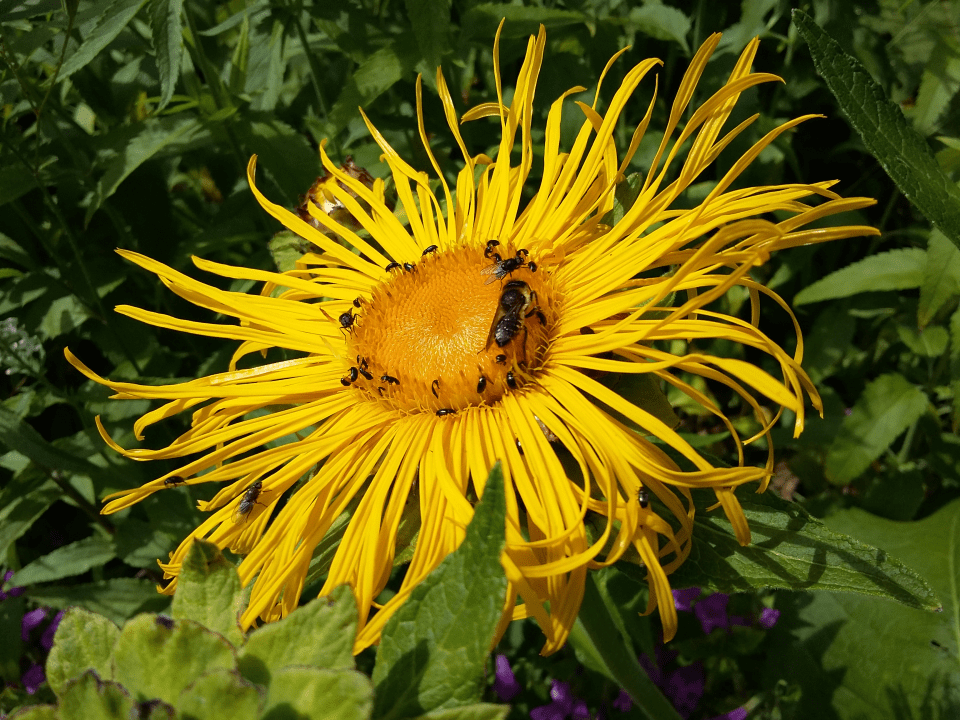
Inula at Ravensthorpe 20160710_145426.png

In the current political turmoil around the Chilcot Enquiry, Brexit, leadership challenges and a change of Prime Minister you’d be forgiven for having missed the fact that 9th to 17th July 2016 has been designated “Bees’ Knees” week, as a follow on to the Pollinator Awareness Week of 2015.

Here’s the link to the Defra press release.

Unlike last year I’ve no specific plans to do any regular posts on the topic, but I will provide links to relevant items as and when I see them, starting with these two:

Why insects are declining globally, and why it matters.

Dave Goulson is trying to crowdfund a project to look at pesticides in plants from garden centres.


How to deal with bumblebees in your roof [UPDATED]

Bombus hypnorum

This week I’ve had two enquiries from colleagues at the University of Northampton asking advice on what to do about colonies of bumblebees that have set up home in their roofs.  In both cases these were nests of the Tree Bumblebee (Bombus hypnorum), a species that only colonised the British Isles in 2001 and has since spread rapidly (see this post from last year for a more detailed account).  Because of their association with human settlements they are significant pollinators of garden produce: over the past few weeks I’ve been watching them pollinating the raspberries in our garden and we now have a large crop.

But having a bee nest in your home is, for many people, a real concern.  I thought it might be useful to discuss the issue by quoting from the email correspondence I had with my first colleague, Paul.


Paul wrote:   I wonder if you can give me some advice. I returned home from holiday on Saturday to find that a colony of bees had taken up residence in a roof space above my front porch. The bees are not domestic honey bees but large bumblebees with white rears. I am not sure how many there are, they buzz furiously when I close the door…..  They are not in the house and I cannot see them from my loft…..so they are not causing a problem at the moment other than a moderate dead rabbit smell in the porch.

I am considering contacting the local council pest controllers, but fear they may just gas and kill them as they are not honey bees. What would your advice be, would it be safe to leave them alone, if so how long are they likely to stay, how large is the colony likely to become, are they likely to cause any damage or mess?

Here’s my response:   From your description they are almost certainly Tree Bumblebees which often use loft spaces, bird boxes, etc. As the name suggests they naturally nest in holes in trees. The colony is not likely to get much bigger though over the next few weeks you may find males patrolling the front of the nest, waiting for the virgin females to emerge so that they can mate. That sometimes makes the colony seem larger than it actually is – there are not likely to be more than about 150 bees in there.

I’ve had Tree Bumblebees in my roof a few times and they’ve never caused any damage. All bumblebee colonies die over the winter and the newly-mated females fly off and hibernate. So by late August or September (perhaps earlier if the weather ever gets warmer….) the bees should have gone. At that time you could seal the entrance to the roof space, though they are unlikely to return next year (although it’s not unknown).

Yes, a pest controller would kill the colony. But they are unlikely to be aggressive unless you stick your fingers in the nest hole! My advice is to let them be and take pride in your own bee colony – they are very discerning and don’t nest just anywhere 🙂


So there you have it: my advice is, leave them alone.  Of course if you or your family have a particular sensitivity to bee stings you may need to think carefully about this advice, but in my experience bumblebees are only aggressive if they feel directly threatened.  In over 25 years of field work focused on bees and other pollinators, I’ve only ever been stung a few times, and mainly by honey bees.

UPDATE: A commenter on Facebook had a great suggestion, that I provide a link to Dave Goulson’s nice little video showing what the inside of a bumblebee nest looks like – so here it is.


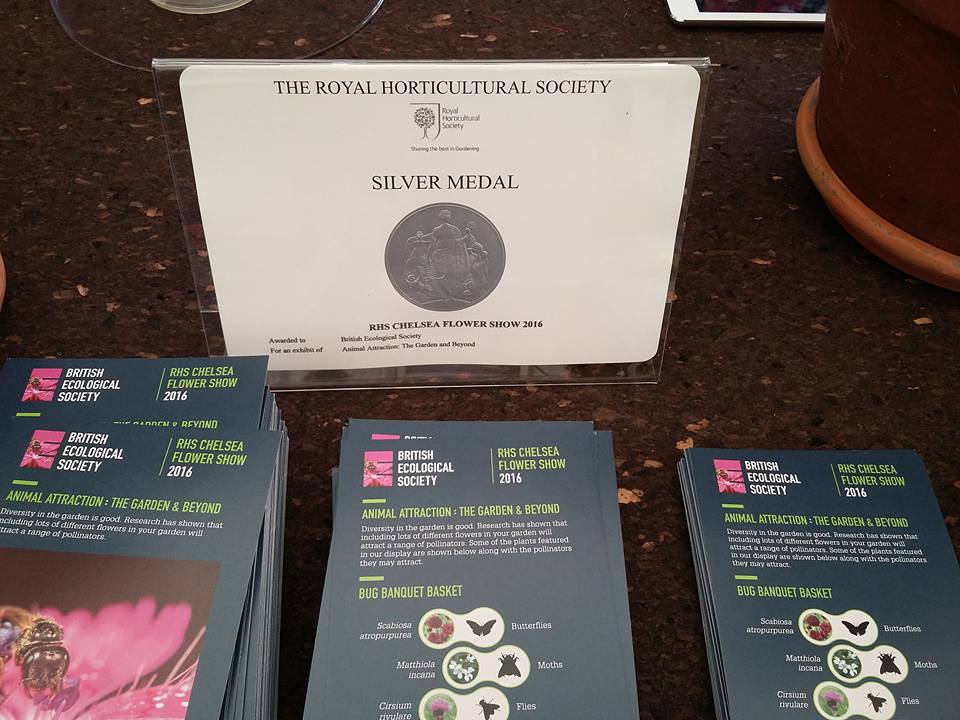
Silver Medal for the BES’s pollinator’s display at RHS Chelsea Flower Show!

RHS Silver Medal

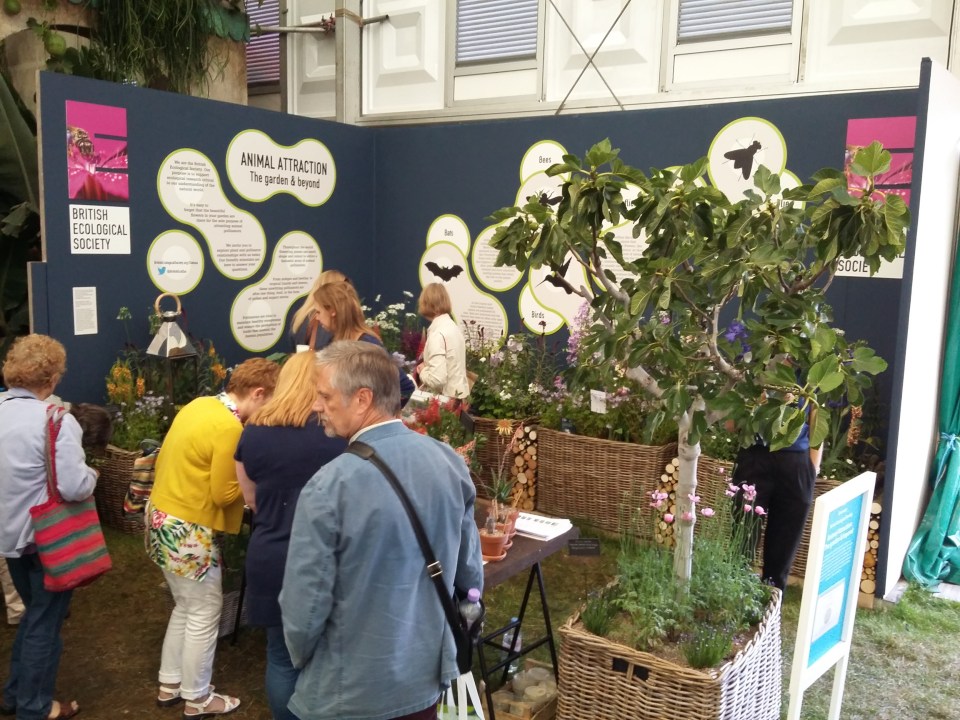
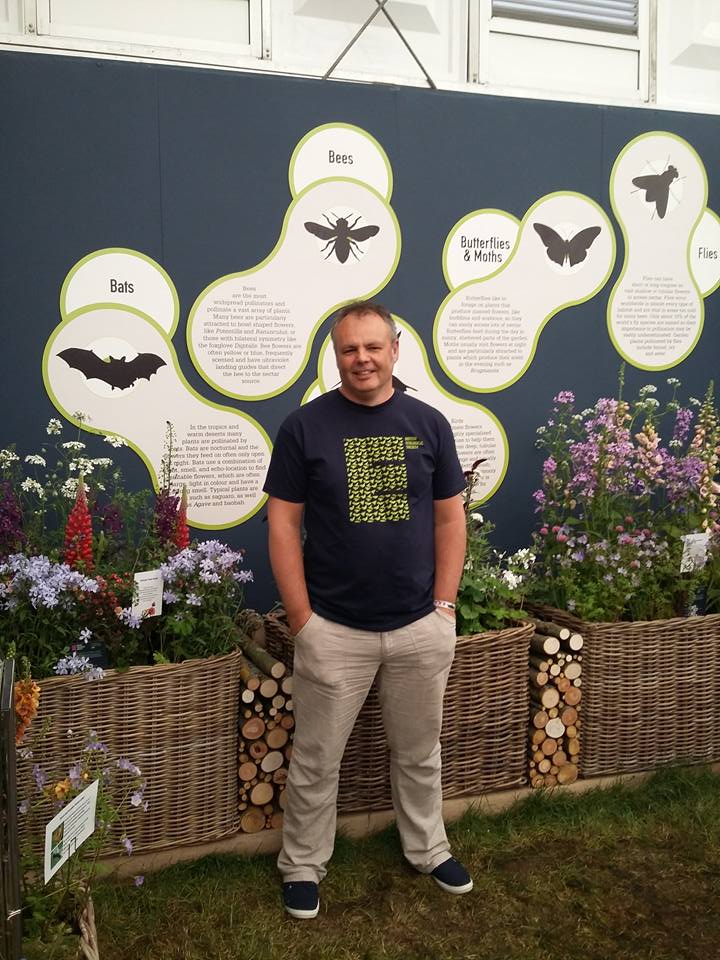
An early train to London yesterday got me to the RHS Chelsea Flower Show in time for the gates opening at 8am.  I’d agreed to spend the day staffing the British Ecological Society’s Animal Attraction: The garden and beyond display, which deals with the relationships between plants and their pollinators – see my recent posts here and here.

The first thing I noticed as I approached the display was how impressive and well designed it looked, with some wonderful planting to complement the simple, bold scientific information.  The second thing I noticed was that we had won a Silver Medal!  The whole team was very pleased – it’s the third year that the BES has been represented at Chelsea, but the first time that it’s won a medal.  I’m proud to have made a small contribution to that by advising on the plants and the scientific content, but the main kudos goes to the BES’s staff and to the garden designer Emily Darby.

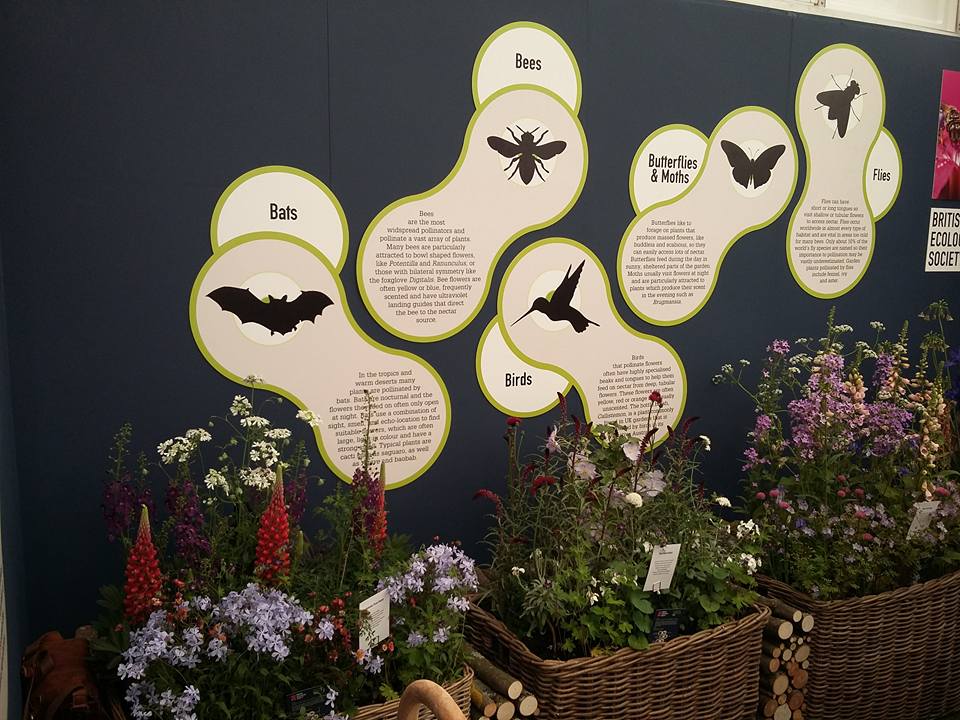
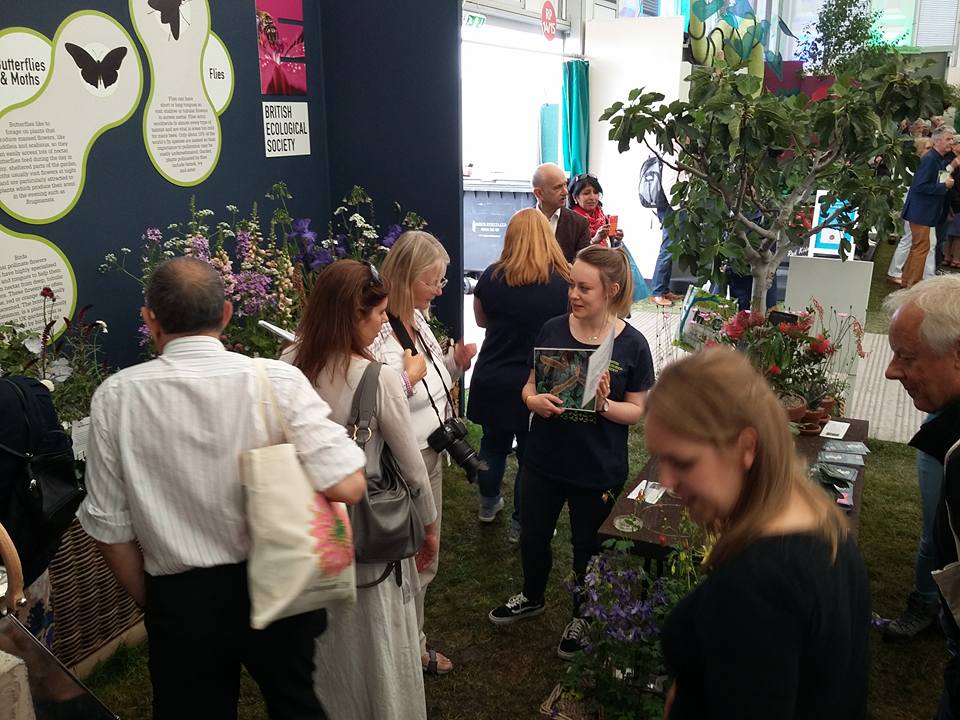
Over the course of a long day we talked to hundreds of visitors about the display, what it represented, and the different ways that flowers are adapted to their pollinators.  There was a huge amount of public interest and support, very gratifying to see.  Here’s some pictures from the day:

RHS display

RHS crowd

RHS crowd with fig

RHS Jeff

RHS display


Pollinators, yeast, and the BES at RHS Chelsea – official press release

P1030210

The official press release for this week’s British Ecological Society display at the RHS Chelsea Flower Show, which I talked about last week, was embargoed until this morning; here’s the full text that’s been tailored by the University of Northampton press office:


Scent, colour and form all shape the choices we make about what to plant in our gardens. Gardeners know that flowers produce nectar and scent to attract the birds, bats, insects and other animals they rely on as pollinators, but few realise that organisms too small to see with the naked eye also play a vital role in this process.

Ecologists have discovered that a yeast called Metschnikowia plays a key part in the pollination story and next week, for the first time, visitors to the RHS Chelsea Flower Show will be able to get a sniff of it and see how it looks under the scanning electron microscope.

The yeast forms part of the British Ecological Society‘s Animal Attraction: The garden and beyond display, which focuses on the relationships between plants and their pollinators – relationships that are amazing in their diversity as well as crucial to global food security. The University of Northampton’s Professor of Biodiversity, Jeff Ollerton, has been advising the British Ecological Society on the project.

Metschnikowia is ubiquitous, present in most flowers in most gardens, yet ecologists are only just beginning to uncover its mysterious role in pollination. The yeast is studied in only four laboratories in the world and Dr Manpreet Dhami from Stanford University has donated the yeast for the British Ecological Society’s garden.

Like other yeasts, Metschnikowia may produce volatile chemicals that mimic the scent flowers use to attract pollinators, thus helping the flower to attract more pollinators and therefore set more seed. In return, the yeast becomes attached to birds, insects and other pollinators, which it relies on for dispersal.

Professor Ollerton explained: “It was a pleasure to work with the British Ecological Society on this project as it highlights two important points about the natural world: that pollinators other than bees are just as important to both wild plants and crops, and that the diversity and abundance of many of these groups is declining worldwide.” Professor Ollerton’s recent study, published in Science, found that 23 species of British bees and flower-visiting wasps have gone extinct since the 19th century.

According to Jessica Bays of the British Ecological Society: “To tackle this decline, we need to understand its causes, including climate change, habitat loss and pesticide use, and we also need to understand the role played by yeasts such as Metschnikowia, which is why we decided to bring it to Chelsea this year.”

Tickets are still available for the RHS Chelsea Flower Show 2016 – for more information click here.

Pollinators at RHS Chelsea Flower Show

20160518_114732

Pollinators, as regular readers of this blog will know, are diverse and important, both ecologically and agriculturally.  But that diversity is declining and it’s an issue that deserves greater publicity and action.

To that end, for the past eight months I’ve been advising a team from the British Ecological Society (BES) on the content for a display at the RHS Chelsea Flower Show which is running all next week.  The display is called “Animal Attraction: The Garden and Beyond” – if you follow that link you’ll get a sense of what the display is all about, but in essence there are three key messages that the BES is trying to get across:

  • Celebrating the diversity of pollinators (not just bees!) both in the UK and globally.
  • Flowers have evolved many different ways of attracting and rewarding pollinators, leading to the fantastic diversity of floral form that gardeners appreciate.
  • Planting a diversity of flowers in your garden can only be a good thing for helping conserve pollinator populations.

As you can see from my wristband, I’ll be helping to staff the stand all day Tuesday 24th May, so if you’re at the show come and say hello and take a look at what the BES team has produced.

Design and Testing of a National Pollinator and Pollination Monitoring Framework – report published today

B pasc on sunflower

This morning there were swifts flying above the garden – summer’s [almost] here!  As if on cue, the eagerly anticipated report on “Design and Testing of a National Pollinator and Pollination Monitoring Framework“, one of the key recommendations of the National Pollinator Strategy, has been published today by Defra.  Here’s a link to the report and its annexes.

I’ve not had time to read the full report, and even the Executive Summary (ES) is quite long and detailed, but the Conclusion to the ES captures the key points (emphases in bold are mine):

“…there is considerable scope to enhance monitoring of pollinators and pollination services to ensure a robust and rigorous evidence-base to support the needs of policy, however this project has demonstrated clear trade-offs between likely cost and data quality, especially in terms of the taxonomic resolution and accuracy of species identifications. Currently the volunteer sector, namely the NSS*, provides the expertise to deliver monitoring of changes in species occurrence or distributions at a national scale for many, but not all, species. Indeed the total value of voluntary work provided by BWARS and HRS….is estimated, based on current levels, to reach in excess of £5M over ten years. Repeated systematic sampling from a stratified network of sites not typically covered by the NSS has the potential to add considerable value, providing data on pollinator abundance that may link with provision of pollination services and filling gaps in the spatial extent and species coverage. Enhancements to improve the range and accuracy of monitoring pollinators and pollination services over large spatial and temporal scales will depend on adequate resources to support capacity building, coordination and implementation.”

In summary, the volunteer schemes are a hugely valuable asset that need to be enhanced by funding from the public purse in order to set up a pollinator and pollinator monitoring scheme that will be fit for purpose.  Will the current Government show the necessary vision and leadership to provide that funding?  Watch this space….

* NSS = National Recording Schemes and Societies, e.g. Bees Wasps and Ants Recording Society (BWARS), Hoverfly Recording Scheme (HRS), etc.

Six bees, one stone: recent pollinator-related talks and workshops

BBKA lecture April 2016As I write this I’m painfully conscious that (a) it’s a couple of weeks since I last posted on the blog; and (b) I have a long list of things to complete before I head off to Tenerife for ten days of field work on Friday.  The absence of posting has been due to my current work load, including the number of conferences, talks and workshops I’ve been involved with in the past month, which seems to have taken up a disproportionate amount of my time.  It’s all been interesting and useful, however, and reflects the rising activity stemming from the National Pollinator Strategy, and increasing interest in pollinators more broadly.  I’ve certainly learned a lot and hopefully my own expertise contributed to the success of these events.

In this post I thought I’d briefly summarise what I’ve been up to recently, in the process expanding the numerical and phylogenetic parameters of “killing two birds with one stone“:

16th March – took part in a workshop to map the latest phase of Buglife’s B-Lines across Bedfordshire, Northamptonshire, Buckinghamshire and Oxfordshire.  This was a really interesting exercise and I felt that we’d actually achieved rather a lot by the end of the day.  Once the final maps are completed I’ll post a link so you can see where the routes go through these counties and how they meet up.

23rd March – spoke at a one-day conference on “delivering biodiversity” organised by the Environmental Association of Universities and Colleges at the University of Worcester.  Although I was talking about our bird surveys on the University of Northampton’s new Waterside Campus, pollinators did receive some attention during a workshop on creating wildflower meadows.  I’ll post an update on the Waterside work once we’ve completed the next set of spring surveys.

30th March – spoke at the Bumblebee Working Group at the University of Sussex – have already posted an account of that.

6th April – took part in a”Pollinator Experts Elicitation” workshop at the University of Warwick, along with a group of nine other academics, and members of stakeholder groups such as FERA and the NFU.  Run as part of Warwick’s Food and Behavioural Science Global Research priority groups, the organisers, from the university’s Department of Statistics, used the Delphi Method to assess the likelihood of sustaining pollinator populations under different scenarios of disease, climate change, and habitat degradation.  It was a fascinating process and interesting to see how often experts’ views converged on the same opinion.  Also rather humbling to see the degree of our uncertainty in our forecasts.  The workshop garnered quite a bit of media attention including pieces on the BBC’s Midlands Today and the Farming Today programmes.

8th-9th April – delivered two lectures at the British Beekeepers Association’s Spring Convention at Harper Adams University.  Rather disconcerting to be the least-informed person in the room, given my limited knowledge of bee keeping, but they were a friendly and curious lot with good-sized audiences for my talks on the diversity of bees to be found in urban settings, and the global diversity and functional importance of pollinators.

13th April – spoke to a very receptive audience at the Friends of Linford Lakes Nature Reserve near Milton Keynes, on the topic of “Bees for dinner?  The importance of pollinators in a changing world“.  Great evening and lots of interesting questions afterwards, though my talk was a bit too long (must cut it for next time).

That’s it for now, hope to do some posts from Tenerife while we are there.


What I learned at the Bumblebee Working Group Meeting

20160330_171209Earlier this week I attended the Bumblebee Working Group Meeting at the University of Sussex, a one day event that takes place every two or three years.  It was a very stimulating day with some really interesting work being showcased; here are some examples of things that I learned that day, some questions that these findings have prompted (and the people presenting):

  • High arctic/montane bumblebees have undergone (and survived) periods of severe climate change in the past – does this mean they are less sensitive than temperate species to future climate change? (Paul Williams).
  • Bumblebees foraging closer to honey bee apiaries are more likely to be infected with a range of bee diseases – presumably picked up from the honey bees, but what is the route of transmission?  (Samantha Alger).
  • Queen Buff-tailed Bumblebees exposed to neonicotinoid pesticides have a 26% reduction in the probability of founding a colony, and the effects vary for other species – are the most sensitive species the ones that have declined the most since the mid-90s? (Gemma Baron).
  • Simulating bumblebee colony dynamics with the Bumble BeeHave model is producing comparable results to field data on male and queen production (Matthias Becher).
  • Environmental Stewardship Schemes appear to enhance bee nest densities on farms where they are situated – but are some species already at saturation point on those farms? (Tom Wood).
  • New, tougher EU guidelines for risk assessment of effects of pesticides on bees have been developed and are being tested at the moment (James Cresswell).
  • The annual spread of the Tree Bumblebee, Britain’s newest bumblebee species, is about 35km per year (Liam Crowther).
  • The equivalent of 737,914 bramble flowers are needed to provide the resources support a single colony of Buff-tailed Bumblebees for one year (Ellie Rotheray).
  • The moratorium on neonicotinoids seems to have had the desired effect of reducing the amount of these pesticides being taken up by bumblebee colonies in pollen and nectar (Beth Nicholls).
  • There have been significant range extensions of some of our rarer bumblebee species in Essex over the last 15 years or so – has this also been happening in other counties? (Ted Benton).
  • Sites with greater levels of radioactive contamination at Chernobyl have fewer older bees – does this mean that the radiation is affecting their lifespans?  (Katherine Raines).
  • Buglife’s B-Lines project continues to develop and gain momentum (Laurie Jackson).
  • The Short-haired Bumblebee reintroduction project has recorded workers every year since 2013.  However there have also been reintroductions of queens from Sweden every year – so are the queens surviving over-winter and founding new colonies? Or are the workers just from the new queens each year? (Nikki Gammans).

Thanks to all the speakers, it was a great meeting, and special thanks for Dave Goulson for his hospitality and for organising the event.

A number of people were tweeting from the event using the hashtag #BBWG16 – follow the link for more comments and some images, including a couple of yours truly in action – one of which I’ve stolen (below).

Jeff at BBWG 2016