Category Archives: Ecosystem services

“These things aren’t to study. They’re to turn up very loud and say, hey, once upon a time, everything was just as easy as this”

May June 2010 Garden, River of Flowers, Cambridge 011

The title of this brief post is a quote by Led Zeppelin frontman Robert Plant, from an interview that the BBC reported just this morning, regarding the forthcoming release of previously unheard Zeppelin material.  You can read the story and hear the interview here.

Regular readers of this blog will know that I’m not averse to sprinkling musical references into my posts, and this was a great quote that seemed to chime with something else I read this morning.  Over at the Small Pond Science blog, evolutionary ecologist Amy Parachnowitsch has a thought provoking post entitled “Save the bees, but maybe not this way“.  I’ll let you read it for yourself, but in a nutshell Amy is concerned about the scientific legitimacy of a “Save the Bees” campaign being crowd funded by online activist network Avaaz.org.

I share this concern and it worries me that whoever is organising the campaign is exploiting the genuine desire by people to “do something for the bees” without any regard for what exactly it is that’s “being done”.  It seems to me to be purely a campaign fund-raiser by people who don’t understand the issues or how science works, the message being: “These things aren’t to study. They’re to turn up very loud and say, hey, once upon a time, everything was just as easy as this”.

The organisers promise “the world’s first large scale, grass-roots supported, totally independent study of what’s killing our bees that decisively challenges the junk science of big pharma”.  As Amy notes, this is hugely offensive to independent scientists who are working on bee conservation issues (such as myself).  But without ever actually saying what they are going to do with the money, they’ve already had pledges of money from over 78,000 people!  If only raising funds for real research was that easy!

To reiterate what I said in the comments to Amy’s post, something that really worries me is that over-emphasis on pesticides and honey bees as single issues affecting “pollinator conservation” deflects attention from other factors which are at least as important, such as habitat loss. Colleagues and I have a manuscript in preparation at the moment showing that native bee and flower-visiting wasp extinctions in Britain began in the mid-19th century and reached their highest rate during the period 1929-1959, during a time of rapid agricultural intensification (but prior to the introduction of neonicotinoid pesticides that is currently exercising many people).  Loss of pollinator diversity is an issue that has deep roots.

In actual fact, although wild bee diversity is declining in the UK, overall abundance seems to be stable as some species are doing extremely well, including a new natural colonist, the Tree Bumblebee (Bombus hypnorum) which is spreading fast and is locally common.  But clearly greater diversity provides us with future insurance against losses of other species.

There are positive things that can be done for pollinator populations by every citizen, beyond giving money to crappy, pseudo-scientific campaigns, as I talked about in a recent post of mine.  So please don’t contribute to this Avaaz.org request, and use the money you save to buy some wild flower seeds and/or the Led Zeppelin reissues.  It will make the world a better place.
 

What are YOU doing for our pollinators this year? (reduce, reuse, recycle part 6)

2012-08-02 13.41.13

Earlier this year I was asked to write a short article by my former PhD student, and still a current collaborator, Dr Sam Tarrant.  Sam works for the RSPB as the CEMEX UK-funded Biodiversity Advisor, and wanted something on pollinator conservation that could be circulated in the CEMEX company’s e-newsletter.  In the spirit of reworking and reusing odd bits of writing, I thought I’d post it here too.


Insects are vital for our country’s economy.  Don’t believe me?  Then read on….

Beneath a large black mulberry tree near the University of Northampton’s Newton Building there is a plaque that commemorates its planting “On Shakespeare Commemoration Day, 3rd May 1916”.  Despite its age this tree annually produces large crops of succulent berries, aided by the fact that wind eddies are sufficient to disperse its pollen, ensuring pollination and fruit set.  Each year it’s a scramble between students, lecturers and birds, to see who can eat the most.

In contrast, the old apple trees in the grounds possess a different strategy – pollination by insects that move from flower to flower each spring.  This form of pollination is both more sophisticated and less reliable than wind pollination, and is currently under considerable threat: whilst there will never be a shortage of wind currents in Britain, insect pollinators are in decline.

The apples trees are not alone in requiring insects to pollinate them, so to do other farm and garden crops, including oil seed rape, field beans, courgettes, runner beans, and strawberries and other soft fruit.  It’s worth at least £440 million annually to the British economy, and most of it is done by wild bees and hoverflies, rather than managed hives of honey bees.

But all is not well with these insects in Britain – they are in decline.  Although the extent of the “pollination crisis” is debated by scientists, long term records show us that these insects are under pressure: 23 species of bee and flower-visiting wasp have gone extinct since the mid 1800s, as have 18 species of butterflies.  Less obviously, other species have considerably reduced in abundance so that they are now found in only a small part of their previous distribution.

There are lots of gardeners who want to “do something” for the pollinators, and keeping honey bees is often mentioned.  By all means, if you wish to help the honey bees (which are suffering their own problems) then keep a hive or two.  That will not, however, help our wild, native pollinators; the analogy I use is that it’s the equivalent of trying to help our declining songbirds by opening a chicken farm!

If you want to make a real difference for pollinators in your own garden, here are a few ideas:

  • start by planting nectar and pollen rich flowers; there’s a useful list on the Royal Horticultural Society’s website (see below).
  • allow plants such as clover and dandelion to flower in your lawn, bees love them.
  • as well as food, pollinators also need nest and egg laying sites, so you could help by allowing some of the far corners of your plot to run a little wild.
  • wait until late Spring to cut back hollow stemmed perennials as they are used as hibernating places by some of our bees.
  • allow mason bees to nest in old walls and don’t worry about them, the wall won’t fall down.
  • And finally, stop using pesticides!

Changing some of our gardening habits can help a group of insects on which we rely and which supports our economy in a very real way.


Further reading and information:

Bees Wasps and Ants Recording Society:   http://www.bwars.com/

Bumblebee Conservation Trust:  http://www.bumblebeeconservation.org.uk/

Butterfly Conservation:  http://www.butterfly-conservation.org/

Hoverfly Recording Scheme:  http://www.hoverfly.org.uk/

Royal Horticultural Society’s list of plants for pollinators:  http://www.rhs.org.uk/Gardening/Sustainable-gardening/Plants-for-pollinators

Thank the insects for Christmas (REBLOG)

P1110606

It’s become a tradition (ok, only for the past two years, but a tradition has to start somewhere!) for me to post a version of this festive blog entry.  I’ve updated the stats for 2013.  Hope you enjoy it.

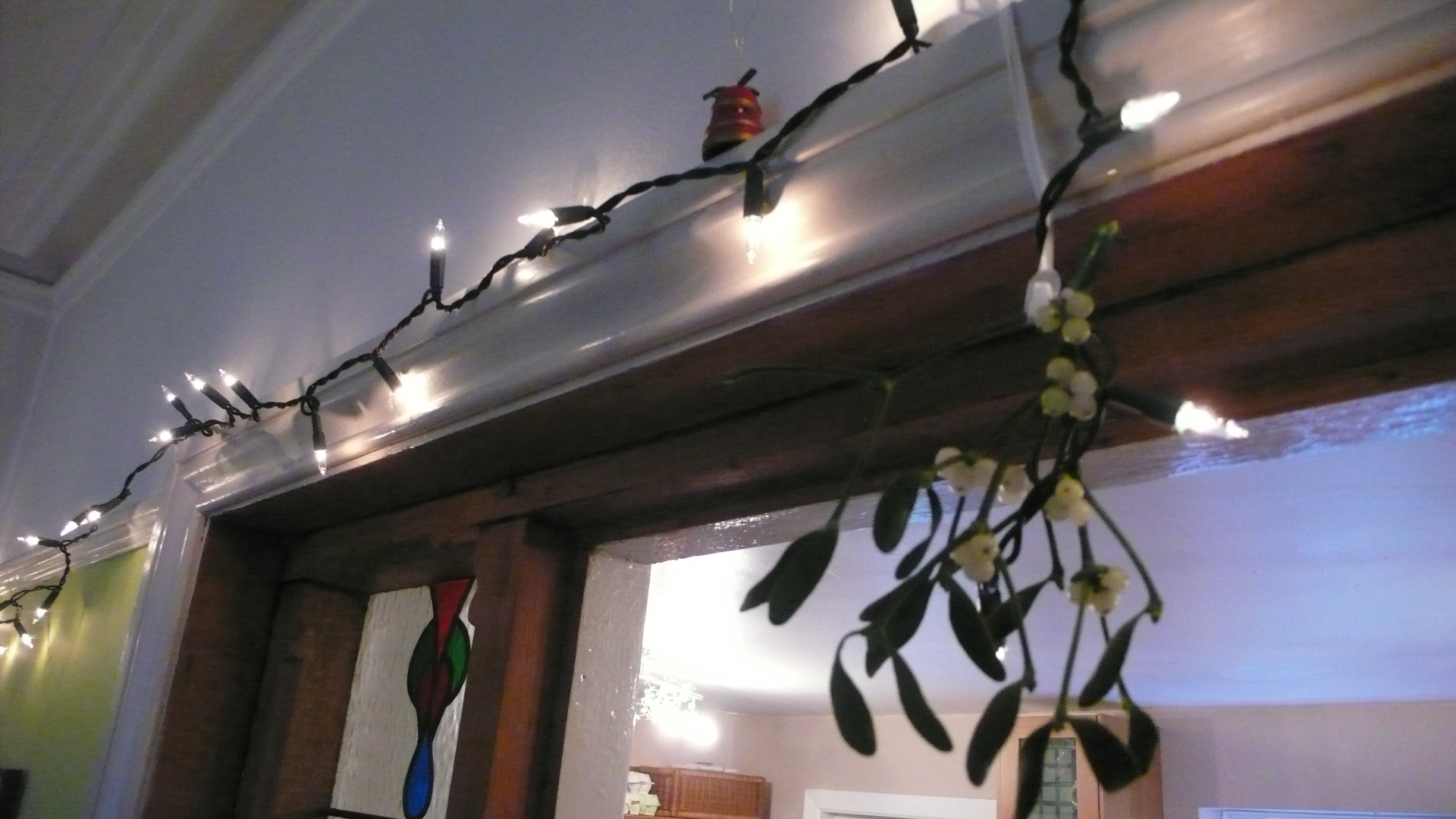
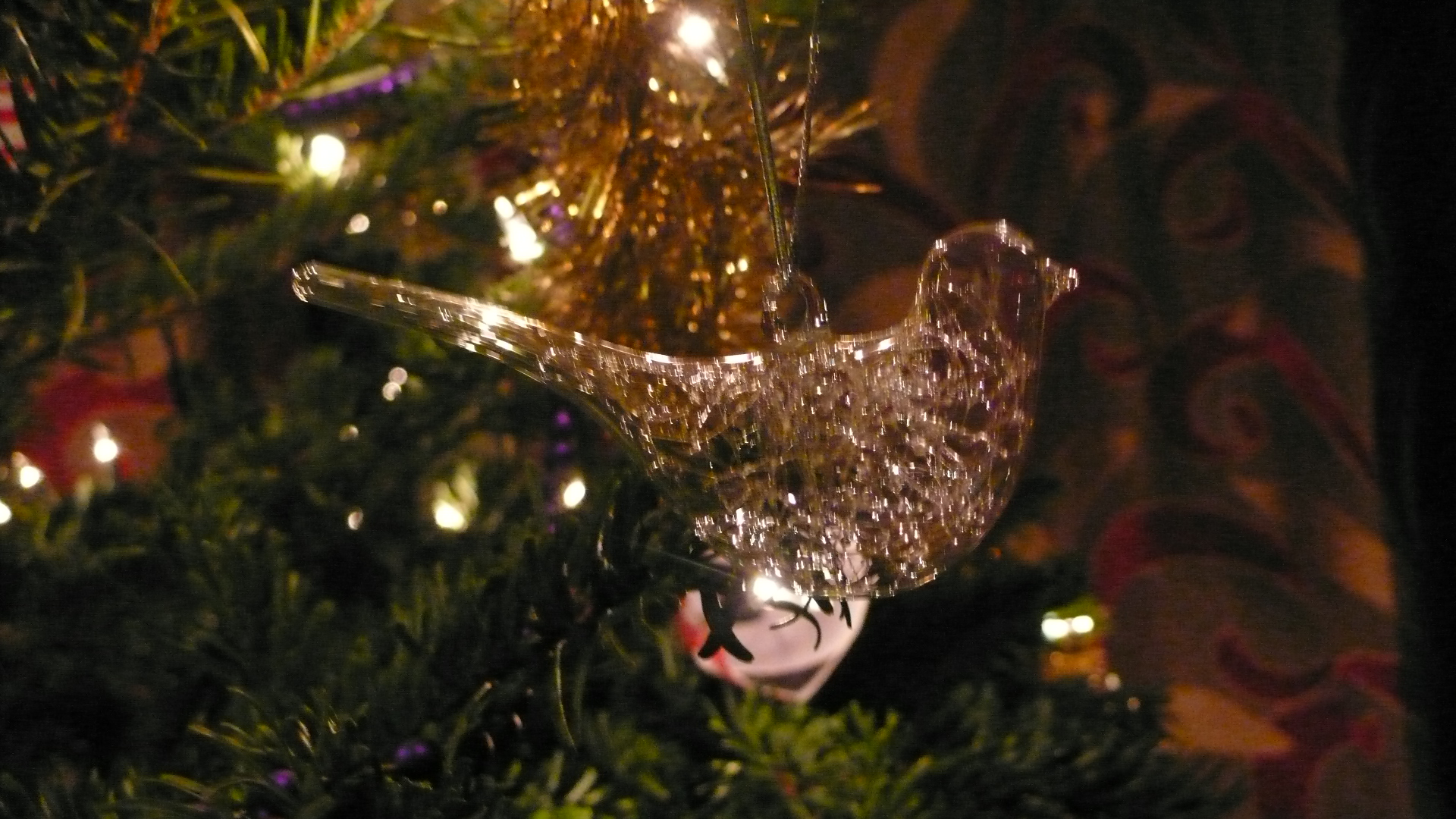
Christmas!  A time to relax and enjoy ourselves, to share time with family and friends, and to unwind during the cold and gloom of winter.  Whatever your faith, or lack of it, Christmas should be about taking a break and reflecting on the year that has passed.  We’re helped in that respect by the ceremonial seasonal trimmings: the Christmas tree, strings of flashing lights, baubles and tinsel.  So while you’re kissing a loved one under the mistletoe, admiring that glossy holly wreath, or tucking into your Christmas dinner, spare a thought for the insects.

What in Saint Nicholas’s name”  you are asking ”have insects got to do with Christmas?!”  Well, like the turkey, we’d be stuffed without them:  they play an essential part in providing us with the things we associate with Christmas.  If we had no flies, wasps, bees and other bugs acting as pollinators there’d be no berries on your mistletoe or your holly.  Kissing and admiring would be a less festive affair and that’s just for starters.  These insects also pollinate many of the vegetables, herbs and spices on your plate, as well as some of the forage that went to fatten your roast bird or tender joint of meat.   Not to forget much of what went into the nut roast that’s feeding the vegetarian relatives.

The economic value of insect pollination in the UK was estimated by the recent National Ecosystem Assessment to be about £430 million per year.  In fact this is a huge under valuation because the labour costs alone of paying people to hand pollinate those crops would run into billions of pounds.  This sounds far fetched but it’s already happening to fruit crops in parts of China.  The answer is to encourage wild insects, not artificially  managed honey bees, because collectively the former are far more abundant, and often more effective, as pollinators.  Their diversity is an insurance against losing any one species in the future. The NEA’s valuation is also too low because it only deals with commercial edible crops, and does not include those we grow in our gardens and allotments.  It also does not take account of ornamental crops such as mistletoe and holly, both of which are dioecious species, which is to say that individuals are either male or female, rather than hermaphrodite as are most plants.  This means that the plants cannot self pollinate and insects are absolutely vital to their reproduction and to the production of the decorative berries we so value (a holly wreath without berries is just a big spiky doughnut, in my opinion).

Whilst researching the economic value of the annual mistletoe and holly crops for this blog posting last year I had a conversation with Jonathan Briggs over at Mistletoe Matters and he told me that “the mistletoe trade in Britain is entirely unregulated and not documented in any tangible way”, and the same is true of holly.  We therefore have no idea what the economic value of these non-food crops actually is.  But some back-of-the-red-and-gold-Christmas-lunch-napkin calculations can at least give us an insight.  Auction reports for 2013  show that on average the best quality berried holly was selling for £2.50 per kg whilst equivalent quality holly without berries sold for only 80p per kg.  In other words, pollination by insects increases the value of that crop by more than 300%!   Similarly the high quality mistletoe averaged £1.20 per kg, whilst the second grade stuff was only 40p per kg.  And the best holly wreaths (presumably with berries!) were averaging £7.00 each.

These are wholesale prices, of course; retail cost to the customer is much greater.  A decent holly wreath will set you back between £15 and £30 whilst online shopping for mistletoe is in the £5 to £20 range, depending on how much you want.  The national census of 2011 shows us that there are 23.4 million households in England and Wales, plus there are 2.36 million in Scotland and 0.70 million in Northern Ireland.  Let’s round it down and say there’s 26 million households in the whole of the UK.  Let’s also be very conservative and estimate that only 5% of those households bought one holly wreath and some mistletoe at a total cost of £20.  Multiply that by the small proportion of households buying these festive crops and you arrive at a figure of about £26.5 million!  And that doesn’t include non-household use in shops, offices and businesses.  So there you have it: an industry worth a few tens of millions (at least) all being ultimately supported by insects.

With pollination, timing is everything, and Jonathan also made the point that spring flowering mistletoe and holly can be important early nectar sources for insects.  Therefore despite the poor  summer weather in 2012, that year was a good one for mistletoe berries because the pollination happened before the heavy rains began.  Despite being quite common plants, rather little research has been done on either holly or mistletoe pollination in the UK and it would make for an interesting student project.  The Landscape and Biodiversity Research Group here at the University has for many years been working to understand the ecology of plants and pollinators, and how to best conserve them.  In this blog I’ve referred a few times to some ongoing projects researching how the wider landscape is supporting pollinators in habitats such as country house gardens  (Hilary Erenler’s PhD work which she completed this year) and urban centres (ongoing PhD work by Muzafar Hussain).  There’s also the work completed a few years ago by Sam Tarrant and Lutfor Rahman on pollinator (and other) biodiversity on restored landfill sites.   Plus research that’s recently started by Kat Harrold on how whole landscapes support pollinators in the Nene Valley Nature Improvement Area. This is all part of a broader programme of research into the conservation of biodiversity in our region and beyond, including our Biodiversity Index, a contribution to the Shared Enterprise Empowering Delivery (SEED) sustainability project.

Biodiversity matters and its importance to our society is being increasingly recognised by government, business and the public. So if you make one New Year’s resolution on the 31st December, let it be that you will put away your garden bug sprays for 2014 and learn to love the insects (even wasps!) who give us so much and help to support our economy in a very real way.  It costs us nothing; all we need to give them is well managed, diverse, unpolluted habitats in which to live. Have a great Christmas everyone!

A Christmas vignette

P1110602

This afternoon I booked half a day’s leave to go into Northampton town centre to pick up some final Christmas gifts.  A crowd of shoppers in Abington Street was eager to lay their hands on the freebies being distributed by that traditional Yuletide apparition, The Coca Cola holidaysarecomingholidaysarecoming Big American Truck.  As red and shiny as Rudolf’s nose, it was pedalling its cheap brand of Christmas sentimentality to a willing audience.  

Shopping completed and daylight fading fast, I headed back to the multi-storey car park, again passing the Coca Cola queues, skirting them, determined not to be sucked in.

The car park was cold and ugly, as they tend to be.  But on the second floor, level with the bare crown of a tree that emerges from an adjacent pub garden, a mother and her young son stood.  Hands full of shopping bags, they had paused to listen to a male blackbird singing as the dusk drew in.  As I passed I heard them chatting about its song: both agreed it was beautiful.

Driving out of the car park I wound down my window: it was still singing as I passed the tree.

I could give a very academic spin to this tale and talk about the cultural and spiritual ecosystem services that are provided by such birds, which nourish us in ways that no amount of corporate marketing ever could.  But I shan’t: it was a perfect Christmas vignette and a perfect contrast to the earlier soulless commerciality.  And that’s sufficient.

Cockroach with a hint of lemon – Brazil Diary 7

P1110560

Hummingbirds have been a continuous feature of my travels around south-east Brazil since day one when I ticked off the Sword-tailed hummingbird from my list at FUNCAMP.  Since then I’ve kept a special ear and eye out for their whirring wing beats and rapid, darting movements, partly because they are significant pollinators in these Neotropical plant communities, but also because members of our research group have a long-standing interest in their ecology.  Stella Watts for example has worked on hummingbird-flower interactions in Peru, and our friend and colleague Bo Dalsgaard spent a year in Northampton during his PhD research on Caribbean hummingbirds, and we now collaborate on some macroecological questions about hummingbird specialization in relation to current and past climates.  And I did some work on their role as (probable) pollinators of some forest Apocynaceae in Guyana during field work in the late 1990s, which remains unpublished.  Must write up those data one day… 

The bird guide I’m using for this trip lists more than 80 hummingbird species for Brazil, many of which are found within the Atlantic Forest system.  Over the last few days we’ve seen several of them in the lowland rainforest around Ubatuba, which proved to be a lot drier and warmer than the montane forest I described last time.  It’s been good to have Pietro Maruyama on hand to identify the birds as they flash past.  Pietro’s been studying the interactions between these birds and the flowers on which they feed as part of his PhD work, and has recently published a great paper on the subject.

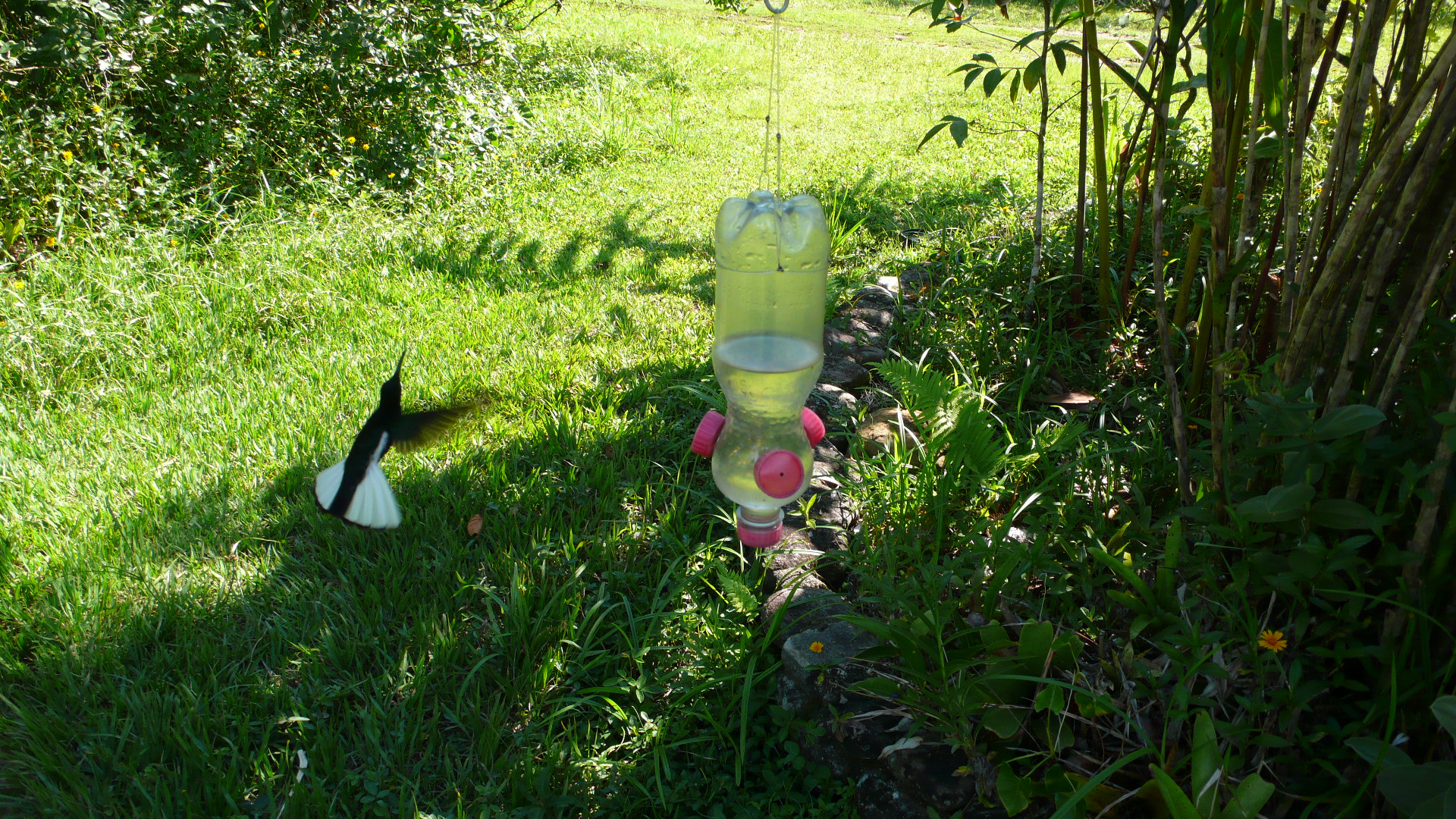
On most days of field work we might see two or three species, but the day before yesterday we saw 11 species in just an hour.  We were visiting a private garden belonging to a retired gentleman named Jonas who has been feeding the hummingbirds in and around his property constantly for about 12 years.  The day we visited, Jonas had 13 bottles of sugar solution hung up around the house and we estimated that over 100 individual birds were using them.  It’s hard to be more accurate as these birds move so fast, disappearing and re-appearing without warning, like hyperactive kids on a outing to a chocolate factory.  It’s a quite stunning sight.

The 11 species we observed are about half of the total number Jonas has recorded since he began feeding the birds and there’s a regular annual rhythm to their appearance, presumably in response to temperature and plant flowering in other parts of the country.  The density and richness of birds in this one small property is clearly artificial and we saw nothing like it out in the forest.   Jonas is concerned that by feeding the birds so frequently (he uses 5kg of sugar a day and replenishes each feeder several times) he might be negatively affecting plant pollination in the surrounding forest.  I doubt that this is the case and reassured him that his efforts were probably positive, certainly compared to some of the other activities that go on around the area, such as building, clearing forest, agriculture, and so on.  Assuming that food availability limits the population size of these birds (which may or may not be the case) then feeding the hummingbirds should result in a population increase in that area which will spill out into the wider forest.  Similar arguments apply to feeding garden birds in the UK, particularly in the winter.

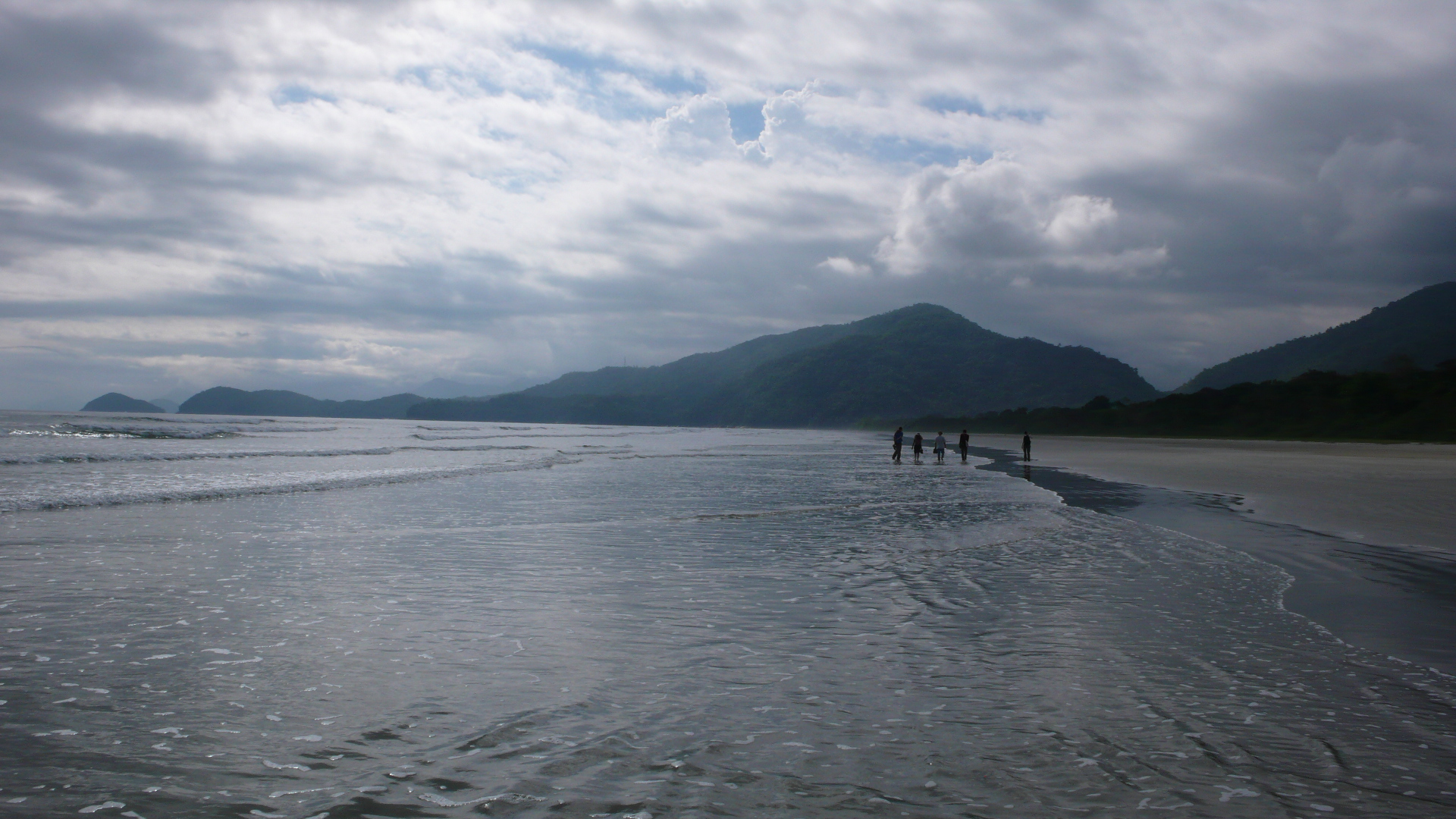
As I watched the birds crowd and jostle around the feeders, frequently erupting into conflict and chase, I reflected that my trip to Brazil was passing as swiftly as the waft from a hummingbird’s wing on my skin.  These last few days in lowland rainforest and restinga vegetation were spent conducting another two surveys of wind versus animal pollination, to add to the previous ones.  This lowland forest is very similar in structure to the montane forest 1000 m higher, whilst the coastal restinga forest has rather shorter trees and is also drier.  The coastline is stunningly beautiful but there’s a clear tension between its roles as a tourist destination and as an area of rich biodiversity.  Humans are often drawn to such places and may unintentionally destroy what they so value, one of the ironic aspects to ecotourism as an ecosystem service.

Over the last few days I’ve been talking a lot with the students who are accompanying us, about their research data and what it means.  One of our ongoing themes is the idea of flower colour, shape, smell, etc., as hypotheses about the likely pollinators of those flowers, a notion captured in the idea of “pollination syndromes”.  For some flowers the syndromes are probably good predictors, for example the red tubular hummingbird-pollinated species of Fuchsia, Aeschynanthus and other Atlantic Forest plants.  But there are also lots of examples of plants with flowers that don’t fit the conventional, “classic” syndromes.  Yesterday on a 6km hike we encountered a species of Piper with very oddly smelling flowers, which by general agreement we described as “cockroach with a hint of lemon”.  We have no idea what pollinates this plant, though we have some predictions.  The genus Piper with its deceptively simple flowers has long fascinated me, ever since I undertook a short postdoctoral project on some Australian species in 1993-94.  Hopefully Andre and Coquinho will spend some time observing the plants with their digital movie camera when they are in the forest next month; the results could be fascinating.  

The Brazilian students I have met are a committed, passionate bunch who believe strongly in the importance of the natural heritage they are studying and trying to conserve.  Though I’ve come and gone from their country like a hummingbird to a feeder, I hope I’ve made some impression on them.  They’ve certainly impressed me and I’ve learned a lot from them, from their professors, and from the places we’ve visited.  It’s been an amazing adventure but it’s time to come home now and see my family and friends, and colleagues.  Over-and-out from Brazil.

P1110537

No Sleep ’til Ubatuba – Brazil Diary 5

2013-11-18 12.17.15

The food in Brazil has been great, as diverse and abundant as the biological richness of this huge country, and I’ve had an adventurous diet so far, trying everything that was recommended to me (and a few things that weren’t).  This includes bits of animal I’ve never eaten before (chicken stomach, chicken blood stew, and cow hump) and five new plant families to add to my life list. So what gave me food poisoning a few days ago in Botucatu? A f**king pizza!  I plan to stick to the exotic stuff in future, though a few people have told me that the pizzas in Sao Paulo are the best in the world.  We’ll see.

The food poisoning didn’t prevent me spending a morning in the field collecting more data on the proportion of wind pollinated plants in cerrado vegetation, but in the afternoon I went to bed, sick and exhausted.  The title of this Brazil Diary post is an homage to the classic live album by Motörhead because at times this trip has felt like a relentless tour of different venues, with André as my trusty road manager, sorting out accommodation and places to eat as we go along.  I owe him a big thank you at the end of the month!  I estimate that we’ve travelled over 2,500 km so far and, including the pollination biology course at Unicamp, I’ve presented 10 lectures in 20 days.

The lecture at the university campus in Botucatu was attended by staff and students,  plus a lot of people from the local council environmental department.  They have an issue with honey bee colonies setting up in peoples’ houses, which they remove if possible and take out to an agricultural area.  So they were interested in finding out more about pollination as an ecosystem service.  It was great to have that kind of outreach, but none of them spoke English.  André translated each of my slides as we went along, turning a 50 minute lecture into a two and a half hour session, including some interesting discussion at the end.

Yesterday was a morning pollination mini-symposium at the Federal University of Sao Carlos, at which I spoke along with Felipe Amorim and Daniel Carstensen, both passionate and creative early career scientists with lots to say and some great studies published and in progress.   It’s been a real pleasure to discuss biodiversity with these guys, with André, and with all the students and professors I’ve met along the way.  There’s now less than 10 days to go before I return, and the tour rolls on.  In about 20 minutes we leave for a six hour drive down to Santa Virginia in the Atlantic Rainforest of Serro do Mar, where we will do more field work in a vegetation type that’s a huge contrast to the cerrado we’ve been looking at so far.  When I get a chance I’ll report back, though internet may be sporadic there, and might have to wait until we reach our final destination of Ubatuba.

2013-11-15 20.51.00

A city without trees is like a bird without feathers – Brazil Diary 2

P1110073

Today is my last day at FUNCAMP and I’m currently sitting in the hotel lobby, waiting for our lift to Belo Horizonte and the National Botanical Congress.  It’s likely to be a 7 hour drive, but longer if we stop for food, toilet breaks, and to look at birds and interesting landscapes (which we will!)

Yesterday André and I went to Campinas city centre accompanied by two of his former professors, Cristina and Zezo, to have lunch and discuss future collaborations when they come to Northampton for a sabbatical in 2014.  Campinas is big and busy, hot and hectic.  Temperatures were in the low 30s centigrade in the open streets, but as soon as we passed beneath the shade of any of the larger trees, the heat was blocked and we were much more comfortable.  City trees provide multiple ecosystem functions: they store carbon, of course, but they also significantly alter the local microclimate.

Nowhere is this more apparent that in subtropical and tropical regions, but you can also feel their effects even in a British city, where the presence of trees cools parks and pavements, insulating against high temperatures.  Do trees in temperate cities also insulate against cold in the winter?  I’m not sure but it would be an interesting area to research.

Trees are also beautiful, of course, and so the analogy with birds works on multiple levels: a city without trees is like a bird without feathers, because trees and feathers are both functional and ornamental.  In Campinas many of the trees were from families familiar to me, such as figs, legumes and mangos.  But others were new, including a species of Lagerstroemia from the loosestrife family (Lythraceae).   

Does it matter whether the trees are native or not?  That’s a debatable point; the last day of the pollination course at Unicamp on Friday included a session of student presentations of the projects that they’ve worked on all week.  One of them was an assessment of the diversity and origin of the trees within the park adjacent to the campus.  The students identified 64 tree species, 45% of which were native to that region of Brazil.  The remaining 55% are from other parts of Brazil, or from other countries, but nonetheless they provide resources for pollinators and birds within the park.   Perhaps this is acceptable in urban areas but not in areas of nature conservation or wilderness?

Our lift is here so I will sign off, except to note that my bird list is getting longer (over 50 species now) and that the award for Mammal of the Week goes to the agouti.  This a pretty, colourful relative of the guinea pig was abundant in the park in Campinas and completely charmed me with its confident and graceful demeanour.  If only I could bring one home…..

Conservation: from CSN to CSR

P1100235

The history of what might be loosely called “the conservation movement” is a complex one with roots that are both deep and ramified.  In the west, direct antecedents can be found in the work of 19th century pro-environmental writers such as Henry David Thoreau  and George Perkins Marsh, but there are arguably also more subtle influences from other sources, for example the “Northamptonshire Peasant Poet” John Clare  whose natural history inspired verse captured a rural way of life and a landscape that was rapidly disappearing:

All nature has a feeling: woods, fields, brooks
Are life eternal: and in silence they
Speak happiness beyond the reach of books

The later foundation of organisations such as the RSPB, the Audubon Society, and the precursors of the Wildlife Trusts gave impetus to environmental campaigns focused on specific issues such as species extinctions and destruction of important wildlife sites.  But it was in the 1960s that nature conservation, and environmentalism more generally, began to become of wider concern.  Again the influences were broad but certainly included both popular science writing such as Rachel Carson’s Silent Spring, and  the attitudes and campaigning of the counter-culture.   Yet a generation later, as a student studying the subject in the 1980s, it was clear to me that the mainstream had not fully engaged with what was still considered hippy, tree-hugging notions of saving the planet/whale/rainforest/ [delete as appropriate].

Having always been a fan of vintage West Coast rock,  these hippy ideals were on my mind at the start of last week when I travelled to the BBC’s Maida Vale studios to attend a recording of Radio 4’s Mastertapes featuring David Crosby and his band.  As well as playing music from his first solo album, the haunting and majestic If Only I Could Remember My Name, Crosby talked about his life and political activism.  The following evening Karin and I were back in London, this time at the Royal Albert Hall to see Crosby with his compadres Steven Stills and Graham Nash, performing as the incomparable CSN.  A number of songs from their back catalogue feature environmentalism in one form or another and, despite their vintage, they are as in touch with the political scene as ever.

Now, in the first decades of the 21st century, the green agenda has gone mainstream and it seems that every large business discusses the environment in their Corporate Social Responsibility statements.  So with only a few hours sleep I jumped from CSN to CSR, a theme that recurred during  the first Northamptonshire Local Nature Partnership conference held at the University the next day.  One hundred and twenty delegates heard talks that presented environmentalism and nature conservation from the perspectives of citizen health and well being, Christianity, on-the-ground conservation activities, and the needs of business and enterprise.  In the afternoon there were smaller showcase sessions and I presented an overview of pollination as an ecosystem service.  

Every organisation (public and private sector) wants to be “green” these days, which is a good thing of course if it’s genuine and well conceived.  But as David Rolton pointed out in his talk, businesses were few and far between at this event.  During the question-and-answer session I followed up David’s comment with a description of our experiences with the Biodiversity Index.  Despite winning a Green Apple Award, and having lots of verbal encouragement from the private sector, as soon as we explain to businesses that they have to pay to use the Index, all interest dissipates.  These are the same businesses who are willing to invest in green initiatives such as recycling and energy efficiency, presumably because it saves them money as well: it seems that CSR for most businesses does not extend beyond paying lip service to biodiversity, despite an economic input of over £30 billion that the UK receives  from the natural environment every year.  

It took time for businesses and other organisations to acknowledge their responsibilities to the environment, and to develop policies relating to recycling, non-pollution and resource efficiency.  It seems that businesses are only just beginning to acknowledge their societal (rather than corporate) responsibilities with regard to conservation, and it’s an ongoing process that exercises government.  But conservation of biodiversity has got to become a priority; once a species is lost it’s lost forever, and we erode not only a natural heritage that has evolved over billions of years, but also the direct and tangible benefits biodiversity gives us.  In the words of CSN: “It’s been a long time coming; it’s going to be a long time gone.

Harvest of evidence

P1100769

The last entry I posted was premature in its prediction that autumn is here and for the past week we’ve enjoyed some bright, warm weather: an Indian Summer before autumn proper envelops us.  Sunday afternoon was spent in the garden, digging up potatoes and planting the garlic we bought on the Isle if Wight.  Neither of these crops requires pollinators, but others we’ve been harvesting this month do, including squashes, runner beans and greengages.  The latter are from a mature tree that, when we took over the house in 2012, I assumed was a bog standard Victoria plum.  The tree did not crop last year but has more than compensated this season with abundant deliciously sweet fruit.

All of this provides useful anecdotes for public lectures.  Since appearing on Bees, Butterflies and Blooms I’ve regularly been asked to give talks to gardening societies and  I try not to refuse because they are usually fun with attentive, knowledgeable audiences.  At one such event earlier this year I was asked: “Is there any evidence that declining pollinators are resulting in lower crop yields in Britain?”  It’s a great question that goes to the heart of evidence-based conservation and the notion that science should be informing such policies as strategies to conserve biodiversity.

As far as I’m aware there is no indication that British insect pollinated crop yields have declined.  And if the evidence of our greengages, runner beans and squashes is anything to go by, there’s currently plenty of wild bees, hoverflies and other insects (we get few honeybees in this garden) to service those food plants that require their pollinating activities.  But that doesn’t mean we should be complacent and monitoring is required, because the evidence from other countries is that yields are down for insect pollinated crops and hand pollination is required in some places.

Evidence should inform everything that we do and believe as scientists, gardeners, informed members of the public, whatever label we choose for ourselves.  This is especially true of currently controversial issue such as the causes of global climate change or the effects of neonicotinoid pesticides on pollinator health (see Dave Goulson’s slides from a recent conference talk, for example).  But we should also understand that a basic tenet of science is that it can never “prove” anything:  new evidence may appear at any time that refutes our cherished notions, or disproves that pet hypothesis.  We make decisions on weight of evidence not on proof.  So it was depressing to read a widely publicised article about a Nigerian postgraduate student’s claims that he has “proved” that homosexual relationships are “unnatural” because only the opposite poles of magnets are attractive to one another, the same chemical compounds do not react together, and roosters only love hens.   At first I thought it was a spoof but it appears that the research student is perfectly serious and, more, has been tipped to win a Nobel Prize by his equally deluded supervisors.

It’s easy to scorn the guy’s findings and point out that people aren’t magnets or simple chemical compounds and that homosexual activity is widespread in the animal world (so how do we define “unnatural”?)   But Karin, as always, had a deeper and more nuanced view of this story than did I.  Perhaps it’s her training in psychotherapy but whatever the reason, she gave an alternative perspective and pointed out a sad possibility.  Karin suspects that the student has been manipulated by academic and political powers that have a vested interest in such “proof” because of threatened sanctions on aid.  Under this scenario the student has been encouraged by the academics at the university to pursue this misguided work, which can only support the Nigerian government’s anti-gay stance.  Of course the research will never be published by any reputable scientific journal and the story has harmed the University of Lagos’s international reputation.  But for the narrow minded and biblically fundamentalist, the story itself will be evidence enough to shore up their own prejudices.  One person’s crackpot claims is another’s decisive evidence.

Any friend of coffee is a friend of mine

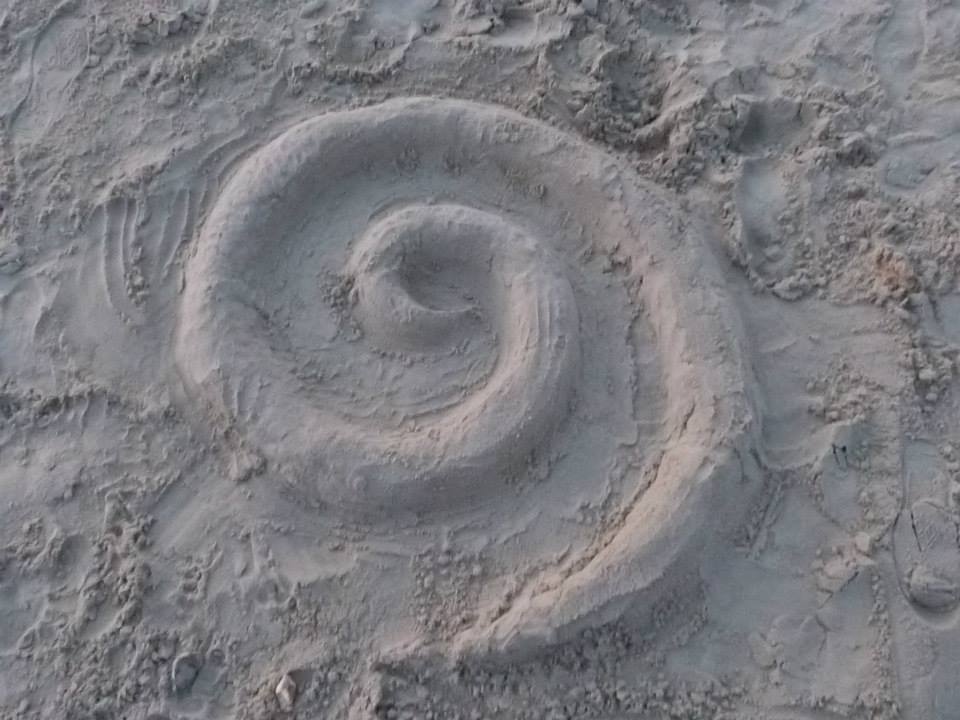
Beach spiral

As I begin to write this post rain is pattering against the windows with increasing frequency and a brisk wind stirs the browning horse chestnut leaves that overhang the garden from a neighbouring property.  Autumn is here.  It’s a chilly Sunday morning and beside me is a large cup of good coffee, hot, black, and bitter, warming and stimulating in equal measure.  It’s our first Sunday at home for a fortnight as last weekend was taken up by a speaking engagement in Hereford at a large bee keeping convention where coffee featured highly, as I’ll explain.

The Hereford convention wasn’t the kind of academic research conference that I’d normally attend, but I thought it would be fun to go with Karin, and I’d learn more about bee keeping (both proved to be true).  For this broad audience of amateur and professional bee keepers I presented a version of my professorial inaugural lecture from earlier this year entitled “How many bees does it take to wake up in the morning?  The importance of biotic pollination in a changing world”.  It’s a title with multiple layers of meaning, referring to bees as ecosystem service providers, my enjoyment of my work which gets me out of bed every day, and the energising effects of a strong cup of fresh coffee first thing.  

As part of that lecture I present some back-of-the-envelope calculations that are meant to put coffee production into a biodiversity perspective, rather than being a rigorous analysis, but which are nonetheless worth considering.  They go like this.

Global coffee consumption in 2010 (the most recent year for which I could find figures) amounted to 93 million export bags, each weighing on average 60kg (there are larger and smaller bags used in different parts of the world, so we’ll use this figure).  The export value of this crop was estimated at US$15 billion for the (largely tropical) countries that produced it.  That’s the value before it’s processed and sold, which is much more difficult to calculate, though coffee retailing is clearly big business.  For example, Starbucks’ total revenue for the same year was US$10.7 billion and it supports over 150,000 full time employees.  So it’s lucky for us that it pays its taxes.  

Although coffee is partly self pollinating, it relies on insect pollination to produce large crops, mainly involving bees of various types.  I tracked down a number of studies by researchers such as Alexandra-Maria Klein and Taylor Ricketts which showed that managed honey bees are responsible for anywhere between zero and over 90% of flower visits, depending on the diversity and abundance of local wild bees (over 40 species of which are known to pollinate coffee in Costa Rica alone).  At this point I throw out a question to the audience:  how well do we understand this globally important agricultural ecosystem service?  Do we have any idea of how many individual insects are required to support this industry?  Some more calculations:

Each coffee bean is the product of a single fertilisation event following the deposition of at least one pollen grain on a flower’s stigma.  The mean weight of a single coffee bean is 0.103g (I weighed a sample in preparation for the lecture) which means there are approximately 582,524 beans in a 60kg bag.   Total number of coffee beans produced in 2010 is therefore 93 million bags multiplied by 582,524 beans per bag, which equals  54,174,757,281,553.  In words, that’s  more than 54 trillion coffee beans.  As coffee is 50% self pollinating we can half that figure: coffee production requires at least 27,087,378,640,777 (over 27 trillion) pollinator visits.

But here I confess to the audience that it’s impossible to go further and answer the questions I posed above:  we really have no idea how many bees are supporting the coffee industry.  The problem is that there are big gaps in our knowledge of some basic aspects of the natural history of these bees and their interactions with coffee flowers.  For example, how many flowers does an individual bee visit in its lifetime?  How effective are different bees at pollinating  the flowers?  What is the minimum population size for these bees, below which they would go locally extinct?  All that we can say with certainty is that the global coffee industry (and the individual productivity of many workers) is supported by a LOT of bees.   Many billions is my best guestimate.  Perhaps we don’t need to know the number: perhaps it’s enough to know that if we provide sufficient good quality habitat for these bees, they will provide the service.  But at least it illustrates our reliance on these insects and is something to consider when you’re enjoying the first cup of the day.

Bees are not the only animals that we have to thank for coffee production as a recently published study has shown:  birds in Costa Rica help to reduce the impact of an important pest of coffee.  As Jana Vamosifrom whom I shamelessly stole the title of this posting, commented when I posted this link on Facebook:  any friend of coffee is a friend of mine!