Author Archives: Jeff Ollerton

Unknown's avatar

About Jeff Ollerton

Independent consulting scientist and author, working on understanding and conserving biodiversity

“These things aren’t to study. They’re to turn up very loud and say, hey, once upon a time, everything was just as easy as this”

May June 2010 Garden, River of Flowers, Cambridge 011

The title of this brief post is a quote by Led Zeppelin frontman Robert Plant, from an interview that the BBC reported just this morning, regarding the forthcoming release of previously unheard Zeppelin material.  You can read the story and hear the interview here.

Regular readers of this blog will know that I’m not averse to sprinkling musical references into my posts, and this was a great quote that seemed to chime with something else I read this morning.  Over at the Small Pond Science blog, evolutionary ecologist Amy Parachnowitsch has a thought provoking post entitled “Save the bees, but maybe not this way“.  I’ll let you read it for yourself, but in a nutshell Amy is concerned about the scientific legitimacy of a “Save the Bees” campaign being crowd funded by online activist network Avaaz.org.

I share this concern and it worries me that whoever is organising the campaign is exploiting the genuine desire by people to “do something for the bees” without any regard for what exactly it is that’s “being done”.  It seems to me to be purely a campaign fund-raiser by people who don’t understand the issues or how science works, the message being: “These things aren’t to study. They’re to turn up very loud and say, hey, once upon a time, everything was just as easy as this”.

The organisers promise “the world’s first large scale, grass-roots supported, totally independent study of what’s killing our bees that decisively challenges the junk science of big pharma”.  As Amy notes, this is hugely offensive to independent scientists who are working on bee conservation issues (such as myself).  But without ever actually saying what they are going to do with the money, they’ve already had pledges of money from over 78,000 people!  If only raising funds for real research was that easy!

To reiterate what I said in the comments to Amy’s post, something that really worries me is that over-emphasis on pesticides and honey bees as single issues affecting “pollinator conservation” deflects attention from other factors which are at least as important, such as habitat loss. Colleagues and I have a manuscript in preparation at the moment showing that native bee and flower-visiting wasp extinctions in Britain began in the mid-19th century and reached their highest rate during the period 1929-1959, during a time of rapid agricultural intensification (but prior to the introduction of neonicotinoid pesticides that is currently exercising many people).  Loss of pollinator diversity is an issue that has deep roots.

In actual fact, although wild bee diversity is declining in the UK, overall abundance seems to be stable as some species are doing extremely well, including a new natural colonist, the Tree Bumblebee (Bombus hypnorum) which is spreading fast and is locally common.  But clearly greater diversity provides us with future insurance against losses of other species.

There are positive things that can be done for pollinator populations by every citizen, beyond giving money to crappy, pseudo-scientific campaigns, as I talked about in a recent post of mine.  So please don’t contribute to this Avaaz.org request, and use the money you save to buy some wild flower seeds and/or the Led Zeppelin reissues.  It will make the world a better place.


Book review: “Pollination and Floral Ecology” by Pat Willmer

2013-11-28 14.48.27

Review of “Pollination and Floral Ecology” by Pat Willmer (2011) Princeton University Press. £65. pp. 832.

Some backstory:  In early 2012 I was asked by the review editor of the journal Annals of Botany to review this book, and I jumped at the chance as it’s the first major single-author overview of the field of pollination ecology for a number of years, by a well respected academic in the field.  Unfortunately the review took a lot longer than I expected, in part because I was also coordinating my department’s Research Excellence Framework submission, on top of other teaching, research and admin duties, and it was taking up quite a bit of my time.

In addition I had mixed feelings about the book and wanted my review to do it justice, not be over-critical but at the same time highlight what I saw as flaws.   In the words of the  Fairport Convention song, Who Knows Where the Time Goes? – my review was only completed last Christmas and duly submitted. Turns out that the journal has a backlog of book reviews to publish and the editor asked that, given it’s been a couple of years since the book was published, would I mind if the review was posted on the Annals of Botany blog rather than in the printed journal.  I happily agreed as it’s likely to get more readers on the blog, and said I’d also post it on my own blog.  So here it is:


Any text book that tries to assess and summarise the whole of a multidisciplinary research field such as pollination ecology and floral biology is required to be four things:  (1) comprehensive in its scope; (2) up to date in its coverage of the literature; (3) accurate in its assessment of the current state of the field; and (4) authoritative in the conclusions it presents.

This volume by Professor Pat Willmer of the University of St Andrews certainly ticks the first box.  It’s a huge book, and covers everything relating to the evolution of flower attraction and reward systems, ecological interactions with pollinators, biochemistry, physiology, agriculture and conservation; all in 29 chapters split into three sections, with 87 pages of references.  The literature extends to 2010, which is impressive for a book published in 2011 (though see my comments below about completeness of the literature).   Specialist terms are highlighted in bold to direct the reader to the glossary at the back, a useful device even if there are a few inaccuracies, which I’ll mention later.

So far so good, and the author is to be congratulated on putting together such a comprehensive, not to mention timely, single-author book.  It’s clearly the summation of a career devoted to studying pollinators and flowers, and the author’s passion for her subject is apparent throughout.

However when we come to points 3 and 4, things are less straightforward.  There are some issues with accuracy that are troubling in a book aimed at newcomers to the field as well as established researchers.  To give just a few examples:

– on p.18 we are told that asclepiads have “one stamen” (they have five); on p.169 and in the glossary that asclepiad pollinia are the pollen grains from one anther (they are the contents of half an anther); and on p.170 that the pollinaria are “glued” to pollinators (they actually clip on).

– in the glossary, tree ferns are referred to as “cycads”, an error that is repeated on p.89.

– on p.88 there is a statement suggesting that tree fern spores were dispersed by “animal fur” 300 million years ago, long before the evolution of mammals, and that this (and dispersal of spores of fungi and mosses) is the equivalent of pollination: it is not, it equates to seed dispersal.

These are troubling errors of basic botany that are forgivable in an early draft of the book (everyone makes mistakes) but not in the final published version, after it’s been read, reviewed, checked and edited.  If the book goes to a second edition I hope that these (and other) mistakes will be fixed.  But they do hint at a fundamental problem with a book (and a field) as large and complex as this: a single author is arguably unlikely to be able to do justice to all of the subject matter.

There are parts of the book where it is unclear (to me at least) what the author is actually saying.  For example, on p.96 there is a graph which, it is suggested, demonstrates that pollination by animals is “technically uncommon when assessed in terms of the numbers of broad taxonomic groups that use it”, though the legend to the figure claims that “most orders of plants have no families” that possess wind pollination.  This is confusing: what is to be concluded by someone new to the field?  Is animal pollination common or rare?  Likewise, on p.91 we are told that the “first angiosperms…would probably have had their pollen moved mainly by wind…”, but then on p.92 that “an element of insect pollination could be regarded as almost ancestral”.  Which is correct?

There are other aspects to the book that are simply out of date; for example the linear, rather deterministic schemes set out in Figures 4.6 and 4.8 showing that Cretaceous flowers were open and radially symmetrical, and only later evolved into complex, bilateral flowers in the Tertiary, ignores fossil discoveries showing that orchids evolved in the Cretaceous (Ramírez et al., 2007).  Likewise, discussion of “counterproductive” crypsis in flowers (p.124) neglects recent findings of cryptic, wasp-pollinated plants in South Africa (e.g. Shuttleworth & Johnson, 2009).

There is a theme emerging here: some of the botany that the book presents is inaccurate, confused or out-dated.  Fortunately the zoological aspects of the book are much better, as one might hope from a Professor of Zoology.

The final criterion, that the book should be “authoritative in the conclusions it presents”, is however, in my view, the main weakness of this volume.  The author is unhappy with recent developments in the field, particularly as they relate to community-scale assessments of plant–pollinator interactions, in terms of network analyses and predictive utility of pollination syndromes.  Clearly Professor Willmer is on a mission to rebalance what she perceives as failings within some of the current trends in studying pollination.  A book review is not the place for a technical dissection of the author’s arguments, which is best left to the peer-reviewed literature (though I would argue that that’s also the place to present some of the criticisms the author introduces, rather than into a text book such as this).  I could focus the whole of this review on these topics because: (a) they take up a large proportion of the book, about one-third of the text pages; and (b) they are highlighted on the cover as being one of the main contributions of the book; specifically, that the author provides a critique of previous work that does not distinguish between “casual visitors and true pollinators” that can in turn result in “misleading conclusions about flower evolution and animal-flower mutualism”. Unfortunately her targets are straw men, and one – I believe quite telling – example will suffice.

On p.447 there is a criticism of the use by Waser et al. (1996) of Charles Robertson’s historical data set, and specifically that the analyses they present “…did not distinguish visitors from pollinators even though Robertson’s database did include information on this”.  However Waser et al. clearly state (p.1045 of their paper) that only pollinators were included in the analyses, not all flower visitors, and that “visitation is not a synonym for pollination…non-pollinating visitors are excluded (as in Robertson 1928)” (p.1048).

Why should Professor Willmer make a statement to the contrary?  Evidently she wishes to impress upon her readers that (in her opinion) there are fundamental problems in current approaches to studying pollination at a community level.  But even if that were the case (and I don’t believe it is) misrepresenting previous studies to suit an argument is poor scholarship at best.

Regardless of whether some of her criticism is well founded, the author does not seem to appreciate that plant–flower visitor interaction networks are ecologically important regardless of whether or not a flower visitor acts as a pollinator.  More fundamentally, true pollination networks possess similar attributes to flower visitor networks, for example a nested pattern of interactions, and arguments about level of generalisation of species are a matter of scale, not category (Ollerton et al., 2003).

At the end of her Preface, Professor Willmer reveals to us quite a lot about her personal attitude to research when she states that some readers might find her approach “too traditional” in an “era where ecological modelers [might be claimed to] have more to tell us than old-style field workers”.  What the author fails to appreciate is that this is a grossly false dichotomy and that most of the pollination ecologists who have embraced new analytical methodologies for understanding plant–pollinator interactions are also “old-style field workers” with considerable experience of studying the ecology of flowers and their pollinators beyond the computer screen.

In summary this is a book that, for all its good qualities of comprehensiveness and (mostly) up to date coverage, should be read with caution: parts of it are neither as accurate nor as authorative as the field of pollination and floral ecology deserves.


LITERATURE CITED

Ollerton J, Johnson SD, Cranmer L, Kellie, S. 2003. The pollination ecology of an assemblage of grassland asclepiads in South Africa. Annals of Botany 92: 807-834.

Ramírez SR, Gravendeel B, Singer RB, Marshall CR,  Pierce NE. 2007. Dating the origin of the Orchidaceae from a fossil orchid with its pollinator. Nature 448: 1042-1045.

Shuttleworth A, Johnson SD. 2009. The importance of scent and nectar filters in a specialized wasp-pollination system. Functional Ecology 23: 931-940.

Waser NM, Chittka L, Price MV, Williams N, Ollerton J. 1996. Generalization in pollination systems, and why it matters. Ecology 77: 1043-1060.

Budget cuts to Kew are cultural vandalism

P1110628


The Royal Botanic Gardens, Kew, is a beautiful place to visit, a tourist destination for visitors to London, and a green island in an urban ocean.  That’s the public face of the Gardens.  What is less well appreciated to most of the casual strollers around the flower beds and glasshouses, is that Kew is arguably the most important centre for botanical research anywhere in the world.  During its long history it has produced, and continues to deliver, top rate science that informs international conservation strategies, agriculture and horticulture, as well as basic plant science in ecology and evolutionary biology.

It’s also a welcoming, inclusive place that embraces scientific visitors from all over the world, as I know from personal experience.  Although I’ve never had a formal relationship with staff at Kew, I’ve benefitted enormously from informal links, which have facilitated research and teaching, including annual trips to the Kew Herbarium for my final year undergraduate students.

I first visited Kew as a naive 20 year old to look at their living plant collection during research for what became my first ever publication: “Adaptations to arid environments in the Asclepiadaceae” (British Cactus and Succulent Journal 1986).  So started a long appreciation of Kew and what it freely offers teachers and researchers, which has included access to specimens prior to overseas research trips, to assess distribution and flowering times; identification of specimens we’ve collected on those trips; and primary data for our study of fly pollination in the genus Ceropegia.  I’ve also used their archives for my work on John Tweedie.  Kew is an incredible resource that, in any civilised and culturally aware country, would be cherished and supported. Unfortunately it appears that I do not live in such a country.

Rumours have been circulating for a while about an impending, massive budget cut at Kew, on top of financial savings that have already been made.  Now it appears that those proposed cuts are  much bigger than anyone had thought and 120 posts, mainly in science, are threatened.  I won’t repeat the depressing statistics underlying all of this – I’ll just urge you to visit the online campaign against these cuts, read the details, watch the David Attenborough video, sign the petition, and share it with friends and colleagues.

Please don’t let Kew wither away; it’s too important to UK science, conservation and education to allow it to be gutted without a fight.


Disturbed birds? Results of a visitor access study to the Upper Nene Valley

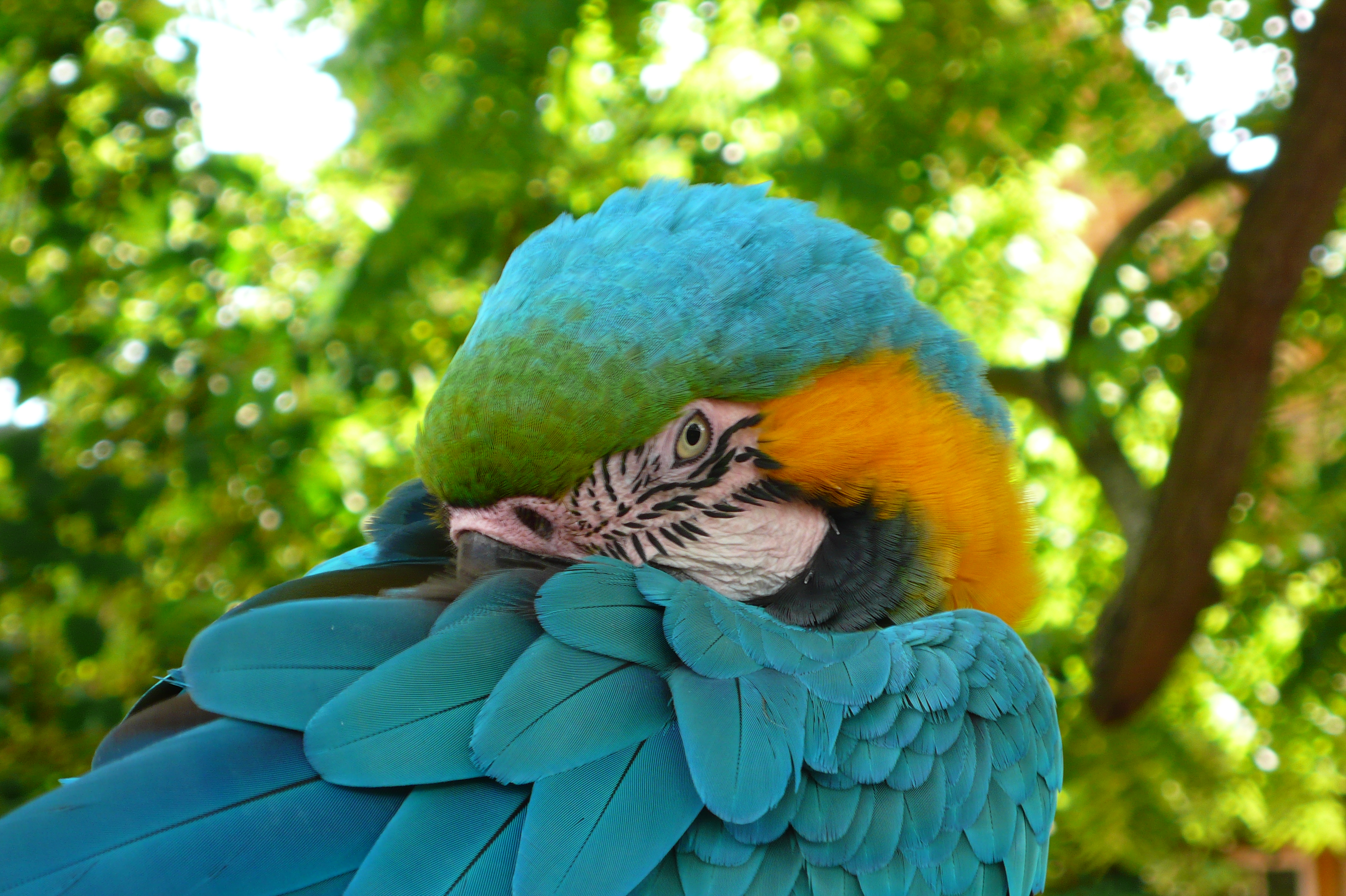
Parrot from Coton Manor

Human activities can have significant impacts on wildlife in quite subtle ways that are not always appreciated by those of us who enjoy going out to look at nature.  For example, simply walking close to sensitive areas such as bird nesting or roosting sites has the potential to drive those birds from an area.  This was the theme of a workshop we attended yesterday afternoon, hosted by the local Wildlife Trust as part of the Nene Valley Nature Improvement Area (NIA) Project.

During the afternoon Colin Wilkinson from the RSPB presented the results of a survey that had been commissioned to assess the level of public access and usage of the Upper Nene Valley gravel pits.  These pits have Special Protected Area status due to the numbers of migratory over-wintering birds that use them.  They are also well used by the public but at the moment we have no idea what impact this is having on the birds, though there is anecdotal evidence that it is considerable at some sites.

The consultants who conducted the study used a combination of face-to-face interviews, site surveys, etc.  There’s too much in the report to go into all of the detail – you can access the full text here – but I’ve copied the highlights from the summary below:

  • The majority (98%) of visitors were on a short visit from their home
  • Group size for interviewed groups ranged from 1-8; 51% of interviewees were visiting on their own. Stanwick Lakes was notable in that group size tended to be larger here.
  • Half of the 939 interviewees had dogs with them (636 dogs in total).
  • Across all sites and survey periods, dog walking was the most common main activity (48% of interviewees).
  • During the winter, a higher proportion of people interviewed were dog walking (48% of interviews during the winter compared to 36% in the spring at the 6 locations surveyed in both seasons).
  • Over the winter, the main activities given by interviewees were: dog walking (53%), walking (26%), and wildlife watching (6%).
  • Most (77%) interviewees had arrived by car to the survey point
  • Most interviewees were frequent visitors (60% indicated that they visited at least once a week).
  • Most visits were short: 50% of visitors stated that they spent less than one hour on site and, in total, 88% spent less than two hours at the survey location.
  • The quality of the site was the most common reason for choice of site (61% interviewees), but was not the most common ‘main’ reason’; 32% interviewees gave proximity to home as the main factor underpinning their choice of site. Proximity to home seemed particularly important for dog walkers (44%) and those fishing (40%).
  • A total of 863 visitor routes were collected, either through lines on paper maps during the interview or via GPS units which were given out.
  • There were significant differences between sites in the lengths of routes taken by visitors. There were also differences between activities. The mean route length for dog walkers was 3.1km. For cyclists the average route was 7.3km while those fishing tended to have the shortest routes (0.6km average).
  • At three of the six sites that were surveyed in the winter and the spring/summer, the median route length increased in the spring/summer when compared to the winter, stayed the same at two and fell at one, suggesting no real pattern of people walking further in the summer .
  • A relatively high proportion (78% of interviewees) indicated that they were aware of the importance of the area for wintering birds. Around a quarter (24%) of all interviewees responded that they were aware that of the international importance of the area for nature conservation.
  • 908 postcodes were mapped reflecting the home postcodes of visitors. The two main settlements were Northampton (137 postcodes from the winter interviews fell within the settlement) and Wellingborough (88 postcodes from the winter interviews).
  • Dog walkers and joggers lived closest to the site at which they were visiting, with median values of 2.3 and 2.9km respectively
  • Visitor rates (visits per household) declined rapidly with distance such that a relatively small proportion of people visit from distances beyond 3km of the surveyed access points.

The challenge now will be to understand if and how these visitors are impacting on the abundance and diversity of birds in the Upper Nene Valley, and what can be done to minimise any disturbance.  Clearly there’s a balance to be struck between public recreation and wildlife protection, and this will be the theme of future work by the Nene Valley NIA Project.

What are YOU doing for our pollinators this year? (reduce, reuse, recycle part 6)

2012-08-02 13.41.13

Earlier this year I was asked to write a short article by my former PhD student, and still a current collaborator, Dr Sam Tarrant.  Sam works for the RSPB as the CEMEX UK-funded Biodiversity Advisor, and wanted something on pollinator conservation that could be circulated in the CEMEX company’s e-newsletter.  In the spirit of reworking and reusing odd bits of writing, I thought I’d post it here too.


Insects are vital for our country’s economy.  Don’t believe me?  Then read on….

Beneath a large black mulberry tree near the University of Northampton’s Newton Building there is a plaque that commemorates its planting “On Shakespeare Commemoration Day, 3rd May 1916”.  Despite its age this tree annually produces large crops of succulent berries, aided by the fact that wind eddies are sufficient to disperse its pollen, ensuring pollination and fruit set.  Each year it’s a scramble between students, lecturers and birds, to see who can eat the most.

In contrast, the old apple trees in the grounds possess a different strategy – pollination by insects that move from flower to flower each spring.  This form of pollination is both more sophisticated and less reliable than wind pollination, and is currently under considerable threat: whilst there will never be a shortage of wind currents in Britain, insect pollinators are in decline.

The apples trees are not alone in requiring insects to pollinate them, so to do other farm and garden crops, including oil seed rape, field beans, courgettes, runner beans, and strawberries and other soft fruit.  It’s worth at least £440 million annually to the British economy, and most of it is done by wild bees and hoverflies, rather than managed hives of honey bees.

But all is not well with these insects in Britain – they are in decline.  Although the extent of the “pollination crisis” is debated by scientists, long term records show us that these insects are under pressure: 23 species of bee and flower-visiting wasp have gone extinct since the mid 1800s, as have 18 species of butterflies.  Less obviously, other species have considerably reduced in abundance so that they are now found in only a small part of their previous distribution.

There are lots of gardeners who want to “do something” for the pollinators, and keeping honey bees is often mentioned.  By all means, if you wish to help the honey bees (which are suffering their own problems) then keep a hive or two.  That will not, however, help our wild, native pollinators; the analogy I use is that it’s the equivalent of trying to help our declining songbirds by opening a chicken farm!

If you want to make a real difference for pollinators in your own garden, here are a few ideas:

  • start by planting nectar and pollen rich flowers; there’s a useful list on the Royal Horticultural Society’s website (see below).
  • allow plants such as clover and dandelion to flower in your lawn, bees love them.
  • as well as food, pollinators also need nest and egg laying sites, so you could help by allowing some of the far corners of your plot to run a little wild.
  • wait until late Spring to cut back hollow stemmed perennials as they are used as hibernating places by some of our bees.
  • allow mason bees to nest in old walls and don’t worry about them, the wall won’t fall down.
  • And finally, stop using pesticides!

Changing some of our gardening habits can help a group of insects on which we rely and which supports our economy in a very real way.


Further reading and information:

Bees Wasps and Ants Recording Society:   http://www.bwars.com/

Bumblebee Conservation Trust:  http://www.bumblebeeconservation.org.uk/

Butterfly Conservation:  http://www.butterfly-conservation.org/

Hoverfly Recording Scheme:  http://www.hoverfly.org.uk/

Royal Horticultural Society’s list of plants for pollinators:  http://www.rhs.org.uk/Gardening/Sustainable-gardening/Plants-for-pollinators

Who protects our biodiversity? The public does!

2013-10-21 09.55.39

In a post back in February I asked the question “Who protects our biodiversity?” and highlighted the disgraceful behaviour of Derby Council in wanting to build a cycle track that would destroy a large proportion of The Sanctuary Local Nature Reserve.  Despite petitions and strong public protest, the Council voted to go ahead with the development and site clearance work quickly began.  However a High Court injunction was taken out, forcing them to pause the work until the legal ramifications of using Lottery funding for such a project were investigated.

Well, despite the odds and a seemingly bloody minded council determined to push ahead with the project, all of these efforts have worked:  Derby Council has abandoned its plans for the site – it’s been saved!  I learned the good news this morning in an email from Nick Moyes from the Save Our Sanctuary coalition. Nick writes:

“I am delighted to tell you that very late yesterday afternoon we were stunned and delighted to learn that Derby City Council had announced it was abandoning plans to build a cycle race track on top of The Sanctuary Bird Reserve and LNR at Pride Park in Derby.

This vindicates all the reasoned arguments and effort that everyone in our coalition of wildlife groups has put in over the last few months, and shows we can all work together to make a difference, and affect decisions that harm the environment. It’s just such a shame that a lot of damage has already been done to the LNR, though this should recover in time, if managed correctly.

I think we all believed this was a flawed project from the start. Well, everyone that is, except for one deputy chief executive and one councillor responsible for Leisure who made it their objective to push through this ill-conceived scheme at almost any cost (plus a Labour leader who publicly gave his support, too).  In statements in the press, Derby Council now appears to be trying to blame its sudden decision to pull out on the delays and additional costs caused by the successful granting of a Judicial Review following brave action in the High Court by Derbyshire Wildlife Trust. Perhaps this is to be expected – it’s easier than admitting it was a flawed project with dubious funding sources which could so easily have been built elsewhere in the city. But they only have themselves to blame for creating this mess by choosing to ignore all the advice and objections offered to them right from 2011 – with inevitable consequences.

It would be a shame if Derby Council cannot admit it simply ‘got it wrong’. It certainly needs to quickly put right the damage it has already done to the LNR. There are so many people to thank, as everyone played their part in one way or another. Over 1000 people wrote letters and lodged online objections, lobbied councillors, flew aerial drones, published blog posts, wrote to the papers, emailed people, wrote press releases, sent tweets, attended consultation events, made placards, organised demonstrations, lobbied people in the streets, joined a coalition, wrote to the papers and so very much more.

No doubt there is still much more of this story to play out. But for now we can all celebrate the fact that a coalition of wildlife groups came together for the first time in this way, mobilised its arguments and its supporters, and collectively managed to defeat a Labour-controlled local authority which was determined to go back on its public commitment to protect a Local Nature Reserve that it once declared as of great importance to biodiversity. Not only that – but there are no doubt many other LNR support groups around the country that will now breathe a collective sigh of relief that this terrible precedent of a council so easily choosing to vote itself powers to destroy and develop a large part of its own LNR has been lifted.”

This is such good news to receive on a beautiful early spring morning!  I’d like to think that Tony Benn, who died this week, would have approved of this example of people power in action.

Rewilding redux

Brazil river 2013-11-29 12.13.12

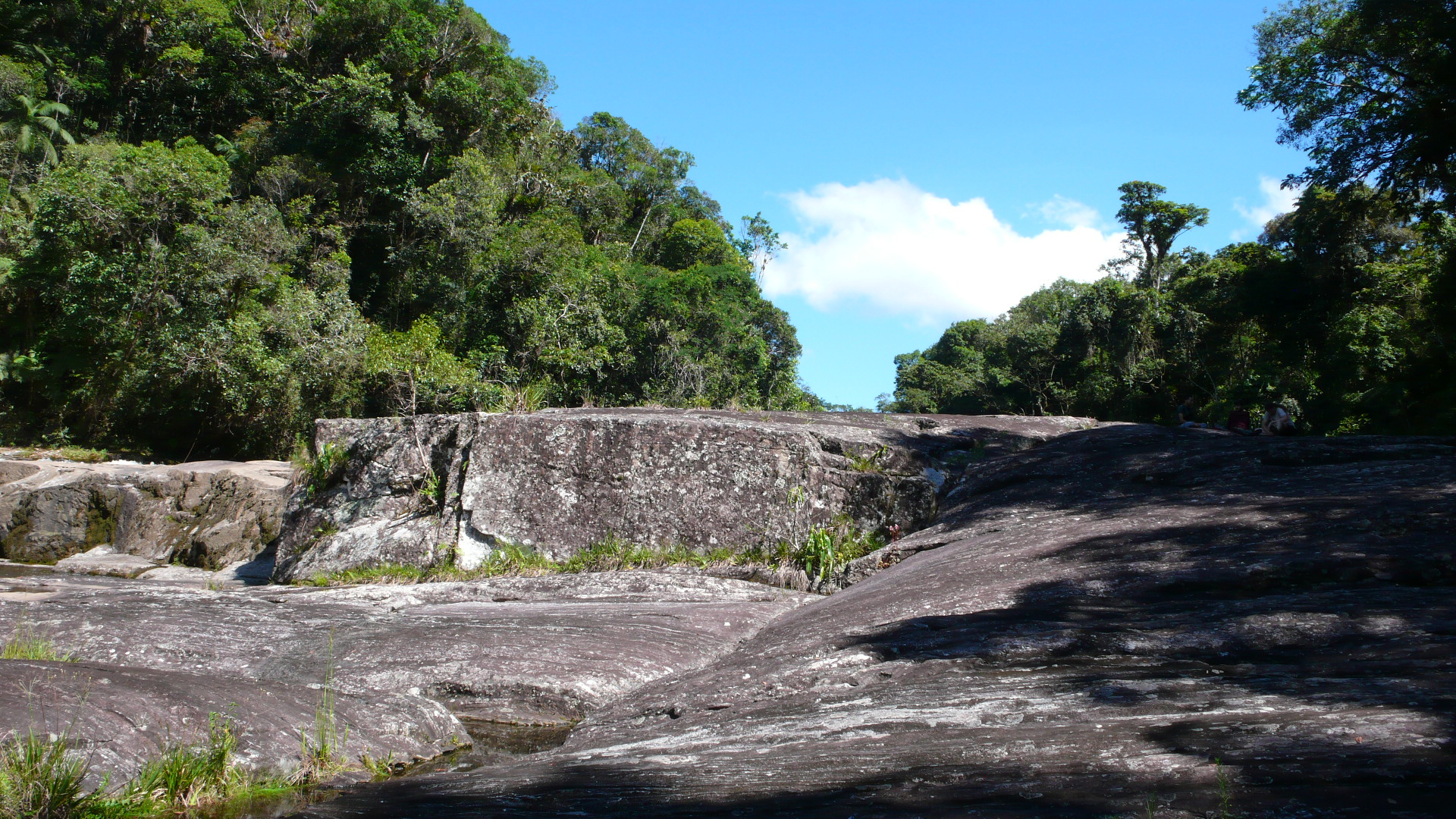
In an earlier posting I briefly mentioned George Monbiot’s current fascination with the concept of rewilding and provided a link to an animated video he had narrated.  As my first year lectures on species interactions and community structure have come to an end, one of the students on the course has pointed out that George has recently narrated another video called “How Wolves Change Rivers”, which deals with the effects of the reintroduction of wolves to Yellowstone National Park in the USA.  Following a 70 year absence, the presence of the wolves resulted in a trophic cascade which significantly changed, in a positive way, both the biodiversity and the functioning of the Yellowstone ecosystem, as well as aspects of the physical geography of the National Park, notably river behaviour.

It’s only a short video (four and a half minutes in length) and I strongly recommend that you watch it.  Not only is it powerful in its imagery and its music, but it’s also underpinned by some powerful, peer-reviewed science.  For example see this review by William Ripple and Robert Beschta, from Oregon State University, of the positive effects cascading from the presence of wolves in just the first 15 years following reintroduction.  

At the end of my lecture on Thursday I showed the video to my class and the response was very positive; the students seemed to be impressed and I hope it brought home the importance of what I’d been talking about this term, that ecological interactions matter.  Given the flooding problems we’ve experienced in Britain this winter, some of which seems to be related to how our rivers and flood plains are (mis)managed, perhaps there’s a case to be made for reintroducing wolves, bears and beavers to the Somerset Levels or the Thames Valley.  Given that these areas lie in the heartlands of Conservative and Liberal Democrat voting, it’s not likely to happen under the current coalition government.  But we can dream.

There were hummingbirds over the White Cliffs of Dover

Hummingbird bowl from BM

Biogeography has been on my mind of late, in part stimulated by thinking about the work we’re writing up on the frequency of wind versus animal pollination in plant communities in different parts of the world that I mentioned in one of my earlier Brazil posts.  André has added more communities to the data set following some field work in Uruguay, and we are collaborating with Bo Dalsgaard and his colleagues in Denmark on analysing how historical and contemporary climates may have shaped the patterns we’re seeing.  It follows on neatly from the previous work Bo has done on climate and hummingbird-flower interactions.  I’ll report back when we have more to say.

The other reason for thinking about biogeography is that a couple of recent scientific reports have captured my attention.  The first dealt with new fossil discoveries of species related to that enigmatic South American bird the hoatzin (Opisthocomus hoazin).  The report can be read here but in summary, the evidence suggests that the bird family to which hoatzins belong was once much more widespread and may have originated in Europe.  Hoatzins are not the only such example: hummingbirds, which are also currently restricted to the Americas, were found in Europe in earlier times, according to reports from back in 2004 and more recently in 2007.  It appears that contemporary biogeography may not reflect past biogeography for some (perhaps most?) groups of species.

As a lesson in contemporary biogeography, it’s often been pointed out that the famous Vera Lynn song The White Cliffs of Dover falls short in its scientific accuracy:

There’ll be bluebirds over
The White Cliffs of Dover
Tomorrow, just you wait and see

Bluebirds are members of the genus Sialia, a group of three species which do not naturally occur in Britain, in fact are not present in Europe at all.  So you’re not likely to hear them singing in southern England.  But perhaps the genus was present in the distant past?  Who knows?  In the meantime we may have to change the lyrics to the song.  Unless the writer was predicting what might happen in the future when continental drift means that Europe and the Americas will be much closer together.

The other report that caught my eye was of an interesting study that has compared plants and birds in cities across the globe, and looked at how urbanisation reduced the diversity of the native species compared to non-urban areas nearby.  However I do hope that the lead author was being misquoted when she said that: “Owing to the fact that cities around the world share similar structural characteristics – buildings, roads etc – it is thought that cities share a similar biota no matter where they are in the world”.  She goes on to say that they had discovered that some species: “are shared across cities, such as pigeons and annual meadow grass, but overall, the composition of cities reflects the unique biotic heritage of their geographic location”.  Well yes, of course:  any of our undergraduate students taking the second year module in biogeography could have told you that!  As a serious hypothesis to test it lacked rigour: few tropical birds and plants could survive in temperate-zone cities, for example.  There’s more to the study than just this, of course, as you can see from the abstract. Nonetheless it was an odd statement to make in my view.

The Wikipedia definition of biogeography that I linked to at the beginning of this post is perhaps a little limited in its scope:  “the study of the distribution of species and ecosystems in geographic space and through geological time” doesn’t cover the species interactions that have been a focus of my research, for instance.  Perhaps “macroecology” fits it better, though (as I’ve mentioned before) there’s been a lot of debate in the scientific literature about where biogeography ends and macroecology begins, or whether the two are synonymous.  My own view is that the two overlap considerably, but that macroecology is bringing a lot of new tools and approaches to the study of organisms at large spatial scales.  Whether that warrants the definition of a different discipline is debatable, but like all such debates (e.g. the difference between ecology and natural history as recently discussed on the Dynamic Ecology blog) it provides us with a way of reassessing our own views on the work we do, which is always a good thing.

Who protects our biodiversity?

2012-10-29 15.37.10

Our elected politicians and councillors regularly pay lip service to the environment, to the need to be “sustainable”, and to the importance of conserving biodiversity. How many of them really believe this?

Fewer than half, if Derby Council is a representative sample.  Last night they decided (by one vote) to destroy almost fifty percent of The Sanctuary Local Nature Reserve, to build a cycle track.  Whilst not the most critical area for nature conservation in the country, The Sanctuary is nonetheless an important local urban site for a wide range of nesting birds, some of them rare and declining in the UK.  There’s a great video from a drone flight over the Reserve that gives a sense of the place, which I’ve never visited but nonetheless feel aggrieved at losing.  It diminishes us all when decisions such as this are made.

The fact that this was designated as a Local Nature Reserve by Derby Council in 2006, following a much-trumpeted opening ceremony, presided over by the then-Home Secretary Margaret Beckett MP in 2004, shows what a shower of hypocrites some of our local politicians really are.  I was first made aware of the campaign to save The Sanctuary by a guest post over on Mark Avery’s blog.  As requested, I wrote to Derby Council as follows:

To whom it may concern,

Following recent national publicity about the proposed development of The Sanctuary Local Nature Reserve (LNR) at Pride Park in Derby, I wish to object in the strongest possible terms about this initiative.

The Sanctuary LNR is a site of county-level importance for nature conservation and its disturbance would be a sad indictment of the council’s attitude towards the environment. It would also set a disturbing precedent for other councils to ignore nature conservation designations purely for economic development.

I look forward to hearing in the national media that this development will not go ahead.

I also posted links on all of the Facebook groups of which I’m a member, sent it to students, and so on. And despite strong objections to the Council from local and national sources, councillors decided that it was better to follow the money rather than listen to the people.

So much for democracy.  But as I said above, it also sets a precedent for the loss of Local Nature Reserves nationally: apparently they are dispensable.  In a recent post I gave an indication of how I feel about biodiversity offsetting and the mind set of politicians who support it.  The events of Derby don’t give me any more confidence that our elected representatives really care about nature, beyond sound bites and posturing.  Protection of sites for nature conservation seems to be as much a throw of the dice as any rational strategy in the UK.   


Ménage à trois mutualism

Lymington 2007 057

Relationships involving a “household of three” hold a fascination that is part prurient and part wonderment: prurient for perhaps obvious reasons, and wonderment as it’s sometimes hard enough to make a ménage à deux work! Historically this domestic arrangement has been the lifestyle of choice of a surprisingly large and diverse set of influential thinkers and creative individuals, including Aldous Huxley, Lord Nelson, Carl Jung, Erwin Schrödinger, and Hattie Jacques.  Indeed, one of my favourite musicians, David Crosby, wrote a song about such relationships (Triad) which got him kicked out of The Byrds.

In nature, ménage à trois are occasionally encountered and may be more common than we think, and have been on my mind because this week I’ve been talking about mutualistic relationships with my first year undergraduates.  Mutualisms are interactions between species in which both benefit, as opposed to exploitative relationships such as predation or parasitism in which one of the partners is at a disadvantage (being eaten is a great disadvantage….)  Mutualistic interactions are common and important, and include many (but not all) plant-pollinator interactions, seed dispersal by birds and other animals, mycorrhizal relationships between plants and fungi, and many more.  As well as studying plant-pollinator interactions, I’ve a long-standing interest in the full breadth of these examples of “biological barter“, in all their varied forms.

In most cases mutualistic relationships involve pairs of species (for example a plant and a pollinator) although these species pairs are embedded within a larger network of interactions: that plant may have many pollinators, and those pollinators may service other plants.  In this sense it requires just two partners to make the interaction work – a “household of two”.  More rarely, research on the biodiversity of species interactions throws up examples of “households” involving three species, and a fascinating case has recently been worked out and published by Jonathan Pauli and colleagues.  This involves three-toed sloths and their relationship with the algae and moths that colonise the sloth’s fur – you can read the abstract here.  In summary, the algae benefit from nutrients provided by the moths living in the fur; the sloths eat the algae to supplement a restricted diet of leaves; the moths benefit from the sloths transporting them to defecation sites where they lay their eggs, then recolonise the sloths.  This slothy ménage à trois is a wonderful instance of interdependency within nature.

The other case of a three-part mutualism with which I’m familiar is that between anemonefish, and sea anemones and the algae which are housed in their tentacles.  The fish and the anemones provide mutual defence of one another, whilst the algae photosynthesise and provide carbohydrates to the anemone, and benefit from the nitrogenous waste produced by the fish.  It’s a system that I’ve done a little work on with marine biologist colleagues, specifically the broad scale biogeography of the interaction and its local assemblage structure, but we’ve not studied the whole three-part system. 

What other three-part examples are there in nature?  I’d be very interested to hear about any of which you’re aware.

It begs a question as to whether three is an upper limit to the number of species that can engage in such relationships?  Are there any four- or five-part mutualisms?  Or are these too unstable over evolutionary time, because if one species goes extinct it could cause the extinction of other species?  Interesting questions about fascinating interactions!