Tag Archives: Nature

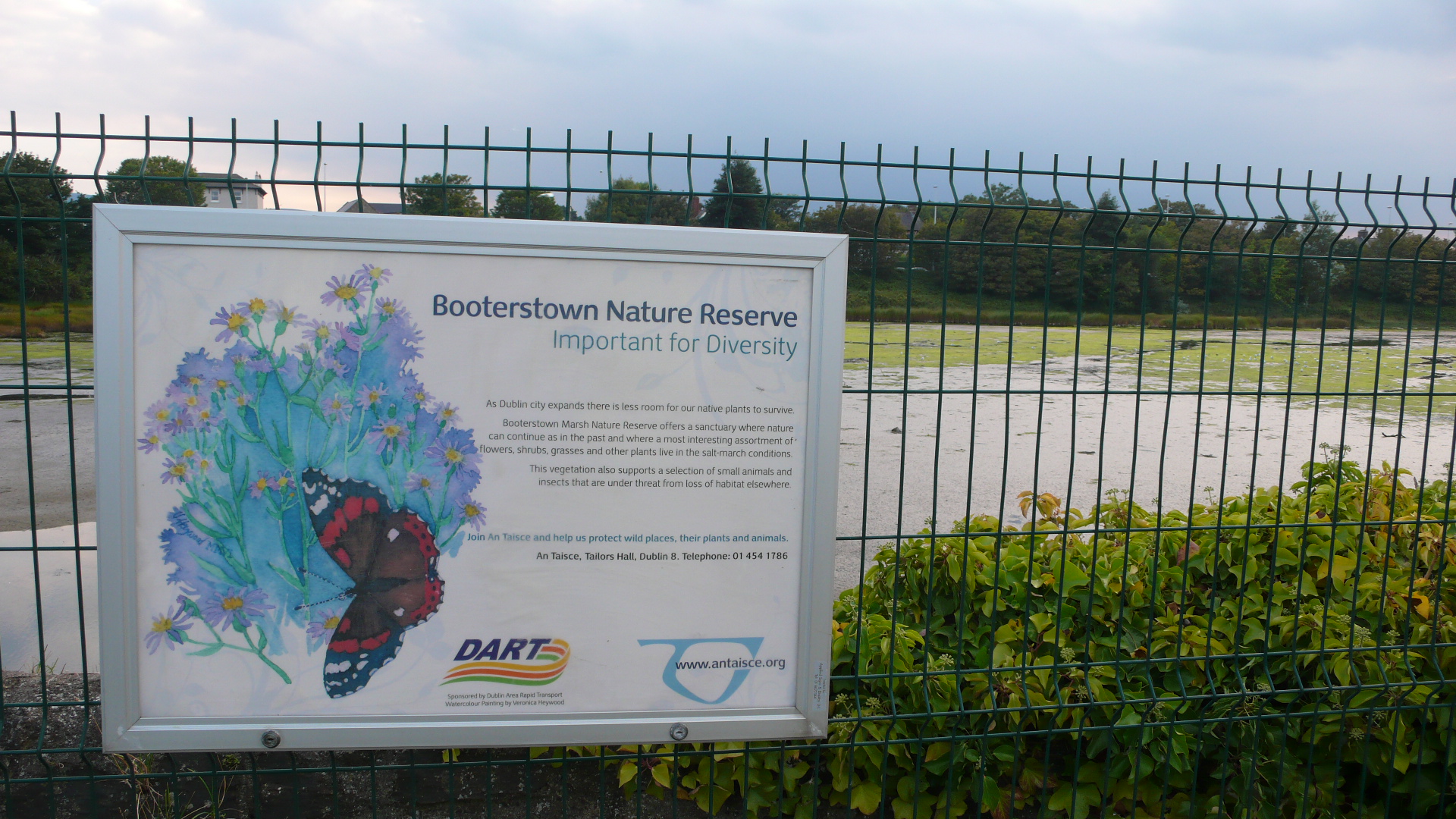
Is Booterstown Marsh the best small urban nature reserve in Europe?

2014-09-04 18.05.17

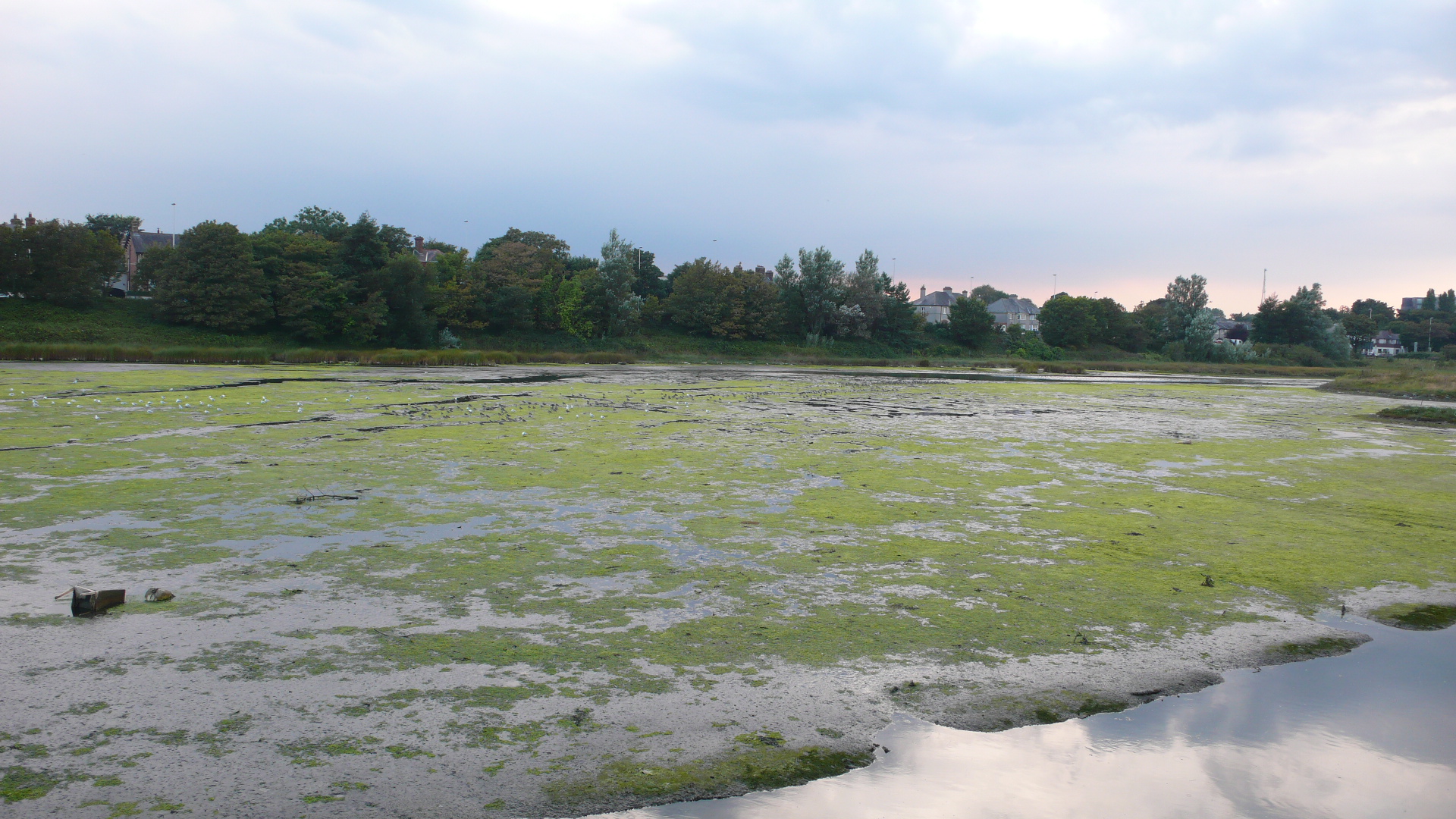
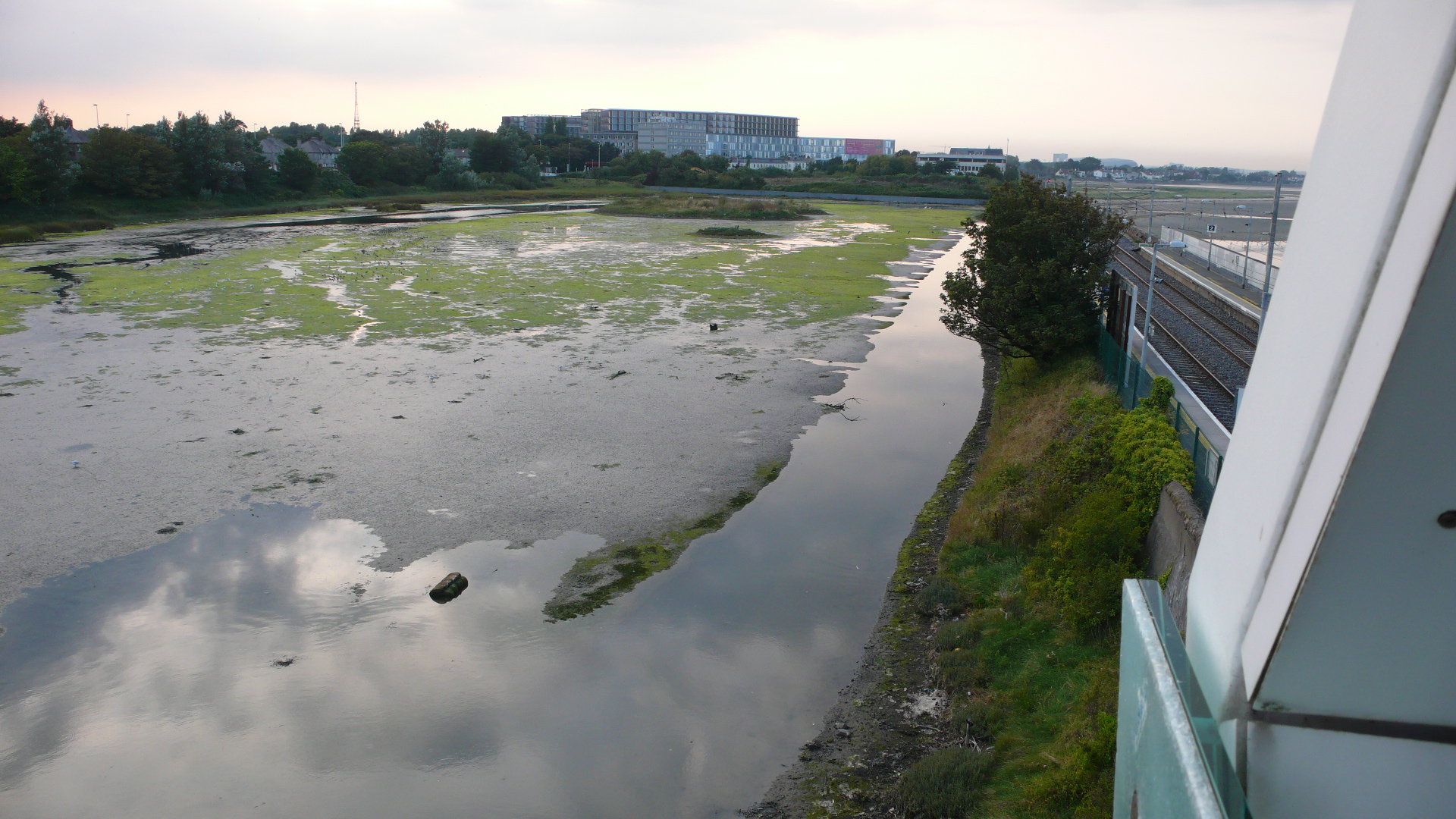
On a recent visit to Dublin, where I’m External Examiner for some courses at UCD, my host Dr Jan-Robert Baars took me on a short early evening excursion south of the city to Booterstown Marsh.  What a great little nature reserve it is!  It’s tiny (only 4.3 ha) and is boxed in by urban development on all four sides.  To the north there are buildings; to the east runs a busy main road and housing; on the southern side is a car park and the entrance to Booterstown train station, with the railway line completing the rectangle of infrastructure to the east.  Beyond that is a beach and the open water of Dublin Bay.

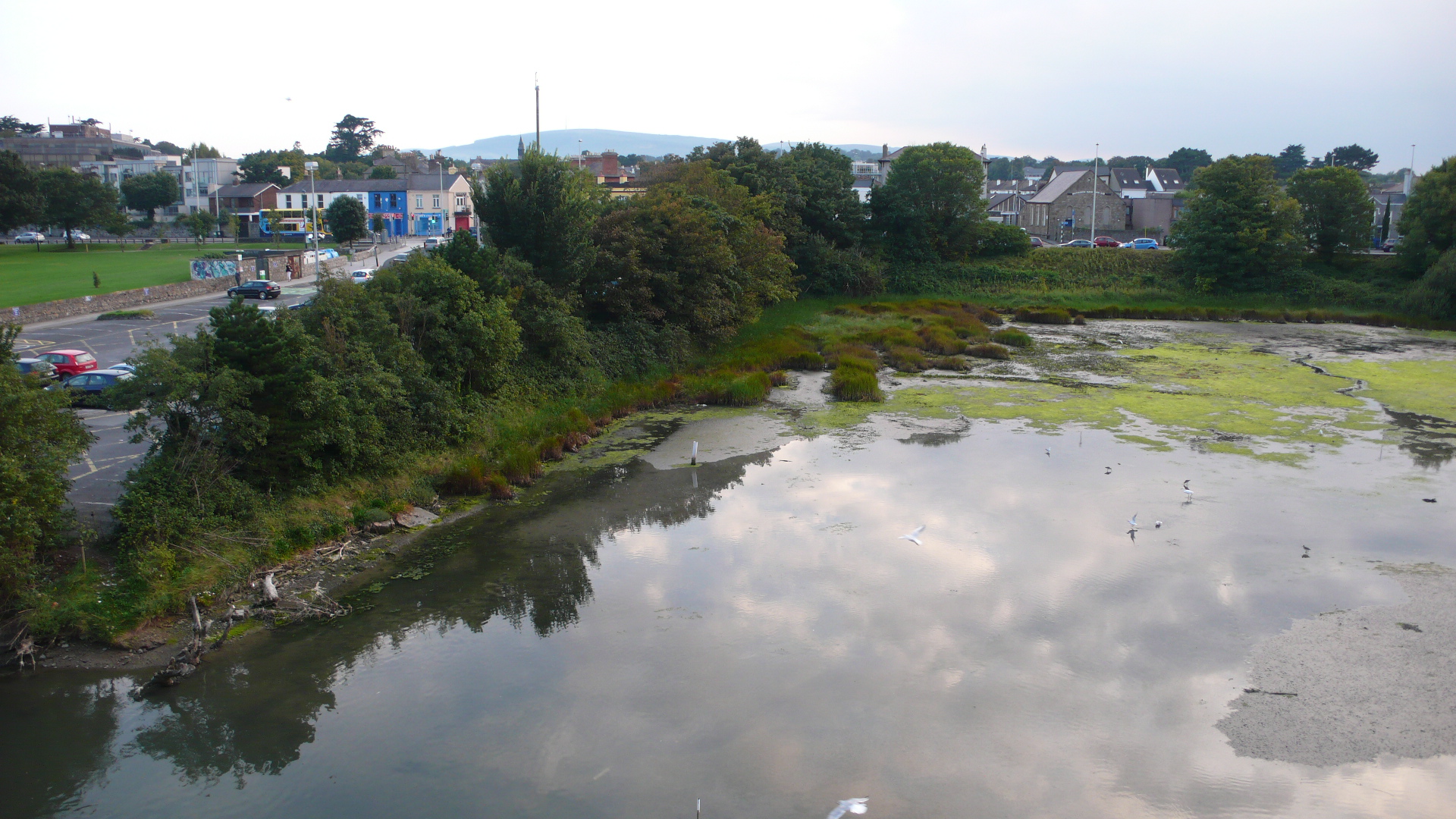
The reserve is largely saltmarsh, fringed with trees, with a freshwater stream coming in from the north (visible in the bottom right corner below.

2014-09-04 18.09.28

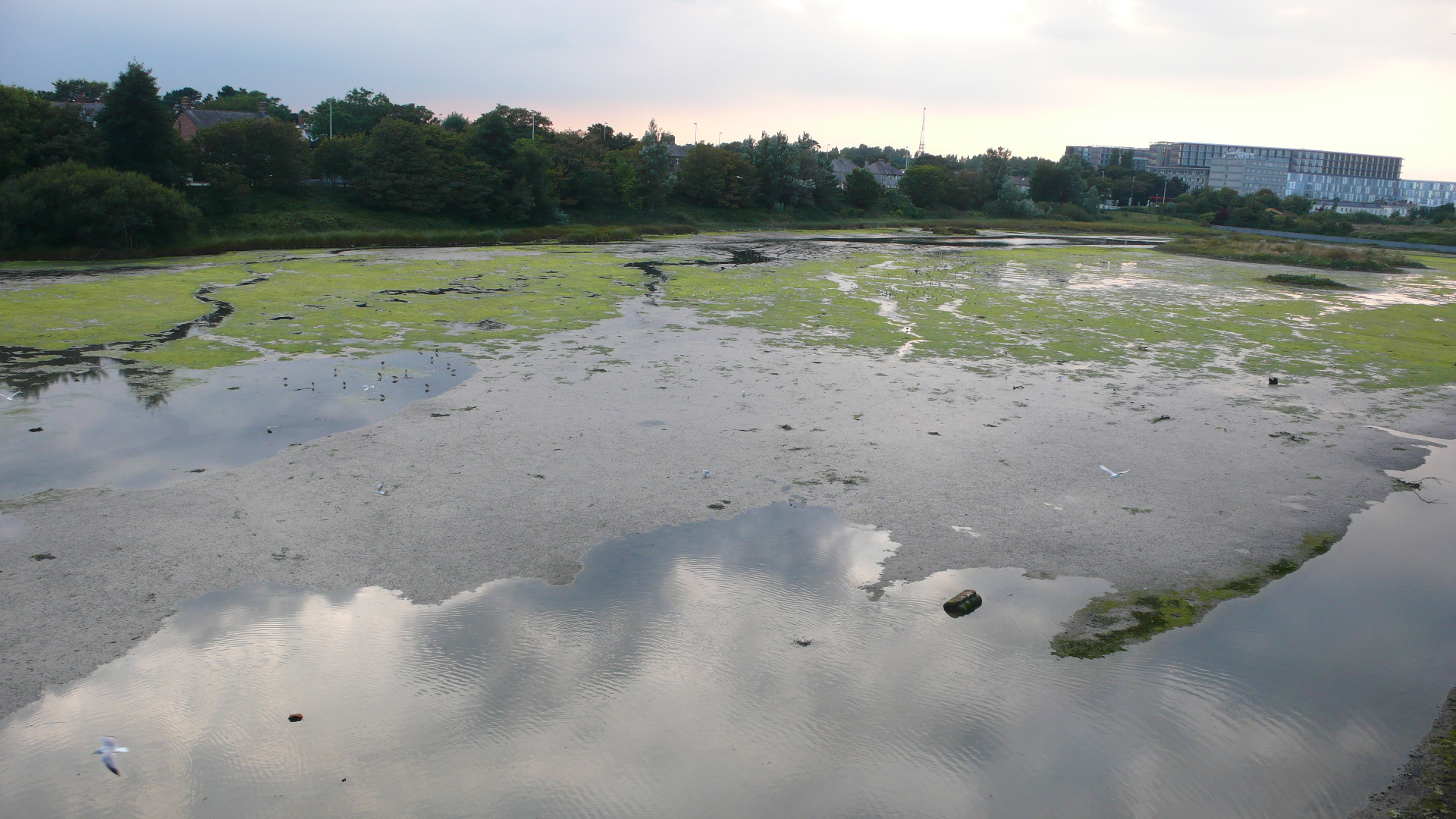
As the tide turns, seawater rapidly ebbs and flows from the reserve, bringing with it food particles and nutrients for the plants and invertebrates of the marsh.  The next photograph was taken only a few minutes after the previous one.

2014-09-04 18.24.40

If you click on these photographs above to maximise their size you can see something of what makes this reserve so special – the bird life that is supported by those plants and invertebrates.  The very abundant dark birds are Black-tailed godwits, the white ones are Black-headed gulls.  During our visit, which lasted less than an hour, we saw a total of 12 species including other wading birds such as Dunlin, Oystercatcher, Little egret, Grey heron, and Redshank.  These are birds that one often sees from a distance, foraging on lake margins or mudflats.  But here they are just a few metres from a busy railway line which funnels commuters to and from the city every day.

2014-09-04 18.25.49

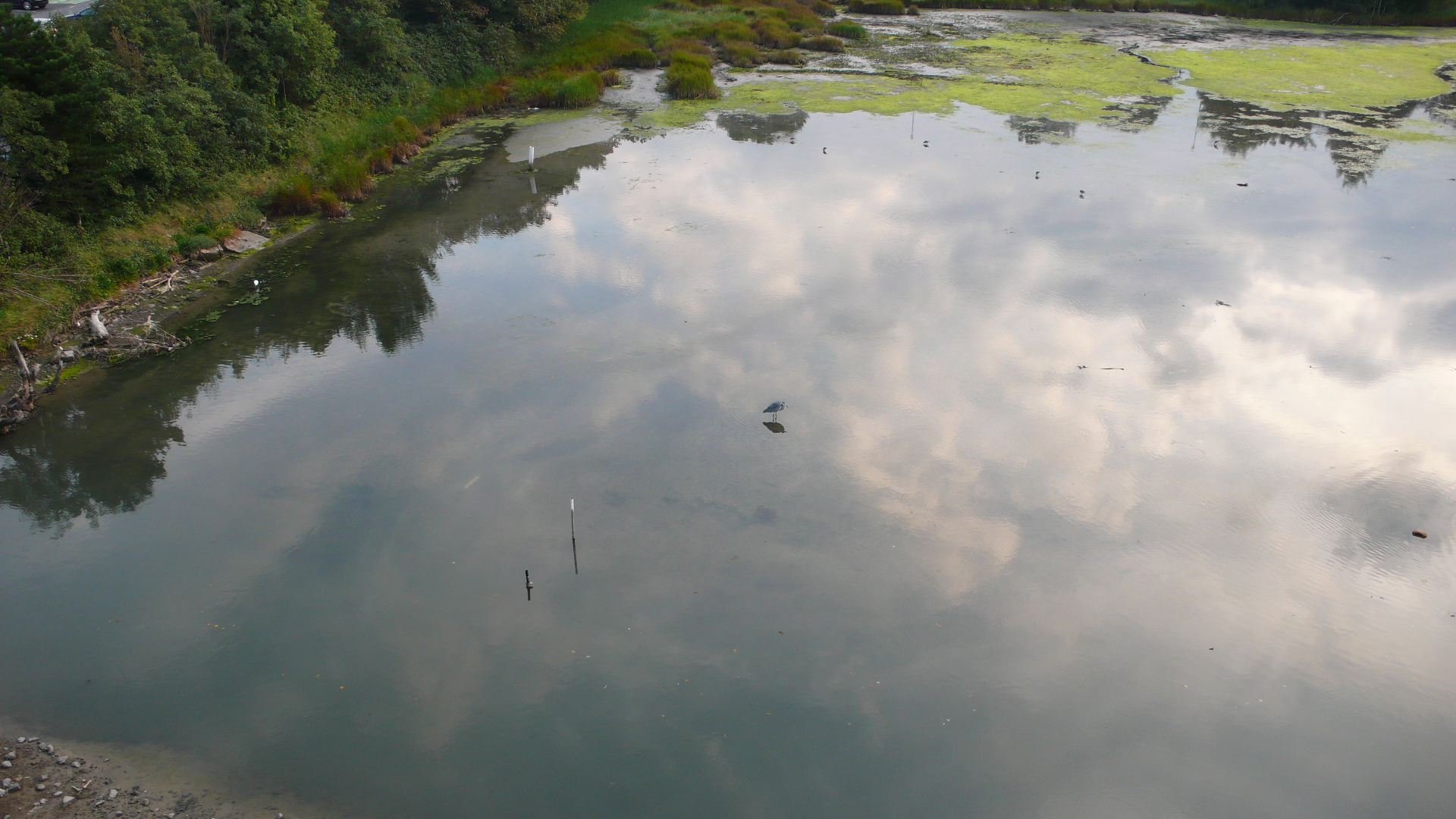
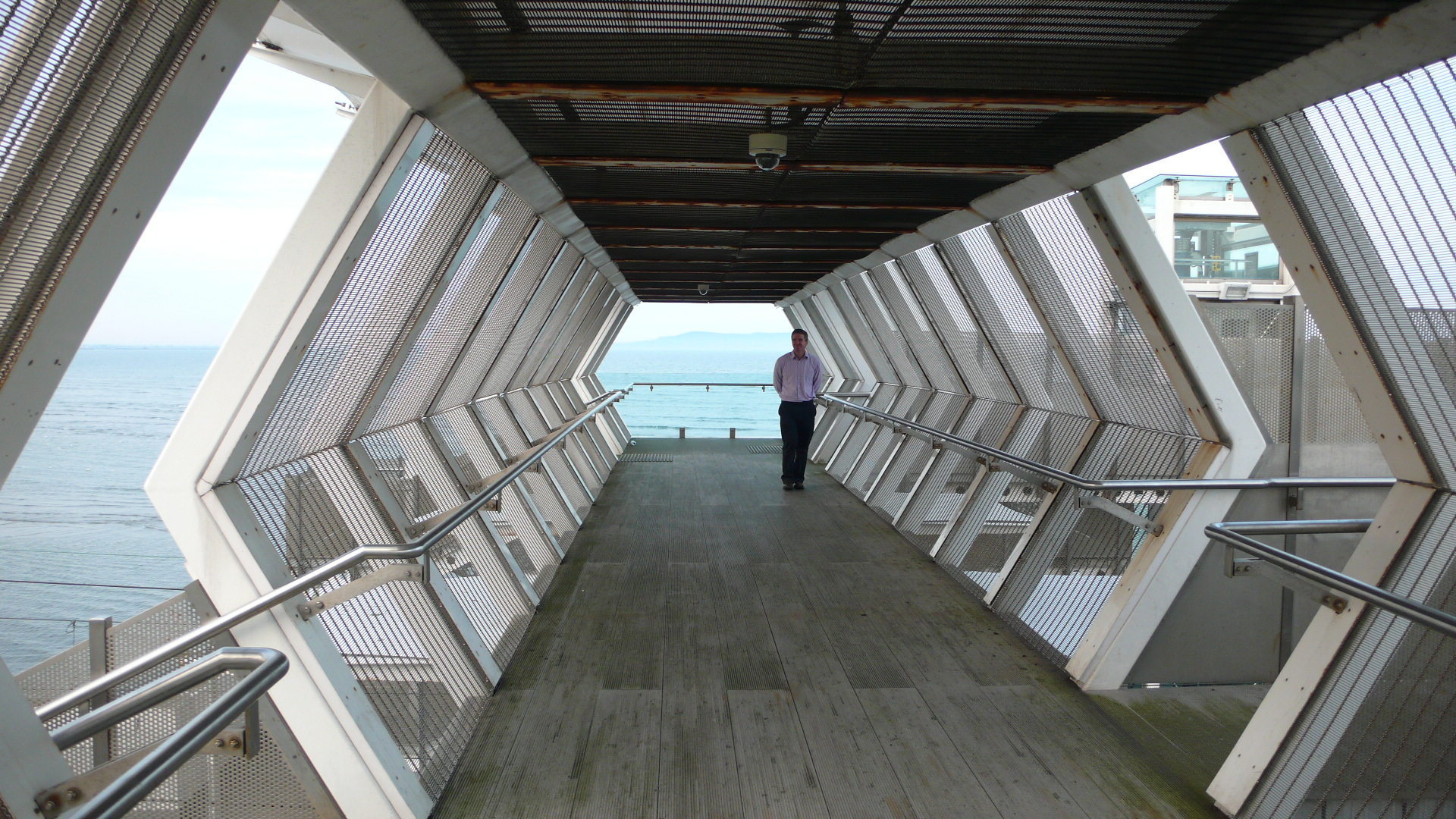
Whether by accident or design the open-ended station bridge makes a great viewing platform; here you can see Grey heron and Little egret.

2014-09-04 18.31.10

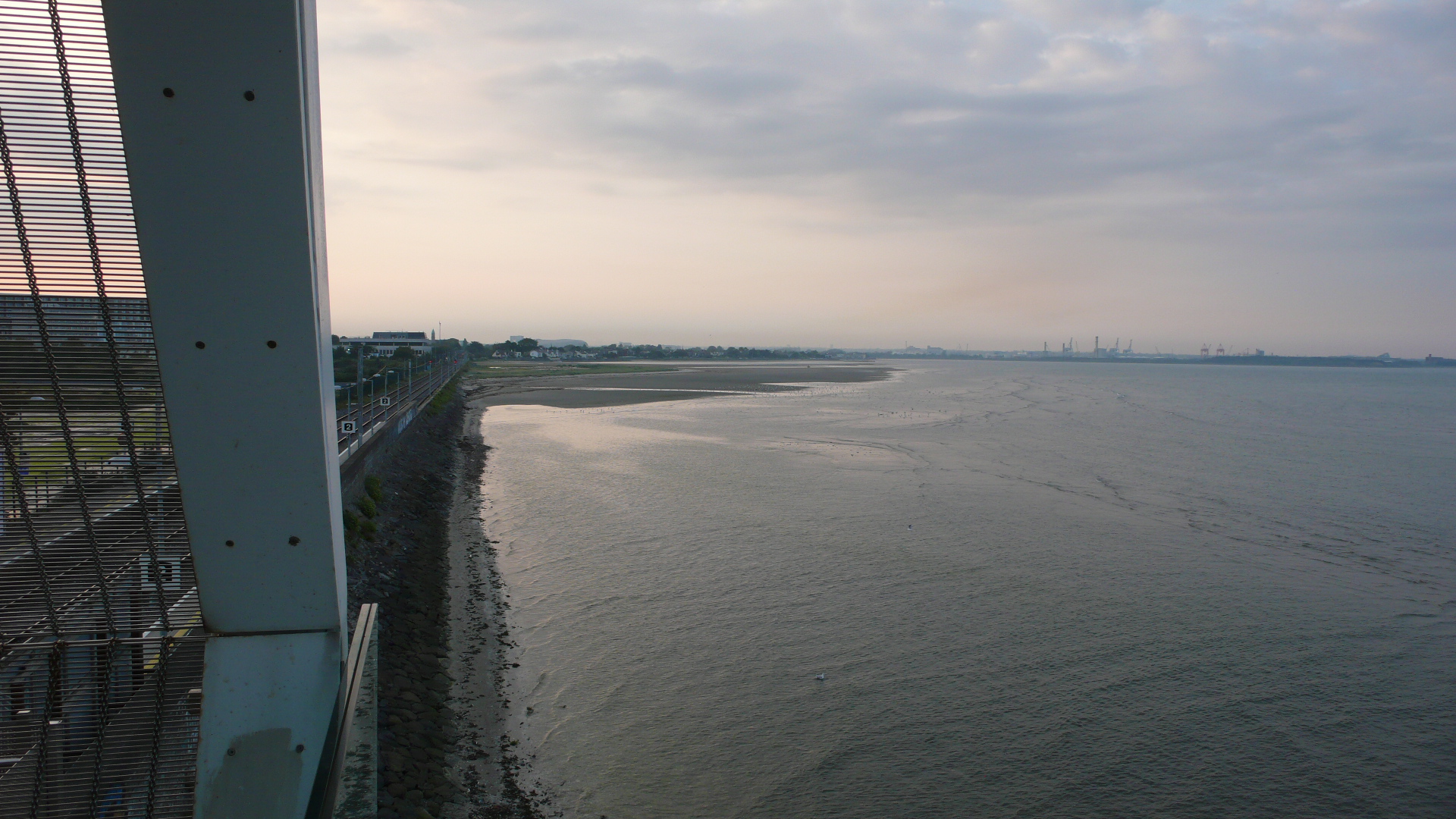
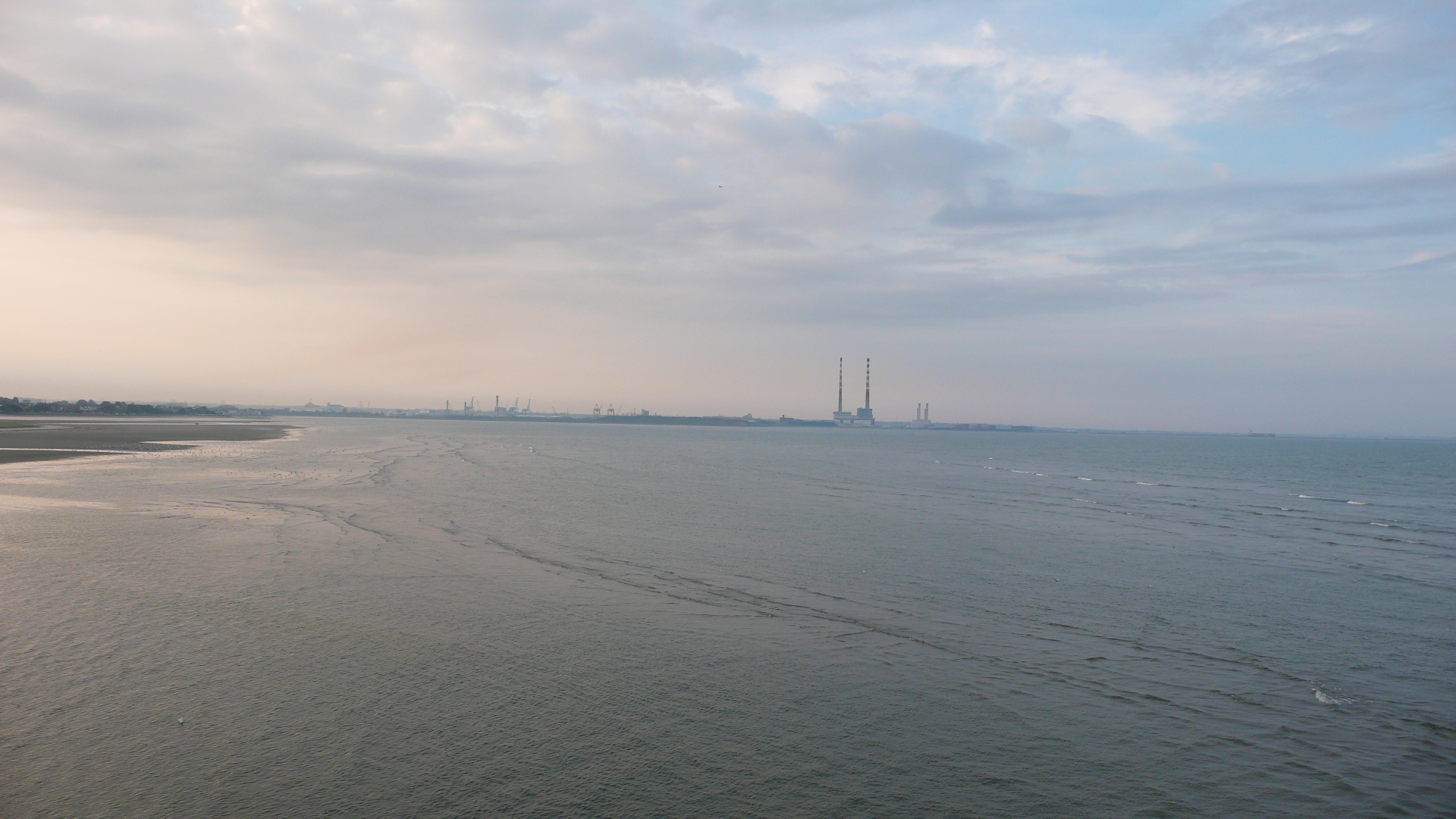
At its eastern side the bridge looks over Dublin Bay and provides further birding opportunities.

2014-09-04 18.33.08

2014-09-04 18.32.48

If you have the opportunity to visit Booterstown Marsh (and I strongly recommend it) there’s a useful guide produced by the Irish Wildlife Trust.  This urban nature reserve is one of the most interesting I’ve ever visited, because it affords the opportunity to get very close to a diverse assemblage of birds that are not normally so confiding.  Clearly these birds feel secure despite the rumbling traffic and the dashing trains.  I almost envy the local commuters!

If you think you know of a more interesting small urban nature reserve I’d be interested to hear about it – feel free to comment below.

2014-09-04 18.24.51

My thanks to Jan (pictured below on the bridge) for introducing me to this wonderful site.  The final list of birds that we saw on the reserve was:  Black-tailed godwit, Dunlin, Grey heron, Little egret, an unidentified duck, Black-headed gull, Redshank, Oystercatcher, Woodpigeon, Moorhen, Mute swan, Jackdaw.  On the Dublin Bay side we also spotted Pied wagtail and (from a distance) a Curlew.

2014-09-04 18.25.57

Bad news for British biodiversity and a comment on ecosystem services

2014-08-16 15.36.53

Two related things have caught my eye this morning that I think deserve a quick blog entry.  The first is that Julia Leventon has posted an interesting piece on her frustrations with the ecosystem services concept over on the Ideas for Sustainability blog.  Go and read it – Julia raises some important points about the mismatch between our ever-more sophisticated concepts of ecosystem services and what it means to actually manage/support them within our society.  One of the things she said really struck me as it chimes with what I feel is a weakness of the current ecosystem services research agenda.  Julia says that:

I feel somewhat as though we are distracting ourselves by creating ever more complex physical constructs that require even more detailed physical understandings, and ever more complex chains of structures, processes, services and benefits.”

This I completely agree with. The underlying science (ecology/biodiversity/natural history/call it what you will) of ecosystem services is hugely complex, even for a reasonably well defined service such as crop pollination. As someone who has studied pollination ecology for 25 years I know how little we truly understand – yet this is supposed to be one of the more “straightforward” ecosystem services!

But to implement the ecosystem services concept within society we don’t need to know the finer details and dynamics of the species/communities/ecosystems involved (as interesting as they are). What we require is as much natural and semi-natural habitat within a landscape as is possible, appropriately managed (or left alone), and with as few anthropogenic stressors on it as possible (e.g. pesticides and other pollutants).  And we’ve known that for many years, long before ecosystem services was coined as a term in the 1980s.

Yet governments and agri-business consistently fail to deliver this basic requirement and our natural environment is becoming ever-less diverse and hospitable to the biodiversity that sustains ecosystem services.  See for example the latest bit of bad news regarding species-rich meadows in the UK, which are still declining long after it was pointed out that over 90% had disappeared: legislation designed to protect these grasslands seems to have had the opposite effect.  These are exactly the same kinds of habitats that are considered most important for the pollinators that agriculture relies upon!

The concept of ecosystem services, in my opinion, is a valuable one for focusing attention on the importance of the natural world, though there are others who disagree.  But the concept does not have to become mired down in the “ever more complex physical constructs” that Julia describes in her post. Let’s keep it simple and focus on what’s important rather than disappearing into a conceptual black hole that excludes practitioners, government, business and the public*.


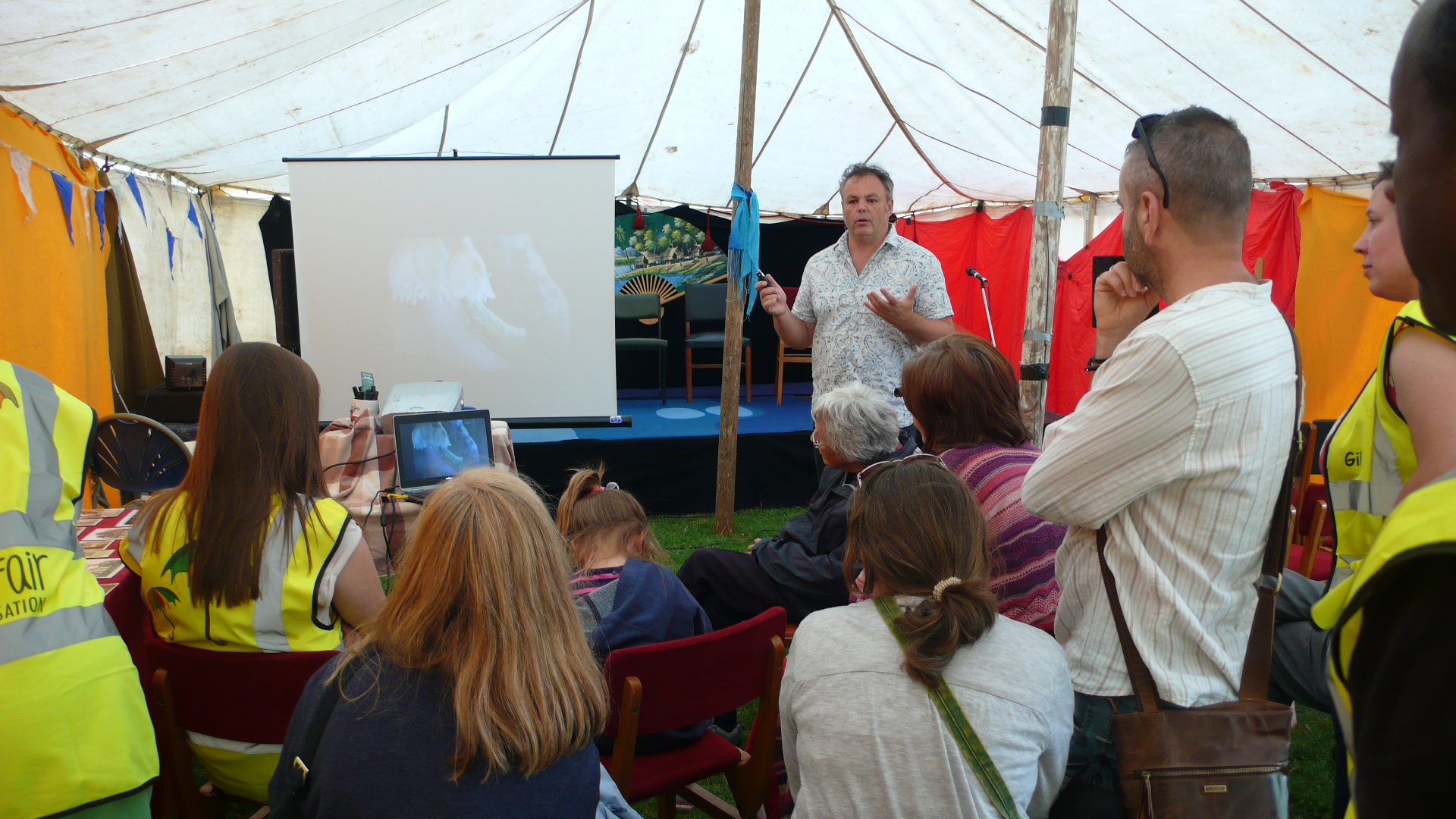
*The photograph above was taken a couple of weeks ago at Northampton’s Umbrella Fair, where I presented an over view of the importance of pollinators, and the idea of ecosystem services, to a small, [ahem] “mixed” audience, which included restless kids and incomprehensible drunks, in a marquee which was too light for the laptop projector to work.  But if even one of those who attended “got” the idea of ecosystem services I consider my job well done!

Gatekeeper in the garden

Gatekeeper 1 - summer 2014

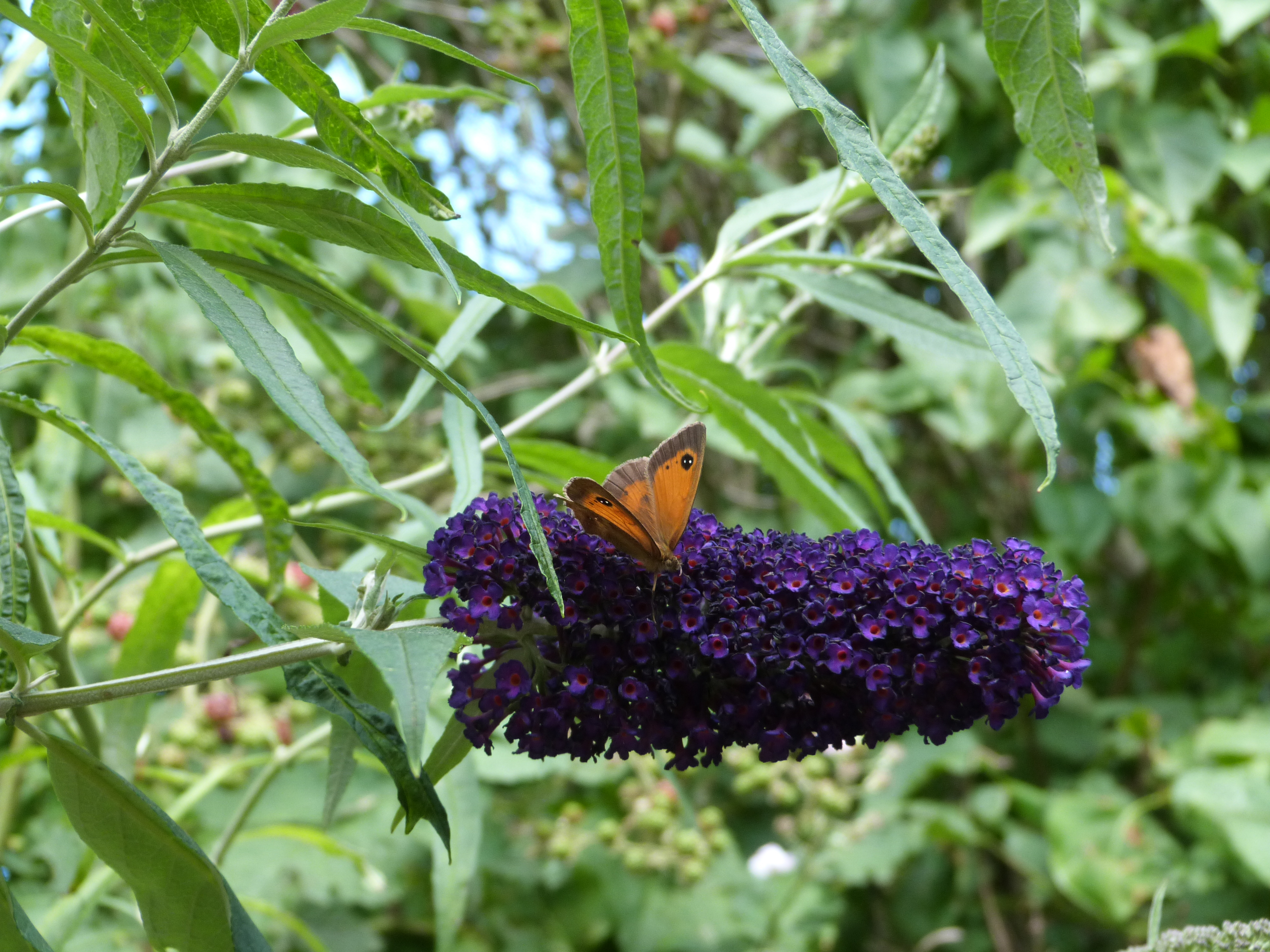
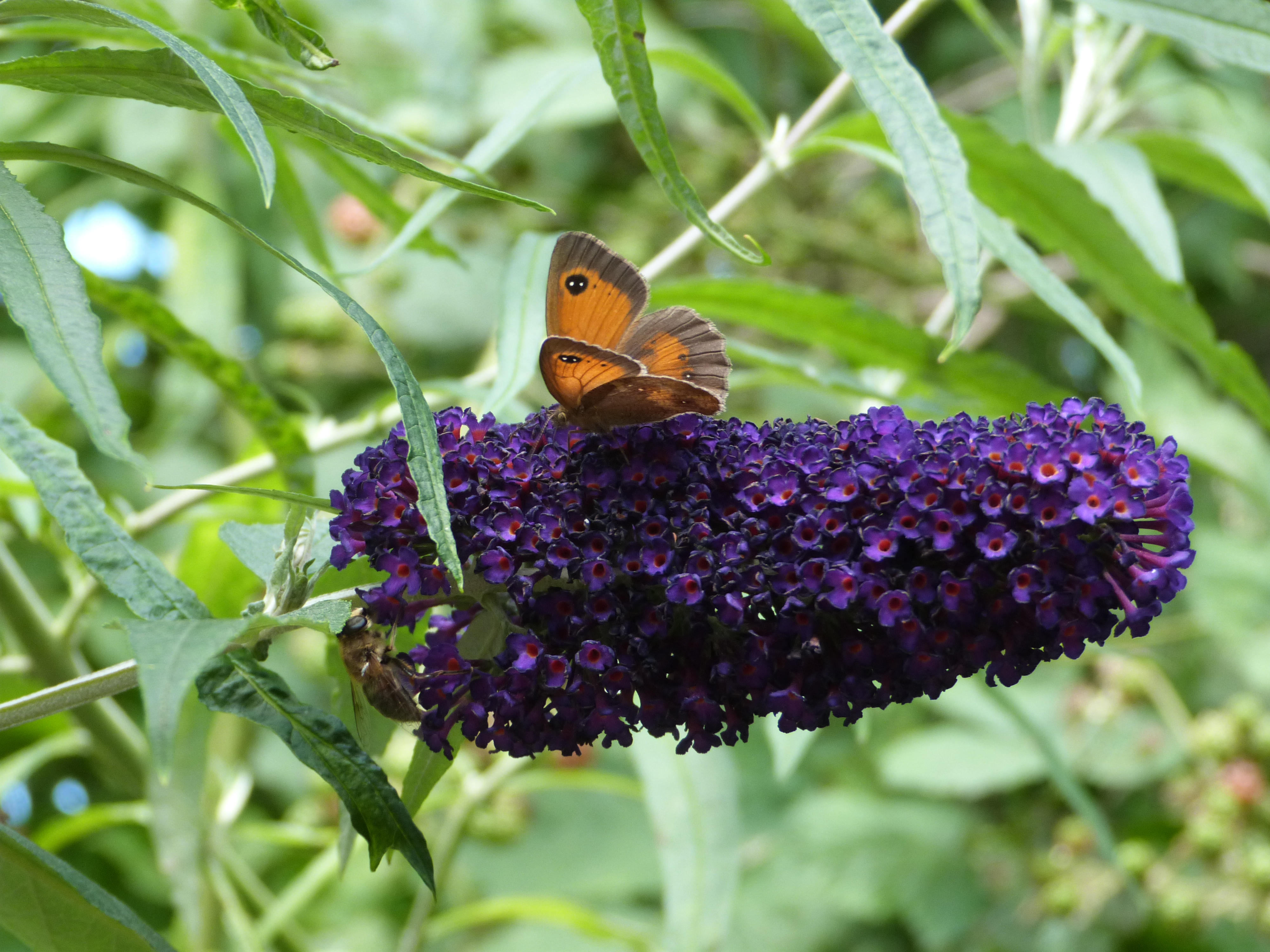
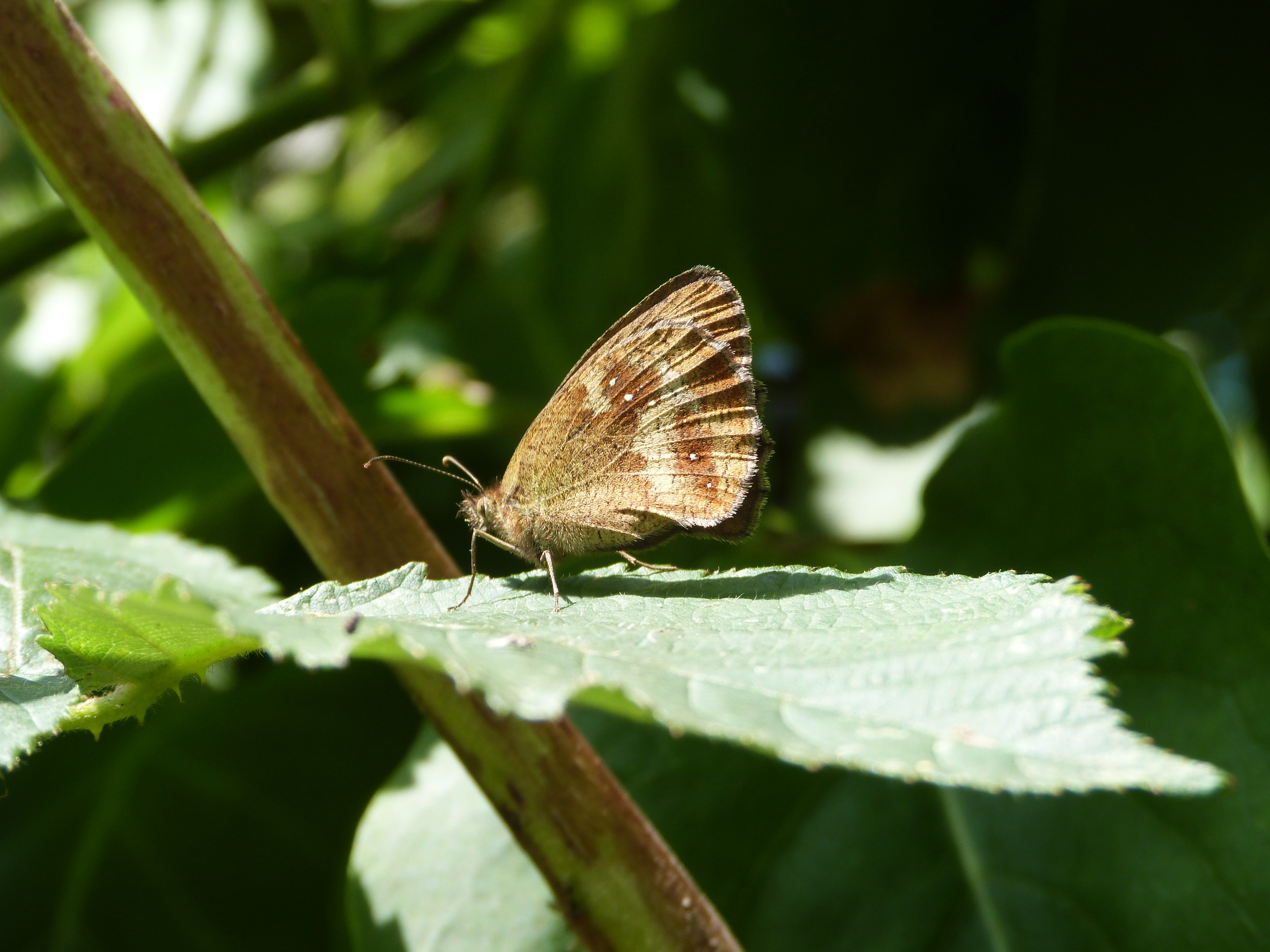
Since moving into our house in January 2012 I’ve been keeping a list of butterflies and day-flying moths seen in the garden (as well as birds and bees, of course). That list currently contains 14 species*, one of the most interesting of which is the Gatekeeper (Pyronia tithonus).

Gatekeeper 3 - summer 2014

According to the account of this species on the UK Butterflies web site, the Gatekeeper:

“can be found wherever shrubs grow close to rough grassland. ……some of the largest colonies can be found at field edges and along hedgerows and we can expect to find this butterfly in scrubby grassland, woodland rides, country lanes, hedgerows and the like anywhere within its range”.

So what is it doing in an urban garden?  The BTO’s summary of the species mentions that:

“It is rare for Gatekeepers to appear in city-centre gardens. However, in recent years this species has been recorded at some urban sites across north-east London and Hampstead Heath and, more recently, on Wimbledon and Mitcham Commons. Such range expansion into urban areas may be due in part to changes in the management of urban parks and cemeteries”.

Clearly, in order to exist in an urban setting the Gatekeeper must have its basic requirements met by the habitat in which it finds itself.  As I’ve mentioned before, the lawn in our garden is quite diverse and contains a number of native species, including a range of grasses that could be used as food plants by the caterpillars, though we do keep it quite short.  It’s more likely that the caterpillars are feeding in some of our neighbouring gardens, which are rarely troubled by a mower (do neglected gardens host more biodiversity than highly managed gardens?  I suppose it depends on the type of management; would be an interesting question to research).

Gatekeeper 4 - summer 2014

As well as the larval food plants required by Gatekeepers, there’s a range of nectar sources available in a mixed native/introduced hedge along the northwest boundary, including the bramble I recently discussed, oval-leafed privet (Ligustrum ovalifolium), and the buddleia (Buddleja davidii var.) seen in these photographs.

It will be interesting to see if this colony persists over time (I also recorded the species in 2013 but not in 2012).  I get the impression that there’s only a small number of individuals, though it’s difficult to assess the population size of butterflies without catching and marking individuals, which I plan to do next year. It’s a lovely species and we’re fortunate that it likes our garden.  I’d be very interested to hear from any other urban gardeners who have seen it in their patch.


*Large White, Speckled Wood, Small White, Holly Blue, Red Admiral, Cinnabar, Large Skipper, Meadow Brown, Peacock, Gatekeeper, Comma, Brimstone, Orange Tip, Small Tortoiseshell.

P1110935


Blackberry Week

2014-08-23 11.11.25

As a kid growing up in the north-east of England in the 1970s, the half-term school holiday that occurred early in October was always referred to as “Blackberry Week”.  A quick on-line search suggests that the phrase goes back to at least the 1930s (can anyone trace it earlier than this?) and it refers to the time when blackberries (Rubus fruticosus agg.) were ready for picking.  The local kids would spend hours at our favourite blackberry patches, picking bags full of dark, luscious berries to take home for our mothers to cook into pies and crumbles, or stewed to eat with cream. As much fruit was scoffed as was collected (“one for the bag, one for me, one for the bag, one for me…”) and over-ripe ones were pelted at one another until we looked like road casualties.

All of this has been brought to mind recently, since we began to pick blackberries in our garden – at the end of July.  That’s at least two months earlier than I recall doing as a youngster.  Part of this difference can be attributed to latitude; I now live more than 200 miles further south than I did, with a concomitant advance in relative dates of flowering and fruiting, amongst other phenological indicators.  But that can’t be the only answer, the difference is too extreme, though I have not (and I doubt if anyone has) assessed it systematically.

The main reason for the difference, it seems to me, is that our seasons are shifting. We know that spring is generally earlier now in the UK than it was 20 years ago, and with that shift, autumn has likewise been brought forward and is lasting longer, as shown by changes in fungi fruiting patterns.  There’s a lot of research interest in these changes, for example the Centre for Ecology and Hydrology’s collaborative project.  Whilst phenology scientists usually express these changes quantitatively, as number of days difference between events, such as bird migration dates or plant flower times, across a period of years, any person with an interest in the natural world can see these changes for themselves, even in gardens.

Without realising it, as kids we were also making decisions about where to pick blackberries that go directly to the heart of biodiversity, which is essentially about variation and difference in the natural world.  As part of our own knowledge of the local (and very personal) biodiversity of the area in which we played and explored, we would know the best bushes from which to pick fruit, and the ones to avoid because the plants produced berries that were small, or had a poor flavour. Blackberries are hugely variable in all manner of ways, including leaf shape, number and size of prickles, flower size and colour and, most importantly for us, characteristics of fruit quality.

Much of this variation is genetic rather than environmental and reflects the complex biology of the species, or should I say group of species. Let’s go back to the scientific name of blackberries: Rubus fruticosus agg.  I’ve posted in the past about the formalities of writing scientific names of species, and the “agg.” element is an unusual addition not often seen.  It’s an abbreviation of “aggregate”, which in its taxonomic sense means a collection of species that are very similar to, and may even be synonymous with, that species.  The plant that we know and love as the blackberry is actually an aggregate of many hundreds of “microspecies”, at least according to some plant taxonomists.  This is because of the variable sexual behaviour of blackberries and their tendency to hybridise.

Blackberries are often taken for granted and dismissed as invasive woodland dominators that need to be kept in check.  But they are important for their cultural significance, have a fascinating biology, attract a wide range of insects to their flowers, and provide both fruit and habitat for birds and mammals.  Blackberries are worth making space for if your garden is large enough.

Ecosystem services online lecture by Robert Costanza

goldsworthy1

A few weeks ago I posted about ecosystem services and the differing opinions of writers such as George Monbiot and academics like Robert Costanza, together with a link to Monbiot’s lecture on the topic.  A new online lecture by Costanza has just been released, based on a webinar he presented last week.  It’s well worth watching, highly recommended as a state of the art over view of the concepts and progress in this area.

George Monbiot will not like it.


How do YOU value the Nene Valley?

Plane in river at Irthlingborough

Following on from my recent post about how contrasting ways in which to value nature, today sees the launch of a new interactive web site that is asking people which areas of the Nene Valley they value, and why.  There is also a photography competition with a chance to win pairs of binoculars.  The website link is:

www.nenevalleynia.org


Here’s the text from today’s joint University of Northampton/Wildlife Trust press release:

The Nene Valley Nature Improvement Area (NIA) project has today launched a new interactive website, which aims to encourage people to share their views on the local natural environment.

Covering over 41,000 hectares across Northamptonshire, Huntingdon and Peterborough­, the Nene Valley Nature Improvement Area features a variety of natural habitats, including wildflower meadows, wetlands, marshes, woodlands and wet grasslands. With fishing lakes, bird watching opportunities and children’s adventure playgrounds, the NIA is an attractive area for animals – such as otters, kingfishers and grass snakes – to call home.

Researchers from the University of Northampton have joined forces with conservation organisations and the national Sciencewise initiative to launch the new NIA website, which features a wealth of information, a virtual tour and a discussion forum.

The website provides an opportunity for local people to share their thoughts on the Nene Valley, and an online mapping survey has been developed to identify areas of the valley that are particularly valued and why these areas are important to visitors.  This will provide University researchers with valuable data that can be used to inform future plans for the valley.

A photo competition has also been launched to find some of the best images of the Nene Valley and to encourage people to explore the area over the summer.  Judges are looking for images of wildlife, landscapes, people, heritage, water, and the built environment taken in the Nene Valley.  There are separate categories for children so everyone can enter. Images should be submitted through the NIA website, and the winners will be selected through an online vote. The most popular photos will be displayed in the Autumn as part of the Nene Valley Festival, and the photographers of the top two images will each win a pair of Opticron binoculars. The competition closes for entries and voting at 5pm on 30 September.

Project co-ordinator Heather Ball from the Northamptonshire Wildlife Trust commented: “The new website is a great way to have your say about what goes on in the Nene Valley and share some fabulous images.”

University of Northampton researcher Dr Jim Rouquette added: “We need to gather information on the local places that people particularly value and the benefits that people gain from visiting.  By better understanding what is important to different people, we can start to target conservation efforts and ensure that local knowledge and values are incorporated into decision-making.”

​If you would like to contribute to this important project or take part in the photo competition please go to: www.nenevalleynia.org

Fleet on foot

Fleet photo 7
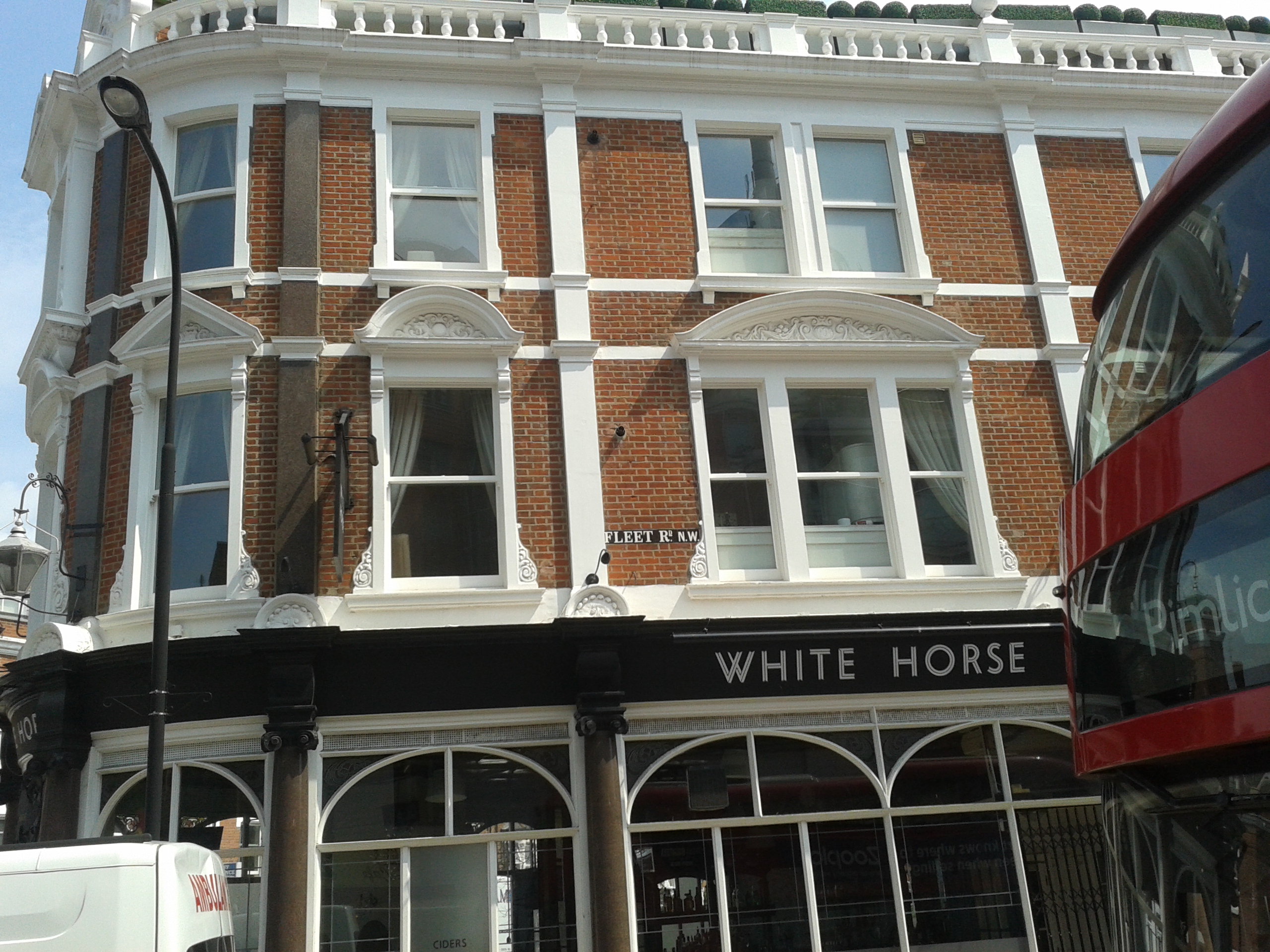
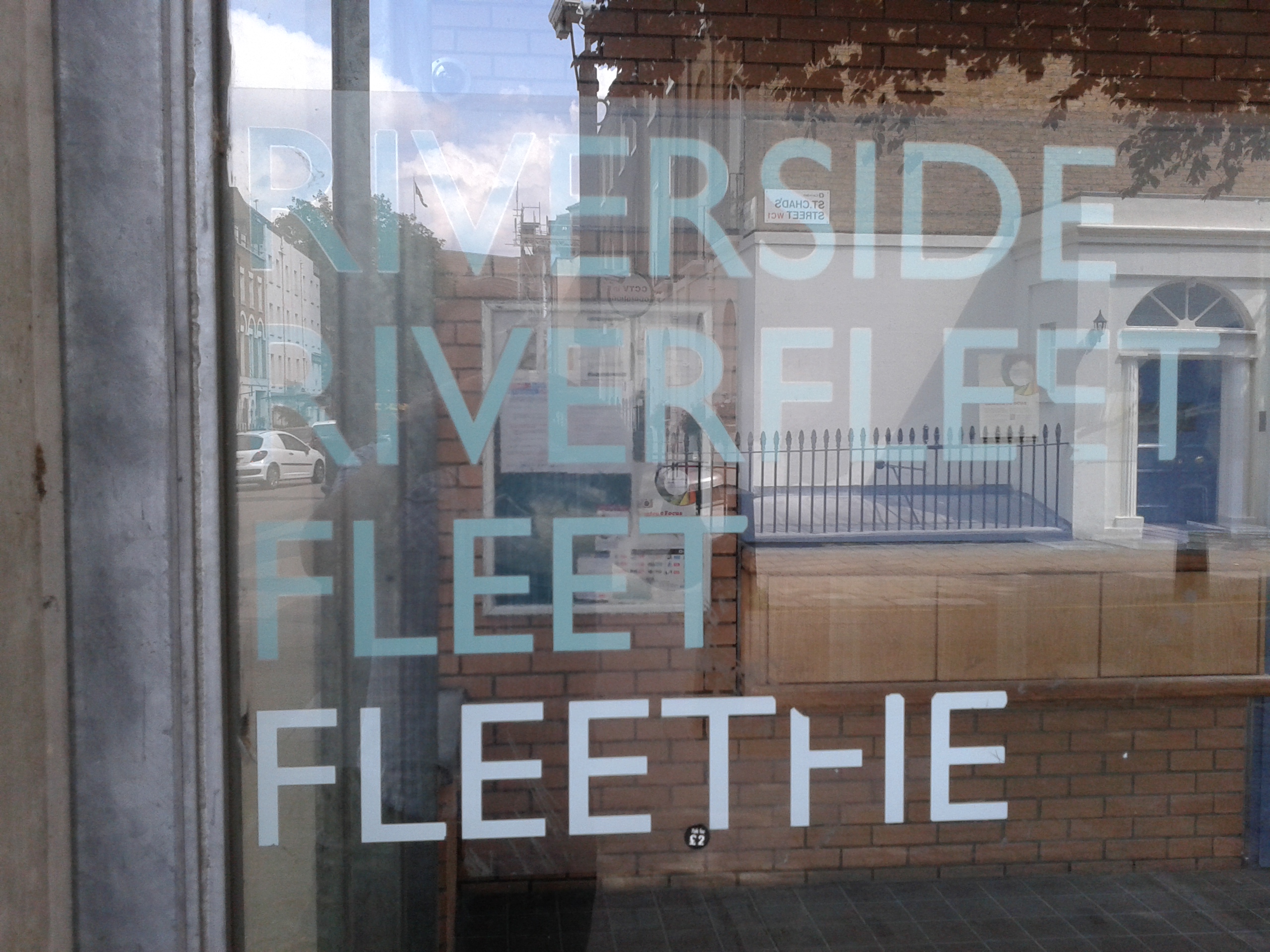
A few weeks ago my sons Patrick and James and I spent a very enjoyable day walking the full length of the River Fleet at the invitation of my colleague Ian Livingstone, together with his wife Jane, her Australian colleague Matt Butler and his partner Kate.  “Walking the River Fleet” sounds like it should involve a gentle, rural amble along willow fringed banks, accompanied by clouds of damselflies and the occasional splash of a water vole sliding into the shallows. And that’s exactly what it was like –  two hundred years ago.  Nowadays “walking the River Fleet” is an urban hike through heavily built up areas in one of the largest cities in the world, for the Fleet is a “Lost River” of London, commemorated only by the names of streets and businesses:
Fleet photo 8
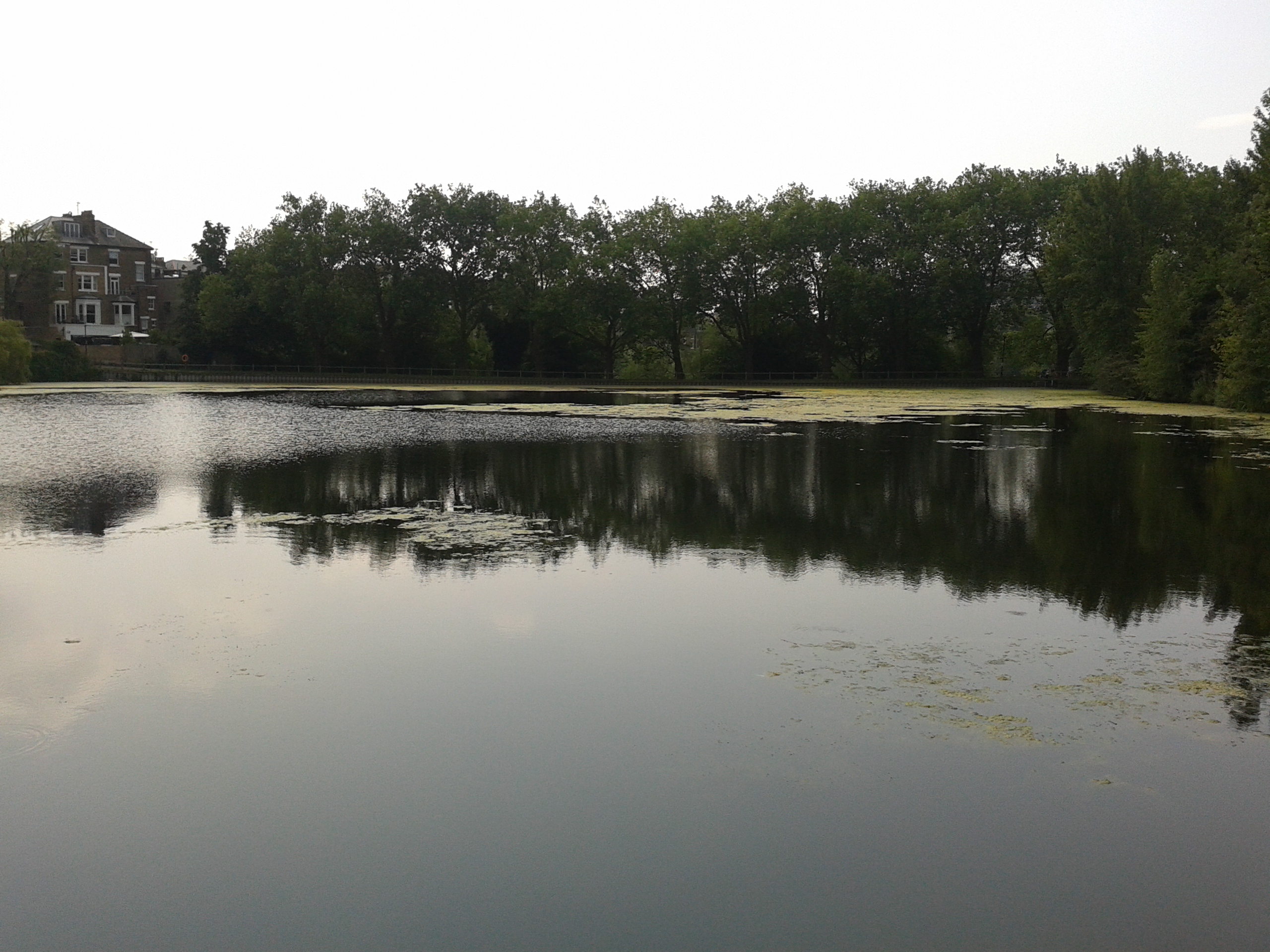
Our 7 mile walk started on Hampstead Heath where the Fleet rises and feeds a series of 18th Century ponds, originally reservoirs and now used for bathing and recreation.  As we walked I began to list the birds that we saw and, of course, these ponds added considerably to the list as diversity of habitats = diversity of species. In fact one of these water bodies is known as Bird Sanctuary Pond and in less than a minute yielded coot, mallard, black-headed gull, common gull, mute swan and tufted duck.  None of which you can see in the following photograph:
Fleet photo 6
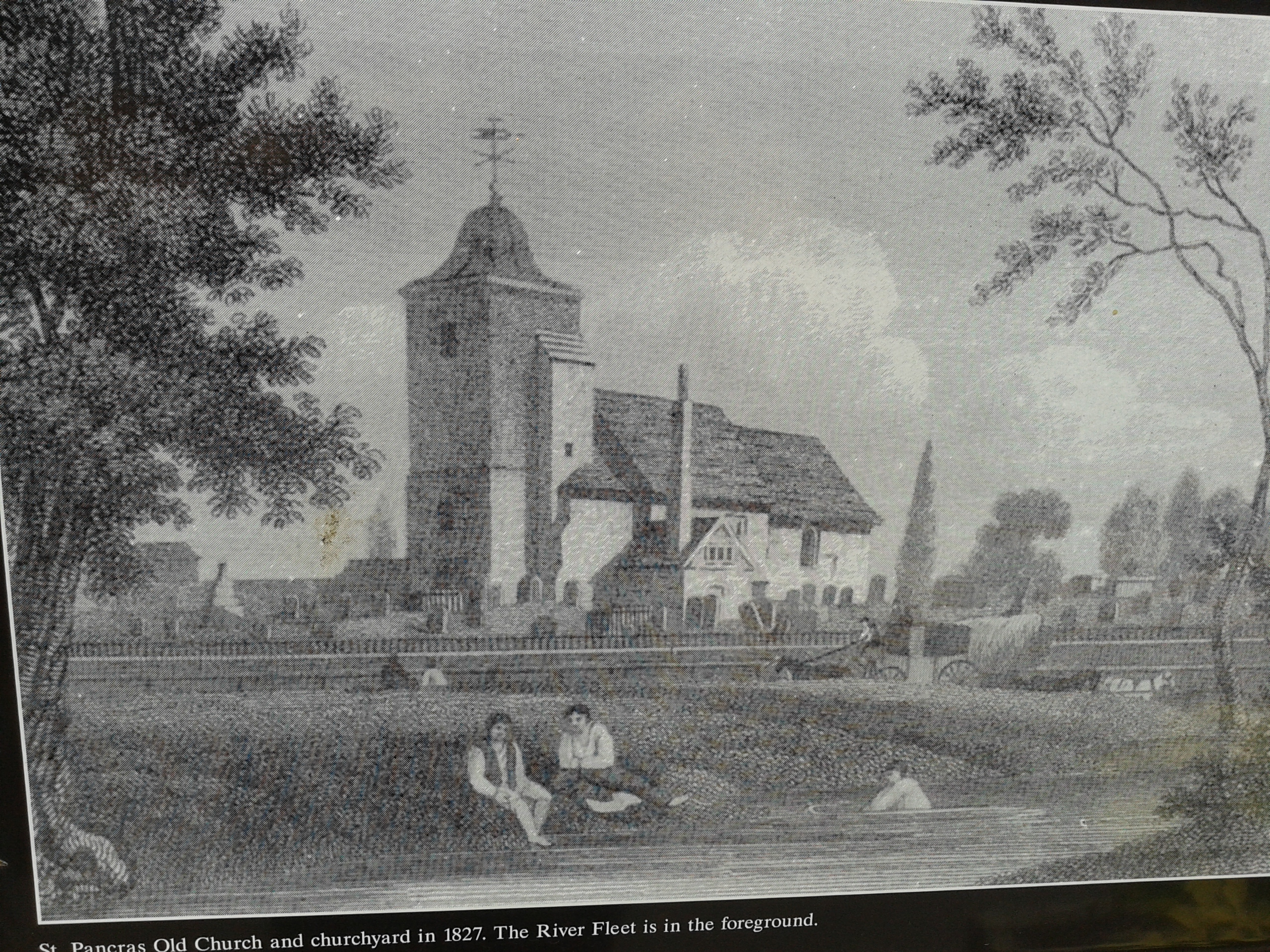
From Hampstead we walked through winding streets that occasionally name-checked the river we were following (see the top photo on this post) down into Camden, where we stopped beside the canal to eat lunch and tick off another water-associated bird, Canada goose.  Then on to St Pancras where we paused at St Pancras Old Church and imagined the Fleet running past it in the early 19th century, before pollution and the need for more land on which to build had submerged it beneath the surrounding infrastructure:
Fleet photo 4
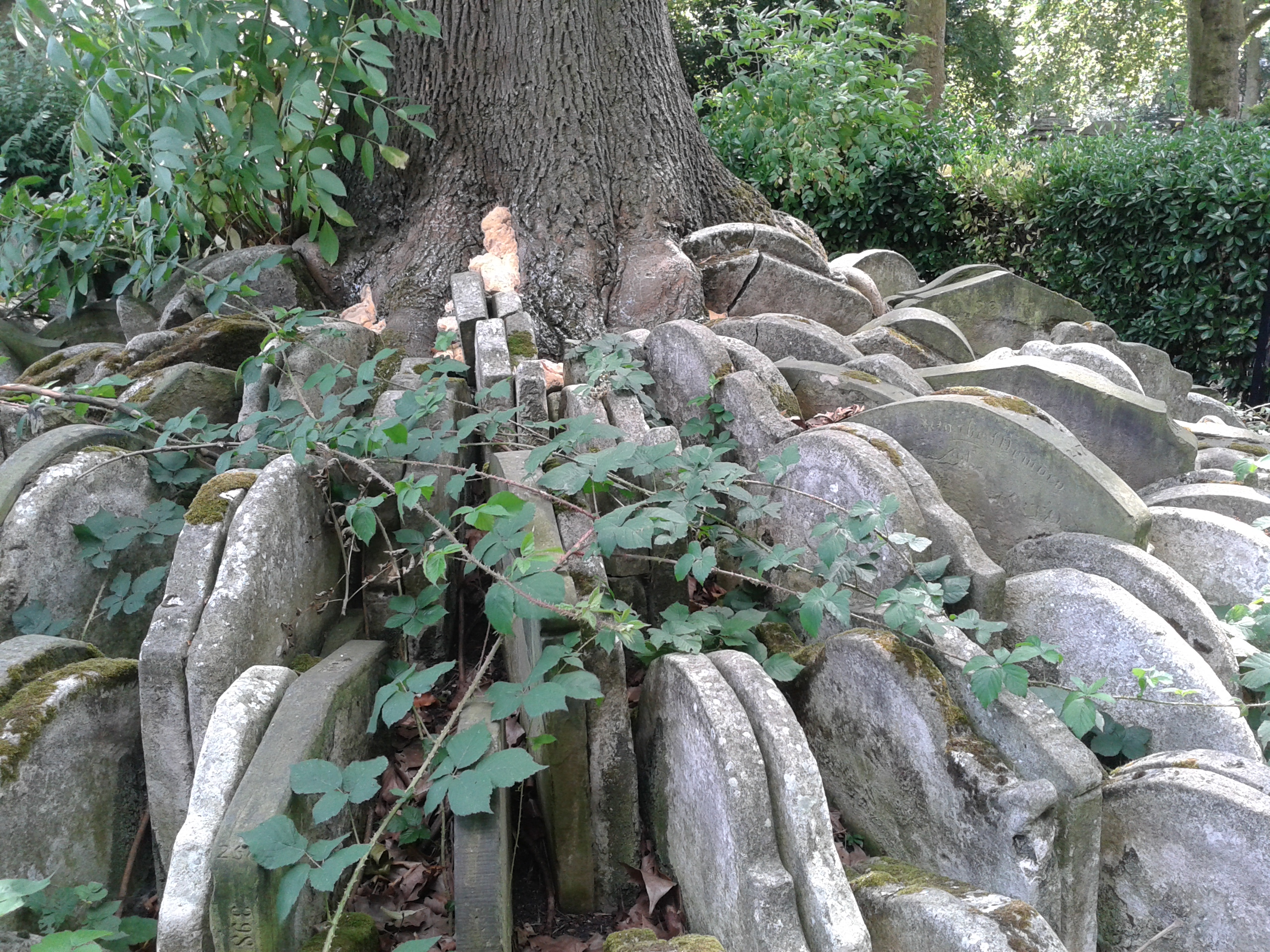
The churchyard is a green oasis in this part of London and we looked at the Thomas Hardy gravestones, which are being slowly absorbed by the bole of an impressive ash tree:
 Fleet photo 5
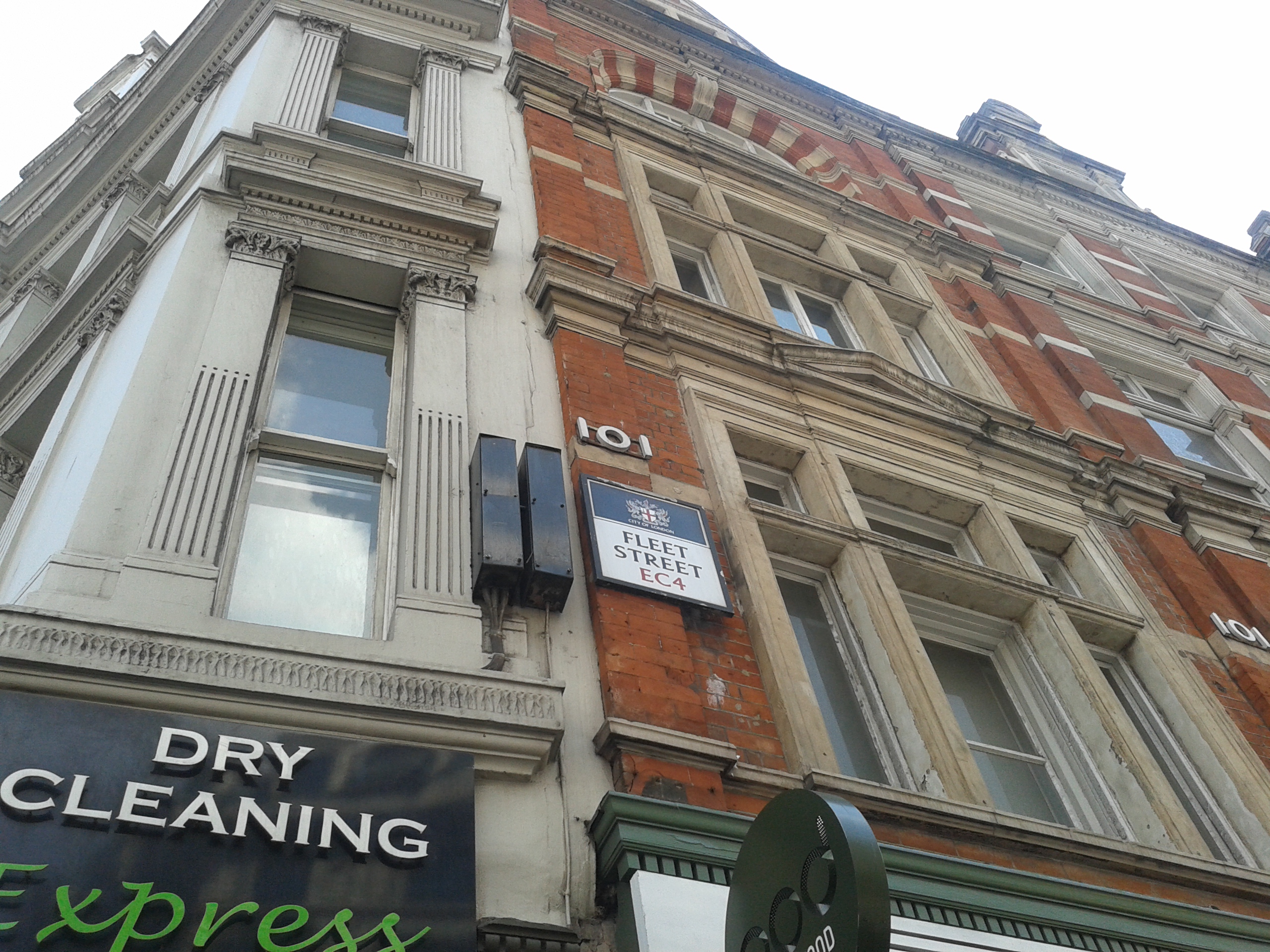
We continued through St Pancras, where the river runs under the attractively refurbished railway station (a huge contrast to the horrors of Birmingham New Street), and on to Holborn, past Fleet Street (of course)…..
Fleet photo 3
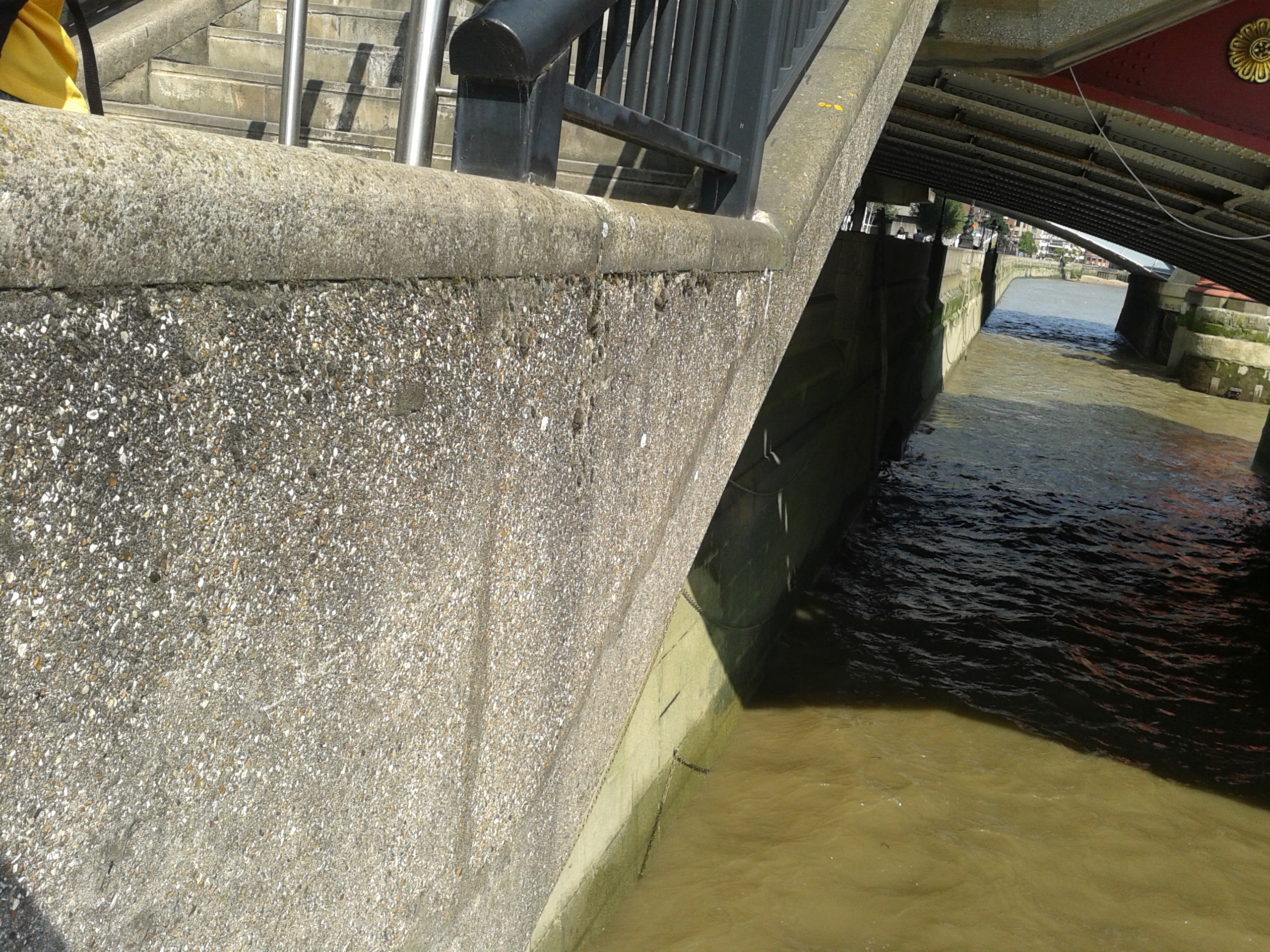
 ….to our final destination at Blackfriars.  All the while we were following subtle changes in the geography of the urban landscape, often obvious only to a physical geographer such as Ian, because the river is wholly covered and has been confined to pipes and sewers.  The Fleet emerges into the Thames beneath Blackfriars Bridge where it is visible at low tide, part-hidden in the shadows of this image which could only be taken by hanging precariously over the river (where I also ticked herring gull):
Fleet photo 2
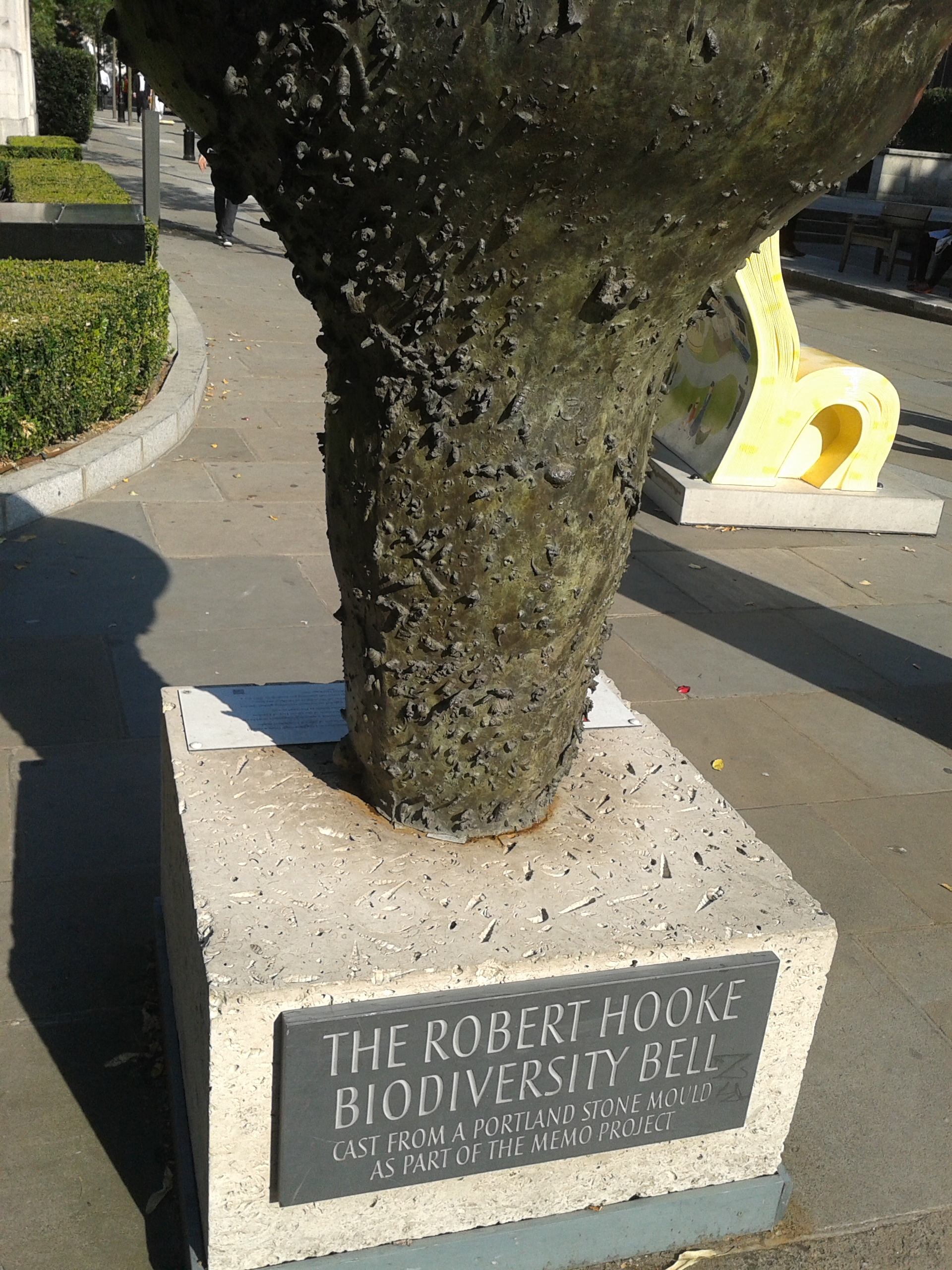
When ecologists think about the environmental changes associated with “urbanisation” we’re often considering processes that are modest in scale and impact, perhaps the building of a new housing development on what was once farmland.  Sometimes such urbanisation can have positive effects for biodiversity, for example gardens increasing local populations of birds and beneficial insects such as pollinators.  But in the case of metropolises like London, the effect of urban development has been to wholly remodel the physical geography of the landscape, covering or filling in features such as open rivers, ponds and valleys that would once have harboured wildlife, replacing them with stone and steel and concrete, and the occasional London Plane tree to provide shade on a hot day.  Restoring these culverted rivers has become an important focus for research and action.  While doing some reading for this post I came across Adam Broadhead’s blog about Sheffield’s rivers and the work he is doing on “daylighting” water courses that have been hidden.  It’s exciting stuff and has great potential for both urban biodiversity and the quality of life of city dwellers.On the way back to the tube station we passed through the surrounding gardens of St Paul’s Cathedral and encountered the Robert Hooke Biodiversity Bell:

Fleet photo 1
This is part of the Mass Extinction Monitoring Observatory project and marked a fitting end to our trip, a reminder of the populations of organisms that were displaced as the River Fleet was first polluted then enclosed.  Perhaps opening up the Fleet and regaining this biodiversity is too much of a task in a city with some of the highest real estate prices in the world, but as I’ve said before, we can always dream a river.The final total of birds for the day was a paltry 14* – how many might it have been if the Fleet was still a visible, viable water course?

*carrion crow, woodpigeon, robin, coot, mallard, feral pigeon, black-headed gull, mute swan, tufted duck, magpie, swift, Canada goose, herring gull.

How do we value nature? Costanza, Monbiot and the clash of concepts

2012-05-31 13.57.26

Is nature something that we should simply value for its own sake?  Or should we take account of how nature supports our society and our economy in real financial terms?  Back in 1997 Australian academic Robert Costanza and colleagues published a now classic paper in the journal Nature called “The value of the world’s ecosystem services and natural capital” that proved to be hugely influential and has been cited more than 3,500 times by other researchers in ecology, conservation, and ecological economics.  Soon after publication I began to use the paper in some of my classes, asking students how they felt about putting a monetary ($) value on how nature supports ecosystem services such as soil formation, pollination, carbon storage, climate regulation, etc.  Opinions were mixed, reflecting the fact that economic valuation of nature is controversial in theory, difficult to do in practice, and results in vast estimations of the “worth” of nature that seem to be fantastical.  The Costanza et al. study, for example, suggested that ecosystem services were worth $33 trillion per year to the global economy, a figure almost twice as large as the Global GDP at the time!

More than a decade and a half later, Costanza has published a follow up paper that updates the figures in the 1997 paper and arrives at a global valuation of natural capital of between $125 and $145 trillion per year, depending on assumptions made about changes to the area of biomes such as temperate forest, grassland, coral reefs, etc.  This last point is critical as loss of biome area due to changes in land use from agriculture and urbanisation has resulted in an estimated loss of ecosystem services of between $4.3 and $20.2 trillion per year between 1997 and 2011.  That’s a big change and, if nothing else, gives an indication of how we are altering the face of the planet at an ever faster rate, something I will come back to later in this post.

In this new paper Costanza and colleagues have also responded to some of the criticisms of the earlier work, particularly by journalist and activist George Monbiot who, as I’ve previously discussed on this blog, has a genuine, but I feel misguided, aversion to the whole notion of ecosystem services and natural capital. Monbiot’s been repeating these criticisms in a lecture, a video and text of which is available on the Guardian website.  I won’t go into a detailed discussion of his position, some of which I agree with, but I do believe that his major criticisms fail on two points.

The first is that Monbiot mixes up some very different concepts, bundling ecosystem services (a reasonable way of thinking about nature in relation to society) with biodiversity offsetting (a load of bollocks), green infrastructure (the importance of green space to urban development), carbon trading (dubious in theory and practice), and payments for ecosystem services (PES) schemes (which can work on a regional scale, as in the case of South West Water’s upland catchments project), as if they were all the same thing, which they are not.  In the Nene Valley NIA Project, for example, we are using an ecosystem services approach and are trying to develop a PES, but are wholly against biodiversity offsetting.

The second is that Monbiot sees all of this as some kind of neoliberal agenda to sell off the natural world to the highest bidder.  That’s really not the case and ecosystem services are being promoted as a concept by conservationists, NGOs and scientists whose motivation is saving the natural world, not selling it.  As Costanza et al. (2014) rightly state: “It is a misconception to assume that valuing ecosystem services in monetary units is the same as privatizing them or commodifying them for trade in private markets”

In his lecture Monbiot uses the classic rhetorician’s device of using partial quotes to support his point.  For example he quotes Dieter Helm as saying that:

“The environment is part of the economy and needs to be properly integrated into it so that growth opportunities will not be missed”.

Sounds bad, I agree.  But the full quote actually gives a very different and more profoundly “green” message:

“Over the coming decades, there will be a major programme to develop the UK’s infrastructure. The National Infrastructure Plan 2013 sets out ambitious plans – for new railways, roads, airport expansions, energy systems, water resources, sewerage investments, flood defences and a major increase in house building …….. In taking forward this major investment, it is important not to lose sight of natural infrastructure and the integral part that natural capital plays in delivering sustainable economic growth. …… the environment is part of the economy and needs to be properly integrated into it so that growth opportunities will not be missed.  Integrating the environment into the economy is hampered by the almost complete absence of proper accounting for natural assets. What is not measured is usually ignored.”

Monbiot does make some good points in relation to how power can trump any environmental monetary valuation, and how political influence works, but his solution of “mobilisation”, is most effective at a relatively small scale, for example the defeat of Derby Council over plans to develop a nature reserve.  Mobilisation by passionate environmentalists has failed to protect large swathes of Brazil’s natural environment, but arguments about the link between vegetation and rainfall, underscored by financial assessments of agricultural crop reductions, just might.

What is interesting about the lecture (which I encourage you to watch, Monbiot is a great speaker and it’s more entertaining than the transcript) is that not one of the audience questions afterwards actually dealt with the main topic of the lecture, namely the pricing of nature.  Is that because he won over the audience completely with his arguments?  Or is it because the ecosystem services approach to nature conservation is too recent a concept for its technicalities to have embedded themselves within public consciousness, and a general audience such as this might not feel confident enough to make challenging comments?  I suspect the latter because whenever I give public lectures to gardening and wildlife groups, for instance, I always ask who has heard of “ecosystem services”, and invariably it’s a minority of the audience.

If Monbiot was correct and it’s possible to sell off natural capital in the way he describes, then we would expect the coalition UK government, for one, as well as big business, to buy into the concept wholeheartedly and to invest much more than they currently do in order to make a quick buck out of biodiversity.  But they aren’t, and in fact this government has a track record that shows it has only the most cursory of interests in the UK’s natural ecosystems, and is willing to ignore scientific evidence to placate special interest groups who happen to be Conservative Party supporters (witness the recent badger cull debacle and the lack of action over illegal activity on grouse moors).

This is no doubt a debate that will continue but time is running out for the natural world and we don’t have many options: in Table 3 of Costanza et al. (2014) the authors present worrying data on how some biomes have greatly reduced in area since 1997 (e.g. coral reefs, wetlands) whilst croplands and urban settlement has increased.  That can’t go on: the natural world is too valuable, in all senses of that world, to lose, something I’m sure George Monbiot would agree with even if he doesn’t believe that monetary valuation is the way to do it.

 

7 minutes is a long time in science, 7 goals is a big win in football (BES Macroecology meeting day 2)

Grey heron in Nottingham

Day 1 of the British Ecological Society Macroecology Special Interest Group ended with a drinks reception, kindly bankrolled by the International Biogeography Society, and a stark choice: dinner in a pub with good food and no television on which to watch the Brazil v Germany World Cup semi-final; or dinner in a pub with crappy food but a television.

The split amongst meeting delegates was about 50-50.  As I get older I’m being drawn to things in which I previously had only a passing interest, amongst them bird watching and football.  So I opted for the latter, and was one of only two Brazil supporters in the whole pub, the other being our guest speaker Cathy Graham, largely because we both have more Brazilian than German friends and colleagues. We were rewarded with one of the most excruciatingly clinical dissections of a major international football team that I’ve ever witnessed.  And the food was indeed crappy, but the lager was cold and plentiful.

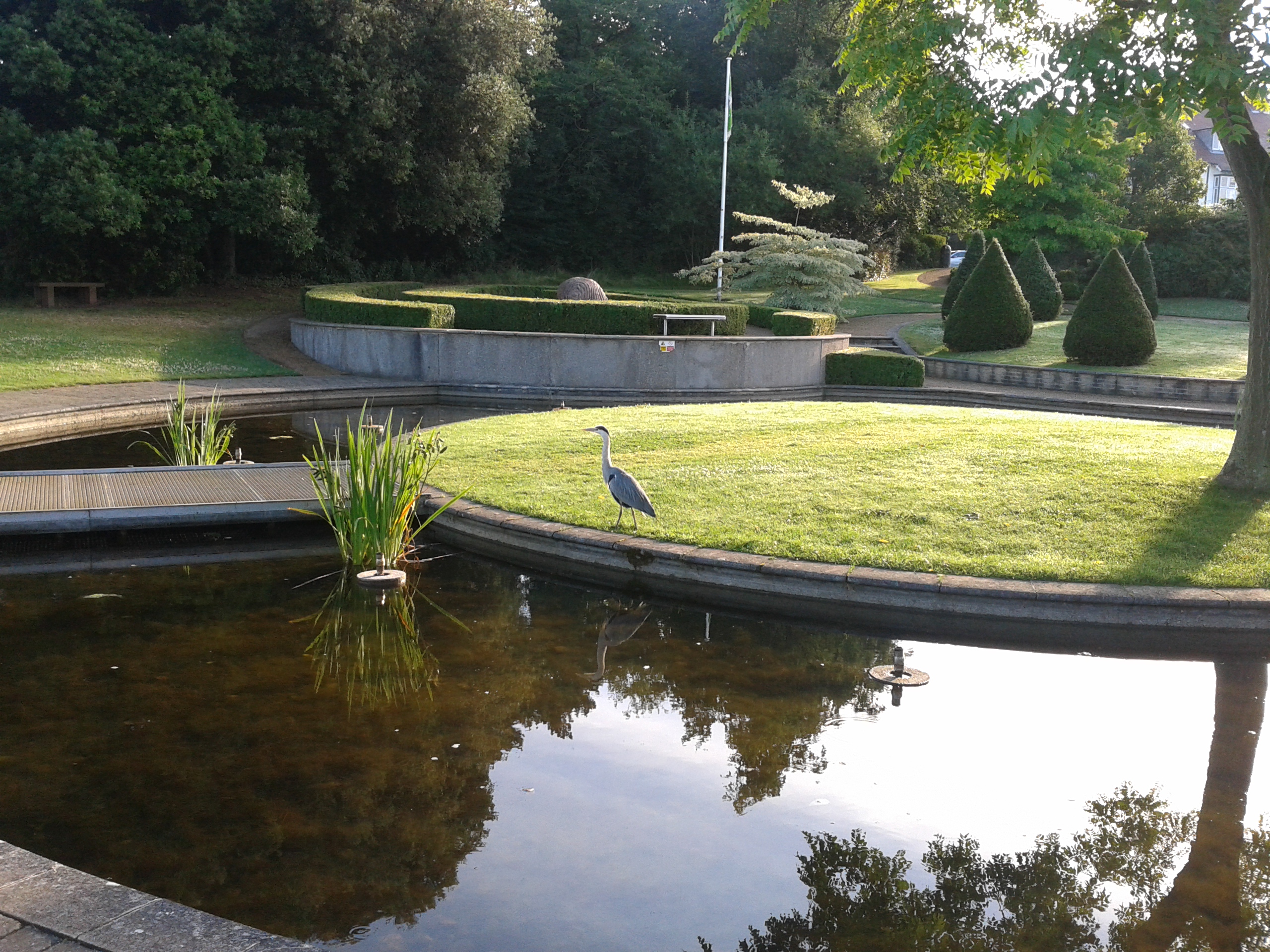
The next morning, impelled by an uncomfortable mattress on a steel-framed bed in one of the student halls of residence, I woke early enough to do a little bird watching around the University of Nottingham’s Park Campus, which is not unlike the University of Northampton’s Park Campus, except much larger.  There was a modest diversity of birds flying and calling, the highlight being a large grey heron patrolling the edge of a circular pond.  As there were no fish in the pond it seemed to be mainly eating the slugs crawling on the adjacent lawn.  Not a behaviour I’ve ever seen before, though this year’s BBC Springwatch showed footage of parent tawny owls bringing back large slugs for their chick, so perhaps it’s more common than we realise.

Following a mediocre breakfast and disgusting coffee, it was time for the first lecture of the day, the second keynote by Cathy Graham.  Once again she focussed on her hummingbird research and presented some fascinating unpublished data on the structure of bird assemblages along an altitudinal gradient in Ecuador.  Cathy’s team has been using cheap digital cameras which take one frame a second to amass data on infrequently visited rainforest flowers, an approach that trades off time and space: it’s possible to get a long set of data, but for only a limited number of plant species and individuals.

After coffee there were papers by Katie Leach on her PhD work on competition between co-occurring species of Lagomorpha (rabbits, hares, pikas, etc.) and from Richard Field on altitudinal effects on the endemism of plants which chimed with my experiences in Tenerife.  Both of these neatly demonstrated one of the strengths of macroecology: the 21st Century tools it can marshal to use secondary data for understanding ecological patterns and processes at very large spatial scales.

But secondary data can also be a weakness of the field if the quality is poor and it is limited in scope.  This was the subject later in the day of a polemical lecture by Shai Meiri entitled “Laziness in macroecology: a crime and no punishment” that railed against researchers who sometimes fail to augment ready-made data sets with even the most rudimentary of additional data.  My favourite of Shai’s examples was a study which had used a mammalian ecology data set in which the diet of anteaters was coded as “unknown”!  The tee-shirt Shai wore during his often very funny rant read: “If you are not outraged, you were not paying attention” and there was plenty for the audience to feel outraged about, not least his suggestion that we “ban taxonomy” and (even more controversially) get away from our computer screens and into the libraries to source information to fill in the gaps in data sets.

I’d go further and say that some field work would not go amiss as well!  In comparison with using ever more sophisticated analyses, developing better software, and building ever more complex models, collecting field data seems to be low on the list of priorities for many macroecologists, particularly some of the PhD students. Not all of them by any means, and hopefully Cathy Graham’s talks will have inspired them to get into the field, but it strikes me as a trend.  That’s worrying on many levels, and good data are hard won, but then I’m an old-fashioned, muddy boots kind of ecologist who realises that our knowledge of biodiversity is built up from a very small set of data in comparison to what we don’t know: we’ve scratched the surface of the tip of the iceberg as a colleague used to say.

In the afternoon there was an unscheduled talk by Olivia Norfolk on the biodiversity of plants and pollinators of Bedouin gardens in the mountains of Sinai, which included a lot of field data.  This was followed by a second set of seven minute “lightning talks”.  I was third on a diverse bill, sandwiched within research on amphibians, Tyrannosaurus rex, North American lizards and microbial communities.  Seven minutes passes quickly and I overran slightly, but hopefully managed to convey the gist of our work on the relative frequency of wind versus animal pollination across the globe.  No one threw missiles at least and there were a couple of good questions that probed the scope and limitations of the current data, but were nowhere near as challenging as the questions in Copenhagen (though I’d had much more time for that lecture).

Following a hasty set of goodbyes I headed to Nottingham station to catch the 1810 back home, once again via the desolation of Birmingham New Street.  Reflecting on the meeting on the way to Northampton I was struck by the fact that of the forty-odd attending, I was the oldest delegate by some margin, which was even more sobering than Brazil’s loss to Germany.  I consoled myself with a bit of “train spotting” (identifying as many bird species as possible through the windows of the train), and ended up with a respectable 21 species* during the two hours or so of travel.

Thanks to the organising committee of the BES Macroecology SIG, and especially to Adam Algar and his team in Nottingham, for a great meeting.  I look forward to next year’s in Copenhagen.


*Blackbird, buzzard, swift, house martin, tufted duck, mute swan, mallard, jay, goldfinch, collared dove, wood pigeon, feral pigeon, starling, crow, magpie, grey heron, Canada goose, common tern, back-headed gull, common gull, pheasant, (22 if you count chickens in a run).

20140709_070038

Rational explanations

P1110810

It has been a week for rational explanations, for assessing evidence in a logical way, a subject on which I have posted in the past and which goes to the heart of the scientific endeavour.

There was a lot of media attention about a study published in PNAS that claimed to show that hurricanes with female names (Katrina, Sandy, etc.) cause more damage than those with male names, because (to quote the abstract of the study) “hurricane names lead to gender-based expectations about severity and this, in turn, guides respondents’ preparedness to take protective action”.  In other words, people take feminine words less seriously than masculine words.  Is that true?  Are people really that socially attuned to gender-specific language?  Turns out that the original study may have made too many assumptions with regards to data and the statistical model they used, according to a re-analysis by Bob O’Hara and GrrlScientist on the Guardian science pages.  However in a further twist, a re-analysis of the re-analysis by Florian Hartig on the Theoretical Ecology blog found some (although very, very weak) support for a gender effect.  Florian makes an interesting point, however, that “the authors would have probably found it much more challenging to place this study in [a top science journal such as] PNAS if they would have done a more careful and conservative statistical analysis”.  In other words, science is certainly not immune to the effects of hyperbole and controversial findings.

Speaking of “hyperbole and controversial findings”, Richard Dawkins made headlines by apparently suggesting that reading fairy tales to children is not in their best interest: “Is it a good thing to go along with the fantasies of childhood, magical as they are? Or should we be fostering a spirit of scepticism?” Not surprisingly there was a big backlash against Dawkins who clarified his views on Twitter (!) and claimed they had been taken out of context. Perhaps so, but he has a track record of increasingly controversial views that he surely knows will raise his profile.  But then he’s an author with books to sell, who long ago gave up being a practising scientist by not publishing any peer-reviewed papers in science journals for over 30 years.  Dawkins’ role at Oxford was as Professor for Public Understanding of Science and unfortunately he gives the impression that scientists are all about rational thought and logical arguments in every facet of their lives. Which we’re not, I can assure you: I possess a whole raft of personal, irrational idiosyncrasies, including sending a little prayer to the Gods of Science every time I submit a new manuscript to a journal.  Which they often ignore, the f**kers.

There was also an odd quote from Dawkins in relation to the logic of fairy tales, that there is “a very interesting reason why a prince could not turn into a frog – it’s statistically too improbable”.  Nope, it’s not statistically improbable – it’s biologically impossible!  “Statistically too improbable” suggests that it could happen, given enough time.  Not sure that this helps with public understanding of science….

Something which is statistically improbable, but which does happen occasionally, is finding new fossils which make us rethink our understanding of the biodiversity of species interactions.  Such a find was published recently in the journal Biology Letters:  a 47 million year old fossil bird of a previously undescribed group that provides the earliest evidence of flower feeding, and possibly pollination by a birds.  The evidence in this case is the presence of pollen grains preserved in the gut area of the fossil, which could also represent flower eating (a range of birds do this, for example bullfinches) rather than nectar feeding and legitimate pollination.  Nonetheless it’s a stunning find and links nicely with a February post of mine.

Another new discovery this week, for me at least, was that (contrary to rumours, errr, started by me….) Dr Georges Aad does indeed exist.  Apologies to him, though it was fun while it lasted.

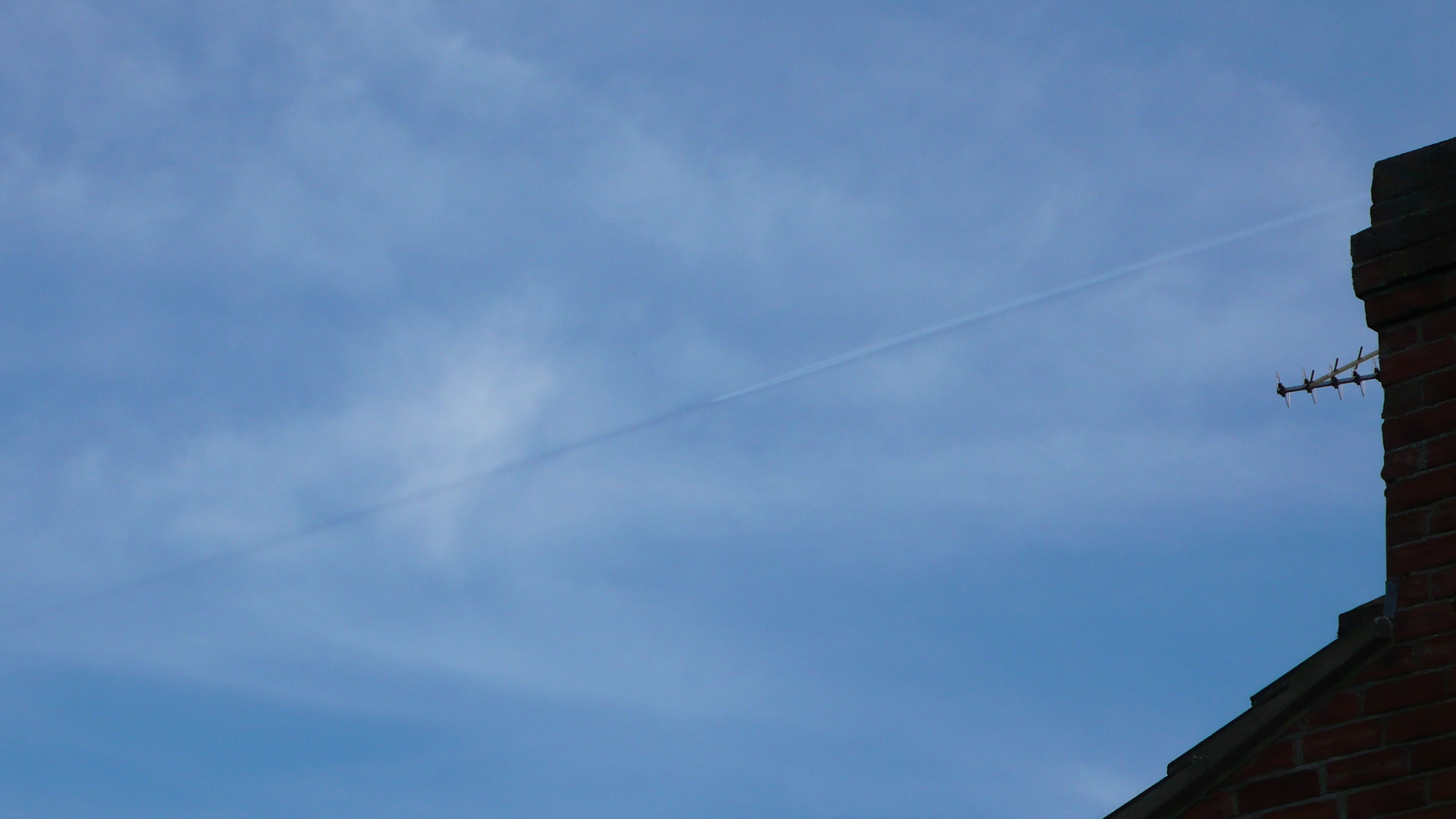
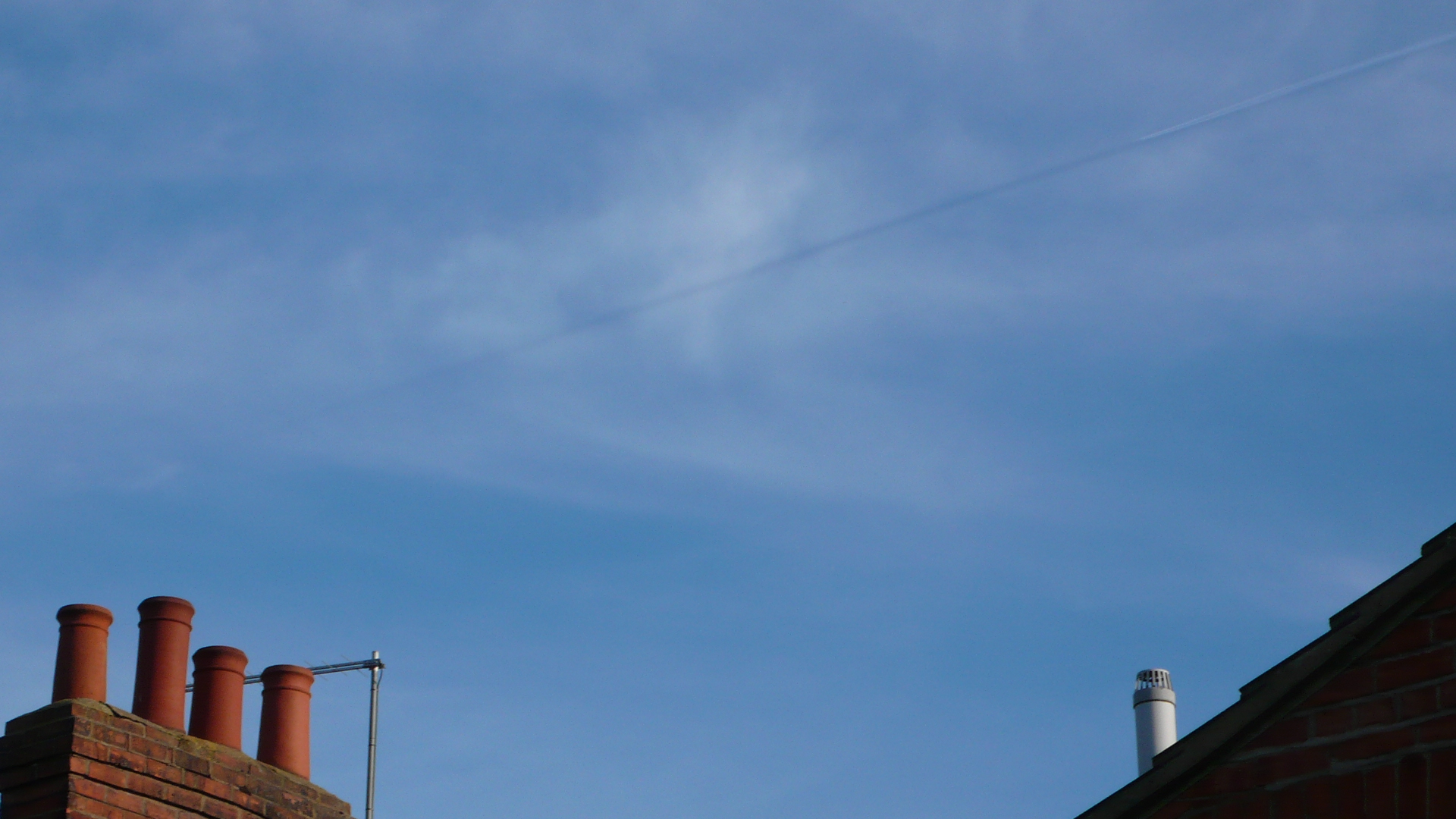
Finally to the intriguing photos that grace the start and end of this post.  I took these from the garden a couple of evenings ago. It shows a plane apparently flying into a dark tunnel that stretches out ahead of it (click on the images for a better view).  We watched the plane for several minutes and the “tunnel” appeared to be moving ahead of the plane as it travelled across the sky.  Karin had a plausible explanation, that what we were seeing was the shadow of the contrail because of its position relative to the low angle of the setting sun.  This was confirmed by a web site showing other examples of this phenomenon, which apparently is not uncommon, though judging from the comments on the site, some people prefer US government covert chemical spraying as a rational explanation.  Evidence and data will always be open to interpretation.


P1110809