Tag Archives: Holly

“Arches of evergreen that scarce let through, A single feather of the driving storm” – how evergreen trees alter local microclimate

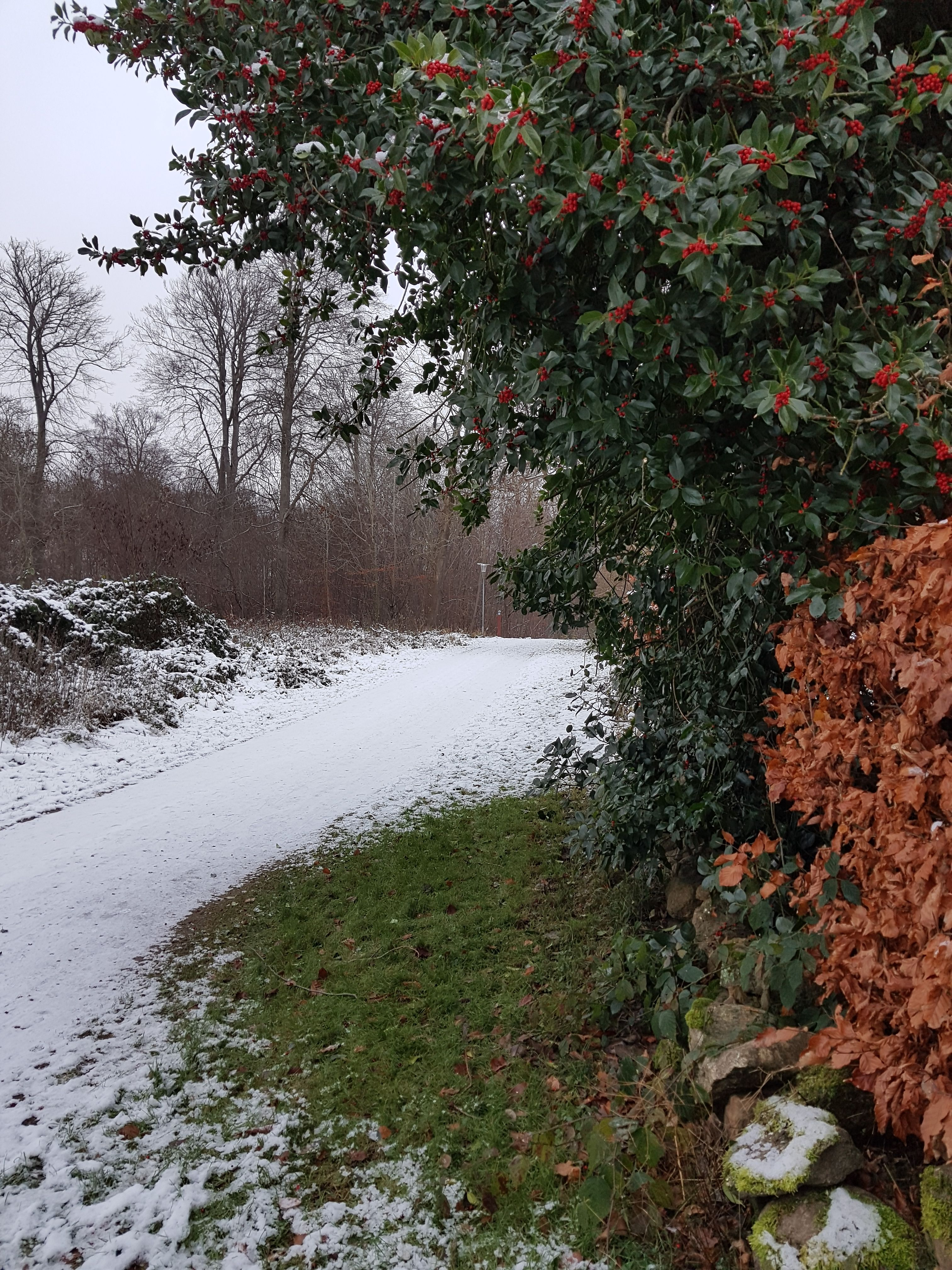
Yesterday, Karin and I took a winter walk through one of the local woodlands, our feet crunching on the iced-over crust which is all that remains of last week’s snowfall. No doubt more snow is on its way as we approach the deepest part of winter here in Denmark. But seeing this holly tree reminded us that some parts of the woodland might remain snow-free no matter what the conditions.

Although I’m no meteorologist (and any who are reading this can correct me if I’m wrong), I suspect that two things are going on here. Firstly, the tree is sheltering the ground and reducing the amount of snow that falls below it. That umbrella effect is fairly obvious. But secondly, and more subtly, the small amount of warmth that there is in the soil is being prevented from radiating off into space by the presence of the holly leaves. So the warmer soil and surface layer of vegetation melts any snow that manages to make it through or under the holly’s canopy.

In both of these ways, the evergreen holly is affecting the microclimate of this part of the woodland. That in turn adds to the ecological heterogeneity of the habitat, proving greater access to food for animals, affecting the phenology of the ground flora, reducing local soil moisture, and so forth. All of these, in turn, will potentially lead to greater diversity of species with the local area.

On this blog and in my book Pollinators & Pollination: Nature and Society I’ve often written about evergreen trees, shrubs and climbers such as ivy, holly and mistletoe, including both their cultural associations (especially with Christmas) and their ecological importance. As so often is the case, the English poet John Clare thought about all of this two centuries ago. The quote I used in the title of this post is from his poem Winter Walk:

The holly bush, a sober lump of green,
Shines through the leafless shrubs all brown and grey,
And smiles at winter be it e’er so keen
With all the leafy luxury of May.
And O it is delicious, when the day
In winter’s loaded garment keenly blows
And turns her back on sudden falling snows,
To go where gravel pathways creep between
Arches of evergreen that scarce let through
A single feather of the driving storm;
And in the bitterest day that ever blew
The walk will find some places still and warm
Where dead leaves rustle sweet and give alarm
To little birds that flirt and start away

John Clare (1793-1864)

This might be my last post of the year, and so it only remains for me to wish a Glædelig Jul and Merry Christmas to all of my readers!
Insect pollinators boost the market price of holly and mistletoe: a new study just published

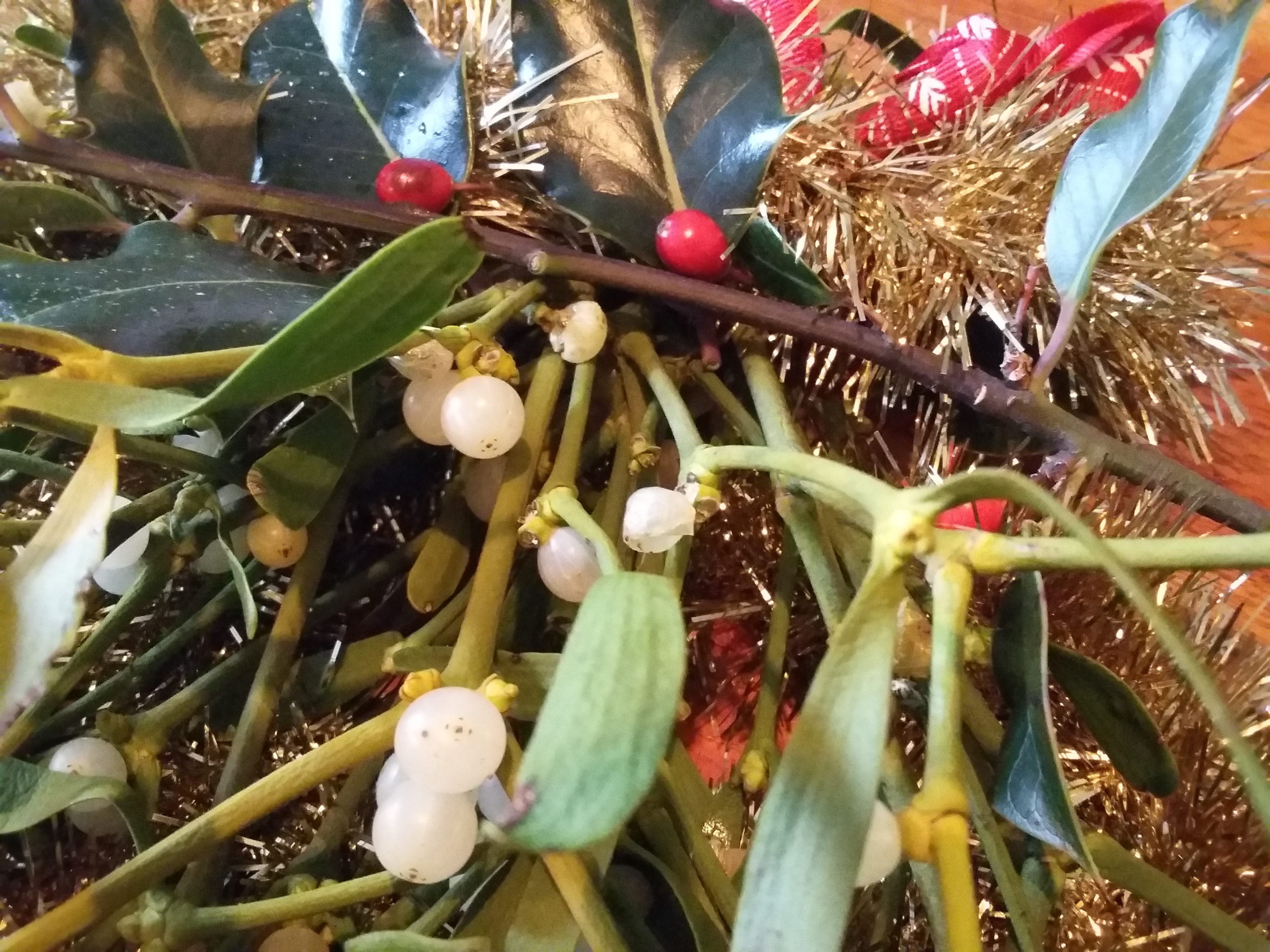
Holly and mistletoe 20161211_103252.png

Each year I’ve always added at least one Christmas-themed biodiversity post to the blog, for example: Thank the insects for Christmas, A Christmas vignette, and Six Kingdoms for Christmas.  That’s partly because I really like Christmas as a winter festival, with its folklore and customs.  But it’s also because these are a great vehicle to demonstrate how pervasive and important is natural capital and the ecosystem services it provides to society.

This year I’ve gone one stage further and actually published some Christmassy research to back up the blog post.  Now, in a new study published in the Journal of Pollination Ecology, we have shown how important insect pollinators are in determining the market value of two of the most emblematic of Christmas plants: holly (Ilex aquifolium) and mistletoe (Viscum album).  Here’s the full reference with a link to the paper itself, which is open access:

Ollerton, J., Rouquette, J.R. & Breeze, T.D. (2016) Insect pollinators boost the market price of culturally important crops: holly, mistletoe and the spirit of Christmas. Journal of Pollination Ecology 19: 93-97

Holly and mistletoe are two seasonal crops that play a culturally important role as symbols of Christmas across the world, though both also have pre-Christian pagan roots. Now for the first time the role of insect pollinators in determining the commercial value of these plants has been investigated, using sales records going back over the last eleven years from Britain’s largest annual auction of holly and mistletoe, held every year in Worcestershire.

Analysis of the sales records of Nick Champion Auctions in Tenbury Wells shows that insect pollination raises the sale price of these crops by on average two to three times. This is because holly and mistletoe with berries is more sought after than material without berries, with wholesale buyers paying higher prices at auction. These berries in turn are the result of pollination by insects such as flies and bees: both holly and mistletoe are 100% dependent on insect pollination due to their having separate male and female plants.

There is some annual variation to the prices, and in years where berries are scarce (possibly due to low insect numbers) the price difference can be four-fold.

Due to concerns about pollinator declines and food security there is huge interest in the role of bees and other insects in supporting agriculture, and how we can value that role. However we believe that this is the first study showing that insect pollinators play a large part in determining the value of culturally symbolic, non-food crops. Almost all of the economic valuations of insect pollination to agriculture have focused on food crops such as beans, apples, cocoa, coffee, and so forth. Very little is known about how the value of non-food crops (fibres, construction materials, pharmaceuticals, ornamentals, etc.) is enhanced by insect pollination. This is an area where much more research is required.

But in the mean time, where better to end than with a bit of seasonal John Clare?

The shepherd, now no more afraid,
Since custom doth the chance bestow,
Starts up to kiss the giggling maid
Beneath the branch of mistletoe
That ‘neath each cottage beam is seen,
With pearl-like berries shining gay;
The shadow still of what hath been,
Which fashion yearly fades away.

The Shepherd’s Calendar (1827)