Tag Archives: cities

Plant–bee interactions and resource utilisation in an urban landscape: a new study just published

Within the last decade there’s been a growing awareness of the importance of urban environments for supporting populations of pollinators, especially bees. Indeed, I devoted a whole chapter of my book Pollinators & Pollination: Nature and Society to the topic, though even then I was only able to scratch the surface of the research that’s been done. Since then there’s been some important studies published and this 2020 review by Kath Baldock provides a good starting point for the topic, whilst a recent pre-print by Pietro Maruyama and colleagues emphasises how little we know about pollinators in tropical cities.

One of the most detailed studies of urban solitary bees in a British town was conducted by Muzafar Sirohi when he was a PhD researcher in my department in Northampton. The first paper from that work, documenting the diversity and abundance of bees, came out in 2015, but since then commitments to other projects, plus Muzafar’s return to his university in Pakistan, have meant that we’ve struggled to find the time to publish more. Hopefully that’s changing and the second publication from Muzafar’s thesis is now out, with a third in progress.

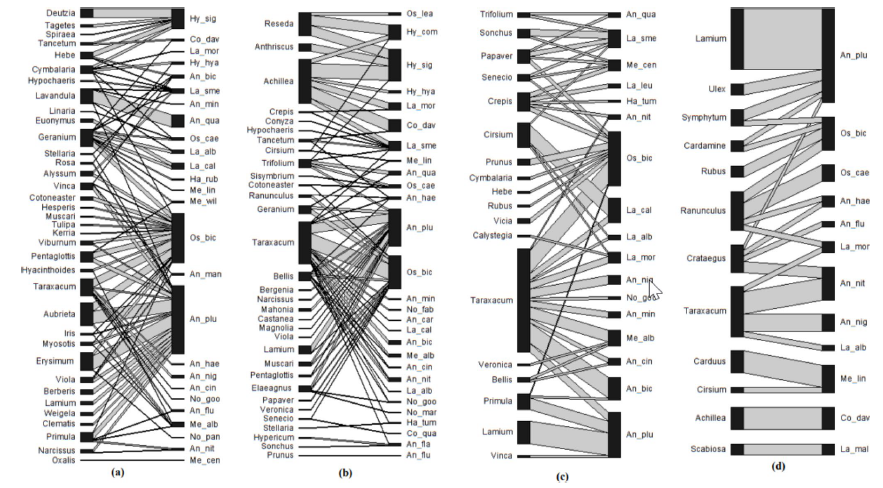
This new paper uses a network approach to study the use of flowers by these bees; here’s the reference with a link to a read-only copy of the paper, followed by the abstract.

Sirohi, M.H., Jackson, J. & Ollerton, J. (2022) Plant–bee interactions and resource utilisation in an urban landscape. Urban Ecosystems https://doi.org/10.1007/s11252-022-01290-z

Abstract:

Biodiversity is declining through human activities and urbanisation is often seen as a particular concern. Urban settings, however, provide diverse microclimatic conditions for plants and pollinating insects, and therefore may be significant habitats for the conservation of solitary and primitively eusocial bees, a major group of pollinators. This study analysed the interactions between these bees and the plants on which they forage, using a network approach. We compared urban habitats (gardens, roadsides, and open vegetation) in a large British town with nearby nature reserves. One native plant Taraxacum officinale (dandelion) was a core generalist species visited in all habitat types. Other core plant species restricted to particular habitats include species of Geranium, Bellis, Crepis, and Ranunculus. Two generalist bee species, Anthophora plumipes and Osmia bicornis were the core visitor species within the networks. The networks were comparatively more nested in urban habitat types than nature areas, suggesting more frequent interactions between generalist and specialist species in urban areas. Network connectance, network level specialisation (H2’ index), and plant generality (network level) were not significantly different in urban and nature areas. However, visitor generality was found to be significantly higher in urban gardens than in nature areas. Careful management of common urban vegetation would be beneficial for supporting urban wild pollinators.
Urban areas as a refuge for insect pollinators: conservation for the city

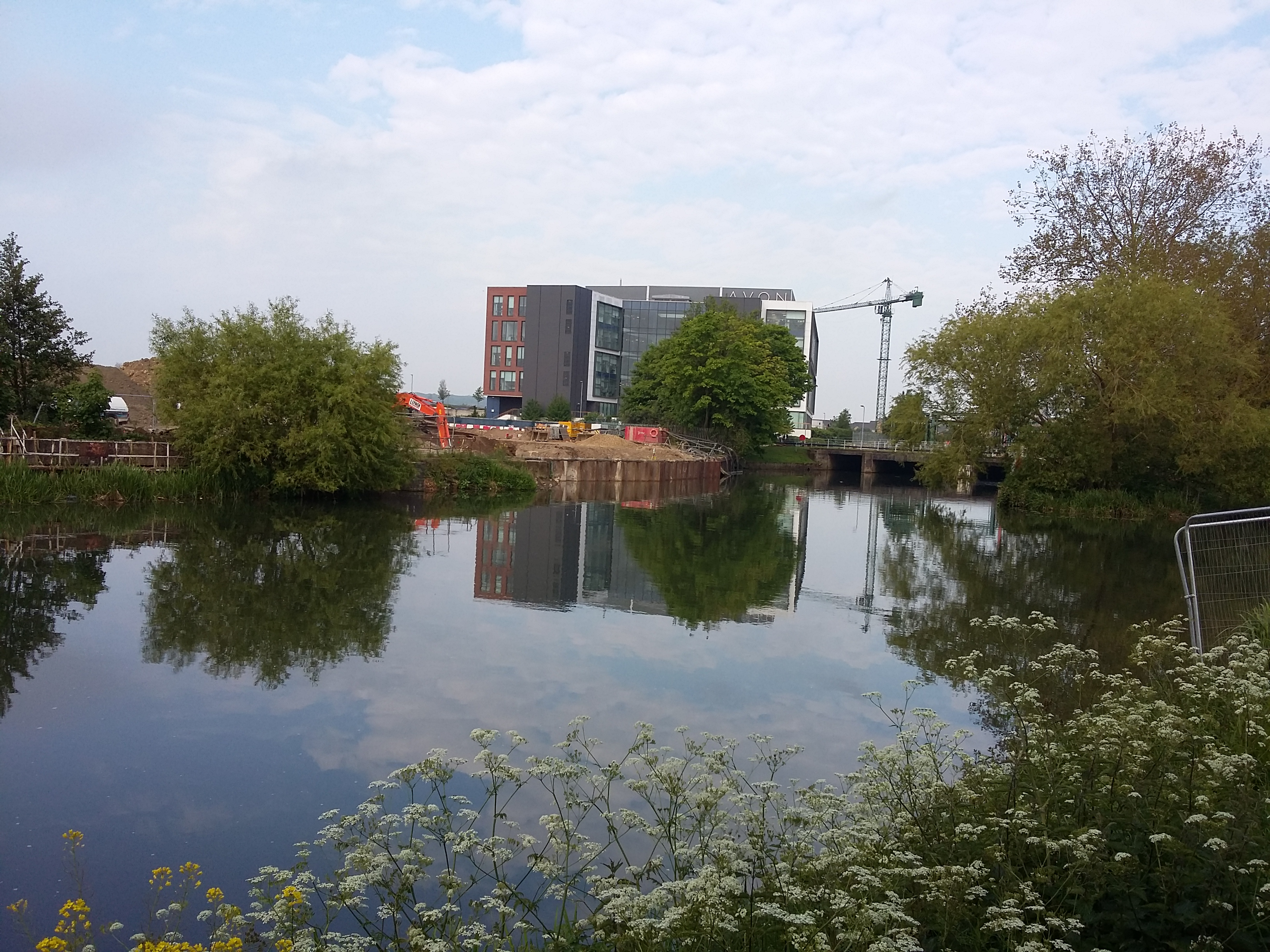
Waterside - 20160527_081706.png

Urban conservation ecology is a fast growing field that has mainly focused on how towns and cities can support populations of plants, animals and fungi that may be declining or threatened in the surrounding rural environment.  That is, the city for wildlife conservation.  In a new essay in the journal Conservation Biology, written with colleagues from across the world, we argue that conservation for the city (an idea originally conceived, I believe, by Steward Pickett) should also be a focus of future research and management activities.

Conservation, or ecology, for the city in essence means that plants, animals and fungi, as well as being supported by the city (see our recent urban bees example), play a role in supporting the city itself through the provision of ecosystem services such as decomposition, flood alleviation, and crop pollination.

It’s pollinators and pollination that we particualrly focus on in this essay – here’s the abstract:

Urban ecology research is changing how we view the biological value and ecological importance of cities. Lagging behind this revised image of the city are natural resource management agencies’ urban conservation programs that historically have invested in education and outreach rather than programs designed to achieve high-priority species conservation results. This essay synthesizes research on urban bee species diversity and abundance to suggest how urban conservation can be repositioned to better align with a newly unfolding image of urban landscapes. We argue that pollinators put high-priority and high-impact urban conservation within reach. In a rapidly urbanizing world, transforming how environmental managers view the city can improve citizen engagement while exploring more sustainable practices of urbanization.

I’m happy to send the PDF to anyone who wants a copy; here’s the full citation:


Urban Pollinator Knowledge Exchange summary – Bristol 22nd February

P1110838The importance of urban environments for supporting pollinator populations is a topic that I’ve covered several times on the blog, for example: “Urban pollinators for urban agriculture” and “Urban bee diversity – a new study“.  It’s a subject that’s generating a lot of interest at the moment with some really exciting research being published and conservation practice taking place.  However there’s clearly a lot to do if we are really to understand where pollinators are distributed across out townscapes, and how we can best manage urban habitats to support this diversity and increase their numbers – here’s a link to an interesting round table discussion on this very topic.

Recently I was invited to take part in a workshop event co-organised by Defra, NERC, and Dr Kath Baldock from Bristol University entitled: Knowledge Exchange: urban grassland management and creating space for pollinators.  As well as doing a short talk which contextualised the current scientific knowledge on urban pollinators, I facilitated one of the breakout discussion sessions.

The workshop was very well attended with some 50 delegates from a wide range of organisations, including local and national authorities, businesses, NGOs, and universities.  Feedback from those delegates was generally positive and most people learned something about managing urban settings for pollinators, and made some useful connections.  I certainly learned a lot: it’s good to get out of academia sometimes and talk with practitioners.

If you follow this link you’ll find a PDF of the summary from the facilitated sessions, covering topics such as grassland and verge management, the urban edgeland, innovative projects, and green infrastructure.

Over at the Bumblebee Conservation Trust’s blog, Sam Page has a very nice summary of the whole day which is also worth reading:  Trials and tribulations of managing urban grasslands for pollinators.

Many thanks to all of the organisers for their work in putting on this event.

Cities and biodiversity – a new resource

LondonDecember2007013

This is by way of a re-post from the good folks over at the bio-Diverse blog.  They’ve noted that there is now  an online, interactive version of the Cities and Biodiversity Outlook report.  It’s a product of a collaboration between the UN Convention on Biological Diversity, the Stockholm Resilience Centre (SRC) and Local Governments for Sustainability (ICLEI), and was launched at the at the CBD COP in Hyderabad in 2012. There’s a video introduction narrated by actor Edward Norton and it deals with the huge increase in urbanisation that is predicted for the next few decades, together with the impacts it is likely to have on biodiversity, as well as the opportunities for nature within urban cityscapes.

It’s an interesting resource that deserves to be more widely advertised.  As more of us become city folk, these are messages to which we need to pay heed if our descendants are to have healthy and happy lives.