Category Archives: Gardens

Urban pollinators for urban agriculture (and horticulture!)

P1010430

Over the past few weeks I’ve been thinking a lot about urban pollinators, that is to say bees, hoverflies, butterflies, and other animals, living and foraging in towns and cities.  As I recounted in my recent post about the National Pollinator Strategy seminar at Westminster, Jane Memmott presented some of the first data from the Urban Pollinators Initiative which is looking very interesting.  At the same time, Muzafar Hussain has submitted the first manuscript from his PhD study of urban solitary bees in Northampton, and will hopefully be defending his thesis early next year.  More recently I was asked to examine the PhD thesis of  Rob Fowler at the University of Birmingham, whose focus has been on pollinators across an urban-rural gradient.  Rob did very well and I look forward to seeing his work published.

Interesting though all this work is, it’s largely being done outside the context of crop pollination per se, focusing mainly on the identity and abundance of these urban pollinators.  It’s timely, therefore that a study has just been published by Thebo et al. in the journal Environmental Research Letters entitled  “Global assessment of urban and peri-urban agriculture: irrigated and rainfed croplands” which gives the first comprehensive figures on the extent of agriculture in and around the world’s large towns and cities.  The paper is open-access so you can read its findings for yourself, but the main message is that urban agriculture is more extensive and important than previously assumed, and there are significant implications for food security and water resources.

The research has (justifiably) received quite a lot of publicity in the media, for example on the BBC News website, and is a great contribution to a still limited field of study.  One aspect jumped out at me though; when discussing the limitations of their methods the authors state that: “the scale and methods used……are not structured to capture very small, spatially dispersed areas of urban croplands”.  In other words, urban gardens and allotments are not included in this assessment.  In the UK at least this is a significant limitation as we know that urban fruit and vegetable growing is widespread, though as far as I’m aware there’s no published figures on the volume and value of this local horticulture of food crops.

Which brings us back to urban pollinators: a significant fraction of these crops (large-scale and local garden) requires pollination by insects.  As I reported back in July, in our own urban garden this includes at least 15 crops (strawberries, apples, greengages, cherries, blackcurrants, squashes, courgettes, blackberries, fennel, runner beans, french beans, passion fruit, tomatoes, raspberries, and radish pods).  An integrated study of urban agriculture/horticulture in the context of pollinator diversity and abundance would be a great piece of research and is long overdue.


The National Pollinator Strategy – some reflections

Moth in hand 2014-08-25 19.47.20

After many months of consultation and workshops, the National Pollinator Strategy for England has finally been released by Defra, and can be downloaded from this website.  It reflects an important, wider change in societal attitudes to nature, and specifically the ecosystem services it provides, though the strategy itself is by no means perfect.  I rather wish that it had been a UK-wide strategy, as biodiversity does not respect political boundaries, but such is a the nature of our partly-devolved political system. Wales already has an Action Plan for Pollinators and I hope that the rest of the UK follows, though a strategy for Northern Ireland would surely have to include the Republic of Ireland?

In the following sections I’ve quoted liberally from the summary section of the National Pollinator Strategy, and added a few comments and reflections of my own in italics.  As always, your views and comments would be very welcome.

The 10 year National Pollinator Strategy aims to deliver across five key areas:

1. Supporting pollinators on farmland

  • Working with farmers to support pollinators through the Common Agricultural Policy and with voluntary initiatives to provide food, shelter and nesting sites.
  • Minimising the risks for pollinators associated with the use of pesticides through best practice, including Integrated Pest Management (IPM).

Comment: at the moment many farmers are already pro-actively encouraging pollinators and other wildlife, but most are not.  Will “voluntary initiatives“, including encouraging Integrated Pest Management, be sufficient?  About 70% of the country is farmed and any wildlife conservation strategy has got to include agricultural stakeholders.  But the influence of large agro-chemical businesses should not be under-estimated.  I’ve seen figures suggesting that fields of oil seed rape in this country receive applications of up to 20 different chemicals (biocides and fertilisers) each year.  That represents a significant profit for these companies, who will not want to change the status quo.  Data showing a slow down in the rate of decline of  plants and pollinators in Great Britain, the Netherlands and Belgium may be evidence that CAP agri-environmental schemes have had a positive impact, but I’d like to see more data addressing that question (and not just for pollinators – farmland birds are doing worse than any other category of birds in the UK).

2. Supporting pollinators across towns, cities and the countryside

  • Working with large-scale landowners, and their advisers, contractors and facility managers, to promote simple changes to land management to provide food, shelter and nest sites.
  • Ensuring good practice to help pollinators through initiatives with a wide range of organisations and professional networks including managers of public and amenity spaces, utility and transport companies, brownfield site managers, local authorities, developers and planners
  • Encouraging the public to take action in their gardens, allotments, window boxes and balconies to make them pollinator-friendly or through other opportunities such as community gardening and volunteering on nature reserves.

Comment:  “simple changes to land management” can do a lot for supporting local biodiversity, even in the most unlikely, urban settings, which is the underlying philosophy behind our award-winning Biodiversity Index tool.  Quite a number of local authorities are getting the message that it’s A Good Thing to reduce the frequency of cutting amenity grasslands, both for pollinators and for budgets.  But local authorities are also taking foolish decisions with regard to developing sites that should be protected, and brownfield areas are being specifically targeted for building urban housing, despite the fact that we have long known that they are some of our best sites for pollinators.  How do we reconcile these different priorities?  Brownfield sites by their nature are transitory, early successional habitats, so perhaps local authorities should be encouraged (made?) to have a rolling stock of a minimum proportion of undeveloped brownfield sites as part of their portfolio of land holdings?  Or how about a requirement that all developed areas of brownfield land are replaced by an equivalent area of brown roofs?

3. Enhancing the response to pest and disease risks

  • Working to address pest and disease risks to honey bees whilst further improving beekeepers’ husbandry and management practices to strengthen the resilience of bee colonies.
  • Keeping under active review any evidence of pest and disease risks associated with commercially produced pollinators used for high-value crop production.

Comment:  interestingly there’s no mention of disease risks to non-managed pollinators, yet we know that honey bee diseases can be passed to bumblebees, for instance.

 Actions to support these priority areas:

4. Raising awareness of what pollinators need to survive and thrive

  • Developing and disseminating further advice to a wide range of land owners, managers and gardeners as part of Bees’ Needs.
  • Improving the sharing of knowledge and evidence between scientists, conservation practitioners and non-government organisations (NGOs) to ensure that actions taken to support pollinators are based on up-to-date evidence.

Comment: yes, dissemination of sound, evidence-based knowledge has got to be a priority.

5. Improving evidence on the status of pollinators and the service they provide

  • Developing a sustainable long-term monitoring programme so we better understand their status, the causes of any declines and where our actions will have most effect.
  • Improving our understanding of the value and benefits pollinators provide, and how resilient natural and agricultural systems are to changes in their populations.

Comment: monitoring of pollinators is a real sticking point in the strategy, as there’s still no consensus on what should be monitored, how, where, and how frequently.  This was the subject of a workshop at the Natural History Museum in London that I attended about a year ago, and there’s still much that is undecided.  I know that a partnership led by CEH Wallingford is working on this at the moment, and hopefully a scheme will be in place by next year.  Let’s see what they come up with.

In taking action across these five areas, the National Pollinator Strategy wants to achieve the following outcomes:

  • More, bigger, better, joined-up, diverse and high-quality flower-rich habitats (including nesting places and shelter) supporting our pollinators across the country.
  • Healthy bees and other pollinators which are more resilient to climate change and severe weather events.
  • No further extinctions of known threatened pollinator species.
  • Enhanced awareness across a wide range of businesses, other organisations and the public of the essential needs of pollinators.
  • Evidence of actions taken to support pollinators.

Comment:  “More, bigger, better, joined up…” has been the buzz phrase in British conservation since at least the Lawton Report.  One of the outcomes of that report was the setting up of twelve flagship Nature Improvement Areas (NIAs), one of which is the Nene Valley NIA, a project on which my research group has been working.  The Strategy mentions the NIAs several times and states that “extending the monitoring and evaluation framework for Nature Improvement Areas to include pollinators” is one of its interim aims.  But as I recently mentioned, funding for the NIAs finishes at the end of March 2015 and Defra has indicated that there will be no additional government money.  How will this aim be met?  I’d be very interested to know as the Nene Valley NIA is one of the few which specifically focused on pollinators as part of our remit.  It would be a terrible shame to lose the expertise and momentum that we’ve built up when funding stops next year.  As regards “No further extinctions of known threatened pollinator species“, the talk I gave at SCAPE 2014 was on that very topic and a paper outlining our results is currently in press.  I hope to be able to share those findings with the broad readership of this blog very shortly.

A giant falls: the Tolkien tree is no more


March 2009 - Oxford Botanic Garden 012

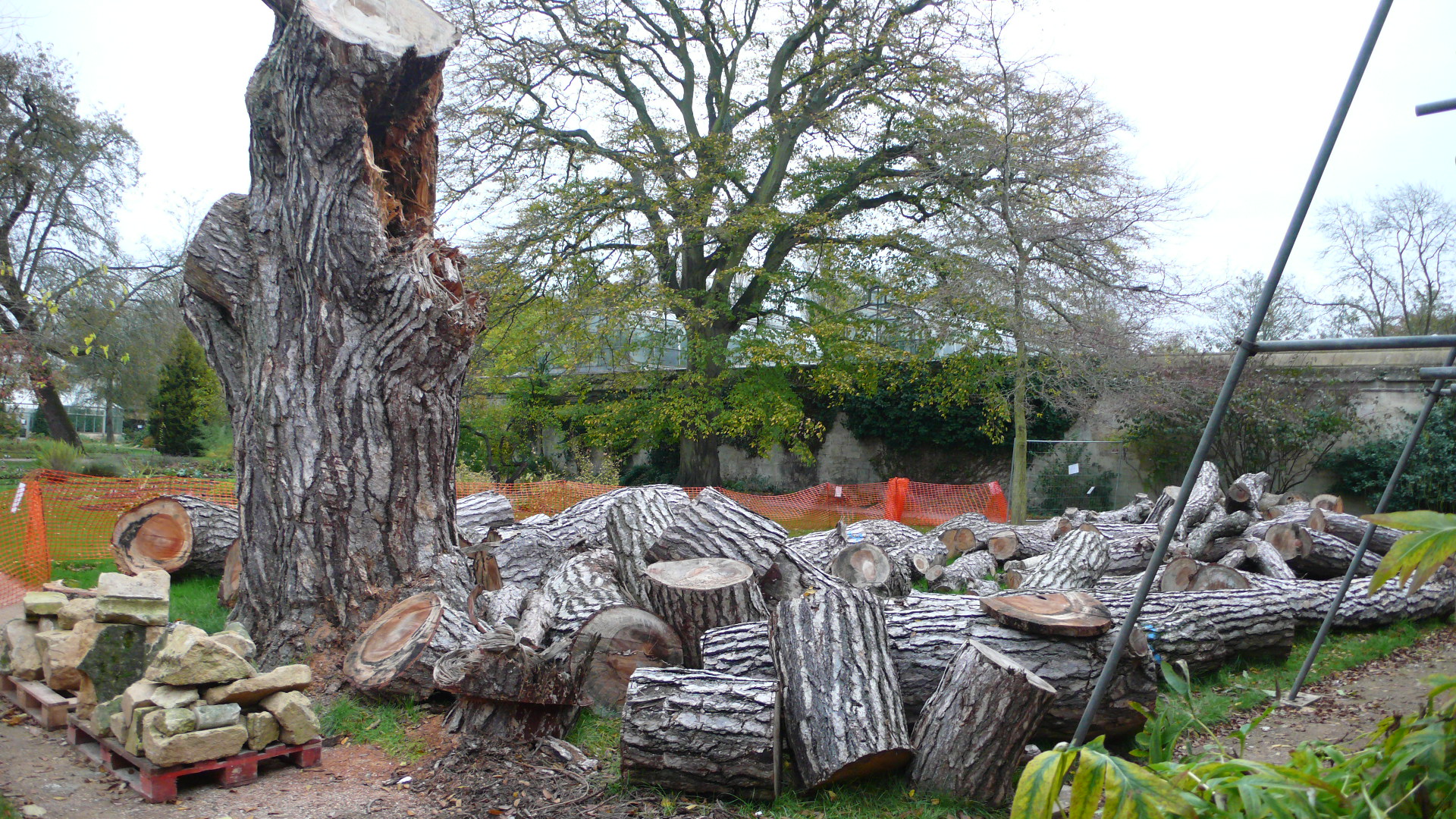
Perhaps more than any other aspect of biodiversity, big trees hold a special place in our emotions.  Sure, whales do too, but it’s hard to hug a whale.  Trees on the other hand can be approachable behemoths, instilling awe into the observer and grandeur into a locality.  So I was hugely saddened to discover today that the vast Black Pine (Pinus nigra) at Oxford Botanic Garden had been badly damaged a few months ago and has been felled.  I’ve known this tree since 1987, and have introduced generations of undergraduates to it during our annual trip to the Garden.  Each time I tell the story that it was one of J.R.R. Tolkien’s favourite trees and probably inspired his creation of the ents in Lord of the Rings.

The damage to the tree and its subsequent felling has been caught on camera, though I should warn you that for anyone who knew and loved the tree it’s an emotionally charged video.  The tree has been propagated and its offspring will live on, but it will be another 200 years before one of them becomes quite so majestic.

March 2009 - Oxford Botanic Garden 011

P1120016

Gatekeeper in the garden

Gatekeeper 1 - summer 2014

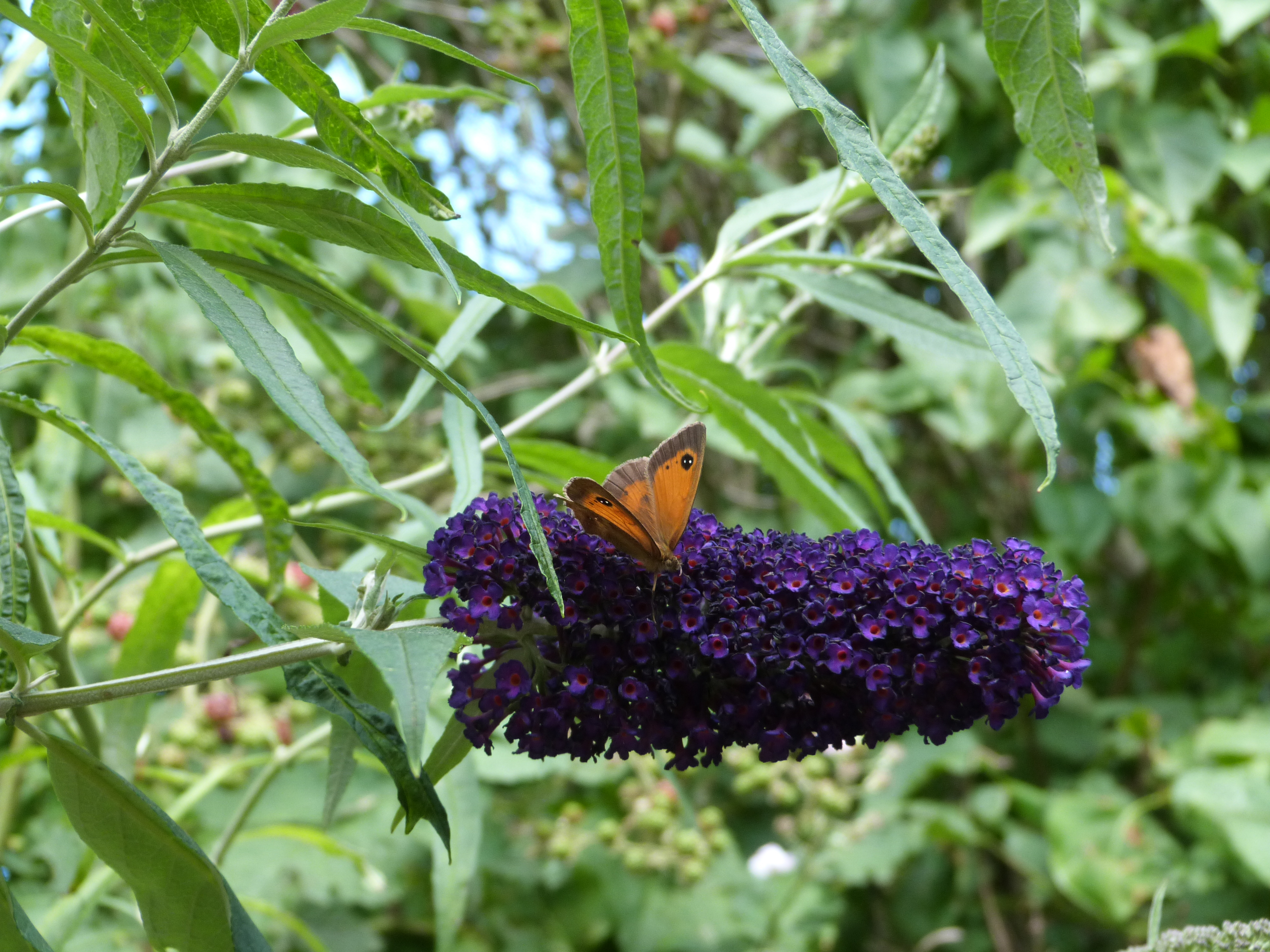
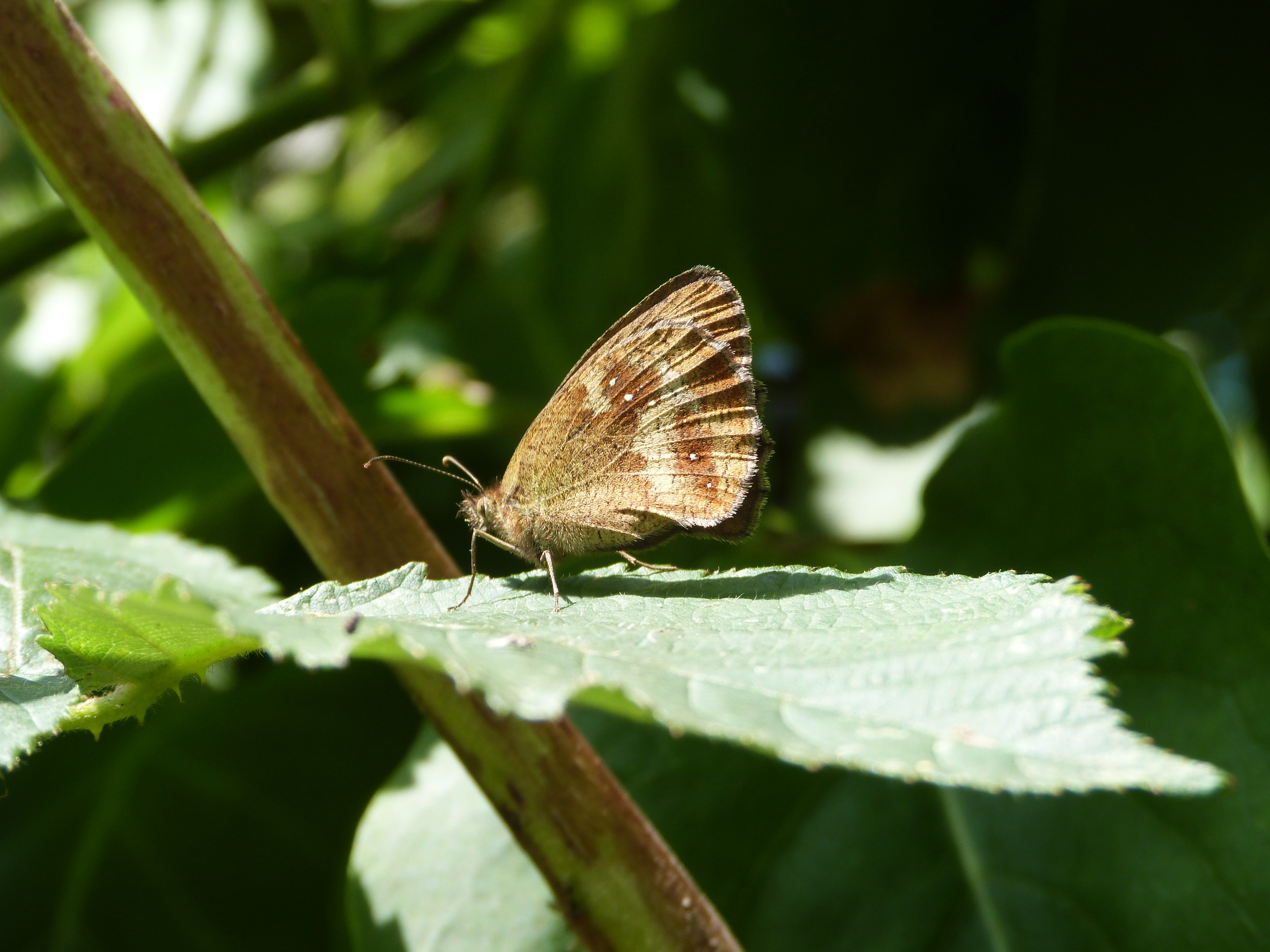
Since moving into our house in January 2012 I’ve been keeping a list of butterflies and day-flying moths seen in the garden (as well as birds and bees, of course). That list currently contains 14 species*, one of the most interesting of which is the Gatekeeper (Pyronia tithonus).

Gatekeeper 3 - summer 2014

According to the account of this species on the UK Butterflies web site, the Gatekeeper:

“can be found wherever shrubs grow close to rough grassland. ……some of the largest colonies can be found at field edges and along hedgerows and we can expect to find this butterfly in scrubby grassland, woodland rides, country lanes, hedgerows and the like anywhere within its range”.

So what is it doing in an urban garden?  The BTO’s summary of the species mentions that:

“It is rare for Gatekeepers to appear in city-centre gardens. However, in recent years this species has been recorded at some urban sites across north-east London and Hampstead Heath and, more recently, on Wimbledon and Mitcham Commons. Such range expansion into urban areas may be due in part to changes in the management of urban parks and cemeteries”.

Clearly, in order to exist in an urban setting the Gatekeeper must have its basic requirements met by the habitat in which it finds itself.  As I’ve mentioned before, the lawn in our garden is quite diverse and contains a number of native species, including a range of grasses that could be used as food plants by the caterpillars, though we do keep it quite short.  It’s more likely that the caterpillars are feeding in some of our neighbouring gardens, which are rarely troubled by a mower (do neglected gardens host more biodiversity than highly managed gardens?  I suppose it depends on the type of management; would be an interesting question to research).

Gatekeeper 4 - summer 2014

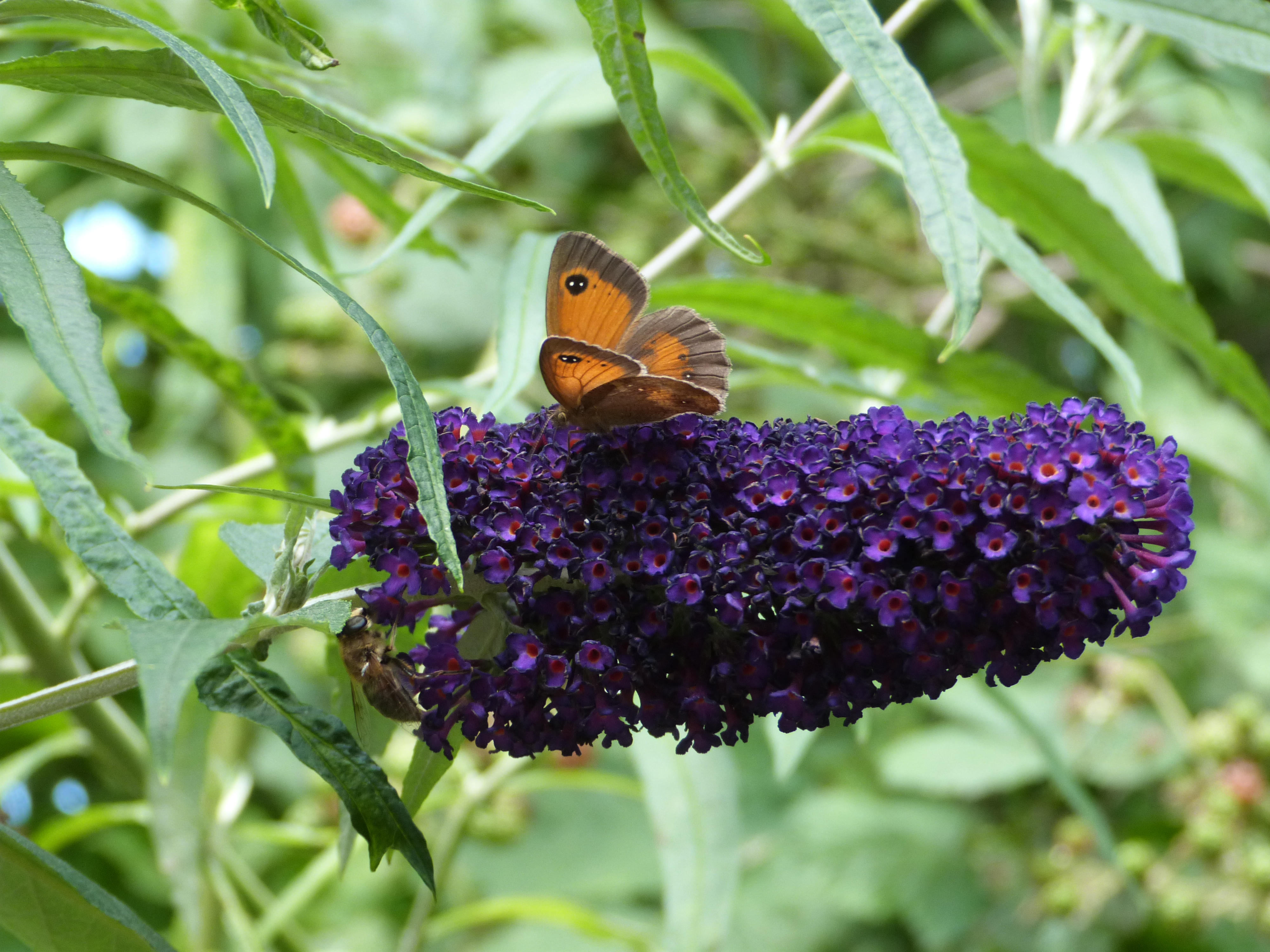
As well as the larval food plants required by Gatekeepers, there’s a range of nectar sources available in a mixed native/introduced hedge along the northwest boundary, including the bramble I recently discussed, oval-leafed privet (Ligustrum ovalifolium), and the buddleia (Buddleja davidii var.) seen in these photographs.

It will be interesting to see if this colony persists over time (I also recorded the species in 2013 but not in 2012).  I get the impression that there’s only a small number of individuals, though it’s difficult to assess the population size of butterflies without catching and marking individuals, which I plan to do next year. It’s a lovely species and we’re fortunate that it likes our garden.  I’d be very interested to hear from any other urban gardeners who have seen it in their patch.


*Large White, Speckled Wood, Small White, Holly Blue, Red Admiral, Cinnabar, Large Skipper, Meadow Brown, Peacock, Gatekeeper, Comma, Brimstone, Orange Tip, Small Tortoiseshell.

P1110935


Blackberry Week

2014-08-23 11.11.25

As a kid growing up in the north-east of England in the 1970s, the half-term school holiday that occurred early in October was always referred to as “Blackberry Week”.  A quick on-line search suggests that the phrase goes back to at least the 1930s (can anyone trace it earlier than this?) and it refers to the time when blackberries (Rubus fruticosus agg.) were ready for picking.  The local kids would spend hours at our favourite blackberry patches, picking bags full of dark, luscious berries to take home for our mothers to cook into pies and crumbles, or stewed to eat with cream. As much fruit was scoffed as was collected (“one for the bag, one for me, one for the bag, one for me…”) and over-ripe ones were pelted at one another until we looked like road casualties.

All of this has been brought to mind recently, since we began to pick blackberries in our garden – at the end of July.  That’s at least two months earlier than I recall doing as a youngster.  Part of this difference can be attributed to latitude; I now live more than 200 miles further south than I did, with a concomitant advance in relative dates of flowering and fruiting, amongst other phenological indicators.  But that can’t be the only answer, the difference is too extreme, though I have not (and I doubt if anyone has) assessed it systematically.

The main reason for the difference, it seems to me, is that our seasons are shifting. We know that spring is generally earlier now in the UK than it was 20 years ago, and with that shift, autumn has likewise been brought forward and is lasting longer, as shown by changes in fungi fruiting patterns.  There’s a lot of research interest in these changes, for example the Centre for Ecology and Hydrology’s collaborative project.  Whilst phenology scientists usually express these changes quantitatively, as number of days difference between events, such as bird migration dates or plant flower times, across a period of years, any person with an interest in the natural world can see these changes for themselves, even in gardens.

Without realising it, as kids we were also making decisions about where to pick blackberries that go directly to the heart of biodiversity, which is essentially about variation and difference in the natural world.  As part of our own knowledge of the local (and very personal) biodiversity of the area in which we played and explored, we would know the best bushes from which to pick fruit, and the ones to avoid because the plants produced berries that were small, or had a poor flavour. Blackberries are hugely variable in all manner of ways, including leaf shape, number and size of prickles, flower size and colour and, most importantly for us, characteristics of fruit quality.

Much of this variation is genetic rather than environmental and reflects the complex biology of the species, or should I say group of species. Let’s go back to the scientific name of blackberries: Rubus fruticosus agg.  I’ve posted in the past about the formalities of writing scientific names of species, and the “agg.” element is an unusual addition not often seen.  It’s an abbreviation of “aggregate”, which in its taxonomic sense means a collection of species that are very similar to, and may even be synonymous with, that species.  The plant that we know and love as the blackberry is actually an aggregate of many hundreds of “microspecies”, at least according to some plant taxonomists.  This is because of the variable sexual behaviour of blackberries and their tendency to hybridise.

Blackberries are often taken for granted and dismissed as invasive woodland dominators that need to be kept in check.  But they are important for their cultural significance, have a fascinating biology, attract a wide range of insects to their flowers, and provide both fruit and habitat for birds and mammals.  Blackberries are worth making space for if your garden is large enough.

Fleet on foot

Fleet photo 7
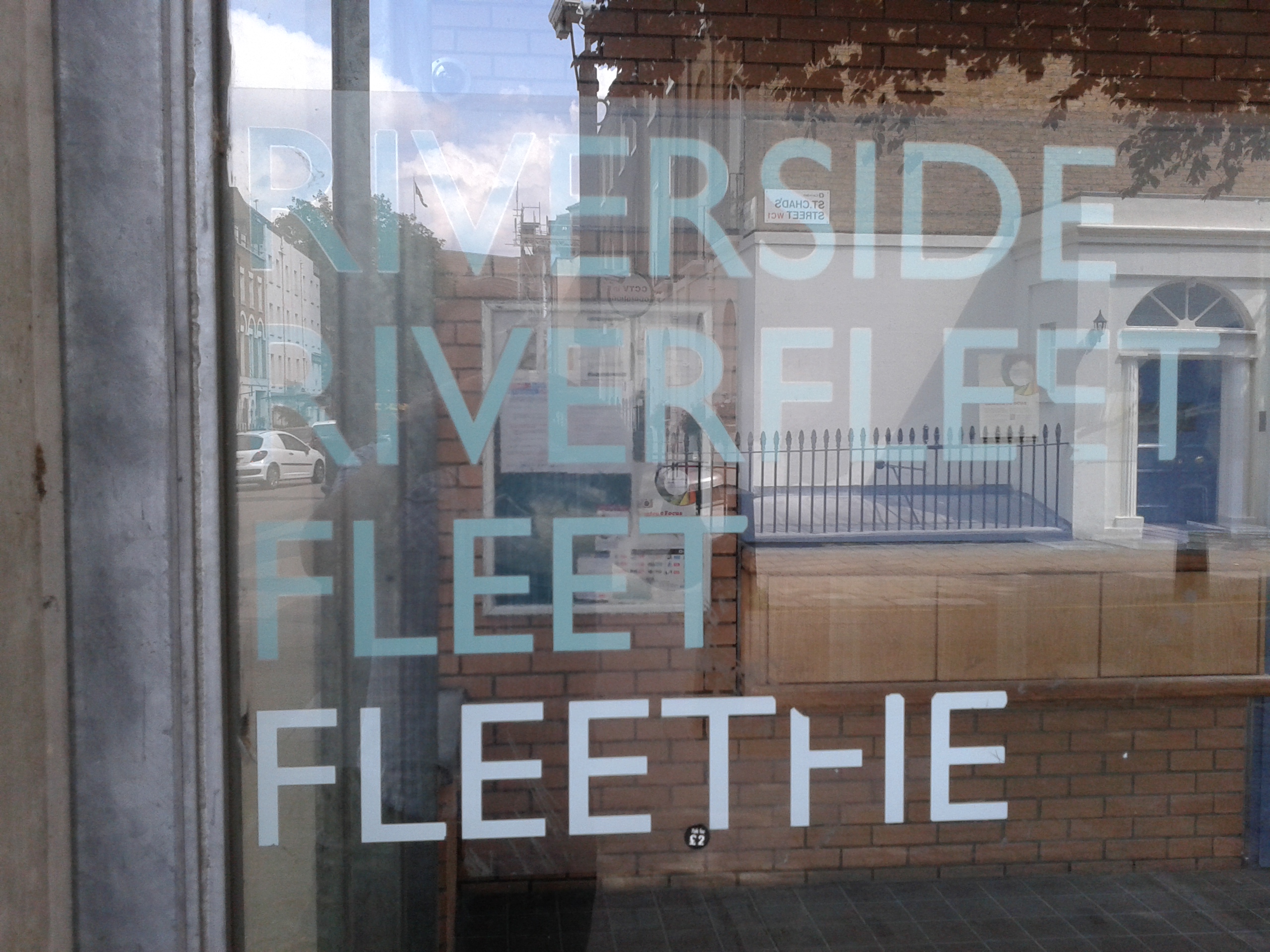
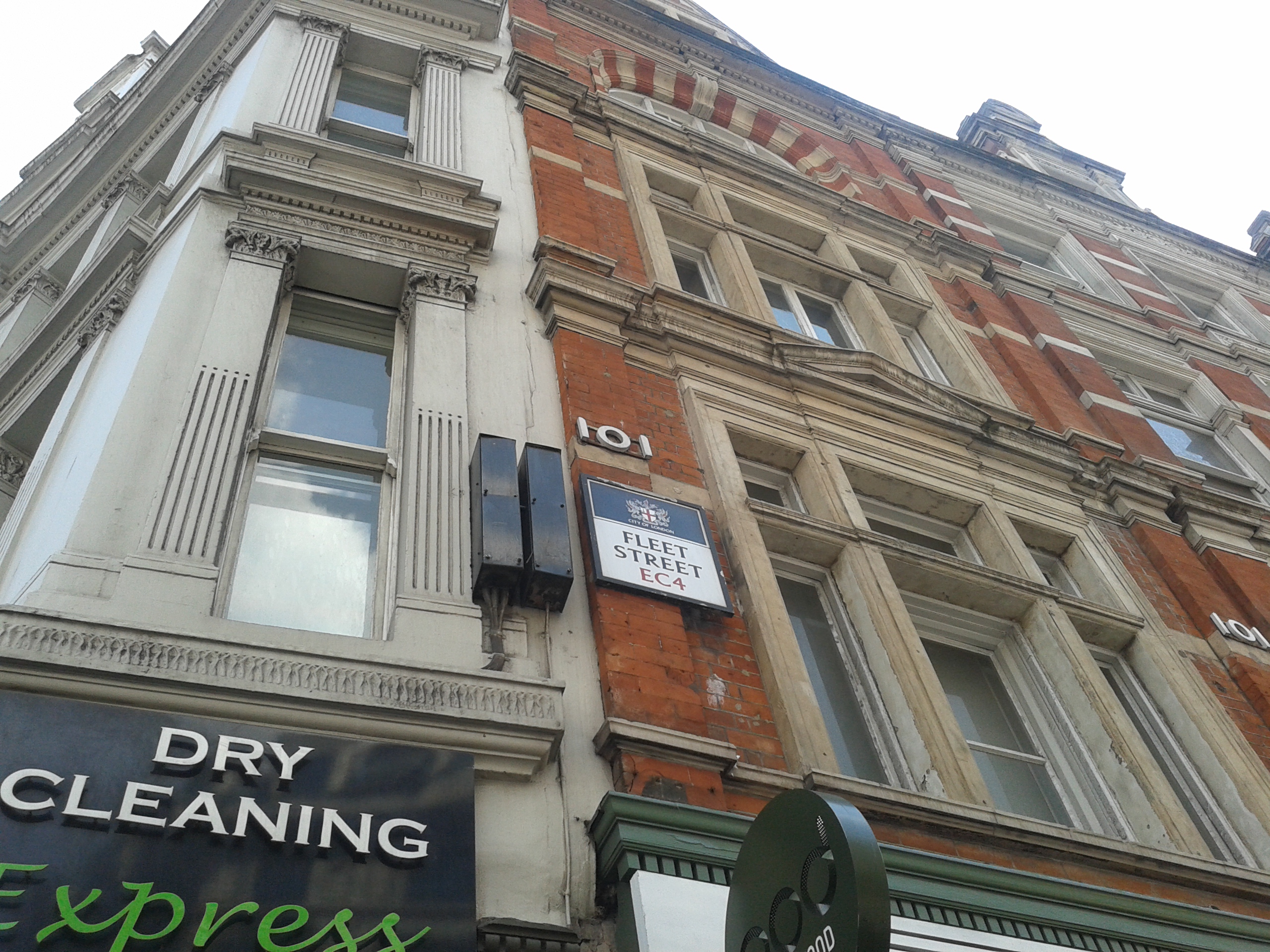
A few weeks ago my sons Patrick and James and I spent a very enjoyable day walking the full length of the River Fleet at the invitation of my colleague Ian Livingstone, together with his wife Jane, her Australian colleague Matt Butler and his partner Kate.  “Walking the River Fleet” sounds like it should involve a gentle, rural amble along willow fringed banks, accompanied by clouds of damselflies and the occasional splash of a water vole sliding into the shallows. And that’s exactly what it was like –  two hundred years ago.  Nowadays “walking the River Fleet” is an urban hike through heavily built up areas in one of the largest cities in the world, for the Fleet is a “Lost River” of London, commemorated only by the names of streets and businesses:
Fleet photo 8
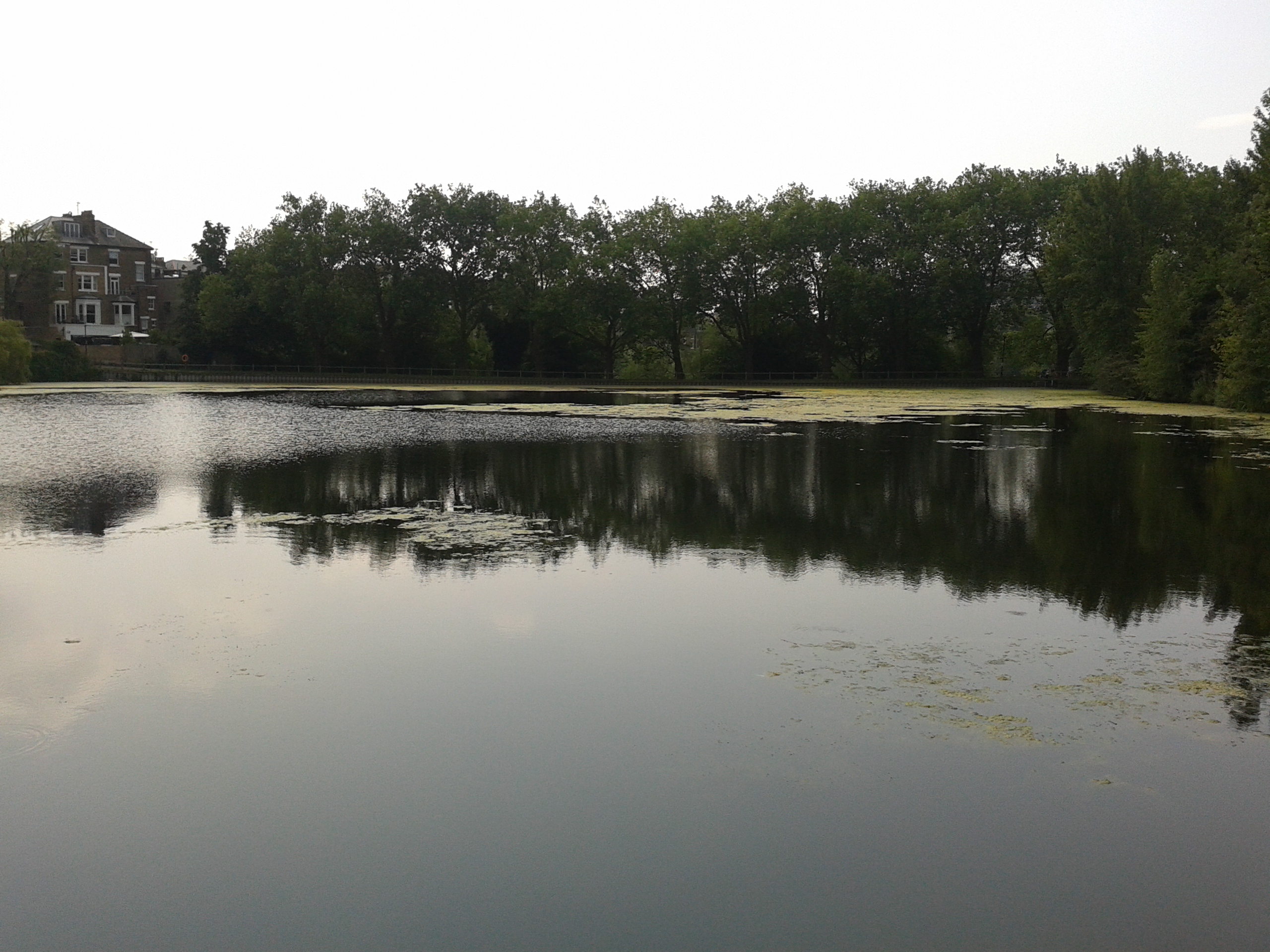
Our 7 mile walk started on Hampstead Heath where the Fleet rises and feeds a series of 18th Century ponds, originally reservoirs and now used for bathing and recreation.  As we walked I began to list the birds that we saw and, of course, these ponds added considerably to the list as diversity of habitats = diversity of species. In fact one of these water bodies is known as Bird Sanctuary Pond and in less than a minute yielded coot, mallard, black-headed gull, common gull, mute swan and tufted duck.  None of which you can see in the following photograph:
Fleet photo 6
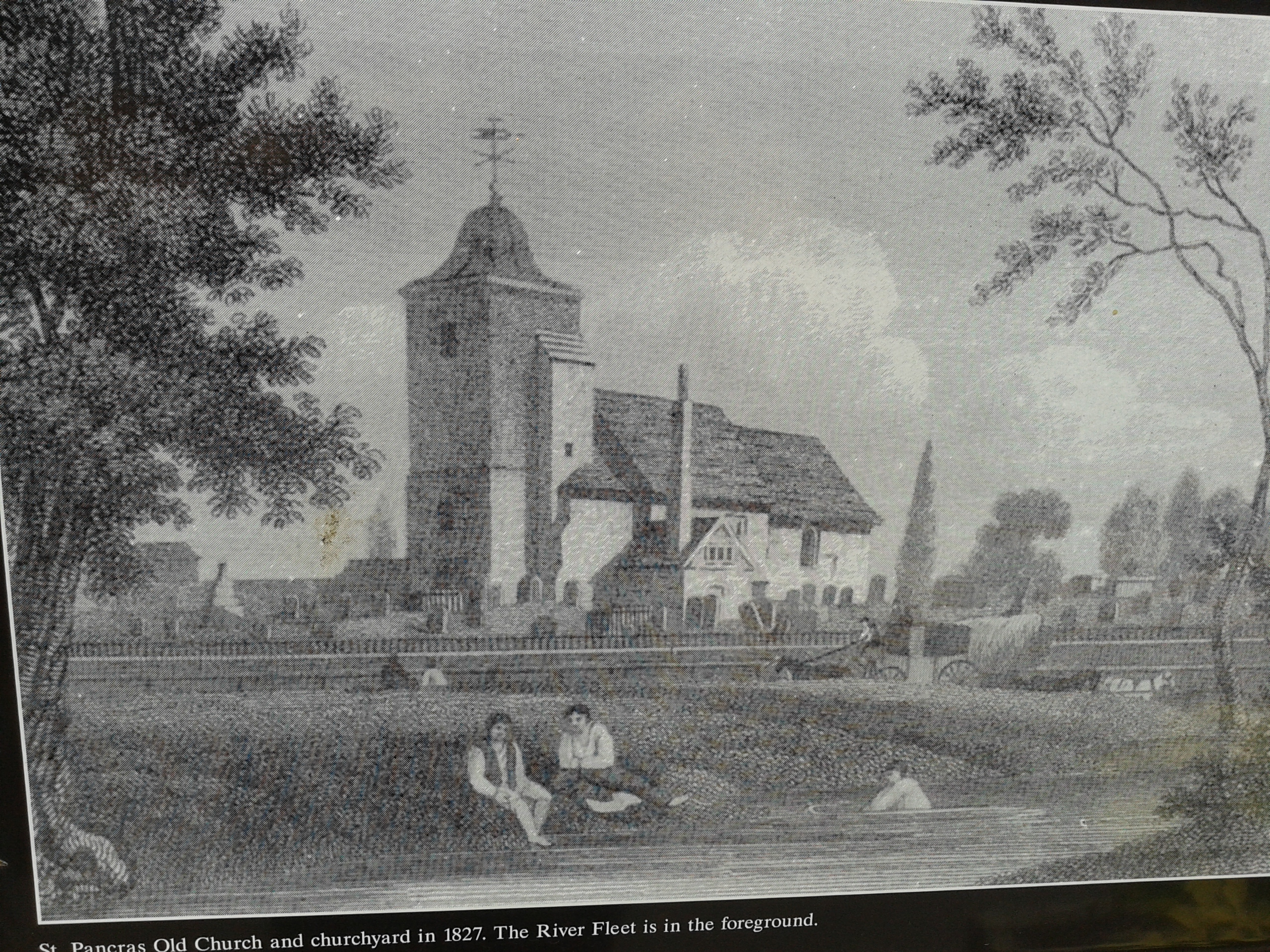
From Hampstead we walked through winding streets that occasionally name-checked the river we were following (see the top photo on this post) down into Camden, where we stopped beside the canal to eat lunch and tick off another water-associated bird, Canada goose.  Then on to St Pancras where we paused at St Pancras Old Church and imagined the Fleet running past it in the early 19th century, before pollution and the need for more land on which to build had submerged it beneath the surrounding infrastructure:
Fleet photo 4
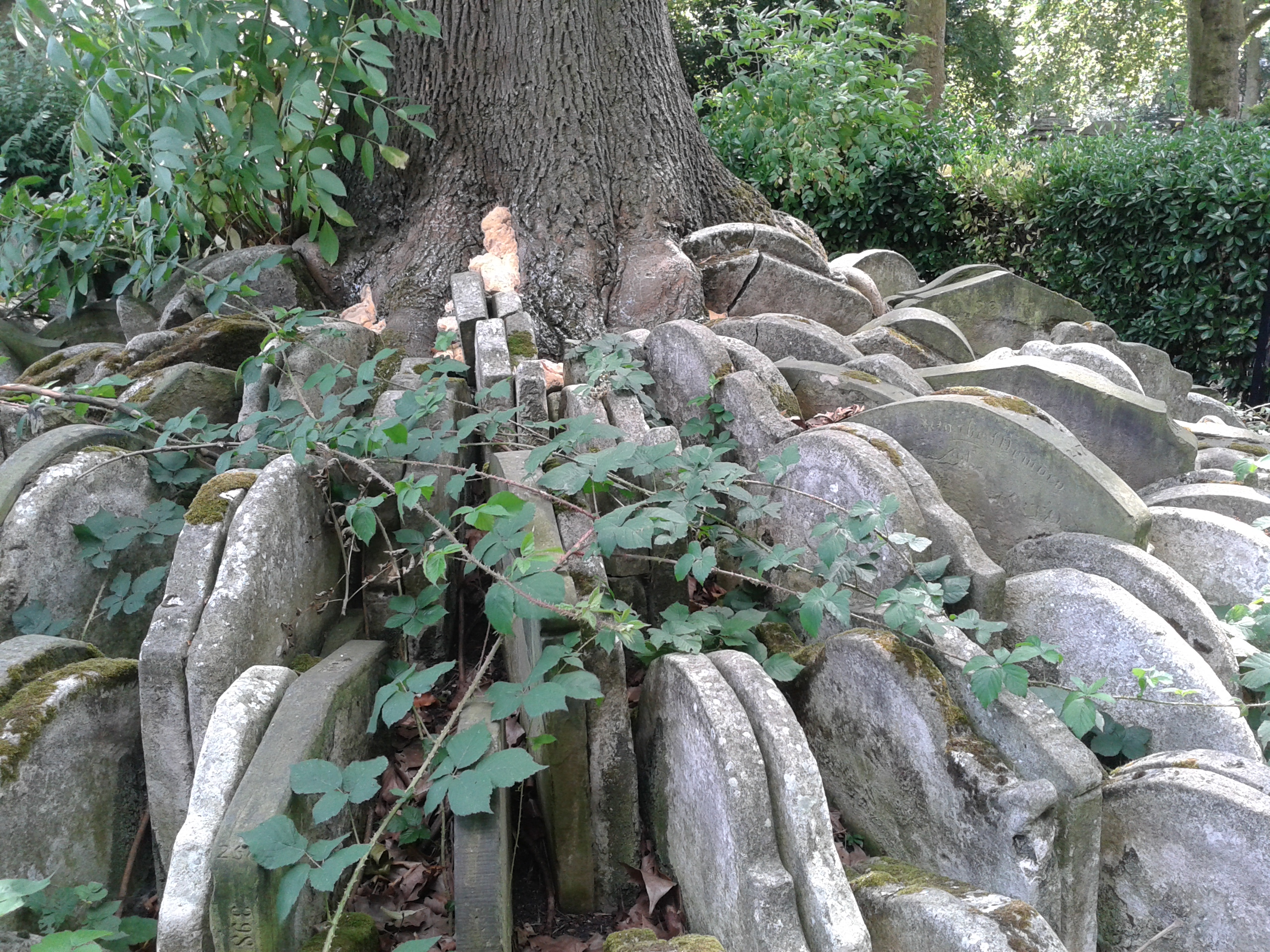
The churchyard is a green oasis in this part of London and we looked at the Thomas Hardy gravestones, which are being slowly absorbed by the bole of an impressive ash tree:
 Fleet photo 5
We continued through St Pancras, where the river runs under the attractively refurbished railway station (a huge contrast to the horrors of Birmingham New Street), and on to Holborn, past Fleet Street (of course)…..
Fleet photo 3
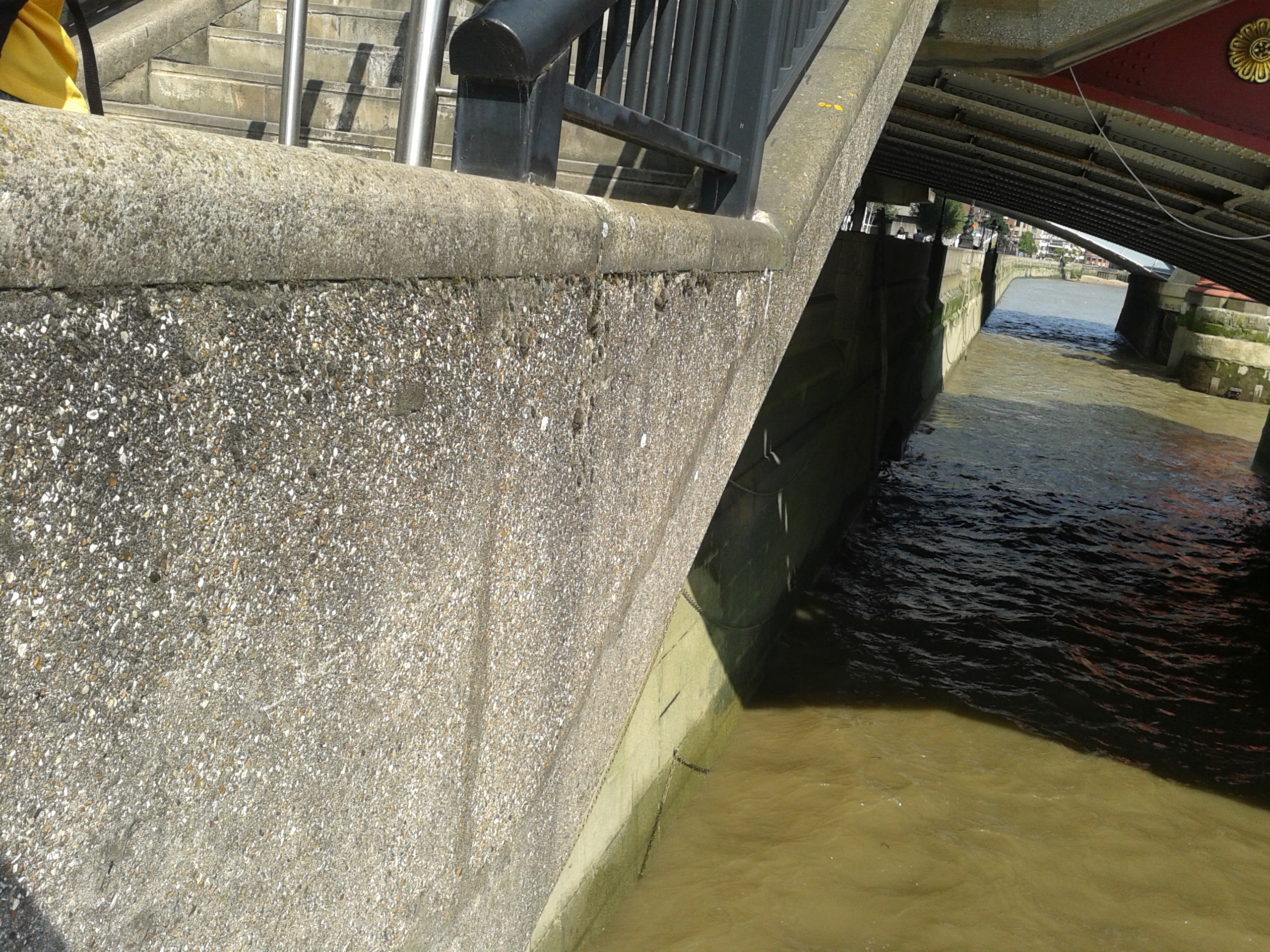
 ….to our final destination at Blackfriars.  All the while we were following subtle changes in the geography of the urban landscape, often obvious only to a physical geographer such as Ian, because the river is wholly covered and has been confined to pipes and sewers.  The Fleet emerges into the Thames beneath Blackfriars Bridge where it is visible at low tide, part-hidden in the shadows of this image which could only be taken by hanging precariously over the river (where I also ticked herring gull):
Fleet photo 2
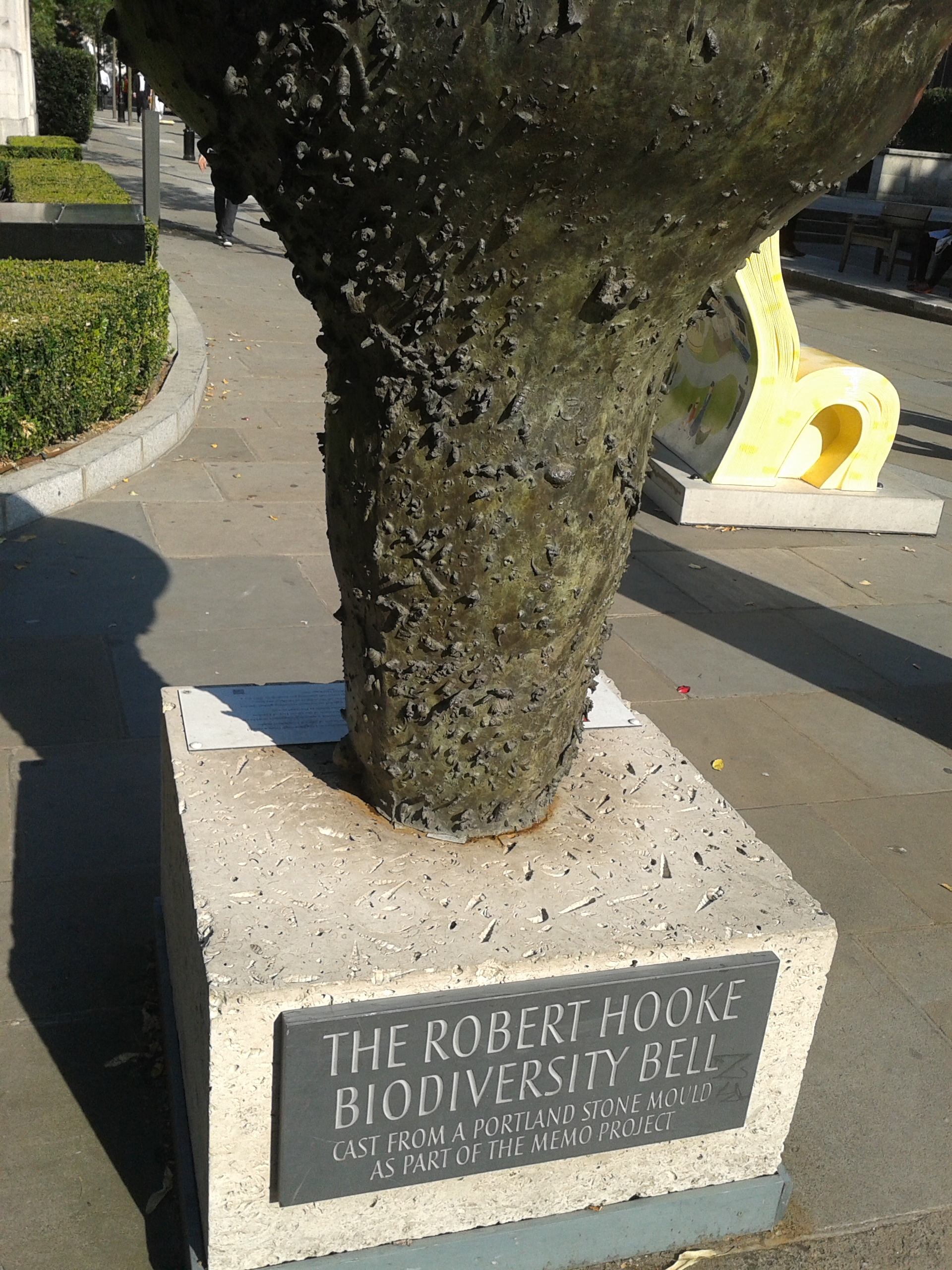
When ecologists think about the environmental changes associated with “urbanisation” we’re often considering processes that are modest in scale and impact, perhaps the building of a new housing development on what was once farmland.  Sometimes such urbanisation can have positive effects for biodiversity, for example gardens increasing local populations of birds and beneficial insects such as pollinators.  But in the case of metropolises like London, the effect of urban development has been to wholly remodel the physical geography of the landscape, covering or filling in features such as open rivers, ponds and valleys that would once have harboured wildlife, replacing them with stone and steel and concrete, and the occasional London Plane tree to provide shade on a hot day.  Restoring these culverted rivers has become an important focus for research and action.  While doing some reading for this post I came across Adam Broadhead’s blog about Sheffield’s rivers and the work he is doing on “daylighting” water courses that have been hidden.  It’s exciting stuff and has great potential for both urban biodiversity and the quality of life of city dwellers.On the way back to the tube station we passed through the surrounding gardens of St Paul’s Cathedral and encountered the Robert Hooke Biodiversity Bell:

Fleet photo 1
This is part of the Mass Extinction Monitoring Observatory project and marked a fitting end to our trip, a reminder of the populations of organisms that were displaced as the River Fleet was first polluted then enclosed.  Perhaps opening up the Fleet and regaining this biodiversity is too much of a task in a city with some of the highest real estate prices in the world, but as I’ve said before, we can always dream a river.The final total of birds for the day was a paltry 14* – how many might it have been if the Fleet was still a visible, viable water course?

*carrion crow, woodpigeon, robin, coot, mallard, feral pigeon, black-headed gull, mute swan, tufted duck, magpie, swift, Canada goose, herring gull.

A day of contrasts

2012-10-27 14.06.12

Some students pass through the university system barely touching the sides: they arrive, they study, they graduate, and they are gone, fate and whereabouts unknown.  Other students stick in our minds, sometimes in our lives, because of their personality, their abilities, or their personal issues, and are remembered and talked of long after their graduation.  They may go on to become friends and stay in touch, perhaps via social media such as our Department’s Facebook group.

These are just two extremes of a continuum of course, and whatever type of student they were, we hope that they all enjoy their time at university and go on to lead full and happy lives.

This was on my mind last Thursday, a day of contrasts.  In the morning I joined colleagues on the stage at Northampton’s Derngate Theatre to watch as this summer’s graduands filed across the stage, shook hands with the Vice Chancellor, received their certificates, and left the stage as graduates.   The accompanying applause from family, other students, and staff was constant and genuine: everyone wishes these new graduates well in their futures.

Chatting with a group of them afterwards, it was clear that a number have a good idea of what they wish to do, though others are less sure.  One will be heading to Tanzania for a month of fieldwork with the Tropical Biology Association, an organisation I’ve become involved with over the last few years.  Others are planning to work for the summer then launch into Master’s degrees.  Some have already found jobs and are beginning their careers.  Lots of possibilities and uncertainties, an exciting time for them.  It was the kind of morning that made me realise how the work we do as university lecturers and researchers changes the lives of individuals, hopefully for the better.

These thoughts were reinforced in the afternoon when my colleague Janet Jackson and I attended the funeral of one of our 2006 graduates, Nick Wallis.  It could have been a very sombre event, but it was not, thanks mainly to Nick himself and the way he interacted with people.  Nick was a student who stuck in our minds, in part because of his intelligence, his passionate interest in the natural world, his willingness to ask questions, and his dry, sardonic wit.  Nick was also the most physically disadvantaged student we have ever taught: muscular dystrophy had confined him to a motorised wheelchair and he had limited movement of his body.  So we had to accommodate Nick’s disabilities but also had the opportunity to get to know him and enjoy his contributions to class discussions and the life of the Department.

Nick’s funeral was well attended, St Luke’s church in Kislingbury packed with family, friends, and neighbours.  His brother Tom read a moving tribute, and the reverend, who had known Nick for some time, gave a heartfelt account of his life and personality, his love of gardening and of the natural world, his sense of humour.  He also touched upon Nick’s controversial, though widely admired, decision to write about his own views and experiences of relationships, intimacy and sex as a profoundly physically disabled man.  It was a tremendously brave thing for Nick to do and aired important issues that are still largely ignored by our society.  Yes, Nick was certainly one of those students we were guaranteed to remember.

That evening I headed to London to catch up with some of my old university friends, a group of mates I’ve written about in the past.  In the pub we talked families and jobs, politics and recent news; and friendships, about how the friends you make at university tend to be the ones that remain closest to you for the rest of your life.  Twenty five years after graduation we are still able to enjoy one another’s company, something we all value in ways that we can’t always express.

So to this year’s summer graduates, the best of luck to you, and whatever you do now, don’t forget the friends that you’ve made during your time at Northampton.

And to Nick, thanks for being part of our lives; rest in peace.


7 minutes is a long time in science, 7 goals is a big win in football (BES Macroecology meeting day 2)

Grey heron in Nottingham

Day 1 of the British Ecological Society Macroecology Special Interest Group ended with a drinks reception, kindly bankrolled by the International Biogeography Society, and a stark choice: dinner in a pub with good food and no television on which to watch the Brazil v Germany World Cup semi-final; or dinner in a pub with crappy food but a television.

The split amongst meeting delegates was about 50-50.  As I get older I’m being drawn to things in which I previously had only a passing interest, amongst them bird watching and football.  So I opted for the latter, and was one of only two Brazil supporters in the whole pub, the other being our guest speaker Cathy Graham, largely because we both have more Brazilian than German friends and colleagues. We were rewarded with one of the most excruciatingly clinical dissections of a major international football team that I’ve ever witnessed.  And the food was indeed crappy, but the lager was cold and plentiful.

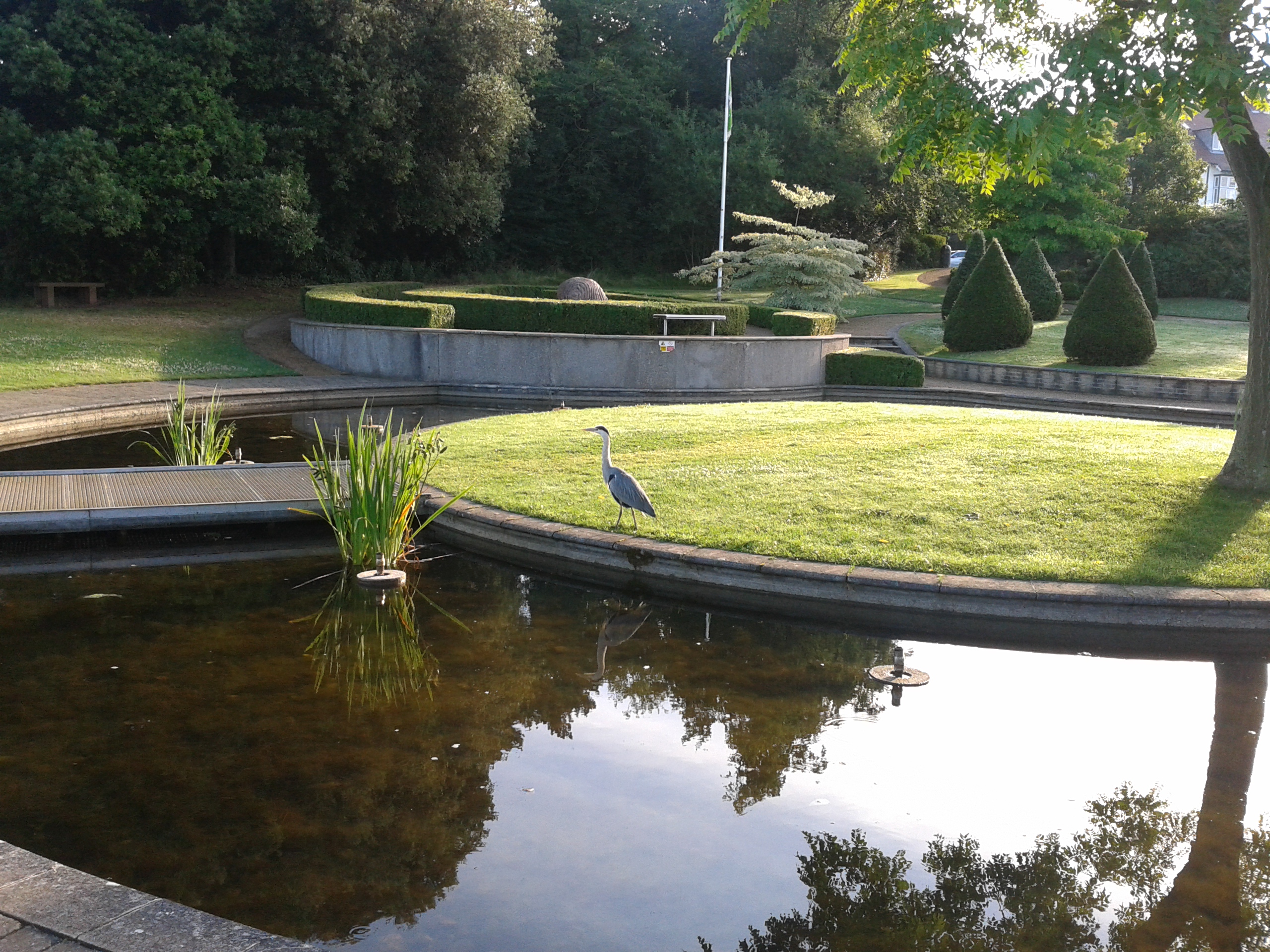
The next morning, impelled by an uncomfortable mattress on a steel-framed bed in one of the student halls of residence, I woke early enough to do a little bird watching around the University of Nottingham’s Park Campus, which is not unlike the University of Northampton’s Park Campus, except much larger.  There was a modest diversity of birds flying and calling, the highlight being a large grey heron patrolling the edge of a circular pond.  As there were no fish in the pond it seemed to be mainly eating the slugs crawling on the adjacent lawn.  Not a behaviour I’ve ever seen before, though this year’s BBC Springwatch showed footage of parent tawny owls bringing back large slugs for their chick, so perhaps it’s more common than we realise.

Following a mediocre breakfast and disgusting coffee, it was time for the first lecture of the day, the second keynote by Cathy Graham.  Once again she focussed on her hummingbird research and presented some fascinating unpublished data on the structure of bird assemblages along an altitudinal gradient in Ecuador.  Cathy’s team has been using cheap digital cameras which take one frame a second to amass data on infrequently visited rainforest flowers, an approach that trades off time and space: it’s possible to get a long set of data, but for only a limited number of plant species and individuals.

After coffee there were papers by Katie Leach on her PhD work on competition between co-occurring species of Lagomorpha (rabbits, hares, pikas, etc.) and from Richard Field on altitudinal effects on the endemism of plants which chimed with my experiences in Tenerife.  Both of these neatly demonstrated one of the strengths of macroecology: the 21st Century tools it can marshal to use secondary data for understanding ecological patterns and processes at very large spatial scales.

But secondary data can also be a weakness of the field if the quality is poor and it is limited in scope.  This was the subject later in the day of a polemical lecture by Shai Meiri entitled “Laziness in macroecology: a crime and no punishment” that railed against researchers who sometimes fail to augment ready-made data sets with even the most rudimentary of additional data.  My favourite of Shai’s examples was a study which had used a mammalian ecology data set in which the diet of anteaters was coded as “unknown”!  The tee-shirt Shai wore during his often very funny rant read: “If you are not outraged, you were not paying attention” and there was plenty for the audience to feel outraged about, not least his suggestion that we “ban taxonomy” and (even more controversially) get away from our computer screens and into the libraries to source information to fill in the gaps in data sets.

I’d go further and say that some field work would not go amiss as well!  In comparison with using ever more sophisticated analyses, developing better software, and building ever more complex models, collecting field data seems to be low on the list of priorities for many macroecologists, particularly some of the PhD students. Not all of them by any means, and hopefully Cathy Graham’s talks will have inspired them to get into the field, but it strikes me as a trend.  That’s worrying on many levels, and good data are hard won, but then I’m an old-fashioned, muddy boots kind of ecologist who realises that our knowledge of biodiversity is built up from a very small set of data in comparison to what we don’t know: we’ve scratched the surface of the tip of the iceberg as a colleague used to say.

In the afternoon there was an unscheduled talk by Olivia Norfolk on the biodiversity of plants and pollinators of Bedouin gardens in the mountains of Sinai, which included a lot of field data.  This was followed by a second set of seven minute “lightning talks”.  I was third on a diverse bill, sandwiched within research on amphibians, Tyrannosaurus rex, North American lizards and microbial communities.  Seven minutes passes quickly and I overran slightly, but hopefully managed to convey the gist of our work on the relative frequency of wind versus animal pollination across the globe.  No one threw missiles at least and there were a couple of good questions that probed the scope and limitations of the current data, but were nowhere near as challenging as the questions in Copenhagen (though I’d had much more time for that lecture).

Following a hasty set of goodbyes I headed to Nottingham station to catch the 1810 back home, once again via the desolation of Birmingham New Street.  Reflecting on the meeting on the way to Northampton I was struck by the fact that of the forty-odd attending, I was the oldest delegate by some margin, which was even more sobering than Brazil’s loss to Germany.  I consoled myself with a bit of “train spotting” (identifying as many bird species as possible through the windows of the train), and ended up with a respectable 21 species* during the two hours or so of travel.

Thanks to the organising committee of the BES Macroecology SIG, and especially to Adam Algar and his team in Nottingham, for a great meeting.  I look forward to next year’s in Copenhagen.


*Blackbird, buzzard, swift, house martin, tufted duck, mute swan, mallard, jay, goldfinch, collared dove, wood pigeon, feral pigeon, starling, crow, magpie, grey heron, Canada goose, common tern, back-headed gull, common gull, pheasant, (22 if you count chickens in a run).

20140709_070038

All pollinators are equal, but some pollinators are more equal than others

The infamous line from George Orwell’s Animal Farm asserting that “All animals are equal, but some animals are more equal than others” nicely captures an ecological view of pollinators and their relationships with plants.  “Pollinators” by definition move pollen between flowers, but not all pollinators are equally good at transferring pollen of any particular plant: some are more effective than others. I’ll illustrate this with examples from the urban garden that Karin and I are developing, which I’ve discussed before.

As you can see from that link, the garden is modest in size, but nonetheless this year it contains a significant biodiversity of edible plants that require pollinators for some or all of the fruit and seed set, including: strawberries, apples, greengages, cherries, blackcurrants, squashes, courgettes, blackberries, fennel, runner beans, french beans, passion fruit, tomatoes, raspberries, and radishes.

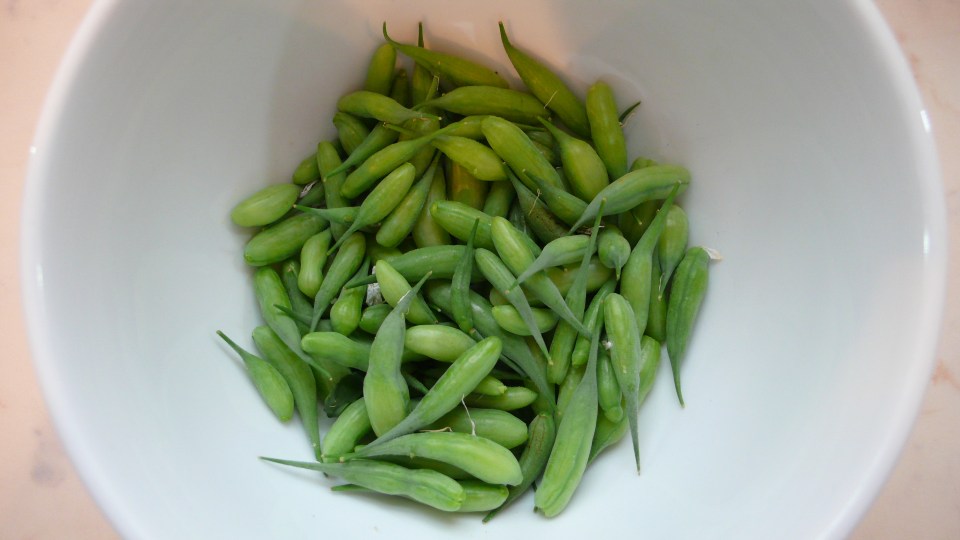
Radishes?!”  I hear you ask.  “But they are grown for their edible swollen roots which don’t require pollination!”  True, usually.  But we let our radishes flower because we mainly grow them for their seed pods which, picked young, are delicious in salads and stir fries, like mustardy mange tout.  They look like this:

2014-07-03 18.14.32

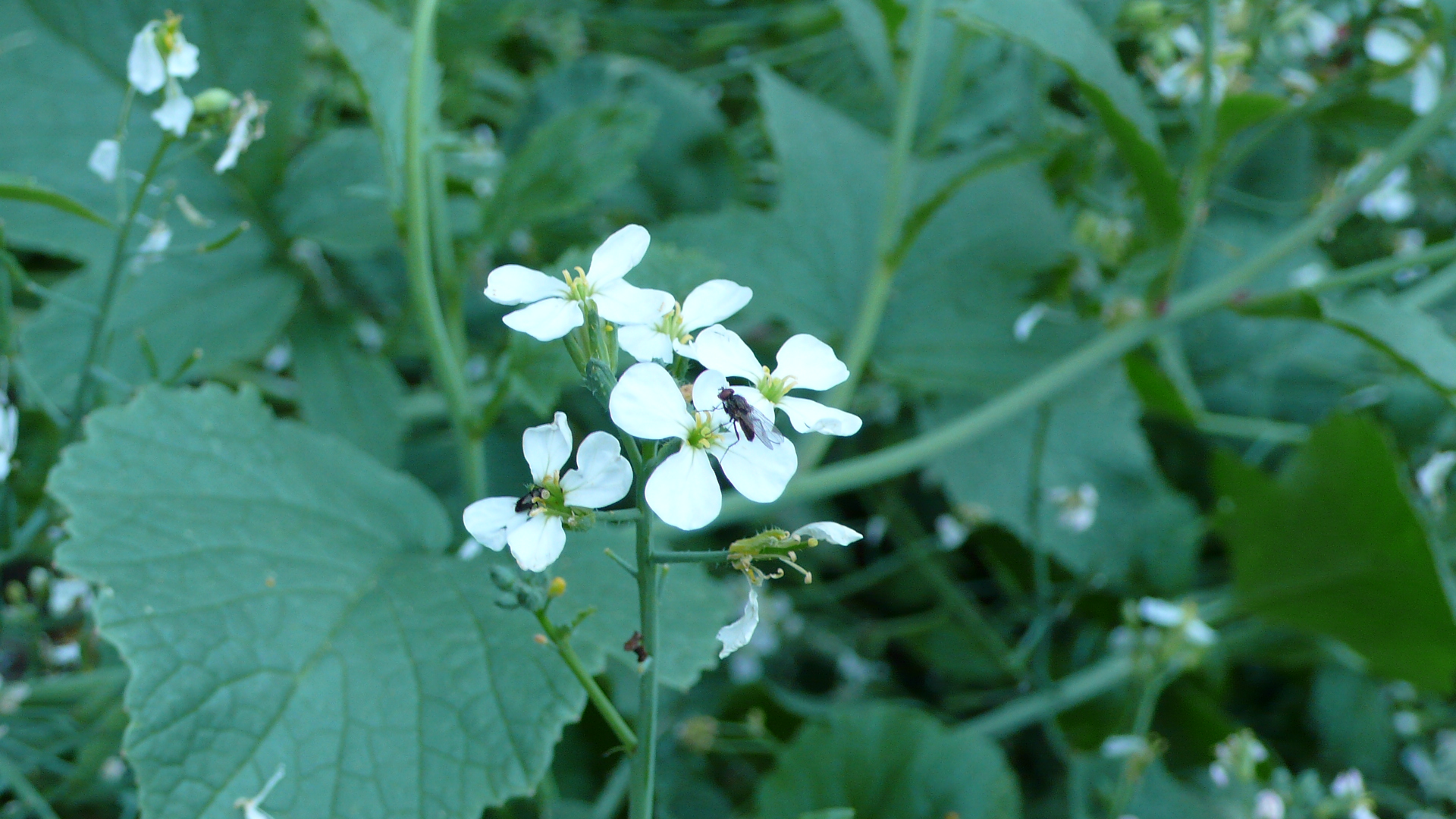
The radish flowers are pollinated by a diversity of insects including butterflies, bees, and small flies:

2014-07-03 19.40.34

These insects will vary in their effectiveness as pollinators of radish, depending on the frequency of visits, how often they move between flowers, and the amount of pollen on their bodies.  This last factor is largely a function of size and hairiness (bigger, hairier insects carry more pollen as a rule), though cleanliness also plays a part: insects often groom the pollen from their bodies and, in the case of bees, may pack it into their pollen baskets where it’s not available for pollination.

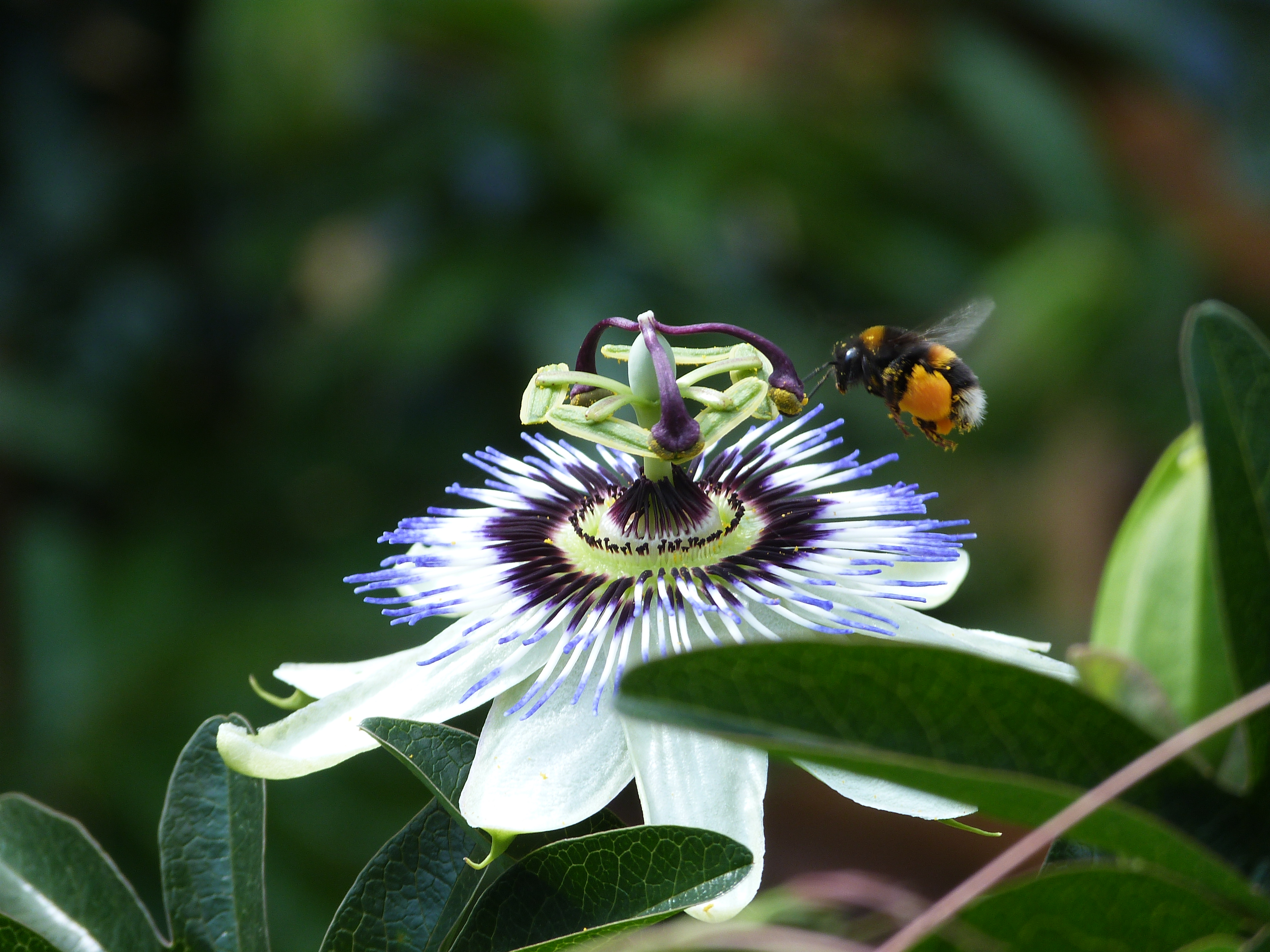
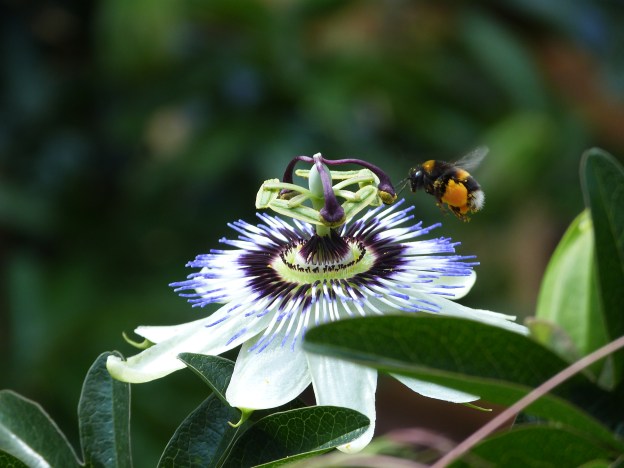
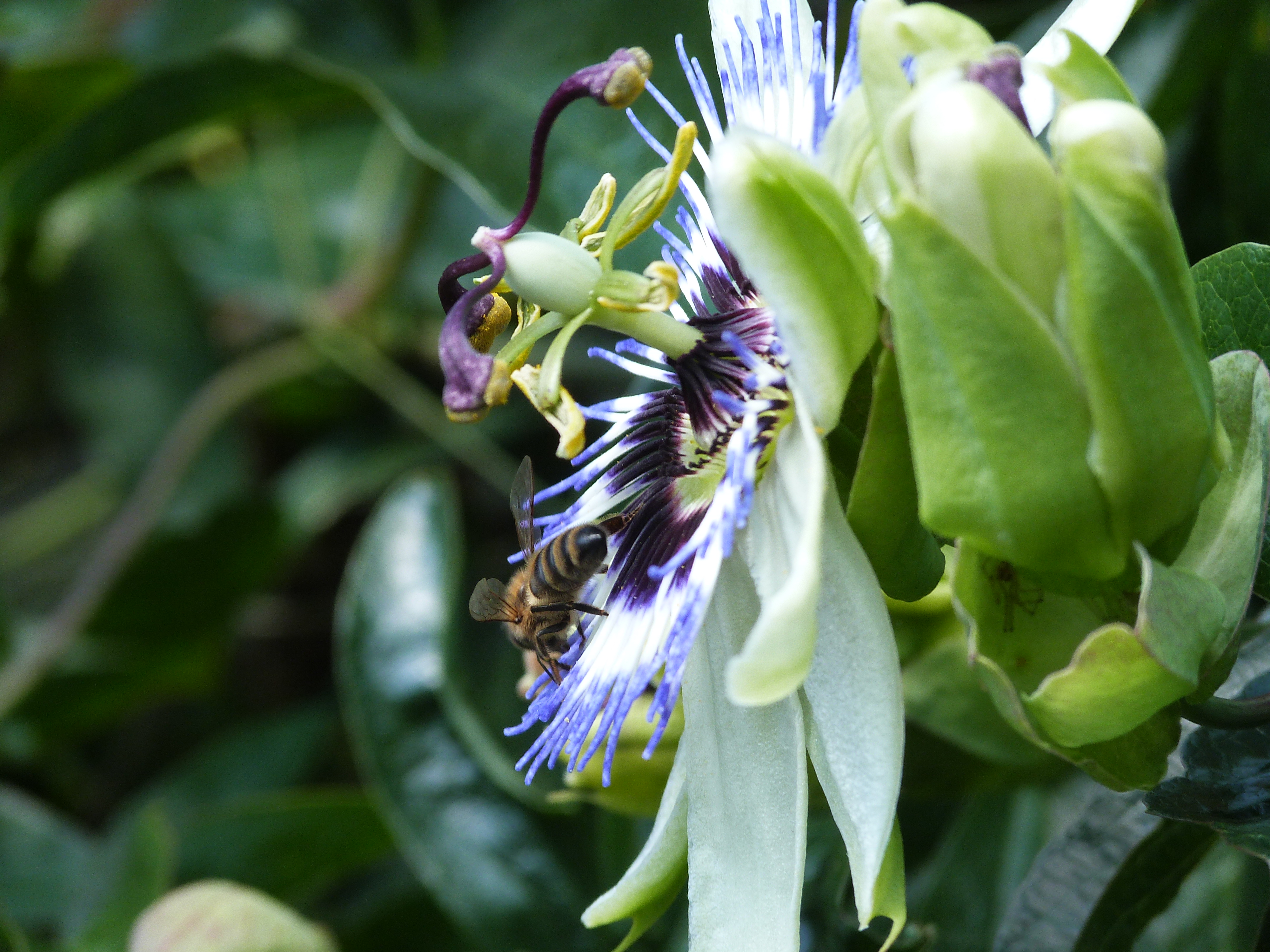
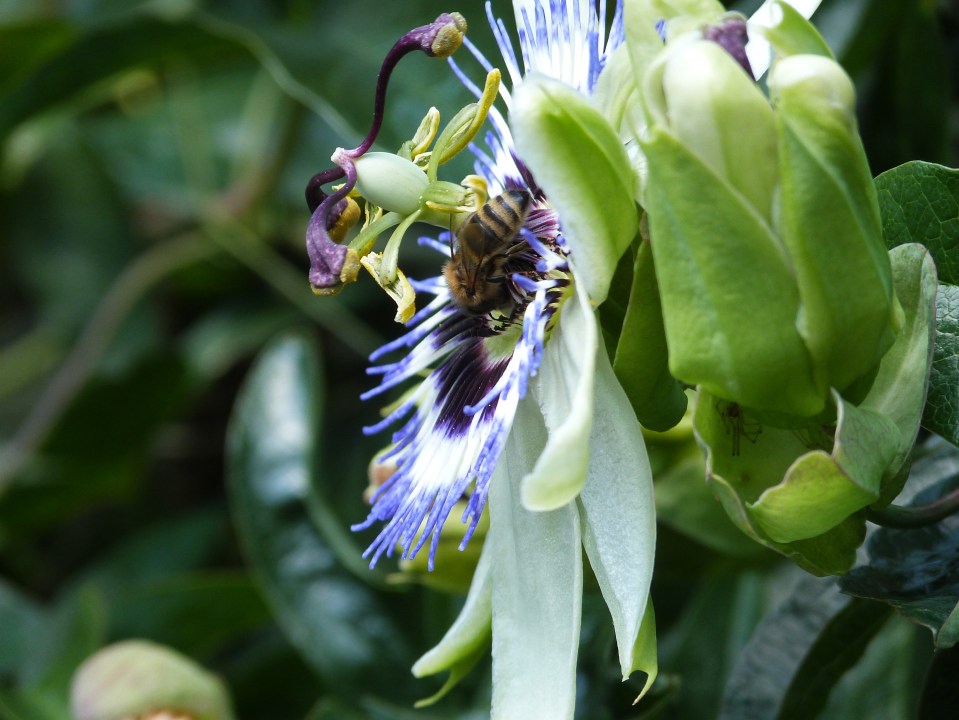
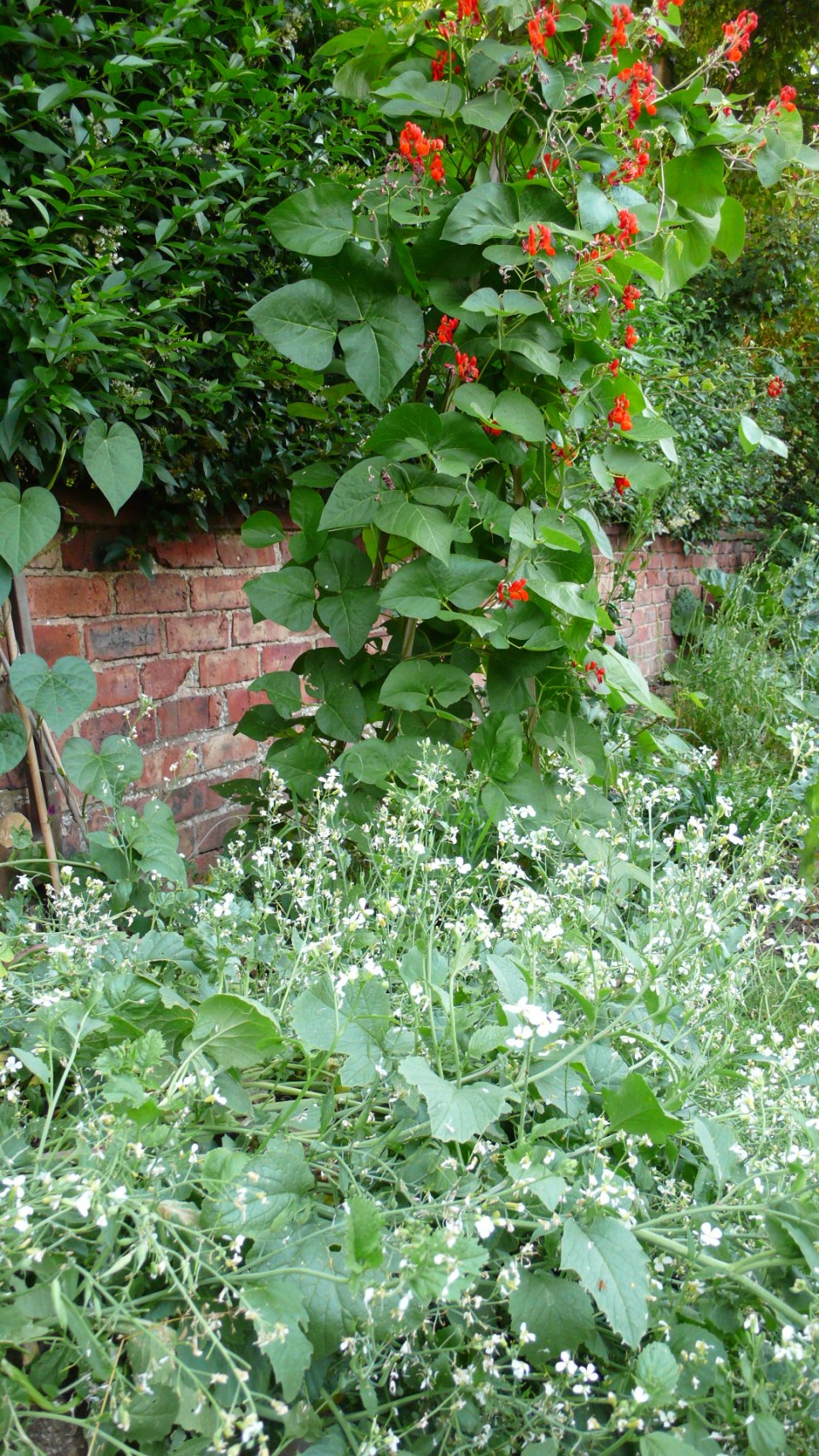
The size and behaviour aspect is best illustrated by some recent photos that I took of visitors to the flowers of passion fruit (Passiflora caerulea var.).  We have a large, sprawling plant growing up a fence which is currently being visited by honey bees, hoverflies, solitary bees and bumblebees.  In comparison to the size of the flower and the position of the anthers (male, pollen producing parts) and stigmas (female, pollen receiving parts), the hoverflies, honey bees and solitary bees are relatively small.  These two images are of honey bees (Apis mellifera):

P1010419

P1010418

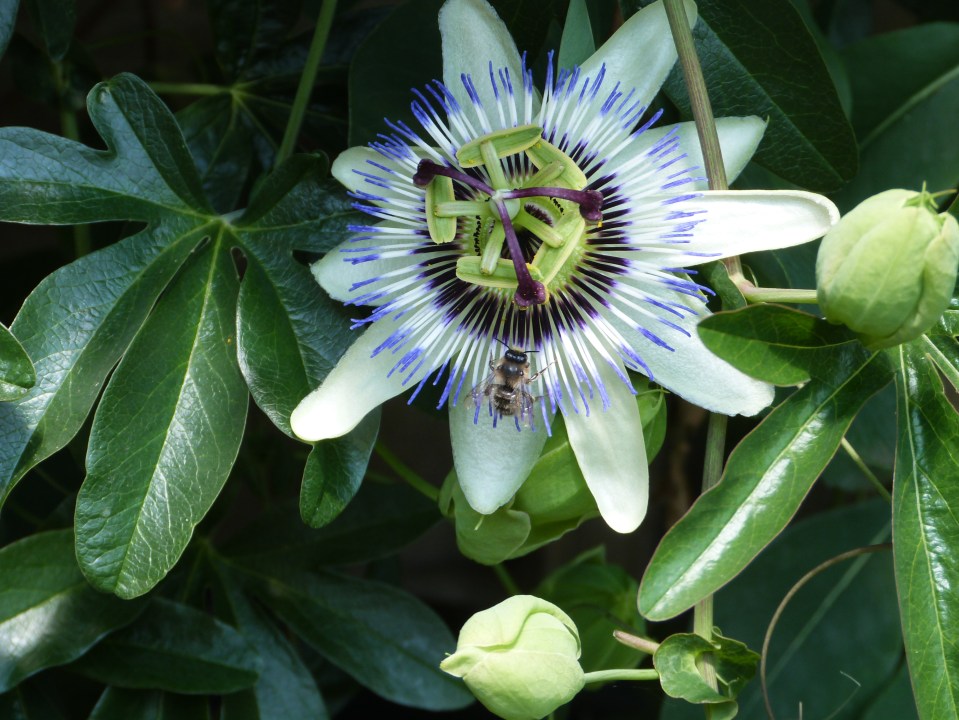
Here’s an unidentified solitary bee:

P1010431

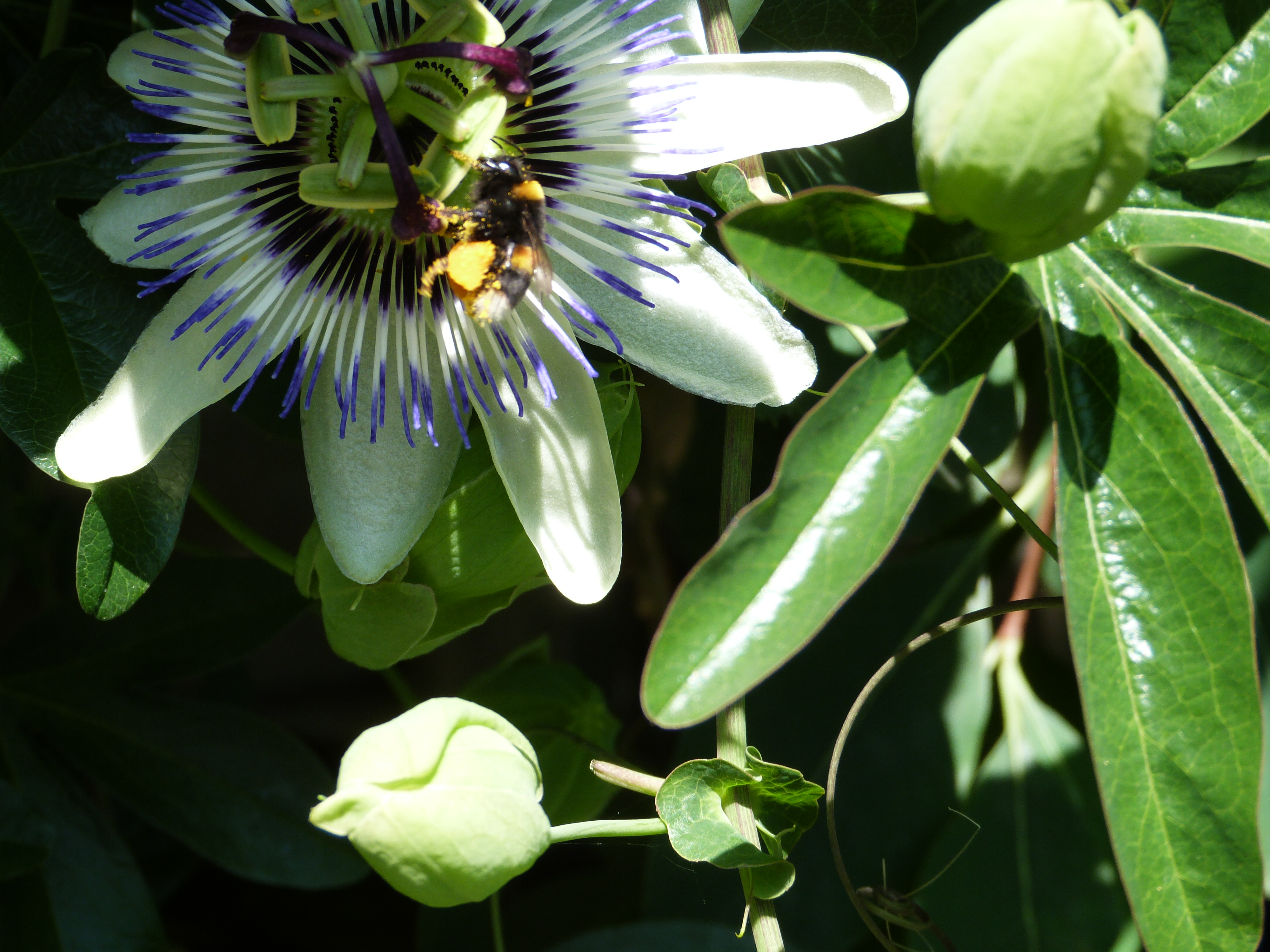
These bees were occasionally touching the anthers, mainly with their wings, so some pollen will be moved around.  But from what I observed it’s likely to be a relatively small amount in comparison to bumblebees, which are usually much larger and hairier, and don’t groom themselves as often as honey bees.  Here’s a Buff-tailed bumblebee (Bombus terrestris):

P1010430

They were actively collecting pollen as well as nectar.  Much of this pollen is packed into the pollen baskets on the rear legs and will go back to the nest to feed the developing larvae, but some will be involved in pollination:

P1010428

So it seems to be the bumblebees we have to mainly thank for the deliciously sweet-sour fruit we will enjoy later in the season. Of course to test this properly we would need to set up an experiment in which we excluded larger bumblebees from the flowers and only allowed smaller bees to forage, with appropriate experimental controls.  Would make a great project if any of my students are interested!  But it should give you a sense of just how complex the interactions between flowers and their pollinators are: the ecology of pollination is far from simple, despite what some would have us believe.

2014-07-03 19.40.18


From Chester to Copenhagen

P1110838

It is 6.30am on Sunday morning but I’m wide awake and can hear the hotel in which we are staying stirring into life.  Time to reflect on what has been a long and busy week, rather than the start of a long and relaxing summer holiday as some assume academics enjoy.  That’s a myth: summers for many of us are at least as busy as the main teaching part of the year, though that’s not to say we don’t teach in the summer – I have final year project students to advise, and for students who did not pass first time round there’s still re-sit exams and assignments to be undertaken.

Of course I’m not complaining and the busyness is part of the fun of my job, which includes opportunities to travel, as I’ve previously described on this blog.  Before any travelling this week, however, Monday was taken up listening to my PhD student Kat Harrold give a seminar about the progress of her research on pollinator mapping and habitat modelling in the Nene Valley Nature Improvement Area.  This was followed by an hour’s grilling from the supervisory team and an independent colleague, as we drilled down into the research and suggested ways in which Kat could improve on the already excellent work that she’s doing.  All of this is a formal part of our PhD programme and Kat aquitted herself very well indeed.

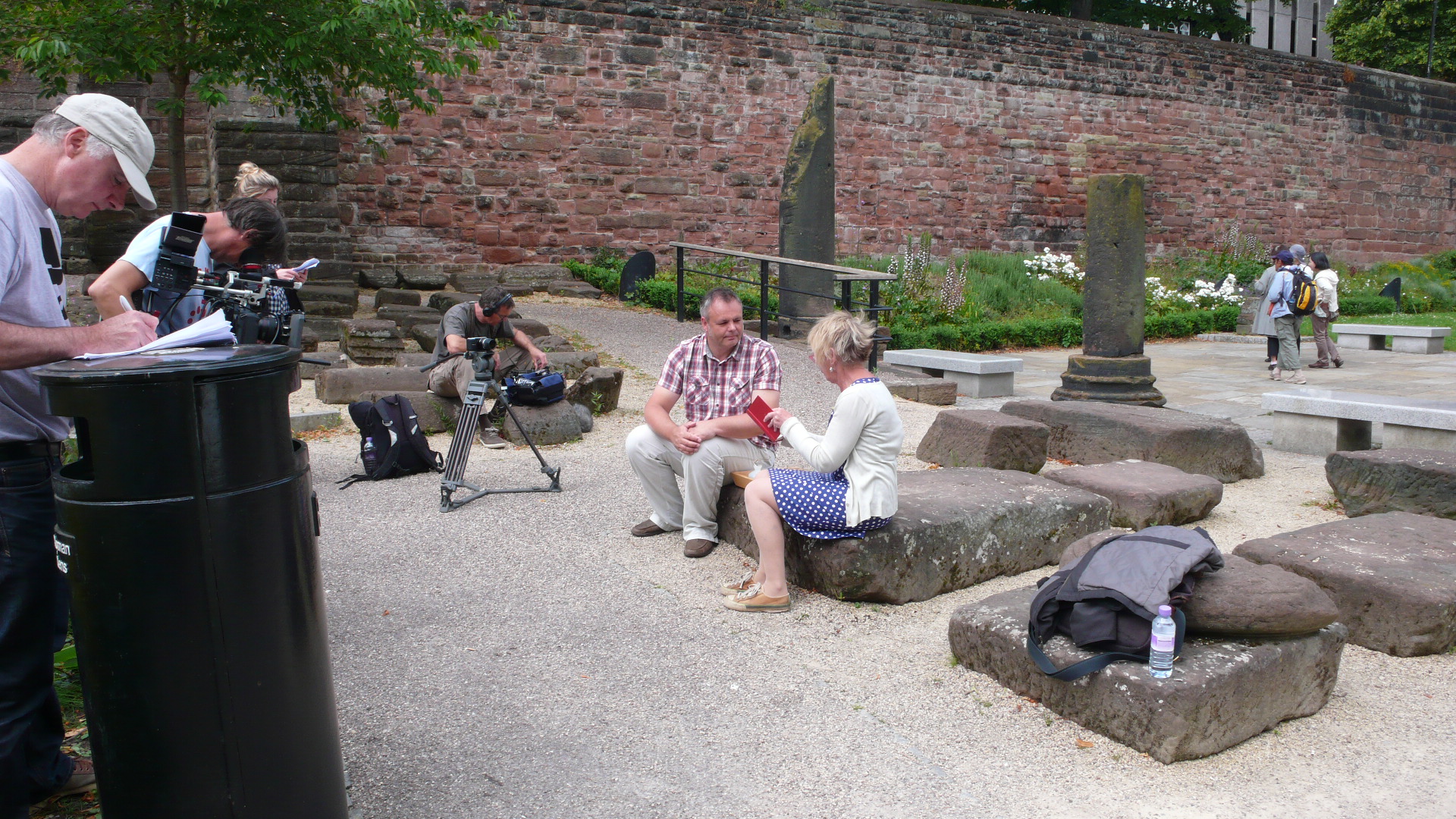
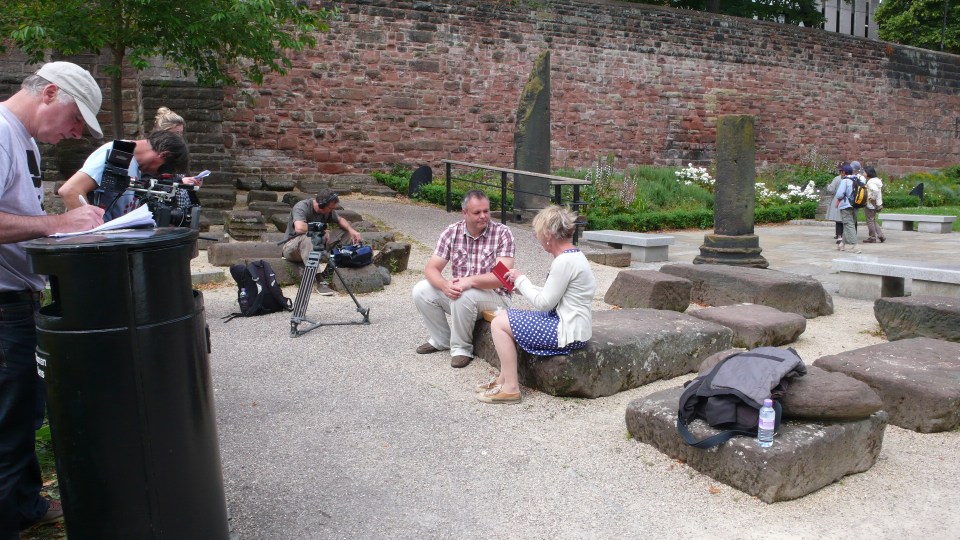
Tuesday was the start of the travelling, and was spent in Chester helping with filming for an episode of a new four-part BBC2 series provisionally called Plant Odyssey, fronted by Carol Klein, Gardener’s World presenter and Honorary Fellow of the University. The series is being produced by Oxford Scientific Films and will be broadcast in the spring.  In the following scene we were making a rose perfume based on an ancient Roman recipe from the writings of Pliny the Elder.
P1110827

Now, I know very little about how to make perfume, but I do know a bit about flower scents and how they attract pollinators, so my role was to act as both a foil for Carol’s scent experiment and to add some science to the mix.  This is not the first filming I’ve done with Carol, having also helped out with her Science in the Garden special edition of Gardener’s World a few years ago.  While looking for that last link I discovered that all three episodes of Bees, Butterflies and Blooms is also available on YouTube, which is great to see as the BBC didn’t repeat the series or produce a DVD.  I was involved in the making of episode 2, which helped to kick-start the RHS’s Perfect for Pollinators plant labelling campaign.  Television work is fun and brings science, and the scientists who do it, to a much wider audience.

Wednesday I prepared my talk for Friday’s lecture in Copenhagen (more of which later) and Thursday involved attending the University of Northampton’s annual postgraduate research conference.  This is a highlight of the year for me as it’s an opportunity to see the breadth of postgraduate research going on across the university, something that would be impossible in a larger and more research intensive institution.  I was only able to attend the first session, but that alone covered research on the research process itself; feminist cyborg literature; the legality of the World Bank’s scrutiny panel; pollinator conservation (Kat Harrold again); and the experiences of families with children who have difficulties communicating.  Questions from the audience tended to be broad and non-specialist, and all the better for that: often it’s the straightforward, naive questions which test specialist knowledge.

The rest of Thursday Karin and I packed and then travelled up to Birmingham International for an early evening flight to Denmark.  I’d been invited by my colleague Bo Dalsgaard to present a research seminar at the University of Copenhagen’s Center for Macroecology, Evolution and Climate.  Coming from a small and very diverse department, it was great to visit such a large and specialised group of researchers, though over lunch the Center’s Director Carsten Rahbek told me that a common complaint from his staff was: “Why can’t we employ more people doing what I’m going?”  Everything’s relative I suppose.
P1110878

The title of my talk was “Pattern and process in pollination at large geographic scales”, which gave an overview of some of the research I’ve published over the last decade or so, framed around the following questions:

Quite a number of people in the Center were out doing field work or were otherwise engaged so I spoke to a modest-sized audience of some 30 people: certainly not the smallest audience I’ve ever presented to – that was three people, including the two who had invited me to give the talk!

The lecture seemed to be well received and there were some stimulating questions afterwards, though also a couple of challenging ones about statistical analysis.  One of these I couldn’t answer until afterwards because I’d forgotten the details of the methods we’d used (note to self: re-read old papers before you present their findings).  In answering the other I agreed with the questioner that the data could now be analysed in a more sophisticated way (future task, if I ever get the time).  If Kat’s reading this, I hope she takes satisfaction in not being the only person to be asked difficult questions about their research this week!

Afterwards I chatted with Bo and Carsten about the limitations of the current and paleo-climate data sets we’ve been using in some studies, which are indeed very limited.  But there are only two options.  Do we work with data sets that are flawed, whilst acknowledging that any conclusions are tentative?  Or wait until better data become available, which could be a decade in the future?  My choice is definitely to go with the former, otherwise we’d never publish anything because there are always limitations to data used in studies of ecology and biodiversity. Personal and public honesty about such limitations, and ideas as to how they can be overcome in the future, are surely preferable to stalling research.

Later that afternoon I discussed science with two of Bo’s collaborators, Pietro Maruyama a Brazilian PhD student whom I’d met last November, and Peter, a Danish undergraduate.  Both are doing excellent work on that most charismatic group of pollinators, the hummingbirds.

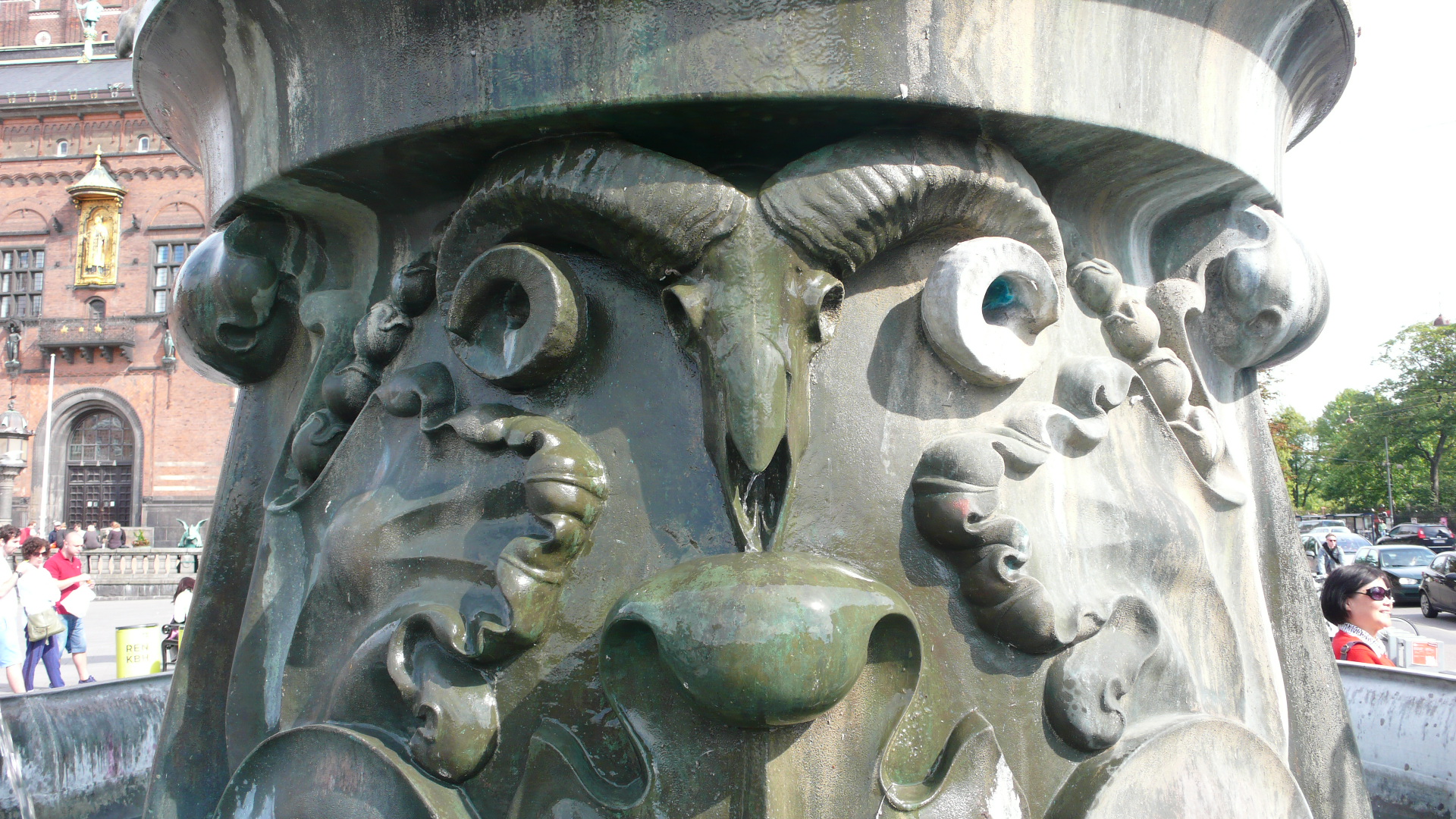
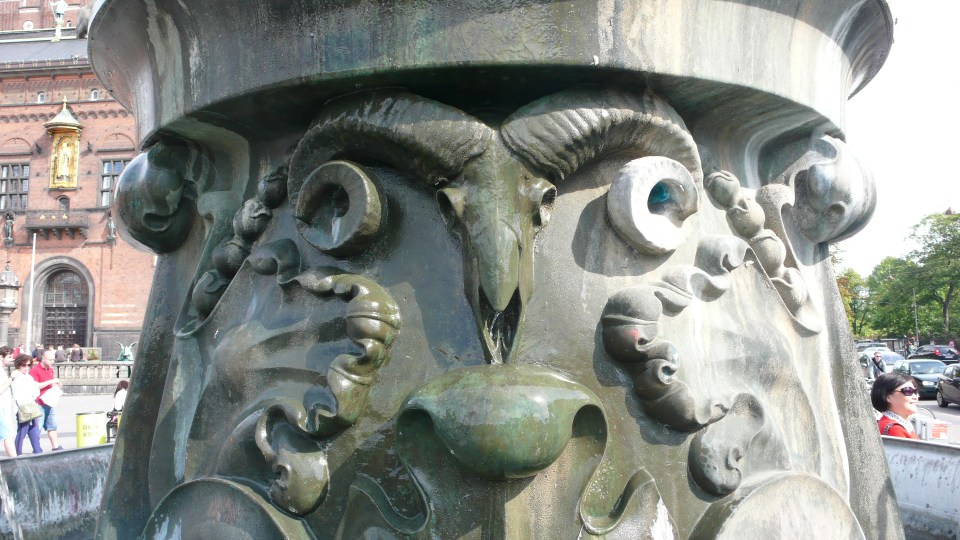
Friday evening I was exhausted, and Karin and I opted for dinner in the hotel restaurant and an early night, as Saturday was to be spent exploring Copenhagen. It’s a great city for wandering around, with fascinating architecture and unexpected additions to buildings, such as bronze dragons:

P1110840

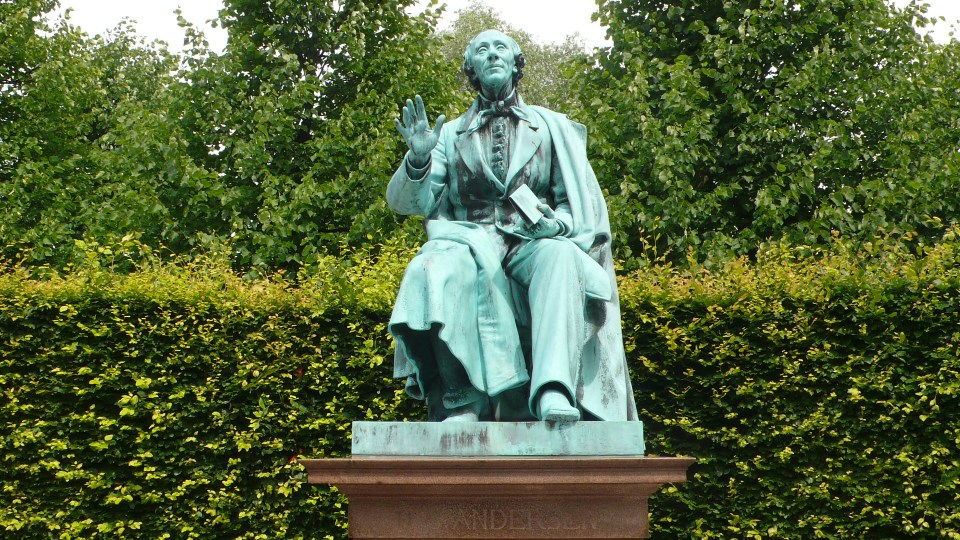
And parks with statues of artists and writers, such as Hans Christian Andersen:
P1110841

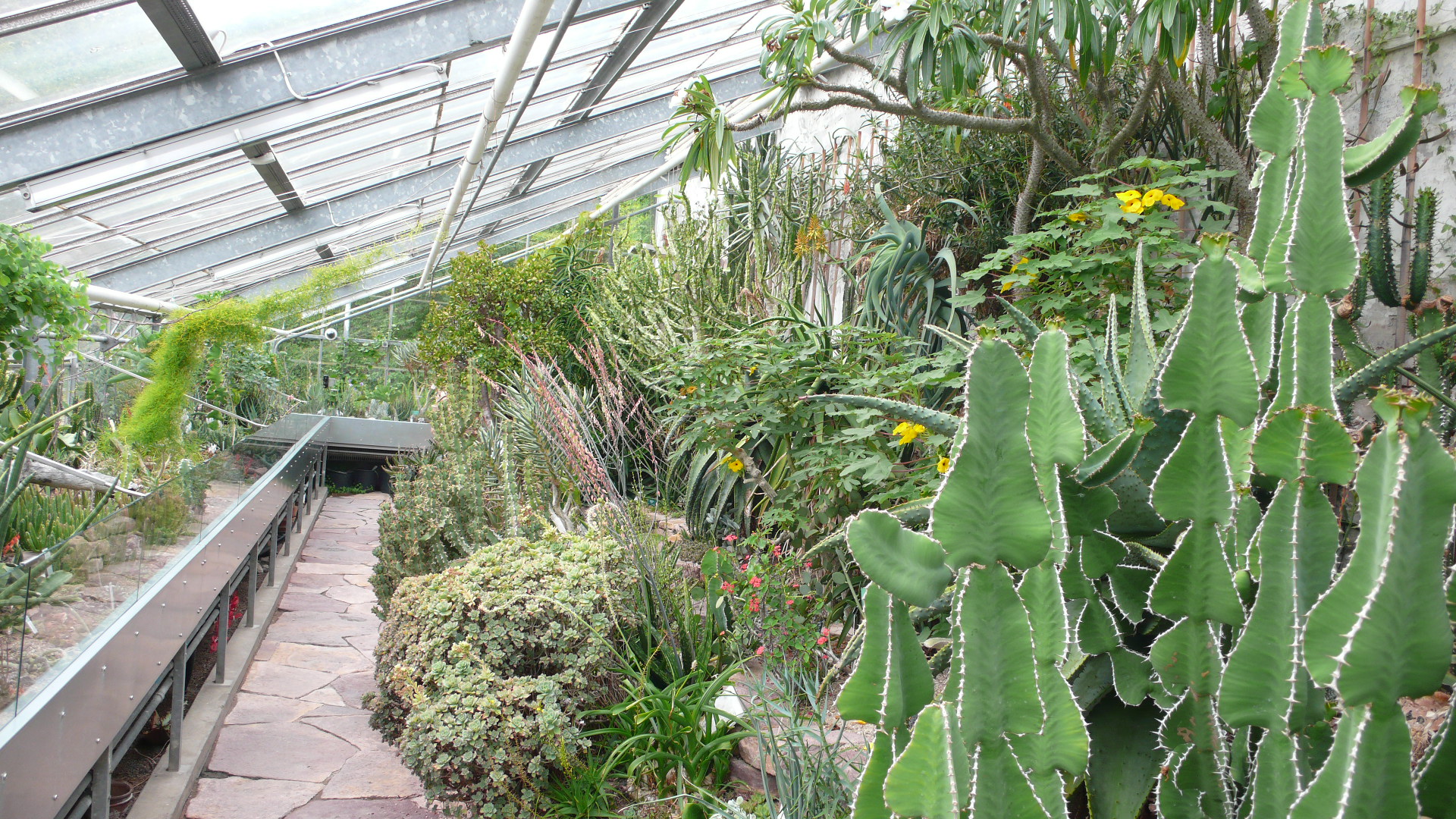
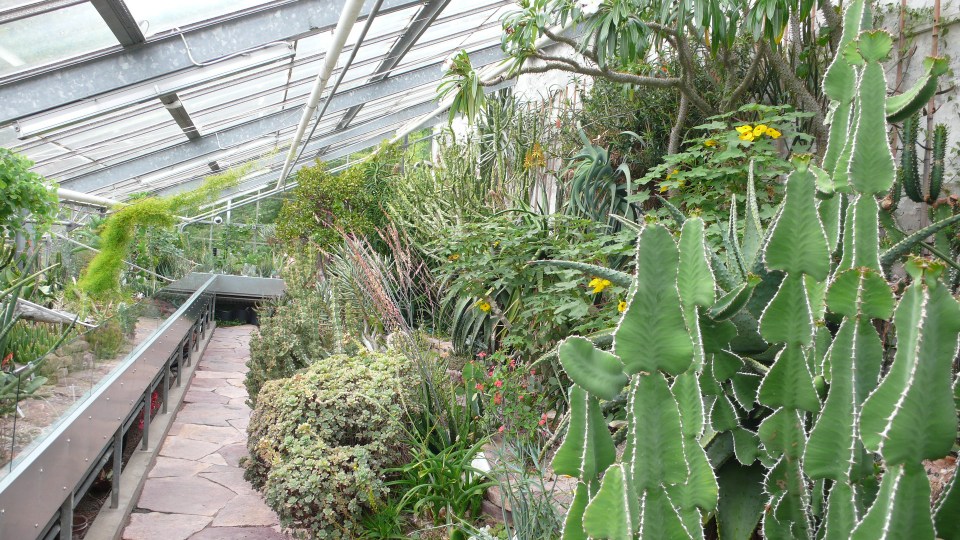
After a roundabout wander, via a gallery selling African tribal art (which we couldn’t afford) and a small lunch (which we could only just afford – Copenhagen’s an expensive city!) we eventually ended up at the University’s Botanical Garden, which has a superb living collection of cacti and succulents, orchids and other epiphytes, and alpine plants.
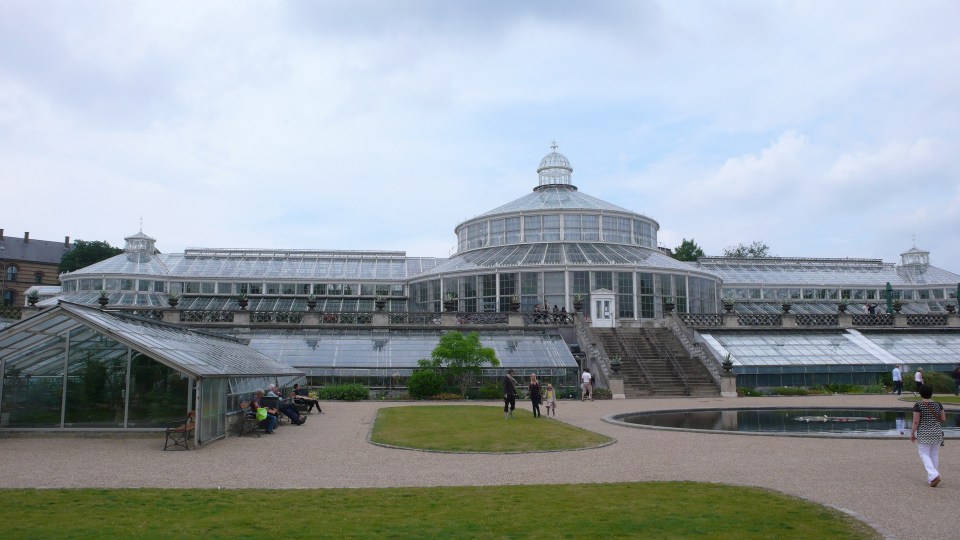
P1110846

It beautifully illustrates the huge morphological diversity encompassed within the 352,000 or so species of flowering plants, one of the many reasons why I love visiting botanical gardens: I always see something new.  This included two species of bumblebees (Bombus) which I’m sure don’t occur in Britain.  I’ll have to look them up when I get back:  from Chester to Copenhagen and, tomorrow, back to Northampton.
P1110850