Category Archives: Birds

Je ne egret rien

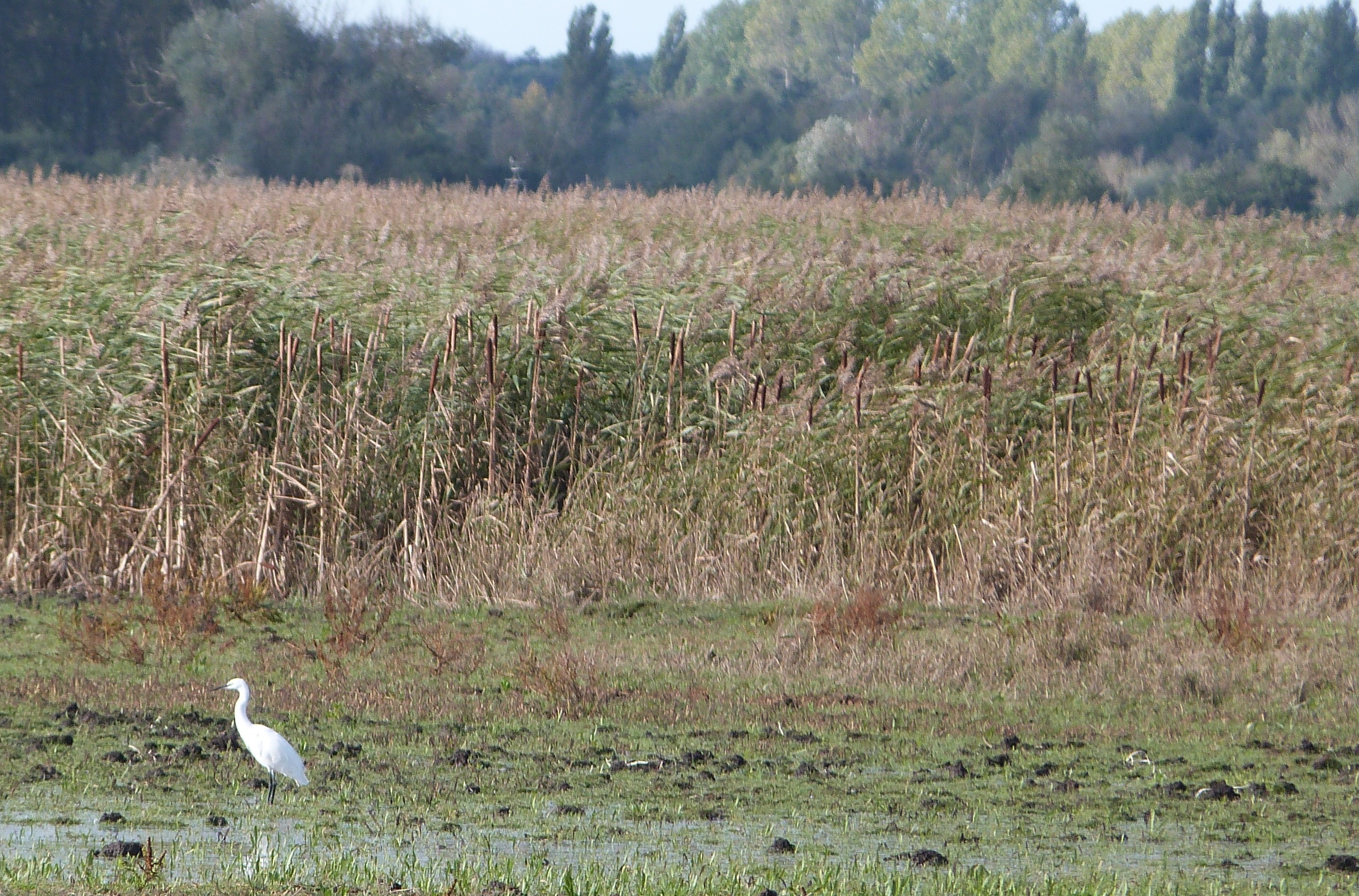
Little Egret - cropped

Conservation does not mean the same as preservation, despite the popular synonymy of these two words.  Preservation implies that something remains the same, is static and held in the same unchanging state.  One can preserve an old book, or fruit, or traditions for instance.  But one cannot preserve biodiversity because species change in abundance and distribution, regardless of the activities of humans.  That’s just how nature is.  One could take a deep time view of such change and consider the ancient habitats and organisms that built much of Britain’s underlying geology, as I mentioned when I described some walking on the Dorset coast a while back.  But even over shorter time scales that are comprehendible to humans, biodiversity changes, by the day, the month and the year.

That’s where egrets, and the pitiful punning title of this post, come in.  At the end of last week Karin and I spent a long weekend on the Suffolk coast, in the village of Walberswick.  It’s an old stomping ground for Karin but I don’t really know this area very well at all.  We spent our time talking and reconnecting, eating local food, drinking the good local Adnams beer, walking along the beaches, through saltmarsh and reed beds, and collecting stones and sea glass (I really like sea glass and have amassed bottles of the stuff over the years that we keep on sunny windowsills – think of it as aesthetic waste management).  And we looked at birds as we encountered them in these rich, diverse habitats.  Final total for the weekend was a respectable 37 species, including a few I couldn’t identify, helped along by a trip to the RSPB’s Minsmere Reserve (with, it seemed, every other birder in Suffolk; we had to queue to get into some hides). 

Two of the species we saw were egrets, a common name that covers several genera in the heron family Ardeiedae.  As the Wikipedia entry for egrets notes: “The distinction between a heron and an egret is rather vague, and depends more on appearance than biology”, as good an argument for the importance of scientific species names as any I’ve encountered. 

The first of the two species I spotted was the Little Egret (Egretta garzetta), an elegantly roaming bird that actively hunts along river margins and through marshland and flooded fields.  I was able to get within 10 metres or so of a bird at Walberswick and could admire its poised movements on vivid yellow feet, contrasting with black legs to make it look like a woman wearing footless stockings, as Karin put it (she took the photograph that accompanies this entry).  The second species of egret was the Great White Egret (Ardea alba), a much taller bird than the first, and an ambush hunter; like the related Grey Heron its strategy is to stand still and wait until prey comes to it.

The earliest record of a Little Egret in Britain was almost 200 years ago, in East Yorkshire in 1826.  However it is not known to have bred in this country until a pair did so in Dorset in 1996.  In other words, just 20 years ago this was an uncommon bird in Britain whose rare arrival would have generated a flurry of local twitching.  Now it hardly gets a mention on birding sites, we are so familiar with it.  Not so the Great White Egret which still raises some excitement when it appears.  Although this species was also recorded as early as 1821 in Britain, Great White Egrets only began to breed in Britain in 2012 and there is considerable anticipation that it will follow the Little Egret in expanding its population in this country.

We could add other birds to this list of species which have naturally colonised Britain within living memory, such as the almost ubiquitous Collared Dove (Streptopelia decaocto) as well as insects such as the Tree Bumblebee Bombus hypnorum and the Ivy Bee Colletes hederae.  Others will undoubtedly follow in the future, and perhaps the Cattle Egret will be the next member of the heron family to take up permanent residence on our shores.

Of course the flip side of new arrivals such as these is extinction, a topic that I will return to at some point as we’re currently putting the finishing touches to what I hope will be an exciting new paper on British bee and wasp extinctions.   Understanding the ebbs and flows of biodiversity over time requires data to be collected and we are fortunate in Britain to have a number of active monitoring schemes that regularly survey different groups of organisms.  This activity is vital if we are to be able to monitor our wildlife and to take action if we see declines, though the most recent results for the Status of Priority Species index makes grim reading:  the overall abundance of threatened species in the UK declined by 68% between 1970 and 2010.  It’s a complex message, though, and there are some success stories within those statistics.  But the animals that have fared worst have been the insects, particularly moths and some of the bees, wasps and ants.

Against this background of monitoring and decline I was happy to accept an invitation last week to attend a Defra-sponsored meeting at the Natural History Museum in London to discuss the setting up of an insect pollinator monitoring scheme.  A group of about 50 scientists and conservationists discussed what such a scheme might look like and how it could be implemented.  I’ll report back in more detail about this in the future once some decisions have been made as to how to proceed.

Meetings such as this, as well as being important in their own right, provide an opportunity to catch up with old friends and colleagues and discuss their latest work, or latest child/house move/job move, as appropriate.  So it was good to have a couple of beers after the meeting and chat with a few people including Dave Goulson, arguably one of the most significant scientists working in British pollinator conservation, and an outspoken critic of the current use of neonicotinoid pesticides.  Dave founded the Bumblebee Conservation Trust and has produced a lot of the scientific literature on bumblebees as he describes with wit and passion in his recent book A Sting in the Tale.  I’ve known Dave for over twenty years (we were PhD students together) so I was a little embarrassed to ask him to sign my copy of his book, but as a collector of signed editions I wasn’t going to let the opportunity slip.  Dave mentioned that the book has been shortlisted for the Samuel Johnson Prize and I hope it wins: ok, I’m biased, and can read it in Dave’s own voice which adds enormously to the book.  But it’s a great read for anyone interested in pollinators, or conservation, or just in the processes which turn a natural history obsessed kid into a professional scientist. 

This will be my last blog entry from Britain for a month; on 31st October I fly out to Brazil to spend time with André Rodrigo Rech, running a short pollination biology course, speaking at the Brazilian Botanical Congress, and conducting field work.  I’ll try to blog as I go along.  In a happy coincidence the Great White Egret is depicted on the Brazilian five real banknote.  I’ll look out for it.
Biodiversity and urban cultural fabric

093

It’s easy to take for granted the biodiversity of our towns and cities, though “urban ecology” has become a buzz phrase within the subject and there’s lots of research groups working on this topic, as I’ve mentioned previously in relation to Muzafar Hussain‘s work on solitary bee diversity within Northampton.  Muzafar is currently analysing his data and writing up the results, and I hope to share some of his exciting findings with you at some point in the future.

However another aspect of urban “biodiversity” has hardly been researched at all, as far as I’m aware:  the way in which elements of the natural world have been incorporated into the physical fabric of urban landscapes. The use of flower and animal figures around doorways and windows, and in the metalwork, of Victorian town houses in Northampton, for example.  Some of the most impressive are to be found on a couple of houses in the Barrack Road Conservation Area, where the iron railings around street-side balconies have been cast to resemble botanically accurate Epihyllum cacti in full flower.  There are many others, including birds incorporated into boot scrapers, and flowers and trees used for house names  (“Holly Cottage”, “Lonicera House”, “The Lindens”).  Much of the housing and commercial architecture in Northampton dates to the back end of the 19th century and the use of such motifs possibly reflects the influence of the iconic Natural History Museum in London, Alfred Waterhouse’s cathedral of biodiversity a century before the term was coined.

The names of pubs and inns may sometimes reflect our fascination with the natural world (“The White Elephant”) or with agricultural biodiversity (“The Cock Hotel”), a topic that I’ve written about in the past.  I was therefore unhappy to read that a pub in Northampton town centre is to be renamed, despite the fact that its old name of The Fish Inn reflects a history of that part of town which goes back to at least the 16th century and was included in a town heritage trail.  Why do councils allow this to happen?  It devalues the cultural fabric of the town ever further.  

Oxford, I’d like to think, might treat its local history a little better, regardless of whether one can spin a loose link to biodiversity.  It’s always a pleasure to return to the city which turned me into a professional scientist so I was happy to make the almost two hour early morning car and bus trip to attend the first day of the Biodiversity Resilience symposium.  I was teaching on the second day so had to miss it, but the first half of the symposium was interesting and thought provoking.  Highlights for me included:

  • Sam Turvey‘s analysis of whether or not human range expansion over the past several thousand years has driven the extinction of large mammals.   In some cases the evidence is clear cut, in others it’s not.
  • Lydia Cole on using the fossil pollen record of tropical forests to estimate recovery times of forest vegetation following disturbance; it appears that whilst all forests can recover, not all regions do so equally quickly, with time scales varying from around 150 to 350 years.
  • Graham Stone describing his group’s work on  how the history of interactions between oak gall wasps and their parasitoids in Europe can be reconstructed using molecular genetic data.
  • Guy Woodward on the effects of stressors such as pollution and drought on freshwater food webs.
  • John Dearing linking social science with natural science in an analysis of how population growth and exploitation of natural resources might lead to environmental problems in some parts of China in the near future.

These should give you a sense of the diversity of topics covered and that was the overwhelming impression that I came away with at the end of a long day: the study of biodiversity is as broad as one can imagine, from genes to ecosystems, interactions to extinctions.  Notions of what is meant by “resilience” were equally wide, with each presenter having a subtly different take on a slippery concept.  This illustrates the value of conferences such as this: it brings together a community of individuals who might work in complete ignorance of one another’s work, even though it could inform and challenge their own studies.  If day two was as stimulating as day one, then the organisers can count it a success.

Any friend of coffee is a friend of mine

Beach spiral

As I begin to write this post rain is pattering against the windows with increasing frequency and a brisk wind stirs the browning horse chestnut leaves that overhang the garden from a neighbouring property.  Autumn is here.  It’s a chilly Sunday morning and beside me is a large cup of good coffee, hot, black, and bitter, warming and stimulating in equal measure.  It’s our first Sunday at home for a fortnight as last weekend was taken up by a speaking engagement in Hereford at a large bee keeping convention where coffee featured highly, as I’ll explain.

The Hereford convention wasn’t the kind of academic research conference that I’d normally attend, but I thought it would be fun to go with Karin, and I’d learn more about bee keeping (both proved to be true).  For this broad audience of amateur and professional bee keepers I presented a version of my professorial inaugural lecture from earlier this year entitled “How many bees does it take to wake up in the morning?  The importance of biotic pollination in a changing world”.  It’s a title with multiple layers of meaning, referring to bees as ecosystem service providers, my enjoyment of my work which gets me out of bed every day, and the energising effects of a strong cup of fresh coffee first thing.  

As part of that lecture I present some back-of-the-envelope calculations that are meant to put coffee production into a biodiversity perspective, rather than being a rigorous analysis, but which are nonetheless worth considering.  They go like this.

Global coffee consumption in 2010 (the most recent year for which I could find figures) amounted to 93 million export bags, each weighing on average 60kg (there are larger and smaller bags used in different parts of the world, so we’ll use this figure).  The export value of this crop was estimated at US$15 billion for the (largely tropical) countries that produced it.  That’s the value before it’s processed and sold, which is much more difficult to calculate, though coffee retailing is clearly big business.  For example, Starbucks’ total revenue for the same year was US$10.7 billion and it supports over 150,000 full time employees.  So it’s lucky for us that it pays its taxes.  

Although coffee is partly self pollinating, it relies on insect pollination to produce large crops, mainly involving bees of various types.  I tracked down a number of studies by researchers such as Alexandra-Maria Klein and Taylor Ricketts which showed that managed honey bees are responsible for anywhere between zero and over 90% of flower visits, depending on the diversity and abundance of local wild bees (over 40 species of which are known to pollinate coffee in Costa Rica alone).  At this point I throw out a question to the audience:  how well do we understand this globally important agricultural ecosystem service?  Do we have any idea of how many individual insects are required to support this industry?  Some more calculations:

Each coffee bean is the product of a single fertilisation event following the deposition of at least one pollen grain on a flower’s stigma.  The mean weight of a single coffee bean is 0.103g (I weighed a sample in preparation for the lecture) which means there are approximately 582,524 beans in a 60kg bag.   Total number of coffee beans produced in 2010 is therefore 93 million bags multiplied by 582,524 beans per bag, which equals  54,174,757,281,553.  In words, that’s  more than 54 trillion coffee beans.  As coffee is 50% self pollinating we can half that figure: coffee production requires at least 27,087,378,640,777 (over 27 trillion) pollinator visits.

But here I confess to the audience that it’s impossible to go further and answer the questions I posed above:  we really have no idea how many bees are supporting the coffee industry.  The problem is that there are big gaps in our knowledge of some basic aspects of the natural history of these bees and their interactions with coffee flowers.  For example, how many flowers does an individual bee visit in its lifetime?  How effective are different bees at pollinating  the flowers?  What is the minimum population size for these bees, below which they would go locally extinct?  All that we can say with certainty is that the global coffee industry (and the individual productivity of many workers) is supported by a LOT of bees.   Many billions is my best guestimate.  Perhaps we don’t need to know the number: perhaps it’s enough to know that if we provide sufficient good quality habitat for these bees, they will provide the service.  But at least it illustrates our reliance on these insects and is something to consider when you’re enjoying the first cup of the day.

Bees are not the only animals that we have to thank for coffee production as a recently published study has shown:  birds in Costa Rica help to reduce the impact of an important pest of coffee.  As Jana Vamosifrom whom I shamelessly stole the title of this posting, commented when I posted this link on Facebook:  any friend of coffee is a friend of mine!


Garlicky archipelago

Sunrise from train September 2013

“Garlicky” is a great word, redolent of hot, pungent flavour and nose-filling odour: a Pavlovian word that ignites the senses as it’s uttered.  Perhaps I love the word because garlic is one of my favourite vegetables, a pleasure to both eat and grow.  A Garlic Festival is therefore not to be missed, and my family and I had the opportunity to attend one on the Isle of Wight during a short holiday a couple of weeks ago.  We were joined by university friends I’ve referred to previously, as the first one of us to reach a half century celebrated his 50th birthday.  There was more to the festival than just garlic, but for me its highlight was seeing the sheer variety of different garlic types that can be grown, testament to how this vegetable has been modified from its ancient wild origins in central Asia.  Karin and I bought seed bulbs of four different varieties as additions to the horticultural biodiversity of our vegetable plot, to be planted later in September.   These included the notable Elephant Garlic with its massive individual cloves, which, I’ve just learned while researching that link, is not a true garlic at all but rather a variety of leek.  We live and learn!

Archipelago is another great word and the time we spent on the Isle of Wight, travelling over by ferry from Southampton, served to remind me that the British Isles, with over six thousand islands of various sizes, is by any standards a significant archipelago.  Since at least the explorations of Alexander von Humbloldt, island groups have  been known to host unique species, isolated taxonomically and physically from their closest continental relatives.  Darwin’s later researches showed that archipelagos such as the Galapagos Islands are important as natural evolutionary laboratories, and in previous posts I’ve briefly discussed his unrequited desire to visit to the Canary Islands.  The Isle of Wight is too close to the continent of Europe to have evolved any unique biodiversity but I did pick up the hint of a subtle Island Biogeographic Effect whilst compiling a list of all the bird species I saw over the course of the week.  The list topped out at about 30 species, which I thought was rather low.  Some of the omissions surprised me (not a single blackbird, for instance) and I saw very few individuals of some other common British species.  Now, it could be due to my lousy birding skills I suppose, but it could also be due to the fact that we were on an island, even though it’s less than 1500m across The Solent to the mainland at its closest point.  This is close enough for bumblebees to fly to the island: I’ve seen them shadowing the ferry.  But nonetheless it might be far enough to affect both the diversity and population sizes of the bird life.  Enough wild speculation; I’d be interested to know what serious ornithologists who actually know something about the subject make of this.   

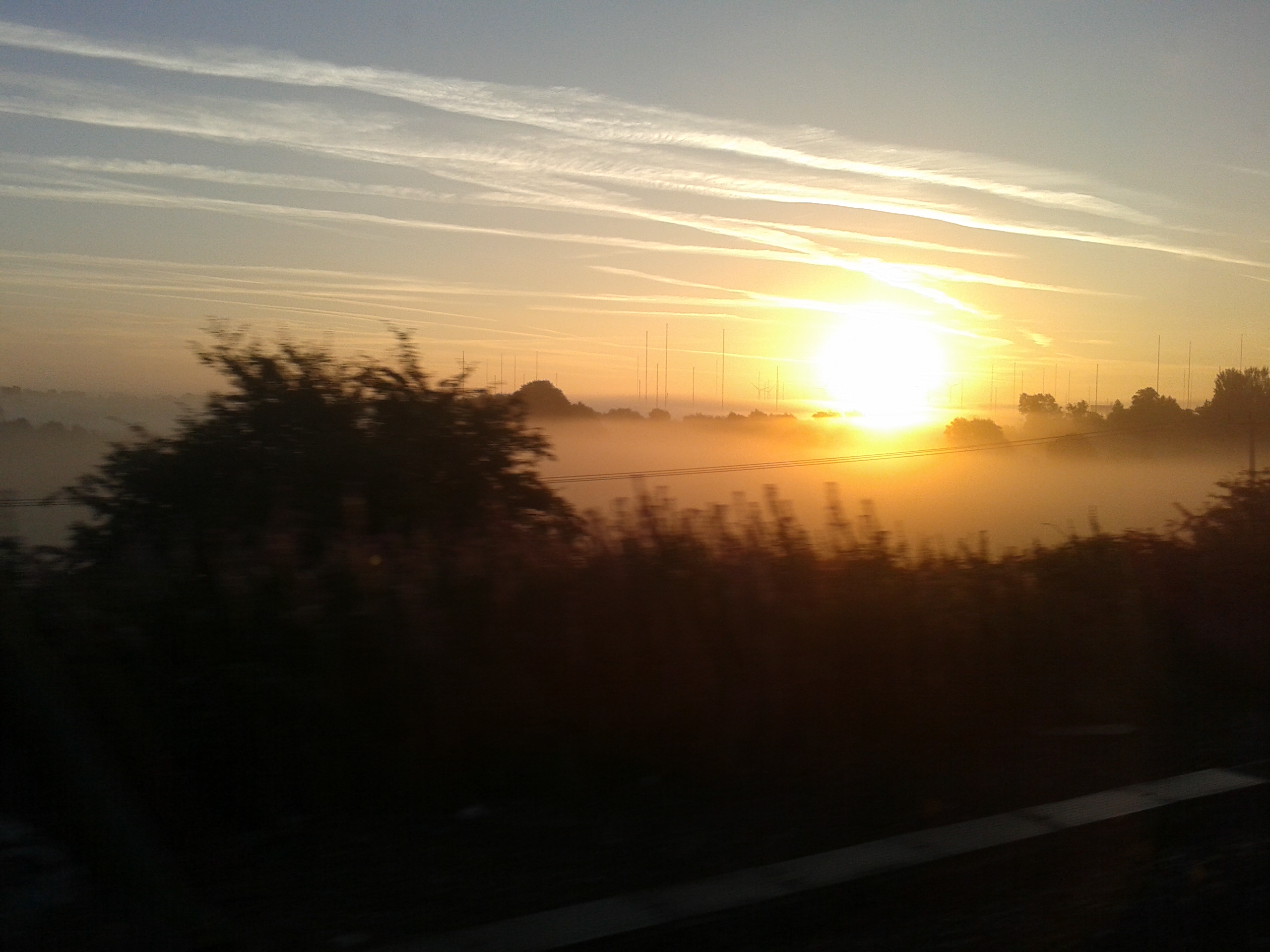
As I finish writing this post I’m on the other great island of my home archipelago, sitting in a bar in Terminal 2 of Dublin Airport.  I’ve been working at University College Dublin as external examiner for their MSc Applied Environmental Science course.  It’s been a fun couple of days reading theses and interviewing chatty, engaged students, which began with a dawn alarm yesterday in order to get to the train station and then Birmingham International in time for a 0850 flight.  Whilst waiting for my taxi I popped into the garden and paused to enjoy the early morning stillness before opening up the chicken coop.  A large flock of black-headed gulls passed low above me, backlit by a thin sliver of moon and silent except for the shuffle of feathers.  From the direction they were travelling I think they were heading from a roost on Pitsford Water and on to destinations unknown.  The garden was also busy with early risen blackbirds and a couple of flitting bats, whilst a little later my taxi passed a rangy fox idly trotting through low mist on the Racecourse park.   It was urban biodiversity at its most sublime.  

All this talk of Northampton is making me feel homesick to be back with the family (Karin, kids, cats and chickens) and start planting garlic.  But there’s just time for another Guinness before my gate opens.  Sláinte!

In defence of lawns UPDATED

2012-02-22 10.19.23

Over at the Small Pond Science blog, Terry McGlynn has a thought provoking post which asks ‘Are trees the lawns of the future?‘.  I won’t rehash Terry’s arguments, you can read it yourself, but I was intrigued by his stereotyping of lawns as always bad.  As a keen amateur gardener and a professional with research students who have worked on garden biodiversity projects, I’d have to say that there’s lawns and there’s lawns: it all depends on how they are managed and what the purpose is of a particular lawn. Clearly there’s a continuum from high diversity, natural “lawns” (i.e. close-cropped grassland which can support significant biodiversity such as some chalk grassland and African savannah lawns) through to the high resource input, monoculture, perfectly presented lawns seen on golf courses and around important buildings.  In the part of the continuum that Terry’s railing against, typical urban and suburban householder’s lawns and everything below that in terms of “naturalness”, it’s possible to manage lawns in a low-input way that is both productive and can support biodiversity.

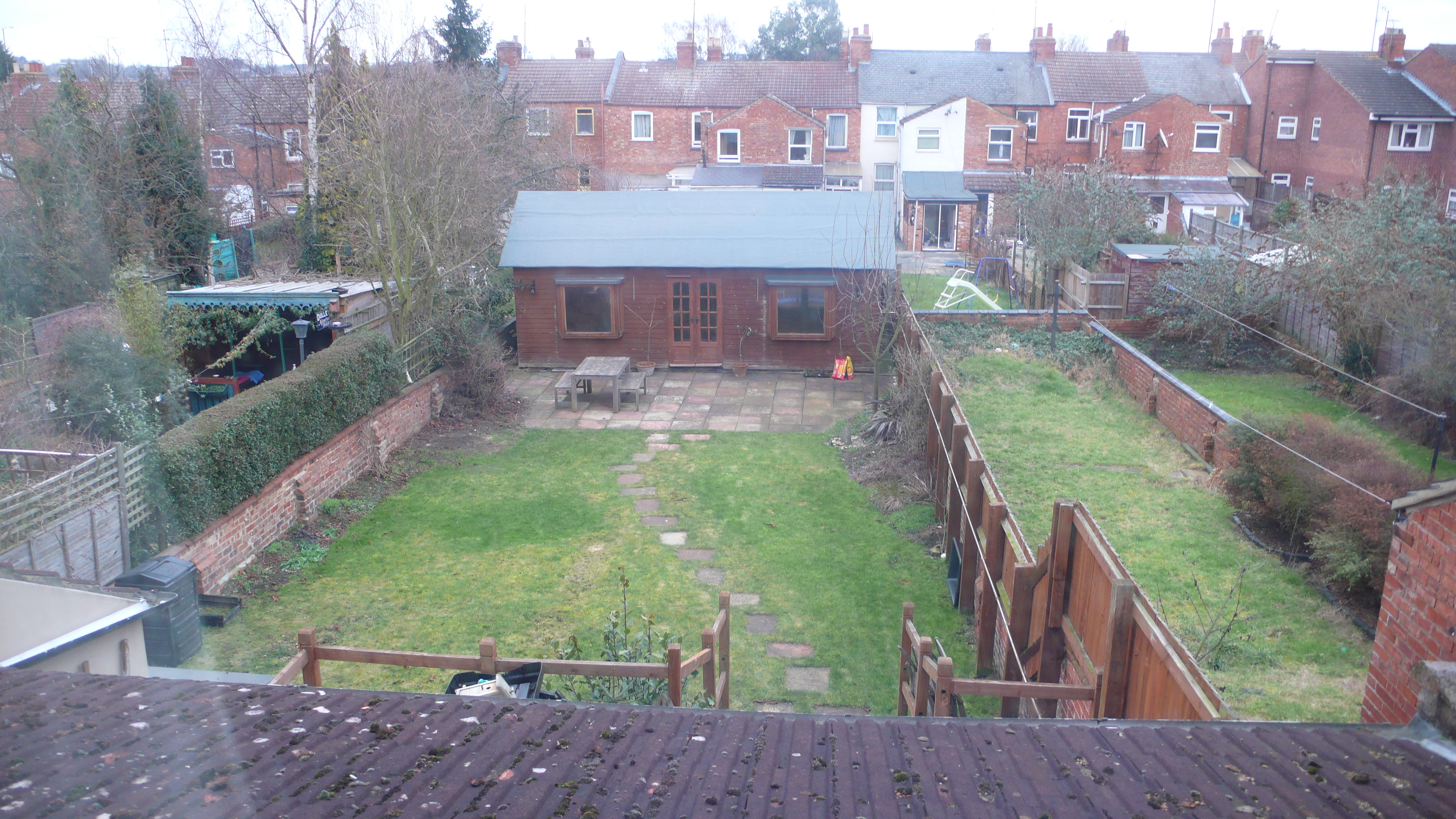
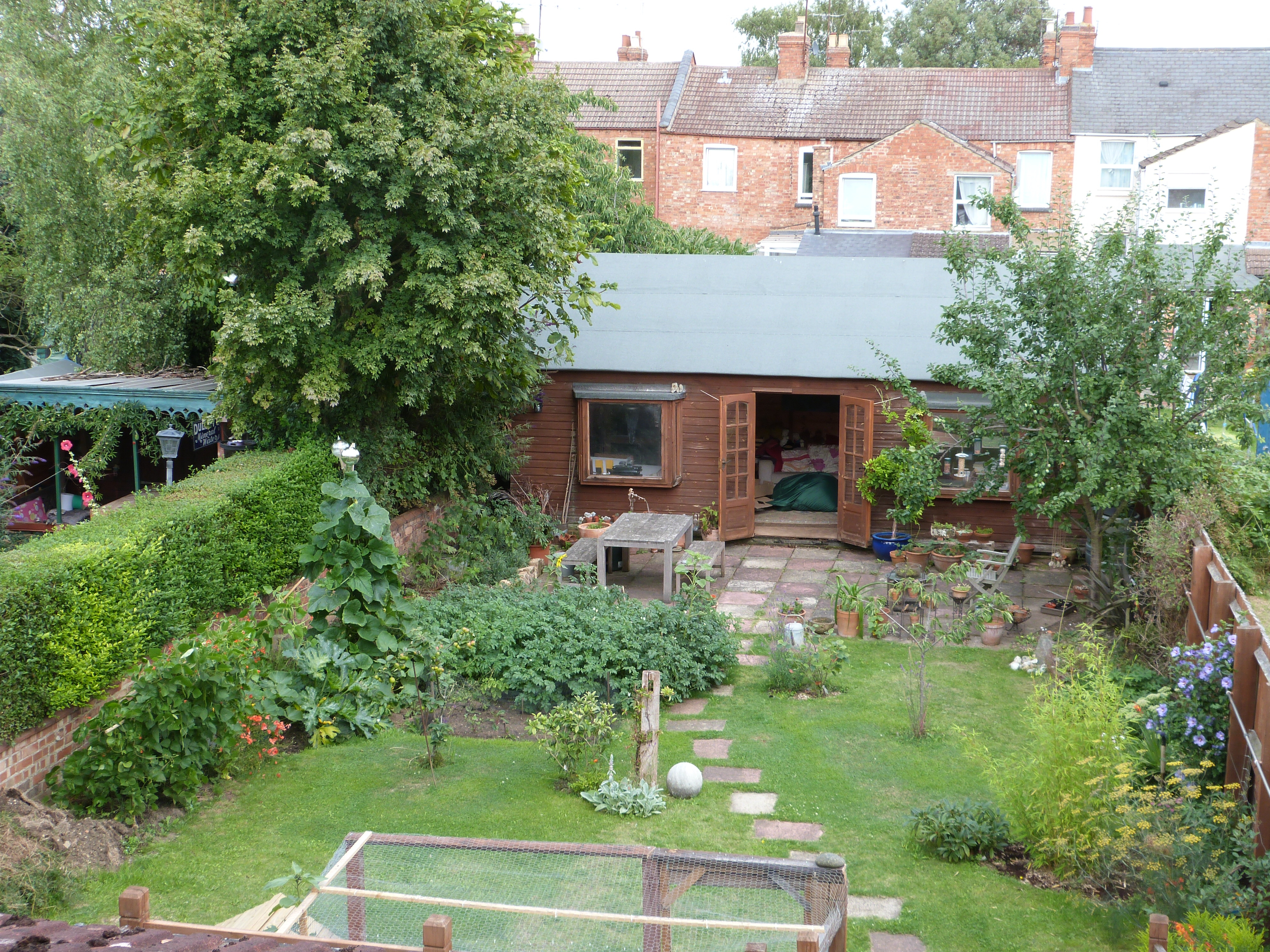
In the house that Karin and I moved into about 18 months ago, the garden was almost wholly laid to lawn; the picture at the top shows you what it was like in early 2012.  Since then we’ve dug flower borders, a vegetable patch and planted fruit trees, but kept about 50% lawn (though this will reduce as we widen borders). We don’t water or fertilise the lawn, just keep it regularly mown. I’ve not assessed it systematically but I’d estimate that, in addition to the grasses (some native, some not) there’s another 10 to 15 native plants growing in it, plus fungi which pop up every now and then. The plants include taxa which are popular nectar sources for bumble bees and solitary bees, e.g. clovers, dandelions, etc. These flower even though we mow regularly, and of course these bees pollinate our squashes, courgettes, apples, plums, etc.  The local blackbirds and starlings also find food on the lawn.

I mentioned that the lawn is “productive” and that’s where the grass cuttings come in. They are either put into the compost heap, fed to our chickens, or added directly to the vegetable patch as a mulch.  It’s also possible that the clover, which is a nitrogen fixing legume, is adding to the soil fertility that can be accessed by the far-reaching roots of the fruit trees.  Would be an interesting hypothesis to test.

So I think it’s possible to have a lawn that adds to local biodiversity and is productive for the gardener, but I accept that we may be unusual in that regard.  It’s not the kind of lawn that would make a grass obsessive proud; but that type, as Terry notes, needs a lot of input of resources, not least time.

UPDATE –  a few people have asked to see a picture of how the garden looks now, so below is more or less the same shot but taken today (15th August 2013) by Karin.  Comparing a British garden in February and August is clearly unfair!  But hopefully you can see that we’ve done quite a bit of work to it, though as with all gardens it’s a work in progress.

Garden 15th August 2013

More dreams of a river

The Power station - enhanced

Britain has been baking in a long, hot, dry period over the past few weeks, ending spectacularly in thunderstorms and torrential rain last Tuesday; the very day chosen for a walk-over of the University of Northampton’s proposed new campus site at Nunn Mills by the ad hoc ecology group that is discussing the wildlife potential of the project.  To say that we got wet would be an understatement: the only way I could have got wetter would have been to jump into the nearby River Nene.  But it was a useful day for us that generated lots of ideas on how the biodiversity of the site might be conserved and enhanced.  The group included my colleague Duncan McCollin and myself from the University, officers from the Wildlife Trust, a team from Betts Ecology who have been formally assessing the site, plus other building and landscape consultants. 

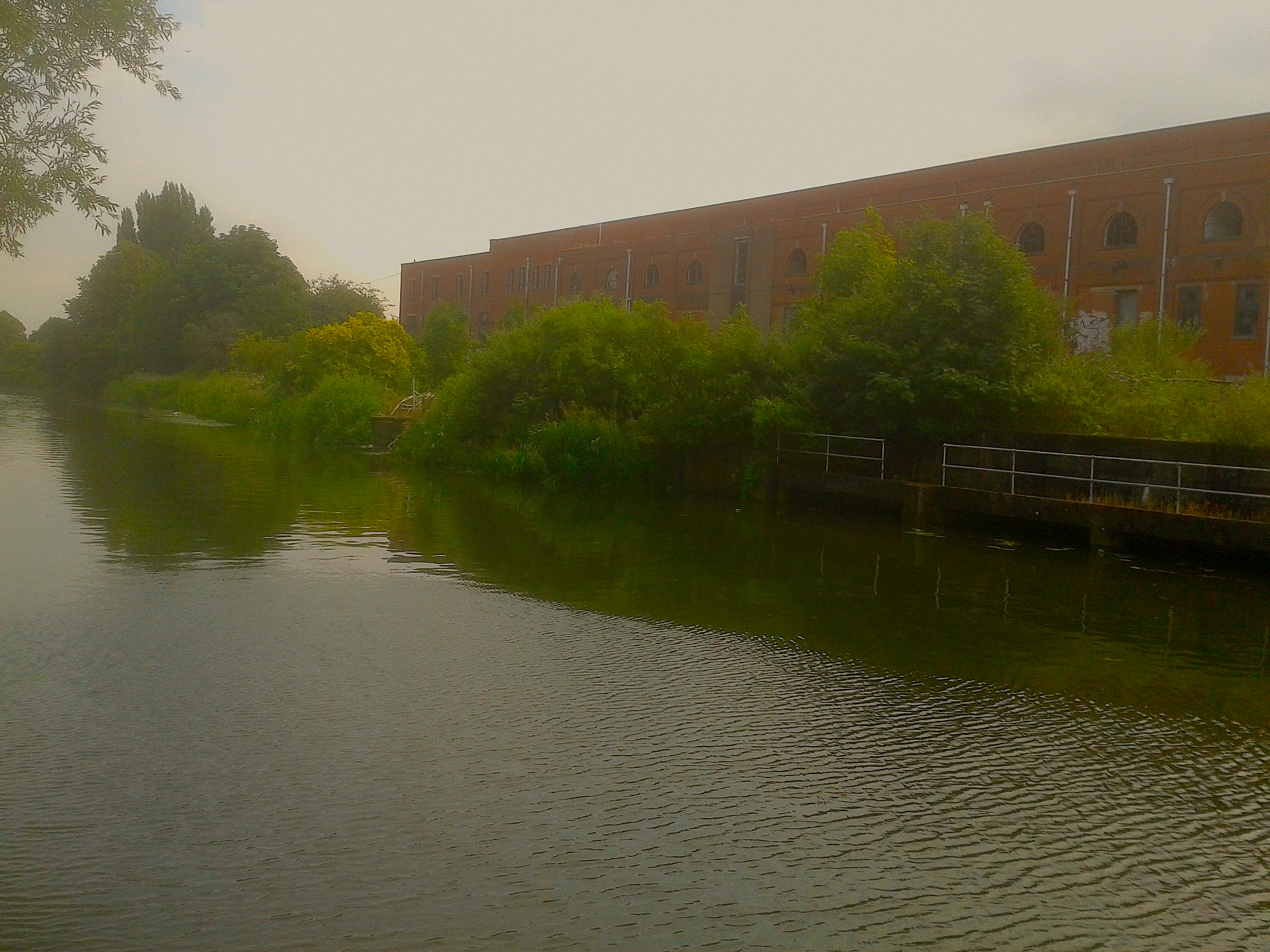
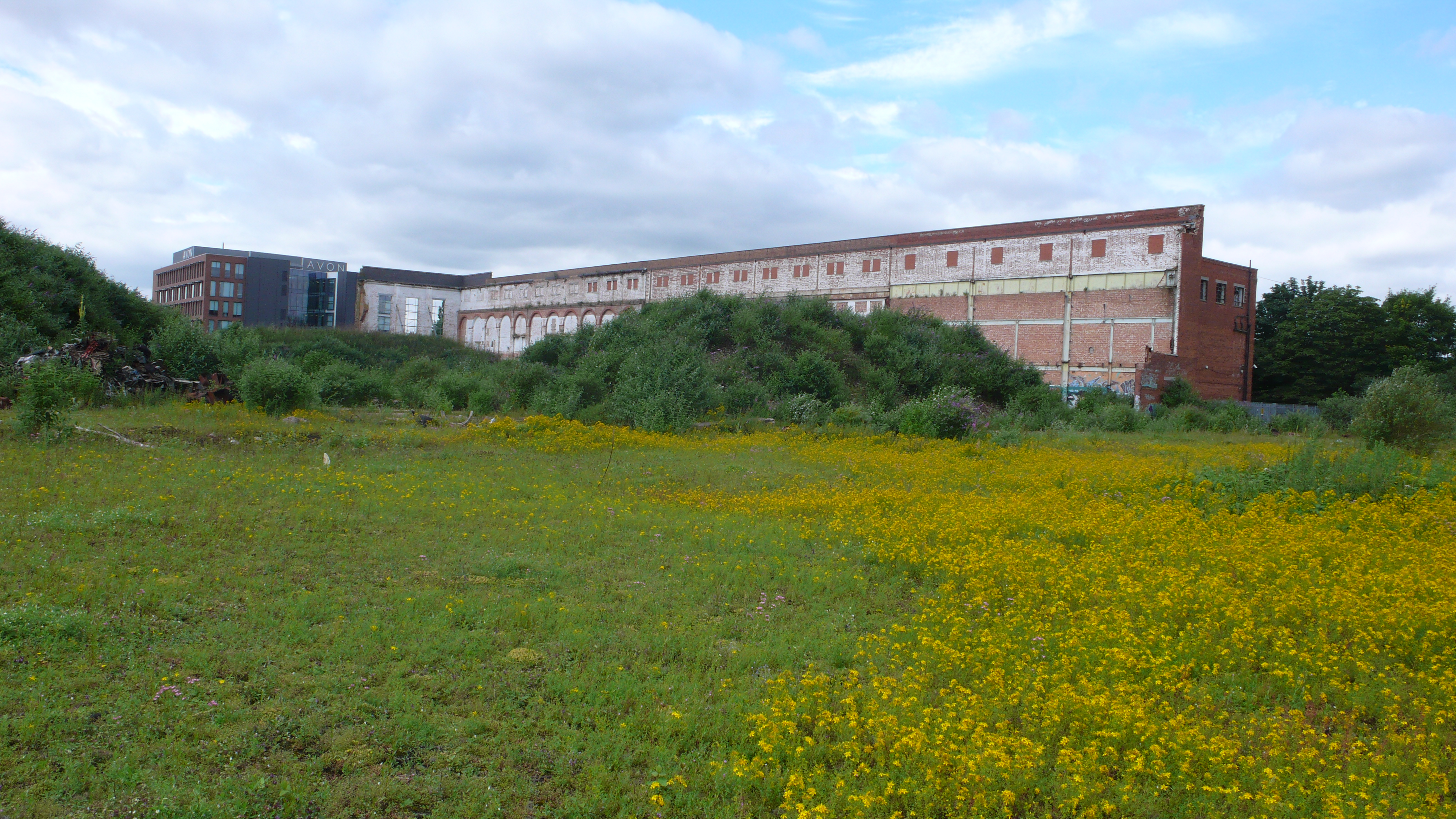
In an earlier post I mentioned the eastern half of this site and its interesting “urban tundra” plant community.  The purpose of last Tuesday’s visit was to also assess the western half which is the former factory of the Avon cosmetics company.  If you want to take a look at the area for yourself, go to Google Earth and search “Northampton Nunn Mills” and it will take you straight there.  The imagery is from 2009 but it hasn’t changed much in that time, except that what looks like a small lake on the north side of the river is now a marina for canal boats.   The roughly oblong site has the company headquarters for Avon right in the middle, with the redundant factory to the west and south.  To the east is the former power station.  In terms of wildlife and biodiversity more broadly, the mix of standing buildings, bare concrete and piles of rubble look unpromising.  But there’s lots of wildlife already on the site (including common lizards, peregrine falcons and various bats) and great potential because of its proximity to other areas.  

The River Nene forms the northern boundary of the proposed Waterside Campus and is rich in fish, insect and (especially) bird life, though it has potential to be richer, particuarly if the river banks can be reprofiled in places to remove the concrete walls and create more river edge habitat.  On this brief visit we saw a range of bird species, including grey herons, common terns, black headed gulls, swans, mallards, coots, and an LBJ (possibly reed warbler), all directly reliant on the river.  None of these birds is especially uncommon but they hint at a much richer diversity along the river valley as a whole, including internationally important sites for over-wintering migrant species.  There’s also otters along this part of the river and one of the plans for the campus is to have a quiet, secluded stretch that includes an otter holt. 

The southern border of the site is delimited by both the Hardingstone Dyke (a drainage channel) and a disused railway track, both good habitats for a range of species, especially ground nesting solitary bees and wasps on the dry soils of the railway line.  To the east, beyond the large electricity substation, these features link with the Barnes Meadow Local Nature Reserve.  This all provides a local context for nature to colonise the Waterside Campus if opportunities are provided.  The broader geographical context for the Waterside Campus is provided by the Nene Valley Nature Improvement Area project that I’ve discussed before.  The feeling amongst the group on the day was that there is great potential to enhance and create wildlife areas and it’s our desire to see these through to completion.  This will include ongoing collaboration between academics, consultants, NGOs and developers, as well as the University’s senior management team.  As an academic I’m also excited by the educational opportunities it will provide for our students as they monitor and assess the biodiversity of the development.  The next few years will be  interesting ones for us!  But we’re also interested in hearing from local people who know the area well and may have ideas about how biodiversity can be supported on the site; feel free to comment.            

Rewilding – inside and out

2012-05-11 08.39.32

The last blog entry I posted mentioned the reintroduction of red kites to England, surely one of this country’s most impressive conservation success stories of the past few decades.  Such reintroductions can be seen as one minor aspect of the “rewilding” programme being advocated by some conservation biologists.  In its most extreme form, radical rewilders advocate populating whole landscapes with large herbivores and predators that once roamed these regions but are now locally extinct, either because of human hunting pressure or environmental change (sort of Jurassic Park backed up with real science).  The idea is that reintroducing such animals results in more “natural” habitats in which ecological processes are returned to a more pristine state and biodiversity is maximised.  

There are arguments for and against rewilding in all its forms, and four recent coincidental occurrences make rewilding a topical subject for this blog.  

Coincidence one is that the Guardian newspaper has posted a great animated video about rewilding, voiced by environmental writer George Monbiot, whose work I’ve mentioned previously.  It’s an interesting overview of rewilding, if a bit simplistic; and (spoiler alert!) I’m sure I’d not want to jump naked into a river with hippos!  

Coincidence two is that I’m currently reading Once and Future Giants: What Ice Age Extinctions Tell Us About the Fate of Earth’s Largest Animals by Sharon Levy, which discusses some of the more radical rewilding notions that have been proposed, such as introducing elephants, lions, zebra and other African megafauna to North America, as stand-ins for their Pleistocene cousins which may (or may not) have been over hunted by the ancestors of native Americans.  That’s a controversial topic, as you might imagine, and it’s a book that’s well worth reading, not least because it effectively captures the atmosphere of the various camps of scientists promoting the hypotheses they personally support.

Coincidence three is that a paper was published in the journal Science last week which provides evidence for what can happen when larger animals (often the first to go locally extinct) are removed from ecological communities.  In this case, the seeds of a dominant, bird dispersed palm tree have evolved to be significantly smaller in size in those populations where the largest seed dispersing birds have been removed.  All of this has happened in the last 1o0 years or so, remarkably rapid evolution.  One of the authors, Spanish scientist Pedro Jordano, gives an account of the paper in his blog.  The study is one of the few published that links loss of biodiversity of species interactions to their ecological and evolutionary consequences, and has generated a lot of media attention.

The final coincidence is that a short review paper has finally appeared which I co-authored with Duke University medical researcher William Parker entitled Evolutionary biology and anthropology suggest biome reconstitution as a necessary approach toward dealing with immune disorders“.  You can take a look at the paper (or at least read the abstract) yourself.  But in essence the review places William’s Biome Depletion Theory in a broader perspective of how the loss of species with which Homo sapiens would normally interact (in this case gut worms of various types) can have profund knock-on effects for human health and may explain the epidemics of some conditions that are currently prevalent within industrialised societies.  More controversially, the review advocates that we begin to routinely rewild our gut fauna by selectively introducing one or more types of laboratory-bred worms to the guts of children.  There’s already a lot of discussion around this topic but one day in the future such procedures may become no more unusual than standard childhood vaccinations.

Having said that, there were enough problems convincing land owners that reintroducing beavers was a good thing in the Scottish Highlands, whilst similar plans for wolves and bears have stalled; reintroduction of tape worms to their children’s lowlands will probably take even more convincing.

A coiled Spring

Wellcome Trust - June 2009 006

April, according to T.S. Elliot, “is the cruellest month”.  Not sure about that, though April 2013 proved to be both frustrating (as we in northern Europe waited for Spring to arrive) and busy, as I tried to pack in a whole set of activities.  That’s my only excuse for not updating my blog, so the aim of this post is to catch up with biodiversity-related activities and observations over the past few weeks.

Just as iconic decades begin part-way through a given ten year period (the 60s didn’t really kick off until about 1963, for instance) so April for me actually began at the end of March.  In the last week of that month I completed my formal teaching for the term and celebrated the first anniversary of the Nene Valley Nature Improvement Project.  I also picked up my daughter Ellen from Heathrow Airport, on a two week visit back from working in China.  On the way I counted over 20 red kites flying near the M40 motorway – what an incredible success story their re-introduction has been!

One of the reasons Ellen had come back was that I was due to give my inaugural professorial lecture, entitled “How many bees does it take to wake up in the morning?  The importance of biotic pollination in a changing world”.  Another reason was to to celebrate my eldest son Patrick’s 18th birthday the following day.  Both once in a lifetime events and both had family at their heart.  It was a great week.

Some leave time followed, much needed after what seemed like an endless 12 week university term, during which I hoped to plant potatoes and do some other work in the garden.  But Spring refused to uncoil.  The northerly winds brought cold weather that froze all vernal activity in the act.  Flower and leaf buds were there waiting to unfurl; insects would occasionally appear then just as quickly disappear; and birds clearly wanted to get on with the important activities of raising young.  But all was delayed.  One could sense the tension, the build up of seasonal energy, biology waiting to happen.

A talk at Earlsdon Gardening Club near Coventry on Monday 8th April was well received and took my mind off the organisation of the biennial Bumblebee Working Group meeting on the 11th.  This semi-formal get together of scientists, NGOs, and other Bombus-minded individuals, shifts between venues every two years.  At the last meeting in 2011 I volunteered to host the next event and then put it out of my mind for 18 months.  Organising a scientific meeting is always a bit of a mad panic as the day draws closer and one wonders if anyone will actually turn up.  But as it turned out the event was well attended, with over 80 people listening to talks on diverse topics including the effects of neonicotinoid pesticides on bumblebee colonies;  I’ve uploaded a copy of the programme.

Friday 12th April was a frantic dash around office and lab to get books, equipment and sundries organised for our annual undergraduate Tenerife Field Course, which was flying out on the following Sunday.  A great time was had by all as we explored the biodiversity of Darwin’s Unrequited Isle and we came back with a wealth of great data plus not a little sunburn.  No matter how often I tell students that they really need to wear a hat and use sun block, some will never listen.

Arriving from Tenerife early on Monday 22nd, I slept for a few hours then was back at the university for the oral PhD examination of Hilary Erenler, whose work I have mentioned previously.  These exams are always stressfull for both student and supervisors but in the event Hils performed wonderfully and passed with only minor amendments.  A great result!  Now looking forward to publishing some papers from that work.

April ended, and May began, with a change in the weather.  Much warmer winds blew in from the south west and life suddenly erupted: pressure had been removed from the coiled Spring.  Lots of pollinators appeared in our garden including: Anthophora plumipes, one of my favourites for its glossy, black females and aggressively flower patrolling males; the relatively newly arrived Bombus hypnorum; the bee fly Bombylius major; and several different butterflies.

Clearly it’s time to plant those potatoes!

Waxwing winter

2013-01-04 15.27.49

January has been a month of biodiversity firsts for me.

First New Year celebrated with Karin in our new home, quietly with friends and kids, plus the cats and chickens that are part of our personal biodiversity. I’m going to write a lot more about this notion of “personal biodiversity” later this year, but in short, we’re all of us directly connected to biodiversity physically and in the space we inhabit at home and work.  Think about that next time you’re devouring a pot of Activia or watering the spider plant in your office.

The first paper (hopefully of several) from Sam Tarrant’s PhD thesis has finally been published in the journal Restoration Ecology online ahead of the print version.  In this paper Sam compares the pollinator communities and available floral resources on restored landfill sites to those on nearby nature reserves.  The landfill sites are just as good for pollinators as the reserves, a surprising finding that parallel’s  Lutfor Rahman’s results in relation to bird communities on restored landfill sites .  All of which has implications for how landfill sites might be managed after they have fulfilled their primary function.  Opportunities for biodiversity conservation sometimes come from unexpected sources.

Another first was discovering some of our research cited in the recent United Nations Convention on Biological Diversity’s progress report on the International Initiative for the Conservation and Sustainable Use of Pollinators.   We were very pleased to see our work getting that kind of exposure on the international stage, regardless of what one may think of the Convention on Biological Diversity.  The CBD  is not without its critics  as I recounted the first time I blogged, live from a CBD-associated scientific conference in Germany.  This was later published in Bulletin of the British Ecological Society as “Blogging from Bonn“.    

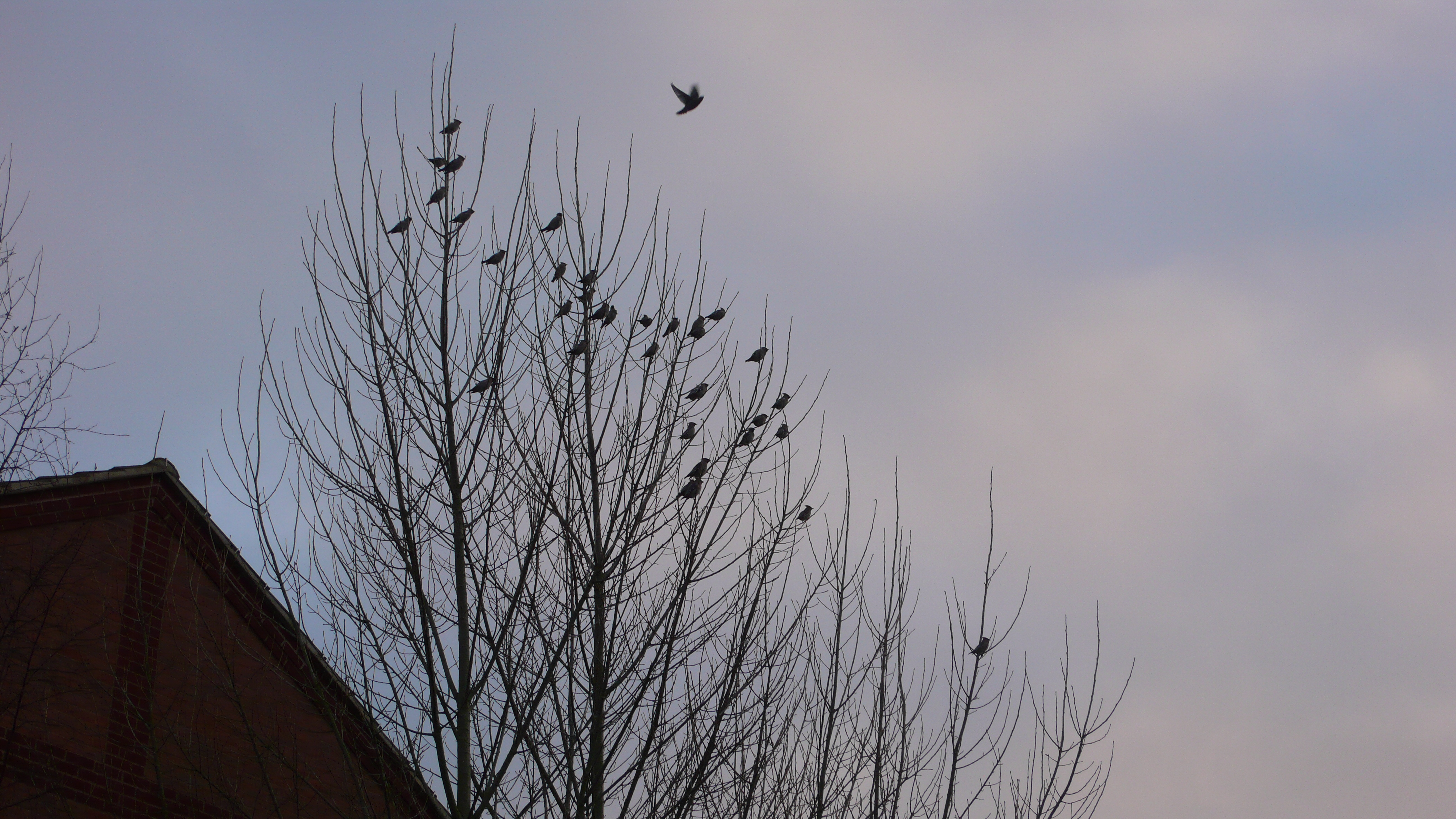
And I achieved a first by finally (after several years of trying) seeing a flock of waxwings (Bombycilla garrulus) a bird that, whilst not uncommon, is one which you really have to be in the right place at the right time to observe.  They are highly mobile and never in one spot for very long.  A friend of mine who is a very keen birder and has been trying for 25 years to see them and only achieved that birding tick this year.  One of our graduates, who blogs by the pseudonym of the Hooded Birder, has some great images of waxwings – take a look and you’ll see just what a beautiful bird this is, very exotic looking for a winter visitor to Britain.

At this time of year waxwings fly down from Scandinavia like avian vikings, marauding through the countryside devouring fruit from trees and shrubs such as rowan, hawthorn, apple, rose and any many others.  It’s quite a sight to see a bird the size of a starling eating large rose hips in a single swallow.  They are very approachable birds and we got  quite close to them.   Some years are marked by massive irruptions of these birds and are termed “waxwing winters”.  The latest data from the British Trust for Ornithology suggest that this is one such year and the Northants Birds site has regular reports of their appearance around the county.

Although I’m not by any means a serious birder, bird watching falls into the category of cultural/spiritual ecosystem services that is clearly supported by biodiversity.  Birding organisations are popular: the Royal Society for the Protection of Birds has over one million members and financial resources of almost £100 million, for example.

This weekend the RSPB will be running its regular Big Garden Birdwatch, a great example of citizen science in support of biodiversity monitoring.  I’ll do my hour of watching on Sunday morning; the current cold winter weather has brought birds into the garden that are normally found out in the wider countryside.  No waxwings yet but I live in hope.

To Dream a River

The notion of streams and rivers as the veins and arteries of a nation, bringing life giving fluids to the country’s urban hearts, is an overplayed one for sure.  But it’s accurate nonetheless, even if these fluids contain biodiversity enough to give any blood disease specialist palpitations.   Given their importance it is therefore odd (I’m tempted to write “suicidal”)  that in Britain we have a history of our towns turning their backs, both metaphorically and literally, on our rivers, ignoring their cultural, social, biological and frankly life sustaining importance.  I’ve mentioned the brewery and sewage effluent entering the River Wear at Sunderland in an earlier posting.  As the pollution went in so there was a  gradual receding of business, industry and habitation away from the river.  There seems to be a correlation between the use and value of a river and the condition of its water and biodiversity: as rivers become ignored and disconnected from urban centres, so they become dumping grounds for whatever can be flushed or piped into them.

This process of riparian neglect was repeated throughout the twentieth century across the country and Northampton’s River Nene is no exception.  From its central place in the town’s commercial activities in the nineteenth century, with its links to the Grand Union Canal and to the North Sea, the Nene has declined in both importance to the town and in its ability to support wildlife, at least in the stretch running through the town and just down river.  Much of the ecological quality of water in this stretch is considered “moderate” to “poor” against the criteria set out by the Water Framework Directive, the main driver of European (and therefore UK) water management.

Against this backdrop of neglect and  river decline, recently a group of us went for a seven mile hike along the River Nene, from the western fringes of Northampton at Duston Mill, through the centre of the town, out to Billing Mill.   The trek was organised by a former student of ours, Neil Monaghan, now working for the River Nene Regional Park (RNRP).  The purpose of this walk was (quoting Neil’s brief for the day) “to inform the Northampton Enterprise Zone River Nene Re-naturalisation Study” by “identify[ing] issues and opportunities for works in-stream and in areas influencing the watercourse which would be likely to facilitate improvements (or at least negate degradation) through land use change or water management”.  My particular interest in this relates to the work we are doing as part of the Nene Valley Nature Improvement Area (NIA) project I’ve mentioned before. Also taking part in the hike were representatives from most of the groups with an interest in the River Nene’s ecology, water quality and flood risk management, including my university colleagues Duncan McCollin & Chris Holt; another former student Hugh Bunker, now working for the Environment Agency (EA); independent consultant ecologist Steve Brayshaw; Heather Ball and Oliver Burke from the Wildlife Trust; Martin Janes from the River Restoration Centre; and other staff from RNRP, the EA, Northants County Council and Northampton Borough Council.  All in all, a wide range of interests and expertise, giving their own perspectives on the River Nene.

Although I’d visited parts of the area that we walked, I’d never before hiked this whole stretch.  It was a revelation.  We passed some really pleasant stretches of river and lake close to commercial centres in Northampton that I know well, in the sense of “drive there, buy things, drive away”.  But I was wholly ignorant of just how close the river is to some of these points.

One of the reasons why it’s easy to lose track of the water courses and lakes, is that it is so geographically complex.  Take a look at the Nene Valley on Google Earth and what you’ll see what I mean.  The aerial view reveals a network of river branches, tributaries, canals and lakes, traced across the landscape.  Some of these seem to have no obvious starting point, or end abruptly.  At one point a lower lying stream passes under the river via a siphon.  It’s very confusing for a predominantly terrestrial ecologist!  The whole area is historically prone to flooding, as Chris has discussed in some of his published research and so understanding the dynamics of the whole catchment is an important task for the Environment Agency and local government.

Away from the river, one of the highlights of the trip was a guerrilla visit to a post-industrial site that is posited as the new campus for the university.  It’s actually the site of the former Northampton power station and like many abandoned brownfields across the country, it has developed its own ecological community of invasive alien plants (for example buddleia, in abundance) and native species, many of them normally at home on dry grasslands.  One section was described by Steve, half seriously, as “urban tundra” as it was dominated by a species of lichen from the genus Cladonia.   

Our main attention was the River Nene, of course, never far from the path that we walked.  Further down the course we came to the Northampton Washlands, an area of low lying grassland and flooded gravel pits that serves to store flood water when the river overtops its banks.  It’s also an internationally important site for migratory birds such as lapwing and golden plover, and is part of the recently designated  Special Protection Area (SPA).  It was another highlight in a day of exploration and surprises.

The dream of a river which can support biodiversity, provide drinking water, allow a wide range of recreation, and be flood managed, is a hugely ambitious one.  But there are many people and organisations working hard to see it flourish because the River Nene is a  vital part of the life of the town and the county.  And without dreams, what are we….?