Category Archives: Birds

To Dream a River

The notion of streams and rivers as the veins and arteries of a nation, bringing life giving fluids to the country’s urban hearts, is an overplayed one for sure.  But it’s accurate nonetheless, even if these fluids contain biodiversity enough to give any blood disease specialist palpitations.   Given their importance it is therefore odd (I’m tempted to write “suicidal”)  that in Britain we have a history of our towns turning their backs, both metaphorically and literally, on our rivers, ignoring their cultural, social, biological and frankly life sustaining importance.  I’ve mentioned the brewery and sewage effluent entering the River Wear at Sunderland in an earlier posting.  As the pollution went in so there was a  gradual receding of business, industry and habitation away from the river.  There seems to be a correlation between the use and value of a river and the condition of its water and biodiversity: as rivers become ignored and disconnected from urban centres, so they become dumping grounds for whatever can be flushed or piped into them.

This process of riparian neglect was repeated throughout the twentieth century across the country and Northampton’s River Nene is no exception.  From its central place in the town’s commercial activities in the nineteenth century, with its links to the Grand Union Canal and to the North Sea, the Nene has declined in both importance to the town and in its ability to support wildlife, at least in the stretch running through the town and just down river.  Much of the ecological quality of water in this stretch is considered “moderate” to “poor” against the criteria set out by the Water Framework Directive, the main driver of European (and therefore UK) water management.

Against this backdrop of neglect and  river decline, recently a group of us went for a seven mile hike along the River Nene, from the western fringes of Northampton at Duston Mill, through the centre of the town, out to Billing Mill.   The trek was organised by a former student of ours, Neil Monaghan, now working for the River Nene Regional Park (RNRP).  The purpose of this walk was (quoting Neil’s brief for the day) “to inform the Northampton Enterprise Zone River Nene Re-naturalisation Study” by “identify[ing] issues and opportunities for works in-stream and in areas influencing the watercourse which would be likely to facilitate improvements (or at least negate degradation) through land use change or water management”.  My particular interest in this relates to the work we are doing as part of the Nene Valley Nature Improvement Area (NIA) project I’ve mentioned before. Also taking part in the hike were representatives from most of the groups with an interest in the River Nene’s ecology, water quality and flood risk management, including my university colleagues Duncan McCollin & Chris Holt; another former student Hugh Bunker, now working for the Environment Agency (EA); independent consultant ecologist Steve Brayshaw; Heather Ball and Oliver Burke from the Wildlife Trust; Martin Janes from the River Restoration Centre; and other staff from RNRP, the EA, Northants County Council and Northampton Borough Council.  All in all, a wide range of interests and expertise, giving their own perspectives on the River Nene.

Although I’d visited parts of the area that we walked, I’d never before hiked this whole stretch.  It was a revelation.  We passed some really pleasant stretches of river and lake close to commercial centres in Northampton that I know well, in the sense of “drive there, buy things, drive away”.  But I was wholly ignorant of just how close the river is to some of these points.

One of the reasons why it’s easy to lose track of the water courses and lakes, is that it is so geographically complex.  Take a look at the Nene Valley on Google Earth and what you’ll see what I mean.  The aerial view reveals a network of river branches, tributaries, canals and lakes, traced across the landscape.  Some of these seem to have no obvious starting point, or end abruptly.  At one point a lower lying stream passes under the river via a siphon.  It’s very confusing for a predominantly terrestrial ecologist!  The whole area is historically prone to flooding, as Chris has discussed in some of his published research and so understanding the dynamics of the whole catchment is an important task for the Environment Agency and local government.

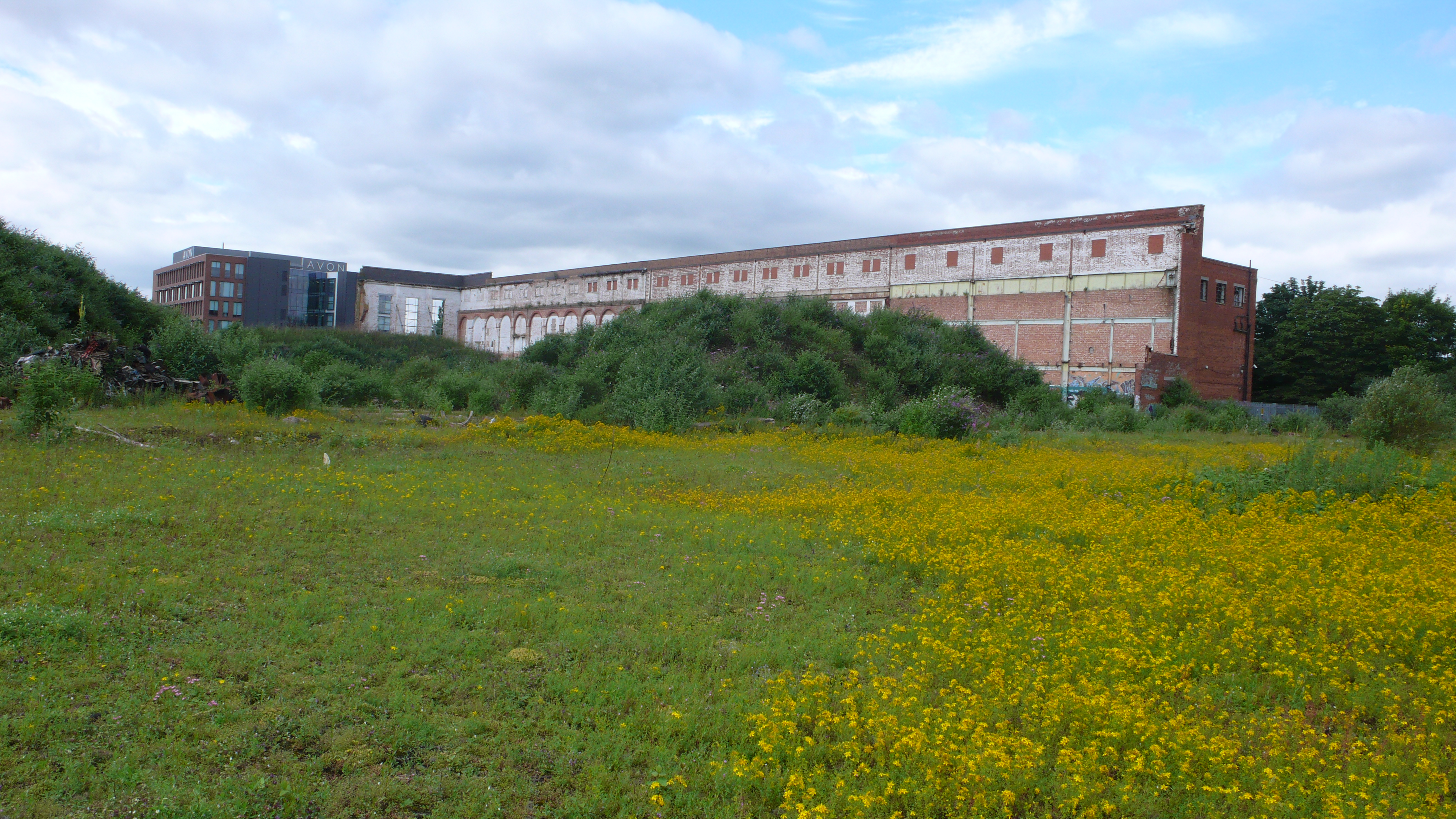
Away from the river, one of the highlights of the trip was a guerrilla visit to a post-industrial site that is posited as the new campus for the university.  It’s actually the site of the former Northampton power station and like many abandoned brownfields across the country, it has developed its own ecological community of invasive alien plants (for example buddleia, in abundance) and native species, many of them normally at home on dry grasslands.  One section was described by Steve, half seriously, as “urban tundra” as it was dominated by a species of lichen from the genus Cladonia.   

Our main attention was the River Nene, of course, never far from the path that we walked.  Further down the course we came to the Northampton Washlands, an area of low lying grassland and flooded gravel pits that serves to store flood water when the river overtops its banks.  It’s also an internationally important site for migratory birds such as lapwing and golden plover, and is part of the recently designated  Special Protection Area (SPA).  It was another highlight in a day of exploration and surprises.

The dream of a river which can support biodiversity, provide drinking water, allow a wide range of recreation, and be flood managed, is a hugely ambitious one.  But there are many people and organisations working hard to see it flourish because the River Nene is a  vital part of the life of the town and the county.  And without dreams, what are we….?

Walking the turkeys to London

The March 2012 issue of the British Ecological Society’s quarterly Bulletin contains an article by Bill Sutherland and colleagues entitled “What are the forthcoming legislative issues of interest to ecologists and conservationists in 2012?”  This is the second of their annual “horizon scanning” exercises and provides a very useful map of UK, European and international developments that relate to the conservation of biodiversity.   The article identifies 35 (THIRTY FIVE!) separate conventions, policies, legislative tools and reviews that we need to keep at least half an eye on over the next 12 months.  These include high profile international events like the Rio+20 UN Conference on Sustainable Development; European initiatives such as the proposed reforms of the Common Agricultural Policy; and UK developments of more (The 2020 Challenge for Scotland’s Biodiversity) or less (Reform of the House of Lords) direct importance to biodiversity.

After reading the article I was left feeling over whelmed by it all.  It’s no wonder that many scientists don’t engage with the societal impacts and implications of their work and stick squarely to the science.  Nothing wrong with that at all and a few years ago I would have agreed with them:  I was happy to keep away from the touchy-feely politico-gabfest end of it all too.  But after 20 years of doing science that was relatively “pure” in the sense that it was concerned with the fundamental aspects of the biodiversity of species interactions (particularly plant-pollinator relationships) my research seems to have shifted more towards work that feeds into biodiversity conservation.  Of course I always argued (and will continue to) that conservation requires a sound scientific underpinning if it is to be effective: it’s hard to conserve what we don’t understand.   But much of the research that’s taken place in the LBRG over the last five years or so has been more or less directly conservation focused.  For example, some of my current and former postgraduates work on topics such as the biodiversity of restored landfill sites (Lutfor Rahman and Sam Tarrant) and the management of small fragments of habitat on commercial sites (Gareth Thomas).   In part this has been purely pragmatic: it’s easier to convince organisations to fund research if you say: “This has important implications for conservation” rather than saying: “This is an interesting scientific question”.  But one should never lose sight of the science that makes the work meaningful in the first place.  Getting that balance between applied conservation (and potentially policy) and the fundamental science can be hard.  Articles such as Bill’s, important though they are, can make one feel like a migrating salmon swimming against the river’s current and trying to make headway in a stream of oncoming information from NGOs, government and international agencies, not to mention the scientific journals.

Overwhelming, as I said, so it’s nice therefore to have some down time.  I’ve been on leave most of this week apart from a couple of meetings on Wednesday, and have caught up with various tasks relating to car, house, life and family.  It’s also been good to get into the garden and plant potatoes and other veg.  We only moved into this house at the end of January so the garden has been slowly evolving from its original state of 90% lawn and 10% side borders, to something a lot more interesting.  Whilst planting I’m keeping track of the number of species of bees and other pollinators I spot in the garden and will report back later in the year.

As well as gardening the Easter break is a good opportunity to reconnect with some real biodiversity rather than just talking and writing about or teaching it.  With this in mind on Thursday Karin and I took ourselves on a six mile round trip hike from home, up through Kingsley and on to Bradlaugh Fields.   Named after 19th century radical atheist politician Charles Bradlaugh, this urban park is one of my favourite places in Northampton, both for relaxing and as a site for teaching and research projects.  As well as a system of very ancient hedgerows, some of which may be at least 1000 years old if you apply Hooper’s Rule, Bradlaugh Fields also includes two ecologically valuable Local Nature Reserves that are managed by one of our graduates, Ian Wilson.  Over the years we’ve visited them with students to look at how different grazing regimes can be used to manage grasslands and how the underlying geology affects the local mosaic of plant assemblages.  Published research from the site includes work on: the function of floral traits in wild carrot (Daucus carota); pollinator sharing between a parasitic plant and its host; and how natural selection may be shaping the flowering times of plant species.  There’s more data to be published in the future including a 15 year (and counting) phenological study of flowering time in the parasitic plant/host system.

The day was rather cold and grey but the fine weather during March meant that quite a lot of plants were in full flower including great swathes of ground ivy (Glechoma hederacea), an important early nectar source for solitary bees, bee flies, queen bumblebees and other early emerging pollinators.

It was a really pleasant walk and set us up for a nice cup of tea when we returned.  But what, I hear you asking, does the title of this blog have to do with biodiversity or conservation or ecology?  Or anything for that matter?  Well, “walking the turkeys to London” was an expression that Karin and I dreamt up on our Bradlaugh Fields walk.  We were chatting about a TV programme we’d watched the other evening about traditional ways of producing food in Britain.  One of the items featured was about black turkey raising in Norfolk.  Following the fattening of the birds on recently harvested grain fields, the birds along with sheep, pigs, and other livestock were transported to Smithfield Market in London.  On foot.  The drovers and their animals would average only 3 miles a day and take several weeks to travel to the capital.  It was all redolent of a slower paced way of life, before there were 35 (THIRTY FIVE!) things to bear in mind before we consider the science.  It seemed to us that “walking the turkeys to London” could be the next catch phrase to follow on from clichés such as “thinking outside the box”, “running it up the flagpole and seeing if it flies” and (my current bête noir) “going forward” (what other bloody direction are events likely to move in?).  Only thing is, we are not sure what “walking the turkeys to London” might refer to.  It could relate to the opening of this blog; the idea of the slow slide of science from the labs and research groups towards informing action and policy in the centre of things at Westminster.  Except that “turkey” has such negative connotations: how many scientists, keen to show that their research has impact, are likely to say “let’s walk this turkey to London”?

Whatever it means, the phrase is out there now; it will either be picked up and used or fall flat.  That’s language and it evolves, or stays static, just like the rest of biodiversity.

Angry Birds! (and startled bees)

The texture of the life academic is nothing if not varied.  After a couple of days working from home thanks to a dose of flu,  Thursday was spent supervising three one hour tests for my first year students, scattered throughout the day from 0930 to 1600.  As I watched over these hurriedly scribbling undergraduates their shifting expressions ranged across boredom, panic, rapt intensity, smugness and exhaustion.   The latter because it’s been a long term and we’ve worked them hard.  The Easter break will be a relief.  Whilst they pored over the questions I shifted between marking second year literature reviews, checking email and gazing thoughtfully out of the window.

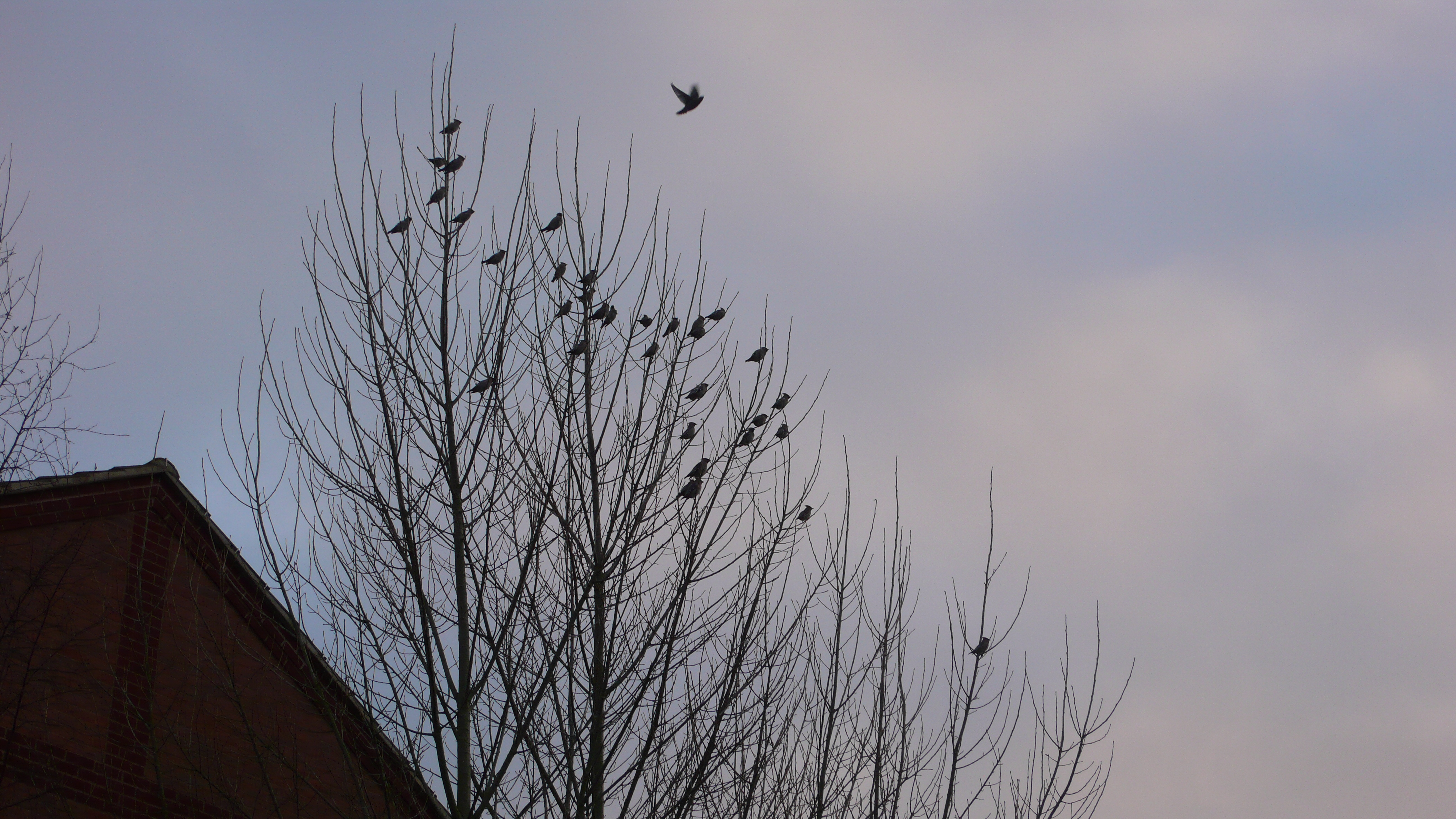
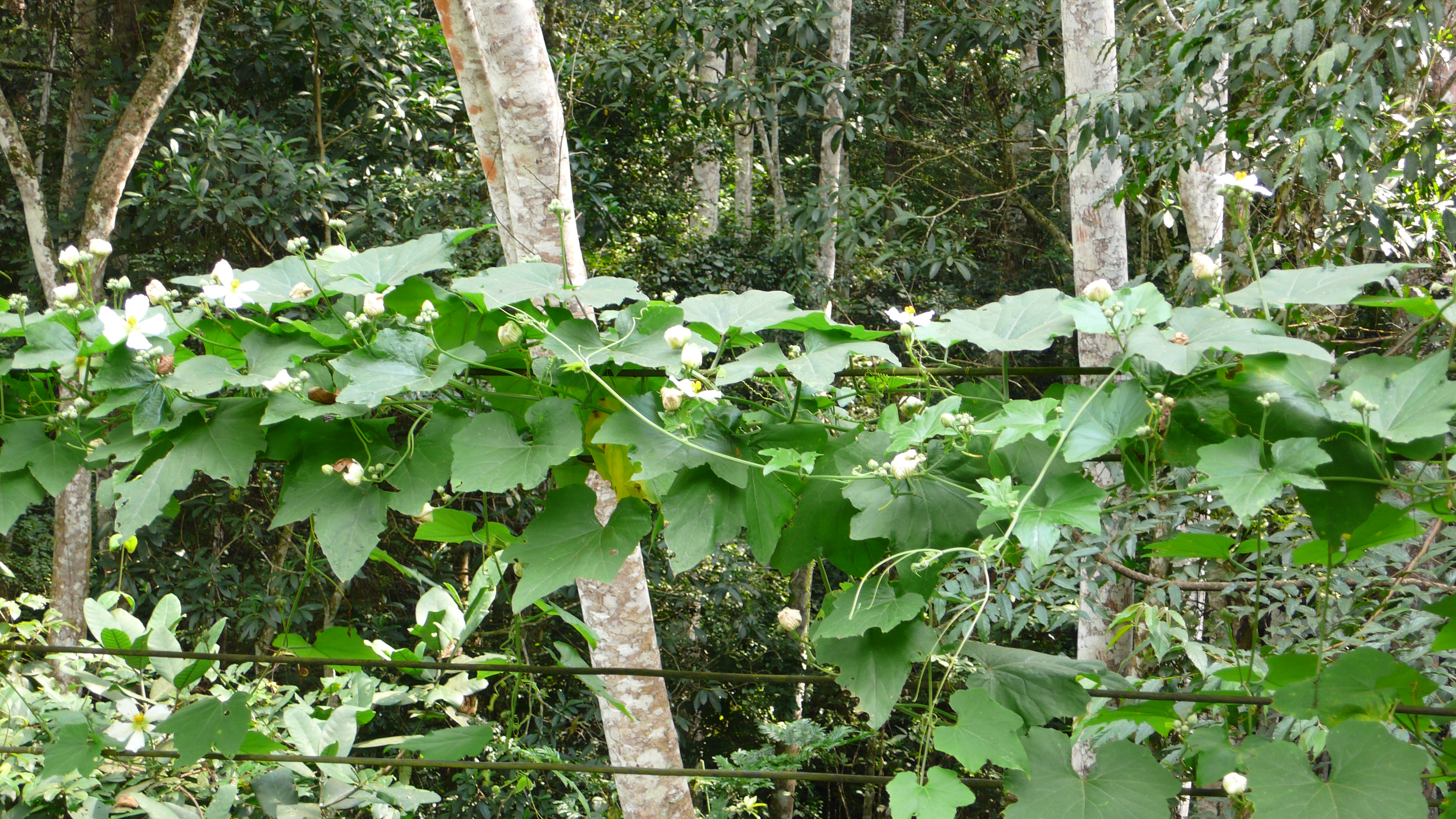
Between tests I went back to the office and worked on completing the first draft of a manuscript that I’ve been promising to send to my co-author Clive Nuttman of the Tropical Biology Association.  It’s based on data we collected in Tanzania last year during the TBA field course whilst observing aggressive interactions between nectar feeding male sunbirds and large Xylocopa carpenter bees.  The bees sneak into the sunbirds’ territories and, if spotted, the birds fly at them, chasing them through the forest.  The plant on which they were feeding is a member of the squash and melon family (Cucurbitaceae) and like many in that family it has separate male and female plants.  Only the male flowers produce nectar;  the females function, in effect, as rewardless mimics of the males.  In addition it seems as though only the bees are pollinators as the birds don’t pick up pollen on their feathers and (crucially) don’t visit the female flowers.  However the birds might be providing a service to the plants by driving the bees to move between plants rather than staying on the male flowers most of the time.  It’s a complex story (which ones in ecology aren’t?) and we’ve only scratched the surface of what is going on, but the aggressive interactions side of it makes a nice starting point for further work.  We’re calling it:   “Angry Birds!  Aggressive displacement of Xylocopa carpenter bees from flowers of Lagenaria sphaerica (Cucurbitaceae) by territorial male Eastern Olive Sunbirds (Cyanomitra olivacea) in Tanzania”.  Let’s see if the journal editor and reviewers will go along with the tongue in cheek pre-title.

Friday started with a meeting between Muzafar Hussain, on of my PhD students you met last time, and Peter Nalder from South Court Environmental.  SCE is a local co-operative dedicated to environmental projects, and organic and permaculture food production.  The group is responsible for managing a number of old, remnant fruit tree orchards around Northampton.  We took a look at a really interesting site over in Abington that was originally a farm.  It’s now been converted into sheltered housing for old folks and a nature conservation area that includes an orchard.  Muzafar is planning to incorporate some of these orchards into his urban bees surveys.  This will add to what we know about the diversity of habitats available to these bees and relates it directly to the ecosystem service of crop pollination that the bees provide.

In the afternoon I drove up to the Wildlife Trust’s offices at Lings House for the first formal meeting of the Nene Valley Nature Improvement Area partners to be held since the announcement that we had secured the funding back in February.   I intend to write more about the Nene Valley NIA in the coming months and years.  But for now it’s enough to say that we’re incredibly excited about the opportunities the NIA will bring to improve the level of biodiversity conservation in the region.  The university is leading on one of five objectives: to assess the range of ecosystem services being delivered in the Nene Valley and the condition of the biodiversity (including habitat as well as taxonomic diversity) that is supporting those services.  We’ll focus on pollination, naturally, but also on other services including fresh water provision and flood alleviation, and possibly carbon storage.  These are new areas for me and it’s going to be a steep learning curve.  A PhD student has already been recruited to work on pollinator diversity and in the near future we’ll take on a post-doc for the main part of the project (if you know of anyone who might be interested ask them to send me their CVs).

Chairing the meeting was Oliver Burke the Wildlife Trust’s energetic and enthusiastic Conservation Manager who has been the real driving force behind the NIA  (which on a map looks like a large intestine squiggling its way across the landscape; in honour of him I renamed it “Oliver’s Colon”.  Not sure if it will stick but I intend to use it in all official NIA documents from now on).  Most of the meeting was concerned with the nuts and bolts of how the finances will work, reporting of activities, membership of the steering group, etc.  Dull but vital if the Nene Valley NIA is to be the success we want it to be.

Also at the meeting was Adrian Southern from the RSPB, standing in for a colleague.  I keep bumping into Adrian in the most unlikely places, first at Biosphere 2 in Arizona in 2001 during an Ecological Society of America meeting that ultimately led to the Waser & Ollerton (2006) edited volume.  Then a few years later at another conference when he was a PhD student at University of East Anglia.  We never really kept in touch so it was a surprise to see him.  Now Adrian’s with the RSPB I hope to talk more with him about some ecosystem services projects he’s working with as part of their Futurescapes programme.  So add that to the lots of different things going on at the moment.  But varied is good.  If tiring.  So looking forward to a week off over Easter.